Feeds:
Posts
Comments

Archive for the ‘Side dish’ Category

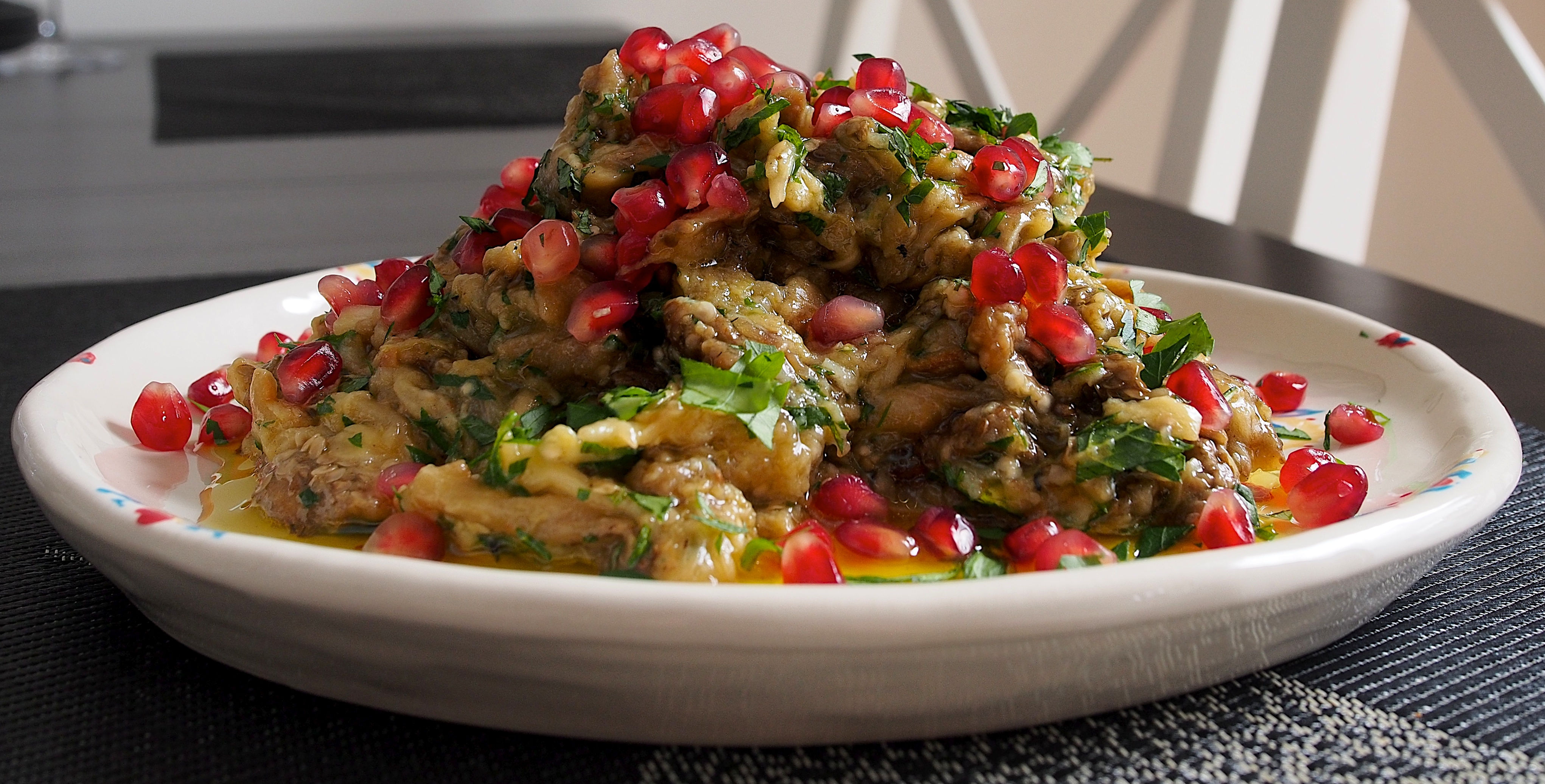
Burnt Aubergine salad

Not quite a Baba Ghanoush, but you can drizzle on some tahini paste to make it one. This was really delicious and we loved the freshness from the lemons and the burst of fruity pomegranate. You need to start this many hours in advance but the process is very straightforward and the result is worth it.

Burnt aubergine with garlic, lemon & pomegranate seeds – serves 4 as a meze plate

  • 4 large aubergines (about 1.5kg before cooking)
  • 2 garlic cloves, crushed
  • grated zest of 1 lemon and 2 tbsp lemon juice
  • 5 tbsp olive oil
  • 2 tbsp chopped flat-leaf parsley
  • 2 tbsp chopped mint
  • 80g of pomegranate seeds (about ½ a large pomegranate)

If using a gas hob, line the base with foil and keep only the burners exposed. Put the aubergines on 4 separate moderate flames and roast for about 15-18 minutes or until the skin is burnt and flaky and the flesh is soft. Use metal tongs to turn them now and then.

Alternatively, score the aubergines with a knife in a few places, a couple of centimetres deep, and place on a baking tray under a hot grill for about an hour (we do ours on a gas barbecue). Turn them every 20 minutes or so and continue to cook even if they burst.

Allow the aubergines to cool slightly, then cut along each one and scoop out the flesh and divide it into long strips with your hands. Throw away the skin. Drain the flesh in a colander for at least an hour or longer if possible to get rid of as much water as possible.

Put the aubergine in a medium bowl and add the garlic, lemon zest and juice, olive oil, ½ a teaspoon of salt and a good grind of black pepper. Stir and allow the aubergine to marinate at room temperature for at least an hour.

When ready to serve, mix in most of the herbs and adjust the seasoning. Pile onto a serving plate, scatter on the pomegranate seeds and garnish with the rest of the herbs.

We served ours with some barbecued flatbreads.

(Original recipe from Yotam Ottolenghi and Sami Tamimi’s Jerusalem, Ebury Press, 2012.)

Read Full Post »

Roast Sweet Potatoes with lemon & paprika

This is a great accompaniment for roast chicken and we love the lemon wedges which add a wonderful freshness and impart a hint of caramelisation to the flavour mix.

Roast sweet potato with lemon, red onion & paprika – serves 6

  • 4 sweet potatoes, peeled and cut into wedges
  • 2 lemons, cut into wedges and seeds removed
  • 2 red onions, peeled and cut into wedges
  • 12 garlic cloves
  • 4 bay leaves
  • 1 tsp finely chopped thyme leaves
  • 1 tsp Spanish sweet paprika
  • ½ tsp chilli powder
  • 1 tbsp wholegrain mustard
  • 4 tbsp olive oil

Preheat the oven to 200°C/gas 6.

Add the sweet potatoes to a saucepan of boiling water and parboil for a couple of minutes. Drain and transfer to a large roasting tin with the lemons, onions, unpeeled garlic cloves and bay leaves.

Mix the paprika, chilli powder, thyme, mustard and oil in a small bowl. Pour over the veg, season with salt and pepper and toss well to coat.

Roast in the oven for 30-35 minutes until the sweet potato is tender and golden brown.

(Original recipe from Leiths How to Cook, Quadrille, 2013.)


Read Full Post »

Marinated Pepper Salad with Pecorino & Capers

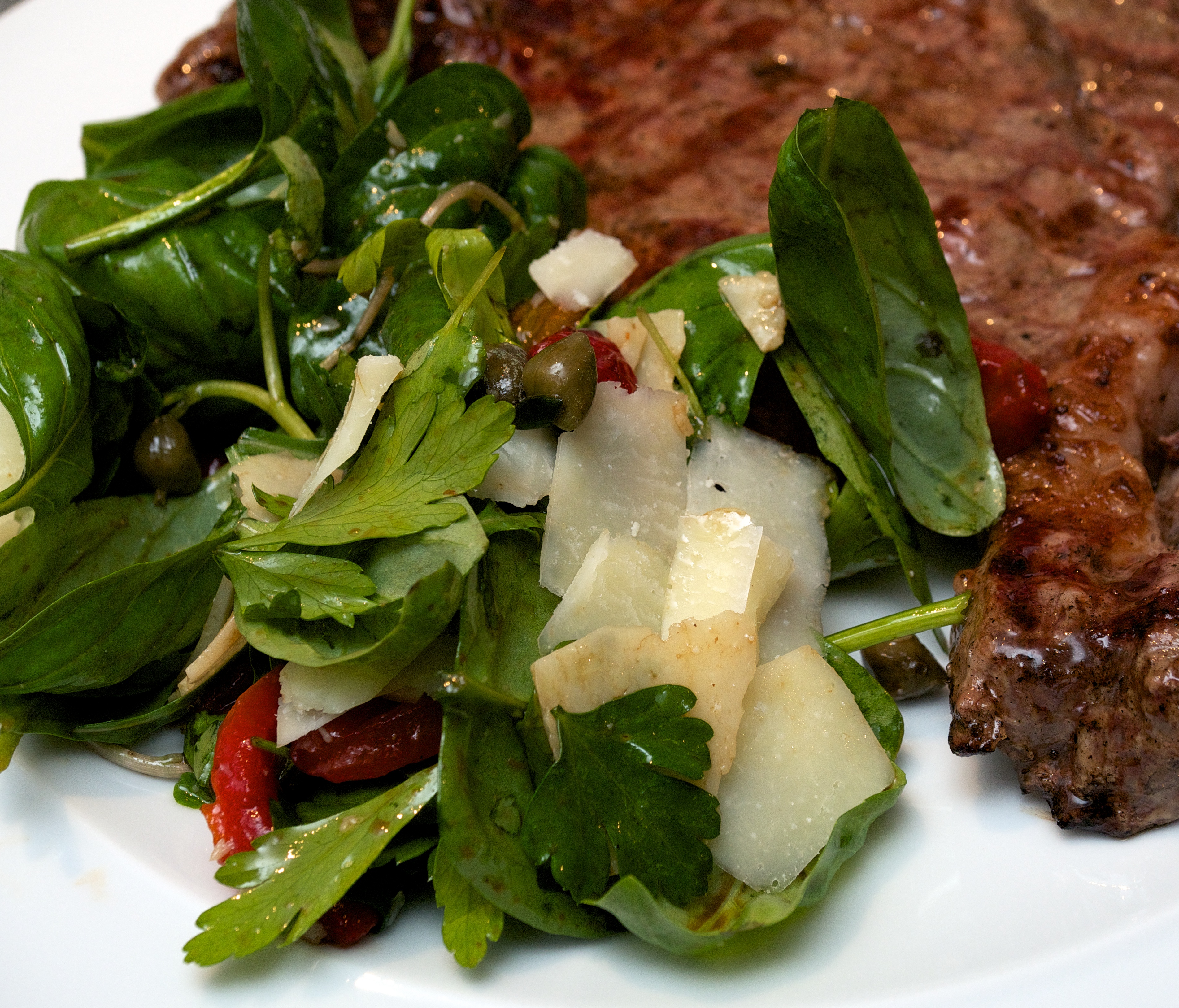
This salad is really versatile and can be served on it’s own as a starter, with a good variety of barbecued meats like the sirloin steak we had here or grilled mushrooms. It has a great balance of earthiness, sweetness and a salty freshness from the peppers and capers which match the pecorino cheese really well.

Marinated Pepper Salad with Pecorino – serves 2 as a starter or more as a side

  • 1 red pepper, quartered
  • 1 yellow pepper, quartered
  • 4 tbsp olive oil
  • 1 tbsp balsamic vinegar
  • 1 tbsp water
  • ½ tsp muscovado sugar
  • 2 thyme sprigs
  • 1 garlic clove, thinly sliced
  • 10g flat-leaf parsley, leaves picked
  • 15g basil leaves
  • 30g watercress
  • 50g mature pecorino shaved
  • 1 tbsp capers, drained

Preheat the oven to 190ºC/Gas Mark 5.

Toss the peppers with 1 tbsp of the oil and a little salt. Scatter in a roasting tin and roast for 35 minutes, or until soft and starting to colour. Remove to a bowl and cover with cling film. Leave to cool, then peel and cut into thick strips.

Whisk together the marinade ingredients: 2 tbsp of the oil, the balsamic vinegar, water, sugar, thyme, garlic, and some salt and pepper. Pour this over the peppers and leave aside for at least an hour or overnight in the fridge.

When ready to serve, toss the herbs, watercress, drained peppers, pecorino and capers together. Add the last tbsp of olive oil and 1tbsp of the marinade. Season to taste.

(Original recipe from Plenty by Yotam Ottolenghi, Ebury Press, 2010.)

Read Full Post »

Parmesan Turnip / Swede

We insist on calling swede turnip in Ireland which can lead to confusion. To be clear we mean the large yellow-fleshed sort as opposed to the smaller, white-fleshed turnips.

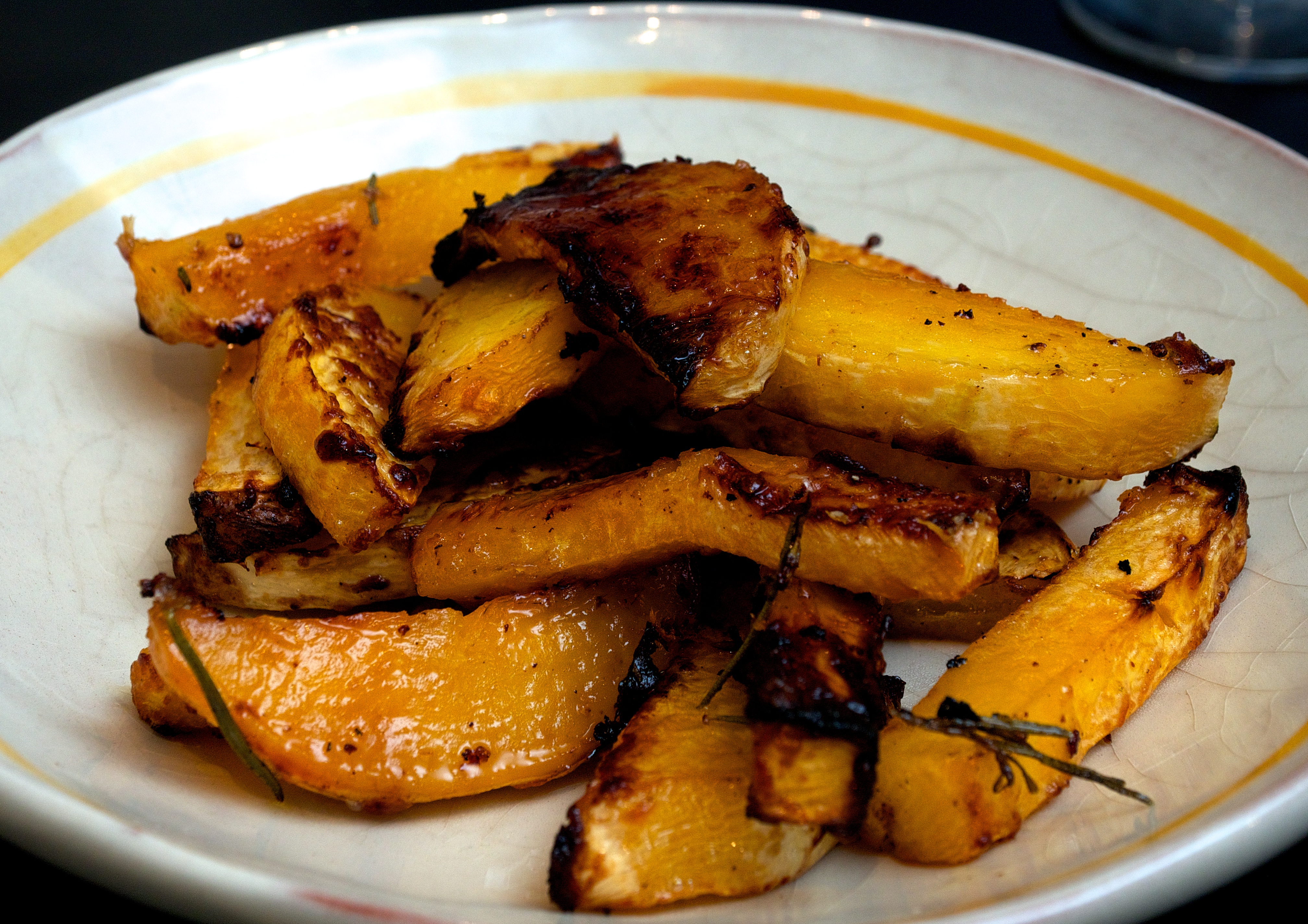
We like both versions, but particularly the larger ones, and this is a great side dish which makes a change from mash.

Roasted turnip-swede with Parmesan – to serve 4

  • 1 large swede/turnip, peeled and cut into chips
  • 1 tbsp olive oil
  • 50g Parmesan, grated
  • 1 tbsp rosemary leaves
  • knob of butter
  • 2 garlic cloves, peeled

Heat oven to 220C/fan 200C/gas 7.

Put the turnip, olive oil, almost all of the Parmesan, and the rosemary leaves into a shallow roasting tin. Season, toss well, and arrange in a single layer.

Sprinkle over the remaining Parmesan, dot with butter and add the garlic cloves.

Roast for 35-40 minutes, turning halfway, until golden and cooked through.

(Original recipe from BBC Good Food)

Read Full Post »

Broad Bean and Bacon

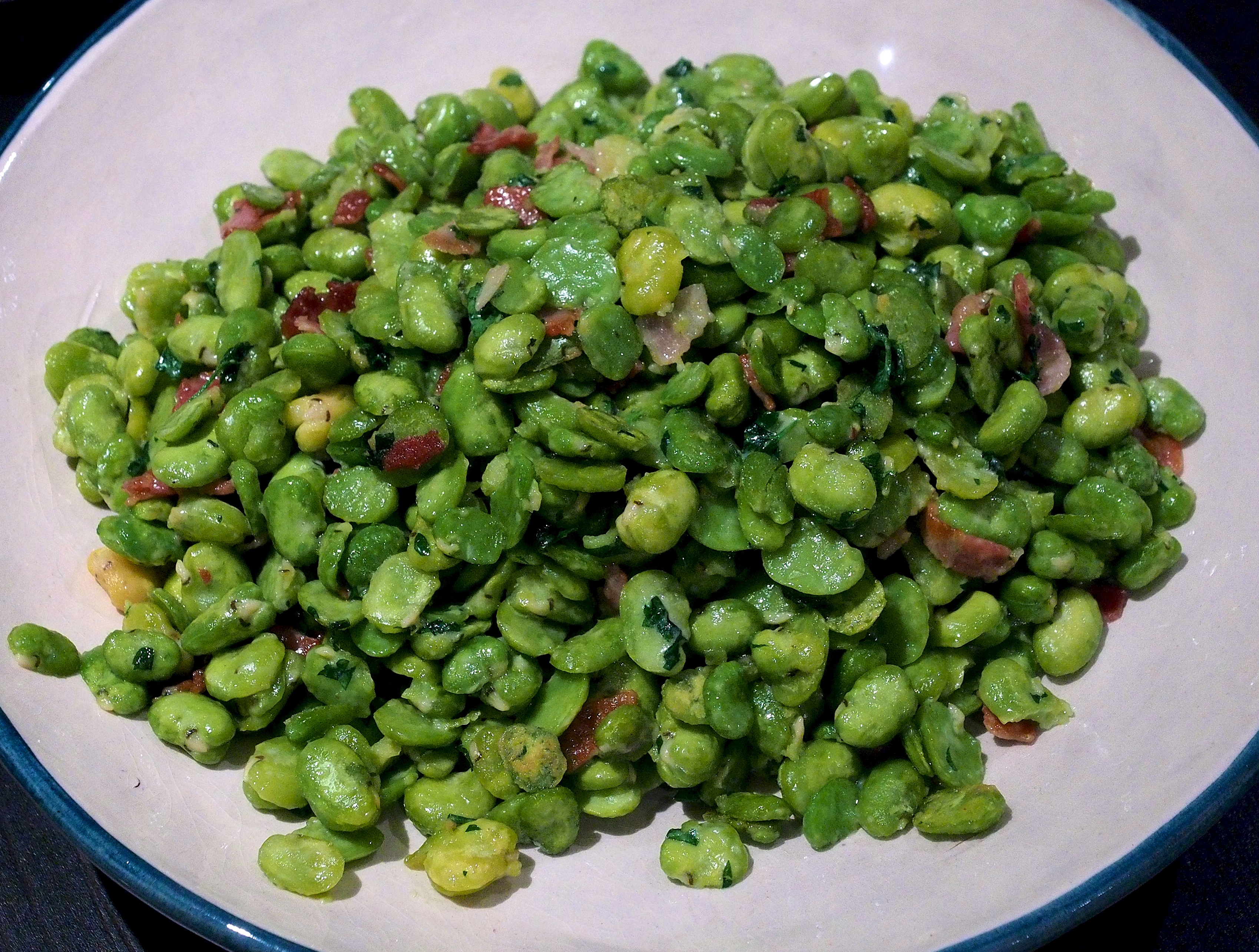
Spring has definitely sprung in Ireland but we’re not picking beans just yet. This recipe works just as well with the frozen variety.

Broad Beans with Bacon – serves 6

  • 60g diced bacon (or ham)
  • butter
  • 1kg cooked broad beans
  • 2-3 tbsp light béchamel sauce (make a batch and you can freeze the remainder)
  • cream
  • chopped parsley

Cook the bacon in a little butter.

Add the cooked beans, the béchamel sauce, cream and a little chopped parsley. Simmer together for 5 minutes.

(Original recipe from At Elizabeth David’s Table: Her very best everyday recipes, Penguin, 2010.)

Read Full Post »

Celeriac purée

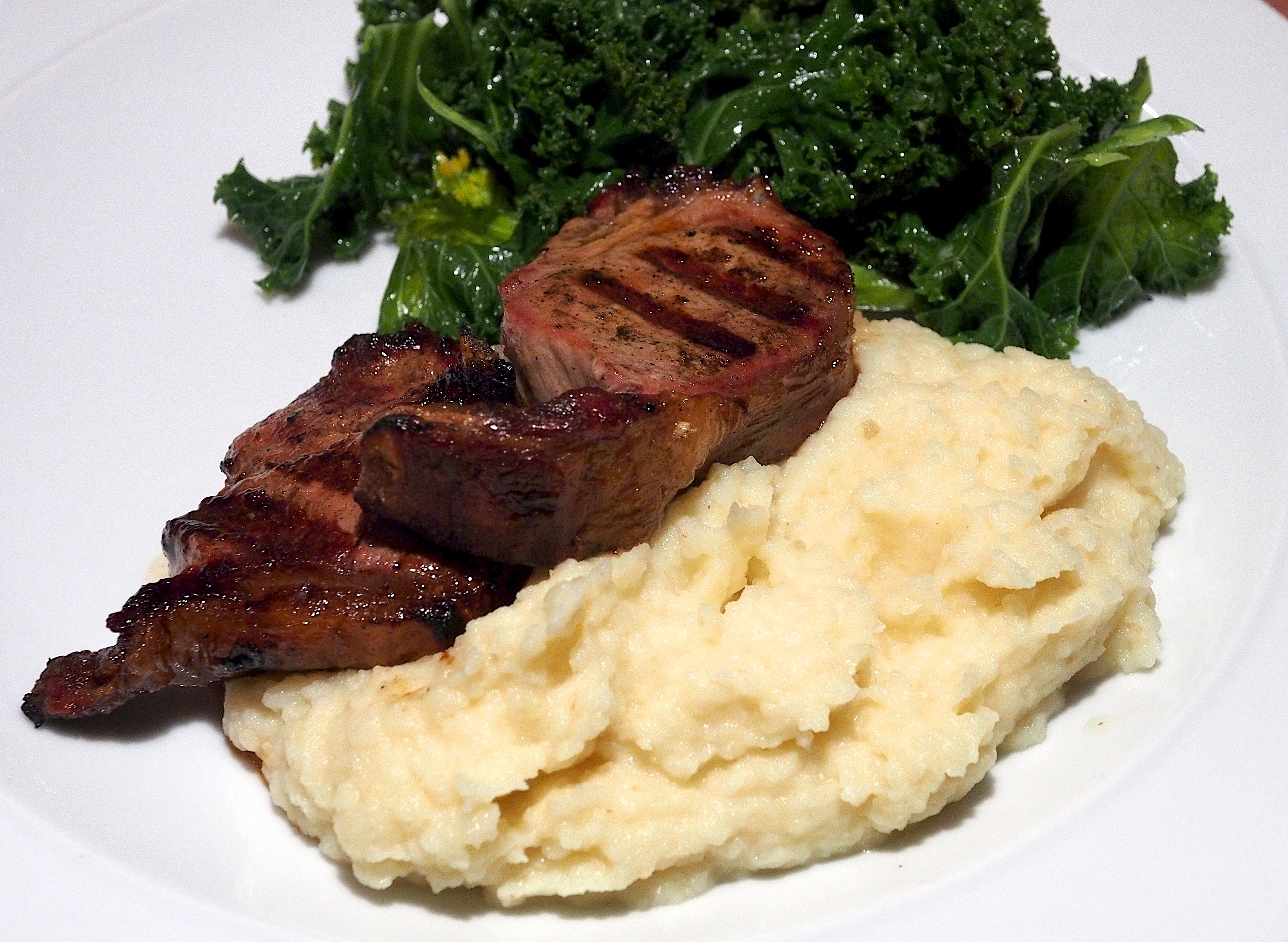
We’re still waiting on spring veg to arrive in Ireland but we’re comforting ourselves with the old root veggies. We love the earthiness that celeriac brings to lamb cutlets and kale or lighter dishes like seared scallops.

Wine Suggestion: You could try a New World Pinot from a cooler climate, like New Zealand, balancing not too much weight with a joyful fruit and freshness that works with the lamb and creamy celeriac.

Celeriac purée – to serve 4

  • 1 lemon
  • 350g celeriac
  • 150g floury potatoes
  • 50ml double cream or crème fraîche
  • 25-50ml milk
  • 15g butter
  • salt and freshly ground white pepper

Peel and cut the celeriac into 5 cm chunks. Submerge in cold water acidulated with some juice from the lemon.

Peel and cut the potatoes into chunks the same size as the celeriac and put into a small saucepan. Cover with salted water, bring to the boil, then simmer for about 15 minutes, or until tender.

Drain the celeriac chunks and put in a separate saucepan, cover with salted water, add a little lemon juice and bring to the boil. Reduce the heat and simmer until tender – it will take longer than the potato.

When the vegetables are soft, drain them well and allow to steam-dry in colanders for a few minutes. Mash the potato using a potato ricer or push it through a sieve. Mash the celeriac either with a potato ricer or by blending in a food processor. Combine both vegetables in a clean saucepan.

Put the pan over a gentle heat and stir in the cream and milk. Stir in the butter, season well with salt and pepper and serve.

(Original recipe from Leith’s How To Cook by Claire McDonald and Jenny Stringer, Quadrille, 2013.)


Read Full Post »

This is a classic French side dish which remarkably improves steamed carrots and we find impresses guests too despite being easy to cook.

Vichy carrots – serves 4

  • 6-8 carrots
  • 15g butter
  • small pinch of salt
  • 1 tsp caster sugar
  • few mint sprigs
  • few parsley sprigs
  • black pepper

Peel the carrots and cut into batons.

Put the butter, salt and sugar in a saucepan and heat gently. Stir in the carrots and add enough water to come halfway up.

Increase the heat to medium and partially cover. Simmer until the carrots are tender and most of the water has evaporated.

Turn down the heat and remove the lid. Reduce the remaining liquid to a glaze, stirring to ensure the carrots are evenly coated and don’t stick.

Finely chop the mint and parsley – you need about a ¼ tsp of each. Season with pepper, stir in the herbs and serve.

(Original recipe from Leiths How to Cook, Quadrille Publishing Limited, 2013)

Read Full Post »

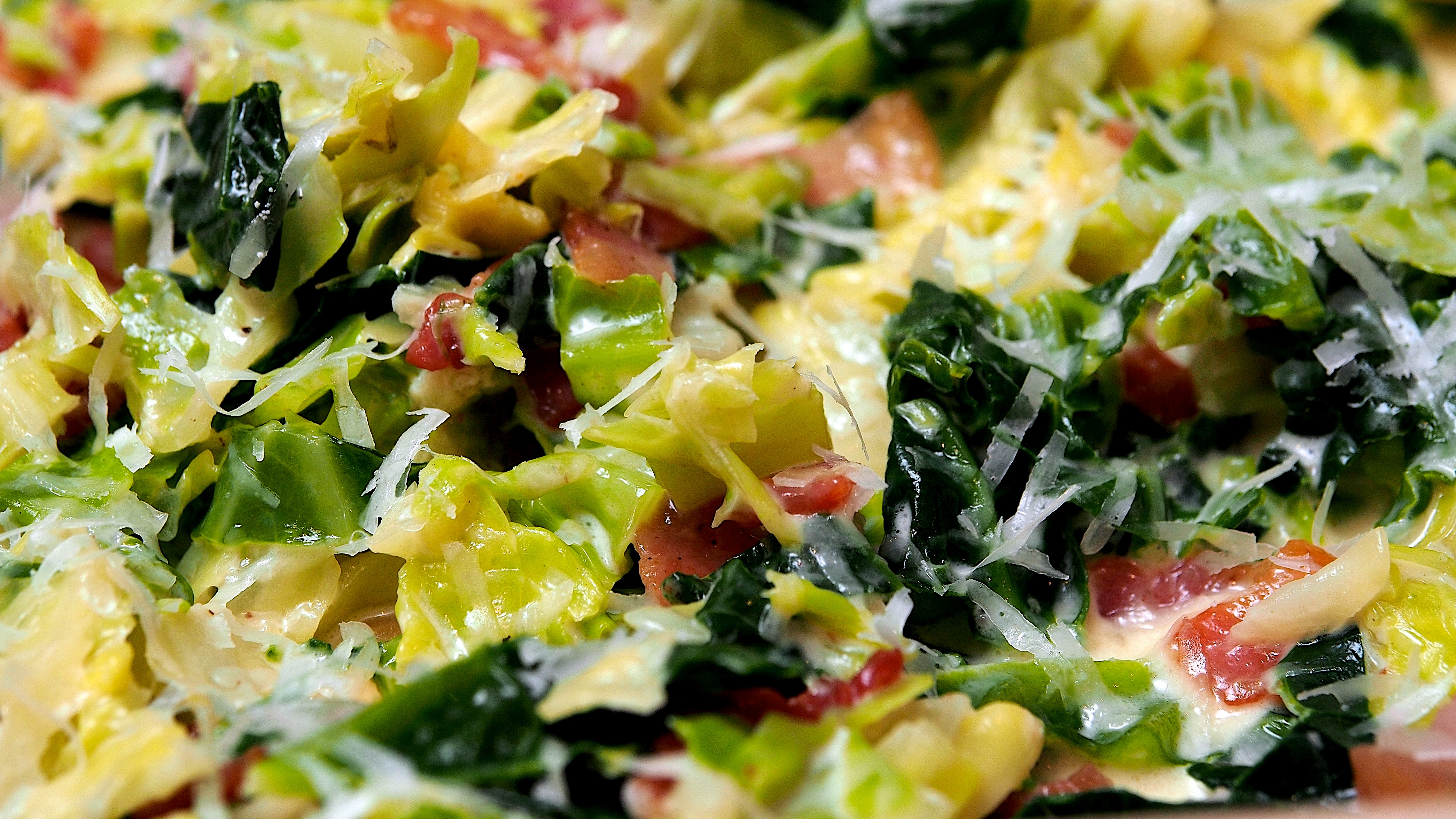
This is delicious but very rich, plus a little goes a long way! We found this a really good twist on a classic.

Carbonara Cabbage – serves 8

  • 1kg Savoy cabbage, finely shredded
  • 12 rashers streaky bacon, chopped small
  • 2 cloves of garlic, finely sliced
  • 250ml single cream
  • 50g Parmesan, grated

Cook the cabbage for 10 minutes in a large pan of boiling salted water. Drain and keep warm.

Meanwhile, fry the bacon in a large frying pan for 7-8 minutes or until crispy, adding the garlic for the final few minutes.

Mix the cream and Parmesan in a bowl with some black pepper. Add the cream mixture and the cabbage to the bacon pan and toss everything together really well. Warm through for a few minutes before serving.

(Original recipe from BBC Good Food)

Read Full Post »

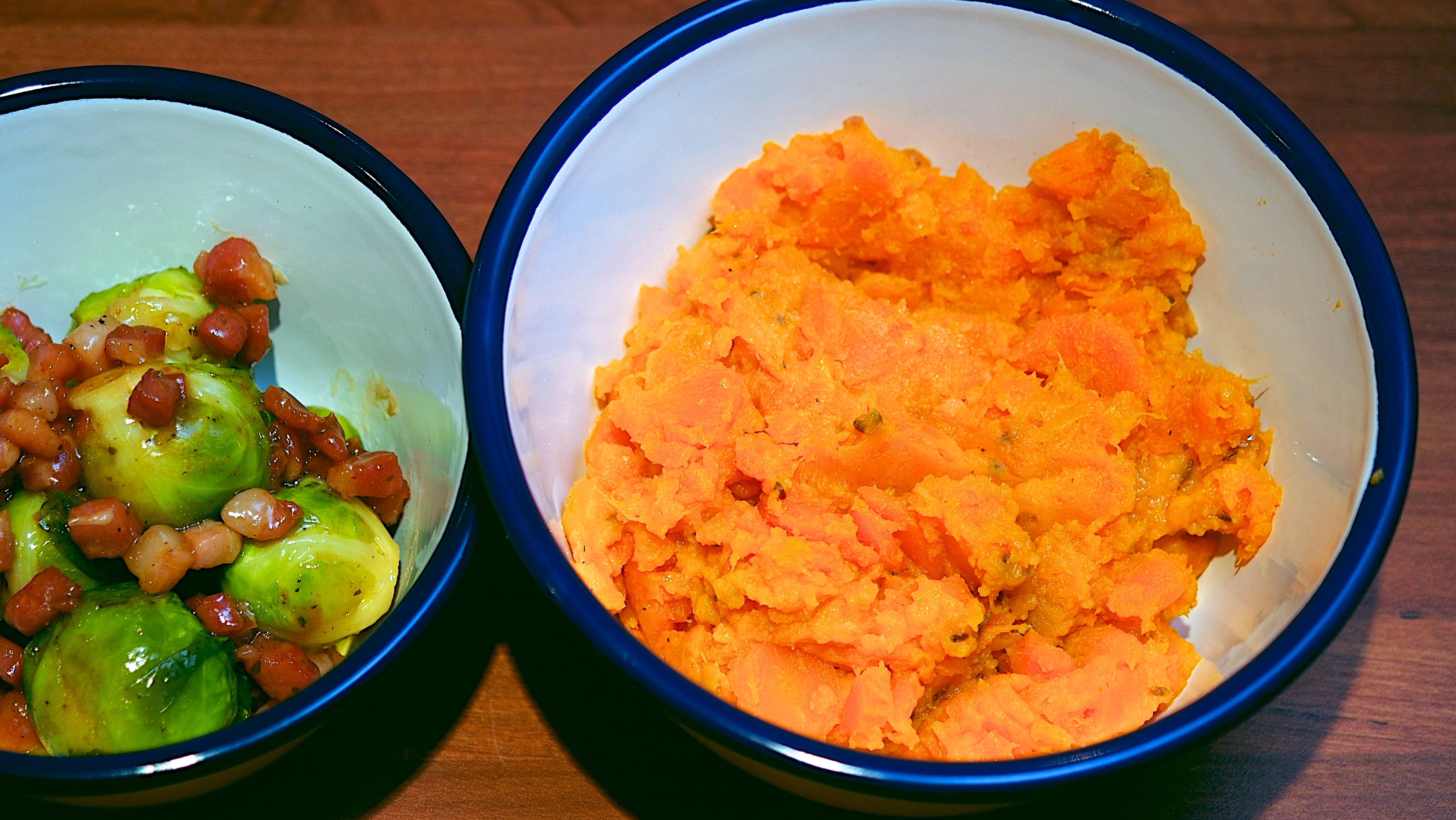
This was good served alongside a beef hotpot, but we daresay it’ll be nice against a few other dishes as well.

Carrot & Sweet Potato Mash – to serve 4

  • 500g carrots, chopped
  • 500g sweet potatoes, chopped
  • 3 garlic cloves, bashed
  • 1 tsp cumin seeds, toasted
  • 25g butter

Put the carrots, sweet potatoes and garlic in a large pan  salted water, bring to the boil and cook for about 12 minutes or until very tender, then drain. Add the cumin seeds, butter and seasoning and serve.

(Original recipe from BBC Good Food)

Read Full Post »

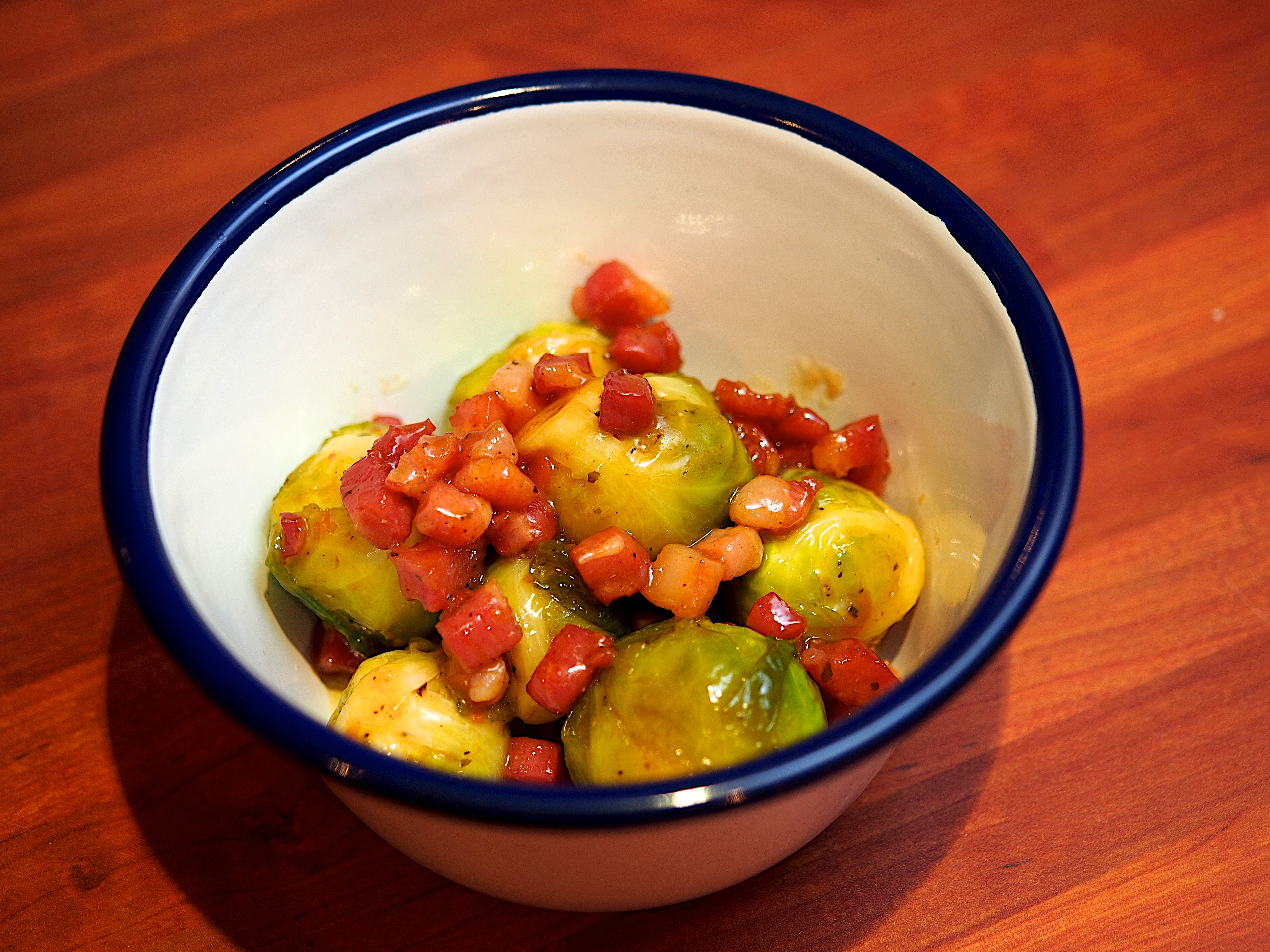
For those who eat brussels sprouts more than once a year. This is a gem of a dish that we’ve done a few times now and an easy feature in any winter meal.

Buttered Sprouts with Pancetta – to serve 6

  • 100g cubed pancetta
  • 750g brussels sprouts
  • 400ml chicken stock
  • 25g butter

Fry the pancetta in a non-stick frying pan for about 5 minutes or until crispy. Add the sprouts and cook for another minute. Add the stock and simmer for 15-20 minutes or until the sprouts are tender and the stock has reduced. Add the butter and season well but be careful with the salt, as the pancetta and stock should make this fairly salty already.

(Original recipe from BBC Good Food)

Read Full Post »

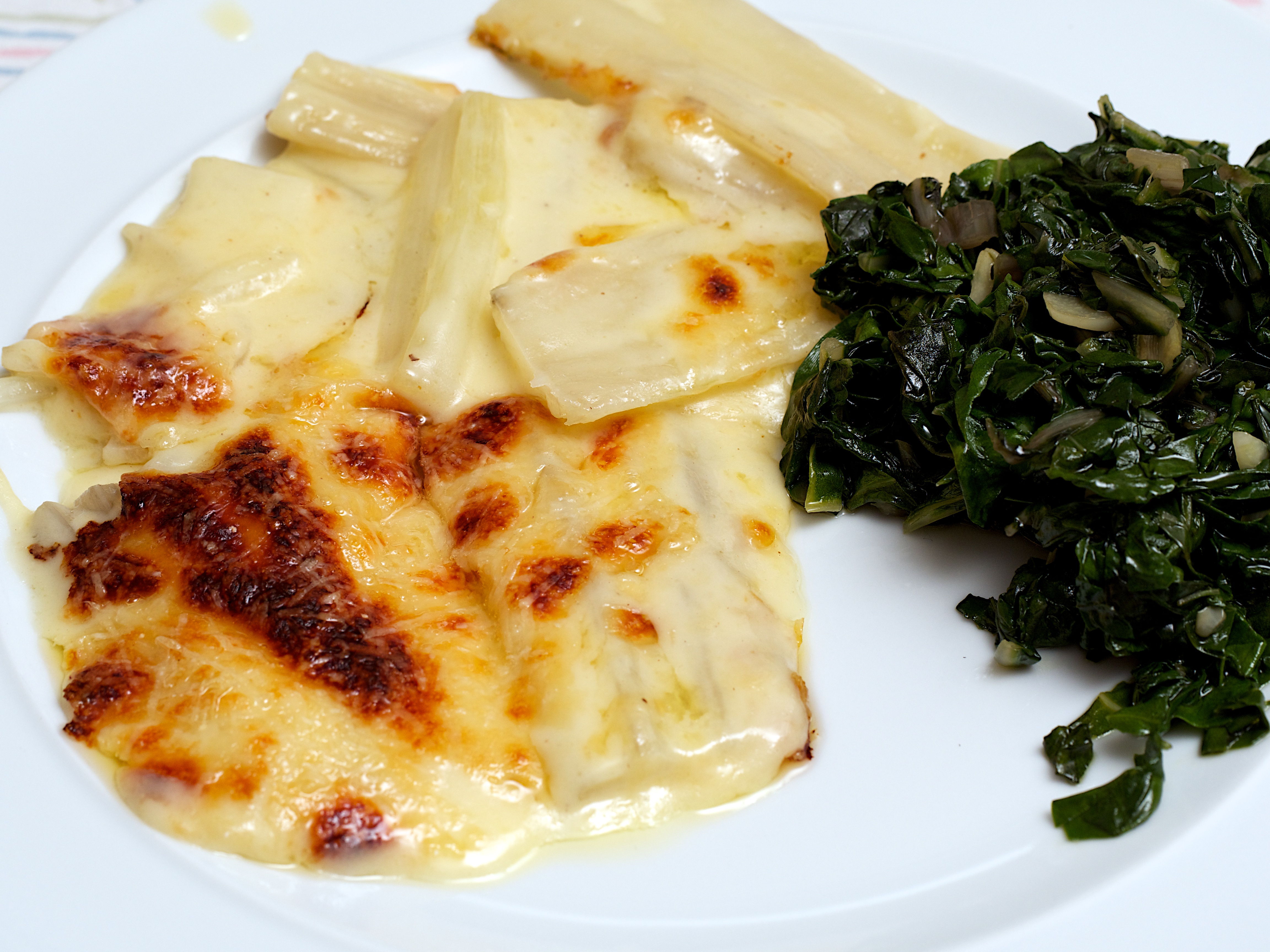
Who would have thought that something so delicious could be made from chard? The stalky bits, that you might have been tempted to throw away, are the stars of the show!

Chard leaves with wild garlic & olive oil – to serve 2

  • leaves cut from a 500g bunch of chard (save the stalks for the recipe below)
  • 150g wild garlic, remove any thick stalks (if it’s not wild garlic time you can substitute a clove of garlic instead)
  • 2 tbsp olive oil
  • salt and pepper

Slice the chard and wild garlic into wide ribbons. Heat the olive oil in a large frying pan and add the leaves and seasoning. Gently fry until beginning to wilt and then stew for 15-20 minutes or until tender. Serve hot.

Chard gratin – to serve 2 

  • 30g butter
  • 20g plain flour
  • 225ml milk
  • 30g Gruyère cheese, grated
  • 40g Parmesan, grated
  • salt, freshly ground white pepper and nutmeg
  • chard stalks from a 500g bunch

Preheat the oven to 200ºC/Gas 6.

Make a mornay sauce by melting the butter in a saucepan and stirring in the flour. Cook gently for a few minutes, then pour in the milk and whisk. Put the pan over a low heat and stir continuously until the sauce starts to thicken (don’t worry if goes lumpy just keep stirring and the lumps will eventually dissolve).

Add the Gruyère, 25g of the Parmesan and the seasonings. Simmer very gently, stirring now and then, for about 15-20 minutes.

Meanwhile, peel the chard stalks with a veg peeler and cut into 8-10cm lengths. Steam or boil for about 20 minutes, or until tender, then remove and lay on a clean tea towel to dry.

Lightly butter a gratin dish and lay the chard stalks in it. Pour over the sauce and sprinkle with the rest of the Parmesan. Bake for about 20 minutes , or until golden and bubbling.

Serve with the chard leaves.

(Original recipe from Simon Hopkinson’s The Vegetarian Option, Quadrille, 2009.)

Read Full Post »

This salad is a twist on the classic  tomatoes with basil. The creamy dressing works surprisingly well and gives the salad a cool and luxurious feel.

Tomato Salad with a Basil Cream Dressing – serves 2

  • 1½ tbsp white wine vinegar
  • 2 tbsp warm water
  • 75ml whipping cream
  • 50ml extra virgin olive oil, plus some extra
  • pinch of sugar
  • 7-8 basil leaves, torn or chopped
  • 4 ripe, medium tomatoes, cored and sliced

In a mixing bowl, whisk the wine vinegar, water and some salt and pepper.

Whisk in the cream, olive oil and sugar ,then stir in the basil.

Arrange the tomatoes on a large plate, very lightly season and spoon over the dressing. Serve with an extra drizzle of olive oil.

(Original recipe from Simon Hopkinson’s The Vegetarian Option, Quadrille 2009.)

Read Full Post »

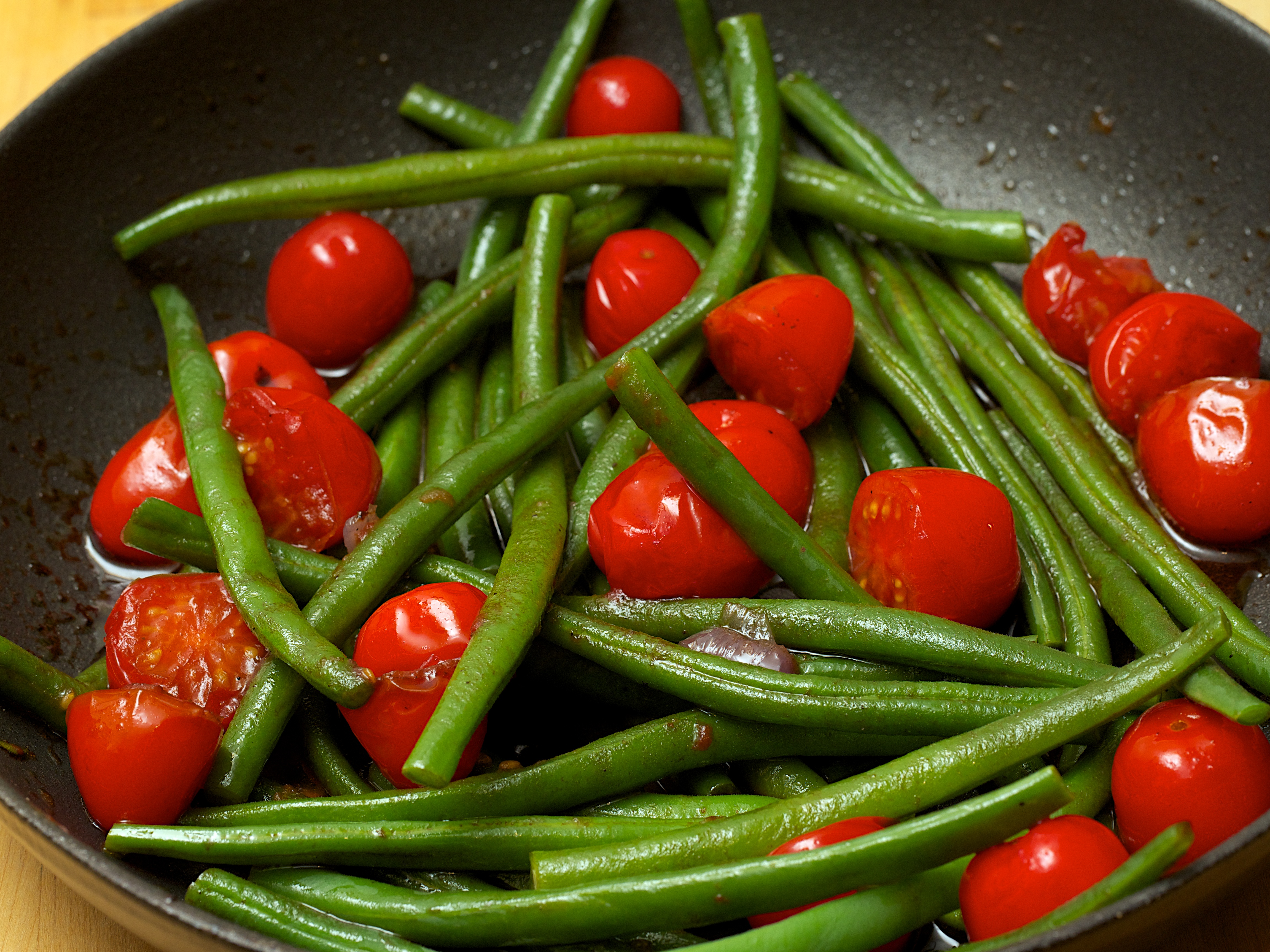
A colourful spring side dish that goes really nicely with roast lamb. You can cook the beans in advance and just warm through with the tomatoes and balsamic when you’re ready to serve.

Tomato & Balsamic Green Beans – serves 6-8 as a side dish

  • 650g green beans 
  • 1 tbsp olive oil
  • 200g cherry tomatoes, halved
  • 1 tbsp balsamic vinegar

Trim the beans and cook in boiling salted water for 6-8 minutes, or until just tender. Drain and cool under running cold water. Store in the fridge until needed.

Heat the oil in a pan, then add the tomatoes and fry gently for 2-3 minutes, or until slightly softened. Season well, then splash in the balsamic vinegar. Warm through, then tip the beans into the pan. Stir well, then cover and warm through for a few minutes.

Read Full Post »

We made this with red onions as we had no Spanish onions to hand which worked well; if you have the Spanish onions it works even better!

New potatoes Lyonnaise – to serve 6 as a side dish

  • 50g unsalted butter
  • 4 tbsp olive oil
  • 3 large Spanish onions, sliced
  • 2 garlic cloves, sliced
  • 1 tbsp thyme leaves
  • 1kg large new potatoes, halved

Heat the butter in a large pan until foaming. Add 2 tbsp of the olive oil and the onions and cook on a fairly low heat until soft and golden, about 30 minutes. When the onions have softened, stir in the garlic and thyme and set aside.

Heat the oven to 200C/180 fan/gas 6. Bring a large pan of salted water to the boil, add the potatoes and boil for 5 minutes, then drain well.

Mix the potatoes with the rest of the oil and some seasoning in a large roasting tin. Roast for 30 minutes, tossing halfway, until golden. Stir in the onion mixture and roast for a further 10 minutes.

(Original recipe from BBC Good Food)

Read Full Post »

One of those dishes that was even better than expected.We served this with lamb chops with seven spices but it would make a nice mezze dish or a side for any grilled fish or meat.

Giant Couscous & Chickpea Salad – to serve between 4 & 6

  • 12 cherry tomatoes, halved
  • 3 tbsp olive oil
  • 500ml vegetable stock
  • 120g giant couscous
  • 400g tin chickpeas, drained and rinsed
  • 1 onion, chopped
  • 2 tbsp ground cumin
  • 2 tbsp ground coriander
  • 1 tsp ground ginger
  • 3 tbsp chopped coriander
  • 3 tbsp chopped parsley
  • juice of ½ a lemon

Heat the oven to 200ºC/Fan 180ºC/Gas 6.

Put the tomatoes on a baking tray, drizzle with 1 tbsp of the oil and season with salt and pepper. Bake for about 20 minutes or until soft.

Pour the vegetable stock into a small saucepan and bring to the boil. Add the couscous and simmer for about 10 minutes or until tender (check it as it may not take the full 10 minutes). Strain, tip into a bowl and add the chickpeas.

Heat the rest of the oil in a frying pan, add the onion, and cook over a low heat for 5 minutes or until soft. Stir in the spices and cook for another minute. Remove from the heat and stir the spiced onion into the couscous and chickpea mixture.

Add the coriander, parsley, and roasted tomatoes, and season well with salt and pepper and a squeeze of lemon.

(Original recipe from The Lebanese Kitchen by Salma Hage, Phaidon, 2012.)

Read Full Post »

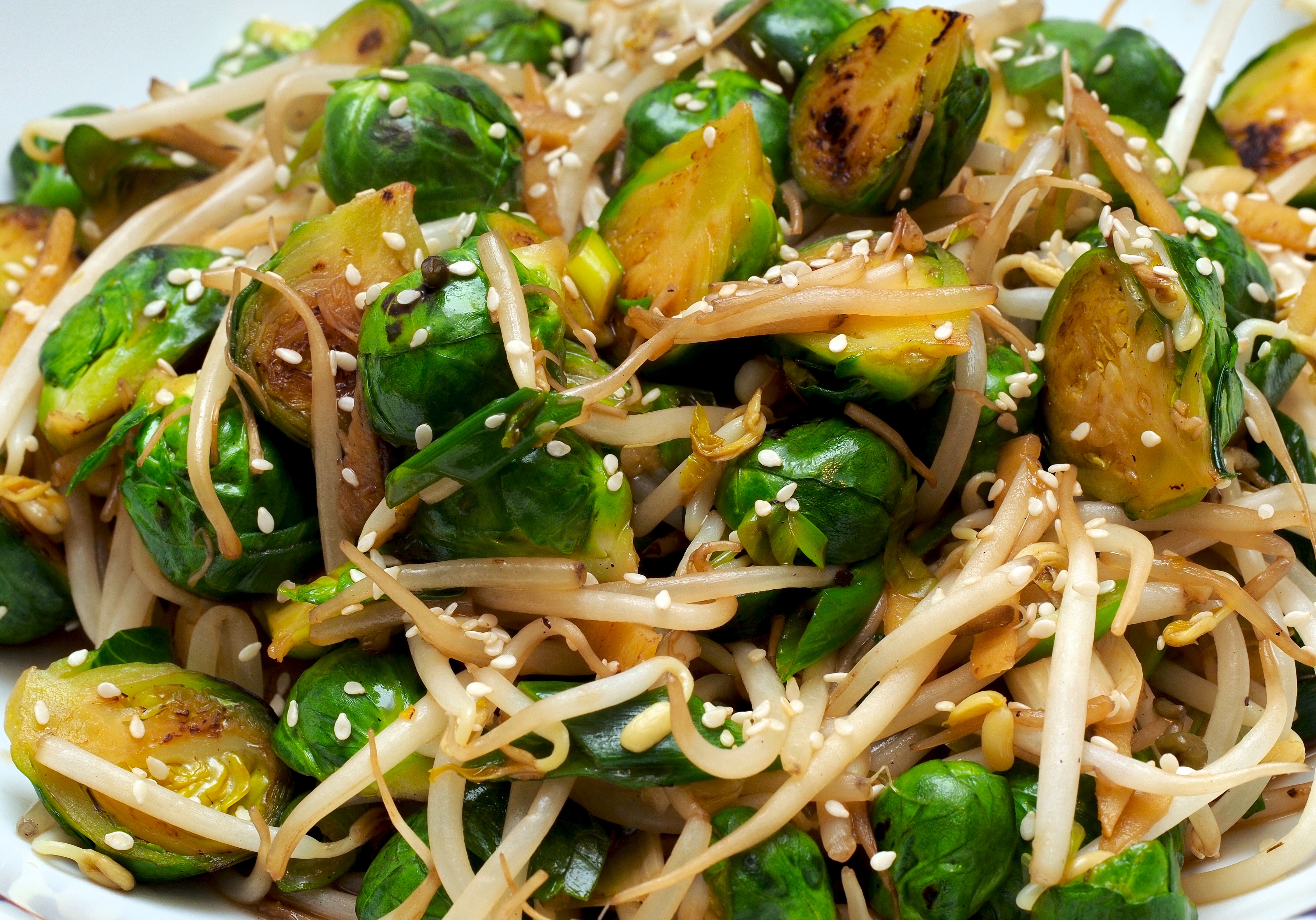
A stir-fry of Sprouts; Brussels & Bean. A delight and a real treat as a healthy midweek supper.

Sprouts with Sesame & Spring Onions – to serve 2 (or 4 as a side)

  • 1 tbsp sesame oil
  • thumb-size piece ginger, cut into matchsticks
  • 300g Brussels sprouts, halved
  • 250g beansprouts
  • small bunch spring onions, sliced diagonally
  • 1 tbsp clear honey
  • 2 tbsp soy sauce, plus extra to serve
  • 1 tbsp sesame seeds

Heat the oil in a wok. Fry the ginger and Brussels sprouts, tossing, for 5-6 minutes, until slightly browned. Add a few tbsp water while they’re cooking if you need to stop them sticking, though the odd crusty bit will only improve things.

Add the beansprouts, spring onions, honey and soy sauce, then stir-fry for 1 minute. Sprinkle over the sesame seeds and serve with some extra soy sauce.

(Original recipe from BBC Good Food)

Read Full Post »

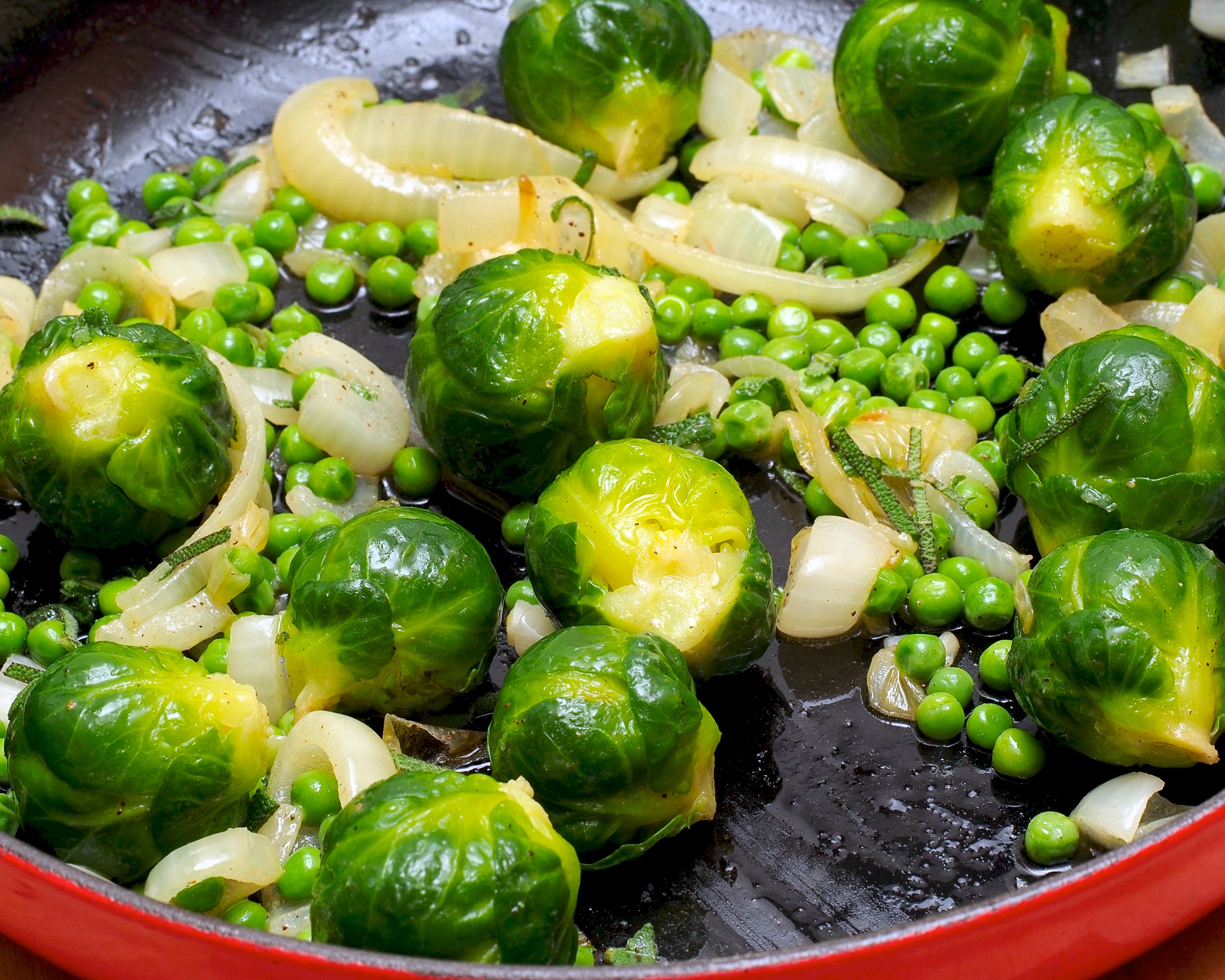
Simple dishes like this show off the flavours of the ingredients so well. This is a perfect dinner party side dish. Don’t worry too much about the sprout haters – more for us!!

Buttery Sage & Onion Sprouts – to serve 8 

  • 85g butter
  • 3 onions, cut into thickish slices
  • 8 sage leaves, chopped
  • 350g Brussels sprouts
  • 200g frozen peas

Heat half the butter in a large frying pan and soften the onions over a low heat for about 15 minutes. You want them really soft but not brown. Add most of the sage.

Meanwhile, cook the sprouts in a pan of boiling water for about 4 minutes, add the peas and cook for another minute or until just tender.

Drain, reserving splash of water, then add the sprouts to the peas and onions, along with the rest of the butter, stirring well so everything is coated in butter. Add the reserved cooking water if you think it needs it.

Season with loads of black pepper and some salt and sprinkle the reserved sage on top.

(Original recipe from BBC Good Food)

Read Full Post »

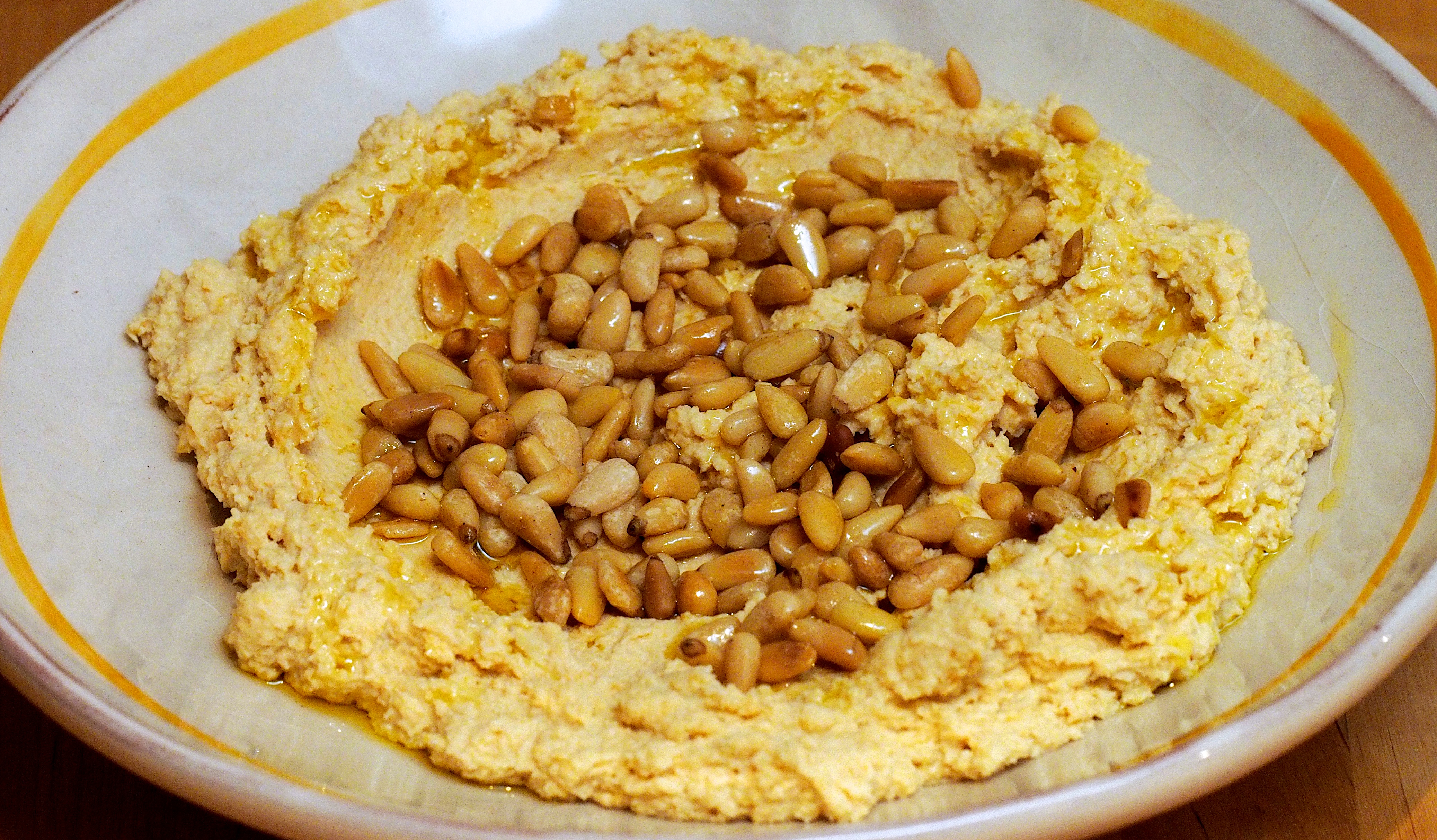
Such a good recipe for hummus we couldn’t stop eating it and had to make another batch! Once you’ve bought the tahini you may as well use it up.

  • 2 x 400g tins of chickpeas
  • 2-3 garlic cloves, peeled
  • 4 tbsp tahini
  • juice of 2 lemons
  • 2 tsp sea salt
  • best extra virgin olive oil
  • 50g pine nuts, toasted

Drain the chickpeas, keeping 50ml of the juices from the tin, and rinse.

Put the chickpeas into a food processor, add the garlic cloves and tahini, and process for a few minutes.

Add the reserved can juices, then half the lemon juice and the sea salt, and process until smooth.

Taste and add some more lemon juice, if you like.

Scrape the hummus into a dish, drizzle generously with your best olive oil, sprinkle with the toasted pine nuts, and serve as a starter, with  breadsticks and crudités for pack lunch, or with a selection of other mezze dishes.

(Original recipe from The Lebanese Kitchen by Salma Hage, Phaidon 2012.)

Read Full Post »

A side dish from Lazio that celebrates the unique and delicious Romanesco Cauliflower. We never cease to be amazed at the shape of these and the flavour is delicious and enhanced by the simple additions.

Romanesco and Parmesan – to serve 4

  • large head of Romanesco broccoli
  • 6-8 tbsp extra virgin olive oil
  • 2 tbsp chopped flat-leaf parsley
  • a few shavings of Parmesan or Pecorino Romano

You should cook the Romanesco in really salty water which will season it as it cooks and preserve the delicate flavour.

Snap off any large or bruised leaves from the outside of the broccoli, but leave any small ones attached. Trim off the end of the stem, to where the leaves start. Cut a cross in the base of the stem.

Boil the whole broccoli head until completely tender, about 12 minutes. Lift it out of the water and let it steam dry for a few minutes, then put it in a large dish, break into florets, and douse with olive oil.

Season with pepper (you shouldn’t need salt if you’ve used enough salt in the cooking water), scatter with parsley and cheese, and serve.

(Original recipe from Jacob Kenedy’s Bocca Cookbook, Bloomsbury, 2011.)

Read Full Post »

Colcannon

A very Irish side dish but good enough to eat a big bowlful on its own. If you want to restrain yourselves a bit you could balance this with a nicely barbecued sausage. The diet starts after Christmas!

When seasoning make sure you use white pepper as it makes all the difference. The pink pepper mill in the photo is our “white pepper mill”.

Colcannon – to serve 6 as a side

  • 1kg potatoes, scrubbed (cut the bigger ones in half)
  • 100g butter
  • ½ a small Savoy cabbage, finely shredded
  • 150ml double cream

Put the potatoes into a large pan of water and bring to the boil. Simmer for 15-20 minutes or until a skewer goes through without resistance.

Heat about 25g of the butter in another saucepan and fry half the cabbage for about 5 minutes.

Drain the potatoes and peel while they are hot, then mash until smooth.

Heat the cream with the rest of the butter and, when almost boiling, beat into the potato. Add the cabbage to the potato, mix well and season (with salt and white pepper).

Heaven!

Read Full Post »

« Newer Posts - Older Posts »