Feeds:
Posts
Comments

Archive for the ‘Vegetarian’ Category

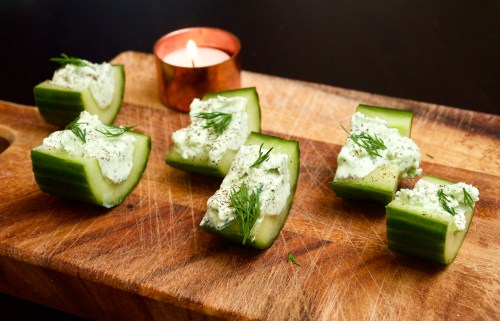
Feta & Cucumber Bites

We served these on New Year’s Day with other canapés but by the time we’d typed up the recipe we thought everyone might be a bit partied out. So we’ve saved this post for summertime when these tasty bites would be delicious served outside with cool drinks before dinner.

Feta & Cucumber Bites – makes 24

  • 1 garlic clove, crushed
  • 200g feta
  • 100g ricotta
  • 4 tbsp chopped dill, plus extra fronds, to garnish
  • 1 large cucumber, halved lengthways, seeds scooped out and discarded

Whizz the garlic, feta, ricotta and dill in a food processor until smooth but thick.

Fill the scooped out cucumber with the cheese mixture and smooth over. Cut into 3-cm thick slices. Grind over some black pepper and garnish with some more dill.

(Original recipe from BBC Good Food.)

Read Full Post »

Pasta with broccoli & gorgonzola

This is particularly good with purple sprouting broccoli when it’s around. Don’t be tempted to strip off the leaves they’re just as good to eat as the florets. Hardly a recipe at all but very satisfying.

Wine Suggestion: try an Italian white from the Marches or Abruzzo. Our choice this evening was the La Piuma (feather) Pecorino Terre di Chieti; charming fruit and with little twists of nuts, herbs and citrus that played with the food in a great way.

Cheese & broccoli pasta – serves 2

  • 200g pasta (use whatever you have)
  • a bunch of purple sprouting broccoli – about 6 to 8 stems (or a head of ordinary broccoli)
  • about 250g of ripe Gorgonzola

Cook the pasta in a generous amount of boiling salty water.

Cut the broccoli into small florets and thin pieces of stalk (discard any thick woody stems).

Lightly salt another pan of boiling water and cook the broccoli for a few minutes or until tender.

Put the cheese into a large warm bowl, then add the hot drained broccoli followed by the lightly drained pasta (a bit of water will help make a sauce). Stir until melting and serve.

(Original recipe from Appetite by Nigel Slater, Fourth Estate, 2001)

Read Full Post »

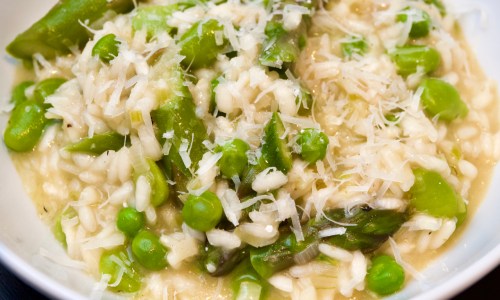
Risotto Primavera

Do it now when there is lots of asparagus in the shops! If you have peas and broad beans growing you should of course use these rather than our frozen substitutes.

Wine Suggestion: we had opened a delightful Touraine Sauvignon Blanc from Domaine Octavie which not only matched the food, it also matched the sunshine with us this evening.

Risotto Primavera – serves 4

  • 200g frozen broad beans
  • 4 medium shallots, finely chopped
  • 3 scallions, finely chopped
  • 1 small garlic clove, finely chopped
  • 250g asparagus, woody ends snapped off and chopped into 4 pieces
  • 1.3 litres of good chicken or vegetable stock – homemade if you have it
  • 1 tbsp olive oil
  • 85g butter
  • 350g Carnaroli or other risotto rice
  • 100ml dry white wine
  • 140g frozen peas, defrosted
  • 100g Parmesan, finely grated

Tip the broad beans into boiling water and simmer for 1 minute, then drain and remove the skins.

Meanwhile, bring the stock to the boil in a saucepan.

Heat the oil and half the butter in a heavy, wide pan. Add the shallots, scallions & garlic and cook for a few minutes until soft and translucent but not browned.

Keep the heat at medium and add the rice to the pan and stir for a few minutes so it gets toasted and very hot. When it starts to hiss, pour in the wine and stir for another minute or so until the wine has evaporated.

Set a timer for 20 minutes, then start adding the stock starting with a ladle and a half. It should be gently simmering and you need to stir continuously until the liquid had been absorbed. Keep adding the stock a ladleful at a time and allowing it to be absorbed before adding another.

After 14 minutes, add the beans and peas to the rice with some seasoning. Meanwhile, add the asparagus pieces to the simmering stock and cook for 4 minutes, then remove with a slotted spoon and add to the rice. Start tasting the rice to check if it is done – you’re looking for soft rice with a little bite. Keep adding stock until cooked, then take the pan off the heat and add half the Parmesan and the remaining butter along with another splash of stock. Cover with a lid and leave to rest for a few minutes.

Serve with the rest of the Parmesan.

(Original recipe from BBC Good Food)


Read Full Post »

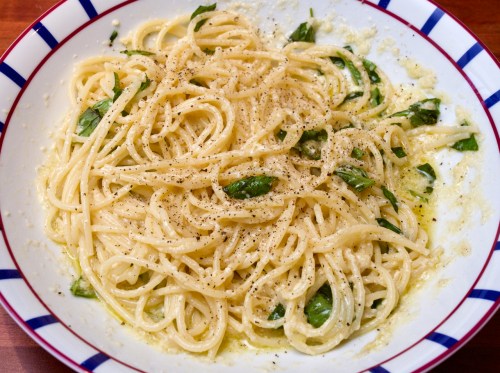
Lemon & basil linguine

Sometimes the simplest of ideas turn out the best.

Wine Suggestion: we had a glass of the Adi Badenhorst Secateurs Chenin Blanc which he’s now experimenting with a little bit of skin contact. We don’t disagree, it adds a touch of extra texture and complexity to such a great value wine.

Lemon & basil linguine – serves 2

  • 200g linguine
  • 1 large lemon, juiced
  • 75ml good olive oil
  • 75g Parmesan
  • a large handful of basil leaves

Put a large pan of water on to boil, add loads of salt and cook the pasta according to the time suggested on the packet.

Put the lemon juice, olive oil and Parmesan into a large warmed bowl and beat with a small whisk to combine and thicken. Tear the basil leaves into the bowl and add plenty of black pepper.

Drain the pasta and toss with the mixture in the bowl.

(Original recipe from The Kitchen Diaries  by Nigel Slater, Fourth Estate, 2005.)

Read Full Post »

Broad Bean Bruschetta

A real burst of summer freshness that we assembled using frozen broad beans on a grey winter day. It is now Spring however and you might be the lucky person with some freshly picked broad beans. You can of course use frozen beans which for us are right up there with peas as an absolute freezer essential.

Wine Suggestion: We opened a vibrant Verdicchio from Umani Ronchi; their CaSal di Serra. Thirst quenching and pure peach, apple and lemon fruits that match the season as well.

Ricotta & Broad Bean Bruschetta – enough to make 4

  • 4 slices of rustic sourdough bread
  • 1 clove of garlic, halved
  • 200g broad beans (podded weight)
  • 250g ricotta
  • juice and zest of 1 lemon
  • 2 tbsp olive oil
  • a few small mint leaves
  • a few basil leaves, shredded

Toast the bread until light golden brown, then rub on one side with the cut garlic clove.

Bring a saucepan of salted water to the boil and cook the broad beans for 2 minutes, then drain and run under cold water. The beans will now be very easy to pop gently from their skins.

Break the ricotta up with a fork and add the lemon juice, then stir to combine. Spread the ricotta mixture over the toasted bread and drizzle lightly with olive oil. Toss the broad beans with the mint, basil, lemon zest and remaining olive oil. Pile on top of the ricotta and season with salt and black pepper.

(Original recipe from The Hairy Bikers’ Mediterranean Adventure by Si King & Dave Myers, Seven Dials, 2017.)

Read Full Post »

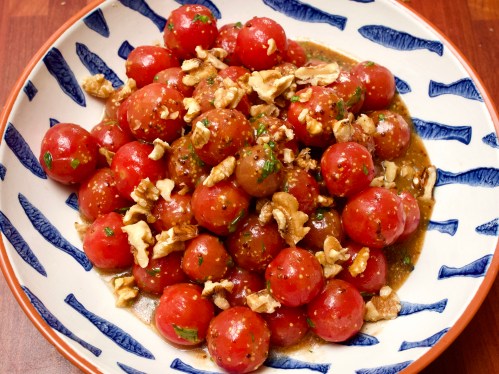
Cherry tomato salad with wholegrain mustardSuch a nice tomato salad with lots of delicious dressing for which you will require some crusty bread. You do need to skin the tomatoes but it actually takes no time at all if you follow the instructions below and it allows them to soak up the dressing so don’t be tempted to leave that step out.

Cherry tomato salad with wholegrain mustard – serves 4 to 6

  • 900g cherry tomatoes
  • 50g walnuts, coarsely chopped

FOR THE DRESSING:

  • small bunch of tarragon
  • 2 tbsp balsamic vinegar
  • 1 heaped tbsp wholegrain Dijon mustard
  • 125ml walnut oil or olive oil

Peel the tomatoes by cutting a slit in the base of each then putting them into a large bowl. Pour over some boiling water from the kettle and immediately drain – the skins should peel of easily.

Keep a sprig of tarragon to garnish and remove the rest of the leaves from the stalks. Coarsely chop the leaves and discard the stalks. Whisk the vinegar and mustard together with some salt and pepper. Gradually whisk in the oil so the dressing thickens slightly, then whisk in the chopped tarragon.

Pour the dressing over the tomatoes,  mix gently and taste for seasoning. You can leave at room temperature for a couple of hours at this point. Pile into a salad bowl and sprinkle with the walnuts and the reserved tarragon just before serving.

(Original recipe by Anne Willan IN: BBC Good Food Magazine, April 2002)

Read Full Post »

Watercress & Scallion salad

We love this green salad with barbecues as the scallions taste amazing and you’re not likely to get the barbecue out just for a green salad.

Watercress & scallion salad – serves 8 to 10

  • 6 tbsp olive oil
  • 4 shallots, sliced into fine rings
  • 2 tsp caster sugar
  • 4 tbsp white wine vinegar
  • 3 bunches scallions, trimmed
  • 4 bunches of watercress (or failing that a bag of mixed salad leaves as we had to resort to this time but it we prefer it with watercress)

Heat a pan over a medium heat, then fry the shallots for a few minutes with a splash of oil, then add the sugar and vinegar. Bring to the boil, then set to one side.

Toss the scallions in a little oil then cook on a hot barbecue for a a couple of minutes on each side (use a griddle pan if that’s easier). Put the scallions in a bowl with the shallots and the rest of the olive oil. Season and toss with the watercress.

(Original recipe by James Martin IN: BBC Good Food Magazine, April 2008)

Read Full Post »

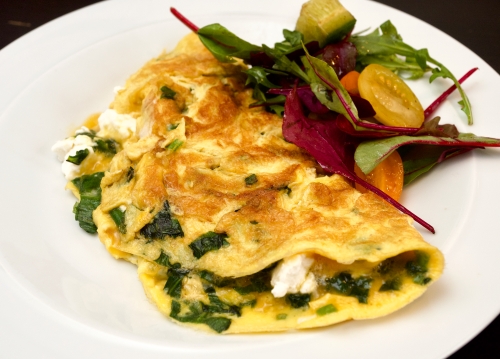
Wild Garlic Omelette with goats cheese

We just loved this simple omelette with lots of wild garlic and some melting goat’s cheese. You could leave the goat’s cheese out and it would still be a super supper dish with some salad and crusty bread.

Wild Garlic & Goat’s Cheese Omelette – serves 2

  • a good handful of wild garlic leaves – about 50g
  • 4 large eggs, lightly beaten (beat 2 eggs in 2 separate cups for ease)
  • 25g butter
  • 50g goat’s cheese crumbled

Finely shred the wild garlic and season the eggs.

Heat half the butter in a nonstick frying pan. Add half the wild garlic and wild for about 20 seconds, then add half the eggs. Leave for about 15 seconds, then tilt the pan and gradually scrape up the set bits of omelette around the edge into the middle of the pan, letting the raw egg run out to the edges.

When the omelette is still a bit liquid on top but set underneath, put half the cheese over one half. Fold the other half over the filling, then let the cheese melt for about 20 seconds before turning out onto a warm plate.

Repeat with the remaining ingredients to make another omelette, then serve right away.

(Original recipe from Food from Plenty by Diana Henry, Mitchell Beazley, 2010.)

Read Full Post »

Potato Pie with Beaufort Cheese

What can we tell you about this pie? Well first of all it doesn’t look remotely like the picture in the book and there were a few moments of panic when the cream started to run out the sides. Despite our wholly inadequate pastry skills and some last minute patching to stop the leaks, it tasted pretty good and didn’t look half as bad when it came out of the oven as it did going in. If you have a similar leak we advise remaining calm and sticking some pastry over the hole – pronto!

If you have trouble finding Beaufort,  Gruyere is a good substitute. Serve with a green salad.

Wine Suggestion:  an oaked white with a good freshness and texture is the best match for both the cheese and pastry. If you can find a white from Jura or Savoie you’re in for a treat but otherwise there are plenty of options. For something a little different we tried both the Sartarelli Balciana Verdicchio from the Marche in Italy and the Soalheiro Alvarinho Reserva from the Melgaço in Portugal and had a great match with both.

Potato pie with Beaufort cheese – serves 4 

  • 500g medium-sized waxy potatoes – we used Charlotte
  • 100ml double cream
  • 2 cloves of garlic, lightly bruised
  • 25g-30g butter
  • 375g ready-made puff pastry in 2 sheets
  • 75g Beaufort cheese, very thinly sliced (a vegetable peeler works well)
  • ½ tsp thyme leaves
  • 1 egg beaten, to glaze

Preheat the oven to 200C/Fan 180C/Gas 6.

Steam the potatoes until tender, then cool and peel. Slice moderately thickly and set aside.

Put the cream into a small saucepan with the garlic and bring to the boil, then take off the heat, cover and leave to infuse.

Lightly smear a baking sheet with some of the butter. Roll out 1 pastry sheet thinly (about 2-3mm) and lay onto the baking sheet. Mark a circle on the pastry about 20cm in diameter. Cover the circle with half of the potatoes, arranging in a slightly overlapping layer. Season with salt and pepper then cover with half the cheese and thyme leaves, adding a few flecks of butter. Repeat these layers, then brush the pastry edges with beaten egg.

Roll out the other sheet and place over the filling. Clamp down the edges with your fingers and either trim to a round or if it’s easier fold in the extra pastry to create a thicker edge.

Brush the pastry all over with the egg and decorate with a fork (the decorating was beyond us and may have caused the hole so skip this step if you like). Make a hole in the centre of the pie about 5mm in diameter. Remove the garlic from the cream, then slowly pour into the pie using a small funnel. Do this slowly and allow the cream to settle before adding more. Stop when no more will fit – you might have a bit left over.

Put the pie into the oven and bake for 20 minutes, then turn the oven down to 180C/Fan 160C/Gas 4. Continue to bake for a further 20 minutes – cover loosely with foil if the pastry browns too quickly.

Remove from the oven and allow to stand for 10 minutes before serving in wedges with some dressed salad leaves.

(Original recipe from The Vegetarian Option by Simon Hopkinson, Quadrille Publishing Ltd, 2012.)

Read Full Post »
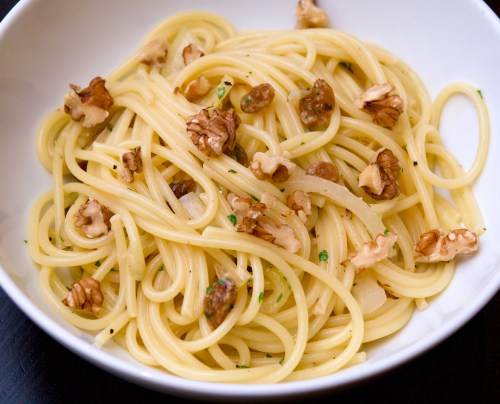
Spaghetti with walnuts, raisins & parsley

A simple weeknight dish with very few ingredients. Typical of the type of dish we have at the end of the week when we’re determined to use what we’ve got without having to return to the shops.

Spaghetti with Walnuts, Raisins & Parsley – serves 4

  • 300g spaghetti
  • 2 tbsp olive oil
  • 2 onions, sliced
  • 5 tbsp raisins or sultanas
  • 250ml chicken or vegetable stock
  • 50g parmesan, grated
  • 5 tbsp chopped walnuts
  • small bunch flat-leaf parsley, finely chopped

Cook the pasta in boiling salted water according to the pack.

Meanwhile, heat the oil in a frying pan and cook the onions for 8 to 10 minutes or until soft and golden brown. Add the raisins and stock and cook for a few minutes until hot through. Toss with the pasta, Parmesan, walnuts and parsley.

(Original recipe from BBC Good Food)

Read Full Post »

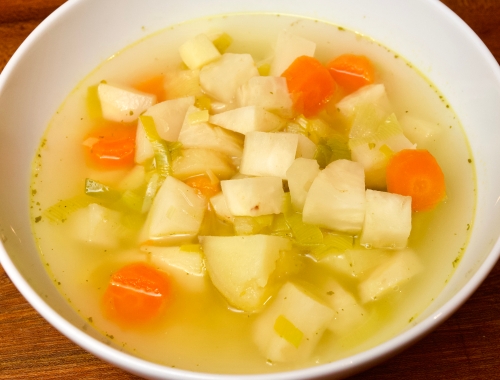
Winter root vegetable soup

So here we are almost March and we are experiencing an artic blast. The snow is piled up at the back door and Dubliners have been advised to stay indoors tomorrow as more is on the way. Soup seems like our only defence. Nothing fancy here but full of fresh vegetable flavours. It will protect you against almost all weather eventualities, or at least both fill and warm you up.

Winter Root Vegetable Soup – serves 6 to 8

  • 1 tbsp butter
  • 1 onion, chopped
  • 1 leek, sliced
  • 2 potatoes, peeled and chopped
  • 2 litres vegetable stock
  • 2 carrots, chopped
  • 1 parsnip, chopped
  • 1 small celeriac, peeled and chopped

Melt the butter in a large pot over a medium to high heat. As soon as it has melted and started to froth, add the onion, leek and potatoes. Sauté for a couple of minutes, then cover and sweat over a low heat for 8 minutes.

Add the stock, the rest of the vegetables and some salt and pepper (white pepper would be our preference), then lower the heat and simmer for about 20 minutes, partially covered. Taste the vegetables to check that they are completely soft, then check the seasoning before serving.

(Original recipe from Fresh by Donal Skeehan, Hodder & Stoughton, 2015.)

Read Full Post »

Cheesy Kale Bake

Kale is everywhere and not our choice to put in a smoothie, but absolutely delicious when smothered with cheese sauce.

Cheesy kale bake – serves 4

  • 400g curly kale, remove the stalks and thickly shred
  • 25g butter
  • 25g plain flour
  • 400ml milk
  • 250g Cheddar or Gruyère cheese (or a mixture), grated
  • 1 tsp Dijon mustard

Preheat the oven to 200C/400F/Gas 6.

Put a large pan of water onto a high heat, add a tsp of salt and bring to the boil. Tip in the kale and cook for a couple of minutes or until almost tender. When it has cooled a bit squeeze the leaves with your hands to remove excess water and spread out in an ovenproof dish (20 x 25cm).

To make the cheese sauce, melt the butter in a saucepan over a medium heat, add the flour and cook for a minute or until bubbling. Gradually add the milk, whisking or stirring all the time, then reduce the heat and cook for 3-4 minutes or until thickened. Remove the sauce from the heat, add half the cheese and season with salt and pepper.

Pour the cheese sauce over the kale and sprinkle over the rest of the cheese, then bake for 15-20 minutes or until golden and bubbling.

(Original recipe from Rachel’s Everyday Kitchen by Rachel Allen, HarperCollins, 2013.)

Read Full Post »

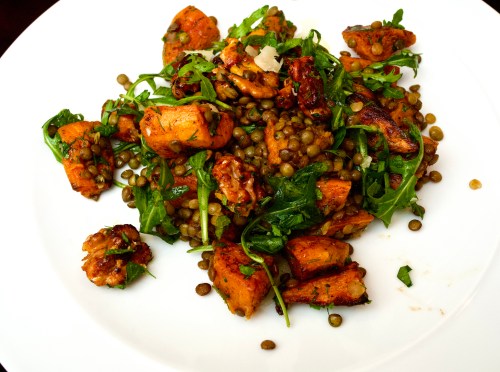
Spiced Sweet Potato, Puy Lentils and Rocket with Honey-roasted Walnuts

We picked up an amazing salad book, called Community, on our last trip to Australia which really pushes salad to centre stage. The recipes can all be served as a main course or as a side and they portions are accordingly generous. This one is good but the predominant flavour is honey so if that’s not your thing then perhaps give it a miss. We thought it might be nice with some roast pork.

The honey-roasted walnuts are a nice snack on their own too, so don’t be afraid of making too many.

Wine Suggestion: We went a little left-field for this and opened a Colterenzio Lagrein, a spicy, earthy red from Alto Adige – Südtirol; choose something a little earthy with a little spice and good fruit.

Spiced sweet potato, puy lentils and rocket with honey-roasted walnuts – serves 4 to 6

  • 2 kg sweet potatoes, peeled and cut into 2 cm cubes
  • 2-3 tbsp extra virgin olive oil
  • ½ tsp ground nutmeg
  • 1 tsp ground cinnamon
  • 2 tsp ground cumin
  • ½ tsp ground allspice
  • sea salt and black pepper
  • 250g Puy lentils, rinsed
  • 1 x 250 ml cup of soft herbs e.g. mint, parsley, chervil, tarragon, chives, dill or coriander – finely chopped
  • 2 x 250ml cups of  baby rocket leaves
  • 50g Parmesan, shaved

SWEET VINAIGRETTE:

  • 1 tbsp honey
  • 1 garlic clove, crushed
  • 2 tbsp red wine vinegar
  • 4 tbsp extra virgin olive oil

HONEY-ROASTED WALNUTS:

  • 2 tbsp honey
  • ¼ tsp dried chilli flakes
  • ½ tsp turmeric
  • pinch sea salt
  • 2 x 250ml cups walnuts

Preheat the oven to 200C.

Combine the sweet potato, olive oil, nutmeg, cinnamon, cumin and allspice in a large bowl with some salt and pepper. Roast for 30 minutes or until tender and turning golden.

Bring a large pot of water to the boil, then simmer the lentils for about 20 minutes or until tender but still with a little bite. Drain.

Whisk together all the ingredients for the sweet vinaigrette and season with salt and pepper. Stir the vinaigrette through the lentils while they’re still warm.

To prepare the honey-roasted walnuts, combine the honey with the chilli flakes, turmeric, salt and just enough water to make a thick paste. Toss the walnuts in the paste and spread over a baking tray. Roast for 15 minutes or until they are crunchy. They will still be a bit sticky. Watch very carefully after the first 10 minute as they can go from toasted to burnt in seconds.

Combine half the chopped herbs with the rocket, sweet potato and lentils and season well. Scatter over the walnuts, the remaining herbs and the Parmesan before serving.

(Original recipe from Community: Salad recipes from Arthur Street Kitchen by Hetty McKinnon, Pan Macmillan Australia, 2014.)

Read Full Post »

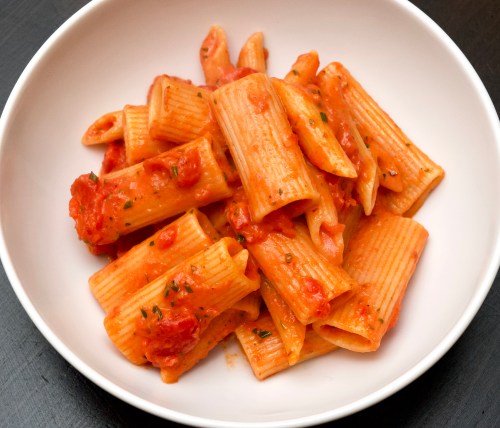
There is a rosemary bush in our front garden and it often comes to the rescue when we have pretty much nothing for dinner. Provided you have a rosemary bush at your disposal this is pretty much a store cupboard dish and also handy for using the end of a jar of cream. This is surprisingly tasty and a great throw together weeknight dish.

Wine Suggestion: this dish suits a rustic red wine with a bit of “garrigue”, the southern French earthy, herby, spice that is a bit wild and untamed. This time we opened a wine that has this in spades, the Mas Conscience “le Cas” which is 100% old vine Carignan, which is all black fruits hints of hot rocks and earth, and wild Languedoc spices. Not shy in character but a good match nonetheless.

Rigatoni with Tomato & Rosemary Sauce – serves 4

  • 4 sprigs of rosemary, leaves finely chopped and stalks discarded
  • 2 x 400g tins chopped tomatoes
  • a pinch of chilli flakes
  • 400g rigatoni or penne
  • 100ml double cream
  • 1 tsp sugar

Fry the chopped rosemary in a tablespoon of olive oil for about a minute. Stir in the tinned tomatoes and the chilli flakes, then simmer hard for 12 minutes.

Meanwhile, cook the pasta in lots of salted boiling water according to the time indicated on the pack.

Stir the double cream into the sauce along with the sugar and plenty of seasoning, then mix in the drained pasta and serve.

(Original recipe from BBC Good Food Magazine, February 2011.)

Read Full Post »

Beetroot & Dill with Crème Fraîche & Walnuts

This is a great winter salad that feeds a crowd and goes really well with lamb. You could also serve on it’s own or with some baked potatoes and leftovers make good lunchboxes. Roast the beetroots earlier in the day so you have very little to do to assemble at the end.

Wine Suggestion: An earthy, lighter bodied red works here and a good Beaujolais, Burgundy/Pinot Noir or Northern Rhône Syrah would be a nice choice. We opened a Loire red made from Cabernet Franc, a Chinon, as we were also barbecuing some lamb to accompany it.

Beetroot & dill with crème fraîche and walnuts – serves 4 to 6

  • 12 beetroots (about 1.5kg), peeled and chopped into 2cm cubes
  • 1 tbsp balsamic vinegar
  • 2-3 tbsp extra virgin olive oil
  • 1 garlic cloves, finely grated
  • 3 scallions, finely sliced
  • 2 large handfuls of baby spinach leaves
  • 150g walnuts, toasted in a dry pan, then crumbled
  • a large handful of dill fronds, finely chopped

FOR THE DILL CRÈME FRAÎCHE

  • 250g crème fraîche
  • a large handful of dill fronds, finely chopped
  • juice of ½ lemon
  • 1-2 tbsp extra virgin olive oil

Preheat the oven to 200ºC.

Tip the beetroot into a large roasting tin and drizzle over the balsamic vinegar & olive oil. Add the garlic, salt and pepper and mix well. Roast until tender. Start checking at about 45 minutes but it could take up to 90 minutes. Remove from the oven and leave to cool.

For the dill crème fraîche, whisk the crème fraîche with the dill, lemon juice and olive oil. Add a pinch of salt and some black pepper.

Mix the beetroot with the scallions and baby spinach in a large bowl, then add a good drizzle of olive oil and season with salt and black pepper. Fold the dill crème fraîche through the beetroots – a kind of marble effect looks good so toss gently. Top with the roasted walnuts and sprinkle with more dill to serve.

(Original recipe from Commmunity: Salad Recipes from Arthur Street Kitchen by Hetty McKinnon, Pan MacMillan Australia, 2014.)

Read Full Post »

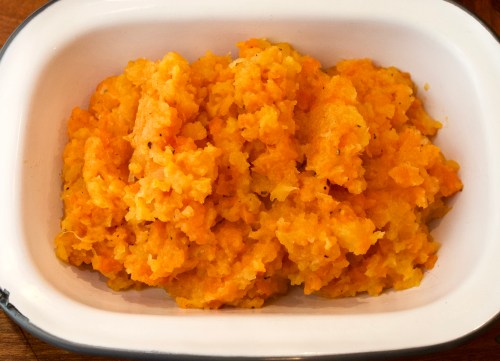
Carrot and turnip mash

At home in Northern Ireland we call swedes turnips and we’re much more likely to make carrot & parsnip mash. Here in Dublin people serve us mashed carrot and swede which is pretty good too. Serve with meat dishes.

Mashed carrots & swedes – serves 4

  • 300g carrots, chopped small
  • 200g swede, chopped small
  • 25g butter
  • 1 tsp light brown sugar
  • pinch of grated nutmeg

Boil the vegetables in a large pan of boiling salted water for about 20 minutes or until soft. Drain well and return to the pan. Add the butter, sugar and nutmeg and mash together well.

Read Full Post »

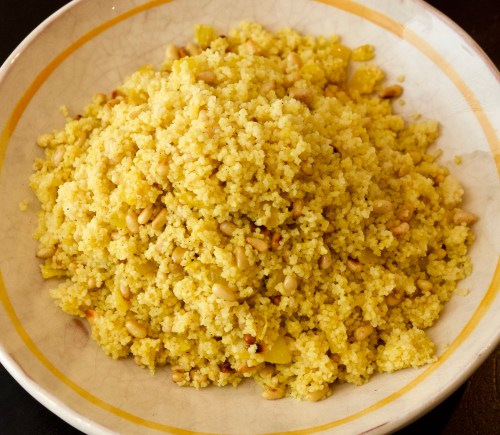
Golden Couscous

Plain buttered couscous is perfect with tagine and middle eastern stews. Occasionally though it’s nice to add a few extras to make it taste a bit special.

Golden Couscous – serves 3 to 4 as a side (easy to double)

  • 25g butter
  • 1 onion, finely chopped
  • ½ tsp ground turmeric
  • 150g couscous
  • 2 tbsp olive oil
  • 175ml vegetable or chicken stock
  • juice of ½ a lemon
  • 75g pine nuts, toasted

Melt the butter in a saucepan over a medium heat, then tip in the onion, season with salt and pepper and cook for 10 minutes or until softened and golden. Stir in the turmeric, then remove from the heat and set aside.

Put the couscous into a bowl and rub in the olive oil with your fingertips.

Pour the stock into a saucepan and bring to the boil, then pour over the couscous, cover with clingfilm and allow to steam for 5-6 minutes or until the stock has been absorbed.

Stir in the onions, lemon juice and toasted pine nuts and season to taste.

(Original recipe from Rachel’s Everyday Kitchen by Rachel Allen, HarperCollins, 2013.)

Read Full Post »

Penne with blue cheese sauce

We seem to have a piece of blue cheese that sits permanently on the shelf on our fridge door. It changes every week but never completely disappears and so we find ourselves constantly on the search for weeknight dinners to put it to good use. Not a bad problem to have.

Wine Suggestion: We’ve cooked dishes similar to this many times and have found they work best with white wines with body: Chardonnay, Chenin Blanc, Soave … if it has a touch of oak or richness then all to the good.

Penne with blue cheese sauce – serves 4

  • 350g penne pasta
  • 200g frozen leaf spinach
  • 85g Danish blue or other blue cheese, crumbled
  • a pinch of chilli flakes
  • 250g tub mascarpone cheese
  • 25g Parmesan, grated

Bring a large pan of salted water to the boil and cook the pasta according to the instructions on the pack, add the spinach 3 minutes before the end of the cooking time. Drain the pasta and spinach and tip into a shallow heatproof dish along with the blue cheese, chilli flakes and lots of black pepper.

Put spoonfuls of the mascarpone over the top of the pasta. Sprinkle with the Parmesan and grill for 5 minutes or until the mascarpone has melted and the top is golden. Serve with a green salad.

(Original recipe from BBC Good Food Magazine, October, 2000.)

Read Full Post »

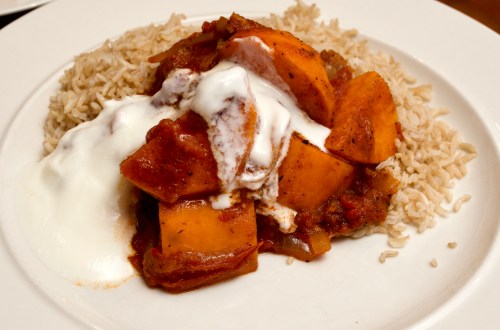
Sweet potato vindaloo

It hasn’t happened just yet but there will come a time when we will grow tired of all the winter root veg and will be hankering for spring and some lighter dishes. If you start to feel this way we recommend turning to cookbooks inspired by India which often contain some of the most interesting and delicious veggie dishes. Don’t be put off by the fiery connotations of ‘vindaloo’, this is a spicy dish but nothing too scary and is tamed by the additions of fluffy white rice and cool yoghurt.

Sweet potato vindaloo – serves 4

  • 4 tbsp rapeseed oil
  • 6 cloves
  • 1 star anise
  • 20 black peppercorns
  • 1 cinnamon stick
  • 2 tsp cumin seeds
  • 6 cloves of garlic, crushed
  • 4cm piece of ginger, peeled and grated
  • 5 tbsp white wine vinegar
  • ¾ tbsp chilli powder (feel free to adjust to your own tolerance level)
  • 2 medium onions, finely sliced
  • 1 tsp salt
  • 1 tsp sugar
  • 1 x 400g tin of plum tomatoes
  • 1kg sweet potatoes, peeled and cut into bite-size cubes
  • yoghurt, to serve
  • steamed white basmati rice, to serve

Heat 1 tbsp of the oil in a large frying (for which you have a lid) over a medium heat, then add the cloves, star anise, black peppercorns, cinnamon stick and cumin seeds. Stir-fry for a couple of minutes until fragrant and then remove from the heat and grind in a spice grinder or pestle and mortar. Add the garlic, ginger & vinegar and continue to grind to a smooth paste, then mix in the chilli powder.

Heat the remaining 3 tbsp of oil in the same pan over a medium heat, then add the onions. Cook for 15 minutes or more until brown and caramelised. Add the spice paste, salt and sugar, then cook for another couple of minutes before tipping in the tomatoes and crushing with a wooden spoon. Fill the empty tomato tin half full with water and add to the pan. Cover the pan with a lid and cook for around 5 minutes, then add the sweet potatoes.

Bring the curry to the boil, then cover and simmer for 20 to 25 minutes or until the sweet potato is completely tender. Serve with cool natural yoghurt and hot basmati rice.

(Original recipe from Fresh India by Meera Sodha, Penguin, 2016.)

Read Full Post »

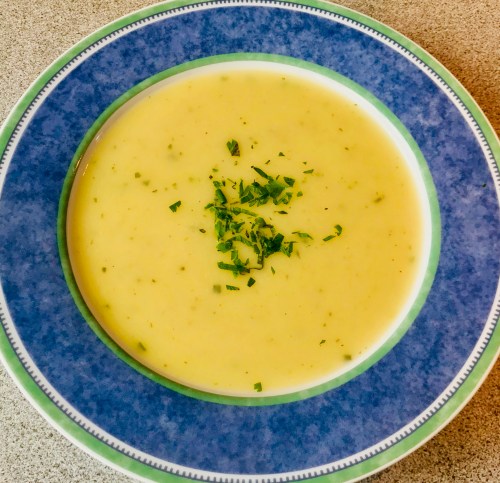
Potato soup

An invaluable recipe especially in Ireland as we always seem to have surplus potatoes lying around. This is what we cook when ‘there’s no food in the house’ and it’s pretty good.

Potato and fresh herb soup – serves 6

  • 50g butter
  • 425g potatoes, peeled and cut into 1cm cubes
  • 110g onions, cut into 1cm cubes
  • 1 tsp salt
  • 1 tbsp chopped herbs: parsley, thyme, chives
  • 850ml chicken or vegetable stock
  • 125ml creamy milk

Melt the butter in a heavy saucepan. Wait until it starts to foam, then add the potatoes and onions and stir to coat in the butter. Add the salt and some black pepper. Cover with a butter wrapper or some greaseproof paper and the saucepan lid. Sweat gently for about 10 minutes while you bring the stock to the boil in a separate pan.

When the vegetables are softened but not coloured, add the herbs and stock, then continue to cook until the vegetables are completely soft. Whizz the soup until smooth and season to taste. Thin with some creamy milk if necessary and garnish with some more herbs.

(Original recipe from Darina Allen’s Ballymaloe Cookery Course, Kyle Cathie Ltd., 2001.)

Read Full Post »

« Newer Posts - Older Posts »