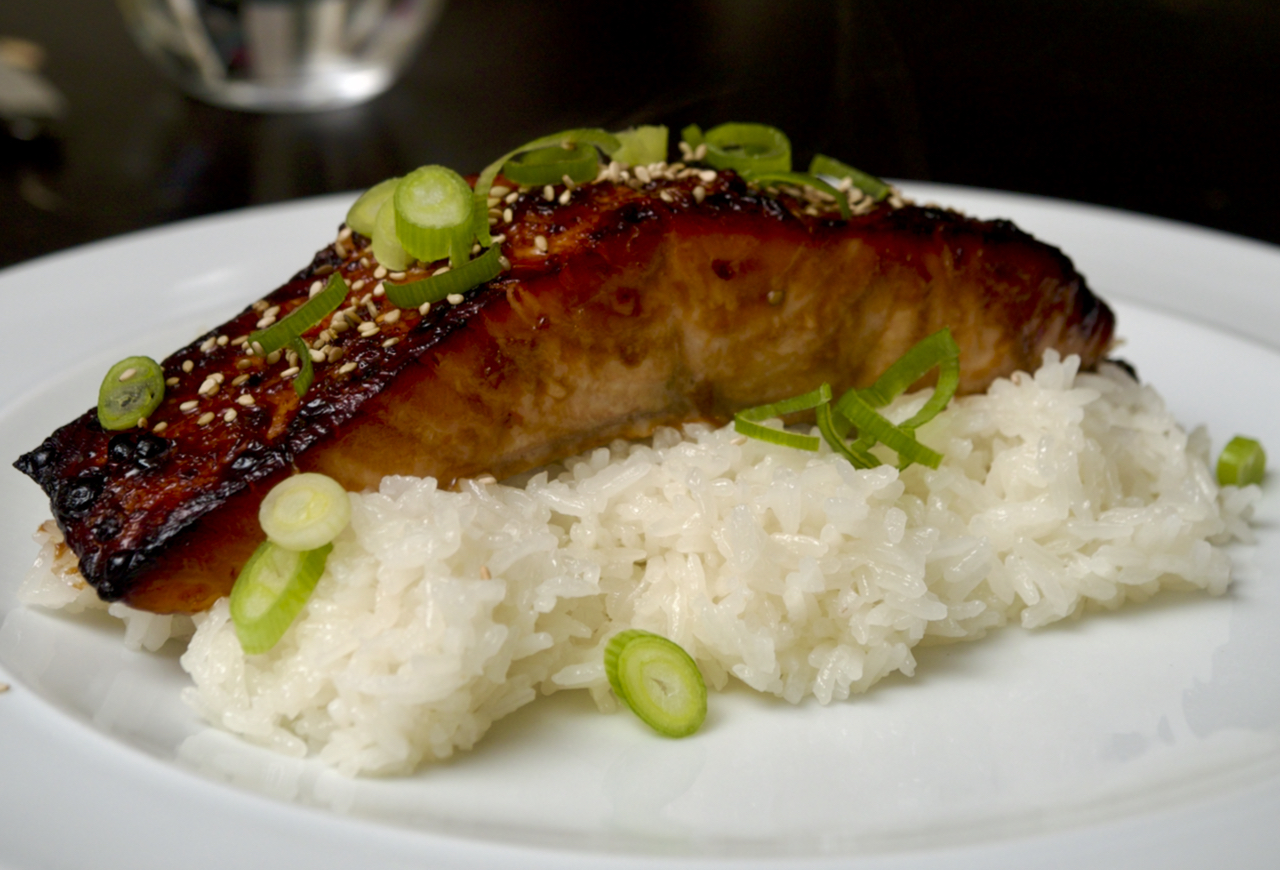
You need to marinade the salmon for 30 minutes or up to 24 hours ahead. After that, it’s dinner in 15 minutes. We served with with some sticky rice and dressed Asian greens.
Wine Suggestion: This works with a good Pinot Gris, like Neudorf’s Tiritiri. An underestimated grape, given the oceans of bland Pinot Grigio sold, but in the right hands … the riper, richer and more textural French styled Pinot Gris is a joy. Neudorf’s version is all about mouth feel: depth, viscosity, and richness while staying deliciously clean and deceptively moreish. And the back-bone is a fresh, salty-stoney texture keeping it all clean and vibrant.
Sticky glazed salmon – serves 2-3
2-3 salmon fillets
rapeseed oil spray
FOR THE MARINADE:
1 tsp finely grated ginger
1 garlic clove, finely grated
1 tbsp soy sauce
2 tbsp oyster sauce
2 tbsp sweet chilli sauce
TO SERVE
sesame seeds
1 scallion, finely sliced
Mix all of the marinade ingredients together in a shallow dish, then add the salmon and turn to coat.
When you are ready to cook, heat the grill to high. Line a grill tray with tin foil and place the salmon fillets on top, skin-side down. Brush with the marinade but don’t pour if over as any on the tin foil will burn, discard any extra.
Put the salmon under the grill, about 15-20 cm away from the heat. Cook for 7 minutes, then remove and spray with the rapeseed oil. Put back under the grill for another 1-3 minutes or until nicely caramelised.
Allow the salmon to rest for 5 minutes before serving with the scallions and sesame seeds scattered over.
(Original recipe from Recipetin Eats Dinner by Nagi Maehashi, Pan MacMillan, 2022.)
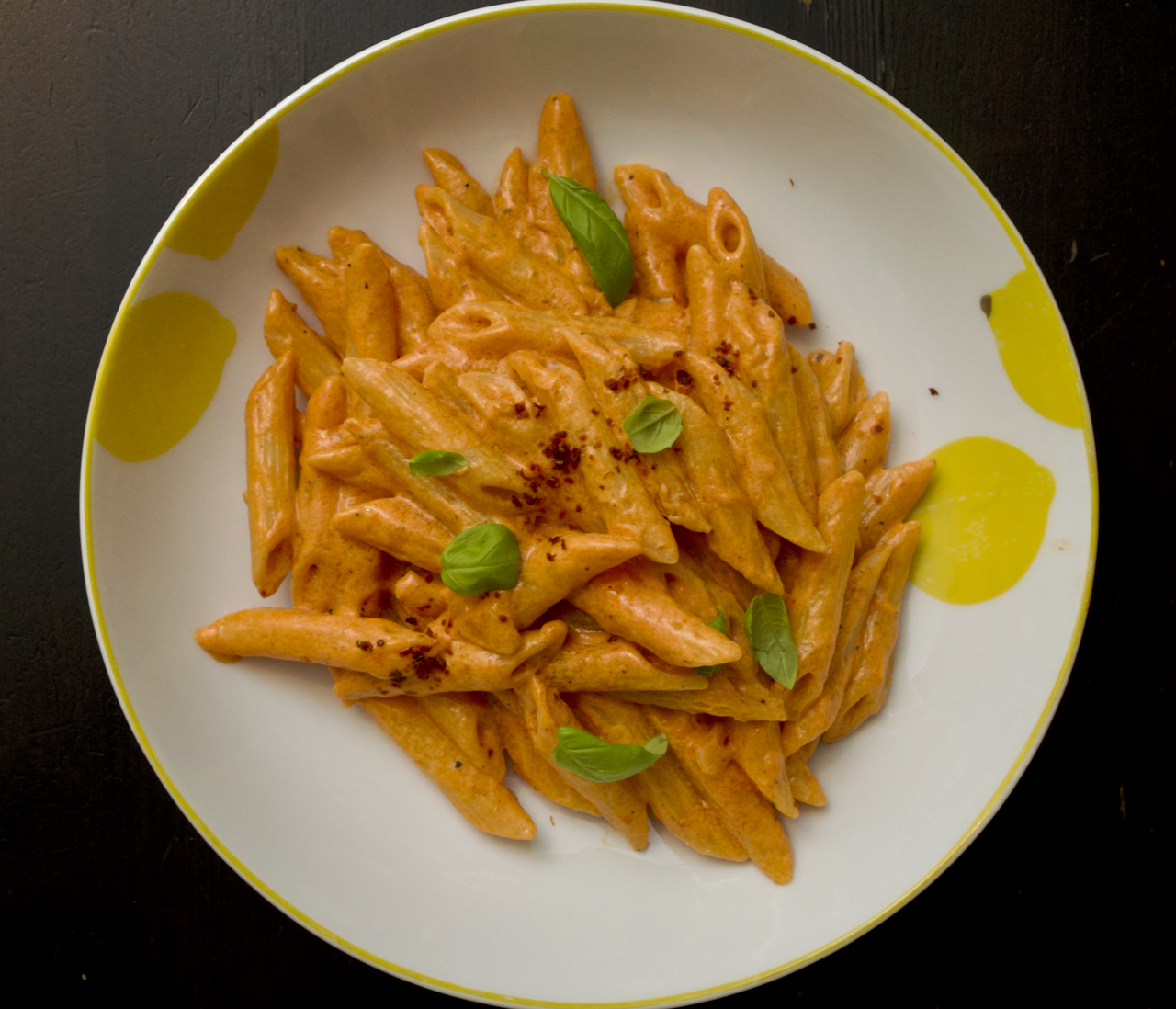
An easy pasta dish from Persiana Everyday by Sabrina Ghayour. Ready in 10 minutes and perfect for midweek.
Wine Suggestion: A crisp and fresh Sartarelli Verdicchio dei Castelli di Jesi Classico which lifts the dish and adds an extra roundness and depth. Easy white peach flavours but with that classic green almond twist at the end that bring both wine and food together.
Penne with spicy tomato & mascarpone sauce – serves 2
200g penne pasta
2 tbsp olive oil
4 big garlic cloves, thinly sliced
2 tbsp tomato purée
150g mascarpone cheese
1 tsp pul biber chilli flakes
2 handfuls of Greek basil – we used some regular basil
Cook the pasta in plenty of salty water according to the timings on the pack.
Meanwhile, warm a frying pan over a medium heat, and add the olive oil. Add the garlic and cook gently until soft and translucent.
Add the tomato purée, mascarpone and most of the chilli flakes, then stir until you have a smooth sauce.
When the pasta is cooked, scoop it out with a slotted spoon and straight into the frying pan with the sauce. Season well with plenty of salt and black pepper. You might need to add a bit more pasta water to loosen to a creamy sauce.
Serve in warm bowls with a sprinkle of pul biber and the basil leaves.
(Original recipe from Persiana Everyday by Sabrina Ghayour, Aster*, 2022.)
We’re having problems with our website at the moment which is why we haven’t been posting. We’ve a temporary fix in place and will hopefully get back to normal very soon. Not least because all the things we’ve been cooking will be out of season by the time we get around to posting them!
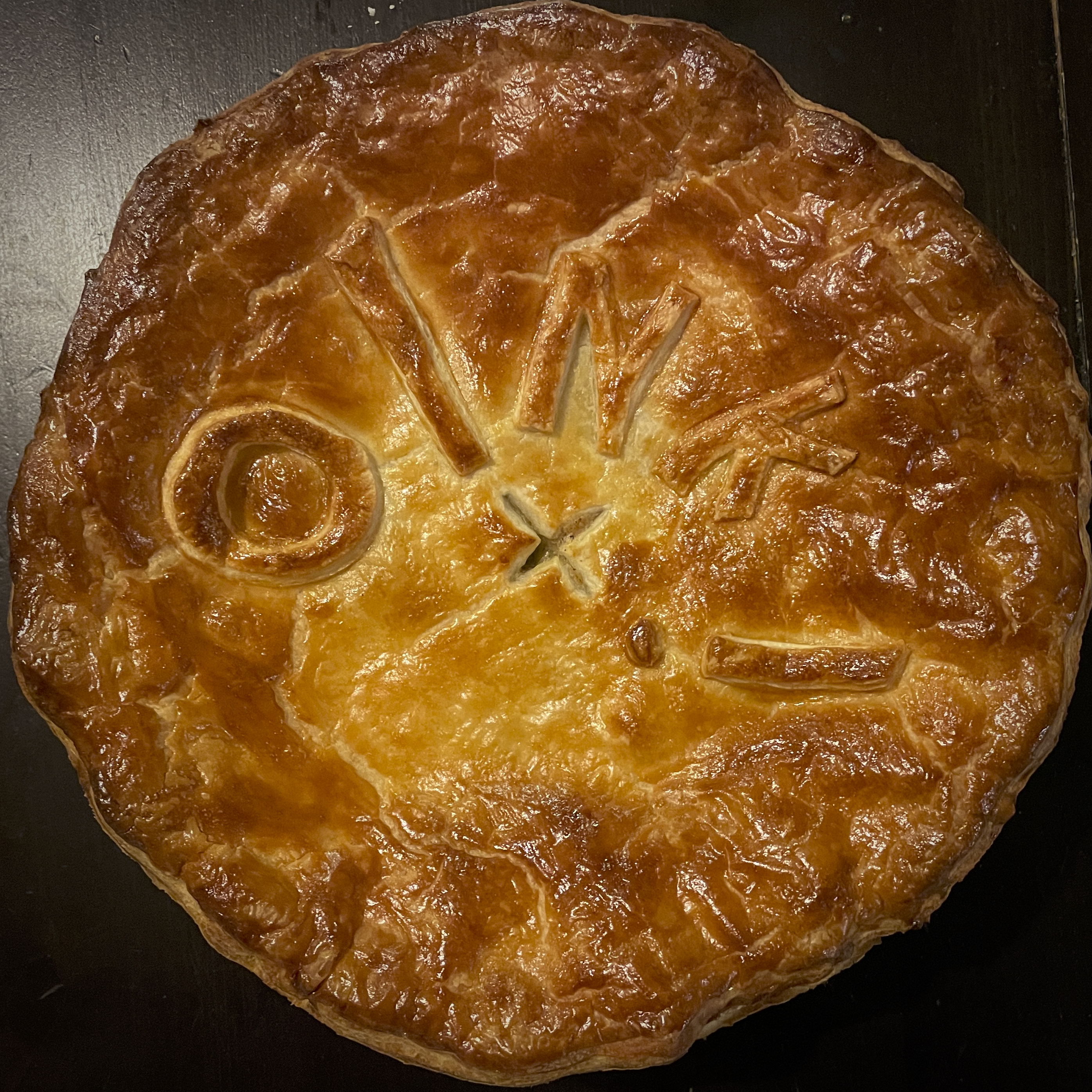
Make the base for this earlier in the day and bake when guests arive. We served with champ, buttered brussels sprouts and roasted carrots. You make quite a bit of roux and only use a bit, but its a very handy thing to have in the fridge at this time of year to thicken gravies and sauces.
Wine Suggestion: Pork and mushrooms often make us think of Nebbiolo, especially when there’s a rich sauce to cut through too. From a very traditional, but expressive winemaker Pira Luigi’s Serralunga Barolo is a classical expression of this famous region. They make some amazing Cru’s as well which always need time to evolve, but this cuvée we find is always more open in youth. Full-bodied and aromatic with tar and roses, the earthiness and truffle on the palate hold the balance between the full tannins and fresh acidity. It finishes long and regal as hoped.
Pork and mushroom pie – serves 4
FOR THE ROUX:
100g butter
100g plain flour
FOR THE PIE FILLING:
25g butter
2 onions, chopped
1 tsp ground cumin
1 tsp ground coriander
700g shoulder or leg pork, cut into 2cm cubes
250ml chicken stock
1 tbsp olive oil
300g chestnut mushrooms, sliced
250ml cream
1 tbsp chopped parsley
FOR THE TOPPING:
300g puff pastry, rolled to 5mm
1 egg, beaten
Make the roux first by melting the butter over a medium heat, then add the flour. Cook, stirring, for 2 minutes, then pour into a small bowl. Keep in the fridge once cooled.
Preheat the oven to 160C, Gas 3.
Melt the butter for the pie filling in a medium casserole. Add the onions and season, then cover and sweat on a low heat for 5 minutes. Turn up the heat, then add the spices and the pork. Toss for a few minutes to colour the pork, then add the stock. Cover and cook in the oven for 45 to 50 minutes or until tender.
While the pork is cooking, heat the oil in a large frying pan, then add the mushrooms and fry until lightly coloured. Add the mushrooms to the pork after 30 minutes.
When the pork is cooked, remove the pork and mushrooms from the dish with a slotted spoon and set aside. Add the cream to the pot and boil with the lid off for a few minutes. Slowly whisk in about 2 tbsp of the roux to thicken the sauce, adding in small pieces while the mixture is boiling. Add the chopped parsley, then return the pork and mushrooms to the pan. Season and transfer to a large pie dish.
Heat the oven to 230C, Gas 8.
Cover the dish with the pastry and make a hole in the centre to let out steam. You can decorate the top if you like with the excess pastry. Have fun doing this if you like we did.
Brush with the beaten egg, then cook in the oven for 10 minutes. Turn the heat town to 190C/Gas 5 and cook for a further 20 minutes or until golden brown.
Serve immediately with lots of veg.
(Original recipe from Rachel’s Food for Living by Rachel Allen, Collins, 2007.)
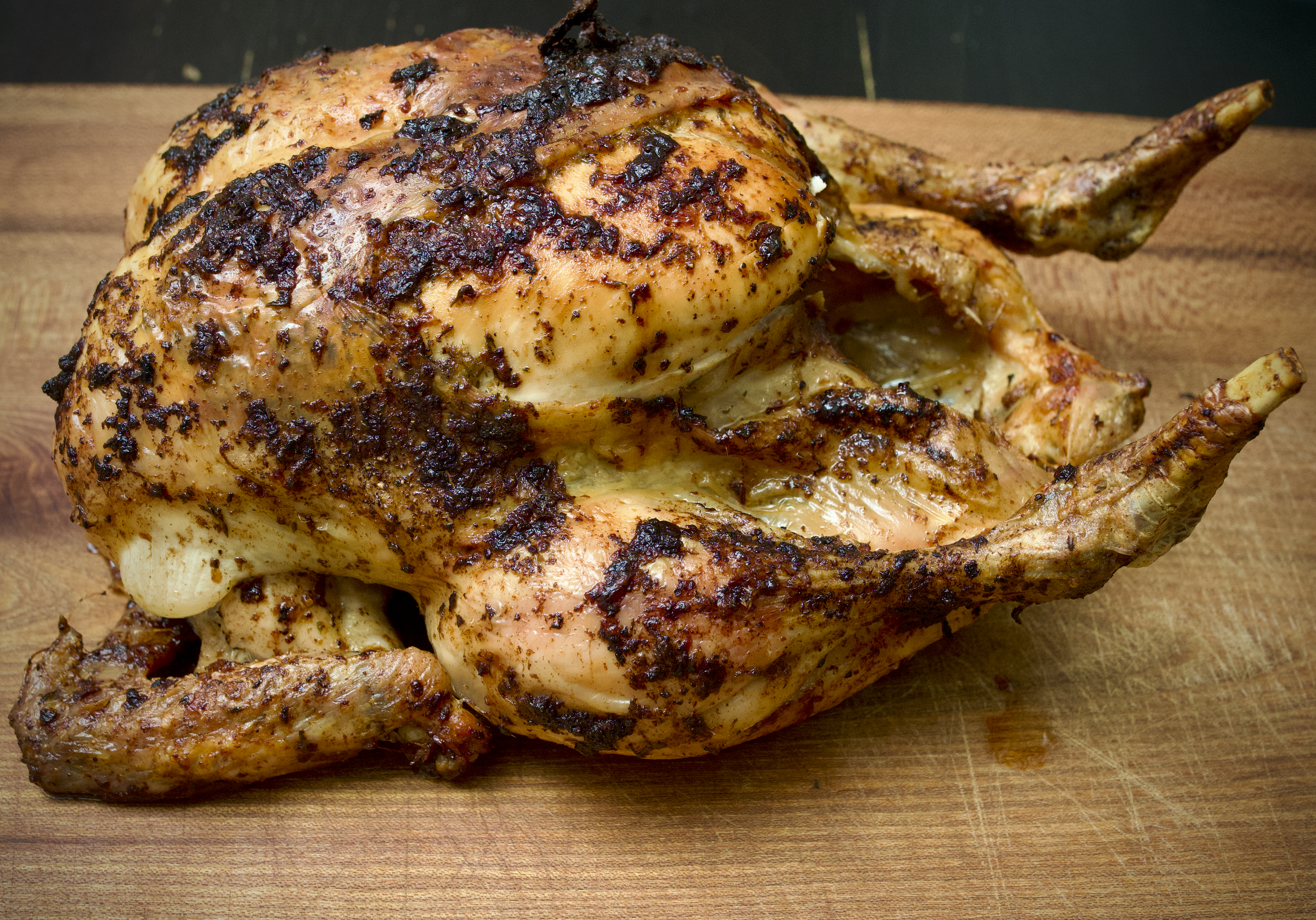
It’s the classic roast chicken but this time with fresh and preserved lemon. Yummy!
Wine Suggestion: We have a bit of a thing for dry Loire Chenin Blanc and were fortunate to visit Jacky Blot from Domaine de la Taille aux Loups earlier this year. Although he passed away not long after our visit, being able to taste the results of his work in a glass really keeps his memory alive. We opened a bottle of his Vin de France “Clos de la Bretonniere” with this dinner and were transported back to the tasting room and the couple of hours we spent with Jacky. A vibrantly dry Vouvray with tension and tautness in abundance and layers of minerally fruit, it paired beautifully with the roast chicken. Salut Jacky!
Roast chicken with preserved lemon – serves 4
70g butter, softened
3 tbsp thyme leaves
3 cloves of garlic, crushed
1 small preserved lemon, pips discarded and flesh and skin roughly chopped
1 lemon, zest finely grated, plus 1½ tbsp of juice
1 whole chicken
Heat the oven to 190C fan.
Put the butter, thyme, garlic, preserved lemon, lemon zest, ¼ tsp of salt and plenty of black pepper in a food proessor and blitz to combine.
Loosen the chicken skin over the breasts (careful not to tear it) and spread most of the butter mixture underneath. Spread the rest over the legs.
Put the chicken into a roasting tin and drizzle with the lemon juice and sprinkle over ½ tsp of salt and plenty of black pepper.
Roast the chicken for 20 minutes per 500g plus an extra 10 minutes, until the skin is golden brown and the juices run clear. Baste every 20 minutes as it cooks.
Remove from the oven and leave to rest for 10 minutes before serving.
(Original recipe from Ottolenghi Simple by Yotam Ottolenghi, Tara Wigley and Esme Howarth, Ebury Press, 2018.)
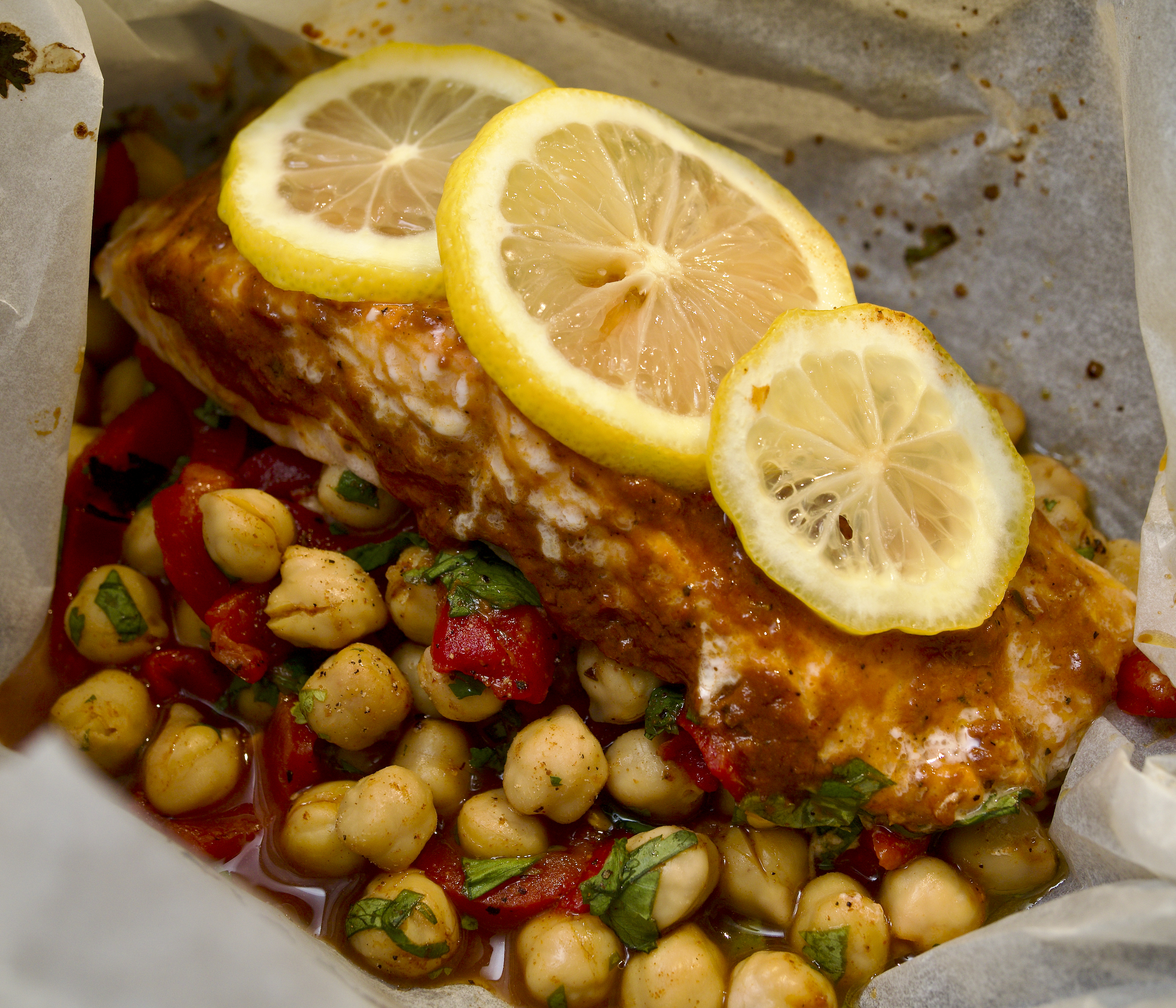
This is very much a weeknight dish but it’s suprisingly good. Baking in a bag means very few dishes to wash which always helps. Serve with a green salad.
Wine Suggestion: try to find a good Vermentino with a medium body, not the richer ones with higher alcohol like you sometimes find from Sardinia and similar. A favoured one at the moment is Domaine Ventenac’s “les Dissidents” Cassandre from Cabardes in southern France.
Baked salmon with harissa and chickpeas – serves 2
1 unwaxed lemon
1 x 400g tin chickpeas, drained and rinsed
1 tsp smoked paprika
1 tsp clear honey
3 tsp harissa paste
150g roasted red peppers from a jar, sliced
15g coriander, roughly chopped
2 salmon fillets, skinned
1 tsp olive oil
Heat the oven to 190C/170C fan/gas 5.
Tear off 2 large sheets of baking paper.
Halve the lemon and cut one half into thin slices.
Toss the drained chickpeas with the smoked paprika, honey, 1 tsp of the harissa paste, the peppers, most of the coriander and seasoning, then divide this between the two sheets of paper.
Season the salmon and spread each piece with 1 tsp of harissa, then place on top of the chickpeas and drizzle with the olive oil. Place the lemon slices on top, then fold over the edges to seal the parcels.
Put the parcels onto a baking tray and bake for 15 minutes or until the salmon is cooked. Open the parcels and scatter over the rest of the coriander, then serve with some salad on the side.
(Original recipe by Tom Mitchell-Dawson in Sainsbury’s Magazine, September 2023.)
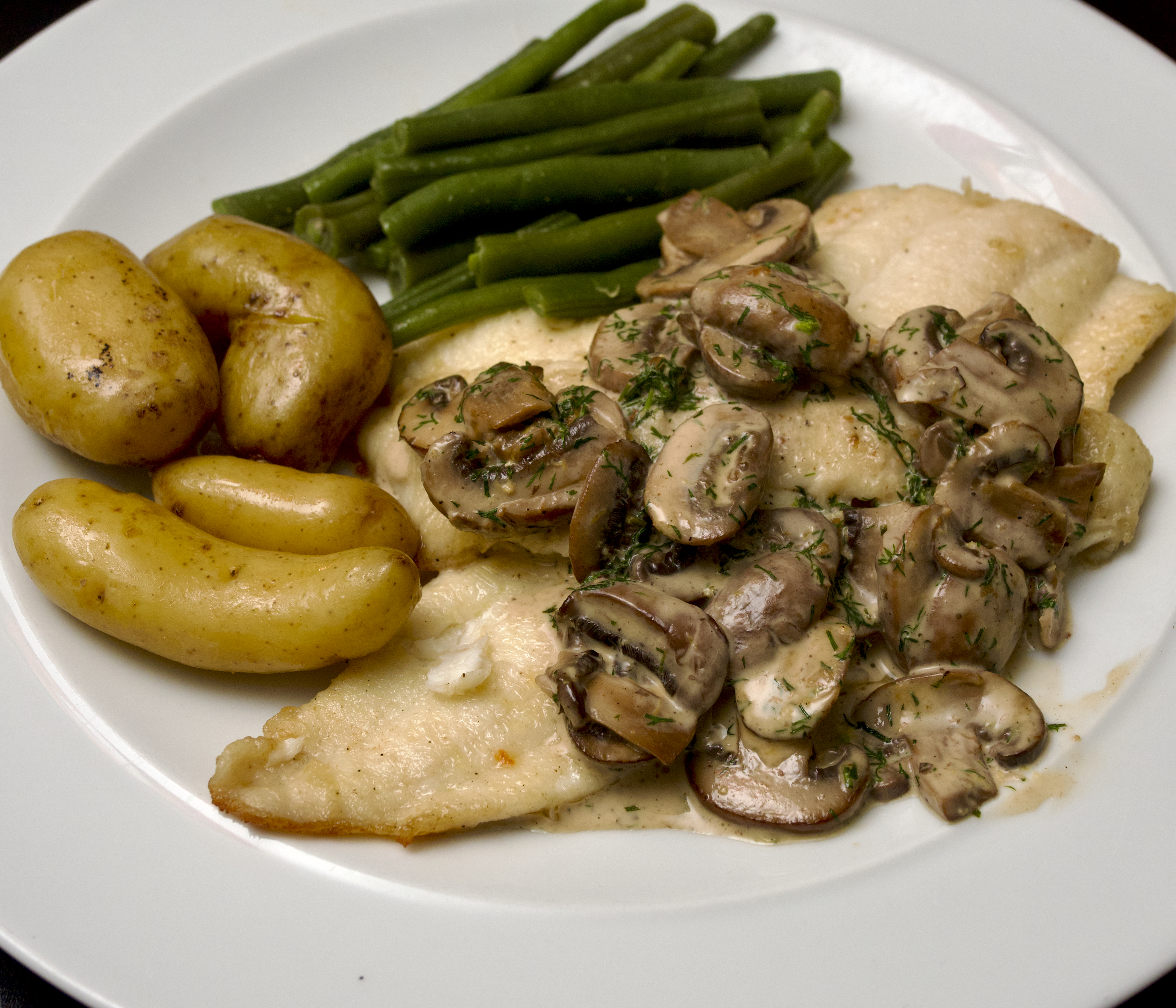
We are still a bit apprehensive when cooking fish and shy away from the simple methods that require last minute cooking. We shouldn’t do this as they tend to be the dishes that show the fish at its best. We managed to conquer this one anyhow.
Wine Suggestion: Served with Domaine Rochette Morgon Régnié Cuvée des Braves, a red fruited Beaujolais from this sensitive and thoughtful family making wine in a Cru that is often overlooked. I say… expand your horizons beyond Morgon and Fleurie! Rich, powerful, and aromatically exquisite.
Plaice with Creamy Mushroom Sauce – serves 4
8 skinless, single plaice fillets (or 4 double fillets which you need to half lengthways)
45g plain flour
2 tbsp olive oil
15g butter
FOR THE SAUCE:
20g butter
200g small chestnut mushrooms, thinly sliced
1 clove of garlic, crushed
120ml dry white wine
170ml double cream
finely grated zest of 1 lemon
juice of ½ a lemon
2 tbsp chopped dill
Pat the fish dry with kitchen paper. Sprinkle the flour onto a plate and season well with salt and pepper. Coat both sides of the fish fillets in the flour.
Heat 1 tbsp of the oil with the butter in a large non-stick frying pan over a medium-high heat. Add 4 of the fish fillets and fry for 1½ minutes-2 minutes or until golden. Gently turn and fry for another 1½-2 minutes on the other side. Careful not to let the butter brown. Transfer the fillets to a serving platter, cover with foil and keep warm while you cook the rest.
To make the sauce, melt the butter in the same frying pan. Add the mushrooms and fry over a medium-high heat for a few minutes, then add the garlic and fry for another minute or so. Pour in the wine, stir and bring to the boil. Simmer for a couple of minutes, then pour in the cream. Simmer, stirring, until the sauce thickens.
Stir in the lemon zest and juice, season with salt and pepper and add the dill. Spoon the sauce over and around the fish and serve with a few extra dill sprigs if you like.
(Original recipe from Mary Berry Cooks the Perfect, Penguin Random House Group, 2014.)
The sauce here is fairly spicy but well-tempered by the fishcakes and lots of white rice and some yoghurt if you like. The depth of flavour and balance is superb. You can cook the sauce and prep the kofta mixture in advance.
Wine Suggestion: this works with Grenache – Tempranillo blends, especially if they’re fruit forward and low/no oak like Jesus Romero’s Rubus from rural Aragon. We love this as it’s real hands-off winemaking at it’s best, capturing the essence and energy of the fruit in the vineyard.
Fish koftas in chilli and tomato sauce – serves 4
FOR THE KOFTAS:
500g firm white fish without skin and bones, we used hake
4 scallions, finely sliced
10g dill, roughly choped, plus extra picked fronds to serve
1 green chilli, deseeded and finely chopped
1½ tsp finely grated lemon zest
1 egg, beaten
30g panko breadcrumbs
3 tbsp olive oil
FOR THE TOMATO SAUCE:
15g dried ancho chillies, stems removed
2 tsp caraway seeds, toasted and roughly crushed
1 tbsp cumin seeds, toasted and roughly crushed
6 cloves of garlic, peeled
1 onion, roughly chopped
60m olive oil
1 green chilli, halved and seeds removed
1 tbsp tomato purée
3-4 plum tomatoes, roughly grated and skins discarded
300ml chicken stock or vegetable stock
2 tsp caster sugar
25g fresh coriander, roughly chopped
Make the sauce first. Put the dried chillies into a bowl and cover with lots of boiling water. Leave to soak for 20 minutes, then drain and discard the liquid and the seeds. Roughly chop the chillies and put them into a food processor with two-thirds of the caraway and cumin seeds, the garlic, the onion and 2 tbsp of the oil. Whizz until you have a coarse paste.
Heat 2 tbsp olive oil in a large sauté pan, then add the chilli paste, green chilli and tomato purée. Cook for 7 minutes, stirring frequently, until soft and fragrant. Add the tomatoes, stock, 200ml water, sugar, half the coriander, 1¼ tsp of salt and a good grind of pepper and bring to the boil. Lower the heat and simmer for 15 minutes, then keep warm until needed (or cool and re-heat later).
Meanwhile, make the koftas. Finely chop the fish into ½-1cm pieces. Put them into a large bowl with the scallions, dill, chilli, lemon zest, egg, panko, the rest of the coriander, the remaining caraway and cumin, 1 tsp of salt and plenty of black pepper and mix well to combine. Form into 12 round fish cakes, pressing to compact them so they don’t fall apart.
Heat 1½ tbsp of oil in a large frying pan over a medium-high heat. Add half the koftas and cook for 2½ minutes on each side, or until golden. Transfer to a plate, then repeat with the rest of the koftas.
Bring the sauce to a simmer. Add the koftas, then turn the heat to medium low and cook for 10 minutes. Leave to sit for 5 minutes, then serve with the extra dill.
(Original recipe from Ottolenghi Test Kitchen, Shelf Love by Noor Murad & Yotam Ottolenghi, Ebury Press, 2021.)
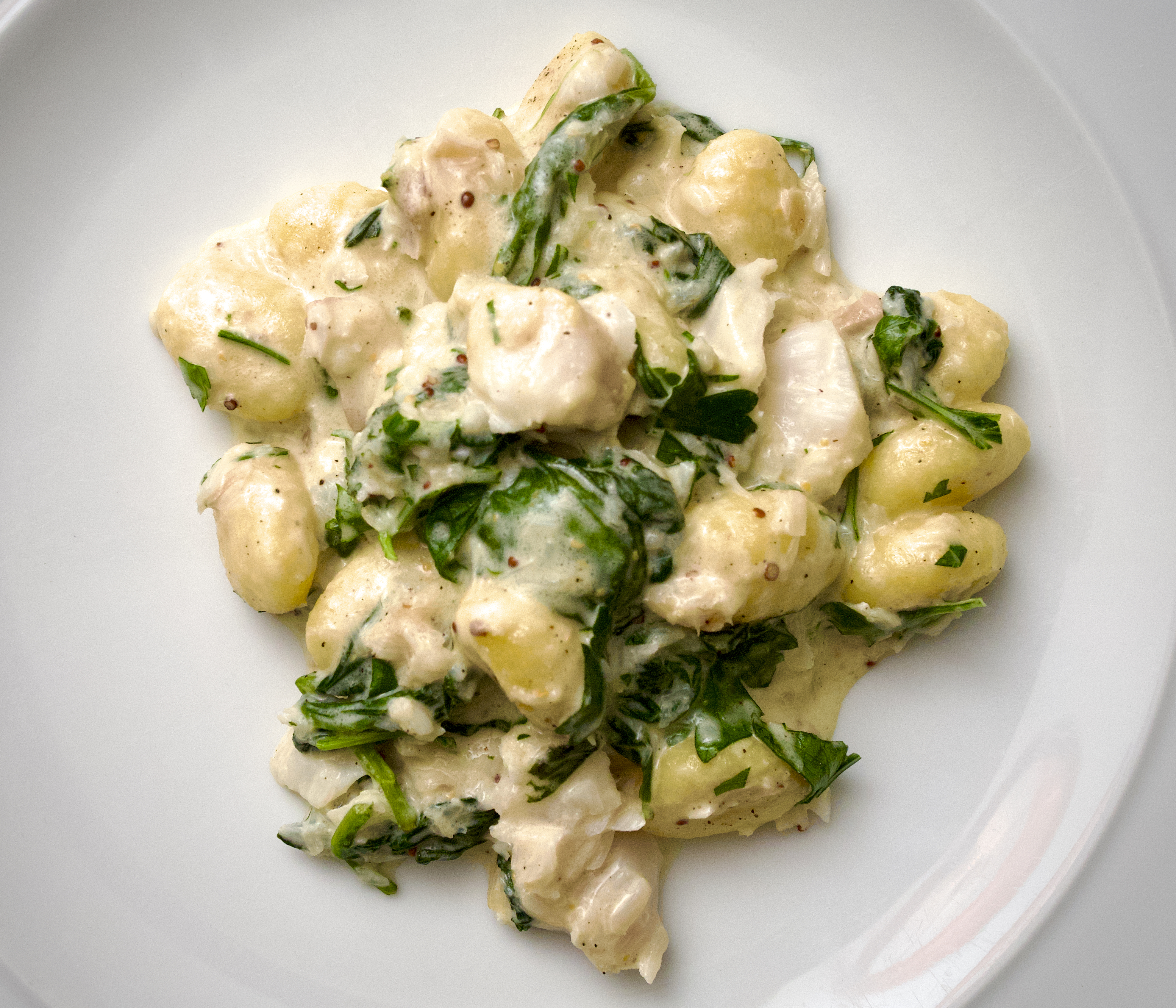
We had planned to cook this outside on a fire pit until Jono lit a blazing inferno and scared us off. It was the excitement of being outside after a year of rain! A simple dish and such a treat.
Wine Suggestion: We just think smoked haddock and a good, oaked Chardonnay are a match, with some of the best value and superb quality coming from the new world. Tonight was Neudorf’s Tiritiri Chardonnay which was elegant and rounded, with a supreme balance, hints of smoky oak and layers of texture, nuts and finishing fresh and vibrant. Under-rated and such a treat.
Smoked haddock and spinach gnocchi – serves 2
100ml double cream
a few big handfuls of young spinach, roughly chopped
200g skinless smoked haddock fillet, cut into bitesize pieces
200g fresh gnocchi (from the fridge section)
1 tsp grainy mustard
25g mature cheddar cheese, grated
a handful of flat-leaf parsley, leaves picked and chopped
Put a large, deep frying pan over a medium-high heat.
Pour the cream into the pan with a few tablespoons of water. Add the spinach and fish and cook for a minute or two. Add the gnocchi, mustard and cheese and stir gently. Add a bit more water if the sauce is too thick.
When everything is heated through, remove the pan from the heat and add plenty of black pepper. Sprinkle with the chopped parsley to serve.
(Original recipe from Outside by Gill Meller, Quadrille, 2022.)
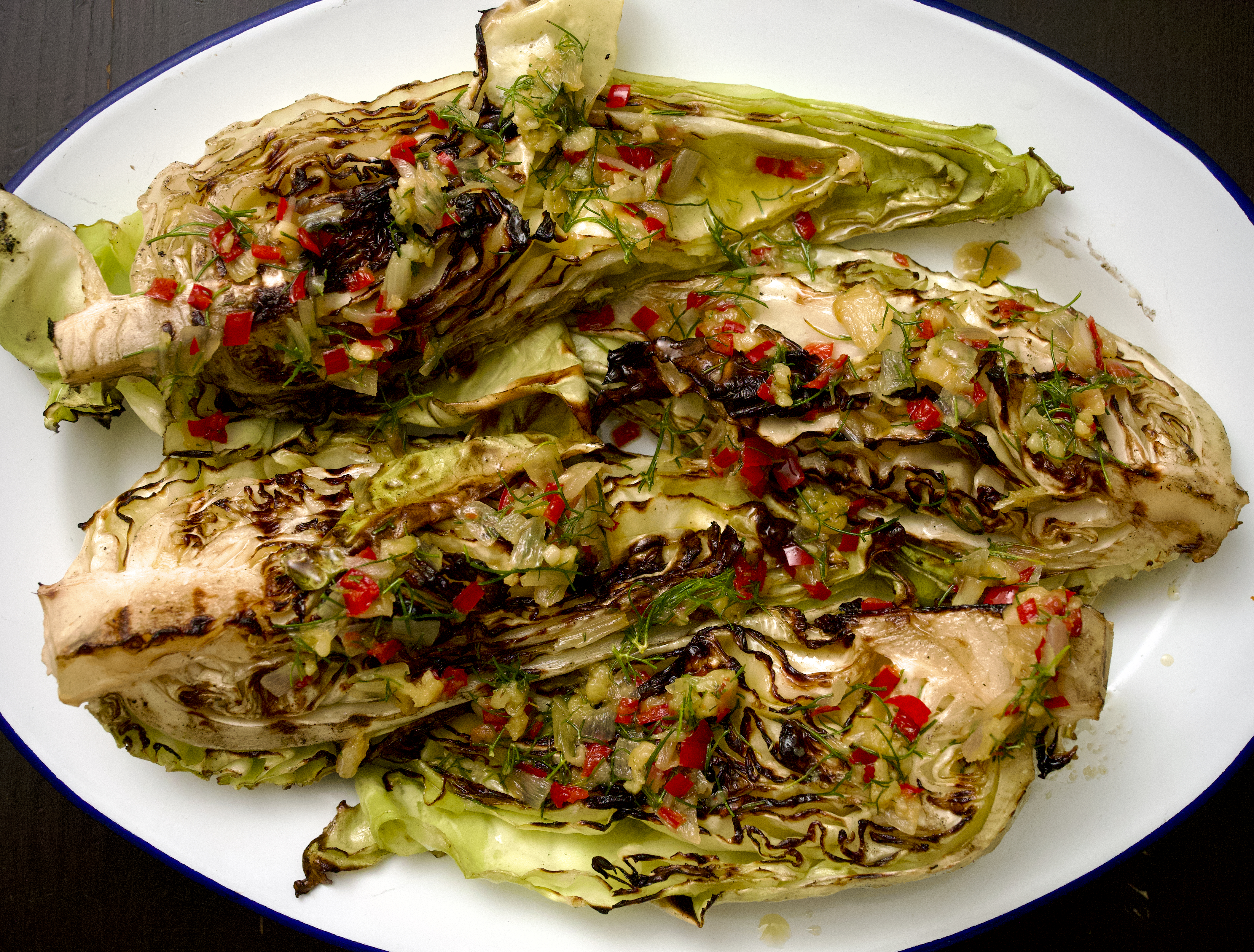
Typing this recipe to the sound of lashing rain and howling wind but better weather is coming and you might be inspired to barbecue a cabbage. You will be very glad you did.
Barbecued cabbage with chilli and garlic butter – serves 2 as a side
1 pointed/hispi cabbage, cut into 4 wedges
2 tbsp olive oil
FOR THE DRESSING:
1 long shallot, peeled and finely chopped
1 red chilli, halved, desseded and finely sliced
3 cloves of garlic, peeled and crushed
50g butter
½ tsp flaky sea salt
a small bunch of dill, fronds roughly chopped
Brush the cut surfaces of the cabbage wedges with the olive oil, then set them cut-side down on a very hot barbecue to char for about 4 minutes. Turn to char the other cut surface for 4 minutes, then set the wedges on the rounded sides for a final 4 minutes. Remove to a platter and sprinkle with flaky sea salt.
Meanwhile, combine the shallots, chilli and garlic with the butter and put over a low heat to melt the butter and lightly cook the vegetables. Cook for about 12-14 minutes or until the shallots are soft and translucent. Remove from the heat and mix in the salt and chopped dill. Pour the butter dressing over the warm cabbage and serve.
(Original recipe from Chasing Smoke: Cooking Over Fire Around the Levant by Sarit Packer and Itamar Srulovich, Pavilion, 2021.)
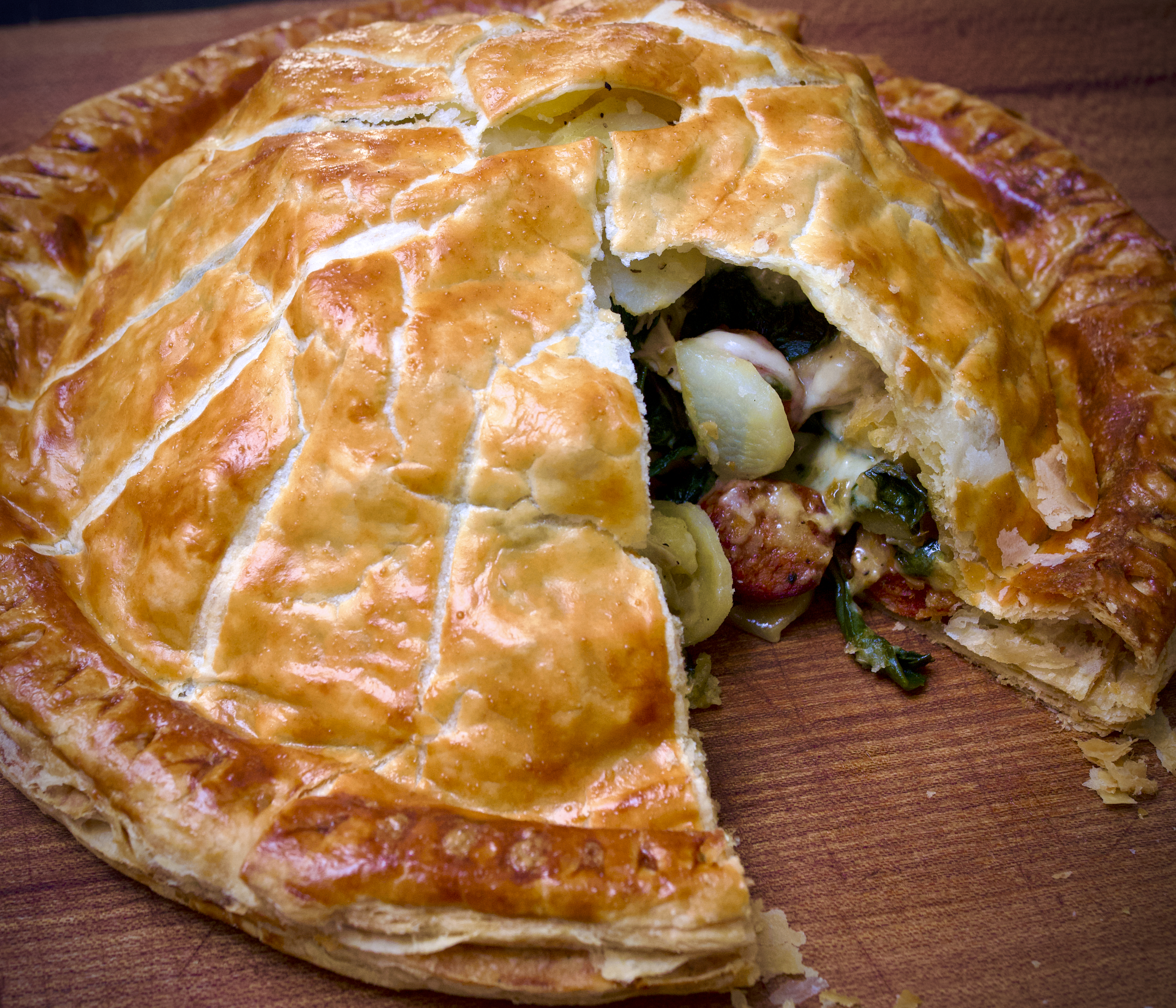
There are a few bits to this but it’s not complicated – trust the process and start the night before, dinner will be easy tomorrow. Serve with a green salad.
Wine Suggestion: We think this dish works really well with a fruit forward, medium bodied red like a Grenache. We’re particularly enamoured at the moment by Jesus Romero’s Rubus, a Garnacha Tempranillo blend made with minimal intervention. Good grapes that ferment themselves in tank, then left to settle for a few months and bottled with a touch of sulphur to keep it stable. Pure brambly red fruits with a purple fruited core, gentle spices and tannins and an easy, but complex nonetheless, finish.
Chicken, chorizo & spinach pie – serves 6
1 tbsp olive oil
125g cooking chorizo or chorizo ring, skin removed and chopped
2 onions, thinly sliced
3 cloves of garlic, crushed
250g baby spinach
200g leftover roast chicken, shredded
4 tbsp crème fraîche
500g Maris Piper or similar potatoes
2 x 320g sheets ready-rolled puff pastry
plain flour, for dusting
125g mature cheddar cheese, grated
1 egg, beaten
Make the filling first. Heat the olive oil in a large pan over a medium heat and cook the chorizo for a few minutes or until the oil is released. Add the onions, season and cook for 10 minutes or until soft and starting to caramelise.
Add the garlic and cook for a couple of minutes, then add the spinach in batches, stirring until wilted. Remove the pan from the heat and add the chicken and crème fraîche. Season to taste, then tip into a bowl and leave to cool, then chill in the fridge.
Peel the potatoes and thinly slice. Boil in salted water for about 5 minutes or until tender. Use a slotted spoon to remove the potato slices from the water and set onto a cloth-lined tray to dry and cool.
Unroll one of the pastry sheets on a floured surface and roll out to make a square shape, transfer to a lined baking sheet and cut out a 28cm diameter circle (a dinner plate will help with this). Chill in the freezer for 5 minutes to firm up.
Season the potatoes and lay a quarter of them onto the pastry circle, leaving a 2.5cm border around the edge. Next add a thrid of the chicken and chorizo mixture, then a third of the cheese. Repeat these layers, gradually forming a dome shape and finishing with a layer of potatoes.
Brush beaten egg all around the border.
Next, roll out the second sheet of pastry and drape over the top. Smooth over the filling and press the edges together to seal, then trim off the excess pastry and crimp the border. Brush with the egg and chill again – you can cook the pie at this stage or you can leave it in the fridge until tomorrow.
Heat the oven to 200C/Fan 180C/Gas 6.
When the oven is heated, brush the pie again with the remaining egg and score gently down the sides with a sharp knife. Cut a small hole in the top to let out the steam.
Bake for 15 minutes, then reduce the temperature to 180C/Fan 160C/Gas 4 and bake for a further 40 minutes or until golden brown and piping hot throughout (especially important if you’ve had it in the fridge for a long time). Rest for about 5 minutes before slicing.
(Original recipe by Tom Mitchell-Dawson in Sainsbury’s Magazine, September 2023.)
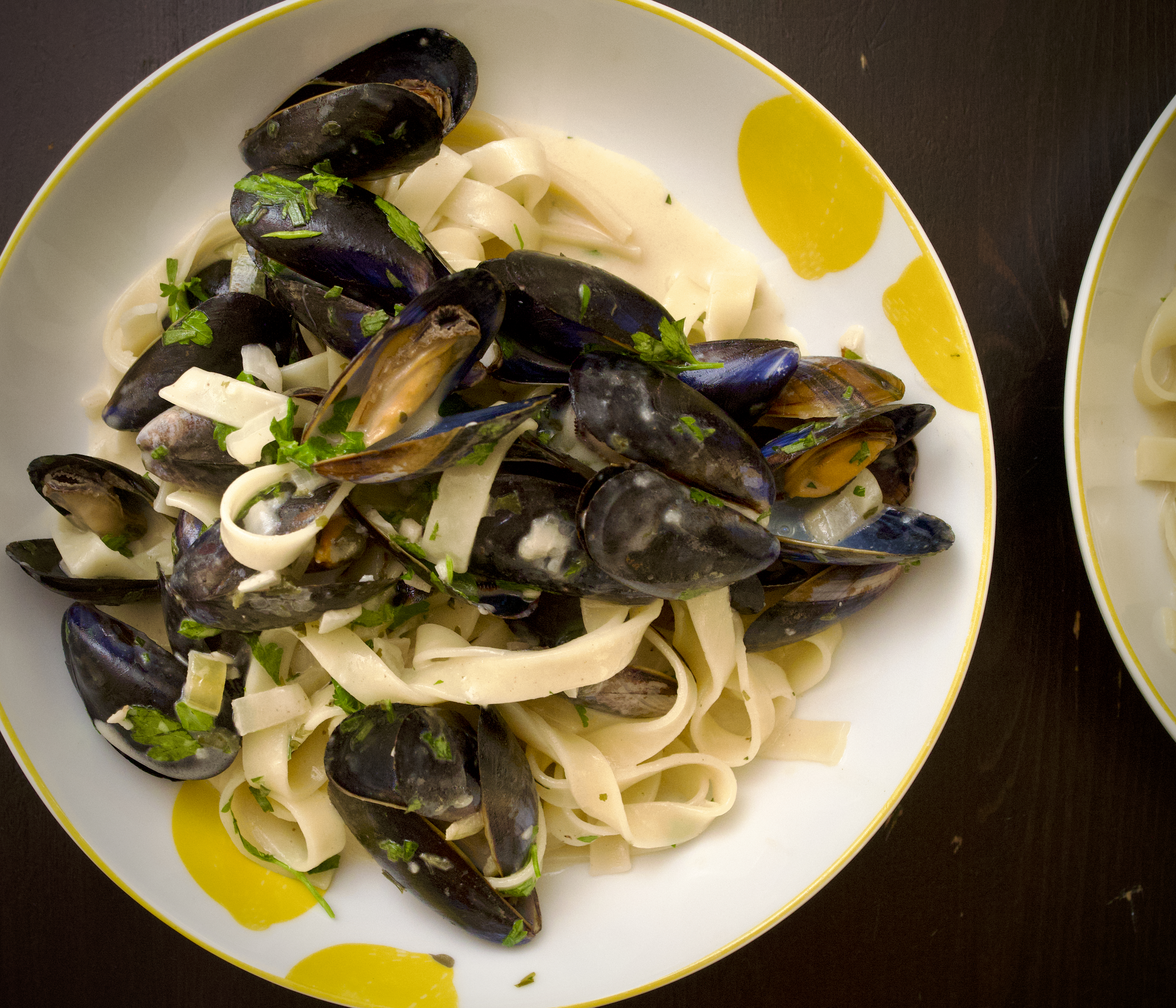
This is made with packets of mussels in garlic butter sauce which you can easily pick up in the supermarket on your way home – no need to make it in time for the fish shop and no fiddly prep. You might want a bit of crusty bread to mop up the sauce.
Wine Suggestion: We couldn’t go past a good Muscadet and with ever greater choices out there we’d recommend you explore beyond some of the classic cuvées being offered. Jérémie Huchet’s Clos les Montys is an unique terroir with some very old vines. Not within the Sévre et Maine appelation this could easily be overlooked, but you get something special in the glass: aromas of lemon, jasmine, and pears with hints of a fresh herb. Juicy, well-balanced and elegant, it finishes very long and refreshing.
Tagliatelle with mussels & crème fraîche – serves 4(easily halved)
300g dried tagliatelle
1 large onion, finely chopped
2 tbsp olive oil
150ml dry white wine
200ml crème fraîche
2 x 450g packs mussels in garlic sauce (we used Carr & Sons from Dunnes)
a good handful of flat leaf parsley, roughly chopped
2 tbsp chopped tarragon
Heat the olive oil in a deep frying pan, then add the onion and cook gently for about 10 minutes until softened and starting to colour. Pour in the wine, turn up the heat and bubble until it has almost evaporated.
Meanwhile, bring a large pan of salty water to the boil and cook the pasta according to the timings on the pack.
Add the crème fraîche to the onions and bring to the boil, then tip in the mussels and cook for about 5 minutes until piping hot and open (chuck any that don’t open away). Drain the pasta and return to the pan and tip in the mussel mixture. Stir in the herbs and serve with some crusty bread if you like.
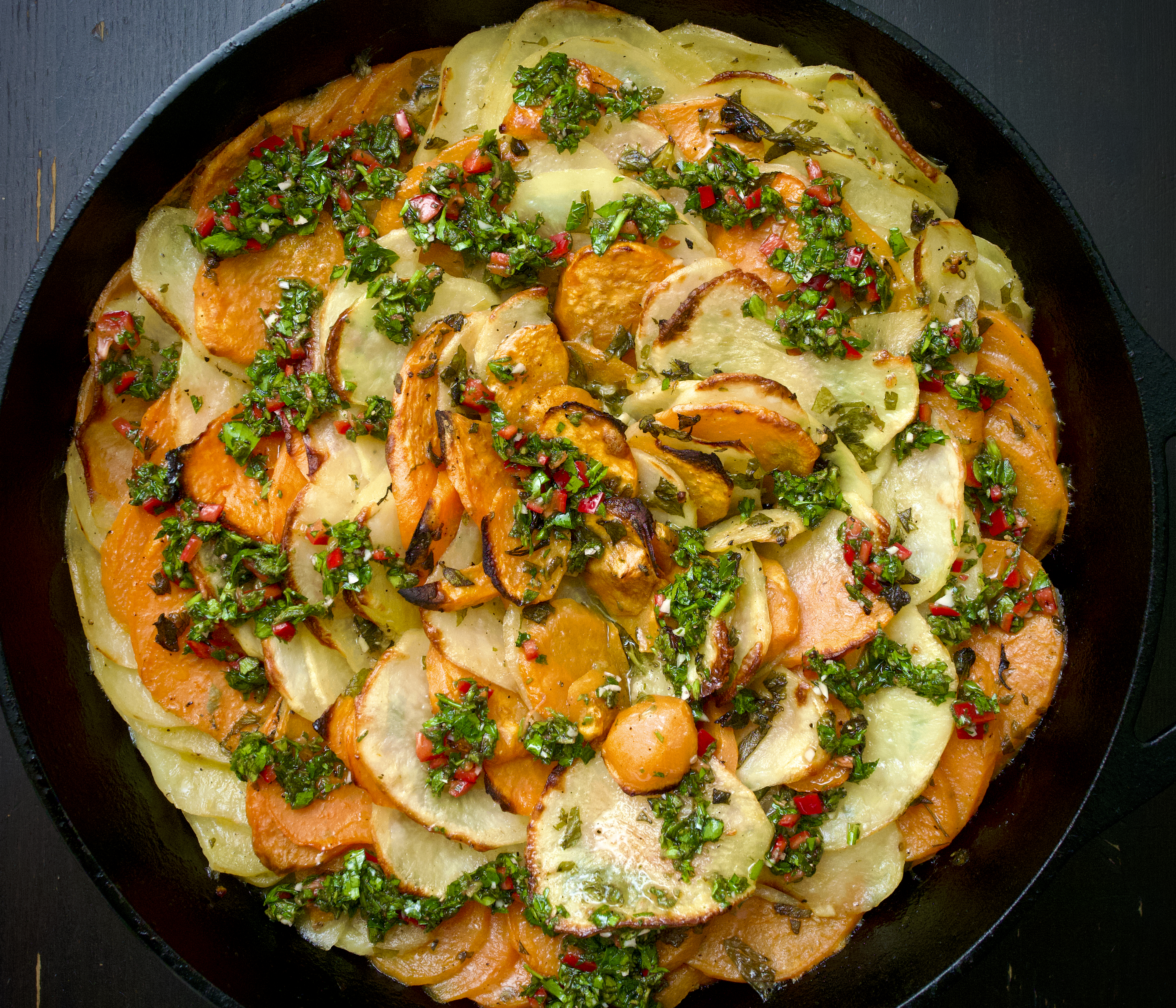
Such a tasty side dish! We served with a roast chicken but it will go with pretty much anything.
Potatoes with chimichurri – serves 6 as a side dish
800g waxy potatoes
600g sweet potatoes
5g oregano leaves, roughly chopped
5g parsley, roughly chopped
4 garlic cloves, peeled and crushed
5 tbsp olive oil, plus extra for greasing the pan
250ml chicken stock or vegetable stock
FOR THE CHIMICHURRI:
10g parsley, finely chopped
5g oregano leaves, finely chopped
1 garlic clove, peeled and finely chopped
1 mild red chilli, finely chopped (seeds in or out as you wish)
2 tbsp red wine vinegar
4 tbsp olive oil
Heat the oven to 180C fan.
Peel the potaotes, then slice the waxy sort using a mandolin. Use a sharp knife to slice the sweet potatoes finely – they should be slightly thicker than the regular potatoes.
Put both sorts of potatoes into a large bowl and add the garlic, herbs, 3 tbsp of the oil, 1½ tsp salt and plenty of black pepper. Toss gently with your hands to combine but make sure you don’t break the potatoes.
Lightly grease a large ovenproof cast-iron frying pan or a round baking dish – about 23cm in diameter. Start at the edge and arrange the potatoes in overlapping circles until you reach the middle. Pour the stock over the top. Lightly grease a piece of foil and cover the dish tightly with it. Bake in the oven for 35 minutes.
Remove the pan from the oven and turn the heat up to 220C. Remove the foil from the pan and drizzle over the last 2 tbsp of olive oil. Return to the oven for 20 minutes, or until nicely browned. Remove from the oven and leave to cool slightly, for about 15 minutes.
Meanwhile, make the chimichurri sauce. Put all of the ingredients into a bowl with ¼ tsp of salt and plenty of black pepper. Mix well to combine.
When you’re ready to serve, spoon the chimichurri over the top of the potatoes.
(Original recipe from Ottolenghi Test Kitchen: Extra Good Things by Noor Murad & Yotam Ottolenghi, Ebury Press, 2022.)
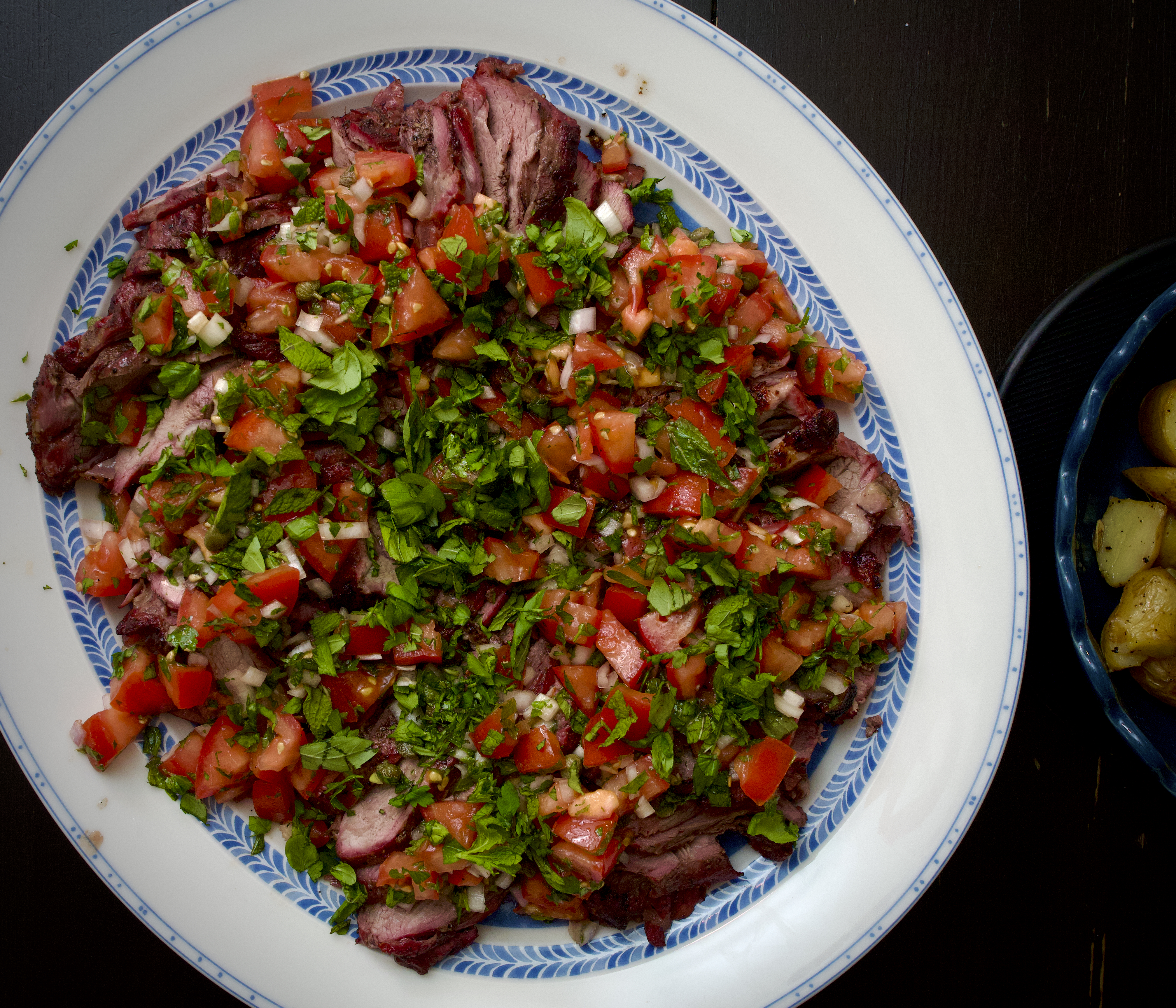
It’s last chance saloon if you want to cook this dish before both the tomatoes and weather turn rubbish. The marinade is added after you cook the lamb.
Wine Suggestion: We think barbecued lamb goes really nicely with Cabernet Franc, so a good excuse to open a bottle of our favourite wine: Chateau du Hureau’s Saumur-Champigny “Tuffe”.
Barbecue Lamb with Tomato & Capers – serves 6
1.5kg butterflied leg of lamb
FOR THE MARINADE:
3 tomatoes, diced
2 large shallots, finely chopped
1 tbsp capers, rinsed
a small bunch of parsley, chopped
a small bunch of mint, chopped
a small bunch of basil, chopped
1 lemon, juiced
2 tbsp olive oil
Mix the ingredients for the marinade together, keeping a small handful of herbs aside to garnish at the end.
Get your barbecue going and wait until the flames have died down. Move the coals to the sides and put a drip-tray in the middle, then BBQ the lamb for 20 minutes on each side.
When the lamb is cooked to your liking, set it on a platter and spoon over the marinade. Cover loosely with foil and leave to rest for 20 minutes. Slice and serve with the marinade and the rest of the herbs.
(Original recipe by Adam Bush & Janine Ratcliffe, Olive Magazine, August 2017.)
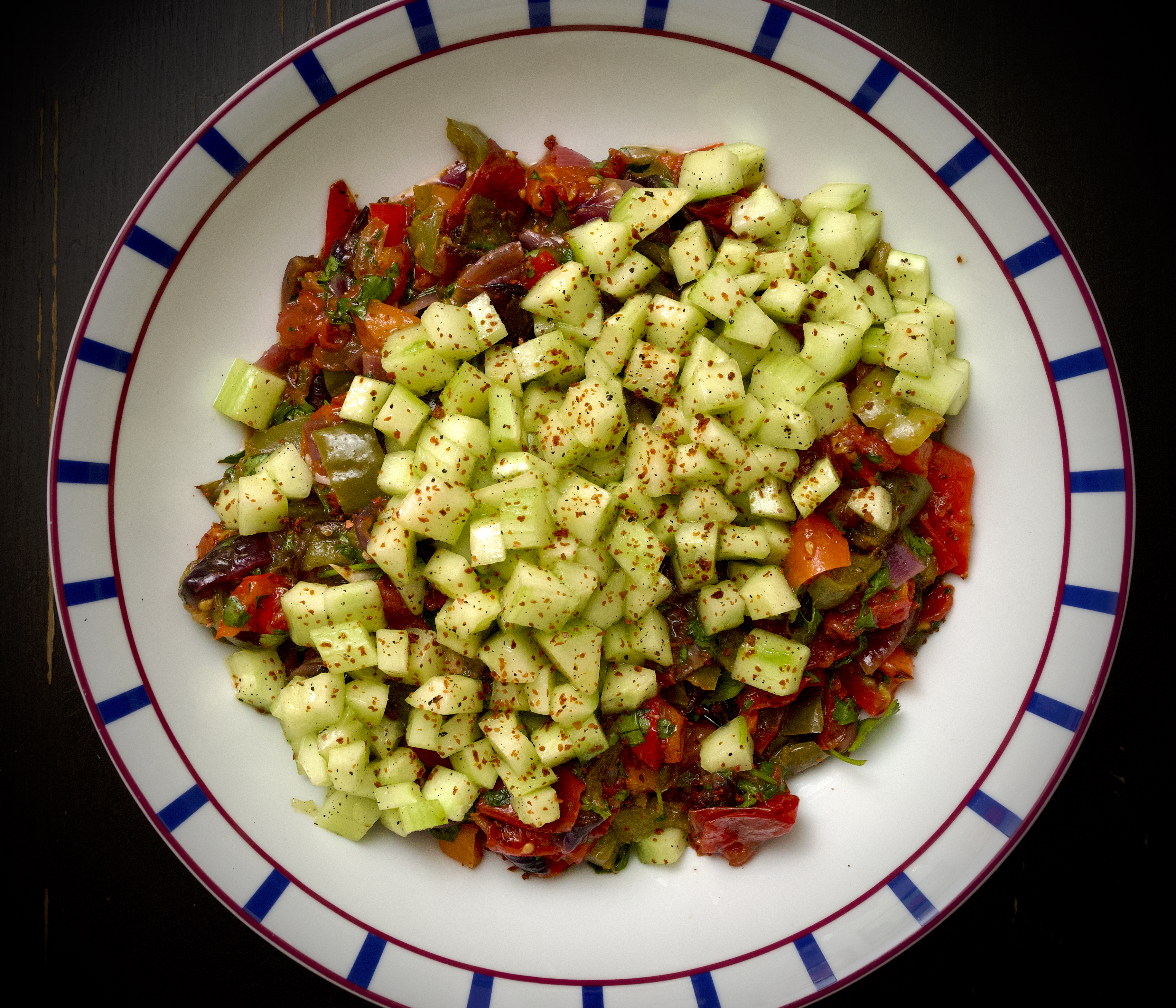
You can prep this salad in advance and serve warm or at room temperature. Jam-packed with flavour and a great side dish for a barbecue or roast meat.
Roasted pepper salad with cucumber and herbs – serves 4 as a side dish
4 green peppers (600g), cut into 4cm pieces
2 red peppers (300g), cut into 4cm pieces
4 vine tomatoes (400g), quartered
2 small red onions (200g), roughly cut into 3cm pieces
1 green chilli, stem removed and left whole
6 large cloves of garlic, peeled
6 tbsp olive oil
1½ tbsp lemon juice
10g parsley, roughly chopped
10g coriander, roughly chopped
1 cucumber, peeled, deseeded and cut into 1cm cubes
¾ tsp Urfa chilli flakes
Heat the oven to 230C fan.
Put the peppers, tomatoes, red onion, chilli and garlic into a large bowl. Add 4 tbsp olive oil, ¾ tsp of salt and plenty of black pepper. Toss well to combine.
Line to large baking sheets with baking parchment. Spread the vegetables out over the trays and roast for about 30 minutes, stirring once or twice, until softened and charred.
When cool enough to handle, roughly chop the vegetables and transfer to a bowl with the lemon juice, herbs and ½ tsp salt and plenty of black pepper.
In a separate bowl, toss the cucumber with 2 tbsp of oil, ¼ tsp of salt and plenty of black pepper.
Spread the roasted pepper mixture out over a platter. Spoon over the cucumber and sprinkle with the chilli.
(Original recipe from Ottolenghi Test Kitchen: Shelf Love, Ebury Press, 2021.)
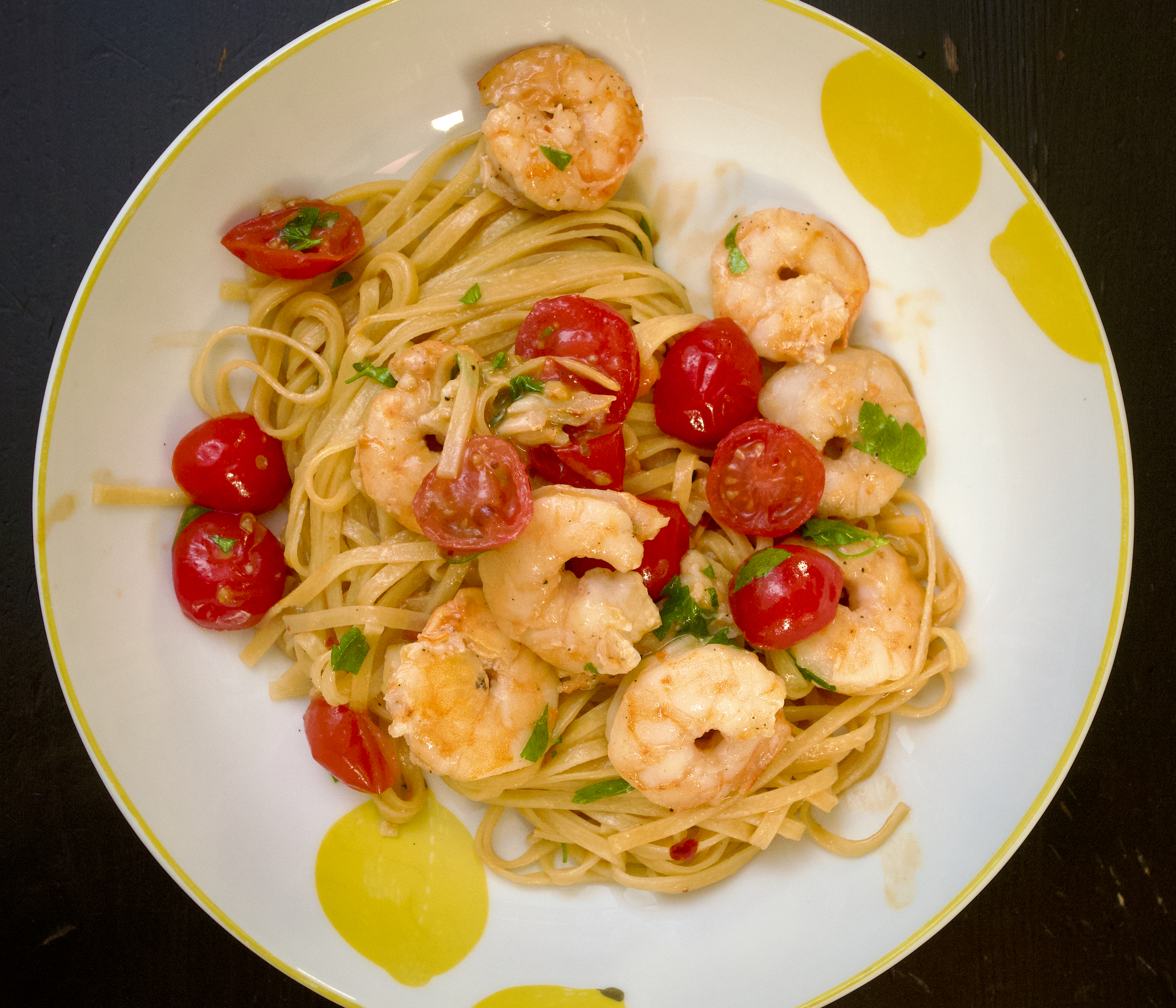
This is not your average prawn linguine and you do need to make a shellfish stock BUT we did this on a Tuesday night after work so you can too!! The photo really doesn’t do justice to how deep and complex the flavours are.
Wine Suggestion: A southern Italian white like Michele Biancardi’s Solo Fiano from Puglia where it has perfume and stone fruits bursting from the glass. A rich and round palate counter-balanced with a fresh, textural acidity completes the wine; like warm sunshine in a glass tempered by fresh breezes off the Adriatic Sea.
Prawn linguine – serves 2
350g whole prawns, you need to peel and devein them yourself and keep the shells and the heads
160g linguine
2 tbsp extra virgin olive oil
1 large clove of garlic, crushed
¼ tsp dried chilli flakes
8 cherry tomatoes, halved
1 tbsp roughly chopped parsley
FOR THE PRAWN STOCK:
1 tbsp extra virgin olive oil
1 clove of garlic, roughly chopped
1 shallot, roughly chopped
2 tinned anchovies
1 bay leaf
shells and heads from the peeled prawns (see above)
125ml white wine
375ml chicken stock
You need to start with the stock. Heat the oil in a medium saucepan over a medium-high heat and cook the garlic, shallot, anchovies and bay leaf for a few minutes, mashing the anchovies up as you go. Add the prawn heads and shells and cook, stirring, for 4 minutes.
Add the wine and turn the heat up high and simmer for a couple of minutes or until almost evaporated. Add the stock and ½ tsp salt, bring to the boil, then simmer gently for 25 minutes. Crush the prawn heads with a potato masher a couple of times as the stock simmers. Strain the stock through a fine sieve into a jug, pressing down hard on the shells to extract all the flavour. Throw away the solids and hang on to the delicious stock.
Toss the now peeled prawns with salt and black pepper. Heat 1 tbsp of the olive oil in a large, non-stick frying pan over a medium heat. Cook the prawns for about 1 minute on each side, or until opaque, then transfer to a plate.
Heat another tbsp of oil in the same frying pan and cook the garlic and chilli flakes for 15 seconds or until the garlic is just golden. Add the prawn stock and turn the heat up high. Simmer rapidly, stirring to scrape any tasty bits from the bottom of the pan, until the liquid has reduced to about 125ml. Turn off the heat and leave aside while you cook the pasta.
Bring a large pot of salty water to the boil and cook the linguine for 1 minute less than the timing suggested on the pack. When the pasta is almost cooked put the shellfish stock back over a high heat. Transfer the pasta directly from the pot of water to the stock with some tongs, it will bring some pasta cooking liquid with it. Add the cherry tomatoes and toss for a couple of minutes with two wooden spoons until the sauce coats the pasta and no longer sits in a puddle at the bottom of the pan. If it starts to clag add a little more pasta water.
Toss the prawns and parsley through the pasta and divide between two bowls.
(Original recipe from Recipetin Eats Dinner by Nagi Maehashi, Pan Macmillan, 2022.)
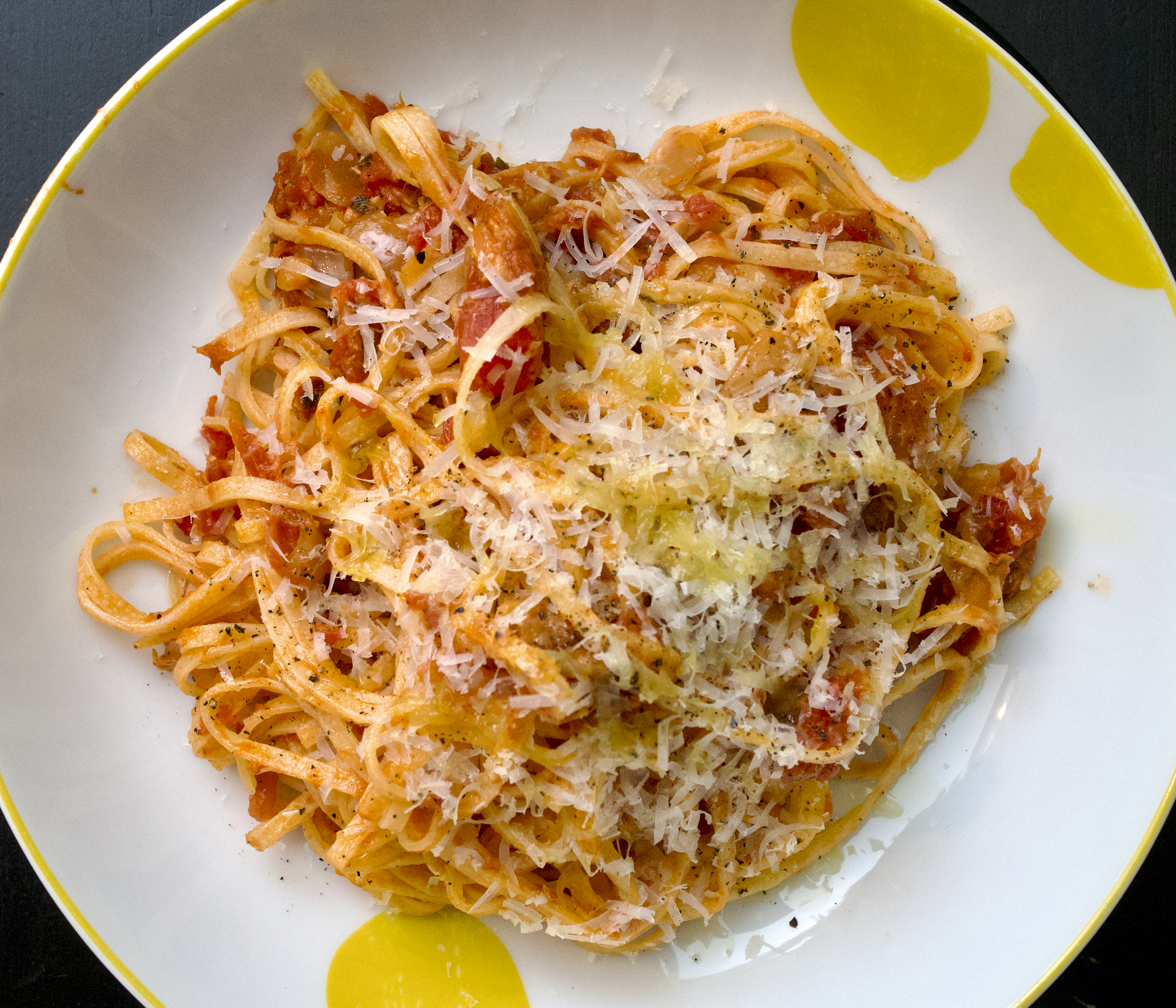
We are never without tins of tuna – Ortiz or Shines are great – and always in olive oil. This sauce takes a while but it’s easy and tastes delicious. The sauce is flavoured with a parmesan rind – you should always keep these as they freeze well and add great savoury flavours to dishes like this, a meaty ragú, or soups.
Wine Suggestion: A little left field and possibly only available when visiting the winery: Chateau du Hureau Blanc de Noirs 2022. A white made from 100% Cabernet Franc from Saumur because the usual vineyard of Chenin Blanc was hit by bad frosts, and the owner Philippe wanted some white to drink … plus he couldn’t resist having a play in the winery at the same time. Fresh but with a real texture with hints of phenolics. Hints of yellow plum, lightly floral, slightly nutty and touches of apple. It really came into it’s own with the food.
Linguine con tonno – serves 4 to 5
60ml extra virgin olive oil, plus extra to serve
1 onion, diced
3 cloves of garlic, finely chopped
1 Parmesan rind
1 tsp dried oregano
1 tbsp tomato purée
2 x 400g tins chopped tomatoes
300g tinned tuna, well drained
500g dried linguine
freshly grated Parmesan, to serve
Put the olive oil in a large pan over a medium heat. Add the onion and some salt, then allow to soften for about 5 minutes without colouring. Add the garlic, Parmesan rind and oregano. Cook for another 2 to 3 minutes, then add the tomato purée and cook for another minute.
Add the tinned tomatoes, season with more salt and bring to the boil, turn the heat down as low as it will go and cook for a couple of hours, stirring every 20 minutes or so. If the sauce starts to stick add a splash of water.
Add the tuna to the tomato sauce, then cook the linguine in lots of salty boiling water. Drain the pasta and return it to the pan. Tip in the tuna sauce and mix through. Serve drizzled with your best olive oil and sprinked with grated Parmesan and black pepper.
(Original recipe from Rick Steain at Home, BBC Books, Penguin, 2021.)
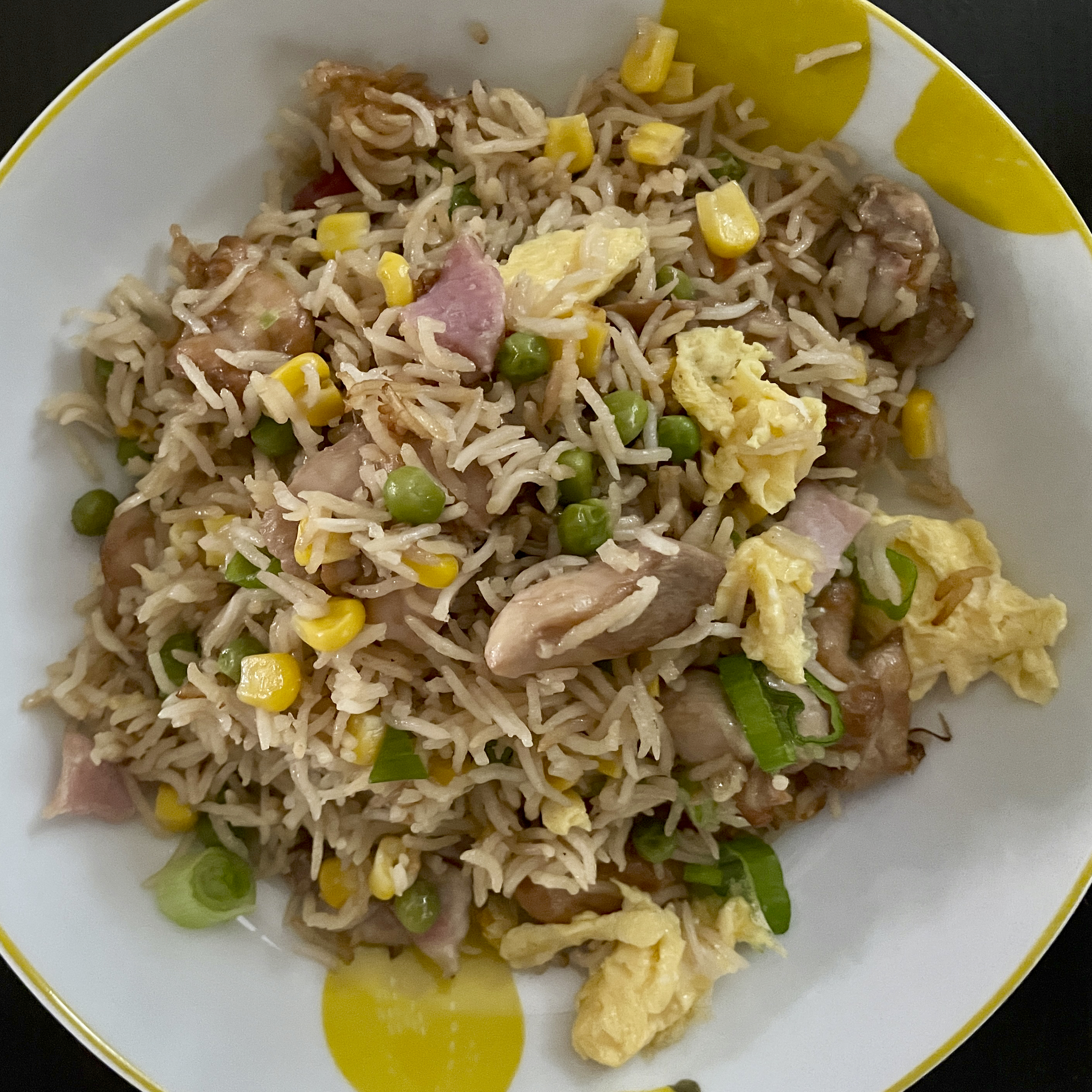
A ‘magic’ recipe inspired by the lovely book Recipetineats Dinner by Nagi Maehashi. The magic is that you bake the whole thing in one tray and it tastes just like any excellent chicken fried rice. Give it a go.
Wine Suggestion: This dish was well enjoyed with an Au Bon Climat Pinot Gris/Pinot Blanc from Santa Barbara in California, though we suspect a good Alsace Pinto Gris, or German Grauburgunder will work just as well. A generosity and breadth in the palate, underscored by a lovely texture allowing this wine to work with, but not overpower.
Chicken fried rice – serves 4
300g basmati rice (or long-grain rice)
400ml chicken stock (from a stock pot will be fine)
2 ½ tbsp light soy sauce
2 tbsp Shaoxing wine
3 garlic cloves, crushed (save 1 to add a bit later)
¼ tsp white pepper
100g frozen peas
100g frozen sweetcorn
100g bacon lardons, or chop up some bacon yourself
500g chicken thigh fillets, cut into small pieces – about 1.5cm
1 tbsp oyster sauce
4 tsp sesame oil
2 eggs, scrambled
1 scallion, finely chopped
You will need a deep metal roasting tin – about 23 x 33cm.
Heat the oven to 200C/180C fan.
Put the rice, chicken stock, 1 tbsp light soy sauce, 1 tbsp Shaoxing wine, 2 of the crushed garlic cloves, and the white pepper into the roasting tin. Give the tin a gentle shake to make sure the rice is distributed evenly and that it’s submerged in the stock. Sprinkle the frozen peas and sweetcorn over the top in an even layer, then sprinkle the bacon on top of that. Cover tightly with foil and bake in the oven for 25 minutes.
Meanwhile, put the chicken into a bowl and add 1 tbsp oyster sauce, 1 tbsp Shaoxing wine, 1 tbsp light soy sauce, 2 tsp of sesame oil and the last clove of crushed garlic. Stir to combine then set aside to marinate.
Remove the tray from the oven after the initial 25 minutes, gently remove the tinfoil and set it aside for later.
Spread the chicken in an even layer over the contents of the baking tray, then return to the oven and bake for another 20 minutes, uncovered.
Remove the tray from the oven and cover with the reserved tin foil. Leave to rest for 10 minutes.
Gently break up the rice with a wooden spoon and mix with the other ingredients.
Add the scrambled egg and sprinkle with 2 tsp sesame oil and the chopped scallion, then gently toss again before serving.
(Original recipe from Recipetineats Dinner by Nagi Maehashi, Bluebird, 2023.)
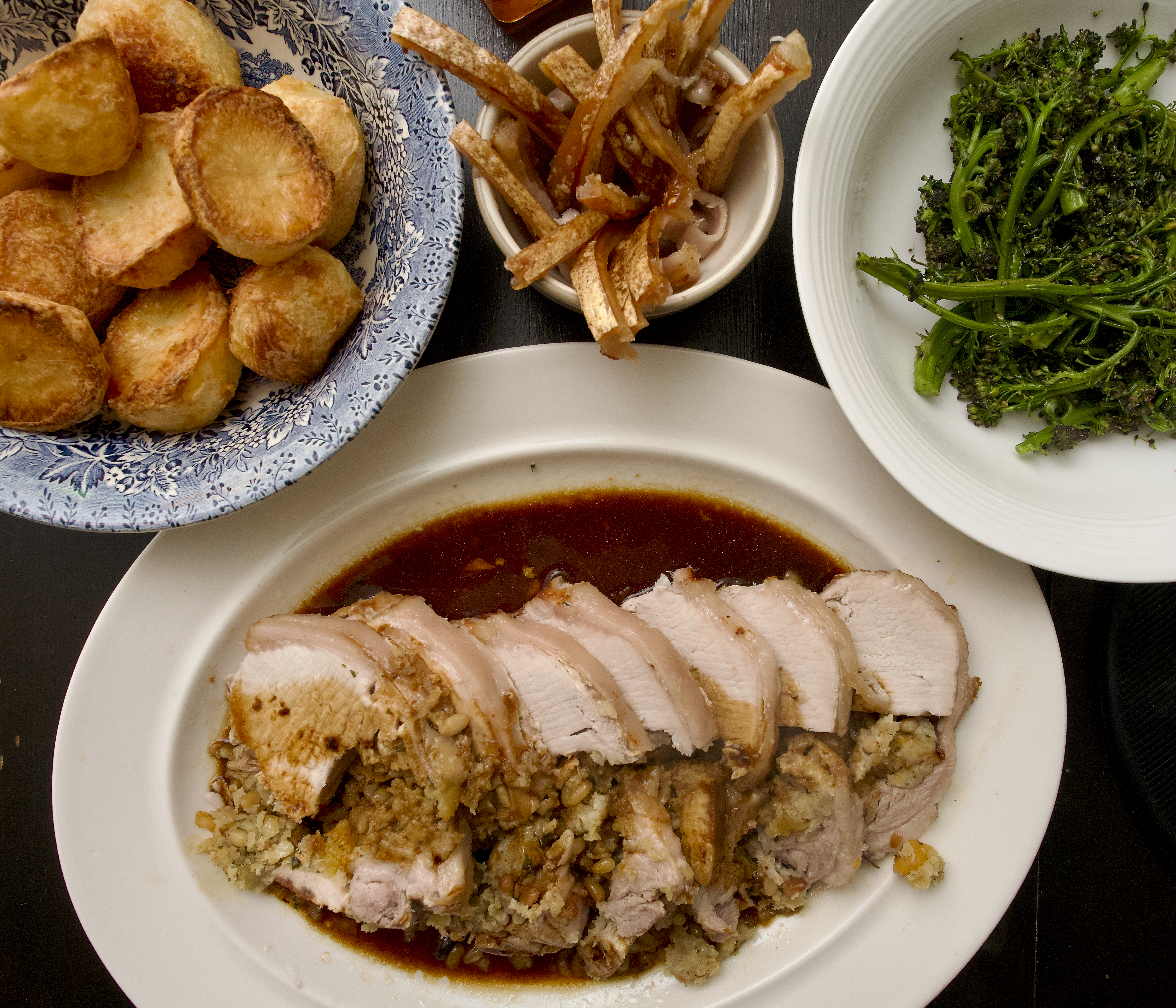
Pork is great value and this recipe will feed many people. Serve with roast potatoes and veg. To make sure you get good crackling, leave the pork, skin-side up, on a plate in the fridge for a day to dry out.
Wine Suggestion: An indulgence we know, but it was a roast dinner with friends; Domaine Jamet’s Condrieu Vernillon. A fairly new wine to this domaine, but one that echos the wonderful reds by being expressive and textural, with a vibrant core of freshness and savouriness.
Roast pork with apricot and pine nut stuffing – serves 6 to 8
75g butter
1 onion, finely chopped
1 clove of garlic, crushed
50g pine nuts
175g day-old, fresh white breadcrumbs
50g dried apricots, roughly chopped
1 tbsp roughly choppd parsley
1 tsp fresh thyme leaves
1.75kg boneless pork loin, skin scored at 5mm intervals, tell your butcher you plan to stuff it
2 tbsp olive oil
FOR THE GRAVY:
1 tbsp plain flour
3 tbsp ruby red port or red wine
1 tbsp clear honey
4 whole cloves
600ml beef stock
Remove the pork from the fridge about an hour before you plan to put it into the oven.
Make the stuffing by melting the butter in a large frying pan, then add the onion and garlic and cook for a few minutes until softened but not coloured.
Meanwhile, toast the pine nuts in a separate dry fring pan, watch them carefull so they don’t burn.
Stir the breadcrumbs into the onion mixture with the apricots, parsley and thyme, then stir in the toasted pine nuts and season. Remove from the heat and leave to cool.
Heat the oven to 200C/400F/Gas 6.
When the stuffing is cooled, place the pork skin-side down on a board. Spoon the cooled stuffing along the centre, roll up the joint and tie with string at intervals to secure.
Put the pork into a large roasting tin and pat the skin dry with kitchen paper. Rub the skin with olive oil and plenty of sea salt. Cover with foil and roast for 20 minutes. Reduce the heat to 180C/350F/Gas 4 and roast for another 15 minutes. Remove the foil and cook for another hour and 15 minutes or until the pork is tender and you have crispy crackling (if the crackling hasn’t crisped by the time the pork is cooked you can remove and snip it into strips with scissors and crisp it under the grill).
Transfer the pork to a warm serving plate and rest for about 15 minutes while you make the gravy.
Pour most of the fat from the roasting tin and put over a gentle heat. Stir in the flour and cook for 2 minutes, stirring. Slowly pour in the port and then add the honey and cloves, stirring to combine. Gradually add the stock, stirring continuously until it comes to the boil. Reduce the heat and simmer for 10 minutes until reduced and thickened, stirring occasionally. Season to taste.
Cut the string from the pork and cut through the fat just underneath the crackling. Remove and cut into pieces (you will have to eat a few), then carve the pork into thick slices.
Serve the pork on a platter with lots of roast potatoes, gravy and veg.
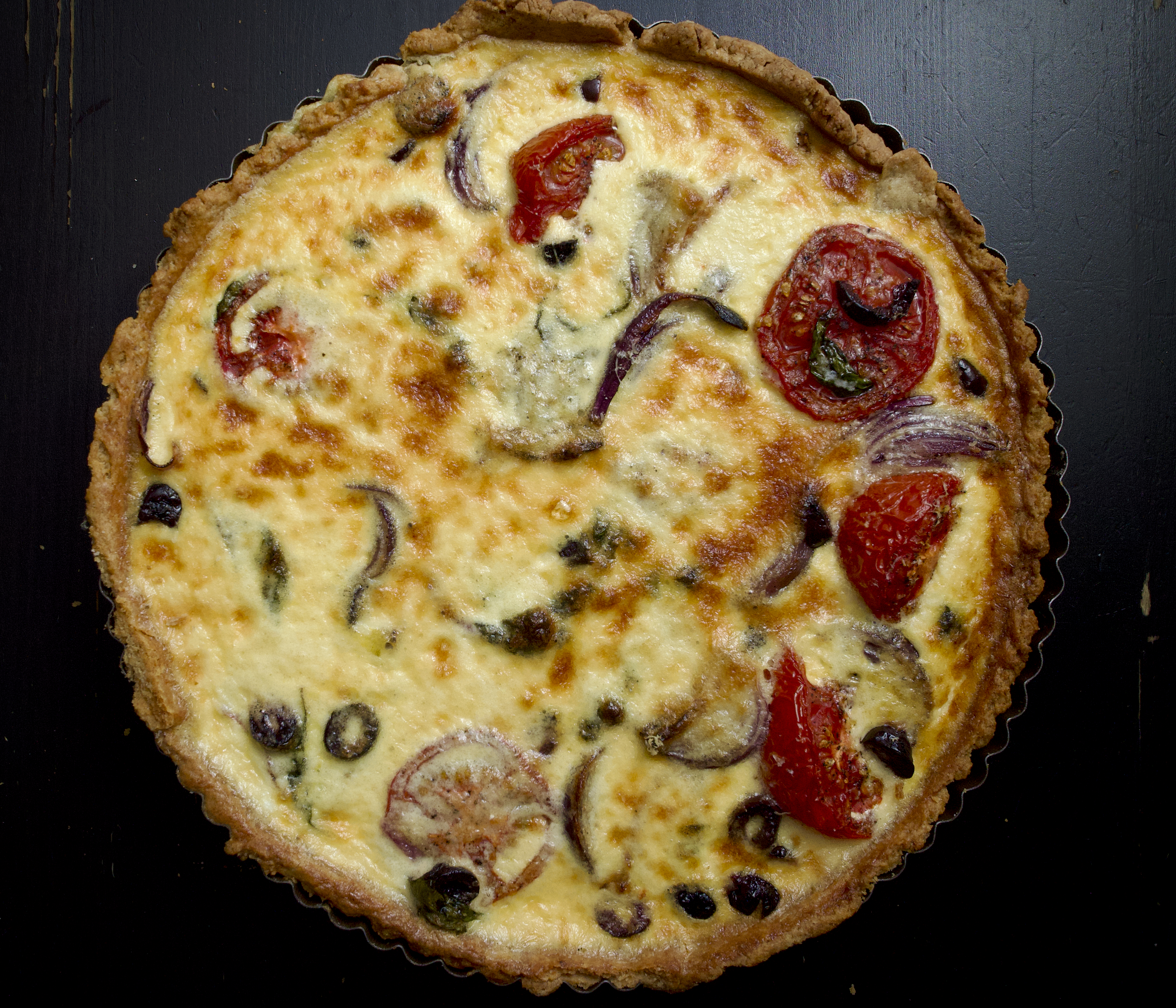
A nice late-summer dish by Thomasina Miers in the Guardian. Pastry is not one of our strong points but we managed this Parmesan crust and it was well worth the effort.
Wine suggestion: Try this with a restrained, cooler climate white like Domaine Gayda’s Sphere Chardonnay which comes from the hills leading up to the Pyrenees so cooled both by altitude and cool breezes descending from the hills at night. A touch of oak brings it together and while not complex there is an effortless drinakability and character, perfect for this summery quiche.
Tomato and Red Onion Quiche – Serves 6
500g mixed tomatoes, halved
2 medium red onions, cut into wedges
about 15 pitted black olives, roughly chopped
a handful of oregano leaves
3 tbsp olive oil
a splash of red wine vinegar
2 whole eggs, plus 2 egg yolks (you can keep the whites to glaze the tart)
60g Parmesan, finely grated, plus 1 tbsp extra for the top
400ml double cream
FOR THE PASTRY:
110g wholemeal flour
220g plain white flour
220g chilled unsalted butter, cut into cubes, plus extra for greasing the tin
70g Parmesan, finely grated
Start by making the pastry. Tip both flours and the chilled butter into a food processor with half a tsp of fine sea salt and the Parmesan. Pulse a few times so the butter is in big flakes. Trickle in 5 tbsp of ice-cold water and pulse a few more times – you need to be able to form a rough lump with it (add an extra tbsp of water only if you need it). Transfer to a floured work surface and bring together into a ball. Flatten into a disc, wrap in paper and leave in the fridge for 1-2 hours.
Meanwhile, heat the oven to 220C/200C fan/gas 7.
Put the tomatoes, cut side up, on a lined baking tray, scatter over the onions, olives and oregano, season generously, then drizzle with the olive oil and vinegar. Roast for 15-20 minutes or until starting to caramelise.
Turn the oven down to 200C/180C fan/gas 6.
Grease a 28-30cm tart tin. Roll the pastry out on a lightly floured surface and lift using your rolling pin into the greased tin. Make sure it’s big enough to leave an overhang on the sides. Push the pastry into the corners, then lightly prick the base with a fork and put in the fridge for 20 minutes.
Meanwhile, beat the eggs and yolks in a bowl, then pour in the cheese and cream and season lightly.
Line the chilled tart case wth foil, pushing it well into the edges. Blind bake for 20 minutes, then remove the foil and brush the tart case with the reserved egg white loosened with a splash of milk. Bake for another 5-10 minutes or until light brown.
Transfer the tomatoes, onions and olives to the tart case, then gently pour over the cream mixture and scatter with the last tbsp of Parmesan. Bake for 15-20 minutes, or until set and golden brown. Cool in the case until just warm, then trim the edges of the pastry and serve with a salad.
(Original recipe by Thomasina Miers in The Guardian, 22 July 2023.)
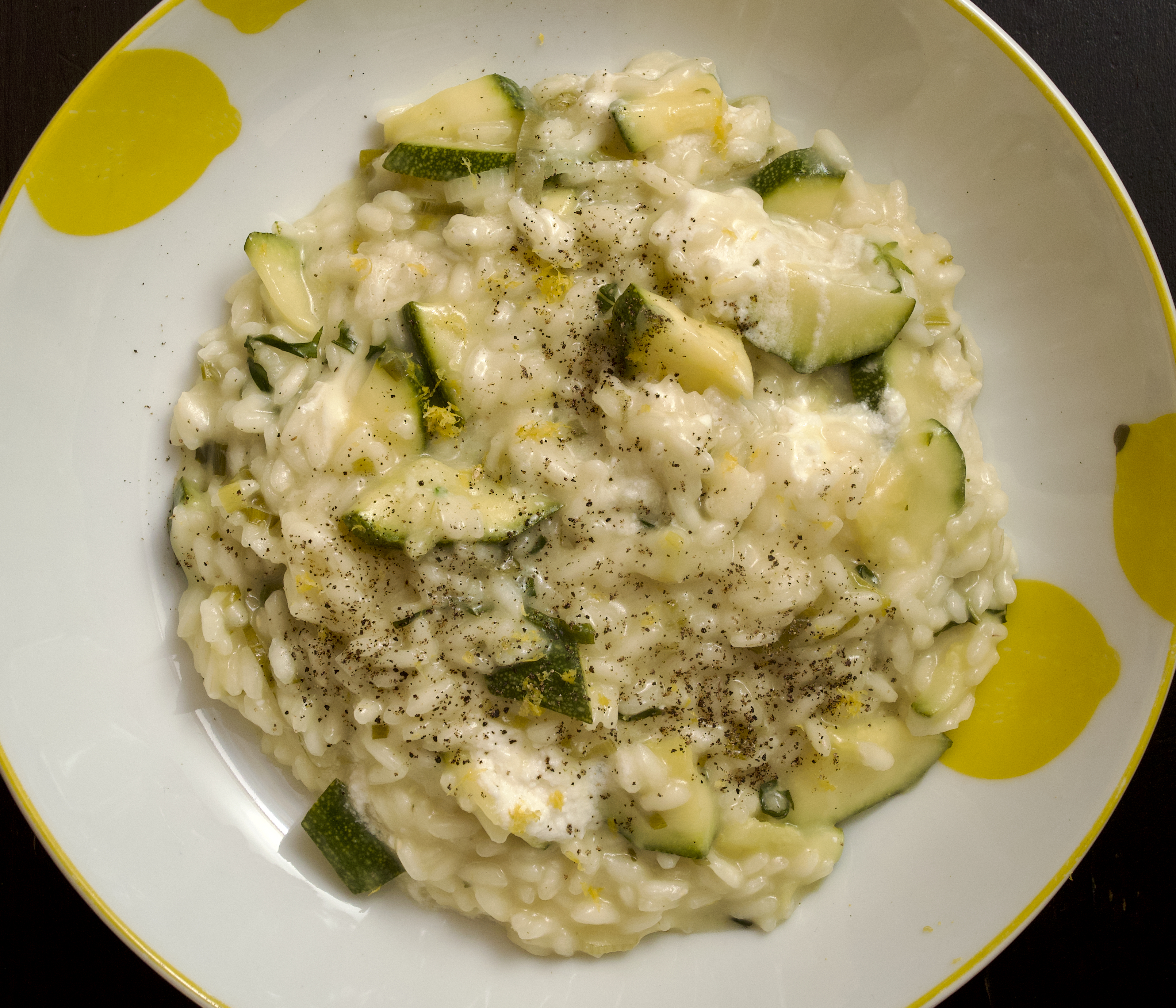
We can’t get enough of St Tola, a delicious goats’ cheese from County Clare. Here it is with some courgettes and mint in a summery risotto.
Wine Suggestion: Something suitably summery and white, like Domaine Ventenac’s “Marie”. Made from Vermentino and Colombard this tastes of lemons with a hint of grapefruit plus white flowers, touches of green apples and an under-current of salty texture. Zippy and round with a fun and easy finish.
Courgette Risotto with St Tola & Mint, serves 4
1.5 litres vegetable stock
2 tbsp extra virgin olive oil
a large bunch of scallions, very finely sliced
350g Carnaroli rice
a glass of dry white wine, Russel Norman suggests Sauvignon Blanc but we used a Vermentino-Colombard blend
2 medium courgettes, cut into quarters lengthways, then sliced into 3cm lengths
150g St Tola goats’ cheese
a large handful of mint leaves, roughly chopped
a large knob of butter
the zest of ½ a lemon
Heat the stock and leave it simmering gently.
Heat the olive oil in a large, heavy saucepan over a gentle heat. Gently sauté the scallions with a good pinch of salt for about 10 minutes, until they are soft and shiny but not browned. Mix in the rice and make sure all the grains are coated in the oil. Turn the heat up a bit a pour in the wine.
Start adding a ladeful of stock at a time and gently stirring until absorbed before adding the next one. Keep going like this for 8 minutes.
Add the courgettes and stir to combine, then keep adding the stock for another 6 minutes. Crumble half the goat’s cheese and mix it in along with the mint. Stir well and cook for another 4 minutes or until the rice is al dente. Season to taste.
Remove the pan from the heat and add the butter and remaining crumbled goat’s cheese. Fold these gently into the risotto, then cover and rest for a minute. Serve in warm bowls with some black pepper and lemon zest.
(Original recipe from Venice by Russell Norman, Fig Tree, 2018.)


 Jono & Jules do food & wine