12 September 2016 by jonoandjules

We cooked this dish while camping in France and it was a great side dish for all sorts of barbecued meat. It’s also a great idea for using up leftover sun-dried tomatoes which can easily get forgotten in the back of our fridge.
Tomato & Feta Couscous Salad – serves 4
- 200g couscous
- 250g piece of feta cheese
- 2 tbsp olive oil
- 2 tbsp balsamic vinegar
- 300g cherry tomatoes
- 50g sun-dried tomatoes
- 3 heaped tbsp chopped basil leaves
Put the couscous into a large bowl, pour over boiling water to cover, then leave to soak for 20 minutes or until the water has been absorbed.
Marinate the feta in the balsamic vinegar and olive oil for about 20 minutes.
Chop the cherry tomatoes and sun-dried tomatoes and mix together.
Crumble the marinated feta into large pieces, then fork through the couscous with the tomatoes and basil and season to taste.
(Original recipe from Eat by Nigel Slater, Fourth Estate, 2013.)
Posted in Food, Side dish, Vegetarian | Tagged Basil, Cherry Tomatoes, Cooking, Couscous, Food, Recipe, Salad, side dish, Sun-dried tomatoes | Leave a Comment »
8 September 2016 by jonoandjules

Big pieces of fish are particularly well suited to the large cooking space you’ve got on the barbecue. We’ve invested in a fish basket for the barbecue but when we cooked this we didn’t have one and it was tricky to turn. If you don’t have a fish basket you might find it easier to cut the side of salmon in half.
We also really like this without the cucumber yoghurt and served with some champ (mashed potatoes with scallions and loads of butter for any of you non-Irish readers).
Wine suggestion: White and fresh, but also with a full body and a good texture. Out of fashion somewhat we tried a Chablis … a 1er Cru Montmains from Domaine Bois d’Yver that we had lying around. It was a couple of years old but the extra age added extra layers of depth to a wine that was still fresh and dynamic. If you’d prefer a red then lightly chill a young Pinot Noir for 20-30 minutes and you’ll also have a treat.
Barbecued Side of Salmon with Cucumber Yoghurt – serves 4-6
- 1.5kg side of salmon, scaled and pinboned (order this from your fishmonger)
- zest and juice of 1 lemon
- large bunch of basil/fennel tops, finely chopped
- 1 cucumber, peeled lengthwise at intervals to make stripes
- 300ml natural yoghurt
- 1 red chilli, deseeded and finely chopped
- small bunch of mint/oregano, leaves picked and chopped
Brush the bars of the barbecue clean or your fish will stick (the fish basket will help with this), then light it and get it nice and hot.
Put the salmon skin-side down on a board and slash the flesh side with a sharp knife, about 1cm deep. Scatter the lemon zest and most of the fennel tops/basil over the salmon, then push into the cuts that you made with your fingers. Rub the fish lightly all over with olive oil and season well with salt and pepper.
Put the salmon on the barbecue, skin-side down. Check it after about 4 minutes by which time the skin should have got nice and crispy. Turn the fish carefully and cook on the other side for 2-3 minutes. You can carefully take the skin off the salmon at this stage and place it back on the heat to get really crispy.
Cut the cucumber in half lengthways and remove the seeds. Chop the seedless cucumber and mix with the yoghurt. Add some lemon juice, half the chopped chilli, and half the mint/oregano. Drizzle over some good olive oil and season well.
Break the salmon into portions with a fork and serve with the cucumber yoghurt, sprinkled with the remaining chilli and herbs. Drizzle with a little more olive oil and serve with a piece of the crispy skin if you like.
(Original recipe from Jamie at Home by Jamie Oliver, Michael Joseph, 2007.)

Posted in Barbecue, Fish, Food | Tagged Barbecue, BBQ, Cooking, Cucumber, Fish, Food, Recipe, Salmon, Side of salmon, Yoghurt, Yogurt | Leave a Comment »
5 September 2016 by jonoandjules

We make a batch of this every year and it really is the easiest of jams. If your pot is big enough and you find a good supply of raspberries we suggest scaling this up: this time we used 3kg raspberries but could easily stretch to 6kg in our pot if we had enough jars free.
Before you start you need to sterilise your jars. Heat oven to 140C/120C fan/gas 1. Wash the jars in hot, soapy water, then rinse well. Place the jars on a baking sheet and put them in the oven to dry completely. Alternatively run the jars through the hot cycle in the dishwasher.
Raspberry Jam
- 1kg raspberries
- 1kg jam sugar (the sort with pectin added)
- juice of 1 lemon
Put a plate in the freezer to chill.
Put half the raspberries and the lemon juice into a preserving pan. Mash the berries with a potato masher over the heat, then leave to cook for 5 minutes. Tip the cooked berries into a sieve over a bowl. When the juice has drained into the bowl start pushing the pulp through the sieve with a wooden spoon until you are left with only seeds in the sieve. Discard the seeds.
Tip the contents of the bowl back into the preserving pan and stir in the sugar. Heat gently, then add the rest of the whole raspberries. Bring to the boil and boil rapidly for 5 mins. Take off the heat and drop a little jam onto the chilled plate. Push your finger through it – it should wrinkle and look like jam. If it doesn’t, boil for 2 mins before testing again.
Stir the jam well as it cools, then pour into your sterilised jars and seal. It will keep unopened for a year, although the colour will darken a little. Keep the jars in the fridge once opened.
(Original recipe from BBC Good Food)
Posted in Food | Tagged Cooking, Food, Home-made, Jam, Raspberries, Raspberry jam, Recipe | Leave a Comment »
29 August 2016 by jonoandjules
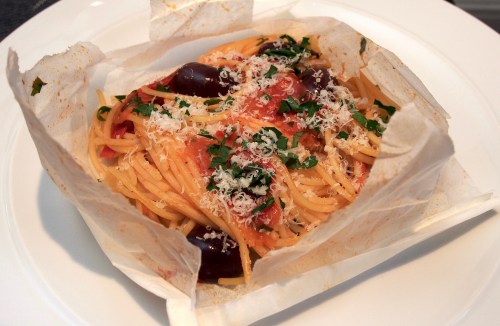
This starter portion of pasta is perfect for entertaining as it can be prepared up to 6 hours in advance and finished off in the oven when required. We had this as a second course after broad bean bruschetta and followed by barbecued balsamic beef and then home-made ice cream and summer berry compote for dessert.
Wine Suggestion: lovely with a slightly chilled red, and naturally, given the inspiration from the food we’d suggest Italian. A light, lively, youthful and fruity Sangiovese hits the spot in the form of a Rocca delle Macie Chianti Vernaiolo given 30-40 minutes in the fridge before serving; chilled but not ice cold. The fresh acidity works perfectly with the fresh tomatoes and olives and the combination speaks to us of summer.
Pasta al Cartoccio – serves 4
- 2 tbsp olive oil
- 1 large clove of garlic, peeled and left whole
- 450g ripe fresh tomatoes, chopped
- 1 red chilli, seeded and chopped
- 280g dried spaghetti
- 100g large black olives
- a handful of flat-leaf parsley, chopped
- grated Parmesan cheese, to serve
Cut 4 pieces of parchment paper, about 30x20cm.
Heat the oil in a saucepan over a medium heat, add the garlic and sauté for a couple of minutes. Remove the garlic, then add the tomatoes and chilli and season well. Simmer for 20 minutes, stirring now and then.
Meanwhile, preheat the oven to 200C/Gas 6/fan oven 180C.
Cook the spaghetti in salted water for half the time given on the pack, then drain well.
Add the olives and half the parsley to the tomato sauce and stir in the pasta. Taste and season to taste.
Divide the spaghetti between the pieces of paper, piling it into the middle of each. Scrunch the edges of each parcel to seal tightly. Put the parcels in a roasting tin and bake for 7 minutes after which time the spaghetti should be al dente.
Remove the tin from the oven and transfer each parcel to a warm plate. Let everyone open their own parcels and sprinkle the spaghetti with the remaining parsley and some parmesan.
(Original recipe by Ursula Ferrigno in BBC Good Food, August 2001.)
Posted in Food, Italian, Pasta, Vegetarian | Tagged al cartoccio, Cooking, Food, Italian, Pasta, Recipe, Spaghetti, Tomatoes | Leave a Comment »
24 August 2016 by jonoandjules
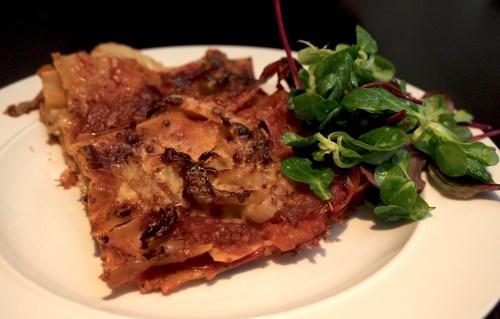
This is a great veggie dish that has had two outings in our house within a short space of time. It’s also one of the best recipes we’ve found for fennel which we sometimes find a bit uninspiring. We’ve made this in a larger tin, and thus thinner, and also in a deeper one. Both tasted great but we think the smaller diameter deeper dish works better.
Wine Suggestion: a classic match with Sangiovese especially from Chianti in Tuscany. Look out for wines with 100% Sangiovese in this case, even though there are some superb blends out there, as the nature of these wines complements the Fennel and Tomato more. We’ve tried both the Rocca delle Macie Sant’Alfonso Chianti Classico, which is unusally grown on thick clay, and the Selvapiana Chianti Rufina and both complemented the Lasagne excellently.
Fennel & Roast Tomato Lasagne – serves 4
- 3 fennel bulbs, sliced
- 3tbsp extra virgin olive oil
- 800g tomatoes on the vine
- 2tbsp balsamic vinegar
- 150ml double cream, plus a bit extra if needed
- 100g Parmesan, grated
- 250g dried lasagne sheets
Heat the oven to 160C Fan. Place the fennel in a large roasting tray, season well and drizzle with 2tbsp of the oil. Place the tomatoes in a separate roasting tray. Season and drizzle with the remaining oil and balsamic. Roast both trays for 30mins
Stir the cream into the fennel and return to the oven for a further 10mins. Meanwhile lightly mash the tomatoes with a fork. Remove the fennel from the oven, grate over most of the cheese and stir to melt – it should make a little sauce that clings to the fennel – add a bit more cream if you need to. Reduce oven temp to 140c fan.
Spoon a thin layer of tomatoes into an ovenproof dish. Top with a layer of pasta, followed by a layer of fennel, then another layer of pasta. Repeat, finishing with a layer of fennel. Scatter over remaining cheese and bake for 45mins until golden and the pasta is cooked. Serve with a green salad.
(Original recipe by Matt Follas in BBC Good Food Magazine, July 2010.)

Posted in Food, Pasta, Vegetarian | Tagged Chianti, Cooking, Fennel, Food, Lasagne, Pasta, Recipe, Sangiovese, Tomatoes, Tuscany, Vegetarian | Leave a Comment »
22 August 2016 by jonoandjules

Thank you to our friend Niall for supplying us with fresh Wood Pigeon breasts and double thanks to him for all the plucking and butchery which were done by the time we arrived home! So on a glorious summer evening we put together this little salad. This would work well with other berries and nuts too; walnuts especially come to mind.
Wine Suggestion: This works great with Pinot Noir, in this case we raided our cellar for a bottle of 2009 Clerget Vosne Romanee “les Violettes” which was superb; all velvety spices, juicy dark fruits and excellent length. Both the salad and wine were a treat.
Wood Pigeon Salad with Blackberries & Hazelnuts – serves 2
- 2 pigeon breasts, skin removed
- 2 tbsp olive oil
For the dressing:
- 3 tbsp olive oil
- 2 tsp Dijon mustard
- 1 tbsp cider vinegar
- 1 bunch chives, half snipped to short lengths and half finely chopped
For the salad:
- handful of hazelnuts, roughly chopped
- 2 large handfuls of mixed salad leaves
- small handful of parsley leaves
- 100g blackberries
Toss the pigeon in the olive oil and some black pepper, then set aside.
Mix the oil, mustard and vinegar with the finely chopped chives, a tiny splash of water and some seasoning.
Dry fry the hazelnuts, then set aside. Put the pan back on the heat and fry the pigeon breasts for 2-3 minutes on each side. Leave to rest in the pan for 5 minutes.
Toss the salad ingredients together with the sniped chives and a small amount of the dressing. Finely slice the pigeon breasts and arrange over the top. Drizzle some more dressing over the top and serve.
(Original recipe from BBC Good Food)
Posted in Food | Tagged Blackberries, Clerget, Cooking, Food, Hazelnuts, Pigeon, Pigeon breasts, Pinot Noir, Recipe, Salad, Vosne Romanee, Wood Pigeon | 1 Comment »
20 August 2016 by jonoandjules
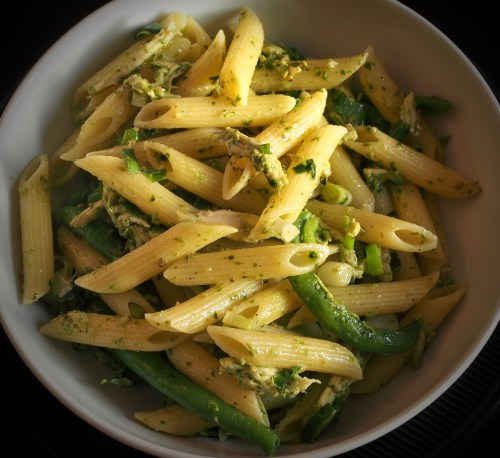
Our garden is producing copious quantities of green beans, so we’re eating them with everything at the moment. This is also a great dish for using leftover roast chicken breasts – the legs, thighs and wings are more popular in our house!
Wine Suggestion: We really enjoyed a glass of the Domaine d’Albas Blanc with this dish, a less than usual combination of Vermentino, Viognier and Roussanne that really works; fresh and textured with nice stone fruit flavours and hints of exotic spice while remaining thirst quenching and moreish. From Minervois it is yet again another white from southern France that we’ve tasted recently showing how good white wines can be from this area – they’re often overlooked in favour of the reds. In good vineyards and with the right producer we’ve had a few crackers like this one, so we suggest keeping an eye out for more.
Creamy chicken & green beans pesto pasta – serves 4
- 400g penne pasta
- 250g green beans, trimmed
- 1 tbsp olive oil
- 1 bunch of scallions, finely sliced
- 2 large roast chicken breasts, shredded
- 5 tbsp pesto
- 3 tbsp double cream
- a handful of grated Parmesan
Cook the pasta according to the instructions on the pack and add the green beans 6 minutes before the end of the cooking time. Drain and reserve a few tablespoons of the cooking water.
Meanwhile, heat the oil in a large frying pan and cook the onions for a couple of minutes or until soft. Add the shredded chicken and warm through before stirring in the pesto and cream. Add the cooked pasta and beans to the chicken mixture and add a little of the cooking water to make a sauce. Season and serve with the Parmesan.
(Original recipe from BBC Good Food)
Posted in Food | Tagged Chicken, Cooked chicken, Cooking, Domaine d'Albas, Food, Green beans, Leftover chicken, Minervois, Pasta, Pesto, Recipe, Roast chicken leftovers | Leave a Comment »
15 August 2016 by jonoandjules

A real taste of summer and a smashing way to start a dinner party. Serve on a big wooden board with a glass of something bubbly.
Wine Suggestion: Go white, go Italian, go fresh and textured. We’d recommend a good Pecorino from Abruzzo or Marches or maybe a Gavi or Soave.
Smashed broad bean and mozzarella salad – serves 4
- 300g podded broad beans (you need about 1kg in their pods to get this amount) or 300g frozen broad beans
- 1 lemon, juiced
- 100g pecorino, grated
- handful of mint leaves
- handful of basil leaves
- olive oil
- sourdough/country style bread, 8 slices toasted (we toasted ours on the barbecue), rubbed with garlic & drizzled with olive oil
- 2 balls buffalo mozzarella
Blanch the podded broad beans in boiling water for 2 minutes, drain and pop the green bean out of the papery skin.
Smash the double-podded broad beans with a good pinch of sea salt in a big pestle & mortar. Add the lemon juice, pecorino and herbs (keep a few leaves to garnish) and 4tbsp olive oil and mix together. Season well and pile onto the toast.
Tear the mozzarella into chunks and set on top of the broad bean mash, Finish with another drizzle of oil, some black pepper and a few herbs.
(Original recipe by Ben O’Donoghue for BBC Olive Magazine, August 2005.)
Posted in Barbecue, Food, Vegetarian | Tagged Barbecue, BBQ, Broad beans, Bruschetta, Cooking, Food, Pecorino, Recipe, Starter, Vegetarian | 2 Comments »
12 August 2016 by jonoandjules
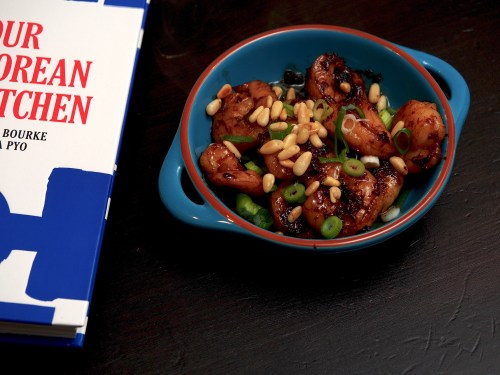
These are amazing!!!!! Pick up some prawns and make them tonight.
Pan-fried King Prawns (daeha jjiim) – serves 2 as a starter
- 1 garlic clove, crushed
- ½ cm piece of ginger, peeled and finely grated
- 2 tsp soy sauce
- 2 tsp roasted sesame seed oil
- 1 tsp honey
- 1 tsp vegetable oil
- 150g king prawns, shelled
- 1 spring onion, thinly sliced
- 2 tsp roasted pine nuts, roughly chopped
Combine the garlic, ginger, soy sauce, sesame seed oil and honey together to make a sauce.
Heat the vegetable oil in a pan over a high heat. When it’s very hot, add the prawns and cook for a minute, then turn them over. Add the sauce and cook for another minute until cooked through.
Serve immediately with the spring onion and pine nuts sprinkled over the top.
(Original recipe from Our Korean Kitchen by Jordan Bourke & Regina Pyo, W&N, 2015.)
Posted in Food, Prawns, Shellfish | Tagged Appetiser, Cooking, Food, Korean, prawns, Recipe, Shellfish, Starter | 2 Comments »
8 August 2016 by jonoandjules
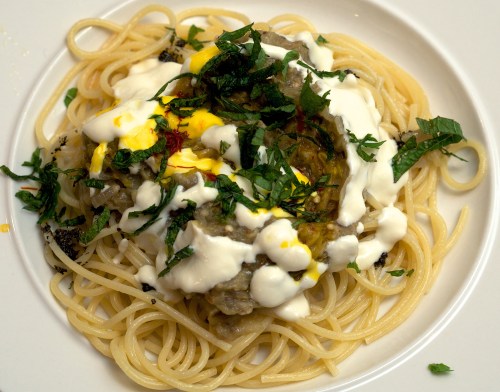
Iranian Pasta
This dish from Yotum Ottolenghi is very different from the Italian pasta dishes that we’re all familiar with. As Yotam points out, Italy totally dominates the pasta scene when in fact there are pasta recipes from all over the place. Try this if you’re up for something way more exotic than spag bol.
Wine Suggestion: We chilled down a Spanish red to go with this, the Jesus Romero Rubus, a vibrant blend of Garnacha, Tempranillo and Syrah from one of the highest vineyards in Spain. Unoaked this wine has a delicious purity and an excellent length with deep plum flavours, hints of pepper and spice.
Iranian-style Pasta – serves 4
- 3 large aubergines (1.2 kg in total)
- 140g crème fraîche mixed with 60g of Parmesan
- 75ml of olive oil, plus a bit extra
- 1 large onion, finely chopped
- 2 tsp cumin seeds
- 3 garlic cloves, crushed
- 2 tbsp lime juice
- 150g Greek yogurt
- 2 tsp dried mint
- 500g linguine pasta
- ½ tsp saffron threads diluted with ½ tbsp of lukewarm water
- 10g fresh mint, shredded
Preheat the oven to 230ºC/210ºC Fan/Gas Mark 8.
Pierce the aubergines a few times with a sharp knife, then place on a baking tray lined with baking parchment and roast in the oven for about 1 hour, or until the flesh is totally soft. Set aside to cool a bit, then cut in half and scoop out the flesh into a colander. Leave to drain for at least 30 minutes and discard the skin.
Put the crème fraîche and Parmesan mixture into a small saucepan with 75ml of water. Bring to a simmer over a medium heat, stir, then set aside.
Heat 2 tbsp of the olive oil in a medium sauté pan and place on a medium-high heat. Add the onion and cumin seeds and cook for 12 minutes or until soft. Add the aubergine flesh and garlic, along with 1 tsp of salt and some black pepper. Cook for another 2 minutes before adding the lime juice. Stir for a final minute, then remove from the heat.
Add the yoghurt to the crème fraîche mixture and heat over a low flame for 5 minutes. Watch the mixture carefully – stir regularly and don’t let the pan heat too much or the yoghurt may split.
Mix the dried mint with a tbsp of the oil and set aside.
Cook the pasta in a large pan of salted water according to the pack instructions or until al dente. Stir 2 tbsp of the oil through the cooked pasta and divide between shallow bowls or plates. Drizzle over the mint oil, followed by the aubergine. Top with the crème fraîche and yoghurt mixture, followed by the saffron water, fresh mint & a final drizzle of oil. Serve straight away.
(Original recipe from Plenty More by Yotam Ottolenghi, Ebury Press, 2014.)
Posted in Food, Pasta, Vegetarian | Tagged Aubergine, Cooking, Food, Iranian, Pasta, Plenty More, Recipe, Saffron, Yotam Ottolenghi | Leave a Comment »
2 August 2016 by jonoandjules
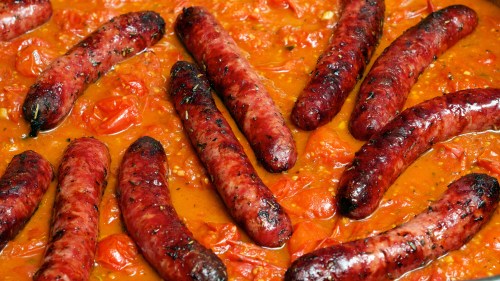
Cherry tomato & chipolata bake
Despite the simplicity of this dish it really showcases perfectly ripe cherry tomatoes; excellent when the garden is overflowing and you’re trying to think of recipes to use them all! One of our butchers does great, meaty and coarsely filled chipolata sausages which we used here, but Cumberland or coarse Italian ones work just as well. Leftovers make a great pasta sauce (see below).
It’s might be a bit early yet for Irish garden tomatoes but our friend Patty, who has just left Ireland to become the Garden Program Director at the University of the Pacific in Stockton California, has a huge tomato glut. So we promised a tomato recipe to help Patty, Michael, and the rest of the staff use up all the tomatoes.
Wine suggestion: Great with a robust and juicy red, don’t over complicate it and pick a moderately priced one. We’ve tried Southern Italian Primitivo’s, Barbera from the north, Cotes du Rhone, Spanish Tempranillo’s and Garnacha and a couple of juicy Aussie Shiraz’s. All work a treat. Californians won’t go wrong with a good Lodi Zin!
Sweet cherry tomato and sausage bake – serves 6
- 2kg ripe cherry tomatoes, mixed colours if you have them
- 2 sprigs each of thyme, rosemary & bay
- 1 tbsp dried oregano
- 3 garlic cloves, peeled and chopped
- 12 good-quality sausages (see above)
- extra virgin olive oil
- balsamic vinegar
Preheat the oven to 190ºC/375ºF/gas 5.
Put the tomatoes, herbs, oregano, garlic and sausages in a large roasting tray – big enough to take the tomatoes in a single layer. Drizzle with the olive oil and balsamic vinegar and season with salt and pepper. Toss together and make sure the sausages end up on the top, then bake for 30 minutes in the hot oven. Give the tin a good shake and turn the sausages over, then return to the oven for 15-30 minutes or until the sausages are at your desired level of stickiness (we like them pretty sticky!).
Lift the sausages out of the sauce, then put the tray on the hob and reduce the sauce to a nice thick consistency, before putting the sausages back in. Check the seasoning and serve with some warm bread and a green salad.
(Original recipe from Jamie Oliver’s Jamie at Home, Michael Joseph, 2007.)
Cherry tomato & sausage penne
As the bake makes loads just chop up the leftovers the next day and reheat to serve with penne or another chunky pasta like rigatoni or macaroni. Delicious altogether!
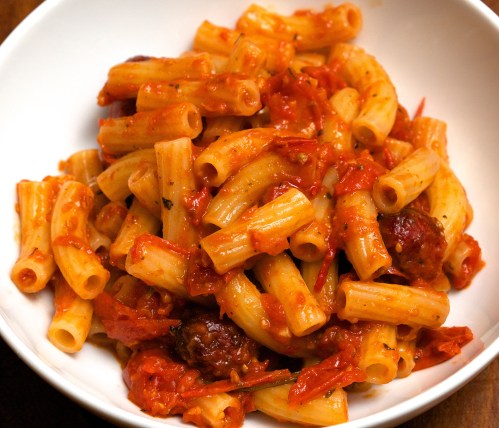
Cherry tomato & suasage penne
Posted in Food, Pasta | Tagged Cherry toamtoes, Chipolatas, Cooking, Food, Glut, Jamie Oliver, Pasta, Recipe, Sausages, Tomatoes | Leave a Comment »
30 July 2016 by jonoandjules
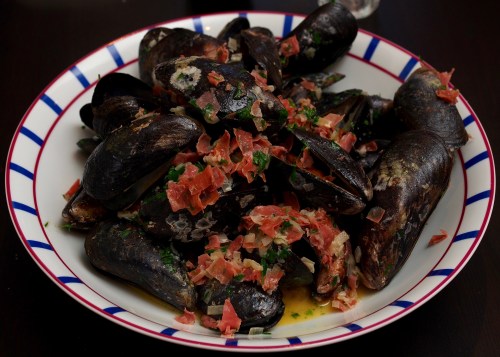
Ham gives a nice salty twist to mussels so be careful when adding any additional seasoning. We have lots of herbs growing in the garden at this time of year and are always looking for excuses to use them.
Wine Suggestion: This was an harder match than expected given the combination of salty sea flavours and the richness of the ham. Given the layers of savoury flavours we complemented this with a dry Amontillado sherry, the Hidalgo “Napoleon” which has the Umami richness to match. It also has a great nuttiness that added something extra and also a very complementary hint of fresh sea air in it’s flavour.
Mussels with Bayonne ham – 3-4
- 1.5kg mussels
- 100ml dry white wine
- 50g butter
- 1 shallot
- 75g Bayonne or prosciutto ham
- 1 clove of garlic, grated
- 1 handful of mixed herbs – we used parsley, tarragon & chives
- crusty bread to serve
Scrub the mussels clean and discard any that don’t close when tapped on a hard surface.
Add 2 tbsp of the wine to a large saucepan and bring to the boil. Add the mussels, cover and cook over a high heat for 3-4 minutes or until opened. Give the pan a shake every now and then and discard any mussels that remain closed. Take off the heat and strain in a colander over a large bowl to catch the liquid. Reserve the liquid and keep the mussels warm.
In the same pan, melt the butter and cook the shallot, ham and garlic for 4-5 minutes, until softened but not browned. Add the mussel cooking liquid and the rest of the wine wine. Bring to a boil and cook until reduced by half. Add the mussels and herbs and mix well, then season with black pepper.
(Original recipe by Rick Stein)
Posted in Fish, Food | Tagged Bayonne ham, Cooking, Food, Mussels, Recipe, Rick Stein | Leave a Comment »
24 July 2016 by jonoandjules
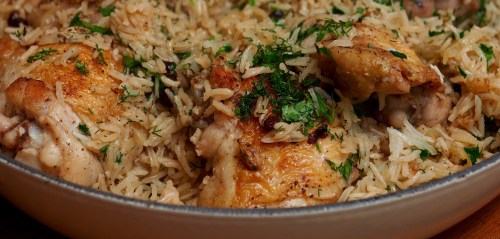
Another Ottolenghi success which has that comforting combination of crispy chicken skin and warm spices. Always a crowd pleaser in our house!
Wine Suggestion: we went for a Viognier made in the northern Rhone valley by Jean-Michel Gerin. It was just his “La Champine” IGP Collines Rhodaniennes but it was delicious and had exotic fruit and spice hints that matched and complemented the cardamon and cinnamon.
Chicken with caramelised onion & cardamom rice – serves 4
- 25g currants soaked in a little lemon juice
- 4 tbsp olive oil
- 2 medium onions, finely sliced
- 1kg chicken thighs
- 10 cardamom pods
- ½ tsp whole cloves
- 2 long cinnamon sticks, broken in two
- 300g basmati rice
- 550ml boiling water
- 5g parsley, chopped
- 5g dill, chopped
- 5g coriander, chopped
- 100g Greek yoghurt, mixed with 2 tbsp of olive oil (optional)
Heat half the olive oil in a large sauté pan, then add the onion and cook over a medium heat for 10-15 minutes or until deep golden brown. Transfer the onion to a bowl and wipe the pan clean.
Put the chicken into a large bowl and season with 1½ tsp of salt and black pepper. Add the rest of the olive oil, cardamom, cloves & cinnamon and mix well together with your hands. Heat up the pan again and add the chicken and spices. Sear for 5 minutes per side and remove from the pan. Don’t worry about any spices that stay in the pan. Remove all but a millimetre of oil form the bottom of the pan. Add the rice, caramelised onion, 1 tsp of salt & lots of black pepper. Strain the currants and add them too. Stir well and return the seared chicken and push it into the rice.
Pour the boiling water over the rice and chicken, cover and cook on a very low heat for 50 minutes. Take the pan off the heat, take the lid off briefly and cover the dish with a clean tea towel before replacing the lid. Leave untouched for 10 minutes. Finally, add the herbs and use a fork to stir them in and fluff up the rice. Taste and season if necessary. Serve hot or warm with the yoghurt if you like.
(Original recipe from Jerusalem by Yotam Ottolenghi & Sami Tamimi, Ebury Press, 2012.)

Chicken with caramelised onion & cardamon
Posted in Chicken, Food | Tagged Cardamom, Chicken, Cooking, Food, Israeli, Jerusalem, Ottolenghi, Recipe, rice | 3 Comments »
19 July 2016 by jonoandjules

So we’re back after a brief hiatus due to holidays and a broken laptop. In the absence of a pizza oven, we tried cooking pizza on our gas barbecue instead. The result was pretty good and produced a pizza-oven style crust that we never manage to achieve in the regular oven. Pizza dough is easy to make with a standing mixer and dough hook. You can chill the dough for a couple of days or freeze it.
Pizza Dough – for 4 pizzas
- 500g ’00’ flour, plus extra for dusting
- 1 tsp salt
- ½ tsp dried yeast (not fast-action)
- 400ml warm water
- oil, for greasing
Put the flour and salt in the mixer bowl and mix the yeast into the water. Wait 5 minutes to check that the yeast is working – little bits will start rising to the top.
Turn on the motor and pour in the liquid. Keep the speed on medium-high and it should come together in a ball. If the bottom is sticking tip in 1-2 tbsp of flour. Knead for 5-7 minutes until the dough is shiny and springs back when you press your finger into it. Try to avoid adding too much extra flour the dough should be slightly sticky.
Use oiled hands to remove the dough from the bowl and hook. Oil another bowl and put the dough in it. Turn the dough around to lightly coat it in the oil. Cover tightly with cling film and and a tea towel, then place in a warm, draught-free spot until the dough has doubled in size. It will take between 2 and 4 hours to rise depending on how warm a day it is. (If you don’t need the dough for a day or two, put it in the fridge straight away, take out 3-4 hours before using and punch it down before bringing together on a floured surface.)
Divide the dough into 4 pieces, then shape into balls – dusting in flour as they will be sticky. Keep the dough balls covered with a tea towel or cling film while you prep the toppings. (You can also freeze them in sealed bags. Thaw in the fridge and bring to room temperature 3 hours before using.)
Use your fingers to gently stretch out the dough into pizza shapes. When they have stretched to about 16cm, put the disc over the tops of your hands and use them to stretch it to about 25cm. Ours was pretty wonky and ripped a bit but no matter.
Preheat the gas barbecue and turn down to medium-low so the bottom of the pizza doesn’t burn.
Put the pizza onto a floured baking sheet with no edge or a large wooden board. Slide the dough onto the grill, close the lid (if you have one) and cook for 3-4 minutes. The dough will puff up and is ready when the bottom-side has light brown stripes. Use tongs to pull the dough off and turn upside down.
Put the pizza toppings (see our suggestion below) on the cooked side and place the pizza back on the grill, uncooked side down, and shut the lid. Cook for another 3-4 minutes and remove when the cheese is melted and the toppings are hot.
(Pizza dough recipe from BBC Good Food)
Chorizo pizza with peppers & Manchego – enough for 2 pizzas
- ½ quantity of pizza dough above, divided into 2 balls
- 4 cooking chorizo sausages
- 4-6 peeled plum tomatoes from a tin, drained
- 100g Manchego, shaved
- 100g mozzarella, cut into 2cm cubes
- ½ Romero pepper, thinly sliced
- pinch of chilli flakes
- 2 handfuls spinach leaves
Prepare the dough as outlined above.
Thickly slice the chorizo and pan-fry until crispy. Remove and set aside. Cook one side of the pizzas.
Crush 2-3 of the tomatoes with your hands and drain in a sieve, then spread on the cooked side of the pizzas. Top with both cheeses, the pepper and chorizo. Season and add chilli flakes.
Grill, covered, until the cheese is melted. Finish with the spinach leaves and a few extra shavings of Manchego.
(Pizza topping recipe from BBC Good Food)
Posted in Barbecue, Food | Tagged Barbecue, BBQ, Chorizo, Cooking, Food, Manchego, Pizza, Pizza dough, Recipe | 5 Comments »
13 June 2016 by jonoandjules
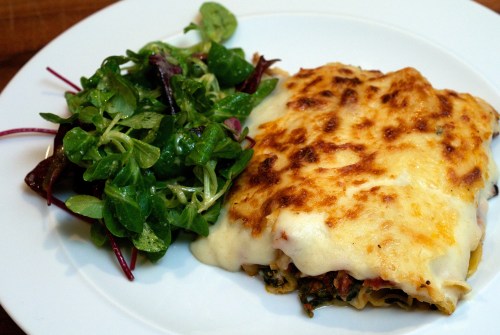
Veal Cannelloni
This is a delicious party dish from Croatia where the cooking has lots of Italian influences. Most veal these days is ethical rose veal (even in Italy, where they’re adamant it’s the traditional production methods) so don’t write off veal too quickly … it’s definitely worth trying.
Wine Suggestion: definitely drink a Croatian white if you can find one but failing that try a white from Eastern Italy, like a good Verdicchio or Pecorino.
Veal Cannelloni – serves 6
- 250g dried cannelloni tubes
- 300ml tomato sauce (see recipe below)
For the filling:
- 650g veal mince
- 1 onion, finely chopped
- 4 cloves of garlic, crushed
- 45ml olive oil
- 150ml dry white wine
- 2 tbsp tomato puree
- 2 tsp salt
- 15 turns black pepper
- 300g fresh spinach, wilted over a medium heat, drained and chopped
- 15 rasps of nutmeg
- 50g Parmesan cheese, grated
For the béchamel sauce:
- 75g butter
- 125g plain flour
- 1 litre full-fat milk
- 1 bay leaf
- 50g Parmesan/Pecorino
Make the filling by combining the veal, onion and garlic in a food processor and pulsing briefly to make a coarse paste.
Warm the olive oil in a large frying pan over a high heat, add the veal and cook until browned. Add the white wine, tomato puree, salt and pepper and keep cooking, covered, for 20-30 minutes. Stir in the spinach, nutmeg & Parmesan.
Next make the béchamel sauce. Melt the butter in a saucepan over a medium heat, then add the flour to make a roux. Cook for 2 minutes, then remove from the heat and slowly add the milk, whisking to avoid lumps. Return to the pan, add the bay leaf and stir until thickened. Add half the Parmesan/Pecorino and set aside.
Heat the oven to 180ºC/gas 4.
Spoon a ladle of the béchamel over the base of a large greased rectangular baking dish. Spoon some of the veal into each of the cannelloni tubes (use both ends of a teaspoon to do this).
Arrange the filled tubes in a single layer in the dish and pour the tomato sauce over. Cover with the remaining béchamel, top with the remaining cheese and bake for about 40 minutes. Leave to rest for 5 minutes before serving.
(Original recipe from Rick Stein’s Venice to Istanbul, Penguin 2015.)
Posted in Food, Party Food, Pasta | Tagged Cannelloni, Cooking, Croatian, Food, Pasta, Recipe, Veal | 2 Comments »
13 June 2016 by jonoandjules
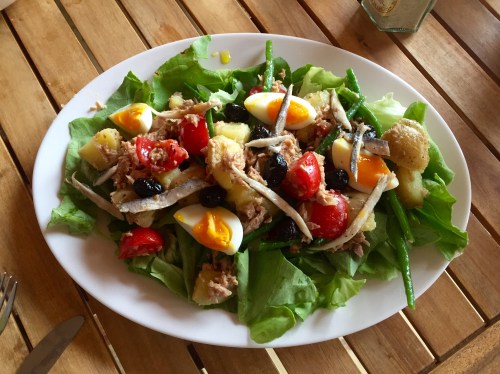
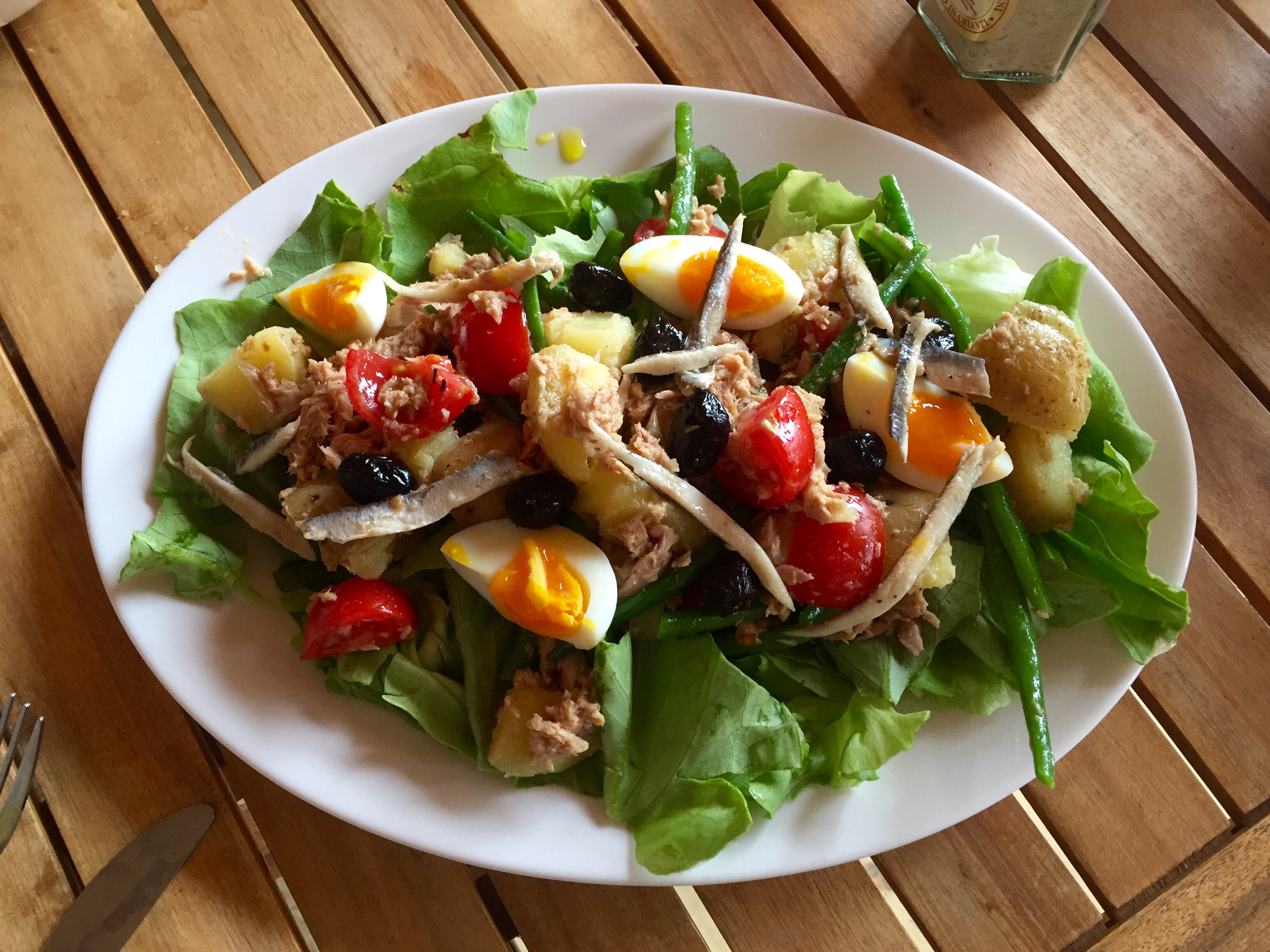
Off to France camping for a few weeks and here is our first lunch. We recommend packing a bag of cooking essentials that includes salt, good extra virgin olive oil, red wine vinegar and a black pepper mill.
Tuna Niçoise – serves 4
- 2 eggs
- 4 new / waxy potatoes
- 200g green beans
- A couple of handfuls of soft lettuce leaves, like butter lettuce
- 2 tomatoes, quartered
- 200g tuna in olive oil, drained
- 16 small black olives
- 8 white anchovy fillets, spli (optional)
- 2 tbsp olive oil
- 1 tsp red wine vinegar
- Salt & black pepper
Put the eggs in a pot of boiling water and cook for 7 minutes. Place them under cold running water to stop them cooking. They should be just soft in the middle.
Cook the potatoes and green beans in separate pots of boiling salted water until tender, then drain. Cut the potatoes into bite-size cubes.
Gently toss the warm potatoes and beans in a large bowl with the tomatoes, olive oil, vinegar, salt and pepper.
Tear the lettuce over the base of a serving platter and spoon the potato, bean and tuna mixture on top. Scatter the olives, quartered eggs and anchovies over the top and serve.
Posted in Uncategorized | Leave a Comment »
10 June 2016 by jonoandjules
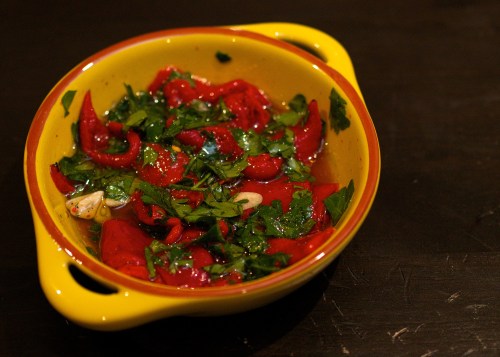
Marinated Piquillo peppers
So easy to prepare, but the real key is getting top quality roasted peppers. If you can find Navarrico Piquillo peppers from Spain then rejoice. They are expensive but the tin is jammed full so you will get several tasty dishes out of it.
Wine Suggestion: This dish works great with an extra dry and savoury Sherry and our pick is a dry Amontillado which is salty, savoury, nutty and yet with super low acidity it is a perfect balance to the sweet, smokey and piquant peppers.
Pimientos del piquillo aliñados (Marinated piquillo peppers) – serves 4
- 225g piquillo peppers (see above)
- 1 clove of garlic, thinly sliced
- 1 tbsp sherry vinegar
- 2 tbsp olive oil
- a handful of roughly chopped flat-leaf parsley
Drain the peppers and either leave whole or tear roughly. Toss with the rest of the ingredients, season with sea salt and black pepper, and leave to allow the flavours to come together for 30 minutes or so.
(Original recipe from Moro: The Cookbook by Sam & Sam Clark, Ebury Press, 2001.)
Posted in Food, Spanish | Tagged Cooking, Food, Mezze, Moro, Piquillo peppers, Recipe, Spanish, Starter, Tapas | 3 Comments »
6 June 2016 by jonoandjules
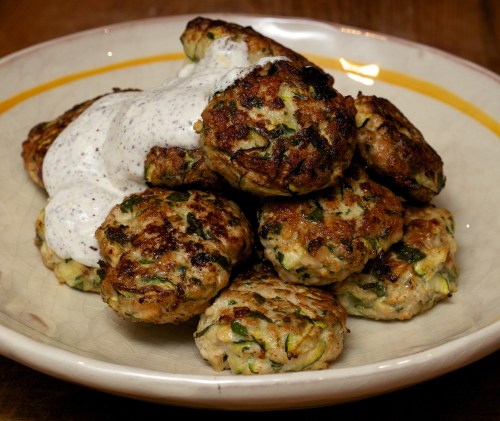
Turkey & courgette burger
These delicious burgers have taken over our neighbourhood, everyone is making them, and they should because they are delicious!
Wine Suggestion: a fresh, vibrant rosé suits the dish and the time of the year. Something like the Roc des Anges “Effet Papillon” rosé made from Grenache Gris really hits the mark with this.
Turkey & courgette burgers with spring onion & cumin – serves 4-6 (about 18 burgers)
- 500g turkey mince
- 1 large courgette, coarsely grated
- 40g scallions, thinly sliced
- 1 medium egg
- 2 tbsp chopped mint
- 2 tbsp chopped coriander
- 2 garlic cloves, crushed
- 1 tsp ground cumin
- 1 tsp salt
- ½ tsp coarse ground black pepper
- ½ tsp cayenne
- about 100ml sunflower oil for searing
Soured cream & sumac sauce:
- 100g soured cream
- 150g Greek yoghurt
- 1 tsp grated lemon zest
- 1 tbsp lemon juice
- 1 small garlic clove, crushed
- 1½ tbsp olive oil
- 1 tbsp sumac
- ½ tsp salt
- ¼ tsp black pepper
Make the soured cream sauce by putting all of the ingredients in a small bowl. Stir well and chill until needed.
Preheat the oven to 220ºC/200ºC Fan/Gas Mark 7.
Mix all of the ingredients for the meatballs, except the sunflower oil, together in a large bowl. Shape into small burgers – they should weigh about 45g each and you should aim for around 18 of them.
Pour enough of the sunflower oil into a frying pan to get a thin layer on the bottom, about 2mm thick. Heat well and sear the meatballs in batches over a medium heat on all sides. Cook for about 4 minutes, adding more oil as needed, until golden brown.
Carefully transfer the meatballs onto an oven tray lined with greaseproof paper and cook in the oven for 5-7 minutes, or until just cooked through. Serve warm or at room temperature, with the sauce spooned over.
(Original recipe from Jerusalem by Yotam Ottolenghi & Sami Tamimi, Ebury Press, 2012.)
Posted in Food | Tagged Burgers, Cooking, Courgettes, Food, Jerusalem, Recipe, Turkey | 2 Comments »
1 June 2016 by jonoandjules
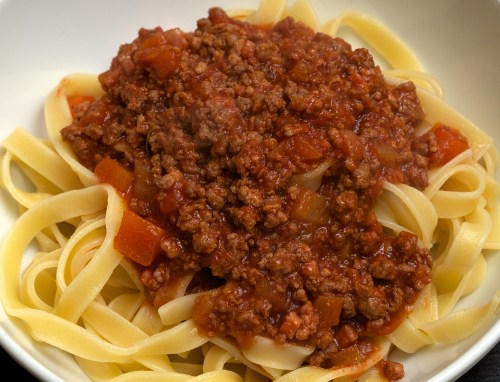
Rick Stein’s Venetian Bolognese Ragú
We ♥ Pasta!
Wine Suggestion: We often advise to serve food with wine from the same region as they tend to naturally complement each other. This is never more the case than with Italian reds and tomato-based sauces. Italian red wines, such as Sangiovese, are high in acidity and are a perfect match for acidic tomato sauce; so find a good Sangiovese as you’ll need one for this recipe anyway – and it would be plain wrong not to drink the rest.
Ragù Bolognese – serves 6-8
- 1 celery stick, finely chopped
- 2 carrots, finely chopped
- 1 medium onion, finely chopped
- 60ml olive oil
- 300g beef mince
- 300g pork mince
- 100g lean smoked bacon, finely chopped
- 1 tsp salt
- 15 turns black pepper
- 100ml Sangiovese wine
- 60ml water
- 500ml passata
- 2 tbsp tomato puree
- 1 sprig rosemary
- cooked tagliatelle & freshly grated Parmesan to serve
In a heavy-based saucepan, fry the celery, carrots and onion in the olive oil for about 10 minutes.
Add the beef, pork and bacon and brown. Season with the salt and pepper, then add the wine, water, passata, tomato puree and rosemary. Cook, covered, over a low heat for about 2 hours.
Serve with the cooked pasta and freshly grated Parmesan.
(Original recipe from Rick Stein’s Venice to Istanbul, Penguin, 2015.)
Posted in Food, Italian, Pasta | Tagged Bolognese, Cooking, Food, Italian, Pasta, Recipe | 1 Comment »
28 May 2016 by jonoandjules

Lamb, beer & black bean chilli
We are forever trying new chilli recipes in an effort to find the best one. Most of them end up fairly similar to be honest but this one was deliciously different and therefore a suitable dish to serve up to friends who also cook their own versions.
Wine Suggestion: we often think the wine used to cook a dish is a good match and in this case the beer used would work, especially if you’ve used one with character and a bit of body. Alternately a good Languedoc or Roussillon (southern French) wine makes a good match. If you prefer white wine there are some great Grenache blanc or Grenache gris wines – try the Roc des Anges “Llum” for an amazing textured and savoury white or the Domaine Gayda’s Grenache Gris Selection which is richer and full of round, seductive fruit. If you prefer red then seek out a bottle of Chateau Saint Jacques d’Alba Minervois for a velvety, deep and satisfying drop.
Lamb, beer & black bean chilli – serves 6
- 4 tbsp olive oil
- 750g shoulder of lamb, cubed
- 1 large onion, roughly chopped
- 4 garlic cloves, crushed
- 2 green chillies, deseeded and chopped
- ½ tbsp ground cumin
- 2 x 400g tins tomatoes
- 600ml lager
- 1 tbsp tomato purée
- 1 tbsp soft dark brown sugar
- 3 tsp dried oregano
- 2 x 400g tins black beans, drained and rinsed
- juice of ½ – 1 lime
- 3 scallions, finely chopped
- 2 tbsp chopped fresh coriander
- sour cream/Greek yoghurt
- avocado
- grated Lancashire/Wensleydale/Cheddar cheese
Heat the oil in a flameproof casserole and brown the lamb in batches until well coloured on all sides, then remove and set aside. Add the onion to the pan and cook until golden, then add the garlic and chillies and cook for a couple of minutes more. Add the cumin and cook for a further minute. Return the lamb to the pot along with the tomatoes, lager, tomato purée, sugar, oregano and lamb, season well and bring to the boil.
Reduce the heat immediately to a very gentle simmer and cook, uncovered, for 1½ – 2 hours or until the lamb is tender. Stir in the beans halfway through.
Taste, then add the lime juice, scallions and coriander, then taste again. Season as needed and serve with soured cream, slices of avocado and grated cheese.
(Original recipe from Food from Plenty by Diana Henry, Mitchell Beazley, 2010.)
Posted in Food, Lamb | Tagged Beer, Black Beans, Chilli, Cooking, Food, Lamb, Recipe | 1 Comment »
« Newer Posts - Older Posts »

 Jono & Jules do food & wine