13 June 2016 by jonoandjules
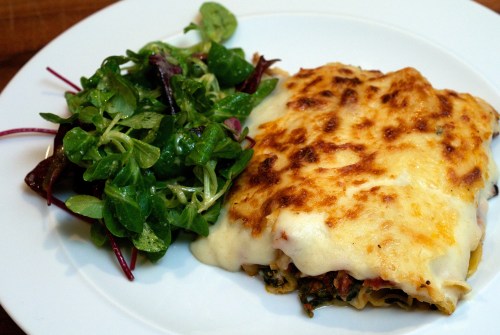
Veal Cannelloni
This is a delicious party dish from Croatia where the cooking has lots of Italian influences. Most veal these days is ethical rose veal (even in Italy, where they’re adamant it’s the traditional production methods) so don’t write off veal too quickly … it’s definitely worth trying.
Wine Suggestion: definitely drink a Croatian white if you can find one but failing that try a white from Eastern Italy, like a good Verdicchio or Pecorino.
Veal Cannelloni – serves 6
- 250g dried cannelloni tubes
- 300ml tomato sauce (see recipe below)
For the filling:
- 650g veal mince
- 1 onion, finely chopped
- 4 cloves of garlic, crushed
- 45ml olive oil
- 150ml dry white wine
- 2 tbsp tomato puree
- 2 tsp salt
- 15 turns black pepper
- 300g fresh spinach, wilted over a medium heat, drained and chopped
- 15 rasps of nutmeg
- 50g Parmesan cheese, grated
For the béchamel sauce:
- 75g butter
- 125g plain flour
- 1 litre full-fat milk
- 1 bay leaf
- 50g Parmesan/Pecorino
Make the filling by combining the veal, onion and garlic in a food processor and pulsing briefly to make a coarse paste.
Warm the olive oil in a large frying pan over a high heat, add the veal and cook until browned. Add the white wine, tomato puree, salt and pepper and keep cooking, covered, for 20-30 minutes. Stir in the spinach, nutmeg & Parmesan.
Next make the béchamel sauce. Melt the butter in a saucepan over a medium heat, then add the flour to make a roux. Cook for 2 minutes, then remove from the heat and slowly add the milk, whisking to avoid lumps. Return to the pan, add the bay leaf and stir until thickened. Add half the Parmesan/Pecorino and set aside.
Heat the oven to 180ºC/gas 4.
Spoon a ladle of the béchamel over the base of a large greased rectangular baking dish. Spoon some of the veal into each of the cannelloni tubes (use both ends of a teaspoon to do this).
Arrange the filled tubes in a single layer in the dish and pour the tomato sauce over. Cover with the remaining béchamel, top with the remaining cheese and bake for about 40 minutes. Leave to rest for 5 minutes before serving.
(Original recipe from Rick Stein’s Venice to Istanbul, Penguin 2015.)
Posted in Food, Party Food, Pasta | Tagged Cannelloni, Cooking, Croatian, Food, Pasta, Recipe, Veal | 2 Comments »
13 June 2016 by jonoandjules
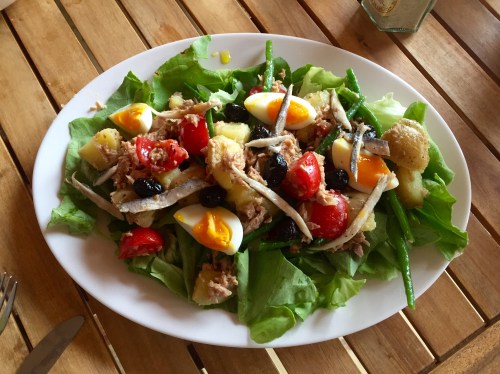
Off to France camping for a few weeks and here is our first lunch. We recommend packing a bag of cooking essentials that includes salt, good extra virgin olive oil, red wine vinegar and a black pepper mill.
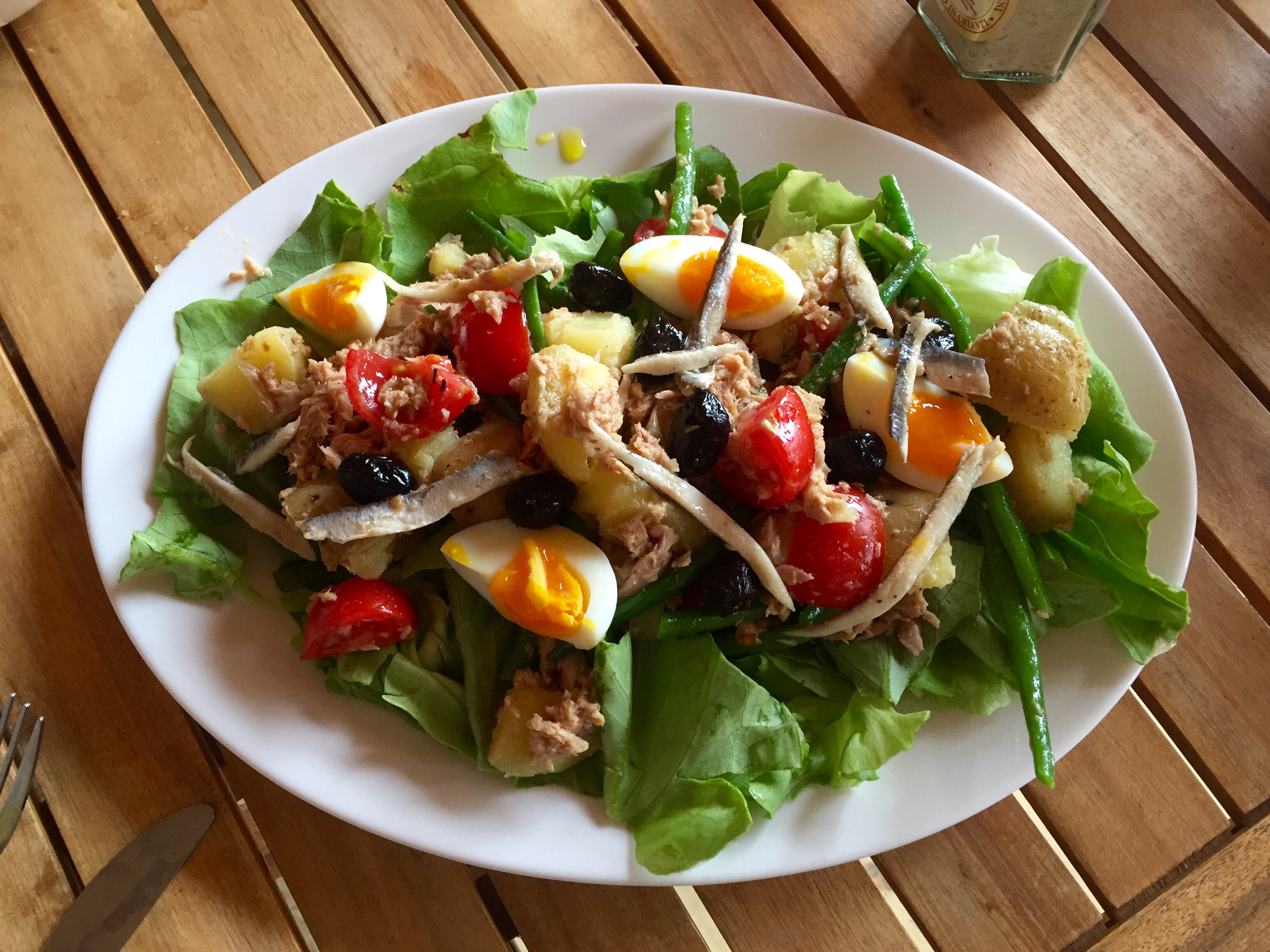
Tuna Niçoise – serves 4
- 2 eggs
- 4 new / waxy potatoes
- 200g green beans
- A couple of handfuls of soft lettuce leaves, like butter lettuce
- 2 tomatoes, quartered
- 200g tuna in olive oil, drained
- 16 small black olives
- 8 white anchovy fillets, spli (optional)
- 2 tbsp olive oil
- 1 tsp red wine vinegar
- Salt & black pepper
Put the eggs in a pot of boiling water and cook for 7 minutes. Place them under cold running water to stop them cooking. They should be just soft in the middle.
Cook the potatoes and green beans in separate pots of boiling salted water until tender, then drain. Cut the potatoes into bite-size cubes.
Gently toss the warm potatoes and beans in a large bowl with the tomatoes, olive oil, vinegar, salt and pepper.
Tear the lettuce over the base of a serving platter and spoon the potato, bean and tuna mixture on top. Scatter the olives, quartered eggs and anchovies over the top and serve.
Posted in Uncategorized | Leave a Comment »
10 June 2016 by jonoandjules
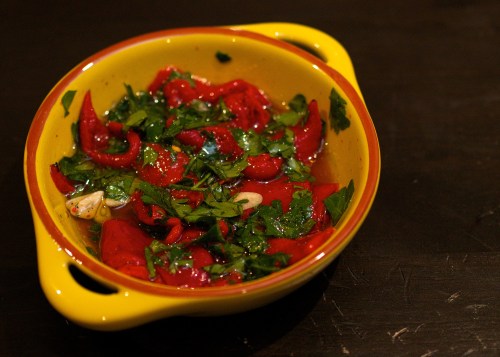
Marinated Piquillo peppers
So easy to prepare, but the real key is getting top quality roasted peppers. If you can find Navarrico Piquillo peppers from Spain then rejoice. They are expensive but the tin is jammed full so you will get several tasty dishes out of it.
Wine Suggestion: This dish works great with an extra dry and savoury Sherry and our pick is a dry Amontillado which is salty, savoury, nutty and yet with super low acidity it is a perfect balance to the sweet, smokey and piquant peppers.
Pimientos del piquillo aliñados (Marinated piquillo peppers) – serves 4
- 225g piquillo peppers (see above)
- 1 clove of garlic, thinly sliced
- 1 tbsp sherry vinegar
- 2 tbsp olive oil
- a handful of roughly chopped flat-leaf parsley
Drain the peppers and either leave whole or tear roughly. Toss with the rest of the ingredients, season with sea salt and black pepper, and leave to allow the flavours to come together for 30 minutes or so.
(Original recipe from Moro: The Cookbook by Sam & Sam Clark, Ebury Press, 2001.)
Posted in Food, Spanish | Tagged Cooking, Food, Mezze, Moro, Piquillo peppers, Recipe, Spanish, Starter, Tapas | 3 Comments »
6 June 2016 by jonoandjules
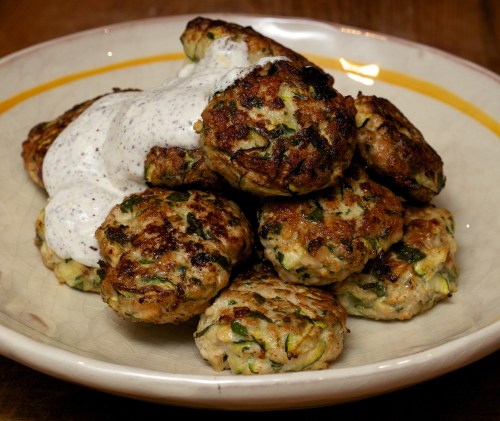
Turkey & courgette burger
These delicious burgers have taken over our neighbourhood, everyone is making them, and they should because they are delicious!
Wine Suggestion: a fresh, vibrant rosé suits the dish and the time of the year. Something like the Roc des Anges “Effet Papillon” rosé made from Grenache Gris really hits the mark with this.
Turkey & courgette burgers with spring onion & cumin – serves 4-6 (about 18 burgers)
- 500g turkey mince
- 1 large courgette, coarsely grated
- 40g scallions, thinly sliced
- 1 medium egg
- 2 tbsp chopped mint
- 2 tbsp chopped coriander
- 2 garlic cloves, crushed
- 1 tsp ground cumin
- 1 tsp salt
- ½ tsp coarse ground black pepper
- ½ tsp cayenne
- about 100ml sunflower oil for searing
Soured cream & sumac sauce:
- 100g soured cream
- 150g Greek yoghurt
- 1 tsp grated lemon zest
- 1 tbsp lemon juice
- 1 small garlic clove, crushed
- 1½ tbsp olive oil
- 1 tbsp sumac
- ½ tsp salt
- ¼ tsp black pepper
Make the soured cream sauce by putting all of the ingredients in a small bowl. Stir well and chill until needed.
Preheat the oven to 220ºC/200ºC Fan/Gas Mark 7.
Mix all of the ingredients for the meatballs, except the sunflower oil, together in a large bowl. Shape into small burgers – they should weigh about 45g each and you should aim for around 18 of them.
Pour enough of the sunflower oil into a frying pan to get a thin layer on the bottom, about 2mm thick. Heat well and sear the meatballs in batches over a medium heat on all sides. Cook for about 4 minutes, adding more oil as needed, until golden brown.
Carefully transfer the meatballs onto an oven tray lined with greaseproof paper and cook in the oven for 5-7 minutes, or until just cooked through. Serve warm or at room temperature, with the sauce spooned over.
(Original recipe from Jerusalem by Yotam Ottolenghi & Sami Tamimi, Ebury Press, 2012.)
Posted in Food | Tagged Burgers, Cooking, Courgettes, Food, Jerusalem, Recipe, Turkey | 2 Comments »
1 June 2016 by jonoandjules
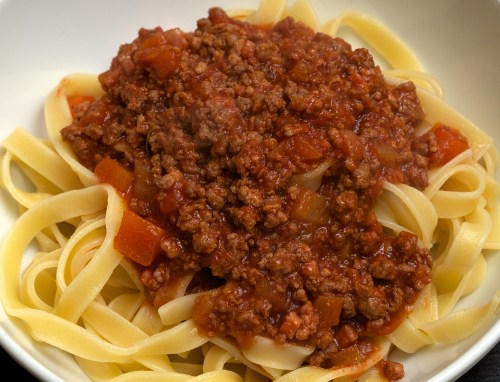
Rick Stein’s Venetian Bolognese Ragú
We ♥ Pasta!
Wine Suggestion: We often advise to serve food with wine from the same region as they tend to naturally complement each other. This is never more the case than with Italian reds and tomato-based sauces. Italian red wines, such as Sangiovese, are high in acidity and are a perfect match for acidic tomato sauce; so find a good Sangiovese as you’ll need one for this recipe anyway – and it would be plain wrong not to drink the rest.
Ragù Bolognese – serves 6-8
- 1 celery stick, finely chopped
- 2 carrots, finely chopped
- 1 medium onion, finely chopped
- 60ml olive oil
- 300g beef mince
- 300g pork mince
- 100g lean smoked bacon, finely chopped
- 1 tsp salt
- 15 turns black pepper
- 100ml Sangiovese wine
- 60ml water
- 500ml passata
- 2 tbsp tomato puree
- 1 sprig rosemary
- cooked tagliatelle & freshly grated Parmesan to serve
In a heavy-based saucepan, fry the celery, carrots and onion in the olive oil for about 10 minutes.
Add the beef, pork and bacon and brown. Season with the salt and pepper, then add the wine, water, passata, tomato puree and rosemary. Cook, covered, over a low heat for about 2 hours.
Serve with the cooked pasta and freshly grated Parmesan.
(Original recipe from Rick Stein’s Venice to Istanbul, Penguin, 2015.)
Posted in Food, Italian, Pasta | Tagged Bolognese, Cooking, Food, Italian, Pasta, Recipe | 1 Comment »
28 May 2016 by jonoandjules

Lamb, beer & black bean chilli
We are forever trying new chilli recipes in an effort to find the best one. Most of them end up fairly similar to be honest but this one was deliciously different and therefore a suitable dish to serve up to friends who also cook their own versions.
Wine Suggestion: we often think the wine used to cook a dish is a good match and in this case the beer used would work, especially if you’ve used one with character and a bit of body. Alternately a good Languedoc or Roussillon (southern French) wine makes a good match. If you prefer white wine there are some great Grenache blanc or Grenache gris wines – try the Roc des Anges “Llum” for an amazing textured and savoury white or the Domaine Gayda’s Grenache Gris Selection which is richer and full of round, seductive fruit. If you prefer red then seek out a bottle of Chateau Saint Jacques d’Alba Minervois for a velvety, deep and satisfying drop.
Lamb, beer & black bean chilli – serves 6
- 4 tbsp olive oil
- 750g shoulder of lamb, cubed
- 1 large onion, roughly chopped
- 4 garlic cloves, crushed
- 2 green chillies, deseeded and chopped
- ½ tbsp ground cumin
- 2 x 400g tins tomatoes
- 600ml lager
- 1 tbsp tomato purée
- 1 tbsp soft dark brown sugar
- 3 tsp dried oregano
- 2 x 400g tins black beans, drained and rinsed
- juice of ½ – 1 lime
- 3 scallions, finely chopped
- 2 tbsp chopped fresh coriander
- sour cream/Greek yoghurt
- avocado
- grated Lancashire/Wensleydale/Cheddar cheese
Heat the oil in a flameproof casserole and brown the lamb in batches until well coloured on all sides, then remove and set aside. Add the onion to the pan and cook until golden, then add the garlic and chillies and cook for a couple of minutes more. Add the cumin and cook for a further minute. Return the lamb to the pot along with the tomatoes, lager, tomato purée, sugar, oregano and lamb, season well and bring to the boil.
Reduce the heat immediately to a very gentle simmer and cook, uncovered, for 1½ – 2 hours or until the lamb is tender. Stir in the beans halfway through.
Taste, then add the lime juice, scallions and coriander, then taste again. Season as needed and serve with soured cream, slices of avocado and grated cheese.
(Original recipe from Food from Plenty by Diana Henry, Mitchell Beazley, 2010.)
Posted in Food, Lamb | Tagged Beer, Black Beans, Chilli, Cooking, Food, Lamb, Recipe | 1 Comment »
16 May 2016 by jonoandjules
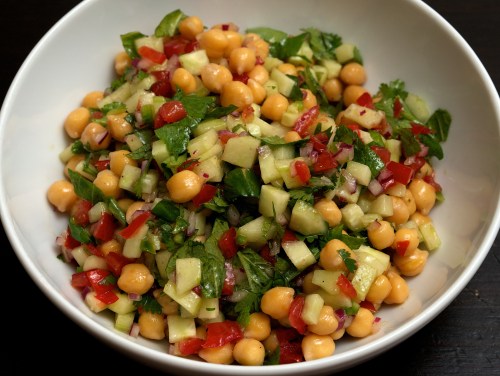
Moro’s Chickpea salad
If you are travelling to Spain on your summer holidays don’t leave without picking up some dried chickpeas. It takes no effort to soak them overnight and they are far superior to the tinned variety (though of course you can use these instead if that’s what you have). Serve this delicious salad all summer with grilled meat or fish.
Chickpea Salad – serves 4
- 150g chickpeas, soaked overnight with a pinch of bicarbonate of soda, or 2 x 400g tins cooked chickpeas, rinsed
- 1 garlic clove, crushed to a paste with salt
- 1 large green chilli, seeded and finely sliced
- ½ red onion, finely diced
- a squeeze of lemon
- 1 tbsp red wine vinegar
- 4 tbsp olive oil
- 1 medium cucumber, peeled and finely diced
- 10 cherry tomatoes, halved, seeded and finely diced
- small bunch each of mint and coriander, roughly chopped
Drain the dried, soaked chickpeas and rinse under cold water, then put into a large saucepan. Fill with 2 litres cold water and bring to the boil. Reduce the heat to a gentle simmer, skimming off any scum that builds up, and cook for 1-2 hours or until soft and tender. Take off the heat, pour off excess liquid until level with the chickpeas, and season well. Set aside.
Put the garlic, chilli, onion, lemon juice, vinegar, olive oil, salt and pepper into a small mixing bowl. Stir well and add the rest of the ingredients – the drained chickpeas, cucumber, tomatoes, mint and coriander. Taste for seasoning and chill before serving.
(Original recipe from Moro: The Cookbook by Sam & Sam Clark, Ebury Press, 2001.)
Posted in Food, Side dish, Vegetarian | Tagged Chickpeas, Cooking, Dried chickpeas, Food, Recipe, Salad, side dish | 3 Comments »
25 April 2016 by jonoandjules

Chicken, date & lentil pilaf with saffron butter
This tasted luxurious and refreshing with the saffron butter and orange, top notch treatment for your leftover roast chicken!
Wine Suggestion: This called for an Alsace Pinot Gris, well more specifically the Bott-Geyl Pinot d’Alsace “Metiss” which is actually a blend of all the Pinot’s you can think of plus Pinot Noir to form a layered and textured wine with lovely freshness and hints of spice that brought out the saffron and orange flavours. Bott-Geyl are a brilliant, biodynamic producer and I think each vintage they build upon the past and deliver even more. This bottle we had lying in our cellar, so they age nicely for a few years, if you can resist, but don’t worry, they taste just as good fresh and young.
Chicken, date & lentil brown rice pilaf with saffron butter – serves 6
- 15g unsalted butter, plus an additional 30g for the saffron butter
- 1 onion, finely chopped
- 2 garlic cloves, finely chopped
- 300g brown basmati rice, washed until the water runs clear
- 700ml chicken stock
- 12 dates, pitted and sliced thinly, lengthways
- finely grated zest of 1 orange and juice of ½
- 200g Puy lentils, rinsed
- good squeeze of lemon juice
- 1 tbsp lemon juice
- 350g cooked chicken, torn in to pieces
- 25g chopped, unsalted pistachios or toasted flaked almonds
- 4 tbsp roughly chopped coriander leaves
- generous pinch of saffron strands
- 300g Greek yoghurt
Heat the 15g of butter in a heavy-based saucepan and sauté the onion until soft and lightly coloured. Add the garlic and continue to cook for another couple of minutes. Add the rice and stir until well coated with the butter and starting to toast. Add the chicken stock, dates, and orange zest and bring to the boil. Reduce the heat, cover and cook for about 30 minutes by which time the stock will have become absorbed. If it starts to look dry add a little boiling water.
Meanwhile, cook the lentils in lots of boiling water until tender. They can take between 15-30 minutes so keep checking to ensure they don’t turn to mush. When cooked, drain and rinse in hot water and add to the rice. Fork through, season with salt and pepper and a good squeeze of lemon juice.
Heat the olive oil in a frying pan and quickly reheat the cooked chicken, then season. Gently fork through the rice and lentils along with the nuts, coriander and orange juice. Taste again for seasoning.
Quickly make the saffron butter by melting the 30g butter in a pan, add the saffron and stir so the butter takes on the colour.
Put the rice on a serving platter, spoon on some yoghurt, pour on the saffron butter and serve.
(Original recipe from A Bird in the Hand by Diana Henry, Mitchell Beazley, 2015.)
Posted in Cheese, Food | Tagged Brown Rice, Cooking, Food, Leftover chicken, Lentils, Pilaf, Recipe, Roast chicken leftovers, Saffron | 2 Comments »
20 April 2016 by jonoandjules
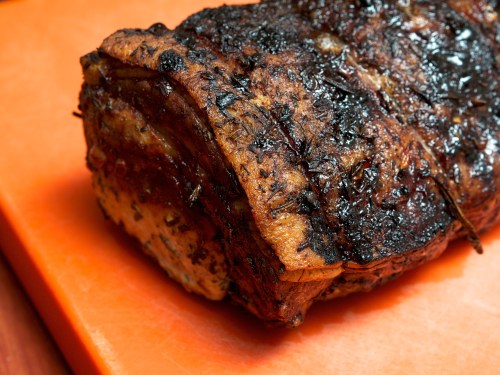
Roast Pork Loin, Porchetta Style – serves 6
Our favourite way to eat this pork is carved as thin as possible and stuffed into crusty bread rolls with some mayonnaise and salad. You need to marinate the meat the night before.
Wine Suggestion: Rich, round and white plus you have to make sure there is a good freshness too to cope with the pork fat. Naturally a good, oaked Chardonnay calls out but we’ve also tried some more unusual wines like the Adi Badenhorst’s Family White which is an amazing blend of 10 grapes from the Swartland in South Africa. It’s quite like a St Peray white in style with hints of aromatics, stone fruit and crisp apples alongside a rich nuttiness and layers of texture. A bit of a wine anoraks wine but we love it.
- 2kg loin of pork, off the bone with skin removed and about 1cm of fat left on
- 6 garlic cloves, sliced
- 3 tsp fennel seeds, crushed
- 4 rosemary sprigs, leaves chopped, plus more for the roasting tin
- about 8 bay leaves
Lay the pork on a board with the flesh side up. Pierce all over with a sharp knife and fill the holes with the slivers of garlic. Rub the fennel & rosemary all over the flesh, along with some olive oil, pushing some into the holes with the garlic. Season generously with salt and pepper. Made a bed in a roasting tin with rosemary springs and bay leaves and put the pork on top with the fat side down. Cover and refrigerate overnight. Bring to room temperature before cooking.
Preheat the oven to 200ºC/425ºF/gas mark 7.
Tie the loin at intervals with kitchen string, not too tight. Put into the roasting tin fat side up on top of the herbs (make sure the herbs are well tucked under or they will burn) and cook for 25 minutes. Reduce the oven temperature to 180ºC/350ºF/gas mark 4 and cook for 1 hour 40 minutes, basting occasionally.
Take out of the oven, cover with foil and rest for 15-20 minutes. Serve warm or at room temperature.
(Original recipe from Food from Plenty by Diana Henry, Mitchell Beazley, 2010.)
Posted in Food, Pork | Tagged Cooking, Food, Porchetta, Pork, Recipe, Roast pork | 1 Comment »
9 April 2016 by jonoandjules
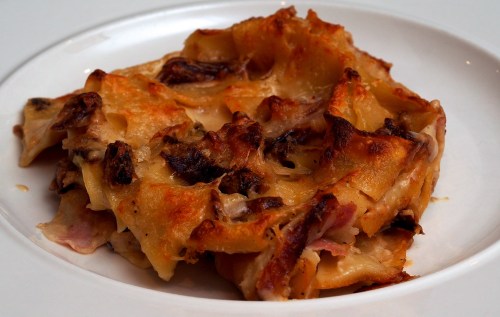
Baked Pappardelle with Pancetta & Porcini
What a delicious hug of a recipe, a sort of fancy baked pasta. The crusty baked top, cheese, mushrooms and smoky ham are enough to make two people very happy. We also learned that even after many years of perfect béchamel you’re never to old to balls it up and have to start again. It was worth it!
Wine Suggestion: with all the earthy porcini and the rich sauce with Parmesan this begs for a Nebbiolo with a little bit of age so you get some of the leathery, mushroomy characters emerging. Ideally pick a Barolo or Barbaresco from a good vintage, but equally joyful with something like the Pira Luigi Langhe Nebbiolo which also has lovely youthful morello cherry fruit with hints of roses and truffles to compliment the pasta. Significantly, and importantly, Nebbiolo also has high tannins to work with the rich proteins in the Parmesan and high acidity to cut through the rich cheese, pancetta and butter.
Baked pappardelle with pancetta & porcini – serves 2
- 500ml milk
- 20g dried porcini
- 40g butter
- 25g plain flour
- 100g pappardelle pasta
- 50g thinly sliced pancetta, cut in 2cm pieces
- 4-5 tbsp freshly grated Parmesan
Preheat the oven to 200ºC/400ºF/gas mark 6.
Warm the milk in a saucepan and soak the porcini in it for about 10 minutes. Drain the milk through a sieve over a bowl, pressing lightly on the porcini with the back of a ladle to extract all the milk. Set the mushrooms aside.
Rinse out the pan, then use to melt the butter. Tip in the flour, stir and cook gently for a few minutes without letting it colour. Pour in the porcini-infused milk and whisk vigorously until smooth. Cook over a very low heat, stirring with a wooden spoon, for about 10 minutes or until thickened (not too thick). Season lightly with salt and generously with black pepper. Cover and set aside.
Cook the pasta in lots of salty boiling water until a little underdone. Drain, tip into a large bowl and mix with the sauce, porcini & pancetta pieces. Tip the mixture into a lightly-buttered dish and tap down lightly. Sprinkle 2 tbsp of Parmesan over the top and bake for 30-40 minutes or until bubbling and browned. Serve with the remaining cheese.
(Original recipe from The Good Cook by Simon Hopkinson, Random House, 2011.)
Posted in Food, Pasta | Tagged Cooking, Food, Mushrooms, Pappardelle, Pasta, Porcini, Recipe | Leave a Comment »
29 March 2016 by jonoandjules
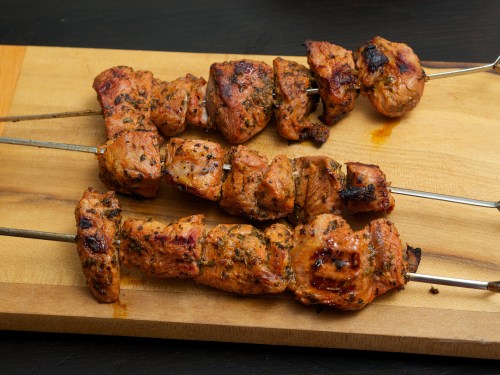
Pork Souvlaki with oregano
Have you got your barbecue out yet? We’ve had a few sunny days in Dublin and the cold breeze is gradually starting to ease; the clocks have gone forward and we’re looking forward to much more time spent outside. We have to confess to using the barbecue all year round and have been caught out in the snow or rain grilling up a feast and this is one of our favourite ideas. Nothing beats some good chips with your souvlaki.
Wine Suggestion: to celebrate the Spring sunshine we broke out a Provence rosé from Chateau Vignelaure, a lovely and serious wine that delivers a great texture and structure as well as summer fruit flavours to inspire us.
Pork Souvlaki with Oregano – serves 4
- 400g pork shoulder, cut into 3 cm cubes
- 30ml lemon juice
- 2 tbsp olive oil
- 2 tsp dried oregano
- ½ tsp ground cumin
- ½ tsp cayenne pepper
- 1 tsp smoked paprika
- 1 small garlic clove, grated
- ½ tsp salt
Mix all the marinade ingredients in a bowl and add the meat. Marinate for an hour or so, then thread onto skewers. Cook on a preheated barbecue for about 10-12 minutes.
(Original recipe from Venice to Istanbul by Rick Stein, BBC Books, 2015.)
Posted in Barbecue, Food, Pork | Tagged Barbecue, BBQ, Cooking, Food, Greek, Kebabs, Pork, Recipe, Rick Stein, Souvlaki | Leave a Comment »
23 March 2016 by jonoandjules
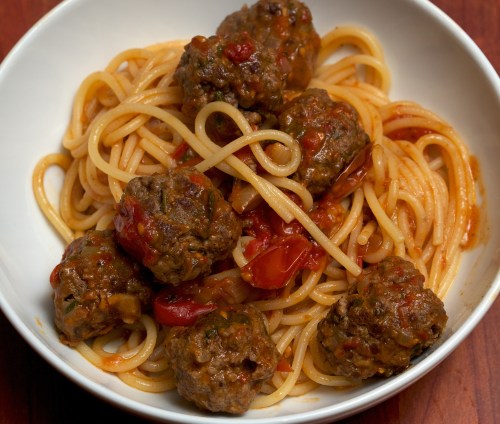
Spiced Meatballs in tomato sauce
We weren’t so sure about the cinnamon in this meatball recipe but it added a delicious warmth so don’t be tempted to leave it out or reduce the quantity. Much satisfied slurping!
Wine Suggestion: Tuscany beckons for this dish and the juicy red fruits of Morellino won this time to good effect. The MorisFarms (Spanish heritage but longtime settled in the Maremma in Tuscany) Morellino for our mind hits the spot and has an honesty and vitality of winemakers clearly part of their landscape. Bright red fruits and a delightful juiciness that only coastal Tuscany can deliver.
Spiced meatballs in tomato sauce – serves 6
FOR THE SAUCE:
- 2 x 400g tins cherry tomatoes
- 1 onion, finely chopped
- 2 garlic cloves, crushed
- 4 oregano sprigs, strip off the leaves and discard the stalks
- ½ tbsp tomato purée
- 3 tbsp olive oil
- 1 tbsp soft light brown sugar
FOR THE MEATBALLS:
- 3 tbsp olive oil
- 1 onion, finely chopped
- 4 garlic cloves, crushed
- 1 red chilli, deseeded and chopped
- 900g beef mince
- 1 tbsp ground cinnamon
- 1 tsp freshly grated nutmeg
- 2 tsp ground mixed spice
- 3 tbsp finely chopped parsley
- Cooked pasta to serve (allow 100g per person) .
Make the sauce first. Put all the ingredients into a saucepan together and bring to the boil. Reduce to a simmer and cook for 30 minutes. Stir occasionally and add a bit of water if necessary. Taste and season.
For the meatballs, heat 1 tbsp of oil in a pan and cook the onion until soft and pale gold. Add the garlic and chilli, and cook for another 90 seconds or so. Put the cooked onion mixture into a bowl with the beef, spices and parsley and season really well. Use wet hands to form the mince into pingpong ball sized meatballs.
Heat the rest of the oil in a frying pan and brown the meatballs in batches. They don’t need to be cooked the whole way through at this stage just nicely browned on the outside. Return all the meatballs to the pan, add the tomato sauce and cook for 10-15 minutes.
Stir the cooked pasta and meatballs together in a warm shallow bowl and serve.
(Original recipe from Food From Plenty by Diana Henry, Mitchell Beazley, 2010.)
Posted in Beef, Food, Italian, Pasta | Tagged Cooking, Food, Meatballs, Pasta, Recipe, Spaghetti, Spicy | 5 Comments »
21 March 2016 by jonoandjules
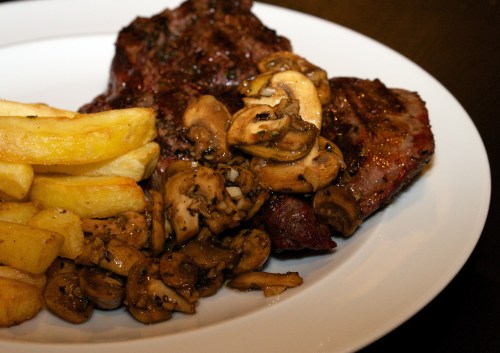
Steak & Mushrooms
What could be better than steak, mushrooms & chips? Nothing too groundbreaking here but we do recommend taking some inspiration from the Greeks when cooking your mushrooms.
Wine Suggestion: We always fall for a big red when having steak and this dish caused us to try one of our 2009 Bordeaux’s lying waiting in the cellar; this time the Ch Capbern Gasquetton. Full of flavour and still very youthful but the seven years from vintage has brought it all together and made it a great match.
Grilled steak with village mushrooms – serves 4
- 4 rib-eye or sirloin steaks (rib-eye would be our preference), about 250g each
- 50ml olive oil, plus a bit extra for brushing on the steaks
- 2 tsp dried oregano
- ½ a lemon
- 200g button mushrooms, thinly sliced
- 5 cloves of garlic, chopped
- 25ml balsamic vinegar
Brush the steaks with oil, season with salt, pepper and half the oregano, then grill on a hot barbecue until cooked the way you like.
Sauté the mushrooms in the 50ml of olive oil with the garlic, balsamic vinegar, ½ tsp salt, 20 turns of the black pepper mill and the rest of the oregano. Serve with the steak (and some chips if you like).
(Original recipe from Venice to Istanbul by Rick Stein, BBC Books, 2015.)
Posted in Barbecue, Beef, Food, Greek | Tagged Barbecue, BBQ, Cooking, Food, Greek, Mushrooms, Oregano, Recipe, Rick Stein, Steak | Leave a Comment »
18 March 2016 by jonoandjules
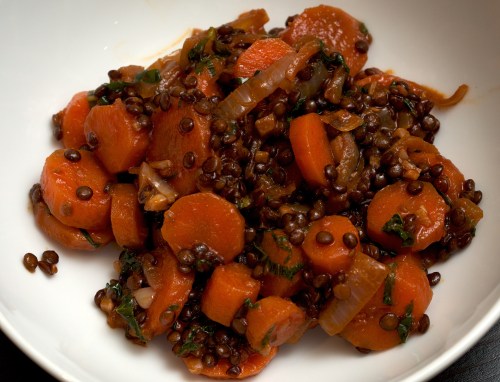
Turkish carrots with lentils & herbs
We seem to permanently have a half-empty bag of carrots in the bottom of the fridge. This side dish puts them to excellent use and any leftovers are perfect for lunchboxes.
Turkish Carrots & Lentils with Herbs – serves 4-6 as a side dish
- 4 tbsp olive oil
- 1 onion, halved and thinly sliced
- 4 garlic cloves, finely chopped
- 1½ tsp coriander seeds, crushed
- ¼-½ tsp dried chilli flakes
- 100g green or Puy lentils
- 6 large carrots, sliced
- 2 tbsp tomato purée
- 2 tsp caster sugar
- 275ml vegetable stock/water
- 2 tbsp chopped mint, parsley or dill
- good squeeze of lemon juice
- extra virgin olive oil, to serve
Heat the oil in a saucepan and sauté the onion until soft and pale gold. Add the garlic and spices and cook for 2 minutes. Then add everything else except the herbs, lemon juice and extra-virgin olive oil.
Bring to the boil and cook until the carrots are tender and the liquid has been absorbed – about 30 minutes.
Taste, add the herbs and lemon juice and season with salt and pepper. Add a generous slug of extra-virgin olive oil and serve warm, hot or at room temperature.
(Original recipe from Food From Plenty by Diana Henry, Mitchell Beazley, 2010.)
Posted in Side dish | Tagged Carrots, Cooking, Food, Lentils, Recipe, side dish, Turkish, Vegan, Vegetarian | 1 Comment »
13 March 2016 by jonoandjules
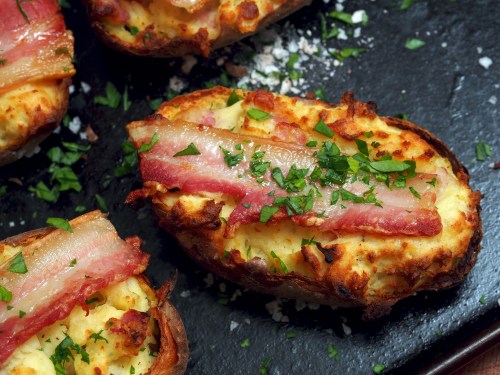
Roussillon baked potatoes
Very simple and utterly delicious. Baked potatoes reach a whole new level when you mix the cooked potato with the toppings before baking for a second time.
Roussillon baked potatoes – serves 2
- 2 baking potatoes
- 30g butter
- 4 streaky bacon rashers, 2 chopped
- ¼ onion, finely chopped
- 30g blue cheese, crumbled (we used Roquefort)
- 1 small egg, beaten
- ½ tsp finely chopped parsley
Preheat the oven to 200ºC/400ºC/gas mark 6.
Wash the potatoes and pat some salt flakes over the skin, then bake for about 1 hour or until tender.
Meanwhile, melt the butter in a frying pan until foaming, then add the chopped bacon and onion. Cook until the onion is soft but not coloured.
Halve the potatoes, scoop out the insides without breaking the skins. Mash the scooped out potato with the fried onion & bacon, cheese, egg, parsley and some freshly ground pepper (we prefer white pepper for potatoes but black is fine too). Pile the potato mixture back into the potato skins, top with the 2 uncooked bacon rashers and bake for about 15 minutes or until golden.
(Original recipe from Food From Plenty by Diana Henry, Octopus Publishing, 2010.)
Posted in Food | Tagged Bacon, Baked Potatoes, Blue cheese, Cooking, Food, Jacket Potatoes, Recipe | 2 Comments »
11 March 2016 by jonoandjules
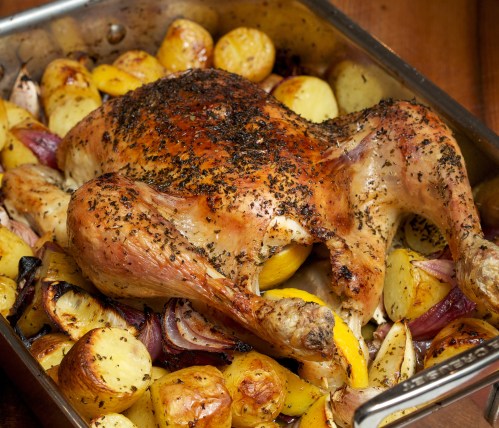
Greek Lemon roast chicken
Sooo delicious! We never tire of variations on a roast chicken dinner and the potatoes are the best bit here which doesn’t take away from the delicious chicken! This variation has been made multiple times in our kitchen which says something as we’re always trying something new.
You need to roast chicken for 20 minutes at 190C/375F/gas 5 for each 500g, plus an extra 10 minutes.
Wine Suggestion: a rich white is the business with chicken, and Chardonnay is the usual go-to variety. For this dish, however, we’ve successfully opened oaked Godello from Spain, the Dominio de Tares Bierzo; and an oaked Alvarinho from Portugal, the Soalheiro Alvarinho Reserva. Both brought delicious nuances to the chicken and are really worth seeking out.
Greek lemon roast chicken with potatoes & oregano
- 2.2kg chicken
- 4 lemons
- bay leaves
- 2 large red onions, peeled and cut into wedges
- 1kg small waxy potatoes, halved
- 2 heads of garlic, cloves separated but not peeled
- dried oregano
Preheat the oven to 190C/375F/gas mark 5.
Season the outside and the cavity of the chicken. Put half a lemon and a few bay leaves inside and place in a very large roasting tin.
Drizzle some olive oil over the skin, squeeze over the other lemon half and roast for about 1 hour and 50 minutes.
Cut 2 of the lemons into wedges and put in a bowl with the onions, potatoes and garlic cloves. Add some olive oil, salt and pepper, ½ tbsp dried oregano and the juice of half a lemon. Toss everything together until well coated.
45 minutes before the roasting time is up, put the vegetables around the chicken, sprinkle another 2 tsps of oregano over the top and return to the oven.
(Original recipe from Food From Plenty by Diana Henry, Mitchell Beazley, 2010.)
Posted in Chicken, Food | Tagged Chicken, Cooking, Food, Greek, lemon, Oregano, Recipe, Roast chicken | Leave a Comment »
8 March 2016 by jonoandjules
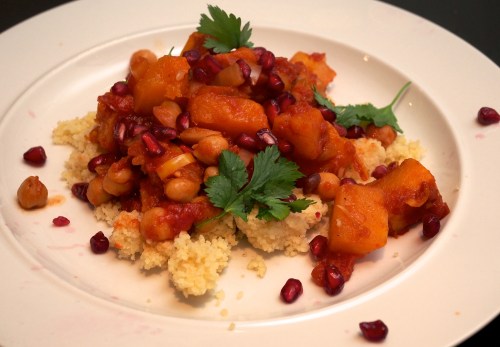
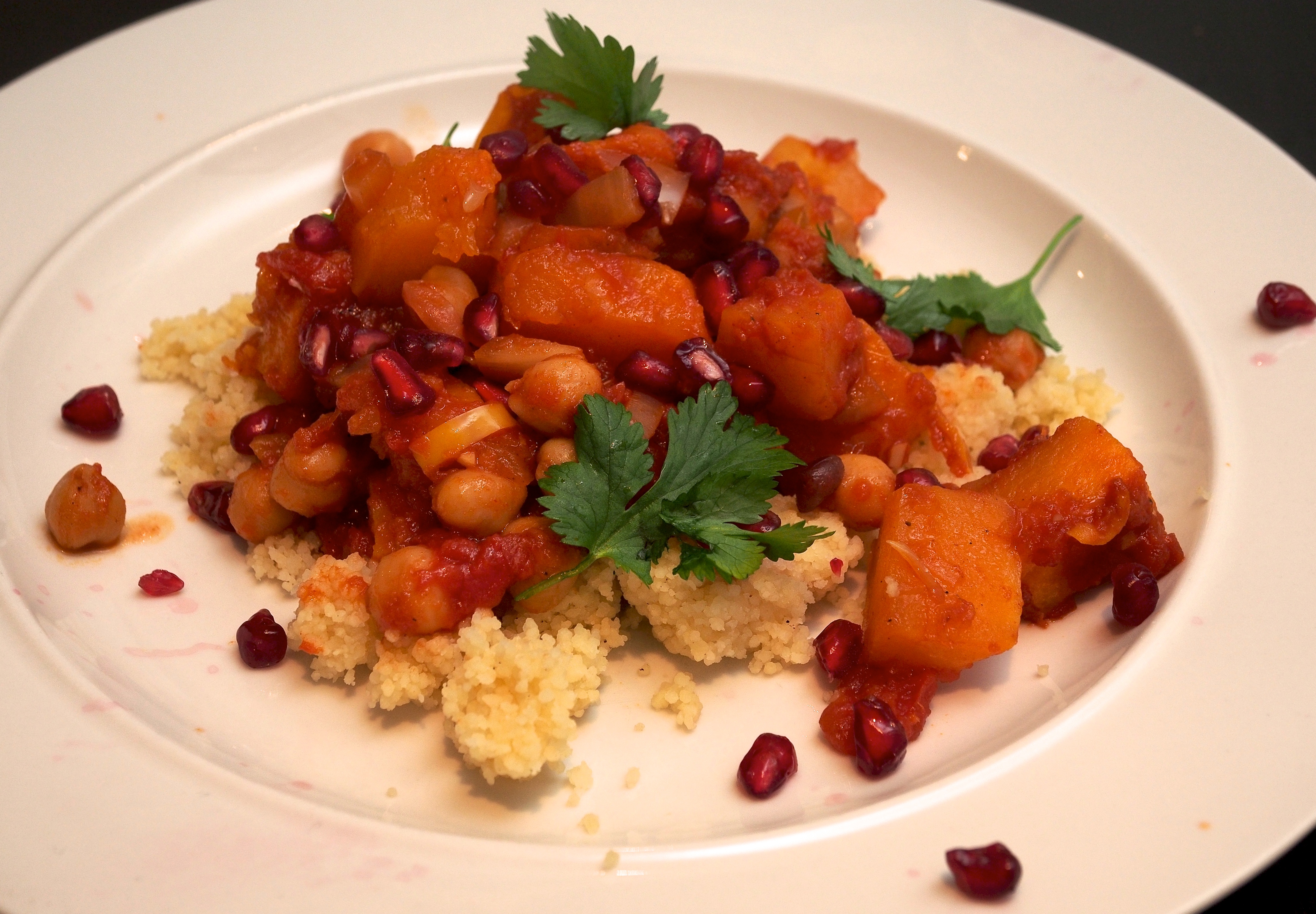
Baked butternut squash, chickpeas, pepper & pomegranate
This was tasty for a mid-week veggie night. The pomegranate molasses add a pleasant sour note but if you don’t have any you can substitute a few tablespoons of lime juice and a teaspoon of soft brown sugar drizzled over the top.
Baked butternut squash, chickpeas & green chilli – serves 6
- 1kg butternut squash, deseeded and cut into chunks
- 3 tbsp olive oil
- 1 onion, finely chopped
- 3 garlic cloves, finely chopped
- medium piece ginger, grated
- 1 green chilli, finely diced
- 2 tsp smoked paprika
- 400g tin chopped tomatoes
- 2 tbsp pomegranate molasses
- 400g tin chickpeas, rinsed and drained
- chopped parsley, pomegranate seeds, mint & Greek yoghurt and couscous to serve
Heat the oven to 180C/160C fan/gas 4.
Put the squash onto a baking tray, drizzle with 2 tbsp of the oil, season and toss to coat evenly. Roast for 25 minutes or until soft.
Put half the squash into a medium casserole dish and set the rest aside. Heat a medium-sized frying pan and add the rest of the oil, then the onion, garlic, ginger, chilli and paprika. Cook for 5-8 minutes or until the onion is soft. Add the tomatoes, pomegranate molasses and chickpeas, then simmer for a minute before turning off the heat.
Pour half the tomato sauce over the squash in the casserole dish in an even layer. Arrange the rest of the squash on top then finish with the rest of the sauce. Cover with a lid, transfer to the oven and bake for 25 minutes.
Remove the casserole from the oven and serve hot or at room temperature, scattered with chopped parsley, pomegranate seeds, and mint, with the yoghurt on the side. Serve with couscous.
(Original recipe by Bill Granger in BBC Good Food Magazine, March 2011.)
Posted in Food, Healthy, Vegetarian | Tagged Butternut Squash, Cooking, Easy, Food, Healthy, pomegranate seeds, Pomegrante molasses, Recipe, Tagine, Vegetarian | 1 Comment »
6 March 2016 by jonoandjules
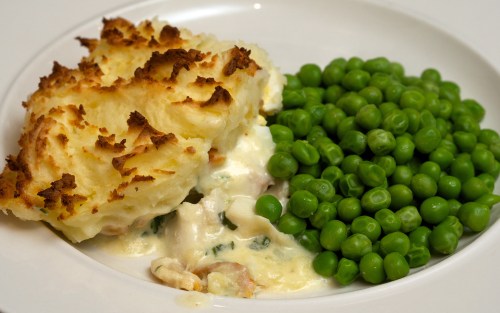
Haddock Pie
We are mad about fish pie and this one is particularly good. Yet another excuse to never through away our old food magazines!
Wine Suggestion: you need a fresh, vibrant white with a medium to full body; try to avoid heavily oaked and super-rich wines though. A good choice would be Chenin Blanc and the choice here is getting better each day. We’ve tried well made but simple ones from both the Loire and South Africa to good effect as well as some more complex ones like Adi Badenhorst’s Secateurs from Swartland and some Savennieres too.
Haddock Pie – serves 6
- 1 small onion, thickly sliced
- 2 cloves
- 1 fresh bay leaf
- 600ml creamy milk
- 300ml double cream
- 450g haddock fillet with skin
- 200g undyed smoked haddock fillet
- 4 eggs, plus 1 extra egg yolk
- 100g cooked peeled prawns
- 100g butter
- 40g plain flour
- 5tbsp chopped flatleaf parsley
- pinch freshly grated nutmeg
- 1.25kg floury potatoes, such as Maris Pipers, peeled and cut into chunks
Stud a couple of the onion slices with the cloves and put into a large pan with the bay leaf, 450ml of the milk, the cream, haddock and smoked haddock. Bring to the boil and simmer for 8-10 minutes. Lift out the fish and strain the cooking liquor into a jug.
Wait for the fish to cool and meanwhile hard boil the whole eggs for 8 minutes, then drain, cover with cold water and leave to cool.
When the fish has cooled a bit, break it into large flakes, discarding the skin and any bones. Sprinkle the flakes of fish over the base of a shallow 1.7 litre ovenproof dish. Scatter the prawns over the top. Shell the eggs and cut into chunky slices. Arrange these over the fish and prawns.
Melt 50g of the butter in a saucepan, stir in the flour and cook for a minute. Remove the pan from the heat and gradually add the reserved fish cooking liquor. Return to the heat and slowly bring to the boil, stirring constantly. Lower the heat and simmer gently for 10 minutes.
Take the sauce off the heat, stir in the parsley and season with nutmeg, salt and white pepper. Pour the sauce over the fish and leave to cool.
Preheat the oven to 200C/Gas 6/Fan 180C.
Cook the potatoes in boiling salted water for 12-15 minutes, or until tender. Drain, mash well and beat in the egg yolk and remaining butter. Season with salt and white pepper and beat in enough of the remaining milk to make a smooth mash that’s easy to spread.
Spoon the mashed potato over the filling and mark the surface with a fork. Bake for 40-45 minutes until piping hot and golden brown.
(Original recipe by Rick Stein in BBC Good Food Magazine, June 2001.)
Posted in Fish, Food | Tagged Cooking, Fish, Fish pie, Food, Haddock, Recipe, Rick Stein, Smoked Haddock, Wine suggestion | 2 Comments »
3 March 2016 by jonoandjules

Pomegranate molasses chicken
Oh my goodness, how lovely this is. We bought Honey & Co., by Sarit Packer & Itamar Srulovich, after reading many a rave review and every time we try one of their recipes we are impressed all over again. This is just delicious and you can make your work colleagues very jealous if you’re lucky enough to have leftovers for your lunchbox.
Pomegranate Molasses Chicken with Bulgar Wheat Salad – Serves 4
- 8 skinless, boneless chicken thighs
- 1 tbsp vegetable oil, for frying
FOR THE MARINADE:
- 2 cloves of garlic, peeled and sliced
- 1 green chilli, sliced
- 3 tbsp pomegranate molasses
- 1 tbsp vegetable oil
- ½ tsp freshly ground black pepper
FOR THE SALAD:
- 200g bulgar wheat
- ½ tsp salt
- 1 tsp olive oil
- 200ml boiling water
- 50g shelled pistachios, roasted and coarsely chopped (half reserved to sprinkle over before serving)
- 75g currants
- 2 tsp dried mint
- 1 tbsp pomegranate molasses
- 50g fresh pomegranate seeds (1 tbsp reserved to sprinkle over before serving)
- 15-20g mint, roughly chopped
- 15-20g parsley, roughly chopped
Mix the marinade ingredients together, add the chicken and stir to coat completely with the marinade. Cover and refrigerate for at least 2 hours. (You can do this and refrigerate for up to 48 hours in advance.)
Preheat the oven to 200C/180C fan/gas mark 6.
Place the bulgar in a bowl with the salt and oil, pour over boiling water and cover with cling film for 5 minutes. Uncover and fluff up with a fork. Add the rest of the salad ingredients except those needed for the garnish and stir.
Heat the vegetable oil in a large oven-proof frying pan over a medium heat and put the chicken thighs in smooth-side down. Season with salt and pepper and fry for 2-3 minutes or until the thighs have taken on a good colour, then flip over and cook for another 2 minutes. Put the frying pan in the oven for 12 minutes or until the chicken is cooked through.
Spoon the salad onto plates or a large platter and top with the chicken and any juices from the pan. Sprinkle with the remaining pistachios & pomegranate seeds before serving.
(Original recipe from Honey & Co. by Sarit Packer & Itamar Srulovich, Saltyard Books, 2014.)
Posted in Chicken, Food | Tagged Bulgar wheat, Chicken, Cooking, Food, Pomegranate, Pomegranate Molasses, Recipe | 4 Comments »
29 February 2016 by jonoandjules
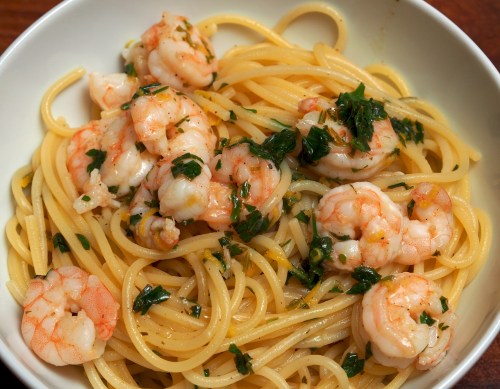
Lemon, Prawn & Parsley Spaghetti
We try to keep a bag of frozen raw prawns in the freezer as they always feel like a special treat. This is good if you fancy a special treat on a Monday, Tuesday, Wednesday, Thursday…
Wine Suggestion: to match this dish you can’t go wrong with a good Albariño (Spain) / Alvarinho (Portugal). What you need to look for is a bit of body as some are just a bit thin; the best have a real depth of flavour along with vibrant freshness. Perfect for the prawns and lemon.
Lemon & Parsley Spaghetti with Prawns – serves 2
- 175g spaghetti
- 2tbsp olive oil
- 140g large raw peeled prawns, thawed if frozen
- zest & juice 1 lemon, plus wedges to serve
- bunch flat-leaf parsley, roughly chopped
Cook the pasta.
Meanwhile, heat the oil in a large frying pan, add the prawns and fry quickly until pink all over.
Add the lemon zest and juice, parsley, 2 tbsp of the pasta cooking water and salt and pepper, then heat through.
Drain the spaghetti, add to the pan, then toss it all together.
Serve with lemon wedges.
(Original recipe from BBC Good Food)
Posted in Food, Pasta, Prawns, Shellfish | Tagged Cooking, Food, lemon, prawns, Recipe, Shellfish, Spaghetti | 2 Comments »
« Newer Posts - Older Posts »

 Jono & Jules do food & wine