Feeds:
Posts
Comments

Posts Tagged ‘Cooking’

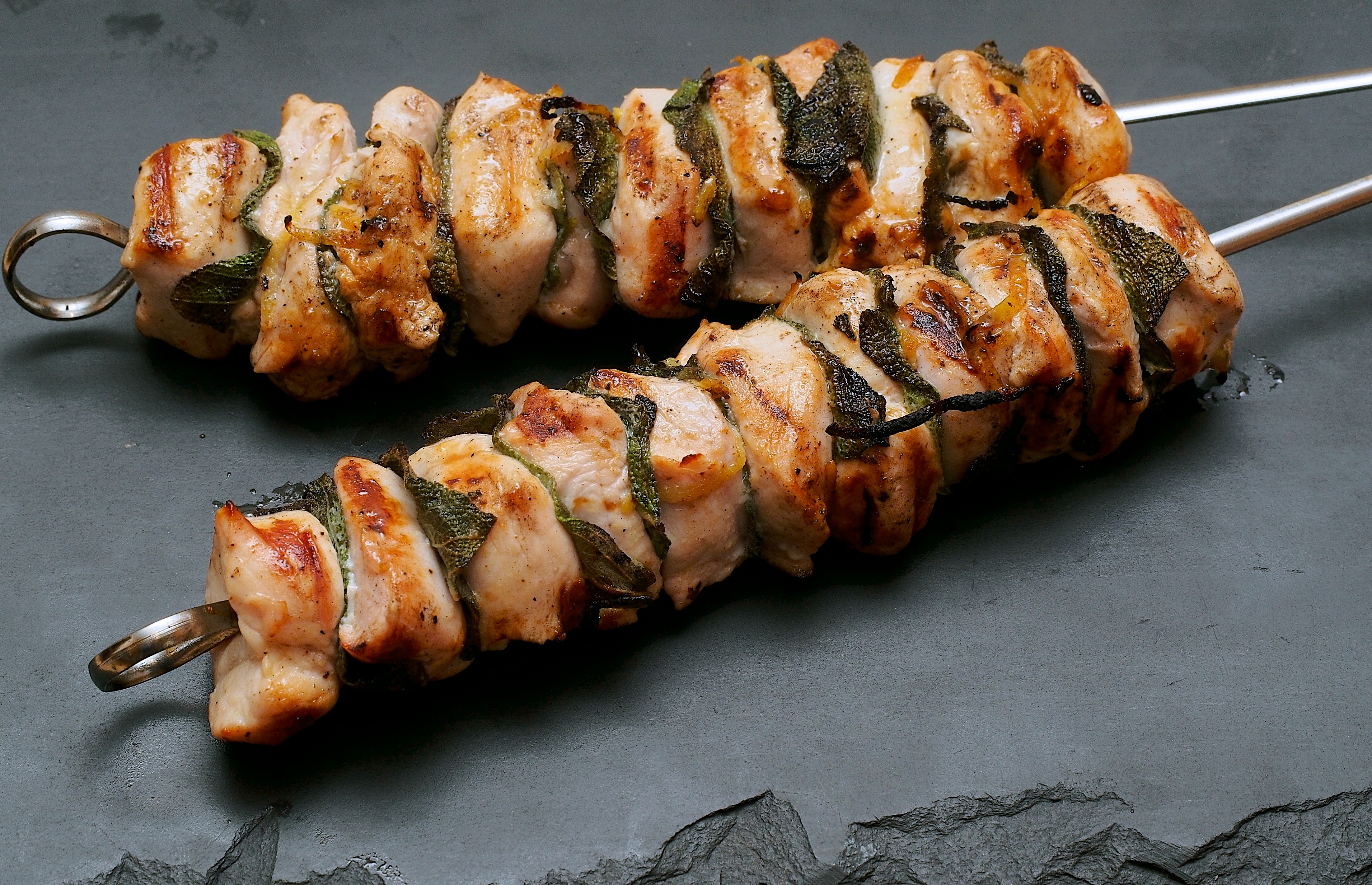
This chicken in this is so juicy and flavoursome and would be great for crowds as well as a quiet night at home. You could grill them but we recommend you get the barbecue out – it will warm your hands against all this cold winter weather!

Sage & Lemon Chicken Skewers – to serve 4

  • 3 skinless chicken breasts
  • olive oil
  • 1 garlic clove, crushed
  • 1 lemon, zested and juiced
  • a handful of sage leaves

Cut the chicken breasts into bite-sized cubes and toss with a little olive oil, the garlic and the lemon zest and juice. Season well. Thread onto 4 metal skewers, alternating chicken with sage.

Grill for about 5 minutes on each side or until the chicken is cooked.

Wine Suggestion: Something simple, light and lemony is all that is required here. We had an Italian white, made from the Falanghina grape, which was yummy.

(Original recipe from BBC Olive Magazine, January 2013)

Read Full Post »

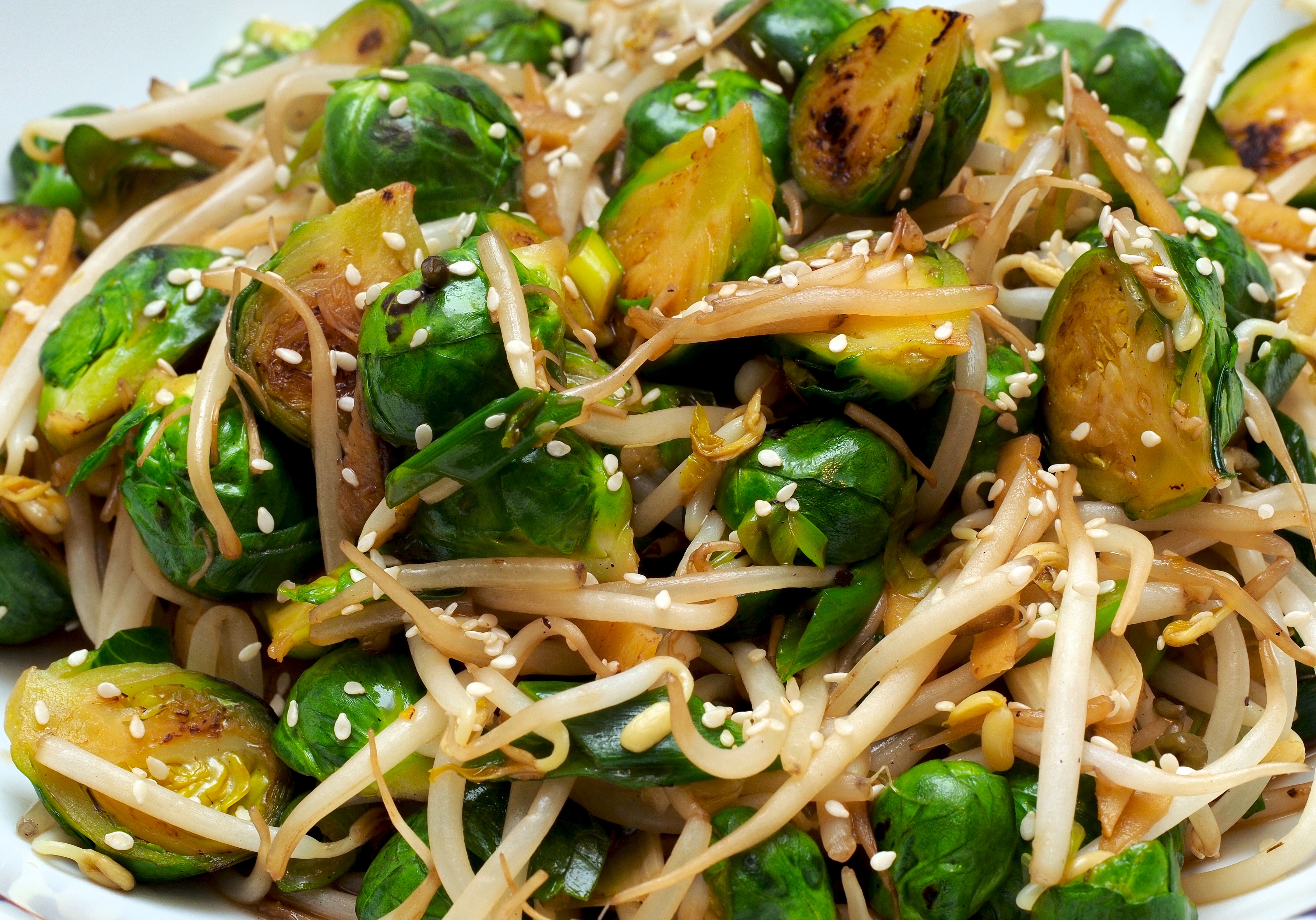
A stir-fry of Sprouts; Brussels & Bean. A delight and a real treat as a healthy midweek supper.

Sprouts with Sesame & Spring Onions – to serve 2 (or 4 as a side)

  • 1 tbsp sesame oil
  • thumb-size piece ginger, cut into matchsticks
  • 300g Brussels sprouts, halved
  • 250g beansprouts
  • small bunch spring onions, sliced diagonally
  • 1 tbsp clear honey
  • 2 tbsp soy sauce, plus extra to serve
  • 1 tbsp sesame seeds

Heat the oil in a wok. Fry the ginger and Brussels sprouts, tossing, for 5-6 minutes, until slightly browned. Add a few tbsp water while they’re cooking if you need to stop them sticking, though the odd crusty bit will only improve things.

Add the beansprouts, spring onions, honey and soy sauce, then stir-fry for 1 minute. Sprinkle over the sesame seeds and serve with some extra soy sauce.

(Original recipe from BBC Good Food)

Read Full Post »

El Bulli Carbonara

Some of our Italian friends will tell us off for using cream, but we thought this recipe from Ferran Adrià was delicious. We cooked this for two but you can also make it for 6, 20 or even 75 people! We’ve given the quantities here for 2 and for 6 people.

Tagliatelle Carbonara – to serve 2 (or 6)

  • 120g (360g) smoked streaky bacon
  • 1½ tbsp (6 tbsp) olive oil
  • 200ml (600ml) whipping cream
  • 600ml (1.8 l) water
  • 1 tsp (1 tbsp) salt
  • 200g (600g) egg tagliatelle
  • 2 (6) egg yolks
  • 40g (150g) Parmesan cheese, grated

Remove the rind and cut the bacon into small strips. Put a large saucepan over a low heat, then add the oil and bacon. Fry gently for 10 minute or until the bacon has browned.

Reserve one-eighth of the cream and add the rest to the bacon. Simmer for 20 minutes. Season well with salt and pepper before removing from the heat.

Bring the water to the boil, add the salt, and cook the pasta according to the pack instructions.

Whisk the egg yolks together with the reserved cream.

Drain the pasta and return it to the pan. Add the bacon cream to the pasta.

Stirring constantly, add the egg yolk mixture. The eggs will thicken a bit and will coat the hot pasta.

Serve with the Parmesan.

Wine Suggestion: The key to pairing this dish is to provide both acidity and texture in a medium weighted wine. There are some fascinating southern Italian white wines that have been macerated on their skins that may suit, or in contrast an oaked Sauvignon Blanc from the Loire would also work well. If you feel like a red go for a lighter, young and unoaked red made from Cabernet Franc or a blend that includes Sangiovese.

(Original recipe from The Family Meal: Home cooking with Ferran Adrià, Phaidon, 2011.)

Read Full Post »

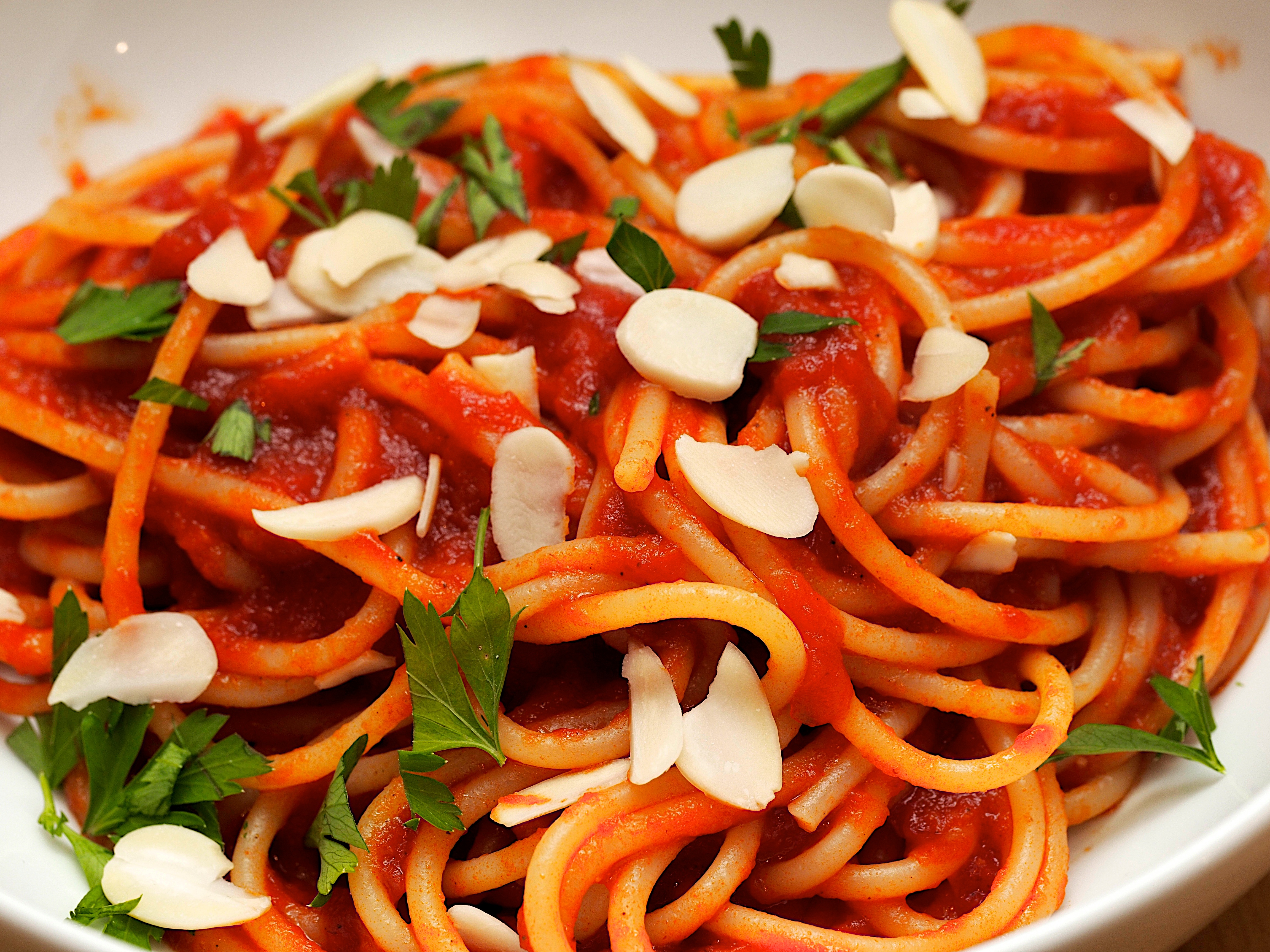
A Lebanese twist to tomato sauce with gentle spices and almonds; a lovely variation on a theme. The proportion of sauce to spaghetti is also very different to how the Italian’s make pasta so there is a lot of sauce for this dish. This worked for us but you could use the same amount of sauce for a greater quantity of pasta and therefore serve more people if you’d like.

The spices are subtle and warming and the pinches can be generous if you like.

Spaghetti with a Rich Tomato Sauce & Toasted Almonds – serves 2 generously

  • 2 x 400g tins chopped tomatoes
  • 2 tbsp tomato purée
  • 3 garlic cloves, grated
  • 1 tsp brown sugar
  • 1 tbsp olive oil
  • pinch ground cinnamon
  • pinch ground allspice
  • pinch grated nutmeg
  • 1/2 tsp salt
  • pinch ground pepper
  • 200g spaghetti
  • 50g flaked almonds, toasted
  • 2 tbsp chopped parsley

Put the tomatoes, tomato purée, garlic and sugar into a pan and simmer over a low heat. Stir frequently and simmer for 30 minutes.

Stir in the olive oil, cinnamon, allspice, nutmeg, salt and pepper and cook for a further 20 minutes.

Meanwhile bring a large pot of salted water to a boil, add the spaghetti and cook according to packet instructions (usually between 10-12 minutes). Reserve 3 tablespoons of the cooking water and then drain the cooked spaghetti.

Return the spaghetti to the cooking pot with the reserved cooking water and the tomato sauce.

Toss well and then serve sprinkled with the almonds and parsley.

Wine Suggestion: we drank a Valpolicella Ripasso with this dish and the ripe, juicy spices went well with the warming spices of the sauce.

(Original recipe from The Lebanese Kitchen by Salma Hage, Phaidon, 2012.)

Read Full Post »

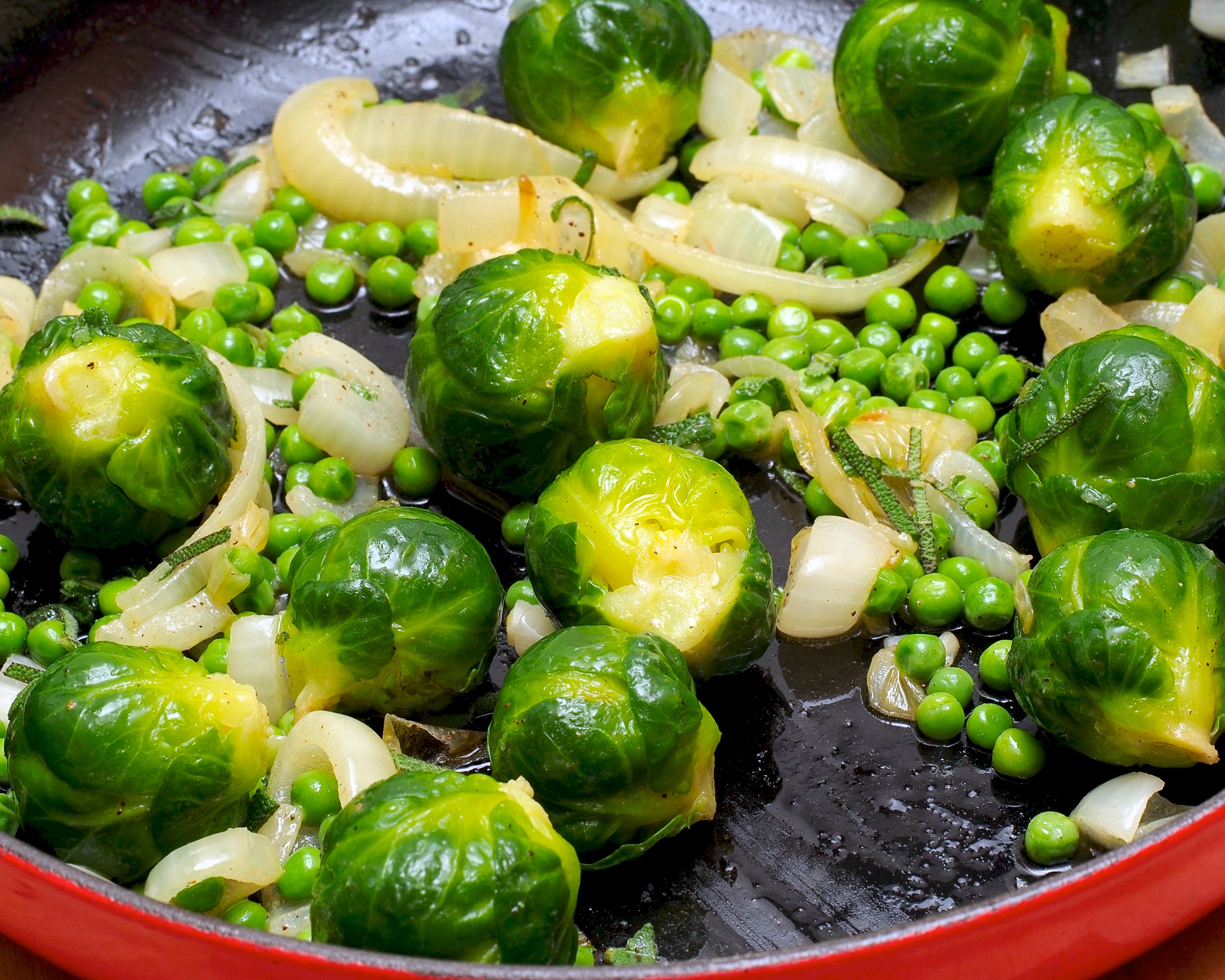
Simple dishes like this show off the flavours of the ingredients so well. This is a perfect dinner party side dish. Don’t worry too much about the sprout haters – more for us!!

Buttery Sage & Onion Sprouts – to serve 8 

  • 85g butter
  • 3 onions, cut into thickish slices
  • 8 sage leaves, chopped
  • 350g Brussels sprouts
  • 200g frozen peas

Heat half the butter in a large frying pan and soften the onions over a low heat for about 15 minutes. You want them really soft but not brown. Add most of the sage.

Meanwhile, cook the sprouts in a pan of boiling water for about 4 minutes, add the peas and cook for another minute or until just tender.

Drain, reserving splash of water, then add the sprouts to the peas and onions, along with the rest of the butter, stirring well so everything is coated in butter. Add the reserved cooking water if you think it needs it.

Season with loads of black pepper and some salt and sprinkle the reserved sage on top.

(Original recipe from BBC Good Food)

Read Full Post »

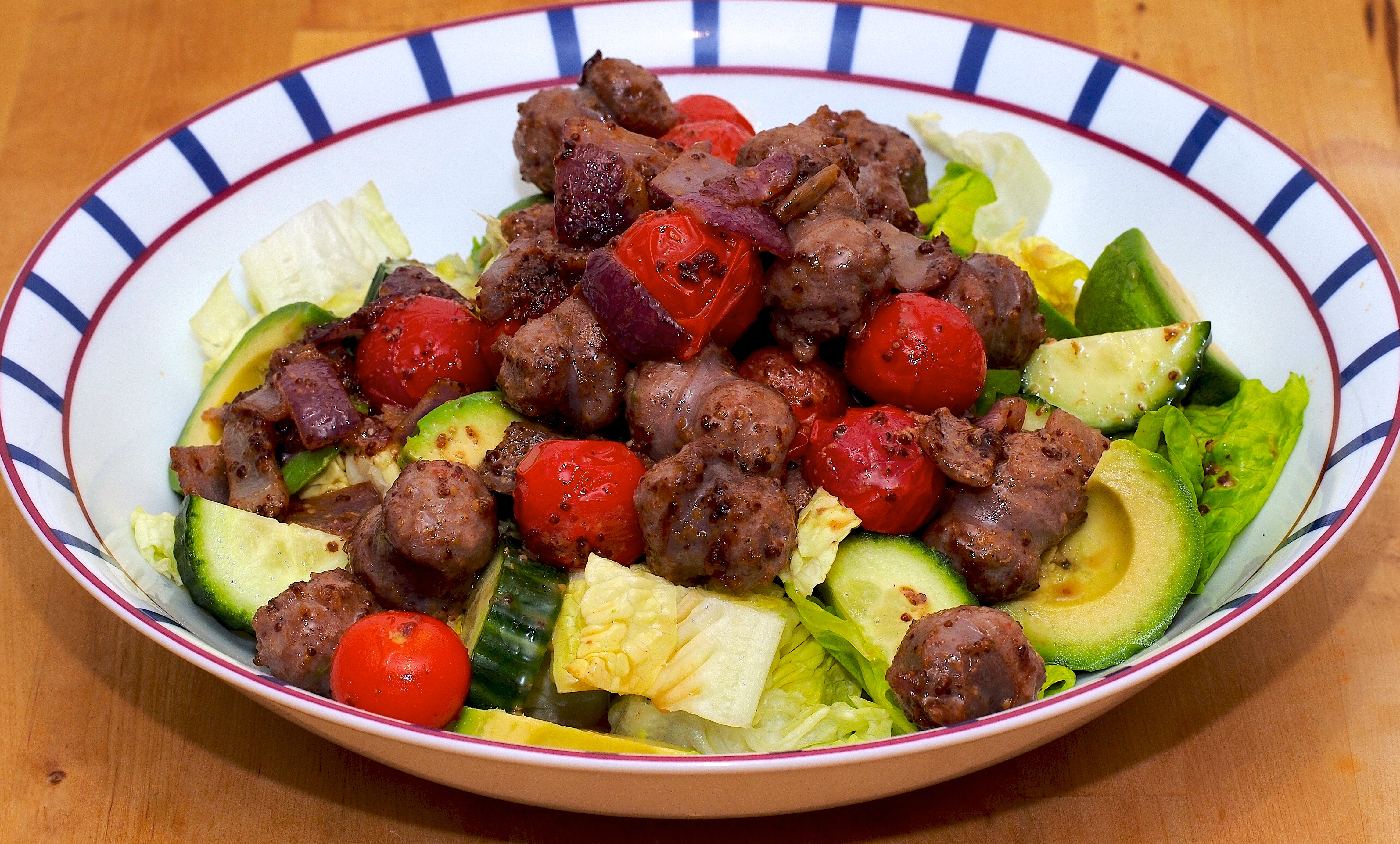
Sausage Salad

We wouldn’t normally think of putting sausages in our salad but this worked surprisingly well.

Sausage Salad – to serve 4

  • 1 tbsp olive oil 
  • 400g good-quality sausages, snipped with scissors into bite-size chunks
  • 1 red onion, roughly chopped
  • 1 heaped tbsp grainy mustard
  • 1 tbsp light muscovado sugar
  • 16 cherry tomatoes
  • 2 little gem lettuces
  • 1 large avocado
  • ¼ cucumber
  • 1 tbsp red wine vinegar

Heat the oil in a deep frying pan. Add the sausages and onion and fry for a couple of minutes or until browned.

Add the mustard, sugar and tomatoes and cook for another few minutes or until the tomatoes are starting to split and everything is well coated.

Meanwhile, separate the lettuce leaves, slice the avocado and the cucumber. Toss together in a salad bowl. Spoon the hot sausages over the top.

Add the vinegar and 1 tbsp water to the hot pan and stir over the heat, scraping all the sticky bits from the bottom of the pan. Spoon the pan juices over the salad and serve with some crusty bread.

Wine Suggestion: This is definitely a week-night dish so no need to blow the budget on the wine. A red Côtes du Rhône or a Languedoc would do nicely.

(Original recipe from BBC Good Food)

Read Full Post »

OLYMPUS DIGITAL CAMERA

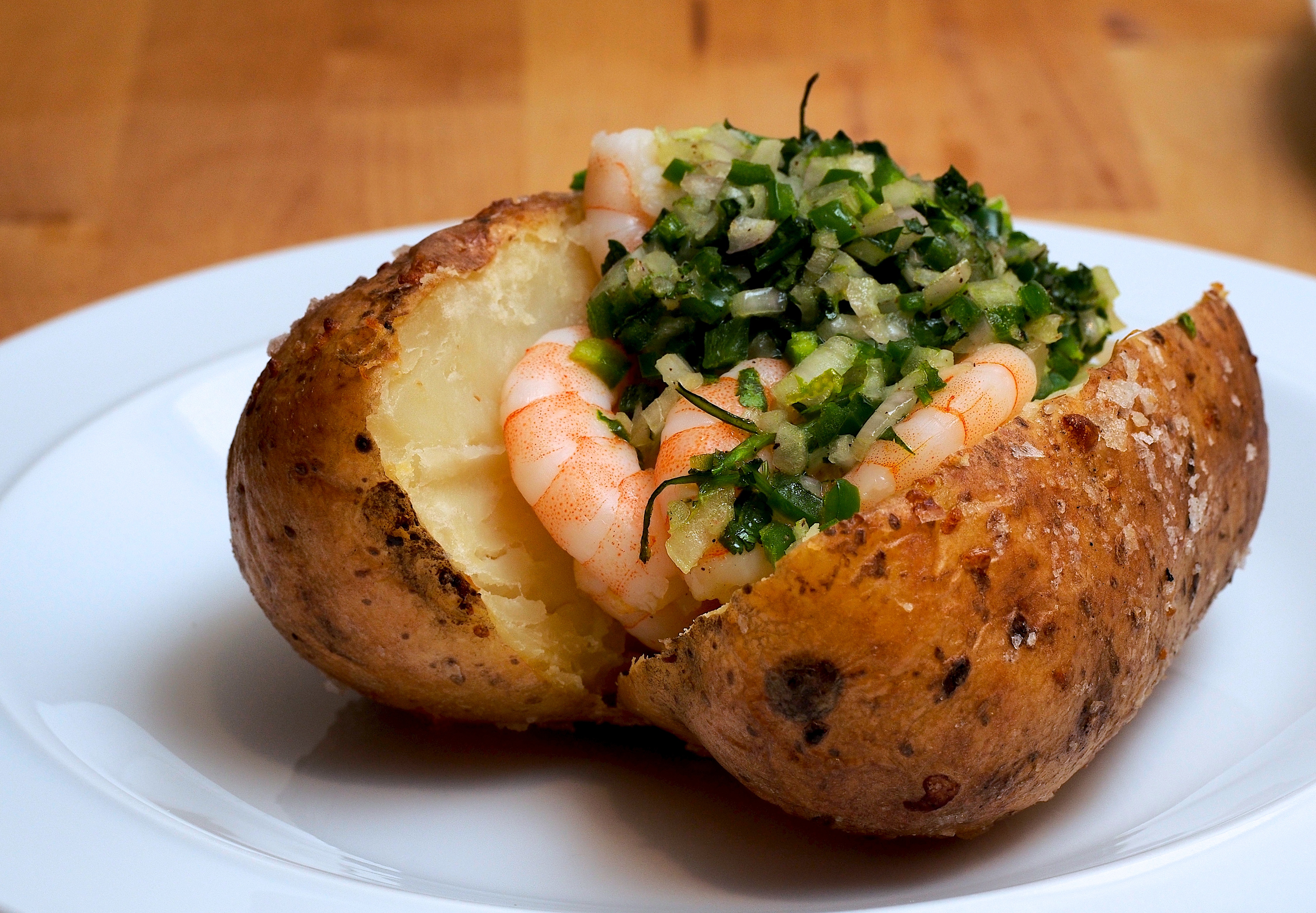
A weeknight feast; perfect after a long day at work and a cold, wet Winters’ day. We weren’t too sure about the recipe at first but it’s definitely a keeper!

Salt-baked Potatoes with Prawns, Jalapeño & Coriander Butter – to serve 4

  • oil 
  • 4 baking potatoes
  • 1 tbsp sea salt flakes
  • 75g butter, softened
  • 2 shallots, finely chopped
  • 2 garlic cloves, crushed
  • 2 tbsp chopped jalapeño peppers
  • 1 lime, zest and juice
  • small bunch of coriander, chopped
  • 175g cooked prawns

Heat the oven to 220C/fan 200/gas 7.

Rub a little oil over the potatoes and prick them all over with a fork, sprinkle with the salt and put on the top shelf of the oven.

Bake for 20 minutes, then turn the oven down to 190C/fan 170/gas 5 and bake for about an hour or until the skin is crispy and the potatoes are soft inside.

Beat the butter until creamy, then stir in the shallots and garlic. Add the jalapeño peppers, lime zest, coriander and some seasoning.

Split the cooked potatoes, divide the prawns between them and spoon the butter on top. Put back into the oven for a few minutes and squeeze over the lime juice before serving.

Wine Suggestion: A fresh white, like an Albariño from the Rías Baixas DO,in Spain.

(Original recipe from BBC Good Food)

Read Full Post »

Another success from “The Lebanese Kitchen”. First you have to make a Lebanese Seven Spices mix which you can use to add flavour to loads of dishes.

Lebanese Seven Spices Mix – makes 175g

  • 5 tbsp ground allspice
  • 3½ tbsp pepper
  • 3½ tbsp ground cinnamon
  • 5 tbsp ground cloves
  • 4 tbsp ground nutmeg
  • 4 tbsp ground fenugreek
  • 4 tbsp ground ginger

Mix the spices together and store in an airtight jar in a dark cupboard until needed.

Lamb Chops with Seven Spices – to serve 4

  • 2 garlic cloves, crushed
  • 1½ tbsp seven spices mix
  • juice of 1 lemon
  • 1 tsp salt
  • 1 tsp black pepper
  • 4 lamb chops
  • natural yogurt and lemon wedges to serve

Mix the garlic, seven spices mix, lemon juice, salt, and pepper in a bowl, add the lamb chops, and rub mixture into the meat. Leave to marinade for about 1½ hours.

Barbecue for 4-6 minutes on each side, then serve with the lemon wedges and yogurt.

Wine Suggestion: We had a really nice Spanish red, Pago de los Capellanes, from Ribero del Duero (thanks Alicia). 100% Tempranillo with a lovely juicy depth and loads of flavour. Alternately you could try a wine from the Bekaa Valley in Lebanon which also makes juicy, heady, red wines.

(Original recipe from The Lebanese Kitchen by Salma Hage, Phaidon Press Ltd, 2012.)

Read Full Post »

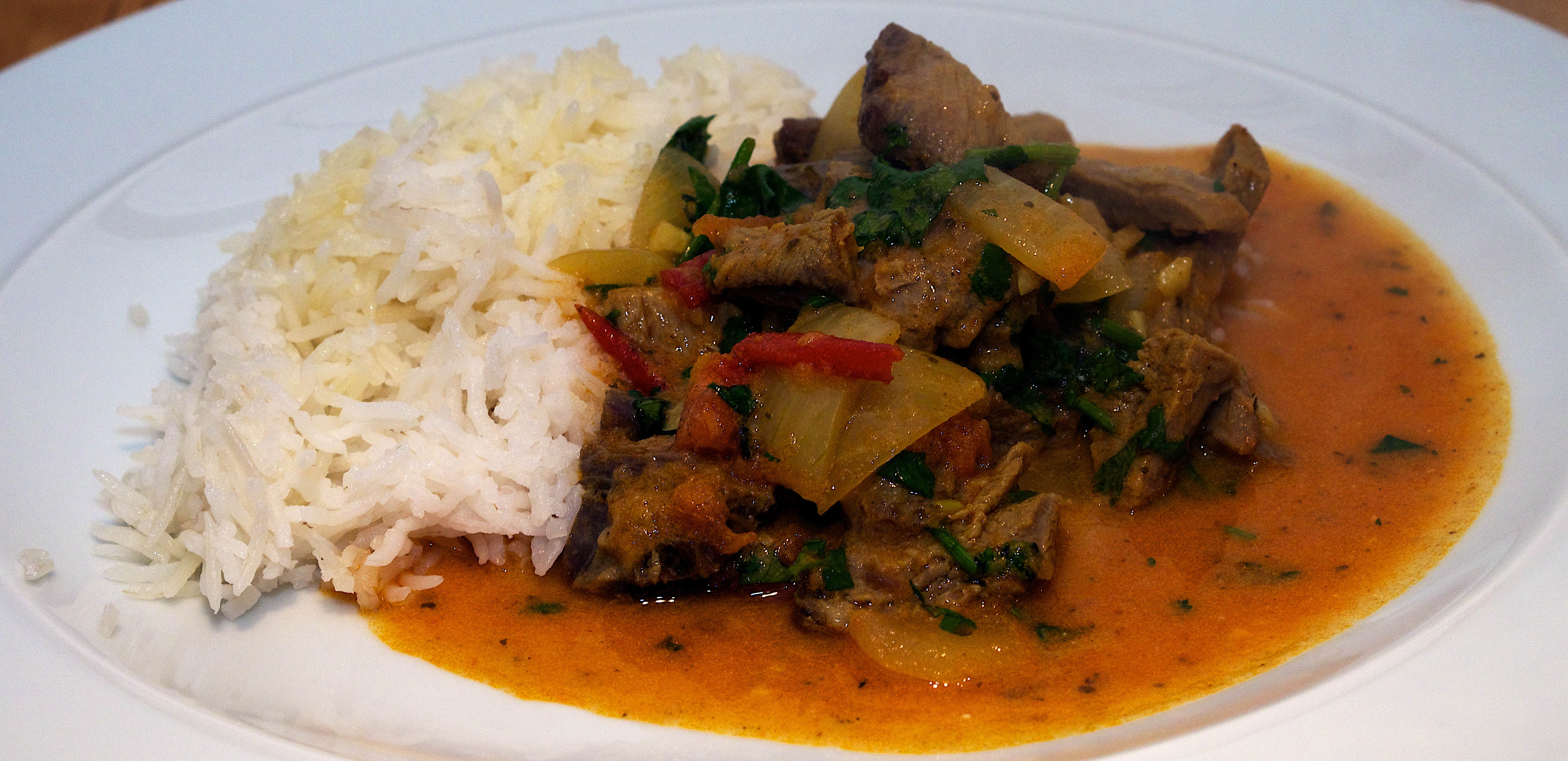
We’re not massive fans of leftovers because we always want to cook something different the next night. Leftover roast meat is the exception though as you can usually transform it into something completely different. This originated as a roast shoulder of lamb with rosemary and tasted every bit as good in this curry.

Leftover lamb curry – to serve 4

  • 1 tbsp vegetable oil
  • 1 onion, chopped
  • 2 cloves of garlic, finely chopped
  • small knob of ginger, grated
  • 2 tbsp curry paste (we like Patak’s)
  • 500g leftover lamb, trimmed of any fat and cut into chunks
  • 300ml vegetable stock
  • 2 ripe tomatoes, chopped
  • 1 cinnamon stick
  • 3 tbsp natural yogurt
  • 25g coriander, chopped

Heat the oil in a medium saucepan and cook the onion until softened. Stir in the garlic and ginger and cook for 30 seconds before adding the curry paste; stir again for another 30 seconds or so.

Add the lamb, stock, tomatoes, cinnamon and a good pinch of salt. Bring to a simmer and cook for 10 minutes.

Take the curry off the heat and add the yogurt and coriander.

Serve with steamed basmati rice.

Wine Suggestion: We prefer to drink beer with curry. Try Tom Crean’s Lager from Dingle in County Kerry if you get the opportunity. A great drop from an Irish micro-brewery and well worth seeking out.

Read Full Post »

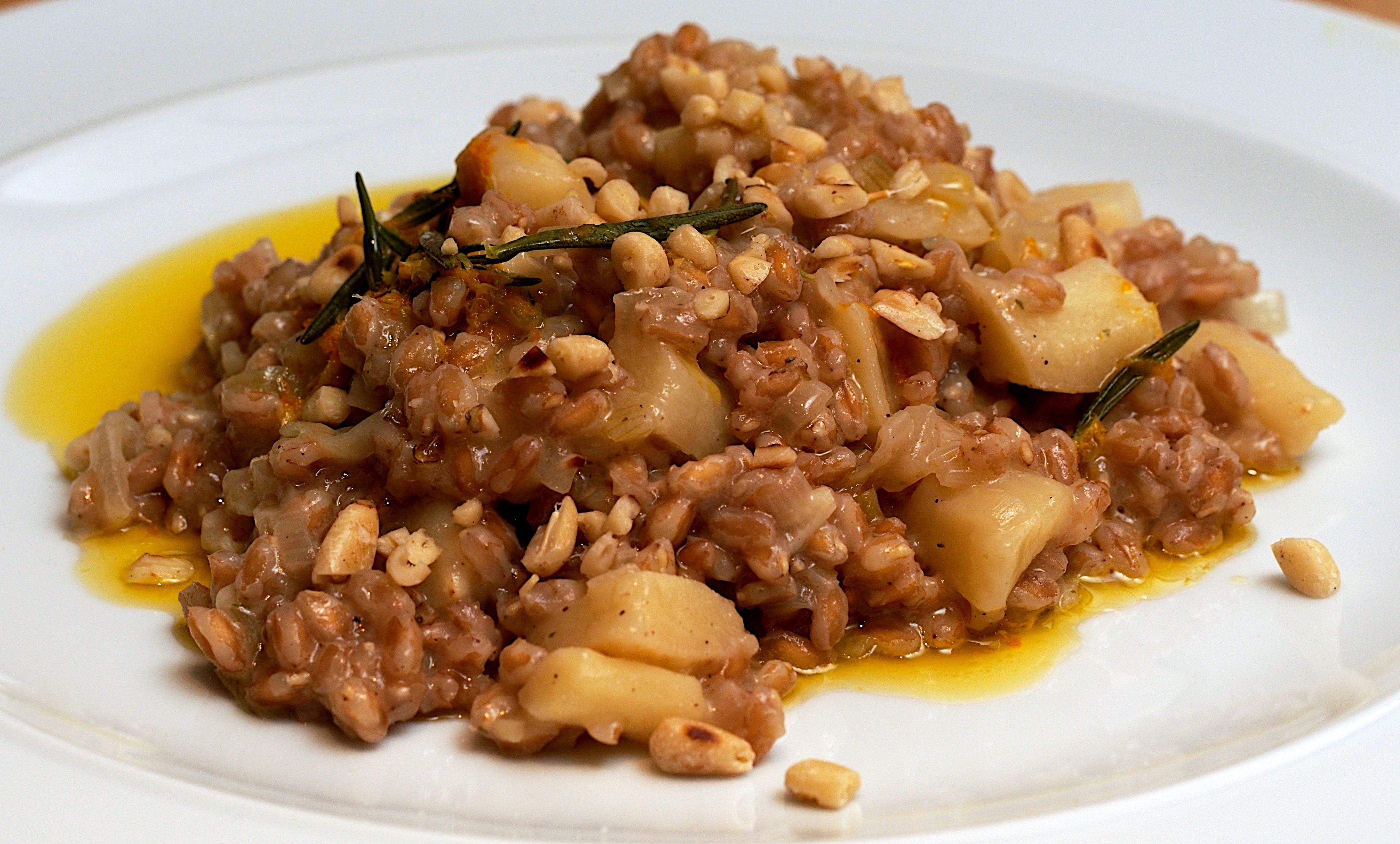
We think that Denis Cotter from “Cafe Paradiso” is equally inspired, a genius and slightly mad with his creations. Every dish is constructed as layers of flavours that as a whole are quite engaging and delightful. We loved this dish and each element really adds something extra and delicious.

Roast parsnip farrotto with pine nuts & citrus-rosemary butter – to serve 4

  • leaves from 3 sprigs of rosemary
  • zest of 2 oranges and 2 lemons, in large strips
  • 200g butter, softened, plus extra to finish
  • 1.5 litres vegetable stock
  • 2 tbsp olive oil
  • 250g shallots, thinly sliced
  • 400g parsnips, peeled, woody cores removed, and cut into large dice
  • 2 sprigs of thyme
  • 2 tbsp honey
  • 1 tbsp cider vinegar
  • 300g farro
  • 4 garlic cloves, sliced
  • 100ml dry white wine
  • 75g hard cheese (we used Parmesan), finely grated
  • 2 tbsp pine nuts, lightly toasted and chopped

Put the rosemary and zest in a small saucepan with 30g of the butter. Heat gently until the butter starts to sizzle, then remove from the heat and leave to infuse for at least 30 minutes in a warm place. Strain through a sieve and throw away the solids. Stir the flavoured butter into the rest of the butter. Either keep warm or soften again just before serving.

Bring the stock to the boil in a large saucepan, then turn it down and keep at a low simmer.

In a wide, heavy pan, heat the olive oil and cook the shallots and parsnip for a couple of minutes over a medium heat.Add the thyme, honey and vinegar, then cover with baking parchment, lower the heat and simmer for 10 minutes. The parsnips should caramelise a bit but will stay firm.

Add the farro and garlic, and cook over a medium heat for 5 minutes, stirring now and then. Remove the thyme sprigs. Add the white wine, bring to the boil and simmer until the wine has been absorbed.

Pour in a ladleful or two of hot stock and simmer, stirring occasionally, until it has been absorbed. Keep adding stock in this way for 40-50 minutes, or until the grains are soft and chewy. Stir in the cheese and season well with salt and pepper.

Spoon the farrotto into warm bowls, drizzle with the citrus butter and scatter with pine nuts.

Wine Suggestion: This dish has some strong flavours so you can’t go for anything too light or you will risk it being overwhelmed. An oaked Semillon from Australia would have the weight, the freshness of acidity and the natural citrus flavours should complement and enhance the dish. We went for Stephanie O’Toole’s Mount Horrick’s Semillon and it was delicious.

(Original recipe from Denis Cotter’s For the Love of Food, Collins, 2011.)

Read Full Post »

Such a good recipe for hummus we couldn’t stop eating it and had to make another batch! Once you’ve bought the tahini you may as well use it up.

  • 2 x 400g tins of chickpeas
  • 2-3 garlic cloves, peeled
  • 4 tbsp tahini
  • juice of 2 lemons
  • 2 tsp sea salt
  • best extra virgin olive oil
  • 50g pine nuts, toasted

Drain the chickpeas, keeping 50ml of the juices from the tin, and rinse.

Put the chickpeas into a food processor, add the garlic cloves and tahini, and process for a few minutes.

Add the reserved can juices, then half the lemon juice and the sea salt, and process until smooth.

Taste and add some more lemon juice, if you like.

Scrape the hummus into a dish, drizzle generously with your best olive oil, sprinkle with the toasted pine nuts, and serve as a starter, with  breadsticks and crudités for pack lunch, or with a selection of other mezze dishes.

(Original recipe from The Lebanese Kitchen by Salma Hage, Phaidon 2012.)

Read Full Post »

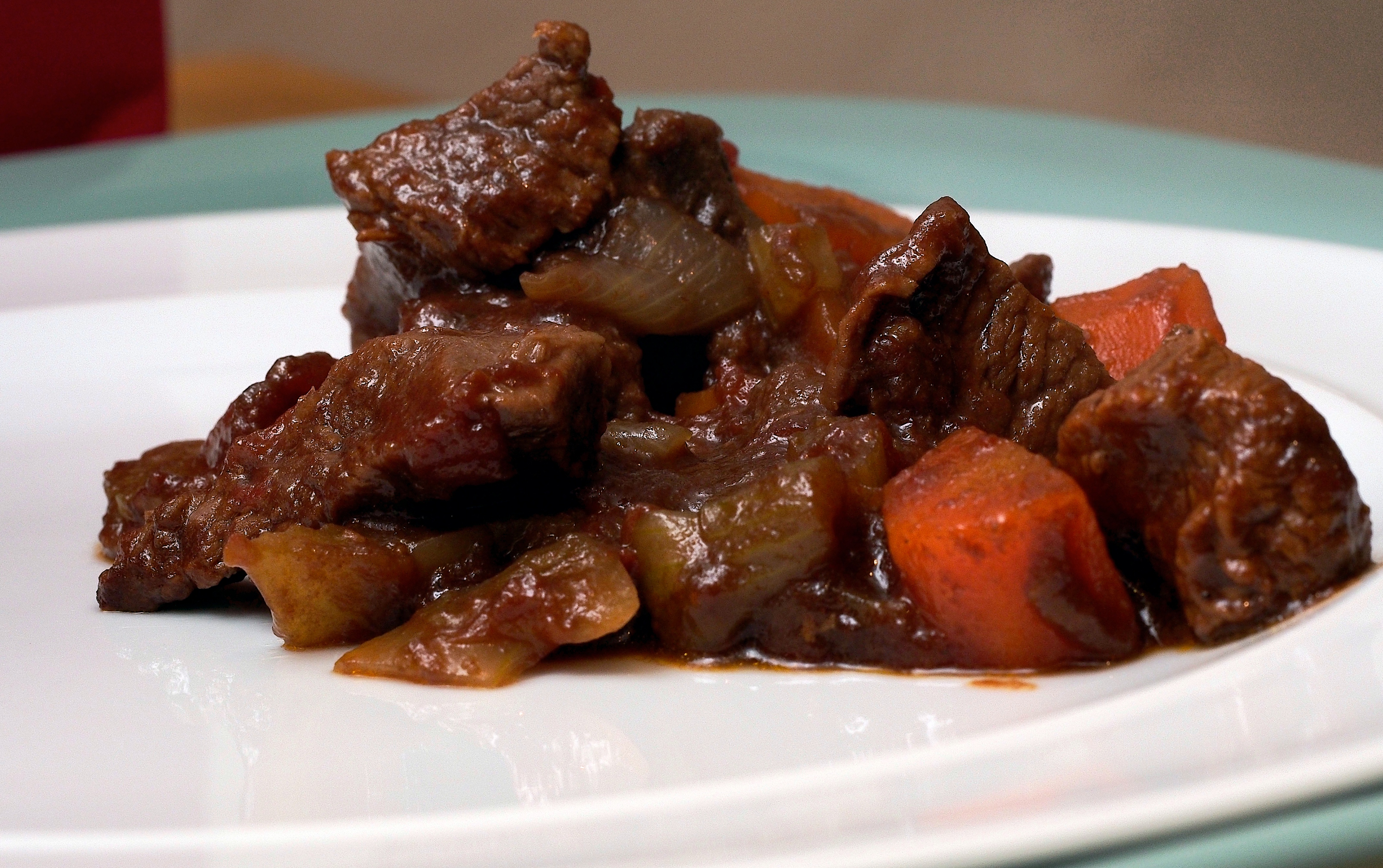
This really is the easiest beef stew ever and can be made successfully by anyone. It’s also very tasty and great for feeding a crowd. Just fling everything together and chuck it in the oven.

The Easiest Ever Beef Stew – to serve 6

  • 1.5g stewing steak, cut into chunks
  • 60g plain flour
  • 2 tsp good-quality paprika
  • 400g tin of tomatoes
  • 1 glass of wine (red or white will do)
  • 2 onions, chopped
  • 2 cloves garlic, sliced
  • 1 stick celery, finely sliced
  • 3 carrots, peeled and cut into chunks
  • 3 potatoes, cut into chunks

Heat the oven to 180ºC.

Put the flour and paprika into a large plastic bag. Add the beef and shake to coat.

Put the beef into a cast-iron casserole.

Whizz the tomatoes and their juice in a food processor, or roughly crush with a wooden spoon, and add to the meat.

Add all of the other ingredients and stir.

Press a piece of baking paper over the stew and cover the casserole with a lid.

Cook in the oven for 2 hours. Taste for seasoning. Check if the meet is tender and cook for a bit longer if necessary.

Wine Suggestion: A rustic red is all that’s needed here and you may as well finish the bottle you opened for this recipe. Something from the Languedoc should fit the bill.

(Original recipe from The Cook’s Companion by Stephanie Alexander, Penguin Books, 2004.)

Read Full Post »

Ceps are not cheap but they are worth every penny in our opinion. If you can’t get ceps, or you are not feeling extravagant, you can use other fresh wild mushrooms. This is a very rich and luxurious dish.

Cep Risotto – to serve 4

  • about 8 pieces of dried porcini (ceps), roughly chopped
  • 250g fresh porcini, wiped clean (don’t wash them)
  • 75g butter
  • 2 garlic cloves, finely chopped
  • 150ml dry white wine
  • 2.5 litres good chicken or vegetable stock
  • 1 onion, chopped super fine
  • 400g vialone nano rice
  • 2 tbsp chopped parsley
  • 75g cold butter, cut into small dice
  • 100g finely grated Parmesan

Soak the dried porcini in a bowl of water for a couple of hours or until soft. Lift the porcini out of the water and squeeze to get rid of extra moisture.

Slice the fresh porcini lengthways.

Heat 20g of the butter in a sauté pan over a low heat, add the garlic and cook until soft but not coloured. Add the fresh porcini slices with 2 tbsp of the wine and toss around for a minute over a low heat, you want the mushrooms to stew rather than fry. Season, cover with a lid and set aside.

Bring the stock to the boil, then turn down to a simmer.

Melt the first 75g of  butter in a heavy-based pan and add the chopped onion. Cook gently until soft but not coloured (about 5 minutes).

Add the dried porcini, then the rice and stir to coat the grains in the butter. Make sure the grains are warm before adding the rest of the wine. Let the wine evaporate completely so the onion and rice are dry.

Start to gradually add the stock, a ladle at a time, stirring the rice all the time. Wait until each addition of stock has almost evaporated before adding any more. Keep cooking like this for about 15 minutes, adding the stock and stirring continually as above. Taste and keep cooking until the grains are soft, but still have a little bite.

Turn the heat down and add the fresh porcini and the parsley. Allow the risotto to rest for a minute, then vigorously beat in the 75g cold diced butter with a wooden spoon and then the Parmesan. Season to taste and serve.

Wine Suggestion: Something with a bit of what wine geeks call sous bois (forest floor) or in other words some earthy or mushroomy flavours. Pinot Noir is a classic match and an oaked Chardonnay similarly, but given the Italian inspiration this would also pair beautifully with an elegant and developed Barolo or an aged Brunello di Montalcino.

(Original recipe from Georgio Locatelli’s Made in Italy Food & Stories, Fourth Estate, 2006.)

Read Full Post »

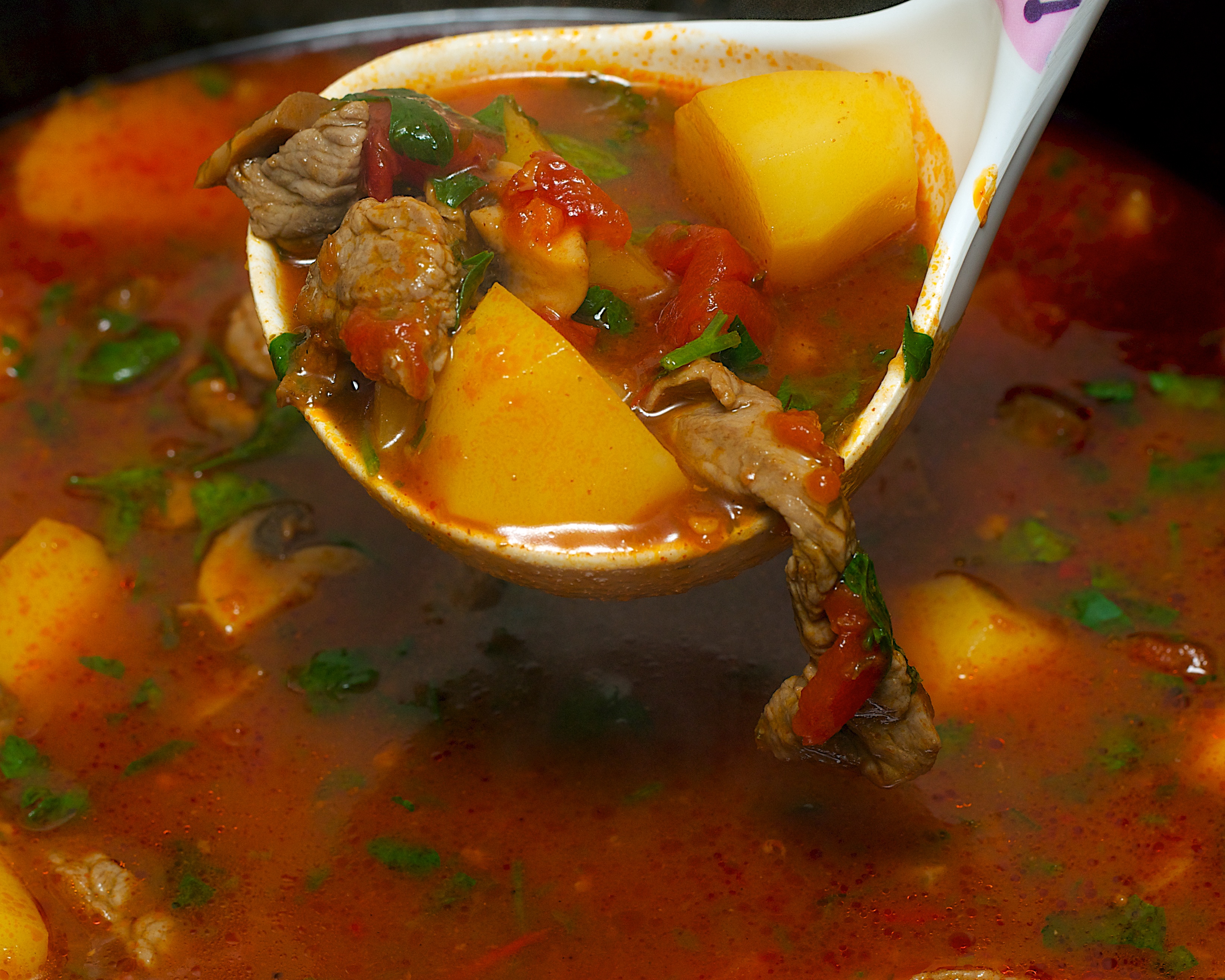
Simple and tasty one-pot that takes just half an our to make. It’s pretty low in calories too for all you January dieters!

Pork, chilli and bean stew – to serve 4

  • olive oil
  • 400g diced pork
  • 1 red onion, sliced
  • 2 cloves garlic, sliced
  • a large pinch of chilli flakes
  • 1 tsp ground cumin
  • 1 red pepper, cut into chunks
  • 400g tin chopped tomatoes
  • 400ml chicken stock
  • 250g small salad potatoes, halved
  • 100g green beans
  • small bunch of coriander, chopped

Heat 1 tbsp olive oil in a large non-stick pan.

Season the pork and quickly brown. Remove the pork from the pan and add the onion and garlic and cook for a minute.

Add the chilli flakes, cumin and pepper and cook for another couple of minutes.

Return the pork to the pan with the tomatoes and stock. Bring to a simmer and add the potatoes. Cook for 10-15 minutes then add the beans and cook for a further 5 minutes.

Season and scatter over coriander to finish.

Wine Suggestion: A juicy, ripe red with plenty of choices from either Spain, Southern Italy or the New World. Just avoid anything with too much weight and alcohol.

(Original recipe from BBC Good Food)

Read Full Post »

Jono’s mum Gera often comments that we rarely put desserts on our blog. She sent us a collection of her favourite dessert and cake recipes and this is her chocolate fudge cake which was a great hit at our annual New Year’s Day lunch. The original recipe uses Australian cup measures so apologies for the odd measurements – they will work.

Gera’s Chocolate Fudge Cake

  • 180g butter
  • 250ml cocoa, sifted
  • 375ml castor sugar
  • 1 tsp vanilla extract
  • 3 eggs – separated and whites stiffly beaten
  • 375ml self-raising flour, sifted
  • 187ml plain flour, sifted
  • 1 cup of cold water
  • whipped cream
  • icing sugar

Beat the butter to a cream with the sifted cocoa. Add sugar gradually, beating until light and fluffy, then add vanilla.

Beat in egg yolks, one by one.

Stir in sifted flours alternately with the water.

Fold in stiffly beaten egg whites

Pour into 2 prepared 20cm cake tins.

Bake at 150-160ºC for 1 hour or until a skewer inserted in the middle comes out clean.

Allow the cake to cool for 10 minutes before turning out onto a cake rack.

When the cake is cooled, sandwich together with whipped cream and sift icing sugar over the top.

Read Full Post »

Ragu alla Bolognese

We love Anna Del Conte’s Gastronomy of Italy which is where we found this excellent Bolognese sauce.

Ragù alla Bolognese – to serve 4

  • 50g unsalted butter
  • 2 tbsp olive oil
  • 100g unsmoked pancetta, finely chopped
  • 1 small onion, very finely chopped
  • 1 small carrot, very finely chopped
  • 1 small celery stalk, very finely chopped
  • 350g lean braising steak, minced
  • 5 tbsp red wine
  • 1½ tbsp tomato purée
  • 100ml hot meat stock
  • 5 tbsp milk

Heat the butter and olive oil with the pancetta in a deep, heavy-based saucepan. Fry gently for a few minutes and then add the chopped vegetables. Keep frying over a medium heat until the vegetables are soft.

Add the mince and cook until it is sealed, breaking any lumps up with a spoon. Pour over the red wine and boil briskly for a few minutes until the liquid has almost evaporated.

Dilute the tomato paste with the stock and add to the pan. Season well and cook for 5 minutes, stirring often. Meanwhile, bring the milk to simmering point in a small pan.

Pour the milk over the meat and stir well. Cook, uncovered, over the lowest heat for at least 2 hours. You don’t want the ragù to boil, but just break a few bubbles on the surface. Stir now and then as it cooks and adjust the seasoning at the end. Serve with tagliatelle.

Wine Suggestion: You need something red with high acidity. Try something Sangiovese-based from Italy and you won’t go far wrong.

(Original recipe from Anna Del Conté’s Gastronomy of Italy, Pavillon, 2001.)

Read Full Post »

This pasta dish has really strong and delicious flavours. We don’t recommend trying it on your non-anchovy loving friends.

Ditaline rigati con acciughe e pomodori secchi – to serve 4

  • 6 anchovies in oil
  • 120g dried breadcrumbs*
  • 4 tbsp olive oil
  • 1 tsp garlic oil**
  • 12 sun-dried tomatoes in oil, drained and chopped
  • 120 ml white wine
  • a pinch of dried chilli flakes
  • 400g ditalini rigate 
  • 1 tbsp parsley and garlic ***
  • 60g pecorino cheese, grated

Drain the anchovies, and cut 3 of the fillets into long strips.

Toast the breadcrumbs in a dry pan over a medium heat, until they are a good dark golden brown but be careful that they don’t burn.

Heat the olive oil and garlic oil in a large pan over a medium heat, add the 3 whole anchovy fillets and cook very gently, stirring, for a minute, to break them up and melt them a bit. Stir in the tomatoes, then add the wine and bubble up so it evaporates. Add the chilli flakes.

Bring a large pan of water to the boil, add plenty of salt, and put in the pasta. Cook for about a minute less than the advice on the pack, so that it is al dente. Drain, reserving some of the cooking water, add to the anchovy and tomato sauce and toss together, adding a spoon of the cooking water if needed to loosen. Add the parsley and garlic and toss again. Serve sprinkled with the toasted breadcrumbs, the cheese, and the strips of anchovy.

* You need to use good quality bread to make good breadcrumbs (so stay clear of the sliced white stuff). Cut the crusts off your stale bread, cut it into slices, put it on a baking tray and bake at 80ºC for an hour. When the bread has dried out, grate it (or use a food processor if you prefer) to make breadcrumbs. Keep in a sealed jar until you need them.

** To make garlic oil: mix 2 finely chopped garlic cloves with 50ml olive oil and leave for a day in the fridge before using. It will keep in the fridge for up to 3 days.

*** Use 1 garlic clove and about 4 handfuls of flat-leaf parsley. Crush the garlic with the flat of a kitchen knife to make a paste. Put the parsley on top and chop it finely.

Wine Suggestion: Try a textural southern white like Greco di Tufo or a Grillo from Sicily.

(Original recipe from Georgio Locatelli’s Made in Sicily, Fourth Estate, 2011.)

Read Full Post »

A side dish from Lazio that celebrates the unique and delicious Romanesco Cauliflower. We never cease to be amazed at the shape of these and the flavour is delicious and enhanced by the simple additions.

Romanesco and Parmesan – to serve 4

  • large head of Romanesco broccoli
  • 6-8 tbsp extra virgin olive oil
  • 2 tbsp chopped flat-leaf parsley
  • a few shavings of Parmesan or Pecorino Romano

You should cook the Romanesco in really salty water which will season it as it cooks and preserve the delicate flavour.

Snap off any large or bruised leaves from the outside of the broccoli, but leave any small ones attached. Trim off the end of the stem, to where the leaves start. Cut a cross in the base of the stem.

Boil the whole broccoli head until completely tender, about 12 minutes. Lift it out of the water and let it steam dry for a few minutes, then put it in a large dish, break into florets, and douse with olive oil.

Season with pepper (you shouldn’t need salt if you’ve used enough salt in the cooking water), scatter with parsley and cheese, and serve.

(Original recipe from Jacob Kenedy’s Bocca Cookbook, Bloomsbury, 2011.)

Read Full Post »

Happy Christmas! We’ve been asked to re-blog this post which was previously known as Thanksgiving Cranberry Sauce but it works just as well a month later. This will keep in the fridge for up to a week to have with the leftovers.

Chilli Cranberry Sauce

Gently heat 100g golden caster sugar and 175ml white wine in a saucepan. Wait until the sugar has dissolved and then bring to the boil.

Add 1/2 a mild red chilli (chopped and with seeds left in) and 300g of fresh or frozen cranberries, bring back to the boil and then simmer for about 10 minutes. You want the berries to burst but not collapse completely. Take the sauce off the heat. As it cools it will continue to cook and thicken.

 (Original recipe from BBC Good Food)

Read Full Post »

Mince and Onion Pie

Jamie's Easy Meat Pie

This is a Jamie Oliver recipe but we’ve reduced the amount of stock in our adaptation below as we thought the filling was too liquid. Easy and tasty for mid-week. We always have peas with pies.

Classic mince and onion pie – to serve 4

  • 3 medium onions
  • 2 carrots
  • 2 sticks of celery
  • 2 sprigs of fresh rosemary, leaves picked
  • olive oil
  • 2 bay leaves
  • 500g minced beef
  • 1 tsp English mustard
  • 1 tsp Marmite
  • 1 tbsp Worcestershire sauce
  • 2 tsp flour, plus a bit extra
  • 1 beef stock cube
  • 1 large egg or some milk

Peel and roughly chop the onions, carrots and celery. Finely chop the rosemary leaves.

Heat a large casserole pan over a high heat. Add a couple of tbsp of olive oil , the vegetables, rosemary and bay leaves. Cook, stirring, for about 10 minutes or until the vegetables are soft and have started to colour.

Stir in the minced beef and break up the chunks with a wooden spoon.Add the mustard, Marmite, Worcestershire sauce and 2 tsp of flour.

Dissolve the stock cube in 500ml of boiling water and add to the pan. Bring to the boil. Turn the heat down  and simmer with the lid askew for an hour, stirring occasionally.

Fill a large baking dish with the mince filling and allow it to cool. Take the pastry out of the fridge about 10 minutes before you want to use it.

Heat the oven to 180C/350F/gas 4.

Dust the work surface and your rolling pin with some flour, then roll out the pastry to the thickness of a £1 coin and big enough to cover your dish easily. Cover the dish with the pastry and run a knife around the edge of the dish to trim off any excess. Use a fork to crimp the edges and make a hole in the middle with a knife. Brush the top of the pastry with beaten egg or a little bit of milk. Bake on the bottom shelf of the oven for 40 minutes or until the pastry is golden.

Wine Suggestion: an easy red wine, like a Cotes du Rhone or a Shiraz blend from Australia would work well; something juicy and with a moderate body but not too heavy at the same time. Easy drinking to match the easy eating!

(Original recipe from Jamie Oliver’s Jamie’s Ministry of Food, Penguin, 2008).

Read Full Post »

« Newer Posts - Older Posts »