Feeds:
Posts
Comments

Posts Tagged ‘Food’

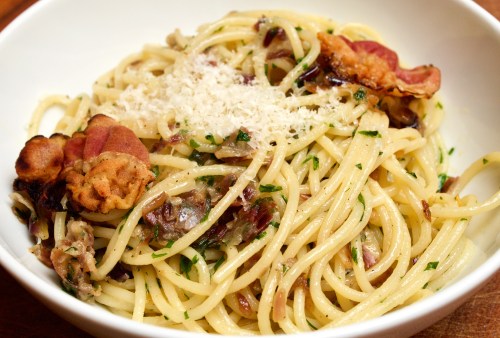
Spaghetti with parsley, pancetta & parmigiano

We’re never surprised at how reliable the cookbooks from River Cafe are as in general they celebrate fabulous ingredients with simple cooking methods; our favourite way to cook too. This is a rich dish and works best served in small portions as a starter.

Wine Suggestion: The richness and parmesan cry out for higher acidity in the wine. We combined this idea with the almost bacon-ny yeasty and almondy autolysis of a sparkling Trento DOC, the Ferrari Perlé Nero Riserva. Body, richness, nuttiness and freshness; a great combo with the pasta.

When choosing between Italian sparkling wines we find the Trento DOC area has a bit more body and richness than the creamier and refined Franciacorta. This is not to say that top producers like Ferrari don’t have refinement, they do in spades, but that there is a lightness and elegance to be found in Franciacorta. Too light for this dish. Both areas produce some stunning wines.

Spaghetti with parsley, pancetta & parmesan – serves 6

  • 8 tbsp finely chopped flat-leaf parsley
  • 3 medium red onions, finely chopped
  • 200g pancetta, finely sliced, then cut into 5mm pieces plus an extra Rose 6 thin slices (one each)
  • 400g spaghetti
  • 150g butter
  • 2 garlic cloves, peeled and finely chopped
  • 1 dried red chilli or a good pinch of dried chilli flakes
  • olive oil
  • 120g Parmesan, grated

Gently heat the butter in a heavy-based saucepan. Add the onion and cook gently for 15-20 minutes, then add the pancetta and garlic. Turn down the heat, stir and continue to cook for a further 10 minutes. You can turn up a bit again at the end if you want the pancetta to crisp up.  Season well with salt, pepper and the dried chilli. Stir in the parsley.

Heat a small frying pan, brush with oil, and fry the slices of pancetta to crisp them. Drain on paper towels.

Cook the spaghetti in a large saucepan of boiling salted water until al dente. Drain, but scoop out a few tablespoons of the cooking water first. Throw the spaghetti into the warm parsley mixture and toss, adding a little of the pasta water to help the sauce coat the pasta.

Serve with lots of Parmesan and a slice of pancetta on each bowl.

(Original recipe from River Cafe Green by Rose Gray & Ruth Rogers, Martin Gray, 2000.)


Read Full Post »

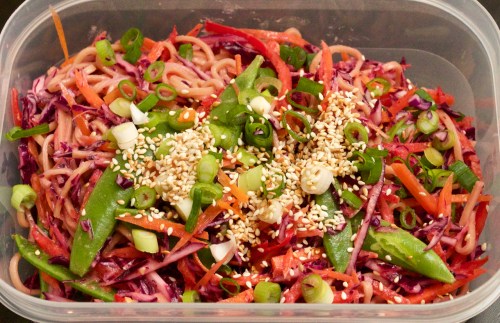
Rainbow noodle salad

A healthy salad for lunchboxes and a good use for red cabbage which always seem impossible to get through. If you have a mandolin it will make short work of shredding the vegetables.

Rainbow Veg Noodle Salad – serves 2

  • 50g medium egg noodles
  • sesame oil
  • juice of ½ a lime
  • 1 tbsp peanut butter
  • 1 tbsp rice wine vinegar
  • 1 carrot, peeled and julienned
  • ½ a red pepper, thinly sliced
  • ¼ of a small red cabbage, thinly sliced
  • 50g sugar snap peas
  • 1 scallion, sliced
  • 1 tsp toasted sesame seeds

Cook the noodles according to the instructions on the packet, then rinse under cold water and drain well.

Whisk 2 tsp of the sesame oil, the lime juice, peanut butter and rice wine vinegar together in a large bowl. Add a splash of boiling water if the dressing appears too thick.

Add the noodles, carrot, pepper, cabbage and sugar snaps and toss to coat.

Divide between 2 containers and scatter with the scallion and sesame seeds.

(Original recipe from BBC Olive Magazine, February, 2014.)


Read Full Post »

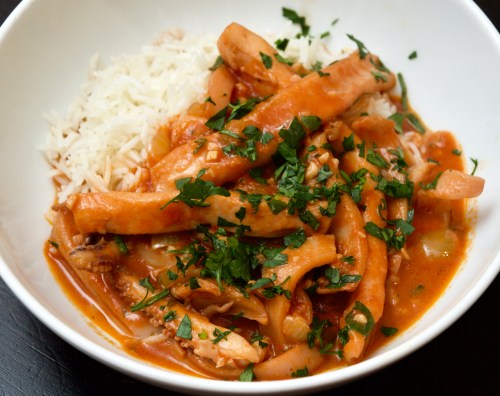
Slow cooked squid in brandy and cream

This is cooked quick and hot, then low and slow. A bit disconcerting if you’re used to cooking squid quickly to avoid the rubber band effect but have faith, the result is tender squid in a rice sauce.

Wine Suggestion: This went perfectly with a Bodegas Tradición dry Oloroso VORS whose very refined character plus muscle and body stood up to the rich brandy, cream and tomato flavour, while the deep nutty flavours complimented the squid. A dry, smooth and round wine with a gentle and persistent texture.

Squid with Brandy & Cream – serves 4

  • 50g butter
  • 1 large onion, finely diced
  • 3 thyme sprigs, leaves stripped
  • 2 bay leaves
  • 6 garlic loaves, chopped
  • 300ml passata
  • 1kg cleaned large squid
  • sunflower oil
  • 125ml brandy
  • 4 tbsp double cream
  • flat-leaf parsley, finely chopped (to serve)

Melt the butter in a casserole dish, then add the onion, thyme and bay leaves with plenty of black pepper. Fry gently for about 15 minutes or until the onion is soft and golden. Stir in the garlic. Turn the heat off and stir in the passata, then leave to stand while you fry the squid.

Cut the squid in half lengthways, then chop each half widthways into ribbons. Cut the fins and tentacles to a similar size. Dry the squid well with paper towels.

Put a large frying pan over a high heat and wait until it get smoking hot. Add a glug of sunflower oil and about a third of the squid with a good pinch of salt. Fry hard, stirring occasionally, until well coloured. Repeat until all the squid has been browned. Put each batch into the casserole dish with the tomato sauce.

Put the casserole back over the heat and add 100ml water. Stir well and bring to a simmer. Add 100ml of brandy and put the lid back on. Simmer very gently for 40 minutes, then a further 20 minutes with lid ajar so the juice reduces a little. When the squid is tender stir in the rest of the brandy and the cream. Serve with chopped parsley sprinkled over.

(Original recipe by Valentine Warner in BBC Good Food Magazine, March 2010.)


Good Food March 2010

Read Full Post »

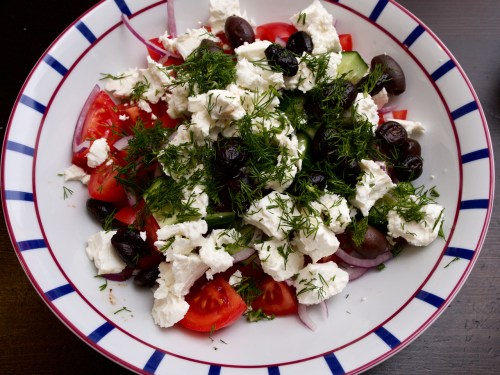
Greek salad

Perfect with many Greek dishes, but none mores than barbecued lamb cutlets or kebabs/souvlaki. You could also serve it as as starter with some crusty bread. A very popular salad in our house when the days get warmer. In fact, we blogged it here a few years ago and it’s still a firm favourite.

Greek Salad – serves 4

  • 450g ripe tomatoes
  • ½ a cucumber
  • 1 red onion (we only use half an onion)
  • 200g Greek feta cheese
  • 4½ tbsp extra virgin olive oil
  • 1 tbsp red wine vinegar
  • 1 tsp ouzo/Pernod
  • 2 tbsp chopped dill
  • 20 small black olives
  • large pinch of dried oregano – Greek if you can find it

Cut the tomatoes into chunky pieces and cut the cucumber in half lengthways and then across into thick slices. Slice the red onion as thinly as possible (a mandolin is good for this if you have one). Crumble the feta into chunky pieces.

To make the dressing whisk the olive oil, ½ tsp salt, the red wine vinegar, ouzo/Pernod and some black pepper in a large salad bowl. Add the tomatoes, cucumber and onions and toss gently. Add the feta, dill and olives and mix briefly.

Drizzle with more olive oil, sprinkle with the dried oregano and some coarsely ground black pepper.

(Original recipe from Rick Stein’s Mediterranean Escapes, BBC Books, 2007.)

Read Full Post »

Pesto Lasagne

A really quick and easy lasagne full of Spring flavours. You don’t have to buy fresh pesto from the fridge as this tends to be more oily and makes this dish very rich; we successfully used a jar from a shelf instead.

Wine suggestion: A grassy European styled Sauvignon Blanc which tends to have a longer, if cooler, growing season is a good match. Avoid the big flavoured Sauvignon’s with the kiwi / tinned asparagus flavours that you might typically find from NZ and Chile as these flavours clash a bit. Exceptions to this always exist like the Dog Point Marlborough Sauvignon, but a good Touraine or Sancerre would be our match.

Pesto Lasagne – serves 4 to 6

  • 190g jar of pesto
  • 500g tub mascarpone
  • 200g bag spinach, roughly chopped
  • 250g frozen peas
  • small pack of basil
  • small pack of mint
  • 12 fresh lasagne sheets
  • 85g Parmesan, finely grated
  • 50g pine nuts
  • Green salad & garlic bread to serve

Heat the oven to 180C/160 fan/gas 4.

Put the pesto, half the mascarpone and 250ml vegetable stock in a saucepan. Heat, stirring, until smooth and bubbling. Add the spinach and peas and cook for another few minutes until the spinach has wilted and the peas have defrosted. Add the herbs and season but go easy with the salt.

Put a third of this pesto mixture into the base of a baking dish (approx. 18 x 25cm). Top with 4 lasagne sheets, then repeat with 2 more layers of sauce and lasagne sheets, finishing with a layer of pasta. Mix some milk into the remaining mascarpone to make a sauce consistency, season then pour over the top of the dish. Sprinkle with the Parmesan and pine nuts, then bake for 35-40 minutes or until brown on the top and bubbling. Scatter over a few basil leaves before serving.

(Original recipe from BBC Good Food Magazine, February 2014.)

Read Full Post »

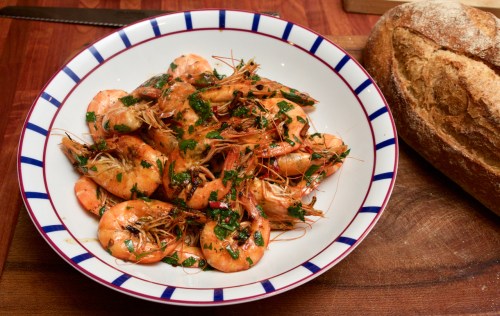
Buttery chilli prawns

Prawns in their shells are more often a holiday treat for us but they’re so easy to do and it’s nice to eat dinner with your hands. Finger bowls of warm water and lemon slices are useful – or you could lick them 😉

Wine Suggestion: If you are serving this as a special treat for two then go for a good pink sparkling. We had this as on a Friday night and luckily had a half-bottle of Billecart Salmon Rosé champagne which turned it into an extra special evening. On nights when this isn’t an option you should find a good Fiano, Verdicchio or Alvarinho.

Buttery Chilli Prawns – serves 2

  • 25g butter
  • 2 tbsp olive oil
  • 3 garlic cloves, finely chopped
  • 1 red chilli, finely chopped (leave the seeds in)
  • ½ tsp sweet paprika
  • 12-20 large raw ing prawns with shells (12 should be enough for a starter for 2, for a main course about 20 is better)
  • 1 lemon, juiced (plus a few extra slices for finger bowls if using)
  • ½ a small bunch of parsley, roughly chopped
  • crusty bread – warm it in the oven before serving

Melt the butter & oil in a frying pan. Add the garlic, chilli and paprika and cook for a coupled of minutes or until golden. Turn up the heat and throw in the prawns. Fry for a few minutes until they turn pink, don’t be tempted to cook them for any longer. Take the pan off the heat, season and stir in the lemon juice & parsley.

Serve with warm crusty bread for wiping the bowl.

(Original recipe from BBC Good Food)


Read Full Post »

Feta salad with spinach, crispbread, sumac & pinenuts

Another success from Sam & Sam Clark of Moro. Great textures and interesting flavours. Works as a starter or a side with grilled meat.

Feta salad with spinach, crispbread, sumac & pinenuts – serves 4

  • 500g young spinach, washed and dried (in a salad spinner ideally)
  • 200g good-quality feta cheese, crumbled
  • 1 dessertspoon fresh oregano or marjoram leaves
  • 75g pinenuts, very lightly toasted
  • 25g butter
  • 2 pitta breads
  • ½ garlic clove, crushed to a paste with salt
  • 1 tbsp good-quality red wine vinegar
  • 2 tsp sumac
  • 4 tbsp extra virgin olive oil
  • sea salt and black pepper

Preheat the oven to 180C/350F/Gas 4.

Melt the butter. Split the pitta in half lengthways and brush the melted butter on both sides. Put the pittas on a rack in the middle of the oven and bake for 10-15 minutes or until golden brown. Remove and cool.

Whisk the garlic, red wine vinegar, sumac, olive oil together to make a dressing. Season to taste with the salt and pepper.

Put the spinach, roughly broken crispbread, half the feta cheese, the oregano/marjoram and pinenuts into a large bowl. Pour over most of the dressing and toss together. Serve with the rest of the feta and dressing on top.

(Original recipe from Moro: the cookbook by Sam & Sam Clark, Ebury Press, 2001.)

Read Full Post »

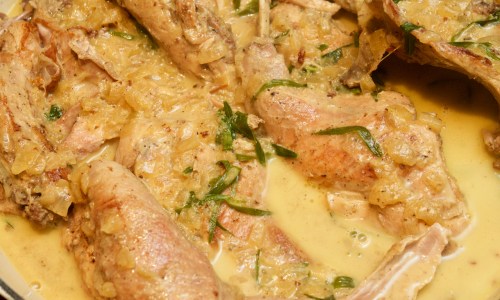
Rabbit with tarragon & mustard

Jono’s birthday treat this year was a rabbit, which we ate. Orlaith (the 3 year old in the house) also ate it despite being very attached to her favourite fluffy ‘Bunny’.  If you’re nervous about rabbit don’t be, the flavour is really good and not too gamey. We highly recommend this mustard & tarragon sauce too.

Wine Suggestion: A classic French dish needed a classic French wine to go with it. Our choice was a favourite, the Patrick Javillier Bourgogne Blanc Cuvée Oligocene, in reality a good Meursault. Well worth seeking out.

Rabbit with Mustard & Tarragon – serves 3-4

  • 1.5kg rabbit joints
  • 25g unsalted butter
  • 1 onion, finely chopped
  • 500ml chicken stock
  • 100ml double cream
  • 4 tsp Dijon mustard
  • a good squeeze of lemon juice
  • leaves from 8 springs of tarragon

Season the rabbit joints with salt and pepper.

Heat the butter in a deep frying pan and brown the rabbit pieces, then remove from the pan and set aside. Cook the onion in the same pan until soft and golden. Add the stock, bring to the boil, then reduce to a gentle simmer and return the rabbit pieces to the pan. Simmer very gently, covered, for 1.5-2 hours or until tender and still moist.

Take the rabbit back out of the pan, put into a warm dish and cover. Add the cream to the stock and reduce by about half. Add the mustard, lemon juice and half the tarragon. Reduce again until the sauce is the consistency of single cream but be careful the sauce doesn’t reduce too much and become sticky and salty.

Return the rabbit to the sauce to heat through and add the rest of the tarragon just before serving.

(Original recipe from Food from Plenty by Diana Henry, Mitchell Beazley, 2010.)

Read Full Post »

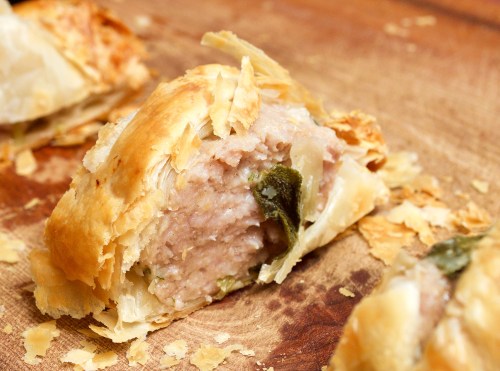
Sausage & sage rolls

When it is done right a sausage roll can be a real treat, but too often they’re a bit disappointing. This is usually due to grey pastry and cheap sausage meat stuffing but this is easily remedied by making your own. They’re just the trick if you’ve overindulged the night before.

Wine suggestion: if you feel like wine make it an easy, juicy and inexpensive new world shiraz like the Beelgara Estate Shiraz from the Riverland in Australia. Satisfying and flavoursome but uncomplicated and fruity.

Sausage & Sage Rolls – makes 8

  • ready-rolled puff pastry sheet
  • 6 good quality sausages
  • sage leaves (optional)
  • milk

Heat the oven to 200C/fan 180C/gas 6.

Gently split the sausage skins with a sharp knife and remove. They should come off very easily in one piece. Squeeze the skinned sausages together with your hands to form a fat log.

Unroll the pastry sheet and place the sausage meat lengthways down the centre of one side. Lay a few sage leaves on top if you like. Brush the edges of the pastry with milk, then fold over the sausagemeat and seal the edge. Cut slashes along the top of the sausage roll with a sharp knife.

Bake for about 30 minutes or until golden brown. Cut into slices to serve.


Read Full Post »

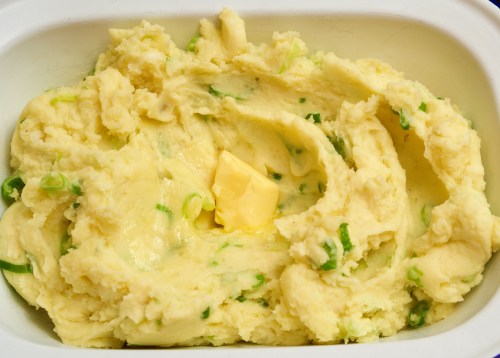
Champ

This is how Julie’s Granny served champ, with a great big lump of Irish butter in the middle!

Irish Champ – serves 4 as a side or 2 on it’s own

  • 700g potatoes – it helps if they are roughly the same size
  • salt and white pepper (no black pepper please)
  • 6 tbsp milk
  • 4 scallions, finely chopped
  • 50g butter (plus extra to serve)

Put the potatoes (unpeeled) in a pot and cover with cold water and a good pinch of salt. Bring to the boil, then simmer until completely tender (usually about 20 minutes but keep checking and don’t let them go to mush).

Heat the milk with the scallions for about 5 minutes.

Drain the potatoes and peel while still hot. If you have a potato ricer you could use that but we tend to use a standard masher.

Beat the butter into the mashed potato with a wooden spoon, then stir in the warm milk and scallions. Season well with salt and white pepper.

Serve the potatoes in a warm bowl. Make a dip in the middle with the back of a spoon and add a lump of good quality (preferably Irish) salted butter.


Read Full Post »

Beef & black bean chilli

We’re forever trying new chillies and this one has become the current favourite. Great for feeding a crowd and it tastes even better if cooked the night before. It’s also worth using dried black beans though you have to soak them overnight. If you’re using tinned beans make sure you buy Mexican black beans rather than fermented black beans used in Chinese dishes.

Wine Suggestion: an easy choice here, juicy and red. We chose a Primitivo from Puglia in Italy, the Biancardi Ponteviro which had a wonderful depth of brambly fruit and a hint of menthol freshness. A really good Zinfandel from California (Ridge I’m looking at you, but there are a number of others) would be a good alternative if that’s easier as it’s the same grape.

Chunky Beef & Black Bean Chilli – serves 6

  • 200g dried black beans, soaked overnight
  • olive oil
  • 2 large onions, chopped
  • 3 cloves of garlic, crushed
  • 2 green chillies, seeded and finely chopped
  • 750g beef shin, trimmed and cubed
  • 3 tbsp tomato purée
  • 2-3 tbsp chipotle paste/chipotle chillies in adobo sauce
  • 1 tsp ground cumin
  • 1 tsp chilli powder
  • 1 cinnamon stick
  • ½ tsp dried oregano
  • 500ml beef stock
  • 2 tbsp malt vinegar
  • 2 tbsp dark brown sugar
  • 2 x 400g tins of cherry tomatoes
  • sour cream (to serve)
  • tortilla chips (to serve)
  • cooked basmati rice (to serve)

FOR THE GUACAMOLE:

  • 2 avocados, peeled & stoned
  • 1 small red onion, finely chopped
  • 1 red chilli, finely chopped
  • a good pinch of ground cumin
  • 2 limes, juiced
  • a handful of coriander, chopped

Put the soaked pans into a saucepan and cover with cold water. Bring to a fast boil and cook for 30 minutes. Drain & rinse.

Heat 2 tbsp olive oil in a wide casserole dish, add the onions and cook until soft and golden. Add the garlic and chilli and keep cooking for another minute, then scoop out onto a plate.

Heat another tbsp of oil in the same dish and use to brown the meat in batches. When all the meat is browned put it all back into the dish and add the onion mixture, the tomato purée, chipotle paste, spiced and dried oregano. Cook for a minute, then add the stock, vinegar, sugar and tined tomatoes. Season, stir well and bring to the boil. Reduce the heat to a very gentle simmer, cover with a tight lid and continue to cook for 2½-3 hours or until  the meat is very tender.

To make the guacamole, mash the ingredients roughly together with a generous pinch of salt.

Serve the chilli with the guacamole, sour cream, tortilla chips and basmati rice.

(Original recipe by Janine Ratcliffe in BBC Olive Magazine, October 2013.)

Read Full Post »

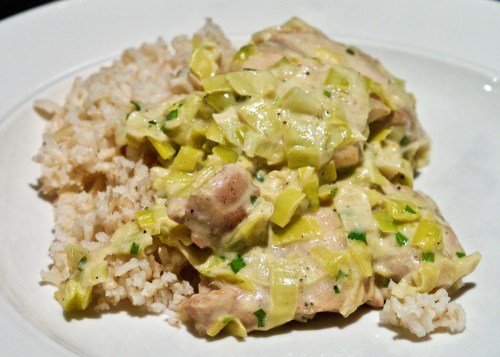
Braised chicken with mustard & leeks

Another suggestion for using up a leek. Chicken, mustard and leeks are natural friends and make for a delicious mid-week dinner.

Wine suggestion: choose a classic pairing with this and go for a Chardonnay. Your choice of which one but both simple and unoaked or sophisticated and expensive white burgundy will work.

Braised chicken with mustard & leeks – serves 2

  • olive oil
  • 4 chicken thigh fillets
  • 1 leek, chopped
  • 100ml white wine/chicken stock
  • 1 tbsp Dijon mustard
  • 3 tbsp double cream
  • 1 tbsp chopped tarragon

Heat a splash of oil in a wide, deep frying pan and cook the chicken thigh fillets until golden on both sides.

Add the leek to the pan and cook until softened.

Add the wine or stock, then cover and simmer for 5 minutes.

Stir in the Dijon mustard and double cream and continue to simmer with the lid off until slightly thickened.

Stir through the chopped tarragon, season to taste and serve with either some steamed rice or mashed potatoes.

(Original recipe from BBC Olive Magazine, January 2015.)

Read Full Post »

Cheesy leek baked potatoes

We’re regularly left with a rogue leek in the bottom of the fridge and it usually finds its way into a dish like this, particularly if there is some cream lurking as well. Quantities don’t matter too much here so use what you’ve got.

  • Baking potatoes
  • Butter
  • Leeks, sliced finely
  • Cream
  • Cheddar cheese, grated

Heat the oven to 220°C.

Rub the potatoes with olive oil and place on a tray in the oven to bake for 20 minutes. Turn the oven down to 200ºC and continue to cook for about another hour.

Meanwhile, melt the butter in a large frying pan and gently sauté the leeks until they are meltingly tender. Add the cream and bubble together until you have a thick sauce.

When the potatoes are soft, cut them in half and scoop out the centres, leaving a thin layer of potato on the skins. Mash the removed potato, mix with the creamy leeks and season with salt and lots of pepper. Pile this mixture back into the potato skins and sprinkle over the grated cheese. Return to the oven for a few minutes until the cheese has melted and started to brown.

Serve this on its own for a midweek supper or as a side dish with chargrilled chops or sausages.

Read Full Post »

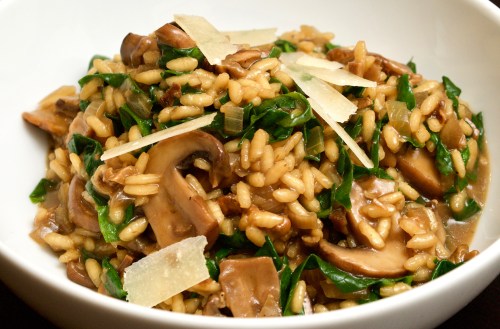
Porcini & spinach risottoWe love a good risotto and this simple one doesn’t disappoint. Perfect cold weather comfort food.
Wine Suggestion: as this is a richer flavoured mushroom dish our first choice would be to head to a Nebbiolo, especially a good Barolo. With the addition of the spinach which has a fresh, iron bitterness we would swing back to a full-bodied white and go for a good Alsace Pinot Gris. The depth of flavour of this dish can balance a really intense Pinot Gris like one from Zind- Humbrecht, which sometimes can be edgy and a bit much for many foods. This one can handle it so push the boat out for flavour and enjoy.

As we had this as a weeknight treat, however, we found that a more humbleVilla Wolf Pinot Gris from the Pfalz also worked.

Porcini & spinach risotto – serves 2

  • 25g dried porcini mushrooms
  • 50g butter
  • 1 small onion, finely chopped
  • 1 garlic clove, crushed
  • 200g chestnut mushrooms, sliced
  • 150g risotto rice
  • a glass of white wine
  • 750ml veg stock, simmering (we use Marigold Swiss Bouillon powder)
  • 100g spinach, washed & chopped
  • parmesan shavings

Soak the porcini mushrooms in a cup of boiling water for 10 minutes. Strain the liquid through a sieve to remove any gritty bits and keep for later. Roughly chop the porcini.

Heat the butter in a wide shallow pan and cook the onion and garlic until softened. Add the chestnut mushrooms and cook for 5 minutes, then add the porcini and risotto rice and stir until coated.

Pour in the wine and bubble until it has been absorbed by the rice. Gradually add the stock and porcini soaking liquid, stirring until the rice is al dente (you may not need all of the stock). Stir through the spinach until just wilted and serve sprinkled with shavings of parmesan.

(Original recipe by Janine Ratcliffe in BBC Olive Magazine, February 2009.)

Read Full Post »

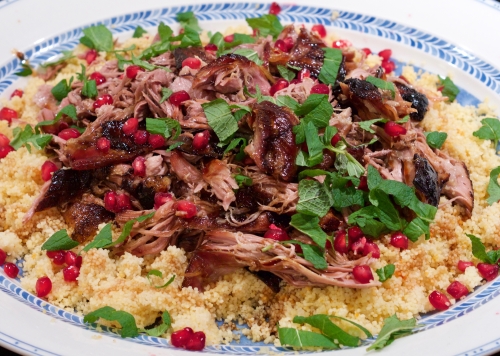
Pomegranate & slow cooked lamb couscous

This makes such a lovely weekend dish and looks really attractive served on a large platter in the middle of the table. It requires a few hours in the oven but is hardly any work at all and uses just a few ingredients.

Wine Suggestion: this dish cries out for a Moorish influenced wine and nothing quite achieves this more than a Spanish Tempranillo. Our choice of the evening was the Carmelo Rodero Ribera del Duero Crianza which is juicy, powerful and also manages to achieve a perfumed elegance with exotic eastern spice hints.

Pomegranate & slow cooked lamb couscous – serves 6

  • 2kg lamb shoulder (or get your butcher to give you a forequarter if the lambs are small)
  • 1 onion, sliced
  • 1 tbsp pomegranate molasses, plus extra to serve
  • 300g couscous
  • butter
  • 1 tsp harissa
  • a small bunch of mint, leaves roughly chopped
  • seeds from 1 pomegranate

Heat the oven to 190C/fan 170C/gas 5.

Put the lamb into a roasting tin with the fatty side facing up. Scatter the onion around the lamb. Score the lamb with a sharp knife and rub in the pomegranate molasses with your hands. Season well. Add 2 mugs of water to the tin, then cover with foil and roast for 4 hours. Rest for 15 minutes before pulling chunks of the lamb off the bone with 2 forks.

While the lamb is resting, put the couscous into a large bowl with a large knob of butter, the harissa and seasoning, then add enough boiling water to just cover. Cover the bowl with cling film and leave for 5 minutes before fluffing the grains gently with a fork. Put the couscous onto a platter and arrange the shredded lamb on top. Pour off any fat from the roasting tin and pour the juices over the lamb and couscous plus a little more molasses. Scatter with the mint and pomegranate seeds.

(Original recipe by Lulu Grimes IN: BBC Olive Magazine, February 2014.)

Read Full Post »

Winter vegetable and bean soup with Kabanossi

A really nice soup with or without the Kabanossi sausage (so you can leave this out if you like) though it does add an extra layer of  smoky flavour. Most supermarkets stock Kabanossi sausages near the salami and other dried sausages.

Winter vegetable & bean soup with Kabanossi sausage – serves 8 to 9 (freezes well)

  • 225g rindless streaky bacon, chopped
  • 2 tbsp olive oil
  • 225g onions, chopped
  • 275g carrot, cut into 5mm dice
  • 125g parsnips, cut into 5mm dice
  • 200g white part of 1 leek, cut into 5mm slices
  • 1 Kabanossi sausage (optional), cut into 5mm slices
  • 1 x 400g tin of good-quality tomatoes (Italian brands are good)
  • 225g haricot beans, soaked and cooked (see note at end)
  • 1.8 litres home-make chicken stock
  • 2 tbsp chopped flat-leaf parsley

Blanch the bacon, refresh and dry well with paper towels. (To do this y0u need to cover with cold water, then bring to the boil and simmer for a few minutes before draining into a sieve and rinsing with cold water. This process removes some of the saltiness.)

Put a large saucepan over a medium heat and warm the olive oil. Add the bacon and sauté until crisp and golden, then add the onion, carrots and celery. Cover the pan and sweat for 5 minutes, then add the parsnip and leeks. Cover again and continue to sweat for another 5 minutes.

If you are using the Kabanossi sausage add it now. Chop the tomatoes roughly in the tin and add to the vegetables with the cooked beans. Season with salt, pepper and sugar, then add the stock. Simmer for about 20 minutes or until all the vegetables are cooked. Taste and adjust the seasoning.

Sprinkle with chopped parsley and serve with lots of brown bread & butter.

To prepare the haricot beans

Soak the beans overnight in plenty of cold water. Drain the beans and cover with fresh cold water, add a bouquet garni (a bay leaf, sprig of parsley & spring of thyme tied with string), a carrot and an onion, then cover and simmer until the beans are soft. This will take between 30 minutes and 1 hour depending on the age of your beans. It’s important to check them often and stop cooking before they turn mushy. Season with salt when the beans are almost cooked. Drain and discard the vegetable and bouquet garni.

(Original recipe from Darina Allen’s Ballymaloe Cookery Course, Kyle Cathie Ltd., 2001.)

Read Full Post »

Roast Guinea Fowl with sage and lemon mash

Our butcher had some guinea fowl on the counter and February is the month for a two person dish. This 1.2 kg bird gave enough for two people plus delicious sandwiches the following day.  Guinea fowl tastes like really flavoursome chicken so a good way to try out game birds with tastes that aren’t too unfamiliar. Don’t worry too much about the size of your bird, just follow the usual timings for roast chicken.

Wine suggestion: if you’d like a white wine seek out the Sartarelli Verdicchio Superiore Tralivio or for a red an earthy Pinot Noir like the Sylvain Loichet Cotes du Nuits Villages. Neither will disappoint.

Roast guinea fowl with sage & lemon mash – serves 2

  • 1 small guinea fowl, about 1kg
  • 1 onion, thickly sliced with the skin left on
  • ½ a small bunch of sage
  • 75g softened butter
  • 1 small lemon, zested
  • 6 rashers of streaky bacon
  • 2 tbsp plain flour
  • 350ml strong chicken stock
  • 350g floury potatoes peeled and cut in to large chunks
  • 2-3 tbsp cream/milk
  • 2 handfuls of watercress to serve

Heat the oven to 200C/180C fan/gas 6.

Put the onion in the bottom of a small roasting tin that will fit the guinea fowl snugly. Finely chop 5 sage leaves and mix with 50g of the butter, the lemon zest and seasoning. Push some of the butter mixture under the skin of the bird, then rub the rest all over. Stretch the bacon strips over the breast, then halve the zested lemon and put inside the cavity with the remaining sage. Place the bird on top of the onions and roast for 15 minutes.

Lower the oven temperature to 180C/160C fan/gas 4 and continue to roast for another 35-45 minutes or longer if your bird is bigger than 1kg. Check the bird is cooked by piercing the inside of the thigh and making sure the juices are clear.

Meanwhile, boil the potatoes until tender, then drain and mash with the remaining butter and a splash of milk/cream.

Lift the bird onto a platter and keep warm. Scoop the lemon halves from the cavity and keep aside. Pour the roasting juice into a jug and leave to settle, the fat will rise to the top. Spoon 1 tbsp of the fat back into the tin. Put the tin over a low heat and stir in the flour. Gradually add the stock and any meat juices (discard the extra fat from the jug). Mash some of the reserved lemon pulp into the mash with some salt and pepper.

Carve the bird and serve with the lemon mash, gravy and watercress.

(Original recipe from BBC Olive Magazine, February 2014.)


Roast Guinea Fowl with sage and lemon mash 2


Read Full Post »

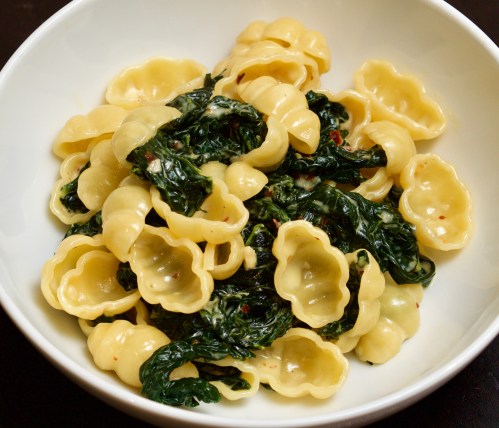
Conchiglie al Cavolo Nero

We’ve made this a couple times recently as  Cavolo Nero is around and we keep on being drawn to it. Especially as we’re starting to tire of root veg and looking forward to all the treats that will come with Spring.

The dish is  creamy and cheesy, with load of garlic and iron rich Cavolo Nero. Fairly rich for a main course in our opinion but absolutely perfect served in small starter portions.

If it suits you can blanch and dry the Cavolo nero and make the garlic puree in advance which leaves very little to do to get the dish on the table.

Wine suggestion: An old favourite came to the rescue here in the form of the Sartarelli Verdicchio dei Castelli di Jesi Classico Superiore “Tralivio” which has a great weight but also a freshness and vibrant texture. The flavour of the food isn’t shy, so make sure whatever you choose has enough body to cope.

Conchiglie al Cavolo Nero – serves 6 as a starter

  • 900g Cavolo Nero
  • 300ml double cream
  • 7 garlic cloves, peeled
  • 3 tbsp extra virgin olive oil
  • 2-3 dried chillies, crumbled or 2 tsp chilli flakes (adjust to your heat preference)
  • 150g Parmesan, freshly grated
  • 250g conchiglie or other shell-shaped pasta

Remove the central stalk from the Cavelo Nero leaves and cut each one into 3 or 4 pieces. Blanch the leaves in boiling salted water for 3 minutes by which time they should be tender and bright green. Drain and dry in a clean tea towel.

Put the double cream and 5 of the whole garlic cloves into a pan and simmer until the garlic is soft, about 15 minutes. Purée in a blender.

In a separate pan, heat the olive oil and fry the remaining 2 garlic cloves, cut into thin slices, and the chilli. When the garlic has coloured, add the blanched Cavolo Nero, stir & season. Pour in the cream and garlic purée, bring to the boil, and cook for 5 minutes until the Cavolo Nero is coated and the sauce has thickened. Add the Parmesan.

Meanwhile, cook the pasta in plenty of boiling salted water, then drain well before mixing well with the sauce.

(Original recipe from The River Cafe Cookbook by Rose Gray & Ruth Rogers, Ebury Press, 1995.)

Read Full Post »

Roast pumpkin and spinach lasagne

Making lasagne is a bit of a labour of love but if you take it in stages it can be assembled in advance and baked when you need it. Always worth the effort in our opinion. This veggie version is particularly good.

Wine Suggestion: we found the Rustenberg Chardonnay from Stellenbosch really matched this dish with it’s masterful balance of oak, fruit and freshness. This is one of South Africa’s classics and one of the best value Chardonnay’s we know. It is picked, crushed and gently settled before fermenting by itself (wild yeasts) and after gentle care in oak barrels on fine lees it is bottled. Only at this stage do they add a touch of sulphur to keep it stable in the bottle. A natural wine without the faults of other proponents of this term.

Roast Squash & Spinach Lasagne – serves 6

  • 750g butternut squash
  • 2 tbsp olive oil
  • 500g spinach, washed
  • 1 tbsp butter
  • whole nutmeg
  • 6 fresh lasagne sheets
  • 100g Parmesan, grated

FOR THE TOMATO SAUCE:

  • 1 medium onion, finely chopped
  • 1 tbsp olive oil
  • 1 celery stick, finely chopped
  • 2 garlic cloves, finely chopped
  • 400g tin cherry tomatoes
  • 2 tsp light muscovado sugar

FOR THE BECHAMEL SAUCE:

  • 500ml full-fat milk
  • 6 peppercorns
  • ½ onion
  • 1 bay leaf
  • 50g plain flour
  • 50g butter

Heat your oven to 200C/180C fan/gas 6.

Halve the squash, peel and deseed, then cut into slices about 1cm thick. Toss with the oil in a roasting tin, season well, then roast until tender and beginning to char at the edges – about 40 minutes.

Meanwhile, make the tomato sauce. Soften the onion in the oil for 5 minutes, then add the celery and garlic and cook for another minute. Add the tomatoes & sugar, then leave to simmer, uncovered, for 30 minutes or until you have a thick puree. Season.

Wash the spinach and put into a saucepan with the water that clings to the leaves. Place over a medium heat and toss for about 4 minutes or until completely wilted. Leave to cool, then squeeze as much water as you can out of the spinach with your hands. Chop and put into a pan with the butter, then gently heat and toss together so the spinach is coated in butter, season with salt, pepper and a good grating of nutmeg.

To make the bechamel, bring the milk to the boil in a pan with the peppercorns, onion and bay leaf. Set aside for 5 minutes to infuse, then strain into a clean pan. Add the flour & butter and whisk over a gentle heat until you have a thick smooth sauce.

Heat your oven again to 200C/180C fan/gas 6.

To assemble the lasagne start by buttering a baking dish – about 1.4 litres capacity. Put a layer of roasted squash in the bottom followed by a layer of tomato sauce. Place lasagne sheets on top of this, making sure they don’t overlap (you can cut them with scissors to fit your dish). Add a layer of bechamel, followed by a handful of spinach and half the grated cheese. Top with more lasagne, pumpkin, tomato sauce, more lasagne and a final layer of bechamel. Sprinkle the rest of the cheese over the top. Bake for 40 minutes or until bubbling and golden.

(Original recipe by Diana Henry in BBC Good Food Magazine, December, 2016.)


Read Full Post »

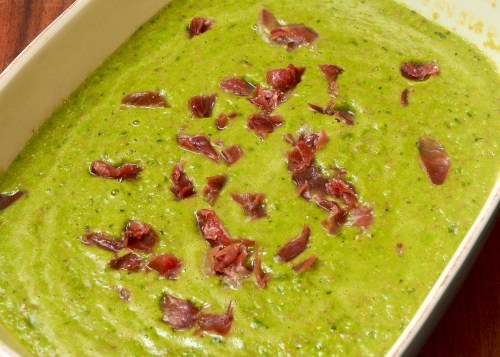
Pea soup with ham and mint

This is not your average pea and mint soup and has the most amazing sweet & salty flavour. A delicious starter to impress a few friends and very little work to prepare.

Wine Suggestion: a lighter weight red with spicy, peppery tannins was our choice, making sure it had a wonderful freshness of acidity too. We opted for a regular favourite, the unoaked Jesus Romero Rubus from Teruel in Spain. The absence of oak seemed to accentuate the “Spring” freshness of the peas and helped lift the grey, windy and damp January day.

Pea Soup with Jamón & Mint – serves 4

  • 4 tbsp olive oil
  • ½ medium onion, finely chopped
  • 1 medium carrot, finely chopped
  • 2 fresh bay leaves
  • 2 cloves of garlic, thinly sliced
  • 150g jamón serrano (Spanish cured ham), finely chopped
  • a small bunch of mint, roughly chopped
  • 500g podded peas (frozen are fine)
  • 1 litre chicken stock (it’s worth using home-made for this recipe)

Heat the olive oil in a large saucepan over a medium heat. Add the onion and cook until soft and golden, then add the carrot and bay leaves.  Fry for another 5 minutes, then add the garlic, two-thirds of the jamón and half the mint. Fry for another minute or so before adding the peas. Cook for a couple of minutes, then add the stock and simmer gently until the peas or tender, 2-3 minutes.

Remove the pan from the heat and liquidise until smooth. Return the soup to the pot, season with salt and pepper and add the reserved mint. Serve with the rest of the jamón on top and drizzle with olive oil.

(Original recipe from The Moro Cookbook by Sam & Sam Clark, Ebury Press, 2001.)


Read Full Post »

« Newer Posts - Older Posts »