Feeds:
Posts
Comments

Posts Tagged ‘Gluten-free’

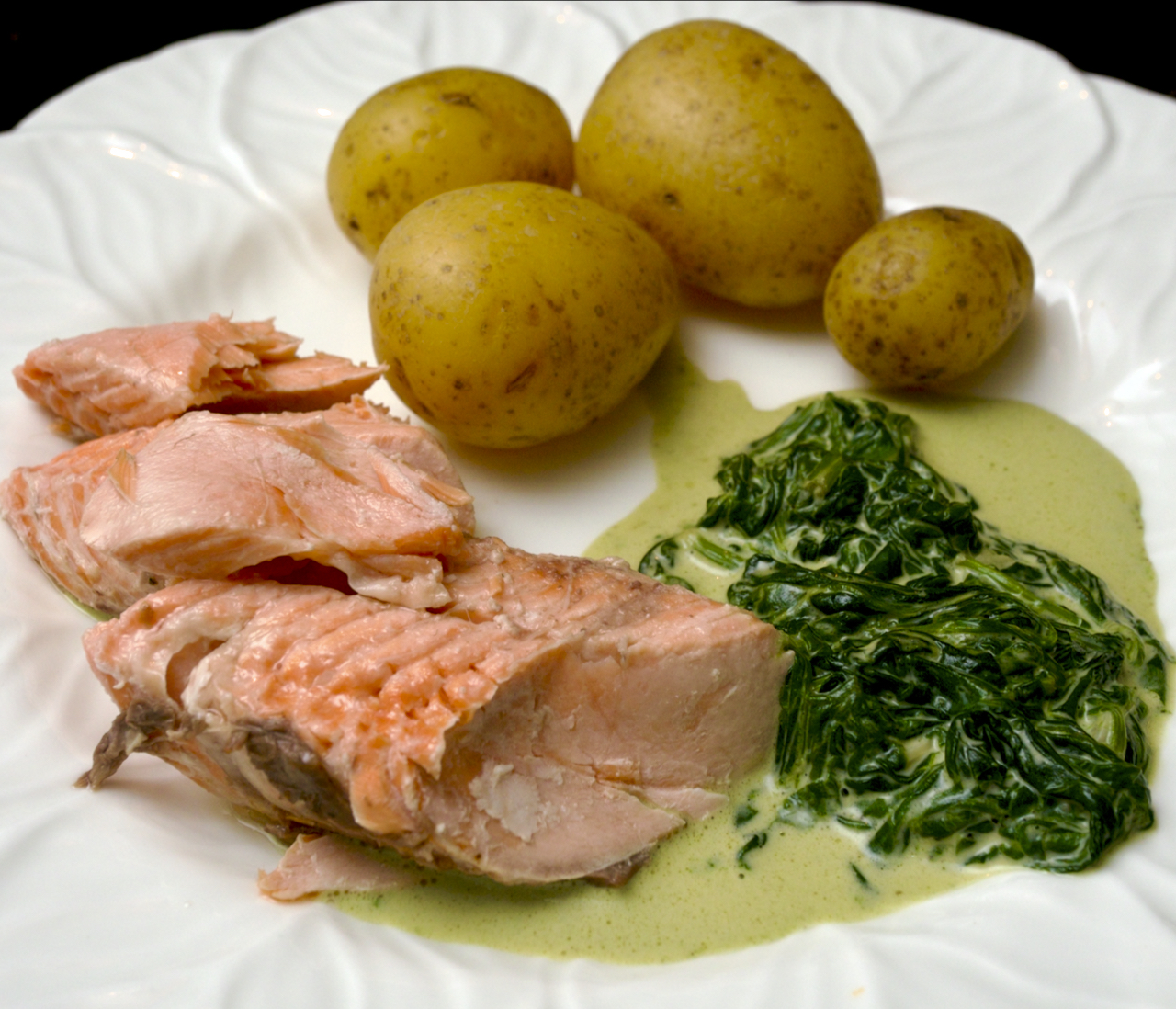
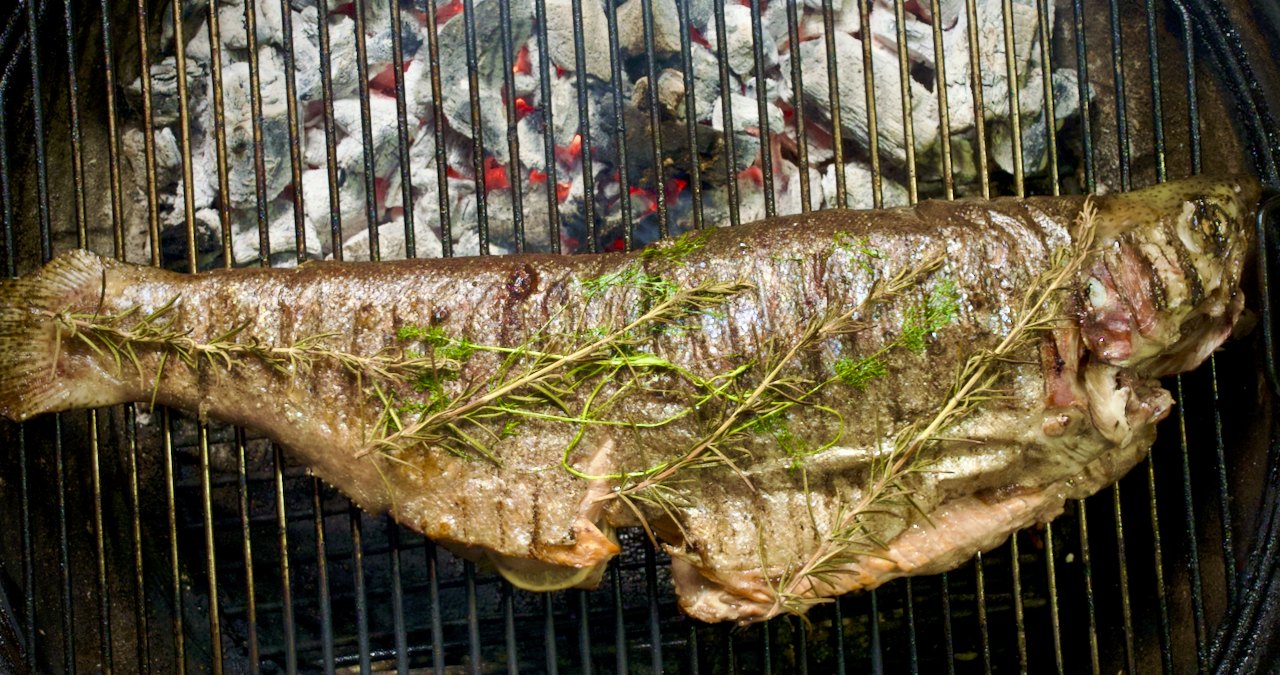
This recipe works well using fillets that have been grilled with fennel seeds and a bit of dill rubbed into the oiled sides before putting on the barbecue. However as we had a whole fish we adapted cooked it whole with some rosemary and lemon. Either way it’s handy to have a temperature probe to make sure the fish is up to 60C and therefore cooked. You can of course pop a pan on your hot barbecue and cook the spinach on there too, we usually cook the sauce indoors.

Serve with steamed, waxy (or baby) potatoes. And a big shout-out to Goatsbridge trout farm for the magnificent fish we bought online from them; superb!

Wine suggestion: Oaky Chardonnay all the way with this, so choose what ever is best in your local wine merchant.

BBQ trout with spinach & cream, serves 4 (depending on the size of the fish … our left-overs lasted all week)

  • 1 large trout (1.5-2kg), scaled and gutted
  • 2 tbsp extra virgin olive oil
  • 6 bay leaves
  • 2 garlic cloves, bashed
  • 1 lemon, sliced into rounds
  • a few springs of rosemary, fennel or marjoram

For the spinach & cream:

  • a knob of butter
  • 1 garlic clove, thinly sliced
  • 250g spinach, washed and thick stalks discarded
  • 150ml double cream
  • a small pinch of freshly grated nutmeg

Take the fish out of the fridge at least an hour before you want to cook it.

Light your barbecue, you will need a gentle heat to cook the fish through. Scrub the bars of the grill with a wire brush so it’s nice and clean, then lightly oil the bars. Let the grill get really hot before you put the fish onto it so the skin doesn’t skick and crisps up.

When the barbecue is ready to cook on, rub the olive oil all over the fish and season all over with salt and pepper. Put the bay leaves, garlic and lemom slices into the fish belly. Lay the fish onto the hot grill and cook for 2 to 3 minutes – then check the underside to ensure it’s not cooking too fast or burning – if it looks ok, continue to cook for 12-15 minutes on the first side, then use a couple of spatulas to turn the fish over, don’t worry too much if the skin tears a bit. Scatter over the herbs, then cook on the other side for the same amount of time. The fish is cooked when the the flesh flakes away easily from the bone – we find a temperature probe helpful too.

Gently lift the fish off the grill and serve with buttery new potatoes and the spinach with cream below.

FOR THE SPINACH & CREAM:

Put a large frying pan over a medium-high heat and add the butter. When the butter bubbles, add the garlic and allow it to sizzle for about a minute, without colouring.

Roughly chop the spinach if needed, then stir it into the garlicky butter until it wilts right down. Add the cream, nutmeg andn plenty of salt and pepper, then stir until thickened.

(Original recipes from Outside by Gill Meller, Hardie Grant Quadrille, 2022.)

Read Full Post »

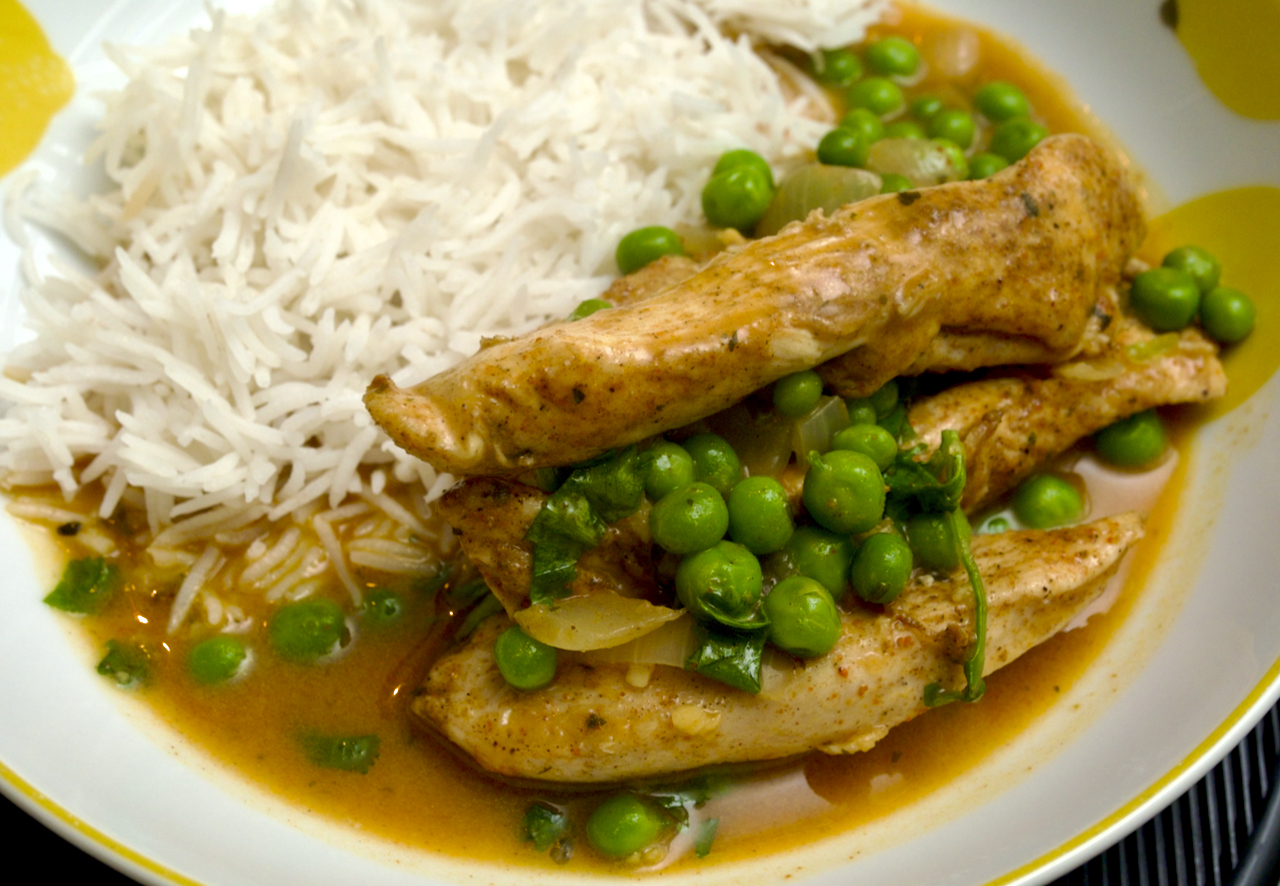
This is a very tasty curry despite the short list of ingredients. Even though it’s simple, it’s perfect for a weeknight and not too spicy for children or other sensitive palates.

Wine Suggestion: We usually find most Pinot Grigio’s a bit nondescript for our tastes, but have been exploring and enjoying a number from Trentino and Friuli recently and think they go quite well with mild curries like this. Zuani make their Sodevo Pinot Grigio in a fairly standard way, though from well tended and lower yielding vineyards. The big difference is both the soils, and keeping it on the fine lees after fermentation. Look out for this last step and you should find a wine that stands out amongst the sea of ordinary Piont Grigios.

Easiest ever chicken curry – serves 4

  • 2  tbsp vegetable oil
  • 2 cloves of garlic, crushed
  • 2 tsp finely grated ginger
  • 1 small onion, finely chopped
  • 500g chicken breasts, cut into strips
  • 2½  tbsp curry powder, plus an extra 2 tsp
  • 1 x 400ml full fat coconut milk
  • 375ml chicken stock
  • ½  tsp salt
  • 200ml frozen peas
  • a large handful of coriander, chopped

Sprinkle the chicken with the 2 extra tsp of curry powder and some salt and pepper.

Heat a splash of oil in a large, deep frying pan, the remove and set aside.

Add the rest of the vegetable oil to the pan and cook the garlic, ginger and onion over a medium-high heat for a few minutes. Add the 2½  tbsp curry powder and continue to cook for another 2 minutes.

Add the coconut milk and chicken stock to the pan, then simmer rapidly for about 20 minutes or until reduced and thickened. Add the chicken back in towards the end to cook it through.

Add the peas and salt to the curry and cook for 2 minutes, season again to taste and sprinkle over the coriander.

Serve with steamed basmati rice.

(Original recipe from RecipeTinEats)

Read Full Post »

Everyone loves a piece of barbecued chicken. This was has a tasty herb marinade.

Wine Suggestion: to hand a bottle of Domaine Gayda “Sphere” Chardonnay and we were pleased with the match. Southern French sunshine, organic vineyards, cooling mountains behind, limestone soils, wild ferment and aging on lees in a mix of concrete tanks and barrels.

Barbecued Chicken – serves 6

  • 3-4 tbsp olive oil
  • ½ tsp English mustard
  • 3 tbsp of chopped herbs – we used parsley chives and tarragon (you could also use thyme)
  • a little grated lemon zest
  • a squeeze of lemon juice
  • a small garlic clove, very finely chopped
  • 1 chicken, jointed

Combine the oil, mustard, herbs, lemon zest and juice, garlic and plenty of black pepper in a large bowl. Slash the chicken in a few places, then toss the pieces in the marinade and leave in the fridge for at least an hour or up to 4 hours.

Get your barbecue fired up.

Before cooking, pat away any excess oil, then seasson with salt. Grill on a moderately hot barbecue, turning often, until cooked through (best to use a meat thermometer and check for 74C). The breast pieces should take about 15 minutes on the hotter part of the barbecue and legs and wings on a cooler part for at least 25 minutes.

Transfer to a warm dish, sprinkle with a little more seasoning and leave to rest for 5-10 minutes before serving.

(Original recipe from River Cottage Everyday by Hugh Fearnley-Whittingstall, Bloomsbury, 2009.)

Read Full Post »

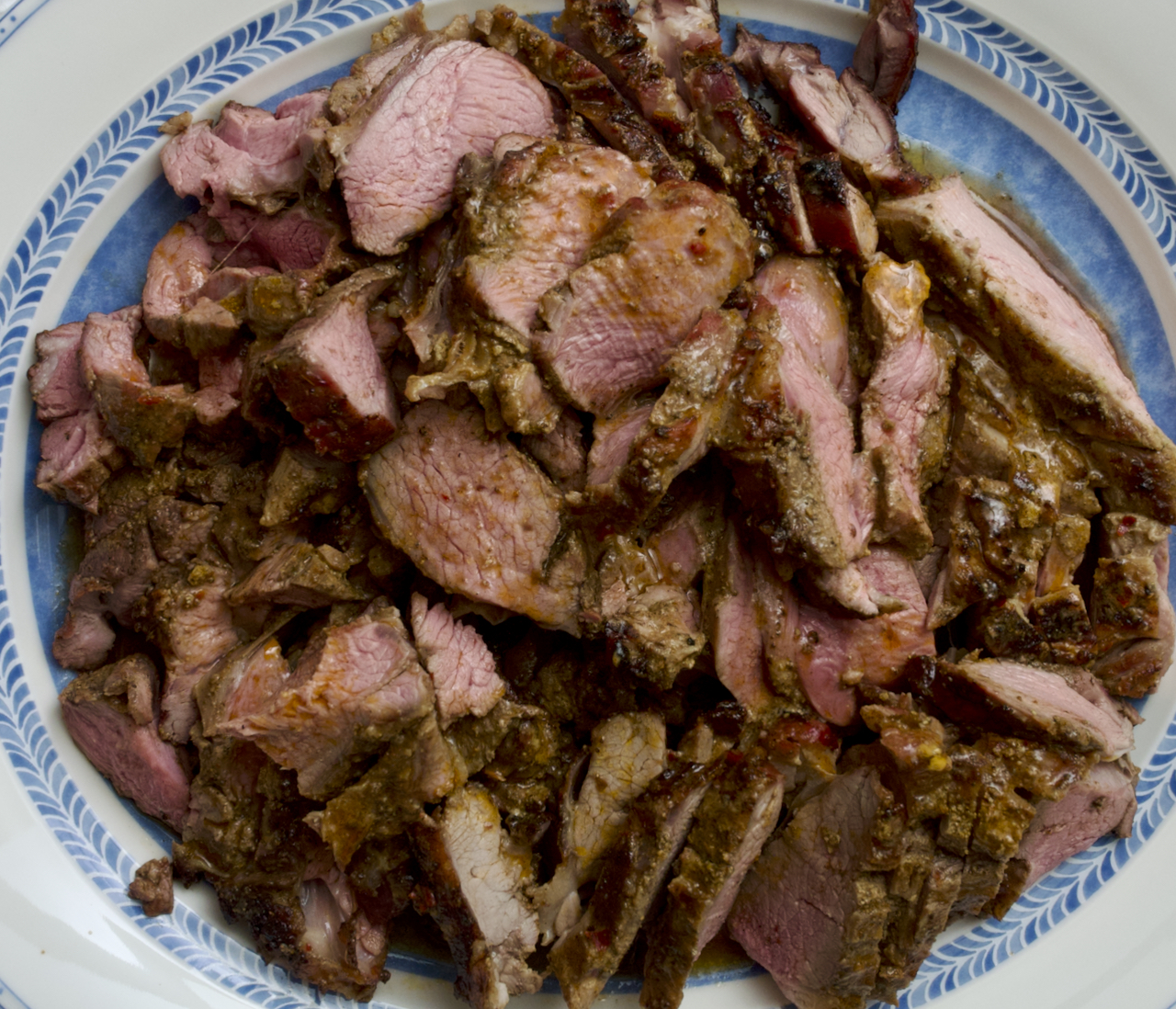
Just look at that stack of barbecued lamb … and it tasted fantastic! We can’t recommend this recipe highly enough. Served successfully with this chopped salad.

Wine Suggestion: We’re enjoying the wines from Portugal at the moment and for this chose the Quinta de la Rosa Tinto. From quite a special part of the Douro this wine has evolved over the past 30 years, ever since the winery pioneered dry Douro wines, into an elegant and sophisticated red with spices, dark fruits and a lovely minerality and freshness.

Barbecued spiced leg of lamb & harissa butter – serves 4 (or more if you get a leg of lamb the size of our one)

  • 1 tsp ground cumin
  • 1 tsp ground coriander
  • 1 tsp hot smoked paprika
  • 1 tsp sumac
  • ½ tsp ground cinnamon
  • 2 tsp ras el hanout
  • 8 tbsp Greek yoghurt
  • 1kg boneless leg of lamb, butterflied

FOR THE SPICED BUTTER:

  • 100g butter, softened
  • 1 tbsp rose harissa
  • ½ lemon, juiced
  • 1 tsp ground cumin

Make the spiced butter by mixing the butter with the harissa, lemon juice, cumin and a pinch of salt. Set aside.

Mix the spices and yoghurt with a pinch of salt and some pepper. Lay the lamb on a tray and spread the yoghurt mixture over both sides. Leave to marinate for at least 20 minutes at room temperature or chill to marinate for longer.

Get your barbecue going and wait until the coals turn ashen, then lay the lamb on the grill and cook for 15 minutes on each side for pink or longer for well done – we recommend a meat thermometer to get your barbecued meat cooked how you like it.

Lift the lamb onto a platter and spoon over the harissa butter, then leave to rest for 10-15 minutes.

Carve the lamb on a board, then serve with the butter juices spoon over.

(Original recipe by Tom Kerridge in BBC Good Food Magazine, August, 2024.)

Read Full Post »

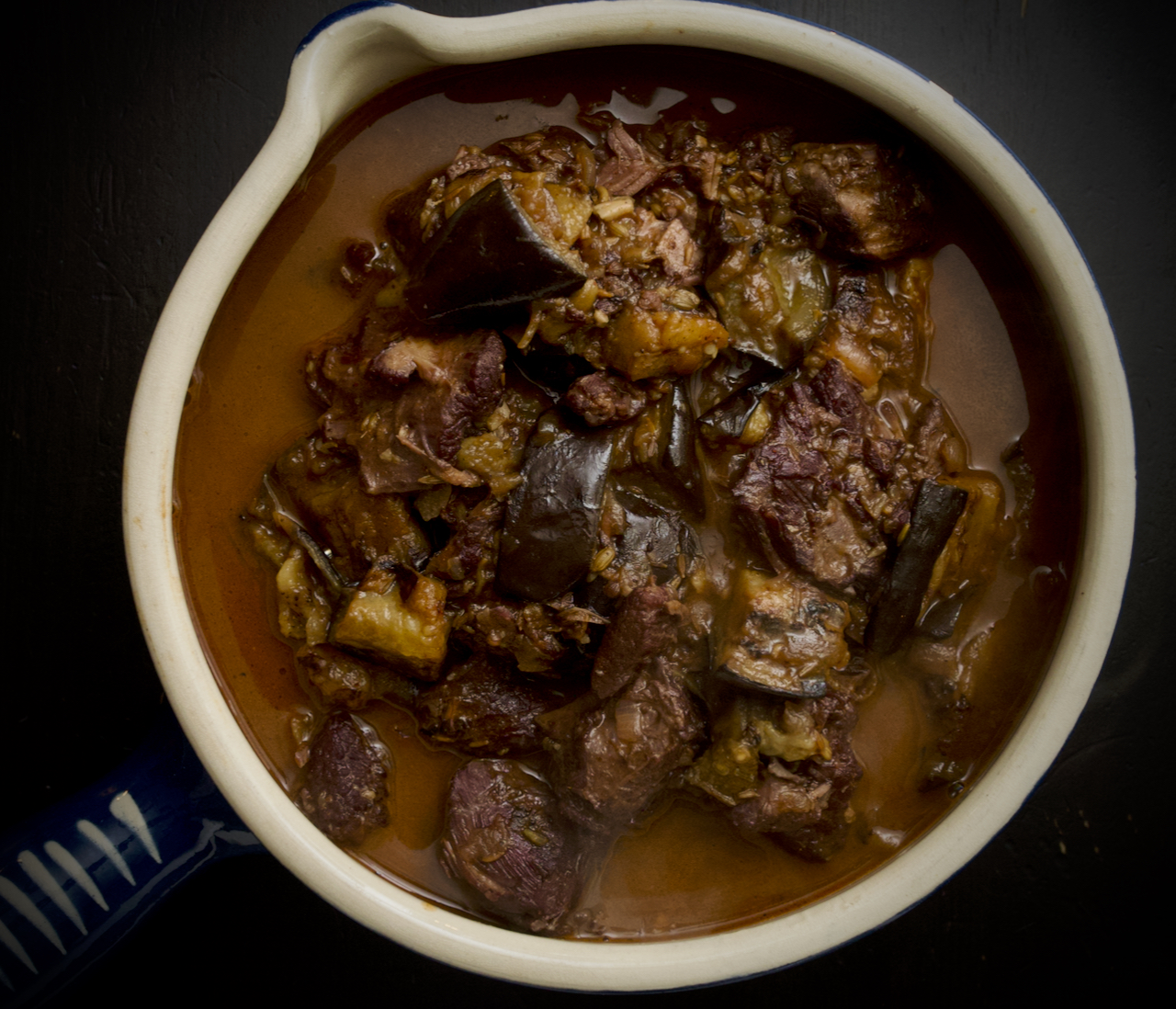
We buy the most amazing goat from a farm in Northern Ireland where they raise the kid goats not being used for milk. We think it’s such a delicious meat and so underused. After picking up a shoulder from the farm we just had to try this Spanish stew by José Pizarro and were rewarded amply.

Wine Suggestion: If you can find some, we’d suggest trying a Douro red with this dish. They’re full of flavour and usually not shy on tannins; this dish need both body and tannin to match. Pushing the boat out a bit, but as we had company and it was a weekend we opened something special, Wine & Soul’s Pintas Character red. Made from an old-vine field blend of 30 different indigenous grapes this has bags of personality, style, depth and character (excuse the pun!).

Braised goat with aubergines – serves 6

  • 5 tbsp olive oil
  • 1.5kg goat shoulder, diced into 5cm chunks
  • 1 large onion, finely sliced
  • 2 tsp cumin seeds
  • 1 tsp coriander seeds
  • 2 cloves
  • 1 heaped tsp fennel seeds
  • 2 tsp sweet smoked paprika
  • 1 garlic bulb, halved horizontally
  • 1 tbsp tomato purée
  • 450ml red wine
  • 500ml fresh chicken stock
  • 2 aubergines, cut into 3cm cubes
  • boiled potatoes or crusty bread to serve

Heat 2 tbsp of the oil in a deep casserole dish over a medium-high heat. Season the goat meat , then add to the hot pan in batches and sear until well-browned. Set aside.

Add another tbsp of oil to the pan and gently fry the onion for 10 minutes until very soft. Add the spices and garlic and cook for a couple of minutes.

Return the meat to the pan and add the tomato purée and red wine. Let it bubble up for a few minutes, then add the stock. Cover and bring to the boil, then turn the heat down low and cook gently for 2½ -3 hours.

Heat 2 tbsp of oil in a large frying pan and brown the aubergine all over. Season, then add to the goat and continue cooking for another 30 minutes. The meat should now be very tender and almost falling apart.

Serve with boiled potatoes or crusty bread.

(Original recipe from The Spanish Home Kitchen by José Pizarro, Hardie Grant Books, 2022.)

Read Full Post »

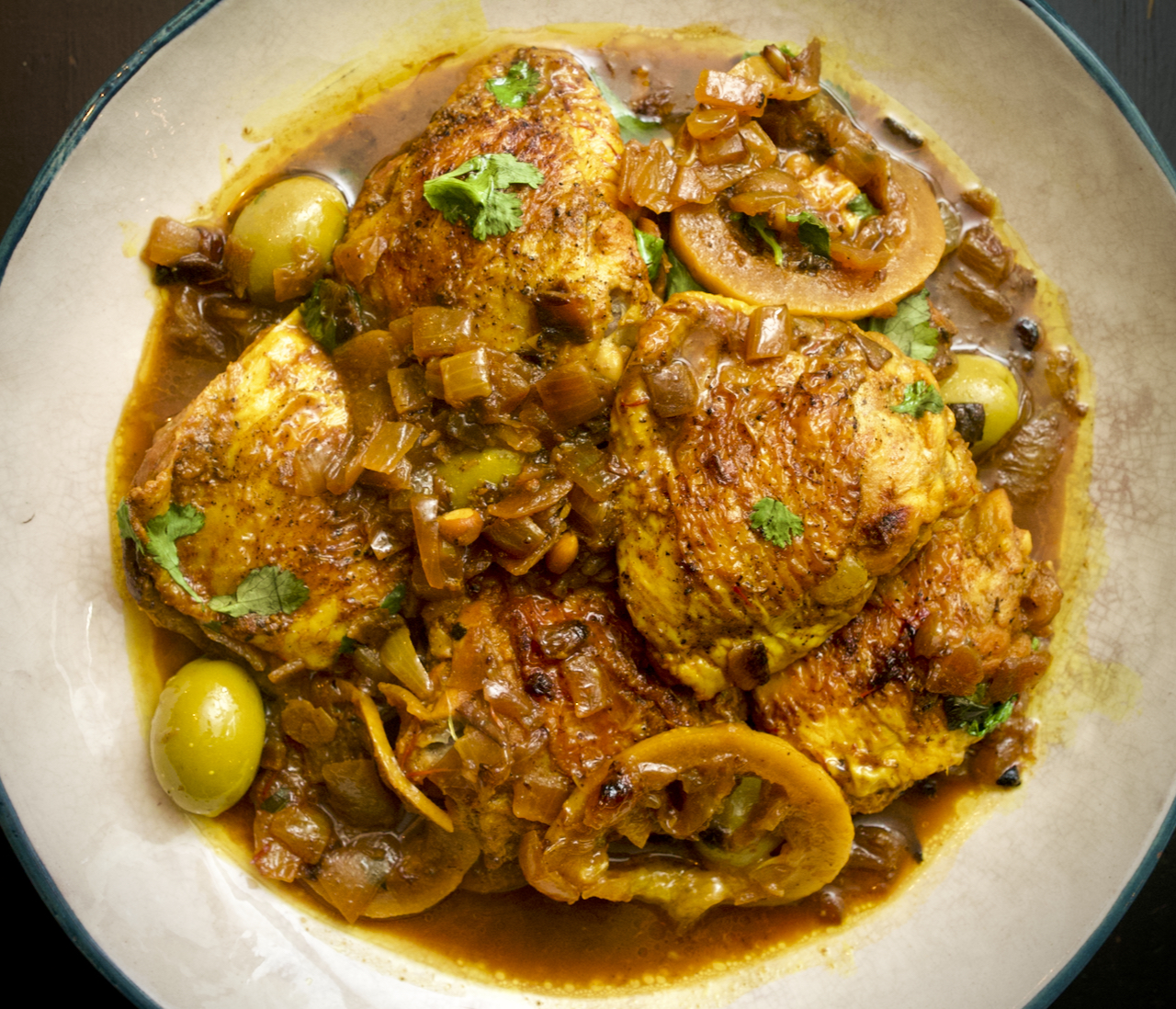
A dish full of all the flavours we love!

Wine Suggestion: Choose a white with a definite Mediterranean aspect. We opened a bottle of Domaine Ventenac’s “Dissidents” Cassandre. Made from Vermentino which is found in quite a few countries around Europe under a load of names. This was dry and tasting of grapefruits with hints of apricot and a really nutty, textural oiliness that matched the olives in this dish. Sunshine with substance in a glass.

Chicken with olives and lemon – serves 3

  • 6 skin-on chicken thighs
  • 2 onions, chopped
  • 1 lemon, thinly sliced
  • a good pinch of saffron strands
  • a handful of green olives
  • a handful of coriander, roughly chopped
  • olive oil

FOR THE SPICE PASTE:

  • 3 cloves of garlic
  • a few pinches of smoked paprika
  • 1 tbsp ground turmeric
  • 1 tsp cumin seeds
  • olive oil

Make the spice paste first by crushing the garlic with a good pinch of sea salt using a pestle and mortar. Add the smoked paprika, turmeric and cumin seeds and grind to a paste, then mix in a couple of tbsps of olive oil or enough to make a paste that will coat the chicken.

Put the chicken thighs in a bowl, then add the spice paste and toss to coat. Cover with cling film and leave to marinate at room temperature for an hour or overnight in the fridge.

Heat a splash of olive oil in a large, shallow pan. Add the onions and soften a little, before adding the chicken thighs and cooking until coloured lightly on both sides.

Add the lemon to the pan and enough water to come halfway up the chicken pieces. Stir in the saffron, season well, then cover with a lid and simmer for 25 minutes, or until the chicken is cooked through. Add the olives and coriander and serve.

(Original recipe from The Kitchen Diaries II by Nigel Slater, Fourth Estate, 2012.)

Read Full Post »

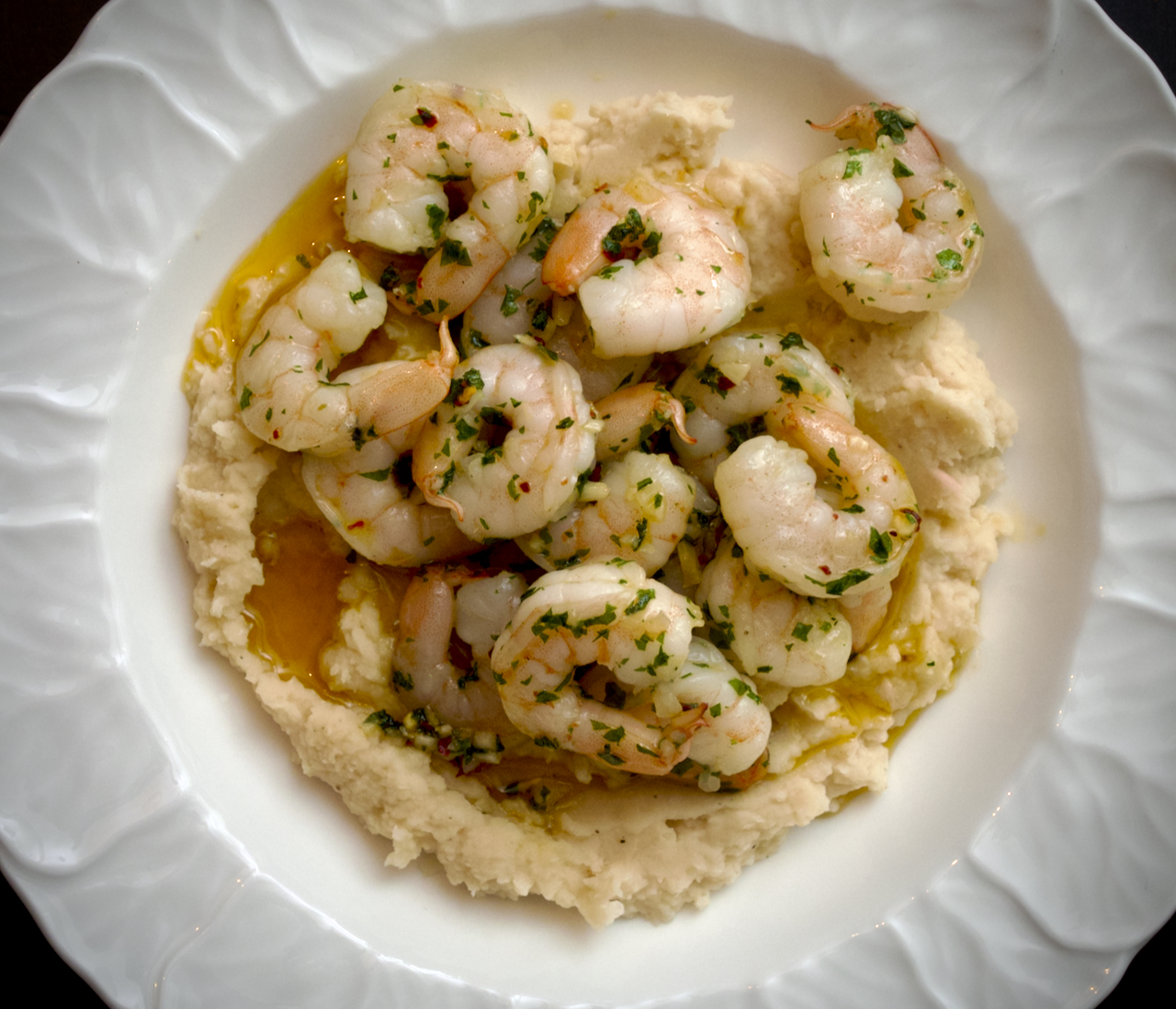
This recipe comes from Rick Stein’s Simple Suppers and it is indeed a simple and easy recipe. Ready in minutes and deeply satisfying!

Wine Suggestion: the creamy beans need a buttery Chardonnay, and likewise this works with the prawns too. Pick you own style, or whatever is at hand. For us we were lucky to have Au Bon Climat’s Santa Barbara County Chardonnay which is Californian sunshine in a glass tempered by the cooling breezes and fogs of this part of the world. Full and deep, but fleet of foot and minerally fresh.

Garlic & chilli prawns on puréed butter beans – serves 2

FOR THE BUTTER BEAN PURÉE:

  • 1 tbsp olive oil
  • 1 clove of garlic, chopped
  • 400g tin of butter beans, drained
  • juice of ½ lemon

FOR THE PRAWNS:

  • 2 cloves of garlic, peeled
  • a handful of flatleaf parsley
  • 50ml olive oil
  • ¼ tsp chilli flakes
  • 225g peeled raw prawns

Heat the oil for the butterbeans in a pan and add the garlic. Cook for a minute, then add the butter beans and cook for 3-4 minutes or until warmed through. Add the lemon juice and a couple of tablespoons of water, then whizz in a blender or food processor. Return to the pan and keep warm, you might need to add a little more water if it’s too thick.

Chop the garlic and parsley for the prawns together to get a coarse paste. Pour the oil into a frying pan and when hot, add the chilli flakes and garlic mixture. Cook over a gently heat for a minute until sizzling, then increase the heat a little, add the prawns and stir-fry for a few minutes or until pink and cooked through.

Divide the purée between two warm bowls and spoon the prawns and garlicky oil over the top.

(Original recipe from Rick Stein’s Simple Suppers, BBC Books, 2023.)

Read Full Post »

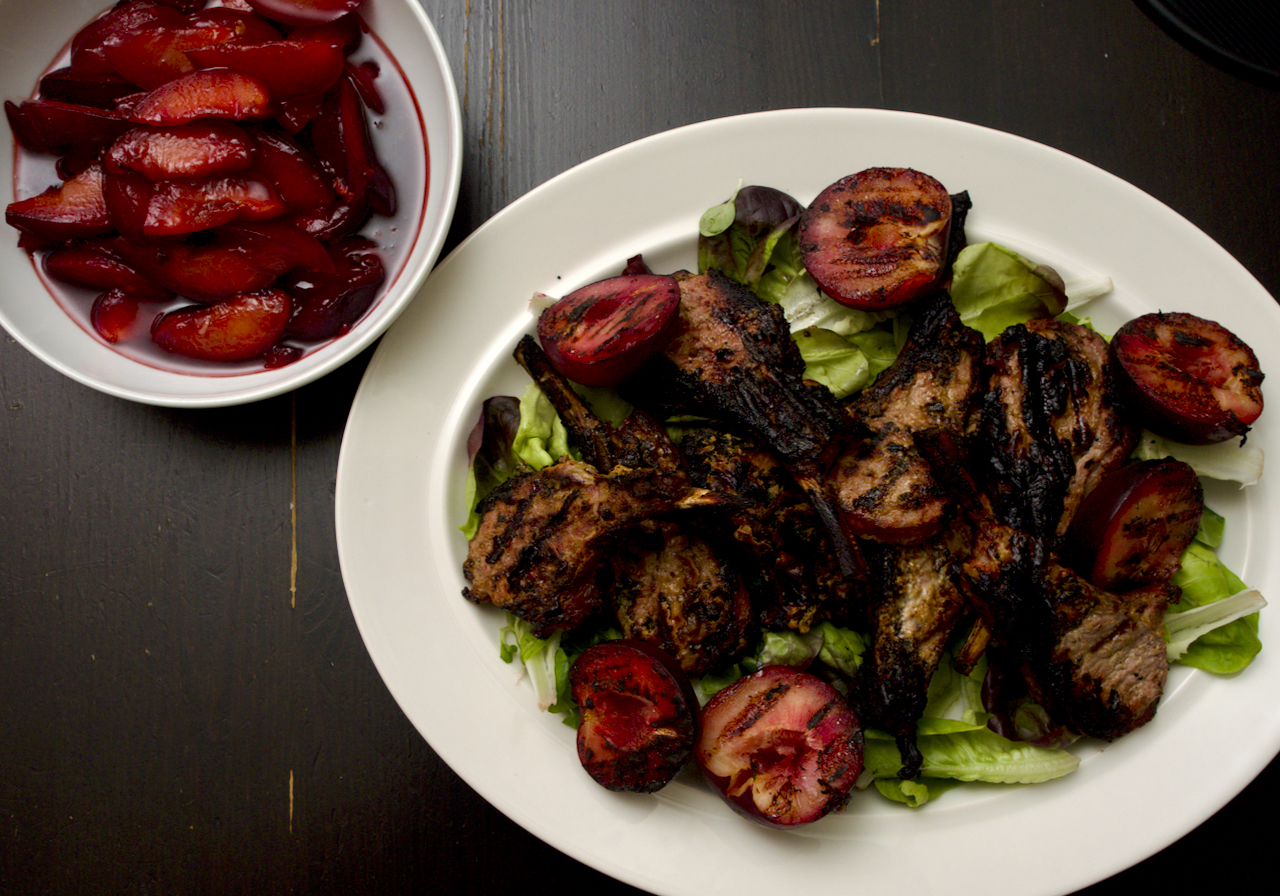
We love barbecuing our food and when a bunch of plums came our way just had to give this a go. We made too much plum sauce and it was lovely at breakfast with our granola, and then with some sausages another night as well. You can make both sauces in advance.

Wine suggestion: we think this worked really well with Domaine Ventenac’s “les Dissidents” Paria, which is a charming Grenache from the south of France near Carcassonne. Bright and minerally, this is perfectly ripe, but steps lightly with a mineral freshness and effortless weight.

Tahini lamb chops with plum sauce – serves 4 to 6

  • 2 racks of lamb, divided into 12-14 single chops
  • 100g lamb’s lettuce or baby chard or similar
  • 4 plums, halved and stones removed

FOR THE TAHINI BBQ SAUCE:

  • 150g tahini paste
  • 1 clove of garlic, crushed
  • 2 salted anchovies, chopped
  • 1 tsp pul biber
  • 2 tbsp pomegranate molasses
  • 100ml water, plus more if needed
  • 1 tsp flaky sea salt

FOR THE PLUM SAUCE:

  • 6 plums, cut into eighths and stones removed
  • 50g sugar
  • 1 clove of garlic
  • 1 whole dried chilli, cracked in half and seed discarded
  • 1 tsp Szechuan pepper
  • 1 bay leaf
  • 3 tbsp pomegranate molasses
  • ½  tsp flaky sea salt
  • 1 tbsp red wine vinegar

Put all of the tahini bbq sauce ingredients into a small food processor and blitz to a smooth thick paste, you might need a little water.

Put the plum wedges, sugar, garlic, spices, bay leaf and pomegranate molasses into a small frying pan, place over a high heat and bring to the boil. Cook for 5 minutes until the plums soften and start to fall apart, then remove from the heat and stir in the salt and vinegar.

When the barbecue is ready to cook on. Brush both sides of the chops with about half of the bbq sauce. Grill the chops for a couple of minutes, then turn them and brush with more sauce. Grill for another 2 minutes then turn and baste again. Repeat this until the chops have been cooking for 6 minutes on each side, then remove and set aside.

Put the plum halves on the barbecue, cut-side down. Grill for about a minute to just warm a little, then remove.

Scatter the lettuce over a large platter and top with the chops and plums. Serve with the plum sauce on the side.

(Original recipe from Chasing Smoke by Sarit Packer and Itamar Srulovich, Pavilion, 2021.)

Read Full Post »

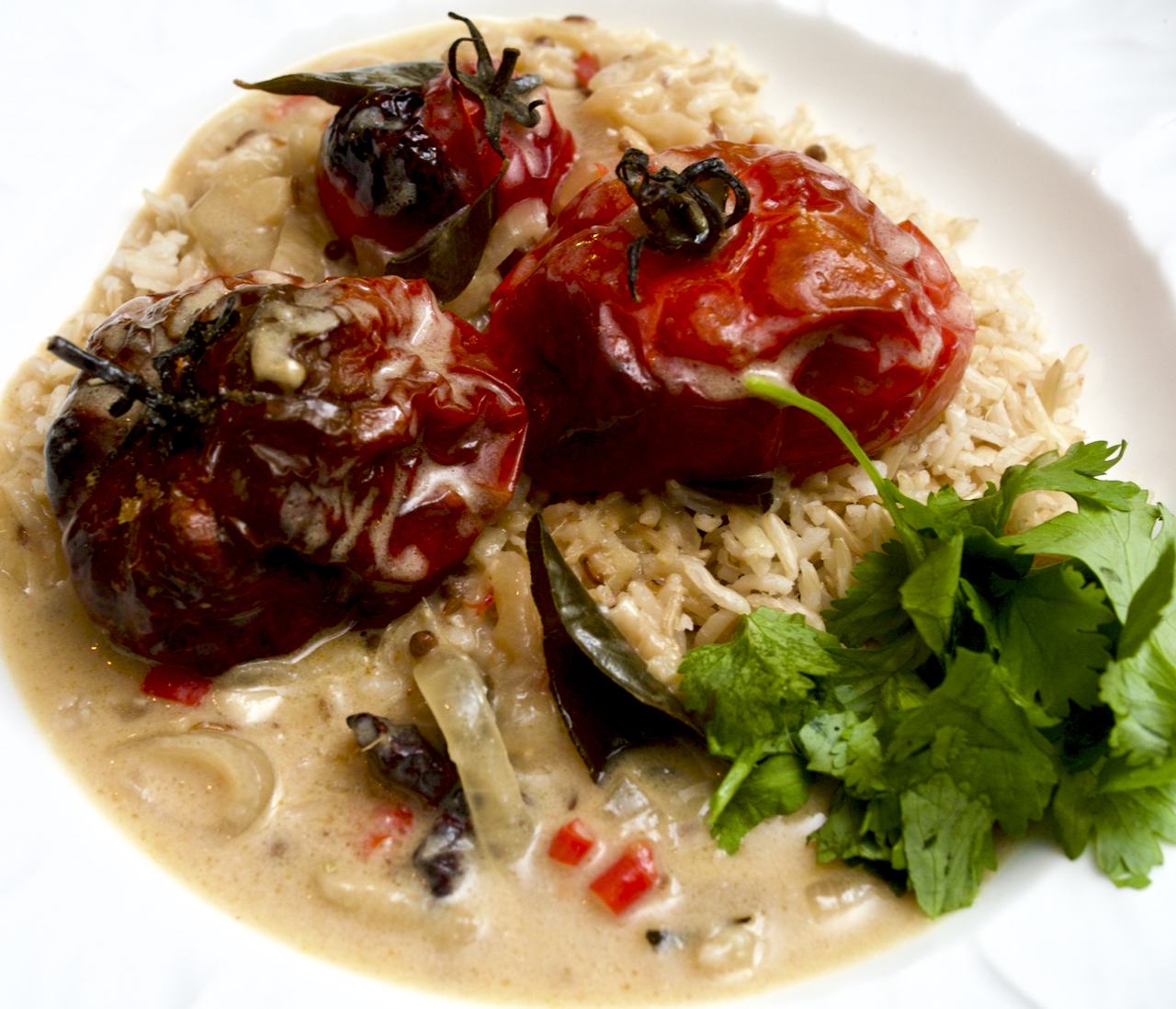
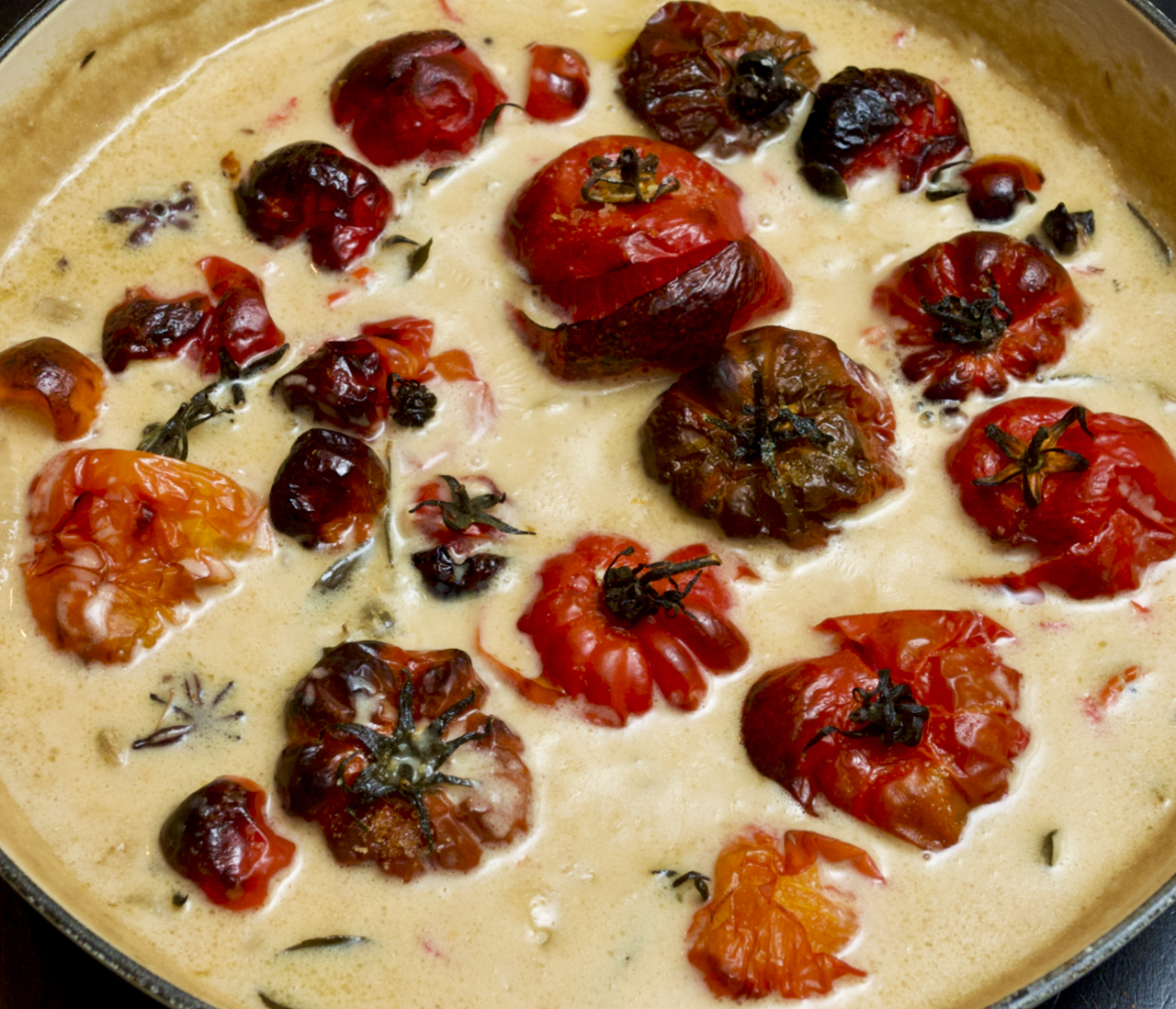
You should be making this curry in late summer / early autumn when the tomatoes are just bursting with ripeness. It’s really only worth it if you can find amazing tomatoes, grown for flavour, rather than a consistent size and shape. We buy ours from a farm shop and you can really taste the difference.

Wine Suggestion: Tomatoes we often pair with higher acid and tannic reds like Sangiovese. However, combined with the creamy coconut and yoghurt we eased off on the acidity and chose Frasca La Guaragna Barbera d’Asti which has a mellow softness and depth. Both wine and food are comforting as the nights begin to turn colder.

Tomato Curry – serves 6

  • 5 star anise
  • 10 cardamom pods
  • 1 heaped tsp cumin seeds
  • 1 heaped tsp coriander seeds
  • 1kg top quality, very ripe tomatoes, lots of different sizes, shapes, and colours if you can
  • 3 tbsp olive oil
  • 2 tbsp coconut oil
  • a big sprig of fresh curry leaves
  • a large onion, finely sliced
  • 5 cloves of garlic, finely sliced
  • 1 or 2 red chillies, finely sliced
  • 40g fresh ginger, peeled and finely chopped
  • 2 x 400g tins of full-fat coconut milk
  • 50ml natural yoghurt
  • cooked brown rice, to serve
  • fresh coriander, to serve

Heat the oven to 200C fan.

Line a large baking sheet with parchment, place all the tomatoes on top and drizzle generously with the olive oil. Season well with salt and bake for 45 minutes to 1 hour. The tomatoes should be slightly caramelised but not totally collapsed.

Meanwhile, heat the coconut oil in a large heavy-based pan over a medium heat. When the oil starts to shimmer, add the spices and fry for 1 minute or until fragrant. Add the curry leaves and sizzle for a few seconds before adding the onion, garlic, chillies and ginger. Season generously with salt and mix together. Cook the onions over a low heat for about 15 minutes or until they are well softened.

Pour in the coconut milk, then rinse out both tins with a little splash of water and add that too. Simmer gently for about 40 minutes, or until thickened, then turn off the heat. Put the yoghurt into a bowl and pour in a ladle of curry sauce. Mix well, then pour the yoghurt mixture into the curry. Taste and adjust the seasoning if needed.

Gently add the baked tomatoes to the curry sauce, taking care not to break them up. Serve with brown rice and fresh coriander leaves.

(Original recipe from The Farm Table by Julius Roberts, Ebury Press, 2023.)

Read Full Post »

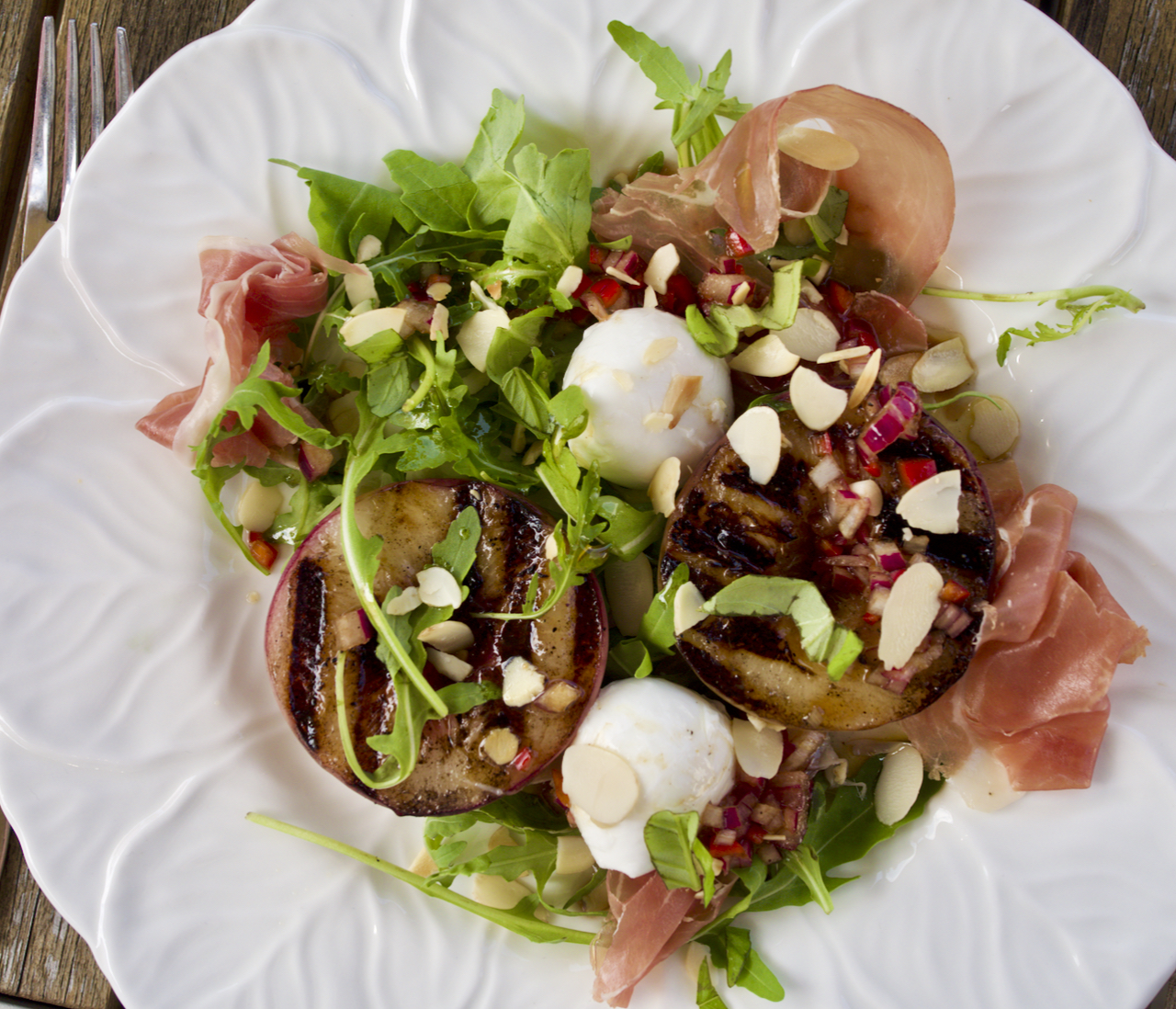
It has not felt very summery in Ireland this year but we haven’t let that put us off cooking for the season. There are still some nice peaches around and this makes a lovely lunch!

Wine Suggestion: We think Viognier is an awkward grape, despite its star status for some. However in the right hands and with the right dish it really comes together. Without breaking the bank and opening one of our Perret Condrieu in the cellar which have amazing balance, expression and character we kept northern Rhone with a simpler, though still delicious, Domaine Gerin “la Champine” Viognier. There’s a peachiness from this wine and hints of an oily texture that just works with this salad.

Charred peach, parma ham and bocconcini – serves 4

  • 4 peaches, halved and stones removed
  • 2 tbsp rapeseed oil
  • 2 large handfuls of rocket (or a mixture of rocket and watercress)
  • 8 slices of Parma ham, cut in half
  • 350g bocconcini

FOR THE DRESSING:

  • ½ red chilli, finely diced
  • 1 red onion, finely diced
  • 100ml extra virgin olive oil
  • 40ml sherry vinegar

TO FINISH:

  • 4 tbsp flaked almonds
  • 4 basil leaves, roughly chopped

Drizzle the cut sides of the peaches with the rapeseed oil, then place cut side down on a hot barbecue and cook for 3 minutes or until you get nice charred marks. Remove them from the barbecue and set aside.

Make the dressing by mixing the chilli, red onion, extra virgin olive oil and sherry vinegar together in a small bowl. Season with salt and pepper.

Put two peach halves on each plate and sprinkle around the rocket. Add the Parma ham and bocconcini, then spoon over the dressing and sprinkle over the toasted almonds and basil to serve.

(Original recipe from Outdoor Cooking by Tom Kerridge, Bloomsbury Absolute, 2021.)

Read Full Post »

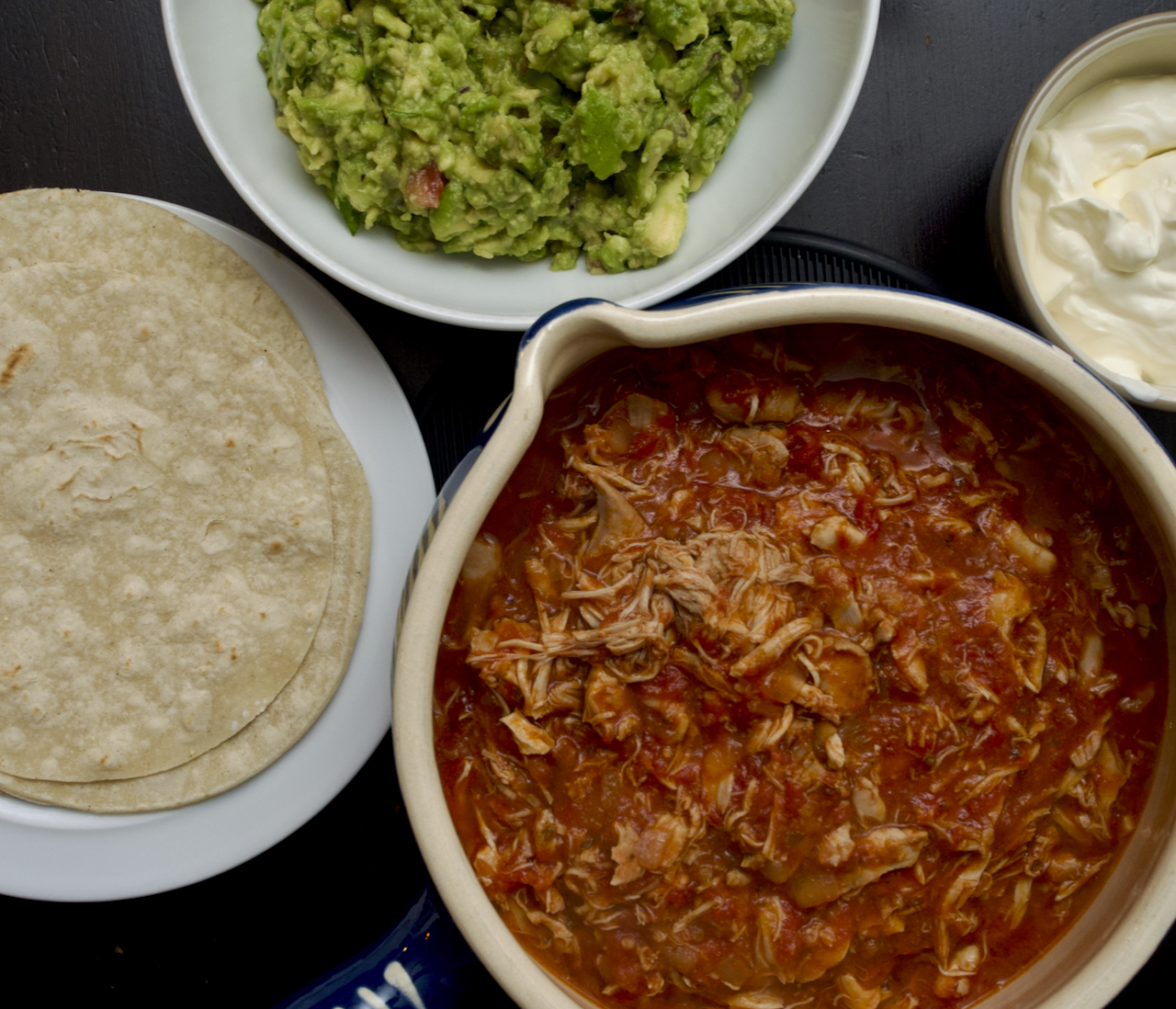
We love tacos and definitely don’t make them as often as we should. We’re lucky to have a local Mexican shop, Picado, who make proper corn tortillas, though tortillas from the supermarket will be good too.

Wine Suggestion: This goes great with a medium bodied, juicy red, like Adi Badenhorst’s Secateurs Red. A blend of Syrah, Grenache and a little Cinsault we find this always has a charming depth and persistence, despite the lowly price point.

Chicken tinga tacos – serves 5 to 6

  • 2 tbsp extra virgin olive oil
  • 3 cloves of garlic, crushed
  • 1 onion, finely chopped
  • 2½ tsp dried oregano
  • 250ml chicken stock
  • 80g chipotle in adobo with sauce, finely chopped
  • 2 x 400g tins chopped tomatoes
  • 1 tsp ground cumin
  • 1½ tsp salt
  • 750g chicken thigh fillets
  • 20 x small corn tortillas, warmed
  • coriander leaves, roughly chopped (to serve)
  • guacamole (to serve)

FOR THE LIME CREAM:

  • ¼ tsp finely grated garlic
  • 100g sour cream
  • 1 tbsp mayonnaise
  • 1 tsp lime zest
  • 2 tsp lime juice
  • ¼ tsp salt

Make the lime cream by combining all the ingredients in a bowl and mixing well. Place in the fridge until ready to serve.

Heat the oil in a large pot over a hith heat, then add the garlic, onion and oregano and cook for 3 minutes or until the onions are browning at the edges.

Add all the rest of the ingredients, except the chicken. Stir well, then add the chicken in a single layer and submerge in the sauce. Bring to the boil, then reduce the heat and simmer very gently for one hour, uncovered, stirring occasionally. The chicken should be soft and easy to shred.

Transfer the chicken to a large, deep, baking tray and shred with two forks. Meanwhile keep the sauce simmering on a low heat for another 10 minutes until quite thick. Return the shredded chicken to the sauce and toss to coat.

Serve the tinga with the warmed tortillas, coriander leaves, guacamole and lime cream.

(Original recipe from Recipetin Eats Dinner by Nagi Maehashi, Pan Macmillan, 2022.)

Read Full Post »

These make a lovely side for a barbecue with a great smoky flavour and a delicious dressing.

Barbecue potato salad – serves 4

  • 800g new potatoes, boiled until tender, then halved
  • 4 garlic cloves, bashed
  • 3 sprigs of rosemary, leaves picked
  • 2 tbsp good quality olive oil

FOR THE DRESSING:

  • 1 tbsp English mustard
  • 1 tbsp runny honey
  • 2 tbsp chopped chives
  • 2 tbsp good olive oil

Put the potatoes, garlic and rosemary onto a large sturdy baking tray. Season well and trickle over the olive oil, then toss together.

Put the tray onto a hot barbecue and cook the potatoes for about 3 mintues, then shake and cook for another 3 minutes or until hot through. Remove from the barbecue and set aside while you make the dressing.

Whisk the dressing ingredients together in a small bowl.

Pick the rosemary and garlic out of the tray and discard. Trickle the dressing over the hot potatoes and toss well to coat, leave to stand for 5 minutes, then serve warm.

(Original recipe from Tom Kerridge Outdoor Cooking, Bloomsbury Absolute, 2021.)

Read Full Post »

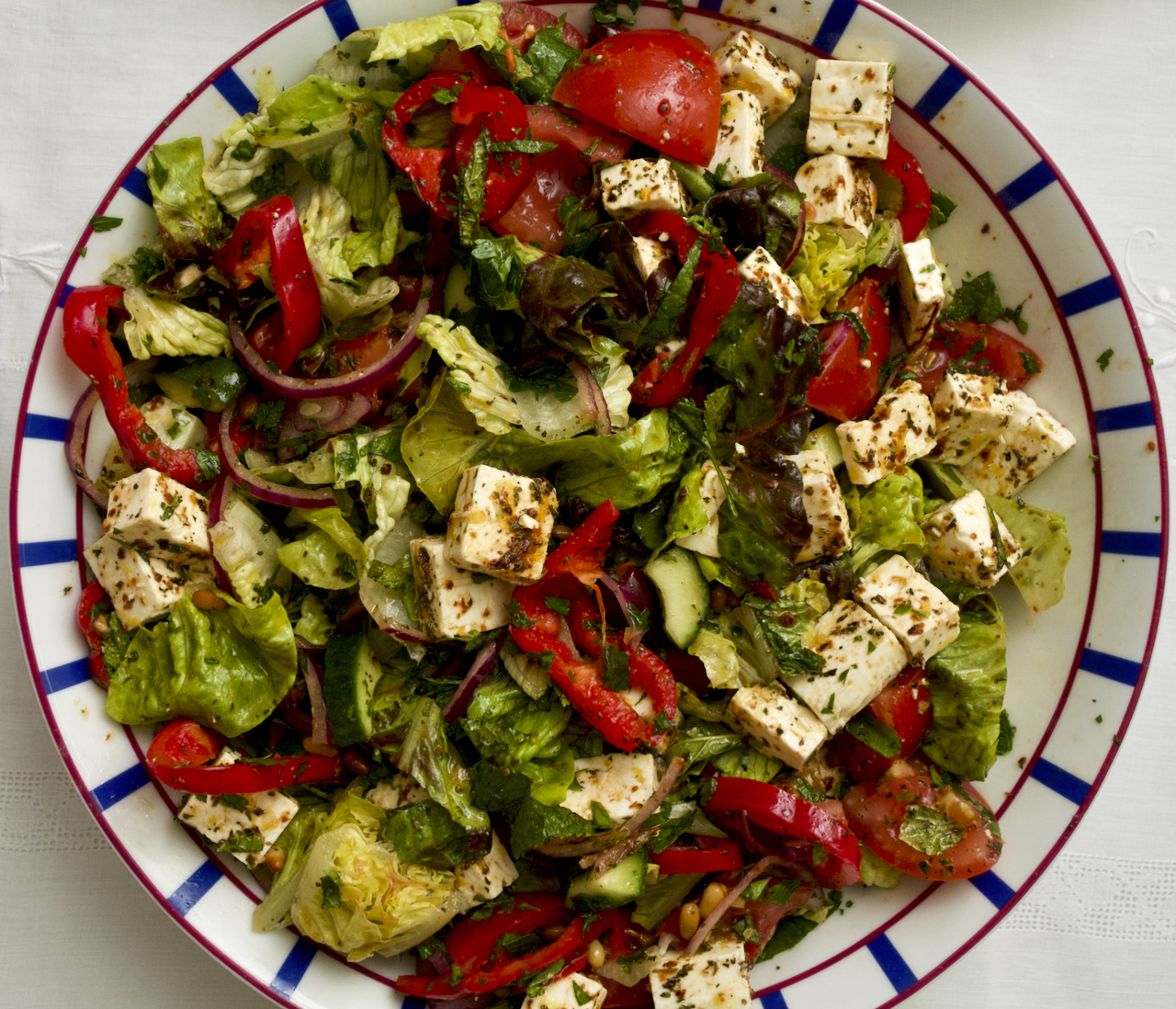
This is a really lovely salad! We served with some barbecued lamb but it would be great with loads of things.

Turkish chopped salad – serves 4 to 6

  • 5 tbsp extra virgin olive oil
  • 50g pine nuts
  • 250g feta, cut into 2cm cubes
  • 2 tsp dried mint
  • 1 tsp pul biber
  • 1 lemon, finely zested and juiced
  • 3 large, ripe tomatoes, roughly chopped
  • ¼ cucumber, deseeded and chopped
  • 1 red romano pepper, deseeded and sliced finely into rings
  • 1 Cos or Little Gem lettuce, roughly chopped
  • 10g mint leaves, roughly chopped
  • 25g parsley leaves, finely chopped
  • 2 tbsp white wine vinegar
  • 1 red onion, finely sliced
  • 50g pitted black olives

Drizzle 1 tbsp of the oil in a small frying pan and fry the pine nuts for a couple of minutes until golden brown, then set aside.

Mix the cheese cubes in a bowl with 2 tbsp of the olive oil, 1 tsp of the dried mint, the pul biber, ¼ tsp of coarse black pepper and the lemon zest. Set aside.

Put the tomatoes, cucumber, pepper, lettuce, fresh mint and parsley in a large bowl and toss well with 1 tbsp of the lemon juice and all the white wine vinegar.

Drizzle the last 2 tbsp of oil over the salad and toss well, then add the red onion, black olives, toasted pine nuts, 1 tsp of dried mint and toss again. Add the cheese and toss gently before serving.

(Original recipe from Good Food Magazine, August 2024.)

Read Full Post »

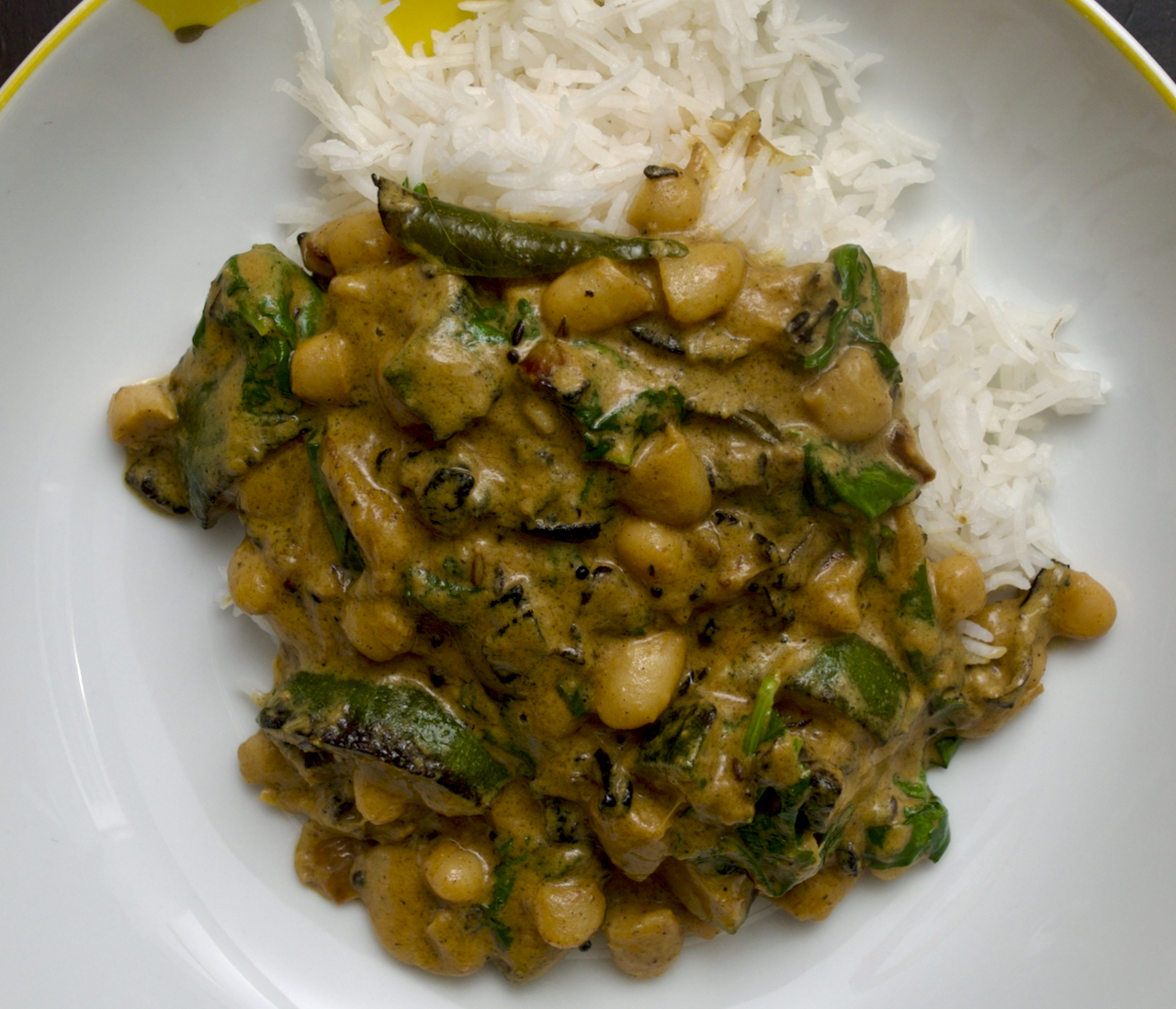
This vegan curry caught our eye on The Guardian website and we’re glad we tried it. Courgettes are in-season and if you like beans and pulses like we do then this is a great combination. We’ll definitely do this one again.

Drink suggestion: we had this with a glass of Asahi Super Dry Lager which we find works better with more foods than other brands. We know it’s not as trendy as craft beer, but it’s a good recipe and has a good ability to work with food.

Courgette & white bean curry – serves 4

  • 5 tbsp rapeseed oil
  • 20 fresh or frozen curry leaves
  • 2 tsp cumin seeds
  • 1 tbsp black mustard seeds
  • 1 onion, peeled and finely chopped
  • 4 cloves of garlic, peeled and very finely sliced
  • 2 green finger chillies, sliced lenthways
  • 500g courgettes, halved lengthways and cut into short pieces
  • 1 tsp ground turmeric
  • 1½  tsp fine sea salt
  • ¼ tsp coarsely ground black pepper
  • 2 x 400g tins coconut milk
  • 2 x 400g tins cannellini beans
  • 40g fresh coriander, leaves and stems sliced
  • juice of ½ lemon
  • steamed basmati rice, to serve

Put the oil in a large sauté pan over a high heat. When very hot, add the curry leaves, cumin seeds and mustard seeds and stir. Next, add the onion, garlic, chillies and courgettes and cook for a couple of minutes. Add the turmeric, salt and pepper, and continue cooking for another 4 minutes.

Add the coconut milk and beans, and cook, still on a fast boil, for another 5 minutes, or until the courgettes are tender. Stir in the coriander, then add the lemon juice a tsp at a time until it tastes right.

Serve with basmati rice.

(Original recipe by Meera Sodha in The Guardian, 30th May 2024.)

Read Full Post »

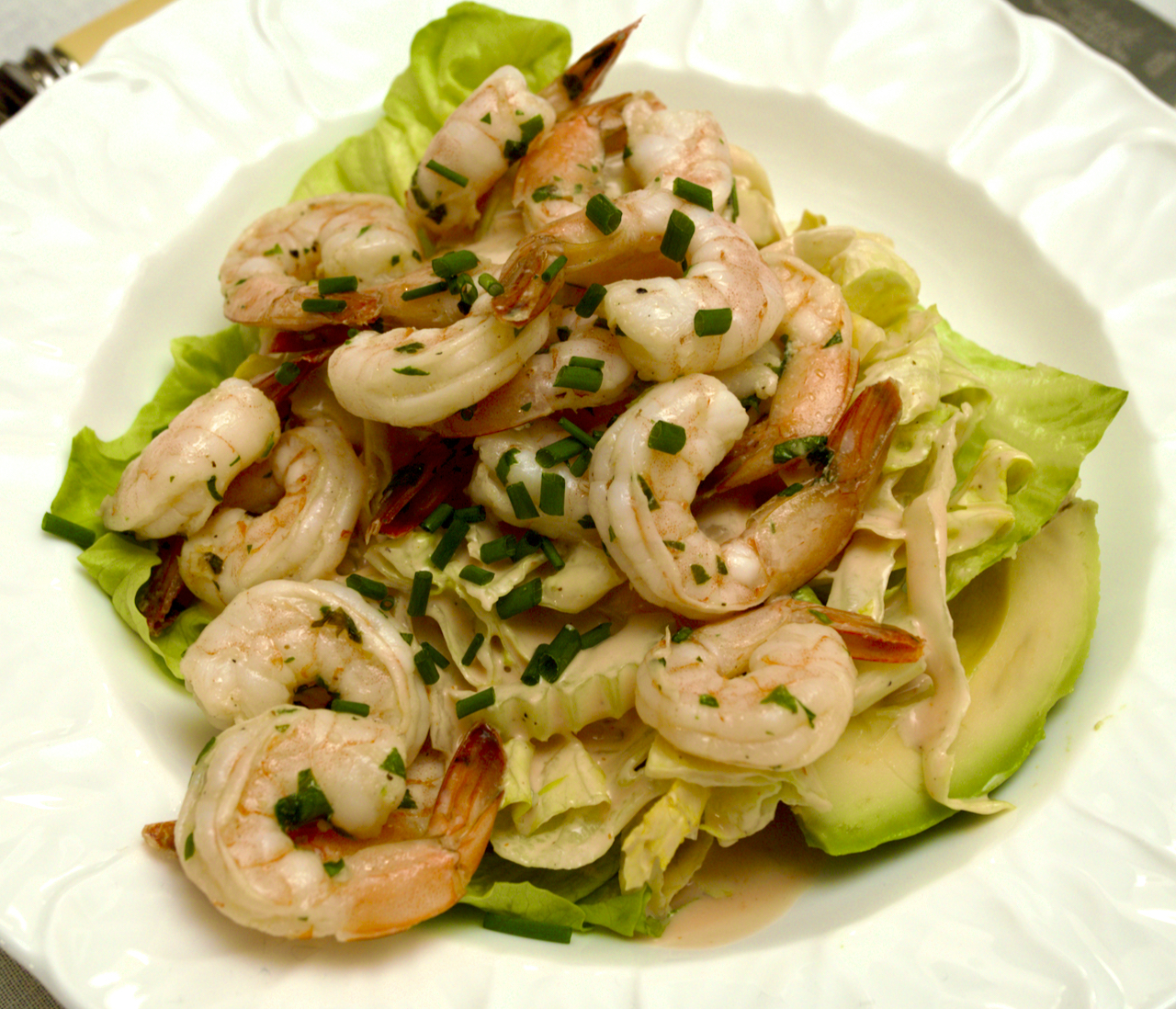
Smokey prawns really add something special to a standard prawn cocktail. A great summer starter.

Wine Suggestion: Something a little different: El Paisano de Tares which is from Bierzo in Spain. A wine made from a field blend of Red and White grapes: Mencia, Garnacha, Palomino Fino, Doña Blanca & Godello. Served slightly chilled, it’s like a sophisticated Rosé with an earthiness and smokey spice plus smooth tropical notes. A very traditional wine that we don’t see much any more so a big bravo to the guys at Domniio de Tares for championing this alongside their excellent single varietal Mencia and Godello’s.

Barbecued prawn & avocado cocktails – serves 4

  • 600g large raw tiger prawns, peeled but with tails left on
  • 3 tbsp extra virgin olive oil
  • 1 large garlic clove, finely chopped
  • 2 tbsp finely chopped flat-leaf parsley
  • 6 dashes of tabasco
  • juice of ½ lemon

FOR THE MARIE ROSE SAUCE:

  • 120ml mayonnaise
  • 60ml tomato ketchup
  • 1 tbsp brandy
  • 5 dashes of worcestershire sauce
  • 6 dashes of tabasco
  • juice of ½ lemon

FOR THE SALAD:

  • 1 small iceberg lettuce
  • 2 celery sticks, finely sliced
  • 1 ripe avocado

TO GARNISH:

  • 2 tbsp chopped chives
  • 1 lemon, cut into wedges

Put the prawns into a bowl with the olive oil, garlic, parsley, tabasco, lemon juice and some seasoning. Toss well and leave to marinate for 10 minutes.

Meanwhile, make the marie rose sauce by mixing all of the ingredients together until smooth, then seasoning to taste. Cover and leave in the fridge.

Cut the lettuce into quarters and use the outer leaves to line 4 bowls. Thinly slice the rest of the lettuce and put it into a large bowl with the celery.

Cook the prawns over a hot barbecue for about 2-3 minutes on each side (depending how big they are). Transfer to a tray and leave to cool for a bit.

Add a couple of spoons of the marie rose sauce to the lettuce and celery, season and mix together.

Peel and cut the avocado into quarters. Divid the lettuce and celery between the bowls and spoon on a generous dollop of marie rose sauce. Pile the barbecued prawns on top and tuck in an avocado wedge. Finish with the chopped chives and lemon wedges.

(Original recipe from Tom Kerridge Outdoor Cooking, Bloomsbury Absolute, 2021.)

Read Full Post »

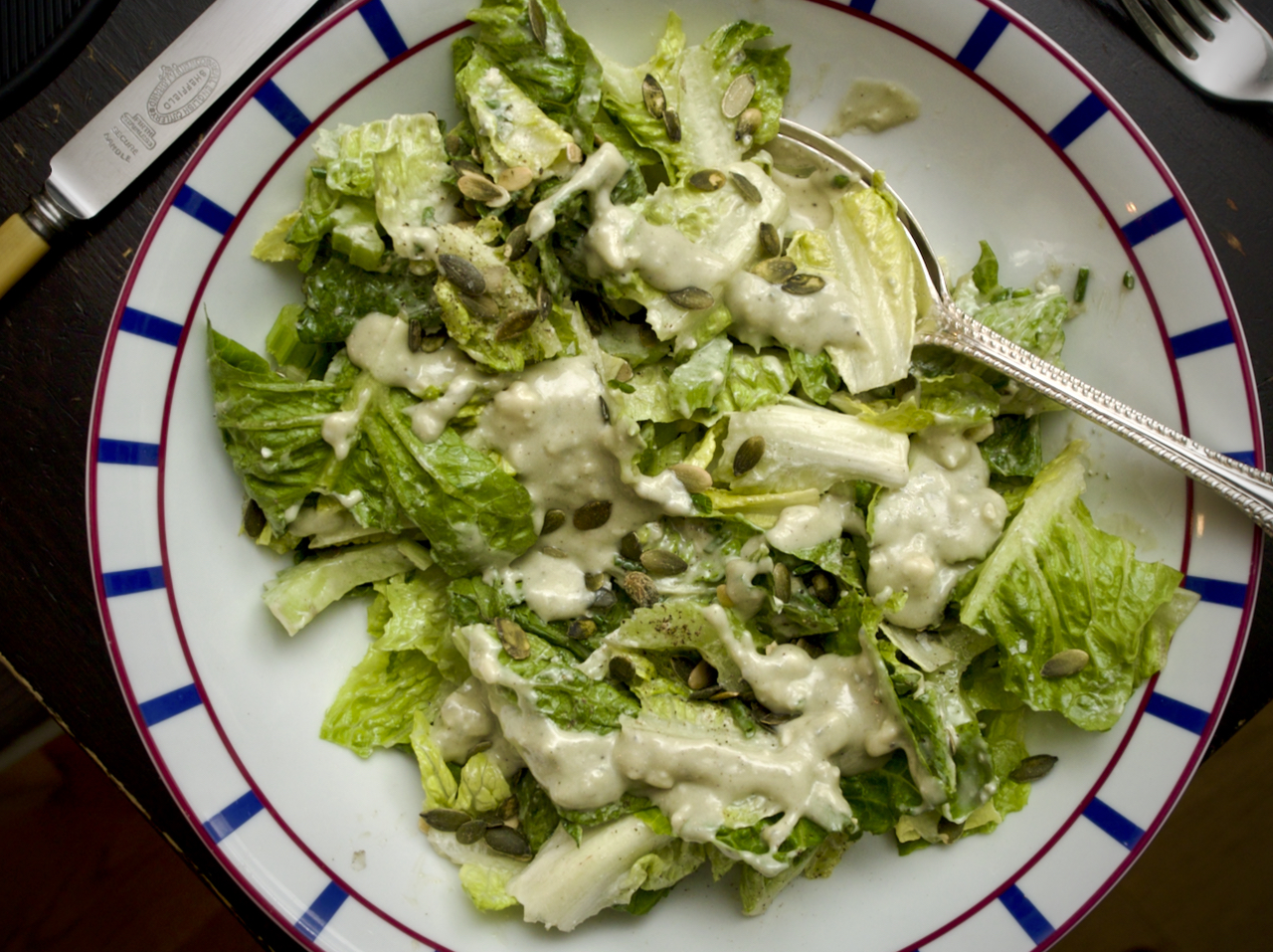
We love a blue cheese dressing – the perfect thing for crunchy lettuce and super fresh celery.

Lettuce and blue cheese dressing – serves 4

  • 1 large butterhead, cos, or little gem lettuce
  • 1 head of tender celery
  • a small handful of chives, thinly sliced
  • a handful of pumpkin seeds

FOR THE DRESSING:

  • 150g soft blue cheese
  • ½ a small clove of garlic, finely grated
  • 2 tsp Dijon mustard
  • 2 tsp runny honey, plus extra to taste
  • 1 tbsp apple cider vinegar
  • 2 tbsp crème fraîche
  • 2 tbsp good mayonnaise
  • 2 tbsp extra virgin olive oil

Make the dressing first by crumbling the blue cheese into a large bowl, then add the garlic, mustard honey, and vinegar and season with black pepper. Use a fork to mash to the cheese and mustard to a coarse paste, then work in the crème fraîche and mayonnaise. Stir in the olive oil and taste – add a bit of salt if you think it needs it or a bit more honey or vinegar.

Cut the base from the lettuce and separate the leaves. Wash and dry thoroughly.

Trim the base of the celery and separate the stems. Wash, dry thoroughly and trim the ends, then slice into 1-2cm pieces at an angle.

Tear the salad leaves into a large bowl. Add the celery and spoon over half the dressing. Turn the leaves and celery in the dressing, then sprinkle over half the chives. Arrange the leaves over a large platter and sprinkle over the pumpkin seeds and spoon over the rest of the dressing. Sprinkle with the remaining chives and season lightly with black pepper and salt, then serve.

(Original recipe from Outside by Gill Meller, Hardie Grant: Quadrille, 2022.)

Read Full Post »

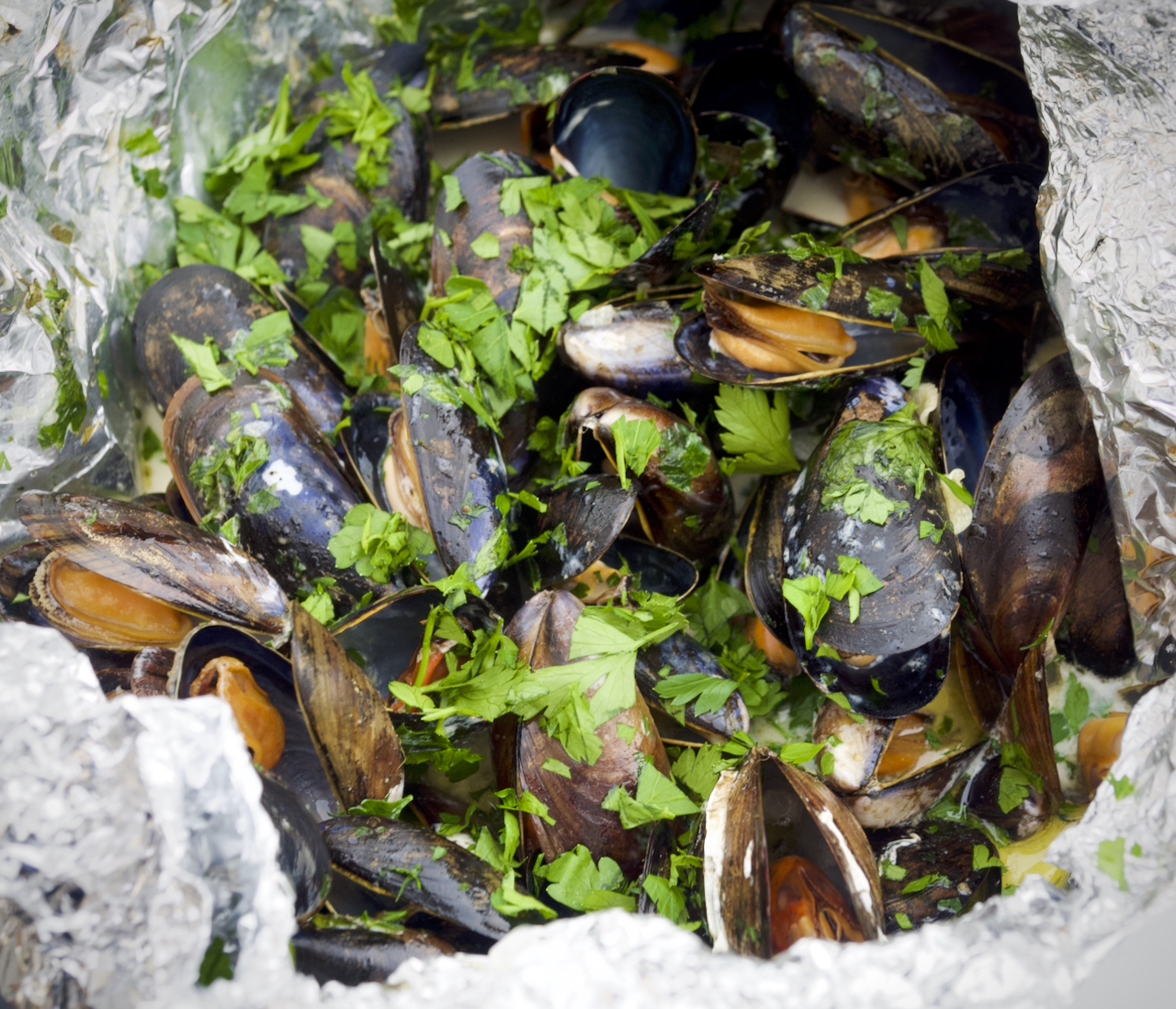
We’ll cook anything on the barbecue and these mussels come highly recommended! Serve in the foil package with plenty of crusty bread.

Wine Suggestion: Muscadet all the way, but given you get a little more with the smokey barbecue flavours coming through we’d suggest one with a bit more oomph like Jérémy Huchet’s Clos les Montys which is grown on a very particular blue-green bedrock giving the wine depth and substance.

Mussels on the barbecue – serves 2

  • 50g softened butter
  • 2 cloves of garlic, finely sliced
  • 2 shallots, finely sliced
  • 1 kg mussels
  • 1 small pack parsley, roughly chopped
  • 125ml white wine
  • 100ml double cream
  • crusty bread, to serve

Mix the butter and garlic with a big pinch of salt.

Heat the barbecue until the coals are white. Lay a sheet of tin foil, about 60cm long on the work surface, then put another sheet the same size on to, then add a third sheet about 30cm long acorss the middle to form a cross shape. Spread the shallots in the middle of the foil, pile the mussels on top, dot the garlic butter all over, then scatter over half the parsley. Season, then fold the foil in at the sides to create a bowl.

Pour the wine into the foil bowl and then seal it securely by scrunching the foil together at the top. If you need an extra sheet of foil to encase the whole parcel at this stage then do so.

Carefully place the parcel on the barbecue coals and cook for 10 minutes. Carefully open the parcel and check the mussels have opened. Pour in the cream, then cover the barbecue with a lid to cook for a few more minutes.

Sprinkle with the remaining parsley and serve with crusty bread.

(Original recipe from BBC Good Food)

Read Full Post »

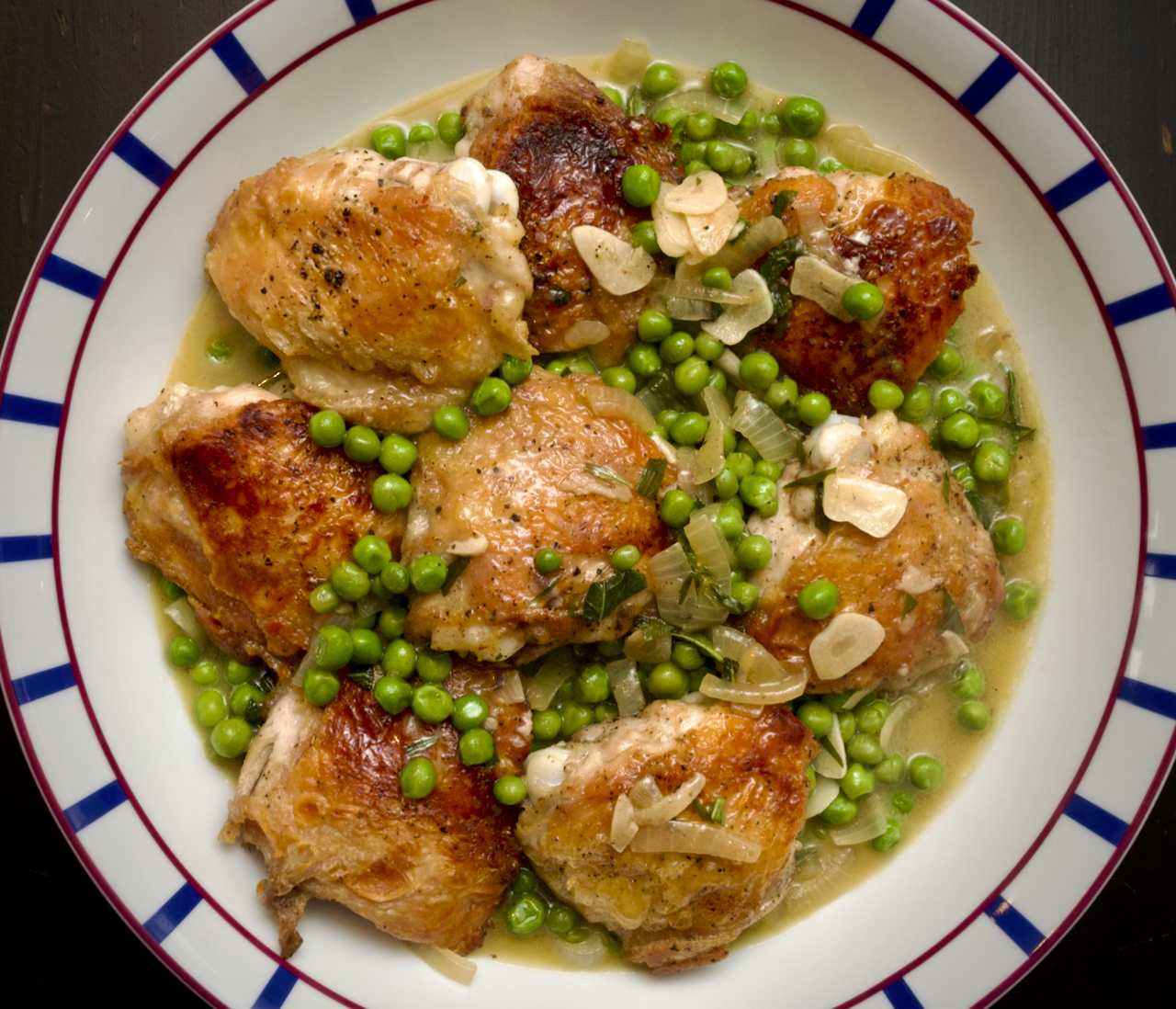
With the erratic weather we’re not doing nearly as much outdoor cooking as we’d usually at this time of year. To keep up our spirits this indoor dish was light and summery. Serve with some new potatoes.

Wine Suggestion: A fun and inexpensive Verdicchio from Umani Ronchi, their Villa Bianchi, which despite it being light and easy going shows the class that the whole range they make has. Summery fun in a glass.

Crispy chicken thighs with peas and herbs – serves 4

  • 8 chicken thighs
  • 2 tbsp olive oil
  • 2 shallots, halved and sliced
  • 3 garlic cloves, thinly sliced
  • 400ml chicken stock
  • 300g frozen peas (or freshly podded if possible)
  • 3 sprigs of tarragon, leaves picked and roughly chopped
  • 2 springs of mint, leaves picked and roughly chopped
  • 30g cold butter, cut into cubes

Heat the oven to 200C/180C fan/Gas 6.

Trickle the olive oil over the chicken thighs and season both side with salt and pepper. Heat a large non-stick sauté pan over a medium heat, then place the thighs skin-side down in the pan and leave to cook for 15- 20 minutes or until the skin is crispy and golden brown.

Transfer the thighs, skin-side up, to an oven tray and bake in the oven for a further 15-20 minutes.

Meanwhile, put the sauté pan back over a medium heat. When it’s hot add the shallots and cook for 3-4 minutes to soften. Add the garlic and cook for another couple of minutes.

Pour the stock into the pan and scrape all the sticky bits from the bottom of the pan with a wooden spoon. Bring the stock to a simmer and cook reduce by half. Add the peas and herbs and cook for a few minutes until the peas are tender. Add the cold butter and stir until amalgamated into the sauce.

Remove the chicken from the oven and add the thighs to the pan with the peas, pouring over any juices on the tray. Stir and season with salt and pepper, then serve.

(Original recipe from Tom Kerridge Cooks Britain, Bloomsbury, 2024.)

Read Full Post »

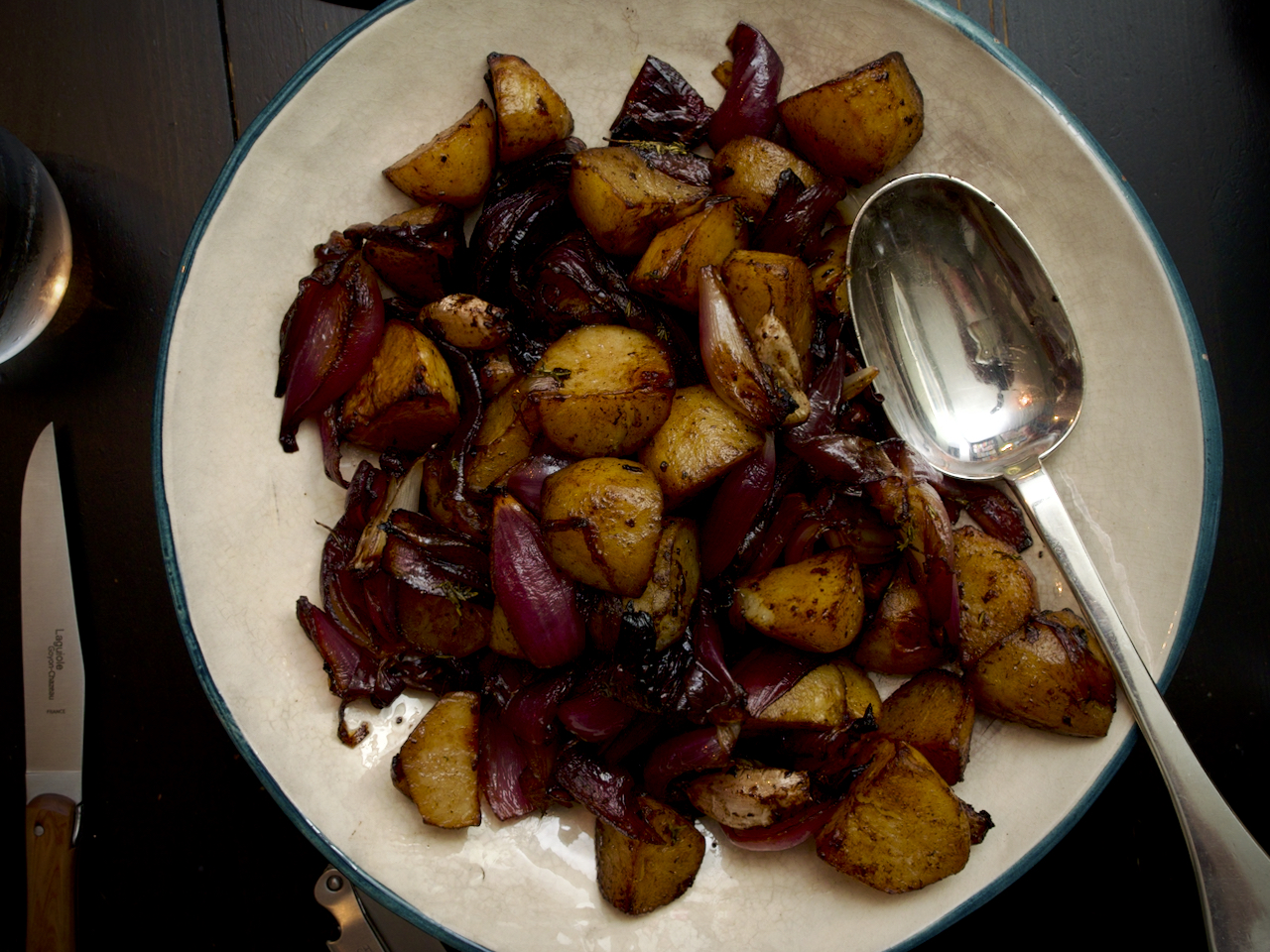
We’ve been trying to change up our potatoes and especially liked these balsamic and red onion roasties by Theo Randall.

Balsamic-roasted potatoes with red onion – serves as a side

  • 800g potatoes, peeled and cut into 3cm pieces
  • 6 cloves of garlic, unpeeled
  • 75g unsalted butter
  • 100ml balsamic vinegar
  • 1 tbsp thyme leaves
  • 1 tbsp olive oil

Heat the oven to 200C.

Put the potatoes into a large pan, cover with water, and add 1 tsp of salt. Place over a high heat and bring to the boil, then add the garlic cloves and boil for 2 minutes. Drain the potatoes and garlic and leave to cool to room temperature.

Heat a large non-stick frying pan on a medium heat. Reduce the heat to low and add the butter and onions. Cook for 10 minutes on a low heat or until the onions have softened. Add the balsamic vinegar and thyme, then increase the heat and cook for 2-3 minutes, or until syrupy. Transfer this mixture to a large bowl, add the potatoes and garlic and season with salt and pepper. Mix well.

Coat the base of large roasting tin with oil and tip the potatoe mixture in. Bake for about 30 minutes, giving the tin a shake halfway through, until nicely caramelized.

Toss the potatoes in the tin before transfering to a serving dish.

(Original recipe from The Italian Deli Cookbook by Theo Randall, Quadrille, 2021.)

Read Full Post »

Tonnato is one of our favourite sauces and it works amazingly well with soft-boiled eggs and jacket potatoes. We take this back; Tonnato is Jules’ absolute favourite sauce … so we just had to try this dish!

You can make the sauce earlier in the day and leave it in the fridge.

Wine Suggestion: taking us back to our honeymoon when we stayed at the winery is Felsina’s “I Sistri” Chardonnay and a good match indeed with the nutty, toasty character really complementing the fresh capers, rich egg and velvety sauce.

Jacket Potatoes with Tonnato Sauce – serves 4

  • 4 large baking potatoes
  • olive oil
  • 4 large eggs, soft-boiled (cook in already boiling water for 6½  minutes, then run under cold water) and peeled

FOR THE TONNATO SAUCE:

  • 2 large egg yolks
  • 3 tbsp lemon juice
  • 25g parsley, roughly chopped
  • 120g good quality tinned tuna in oil, we like Ortiz or Shines
  • 20g baby capers (or chop larger ones)
  • 2 anchovy fillets in oil, rinsed and patted dry
  • 1 garlic clove, crushed
  • 180ml olive oil

Heat the oven to 220C fan.

Rub the jacket potatoes with a little olive oil and sprinkle with flaky sea salt. Put them on a tray and bake for 20 minutes, then reduce the oven temperature to 200C fan and cook for another hour.

Meanwhile, make the sauce. Put the egg yolks in the bowl of a food processor with the lemon juice, 20g of the parsley, the tuna, half the capers, the anchovies and the garlic. Blitz to a rough paste, then scrape down the sides with a spatula. Now keep the machine running while you slowly trickle in the olive oil in a steady stream, the consistency should be like thin mayonnaise. Put this in the fridge until you’re ready to eat.

When ready to serve, slice the potatoes down the middle and sprinkle inside with a little salt (we also add some butter but you don’t have to). Spoon the sauce over the potatoes and top with a halved egg. Sprinkle over the rest of the capers and parsley, then serve.

(Original recipe from Ottolenghi Simple by Yotam Ottolenghi, Tara Wigley and Esme Howarth, Ebury Press, 2018.)

Read Full Post »

« Newer Posts - Older Posts »