Feeds:
Posts
Comments

Posts Tagged ‘Meera Sodha’

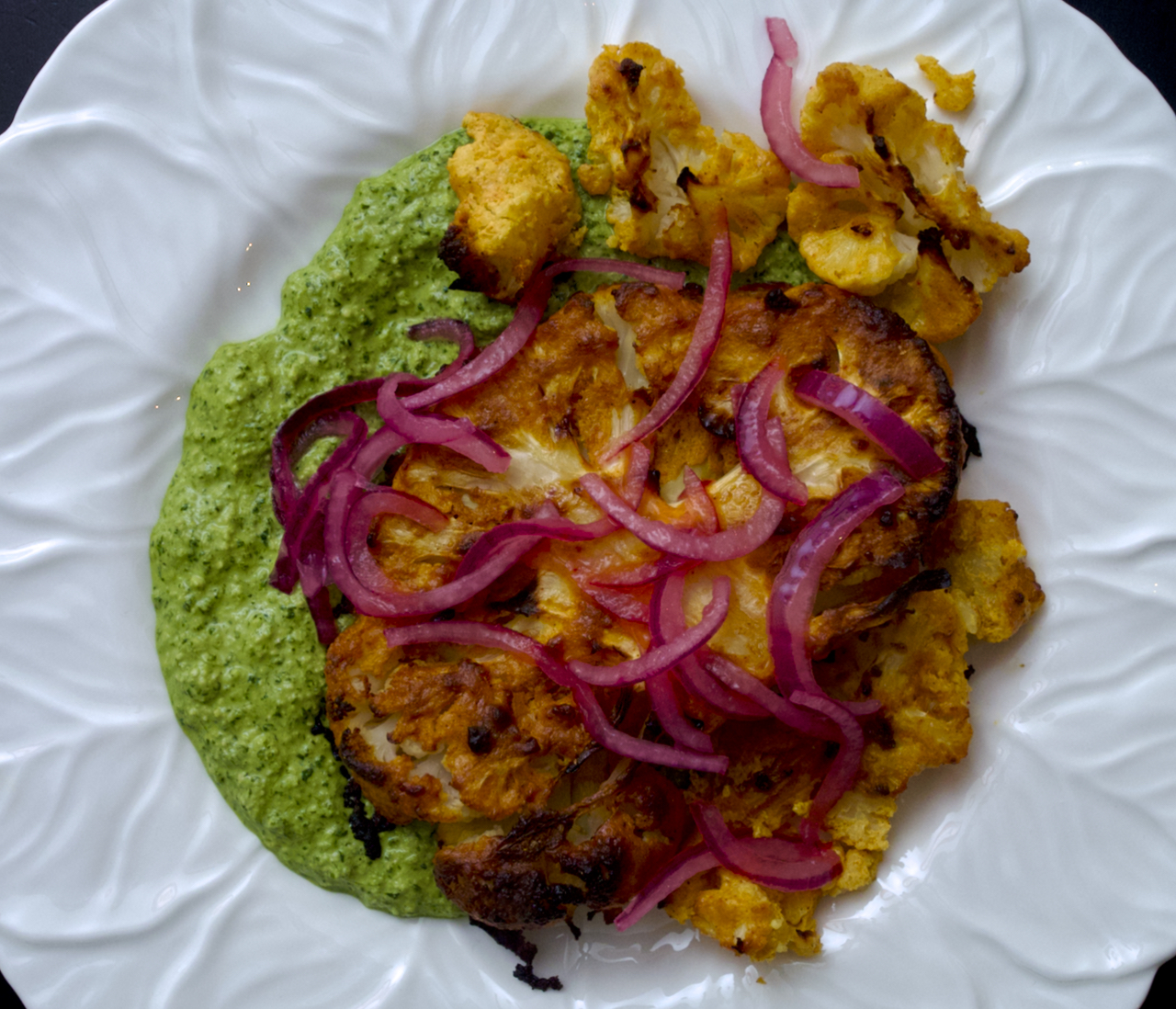
Such a colourful dish and equally delicious. Meera Sodha writes the best vegetarian recipes.

Wine Suggestion: There is definitely a wine match for this, but we had an Asahi beer instead and enjoyed it very much.

Tandoori cauliflower with coriander sauce and quick pickled onions – serves 4

FOR THE PICKLES:

  • ½ red onion, very finely sliced
  • 4 tbsp lemon juice
  • ½ tsp salt

FOR THE CORIANDER SAUCE:

  • 100g unsalted cashews
  • 100g fresh coriander, roughly chopped
  • ¾ tsp caster sugar
  • 3 long green chillies, deseeded and chopped
  • 2 tbsp rapeseed oil

FOR THE TANDOORI CAULIFLOWER:

  • 450g Greek yoghurt
  • 2 tbsp lemon juice
  • 5 cloves of garlic, crushed
  • 2cm piece of ginger, grated
  • ¾ tsp ground turmeric
  • 2 tsp Kashmiri chilli powder
  • 2 tsp salt
  • 1½ tsp garam masala
  • 4 tbsp rapeseed oil
  • 2 tsp English mustard
  • 2 large cauliflower, trimmed
  • naan breads, to serve

To make the quick pickled onions, put the sliced onion into a small bowl, add the lemon juice and salt, then scrunch with your hands and set aside.

To make the sauce, put the cashew nuts into a small bowl and cover with 125ml of boiling water, then set aside for 5 minutes. Put the cashews and their soaking water into a blender. Add the coriander, sugar, chillies, ½ tsp of salt the oil and 2 tbsp of lemon juice, blend until smooth, then taste and season further if needed.

Line two large baking trays with baking paper and oil them lightly. Heat the oven to 220C Fan/240C.

Place the rest of the cauliflower ingredients (except the cauliflower) in a large bowl and whisk together. Slice the cauliflowers into 1½ cm thick steaks – and keep all the smaller pieces too.

Dip the cauliflower steaks into the marinade, then shake off any extra and place on one of the baking trays. Repeat with the rest of the steaks. Put all the smaller pieces of cauliflower into the marinade and mix to coat well, then lift these out onto the other baking tray. Bake the florets for about 20 minutes and the steaks for about 25 or until the cauliflower is tender and blackened here and there.

Spread some of the coriander sauce on each plate, then top with the cauliflower and sprinkle with the pickled onions. Eat with warm naan breads.

(Original recipe from Dinner by Meera Sodha, FIG TREE, 2024.)
Read Full Post »

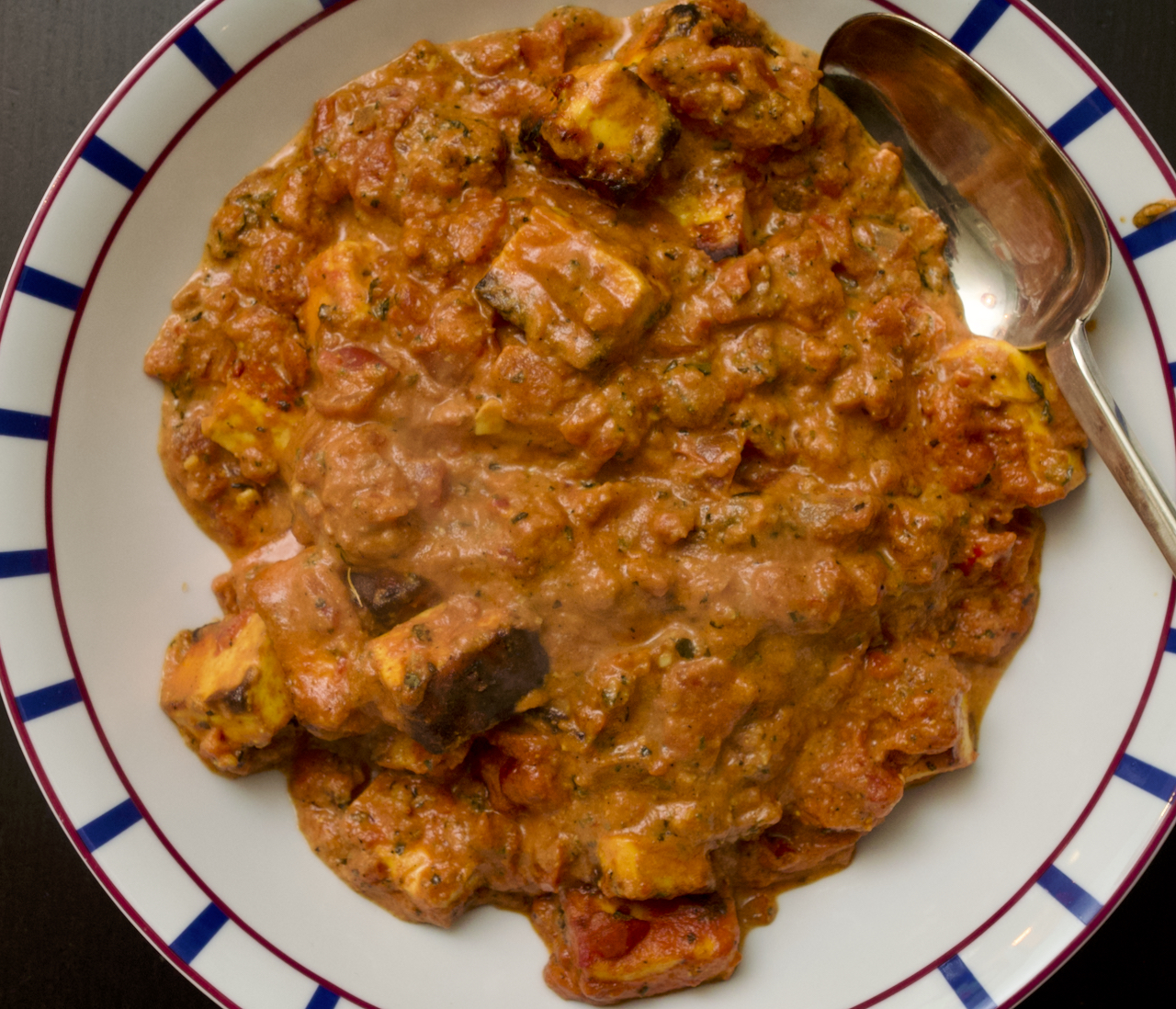
This is baked in the oven and couldn’t be easier to make. Serve with naan breads.

Butter Paneer – serves 4

FOR THE PANEER:

  • rapeseed oil
  • 600g hard paneer, cut into large cubes
  • 6 cloves of garlic, crushed
  • 2cm x 2cm ginger, finely grated
  • 1 tsp Kashmiri chilli powder
  • ½ tbsp lemon juice
  • ¾ tsp salt
  • ½ tsp ground turmeric
  • 5 tbsp Greek yoghurt

FOR THE BUTTER SAUCE:

  • 1 tsp Kashmiri chilli powder
  • 1 tsp garam masala
  • 1 tsp ground cumin
  • ½ tsp ground cardamom
  • ¾ tsp salt
  • 2 tbsp runny honey
  • 2 x 400g tins finely chopped tomatoes
  • 150ml double cream
  • 1½ tbsp kasoori methi
  • a slab of butter

Preheat the oven to 200C fan/ 220C/ gas 7.

Line a large, deep baking tray with non-stick baking paper and brush it lightly with oil.

Put the panneer cubes into a large bowl and add half the garlic, half the ginger, the chilli powder, lemon, salt, turmeric and yoghurt. Mix well to coat the paneer, then tip into the lined tray.

Bake the panner in the oven for 25 minutes or until it’s starting to blacken at the edges.

Take the tray out of the oven and stir in 3 tbsp of oil and the rest of the garlic and ginger, then add the spices for the sauce, the salt and the honey. Stir to mix well, then add the tomatoes, making sure the paneer is completely covered. Return to the oven for another 30 minutes.

Remove the tray from the oven and stir through the cream, crumble over the kasoori methi, then stir again and put back in the oven for another 10 minutes. Remove the tray from the oven and stir in the butter. Serve with hot naan breads.

(Original recipe from Dinner by Meera Sodha, Penguin: Fig Tree, 2024.)

Read Full Post »

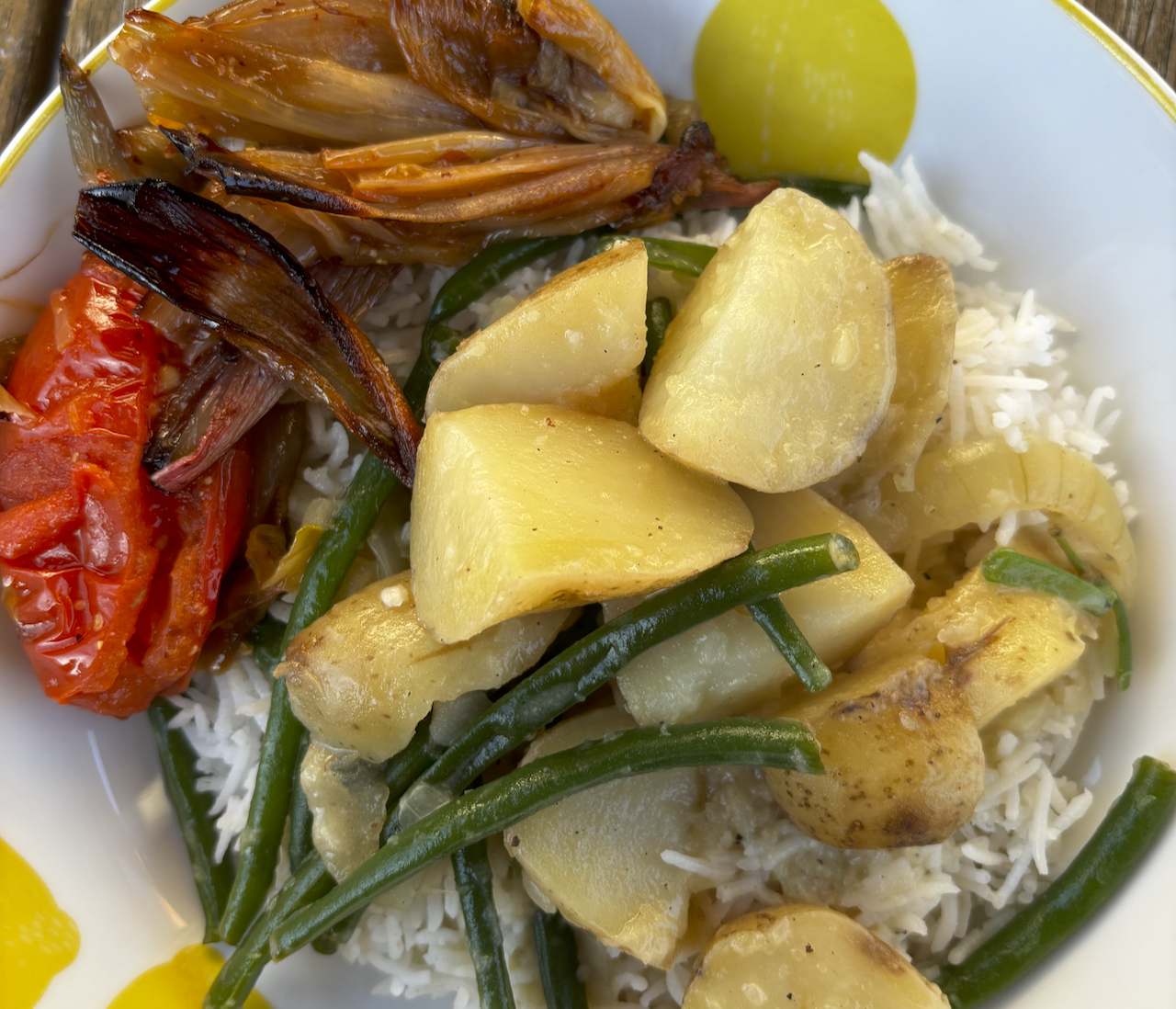
A gently spiced curry that reaches new heights when served with tamarind shallots. We’ll be making it again.

Wine Suggestion: We think this goes really well with a slightly honeyed, just off-dry Chenin Blanc like the Domaine Aubuisieres Vouvray Silex. With a touch of residual sugar this is rounded and smooth. And with the tart tamarind and sweet shallots it’s a joy.

New potato & green bean istoo with tamarind shallots – serves 4

  • 2 tbsp rapeseed oil
  • 10 fresh curry leaves (we buy them in the Asia market and freeze them)
  • 4cm cinnamon stick, broken in two
  • 1 medium onion, sliced
  • 2cm fresh ginger, peeled and finely grated
  • 4 cloves of garlic, crushed
  • 1 green finger chilli, slit
  • 650g baby new potatoes, quartered
  • 1 tsp each of salt and freshly ground black pepper
  • 1 x 400ml tin of coconut milk
  • 250g green beans, trimmed
  • cooked basmati rice, to serve

FORT THE TAMARIND SHALLOTS:

  • 800g banana shallots
  • 400g vine tomatoes
  • 1 tsp cumin seeds
  • ½ tsp black mustard seeds
  • 5 tbsp rapeseed oil
  • ¾ tsp salt
  • 2 tsp tamarind paste
  • 8 fresh curry leaves
  • 1 green finger chilli, slit

Heat the oil for the istoo over a medium heat in a large casserole dish. Once hot, add the curry leaves, cinnamon stick and onion. Cook for 8-10 mintues or until the onion is very soft but not coloured. Stir in the ginger, garlic and chilli and cook for another 2 minutes.

Add the potatoes, salt and pepper, then stir in the coconut milk. Fill the empty can with 100ml of water and add to the casserole. The potatoes need to be just covered so add a little more water if you need. Bring to the boil over a medium heat, then turn down and simmer for 10 minutes.

Add the green beans, then cover and simmer until the beans and potatoes are tender – about 5-6 minutes.

FOR THE TAMARIND SHALLOTS:

Preheat the oven to 180C fan/200C/gas 6 and line two large baking trays with foil.

Top and tail the shallots, then cut them in half lengthways and peel off the skin. Put the shallots onto one of the two lined trays, breaking them up a little as you go – they should be in a single layer. Halve the tomatoes and place these on the other tray.

Grind the cumin and mustard seeds together in a pestle and mortar to a coarse powder. Add the oil and salt, then pour over the shallots and tomatoes, mixing with your hands to coat the shallots.

Bake for 25 minutes, turning the trays halfway, then remove from the oven and tip the tomatoes onto the shallot tray and add the tamarind, curry leaves and chilli. Carefully mix with a wooden spoon, then bake for another 5-8 minutes, until they are starting to char here and there. Transfer to a bowl and serve with the istoo and cooked basmati rice.

(Original recipe from East by Meera Sodha, Penguin: Random House, 2019.)

Read Full Post »

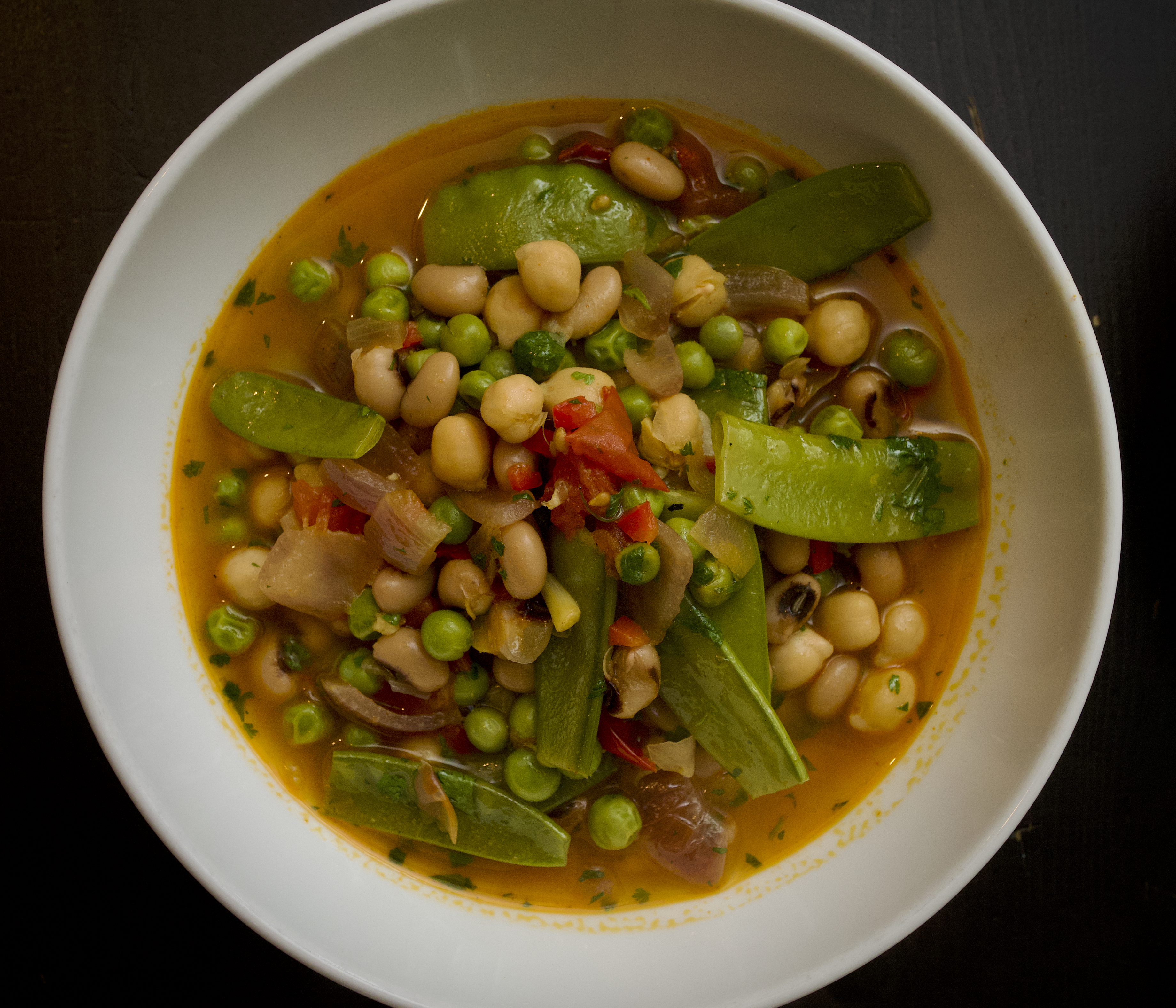
Our favourite vegetarian cookbook at the moment is East by Meera Sodha. This is an Indian main course dish but it’s like a soup and works well as both a mid-week dinner, and in a flask for lunch the next day. Also vegan and gluten-free if this is useful information for you. Serve with crusty bread.

Black-eyed bean and chickpea usal – serves 4

  • 4 tbsp rapeseed oil
  • 2 red onions, chopped
  • 2 long green chillies, very finely chopped
  • 4 cloves of garlic, crushed
  • 2 large vine tomatoes, chopped
  • 1¾ tsp salt
  • 1 tsp Kashmiri chilli powder
  • 1 tsp garam masala
  • 1 tsp ground cumin
  • ½ tsp ground turmeric
  • 1 x 400g tin of black-eyed beans, drained
  • 250g frozen peas, defrosted
  • 1 x 400g tin of chickpeas, drained
  • 200g mangetout
  • 1 tbsp lemon juice
  • a handful of coriander leaves, finely chopped

Heat the oil in a saucepan over a high heat. Add the onion and chillies and cook for about 10 minutes, then add the garlic and cook for a minute more.

Add the tomatoes and cook for about 5 minutes or until they have broken down, then add the salt and spices and stiry-fry for another minute.

Stir in the black-eyed beans, peas, chickpeas and mangetout and continue cooking for 5 minutes.

Add the lemon juice and coriander, then taste and season with more salt if needed.

(Original recipe from East by Meera Sodha, Penguin, 2019.)

Read Full Post »

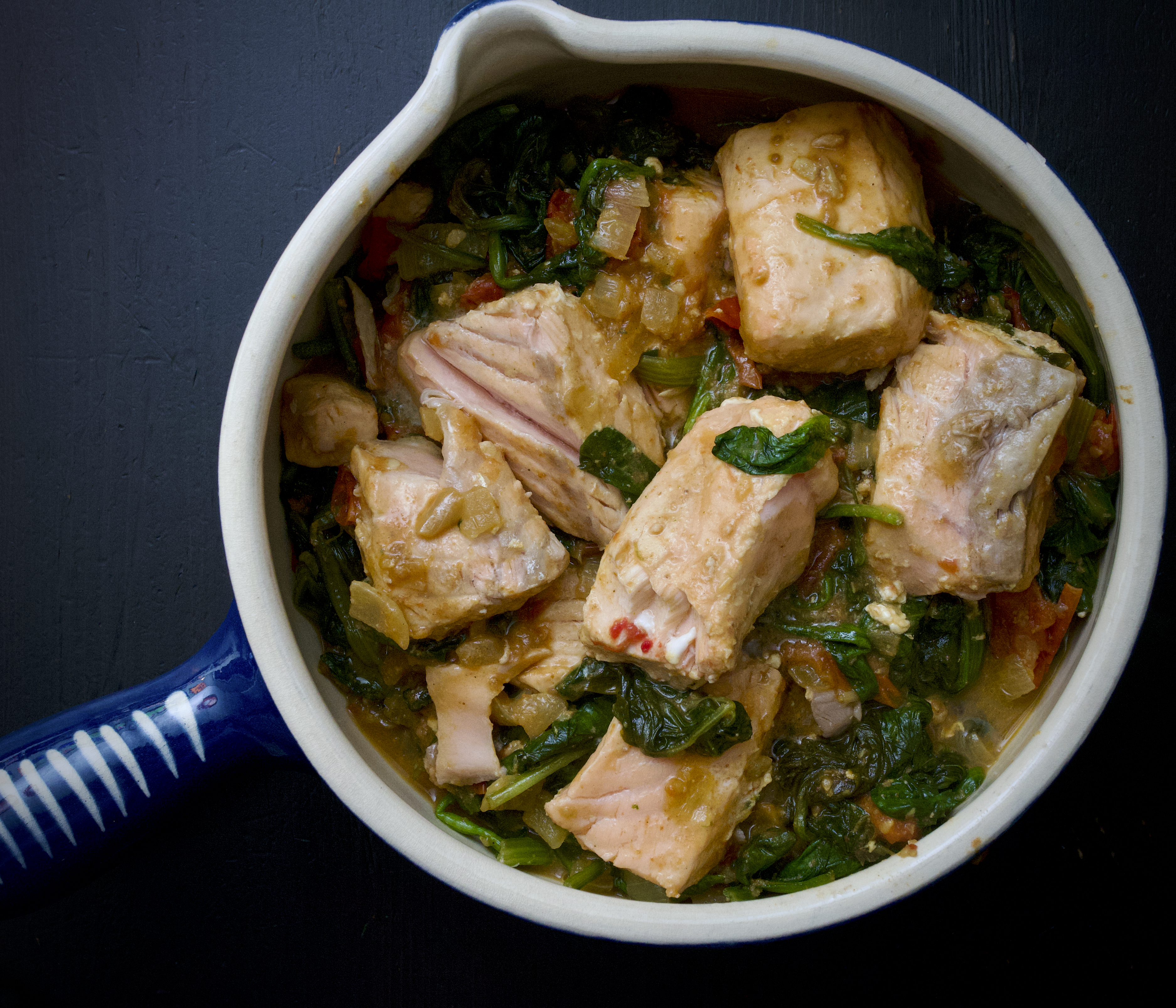
A lovely light curry from Made in India by Meera Sodha. It’s quick to make and perfect for a friday night. We served with rice.

Wine Suggestion: As this dish is quite light we think grenache based rosé is the way to go here with Chateau Pesquié Terrasses Rosé being our choice tonight. The delicate red fruits complementing the salmon really well and the open, softer nature of the grape taking on the spiciness and rounding it out.

Salmon and Spinach Curry – serves 4

  • 2 tbsp rapeseed oil
  • 1 cinnamon stick
  • 6 whole peppercorns
  • 2 cloves
  • 1 large onion, chopped
  • ½ tsp brown sugar
  • 250g ripe tomatoes, roughly chopped
  • 4cm piece of ginger, peelend and finely grated
  • 4 clove of garlic, crushed
  • 1 fresh green chilli, finely chopped
  • ¼ tsp garam masala
  • 1 tsp ground cumin
  • 1½ ground coriander
  • ¼ tsp ground turmeric
  • ½ tsp chilli powder
  • 1¼ tsp salt
  • 500g spinach leaves
  • 400g skinless salmon fillets

Heat the oil in a large deep pan with a lid. Add the cinnamon stick, peppercorns and cloves and fry for a minute or two until fragrant.

Stir in onion and brown sugar, then cook for 10-12 minutes until golden and caramelized. Stir in the tomatoes, then cover with a lid and leave to cook for about 5 minutes, or until the tomatoes start to soften.

Add the ginger, garlic, and green chilli, then stir in the garam masala, cumin, coriander, turmeric, chilli powder and salt. Cook the mixture, stirring so it doesn’t stick, for about 8 minutes. It will start to look like a paste. Add the spinach, turn the heat down and cover with the lid until wilted.

Cut the salmon into very big chunks (about 6cm x 6cm) and add them to the pan. Coat in the tomato and spinach sauce but be careful not to break them up. Cover with the lid for 5-7 minutes, or until the fish is cooked through.

Remove the cinnamon stick, check the seasoning and serve with rice.

(Original recipe from Made in India by Meera Sodha, Penguin:Fig Tree, 2014.)

Read Full Post »

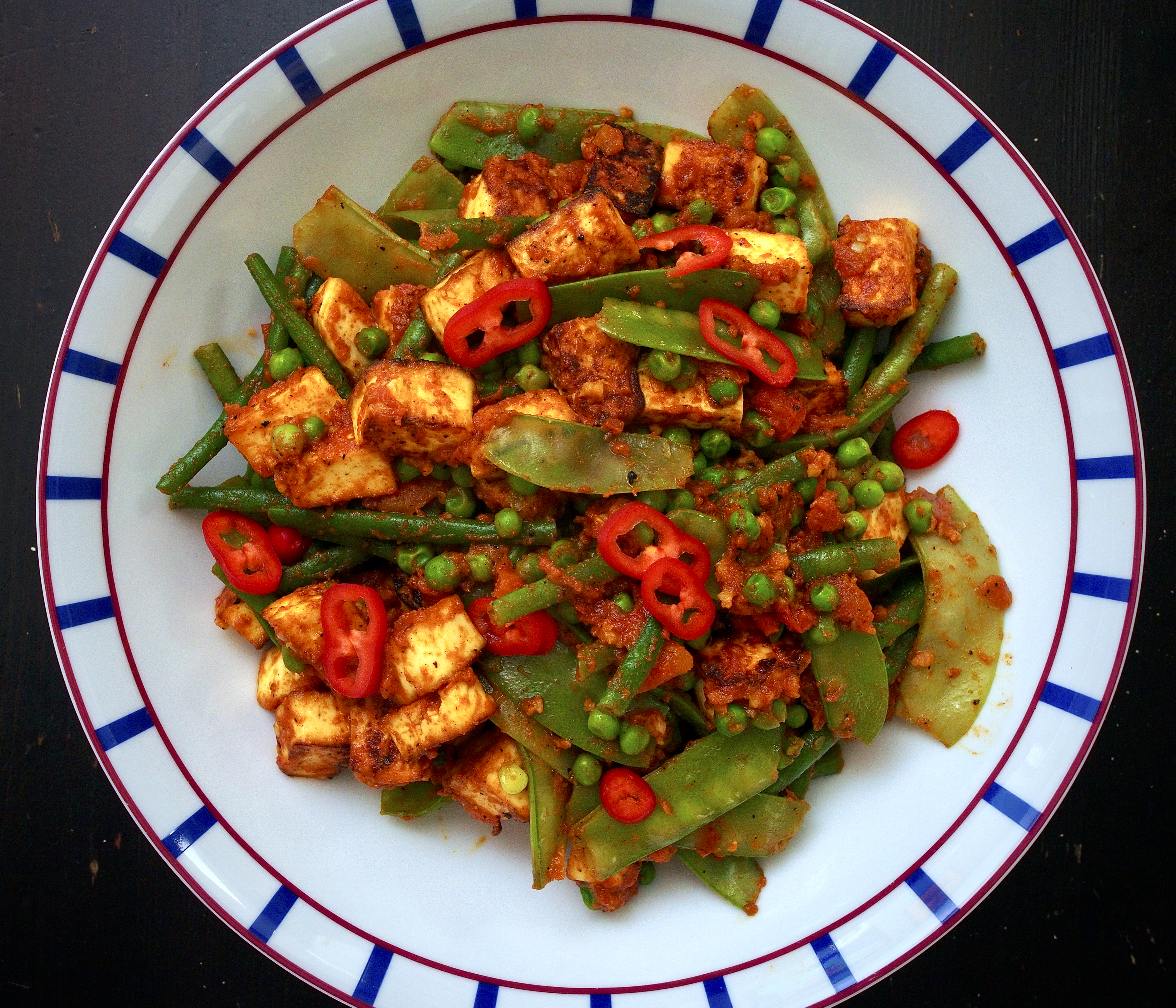
This is Meera Sodha’s fresh take on Matar Paneer, which is usually a richer dish. Delicious with warm naan breads and plain yoghurt, this version could easily become a regular favourite.

Fresh Matar Paneer – serves 4 as a main or more as a side with other dishes

  • rapeseed oil
  • 550g hard paneer, cut into 1.5cm cubes
  • 6 cloves of garlic, crushed
  • 400g tin chopped tomatoes
  • 1¼ tsp salt
  • ½ tsp ground black pepper
  • 1 tsp ground cumin
  • 1 tsp chilli powder
  • ½ tsp ground turmeric
  • 200g green beans
  • 200g mangetout
  • 200g frozen peas (defrosted), or you can use fresh of course if you have them
  • 1 red chilli, finely sliced to serve

Heat a couple of tbsp of the oil in a large frying pan. Fry the panner over a medium heat until browned and crisp all over, then remove to a plate with a slotted spoon and set aside.

Heat another tbsp of oil in the pan, then add the garlic and stir-fry for a couple of minutes (make sure the frying pan isn’t too hot when you add the garlic or it will burn). Add the tomatoes and cook for about 6 minutes or until just turning jammy. Add the salt, pepper, cumin, chilli powder and turmeric, then stir for another minute before taking off the heat.

Bring a large pan of water to the boil and add salt. Add the green beans and cook for 2 minutes, then add the mangetout and cook for another 2 minutes. Add the peas and cook for 1 more minute, then drain and leave to steam dry.

Heat the sauce, then stir in the paneer. When both are hot, stir in the veg. Sprinkle over the sliced red chilli and serve.

(Original recipe from Fresh India by Meera Sodha, Fig Tree, 2016.)

Read Full Post »

There has been a packet of mung dal in our cupboard for quite some time now which is really the only reason why we made this lovely dish from Meera Sodha’s East. We’re definitley tempted to buy another packet so we can make it again. Serve with steamed rice.

  • 300g mung dal
  • 250g vine tomatoes, chopped
  • 3 big garlic cloves, crushed
  • 2.5 cm piece of ginger, grated
  • ½ tsp ground turmeric
  • 1 tsp chilli flakes
  • 3 tbsp rapeseed oil
  • 10 fresh curry leaves
  • 1½ tsp salt
  • 1½ tsp black mustard seeds
  • 1 tsp cumin seeds
  • 1 long green chilli, very finely chopped
  • a handful of fresh coriander, chopped

Put the mung dal, tomatoes, garlic, ginger, tumeric, chilli flakes, 1 tbsp of oil, 4 curry leaves and 1.25 litres of water into a large saucepan. Put the pan over a medium heat, with the lid ajar, and bring to the boil, then turn down and simmer for 30-40 minutes. Give it a stir now now and again. It’s ready when soft and quite thick, then stir in the salt.

Heat 2 tbsp of the oil in a small frying pan over a medium heat until smoking hot, then add the mustard and cumin seeds, the chilli and the rest of the curry leaves. The leaves should crisp and the seeds start to pop after about a minute, then remove from the heat and pour over the dal. Stir to mix, then sprinkle over the coriander and serve.

(Original recipe from East by Meera Sodha, Fig Tree, 2019.)

Read Full Post »

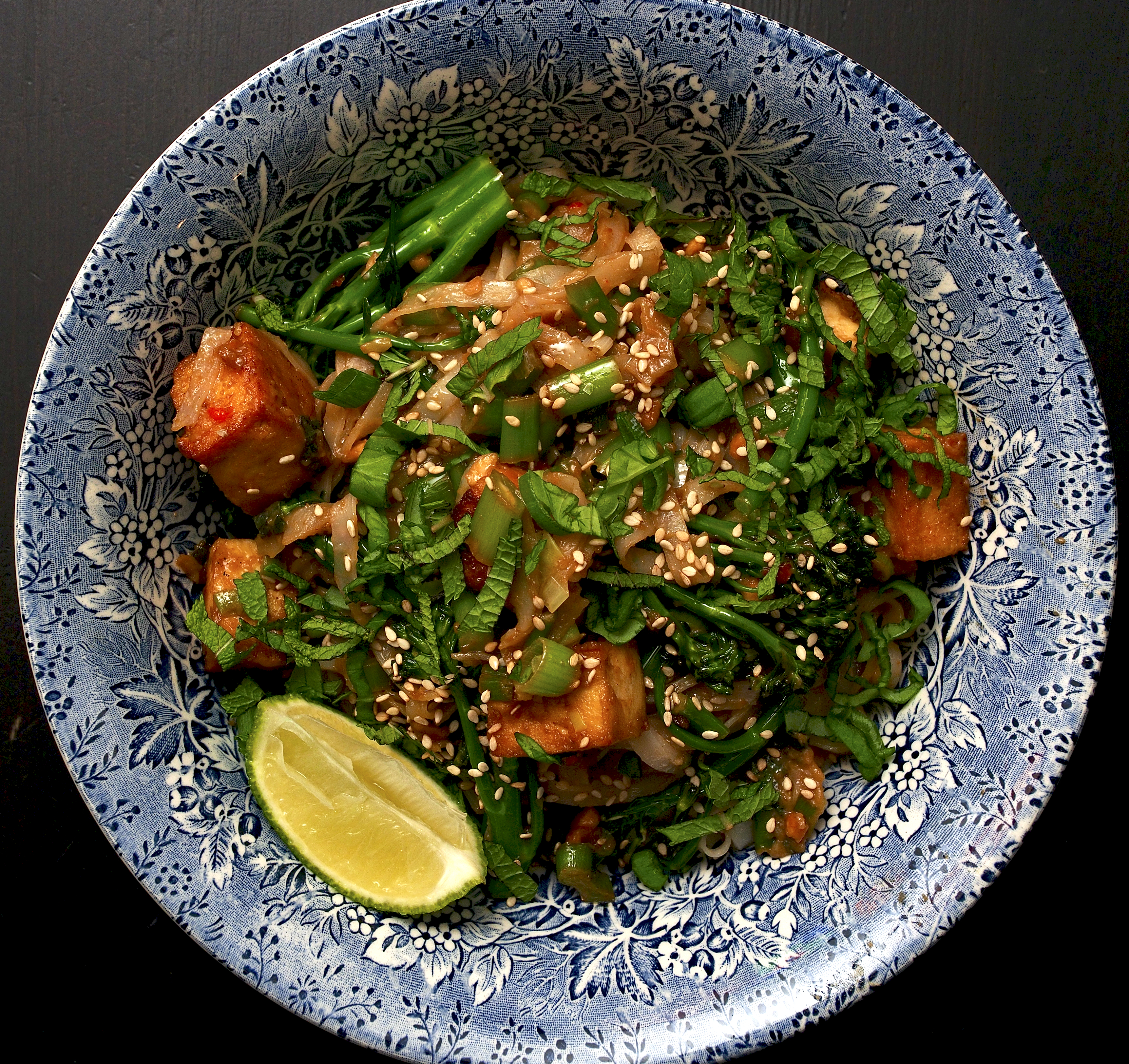
It’s about this time of year when purple sprouting broccoli arrives and saves us from the monotony of root veg. We’ve yet to be rescued and therefore had to use some imported tenderstem instead, which was fine, but definitely inferior to the local purple variety.

Wine Suggestion: We think this goes really well with Viognier. A richer, more aromatic white with a bit of phenolic grip as opposed to acidity and compliments the richness and body of the food. This wouldn’t work if the acidity was too high. A good, well-priced suggestion is the Cline Cellars North Coast Viognier, from a selection of well sited organic vineyards on the Sonoma coast in California. Well judged and avoids some of the OTT characters other Californian wines can exhibit.

Peanut Butter and Broccoli Pad Thai – serves 4

FOR THE SAUCE:

  • 6 tbsp crunchy peanut butter
  • 2 tbsp tamarind paste
  • 3 tbsp runny honey
  • 4 tbsp soy sauce
  • 3 tbsp fresh lime juice

FOR THE TOFU & BROCCOLI:

  • 450g purple sprouting broccoli or other long-stemmed broccoli, put the florets to one side and cut the stalks into 1cm pieces
  • 3 cloves of garlic, crushed
  • 1.5cm ginger, peeled and grated
  • 2 bird’s eye chillies, finely chopped
  • 225g firm tofu, drained and cubed
  • 250g flat folded rice noodles
  • rapeseed oil
  • 6 scallions, finely chopped
  • a handful of sesame seeds
  • a handful of Thai basil leaves, shredded (use regular basil if you have to)
  • a handful of fresh mint leaves, shredded
  • 1 lime, cut into 4 wedges

Make the sauce by mixing the peanut butter, tamarind paste and honey in a bowl, then slowly mix in the soy sauce, lime juice and 4 tbsp of water.

Cook the noodles according the instructions on the pack, then rinse under cold water, drain, and drizzle with a tbsp of rapeseed oil. Toss gently with your hands.

Heat 2tbsp of rapeseed oil, over a medium-high heat, in a large non-stick pan or wok with a lid. Fry the tofu for 5 minutes, turning every minute, until pale golden. Add the ginger, garlic and chilli and cook for 2 minutes, then add the broccoli stalks and 4 tbsp of water. Cover the pan and steam for 2 minutes or until the stalks are tender. Add the broccoli florets, the sauce and scallions (reserving a few to garnish), stir to combine, then cover again and leave for 2 minutes.

Turn the heat down to the lowest setting, then add the noodles a handful at a time, mixing them in gently to coat with the sauce, then turn off the heat.

Divide the noodles between 4 bowls, sprinkle with sesame seeds and scallions, then drizzle over some sesame oil and scatter over the herbs. Add a generous squeeze of lime and serve.

(Original recipe from East by Meera Sodha, Fig Tree: Penguin Books, 2019.)

Read Full Post »

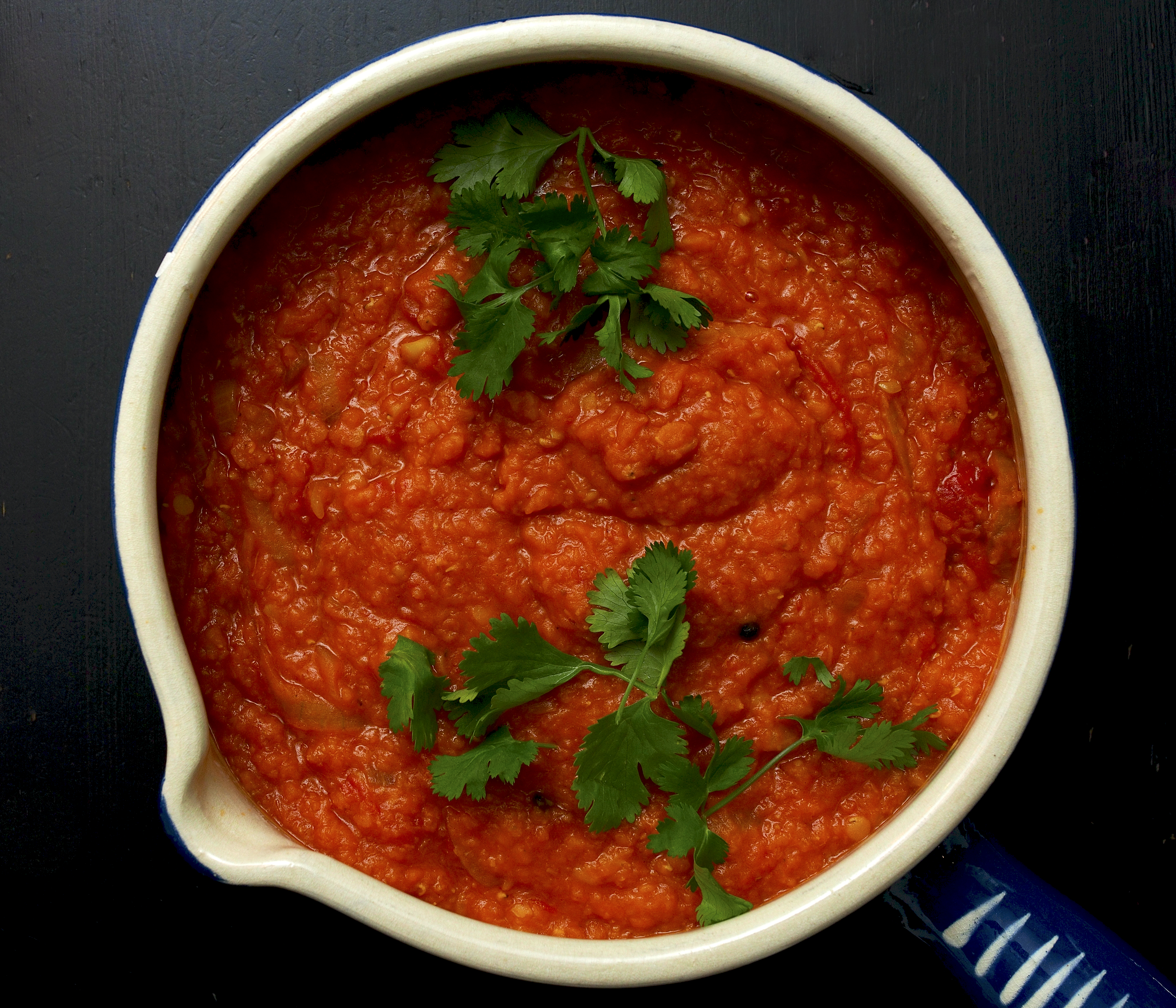
Meera Sodha’s daily Dal that she inherited from her mother. Nothing complex but very satisfying and like so many dishes, tastes better the next day. We served with rice, naan bread from the takeaway, yoghurt and mango chutney.

Daily dal – serves 4

  • 225g red lentils
  • 2 tbsp rapeseed oil
  • 12 peppercorns
  • 4 cloves
  • 1 onion, thinly sliced
  • 4 cloves of garlic, crushed
  • 6cm ginger, peeled and finely grated
  • ½ tsp chilli powder
  • ½ tsp ground coriander
  • ½ tsp ground turmeric
  • 1 tsp salt
  • 400g tin plum tomatoes

Rinse the lentils in a sieve until the water runs clear then put into a deep saucepan with a lid. Add 600ml of cold water, then bring to the boil over a medium-high heat. Cover with the lid and simmer gently for 10-15 minutes without stirring, until tender.

Meanwhile, put the oil into another deep saucepan. When hot, add the peppercorns and cloves and stir-fry for a minute, or until fragrant, then add the onion and cook for 8-10 minutes, until golden. 

Add the garlic and ginger and stir-fry for another 4 minutes before adding the chilli powder, coriander, turmeric and salt. Stir well, then add the tinned tomatoes, crushing them with your hand, then cover and simmer gently for about 8 minutes. 

The tomatoes should look paste-like now with only a little juice. Add the lentils using a draining spoon, then pour in any remaining water that they were boiling in, a little at a time, or until the consistency is good. 

Cover the pan again and cook on a low heat for a final 10 minutes. 

Taste and season with salt and more chilli if you like. 

(Original recipe from Made in India by Meera Sodha, Penguin: Fig Tree, 2014.)

Read Full Post »

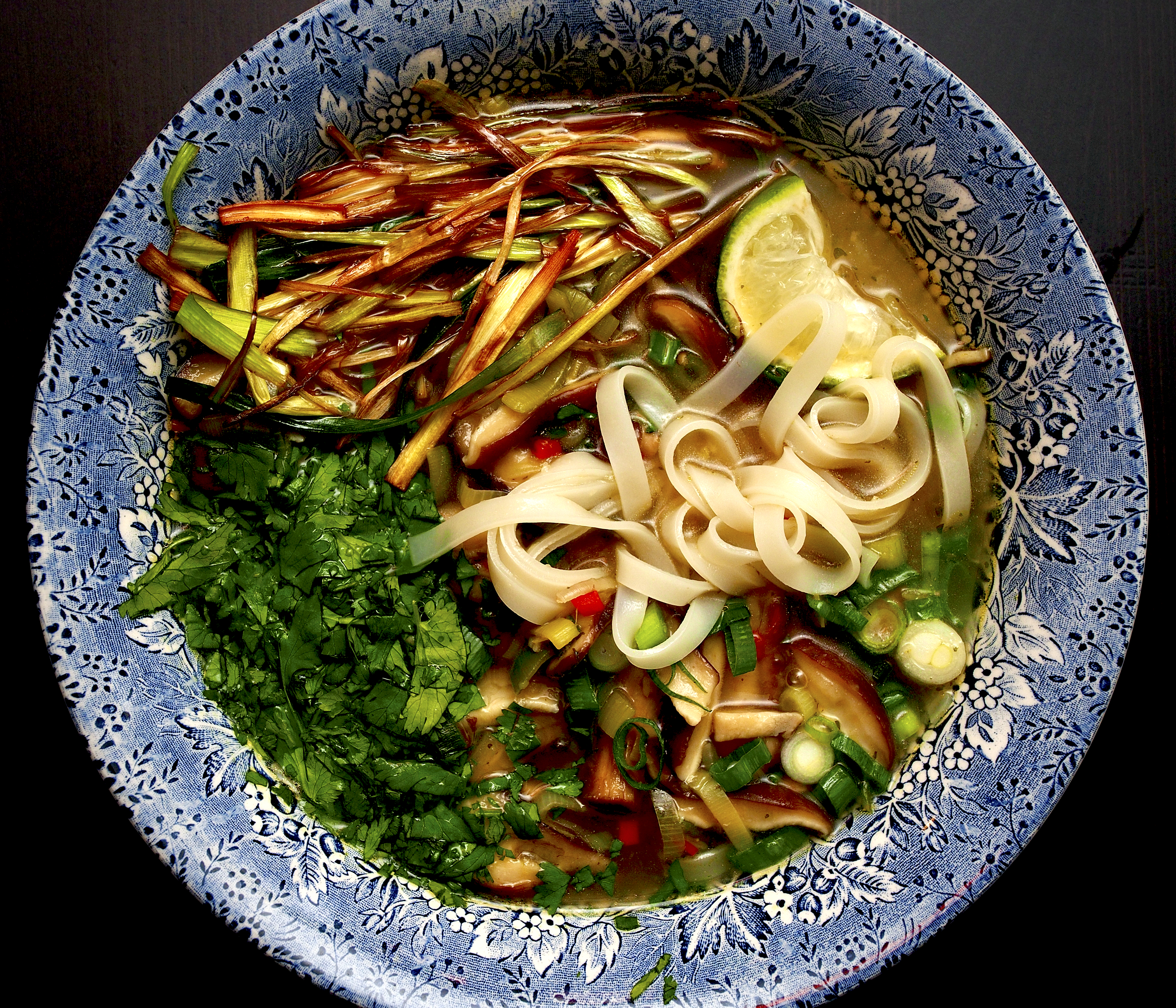
We made this on the first of January. We don’t do veggie January or veganuary but after all the rich food of November and December we were looking forward to some lighter dishes and this felt just right; both elegant and light, but full of lovely layers of flavour and textures.

Wine Suggestion: serve this with an umami rich red wine, but one that isn’t too fruity and rich either. If you can plump for an older, good Barolo lucky you, but tonight we were still lucky enough to have Domaine Jamet’s Côtes du Rhône: 100% northern Rhône Syrah with depth and personality, plums and brambles, peppery spice and savouriness.

Shiitake pho with crispy leeks – serves 4

  • 4 tbsp rapeseed oil, plus extra for shallow-frying
  • 4 banana shallots, thinly sliced (just use an onion if you don’t have shallots)
  • 5cm piece of ginger, peeled and grated
  • 1 star anise
  • 3 cloves
  • 1 cinnamon stick
  • 2 leeks, 1 sliced the other shredded into long strips
  • 2 bird’s eye chillies, very finely chopped
  • 375g fresh shiitake mushrooms, thinly sliced
  • 1 tbsp light soy sauce
  • 6 scallions, very finely sliced
  • 2 litres vegetable stock (vegan if you wish)
  • 200g flat rice noodles
  • a large handful of fresh coriander leaves, shredded
  • 1 lime, quartered

You need a very big pot for this, at least 3 litres.

Heat the oil in the large pot and fry the shallots for 5 minutes. Add the ginger, star anise, cloves and cinnamon stick, then fry for another 5 minutes or until starting to colour and stick.

Add the finely sliced leek, chillies and mushrooms, and stir-fry for 8-10 minutes, until softened, then add the soy sauce, half the scallions and the stock. Bring to the boil, turn the heat down very low and leave to simmer. Season to taste with salt.

Meanwhile, fry the shredded leek. Pour enough oil into a frying pan to come up to 1cm up the sides, then heat over a medium flame until very hot. Fry the shredded leek in batches, until crispy and golden, then use a slotted spoon to transfer to a plate lined with kitchen paper to drain. Cook the noodles according to the instructions on the pack and drain.

To serve, divide the noodles between 4 large bowls, then ladle the broth on top. Scatter with the coriander, the crispy leeks, scallions and a squeeze of lime.

(Original recipe from East by Meera Sodha, Fig Tree, 2019.)

Read Full Post »

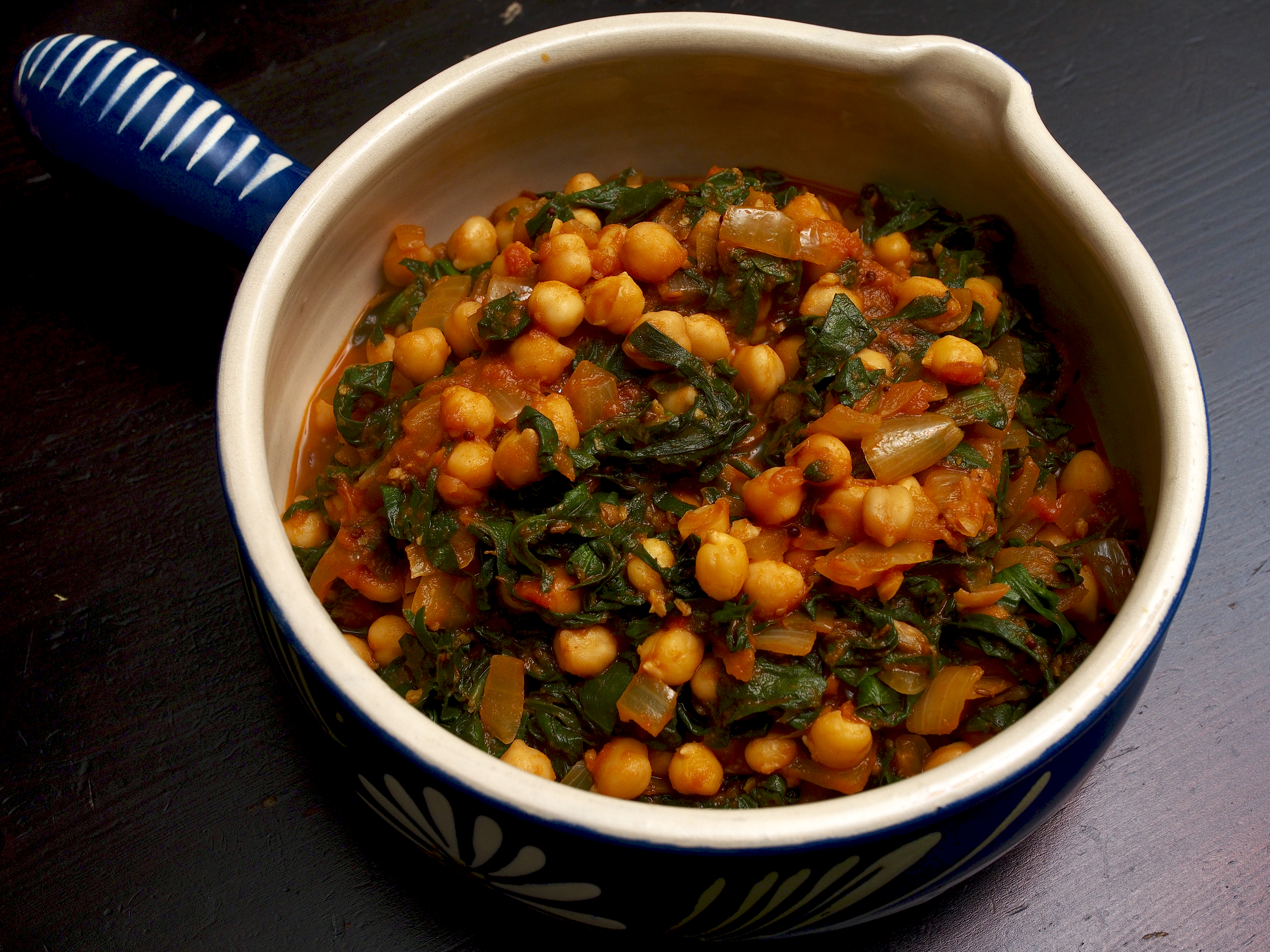
We adore spinach and dishes that are full of it, like this spinach, tomato & chickpea curry. Great served with rice or naan breads and some yoghurt. Couldn’t be easier!

Wine Suggestion: A dish like this loves medium weight Grenache based wines like Roc des Anges, l’Effet de Papillon rouge. A velvety, juicy, damson and raspberry flavoured glass with hints of spice.

Chana Saag – Spinach, tomato & chickpea curry – serves 4

  • 3 tbsp rapeseed oil
  • ½ tsp black mustard seeds
  • 1 tsp cumin seeds
  • 2 large onions, diced
  • 5 cloves of garlic, crushed
  • 2cm ginger, peeled and grated
  • 1 x 400g tin of plum tomatoes
  • 2 x 400g tin of chickpeas, drained
  • 1½ tsp ground coriander
  • 1 tsp chilli powder
  • ½ tsp ground turmeric
  • 1 tsp salt
  • 500g baby spinach, washed

Heat the oil in a large pan over a medium heat, then add the mustard seeds and cumin seeds. Stir for a minute, then add the chopped onions.

Fry for 10 to 12 minutes or until starting to caramelise, then add the garlic and ginger. Stir-fry for a few minutes, then add the tomatoes, crushing them with you hand as they go in. Fill the tin a third full with water and add to the pan.

Cook for 10 minutes or until quite dry and paste-like, then add the chickpeas. Warm through for a few minutes, then add the coriander, chilli powder, turmeric and salt. Stir well to combine, then add the spinach and stir until wilted.

Cook for about 5 minutes or until the spinach is cooked. Serve with naan bread or basmati rice and some yoghurt.

(Original recipe from Fresh India by Meeera Sodha, Fig Tree, 2016.)

Read Full Post »

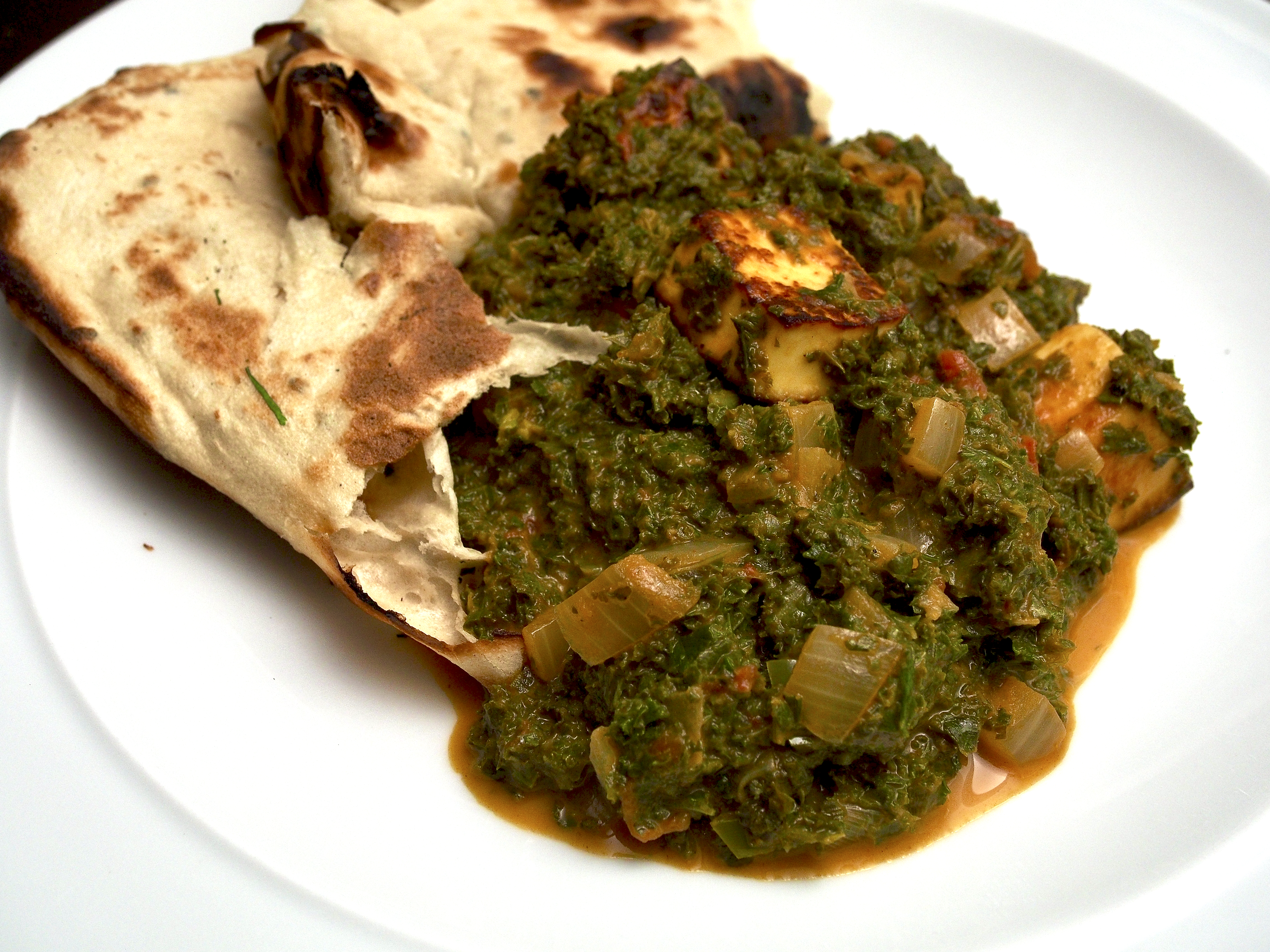
Paneer, Tomato and Kale Saag

This is from Meera Sodha’s amazing veggie book, East. We have Meera’s Indian recipe books and we often cook the recipes she writes for the Guardian. This book has an Eastern, but not exclusively Indian, influence and the recipes are mouthwateringly good. We’ve noticed people have mixed reactions towards kale, if you’re on the fence we reckon this is probably the best kale-based dish we’ve ever eaten. We served with naan bread from the local takeaway.

Panner, tomato & kale saag – serves 4

  • 500g kale, discard the stems and roughly chop the rest
  • rapeseed oil
  • 450g paneer, cut into 2cm dice (if you’re buying 200g packs just buy 2)
  • 2 onions, finely chopped
  • 2 cm ginger, peeled and grated
  • 4 cloves of garlic, crushed
  • 2 green finger chillies, finely chopped
  • 1 x 400g tin chopped tomatoes
  • 1½ tsp ground coriander
  • 1½ tsp ground cumin
  • ½ tsp ground turmeric
  • 1½ tsp salt
  • 1 tsp brown rice syrup (we used runny honey)
  • 1 x 400ml tin coconut milk

Blitz the kale in a food processor and chop it very finely. Unless your food processor is huge you will need to do a few batches.

Heat 2 tbsp of the oil in a large, nonstick frying pan, that you have a lid for. Fry the cubes of paneer for a couple of minutes on each side or until they have taken on a nice golden colour. Remove from the pan and set aside.

Heat another 2 tbsp of oil in the same pan and cook the onions over a medium heat for about 10 minutes or until soft. Add the ginger, garlic and chillies and continue to cook for another 5 minutes.

Stir in the tin of tomatoes and cook for 10 minutes or until reduced to a paste. Add the coriander, cumin, turmeric, salt and honey (or brown rice syrup) and mix in well.

Stir in a handful of kale at a time. It will seem like you have too much but it will wilt in perfectly. Stir in the coconut milk, then bring to a simmer, cover with a lid, and simmer gently for 15 minutes.

Add the paneer to the pan and cook for another 10 minutes with the lid on. Keep an eye that it doesn’t dry out and add a splash of water if necessary.

Taste to check that it has all come together and the kale is tender. Remove from the heat and serve with warm naan bread.

(Original recipe from East by Meera Sodha, Penguin Books, 2019.)

Read Full Post »