Feeds:
Posts
Comments

Posts Tagged ‘Recipe’

Fish Pie

Fish Pie

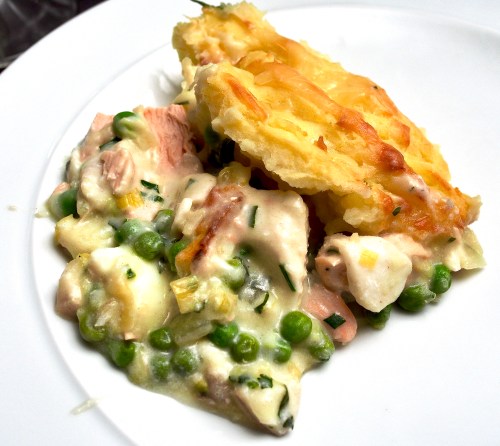
This is an excellent fish pie recipe by Marcus Waring. It makes a generous portion so great for feeding a crowd or you can divide it between two dishes and freeze some for later.

Wine Suggestion: A full-bodied Chardonnay is our choice for rich fish pies. Tonight it was Domaine Labet’s “en Billat” an ancient vine, jurassic soiled classic we are fortunate to have a few bottles of from holidays last year. Think of a majestic white Burgundy with altitude, and a concentration that 100 + year old vines can achieve.

Fish Pie – serves 6, generously

  • 1kg fish fillets (a mix of salmon & cod/haddock), skinned
  • 600-800ml whole milk
  • 2 bay leaves
  • 75g butter
  • 1 small onion, diced
  • 1 leek, white part only, sliced
  • 50g plain flour
  • 100ml white wine or white vermouth if you have it
  • 2 tbsp crème fraîche
  • 150g frozen peas, defrosted
  • 300g raw tiger prawns, shelled
  • 2 tbsp chopped flat-leaf parsley
  • 3 hard-boiled eggs, peeled and cut into chunky pieces
  • 2 tbsp capers, rinsed

FOR THE TOPPING:

  • 1.2kg potatoes, cut into chunks
  • 50g butter
  • splash of milk
  • 100g grated Cheddar cheese

Remove any bones from the fish with tweezers, then put into a large pan and pour in enough milk to cover. Add the bay leaves and some salt and pepper. Gently bring to the boil over a medium heat, then simmer for 5 minutes or until just cooked. Remove from the heat.

Melt a third of the butter in a large saucepan. Add the leeks and onion and cook gently until softened. Remove the leeks and onions from the pan and set aside. Melt the rest of the butter in the same pan and when it bubbles stir in the flour and cook for about 30 seconds, then add the wine or vermouth and stir to form a thick paste. Tip the leeks and onions back into the pan.

Strain the milk from the fish fillets into a measuring jug. Gradually add about 600ml of the milk to the leek mixture, stirring until the sauce bubbles and coats the back of a spoon. Stir in the crème fraîche and season again.

Flake the fish into chunky pieces and gently fold through the sauce along with the peas, prawns and parsley.

Spoon the mixture into a large ovenproof dish. Scatter the eggs and capers evenly over the top.

Preheat the oven to 200C/180fan/gas 6.

To make the topping, put the potatoes into a large saucepan, cover with water,  add a generous pinch of salt, and bring to the boil. Simmer for 15-20 minutes or until cooked through. Drain the potatoes and mash with the butter and enough milk to make a spreadable mash. Season.

Spread the potato over the fish and sprinkle with the grated cheese.

Bake for 20-30 minutes or until the top is golden and the sauce is bubbling.

(Original recipe from Marcus At Home by Marcus Wareing, HarperCollinsPublishers, 2016.)

Read Full Post »

Middle Eastern Shepherd's Pie with Spiced Parsnip Crust

Diana Henry’s book, Food from Plenty, is great for recipes that use leftovers. For this one we used a large amount of leftover lamb shoulder that had been roasted for hours on the bone in a spicy marinade. The leftover lamb was tasty as it was but was totally transformed in this recipe – super spicy and delicious! Don’t be tempted to skip the spicy onion topping.

Wine Suggestion: a medium bodied, juicy and youthful red with not too many tannins. Luigi Pira’s Barbera d’Alba was perfect, as was a quirky, earthy Poulsard from Stephane Tissot from the Arbois in eastern France … we had a few people over, so could try a few different wines which was fun.

Middle Eastern shepherd’s pie with spiced parsnip crust – serves 6

FOR THE MEAT:

  • 5 tbsp olive oil
  • 800g leftover cooked lamb, cut into small chunks
  • 2 onions, roughly chopped
  • 2 celery sticks, finely chopped
  • 2 carrots, diced
  • 6 garlic cloves, crushed
  • 2 tbsp ground cumin
  • 2 tsp ground mixed spice
  • 3 tsp ground cinnamon
  • 2 tbsp plain flour
  • 300ml chicken stock or lamb stock
  • grated zest and juice of 1 orange
  • 75g raisins, soaked in boiling water for 15 minutes and drained
  • 6 tbsp tomato purée
  • 75g pine nuts, toasted

FOR THE PARSNIP CRUST:

  • 450g floury potatoes, cut into chunks
  • 950g parsnips, chopped
  • 50g butter
  • 1 tsp ground cinnamon
  • 2 tsp cayenne pepper (this will make a very spicy mash so use less if you like)
  • 50ml whipping cream

FOR THE SPICED ONION TOPPING:

  • 2 onions, very finely sliced
  • 15g butter
  • 1½ tsp olive oil
  • ½ tsp ground cinnamon
  • 1 red chilli, deseeded and finely sliced
  • 3 tsp soft dark brown sugar
  • good squeeze of lemon juice
  • a small bunch of coriander or mint, roughly chopped

Heat the oil in a large casserole and brown the lamb, then scoop the lamb out and set aside.

Add the onions, celery and carrots to the same pan and cook until golden. Add the garlic and spices and continue to cook for another minute. Return the lamb to the pan and add the flour. Stir for a minute, then add the stock, zest, juice, raisins and tomato purée. Bring to the boil, then simmer for 45 minutes. You will need to keep stirring now and then to prevent the mixture from sticking. It should be thick but if it looks dry add a little more stock. Add the pine nuts.

Boil the potatoes and parsnips separately until soft. Drain the potatoes, then cover with a tea towel and  lid and allow to dry out over a low heat. Drain the parsnips and add to the potatoes. Heat the butter for the crust in a large saucepan with the spices. Add the potatoes and parsnips and mash, then add the cream and season to taste.

Preheat the oven to 180C/350F/gas mark 4.

Spoon the lamb into a large pie dish, spread the mash on top and bake in the oven for 25 minutes or until golden and bubbling.

Meanwhile, fry the onions for the topping in the butter and oil until golden. Turn up the heat and keep cooking until starting to crisp. Add the cinnamon, chilli, salt, some salt & pepper, and sugar. Cook until slightly caramelised, then squeeze over the lemon juice and mix in the herbs. Pile the onions on top of the pie to serve.

(Original recipe from Food from Plenty by Diana Henry, Mitchell Beazley, 2011.)

Read Full Post »

Paneer, Tomato and Kale Saag

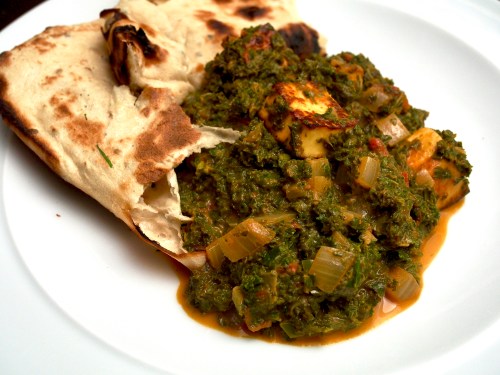
This is from Meera Sodha’s amazing veggie book, East. We have Meera’s Indian recipe books and we often cook the recipes she writes for the Guardian. This book has an Eastern, but not exclusively Indian, influence and the recipes are mouthwateringly good. We’ve noticed people have mixed reactions towards kale, if you’re on the fence we reckon this is probably the best kale-based dish we’ve ever eaten. We served with naan bread from the local takeaway.

Panner, tomato & kale saag – serves 4

  • 500g kale, discard the stems and roughly chop the rest
  • rapeseed oil
  • 450g paneer, cut into 2cm dice (if you’re buying 200g packs just buy 2)
  • 2 onions, finely chopped
  • 2 cm ginger, peeled and grated
  • 4 cloves of garlic, crushed
  • 2 green finger chillies, finely chopped
  • 1 x 400g tin chopped tomatoes
  • 1½ tsp ground coriander
  • 1½ tsp ground cumin
  • ½ tsp ground turmeric
  • 1½ tsp salt
  • 1 tsp brown rice syrup (we used runny honey)
  • 1 x 400ml tin coconut milk

Blitz the kale in a food processor and chop it very finely. Unless your food processor is huge you will need to do a few batches.

Heat 2 tbsp of the oil in a large, nonstick frying pan, that you have a lid for. Fry the cubes of paneer for a couple of minutes on each side or until they have taken on a nice golden colour. Remove from the pan and set aside.

Heat another 2 tbsp of oil in the same pan and cook the onions over a medium heat for about 10 minutes or until soft. Add the ginger, garlic and chillies and continue to cook for another 5 minutes.

Stir in the tin of tomatoes and cook for 10 minutes or until reduced to a paste. Add the coriander, cumin, turmeric, salt and honey (or brown rice syrup) and mix in well.

Stir in a handful of kale at a time. It will seem like you have too much but it will wilt in perfectly. Stir in the coconut milk, then bring to a simmer, cover with a lid, and simmer gently for 15 minutes.

Add the paneer to the pan and cook for another 10 minutes with the lid on. Keep an eye that it doesn’t dry out and add a splash of water if necessary.

Taste to check that it has all come together and the kale is tender. Remove from the heat and serve with warm naan bread.

(Original recipe from East by Meera Sodha, Penguin Books, 2019.)

Read Full Post »

Mushroom Stroganoff

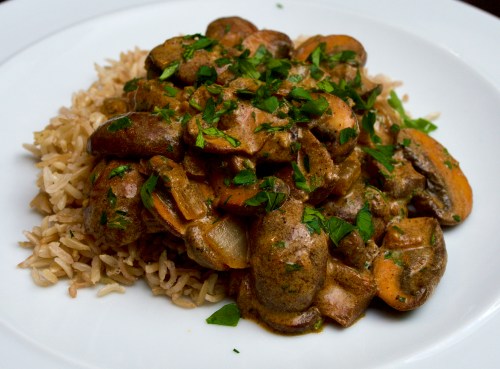
This is a healthy dish but it tastes really good and quick to cook so perfect for mid-week. We served with brown basmati but you use wild rice (or white rice of course).

Wine suggestion: really good with an earthy red wine and tonight it was off the beaten track, courtesy of a holiday last year to the Jura. Stephane Tissot’s Vieilles Vignes (old vine) Poulsard provided the answer. Lighter bodied but full of character and personality; we’re sorry we don’t see more of these, a thoroughly un-modern and thirst quenching wine.

Mushroom Stroganoff – serves 2

  • 2 tsp olive oil
  • 1 onion, finely chopped
  • 1 tbsp paprika
  • 2 garlic cloves, crushed
  • 300g mushrooms, chopped
  • 150ml beef stock or vegetable stock
  • 1 tbsp Worcestershire sauce
  • 3 tbsp half-fat sour cream – I’m pretty sure we will have just used full fat here, not being fans of half-fat anything!
  • small bunch parsley, roughly chopped
  • 250g cooked rice (you can use one of those pouches if cooked rice if you like)

Heat the oil in a large frying pan and cook the onion for about 5 minutes to soften. Add the garlic and paprika, then cook for another minute. Add the mushrooms and cook over a high heat, stirring, for about 5 minutes.

Pour in the stock and Worcestershire sauce. Bring to the boil, bubble for 5 minutes until the sauce thickens, then turn off the heat and stir in the sour cream and most of the parsley. Don’t do this over the heat or your sauce could split.

Serve with warm rice and the rest of the parsley.

(Original recipe from BBC Good Food)

Read Full Post »

Curried Squash, Lentil & Coconut Soup

It seems like there’s a storm every weekend in Ireland at the minute. Stuck indoors again it’s an opportunity to make some soup. This is the soup we made for Storm Jorge.

Curried squash, lentil & coconut soup – serves 6

  • 1 tbsp olive oil
  • 1 butternut squash, peeled, seeded and diced
  • 200g carrots, diced
  • 1 tbsp curry powder
  • 100g red lentils
  • 700ml veg stock
  • a tin of reduced-fat coconut milk
  • coriander and naan bread, to serve

Heat the oil in a large pot, then add the squash and carrots and toss around for a minute before stirring in the curry powder and cooking for a minute more. Add the lentils, the vegetable stock, coconut milk and some seasoning, then bring to the boil. Reduce the heat and simmer for 15-18 minutes or until the vegetables are soft.

Blitz the soup with a hand blender or food processor. Check the seasoning and serve with the coriander over the top and some naan bread on the side.

(Original recipe by BBC Good Food).

Read Full Post »

Smoked Haddock & Hollandaise Bake with Dill & Caper Fried Potatoes

We love hollandaise but very rarely make it. This is going to change now we know how to do this cheat’s version. It can be adapted very easily for Béarnaise sauce for steak by adding some fresh tarragon. It’s a revelation!

Wine Suggestion: matching milder haddock and the creamy hollandaise requires a delicate touch and we’d suggest a white with a touch of oak, but not too much. The easiest choice is a Chardonnay which we duly went for; a Château de Beauregard Saint-Véran. Medium bodied, this is made partially in stainless steel and the other half in oak and has a lovely apple, citrus and brioche flavour and a mineral freshness to balance.

Smoked haddock & hollandaise bake with dill & caper fried potatoes – serves 2

  • 150g baby spinach
  • 2 x 140g smoked haddock fillets (boycott the artificially dyed orange stuff)

FOR THE SAUCE:

  • 2 egg yolks
  • 1 tsp cornflour
  • 100ml double cream, plus a bit extra in case you need to rescue the hollandaise
  • 2 tsp white wine vinegar

FOR THE POTATOES:

  • 500g floury potatoes, peeled and chopped into 3cm chunks
  • knob of butter
  • 1 tbsp rapeseed oil, plus a bit extra
  • 2 shallots, peeled and finely sliced
  • 1 tbsp capers, drained
  • small handful of dill, leaves picked
  • 1 lemon, zested, then cut into wedges to serve

Put the potatoes into a pot and cover with cold water. Bring to the boil, then season with salt, cover with a lid, and simmer for 7-8 minutes or until tender but not falling apart. Drain and leave in the pot to steam dry.

Meanwhile, heat the oil and butter in a frying pan. Add the shallots and fry for 5 minutes or until soft. Add the potatoes and fry for 15 minutes or until crusty and browned.

To make the hollandaise you need to put the egg yolks into a bowl and whisk in the cornflour until smooth. Add the cream and the vinegar, and season well. Pour the sauce into a small saucepan and cook over a very low heat, whisking continuously, until it resembles a hollandaise sauce (like thin custard). If the sauce looks like it’s going to split or it’s getting too hot, just add another splash of cream and keep whisking. Check the seasoning and add a bit more salt or vinegar if needed.

Heat the grill to medium-high.

Heat a splash of oil in an ovenproof frying pan. Add the spinach and stir until just wilted, season with salt and black pepper. Turn the heat off and spread the spinach across the base of the frying pan. Lay the haddock fillets on top of the spinach, then pour over the hollandaise sauce. Put the pan under the grill for about 10 minutes or until the fish is cooked (it should flake easily) and the sauce is browned.

Toss the capers, dill and lemon zest over the cooked potatoes. Serve the potatoes with the fish and put the lemon wedges on the plates to squeeze over.

(Original recipe from BBC Good Food)

Read Full Post »

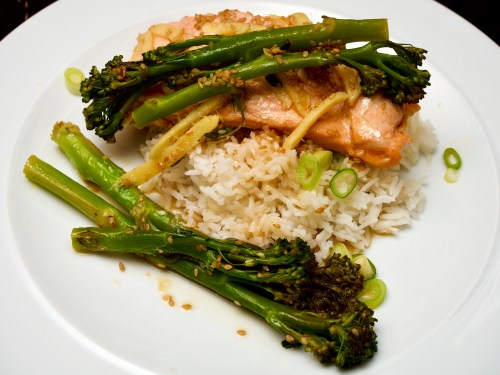
Baked salmon parcels with ginger, soy, honey, toasted sesame seeds & broccoli

We love a simple salmon recipe and this one, by Neven Maguire, is particularly handy as it’s all cooked in a tidy parcel in the oven. Serve with steamed rice with a some scallions sprinkled over.

Wine suggestion: delicious with a good, dry Riesling like Weingut Korrell’s Slice of Paradise from the Nahe in Germany which has a delicate dance of fruit, aromatics and a wonderful core of bright acidity and texture.

Soy and honey salmon parcels with tenderstem broccoli – serves 4

  • 2 tbsp toasted sesame seeds (just toast them gently in a dry frying pan)
  • 2 tbsp light soy sauce
  • 2 tbsp clear honey
  • juice of a lime
  • 1 garlic clove, crushed
  • rapeseed oil, for brushing
  • 4 x 100g salmon fillets, skin and bones removed
  • 250g tenderstem broccoli, trimmed
  • 2.5cm piece of ginger, peeled and cut into matchsticks
  • steamed basmati rice, to serve
  • finely chopped scallions, to serve

Preheat the oven to 200C/400F/Gas 6.

Whisk the sesame seeds, soy sauce, honey, lime juice and garlic together in a bowl, then set aside.

Cut out 4 squares of tin foil about 50cm square. Brush the foil with oil and put a piece of salmon in the middle of each one.

Blanch the broccoli for a minute, then drain and refresh in iced water.

Sprinkle the ginger over the salmon, then divide the broccoli between each parcel. Spoon over the soy sauce mixture and drizzle each piece of fish with about ½ tsp of oil. Fold the edges of the foil together to seal and place them on a baking tray.

Cook the parcels in the oven for 10 minutes or until the salmon is just cooked. You can leave it for a bit longer if you prefer your salmon well done but we wouldn’t recommend it.

Serve the parcels with a large bowl of rice sprinkled with the scallions.

(Original recipe from Neven Maguire’s Complete Family Cookbook, Gill Books, 2016.)

Read Full Post »

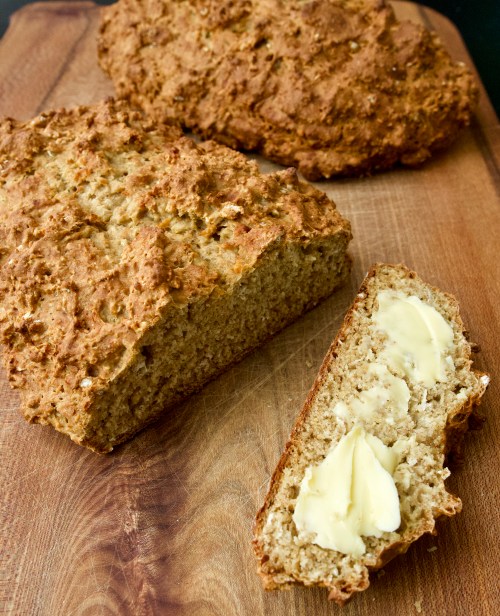
Maple Syrup and Buttermilk Soda Bread

This bread recipe by Monica Galetti couldn’t be easier and it tastes delicious. We only attempted it to use up some buttermilk but we’ll be making it again. Great on its own or with soup or cheese and still great toasted days later.

Maple syrup and buttermilk soda bread – makes 2 loaves

  • 250g strong white bread flour, plus extra for dusting
  • 250g wholemeal flour
  • 100g fine oats
  • 100g self-raising flour
  • 3 tsp bicarbonate of soda
  • ½ tsp salt
  • 25g softened butter
  • 500ml buttermilk
  • 150g maple syrup
  • 50g honey

Preheat the oven to 190C/375F/Gas 5.

Mix all of the dry ingredients in a large bowl, then add the butter, buttermilk, maple syrup and honey to make a wet dough. Knead gently for a minute, then shape into 2 rectangles on a lightly floured baking tray. Bake for 20-30 minutes or until golden brown.

(Original recipe from The Skills by Monica Galetti, Quadrille, 2016.)


Read Full Post »

Chicken with young ginger

We made this on Chinese New Year when the Chinese were unable to celebrate due to the outbreak of Coronavirus. Over a month later and we’re still not sure what the implications of the Covid-19 outbreak will be. In the meantime we’ll keep calm and carry on cooking.

This is a recipe by Fuchsia Dunlop who recommends using tender ginger that’s not too fibrous – it should be easy to snap off a piece with no fibres showing from the cut. We’re not sure our ginger quite met that criteria but the dish was very tasty nonetheless.

Wine Suggestion: white, aromatic and with a fresh acidity. Pikes “The Merle” Riesling from Clare Valley made a great aperitif while cooking and then stepped up and paired wonderfully.

Chicken with Young Ginger – nen jiang chao zi ji – serves 2 with rice

  • 75g plump fresh ginger (see note above), peeled and sliced very thinly
  • 1 scallion, white part only (save the green part), smacked with a cleaver or rolling pin
  • 350g boned chicken thighs, cut into 2cm cubes
  • 2 tbsp cooking oil
  • 1 tbsp Shaoxing wine
  • ¼ tsp potato starch mixed with ½ tsp cold water
  • a few 5cm pieces of scallion, green parts only
  • 1 tsp sesame oil
  • ground white pepper

FOR THE MARINADE:

  • ½ tsp salt
  • ½ tbsp Shaoxing wine
  • 2 tsp potato starch
  • 2 tsp cold water

FOR THE SAUCE:

  • 1 tsp light soy sauce
  • ½ tsp dark soy sauce
  • ½ caster sugar
  • 2 tbsp stock or water

Put the chicken into a bowl with the marinade ingredients and stir.

Combine the sauce ingredients in a small bowl.

Heat the oil in a wok over a high flame. Add the ginger and scallion white and stir-fry until fragrant. Add the chicken and continue to stir-fry over a high heat, until cooked through and beginning to colour.

Add the Shaoxing wine to the chicken, then stir the sauce and add to the wok. Bring to a fast boil and season with white pepper.

Stir the starch mixture and this to the wok, stirring. The sauce should thicken and become glossy.

Add the scallion greens and toss briefly, before removing the wok from the heat. Stir in the sesame oil and serve.

(Original recipe from Land of Fish & Rice by Fuchsia Dunlop, Bloomsbury, 2016.)

Read Full Post »

Ditali Pasta with Cauliflower, Saffron and Tomato Cream Sauce

We made this Sicilian pasta dish by Rick Stein on Valentine’s Day and it was lovely.

Wine Suggestion: this dish needs a rich white wine to match the cream and saffron and a vibrancy for the anchovies. We opened a Gulfi Carjcanti, a Sicilian white made from the local carricante grape. Complex and refreshing with apples, blossom and hints of sea breezes on the nose and vibrant, juicy and mineral on the palate.

Ditali pasta with cauliflower, saffron and tomato cream sauce – serves 4 (easily halved)

  • 25g anchovy fillets in olive oil, drained
  • 5 tbsp extra virgin olive oil
  • 50g fresh white breadcrumbs
  • 1 large cauliflower, broken into small florets (discard the core) – about 750g
  • 5 garlic cloves, finely chopped
  • 1 medium-hot red chilli, seeded and finely chopped or ½ tsp crushed dried chilli flakes
  • 3 tbsp sun-dried tomato paste
  • a large pinch of saffron strands
  • 450g ditali or other small tubular pasta
  • 5 plum tomatoes from a tin
  • 2 tbsp double cream
  • 2 tbsp chopped flat-leaf parsley
  • finely grated Parmesan, to serve

Melt the anchovies in a small frying pan over a lowish heat, then set aside.

Heat 1 tbsp of the olive oil in a large, deep frying pan, add the breadcrumbs and stir over a medium heat until golden and crispy. Season with salt and pepper, then tip onto a plate lined with kitchen paper.

Heat the remaining 4 tbsp of oil in the same pan, add the cauliflower and cook over a medium heat for about 5 minutes without colouring, until starting to soften. Add the garlic, chilli, season and cook for another minutes.

Mix the sun-dried tomato paste with 120ml of water and stir this into the cauliflower. Cover with a lid and cook over a low heat for 15 minutes or until just tender.

Meanwhile, pour 50ml of warm water over the saffron strands and leave to soak.

Bring a large saucepan of water to the boil and add lots of salt (Rick suggests 8 tsp – we just add a load). Cook the pasta according to the timings on the pack.

Add the saffron water, tomatoes and anchovies to the cauliflower and season. Increase the heat slightly and cook uncovered until the cauliflower is very soft. You might need to break it up a bit with a wooden spoon to help it along. When the cauliflower is completely soft add the cream and the parsley.

Drain the pasta and return to the pan. Add the cauliflower mixture and toss everything together well and spoon into warm bowls. Sprinkle with the breadcrumbs and cheese.

(Original recipe from Rick Stein’s Mediterranean Escapes, BBC Books, 2007.)

Read Full Post »

Caesar Salad

We’re not sure when Ceasar salad fell off the radar but it was resurrected by us on a Saturday night and tasted as good as ever. Particularly with roast chicken and chips.

Caesar Salad – serves 4

FOR THE CROUTONS:

  • 2 large cloves of garlic
  • 3 tbsp extra virgin olive oil
  • half a baguette, cut into small cubes

FOR THE SALAD:

  • 1 large egg yolk
  • 3 tbsp lemon juice
  • 1 medium clove of garlic, crushed
  • 4 good quality anchovies mashed with a fork (we like the tins of anchovies in olive oil by Ortiz)
  • 1 tsp Dijon mustard
  • 4 tbsp olive oil
  • 2 medium heads of romaine lettuce
  • 2 tbsp grated Parmesan

Preheat the oven to 200C/Gas 6.

Bash the two garlic cloves and put into a bowl with the cubed bread and olive oil. Toss with your hands to coat with the oil, then scatter over a roasting tray and bake for about minutes or until golden.

Put the egg yolk into a bowl and whisk in the lemon juice, garlic, anchovies and mustard. Start adding the oil, drop by drop to begin with and then you can progress to a slow stream, whisking all the time until emulsified.

Toss the lettuce and Parmesan together in a large bowl. Add the dressing and toss to coat the leaves, then scatter over the croutons to serve.

(Original recipe form Avoca Salads by Hugo Arnold, Avoca Ltd, 2007)

Read Full Post »

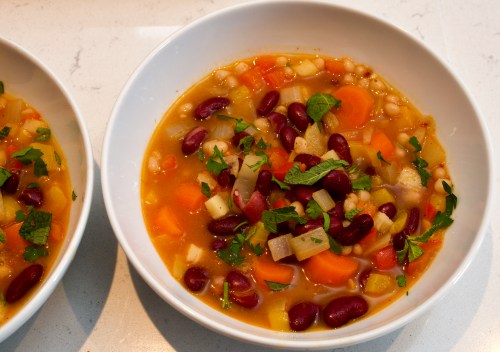
Monastery Soup

The second Bulgarian recipe we’ve cooked from Black Sea by Caroline Eden and one of the best soups we’ve had in ages. We think it’s the combination of sweet peppers and parsnip with the spicy broth that makes it so good. Serve with a good slick of olive oil and a dollop of sour cream on top.

Monastery Soup – serves 4

  • 2 tbsp sunflower oil
  • 1 large red or yellow pepper, diced very finely
  • 1 large onion, finely diced
  • 1 parsnip, finely diced
  • 2 carrots, sliced into thick rounds
  • 1 tsp sweet paprika
  • a good pinch of chilli flakes
  • 2 garlic cloves, crushed
  • 700ml veg stock
  • a tin of haricot beans, drained and rinsed
  • a tin of kidney beans, drained and rinsed
  • flat-leaf parsley & mint, chopped (to serve)
  • 1 tbsp extra virgin olive oil (to serve)
  • 2 tbsp sour cream or crème fraîche (to serve, optional but good)

Warm the sunflower oil in a large pot, then add the pepper, onion, parsnip and carrot with some salt. Cook for about 7 minutes or until the onion is translucent.

Add the paprika, chilli flakes, garlic and some black pepper and continue to cook for another few minutes. Add the stock and beans and turn up the heat. When the soup starts to boil, turn the heat down and leave to simmer for 20 minutes, or until the vegetables are cooked through (try one of the carrots). Remove from the heat and divide between warm bowls. Sprinkle over the herbs and a drizzle of olive oil. A spoon of sour cream on top is also really good.

(Original recipe Black Sea by Caroline Eden, Quadrille, 2018)


Read Full Post »

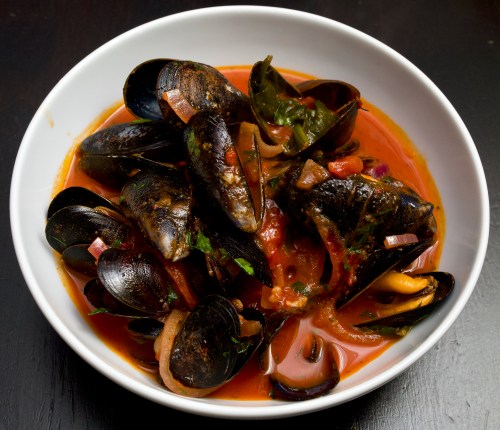
Spicy Dalboka Mussels

We cooked these mussels on Friday night form Caroline Eden’s ‘Black Sea’. A book that is as good to read as to look at. The recipe is Bulgarian with the mussels cooked in a spicy tomato soup. You will need lots of crusty white bread to go with.

Wine Suggestion: This pairs superbly with a good new world Pinot Noir, ideally from a producer that values freshness. If you can push the boat out a bit we’d suggest a Felton Road from Central Otago or a Tyler from Santa Barbera but tonight it was Newton Johnson’s Felicite from Hermanus to equally good effect.

Spicy Dalboka Mussels – serves 2 as a main or 4 as a starter

  • 500g mussels, scrubbed and beards and barnacles removed (chuck any that don’t close tightly when tapped)
  • 2 tbsp olive oil
  • 1 large red onion, finely sliced
  • 3 garlic cloves, crushed
  • 1 tsp chilli powder/pul biber (Turkish pepper flakes)
  • 1 tsp paprika
  • 10 pink peppercorns, crushed
  • 300ml vegetable stock
  • 1 tbsp white wine vinegar
  • 1 x 400g tin chopped tomatoes
  • a decent handful of spinach (or lovage when it’s around)
  • ¼ tsp salt
  • juice of ½ lemon
  • small bunch of dill, chopped
  • small bunch of parsley, chopped

Warm the olive oil in a large heavy-based casserole, then sauté the onion until translucent. Add the garlic, chilli, paprika and peppercorns, then the stock, vinegar and tomatoes – simmer for 15 minutes.

Turn the heat up to hight and add the mussels, spinach and salt. Cover and steam for a few minutes or until the mussels have opened (don’t eat any that haven’t opened).

Take the pan off the heat and add the lemon juice and herbs. Serve in bowls with lots of crusty white bread.

(Original recipe from Black Sea by Caroline Eden, Quadrille, 2018.)

Read Full Post »

Nigel's Bolognese

We love cookbooks that divide recipes up by the month of year. You can pick them off the shelf and get some instant inspiration that suits the weather conditions and what’s available. This is how we came to make this spaghetti bolognese, from Nigel Slater’s original Kitchen Diaries, on a cold night in January. We don’t usually add mushrooms to our Bolognese but they were really good here. Serve with some sort of long pasta (or penne if that’s what you’ve got) and loads of Parmesan.

Wine suggestion: we really enjoyed Michele Biancardi’s Ponteviro Primitivo from Puglia with this: wonderfully fresh and with a herbal spice as opposed to jam which appeals to our tastes.

A really good spaghetti Bolognese – serves 4

  • 50g butter
  • 70g cubed pancetta
  • 1 medium onion, finely chopped
  • 2 fat garlic cloves, finely chopped
  • 1 carrot, finely chopped
  • 2 celery stalks, finely chopped
  • 2 large flat mushrooms (about 100g), finely chopped
  • 2 bay leaves
  • 400g beef mince
  • 200ml passata
  • 200ml red wine
  • 200ml stock
  • a nutmeg
  • 200ml full-cream milk or cream
  • spaghetti or tagliatelle (to serve)
  • grated Parmesan (to serve)

Melt the butter in a heavy-based pan, then stir in the pancetta and cook for about 5 minutes. Add the onion and garlic and cook for a few minutes to soften, then add the carrots and celery and continue to cook. When they have softened a bit, add the mushrooms, tuck in the bay leaves and cook for 10 minutes over a medium heat, stirring now and then.

Turn the heat up and add the meat, breaking it up with a wooden spoon. Leave to cook for 3-4 minutes until the bottom starts to brown, the stir again and leave to colour.

When the meat is well browned, add the tomatoes, red wine, stock, a grating of the nutmeg and some salt and black pepper. Bring to the boil, then turn the heat down to a bare bubble. Partially cover with a lid and leave to cook for 60-90 minutes, stirring now and then. Add a bit of extra liquid if it looks dry at any point.

Gradually add the milk/cream, then continue to cook for another 20 minutes. Season to taste and serve with the pasta and Parmesan.

(Original recipe from


Read Full Post »

Red Onion, Mushroom & Blue Cheese Pizza

We’ve been experimenting with our new Ooni Pro pizza oven. This is the very first pizza we made and it turned out pretty good. The recipe is by Gill Meller (of River Cottage fame) and we’ve since seen that he’s working with Ooni – a match made in heaven!

Wine Suggestion:  a joyful red, preferably Italian to match the mood. Tonight the Rocca delle Macie Chianti Classico, but we’ve equally enjoyed wines from Abruzzo, Piedmont and Sicily to name a few with pizzas like these. Just make sure it isn’t too heavy or alcoholic though – light to medium bodied.

Gill’s Favourite Pizza – makes 3 large pizzas

FOR THE TOMATO SAUCE:

  • 1 tbsp extra-virgin olive oil
  • 2 cloves of garlic, peeled and sliced
  • 1 x 400g tin chopped tomatoes (good ones!)
  • 1 tsp sugar
  • 1 bay leaf

FOR THE BASE:

  • 500g strong bread flour, plus extra for dusting
  • 10g salt
  • 2 tbsp extra-virgin olive oil, plus extra for greasing
  • 1 tsp instant dried yeast
  • 320ml lukewarm water

FOR THE TOPPING (PER PIZZA):

  • 3-4 tbsp tomato sauce
  • 1 ball of mozzarella, torn
  • 100g chestnut mushrooms, thinly sliced
  • ½ small red onion, thinly sliced
  • 75g blue cheese, crumbled
  • 2 or 3 thyme springs, leaves picked

To make the sauce, heat a medium pan over a moderate heat. Heat the olive oil in the pot, then add the garlic. Sizzle for about 30 seconds, then add the tomatoes,  half a tin of water and the bay leaf. Cook for 30-40 minutes, stirring now and then. Season with salt and pepper and set aside.

To make the base, put the flour, salt and olive oil in the bowl of a food processor fitted with a dough hook. Combine the yeast and water in a jug and whisk to dissolve. Pour this over the flour and allow the machine to run for 4-5 minutes or until the dough is soft and smooth. You can also knead by hand but it will take a lot more effort and about 10 to 12 minutes.

Lightly grease a bowl with olive oil and place the dough inside. Cover with a damp tea towel and allow to prove for 3-4 hours at room temperature or overnight in the fridge.

Preheat the oven to 240C/475F/gas mark 9½ (or if you have a pizza oven you can get it going).

Heat a baking sheet or pizza stone inside the oven.

Turn the dough out onto a lightly floured surface, knock it back, then left it rest for a few minutes. Dust the dough with more flour, then roll each ball out thinly. Remove the hot baking sheet or pizza stone from the oven and lay on the pizza dough. Top the pizza as quickly as you can. Gill suggests tomato sauce followed by mozzarella, mushrooms, onion, blue cheese and thyme. Trickle some olive oil over the top and season well. Bake for 10-12 minutes or until crispy and golden. Serve straight away and repeat with the remaining dough.

(Original recipe from Time: A Year & a Day in the Kitchen by Gill Meller, Quadrille, 2018.)

Read Full Post »

Pan-fried sprouts with soy & hazelnuts

Here’s something different to try if you’re running out of Brussels Sprout inspiration. We’re a bit over the bacon and chestnut embellishments – they all seem a bit too Christmassy now.

Pan-fried sprouts with bay, soy, hazelnuts and sherry vinegar – serves 4

  • 20g butter
  • 1 tbsp olive oil
  • 300g Brussels sprouts, remove the outer leaves and halve them
  • 3 bay leaves
  • 50g hazelnuts, chopped
  • 2 tbsp soy sauce
  • 3 tbsp sherry vinegar
  • 1 tbsp honey
  • parsley, to serve

Heat a large frying pan over a medium-high heat. Add the butter and oil when the frying pan is hot. When the butter sizzles, add the sprouts and bay leaves, and shake to coat in the fat. Turn the heat down a bit and fry for 4-5 minutes or until starting to colour.

Add the chopped hazelnuts and toast for 2-3 minutes or until everything has turned golden, add a splash of water if browning too quickly.

Add the soy sauce, sherry vinegar and honey. Continue to cook until the heated through and the sprouts are tender.

Scatter some parsley over to serve if you have it.

(Original recipe by Thomasina Miers in the Guardian, 10th December 2019.)

Read Full Post »

Chilli and Garlic Kebab - Kabab Khashkhash

We’ve had The Aleppo Cookbook for ages and for some reason haven’t cooked too much out of it. It’s really dense with recipes and not so many photos – not that photos are essential, but they’re definitely helpful when flicking for inspiration. Anyhow, we took this book out a few weeks ago, determined to cook something, and chose these little kebabs for the barbecue. They were stunning! We served with spicy roast potatoes and salad but they would also be great as a starter with some sort of yoghurty dip.

Wine Suggestion: we love how these go so well with a good Tempranillo, a grape that flatters lamb and with a deft touch in the winery gives wonderful, complementary spices that work superbly with the warm spices of the Levant. For a bit of sophisticated elegance we had a glass of the Cantos de Valpiedra Rioja which is silky, smooth and refined.

Chilli and garlic kebab – Kabab Khashkhash – makes 10 skewers

  • 450g lamb mince
  • 4 garlic cloves, crushed
  • 1-2 hot red chillies, seeds removed and chopped
  • 15g finely chopped parsley
  • 2 tsp Aleppo pepper or paprika (do try and find Aleppo pepper)
  • 1 tbsp Aleppo spice mix or seven-spice powder
  • ½ tsp cinnamon
  • 1½ tsp salt, or to taste

Combine all of the ingredients in a bowl and mix well – hands are good for this. Transfer to a clean surface and knead for 30 seconds as you would bread dough.

Moisten your hands with water, then divide the meat into 10 prune-sized portions and form into balls.

Insert a wide, flat metal skewer through the middle of each meatball; then form the meat around the skewer to a length of about 14cm (similar to the picture above). Suspend the finished kebab over a deep baking dish resting the skewers on the sides.

Preheat a barbecue (preferably charcoal)and grill the kebabs until cooked how you like them.

(Original recipe from The Aleppo Cookbook by Marlene Matar, Head of Zeus, 2017.)

Chilli and Garlic Kebab

Read Full Post »

Pork, bacon & mushroom stew

A rich and delicious dish from Time by Gill Meller. This is the second outing for this recipe, the first being for friends on Jules’ birthday when we served with jacket potatoes and salad (Gill suggests salad and good bread). You can make it ahead and reheat on the hob, adding the cream and mushrooms, on the day. You may need to order the pork in advance from your butcher.

Wine suggestion: such a rich dish needs a wine with good body and also freshness to cut through the rich layers. To our mind this demands a good oaked Chardonnay so we opened a Pernand- Vergelesses white from Domain de Montille. It may have been youthful but it didn’t lose anything for this as we think an older wine wouldn’t stand up to the richness; an enjoyable choice.

A stew of pork, bacon & mushrooms with cream, cider & parsely – serves 4

  • a piece of cured pork belly (streaky bacon) about 350g, cut into 4-5cm cubes
  • 500g fresh pork belly, cut into 4-5cm cubes
  • 1 large leek, halved and sliced
  • 2 to 3 garlic cloves, peeled and thinly sliced
  • 4 to 6 bay leaves
  • 2 to 3 rosemary sprigs
  • 2 to 3 thyme sprigs
  • 2 tbsp plain flour
  • 450ml cider
  • 450ml pork, chicken or veg stock
  • knob of butter
  • 250g wild or chestnut mushrooms, halved
  • 200ml double cream
  • small bunch of parsley, chopped

Heat the oven to 150C/300F/gas mark 3.

Heat a splash of oil in a heavy-based casserole dish over a medium-high heat. Add all of the pork and cook until well browned – about 6-8 minutes. Remove from the pan with a slotted spoon and set aside.

Add the leeks, garlic, herbs and a little seasoning to the pan. Sweat for 10 minutes before returning the pork to the pan, sprinkle over the flour and stir well. Cook for another few minutes, then pour in the cider and stock and bring to a simmer. Cover with a tight lid and cook in the oven for 2 hours, or until very tender.

Meanwhile, heat a large frying pan over a high heat and add the knob of butter. When the butter is bubbling, add the mushrooms, season lightly and sauté until cooked through – 6 to 8 minutes. Set aside.

Remove the casserole from the oven after the 2 hours and add the fried mushrooms and double cream. Stir well, then put the casserole back into the oven for another 15 minutes without the lid.

Stir in the chopped parsley and season to taste.

(Original recipe from Time by Gill Meller, Quadrille, 2018.)
Read Full Post »

Fish in Tahini (Samak bi Tahina)

There is a recipe for fish in tahini sauce in almost every Middle Eastern cookbook, and for good reason. The caramelised onions really complement the slightly sour tahini sauce. Serve with rice and salad.

Wine Suggestion: Not having had tahini with fish before we weren’t sure what to open, so went with our classic standby for seafood – Muscadet. The Domaine de la Chauviniere worked a treat and we would highly recommend this as a match.

Fish in Tahini (Samak bi Tahina) – serves 2

For the fish:

  • ½ tsp ground cumin
  • ¼ tsp ground Aleppo pepper
  • ½ tsp salt
  • 1 tsp olive oil
  • 2 fillets of white fish

For the sauce:

  • 80ml tahini
  • 50ml lemon juice
  • 1 garlic clove, crushed
  • salt, to taste
  • 80ml water

For the topping:

  • 2 medium onions, sliced
  • 1 garlic clove, chopped
  • a handful of coriander, chopped
  • vegetable oil, for frying
  • a handful of toasted pine nuts

Mix the spices and oil and rub over the fish, then leave to marinate in the fridge for half an hour.

Caramelise the onions by frying them over a very low heat until soft and browned – about half an hour.

Make the tahini sauce by mixing the tahini, lemon juice, garlic, salt and water in a pan. Don’t worry if it curdles just keep stirring vigorously until it becomes smooth. Warm the sauce over a very low heat.

Heat a splash of oil in a large frying pan and fry the marinated fish for a few minutes on each side, then remove from the heat and place in a warm dish.

Fry the garlic and coriander in a pan with a little oil for a minute.

Pour the warm tahini sauce over the fish, then sprinkle over the onions, followed by the coriander, garlic and pine nuts. Serve with bulgar wheat or rice and a salad or vegetables if you like.

(Original recipe from Syria: Recipes from Home by Itab Azzam and Dina Mousawi, Trapeze, 2017.)

Read Full Post »

Mussels & cockles with garlic breadcrumbs

This is a great starter from Polpo that tastes similar to stuffed mussels but is nowhere near as fiddly to prepare. We used cockles instead of clams as that is what we could get the day we cooked this.

Wine Suggestion: we’d suggest a white from central or sourther Italy for this dish. Tonight it was a Verdicchio from the Marches, the Tralivio by the Sartarelli family which combines citrus, apricots and wild herbs with texture, body and hints of a bitter almond on the finish. Very attractive, refreshing and a perfect food wine.

Mussels & Clams with Garlic Breadcrumbs – serves 4 – 6 as a starter

  • 100g old bread
  • extra virgin olive oil
  • a small handful of flat parsley leaves, chopped
  • a large pinch of dried chilli flakes
  • 1 garlic cloves, finely chopped
  • flaky sea salt and black pepper
  • 1 kg mussels
  • 1kg clams
  • 100ml white wine
  • bread, to serve

Preheat the oven to 180ºC/Gas 4.

Tear the old bread into pieces, then scatter over a baking tray and pour over plenty of olive oil over them. Put the tray into the oven for 5 minutes or until the bread is crisp and golden, then set aside.

When the bread has cooled blitz it in food processor with the chopped parsley, half the dried chilli, half the garlic and some seasoning. When the bread has turned to fine crumbs, taste some and adjust the seasoning and add some more oil if they are too dry.

Clean the mussels and clams in cold running water and discard any that are damaged or that stay open when tapped.

Heat a large pan and add some olive oil. Throw in the mussels and clams with the rest of the chilli and garlic and stir until the shells start to open. As they do, pour in the white wine and cover the pan with a lid. The shells should all have opened after a couple of minutes, throw away any that haven’t opened.

Add a handful of breadcrumbs to the pan to thicken the sauce. Spoon the mussels and clams into shallow bowls and sprinkle with the rest of the crumbs. Serve immediately with crusty bread if you like.

(Original recipe from Polpo by Russel Norman, Bloomsbury, 2012.)


Read Full Post »

« Newer Posts - Older Posts »