Feeds:
Posts
Comments

Posts Tagged ‘Vegetarian’

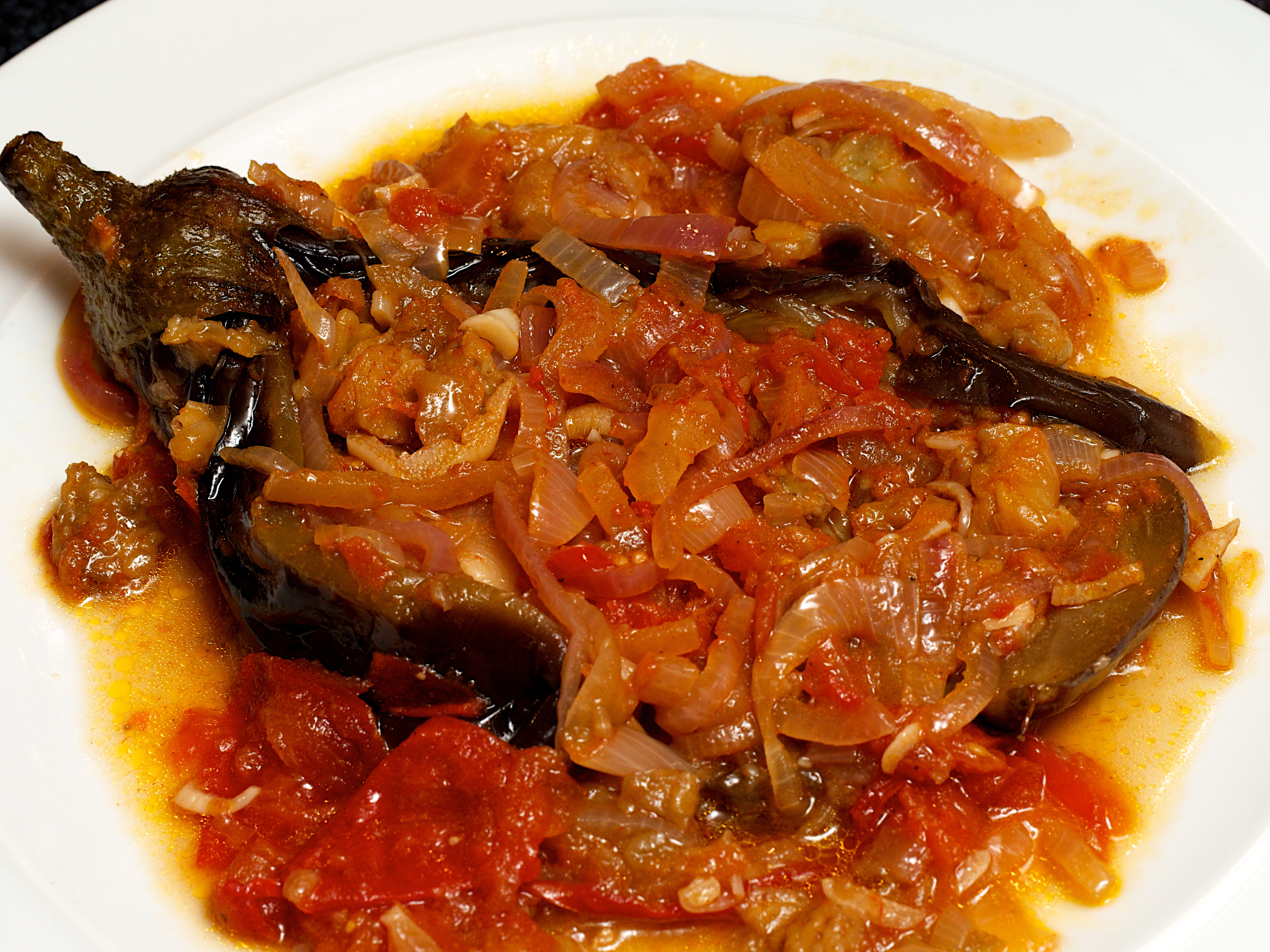
This is not the most attractive dish in the world and we definitely didn’t do the best job of cutting the aubergines. It nonetheless tasted delicious and we’re sure to do it again.

Wine Suggestion: We’d recommend finding a juicy red from Spain. Look out for well made wines from the smaller and lesser known areas as these offer great value; this dish doesn’t need a refined and suave wine, some rusticity is good. We tried  a juicy and smooth Tempranillo called Biberius from the Ribera del Duero and thoroughly enjoyed it!

‘Swooning Imam’ Stuffed Aubergines – serves 2

  • 2 large aubergines
  • 4-6 garlic cloves, finely sliced
  • 2 red onions, finely sliced
  • 3-4 tomatoes, finely sliced
  • 1 tsp paprika
  • 1 tsp brown sugar
  • 1 tbsp lemon juice
  • about 5 tbsp extra virgin olive oil
  • fresh mint, shredded

Leave the stem on the aubergines, score the skin and peel it away in thick stripes. Cut down the length of each one (without cutting completely in half) and scoop out the seedy bits. Chop these and set aside. Sprinkle the cavities with salt, and leave to drain on kitchen paper for half an hour, then wipe dry.

Heat a good splash of oil in a frying pan. Add the aubergines and fry for about 7 minutes, until lightly browned and softened. Remove from the pan and leave to drain.

Add some more oil to the pan and fry the onions, garlic and with the reserved seedy bits of the aubergine. After about 5 minutes, add the tomatoes, paprika, sugar and lemon juice, stir well and season.

Put the aubergines into a deep frying pan with a lid. Stuff the cavities with the onion mixture and drizzle the rest over the top. Add the rest of the olive oil and 100ml cold water, then put on the heat. Bring to the boil, then turn the heat to low, cover and leave to cook for about 45 minutes or until completely tender.

Serve warm or at room temperature with the mint sprinkled over the top and serve with crusty bread.

(Original recipe from Veggiestan: a vegetable lover’s tour of the middle east by Sally Butcher (Pavillon) and published in The Guardian.)
Read Full Post »

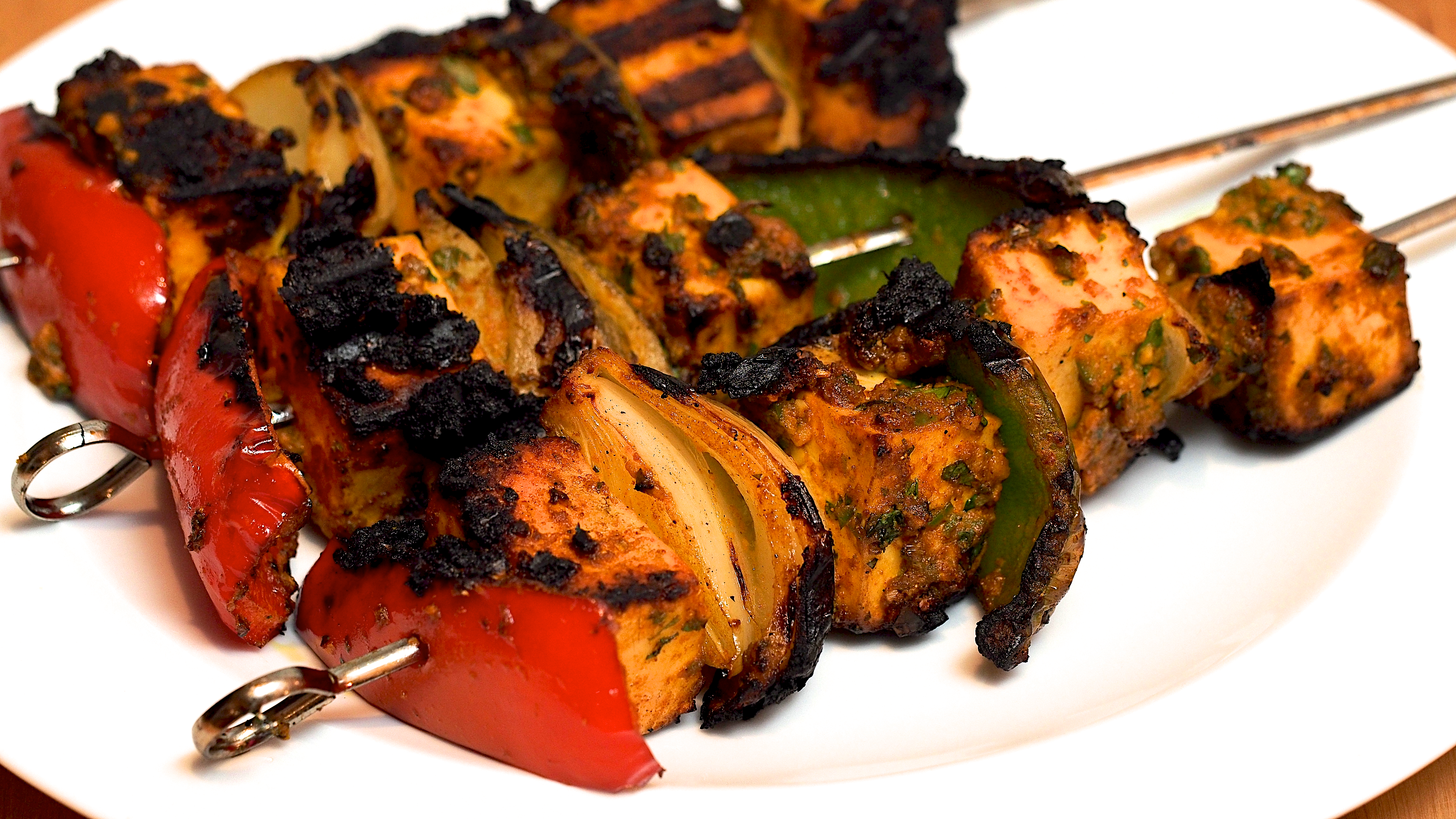
We recently acquired a recipe book called Prashad: Indian Vegetarian Cooking (thanks Mum). You might remember Prashad as Gordon Ramsay’s best restaurant runner-up on TV a couple of years ago. This is the first recipe we tried from the book and is guaranteed to make your veggie friends happy at your next summer barbecue. Vegetarians often get a bum deal at barbecues, palmed off with a few peppers and onions skewered on a stick. These should right all your past wrong-doings.

Paneer is an Indian unsalted white cheese with a crumbly texture and mild taste that  goes really well with strong flavours and marinades. You can buy it in supermarkets as well as specialist Asian shops.

These are very easy to make but you need to marinade the night before!

Drinks Suggestion: We enjoyed this with both a lager and a citrus-laden Blonde Ale; fresh and summery.

Paneer Tikka – makes 6 skewers 

  • 2 x 250 blocks of paneer cheese
  • 1 medium red pepper,cut into 6 chunky pieces
  • 1 medium green pepper, cut into 6 chunky pieces
  • 1 medium onion, cut into 6 wedges
  • 2 lemons, quartered to serve

MARINADE: 

  • 2-3 green chillies, seeds left in
  • 4-8 garlic cloves
  • 2 handfuls of fresh coriander, chopped fine
  • 2 tsp ground coriander
  • 2 tsp garam masala 
  • 1½ tsp salt
  • 1 tsp trumeric
  • 2 tbsp plain live yogurt
  • 100ml sunflower oil

Finely chop the chillies and garlic then tip into a large bowl and add the other marinade ingredients.

Cut each block of cheese into 9 equal-sized cubes and add to the marinade along with the pepper and onion pieces. Stir to coat, then cover and leave in the fridge overnight.

Thread 6 skewers with 3 pieces of cheese seperated by pieces of pepper and onion. Cook the skewers over a hot barbecue for 20 minutes, until slightly charred, turning every 4-5 minutes.

Serve with the lemon quarters, a green salad and some cucumber and yogurt dip.

(Original recipe from Kaushy Patel’s Prashad: Indian Vegetarian Cooking, Saltyard Books 2012.)

Read Full Post »

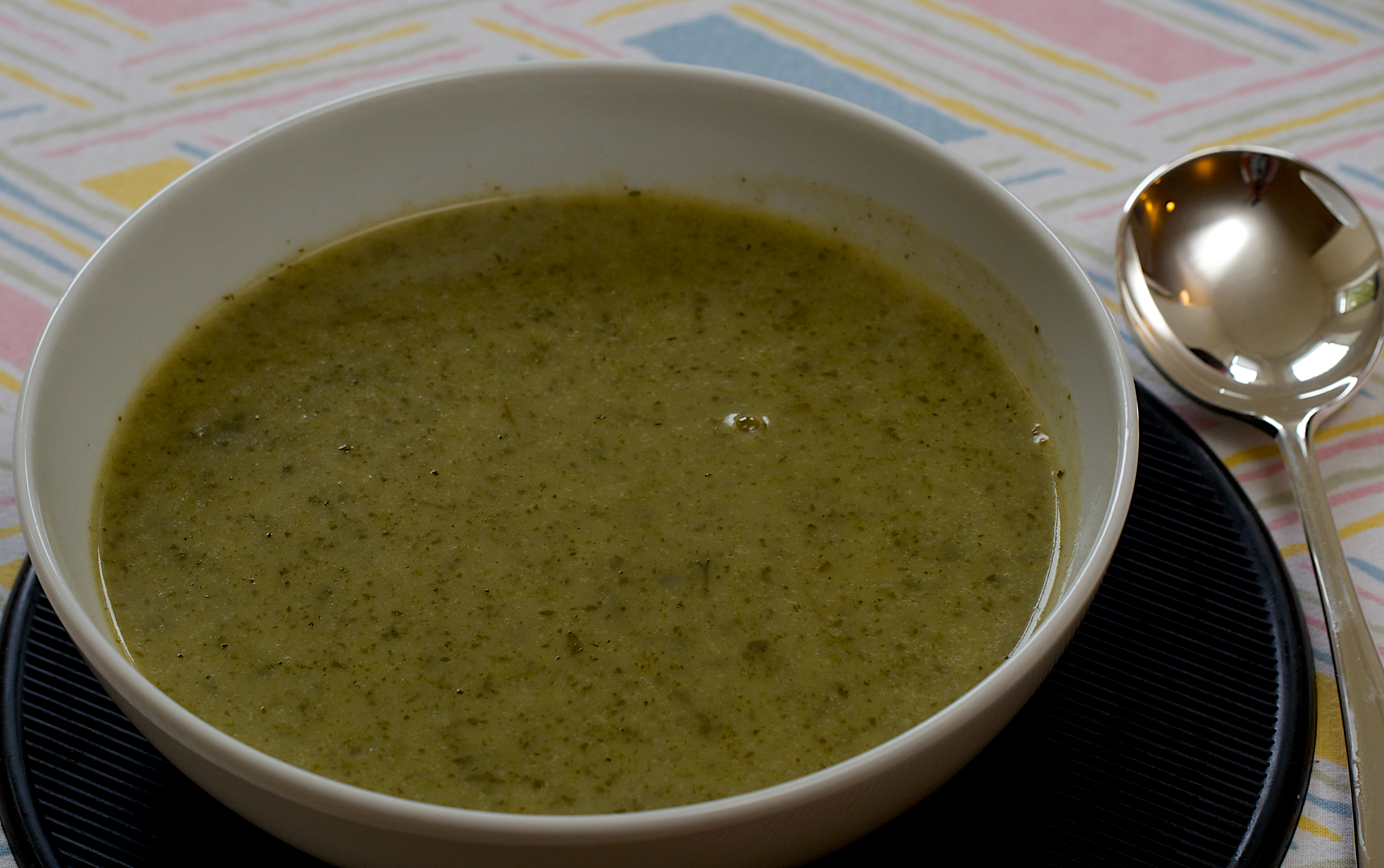
This is a real gardeners’ delight as chervil grows well, but doesn’t travel well, so its best cooked soon after picking. We love the hint of aniseed it brings to the flavours and have to thank Rai and Linda for their allotment which allowed us to make this soup!

Chervil & Potato Soup – to serve 4

  • 50g butter
  • 1 onion, finely chopped
  • 450g fresh chervil (or you can use other soft herbs like parsley, sorrel or marjoram)
  • 1 large floury potato, peeled, diced and rinsed
  • 1.1 litres boiling vegetable stock

Melt the butter and soften the onion without browning.

Stir in the herbs, a generous pinch of salt and some pepper, cover and sweat for a few minutes.

Add the potato and 275ml of the boiling stock. Cover and simmer for 5 minutes, then add the rest of the liquid. Continue to simmer until the potato is soft enough for you to mash into the soup. Taste for seasoning and serve.

(Original recipe from Lindsey Bareham’s A Celebration of Soup, Penguin Books, 1993.)

Read Full Post »

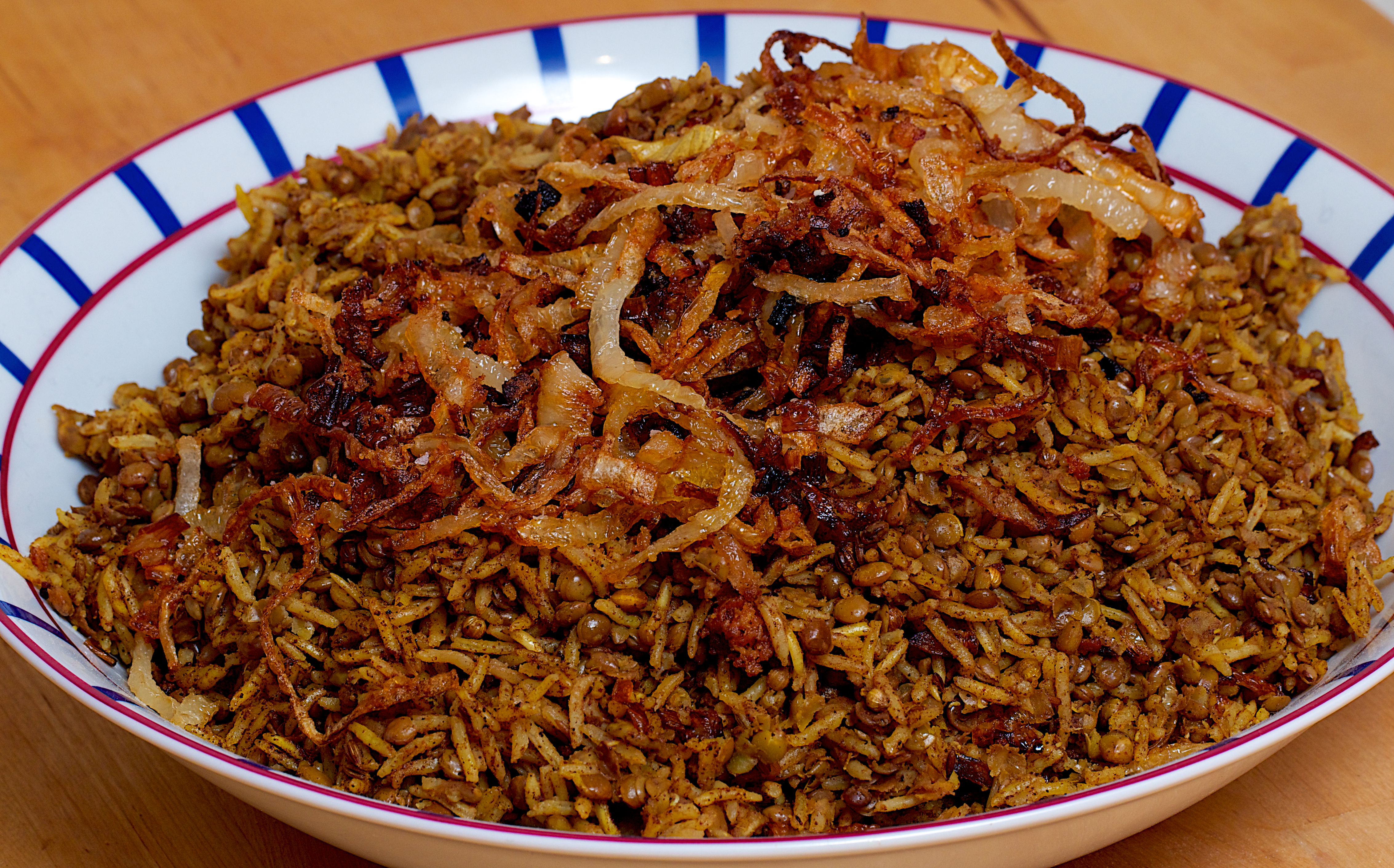
We challenge you to stop once you’ve started eating this! Serve as a main dish with some Greek yoghurt or yoghurt with cucumber. Leftovers are good served at room temperature.

Mejadra – to serve 6

  • 250g green or brown lentils
  • 4 medium onions
  • 3 tbsp plain flour
  • 250ml sunflower oil
  • 2 tsp cumin seeds
  • 1½ tbsp coriander seeds
  • 200g basmati rice
  • 2 tbsp olive oil
  • ½ tsp ground turmeric
  • 1½ tsp ground allspice
  • 1 ½ tsp ground cinnamon
  • 1 tsp sugar
  • 350ml water

Put the lentils in small saucepan, cover generously with water, bring to the boil and cook for 12-15 minutes or until they are soft but still have some bite, then drain.

Thinly slice the onions and put on a large flat plate. Sprinkle with flour and 1 tsp salt and toss with your hands. Heat 250ml sunflower oil in a medium heavy-based saucepan over a high heat. The oil is ready when a small piece of onion sizzles vigorously. Reduce the heat to medium-high and add a third of the onion. Fry for 5-7 minutes, stirring now and then, until golden-brown and crispy. Use a slotted spoon and transfer to a colander lined with kitchen paper and sprinkle over a little more salt. Repeat with the next two batches (add a bit more oil if necessary).

Discard the oil and wipe the saucepan clean. Add the cumin and coriander seeds and put over a medium heat and toast the seeds for a minute or two. Add the rice, olive oil, turmeric, allspice, cinnamon, sugar, ½ tsp salt and lots of black pepper. Stir until the rice is coated with oil, then add the cooked lentils and the water. Bring to the boil, cover and simmer on a very low heat for 15 minutes.

Remove from the heat, remove the lid and quickly cover with a clean tea towel. Seal tightly with the lid and leave for 10 minutes.

Add half the fried onion and gently fork through. Pile up in a shallow serving bowl and top with the rest of the onion.

Wine Suggestion: This dish deserves a light red without too much aggressive tannins, weight or alcohol. A youthful Syrah from a lesser appellation in the Rhone would work, like St Joseph or Crozes-Hermitage. Alternately, try a youthful local red from the Golan Heights or Lebanon where the spiciness and warmth will also compliment the flavours.

(Original recipe from Jerusalem by Yotam Ottolenghi and Sami Tamimi, Ebury Press, 2012)

Read Full Post »

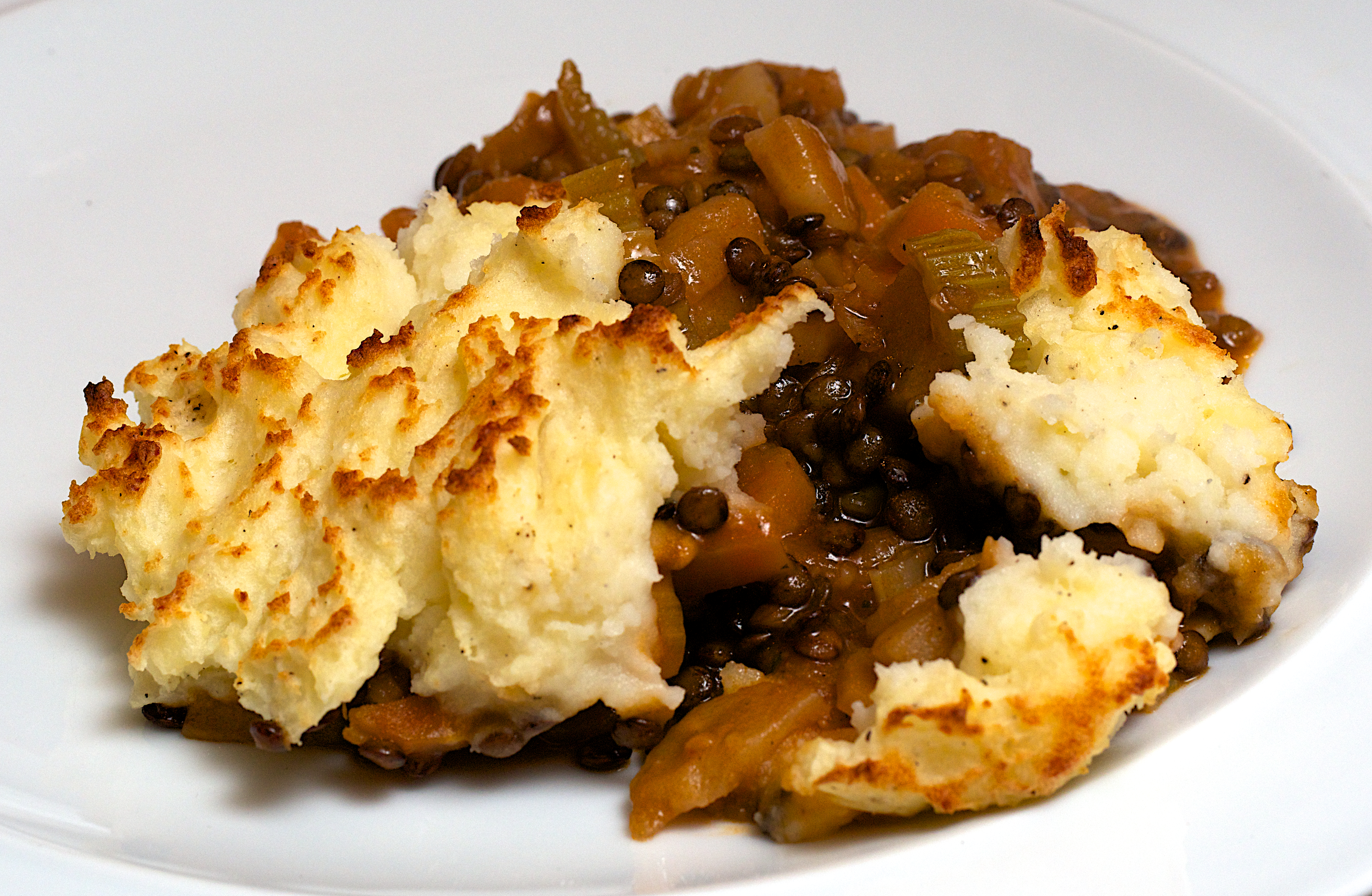
This recipe is rich with a natural gravy and very flavoursome and filling. Despite this it is very low in calories so perfect if you’re watching your weight or for a midweek dinner. We ate this over two nights (instead of three) as we were both a little greedy, and also because it was so moreish.

Gardener’s Pie – to serve 6

  • 1 tbsp sunflower oil
  • 2 shallots, chopped
  • 3 celery sticks, trimmed & chopped
  • 2 large carrots, peeled & diced
  • 2 large parsnips, peeled & diced
  • 2 garlic cloves, thinly sliced
  • 150g puy lentils, rinsed & drained
  • 1 litre hot vegetable stock
  • 2 tbsp tomato purée
  • 1 bay leaf
  • 500g floury potatoes, like Maris Piper, peeled & cut into small chunks
  • 15g butter
  • 2 tsp plain flour

Heat the sunflower oil in a deep, large frying pan over a medium heat and fry the shallots, celery, carrots & parsnip for 8-12 minutes and until brown. Add the garlic and cook for a further minute.

Stir in the lentils, stock, tomato purée and bay leaf and bring to the boil. Reduce to a simmer and cook for 25 minutes and until tender.

Put the potatoes into a pot and cover with cold water. Bring to the boil and cook for about 10 minutes and until tender. Drain and add the butter and some seasoning. Mash until smooth. Add a little extra butter if you’d like for a bit more richness.

Heat the grill.

Sprinkle flour over the simmered lentil mix and stir in. Cook for another 2 minutes until thickened. Spoon into a warmed, heatproof pie dish.

Top with the mashed potato and grill for 5 minutes , until golden. You’ll need to keep an eye on this as the time needed will depend on the griller.

Serve with: try a Beaujolais Cru, like a Régnié, which will have a both lightness and depth, plus a bit of earthiness to match the lentils. Beaujolais is never too heavy, and the Cru’s add depth and personality that is harder to find in a basic wine.

(Original recipe from BBC Good Food)

Read Full Post »

Another on a light theme: in calories again not flavour.

Cauliflower & Potato Curry – to serve 4

  • 2 tbsp vegetable oil
  • 1 large onion, chopped
  • large piece ginger, grated
  • 3 garlic cloves, finely chopped
  • ½ tsp turmeric
  • 1 tsp ground cumin
  • 1 tsp curry powder
  • tin chopped tomatoes, drained
  • ½ tsp sugar
  • 1 cauliflower, cut into florets
  • 2 potatoes, cut into chunks
  • 1 green chilli, halved lengthways
  • squeeze of lemon juice
  • handful coriander, roughly chopped, to serve
  • natural yogurt to serve

Heat the oil in a saucepan and cook the onion for about 10 minutes or until soft. Add the ginger, garlic, turmeric, cumin, and curry powder and cook for a further minute. Stir in the tomatoes and sugar. Add the cauliflower, potatoes, and split chilli along with some salt and pepper. Cover and cook gently for about half an hour or more, stirring occasionally until the vegetables are tender. You can add a drop of water if you need to but this is a dry curry.

When the vegetables are soft, add a squeeze of lemon juice and scatter with coriander. Serve with natural yogurt.

(Original recipe from BBC Good Food)

Read Full Post »

This was really elegant and luxurious and the fennel and parsnip combination was unexpectedly delicious.

Fennel & Parsnip Soup – to serve 8

  • 50g butter
  • 175g onion, diced
  • 450g parsnips, peeled and diced
  • 450g fennel bulb, finely diced, keep the fronds to garnish
  • 1.2 litres chicken or vegetable stock
  • 125ml milk
  • 125ml cream

Melt the butter in a large pot, add the onion, parsnips and fennel and stir well to coat. Season with salt and pepper. Cover with a circle of baking paper and and the saucepan lid. Cook on a gentle heat for 10-15 minutes or until soft but not coloured.

Heat the stock and add, simmering for about 20 minutes or until the vegetables are completely tender. Add the milk and cream.

Blend until smooth and taste for seasoning. Serve sprinkled with the reserved fennel fronds.

(Original recipe from Darina Allen’s Ballymaloe Cookery Course, Kyle Cathie Limited, 2001.)

Read Full Post »

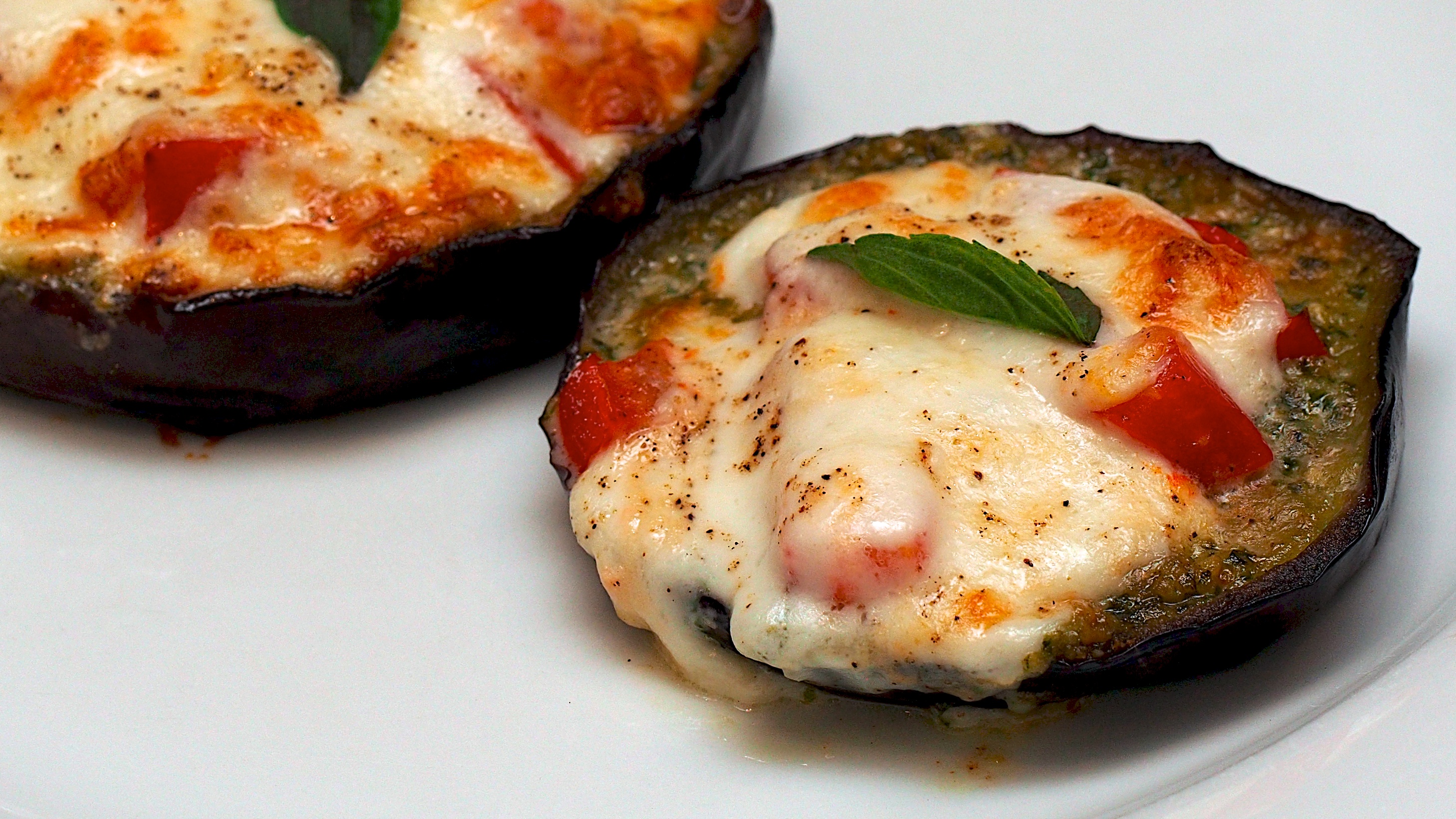
Capturing the summer season with fresh basil Pesto and aubergines. Serve with a simple green salad for a great starter.

Aubergine and Pesto Medallions – to serve 4

  • 1 vine-ripened tomato, cut into 5mm-thick slices and finely diced
  • 85ml olive oil
  • 1 aubergine (about 400g), cut into 8 x 1.5 cm thick slices
  • 2 tbsp Pesto
  • 16 small bocconcini, halved or a large ball of mozzarella, diced
  • 2 tbsp grated Parmesan
  • 8 small basil leaves

Preheat the oven to 220°C.

Put the diced tomato on a paper towel-lined plate.

Heat 2 tbsp of the oil in a large frying pan over a medium heat and add the aubergine slices. Cook for 5 minutes; don’t worry if the oil disappears. Turn the slices over and add the rest of the oil if you need it. Cook for another 5 minutes, and drain on a plate covered with paper towel. Blot the top of the aubergines with more paper towel to absorb any excess oil.

Line a baking tray with baking paper and transfer the aubergine slices onto it. Divide the pesto between the slices and spread. Spoon some of the diced tomato onto each slice (you might have a bit too much).

Arrange the mozzarella on top of the tomato. Sprinkle with Parmesan, season with salt and black pepper, then bake in the oven for 10 minutes.

Drain again on paper towel to absorb any excess oil. Garnish with basil leaves and serve.

Wine Suggestion: You could go for either a light red with a bit of acidity, such as an Italian Barbera, or a textural white, like a good Vermentino.

(Original Recipe from Stephanie Alexander’s Kitchen Garden Companion, Lantern, 2009.)


Read Full Post »

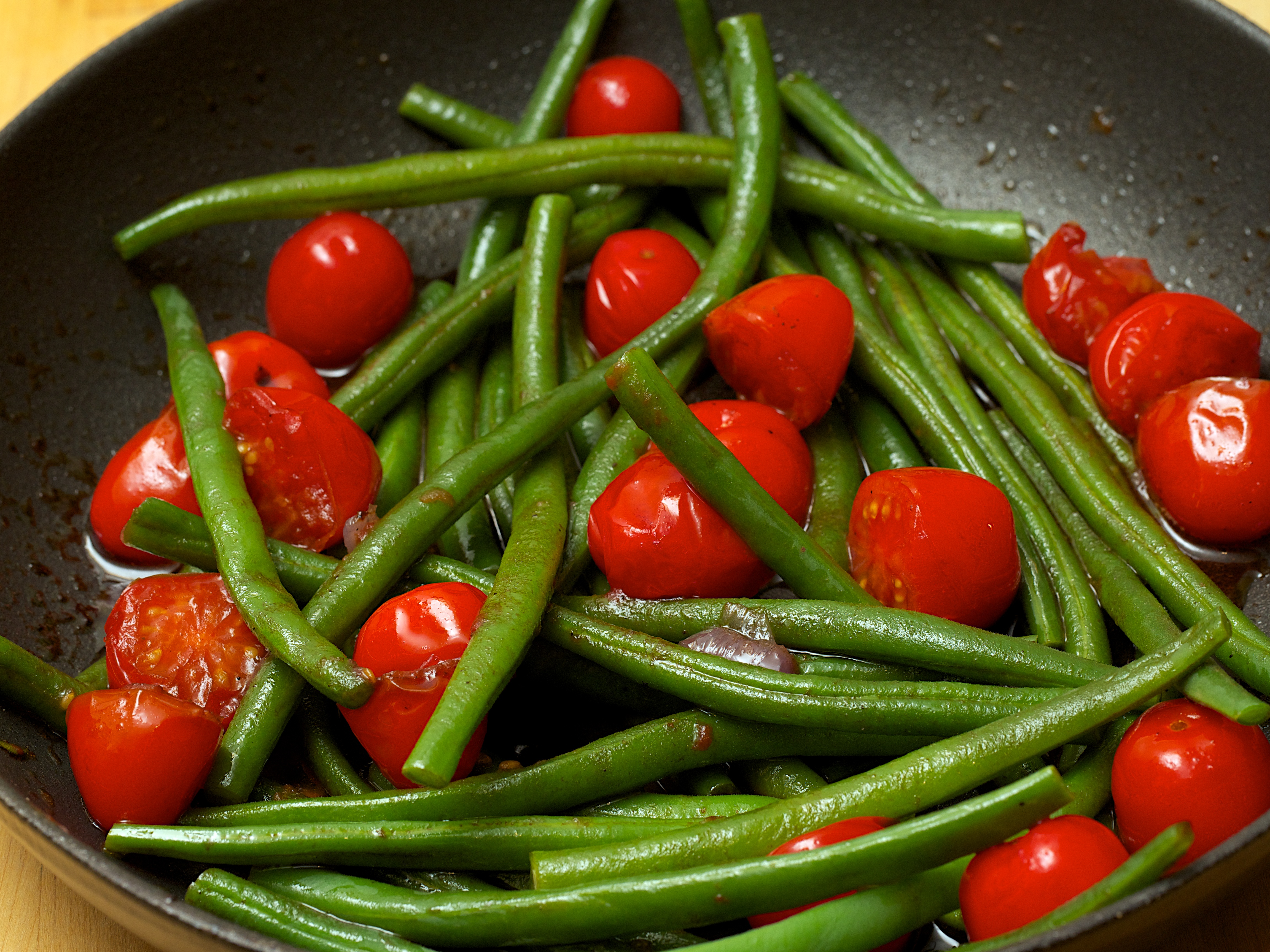
A colourful spring side dish that goes really nicely with roast lamb. You can cook the beans in advance and just warm through with the tomatoes and balsamic when you’re ready to serve.

Tomato & Balsamic Green Beans – serves 6-8 as a side dish

  • 650g green beans 
  • 1 tbsp olive oil
  • 200g cherry tomatoes, halved
  • 1 tbsp balsamic vinegar

Trim the beans and cook in boiling salted water for 6-8 minutes, or until just tender. Drain and cool under running cold water. Store in the fridge until needed.

Heat the oil in a pan, then add the tomatoes and fry gently for 2-3 minutes, or until slightly softened. Season well, then splash in the balsamic vinegar. Warm through, then tip the beans into the pan. Stir well, then cover and warm through for a few minutes.

Read Full Post »

We made this with red onions as we had no Spanish onions to hand which worked well; if you have the Spanish onions it works even better!

New potatoes Lyonnaise – to serve 6 as a side dish

  • 50g unsalted butter
  • 4 tbsp olive oil
  • 3 large Spanish onions, sliced
  • 2 garlic cloves, sliced
  • 1 tbsp thyme leaves
  • 1kg large new potatoes, halved

Heat the butter in a large pan until foaming. Add 2 tbsp of the olive oil and the onions and cook on a fairly low heat until soft and golden, about 30 minutes. When the onions have softened, stir in the garlic and thyme and set aside.

Heat the oven to 200C/180 fan/gas 6. Bring a large pan of salted water to the boil, add the potatoes and boil for 5 minutes, then drain well.

Mix the potatoes with the rest of the oil and some seasoning in a large roasting tin. Roast for 30 minutes, tossing halfway, until golden. Stir in the onion mixture and roast for a further 10 minutes.

(Original recipe from BBC Good Food)

Read Full Post »

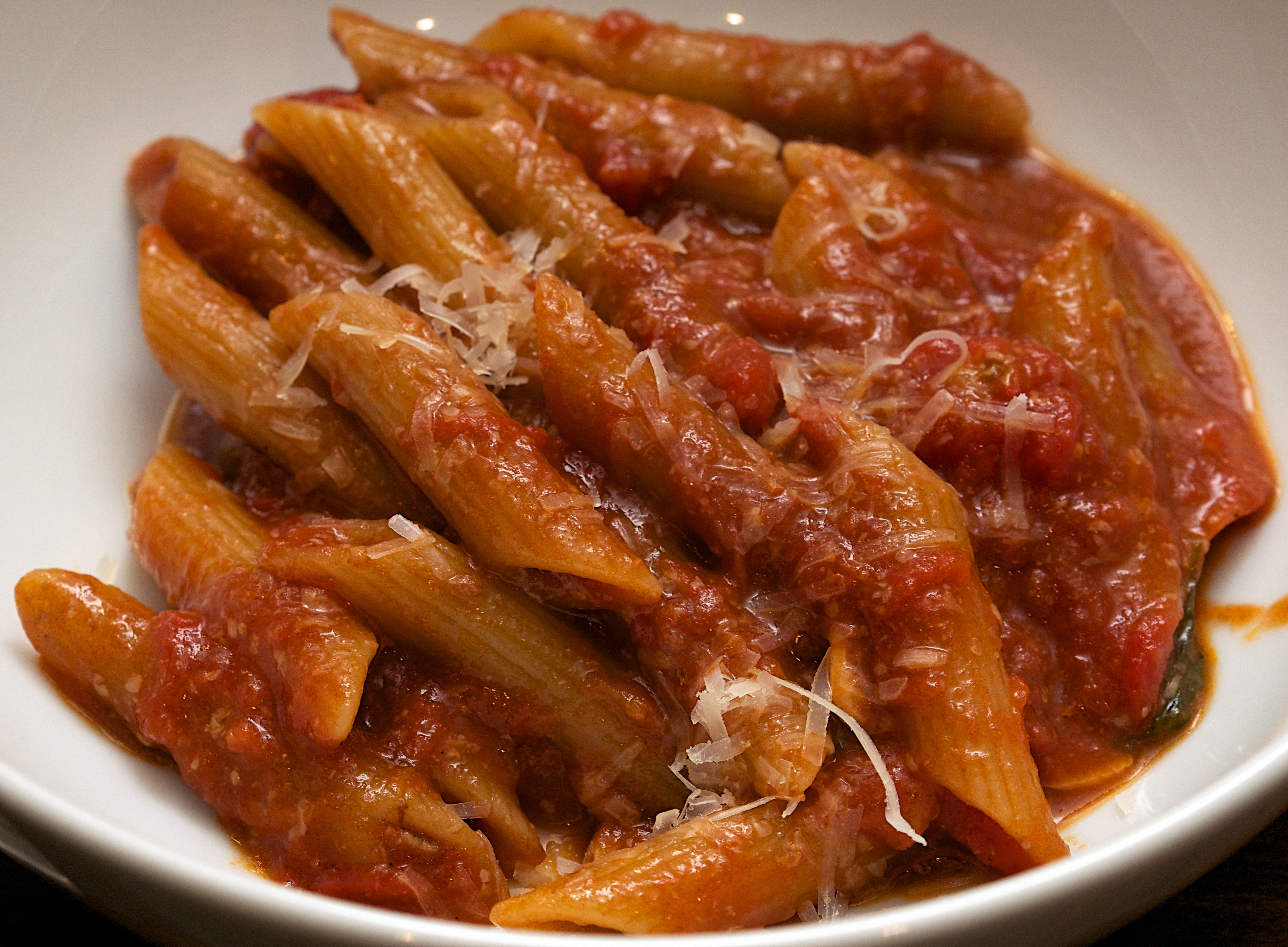
This is a really good first-course pasta which has a richness of flavour without being heavy. Use a good quality, aged balsamic vinegar (if you don’t you might need to use a bit extra).

Penne with Tomato & Balsamic Vinegar – to serve 6

  • 2 tbsp olive oil
  • 2 garlic cloves, peeled and sliced finely
  • a handful of fresh basil
  • 2 x 400g tins of peeled plum tomatoes (Italian brands are usually the best quality)
  • 250g penne rigate
  • 75g butter, cut into pieces
  • 4 tbsp aged balsamic vinegar
  • 120g Pecorino cheese, grated

Heat the oil in a large pan and gently fry the garlic until light brown. Add a few basil leaves and then the tomatoes. Stir and cook gently for 30-40 minutes or until the sauce is reduced and thick. Season with salt and pepper and add the rest of the basil.

Cook the penne in lots of salted boiling water , drain thoroughly and return to the saucepan with the butter. When this has melted, add the balsamic vinegar and toss over a gentle heat for a few seconds until the penne are brown. Throw in a handful of the Pecorino, then stir in the tomato sauce. Serve with more Pecorino.

Wine Suggestion: Pairing a wine with this dish is not as straight forward as it may seem as you need a wine to balance the rich flavours, acidic tomatoes and sweet and sour vinegar. One option is something from the Marche with a combination of Montepulciano and Sangiovese. Alternately look for a very good Valpolicella or Ripasso, but make sure it is one with a bit of freshness, tannins and elegance.  Another option, which we tried to good effect, is Barbera where the fresh acidity and softer tannins complemented the dish excellently.

(Original recipe from the River Café by Ruth Rogers & Rose Gray, Ebury House, 1995.)

Read Full Post »

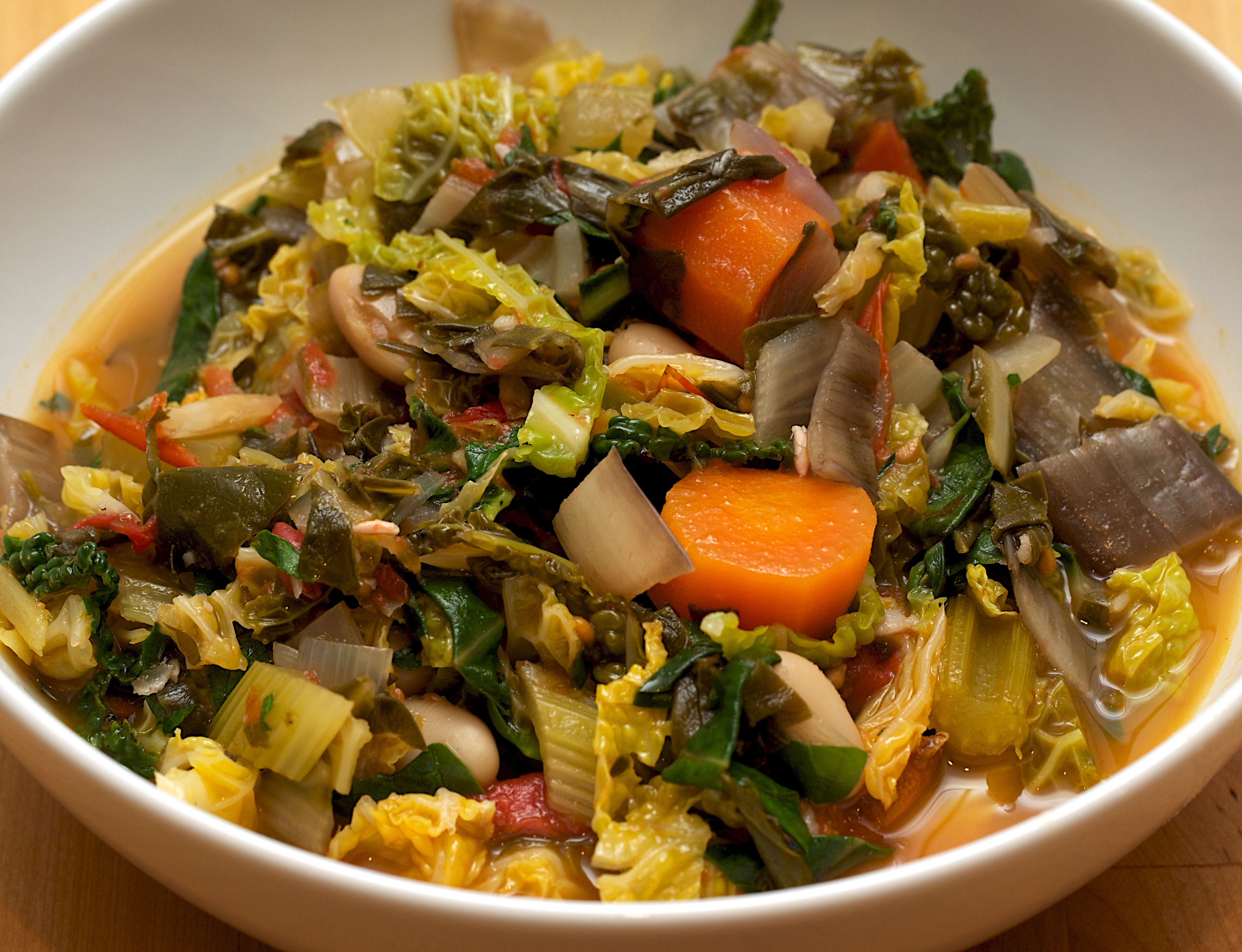
A very filling dish that hits the mark on these icy evenings. Oh spring where are you?

Minestrone Invernale – serves many!

  • 2 tbsp olive oil
  • 2 carrots, roughly chopped
  • 1-2 red onions, peeled and roughly chopped
  • 1 head celery, roughly chopped
  • 1 head garlic, cloves peeled
  • 1kg Swiss chard, leaves shredded and stalks roughly chopped
  • 1 handful parsley, finely chopped
  • 1 x 400g tin peeled plum tomatoes, drained of most of their juices, roughly chopped
  • 1 kg cavolo nero, stalks removed, leaves shredded (or use Savoy cabbage)
  • 1 x 400g tin cannellini beans
  • 500ml chicken stock or water
  • a few sprigs of wintery herbs like thyme or sage, chopped
  • Parmesan, for grating over
  • extra virgin olive oil, for drizzling

Heat the 2 tbsp olive oil in a very big saucepan and slowly fry the carrot, onion and celery until soft and dark. This will take ages. Add the garlic, chard stalks and half the parsley, and keep cooking, stirring so it doesn’t stick. Add the tomatoes and cook for another 10 minutes or until they have reduced.

Add half the Swiss chard leaves and half the cavelo nero, ¾ of the beans, and the boiling chicken stock or water. Bring to the boil, then reduce the heat and simmer for 30 minutes. You can add a bit more stock if needed but the whole point is that the soup should be really thick.

Add the remaining Swiss chard and cavolo nero and blanch briefly so they are cooked but stay green and crisp. Season with plenty of salt and pepper.

Purée the rest of the cannellini beans coarsely in a blender, with a bit of liquid from the soup. Add to the soup. Stir in the herbs and serve hot with Parmesan and some extra virgin olive oil.

Tastes great re-heated over the next few days.

Wine Suggestion: This is a very rustic, country dish and would suit a similar wine with some earthy character. We suggest a Barbera or something Tuscan.

(Original recipe from The River Café Cookbook by Ruth Rogers and Rose Gray, Ebury Press, 1995.)

Read Full Post »

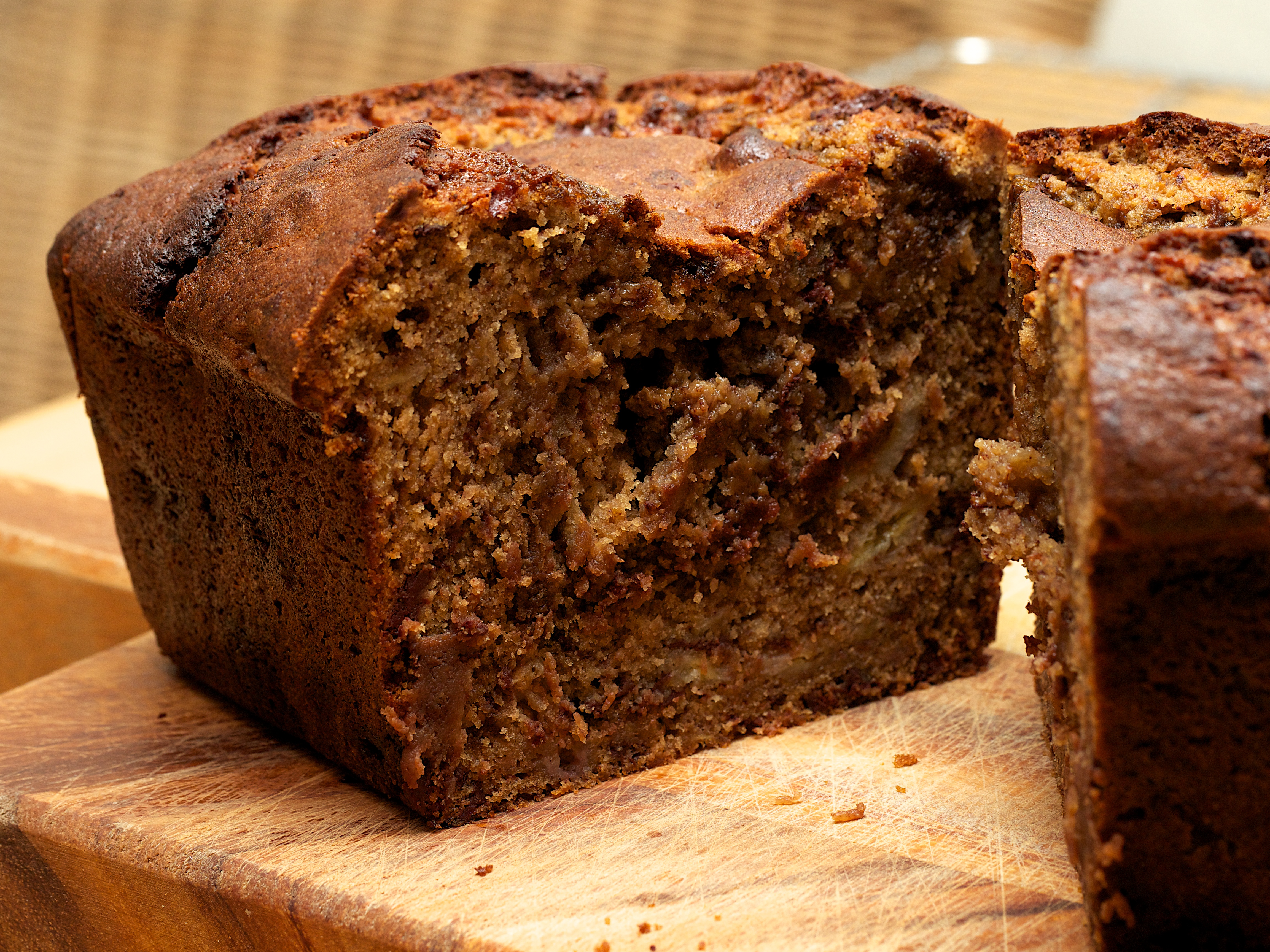
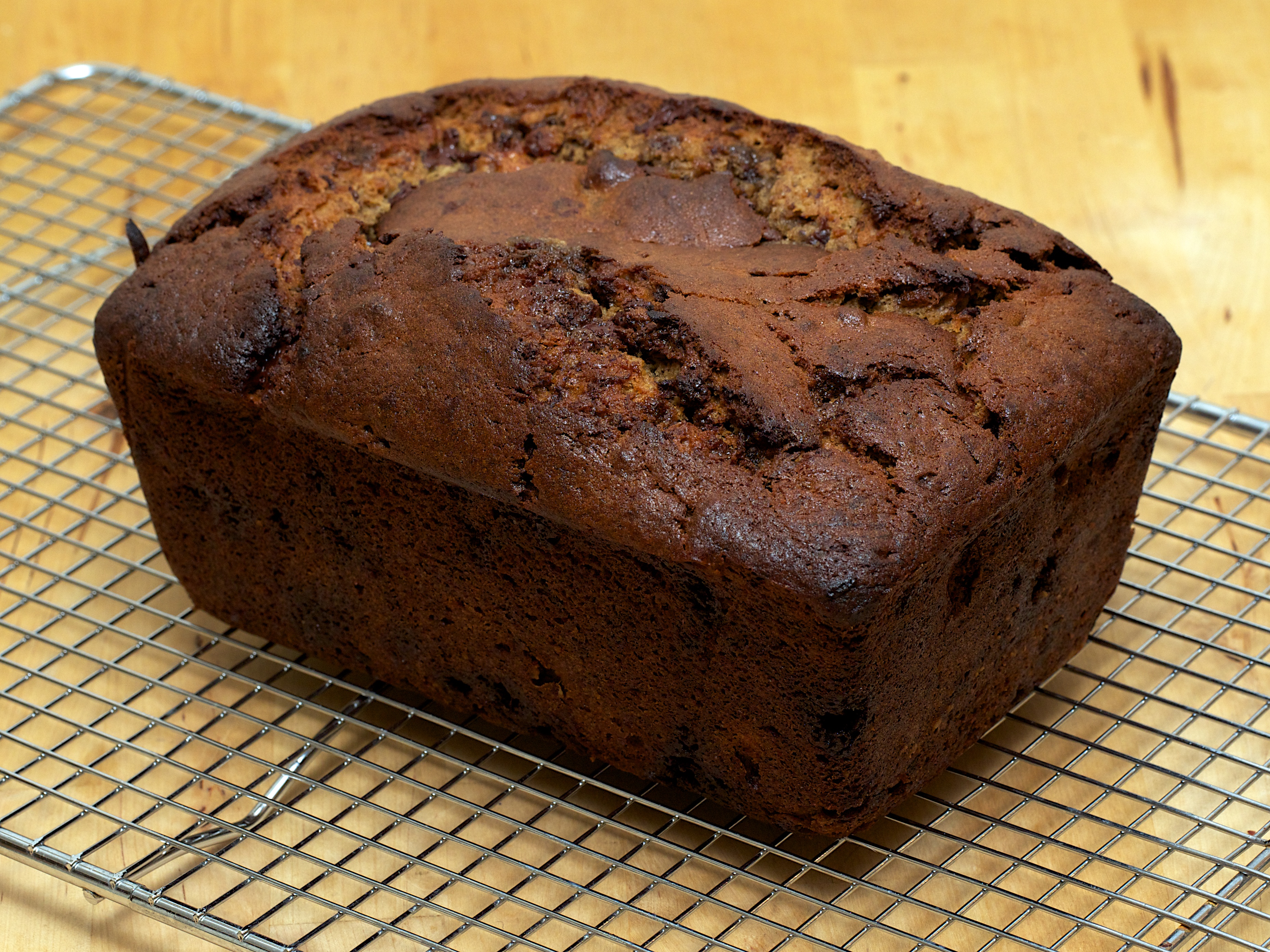
A very easy and delicious cake that’s perfect for using the bananas that have gone black in the fruit bowl. It’s even worth letting them go black for! We made this twice in a week and are tempted to make it again soon.

Chocolate and Banana Cake 

  • 250g plain flour
  • 2 tsp baking powder
  • 125g softened butter
  • 235g muscovado sugar
  • 400g (peeled weight) very ripe bananas
  • 1 tsp vanilla extract
  • 2 eggs
  • 100g dark chocolate

You need a non-stick loaf tin approx. 24cm x 12cm x 7cm deep, lined with baking paper.

Preheat the oven to 180ºC/Gas 4.

Sift the flour and baking powder together.

Use an electric mixer to cream the butter and sugar together until light, fluffy and pale coffee coloured.

Put the bananas in a bowl and mash with a fork, lumps are ok as you don’t want a purée. Stir in the vanilla extract.

Beat the eggs lightly with a fork then beat them into the butter and sugar mixture. If it threatens to curdle add a spoonful of flour.

Chop the chocolate into small pieces and fold them and the bananas into the butter and sugar mixture. Gently fold in the flour and baking powder.

Scrape the mixture into the baking tin and bake for about 50 minutes. Check that it is cooked by inserting a metal skewer into the centre. If it is moist but clean then the cake is ready. If there is any sign of wet cake mixture on the skewer, return the cake to the oven for a few more minutes. Cover the surface with foil if it starts getting too dark.

Leave the cake to settle in the tin for about 15 minutes, then loosen sides with a palette knife and carefully lift the cake out. Leave to cool for a bit longer before peeling off the paper. Serve cool.

(Original recipe from Nigel Slater’s Kitchen Diaries II, Fourth Estate, 2012.)

Read Full Post »

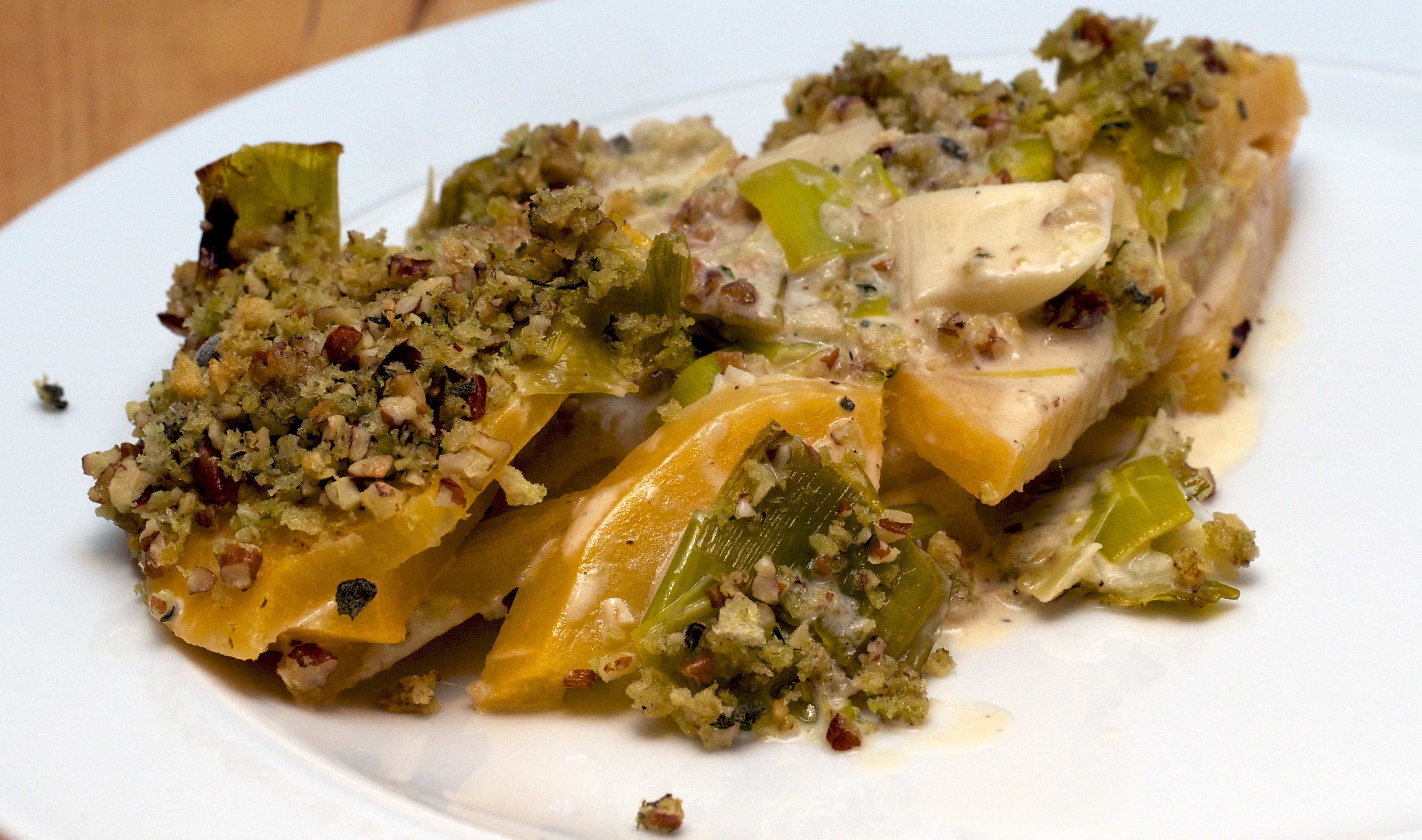
We love turnips (or swedes as the rest of the world calls them) and think that they deserve a bigger part of the limelight. This puts them centre stage and celebrates their earthiness and sweet character. This recipe comes from Denis Cotter, of Café Paradiso in Cork, and like many of his dishes it is pretty sweet for a savoury dish and has the potential to divide your dinner guests. Our guest is not usually a fan of turnip but she loved this dish.

Swede & Leek Gratin in Maple Cream with Sage & Walnut Crust – serves 4-6

  • 1 large swede
  • 2 leeks, halved lengthways and well washed
  • 30g butter, plus extra for greasing
  • 3 garlic cloves, finely chopped
  • 2 sprigs of fresh thyme
  • 100ml dry white wine
  • 250ml double cream
  • 4 tbsp maple syrup

For the crust: 

  • 8 fresh sage leaves
  • 1 tbsp chopped chives
  • 50g white bread
  • 50g walnuts
  • 30g butter

Preheat the oven to 150ºC/300ºF/gas mark 2.

Bring a large saucepan of water to the boil. Peel and quarter the swede, then chop into slices about 5mm thick. Simmer in the water for 10 minutes, then remove and partly cool them in a bowl of cold water. Drain and set aside.

Chop the leeks into 2cm pieces. Melt the butter in a large pot, over a high heat, add the leeks and garlic and cook, stirring, for 8-10 minutes. Add the thyme and white wine, and boil for 1 minute, then pour in the cream and maple syrup. Bring back to the boil and then take off the heat. Season with salt and pepper.

Grease an oven dish with butter and arrange a layer of swede slices on the bottom. Spoon a third of the leeks on top and cover with another layer of swede. Repeat to get 3 layers of each, finishing with the leeks. Press firmly on the top and put the dish in the oven. Bake for 30 minutes.

To make the crust: put the sage, chives and bread in a food processor and pulse to a fine crumb. Add the walnuts and butter and pulse briefly to chop the walnuts coarsely.

Increase the oven to 180ºC/350ºF/gas mark 4.

Scatter the sage and walnut topping over the gratin and return to the oven for 5 minutes.

Remove from the oven and leave to rest for about 5 minutes before serving.

Wine Suggestion: You’ll have some wine left in the bottle you used for this dish. A dry chenin would be good as it will carry the earthy and sweet characters of this dish but also has enough acidity and texture to cut through the richness.

(Original recipe form Denis Cotter’s For the Love of Food, Harper Collins, 2011.)

Read Full Post »

One of those dishes that was even better than expected.We served this with lamb chops with seven spices but it would make a nice mezze dish or a side for any grilled fish or meat.

Giant Couscous & Chickpea Salad – to serve between 4 & 6

  • 12 cherry tomatoes, halved
  • 3 tbsp olive oil
  • 500ml vegetable stock
  • 120g giant couscous
  • 400g tin chickpeas, drained and rinsed
  • 1 onion, chopped
  • 2 tbsp ground cumin
  • 2 tbsp ground coriander
  • 1 tsp ground ginger
  • 3 tbsp chopped coriander
  • 3 tbsp chopped parsley
  • juice of ½ a lemon

Heat the oven to 200ºC/Fan 180ºC/Gas 6.

Put the tomatoes on a baking tray, drizzle with 1 tbsp of the oil and season with salt and pepper. Bake for about 20 minutes or until soft.

Pour the vegetable stock into a small saucepan and bring to the boil. Add the couscous and simmer for about 10 minutes or until tender (check it as it may not take the full 10 minutes). Strain, tip into a bowl and add the chickpeas.

Heat the rest of the oil in a frying pan, add the onion, and cook over a low heat for 5 minutes or until soft. Stir in the spices and cook for another minute. Remove from the heat and stir the spiced onion into the couscous and chickpea mixture.

Add the coriander, parsley, and roasted tomatoes, and season well with salt and pepper and a squeeze of lemon.

(Original recipe from The Lebanese Kitchen by Salma Hage, Phaidon, 2012.)

Read Full Post »

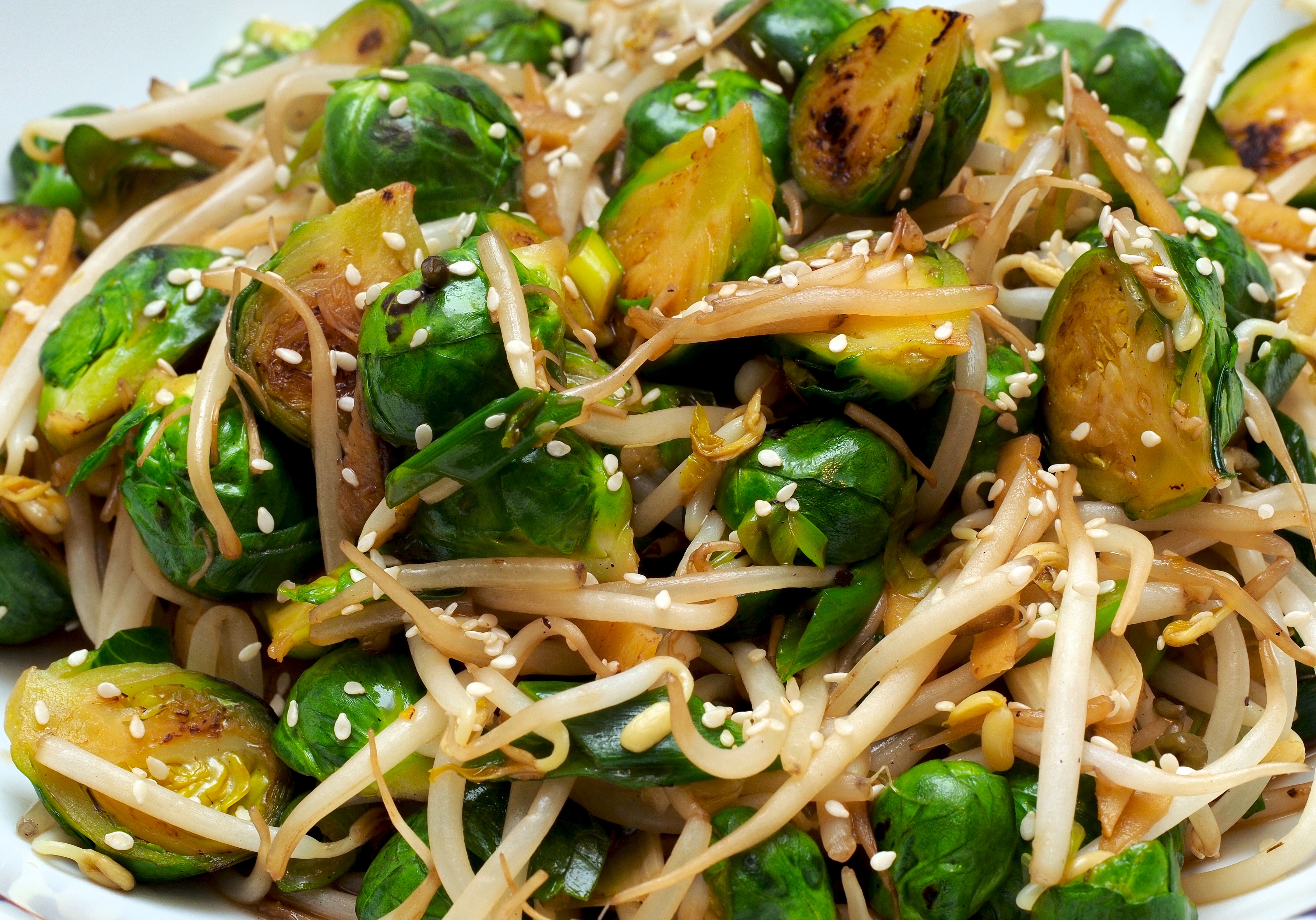
A stir-fry of Sprouts; Brussels & Bean. A delight and a real treat as a healthy midweek supper.

Sprouts with Sesame & Spring Onions – to serve 2 (or 4 as a side)

  • 1 tbsp sesame oil
  • thumb-size piece ginger, cut into matchsticks
  • 300g Brussels sprouts, halved
  • 250g beansprouts
  • small bunch spring onions, sliced diagonally
  • 1 tbsp clear honey
  • 2 tbsp soy sauce, plus extra to serve
  • 1 tbsp sesame seeds

Heat the oil in a wok. Fry the ginger and Brussels sprouts, tossing, for 5-6 minutes, until slightly browned. Add a few tbsp water while they’re cooking if you need to stop them sticking, though the odd crusty bit will only improve things.

Add the beansprouts, spring onions, honey and soy sauce, then stir-fry for 1 minute. Sprinkle over the sesame seeds and serve with some extra soy sauce.

(Original recipe from BBC Good Food)

Read Full Post »

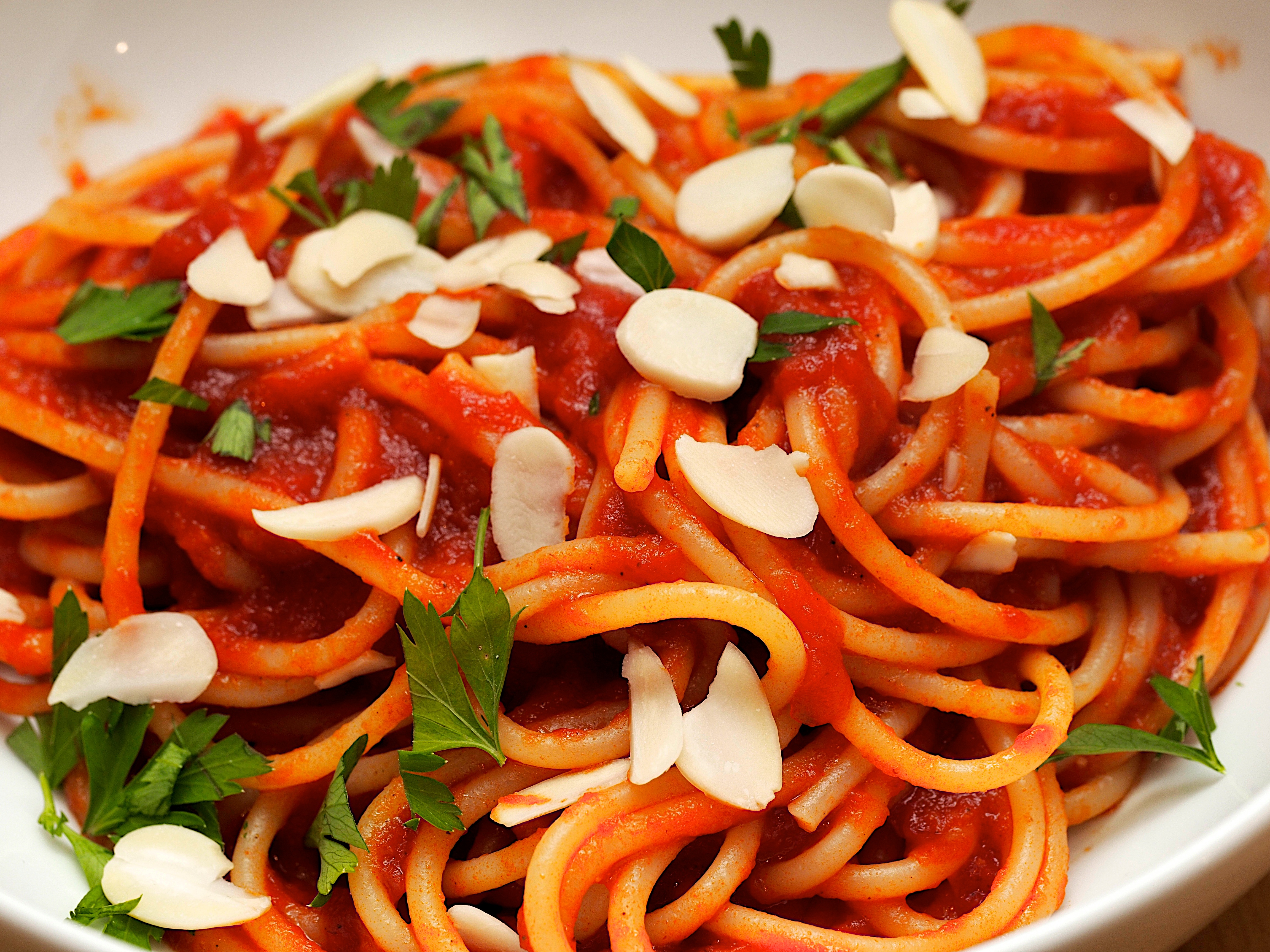
A Lebanese twist to tomato sauce with gentle spices and almonds; a lovely variation on a theme. The proportion of sauce to spaghetti is also very different to how the Italian’s make pasta so there is a lot of sauce for this dish. This worked for us but you could use the same amount of sauce for a greater quantity of pasta and therefore serve more people if you’d like.

The spices are subtle and warming and the pinches can be generous if you like.

Spaghetti with a Rich Tomato Sauce & Toasted Almonds – serves 2 generously

  • 2 x 400g tins chopped tomatoes
  • 2 tbsp tomato purée
  • 3 garlic cloves, grated
  • 1 tsp brown sugar
  • 1 tbsp olive oil
  • pinch ground cinnamon
  • pinch ground allspice
  • pinch grated nutmeg
  • 1/2 tsp salt
  • pinch ground pepper
  • 200g spaghetti
  • 50g flaked almonds, toasted
  • 2 tbsp chopped parsley

Put the tomatoes, tomato purée, garlic and sugar into a pan and simmer over a low heat. Stir frequently and simmer for 30 minutes.

Stir in the olive oil, cinnamon, allspice, nutmeg, salt and pepper and cook for a further 20 minutes.

Meanwhile bring a large pot of salted water to a boil, add the spaghetti and cook according to packet instructions (usually between 10-12 minutes). Reserve 3 tablespoons of the cooking water and then drain the cooked spaghetti.

Return the spaghetti to the cooking pot with the reserved cooking water and the tomato sauce.

Toss well and then serve sprinkled with the almonds and parsley.

Wine Suggestion: we drank a Valpolicella Ripasso with this dish and the ripe, juicy spices went well with the warming spices of the sauce.

(Original recipe from The Lebanese Kitchen by Salma Hage, Phaidon, 2012.)

Read Full Post »

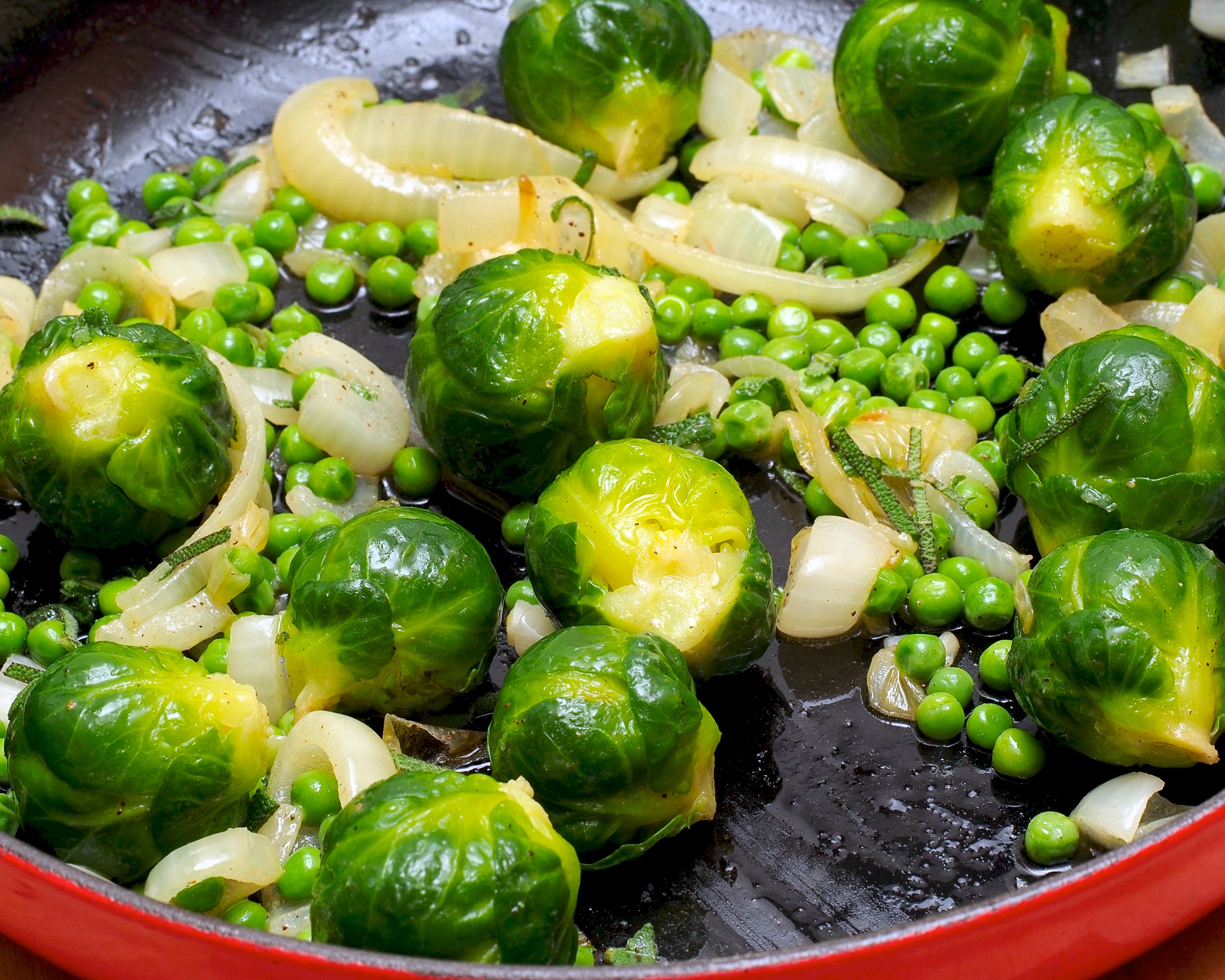
Simple dishes like this show off the flavours of the ingredients so well. This is a perfect dinner party side dish. Don’t worry too much about the sprout haters – more for us!!

Buttery Sage & Onion Sprouts – to serve 8 

  • 85g butter
  • 3 onions, cut into thickish slices
  • 8 sage leaves, chopped
  • 350g Brussels sprouts
  • 200g frozen peas

Heat half the butter in a large frying pan and soften the onions over a low heat for about 15 minutes. You want them really soft but not brown. Add most of the sage.

Meanwhile, cook the sprouts in a pan of boiling water for about 4 minutes, add the peas and cook for another minute or until just tender.

Drain, reserving splash of water, then add the sprouts to the peas and onions, along with the rest of the butter, stirring well so everything is coated in butter. Add the reserved cooking water if you think it needs it.

Season with loads of black pepper and some salt and sprinkle the reserved sage on top.

(Original recipe from BBC Good Food)

Read Full Post »

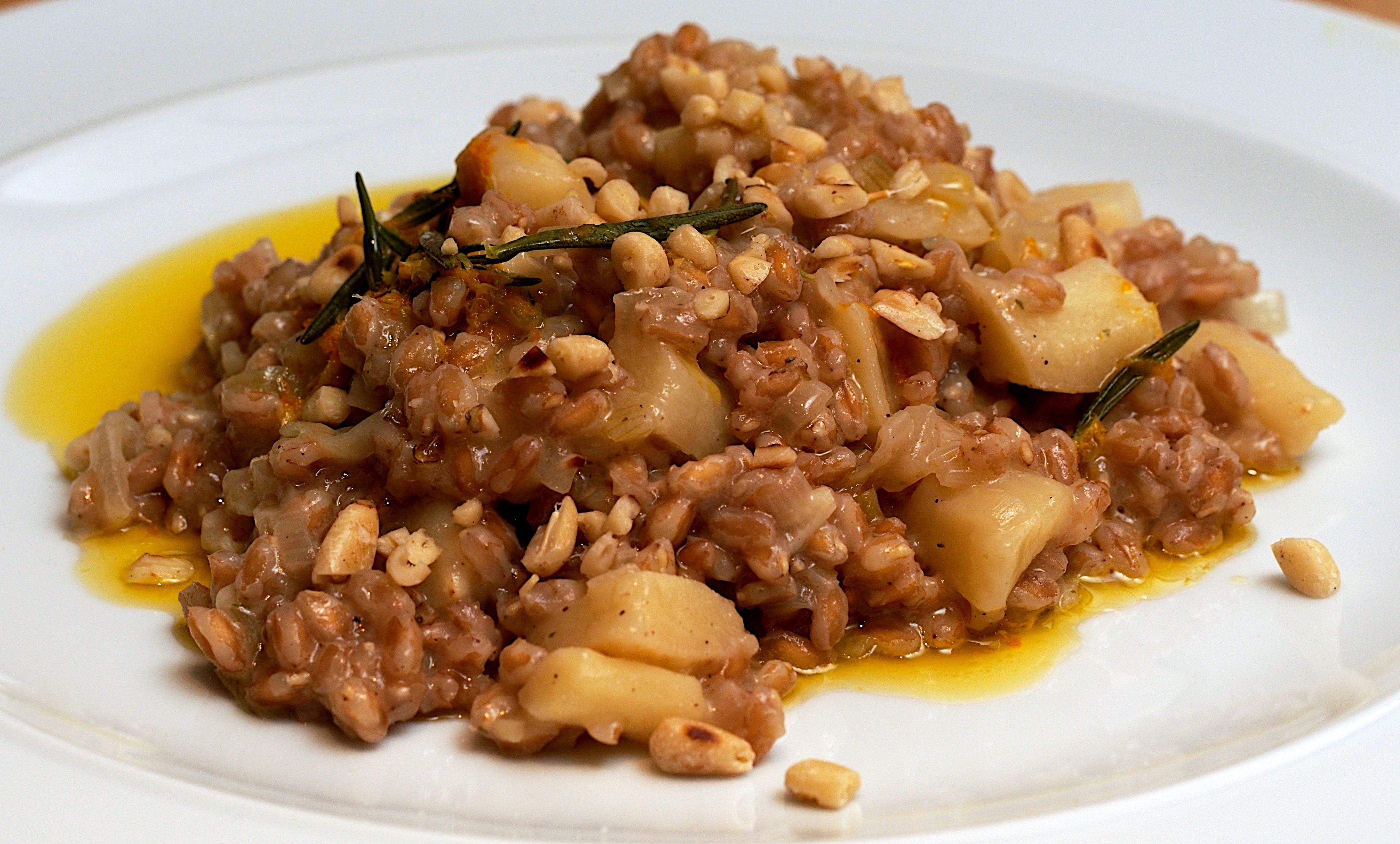
We think that Denis Cotter from “Cafe Paradiso” is equally inspired, a genius and slightly mad with his creations. Every dish is constructed as layers of flavours that as a whole are quite engaging and delightful. We loved this dish and each element really adds something extra and delicious.

Roast parsnip farrotto with pine nuts & citrus-rosemary butter – to serve 4

  • leaves from 3 sprigs of rosemary
  • zest of 2 oranges and 2 lemons, in large strips
  • 200g butter, softened, plus extra to finish
  • 1.5 litres vegetable stock
  • 2 tbsp olive oil
  • 250g shallots, thinly sliced
  • 400g parsnips, peeled, woody cores removed, and cut into large dice
  • 2 sprigs of thyme
  • 2 tbsp honey
  • 1 tbsp cider vinegar
  • 300g farro
  • 4 garlic cloves, sliced
  • 100ml dry white wine
  • 75g hard cheese (we used Parmesan), finely grated
  • 2 tbsp pine nuts, lightly toasted and chopped

Put the rosemary and zest in a small saucepan with 30g of the butter. Heat gently until the butter starts to sizzle, then remove from the heat and leave to infuse for at least 30 minutes in a warm place. Strain through a sieve and throw away the solids. Stir the flavoured butter into the rest of the butter. Either keep warm or soften again just before serving.

Bring the stock to the boil in a large saucepan, then turn it down and keep at a low simmer.

In a wide, heavy pan, heat the olive oil and cook the shallots and parsnip for a couple of minutes over a medium heat.Add the thyme, honey and vinegar, then cover with baking parchment, lower the heat and simmer for 10 minutes. The parsnips should caramelise a bit but will stay firm.

Add the farro and garlic, and cook over a medium heat for 5 minutes, stirring now and then. Remove the thyme sprigs. Add the white wine, bring to the boil and simmer until the wine has been absorbed.

Pour in a ladleful or two of hot stock and simmer, stirring occasionally, until it has been absorbed. Keep adding stock in this way for 40-50 minutes, or until the grains are soft and chewy. Stir in the cheese and season well with salt and pepper.

Spoon the farrotto into warm bowls, drizzle with the citrus butter and scatter with pine nuts.

Wine Suggestion: This dish has some strong flavours so you can’t go for anything too light or you will risk it being overwhelmed. An oaked Semillon from Australia would have the weight, the freshness of acidity and the natural citrus flavours should complement and enhance the dish. We went for Stephanie O’Toole’s Mount Horrick’s Semillon and it was delicious.

(Original recipe from Denis Cotter’s For the Love of Food, Collins, 2011.)

Read Full Post »

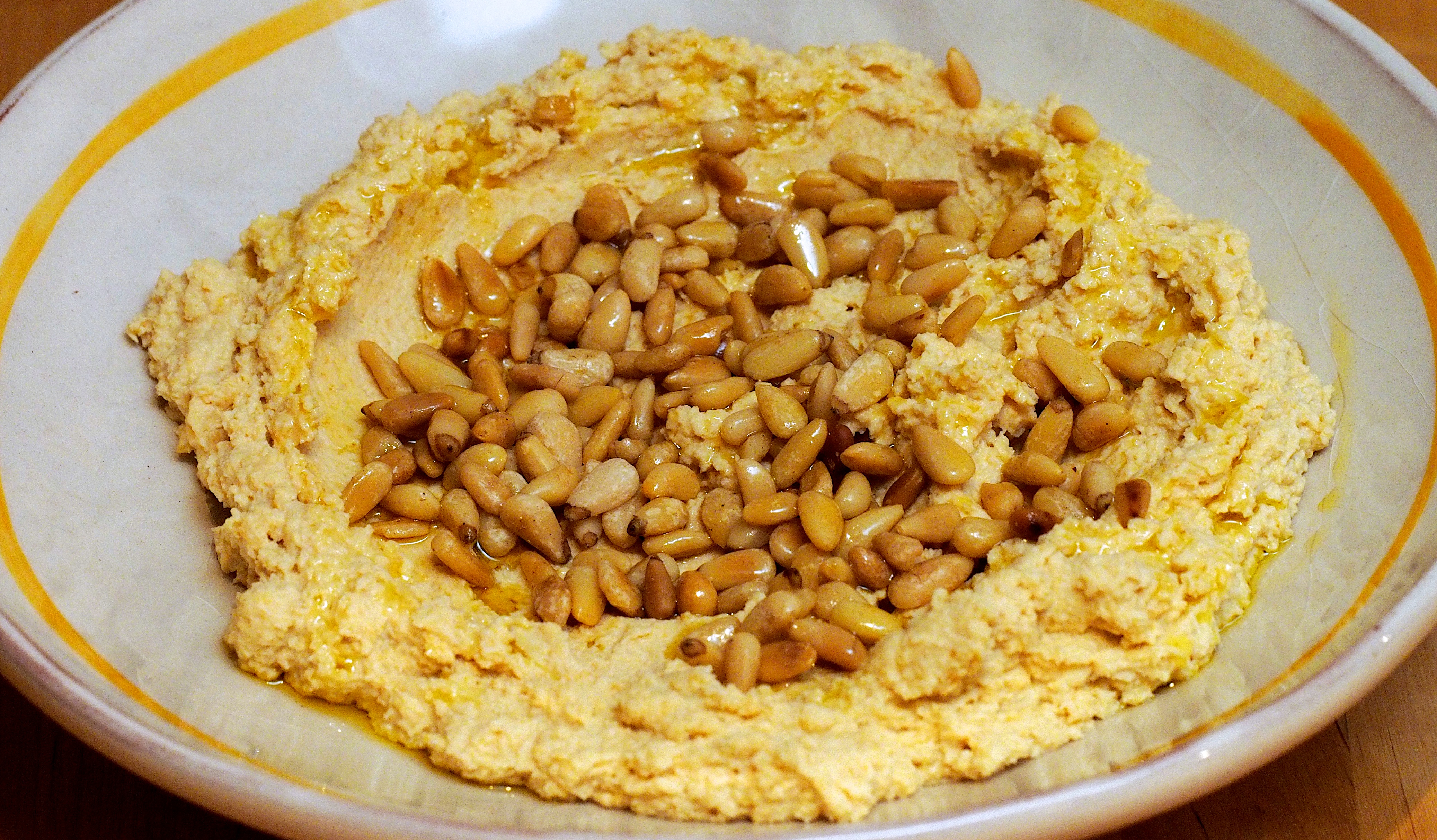
Such a good recipe for hummus we couldn’t stop eating it and had to make another batch! Once you’ve bought the tahini you may as well use it up.

  • 2 x 400g tins of chickpeas
  • 2-3 garlic cloves, peeled
  • 4 tbsp tahini
  • juice of 2 lemons
  • 2 tsp sea salt
  • best extra virgin olive oil
  • 50g pine nuts, toasted

Drain the chickpeas, keeping 50ml of the juices from the tin, and rinse.

Put the chickpeas into a food processor, add the garlic cloves and tahini, and process for a few minutes.

Add the reserved can juices, then half the lemon juice and the sea salt, and process until smooth.

Taste and add some more lemon juice, if you like.

Scrape the hummus into a dish, drizzle generously with your best olive oil, sprinkle with the toasted pine nuts, and serve as a starter, with  breadsticks and crudités for pack lunch, or with a selection of other mezze dishes.

(Original recipe from The Lebanese Kitchen by Salma Hage, Phaidon 2012.)

Read Full Post »

« Newer Posts - Older Posts »