Feeds:
Posts
Comments

Archive for the ‘Asian’ Category

This is really quick and healthy, with nice fresh flavours.

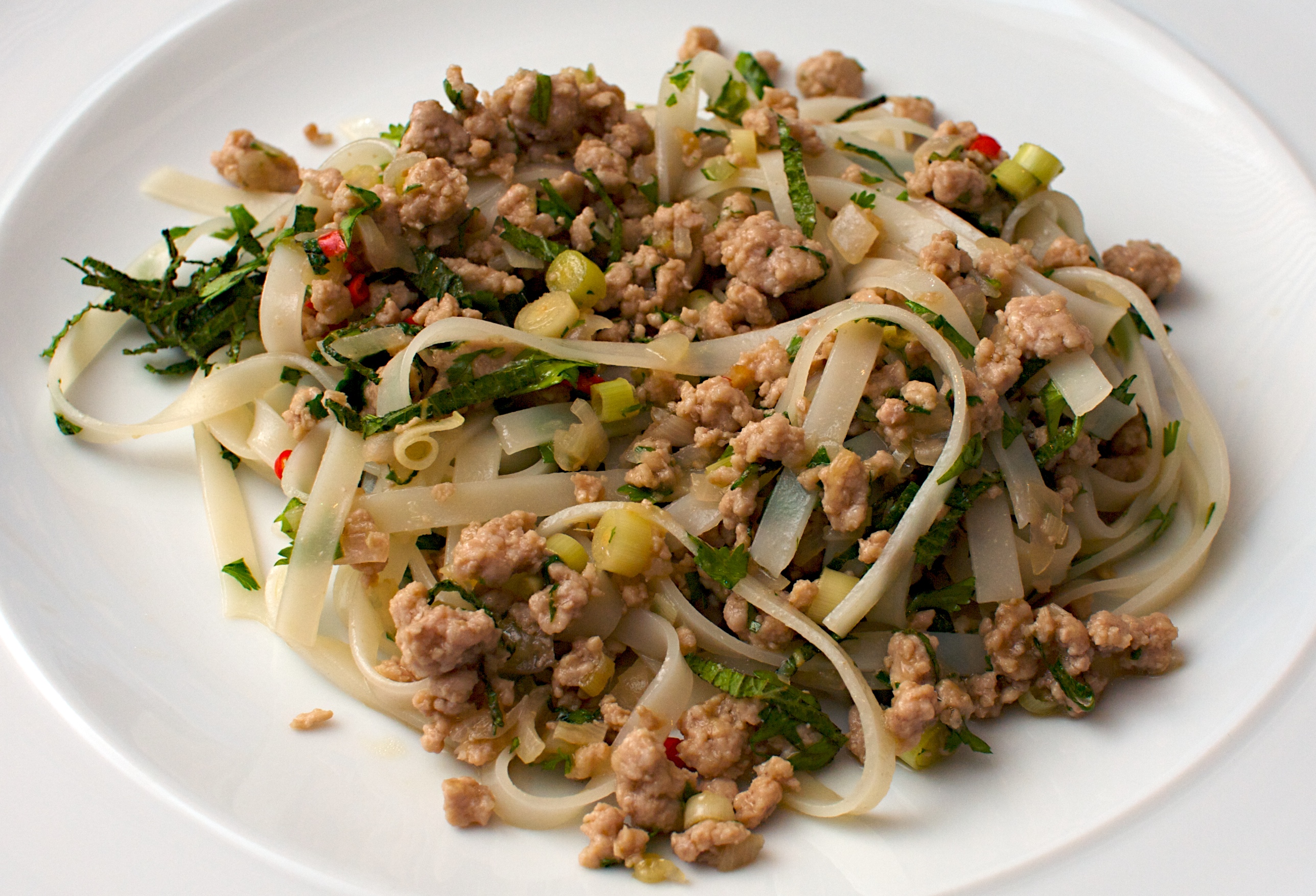
Asian Pork Noodle Salad – to serve 2

  • 100g rice noodles
  • 2 stalks of lemongrass, chopped
  • 2 shallots, finely chopped
  • 200g lean minced pork
  • ½ tsp soft brown sugar
  • small bunch coriander, roughly chopped
  • small bunch mint, roughly chopped
FOR THE DRESSING:
  • ½ garlic clove, crushed
  • 1 red chilli, finely chopped
  • ½ tbsp soft brown sugar
  • 2 limes, juiced
  • 1 tbsp fish sauce

Pour boiling water over the noodles and leave to soak according to the pack instructions. Drain and cool under running water.

Cook the lemon grass and shallots for a couple of minutes, then add the pork and cook until browned and cooked through. Stir in the sugar and stir to dissolve.

Mix the dressing ingredients together and toss with the noodles and pork, then add the coriander and mint and serve.

Drink with: a glass of Riesling – try with one of the slightly off-dry New Zealand styles.

(Original recipe from BBC Good Food)

Read Full Post »

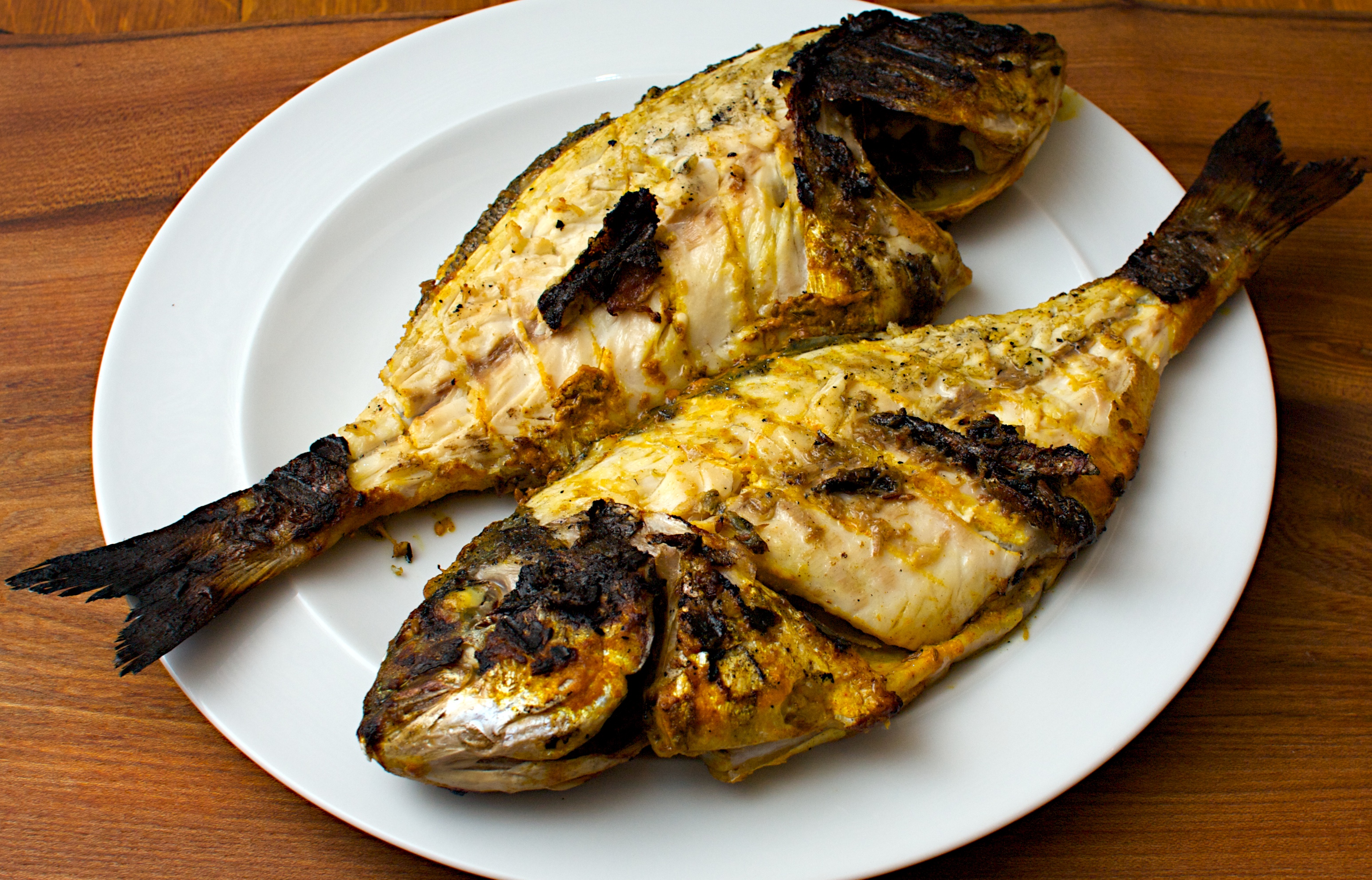
We didn’t brush the grill of our barbecue well enough to prevent the skin sticking to it. If you’re cooking fish on a barbecue learn from our mistakes and brush the grill down well and rub with a bit of oil to stop it sticking. You can also season the fish with salt and set it aside for 15 minutes or so before cooking which will draw the moisture out of the skin. Alternatively you can take the extra safe precaution of cooking the fish on some tinfoil. This is a delicious way to cook fish and you get the flavours of the garlic, ginger and Tikka flavours with the added barbecue smokiness which works a treat and can be served with a fresh cucumber, tomato and coriander salad.

BBQ Tikka Sea Bream – to serve 2

  • 2 tbsp finely grated fresh ginger
  • 4 garlic cloves, finely grated
  • 2 small sea bream, approx. 450g each
  • 6 tbsp natural yoghurt
  • 2 tbsp olive oil
  • 2 tsp turmeric
  • 2 tsp chilli powder
  • 3 tsp cumin seeds

Get the barbecue hot.

Slash the skin of the fish on either side and place in a shallow dish. Mix the ginger and garlic, season with salt, then rub all over the fish.

Mix the yoghurt with the oil, spices and seasoning. Pour this over the fish and rub it all over the fish with your hands, inside and out.

Cook for about 6 minutes on each side and serve with an Indian-style salad.

Drink with: a chilled bottle of Singha beer, preferably outside in the sunshine.

(Original recipe from BBC Good Food)

Read Full Post »

The watercress has finally arrived in Caviston’s, one of our favourite vegetable shops. The seasons seem to be all out this year and we can’t predict when produce will be there and at it’s freshest. The bags you buy in supermarkets just don’t taste like the real thing at all so catch it while you can as it mightn’t be here for long!

This soup can be on the table under 10 minutes if you want. We love asian soups as they have great depth of flavour and really zing with freshness.

Hot and Sour Watercress and Prawn Soup – to serve 2 

  • 3 tbsp rice vinegar (or white wine vinegar)
  • 500ml vegetable or chicken stock
  • 1 tbsp soy sauce
  • 1tsp golden caster sugar
  • 2.5cm piece ginger, peeled and thinly sliced
  • 3 scallions, thinly sliced
  • 300g raw peeled prawns
  • 1 bunch watercress, stalks cut off

Put all the ingredients except for the prawns and watercress into saucepan and bring to a simmer.

Cook for a minute, then add the prawns and cook until they turn pink.

Stir in the watercress and take off the heat. Taste and add another teaspoon of sugar if necessary.

Drink with: a non-Burgundy Pinot but not from a hot climate. We tried one from San Gimignano in Tuscany which had lovely juicy fruit but was still nice and light without too much tannin which tends to clash badly with chilli. A surprisingly good choice and one that will be repeated.

(Original recipe from BBC Good Food)

Read Full Post »

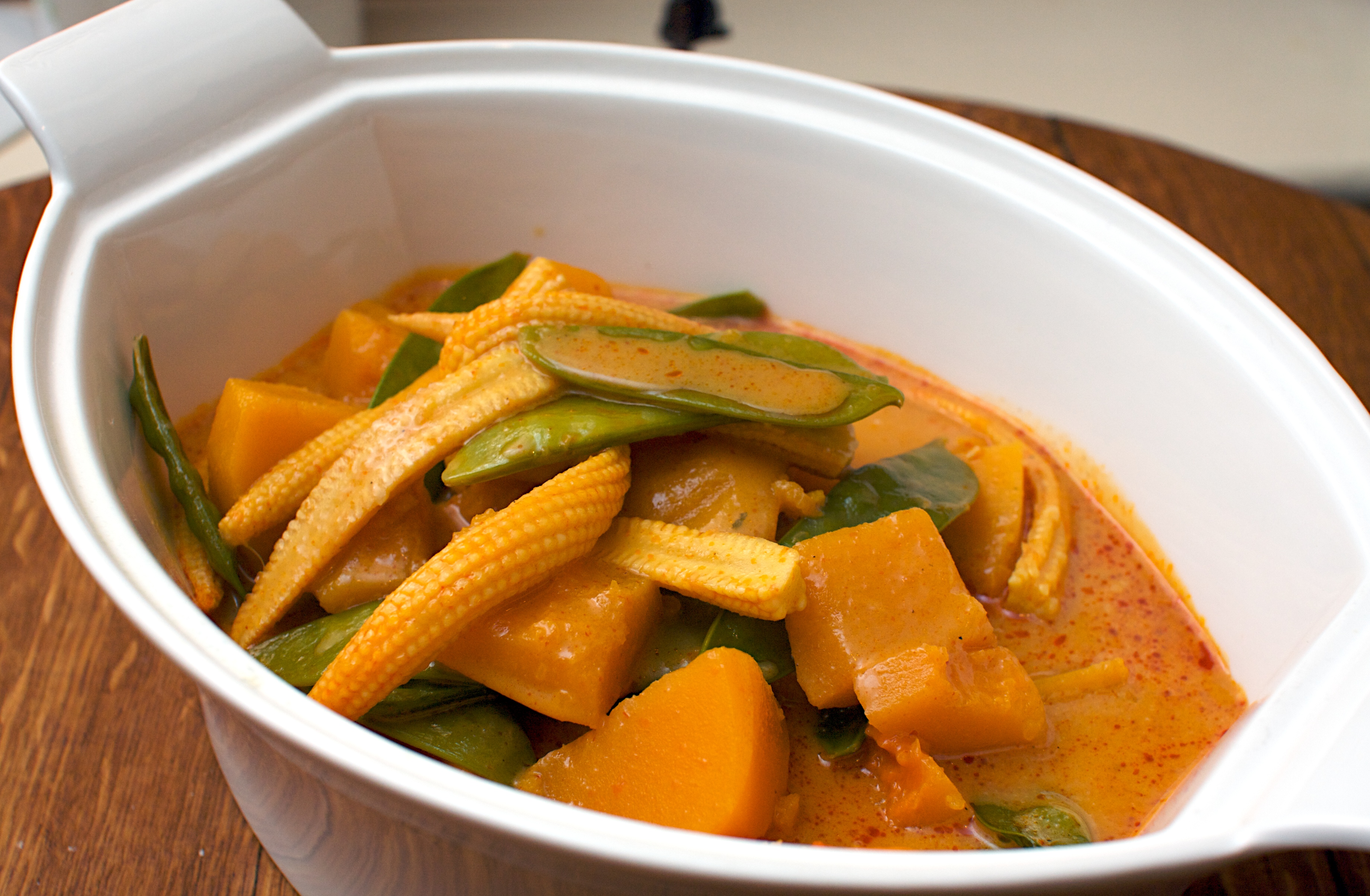
This is not a sophisticated Thai curry but is absolutely perfect for a quick mid-week meal. We loved it! We’ve been avoiding butternut squash this year it seems, which is no reflection on how yum it is. Serve with basmati or jasmine rice.

Thai red squash curry – to serve 4

  • 1 small butternut squash, about 700g
  • 200g pack mixed mangetout and baby corn
  • 2 tbsp sunflower oil
  • 1-2 tbsp Thai red curry paste
  • 400ml can coconut milk
  • 150ml vegetable stock
  • 2 tbsp soy sauce
  • 1 tbsp light muscovado sugar
  • juice of ½ lime

Cut the end off the squash and quarter lengthways, scoop out the seeds, peel, then cut into smallish chunks. Halve the baby corn lengthways.

Heat the oil in a saucepan. Fry the paste gently for 1-2 minutes. Add the coconut milk, stock, soy sauce and sugar. Bring to the boil.

Add the squash and baby corn. Simmer, covered, for about 10-12 minutes. Add the lime juice and mangetout and simmer for one more minute.

Wine Suggestion: We didn’t have anything to drink with this (except water) but if we did it would probably have been a beer!

(Original recipe from BBC Good Food Magazine, April 2001.)

Read Full Post »

Chilli Cumin Lamb

A great introduction to an exciting chef, the winner of Australian Masterchef, Adam Liaw. He does some really exciting Asian food – well worth a trip to the Asia market! Lamb fried with cumin is a classic northern Chinese dish, Adam has given it a bit of twist and turned it into a warm salad with a peanut relish. You will need a thermometer for this, the sort that you use for jam, you can pick one up in a kitchen shop for under €10. We bought one to cook this dish and have already used it again for something else. If your peanuts have the skins on just blanch them for a minute in hot water and they will slip off easily.

Chilli cumin lamb with peanuts and herbs – to serve 2

  • vegetable oil, to deep-fry
  • 300g lamb topside, cut into 2cm cubes
  • 1 tbsp cornflour
  • 2 tbsp neutral-flavoured oil, like groundnut
  • 40g raw peanuts, peeled
  • ½ onion, finely diced
  • 2 garlic cloves, chopped
  • 1 tbsp dark soy sauce
  • ¼ tsp caster sugar, plus an extra pinch
  • 5 dried chillies, stalks and seeds removed
  • 1 tbsp cumin seeds
  • 1 tsp chilli powder
  • ¼ tsp sea salt flakes
  • 2 large handfuls mint leaves
  • 1 large handful coriander leaves
  • lemon wedges and cooked rice, to serve

Half-fill a wok with vegetable oil and heat to 180ºC. Toss the lamb in the cornflour and deep-fry for 3-5 minutes or until well browned. Lift out with a slotted spoon and drain on paper towel. Drain the vegetable oil from the wok.

Heat half the neutral oil in the wok and stir-fry the peanuts until golden brown. Remove with a slotted spoon, drain and roughly chop. Add the onion and garlic and stir-fry for 1-2 minutes or until softened and starting to colour. Add the soy sauce and sugar and stir-fry for 30 seconds. Return the peanuts to the wok with the chillies and toss for about 30 seconds. Remove the mixture from the wok and set aside.

Heat the rest of the oil in the wok and add the cumin and chilli powder. Stir-fry for 30 seconds (or until it starts to aggravate your nose). Add the lamb, the salt and a pinch of sugar. Toss for about 30 seconds and then add half the mint. Toss until the lamb is wilted, then remove the mixture from the wok.

Arrange a bed of coriander and mint leaves on a serving plate and top with the lamb mixture. Spoon the peanut and onion mixture on top of the lamb. Serve with wedges of lemon. Squeeze the lemon over just before eating and toss like a salad. Serve with rice.

Wine Suggestion: We have the old conundrum of chillies with wine – they don’t go. We’d probably go for a beer here (lager rather than ale)  but if you want wine, a Pinot Gris with a little sweetness and not too aromatic might be good.

(Original recipe from Adam Liaw’s Two Asian Kitchens, Ebury Press, 2011.)

Read Full Post »

Healthy, super-speedy and tasty. Perfect weeknight dinner!

Sticky lemon & chilli chicken noodles – to serve 2

  • 100g thread egg noodles
  • 2 skinless chicken breasts, sliced into strips
  • 1 tsp cornflour
  • oil
  • 4 scallions, shredded
  • 50 mange tout, shredded
  • 1 red pepper, sliced
  • 2 tbsp soy sauce
  • 1 lemon, juiced
  • 1 tbsp honey
  • 2 tbsp chilli sauce

Cook the noodles according to the pack. Put the chicken slices into a plastic bag, add the cornflour and some seasoning and give it a good shake. Heat 1 tbsp oil in a wok and stir-fry the chicken until golden. Set the chicken aside and add the vegetables to the pan but hold back some of the scallions for a garnish. Toss for a couple of minutes .

Return the chicken to the pan and add the lemon, honey, soy sauce and chilli sauce, plus a splash of water and bubble for a few minutes to make a sauce. Toss with the noodles and garnish with the remaining scallions.

Wine Suggestion: Go for something fresh, fruity and aromatic, like a Sauvignon Blanc from Italy or Chile.

(Original recipe from BBC Good Food)

Read Full Post »

This is really healthy and low-fat which is just what we like during the week. Serve with some steamed rice.

Steamed fish & pak choi parcels – to serve 4

  • 4 plaice, haddock or other white fish fillets
  • 2 pak choi, thickly sliced
  • 4 scallions, shredded
  • 1 red chilli, thinly sliced
  • 3cm ginger, cut into matchsticks
  • 2 tbsp reduced-salt soy sauce
  • juice 1 lime
  • 1 tsp sesame oil

Heat oven to 200C/180C fan/gas 6.

Put each fish fillet in the centre of a large piece of tinfoil. Top with the pak choi, scallions, chilli and ginger. Pull up the edges of the foil to make a dish to catch the sauce.

Mix the soy sauce, lime juice and 1 tbsp water and spoon over the fish. Carefully crimp the foil to enclose the fish making sure there are no gaps for the steam to escape.

Put the parcels on a baking tray and bake for 10-15 minutes or until the fish is cooked (depends how big your fillets are). Drizzle over a few drops of sesame oil before serving but go easy or you will overpower the delicate flavours.

Wine Suggestion: light and delicate with aromatic overtones and a little residual sugar instead of bone-dry is the key; try a New Zealand or just-off-dry German Riesling and you’ll have a delightful match.

(Original recipe from BBC Good Food)

Read Full Post »

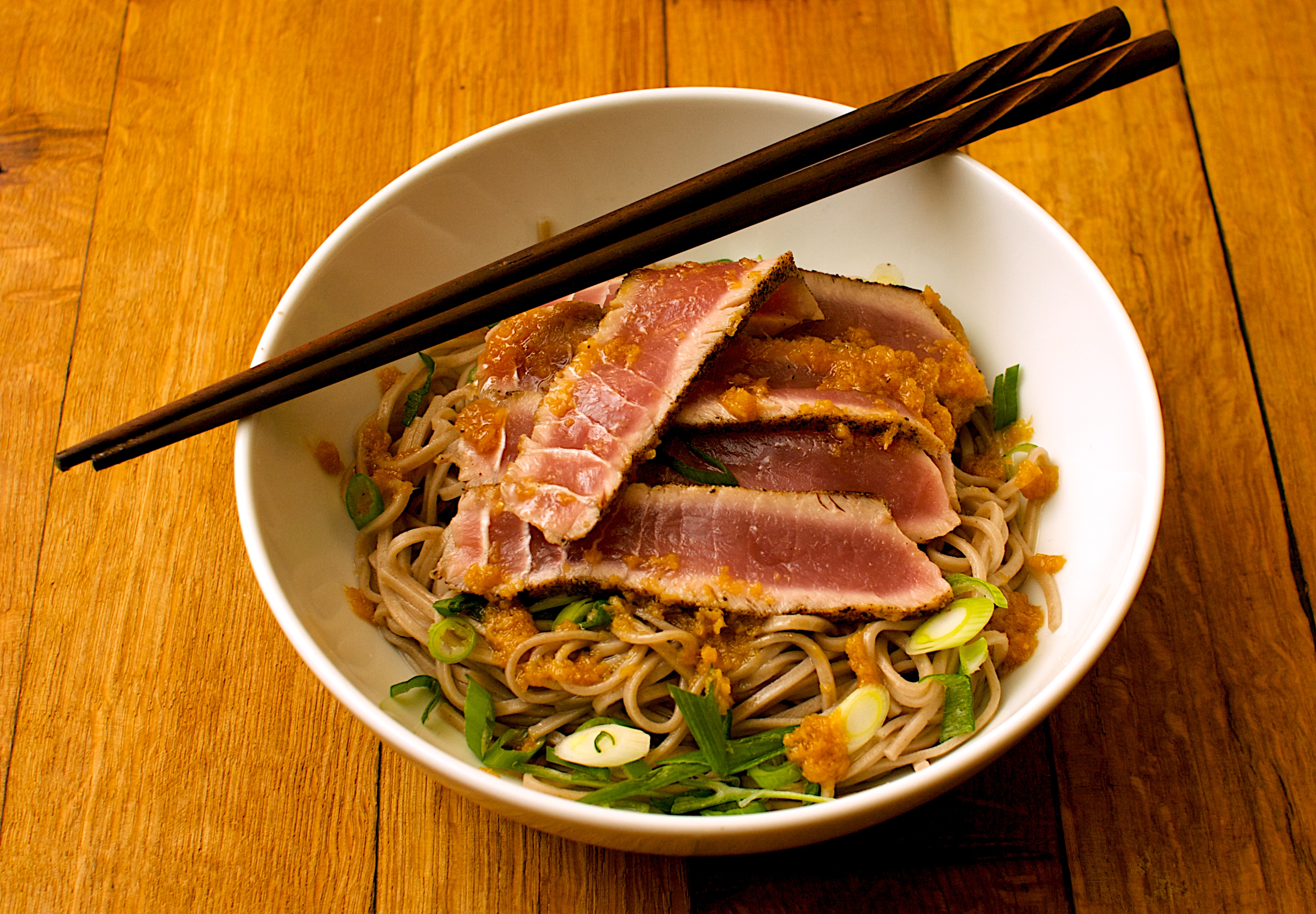
Tuna tataki noodles

Tataki is a Japanese way of preparing fish which involves searing it quickly, slicing thinly and serving with ginger that has been pounded into a paste.  This takes just 15 minutes to make and is fresh, tasty and healthy.

Tuna tataki noodles – to serve 2

  • 2 tuna steaks
  • 1 tsp black peppercorns, coarsely ground or cracked
  • 150g soba noodles, cooked according to the pack
  • 2 scallions, shredded
  • 1 tbsp groundnut oil
  • 1 tsp sesame oil
  • 1 tsp soy sauce
  • 1 garlic clove, grated
  • ginger grated to make 1 tbsp

Rub the tuna with the black pepper and sear in a hot non-stick pan for 1 minute on either side. Rest for a couple of minutes before slicing into strips.

Divide the noodles between 2 bowls and add half the tuna strips to each. Top with the scallions.

Mix the rest of the ingredients together to form a paste and drizzle this over the tuna and noodles.

Wine Suggestion: Tuna is meaty fish but this dish is definitely not heavy so a light red wine, such as a Beaujolais would work well. Stick it into the fridge for a short time so it is slightly chilled and it will give the whole meal a zing.

(Original recipe from BBC Good Food.)

Read Full Post »

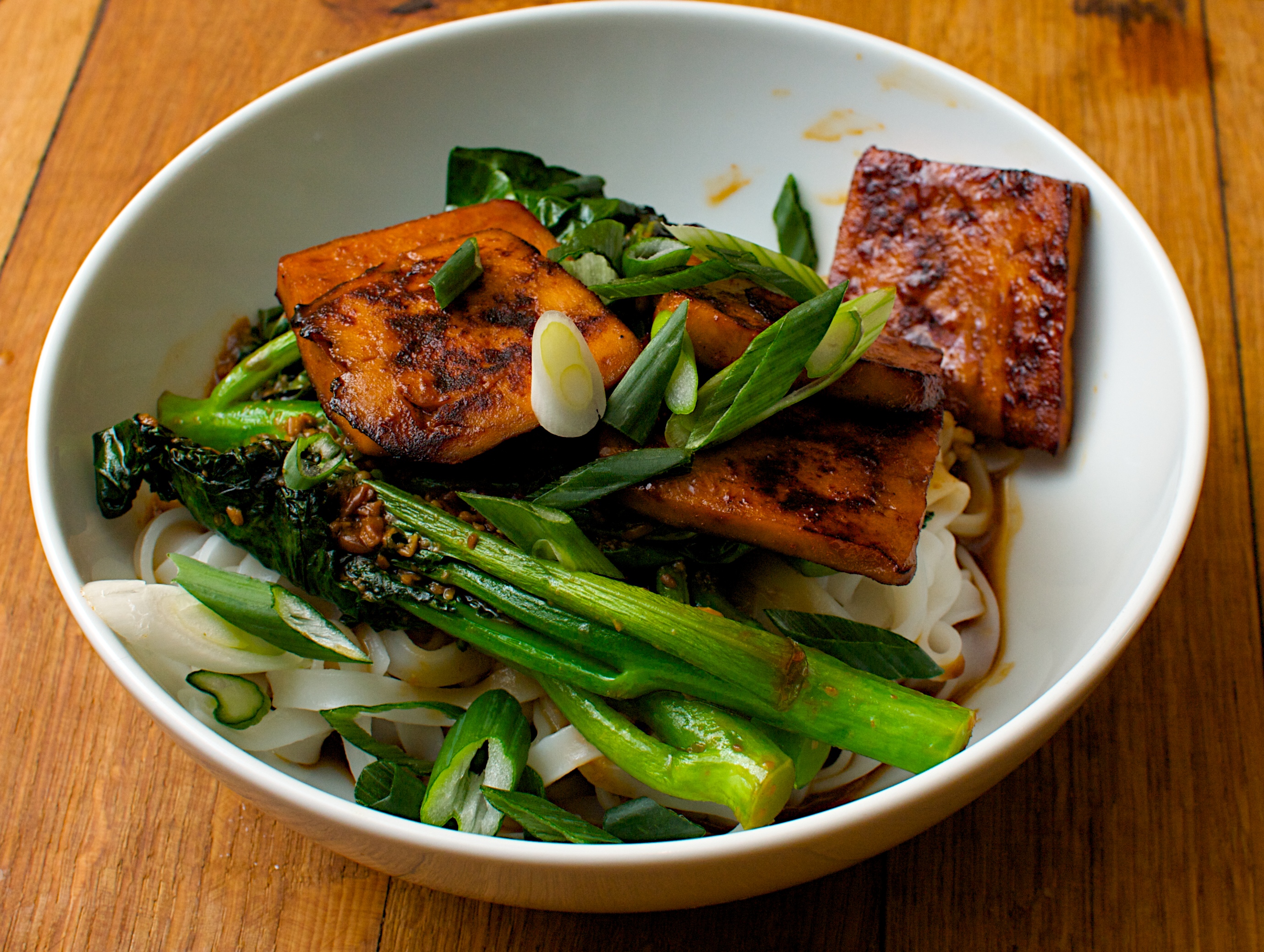
Another fantastic recipe from the master of vegetarian cooking, Denis Cotter, of Café Paradiso in Cork. I (Jules) went there last week and got all inspired by tofu, having never been particular excited by it before. To avoid any confusion, tofu is bean curd and not “a meat substitute that tastes and looks just like meat” as the bewildered person at the table beside  me thought! There is quite a lot to do at the end of the recipe but it’s well worth the effort.

Maple-glazed tofu with rice noodles & kai-lan in a miso broth – to serve 4

  • 200g flat rice noodles
  • 1 tbsp vegetable oil
  • 300g kai-lan (Chinese kale) or sprouting broccoli
  • 3 scallions, thinly sliced at an angle
FOR THE BROTH
  • 1 large onion, chopped
  • 2 carrots, peeled and chopped
  • 2 celery sticks, chopped
  • 60g fresh ginger, thinly sliced
  • 1 whole fresh red chilli
  • 4 garlic cloves, peeled
  • 1 bunch of fresh coriander, including stalks
  • 2 tbsp soy sauce
  • 3 tbsp red miso
FOR THE MAPLE-GLAZED TOFU
  • 3 tbsp maple syrup
  • 4 tbsp soy sauce
  • 2 tsp rice vinegar
  • 1 tbsp chillis sauce
  • 250g firm tofu
  • vegetable oil, for brushing
First make the broth: in a large saucepan, bring 1 litre of water to the boil. Add the onion, carrot, celery, ginger, chilli, garlic and coriander. Simmer gently, uncovered, for 30 minutes. Leave to stand for a further 30 minutes.

While the broth is standing, prepare the tofu; mix together the maple syrup, soy sauce, vinegar and chilli sauce.

Slice the tofu into 16 slices about 1cm thick. Place in the liquid and leave to marinade for 20 minutes.

Heat a heavy frying pan over medium heat brush the pan with vegetable oil. Add the tofu and fry for 2-3 minutes per side, until lightly coloured. Pour in most of the marinade and continue to fry, swirling to make sure the tofu is coated, the marinade will stick to the tofu as a glaze. Add more marinade if necessary.

At the same time, bring a saucepan of water to the boil and cook the noodles according to the pack. Drain in a colander.

Finish the broth: strain out the vegetables and return the broth to the pan. Add the soy sauce.

Put the miso in a bowl and stir in a few tablespoons of the broth to get a smooth pouring consistency. Bring the broth back to the boil, whisk in the miso and hold at a low simmer.

Heat 1 tbsp of vegetable oil in a wide pan over high heat. Add the kai-lan and sauté for 4-5 minutes, adding an occasional splash of broth.

To serve, put some noodles in warm bowls. Place the kai-lan on top of the noodles. Ladle over some broth, top with slices of tofu and sprinkle with scallions.

Wine Suggestion: This is a dish which has a lot of competing flavours and components so a wine match isn’t easy. A yeasty beer or ale would work a treat like a Hobgoblin or a Leffe Brun to compliment the yeasty flavours provided by the miso.

(Original recipe from Denis Cotter for the love of food, Collins, 2011.)

Read Full Post »
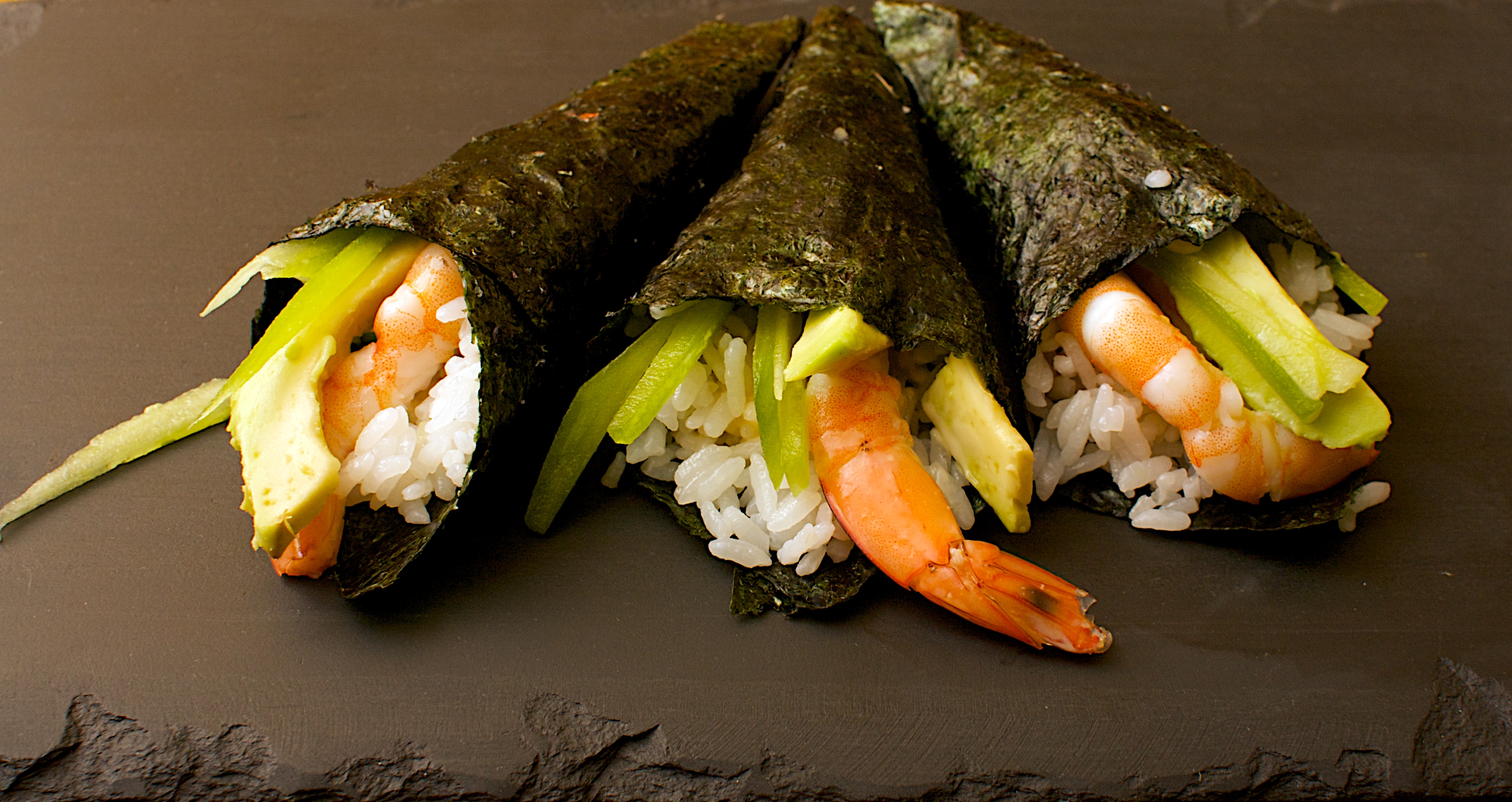
Easy Sushi Hand Rolls

We have shied away from sushi recipes up until now as they tend to be a bit intimidating with all that delicate rolling and slicing. These hand rolls are really easy and by the time you’ve made 14 of them you will have perfected the skill!

Sushi hand rolls (temaki) – makes 14

  • 7 sheets nori

FILLINGS (your choice of …)

  • 150g salmon or tuna, cut into strips
  • ½ an avocado, peeled and cut into strips
  • ¼cucumber, seeds removed and cut into strips
  • 150g cooked, peeled prawns
  • 2 scallions, finely chopped

RICE

  • 250g sushi rice
  • 50ml Japanese rice vinegar
  • 40g golden caster sugar
  • 1 tsp salt

SPICY CHILLI MAYONNAISE

  • 6 tbsp mayonnaise
  • 2-3 tbsp chilli garlic sauce
  • ½ lemon, juiced
TO SERVE
  • soy sauce
  • wasabi
  • pickled ginger

To make the rice, put it in a sieve and wash in cold running water until the water runs clear. Drain for about 30 minutes to rid of excess water.

Put the rice into a saucepan, add 250ml cold water and bring to the boil on a high heat. Cover tightly and simmer on a low heat for 30 minutes. Take off the heat and leave covered to steam for 15 minutes.

Meanwhile, put the rice vinegar, sugar and 1tsp salt in a saucepan. Heat the mixture until the sugar dissolves, then cool to room temperature.

Put the hot rice in a large bowl and add ¼of the sushi rice seasoning. Fold gently and repeat until all of the seasoning is mixed through. Cool the rice by fanning it for 5 minutes (this makes it shine).

To make the mayonnaise, mix all the ingredients together, taste and add extra salt and lemon if necessary.

Now you are ready to make your sushi hand rolls. Use the fillings in different combinations and serve with pickled ginger, soy sauce and wasabi.

  1. Lay a sheet of nori shiny side down and cut horizontally in half to make 2 strips. Cut a diagonal corner piece from the right hand side of each strip.
  2. Put one strip in your palm, keeping the shiny side down.
  3. With a damp hand, take a ping-pong sized ball of rice and spread it over half the nori on the side closest to your thumb.
  4. Make a diagonal trough in the middle of the rice with your finger to make a space for your filling.
  5. Add a little drizzle of spicy mayonnaise along the trough (a squeezy bottle makes this easier).
  6. Add your choice of filling – though not too much or you won’t be able to roll it.
  7. Start rolling the nori from the rice-covered part by creating a triangle. You can practice this with an empty sheet before beginning. Bring the bottom corner up to enclose the filling.
  8. Keep rolling until the nori forms a cone – make sure it is rolled tight.
  9. Use a tiny ball of wasabi as glue to seal the join of your cone at the top. Repeat 14 times!

Wine Suggestion: Go for something delicate and light with some floral and fruit aromas. A dry Riesling worked well for us.

(Original recipe from BBC Good Food)

Read Full Post »

If you’ve heard of Jamie’s 30 minute meals, well this is one of Jono and Jules’ 10 minute meals!

We have finally used the last of our Christmas turkey from the freezer – we draw the line at eating turkey leftovers in February. If you’ve eaten all your turkey already you can easily substitute some cooked chicken or prawns instead.

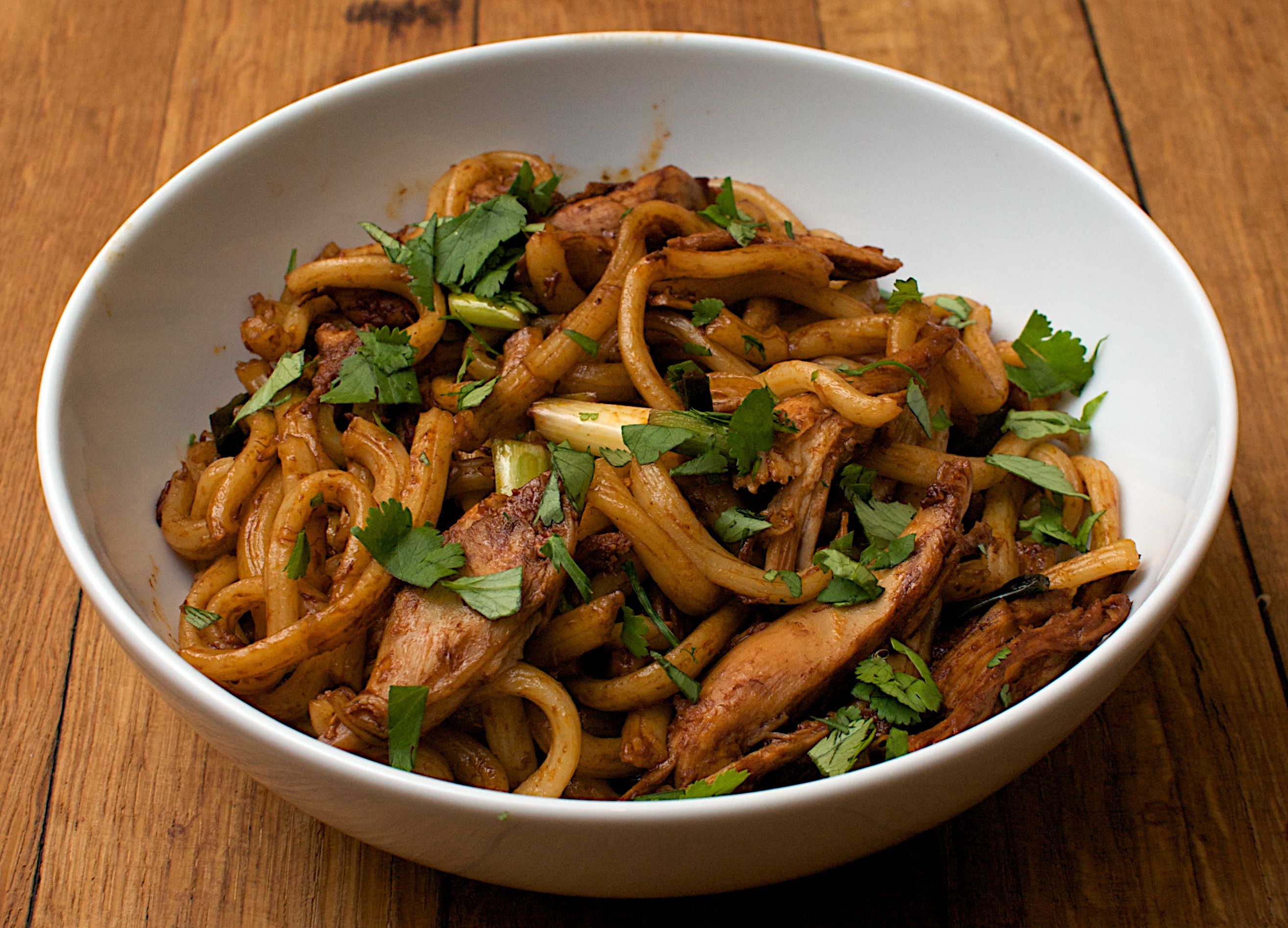
Sweet and sour noodle stir-fry (with turkey, chicken or prawns) – to serve 2 

  • 1 tbsp tomato purée
  • 2 tbsp soy sauce
  • 2 tbsp white wine vinegar
  • 1 tbsp caster sugar
  • a pinch of chilli flakes
  • 1 tbsp sunflower oil
  • 4 scallions, roughly chopped
  • 200g cooked turkey/chicken/prawns, chopped
  • 2 x 150g packs straight to wok thick udon noodles
  • 2 tbsp roughly chopped coriander

Mix the tomato purée, soy sauce, white wine vinegar, caster sugar and chilli flakes in a small bowl. Heat the oil in a wok or a big frying pan. Add the scallions and garlic and stir-fry for 30 seconds. Add the turkey, chicken or prawns along with the noodles and stir to separate the noodles. Stir in the sauce and add a couple of tablespoons of water to thin the sauce a bit. Cover and cook for a couple of minutes or until everything is heated through. Sprinkle the coriander over before serving.

Wine Suggestion: Don’t have a top-quality Meursault as we found this didn’t really work – which was absolutely no fault of the wine! A better match would be a white wine with a little bit of sugar in it to complement the spicy flavours in the dish. Something like some Pinot Gris would work well (look for the sweetness indicators on the label if it comes from Alsace which is a great region for this grape).

(Original recipe from Sainsbury’s Magazine, January 2008.)

Read Full Post »
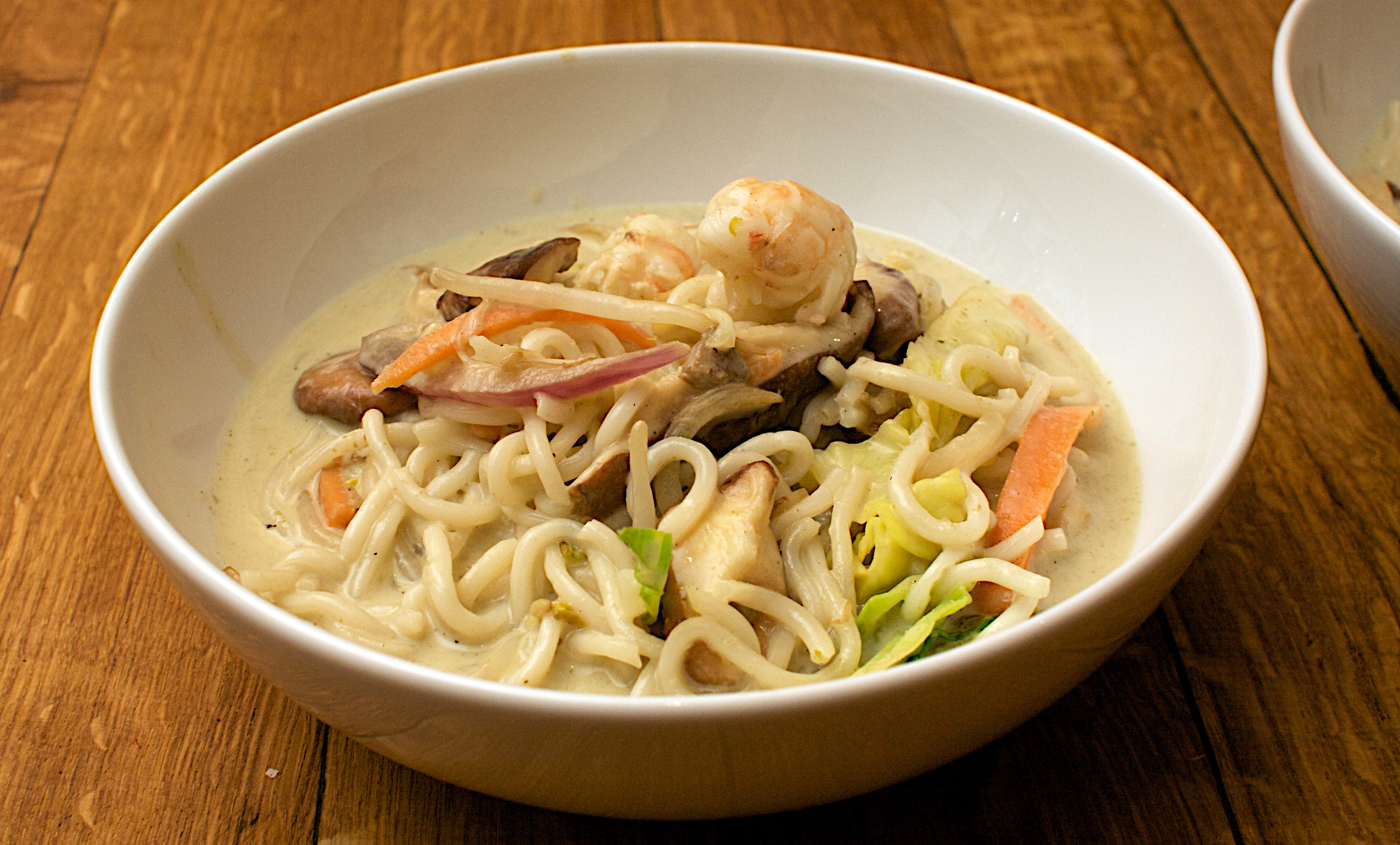
So we’ve started on our stock of turkey leftovers from the freezer. Last year we made a clear Vietnamese broth so this year we thought we’d try a creamy coconut tom ka gai to ring the changes. This is delicious!

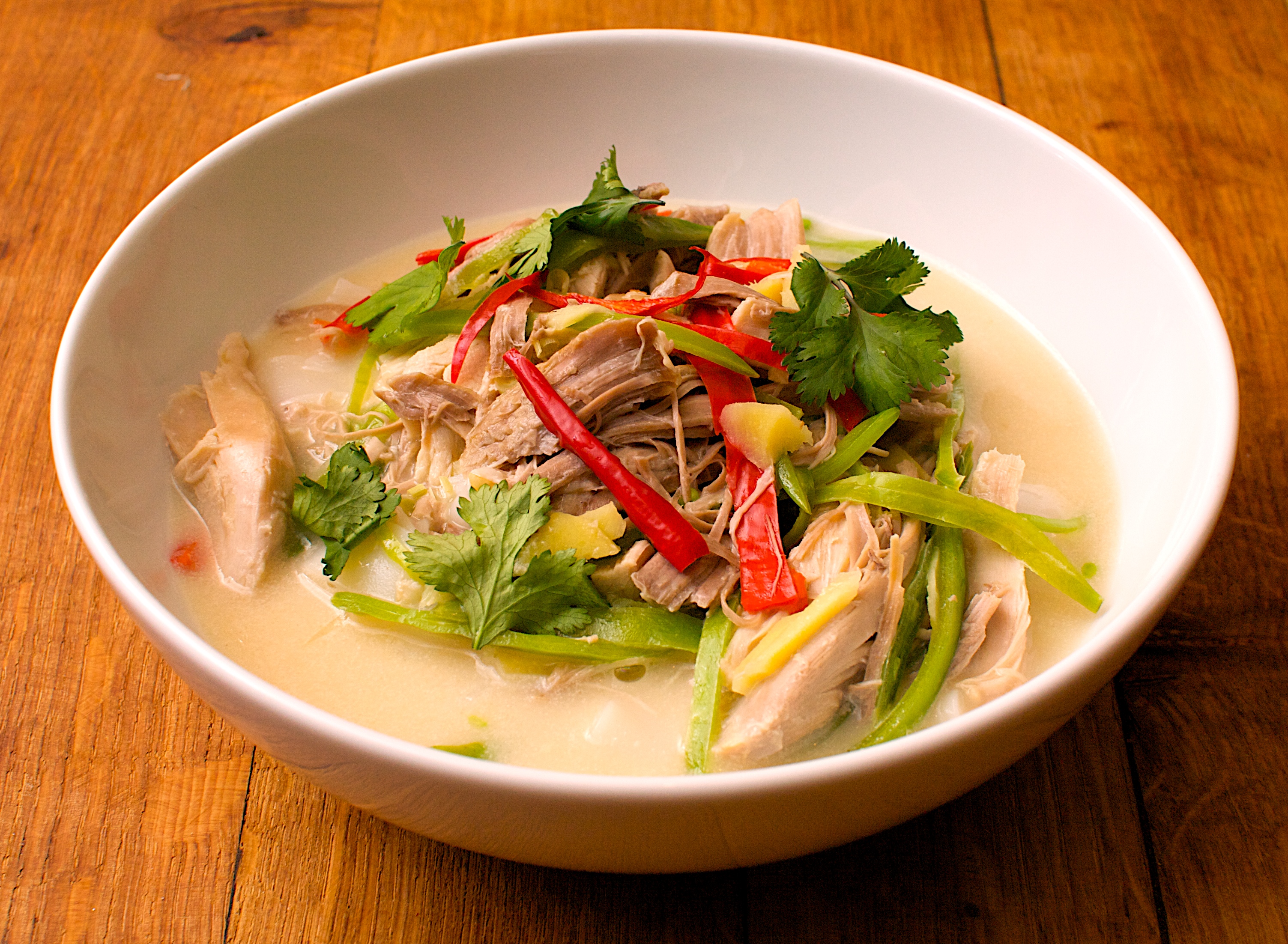
Turkey tom ka gai – to serve 2

  • 50g flat rice noodles
  • 1 x 400ml tin half-fat coconut milk
  • 300ml chicken stock
  • a small chunk of ginger, shredded
  • 1 stalk lemongrass, discard the woody outer leaves and chop
  • 1 red chilli, shredded
  • 200g cooked turkey
  • 50g mangetout, shredded
  • 1 lime, juiced
  • 1 tsp brown sugar
  • 1 tbsp fish sauce
  • a handful of coriander leaves

Cook the noodles according to the pack, then drain and rinse with cold water. Bring the coconut milk and stock to a simmer, add the ginger, lemongrass and half the chilli and simmer for a few minutes. Add the turkey and mangetout and simmer for another couple of minutes to heat through. Stir in the lime, sugar and fish sauce, divide the noodles between two warm bowls, ladle over the soup, then scatter the rest of the chilli and coriander over the top.

Wine Suggestion: This works superbly with a good Riesling from the Mosel which combines a sweetness, pure fruit flavours, acidity to balance and a lovely lightness to both the alcohol and body … you want to match the chilli with sweetness and complement the clear and defined flavours of the soup without overwhelming it! Our choice of the evening is the Max Richter (the maker) Wehlener Sonnenuhr (the vineyard) Riesling (the grape) Spätlese (the ripeness at harvest) from the Mosel in Germany. The German naming system may seem impenetrable and intimidating but don’t be put off, the wines are usually fantastic, as long as you spend a bit more than the big brands!

(Original recipe from BBC Good Food)

Read Full Post »
If you have access to an Asia market or Indian grocer then they will sell poppadoms (they look like packets of very fine wafers) that are much superior to the already puffed ones you get in ordinary supermarkets. You can fry them in oil or just cook them in a microwave for 60 seconds.

Cucumber & Mint Raita – to serve 4

This is really light and refreshing and would also work well with a barbecue or on baked potatoes. Measure the mint so it doesn’t overpower the dish.

  • 200g cucumber
  • 400g thick plain yogurt
  • 8g mint leaves, shredded
  • 3/4 tsp roasted cumin powder (You can make this by roasting cumin seeds in a small dry pan for about 40 seconds, stirring constantly, until they darken, then grind to a fine powder)

Grate the cucumber on coarse side of a grater. Squeeze out the excess water and put it in a large bowl.

Add the rest of the ingredients and season to taste with salt and black pepper. Stir well and serve cold.

(Original recipe from Anjum Anand’s I ♥ Curry, Quadrille, 2010.)

Bengali-style Tomato Chutney – makes about 350ml

This is great with poppadoms or served alongside a curry. It keeps for several months in the fridge and would also be nice with burgers, chicken, lamb or even in your sandwiches!

  • 2tbsp oil
  • 1/2 tsp whole cumin seeds
  • 1/2 tsp whole brown or yellow mustard seeds
  • 1/4 tsp whole fennel seeds
  • 475ml tomato passata
  • 1 1/2 tsp peeled and very finely grated ginger
  • 175ml cider vinegar
  • 200g caster sugar
  • 3/4 tsp red pepper flakes
  • 1 1/4 tsp salt
  • 2 tbsp sultanas

Pour the oil into a heavy-based, medium stainless-steel pan and put over a medium-high heat. When hot add the cumin and mustard seeds. As soon as they start to pop add the fennel seeds. A few seconds later, put in the tomato passata, ginger, vinegar, sugar, pepper flakes and salt. Stir and bring to a simmer, then lower the heat and simmer, uncovered, for about 50 minutes, stir now and again. Add the sultanas and cook for another 10 minute by which time it should be thick and look glazed.

Spoon into a steralised jar, leave to cool, screw on the lid and keep in the fridge.

(Original recipe from Madhur Jaffrey’s Curry Easy, Ebury Press, 2010.)

Read Full Post »

This was surprisingly delicious and flavoursome; the curry paste really adds a good depth yet it is still light and wholesome. A Keema curry is one that uses mince which we’ve not really done. After this recipe we’ll certainly try a few others.

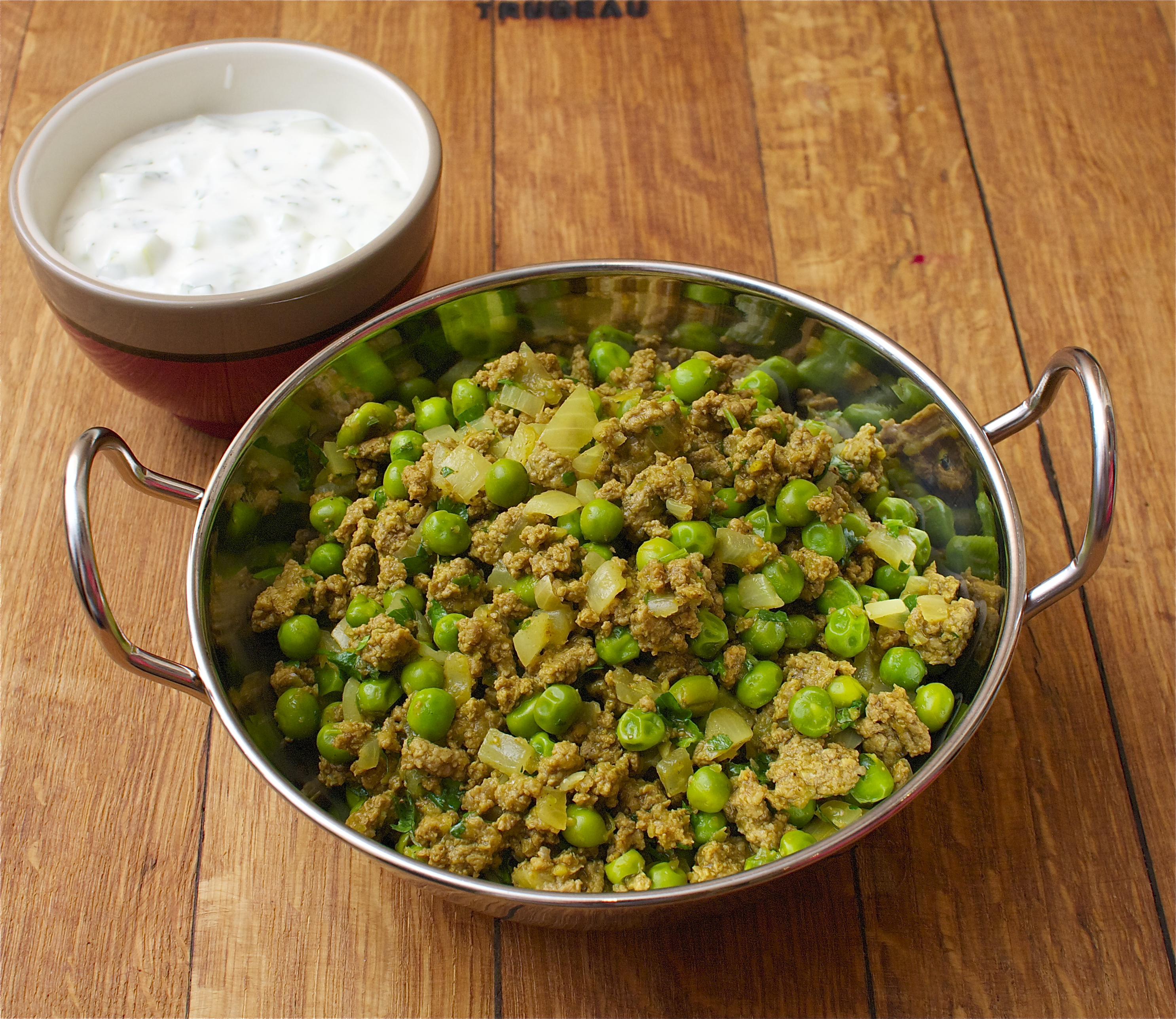
Keema curry & raita – to serve 4

  • 1 onion, chopped
  • 400g beef mince
  • 340g frozen peas
  • handful fresh coriander, chopped
FOR THE PASTE
  • 1 green chilli, chopped
  • 2 garlic cloves, chopped
  • thumb-sized piece ginger, chopped
  • 1/2 tsp each turmeric and ground coriander
  • 1 tbsp curry powder
FOR THE RAITA
  • 200g fat-free natural yogurt
  • 100g cucumber, peeled, deseeded and diced
  • handful fresh mint, chopped
Whizz the paste ingredients together in a blender or food processsor – you might need a splash of water.

Cook the onion in a splash of water for about 5 minutes until softened. Stir in the mince and cook for another 5 minutes to brown. Add the paste, cook for a minute, then pour in 100ml water. Bring to the boil and simmer for 5 minutes.

Meanwhile, mix the raita ingredients together and season. When the mince is cooked, season and stir through the coriander. Serve with the raita and some brown rice.

Wine suggestion: You don’t want something with too much acidity here but it still needs a bit of easy fruit. Try a Pinot Blanc from Alsace.

(Original recipe from BBC Good Food)

Read Full Post »

A really quick and easy week-night supper with bags of freshness and flavour. It’s also infinitely variable depending on what crunchy vegetables you may have to hand. We would have added a couple of sliced red chillies if we’d had some!

Spicy Prawn Soup – to serve 4

  • 1 tbsp sunflower oil
  • 300g bag crunchy stir-fry vegetables
  • 140g shitake mushrooms, sliced
  • 2 tbsp Thai green curry paste
  • 400g can reduced-fat coconut milk
  • 200ml vegetable or fish stock
  • 300g medium straight-to-wok noodles
  • 200g large, raw prawns

Heat a wok, add the oil, and stir-fry the vegetables and mushrooms for a few minutes. Take out and set aside, then tip the curry paste into the pan and fry for a minute. Pour in the coconut milk and stock. Bring to the boil, drop in the noodles and prawns, then reduce the heat and simmer for 4 minutes until the prawns are cooked. Stir in the vegetables and serve.

(Original recipe from BBC Good Food)

Read Full Post »

This is a handy mid-week curry with nothing like the calorie and fat content of an Indian take-away!

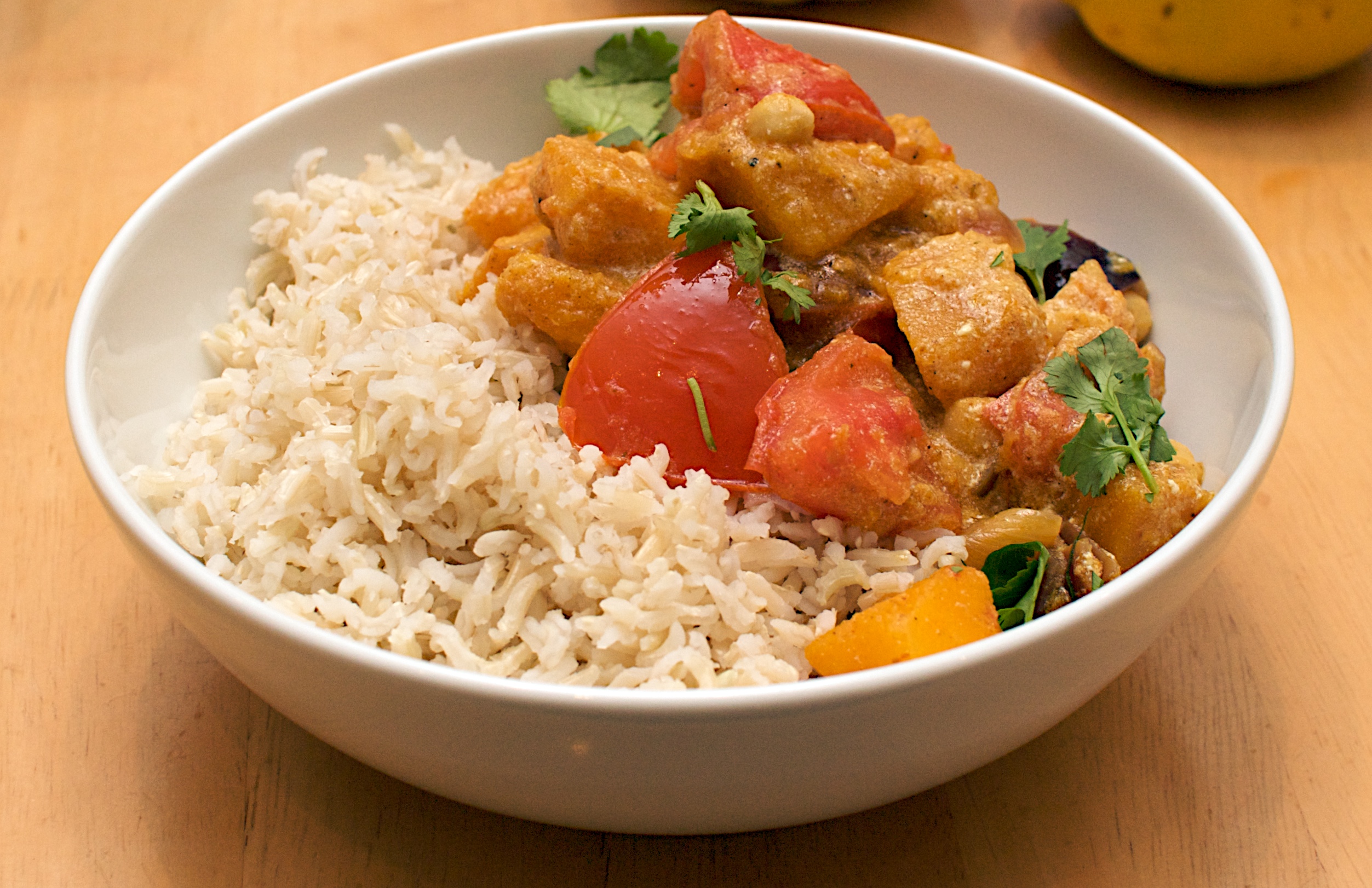
Indian butternut squash curry – to serve 4

  • 200g brown basmati rice
  • 1 tbsp olive oil
  • 1 butternut squash, diced
  • 1 red onion, diced
  • 2 tbsp curry paste (we used Patak’s Madras paste but you can go for a milder paste if you prefer)
  • 300ml vegetable stock
  • 4 large tomatoes, roughly chopped
  • 400g can chickpeas, rinsed and drained
  • 3 tbsp fat-free Greek yogurt
  • small handful coriander, chopped

Cook the rice in boiling salted water according to the instructions on the pack. Meanwhile, heat the oil in a large frying pan and cook the squash for a few minutes until lightly browned. Add the onion and the curry paste and fry for another 3 or 4 minutes.

Pour over the stock, then cover and simmer for 15-20 minutes, or until the squash is tender. Add the tomatoes and chickpeas, then gently cook for a few minutes, until the tomatoes slightly soften.

Take off the heat and stir through the yogurt and coriander. Serve with the rice.

(Original recipe from BBC Good Food)

Read Full Post »

So fresh and vibrant in flavour, much better than the raita you can buy in the supermarket and takes only a few minutes to make. We recommend you serve this with a curry (we cooked this one), a dahl, some rice and naan breads. An Indian feast!

Tomato, onion and cucumber raita – to serve 4

  • 1 small vine tomato, chopped into 1cm dice
  • 90g cucumber, peeled and chopped into 1cm dice
  • half a small red onion, finely chopped
  • large handful of chopped fresh coriander
  • 3/4 tsp roasted cumin powder (see below)
  • 1/3 tsp chilli powder
  • 400g plain yogurt, whisked until smooth
  • salt
To make the roasted cumin powder roast cumin seeds in a small dry pan, stirring constantly, until they have darkened quite a bit. Be careful as they can go from brown to black very quickly! Grind to a fine powder.

Stir all the ingredients together and season to taste.

(Original recipe from I ♥ Curry by Anjum Anand, Quadrille, 2010)

Read Full Post »

We’re determined to cram in as many salads as we can before it turns properly autumnal. Chicken thighs are the way forward for flavour and moisture – breasts have their purposes but they dry out terribly so get thighs for this dish. Nice fresh flavours.

Spicy Chicken Thighs with Cucumber and Cashew Salad – to serve 4

  • 3 tbsp fish sauce
  • 3 garlic cloves, crushed
  • 2 large red chillies, finely chopped
  • 2 tsp sugar
  • 8 bonesless skinless chicken thighs
  • 2 tbsp vegetable oil
For the cucumber and cashew salad:
  • 3 tbsp lime juice
  • 3 tbsp caster sugar
  • 200g vermicelli noodles
  • 2 cucumbers, halved and thinly sliced
  • small handful fresh mint leaves
  • 4 scallions, thinly sliced
  • 2 tbsp cashew nuts, crushed
Whisk the fish sauce, pepper, garlic, chillies and sugar in a bowl. Put the chicken in another bowl and pour half the marinade over. Cover and leave in the fridge for 20 minutes.

Heat the oil in a large frying pan over medium-high heat. Add the chicken, in two batches, and cook for about 3 minutes on each side, or until cooked through.

While the chicken cooks, add the lime juice and sugar to the remaining marinade. Stir until the sugar dissolves to make a dressing.

Pour boiling water over the vermicelli and leave for a minute or two until soft. Drain under cold water, put in a large bowl and add the cucumber, mint, scallions and cashews. Add the dressing, toss well and serve with the chicken.

(Original recipe from ‘Bill Granger Every Day’ published by Murdoch Books, 2006)

Read Full Post »

We ♥ Curry

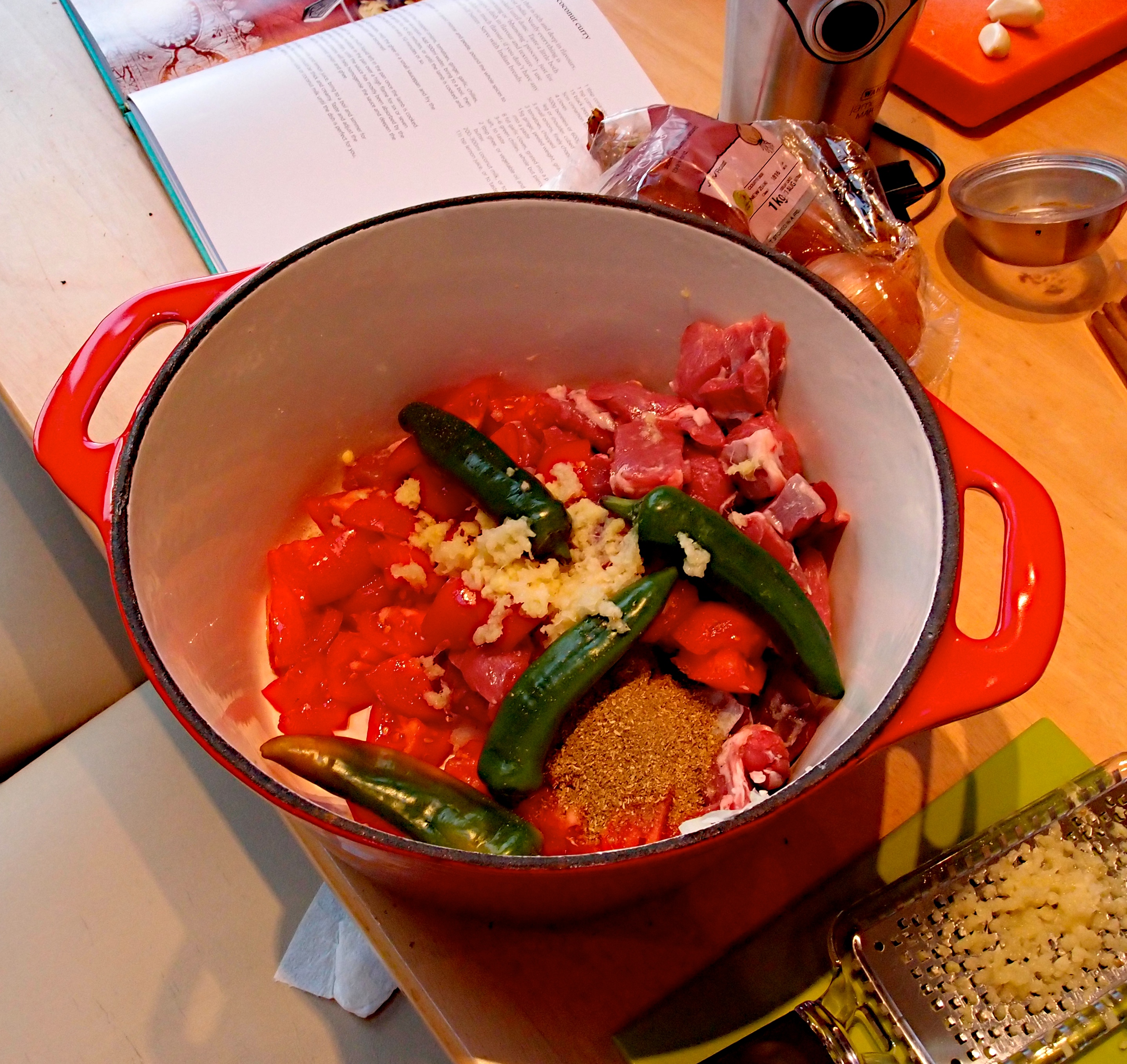
The best curry we’ve ever made by a mile! This was fabulous – so much lighter than takeaway and the lamb just melted. Our whole chillies kind of disintegrated into the sauce so prepare yourself for a good chilli kick. You can grind the whole spices in a mortar and pestle but we’ve invested in a little electric spice grinder which turns them into fine powder almost instantly. A microplane is the way forward for grating ginger and garlic. Two of our more successful kitchen gadgets!

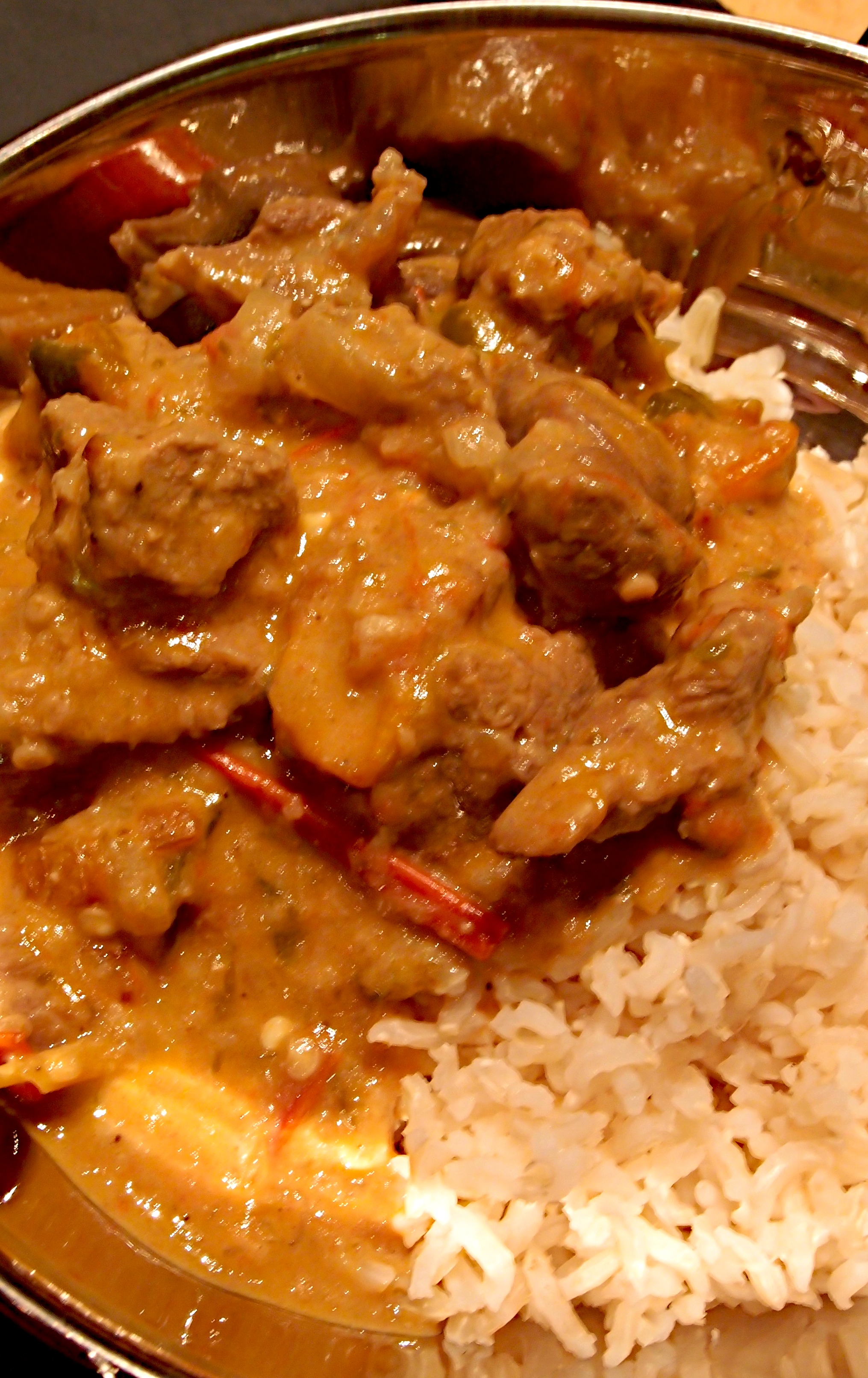
Spicy lamb, tomato and coconut curry – to serve 4

  • 1tbsp coriander seeds
  • 1 tsp cumin seeds
  • 15 black peppercorns
  • 5cm cinnamon stick
  • 4 cloves
  • 500g boneless lamb shoulder, cubed
  • 3 small onions, finely chopped
  • 3 tomatoes, chopped
  • 15g ginger, peeled weight, grated to a paste
  • 8 fat garlic cloves, grated to a paste
  • 3-6 green chillies, whole but pierced
  • salt
  • 2 tbsp ghee, or you can use half butter and half vegetable oil
  • 200-300ml coconut milk, or to taste
  • 1 1/2 tsp lemon juice, or to taste
Use your spice grinder or mortar and pestle to pound the spices to a fine powder.

Put the lamb, 2 of the chopped onions, tomatoes, ginger, garlic, chillies, spices and salt in a large saucepan. Add 500ml water, bring to a boil, then cover and cook gently for 45-60 minutes, or until the lamb is cooked and soft. Give it a stir every 10 minutes or so.

After about 45 minutes, melt the ghee in a small saucepan and fry the remaining onion until well browned.

Once the lamb is cooked you need to cook off all the excess moisture over a high heat, stirring often, until almost all the sauce has been absorbed by the lamb. This is called bhunoing and helps deepen the flavours (try it before and after to see the difference it makes). Add the browned onion and ghee.

Pour in the coconut milk and lemon juice, bring to a boil and simmer for 5 minutes; the sauce should be thick and creamy. Taste and adjust the seasoning, and add lemon or coconut milk until it tastes amazing.

We served this with brown basmati rice.

(Original recipe from Anjum Anand’s I ♥ Curry, published by Quadrille)

Read Full Post »

This was another of our heathy weeknight ideas – some of which turn out surprisingly well and others that turn out a bit bland and boring (we don’t blog the bland ones). This was great, though beware of wasabi fumes coming down your nose, a sensation we quite like but mightn’t be for everyone. The cucumber salad was a real hit too – salty, sweet, hot and sour. Felt like a bit of a treat in fact.

Wasabi salmon with cucumber salad – to serve 2

  • 2 salmon fillets, c. 125g each
  • 1 tbsp wasabi paste
  • half a cucumber
  • 1 small red chilli, cut into rings
  • 2 tbsp rice wine vinegar
  • 1tsp golden caster sugar
  • 1tsp salt
  • 2 tsp poppyseeds
  • steamed rice to serve

Rub the salmon all over with a tiny bit of oil and then the wasabi paste.

Split the cucumber in half lengthways and discard the seeds. Cut into large diagonal chunks and put in a bowl. Add the chilli, rice vinegar, salt, sugar, poppyseeds and a bit of pepper. Mix well until the salt and sugar have dissolved. There will be quite a lot of liquid but don’t worry and don’t be tempted to leave out the salt as it is essential for the hot, sour, salty, sweet balance.

Preheat your grill and grill the fish for 5-6 minutes or until is turned a nice colour on top and is just cooked through (no need to turn it over).

Serve with the cucumber salad and steamed rice. The salad dressing is nice drizzled over the fish too.

(Original recipe from BBC Good Food)

Read Full Post »

« Newer Posts - Older Posts »