Feeds:
Posts
Comments

Archive for the ‘Gluten-free’ Category

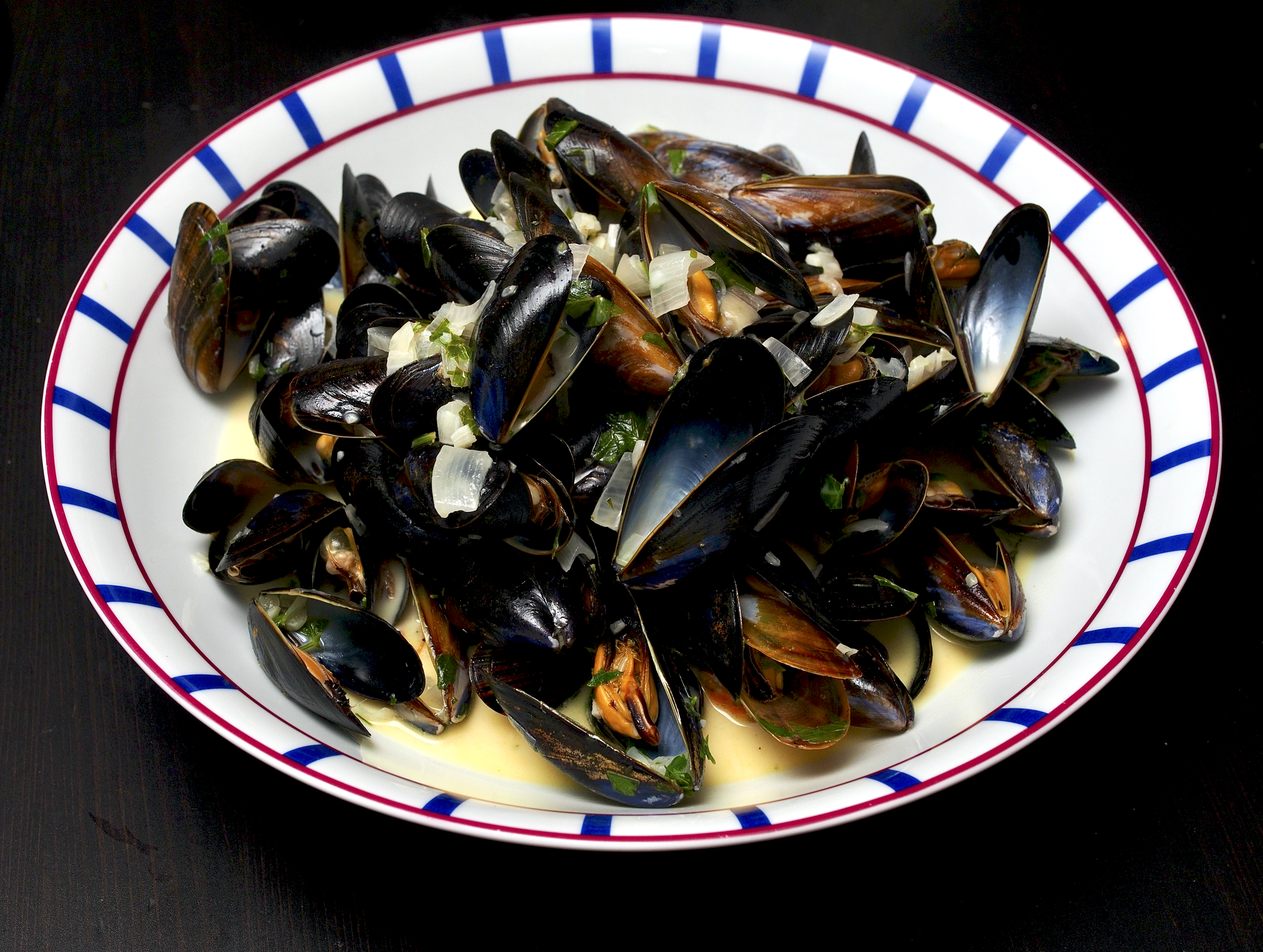
Mussels are a Friday night staple in our house, they’re such good value and sustainable too. We find a creamy, garlicky sauce hard to resist. You will need some fries or crusty bread to go alongside.

Wine Suggestion: It’s a while since we had Muscadet but mussels cried out for some, so Domaine de la Chauviniere’s signature Muscadet sür lie Sèvre et Maine was duly opened and thoroughly enjoyed. This wine is so reliable, plus not too expensive so you won’t mind using some in the dish too much.

Moules à la Crème – serves 4

  • 20g butter
  • 1 tbsp oil
  • 5 cloves of garlic, very finely chopped
  • 2 shallots, very finely chopped
  • 2-3 sprigs of thyme, leaves picked
  • 1 bay leaf
  • 1kg mussels, scrubbed
  • 350ml white wine
  • 75ml double cream
  • juice of ½ lemon
  • a large handful of flat-leaf parsley, finely chopped

Heat the butter and oil in a large frying pan, then add the garlic, shallots, thyme and bay leaf and cook gently for 5-8 minutes or until softened and starting to brown.

Add the mussels and wine, then cover and cook for a couple of minutes or until the mussels have opened. Strain the mussels over a bowl to catch the cooking liquid.

Return the liquid and bay leaf to the pan, bring to the boil and reduce by half. Add the cream, lemon and plenty of black pepper, then return the mussels and shallots to the pan and add the parsley. Put the lid back on and bring up to the boil for another minute. Serve in warm bowls with fries or crusty bread.

(Original recipe from Restore by Gizzi Erskine, HQ, 2020.)
Read Full Post »

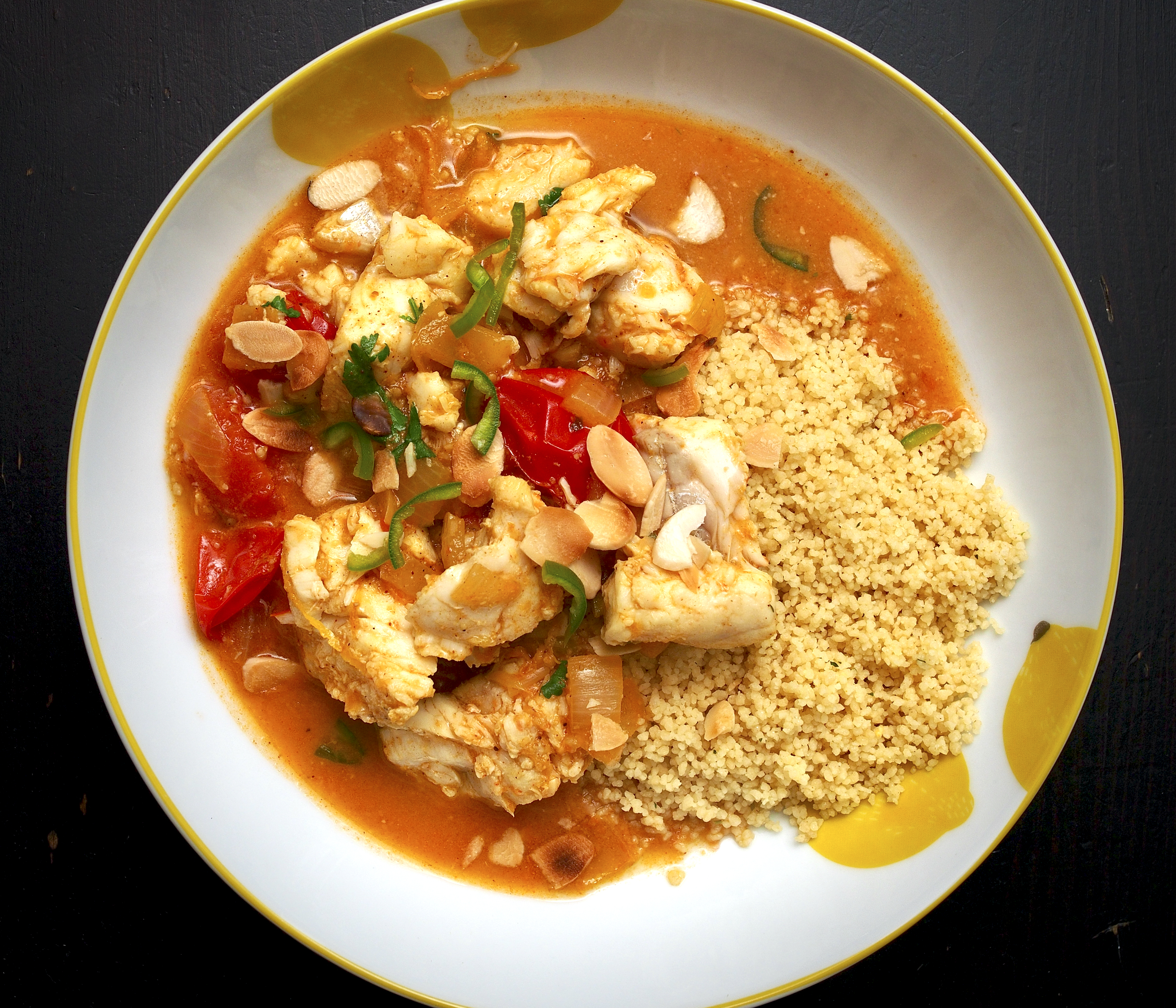
A Moroccan-inspired fish dish for mid-week. Some couscous and yoghurt on the side are good additions.

Wine Suggestion: this works well with Grenache Blanc and we’ve fallen in love with one from Terra Alta in the south of Catalonia made by Edetaria. As it’s mid-week, the basic and joyful “via Terra” Garnatxa Blanca with its perfume and balance af fresh and ripe fruit flavours is perfect.

Fish Tagine with Saffron & Almonds – serves 4

  • 1 tbsp olive oil
  • 1 onion, chopped
  • a good pinch of saffron
  • 600ml hot fish stock or chicken stock
  • 2 cloves of garlic, crushed
  • a thumb-sized piece of ginger, peeled and grated
  • ½ a green chilli, thinly sliced (keep the other half to serve)
  • 2 tsp ground cumin
  • 1 tsp ground coriander
  • 1 tsp cinnamon
  • 1 tbsp tomato purée
  • 10 cherry tomatoes, halved
  • 2 tbsp ground almonds
  • zest of 1 orange, juice of ½
  • 1 tbsp honey
  • 700g white fish, cut into large chunks, we used hake
  • a small bunch of coriander, chopped
  • a handful of flaked almonds, toasted
  • ½ green chilli, to serve

Heat the oil in a large pan. Add the onion and cook for a few minutes to soften.

Meanwhile, put the saffron in the hot stock and leave to steep.

Add the garlic, ginger and chilli to the pan and cook for another few minutes. Add the spices and tomato purée, stir for a few minutes until fragrant, then add the tomatoes, ground almonds, orange zest and juice, honey and saffron-stock. Simmer, uncovered, for 10 minutes, until the tomatoes have broken down and the sauce has thickened slightly.

Add the fish and nestle it well down into the sauce. Cover with a lid and simmer on a low heat for 2-3 minutes or until just cooked. Season to taste, then add the coriander and scatter with the toasted almonds. Scatter with the extra green chilli to serve.

(Original recipe from BBC Good Food)

Read Full Post »

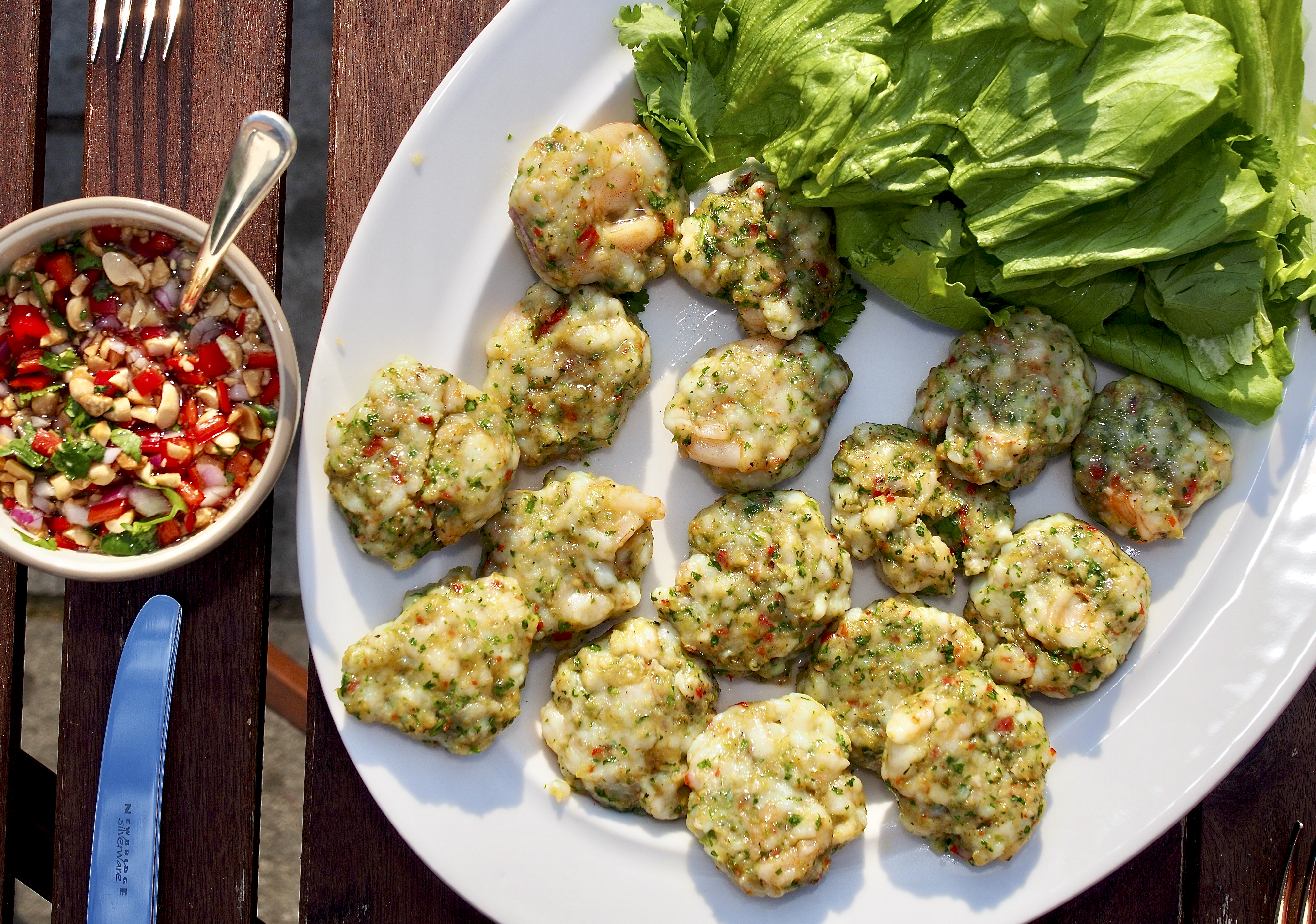
We’ve had limited success with prawn cakes in the past, they often fall apart. These are grilled which makes things much easier and the peanut chilli sauce is amazing!

Wine Suggestion: these call for a vibrant, youthful white like Weingut Korrell’s Weißer Burgunder (Pinot Blanc) which was full of charming pear and apple flavours with a zesty citrus twist that complemented the limes and fish sauce a treat.

Prawn cakes with peanut chilli sauce – serves 4 as a starter

  • 2 tbsp palm sugar or soft brown sugar
  • 3 cm piece of fresh ginger
  • a handful of coriander leaves, chopped
  • 3 small Thai shallots, thinly sliced
  • 1 long red chilli, diced
  • 400g raw peeled prawns
  • zest of 2 limes
  • 1 tbsp fish sauce
  • 3 tsp vegetable oil
  • chilled iceberg lettuce, to serve

FOR THE PEANUT CHILLI SAUCE:

  • 100g caster sugar
  • 100ml rice vinegar
  • 2 red chillies, diced
  • 2 tbsp peanuts, toasted, finely chopped
  • 2 small Thai shallots, chopped
  • 1 tbsp fish sauce
  • 1 tbsp coriander

Put the palm or brown sugar into a small frying pan with 1 tbsp of water. Mix together and bring to the boil, then remove from the heat.

To make the peanut chilli sauce, boil the sugar and vinegar in a small saucepan with a pinch of salt. Bring to a boil and simmer for about 5 minutes or until syrupy. Remove from the heat and leave to cool completely, then add the chilli, peanuts, shallot, fish sauce and coriander.

To make the cakes, put the ginger, coriander, shallot and chilli in a food processor and blend until fine. Add the prawns, lime zest and fish sauce and pulse until combined, keep it chunky. Season with plenty of black pepper.

Put a little oil on your hands, then form the prawn mixture into 16 flat cakes. Put in the fridge until ready to cook.

Preheat the grill. Brush both sides of the prawn cakes with a tiny bit of oil then put on a rack on top of a baking tray.

Grill the cakes for 1 minute, then brush the tops with the palm sugar syrup. Cook for another 2-3 minutes or until opaque, there is no need to turn. Serve warm with the chilled lettuce leaves and peanut chilli sauce.

(Original recipe from My Asian Kitchen by Jennifer Joyce, Murdoch Books, 2018.)

Read Full Post »

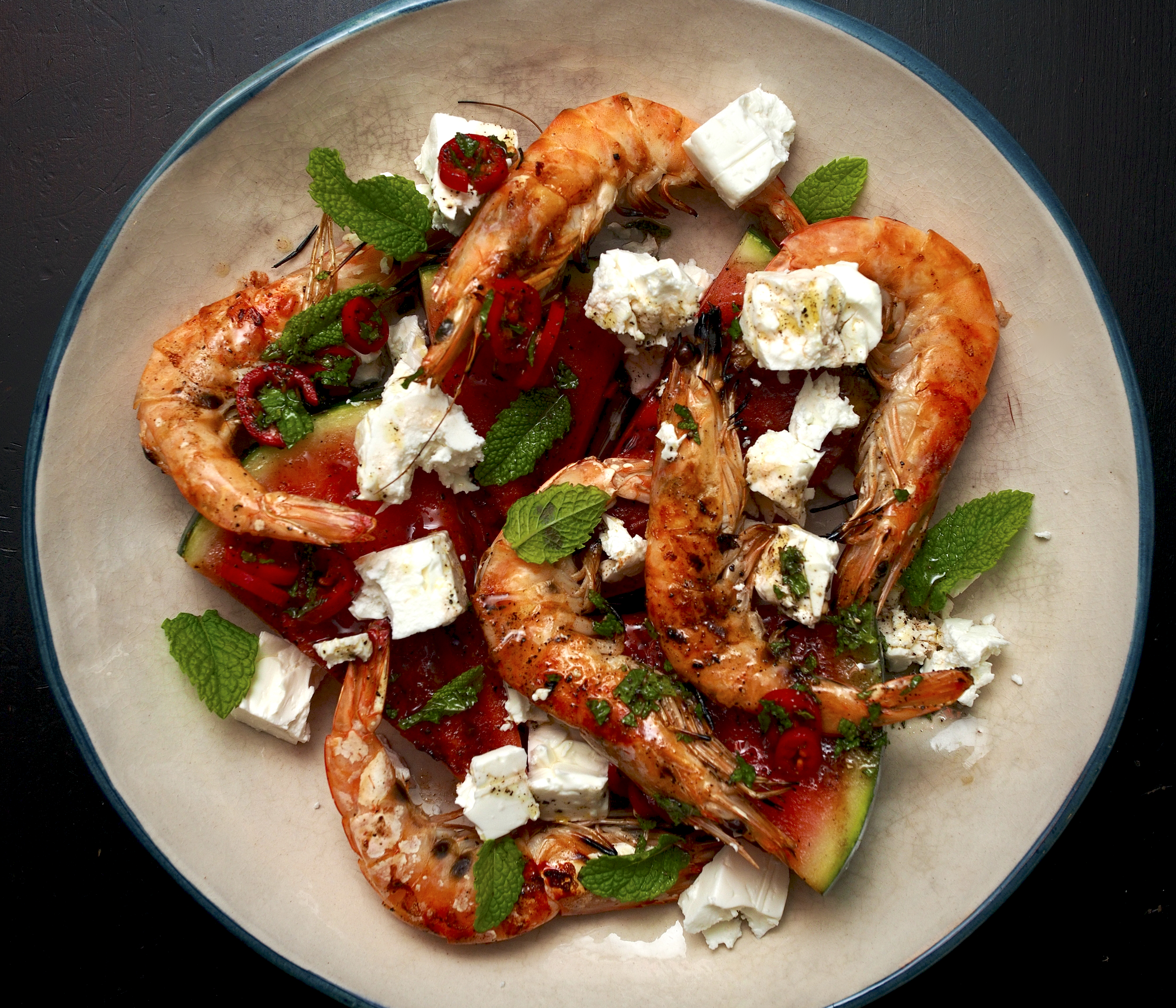
Barbecued watermelon is a revelation for us as it really intensifies the flavour. This combination with prawns, feta and chilli is total winner! Serve as a starter at your next barbecue. Another fab idea from Chasing Smoke.

Wine Suggestion: This dish has a real affinity with a juicy, youthful Grenache, be it a Rosé or a lightly chilled red like tonight’s Rubus by Jesus Romero. Made at 1000m above sea-level in the rural, far south of Aragon, Spain this is all cherry, blackberry and spice; seriously gluggable.

Grilled watermelon and prawns with feta & chilli – serves 4

  • 12 whole prawns in the shells (buy 16 if they’re small)
  • 2 thick slices from a large watermelon
  • 1 red chilli, sliced into rings (if you cut of the stalk and rub the chilli between your hands the seeds will fall out)
  • 2 tbsp red wine vinegar
  • ½ tsp salt
  • 250g feta
  • a small bunch of mint, leave half the leaves whole and chop the rest
  • 3 tbsp olive oil, plus a bit extra for brushing
  • 1 tsp roughly crushed black pepper

Take a small pointy knife and cut and cut down the back of each prawn, when you see the digestive string gently pull it out with the tip of the knife. Leave the prawns in a bowl in the fridge until ready to cook.

Cut the watermelon into 8 large wedges, leaving the skin on.

Mix the chilli slices with the vinegar and salt and set aside.

Light your barbecue and get it up to a high heat.

Brush the watermelon with some olive oil, then put on the hottest part of the barbecue for 1-2 minutes on each side or until charred. Remove to a platter, then grill the prawns for a 2-3 minutes on each side, depending how big they are.

Add the prawns to the watermelon, crumble over the feta, then scatter with the mint leaves.

Stir the olive oil, black pepper and chopped mint into the marinating chilli and drizzle over the platter.

(Original recipe from Chasing Smoke: Cooking Over Fire Aroudn the Levant by Sarit Packer and Itamar Srulovich, Pavilion, 2021.)

Read Full Post »

This recipe is from Chasing Smoke: Cooking Over Fire Around the Levant by Sarit Packer and Itamar Srulovich. They have memories of cooking potatoes in bonfires as children and how delicious they tasted. They really are delicious and if you’ve made the effort to light your barbecue you may as well throw a few potatoes in the embers too.

Baked potatoes with charred spring onion sour cream – serves 4

  • 4 baking potatoes, about 250g each

FOR THE SOUR CREAM DRESSING:

  • 8-10 scallions
  • 300g sour cream
  • 1 large clove of garlic, peeled and crushed
  • 3 tbsp olive oil
  • ½ tsp flaky sea salt
  • black pepper
  • zest and juice of half a lemon

Wrap each potato in tin foil and place in the embers of your barbecue or campfire. Leave there for about 45 minutes or until a metal skewer goes in easily, turn them over a couple of times as they cook.

Meanwhile, char half the scallions on the grill for a few minutes on each side or until charred. Remove from the heat and finely chop.

Finely slice the green parts of the remaining scallions and set aside to sprinkle over at the end. Cut the remaining white parts into small pieces and stir into the sour cream along with the charred scalllions and the rest of the ingredients.

Remove the cooked potatoes from the fire and remove the foil. Cut each one down the middle and sprinkle with the flaky sea salt and fill with the sour cream mixture. Spinkle over the green scallions and some black pepper before serving.

(Original recipe from Chasing Smoke: Cooking over fire around the Levant by Sarit Packer and Itamar Srulovich, Pavilion, 2021.)

Read Full Post »

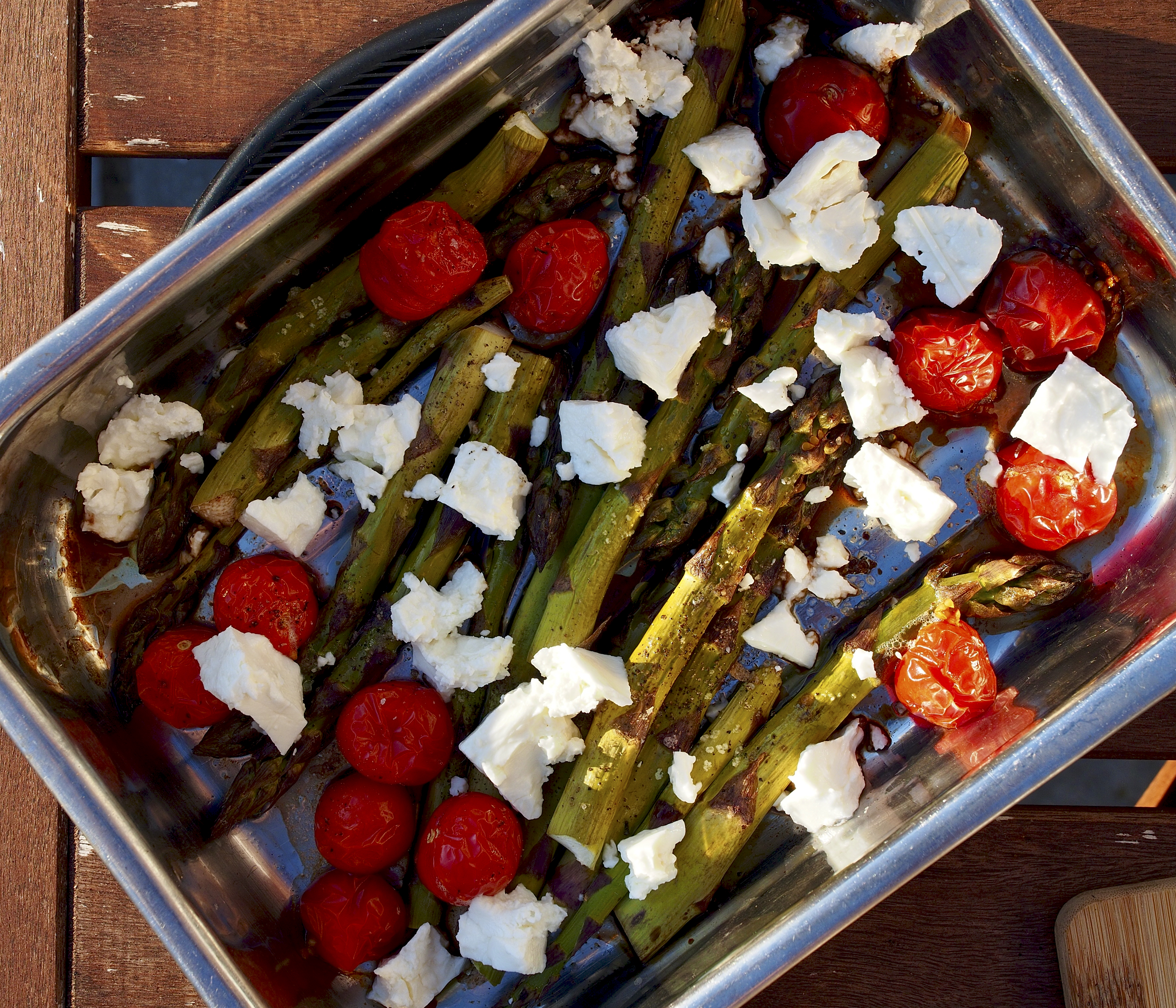
We’ve done this a few times this week. It’s a great side for a barbecue and it looks after itself in the oven while you organise everything else. Make it while you can still get local asparagus.

Roasted balsamic asparagus & cherry tomatoes – serves 4 as a side

  • 350g asparagus, snap off the woody ends and discard
  • 330g pack cherry tomatoes, halved
  • 2 tbsp olive oil
  • 1 tbsp balsamic vinegar
  • 50g feta, crumbled

Heat the oven to 200C/180C fan/gas 6.

Put the asparagus and cherry tomatoes onto a baking sheet and drizzle over the olive oil and balsamic. Season, then toss together. Bake for 15 minutes or until the asparagus is cooked through. Sprinkle over the feta to serve.

Read Full Post »

We’re a bit salad-obsessed these days. This one is huge and will feed a crowd when you have them over to your garden. Perfect with a piece of barbecued lamb.

Minted pea and spinach salad with bacon – serves 4-6

  • extra virgin olive oil
  • 6 slices streaky bacon or pancetta, cut into lardons
  • 200g frozen peas, defrosted (only Birds Eye will do in our opinion)
  • 1 clove of garlic, peeled and crushed with a little salt
  • a bunch of mint, finely chopped
  • 1 small red onion, thinly sliced
  • 200g baby spinach
  • juice of 1 lemon
  • 50g feta cheese, crumbled

Heat a little olive oil in a frying pan and cook the bacon over a medium heat until starting to crisp up.

Mix the defrosted peas with the garlic, mint, red onion and baby spinach.

Dress the salad with 4 tbsp of olive oil and season with salt, pepper and lemon juice to taste. Toss in the bacon and scatter the feta on top.

(Original recipe from Avoca Salads, edited by Hugo Arnold, Avoca Ltd, 2007.)

Read Full Post »

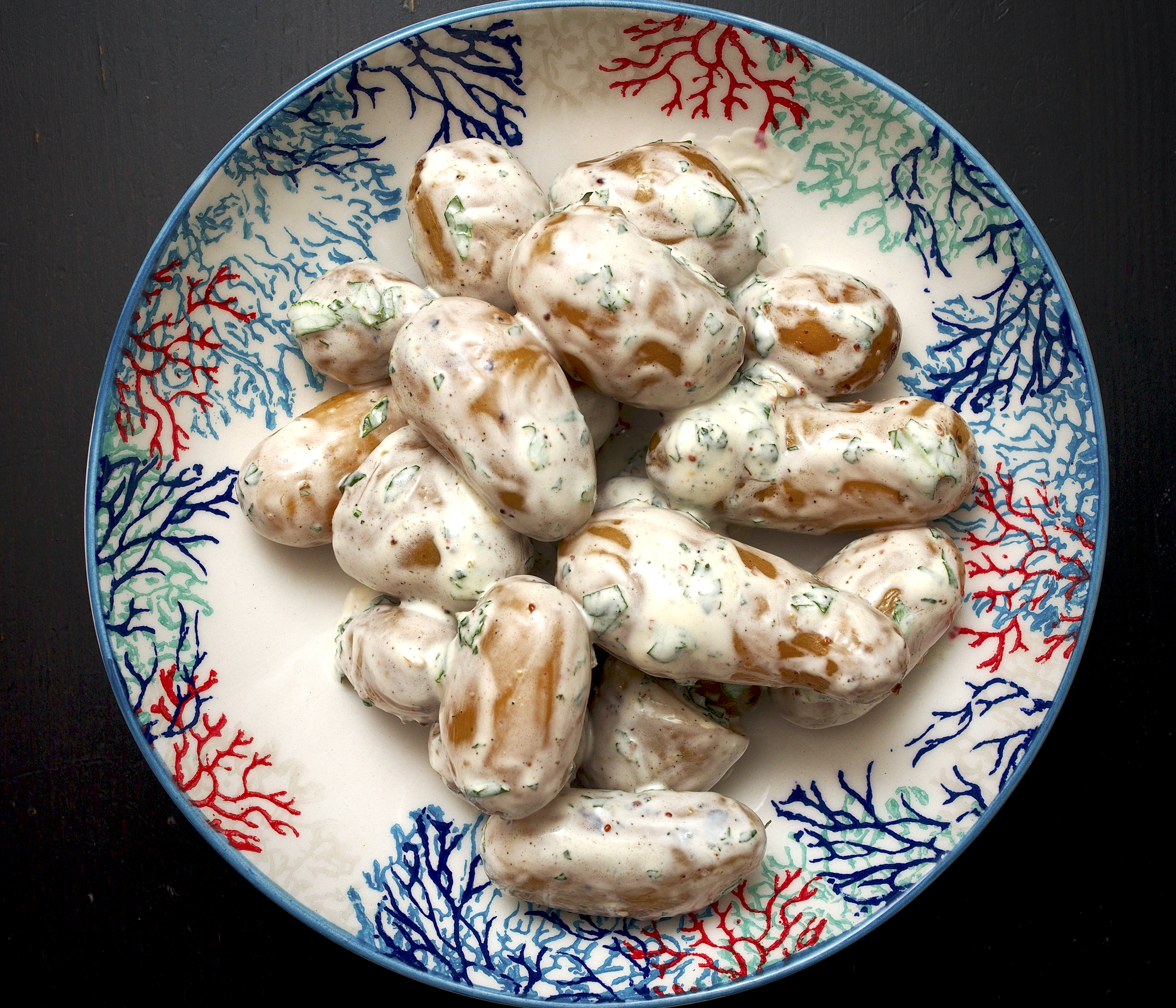
Barbecue season is coming (hopefully!) and potato salad is the perfect accompaniment. The dressing will make far more than you need but you can keep it in the fridge for a couple of weeks and dress all your salads with it, so worth making.

Potato Salad – serves 4

  • 900g small new potatoes
  • 2 tbsp French dressing (see below)
  • 6 tbsp mayonnaise
  • 2 tbsp natural yoghurt
  • a large bunch of mint, chopped

FOR THE FRENCH DRESSING:

  • 100ml red or white wine vinegar
  • 100ml extra virgin olive oil
  • 200ml sunflower oil
  • ½ a clove of garlic, finely chopped
  • 1 ½ tbsp wholegrain mustard
  • 1 tbsp honey

To make the French dressing, put all the ingredients into a food processor, season with salt and pepper, and whizz to combine (or you can do like us and shove it all in a jar and give it a good shake!).

Put the potatoes into a pan of salty water and bring to the boil. Simmer for about 15 minutes or until completely tender, then drain and put into a bowl. Mix in 2 tbsp of French dressing and leave to cool.

Mix the mayonnaise, yoghurt and mint together and toss with the potatoes. Season with salt and pepper to serve.

(Original recipe from Avoca Salads, edited by Hugo Arnold, Avoca Ltd, 2007.)

Read Full Post »

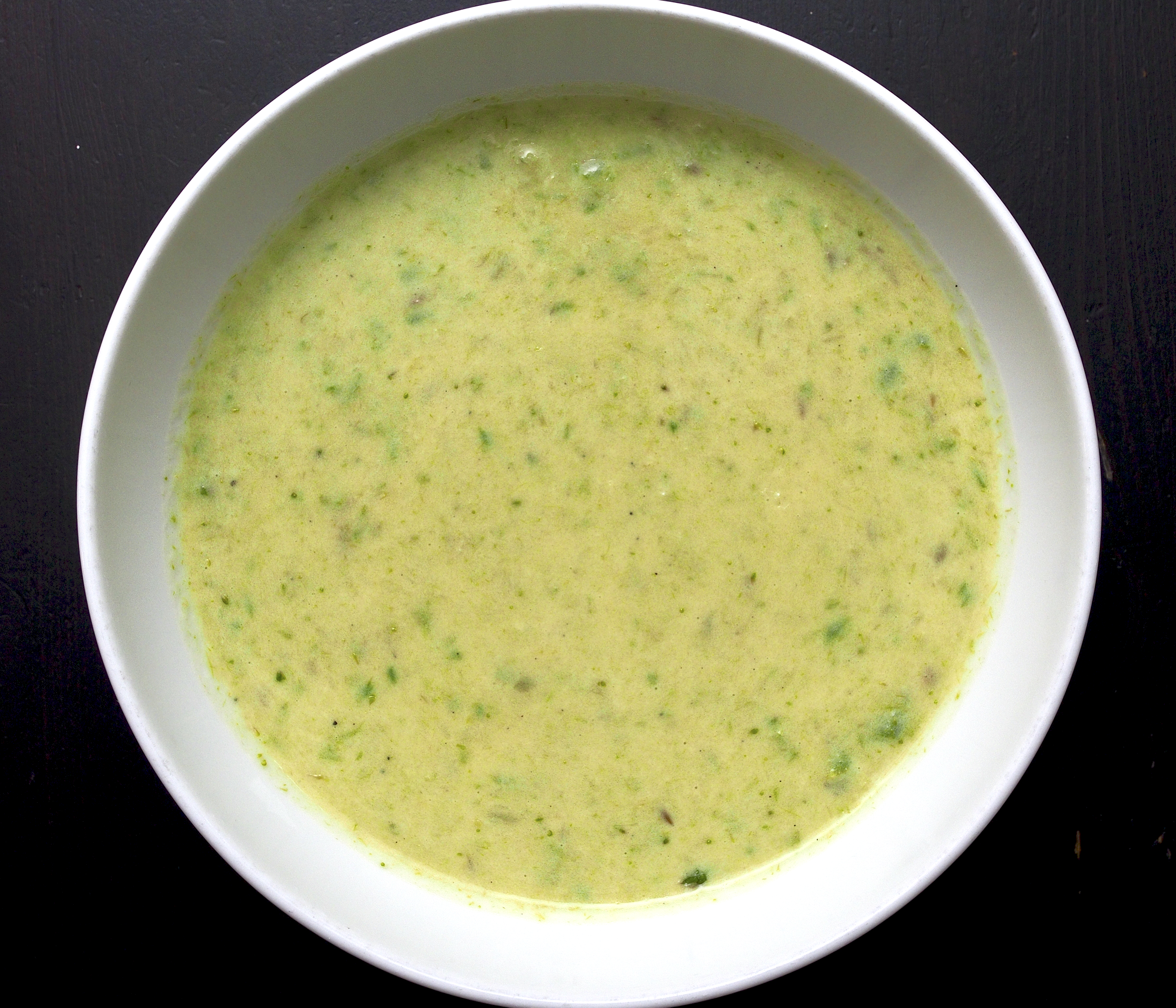
It just wouldn’t be spring without asparagus soup would it? Though the weather is far from spring-like in Dublin. This is from Roast Chicken and Other Stories by Simon Hopkinson, though I suspect Simon may not approve of our half-whizzed texture. You can of course whizz until smooth and pass through a fine sieve if you’re equally fussy.

Asparagus soup – serves 4

  • 100g butter
  • 4 small leeks, white parts only, trimmed and chopped
  • 750ml water
  • 1 potato, peeled and chopped
  • 450g fresh asparagus, snap off the woody ends and peel the thicker ends a little
  • 250ml double cream

Melt the butter in a large saucepan, then sweat the leeks until soft.

Add the water and potato, season with salt and pepper, and cook for 15 minutes.

Chop the asparagus and add to the soup, then boil rapidly for 5 minutes.

Whizz the soup in a blender or food processor, then pass through a fine sieve (or if you’re lazy like us you can just roughly whizz with a stick blender).

(Original recipe from Roast Chicken and Other Stories by Simon Hopkinson, Ebury Press, 1994.)

Read Full Post »

You should try this the next time you have some leftover roast chicken. In fact, it’s even worth cooking some chicken specially. Great for lunch with some fresh bread and butter.

Chopped Chicken Salad – serves 4 (generously)

  • 2 cooked chicken breasts, diced (or just use some leftover roast chicken which is what we did)
  • 3 celery sticks, diced
  • 4 scallions, sliced into rounds
  • ½ cucumber, deseeded and diced
  • 100g radishes, thinly sliced
  • 200g cherry tomatoes, halved
  • 2 tarragon sprigs, leaves finely chopped
  • 2 thyme springs, leaves only
  • 1 heart of romaine lettuce or Little Gem lettuce, finely chopped
  • 50g watercress, stems finely chopped and leaves left whole
  • 50g rocket, roughly chopped
  • 50g Parmesan, finely grated

FOR THE DRESSING:

  • 4 tbsp olive oil
  • 1 tsp Dijon mustard
  • ½ tsp runny honey
  • 1 garlic clove, crushed

You need to start with a very large bowl, big enough to toss all of the salad ingredients together in.

Make the salad dressing in the bowl by whisking all of the ingredients together with some salt and black pepper.

Add the chicken to the dressing in the bowl and toss to coat. Fold in the chopped celery, scallions, cucumber, radishes and cherry tomatoes, then the herbs. Stir it all together and season with salt and black pepper.

When you are ready to serve, add the lettuce, watercress, rocket and Parmesan to the bowl. Toss everything together and serve as it is or tip out onto a large serving dish.

(Original recipe from The Hairy Bikers’ One Pot Wonders by Si King & Dave Myers, Seven Dials, 2019.)

Read Full Post »

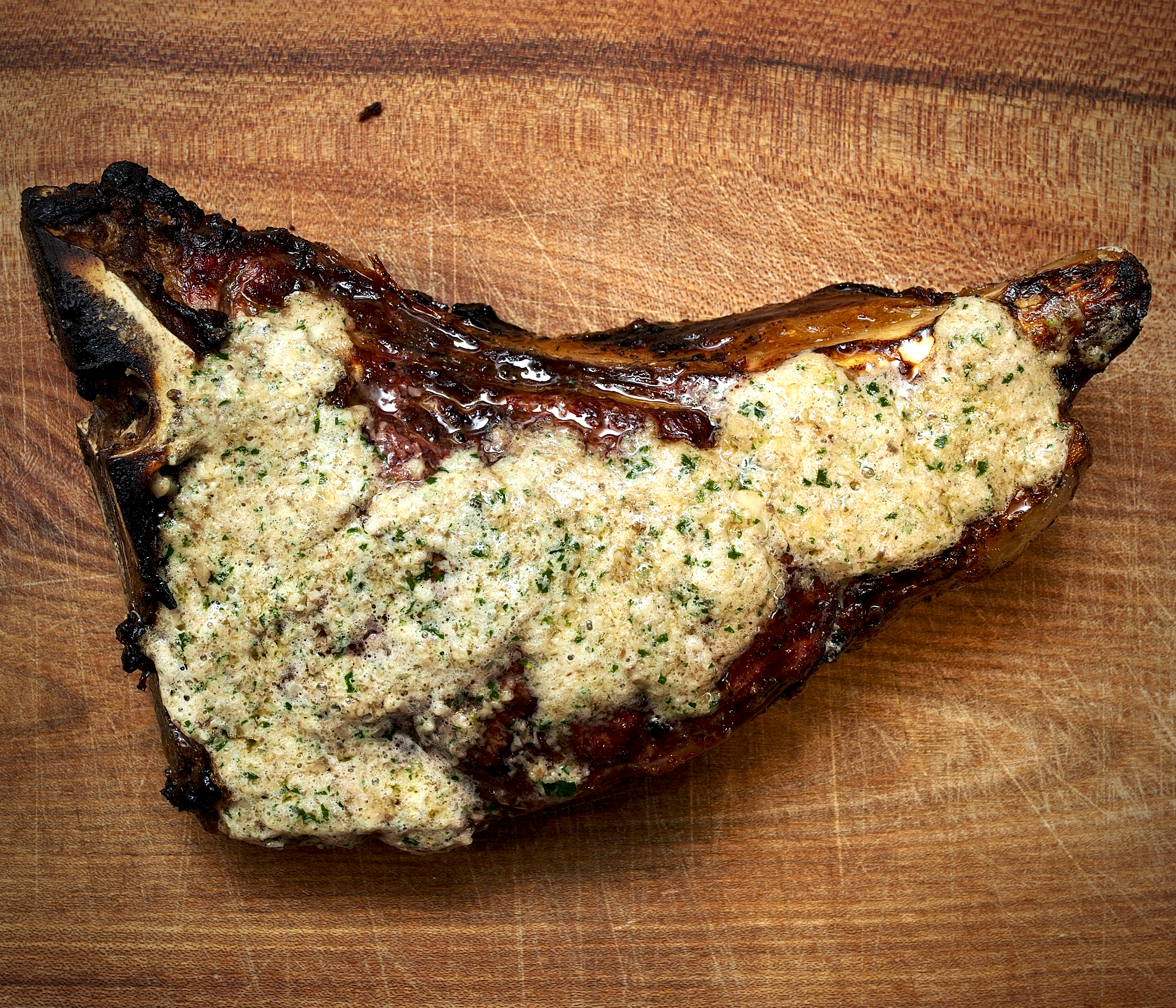
For our wedding anniversary this year we barbecued a whole rib of beef on the bone: consider it a super-rib eye steak. With the bone attached this is much harder to do completely on the barbecue (but not impossible). There is also an easier way if you finish the steak in the oven, which helps to to control the doneness while still getting the lovely barbecue char and flavours.

Wine Suggestion: Given the occasion we opened a bottle of Domaine de Chevalier Rouge 2009 from Pessac Leognan. A great vintage with fleshy fruit that at 12 years of age was singing very expressively. Super elegant and refined fruits, perfumed with that slight pencil edge that characterises the appellation and silky tannins that were both powerful and gentle in equal measure. Definitely powerful enough to stand next to the robust steak and then elevate the sum to another level. Well worth cellaring.

Rib of beef with wild mushroom butter – serves 2

  • 1 tbsp olive oil
  • 50g mixed wild mushrooms, roughly chopped
  • 1 shallot, finely diced
  • 1 clove of garlic, crushed
  • 1 tbsp Madeira
  • 1 tbsp cream
  • 1 tsp chopped flat-leaf parsley
  • ½ tsp chopped thyme
  • 1 tsp white truffle oil (optional)
  • 100g butter, diced and softened
  • 1 rib of beef on the bone

First, make the butter. Heat the olive oil in a frying pan and add the mushrooms with the shallots and garlic. Cook gently for 5 minutes or until cooked through but not coloured.

Add the Madeira, cream and herbs to the pan and cook for 3 minutes or until the liquid has evaporated. Season to taste and stir in the truffle oil if using. Leave to cool completely.

Put the butter and cooled mushroom mixture into a food processor and purée until smooth. Scrape out onto a piece of non-stick baking paper, then roll into a cylinder, twisting the ends to secure. Chill for at least 2 hours, until hardened.

Pre-heat the oven to 200C/400F.

Take your steak out of the fridge for at least 30 minutes to come up to room temperature. Season at this stage too.

Cook over the direct heat on your barbecue for 8-10 minutes, turning to make sure all sides are well browned with a little charring.

Place the barbecued steak onto a preheated ovenproof pan, and put it in the oven for 15-20 minutes and until done to your liking.

We used a meat thermometer to judge doneness and removed the steak at 55C. While we like our steaks on the rare side we find that medium-rare to medium works best when cooking a rib on the bone. This ensures all the juicy fats are rendered properly. If you’d like it a little rarer cook to 52C. Remember that the steak keeps on cooking while resting too.

When your steak is cooked to your liking, remove it from the oven and sit it on a rack set over a tray. Cut the butter into slices and arrange on top of the steak. Set aside to rest for 15-20 minutes before carving the steak from the bone and slicing. Serve with the buttery mushrooms spooned over.

(Original recipe from Neven Maguire’s Complete Family Cookbook, Gill Books, 2016.)

Read Full Post »

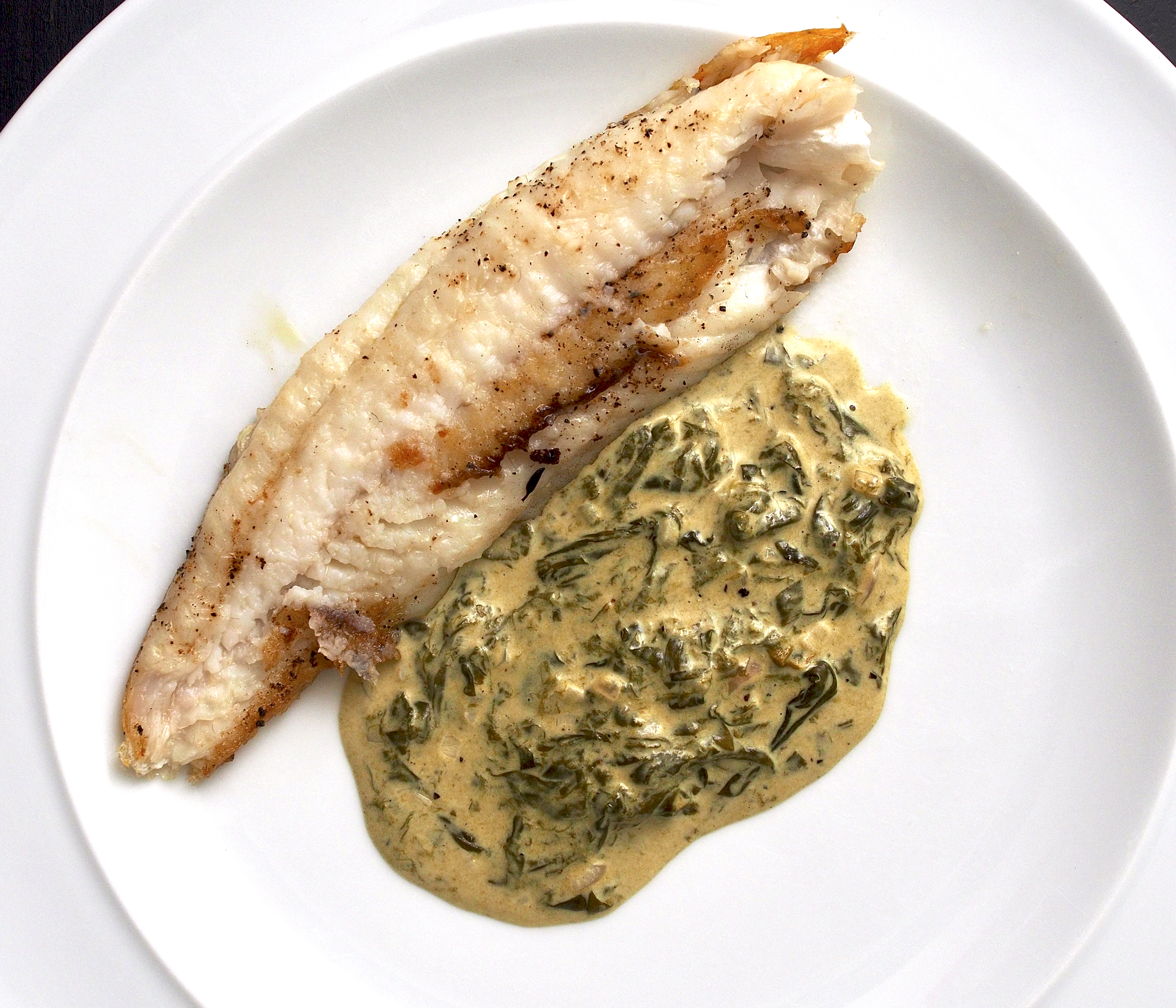
We don’t cook with sorrel very often, perhaps once or twice a year when we see it and grab a bag. It has an unusual sour and citrussy flavour that always reminds us of holidays in France. Sorrel sauce is an excellent match for fish and goes particularly well with brill as expertly suggested by Gill Meller. A few crispy potatoes on the side would be a good addition.

Wine Suggestion: This goes great with a dry Chenin Blanc, like one of our favourites the Chateau du Hureau Argile which always has great depth of flavour alongside a crisp zestiness and dry texture, bound together with a lemony, citrus zing – very complimentary to the sorrel and able to match the rich cream and fish.

Brill with sorrel sauce – serves 4

  • 4 brill fillets (120-150g each), skin on
  • 1 tbsp olive oil
  • 4 bay leaves
  • 2-4 thyme sprigs
  • 2 garlic cloves, skin on and bashed
  • a small knob of butter

FOR THE SAUCE:

  • a large knob of butter
  • 1 shallot, very finely diced
  • 100ml fish stock if you have it though water will be fine
  • a large bunch of sorrel (about 150g), stalks removed and cut into rough ribbons
  • 150ml double cream

Make the sauce first. Melt the butter in a small saucepan, then add the chopped shallot and cook until soft but not coloured. Pour in the stock/water and simmer until the liquid has almost evaporated.

Add the sorrel leaves and stir a few times until wilted. Add the cream, stir, and bring the sauce to a simmer. Cook for a couple of minutes to thicken it slightly. Season with salt and pepper, then cover with a lid and set aside.

Season the fish all over. Heat the oil with the bay leaves, thyme and garlic, in a large non-stick frying pan on a medium-high heat. Put the brill into the hot pan, skin-side down and cook for 5-6 minutes, until the fish is cooked at least three-quarters of the way up its edge. Turn the fish with a spatula and cook for a minute more on the other side, then add a small knob of butter and remove from the heat. Rest for a minute as the butter belts.

Serve the brill with the sauce on the side.

(Original recipe from Gather by Gill Meller, Quadrille, 2017.)

Read Full Post »

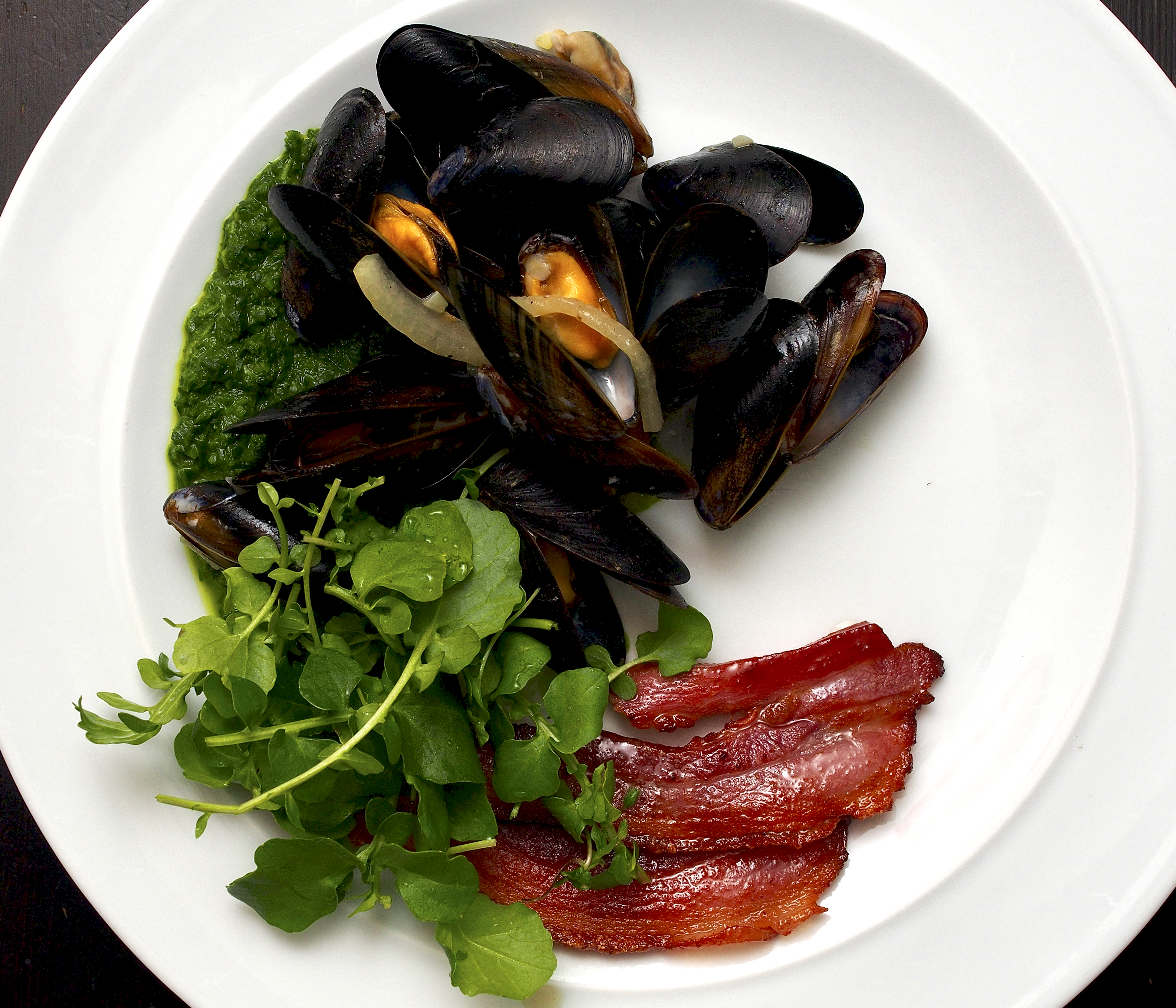
We loved this mussel dish from Gill Meller’s book, Gather. Mussels, watercress and bacon are a truly fabulous combination, but not one we’d thought of before. Our farm shop had landcress rather than watercress available so that’s what we used, but it’s very similar, just not grown in running water. Cleaning mussels is a job I love and hate in equal measure, same with cleaning mushrooms. 

Wine Suggestion: A new find – the Quinta de Chocapalha Arinto from near Lisbon in Portugal; zesty citrus and hints of saltiness. So fresh and tasting of days at beachside restaurants eating mussels, helpful when travel is restricted.

Mussels with watercress and bacon – serves 2

  • 2-4 rashers streaky bacon
  • a small knob of butter
  • ½ a small onion, sliced
  • 1 clove of garlic, peeled and sliced
  • 1kg mussels, cleaned
  • 150g watercress, plus extra to serve

Heat a splash of olive oil in a frying pan, then cook the bacon for 6-8 minutes, or until crispy. Keep warm.

Put a knob of butter and a spoon of bacon fat from the pan into a large sauce pan. Heat until bubbling, then add the onions and garlic and season with a little salt and pepper. Cook for a few minutes or until the onion is soft but not coloured, then add the mussels with 2 tbsp of water. Bring to the boil, then cover the pan with a lid and shake gently. Cook the mussels for a couple of minutes or until the shells are just open. Throw away any that don’t open.

Use a slotted spoon to remove the mussels from the pan into a warm bowl, leave the onion and cooking liquor behind on the heat. Cover the mussels with a tea towel and put somewhere warm. You need to work quickly now to make the sauce while the mussels stay warm.

Put the watercress into the pan and cook for a minute or two until wilted, then tip into a  food processor and purée until smooth. This should be quite thick so if it’s too liquid, put it back into the pan and boil off the excess liquid over a high heat.

Put a generous spoon of purée on each plate with the mussels, crispy bacon and a little fresh watercress.

(Original recipe from Gather by Gill Meller, Quadrille, 2017.)

Read Full Post »

This is a bit like sweet chilli sauce, but nicer and not as sickly sweet. It’s great with chicken, in a sandwich or drizzled over some rice. 

Hot Pepper Jam – makes 8 small jars

  • 8 red peppers
  • 4 scotch bonnet chillies
  • 1kg jam sugar
  • 700ml cider vinegar

Put a few saucers in the freezer to test the jam later.

Heat the oven to 150C/fan 130C/Gas 2. 

Wash 8 small jars (about 230ml each) in hot soapy water. Rinse well then put in the oven for 20 minutes, until completely dry. This will sterilise them. 

Remove the seeds, stalk and white membranes from the peppers and chillies and roughly chop. 

Put in a food processor and pulse until finely chopped (careful not to blitz to a puree). Heat the sugar and vinegar gently in a pan until the sugar dissolves. Add the pepper mix and boil for 15 minutes. Drop a spoon onto a frozen plate, wait for 30 seconds then run your finger through it. If it wrinkles you have setting point, if not cook for another 5 minutes and test again. 

Pour the jam into the sterilised jars and leave to cool before adding the lids. 

(Original recipe by Janine Ratcliffe & Anna Glover in Olive Magazine, October 2016.)

Read Full Post »

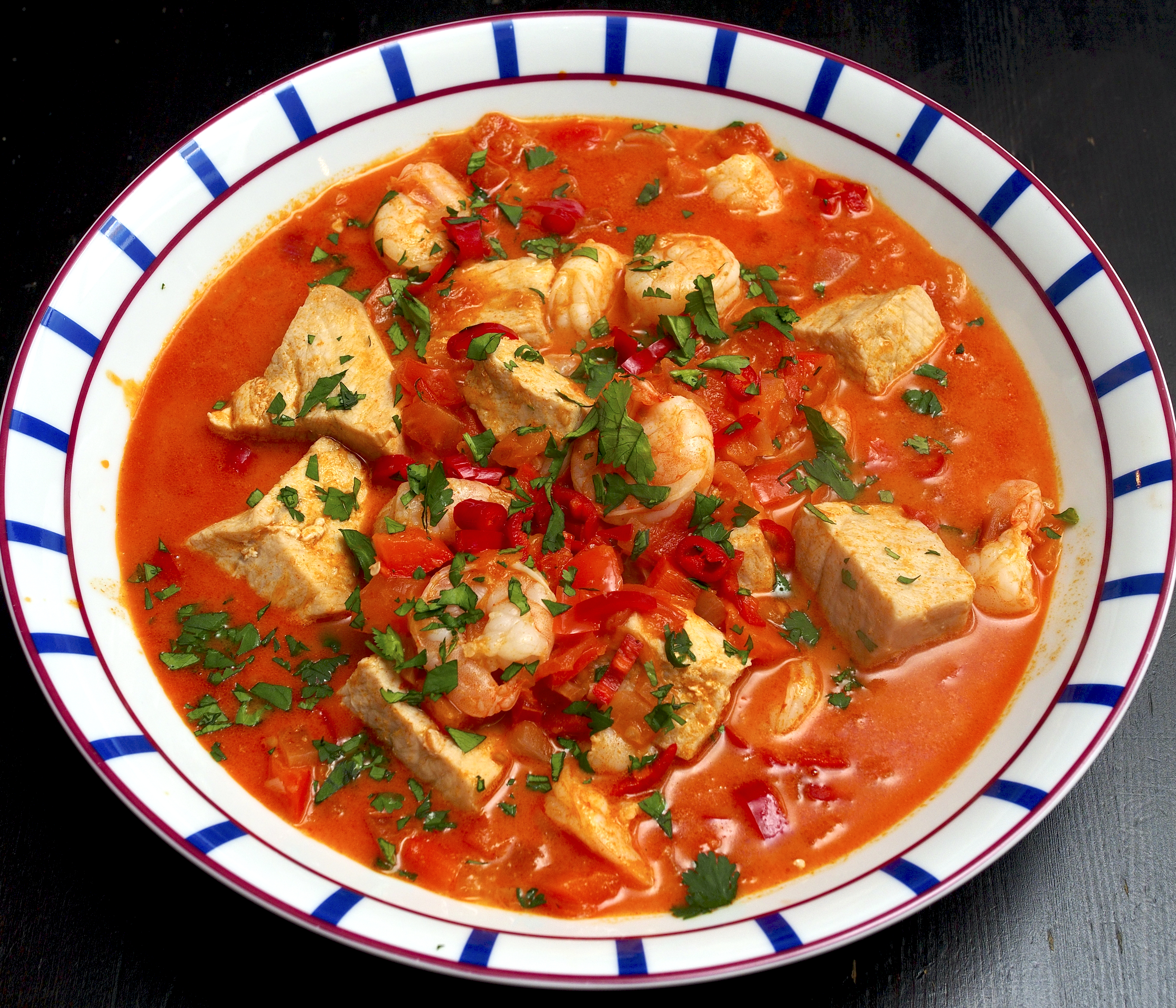
We loved this creamy coconut fish stew from Equador. We went for big chunks of swordfish and prawns but you can substitute other types of fish, like tuna or pollock. Serve with rice.

Wine Suggestion: try to find a light, earthy red with low tannins for this dish, and not too much acidity like a Gamay, riper Pinot Noir or a light Grenache. Tonight’s choice was Domaine Bellier’s Cheverny rouge, a Pinot Noir-Gamay blend from the warm 2018 vintage in the Loire. An under-rated wine region and a good accompaniment to the fish, spices and flavours of this dish.

Encocado – serves 4

  • 2 tbsp olive oil
  • 1 red onion, finely chopped
  • 1 red pepper, finely chopped
  • 3 clove of garlic, finely chopped
  • 2 tsp paprika
  • 1 tsp ground cumin
  • 1 tsp ground coriander
  • 4 tomatoes, finely chopped
  • 1 tbsp tomato purée
  • 400ml tin coconut milk
  • 1 lime, juiced
  • ½ orange, juiced
  • 600g skinless boneless fish cut into 5 cm pieces (you can use snapper, prawns, tuna, swordfish or pollock – we used swordfish and prawns).
  • a thumb-sized piece of ginger
  • a small handful of coriander leaves, finely chopped
  • 1 red chilli, finely sliced

Heat the oil in a large pan over a medium heat.

Cook the onion and pepper for 7 to 8 minutes or until soft and golden, then add the garlic and cook for 30 seconds.

Add the spices and some salt, mix well, then add the tomatoes, tomato purée and 100ml of water. Mix well and cook for about 5 minutes or until the tomatoes start to break down.

Add the coconut milk, lime juice and orange juice, then bring to the boil. Reduce the heat to low and simmer for 10 minutes.

Add the fish and stir, then grate in the ginger. Cover and cook gently for 10-12 minutes or until the fish is cooked through. If you are using prawns they won’t take so long to cook so just add them for the last couple of minutes. Scatter over the coriander and chilli to serve.

(Original recipe by John Gregory-Smith in Olive Magazine, April 2018.)

Read Full Post »

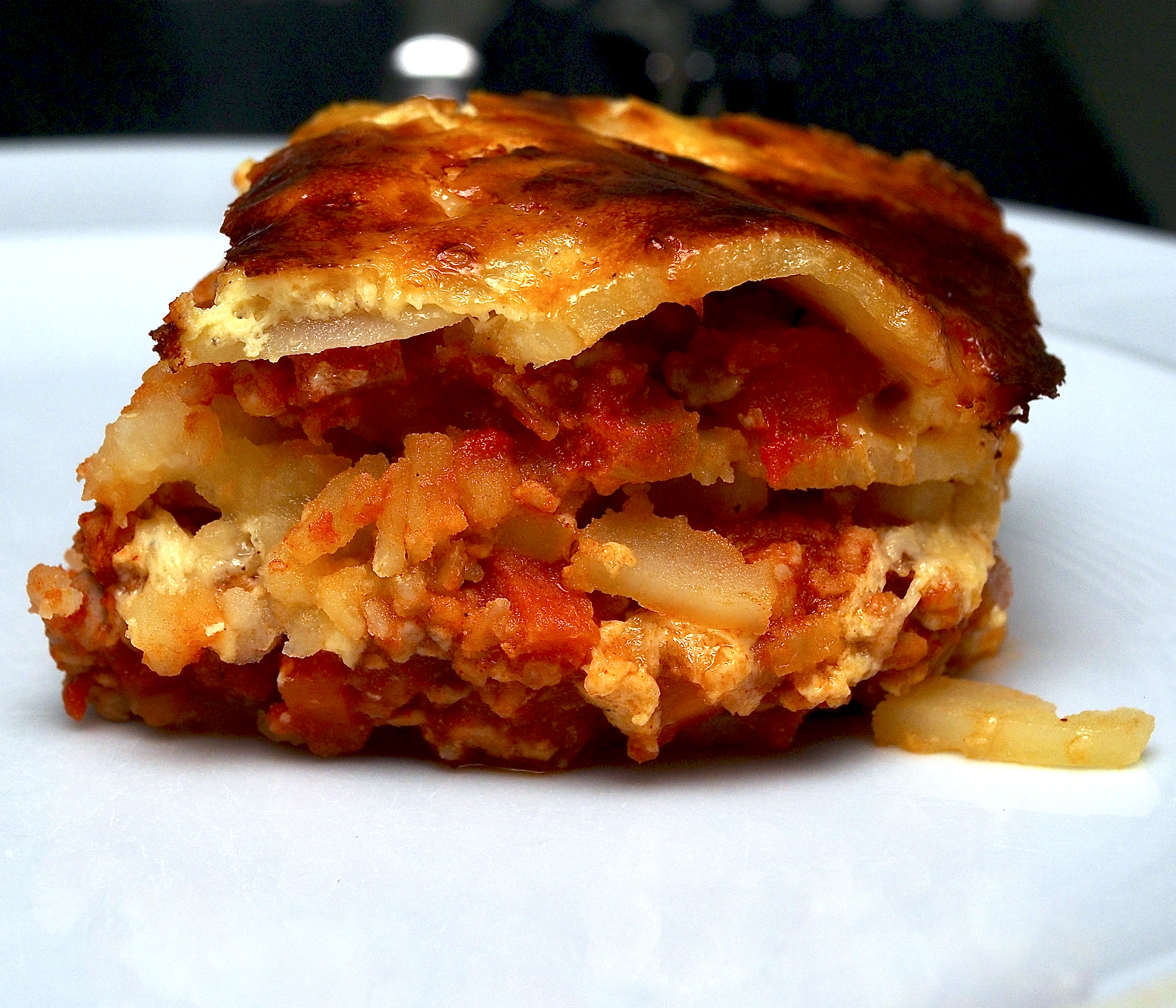
This is a Romanian version of moussaka and much easier than the Greek version we usually make. The aubergines are replaced with layers of potatoes and the cheese sauce is a mixture of yoghurt, cheese and egg yolks. Makes a great family meal with a salad on the side.

Wine Suggestion: This suits a light, earthy red and a recent find, the Jeunes Vignes de Xinomavro by Thymiopoulos was yet again a delight.

Musaca de cartofi – serves 6

FOR THE FILLING:

  • 1 tbsp vegetable or sunflower oil
  • 2 onions, finely diced
  • 1 carrot, finely diced
  • 500g pork mince (or you can use a mixture of pork and beef mince)
  • 1 tbsp sweet paprika
  • 1 x 400g tin chopped tomatoes
  • 300ml passata
  • 4 medium potatoes, waxy ones work best
  • 15g butter

FOR THE CHEESE SAUCE:

  • 100g Cheddar cheese, grated
  • 150g natural yoghurt
  • 2 egg yolks

Heat the oil in a large frying pan over a medium heat. Add the onions and carrot and sauté for 6-7 minutes. Add the pork mince, paprika, tomatoes and passata, then cook for 25 minutes, until reduced and thickened. Give it a stir now and then as it cooks.

Meanwhile, peel the potatoes and slice into thin discs (a mandoline works best for this job). Bring a large pot of water to the boil, add some salt, then blanch the potatoes for about 5 minutes or until just softened. Drain and set aside.

To make the cheese sauce, mix the cheese with the yoghurt and egg yolks.

Preheat the oven to 180C/Gas4.

Grease a 6-person lasagne dish with a little of the butter and arrange a layer of potatoes over the bottom, they can overlap slightly. Dot with a little butter and season with salt and pepper. Spread half of the meat filling on top, then cover with another layer of potatoes, dot with butter and season, then spread the rest of the filling on top. Finish with a layer of potatoes and top with the cheese sauce.

Bake for 30-35 minutes until nicely browned on top.

(Original recipe from Carpathia: Food from the heart of Romania by Irina Georgescu, Frances Lincoln Publishing, 2020.)

Read Full Post »

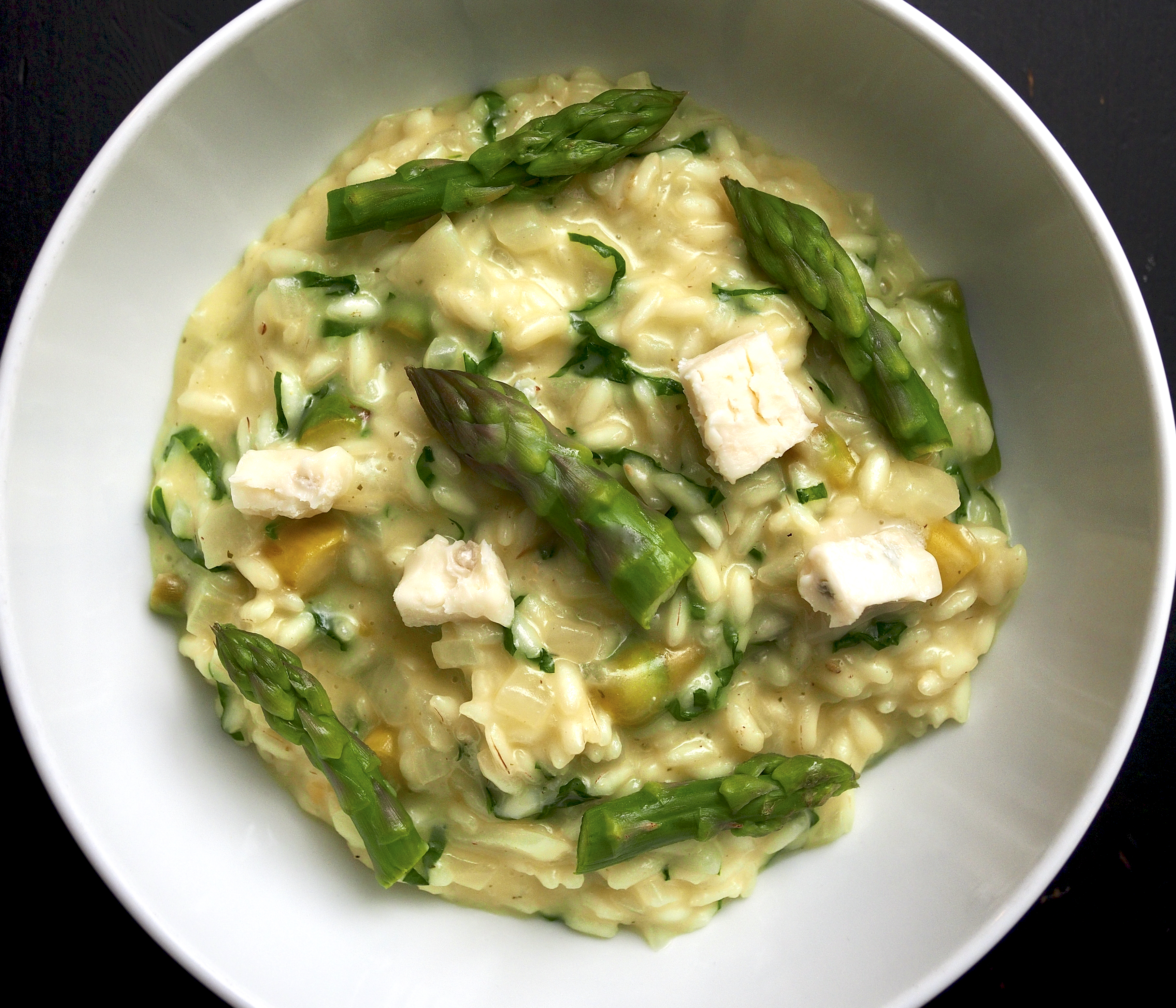
Daffodils, warmer weather (occasionally … ), longer days, and spring vegetables arriving in the shops. Things are definitely looking up, at least in our kitchen if nowhere else.

Wine Suggestion: The asparagus cried out for the Höpler Grüner Veltliner lurking in the fridge waiting for spring to arrive. GV is one of the few varieties to work with asparagus and this dish isn’t shy of their flavours so a good match. Crisp pear and zesty lemon flavours overlay the hints of characteristic white pepper umami savouriness; this is so clean and vibrant it shouts the beginning of the season.

Asparagus, wild garlic & Gorgonzola risotto – serves 3

  • a bunch of asparagus, snap off and discard the woody ends
  • 1.5 litres of vegetable stock
  • 40g butter and 25g of cold diced butter
  • 1 small onion, finely chopped
  • 250g superfino carnaroli rice
  • 60ml dry white wine
  • 40g Parmesan, grated
  • 60g Gorgonzola
  • a small handful of wild garlic leaves, finely chopped

Remove the tips from the asparagus and chop the stems into 3cm pieces.

Blanch the tips in a pan of salty boiling water for 2 minutes, then drain and set aside.

Bring the stock the boil, then turn down and keep it at a bare simmer.

Melt 40g butter in a heavy-based pan, add the onion and asparagus stalks, then cook gently until the onion is soft and translucent, but not coloured.

Turn the heat up a little and add the rice. Stir for a couple of minutes until warm and coated with the butter and onion.

Add the wine and allow it to bubble up and almost disappear, then start adding the stock a ladle at a time. Keep stirring and only add more stock when the previous ladleful has been absorbed. Start tasting the rice after about 15 minutes, you want it to be soft but still with a little bite in the centre.

Remove the pan from the heat and beat in the cold butter, Parmesan, 20g of the Gorgonzola and the wild garlic. Season to taste, then ladle into warm bowls and garnish with the asparagus tips and the rest of the Gorgonzola.

(Original recipe from Made at Home by Giorgio Locatelli, 4th Estate, 2017.)

Read Full Post »

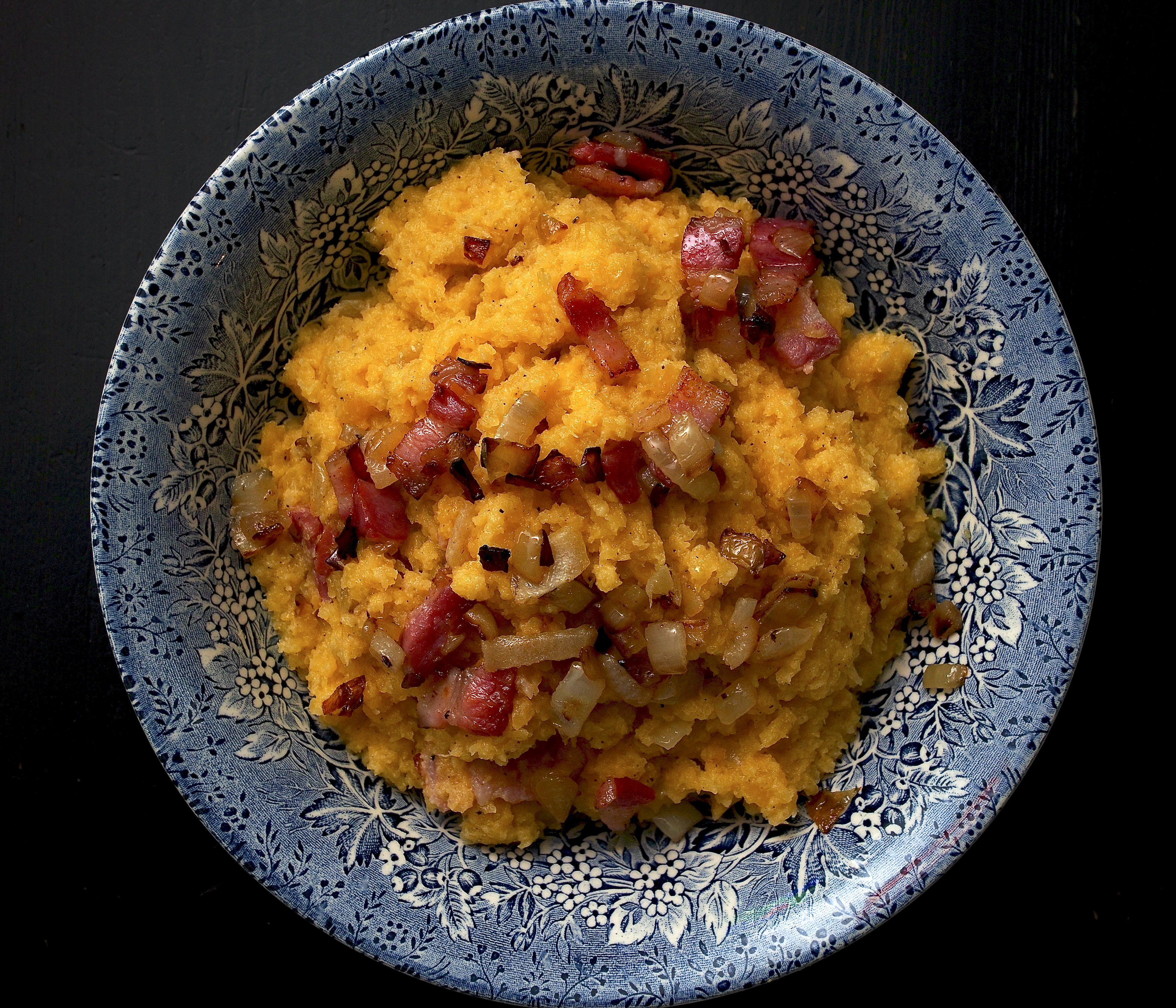
This is barely a recipe but it is an excellent way to serve turnip, which you may refer to as a swede. For clarity, we’re talking about the large orange-fleshed variety. We served this on St Patrick’s Day with some Irish stew but it’s lovely with sausages or on the side of a roast dinner. We’ve posted this before but it’s definitely worth mentioning again. 

Turnip with Crispy Bacon & Onion – serves 4 to 6

  • 900g turnip, peeled and cut into 2.5 cm chunks
  • 1 tbsp rapeseed oil
  • 1 small onion, finely chopped
  • 50g rindless piece of smoked bacon, diced
  • butter

Cook the turnip in lots of salt water until tender when pierced with a knife. 

Meanwhile, heat the oil in a frying pan over a medium heat and sauté the onion and bacon until crisp and golden. 

When the turnip is tender, drain and allow to dry, then roughly mash with a generous lump of butter. Season with salt and lots of black pepper. 

Serve in a warm bowl with the crispy bacon and onion on top. 

(Original recipe from Neven Maguire’s Complete Family Cookbook)

Read Full Post »

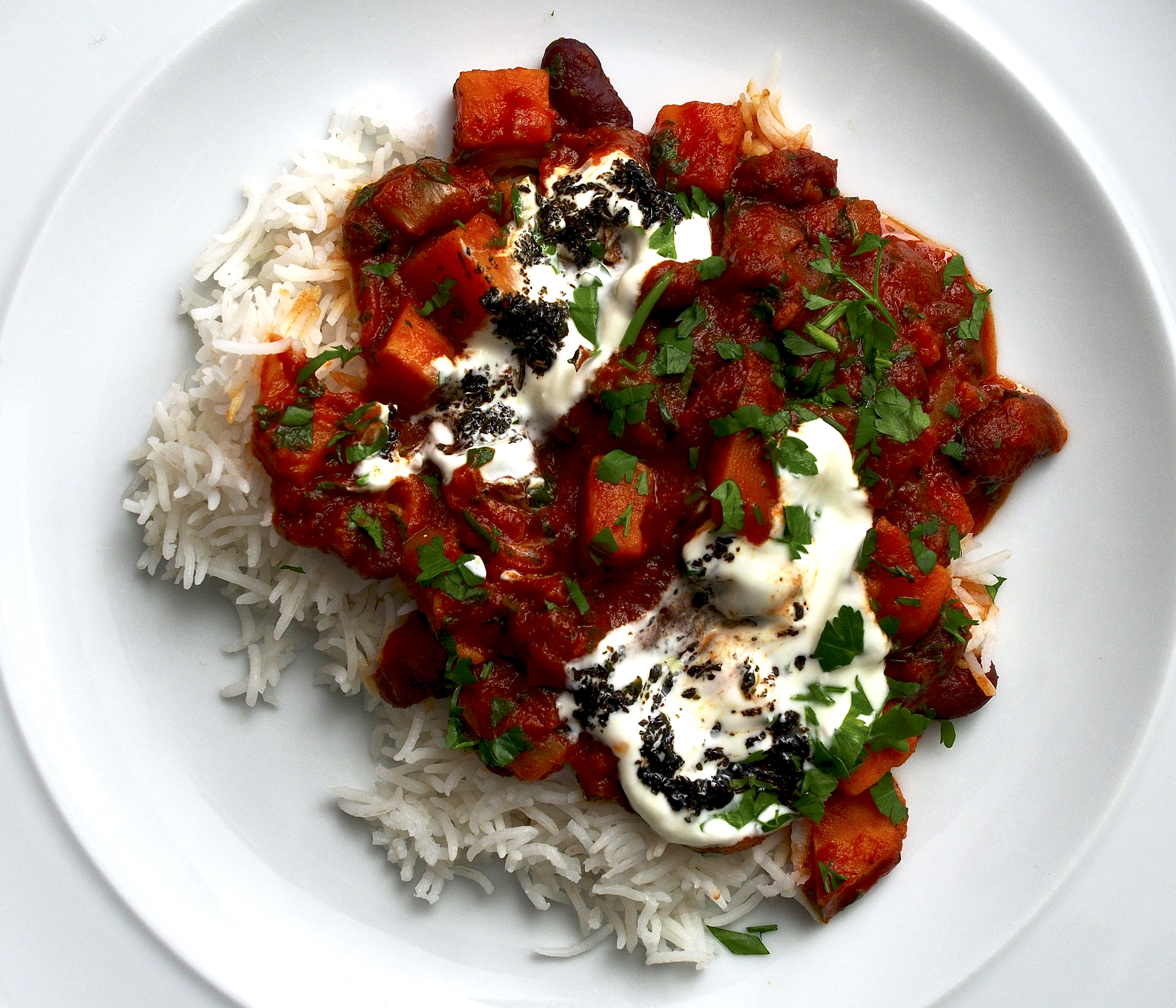
For no particular reason we tend to eat mostly meat and fish dominant dishes on the weekend, and mostly veg during the week. This has been unsettled recently as we have no one to share our dishes with, so there is inevitably lots of leftovers from the weekend, and fewer opportunities to cook vegetables. This weekend we made sure to include a veggie dish in the line up and we’re looking forward to the leftovers already. Lots of lovely warm spices in this one. Serve with steamed rice.

Wine Suggestion: a nice accomaniment to this was from a young turk in Chateauneuf du Pape, Jean-Paul Daumen’s Méditerannée. From Southern France this contains the usual Rhone varieties alongside Cab Sauv and Merlot for a very pleasurable taste of sunshine. A well thought out biodynamic and organic blend that demonstrates why we shouldn’t always insist on what was grown traditionally in the area; this expands the range of taste on offer in a good way.

Red kidney bean & sweet potato stew with yoghurt & hot mint oil – serves 4

  • vegetable oil
  • 1 large onion, chopped
  • 4 big garlic cloves, thinly sliced
  • 2 tsp cumin seeds
  • 1 tsp ground cinnamon
  • 1 tsp ground turmeric
  • 1 tsp chilli flakes
  • 690g jar of passata
  • 500g sweet potato, peeled and cut into 1cm chunks
  • 400g tin red kidney beans, drained
  • 30g flat leaf parsley, roughly chopped
  • 1 tbsp dried mint
  • Greek yoghurt

Put a large saucepan over a medium heat and pour in enough vegetable oil to coat the bottom. Add the onion and cook for a few minutes, then add the garlic and stir until both have softened but not coloured.

Stir in the spices and cook for a minutes, then season generously with Maldon salt and black pepper, then stir in the passata. Reduce the heat to low and simmer uncovered for about 25 minutes. Add a splash of water now and then if needed to prevent it sticking.

Stir in the sweet potato and cook for a further 30-40 minutes, or until tender, then add the beans and most of the parsley and heat through.

Meanwhile, put a small pan over a medium heat. Add 1 tbsp of vegetable oil and heat before stirring in the dried mint. Stir for a minute or two then remove from the heat.

Serve the stew with some yoghurt, the extra parsley and a drizzle of the hot mint oil.

(Original recipe from Simply by Sabrina Ghayour, Mitchell Beazley, 2020.)

Read Full Post »

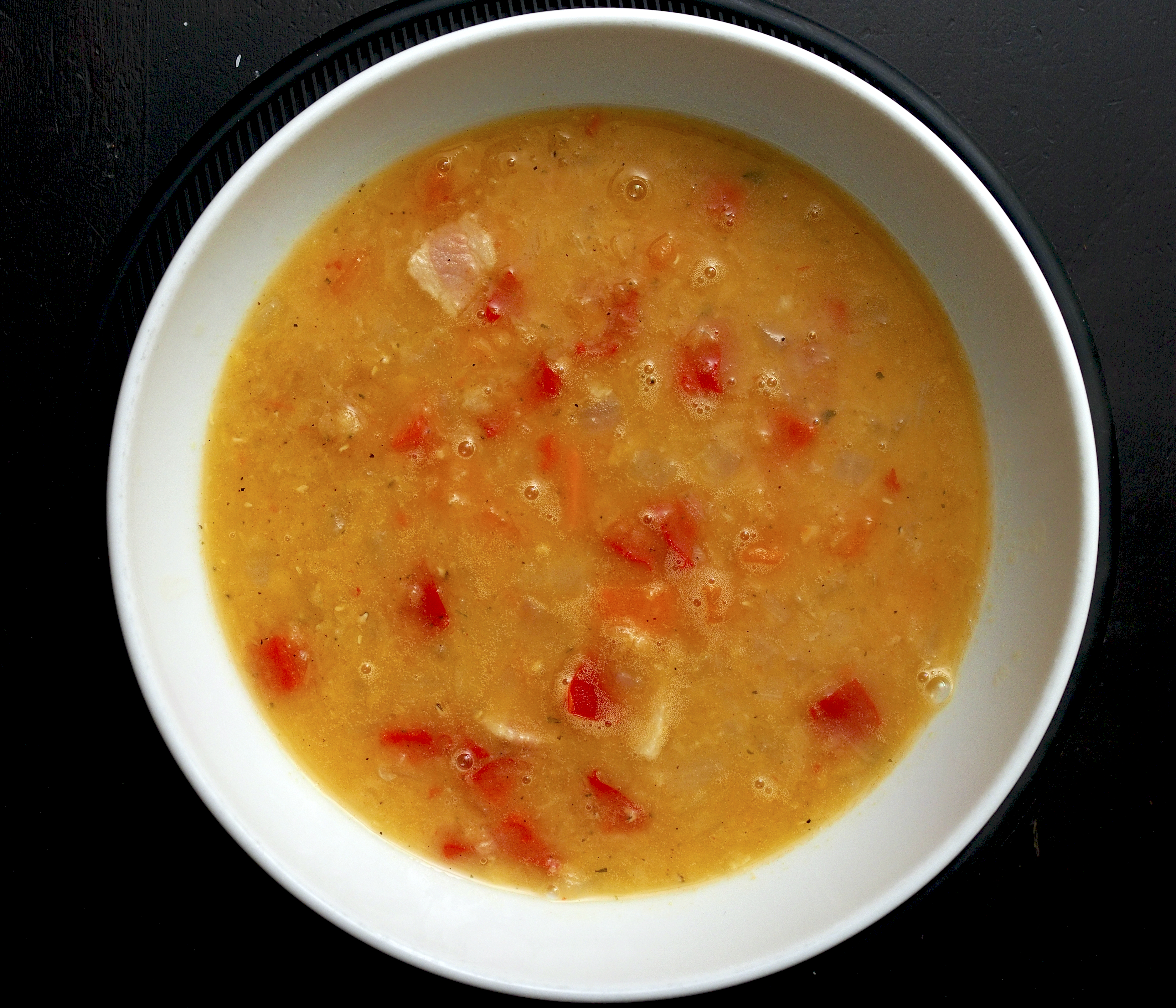
Not much to look at perhaps but this is genuinely one of our favourite soup recipes. It makes a big potful and it’s really tasty, perfect for weekday lunches. 

Red lentil and bacon soup – serves 6

  • 1 tsp vegetable oil
  • 75g smoked back bacon, finely chopped
  • 1 onion, finely chopped
  • 1 red pepper, finely chopped
  • 1 small sweet potato, finely diced
  • 1 garlic clove, chopped
  • 200g red lentils, rinsed
  • 1.5 litres hot chicken or vegetable stock
  • a large sprig of thyme
  • 1 bay leaf

Heat the oil in a large saucepan and add the bacon, onion and red pepper. Cook on a low heat for 5 minutes or until the veg has started to soften. Add the sweet potato, garlic and lentils and stir for another couple of minutes. 

Pour the hot stock into the pan, add the herbs and season well with salt and pepper. 

Turn the heat up and bring to the boil, then cover and simmer for 15-20 minutes, or until the lentils are soft. 

(Original recipe from The Hairy Bikers’ British Classics by Si King & Dave Myers, Seven Dials, 2018.)

Read Full Post »

« Newer Posts - Older Posts »