Feeds:
Posts
Comments

Archive for the ‘Italian’ Category

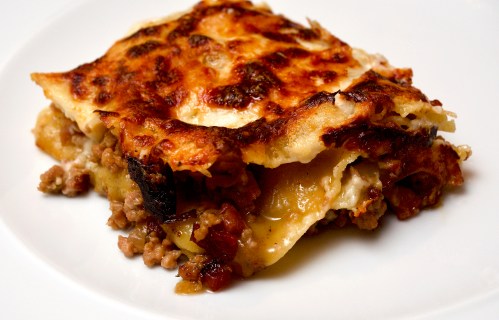
Lasagne bianco

This ‘white’ lasagne is a bit different as it has no tomato sauce. Very rich and delicious though.

Wine Suggestion: we think that this dish suits earthy whites and happily suggest the Salwey Weissburgunder (Pinot Blanc) from Baden in Germany which is a gem, but could also suggest a Vin Jaune from the Jura, or the Jean Fournier Aligoté from Burgundy (one of the few brilliant examples of this grape).

White Lasagne – serves 6

  • 15g dried porcini mushrooms
  • 1 onion, finely chopped
  • 3 garlic cloves, crushed
  • 150g pancetta cubes
  • 500g veal mince
  • 1 tbsp plain flour
  • 300ml white wine
  • 200ml chicken stock
  • 2 tsp of thyme leaves
  • 8-10 fresh lasagne sheets (or use dried ones)

FOR THE BÉCHAMEL:

  • 50g butter
  • 50g plain flour
  • 750ml milk
  • a good grating of nutmeg
  • 100g Parmesan, grated

Put the porcini into a small bowl and pour over enough boiling water to just cover.

Heat a little olive oil in a large pan and cook the onion and garlic until soft. Add the pancetta and cook for a few minutes until the fat is released. Add the veal mince and cook until it starts to brown. Break it up well with a wooden spoon as it cooks. Stir in the flour.

Chop the porcini and add the the pan with the soaking liquid (leave the gritty bits behind in the bowl). Add the wine, stock and thyme and season. Leave to simmer for 30 minutes until the sauce is reduced and sticks to the mince. Depending on how much mushroom liquid you added it may take a bit longer.

To make the béchamel, melt the butter in a pan then add the flour. Cook for a few minutes, stirring, then gradually pour in the milk until you have a smooth sauce. Cook for a few minutes, then stir in the nutmeg and most of the Parmesan and season.

Heat the oven to 190C/170C Fan/Gas 5.

Layer the mince, lasagne sheets and béchamel in a baking dish, finishing with a layer of lasagne and béchamel. Sprinkle over the rest of the Parmesan and bake for 40 minutes until golden.

(Original recipe by Lulu Grimes IN: Olive Magazine, September 2015.)
 

Read Full Post »

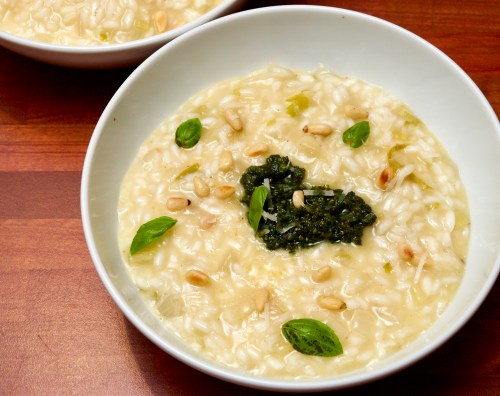
Risotto bianco with pesto

It’s anything with pesto in our house at the minute. This dish is definitely suitable for adults too.

Wine Suggestion: We would suggest a good Fiano from Campani in the south of Italy with  freshness and fruit that isn’t too ripe and tropical. By avoiding over-ripeness you get more stone fruit with a fresh vibrancy. Alongside the rich risotto and herby pesto it’s a great match.

Risotto Bianco with Pesto – serves 6

  • 1.1 litres hot chicken or vegetable stock
  • 2 tbsp olive oil
  • a knob of butter
  • 1 large onion, finely chopped
  • 2 cloves of garlic, finely chopped
  • ½ a head of celery, finely chopped
  • 400g risotto rice
  • 2 wineglasses of dry white vermouth or dry white wine
  • 70g butter
  • 115g freshly grated Parmesan
  • fresh pesto
  • small handful of pine nuts – toasted
  • small basil leaves (to serve)

Put the olive oil and knob of butter into a pan, then add the onion, garlic and celery, and cook gently for about 15 minutes without colouring. When the vegetables have softened turn the heat up and add the rice.

Keep stirring for about a minute or until the rice looks translucent. Add the vermouth and continue to stir.

When the vermouth has disappeared, add a ladle of the hot stock and a good pinch of salt. Turn the heat down to a simmer and keep adding ladles of the stock, stirring all the time, allowing each ladleful to be absorbed before adding another. This should take about 15 minutes. After this taste the rice to check if it’s cooked. If not, keep adding stock until the rice is soft with a little bite. If you run out of stock you can add a some boiling water. Season.

Remove the risotto from the heat and add the butter and Parmesan. Stir well, then cover the pan and leave to sit for 2 minutes. Eat immediately garnished with a spoonful of fresh pesto, some toasted pine nuts, a few basil leaves and some extra Parmesan.

(Original recipe from Jamie’s Italy by Jamie Oliver, Michael Joseph, 2005.)


Read Full Post »

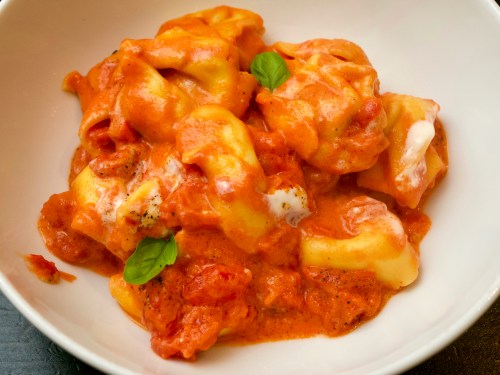
Creamy marscapone tortellini

Because we had leftover marscapone … we love using leftover ingredients. It’s ok to cheat sometimes with some shop-bought fresh tortellini and the result is dinner in minutes!

Wine Suggestion: this works with young, fresh red wines. If you feel like Italian then the Rocca delle Macie Chianti Vernaiolo which is unoaked and vibrantly full of fruit is a good choice. We, however, threw a Pike & Joyce Rapide (unoaked) Pinot Noir from the Adelaide Hills into the fridge for 30 minutes. A good match too.

Tortellini with Creamy Tomato & Mascarpone Sauce – serves 2-4

  • 1 tbsp olive oil
  • 1 garlic clove, crushed
  • 400g tin chopped tomatoes
  • 1 tsp vegetable stock powder (we never are without Marigold Swiss Bouillon) or ½ cumbled stock cube
  • 1 tbsp tomato purée
  • 1 tsp sugar
  • few basil leaves
  • 2 tbsp mascarpone plus a bit extra
  • fresh tortellni – we used spinach & ricotta

Preheat the oven to 180ºC.

Heat the oil in a pan, add the garlic and gently fry for 1 minute. Add the tin of tomatoes, the stock powder, tomato purée and sugar, then bring to the boil. Turn down the heat and simmer uncovered for 5 minutes. Tear in the basil leaves and stir in the 2 tbsp of mascarpone.

Meanwhile, cook the tortellini in boiling salted water as per the timing on the pack, then drain well and tip into a small ovenproof dish.

Pour the sauce over the tortellini and top with a few more spoonfuls of mascarpone, then bake until bubbling at the edges.

(Original recipe by Gareth Morgans IN: BBC Good Food Magazine, August 2008.)

Read Full Post »

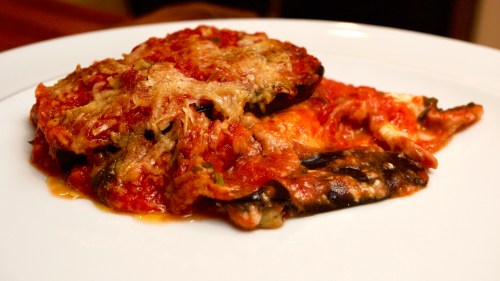
Parmigiana di Melanzane e Pepperoni con Prosciutto di Parma

We love this Italian dish that bursts with summer flavours. It takes a while to prepare but the rich flavours are really rewarding and it is straightforward to prepare. You will need a big dish as this is a generous portion for 6 but it makes delicious lunchbox leftovers. Kids like it chopped up a bit and stirred through pasta too. Serve with a green salad and you will definitely need bread to help clean your plates.

You can assemble the dish up to a day in advance and bake for 40 to 45 minutes when ready to serve.

Wine Suggestion: this is a robust dish and needs an equally robust and fresh red wine to match. Our choice tonight was made by an old friend Laura, the Gianni Brunelli Rosso di Montalcino; fresh youthful and elegant and yet with a powerful backbone.

Parmigiana di Melanzane e Peperoni con Prosciutto di Parma – serves 6

  • 4 red peppers
  • 2 aubergines
  • 1 onion
  • 1 carrot, peeled
  • 1 stick of celery
  • 2 large garlic cloves
  • 3 tbsp olive oil
  • 1½ x 700g jars passata or sugocasa
  • 3 tbsp fresh chopped herbs including parsley, tarragon and chives if possible
  • 2 good handfuls of basil leaves, torn
  • 140g prosciutto
  • 140g Parmesan
  • 3 x 100g balls mozzarella

Preheat the oven to 200C/Gas 6/fan 180C.

Put the peppers onto a baking sheet and cook for 45 minutes or until the skins are soft and blackened in places.

Trim the ends of the aubergines and slice them lengthways into 1cm thick slices. Put the aubergines in a colander and sprinkle generously with salt. Put a saucer on top and weight down with a tin of tomatoes (or something similar). Leave for about 20 minutes.

Remove the roasted peppers from the oven and either put them into a bowl covered with cling film or into individual sealed sandwich bags to cool for 20 minutes or so.

To make the sauce, peel and chop the onion and roughly chop the carrot and celery stick. Whizz these in a food processor until finely chopped. Crush the garlic on a board with some salt.

Heat 1 tbsp of the oil in a large frying pan. Cook the carrot and celery mixture for a few minutes or until softened but not browned. Add the garlic and cook for another minute, then add the passata. Simmer the sauce for 10 minutes until thickened. Stir in the chopped herbs and basil leaves. Season to taste and set aside.

Brush the aubergine slices with the rest of the oil and cook in batches on a griddle pan for 3 to 4 minutes on each side or until softened and browned (you can cook under a grill if you haven’t got a griddle pan).

Lay all of the slices of prosciutto together on a board, then slice finely. Finely grate the parmesan and slice each mozzarella ball into 6.

When the peppers are cool enough to handle, remove and discard the stalks and seeds. The blackened skins should also peel off easily. Slice the peppers into rough strips

To assemble the dish begin by spreading a layer of sauce over the base of a large casserole dish or roasting tin. Layer half the aubergines, a third of the mozzarella and a third of the prosciutto on top. Follow this with another third of the mozzarella, a third of the grated Parmesan and prosciutto and another handful of basil leaves.

Spoon over half of the remaining tomato sauce and top with all of the peppers. Layer over the rest of the mozzarella, prosciutto, aubergine and another third of the Parmesan.

Finally spoon over the rest of the sauce and finish with the remaining Parmesan and a drizzle of oil. Bake for 30-35 minutes or until browned and bubbling. Remove from the oven and allow to sit for 5 minutes before serving.

(Original recipe by Valentina Harris in BBC Good Food Magazine, January 2001.)

Read Full Post »

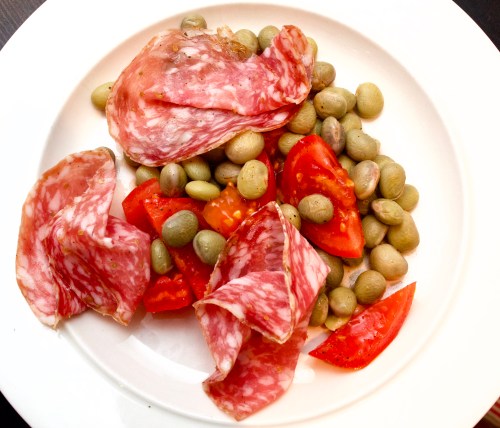
Finocchiona salami with fresh Borlotti beans

We grew fresh borlotti beans in our little garden last summer. The beans had a fabulous creamy texture. Serve this as a starter with lots of ciabatta to mop the plates with. Finocchiona is a soft salami from Tuscany with fennel seeds in it.

Wine Suggestion: If you feel like a white choose a Vermentino from the Tuscan coast; we like the Poggio ai Ginepri Toscana Bianco. If red is what you feel like search out a fresh, youthful and fruit-driven Chianti like the Rocca delle Macie Chianti Vernaiolo, a real taste of spring and summer with no oak and vibrantly fresh fruit.

Finocchiona salami with fresh borlotti beans – serves 4 as a starter

  • 1kg fresh borlotti beans, podded
  • 2 cloves of garlic, peeled
  • 3 tbsp red wine vinegar
  • extra virgin olive oil
  • 4 plum tomatoes
  • 300g Finocchiona salami, finely sliced

Put the beans into a medium-sized saucepan with the garlic and cover with water. Bring the the boil, then simmer for 25 to 35 minutes or until tender. Drain, season generously, then add the vinegar & 3 tbsp of your best olive oil.

Slice the plum tomatoes in half lengthwise, then cut each half into 3 long strips. Season the tomatoes, then gently fold into the borlotti beans.

Divide the beans between 4 plates and scatter the salami over the top. Serve drizzled with some more oil.

(Original recipe from Italian Two Easy by Rose Gray & Ruth Rogers, Clarkson Potter, 2006.)


Read Full Post »

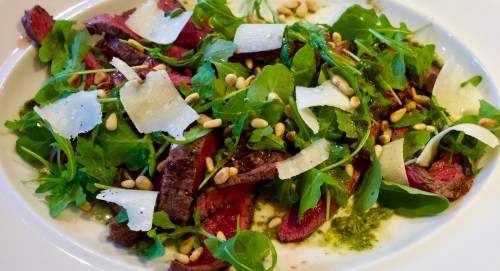
Italian seared beef

So this is a bit of a treat and yet has very few ingredients and takes very little time to prepare. Hail to that.

Wine Suggestion: fresher and bit more rustic than Bordeaux is Bergerac, into the Dordogne River to the east. The best vineyards are in the Pecharmant AC and have Cabernet Sauvignon, Cabernet Franc and Merlot as the dominant varieties. We found some unoaked wines on our last trip from Domaine des Costes, Cuvée Tradition which, while simple, had a joy and juiciness that perfectly complemented the beef, pesto and rocket.

Italian Seared Beef – serves 2

  • 1 tbsp pine nuts, toasted in a dry pan until golden
  • 250g rump steak
  • 2 heaped teaspoons pesto
  • 40g rocket
  • 15g Parmesan cheese

Put a large non-stick frying pan over a high heat. Cut the fat of the steak, finely chop the fat and put into the hot pan to crisp up. Cut the sinew off the rump and season with salt and black pepper. Put the steak between two sheets of greaseproof paper and bash with a rolling pin until it is an even thickness of about 1 cm. Scoop out the crispy fat and set aside, then sear the steak in the hot pan for 1 minute per side or until golden but still pink in the middle (as per photo). Remove the steak to a board to rest.

Spread the pesto over a serving plate. Thinly slice the steak at an angle and scatter over the plate. Pile the rocket on top, then scatter over the pine nuts and crispy fat (you don’t have to eat the fat if you would rather not –  we’ll have it!). Mix the resting juices with a tbsp of good olive oil and drizzle over. Shave the Parmesan over to serve.

(Original recipe from 5 Ingredients by Jamie Oliver, Michael Joseph, 2017.)

Read Full Post »

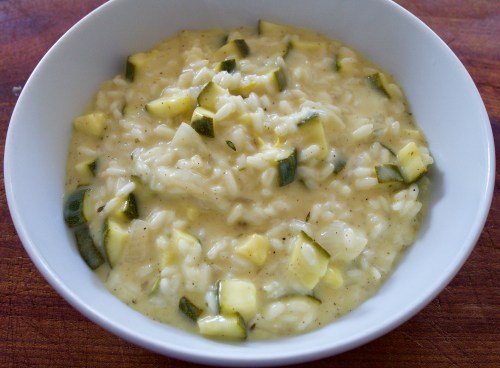
Courgette & lemon risotto

A weekend lunch treat for the three of us as we had courgettes lying around begging to be used.

Wine Suggestion: a crunchy white was demanded here and an old favourite was opened to match; the Chateau du Hureau Saumur Blanc “Argile”. A vibrant Chenin Blanc with texture, vibrant, crunchy, apply fruit plus a real sense of place.

Courgette & lemon risotto – serves 2

  • 50g butter
  • 1 onion, finely chopped
  • 1 large garlic clove, crushed
  • 180g risotto rice
  • 1 litre of hot vegetable stock
  • zest and juice 1 lemon
  • 2 lemon thyme sprigs
  • 250g courgette, diced
  • 50g parmesan, grated
  • 2 tbsp crème fraîche

Melt the butter in a deep frying pan and gently fry the onion until softened, about 8 minutes. Add the garlic and stir for another minute. Pour in the rice and stir for a couple of minutes until it glistens.

Add a ladle of the stock to the rice, along with the lemon juice and thyme. Bubble over a medium heat, stirring constantly. When almost all the liquid has been absorbed, add another ladle and continue to stir. Tip in the courgette and keep adding the stock, stirring every now and then until the rice is just tender and creamy.

Season to taste and stir in the lemon zest, Parmesan and crème fraîche.

(Original recipe from BBC Good Food)

Read Full Post »

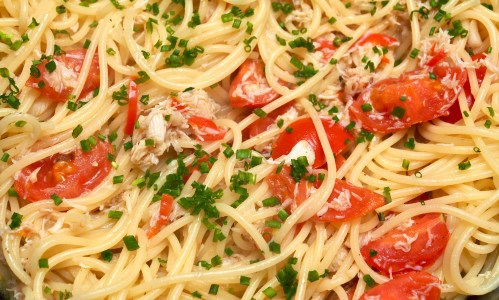
Spaghetti with crab, cherry tomatoes & fresh chillies

This is really simple and fresh and we love it on a Friday night with a glass of chilled white wine. By all means cook a crab but our local fish shop sells cooked and picked crabmeat which makes this extra quick and easy.

Wine Suggestion: One of our stand-by wines for seafood is Muscadet and for this dish it was a good choice. A long standing favourite, the Domaine de la Chauviniere Muscadet sur lie always has good fruit, great texture and freshness and accentuated the flavours of the crab in a very nice way.

Spaghetti with Crab, Cherry Tomatoes and Chillies – serves 4

  • 500g spaghetti
  • 8 tbsp extra virgin olive oil
  • 2 garlic cloves, finely sliced
  • 1 medium hot red chilli, deseeded and finely sliced
  • 200g cherry tomatoes, halved
  • 100ml white wine
  • 200g white crabmeat
  • 3 tbsp freshly chopped chives

Cook the pasta in a very large pot of boiling salty water until al dente.

Meanwhile, gently heat the oil in a large frying pan and fry the garlic and chilli for 30 seconds.

Add the tomatoes and cook for 2 minutes before adding the wine and bringing to a simmer. Add the crab and cook for a minute to just warm through.

Drain the pasta well and tip into the pan with the crab sauce. Stir to combine, sprinkle over the chives, and serve.

(Original recipe from Pronto! by Gino D’Acampo, Kyle Books, 2014.)

Read Full Post »

Pasta with broccoli & gorgonzola

This is particularly good with purple sprouting broccoli when it’s around. Don’t be tempted to strip off the leaves they’re just as good to eat as the florets. Hardly a recipe at all but very satisfying.

Wine Suggestion: try an Italian white from the Marches or Abruzzo. Our choice this evening was the La Piuma (feather) Pecorino Terre di Chieti; charming fruit and with little twists of nuts, herbs and citrus that played with the food in a great way.

Cheese & broccoli pasta – serves 2

  • 200g pasta (use whatever you have)
  • a bunch of purple sprouting broccoli – about 6 to 8 stems (or a head of ordinary broccoli)
  • about 250g of ripe Gorgonzola

Cook the pasta in a generous amount of boiling salty water.

Cut the broccoli into small florets and thin pieces of stalk (discard any thick woody stems).

Lightly salt another pan of boiling water and cook the broccoli for a few minutes or until tender.

Put the cheese into a large warm bowl, then add the hot drained broccoli followed by the lightly drained pasta (a bit of water will help make a sauce). Stir until melting and serve.

(Original recipe from Appetite by Nigel Slater, Fourth Estate, 2001)

Read Full Post »

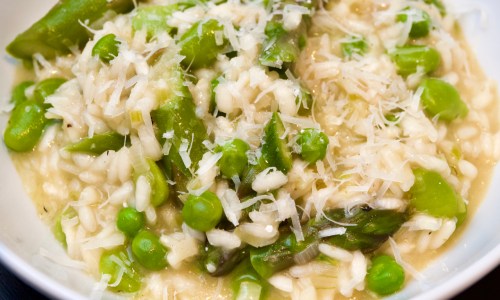
Risotto Primavera

Do it now when there is lots of asparagus in the shops! If you have peas and broad beans growing you should of course use these rather than our frozen substitutes.

Wine Suggestion: we had opened a delightful Touraine Sauvignon Blanc from Domaine Octavie which not only matched the food, it also matched the sunshine with us this evening.

Risotto Primavera – serves 4

  • 200g frozen broad beans
  • 4 medium shallots, finely chopped
  • 3 scallions, finely chopped
  • 1 small garlic clove, finely chopped
  • 250g asparagus, woody ends snapped off and chopped into 4 pieces
  • 1.3 litres of good chicken or vegetable stock – homemade if you have it
  • 1 tbsp olive oil
  • 85g butter
  • 350g Carnaroli or other risotto rice
  • 100ml dry white wine
  • 140g frozen peas, defrosted
  • 100g Parmesan, finely grated

Tip the broad beans into boiling water and simmer for 1 minute, then drain and remove the skins.

Meanwhile, bring the stock to the boil in a saucepan.

Heat the oil and half the butter in a heavy, wide pan. Add the shallots, scallions & garlic and cook for a few minutes until soft and translucent but not browned.

Keep the heat at medium and add the rice to the pan and stir for a few minutes so it gets toasted and very hot. When it starts to hiss, pour in the wine and stir for another minute or so until the wine has evaporated.

Set a timer for 20 minutes, then start adding the stock starting with a ladle and a half. It should be gently simmering and you need to stir continuously until the liquid had been absorbed. Keep adding the stock a ladleful at a time and allowing it to be absorbed before adding another.

After 14 minutes, add the beans and peas to the rice with some seasoning. Meanwhile, add the asparagus pieces to the simmering stock and cook for 4 minutes, then remove with a slotted spoon and add to the rice. Start tasting the rice to check if it is done – you’re looking for soft rice with a little bite. Keep adding stock until cooked, then take the pan off the heat and add half the Parmesan and the remaining butter along with another splash of stock. Cover with a lid and leave to rest for a few minutes.

Serve with the rest of the Parmesan.

(Original recipe from BBC Good Food)


Read Full Post »

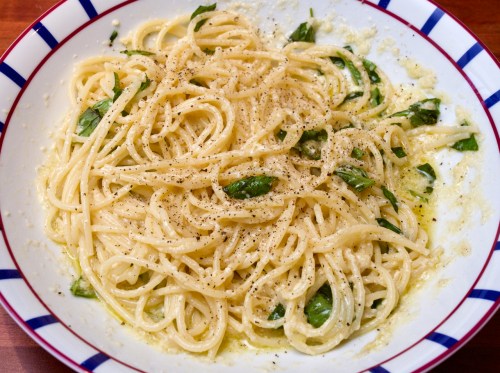
Lemon & basil linguine

Sometimes the simplest of ideas turn out the best.

Wine Suggestion: we had a glass of the Adi Badenhorst Secateurs Chenin Blanc which he’s now experimenting with a little bit of skin contact. We don’t disagree, it adds a touch of extra texture and complexity to such a great value wine.

Lemon & basil linguine – serves 2

  • 200g linguine
  • 1 large lemon, juiced
  • 75ml good olive oil
  • 75g Parmesan
  • a large handful of basil leaves

Put a large pan of water on to boil, add loads of salt and cook the pasta according to the time suggested on the packet.

Put the lemon juice, olive oil and Parmesan into a large warmed bowl and beat with a small whisk to combine and thicken. Tear the basil leaves into the bowl and add plenty of black pepper.

Drain the pasta and toss with the mixture in the bowl.

(Original recipe from The Kitchen Diaries  by Nigel Slater, Fourth Estate, 2005.)

Read Full Post »

Chicken with an agrodulce sauce

A quick and healthy Italian-style sweet & sour dish for midweek. We weren’t completely sure about the celery but it smells amazing in the pan with the red onions and tastes perfect in the finished dish. Serve with new potatoes and a green salad or steamed tenderstem broccoli.

Wine Suggestion: We served this with a fuller Italian white, the l’Insolito by Michele Biancardi from Puglia. This is made from Minitolo which used to be thought of as a sub-variety of Fiano. Honeysuckle and white flower aromatics are tempered by a good citrus twist … sort of like the agrodulce.

Chicken with Agrodolce Sauce – serves 2

  • 2 chicken breasts
  • 1 tbsp flour, well-seasoned with salt and pepper
  • 1 red onion, halved and thinly sliced
  • 3 celery stalks, thinly sliced
  • 100g cherry tomatoes, halved
  • 1 tbsp red wine vinegar
  • ½ tsp sugar
  • a small handful of flat-leaf parsley, chopped

Slice the chicken breasts in half horizontally. Cover the 4 pieces of chicken with baking paper and flatten gently with a rolling pin. Dust the chicken pieces with the seasoned flour shaking off any excess.

Heat 1 tbsp of olive oil in a non-stick frying pan and brown the chicken really well, then remove from the pan. Throw the onion and celery into the pan now and cook for about 3 minutes, then season. Add the tomatoes and cook for another few minutes or until they start to break down, then add the vinegar and sugar.

Return the chicken to the pan and cook for 3-4 minutes or until cooked through, then stir in the parsley.

Serve with green salad or steamed broccoli and some new potatoes if you like.

(Original recipe by Jennifer Joyce IN: BBC Olive Magazine, April 2009.)

Read Full Post »

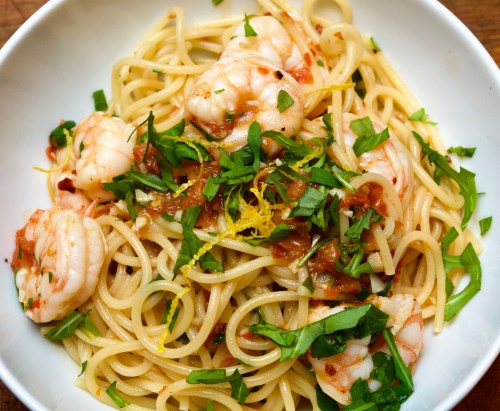
Spaghetti with Prawns & Rocket

Easy, tasty, prawns, chilli & spaghetti 🙂

Wine Suggestion: A great match was the Biancardi Solo Fiano from Puglia which was aromatic, floral and vibrantly fresh.

Spaghetti con gamberetti e rucola – serves 4

  • 400g dried spaghetti
  • extra virgin olive oil
  • 2 cloves of garlic, peeled and finely chopped
  • 1 to 2 dried chillies, crumbled (or you could use a tsp of chilli flakes)
  • 400g raw prawns (peeled)
  • 1 small wineglass of wine – about 175ml
  • 2 heaped tbsp of sun-dried tomato purée or 6 sun-dried tomatoes blitzed in a blender
  • zest and juice of 1 lemon
  • 2 handfuls of rocket, roughly chopped

Cook the spaghetti in a large pan of salted water according to the pack.

Meanwhile, heat 3 tbsp of olive oil in a large frying pan and add the garlic and chilli.

When the garlic starts to colour, add the prawns and sauté for a minute, then add the wine and tomato purée and simmer for a couple of minutes.

Drain the pasta but reserve a little bit of cooking water.

Toss the spaghetti with the sauce, the lemon juice and half the chopped rocket and season to taste (add a bit of the pasta water at this stage if needed).

Divide between plates and scatter with rocket and lemon zest before serving.

(Original recipe from Jamie’s Italy by Jamie Oliver, Michael Joseph, 2005.)

Read Full Post »

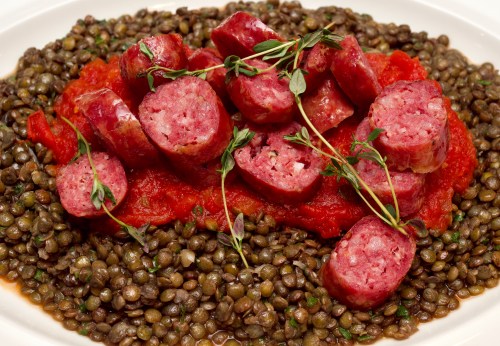
Sausages and green lentils with tomato salsa

Italian-style comfort food with honest, rustic flavours. Generous portions of deliciousness and tastes even better on the second day. Do seek out proper Italian sausages if you can – some of them are gluten-free as well for our coeliac friends.

Wine Suggestion: playing on the rustic theme works well by looking for an earthy wine match, you also need a bit of acidity which you can often find in Italian wines. We’ve successfully tried some cheaper Rosso Conero from the Marche made from Montepulciano and simple Chianti made from Sangiovese. Alternately the Insoglio del Cinghiale from the Maremma steps it up a notch, and then a step further the Pira Luigi Serralunga Barolo.

Salsicce con lenticchie verdi e salsa de pomodoro – serves 4

  • 8 good-quality Italian sausages
  • 2-3 sprigs of thyme
  • 500g purple-sprouting broccoli or cima di rapa
  • juice of ½ a lemon

FOR THE SALSA ROSSA:

  • 1 small red onion, peeled and finely chopped
  • 3 garlic cloves, peeled and finely sliced
  • 1 small stick of cinnamon
  • 1-2 small dried red chillies, crumbled
  • 2-3 tbsp red wine vinegar
  • 2 x 400g tins of plum tomatoes

FOR THE LENTILS:

  • 400g Puy lentils or lentichhie di Castelluccio
  • 2 cloves of garlic, peeled
  • a handful of flat-leaf parsley, leaves chopped and stalks reserved
  • red wine vinegar or sherry vinegar
  • a small handful of thyme tips

Preheat the oven to 200C/400F/Gas 6.

Start with the salsa by heating some oil in a saucepan and cooking the onion, garlic, cinnamon stick and chilli over a gentle heat for about 10 minutes or until the onions are soft. Turn up the heat and add the red wine vinegar, then turn the heat to low and add the tinned tomatoes (chop them up with you hands or with a wooden spoon). Simmer the sauce slowly for about half an hour while you cook the lentils.

Put the lentils into a large pot, cover with water and add the whole cloves of garlic, the bay leaf and the parsley stalks (tied together so they’re easy to remove at the end). Simmer for about 20 minutes, checking to make sure the liquid still covers the lentils. Check regularly near the end of the cooking time to make sure they don’t overcook.

Toss the sausages in a small bit of olive oil and bake in a roasting tray for about 25 minutes until golden.

When the sausages are cooked either boil or steam the broccoli until cooked, then drain and toss with some lemon juice, good olive oil and seasoning.

Fish the parsley stalks and bay leaves out of the cooked lentils and pour off most of the water. Mash the garlic cloves with a spoon and mix into the lentils with 4 tbsp of good olive oil and 1 to 2 tbsp of vinegar. Stir in the chopped parsley, then mix and season.

Pour away any fat from the sausages and slice thickly.

Remove the cinnamon stick from the salsa and season well.

Put the lentils onto plates, spoon over the salsa and top with the sliced sausages. Sprinkle with the thyme tips and serve with the broccoli.

(Original recipe from Jamie’s Italy by Jamie Oliver, Michael Joseph, 2005.)


Read Full Post »

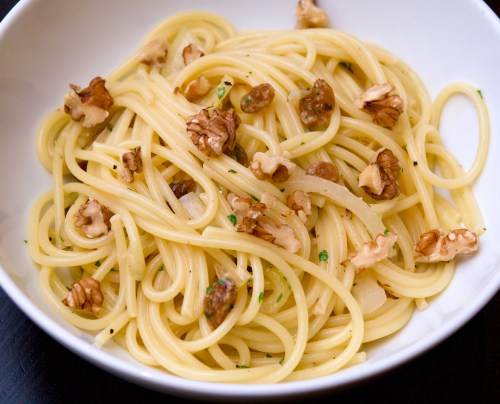
Spaghetti with walnuts, raisins & parsley

A simple weeknight dish with very few ingredients. Typical of the type of dish we have at the end of the week when we’re determined to use what we’ve got without having to return to the shops.

Spaghetti with Walnuts, Raisins & Parsley – serves 4

  • 300g spaghetti
  • 2 tbsp olive oil
  • 2 onions, sliced
  • 5 tbsp raisins or sultanas
  • 250ml chicken or vegetable stock
  • 50g parmesan, grated
  • 5 tbsp chopped walnuts
  • small bunch flat-leaf parsley, finely chopped

Cook the pasta in boiling salted water according to the pack.

Meanwhile, heat the oil in a frying pan and cook the onions for 8 to 10 minutes or until soft and golden brown. Add the raisins and stock and cook for a few minutes until hot through. Toss with the pasta, Parmesan, walnuts and parsley.

(Original recipe from BBC Good Food)

Read Full Post »

Chianti-baked Meatballs

These smell delicious even before they go into the oven. Serve with top-quality pasta like our favourite, Martelli from Panzano in Tuscany, or potatoes roasted with rosemary.

Wine Suggestion: naturally this goes with Chianti, but feel free to adventure a bit further if you like as a good Brunello with a bit of age will make this feel a bit special despite the humble ingredients. Don’t use your best wine in the sauce though; we used a nice, but inexpensive Bordeaux which had good fruit and tannin.

Chianti-baked Meatballs – serves 4

FOR THE MEATBALLS:

  • 500g beef mince
  • 1 onion, very finely chopped
  • 2 cloves of garlic, crushed
  • 50g black olives, stoned and chopped
  • 50g fresh breadcrumbs
  • 25g Parmesan, finely grated
  • 1 egg, lightly beaten
  • 1 tsp paprika
  • 1 long red chilli, deseeded and finely chopped
  • 2-3 tbsp chopped parsley

FOR THE SAUCE:

  • 2 tbsp olive oil
  • 250ml Chianti (or other red wine)
  • 2 x 400g tins chopped tomatoes
  • 2 tsp caster sugar
  • a large handful of basil, chopped

Heat the oven to 220C/Fan 200C/Gas 7.

Mix all the meatball ingredients together in a large bowl – the easiest way is to use clean hands. When everything is mixed together really well, wet your hands and roll into small or large meatballs (aim for 12 large meatballs or 20 small ones).

Gently toss the meatballs in 2tbsp of olive oil in an ovenproof shallow casserole or roasting tray. Try to find one that is just big enough to fit the meatballs but not so they are squashed together.

Bake the meatballs for 10 minutes, then pour over the wine and turn the meatballs over to make sure they are coated. Return to the oven for another 10 minutes. Stir in the tomatoes, sugar and basil, then cook for another 20-25 minutes or until bubbling and thickened.

Serve with pasta or roast potatoes with rosemary.

(Original recipe by Jo Pratt in BBC Olive Magazine, March 2007.)

Read Full Post »

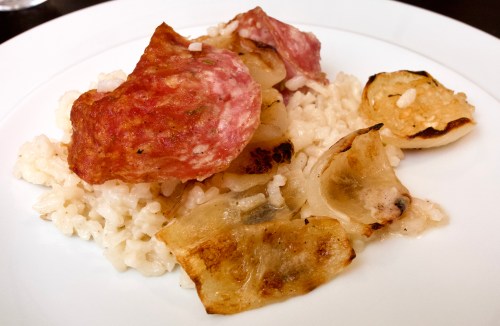
Italian Baked Rice

We vowed to set Jamie’s 5 Ingredients book aside for a while but we keep coming back to it – this time as we only needed to pick up one ingredient. This is definitely not conventional cooking as we know it but it works, and we’re continually surprised by what read like pretty ordinary dishes. This makes a great midweek meal served with a rocket salad but would also be a good side for roast or barbecued meat.

Wine Suggestion: What you choose may depend on if there’s meat being cooked too, but we ate this initially on its own so went for the Dog Point Chardonnay which was both rich and round as well as fresh and vibrant; perfect.

Italian Baked Rice – serves 4

  • 2 onions, peeled, quartered and divided into petals
  • 60g fennel salami
  • 300g Arborio rice
  • 1 heaped tbsp mascarpone cheese
  • 40g Parmesan cheese, finely grated

Preheat the oven to 180ºC/350ºF/Gas 4.

Put a large shallow casserole over a high heat. Throw the onion petals into the pan and char for about 4 minutes, tossing regularly.

Reduce the heat to medium and stir in 1 tbsp of olive oil and the salami, then the rice and cook for 1 minute. Add 1.2 litres of boiling kettle water and the mascarpone, then stir in the Parmesan with some sea salt and black pepper.

Bake the rice in the oven, uncovered, for 40 minutes or until the rice has absorbed the liquid and is just cooked through. Drizzle with 1 tbsp of extra virgin olive oil and season to taste before serving.

(Original recipe from 5 Ingredients by Jamie Oliver, Michael Joseph, 2017.)


Read Full Post »

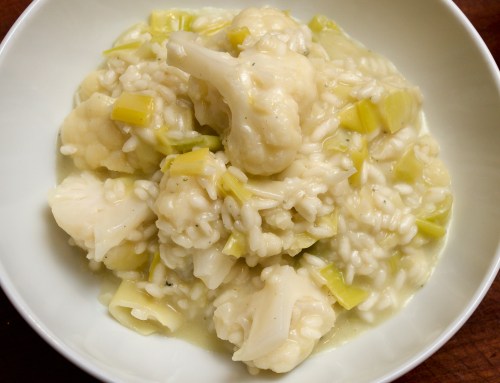
Cauliflower risotto

Using one of our favourite vegetables, that strangely we haven’t cooked for a while. Perfect comfort food for chilly evenings.

Wine Suggestion:  not as easy to suggest a wine as we thought given the conflicting flavours but we found that the Quinta Soalheiro Alvarinho Reserva a surprisingly good match. This combined a vibrant freshness with a layer of subtle oak, mineral nuttiness from the fine lees and a textured persistence that both balanced the food and didn’t overwhelm it. This wine continues to surprise with it’s quality and brilliance.

Cauliflower, leek & blue cheese risotto – serves 4

  • ½ a head of cauliflower, broken into florets
  • 25g butter
  • 2 leeks, cut into rings and washed thoroughly
  • 250g risotto rice
  • 1 litre hot chicken stock
  • 25g Parmesan cheese
  • 100g creamy blue cheese, e.g. Cashel blue or dolcelatte, broken into small chunks

Cook the cauliflower florets in boiling salted water until just tender, then drain well and set aside.

Melt the butter in a saucepan and cook the leeks over a low heat for about 10 minutes or until soft. Add the risotto rice and stir around until glistening with the butter. Now add the hot stock a ladleful at a time, stirring continuously until each has been absorbed before adding another. It should take about 25 minutes to add all of the liquid and by this time the rice should be cooked. A few minutes before the end, carefully stir in the cooked cauliflower and stir gently so you don’t break it up to much, then add the Parmesan and blue cheese.

(Original recipe from Food from Plenty by Diana Henry, Mitchell Beazley, 2011.)


Read Full Post »

Winter minestrone

We’re never in our own house for Christmas as we travel up north to be with family. That doesn’t stop us on insisting that the stock left in the pot in which the ham was cooked, goes into the freezer ready for us to take home and make minestrone with. The perfect foil for all the over-indulgence in the days preceding.

Winter Minestrone – serves 6

  • 500g cavolo nero, remove any thicker stalks and shred thickly
  • 1 large onion, diced
  • 3 ribs of celery, diced, with a few leaves
  • 6 tbsp olive oil
  • 400g pumpkin/squash flesh, peeled and cut into 1cm chunks
  • 1 potato
  • 400g cooked white beans – we used a tin of cannellini beans
  • 1.5 litres of ham stock, water or bean broth (if you’ve cooked dried beans)
  • A parmesan rind (always good to keep in the fridge to add extra depth of flavour to soups)
  • A small sprig of sage
  • Freshly grated Parmesan, to serve

Wash the cavolo nero, strip any particularly thick stems from the leaves and roughly chop. Roll up the leaves and shred thickly.

Heat the olive oil in a large heavy-based pan and slowly fry the onion and celery with a pinch of salt, until soft, about 8 minutes.

Add the pumpkin/squash to the pan along with the cavolo nero stems and a tiny pinch of salt, stirring until each chunk glistens with oil. Add half the cavolo nero leaves, half the beans, the water and the parmesan rind.

Turn up the heat so the soup is almost boiling, then reduce to a simmer for 30 minutes or until the vegetables are tender. Five minutes before the end of the cooking time, add the rest of the cavolo nero and beans. Taste and season, then add the chopped sage. Allow it to sit for 5 minutes, then serve with some freshly grated Parmesan.

(Original recipe by Rachel Roddy in The Guardian24th November 2017.)

Read Full Post »

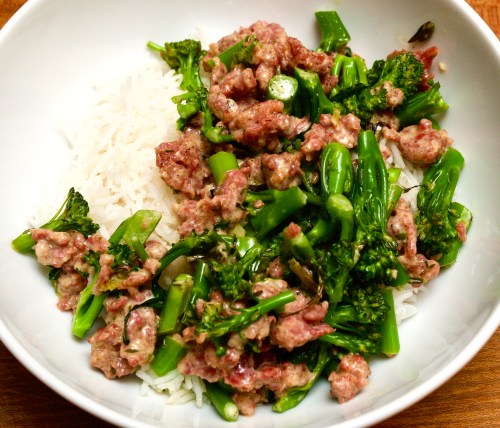
Ragu di salsicce e broccoletti

This simple dish satisfied the cravings we get at this time of year for lots of greens. We thought the suggestion of serving it with rice, rather than pasta, a bit unusual but it was perfect. Seek out top-quality Italian pork sausages if you can. We can buy them fairly easily now in Dublin but have been known in the past to beg the local Italian restaurant to sell us some – so  you could try that tactic if they’re not readily available where you are.

Wine Suggestion: This is a characterful dish so the wine you choose needs to have character and presence to match. We opened a MorisFarms Mandriolo, a fresh and vibrant blend of mostly Sangiovese with some Cabernet Sauvignon, Syrah and Petit Verdot from the Maremma in Tuscany. Being typically Italian the fresh acidity cut through the richness of this dish and proved a delightful match: we couldn’t determine if the hints of fennel came from the wine or the Italian sausages used … or maybe both.

Ragú di salsicce e broccoletti – Creamy sausage & broccoli ragú – serves 4

  • 200g long grain rice
  • 4 tbsp olive oil
  • 4 scallion, roughly chopped
  • a few sprigs of thyme
  • 6 good-quality Italian pork sausages, removed from their skins
  • 200g tenderstem broccoli, chopped into 1 cm pieces
  • 50ml white wine
  • 1 tbsp vegetable stock powder
  • 100ml crème fraîche
  • 30g Parmesan, grated (to serve)

Steam the rice in a rice cooker or according to the instructions on the pack.

Heat the olive oil in a large frying pan and fry the scallions and thyme leaves for a couple of minutes.

Break up the sausage meat with your fingers,  add to the frying pan and cook for another 5 minutes.

Add the broccoli pieces and continue to cook for 3 minutes.

Pour in the wine and cook for another couple of minutes, then stir in the stock powder and crème fraîche. Season with salt and freshly ground white pepper.

Serve the ragù over the rice and sprinkle with freshly grated Parmesan cheese.

(Original recipe from Pronto! by Gino D’Campo, Kyle Books, 2014.)

Read Full Post »

« Newer Posts - Older Posts »