Feeds:
Posts
Comments

Archive for the ‘Food’ Category

Lamb Shank Balti

The only thing missing from this dish was a crowd to share it with, but we’ll keep it in our back pockets for when that can happen again. If, like us, you make for a small dinner party, you can pull the leftover meat off the bone and stir it into the sauce. This allows you to have some tomorrow, or stash some in the freezer for another day. Serve with rice and your choice of naan bread, Indian chutneys or pickles and yoghurt or raita.

You need to marinate the meat the night before – literally 3 minutes work! And if you marinate in an oven tray, which we recommend, then take out of the fridge an hour before cooking to come up to room temperature.

Wine Suggestion: A rich and warm, spiced dish like this needs a similar kind of wine. A red from a warmer climate is our choice and tonight it was the Finca Bacara Pirapu; a Monastrell-Syrah blend from Jumilla in Spain. Juicy, and with a warm, earthy spice of it’s own. The high levels of juicy, soft tannins help with the rich meat. We’ll get this wine again for when we are entertaining properly and cooking this dish as it was a delight.

Lamb shank balti – serves 5 to 6

  • 5-6 lamb shanks
  • 3-4 onions, halved and sliced
  • 100g fresh ginger, peeled and roughly chopped
  • 6 garlic cloves
  • 2 x 400g tins chopped tomatoes
  • 6 tbsp balti paste (we used Patak’s)
  • 2 tbsp garam masala
  • 4tsp brown sugar
  • a handful of pomegranate seeds
  • a handful of coriander leaves

FOR THE MARINADE:

  • 2 tbsp balti paste
  • 2 tbsp sunflower or vegetable oil
  • juice of 1 lemon
  • 2 tsp ground cumin
  • 2 tsp brown mustard seeds
  • 2 tsp ground turmeric
  • 2 tsp kalonji seeds (nigella or onion seeds)
  • 1 tsp ground cinnamon

The day before, mix the ingredients together for the marinade. Put the lamb shanks in a roasting tin and rub the marinade all over them (you might want to wear disposable gloves if you want to avoid yellow hands). Cover and chill overnight.

Heat the oven to 220C/200C fan/gas 7.

Roast the lamb for 20 minutes, then reduce the heat to 160C/140C fan/gas 3.

Cover the tray with a double layer of tin foil and scrunch tightly around the edges to make sure it’s sealed. Return to the oven and cook for another 3 hours.

Remove the foil and stir the onions into the juices in the tin, then return to the oven and cook, uncovered, for another 30 minutes.

Meanwhile, put the ginger, garlic, 1 tin of the tomatoes, balti paste, garam masala and sugar into a food processor of blender. Whizz until smoothish. Stir this paste into the onions and also add the second tin of tomatoes and put back in the oven for a final 30 minutes.

Serve with the pomegranate seeds and coriander scattered over.

(Original recipe from BBC Good Food)


Read Full Post »

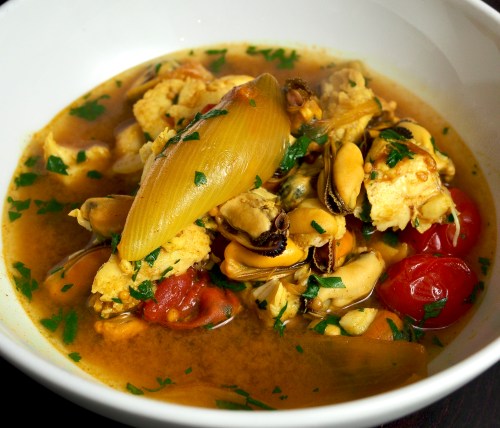
Spicy fish soup

We often have fish on Fridays. It’s quick to cook and light enough that we’ve room for cheese afterwards. Mussels are a favourite too and they’re fantastic value. This soup by Nigel Slater is crammed with them, and full of flavour.

Wine suggestion:  an old favourite white wine, the always versatile ALLO by Quinta Soalheiro. Light bodied so it doesn’t overwhelm the delicate play of flavours in the dish, but textured and concentrated at the same time. A wine that is the sommeliers’ secret weapon for matching.

Spiced fish soup – serves 2

  • 1kg mussels, scrubbed, de-bearded, chuck any with broken shells or that don’t close when you give them a sharp tap
  • 2 large banana shallots, peeled and separated into layers
  • a splash of olive oil
  • 1 tbsp mustard seeds
  • ½ tsp chilli powder
  • 2 tsp turmeric
  • 12 cherry tomatoes, halved
  • 250g white fish fillet – we used hake – cut into 4 pieces
  • a handful of chopped coriander

Put the cleaned mussels into a large pan and add 500ml of water. Cover with a lid, bring to the boil and cook until the mussels have opened (a couple of minutes).

Remove the mussels from the liquid but keep the cooking water, you need to strain this through a fine sieve. Remove the mussels from the shells and set aside.

Heat a splash of oil in a deep frying pan, then fry the shallots over a gentle heat until softened. Add the mustard seeds, chilli powder and turmeric, and continue cooking for another few minutes. Add the cherry tomatoes and cook for about 5 minutes.

Pour in the reserved mussel stock, bring to the boil, then lower the heat to a simmer. Lay the pieces of fish in the liquid and cook briefly until opaque (just a couple of minutes should do it). Return the mussels to the pan, season to taste with salt, and stir in the coriander.

(Original recipe from Eat by Nigel Slater, Fourth Estate, 2013.)

Read Full Post »

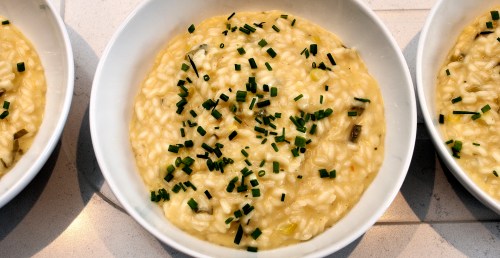
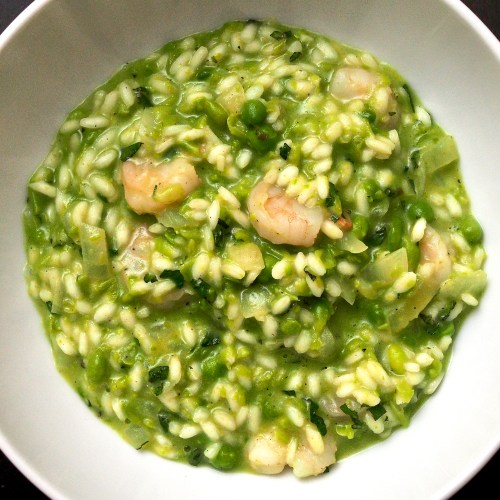
Cheddar Cheese Risotto

We found Nigella Express on our bookshelves and thought it might be useful these days when we’re looking for simplicity and store cupboard ingredients. This is Nigella’s Cheddar cheese risotto that we made with some limp looking scallions and the dregs from a packet of chives. Also popular with the 6 year old.

Wine Suggestion: A full-bodied white with texture, depth and importantly a freshness to make it feel lighter than the body and rich food demand. Our choice the Rustenberg Chardonnay, a stand-by exemplar of an oaked Chardonnay.

Cheddar cheese risotto – serves 2 adults and 1 child

  • 1 tbsp butter
  • 1 tbsp olive oil
  • a few scallions, chopped
  • 300g risotto rice
  • ½ tsp Dijon mustard
  • 125ml white wine
  • 1 litre hot vegetable stock
  • 125g cheddar cheese, cubed
  • 2 tbsp chopped chives

Melt the butter and oil in a saucepan, then add the scallions and cook until softened.

Pour in the rice and stir for a minute so the rice is all coated in the butter and oil.

Turn up the heat, then add the Dijon mustard and white wine. Keep stirring until the wine has been absorbed.

Gradually add the hot stock, a ladleful at a time, stirring until absorbed before adding another. Keep going like this until the rice is al dente – about 18 minutes.

Stir in the cubes of cheese and keep stirring until the cheese has melted. Taste for seasoning, then ladle into warm bowls. Top with some chives if you have them.

(Original recipe from Nigella Express, Chatto & Windus, 2007.)


Read Full Post »

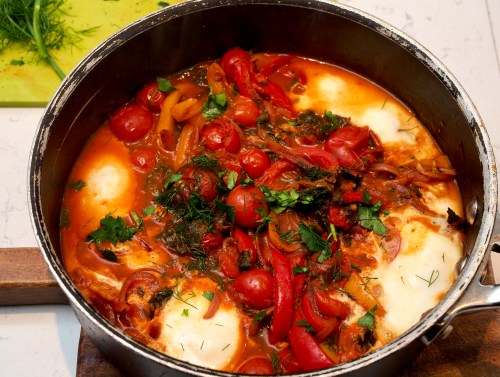
Shakshuka

We needed a green pepper for another dish, but could only get a mixed bag of three leaving us with a red and yellow pepper needing to be used. The clocks have changed and so we had brunch, very unusual in this house where our human alarm clocks goes off at 6am most days. Jono has been mastering a new skill and so we had this with freshly baked sourdough. Don’t think we’ll be eating another bite until this evening!

Shakshuka – serves 2

  • 1 tbsp cold pressed rapeseed oil (we used olive oil)
  • 1 red onion, cut into thin wedges
  • 1 red pepper, finely sliced
  • 1 yellow pepper, finely sliced
  • 3 large garlic cloves, crushed
  • 1 tsp cumin seeds
  • 1 tsp coriander seeds, crushed
  • 1 heaped tsp sweet smoked paprika
  • 400g tin of cherry tomatoes
  • 115g baby spinach (we used frozen spinach, boil for a minute or two to wilt, then drain, squeeze out water with hands and chop)
  • 4 medium eggs
  • ½ small bunch of coriander, roughly chopped
  • ½ small bunch of dill, roughly chopped (we didn’t have any dill but used some fennel fronds)

Heat the oil in a large, non-stick frying pan. Add the onions and peppers and cook over a medium heat for 8-10 minutes or until starting to soften. Add the garlic and spices and stir for another minute, then add the tomatoes, spinach and 100ml of water. Turn the heat down and simmer, uncovered, for 10 minutes. Season to taste.

Make four indentations in the mixture and gently crack an egg into each one (we find it easier to crack the eggs into mugs and pour them in). Cover with a lid or foil and cook over a low heat for 8-10 minutes or until the eggs are just set. Scatter over the herbs and serve.

(Original recipe from BBC Good Food)

Read Full Post »

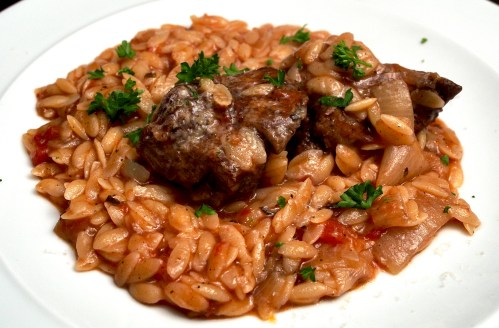
Greek Lamb with Orzo

A treat for the weekend without too many ingredients. There is also just a tiny bit of work at the start and then this can be left to pretty much cook itself for a few hours. You can serve with crusty bread or just by itself.

Wine Suggestion: we think that a southern French blend like Grenache, Syrah and Mourvedre is a really good combination as long as the wine is fresh and not too jammy. Tonight we enjoyed the Domaine de Cébène Faugeres “Felgaria” which had a majority of Mourvedre and was pure, elegant and expressive with spices and warm aromas.

Greek lamb with orzo – serves 6

  • 1kg shoulder of lamb, cut into large cubes
  • 2 onions, sliced
  • 1 tbsp chopped oregano or 1 tsp dried oregano
  • ½ tsp ground cinnamon
  • 2 cinnamon sticks, broken in half
  • 2 tbsp olive oil
  • 400g tin chopped tomatoes
  • 1.2 litres hot chicken or veg stock
  • 400g orzo
  • freshly grated Parmesan, to serve

Heat the oven to 180C/160C fan/gas 4.

Put the lamb into a large casserole dish with the onions, oregano, ground cinnamon, cinnamon sticks and olive oil. Toss with your hands to ensure everything is coated with oil. Bake in the oven, uncovered, for 45 minutes, stirring halfway through.

Add the tomatoes and stock, then cover and return to the oven for a further 1½ hours or until the lamb is meltingly tender. You can throw away the cinnamon sticks at this point.

Stir in the orzo and return to the oven again, with the lid on. Cook for another 20 minutes, stirring halfway through, or until the orzo is cooked and the sauce has thickened. Serve sprinkled with grated Parmesan.

(Original recipe from BBC Good Food)

Read Full Post »

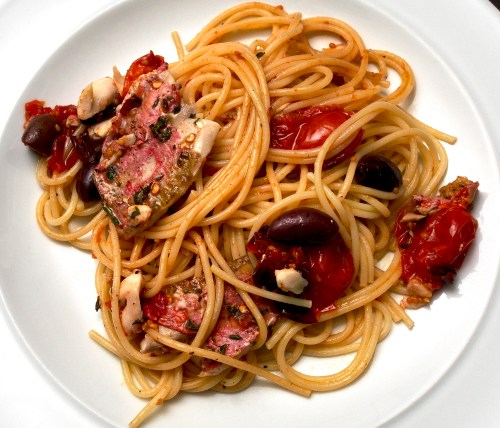
Spaghetti with Roasted Red Mullet

It feels a bit weird posting recipes like this but at the same time we think its important to remember that there are no food shortages. The fish shops are open and fishermen continue to fish and while this continues, we’re going to make the most of it.

Wine Suggestion: a good rule of thumb when matching wines is to look at the source of the food and see what is being grown nearby. Today, an Italian seafood pasta drags us to the Poggio ai Ginepri Vermentino, grown on the Tuscan coast; both floral and salty in equal amounts with a good dollop of tasty fruit in the middle.

Spaghetti with roasted red mullet – serves 2

  • 4 small fillets of red mullet – ask the fish shop to fillet them for you and make sure you check them over for tiny bones
  • a handful of black olives, pitted
  • a dried chilli or half a tsp of dried chilli flakes
  • 200g cherry tomatoes
  • your best extra virgin olive oil
  • some fresh thyme, leaves stripped
  • 200g spaghetti

Preheat your oven to 200C/400F.

Prick the cherry tomatoes with a fork, then toss with a little olive oil, season and spread over a baking tray. Roast in the oven for 20 minutes.

Put the fillets of red mullet in a single layer in a shallow baking dish, sprinkle with thyme and the dried chilli, then season. Drizzle with oil and roast in the oven for 5 minutes.

Cook the spaghetti in loads of salty water until al dente. Drain and return to the pan.

Add the olives and tomatoes to the pasta with 1 tbsp of olive oil and season. Add the red mullet and toss gently, then serve.

(Original recipe from Italian Two Easy: Simple Recipes form the London River Cafe by Rose Gray and Ruth Rogers, Clarkson Potter, 2006)


Read Full Post »

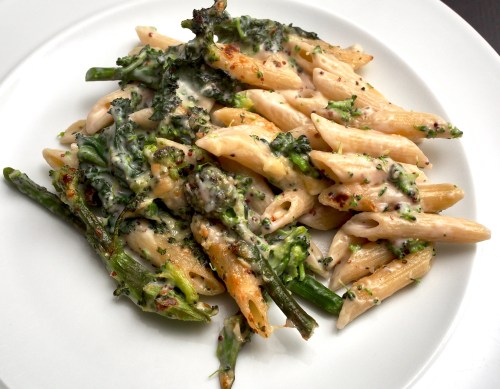
Purple Sprouting Broccoli Pasta Bake

We’ve been cooking pretty much as usual since Covid-19 struck and we’ve all had to stay home. We are trying even harder than usual though to use what we already have. The only fresh ingredient you need here is broccoli, we used purple sprouting as it’s in season but any broccoli will do. Hopefully you have everything else in your cupboard or fridge already, if not the corner shop should have it.

Wine Suggestion: a simple white wine with a bit of freshness and texture is all that is needed here. Our selection is the Macchialupa Falanghina from Benevento in Campania, Italy, which over delivers but is joyfully fresh and vibrant.

PSB and Pasta Bake – serves 4

  • 250-300g broccoli, cut into florets (we use stalks and all)
  • 250-300g penne pasta (or whatever short pasta you have)
  • 25g butter
  • 25g plain flour
  • 300ml milk
  • 2 large handfuls of grated Cheddar cheese (or any leftover cheese)
  • 1 tbsp grainy mustard (or any mustard)

Cook the pasta in loads of salty boiling water and add the broccoli for the last 4 minutes. Drain and leave to steam dry in the pot.

Make a cheese sauce by melting the butter in a saucepan, then stir in the flour. Keep stirring for a minute, then gradually add the milk, a little at a time, stirring all the time. Keep stirring now until the mixture bubbles, then leave to simmer for a couple of minutes. Stir in the mustard, one large handful of cheese and plenty of seasoning.

Tip the cooked pasta and broccoli into the sauce and stir gently. Tip into an ovenproof dish and put under a hot grill for a few minutes until browned and bubbling.

Read Full Post »

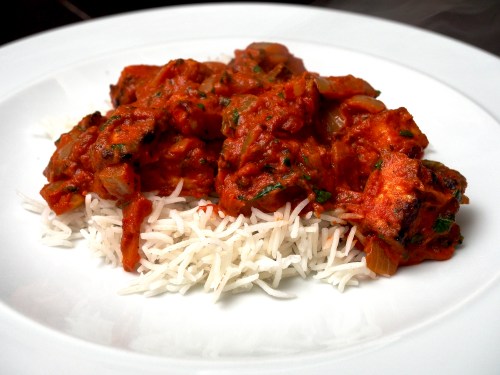
Paneer Tikka Masala

Being thankful for sunshine and all we have this evening. The clocks will change tomorrow and hopefully things will take a turn for the better soon. In the meantime stay at home and eat well. This is super straightforward but flavour-packed! Serve with steamed basmati rice and naan bread from your local takeaway.

Wine Suggestion: A lager style beer. To be a little “craft”, even though they’ve been brewing since 1824, we chose the C&A Veltins Grevensteiner Helles which had character and smoothness in equal proportions.

Paneer tikka masala – serves 3

  • 3 tbsp curry powder (the recipe suggests tikka curry powder, we had hot so that’s what we got)
  • 2 tbsp natural yoghurt
  • 200g paneer, cut into small cubes
  • 1 green pepper, diced
  • 1 tbsp groundnut oil
  • 1 onion, finely chopped
  • 1 tbsp grated ginger
  • 1 clove of garlic, crushed
  • 400g passata
  • 2 tsp tomato purée
  • 2 tsp caster sugar
  • 4 tbsp double cream
  • a knob of butter
  • a handful of chopped coriander
  • steamed basmati rice and naan bread (to serve)

Mix the 1 tbsp of the curry powder and the yoghurt together in a bowl, then stir in the paneer and peppers and leave to marinade while you make the sauce.

Heat the oil in a pan, then add the onion and cook until soft and starting to brown a little. Add the ginger and garlic and continue cooking for a couple of minutes.

Stir in the remaining 2 tbsp of curry powder and stir until fragrant, then stir in the passata, tomato purée and sugar. Bring to the boil, then reduce the heat and simmer for 10 to 15 minutes, or until thickened. Stir in the cream and cook for another couple of minutes.

Meanwhile, heat the grill to high. Spread the paneer and pepper out over a non-stick baking tray or a tray lined with foil, then place under the grill until charred and sizzling. Turn everything over to brown on both sides.

Tip the panner and peppers into the sauce, add a knob of butter, the coriander and some seasoning and cook for a couple of minutes. Serve the curry with rice and naan.

(Original recipe by Janine Ratcliffe in BBC Olive Magazine, March 2020)


Read Full Post »

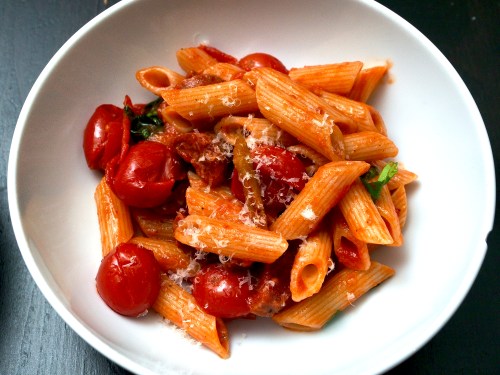
Chorizo & Chilli Pepper Pasta

We made this to use up a piece of chorizo ring leftover from a previous recipe. The whole dish took about 20 minutes from start to finish and was yummy.

Wine Suggestion: The first time we had this it was with a Beaujolais (Gamay) and it was a delightful match, and then a few weeks later it was with a white blend of Grenache Blanc and Viognier and again a real delight. We think the key here is a vibrant, medium bodied wine … and avoid to much complexity and concentration … this is a simple, if very tasty dish, so keep the wine the same.

Chorizo & chilli pepper pasta – serves 2

  • 200g penne (or any short pasta)
  • ½ tbsp olive oil
  • 100g chorizo, skinned and cut into small chunks
  • 400g tin cherry tomatoes (regular tin of chopped tomatoes would be fine if that’s what you have)
  • 3 guindilla pickled chilli peppers, sliced on an angle (any pickled chillies would do)
  • a handful of basil leaves, roughly torn
  • grated Parmesan, to serve

Cook the pasta in lots of salty water for a minute less than recommended on the packet.

Meanwhile, heat the olive oil in a large sauté pan over a high heat. Fry the chorizo for a couple of minutes or until it releases its oil.

Stir in the tin of tomatoes, a pinch of sugar and seasoning.  Let bubble for 5 minutes, then stir in the peppers and basil.

Drain the pasta and stir through the sauce.

Serve with plenty of Parmesan.

(Original recipe from BBC Good Food)

Read Full Post »

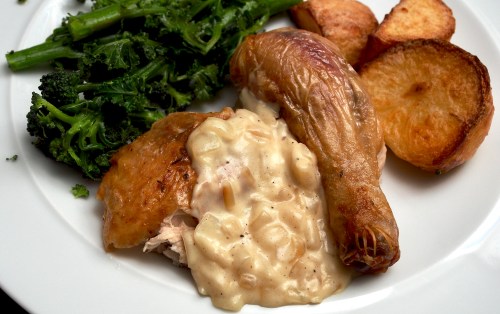
Roast chicken with a Breton sauce

We made this on the first weekend of social distancing as our dinner date was cancelled. We were all in a bit of shock but reassured ourselves by planning all of the things that we could cook while spending time at home. We loved this recipe by Diana Henry and the sauce is absolutely delicious. We served with some purple sprouting broccoli and roast potatoes. Diana suggests green beans or Savoy cabbage and waxy potatoes.

Wine suggestion: Our inspiration tonight was the Loire, being the closest wine region to Brittany, which specialises in apples (cider & Calvados). We chose a bottle of Chateau du Hureau’s Foudre, a Chenin Blanc that is fermented and aged in large oak barrels; full of appley flavours alongside a refined texture and enough body and a freshness to match the rich, creamy dish.

Roast chicken with a Breton onion sauce – serves 6

  • 1.8kg chicken
  • 25g unsalted butter
  • 4 thyme sprigs, leaves stripped

FOR THE ONIONS:

  • 30g unsalted butter, slightly softened
  • 450g onions, finely chopped

FOR THE SAUCE:

  • 300ml full cream milk
  • a slice of onion
  • a few parsley stalks
  • 4 black peppercorns
  • a bay leaf
  • 30g unsalted butter
  • 30g plain flour
  • nutmeg, for grating
  • 3 tbsp crème fraîche
  • 1 tsp Dijon mustard
  • 2 tbsp Calvados

Preheat your oven to 190C/375F/Gas 5.

Prep the chicken first by mashing the butter and thyme leaves together with some salt and pepper. Loosen the skin over the breast of the chicken with your hands. This is easy to do but be gentle so you don’t tear the skin. Spread half of the butter under the skin with your hands, then spread the rest over the outside. Season all over with salt and pepper and put into a roasting tin. Cook for 20 minutes per 500g plus an extra 10 minutes.

Melt the butter for the onions in a heavy-based pan, then add the onions. Stir to coat them in the butter, add 2 tbsp of water, then cover and cook over a very low heat until completely soft. Check them now and then and add a bit more water if needed. Set aside until needed.

Remove the chicken from the oven, cover loosely with foil and leave to rest for 15 minutes.

To make the sauce put the milk, onion, parsley and peppercorns and bay leaf in a saucepan and slowly bring to just under the boil. Remove from the heat and leave to infuse for 20 minutes, then strain into a jug.

Melt the butter in a heavy-based saucepan, add the flour and stir over a medium-low heat for a minute. Remove the pan from the heat, then start adding the strained milk, a little at a time, stirring until smooth. Season and add a little grated nutmeg. Return the pan to the heat and stir until boiling. Turn the heat down and simmer for 3 minutes. Add the onions and their juices, the crème fraîche, mustard and Calvados and taste for seasoning. Serve the chicken with the sauce and veg on the side.

(Original recipe from A Bird in the Hand by Diana Henry, Mitchell Beazley, 2015.)


Read Full Post »

Genoese Squid with Potatoes

Mothers Day dinner 2020. Not a huge roast or a barbecue with the rest of the family but a glorious sunny day and this Diana Henry recipe, which was perfect! Great for all of us on a budget now too, squid is cheap, and not everyone realises that you can slow cook it. The sauce this dish has is so vibrant and rich and when we reheated the leftovers in the oven two days later it was still amazing.

Wine Suggestion: we chose a classic wine for seafood and an explemary winery, the  Pazo de Señorans Albariño 2018 which is a wine we love both in youth and as it ages and gains texture and complexity. The salty sea air ideas you get from Albariño just seem to work so well.

Genoese squid with potatoes – serves 4

  • 750g squid, cleaned (look up online how to do it if you need, we used some pre-cleaned squid tubes from the fish shop)
  • 550g waxy potatoes
  • 5 tbsp olive oil
  • 4 cloves of garlic
  • 350ml white wine
  • leaves from 2 oregano/marjoram sprigs
  • 2½ tbsp chopped flat leaf parsley
  • 400g tin cherry tomatoes
  • extra virgin olive oil, to finish

Wash the squid and remove any gunge from the inside the tubes. Cut the tubes into thick rings. Cut the hard bit from the end of each tentacle and slice the wings into 2 or 3. Cut the tentacles too if they’re big. Rinse everything in a sieve, then dry well with kitchen roll.

Wash the potatoes (you can peel or not) and cut into 4cm thick slices.

Heat the olive oil in a large sauté pan. When the oil is really hot, tip in the squid and garlic and toss around for a minute. Add the white wine, oregano, 1½ tbsp of the parsley, tomatoes and plenty of seasoning. Cover, reduce the heat, and simmer for 30 minutes.

Add the potatoes, then season again, cover and cook for a further 30 minutes or until the potatoes are tender. Taste again for seasoning, you might need to add a bit of extra salt to make the sauce sing, sprinkle over the rest of the parsley and serve with your best olive oil drizzled on top.

(Original recipe from Food from Plenty by Diana Henry, Mitchell Beazley, 2010)


Read Full Post »

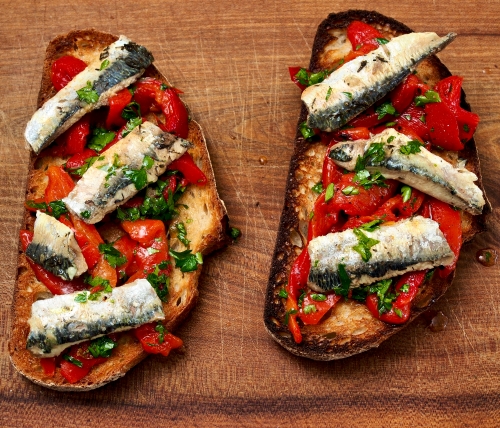
Sardines & Peppers on Toast

This was my lunch on the strangest Mother’s Day ever. I was supposed to be cooking lunch for my own Mum but we couldn’t do that due to social distancing, and we live too far away to drive up and chat through the window. But we did FaceTime twice and that was good. Meanwhile, Mother Nature looked after everyone in Dublin with a gorgeous sunny day and this lunch reminded us of holidays. It’s also an easy lunch to do on a weekday – we can do these things while most of us are at home – turn it into an opportunity as my Dad would say!

Sardines and peppers on toast – serves 2

  • 2 large roasted red peppers from  a jar, torn into pieces
  • juice of a lemon, plus some extra lemon wedges to serve if you like
  • olive oil
  • 1 clove of garlic, halved
  • a handful of flat-leaf parsley, chopped
  • a pinch of sweet smoked paprika
  • 2 large slices of sourdough bread
  • 1 small tin of sardines, drained

Put the peppers into a bowl with the lemon juice, 1 tbsp of olive oil, the garlic, parsley, paprika and some salt and pepper. Leave aside while you toast your bread.

Toast the bread and put onto warm plates. Top with roasted peppers, followed by the sardines, then drizzle the liquid from the peppers over the top.

(Original recipe by Janine Ratcliffe in Olive Magazine, March 2016.)

Read Full Post »

Sticky glazed gammon with creamy, mustard cabbage

We’re managing being stuck at home by keeping up our cooking routine and making something delicious to eat everyday. However, like many of the you, our budget has been restricted. So, we’re using everything up in the cupboards and buying good value items like gammon and a gigantic cabbage from our local farm shop which lasted us for days!

It’s also a good distraction from some of the daily events of the world to have to be creative with ingredients

Wine Suggestion: a light, juicy and relatively simple red works well with this. Tonight it’s the La Combe St Roche red from the Languedoc; an inexpensive and easy drinking blend of Grenache, Cinsault, Carignan and Merlot.

Sticky glazed gammon with creamy mustard cabbage – serves 2

  • ½ savoy cabbage, shredded
  • butter
  • unsmoked gammon steaks
  • 1 tbsp runny honey
  • a dash of Worcestershire sauce
  • 2 tbsp half-fat crème fraîche
  • 1 tbsp grainy mustard

Cook the cabbage in boiling salted water for a few minutes or until tender, then drain really well. Tip the cabbage out onto some kitchen roll to get rid of any extra moisture.

Heat a knob of butter in a large frying pan until foaming, then add the gammon and cook for 2 minutes on each side until golden. Add the honey and Worcestershire sauce, turn up the heat and continue to cook for another couple of minutes or until sticky and glazed.

Heat the crème fraîche and mustard in a pan, add the cabbage, heat until piping hot, then season. Spoon the cabbage unto plates and top with the gammon.

(Original recipe by Janine Ratcliffe in Olive Magazine, March 2016.)

Read Full Post »

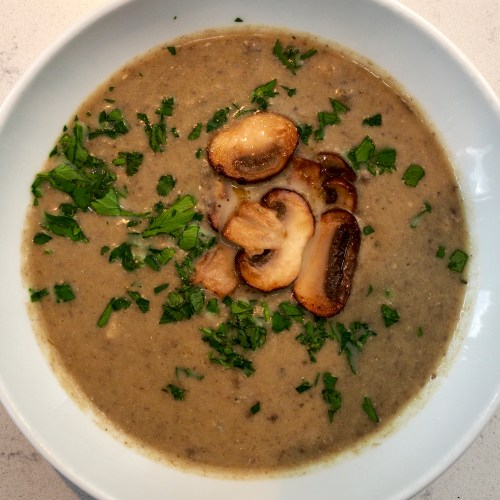
Mushroom, Cider & Blue Cheese Soup

We made this soup on the strangest St Patrick’s day ever. There was no parade, the restaurants have all closed down and city streets are virtually empty. There is lots of panic buying going on, the supermarket aisles for tinned goods and toilet rolls have been decimated. We’re not down though, we’re positive we’ll all get through this and hopefully be stronger and better people on the other side. We’re continuing to buy fresh food, there’s lots of it available, and cook nice recipes like this soup by Gill Meller.

Mushroom, cider & blue cheese soup – serves 4 to 6

  • 500g wild and cultivated mushrooms (we used all chestnut mushrooms as it’s not autumn and wild ones aren’t available)
  • 25g butter, plus an extra bit, for frying
  • 1 leek, sliced
  • 1 small potato, peeled and diced
  • 1 large onion, chopped
  • 2 garlic cloves, peeled
  • 1 tsp thyme leaves
  • 750ml veg stock or chicken stock
  • 250ml dry cider
  • 100ml double cream
  • 75g blue cheese, plus extra to serve if you like
  • a small bunch of parsley, finely chopped, to serve

Clean the mushrooms with a damp piece of kitchen paper and roughly chop them but keep about 100g over to fry and use as a garnish. The mushrooms for the garnish can be sliced.

Melt the butter in a large pan with a splash of olive oil, over a medium heat. When it starts to foam, add the leek, potato, onion and garlic. Cook for 10 to 15 minutes or until the onion is soft but not browned. Add the mushrooms and thyme and cook for another 5 minutes. Add the stock, cider and some seasoning, then bring to a simmer. Cook for 12 to 15 minutes or until tender. Purée the soup until smooth (or smoothish if you’re using a stick blender).

Add the cream and blue cheese to the soup and gently return to a simmer. Season to taste and keep warm over a very low heat.

Heat a knob of butter and a splash of oil in a frying pan and sauté the reserved mushrooms for 8 to 10 minutes or until well cooked and golden brown. Season the mushrooms.

Serve the soup in warm bowls with the mushrooms and parsley sprinkled over. You can also sprinkle over some more crumbled blue cheese if you like.

(Original recipe from Time by Gill Meller, Quadrille, 2018.)

Read Full Post »

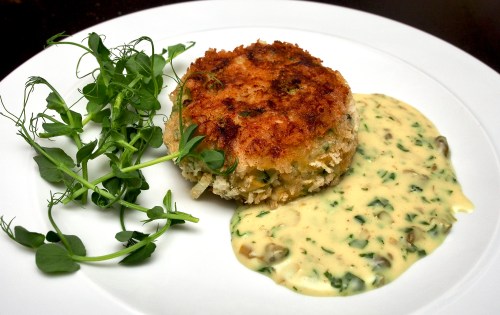
Fishcakes with Tartare Velouté

These are definitely a bit fancier than your average fishcake. Jam-packed with fish, not too much potato, and a stunning sauce. We’ve put a few in the freezer and can’t wait to have them again. The recipe is by Tommy Banks, of The Black Swan in Oldstead, and he suggests serving a poached egg on top. Do as you wish.

Wine Suggestion: We actually had another Jura Chardonnay with this, the Berthet-Bondet, but we’re conscious that these aren’t easy to find. We’d also suggest a sparkling from a cooler climate, especially if it has some autolytic bottle age; or a Chablis, Vermentino or good Albariño.

Luxury fishcakes with tartare velouté – serves 6

FOR THE FISHCAKES:

  • 1 red-skinned potato, about 250g
  • 250g smoked cod or smoked haddock
  • 250g hake
  • 2 bay leaves
  • 1 tbsp English mustard
  • 500ml milk
  • 1 egg yolk
  • 2 eggs, beaten
  • 25g butter
  • nutmeg, for grating
  • ½ lemon, zested and juiced
  • 100g mature cheddar, grated
  • 100g mixed white and brown crabmeat
  • 2 bunches of scallions, finely chopped
  • 100g plain flour
  • 100g panko breadcrumbs
  • 4 tbsp sunflower oil, for frying
  • poached eggs (optional), lemon wedges & pea shoots, to serve

FOR THE TARTARE VELOUTÉ:

  • 25g butter
  • 25g plain flour
  • 50ml double cream
  • squeeze of lemon
  • large handful of parsley, chopped
  • 2 tbsp capers, chopped

Prick the potato a few times, then bake at 200C/180C fan/Gas 6 for about an hour or until soft.

Scoop the flesh from the potato into a bowl and mash until smooth.

Meanwhile, put the cod or haddock and hake into a large, shallow pan. Add the bay leaves, mustard and milk, and season. Bring to a simmer over a high heat, then cover with a lid, turn off the heat, and leave for 10 minutes.

Put the mash into a large bowl and stir in the egg yolk, butter, a pinch of grated nutmeg, the lemon zest and juice, the cheese, the crab and the scallions. Stir together well, then add 1 tbsp of the poaching milk and some seasoning.

Lift the fish gently from the milk and pour the milk into a jug (throw away the bay leaves). Flake the fish into large pieces and stir gently through the potato mixture. Shape the mixture into 6 fishcakes.

Now put the flour, egg and panko crumbs into 3 separate bowls. Coat each fishcake lightly in flour first, then dip into the egg to cover and finally into the panko crumbs. You want them to be totally covered in the breadcrumbs. You can freeze them now if you like or put into the fridge for cooking later.

To make the sauce, heat the butter in a saucepan until foaming, then stir in the flour. Cook over a low heat for 2 minutes, then gradually add the reserved poaching liquid, stirring all the time. Keep adding liquid until you have a silky sauce, then stir in the cream and leave to simmer gently for 10 minutes. Stir in some lemon juice, parsley, capers and seasoning. Keep warm.

To cook the fishcakes, heat the oil in a large non-stick frying pan and cook for 4-5 minutes on each side until dark golden and crispy. A metal skewer into the centre helps to check they’re piping hot, particularly if they’ve spent time in the fridge. You can cook them in batches if easier and keep warm in a low oven.

Serve the fishcakes with plenty of sauce, a handful of pea shoots and a lemon wedge. You can also add a poached egg if you would like.

(Original recipe from BBC Good Food)


Read Full Post »

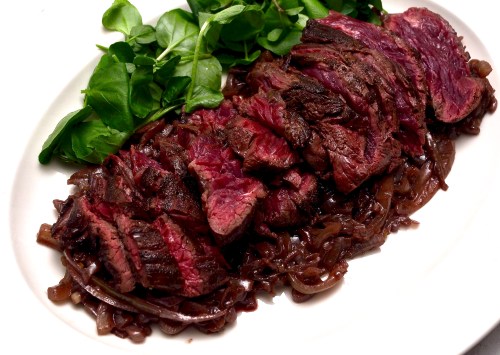
Hanger Steak with Shallots

We adore this cut of beef but it’s not always easy to get in Irish butchers. Talk to your butcher in advance and tell them you want a piece of onglet or hanger steak – they should be able to order it for you, and it’s much cheaper than some other cuts.

We cut this across the grain and it’s meltingly tender so you can be brave and serve “blue” like we did here, but it also works well at your choice of doneness if you prefer.

Wine Suggestion: we think this combination of meltingly tender beef and the buttery shallots in red wine goes with Rhône reds – Syrah, Grenache, Mourvedre et al; either as a blend or Syrah alone. Tonight we had one of those insider wines, a Côtes du Rhône labelled under Jean-Paul Daumen’s name. He’s the owner-winemaker at Domaine de la Vieille Julienne, Châteauneuf-du-Pape, a superb domaine with an enviable reputation. The wines under his name are from a mix of vineyards from the estate and friends, all farmed organically and biodynamically by Jean-Paul and made with just as much care as his own domaine. The result … great value and a delicious pairing.

Hanger Steak with Shallots – L’onglet à l’échalote – serves 4

  • 60g unsalted butter
  • 800g onglet/hanger steak (you will probably get 2 long pieces)
  • 250g shallot, finely sliced
  • 1 thyme sprig
  • 1 bay leaf
  • 125ml red wine
  • 100ml beef stock
  • watercress, to garnish

As soon as you get home from the butchers put your steak into a dish and sprinkle generously with salt. Then put in the fridge until you need it but take it out of the fridge about an hour before you want to cook it.

Heat a large frying pan over a high heat. Add a knob of the butter and when it starts to melt add your steak. You might have to cook it in batches depending on the size of your pan. A rough guide is to cook for about 2 minutes on each side for very rare steak or longer if you prefer it more well done. This is dependent on the size of the steak, so you should do the finger test on the meat and go with gut feel. Put the steak onto a warm plate, cover with foil and keep warm while it rests.

Melt half of the remaining butter in the same frying pan and add the shallots, thyme and bay leaf. Cook over a low heat for about 10 minutes or until softened. Add the red wine and the stock, turn the heat up to high and cook until the liquid has reduced by half. Season with salt and lots of black pepper, throw away the herbs. Pour the meat juices from the resting plate into the sauce and whisk in the remaining butter to make a thick, glossy sauce.

Slice the steak across the grain into thick slices and serve on top of the shallots with some watercress on the side.

(Original recipe from Rick Stein’s Secret France, BBC Books, 2019.)

To do the finger test for steak you compare the resistance of the cooking meat to pressing the ball of your palm with a finger from the other hand

  • Blue: an open palm, relaxed
  • Rare: thumb and your first, index finger touching
  • Medium Rare: thumb and second finger
  • Medium: thumb and third, ring finger
  • Well Done: thumb and fourth, little finger

Read Full Post »

Hot Crab Pots

This is such a simple starter but really delicious. Couldn’t recommend it highly enough. We made with some fresh crab leftover from another dish and waiting in the freezer.

Wine Suggestion: this is quite rich and we’d suggest pairing it with a fuller, more complex and concentrated sparkling. A good vintage Champagne works, or alternately find a top-quality sparkling made in the same method; tonight it was Dermot Sugrue’s The Trouble with Dreams, one of our favourite English sparkling wines.

Hot Crab Pots – serves 4 as a starter

  • 2 eggs, beaten
  • 200ml double cream
  • 100g mixed white and brown crabmeat
  • 50g gruyère, grated
  • butter
  • 1 tsp chopped chives

Preheat the oven to 180C/fan 160C/gas 4.

Mix the eggs, cream, crabmeat and gruyère together in a large bowl. Season with salt and pepper.

Grease 4 ramekins with butter, then divide the mixture between them.

Cook the pots in the oven for about 15 minutes or until just set – we had to cook for a couple of minutes longer.

Sprinkle with the chives to serve. Some sourdough toast on the side would be nice but not essential.

(Original recipe by Victoria Moore in BBC Olive Magazine, March 2013.)


Read Full Post »

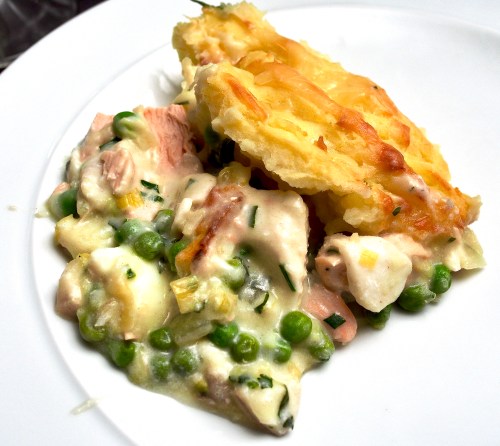
Fish Pie

Fish Pie

This is an excellent fish pie recipe by Marcus Waring. It makes a generous portion so great for feeding a crowd or you can divide it between two dishes and freeze some for later.

Wine Suggestion: A full-bodied Chardonnay is our choice for rich fish pies. Tonight it was Domaine Labet’s “en Billat” an ancient vine, jurassic soiled classic we are fortunate to have a few bottles of from holidays last year. Think of a majestic white Burgundy with altitude, and a concentration that 100 + year old vines can achieve.

Fish Pie – serves 6, generously

  • 1kg fish fillets (a mix of salmon & cod/haddock), skinned
  • 600-800ml whole milk
  • 2 bay leaves
  • 75g butter
  • 1 small onion, diced
  • 1 leek, white part only, sliced
  • 50g plain flour
  • 100ml white wine or white vermouth if you have it
  • 2 tbsp crème fraîche
  • 150g frozen peas, defrosted
  • 300g raw tiger prawns, shelled
  • 2 tbsp chopped flat-leaf parsley
  • 3 hard-boiled eggs, peeled and cut into chunky pieces
  • 2 tbsp capers, rinsed

FOR THE TOPPING:

  • 1.2kg potatoes, cut into chunks
  • 50g butter
  • splash of milk
  • 100g grated Cheddar cheese

Remove any bones from the fish with tweezers, then put into a large pan and pour in enough milk to cover. Add the bay leaves and some salt and pepper. Gently bring to the boil over a medium heat, then simmer for 5 minutes or until just cooked. Remove from the heat.

Melt a third of the butter in a large saucepan. Add the leeks and onion and cook gently until softened. Remove the leeks and onions from the pan and set aside. Melt the rest of the butter in the same pan and when it bubbles stir in the flour and cook for about 30 seconds, then add the wine or vermouth and stir to form a thick paste. Tip the leeks and onions back into the pan.

Strain the milk from the fish fillets into a measuring jug. Gradually add about 600ml of the milk to the leek mixture, stirring until the sauce bubbles and coats the back of a spoon. Stir in the crème fraîche and season again.

Flake the fish into chunky pieces and gently fold through the sauce along with the peas, prawns and parsley.

Spoon the mixture into a large ovenproof dish. Scatter the eggs and capers evenly over the top.

Preheat the oven to 200C/180fan/gas 6.

To make the topping, put the potatoes into a large saucepan, cover with water,  add a generous pinch of salt, and bring to the boil. Simmer for 15-20 minutes or until cooked through. Drain the potatoes and mash with the butter and enough milk to make a spreadable mash. Season.

Spread the potato over the fish and sprinkle with the grated cheese.

Bake for 20-30 minutes or until the top is golden and the sauce is bubbling.

(Original recipe from Marcus At Home by Marcus Wareing, HarperCollinsPublishers, 2016.)

Read Full Post »

Middle Eastern Shepherd's Pie with Spiced Parsnip Crust

Diana Henry’s book, Food from Plenty, is great for recipes that use leftovers. For this one we used a large amount of leftover lamb shoulder that had been roasted for hours on the bone in a spicy marinade. The leftover lamb was tasty as it was but was totally transformed in this recipe – super spicy and delicious! Don’t be tempted to skip the spicy onion topping.

Wine Suggestion: a medium bodied, juicy and youthful red with not too many tannins. Luigi Pira’s Barbera d’Alba was perfect, as was a quirky, earthy Poulsard from Stephane Tissot from the Arbois in eastern France … we had a few people over, so could try a few different wines which was fun.

Middle Eastern shepherd’s pie with spiced parsnip crust – serves 6

FOR THE MEAT:

  • 5 tbsp olive oil
  • 800g leftover cooked lamb, cut into small chunks
  • 2 onions, roughly chopped
  • 2 celery sticks, finely chopped
  • 2 carrots, diced
  • 6 garlic cloves, crushed
  • 2 tbsp ground cumin
  • 2 tsp ground mixed spice
  • 3 tsp ground cinnamon
  • 2 tbsp plain flour
  • 300ml chicken stock or lamb stock
  • grated zest and juice of 1 orange
  • 75g raisins, soaked in boiling water for 15 minutes and drained
  • 6 tbsp tomato purée
  • 75g pine nuts, toasted

FOR THE PARSNIP CRUST:

  • 450g floury potatoes, cut into chunks
  • 950g parsnips, chopped
  • 50g butter
  • 1 tsp ground cinnamon
  • 2 tsp cayenne pepper (this will make a very spicy mash so use less if you like)
  • 50ml whipping cream

FOR THE SPICED ONION TOPPING:

  • 2 onions, very finely sliced
  • 15g butter
  • 1½ tsp olive oil
  • ½ tsp ground cinnamon
  • 1 red chilli, deseeded and finely sliced
  • 3 tsp soft dark brown sugar
  • good squeeze of lemon juice
  • a small bunch of coriander or mint, roughly chopped

Heat the oil in a large casserole and brown the lamb, then scoop the lamb out and set aside.

Add the onions, celery and carrots to the same pan and cook until golden. Add the garlic and spices and continue to cook for another minute. Return the lamb to the pan and add the flour. Stir for a minute, then add the stock, zest, juice, raisins and tomato purée. Bring to the boil, then simmer for 45 minutes. You will need to keep stirring now and then to prevent the mixture from sticking. It should be thick but if it looks dry add a little more stock. Add the pine nuts.

Boil the potatoes and parsnips separately until soft. Drain the potatoes, then cover with a tea towel and  lid and allow to dry out over a low heat. Drain the parsnips and add to the potatoes. Heat the butter for the crust in a large saucepan with the spices. Add the potatoes and parsnips and mash, then add the cream and season to taste.

Preheat the oven to 180C/350F/gas mark 4.

Spoon the lamb into a large pie dish, spread the mash on top and bake in the oven for 25 minutes or until golden and bubbling.

Meanwhile, fry the onions for the topping in the butter and oil until golden. Turn up the heat and keep cooking until starting to crisp. Add the cinnamon, chilli, salt, some salt & pepper, and sugar. Cook until slightly caramelised, then squeeze over the lemon juice and mix in the herbs. Pile the onions on top of the pie to serve.

(Original recipe from Food from Plenty by Diana Henry, Mitchell Beazley, 2011.)

Read Full Post »

Paneer, Tomato and Kale Saag

This is from Meera Sodha’s amazing veggie book, East. We have Meera’s Indian recipe books and we often cook the recipes she writes for the Guardian. This book has an Eastern, but not exclusively Indian, influence and the recipes are mouthwateringly good. We’ve noticed people have mixed reactions towards kale, if you’re on the fence we reckon this is probably the best kale-based dish we’ve ever eaten. We served with naan bread from the local takeaway.

Panner, tomato & kale saag – serves 4

  • 500g kale, discard the stems and roughly chop the rest
  • rapeseed oil
  • 450g paneer, cut into 2cm dice (if you’re buying 200g packs just buy 2)
  • 2 onions, finely chopped
  • 2 cm ginger, peeled and grated
  • 4 cloves of garlic, crushed
  • 2 green finger chillies, finely chopped
  • 1 x 400g tin chopped tomatoes
  • 1½ tsp ground coriander
  • 1½ tsp ground cumin
  • ½ tsp ground turmeric
  • 1½ tsp salt
  • 1 tsp brown rice syrup (we used runny honey)
  • 1 x 400ml tin coconut milk

Blitz the kale in a food processor and chop it very finely. Unless your food processor is huge you will need to do a few batches.

Heat 2 tbsp of the oil in a large, nonstick frying pan, that you have a lid for. Fry the cubes of paneer for a couple of minutes on each side or until they have taken on a nice golden colour. Remove from the pan and set aside.

Heat another 2 tbsp of oil in the same pan and cook the onions over a medium heat for about 10 minutes or until soft. Add the ginger, garlic and chillies and continue to cook for another 5 minutes.

Stir in the tin of tomatoes and cook for 10 minutes or until reduced to a paste. Add the coriander, cumin, turmeric, salt and honey (or brown rice syrup) and mix in well.

Stir in a handful of kale at a time. It will seem like you have too much but it will wilt in perfectly. Stir in the coconut milk, then bring to a simmer, cover with a lid, and simmer gently for 15 minutes.

Add the paneer to the pan and cook for another 10 minutes with the lid on. Keep an eye that it doesn’t dry out and add a splash of water if necessary.

Taste to check that it has all come together and the kale is tender. Remove from the heat and serve with warm naan bread.

(Original recipe from East by Meera Sodha, Penguin Books, 2019.)

Read Full Post »

« Newer Posts - Older Posts »