Stuffed pasta shells with spinach, ricotta chilli and lemon. Tomato sauce underneath and lots of Parmesan on top.
Wine Suggestion: An old favourite from the Adriatic coast of Italy, Sartarelli’s Tralivio Verdicchio Superiore, which comes from their low-yielding, oldest vineyard. A bit of body and texture plus a twist of almonds and citrus; playing along very nicely with the lemon, ricotta and earthy spinach, and enough acidity to complement the tomato.
Stuffed pasta shells with chilli, spinch and lemon – serves 2
175g giant pasta shells
1 tbsp olive oil
2 cloves of garlic, crushed
a pinch of dried chilli flakes
200g spinach, chopped
125g ricotta
½ lemon, zested
400g jar of tomato pasta sauce or you can use some home-made sauce if you have it
Parmesan
Heat the oven to190C/fan 170C/gas 5.
Cook the shells in lots of salty water until al dente, then drain.
Heat the oil in a pan and gently cook the garlic and chilli for 2-3 minutes. Stir in the spinach and cook until wilted, then stir in the ricotta and lemon zest. Season well.
Spoon the tomato sauce into the base of a large baking dish. Use a teaspoon to stuff the pasta shells with the spinach mixture, then place in the dish in a single layer. If you have any leftover mixutre you can spoon it over the top.
Sprinkle with the Parmesan and bake for 20-25 minutes or until bubbling and golden.
(Original recipe by Janine Ratcliffe in Olive Magazine, March 2019.)
Try these for a super simple dinner or lunch with a green salad.
Egg & bacon tarts – serves 4
1 sheet puff pastry
3 tbsp crème fraîche
4 tbsp grated gruyère
8 slices thin streaky smoked bacon
4 eggs, plus 1 beaten for glazing
Heat the oven to 200C/fan 180C/gas 6.
Roll the pastry out onto a board and cut into 4 rectangles. Place them onto a baking sheet and score a border 1cm in from the edge on each one.
Mix the crème fraîche and gruyère together and season, then divide this mixture between the tarts and spread out to the borders.
Stretch the bacon rashers to stretch and flatten them out, then cut each piece in half. Cover each tart with 4 pieces of bacon.
Glaze the edges of the pastry with the beaten egg and bake for 10 minutes.
Break one egg at a time into a fine sieve to get rid of the more watery bit of the white, then gently slide onto a tart. Bake for another 8 to 10 minutes or until the egg white is set. Season the egg before serving.
(Original recipe by Janinie Ratcliffe in Olive Magazine, March 2016.)
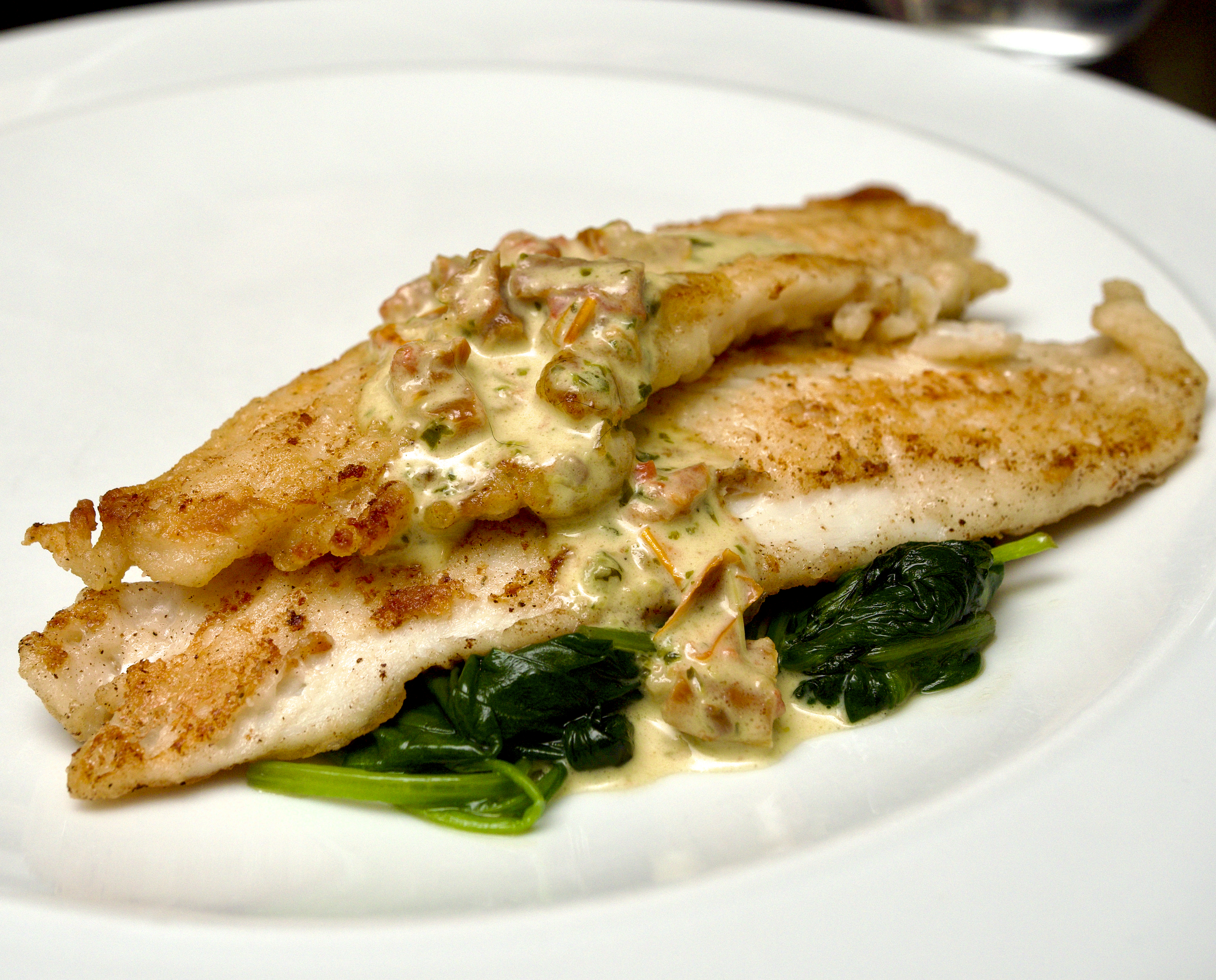
This fish dish feels a bit special but is very easy to make. Serve on buttered spinach and with steamed potatoes.
Wine Suggestion: from our recent trip to the Loire we opened the superlative Domaine de la Taille aux Loups Clos de la Bretonnière. Made by Jacky and J-P Blot from a monopole in Vouvray, it has to be “Vin de France” as their winery is not in the appellation. No matter, this is as fine as dry Vouvray gets. We really enjoyed the taut minerality that complimented the fish, and how it kept on giving more layers as it went along revealing hints of spring and summer fruits. Tension and poise, but with a real generosity too.
Lemon sole with basil & tomato sauce – serves 4
60g plain flour
2 small lemon sole, each cut into 4 fillets and skinned (your fish shop will do this for you)
30g butter
FOR THE SAUCE:
300ml double cream
juice of ½ lemon
3 tbsp fresh pesto
100g sun-blush tomatoes, finely chopped
2 tsp chopped basil, to serve
Sprinkle the flour over a large plate and season well with salt and pepper.
Dip the fish fillets into the seasoned flour and shake off any excess.
Melt the butter in a large frying pan. Wait until the butter foams, then add the fillets and cook for 2 minute on each side, or until opaque and easy to flake. Transfer to a warm plate and keep warm while you make the sauce.
Heat the cream, lemon juice, and pesto in a pan over a medium heat until hot, then add the sun-blush tomatoes and season with salt and black pepper. Serve the fish fillets on a bed of buttered spinach, dress with the sauce and sprinkle over some basil leaves.
(Original recipe from Mary Berry’s Cookery Course, DK, 2013.)
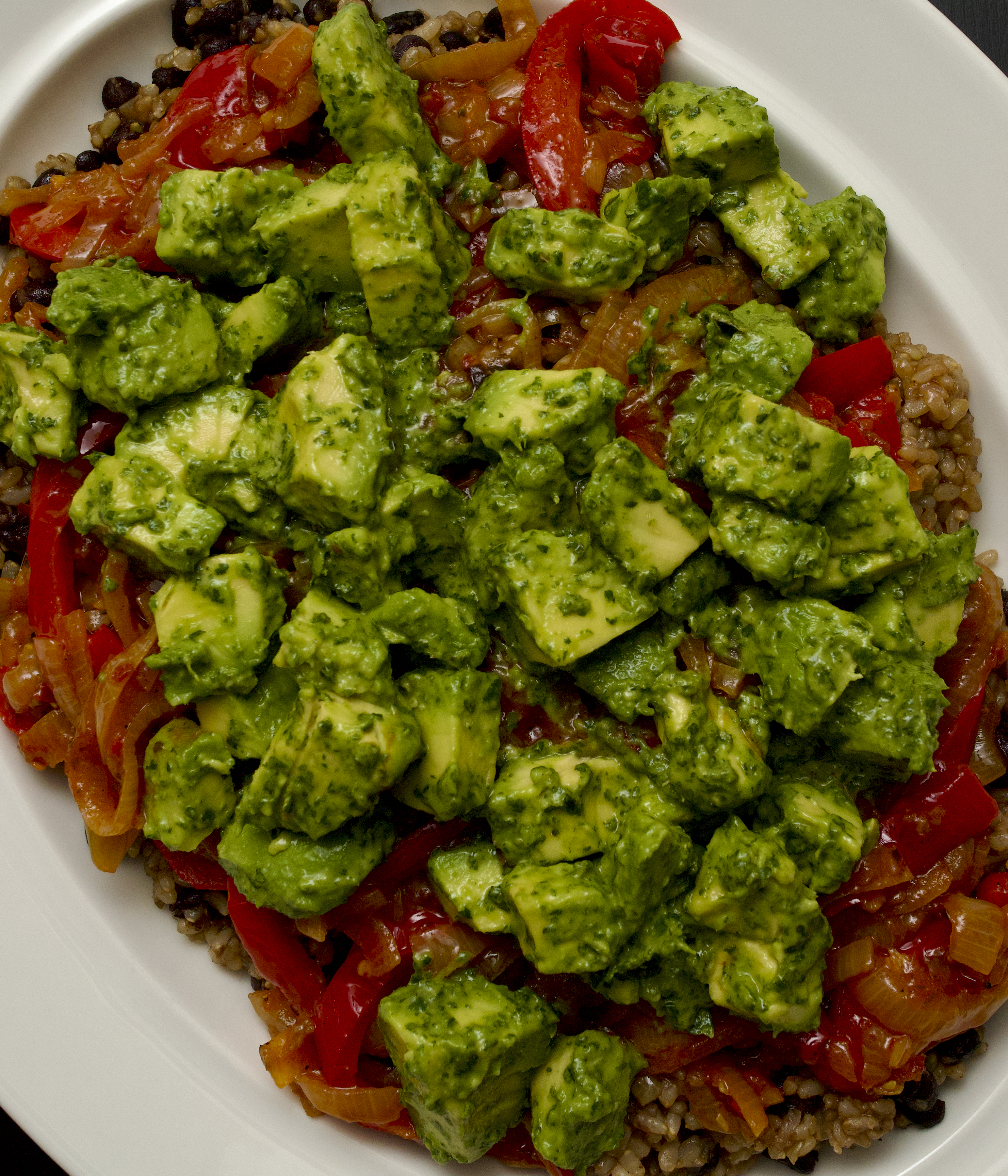
This is a big dish and enough to serve on it’s own. It also goes well with this spicy chicken dish as helpfully suggested by Noor and Yotam, the authors of the Ottolenghi Test Kitchen Extra Good Things, where the recipe comes from.
Black beans and rice with jammy peppers – serves 6
1 onion, finely chopped
6 cloves of garlic, crushed
2 tsp cumin seeds, finely crushed with a pestle and mortar
2 tsp coriander seeds, finely crushed with a pestle and mortar
1 tsp paprika
1 tsp dried oregano
300g short-grain brown rice, washed and soaked for 30 minutes, then drained
2 x 400g tins of black beans, drained and rinsed
20g fresh coriander, roughly chopped
2 tbsp lime juice
1 lime, cut into wedges, to serve
2 medium avocados, cut into cubes
FOR THE PEPPERS:
75ml olive oil
2 onions, thinly sliced
2 red peppers, trimmed and cut into 1cm thick strips
4 cloves of garlic, crushed
1½ tbsp tomato purée
2 tsp light soft brown sugar
1 tsp dried oregano
1 tsp chipotle chilli flakes
2 tbsp apple cider vinegar
Make the peppers first by putting the oil into a medium sauté pan over a medium-high heat. Add the onions and cook for 4 minutes, to soften. Add the peppers and ½ tsp of salt and cook for another 6 minutes, until softened and starting to colour. Turn the heat down to medium-low and stir in the garlic, tomato purée, sugar, oregano, chipotle, vinegar, 2 tbsp of water and plenty of black pepper. Cover with a lid and cook for half an hour, stirring now and then, until soft. Set aside.
Meanwhile, make the rice. Put 4 tbsp of the oil in a large saucepan and place over a medium-high heat. Add the onion and cook for 5 minutes, until softened and starting to colour. Add the garlic, spices and oregano and cook for a minute, until fragrant. Stir through the rice to coat, then add the black beans, 520ml of water, 1¼ tsp of salt and lots of black pepper. Bring to the boil, then reduce the heat to low and leave to cook, covered for 50 minutes. Remove the lid and set aside for 10 minutes to cool slightly.
Meanwhile, blitz the coriander, lime juice and 2 tbsp of oil in a mini food processor until smooth. Transfer to a bowl and stir in the avocado and ¼ tsp of salt.
Transfer the rice and beans to a large platter and spoon over the peppers and avocado. Serve with the lime wedges.
(Original recipe from Ottolenghi Test Kitchen Extra Good Things by Noor Murad & Yotam Ottolenghi, Ebury Press, 2022.)
There’s a few different ingredients in this Ottolenghi dish but they are worth seeking out. We’ve served this to friends a few times and it’s very popular. Serve with steamed rice and corn tortillas.
Wine Suggestion: A juicy red with gentle, warm, velvety spices is what we’d recommend, like a Grenache blend from the Southern Rhône. Romain Roche’s Cairanne is a current favourite; so smooth and effortless, but with great depth and expression. All velvety southern French sunshine and joie de vie.
Spicy chicken bake with blue cheese dressing – serves 4
15 dried cascabel chillies, stems and seeds removed
15g dried chipotle chillies, stems and seeds removed
3 limes, 2 tbsp juice and 1 cut into wedges to serve
150g celery, peeled and very thinly cliced
1 red chilli, roughly chopped with seeds left in
6 cloves of garlic, peeled and roughly chopped
1 x 400g tin plum tomatoes
3 tbsp olive oil
2 onions, halved and thinly sliced
450g cooked rotisserie chicken, discard the skin and roughly tear into large pieces
20g fresh coriander, roughly chopped
5 scallions, trimmed and thinly sliced
150g buffalo mozzarella, roughly torn
FOR THE BLUE CHEESE DRESSING:
150g soured cream
100g cream cheese
100g Roquefort cheese or Gorgonzola, finely crumbled
1 tbsp whole milk
Put the chillies into a small bowl and pour boiling water over to cover. Weigh down with a saucer and set aside for 10 minutes.
Put the lime juice, celery and a pinch of salt into a small bowl, mix well and set aside to pickle.
Drain the chillies and roughly chop. Put into a food processor with the fresh chilli, garlic and tomatoes, then blitz until smooth.
Heat the oven to 240C, or as high as your oven goes.
Put the oil into a large, shallow cast-iron pan and place over a medim-high heat. Add the onions and cook for 12 minutes, stirring now and then, until softened and deeply browned. Add the whizzed chilli mixture, 100ml of water and 1½ tsp of salt. Bring to a simmer, then reduce the heat and cook for 10 minutes, stirring occasionally, until thickened. Add the cooked chicken and another 100ml of water and simmer for another 10 minutes. Remove from the heat and stir in the coriander and two-thirds of the scallions.
In a medium bowl, combine all the ingredients for the blue cheese dressing along with a pinch of salt and mix to combine. Reserve half the mixture and dollop the rest over the chicken mixture. Top with the torn mozzarella and bake for 15 minutes or until browned and bubbling. Leave to rest for 5 minutes.
Stir the rest of the scallions into the pickled celery and spoon half over the chicken bake. Serve the rest of the celery, the blue cheese dressing and lime wedges on the side.
(Original recipe from Ottolentghi Test Kitchen Extra Good Things by Noor Murad & Yotam Ottolenghi, Ebury Press, 2022.)
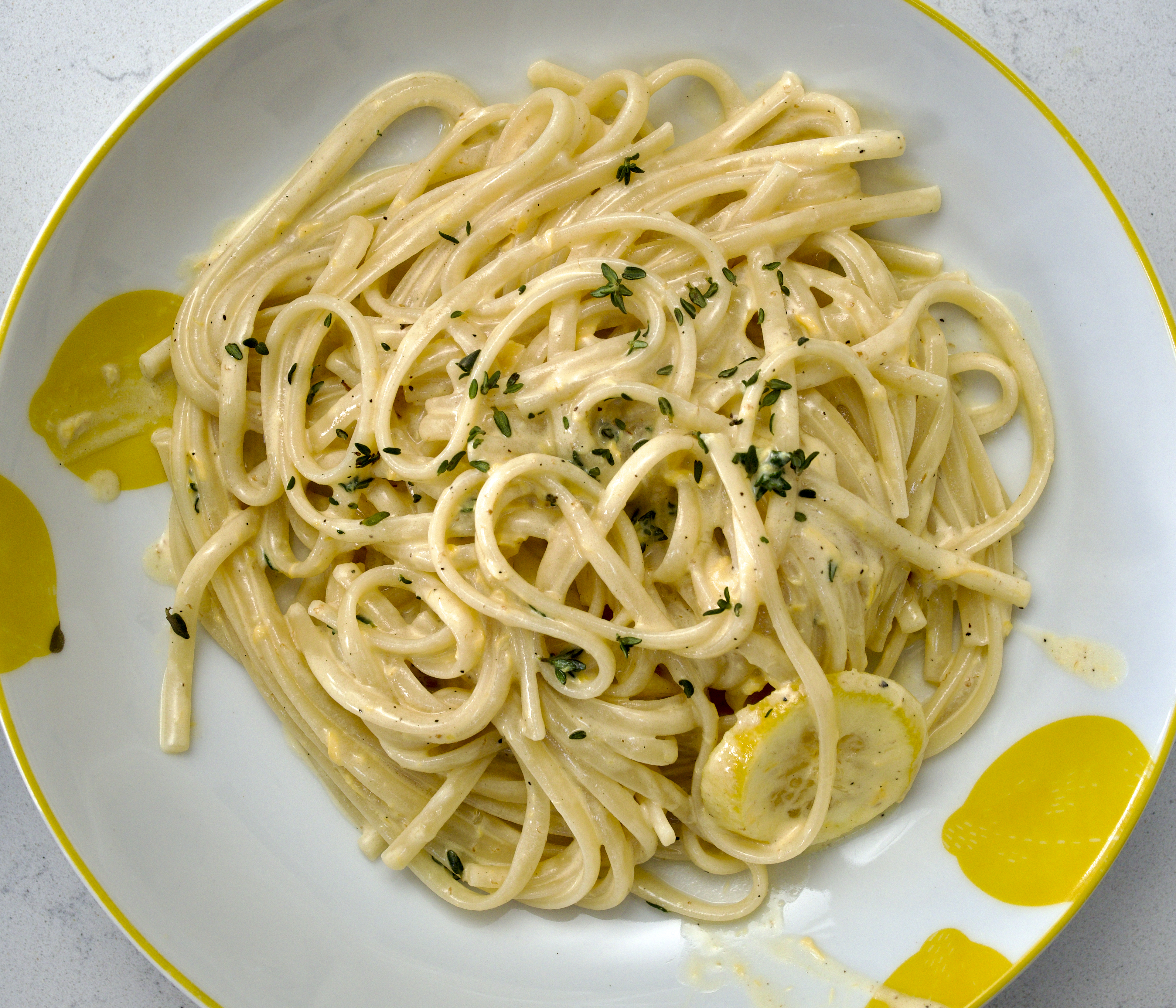
We love a lemon spaghetti and it’s our go to dish when there’s nothing for lunch. This one has cream because we had some lurking in the fridge from another dish.
Spaghetti with creamy lemon sauce – serves 4
2 lemons
4 tbsp extra virgin olive oil
220ml single cream
1 egg yolk
350g spaghetti
a small bunch of thyme
Bring a large pot of water to the boil.
Meanwhile, finely zest the lemons and put into a deep frying pan, then add the olive oil and gently fry over a medium heat for a few minutes.
Pour the cream and egg yolk into the pan and mix well, then reduce the heat and cook gently for 5 to 10 minutes, stirring occasionally.
Add plenty of salt to the pasta water, then add the spaghetti and cook according to the pack timings.
Finely slice a third of the lemon.
Drain the pasta in a colandar but keep a little of the cooking water. Squeeze the juice of the remaining lemons into the sauce and season to taste with salt and black pepper, then tip in the pasta. Add a splash of the pasta cooking water, then add the lemon slices and toss to coat. Sprinkle generously with thyme leaves and serve.
(Original recipe from A Table for Friends by Skye McAlpine, Bloomsbury, 2020.)
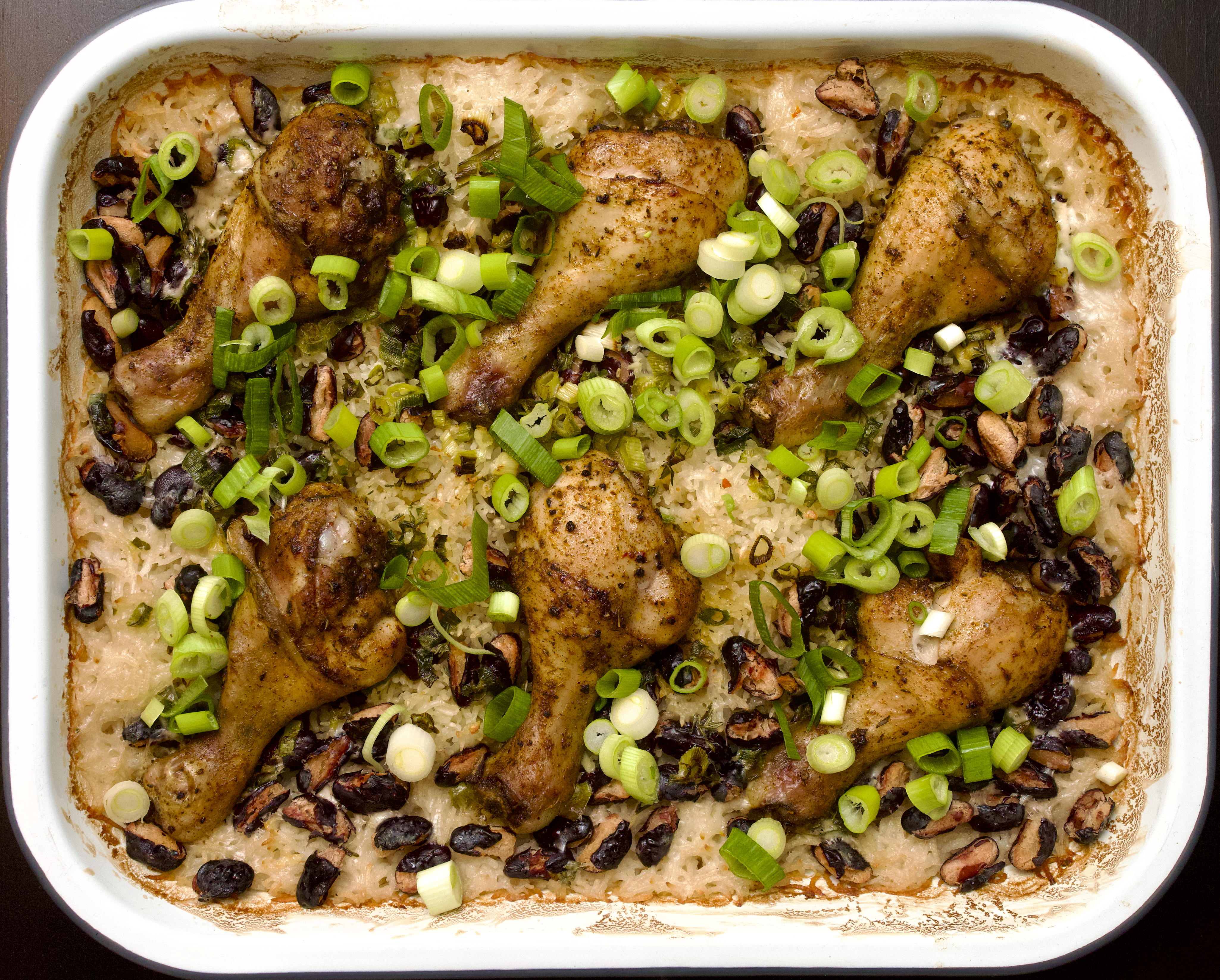
This is all cooked in the oven in one tray and it’s super tasty.
Wine Suggestion: This works really well with Viognier, especially if it has a bit more depth than some entry level ones. We would have loved to open a Condrieu, but in the absence of that it was Jean-Michel Gerin’s Le Champine Viognier from the slopes near the more famed appellation. So well balanced with a purity of stone fruit flavours and a hint of nuttiness that lends itself to this food pairing.
Roast chicken with coconut rice and beans – serves 4
8 chicken drumsticks
2 tbsp rapeseed oil
1 tbsp jerk seasoning
25g butter
275g basmati rice, rinsed
1 x 400ml tin of coconut milk
350ml hot chicken stock
a bunch of scallions, thinly sliced
1 x 400g tin of kidney beans, drained and rinsed
2 cloves of garlic, finely chopped
1 tsp fresh thyme leaves
Preheat the oven to 200C/gas mark 6.
Rub the chicken drumsticks with the oil and jerk seasoning.
Generously grease a large roasting tin with the butter.
Add the rice, then pour in the cococnut milk and chicken stock.
Scatter over half the scallions, then the kidney beans, garlic and thyme and stir gently.
Arrange the drumsticks on top, then cover with foil and bake for 30 minutes.
Remove the foil and roast for another 15 minutes or until the drumsticks are golden brown and cooked through.
Garnish with the rest of the scallions and serve.
(Original recipe from More Midweek Meals by Neven Maguire, Gill Books, 2022.)
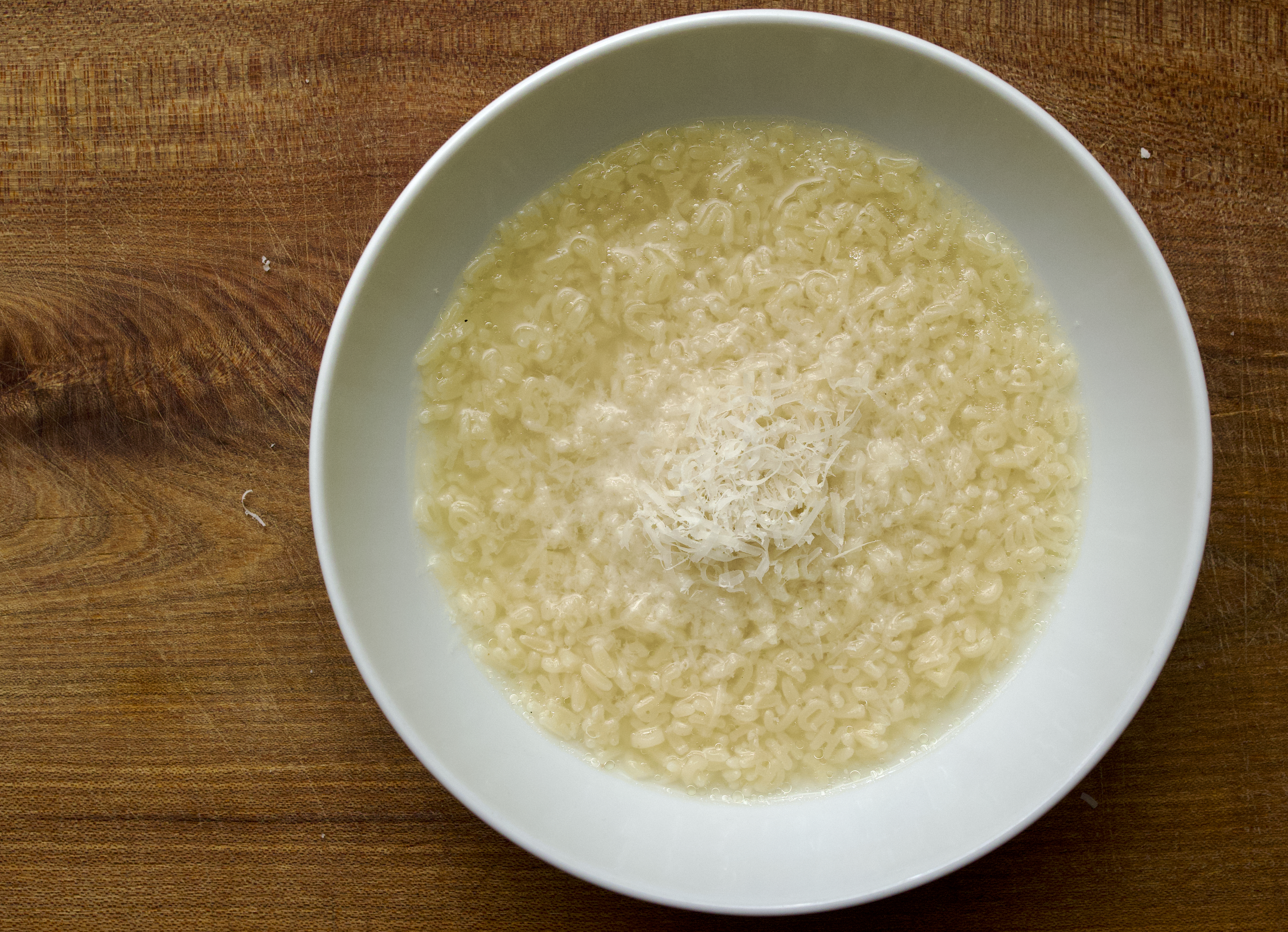
Comfort food at its best. Don’t be tempted to strain the chicken broth of fat, it adds to the flavour and don’t skimp on the salt. You can use the poached chicken meat for sandwiches, or something else.
Alpabetto in Brodo – serves 4 (the recipe makes double the quanity of broth needed and it will keep in the freezer)
800kg chicken thighs (skin on and bone-in)
1 onion, peeled and halved
1 carrot, peeled and halved
1 stick of celery, halved
1 bay leaf
a few peppercorns
200g alfabeto
grated Parmesan, to serve
Put the chicken into a large heavy pan, cover with 2.5 litres of cold water and add a large pinch of salt. Bring to the boil, then reduce the heat to low and use a slotted spoon to spoon off any scum.
Add the vegetables, bring back to the boil, then turn the heat to low, cover and simmer gently for 1 hour and 15 minutes.
Strain through a fine sieve, pressing down on the veg and chicken to extract all the flavor. You won’t need the chicken after this but you should strip the meat from the bones and keep it for something else.
Bring 1 litre of the broth to the boil, add the alfabeto and cook until al dente. Ladle into bowl and add grated Parmesan.
(Original recipe from An A-Z of Pasta by Rachel Roddy, Penguin: Fig Tree, 2021.)
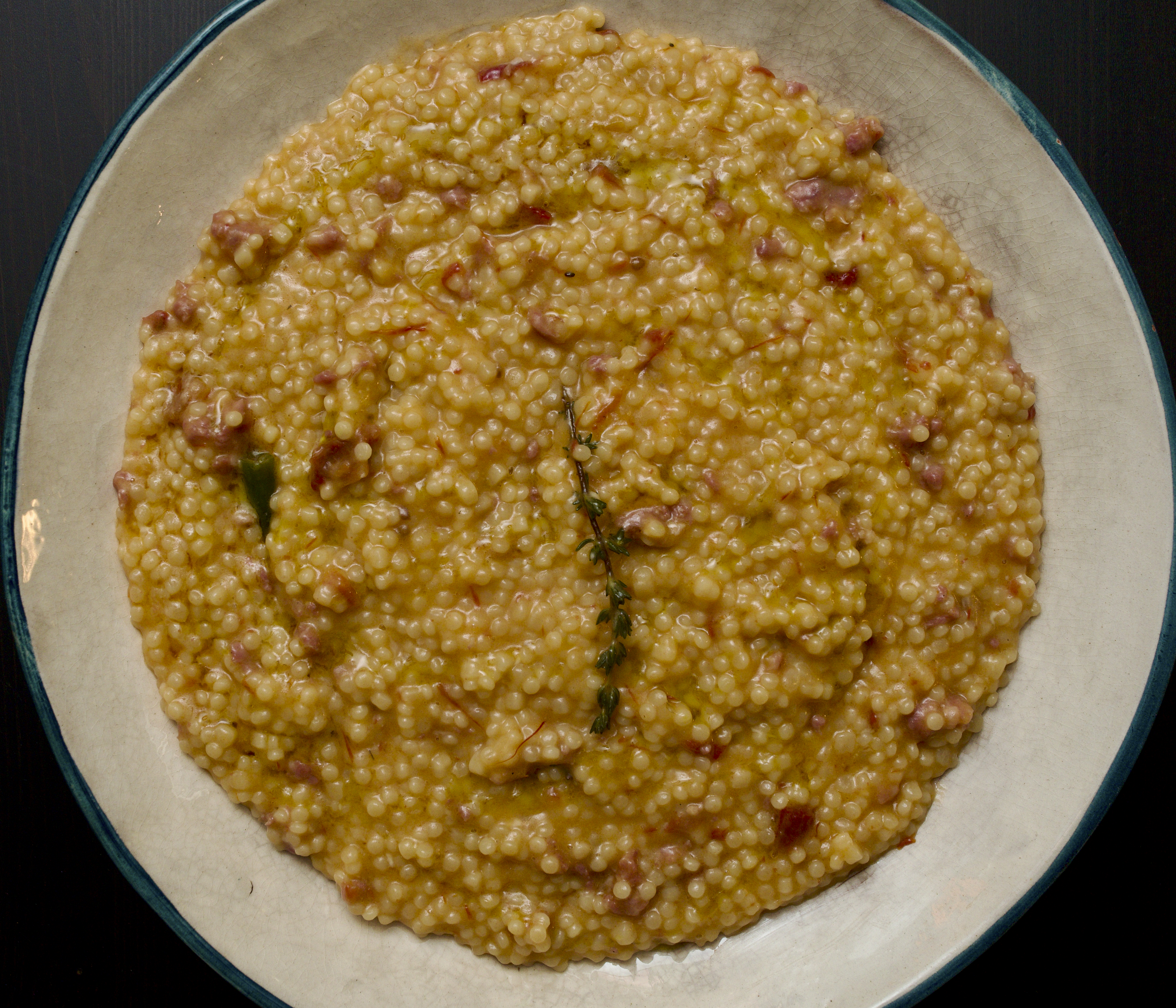
So fregula is fregola, pearl couscous, giant couscous, mograbia(h) as well as some other names, but it is essentially tiny pasta balls. We’ve cooked with it before but this time Jules bought it by accident and we had to find a recipe to use it up. Somewhat like a risotto, but the texture is a touch more unctuous. Quite a rich and flavoursome dish.
Wine Suggestion: This dish requires a powerful red with a fresh core of acidity. Taking inspiration from a Risotto Milanese pairing we opened a Pira Luigi Barolo Serralunga from 2018. Youthful and expressive aromatics of leather, violets & wild berries plus hints of tar. This flowed into an energetic and refined palate with elegant, but persistent tannins; almost lifted and light, but with a deep core of rich fruits.
Fregula with sausage and saffron – serves 4
1 clove of garlic
6 tbsp olive oil
120g sausage meat, crumbled – try to find meaty Italian sausages if you can
4 sun-dried tomatoes, chopped
2 sprigs of thyme
a small piece of chilli
1 litre stock – meat or veg – we used turkey stock
350g fregula (see note above)
a few strands of saffron
60g pecorino, grated
Put the stock into a small saucepan and bring to a simmer.
Smash the garlic clove but leave it whole, then put into a deep frying pan with 3 tbsp of the olive oil. Fry gentluy over a medium-low heat.
Add the sausage, sun-dried tomatoes, thyme and chilli, and fry, stirring, for a couple of minutes.
Add the fregula to the sausage and stir for a minute. Then start adding the stock, a ladelful at a time, the same as you would if cooking risotto. Keep both pans simmering as you keep going like this. Start tasting the fregula after 12 minutes and cook until al dente. You are looking for a loose rather than stiff consistency.
Add the saffron, pecorino and 3 tbsp of olive oil and serve.
(Original recipe from An A-Z of Pasta by Rachel Roddy, Penguin:Fig Tree, 2021.)
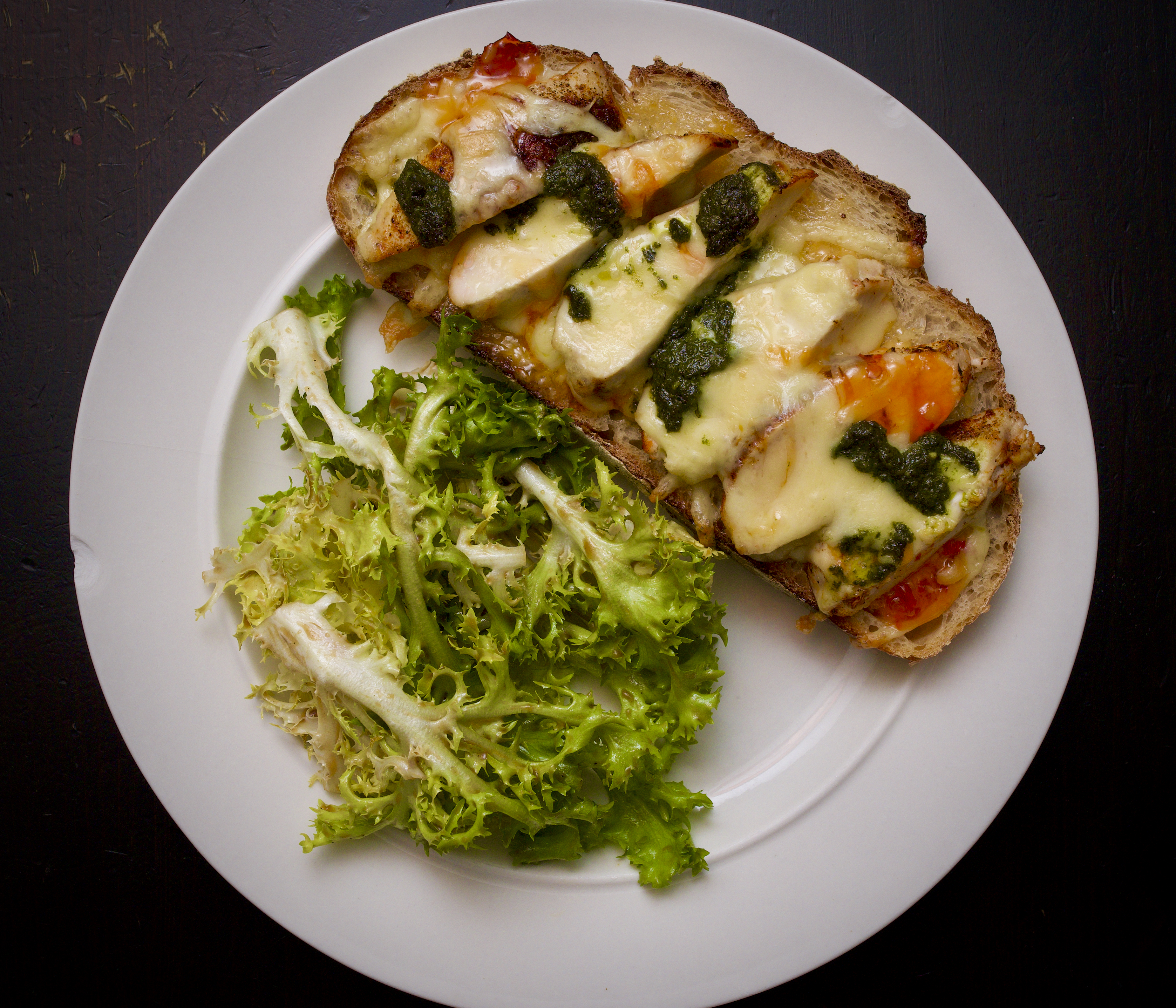
Perfect Saturday lunch – if the sun would shine it would be nice to eat outside.
Cajun chicken melts – serves 4
4 chicken breasts
1 tbsp rapeseed oil
2 heaped tsp Cajun spice
4 tbsp sweet chilli sauce
3 tbsp mayonnaise
4 slices sourdough
150g mature Cheddar, grated
200g green salad leaves
FOR THE SALAD DRESSING:
3 tbsp extra virgin olive oil
1 tbsp balsamic vinegar
1 tsp honey
1 tsp Dijon mustard
Heat the oven to 180C/350F/Gas 4.
Put the chicken into a baking dish and rub with the oil, then sprinkle over the Cajun spice and season with salt and pepper. Pour about 4 tbsp of water into the dish around the chicken, then roast for 18-20 minutes or until just cooked. Leave to cool, then slice.
Mix half the chilli sauce in a small bowl with the mayonnaise and season.
Put the sourdough onto a baking sheet lined with baking paper. Spread the chilli mayo over the bread and arrange the chicken slices on top. Cover with the grated cheese and drizzle the rest of the chilli sauce on top, then finish with the pesto. Bake for 10-12 minutes, until the cheese is bubbling and golden.
Meanwhile make the salad dressing by putting the oil, vinegar, honey and mustard into a container with 2 tbsp of water and blending until smooth, then season. Putt the salad leaves into a bowl and use enough of the dressing to lightly coat the leaves.
Arrange the Cajun chicken melts on plates with the dressed salad on the side.
(Original recipe from More Midweek Meals by Neven Maguire, Gill Books, 2022.)
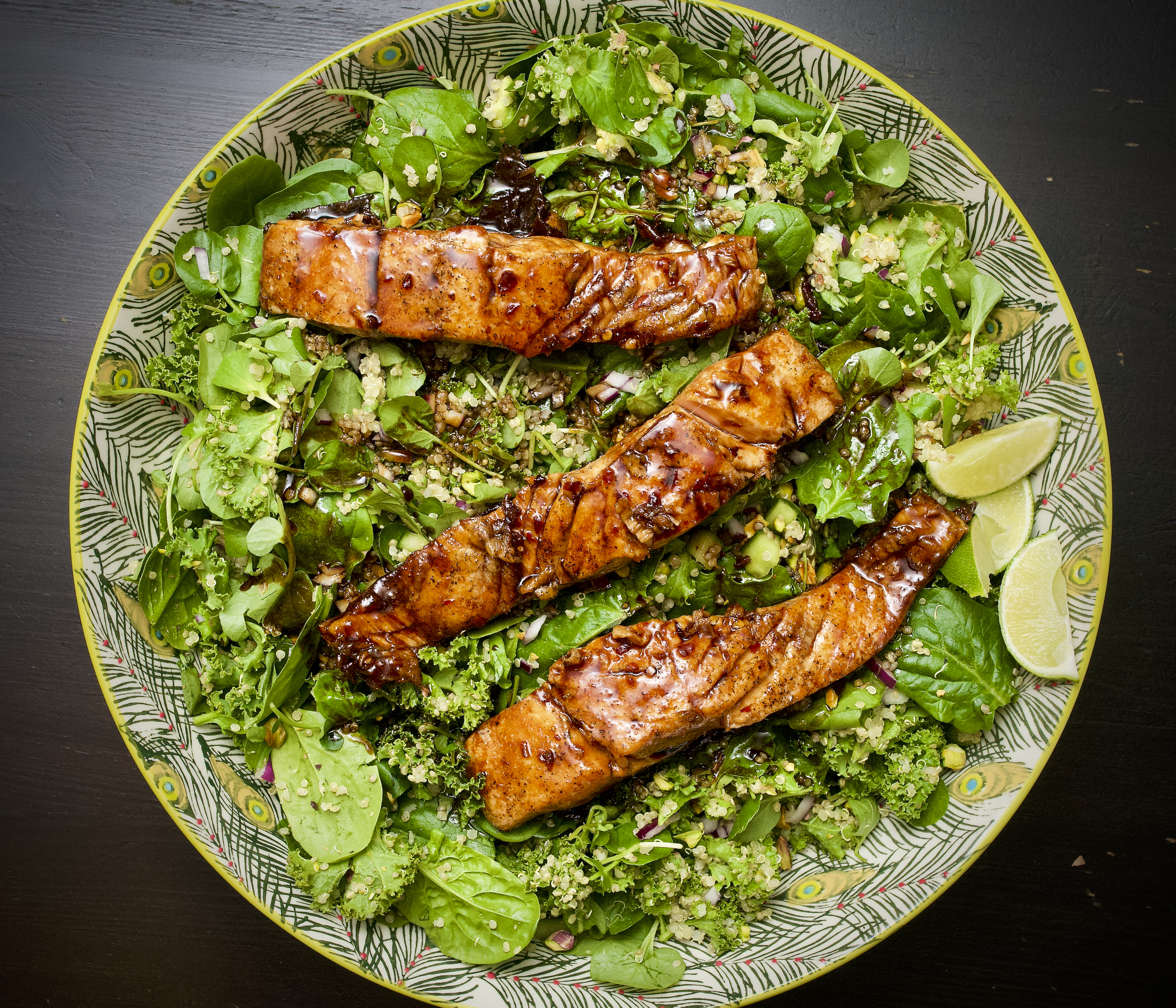
And so we’ve realised that we do like quinoa after all. This green salad is delicious and the quantity given below is half that suggested by Neven Maguire. Feel free to double if you think you can manage it.
Wine Suggestion: We think this suits a young, fruit forward Cabernet Franc like Olga Raffault Cuvée Domaine. Unoaked and joyful dark cherry fruits with a crispness and earthiness that really complements the kale, spinach and watercress.
Honey and Soy Glazed Salmon with Green Quinoa – serves 4
100ml soy sauce
3 tbsp honey
a good pinch of chilli flakes
1 tbsp rapeseed oil
1 tsp sesame oil
4 salmon fillets, skin on
FOR THE QUINOA:
75g quinoa
150ml vegetable stock
50g curly kale, remove the stalks
50g baby spinach
50g pistachios, toasted and chopped
40g watercress
½ an avocado, diced
¼ cucumber, deseeded and finely diced
1 tbsp chopped coriander
lime wedges, to garnish
Rince the quinoa then put into a small saucepan with the vegetable stock and bring to the boil. Cover with a lid and simmer gently for 10-12 minutes until tender and the stock has been absorbed. Tip into a large bowl and leave to cool.
Put the soy sauce, honey and chilli flakes into a small bowl and whisk to combine.
Prep the rest of the ingredients for the quinoa and fold them gently in to the cooled quinoa. Taste and season with salt and black pepper.
Season the salmon fillets, then heat a non-stick frying pan over a medium heat. Add the rapeseed and sesame oil, then fry the salmon fillets, skin side up, for 2-3 minutes, until lightly golden. Turn them over gently and cook for another 4 minutes. Turn the heat to hight and pour in the honey and soy mixture. Allow to simmer for a couple of minutes, spooning the sauce over the salmon, it should thicken to a syrupy sauce.
Put the quinoa onto a large serving platter and sit the salmon fillets on top. Drizzle over the syrupy sauce and garnish with the lime wedges.
(Original recipe from More Midweek Meals by Neven Maguire, Gill Books, 2022.)
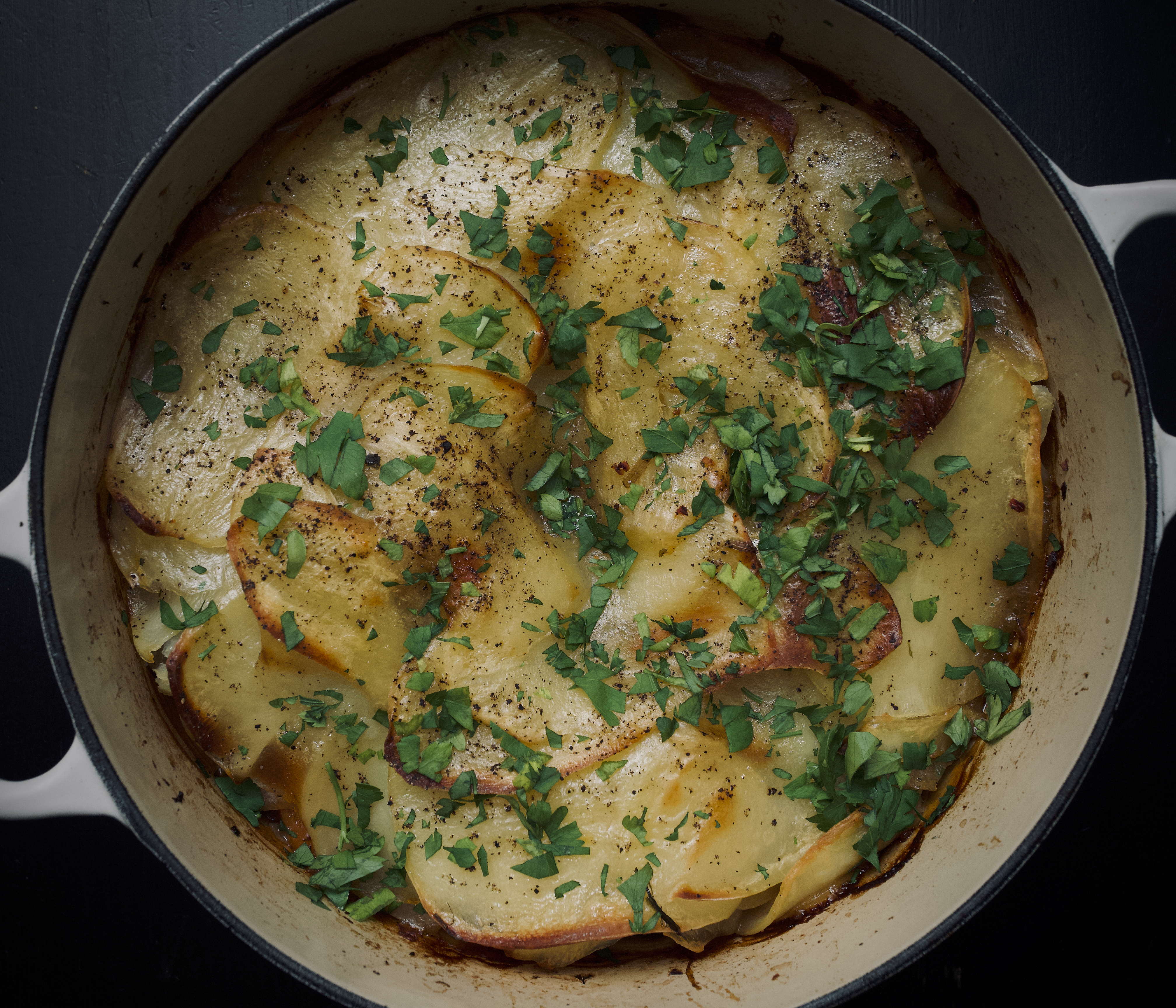
We’ve never tried Dublin coddle, mainly because it tends to be served with anaemic sausages. In this recipe by Neven Maguire you brown them; a far more sensible approach altogether.
Wine Suggestion: This dish works perfectly with a Grenache blend. For us this time, a current favourite as they’re drinking so well, Romain Roche’s Côtes du Rhône. So well balanced and smooth, but with a warmth of sunshine and gentle, velvety spices.
Dublin Coddle – serves 4to 6
1 tbsp rapeseed oil
top-quality pork sausages – 2 per person
2 onions, sliced
150g dry-cured bacon lardons
1 tbsp plain flour
2 tsp fresh thyme leaves
4 carrots, sliced
750g potatoes, peeled and thinly sliced (use a mandoline if you’ve got one)
2 tsp Worcestershire sauce
400ml chicken stock
15g butter
1 tbsp chopped fresh flat-leaf parsley
Preheat the oven to 180C/350F/Gas 4.
Heat half the oil in a large casserole dish and brown the sausages on all sides. Transfer to a board and cut each sausage into three chunky pieces, then set aside.
Add the rest of the oil to the pan and sauté the onions and bacon for 6-8 minutes, until lightly golden. Stir in the flour and thyme and cook, stirring, for another minute. Add the sausages, carrots and half of the potatoes. Season generously, then shake to get everything even in the dish.
Turn off the heat and arrange the rest of the potatoes on top. Stir the Worcestershire sauce into the stock, then pour over the potatoes. Dot with the butter and season.
Cover the casserole with a lid and bake for 1 hour, then remove the lid and cook for another 30 minutes or until the topping is tender and golden brown. Scatter over the parsley to serve.
(Original recipe from More Midweek Meals by Neven Maguire, Gill Books, 2022.)
Who can resist a stuffed pasta shell? In this one the joy is the balance between fresh ricotta, iron-rich kale, and a rich tomato sauce.
Wine Suggestion: We’d suggest the open, accessability of a youthful Barbaresco from Piedmont, as opposed the depth and moodiness of a Barolo. We have at hand Pico Maccario’s rendition that has a sense of fun which is sometimes lost by winemakers trying to make the next best thing … and we applaud them; wine is to be drunk and enjoyed too.
Conchiglioni stuffed with kale, spinach and ricotta – serves 4
Blanch the kale in lots of salty boiling water, then remove from the pan with a slotted spoon and straight into a bowl of iced water. Repeat with the spinach but cook for just 30 seconds.
Squeeze all the water out of the spinach and kale and put into a food processor. Add the chilli and parsley, then whizz for a few seconds. Scrape out into a bowl and add the ricotta, 30g of the Parmesan, the numeg, and lemon zest. Stir well to combine, then transfer to a piping bag.
Preheat the oven to 220C/200 Fan/Gas 7.
Bring a large pan of salty water to the boil and cook the pasta for 10 minutes – it should be a little more than al dente. Drain and leave until cool enough to handle.
Pour the tomato sauce into a medium-sized baking dish.
Pipe the kale mixture into the pasta shells and settle them snugly into the tomato sauce, pushing them down a little. Tear the mozzarella over the top and sprinkle with the rest of the Parmesan.
Bake in the hot oven for 20 minutes, then serve with a green salad.
(Original recipe from Slow by Gizzi Erskine, HQ, 2018.)
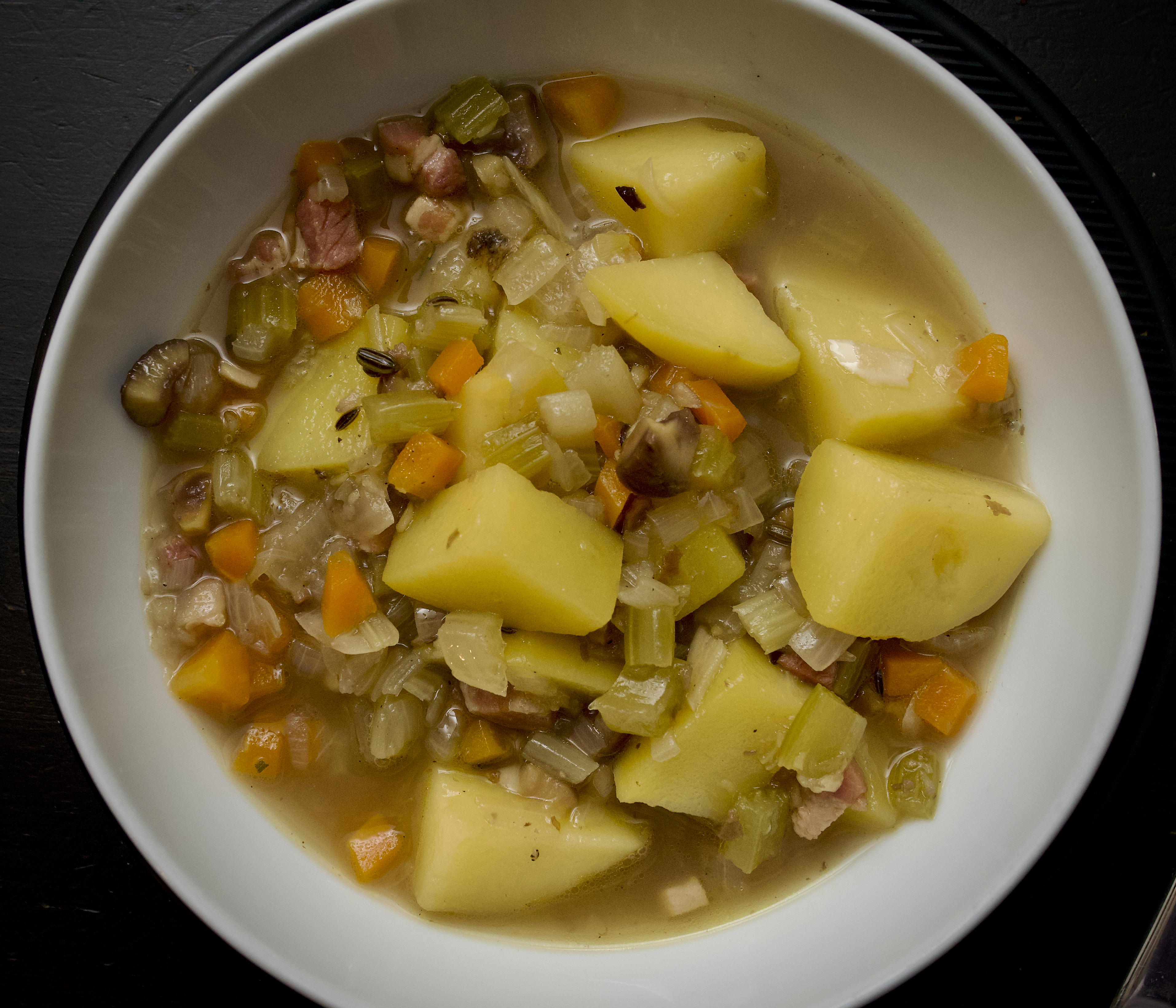
We have a reputation for using things up, and hence were donated a friends’ leftover chestnuts from Christmas: they thought we would probably use them. No probably about it … here they are in the loveliest Provençal soup recipe by Alex Jackson.
Wine Suggestion: And if you feel inspired then try a La Clef du Recit Menetou-Salon to accompany this dish. A Sauvignon Blanc from the Loire, the soils and aspect give this wine an extra super depth and richness, while maintaining the purity and clarity of expression to make it an excellent match.
2 fat cloves of garlic, peeled, green middle removed and finely sliced lengthways
1 tsp fennel seeds
½ tsp picked rosemary leaves (no more)
a few dried ceps, soaked in boiling water and roughly chopped (reserve the soaking water)
100g cooked chestnuts, broken in half
500g waxy potatoes, peeled and cut into 1.5 cm chunks
1 litre homemade chicken stock or water
best extra virgin olive oil, to serve
grated Parmesan, to serve
Heat the olive oil in a large heavy saucepan, then add the pancetta and cook over a gentle heat until well browned but not crispy. Add the onion, celery, carrot, garlic and fennel seeds. Add a good pinch of salt and fry slowly for at least 30 minutes, stirring now and then, until soft and sweet.
Finely chop the rosemary, then add to the pan and allow to cook for another couple of minutes. Add the chopped porcini and cook for a few minutes before adding the chestnuts and potatoes. Pour in the liquid from the mushrooms, then add stock until the vegetables are just covered by about an inch of liquid (you can add more as it cooks if you need). Bring to the boil, then simmer for about 30 minutes or until the potatoes are soft. Mash the chestnuts against the edge of the pan to mush them up a bit. The soup should have some liquid but otherwise be quite thick.
Season with salt and pepper to taste, then serve in warm bowls with Parmesan and olive oil drizzled over the top.
(Original recipe from Sardine by Alex Jackson, Pavilion, 2019.)
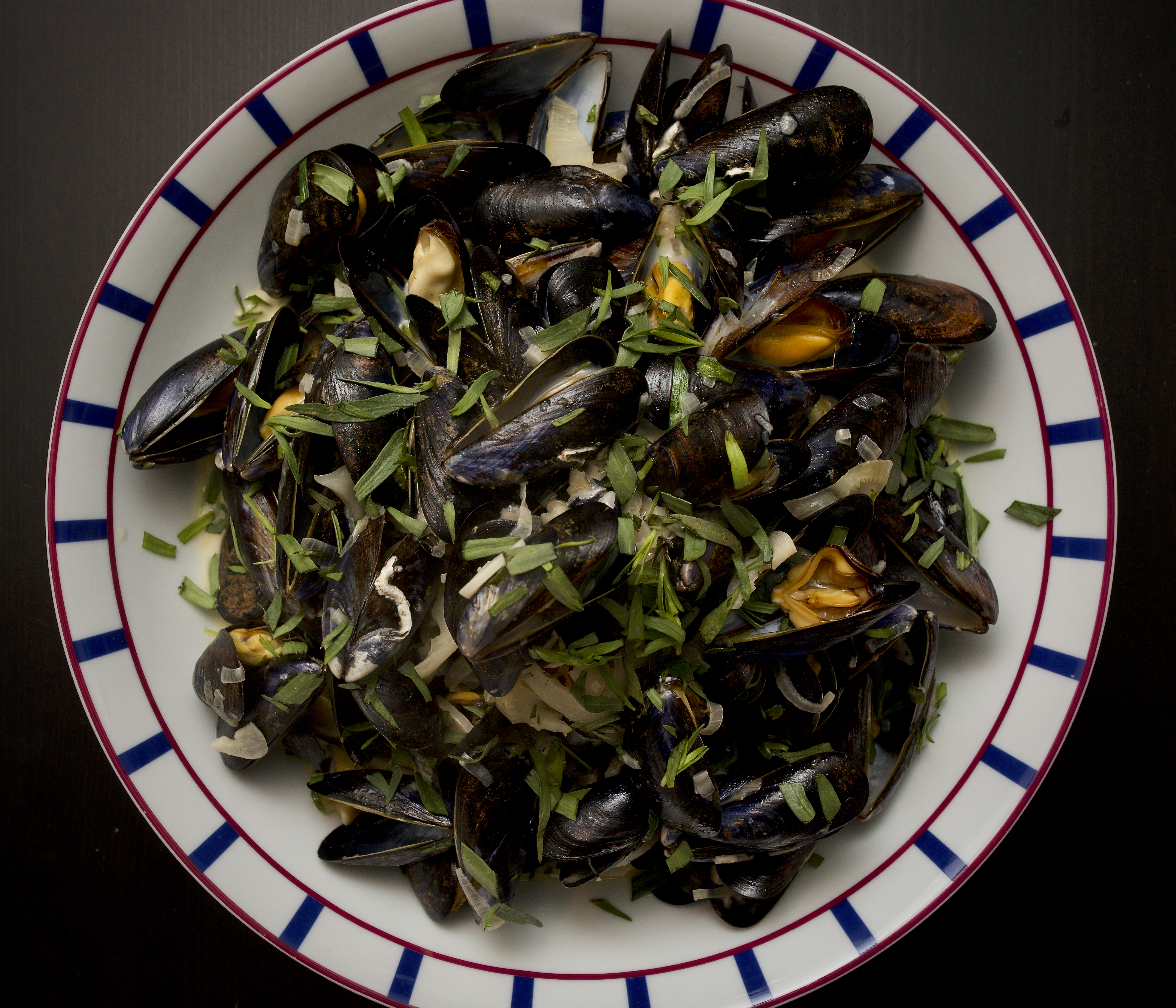
Mussels are cheap and plentiful and they’re one of the few food items that haven’t increased in price. We should all be eating this fabulous local resource. This recipe is just delicious.
Wine Suggestion: We served this with one of those under-the radar wines the La Clef du Recit Menetou Salon. While Anthony Girard from this domain makes a fab Sancerre, we are continually delighted by his other appelations: Menetou Salon which we think has more body, and is a tad more Chablis like, despite it being Loire Sauvignon Blanc; and his Quincy which is elegant and perfumed.
Mussels with fennel & tarragon – serves 2
2 tbsp olive oil
2 long shallots, finely sliced
1 small fennel bulb (or half a big one), finely sliced
3 cloves of garlic, finely sliced
100ml dry white wine
1kg mussels, cleaned and debearded
75ml double cream
a handful of tarragon leaves, roughly chopped
crusty bread, to serve
Heat the olive oil in a large heavy casserole over a medium-high heat. Add the shallots, fennel and a good pinch of salt. Cook for about 10 minutes, until starting to caramelise. Add the garlic and cook for another minute.
Tip the mussels into the pot and stir well, then pour in the white wine and season well with salt and pepper. Bring to the boil, then clamp on the lid and cook for 3-4 minutes, shaking occasionally, until the shells have opened. Stir in the cream, then scatter over the tarragon.
Serve in warm bowls with crusty bread.
(Original recipe by Adam Bush in Olive Magazine, January 2022.)
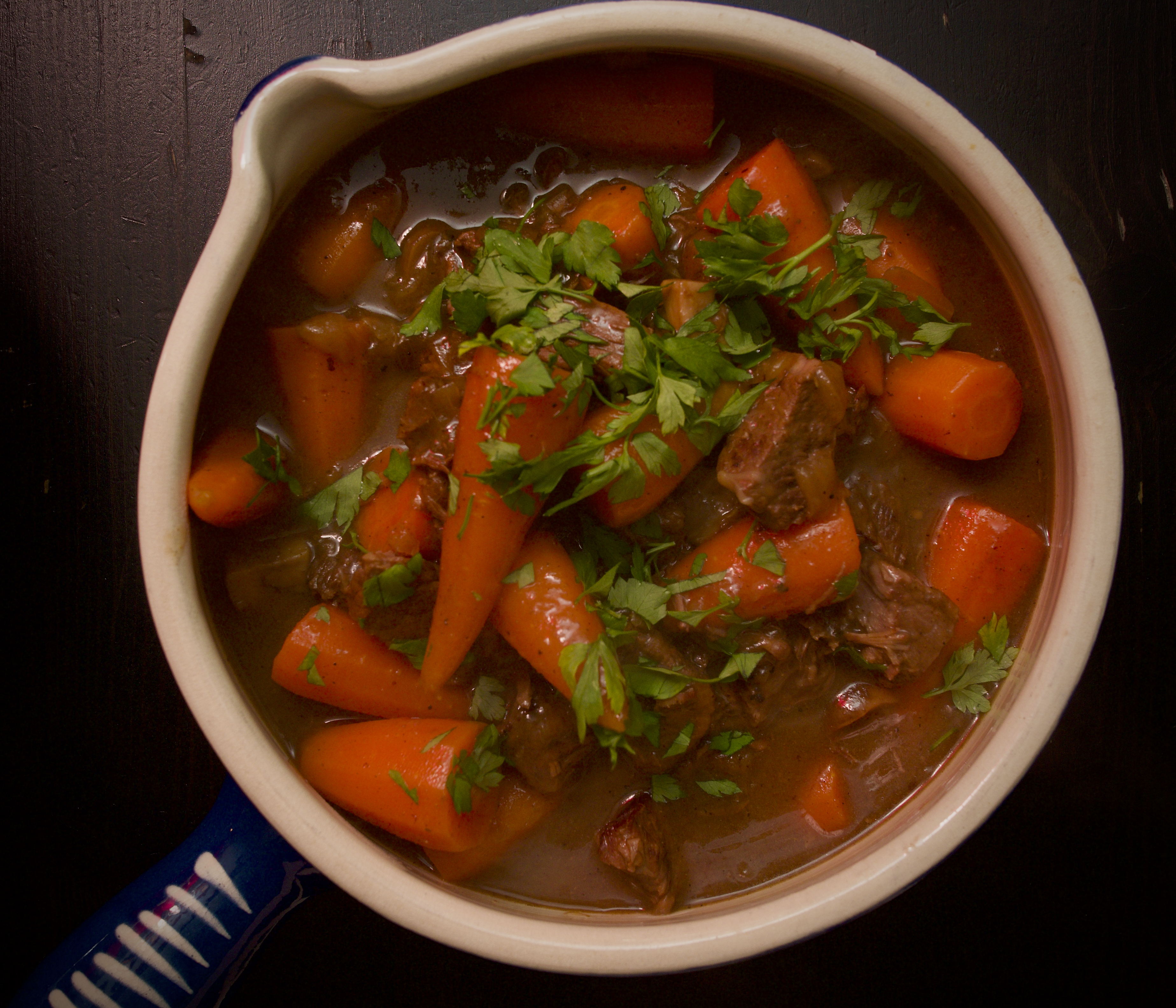
A good make-ahead dish for a crowd, subtley spiced with curry powder and Dijon mustard. We served it with dauphinoise potatoes and green veg. The Chantenay carrots look nice if you can find them, but if not just cut some regular carrots into chunky pieces. We’ve made this dish quite a few times now, and everytime prior to this have forgotten to take a photo. Reliably tasty every time, the shin really adds extra depth of flavour and creates a glossy sauce so is worth seeking out if you can
Wine Suggestion: A good Côtes du Rhône red, like our new find from Domaine Roche in Cairanne.
Mustard spiced beef – serves 6
1tbsp sunflower oil
900g beef shin, cut into 2 cm pieces
2 large onions, chopped
150g chestnut mushrooms, quartered
1 tbsp Dijon mustard
2 tsp medium curry powder
1 tbsp muscovado sugar
2 tbsp Worcestershire sauce
25g plain flour
600ml beef stock
450g Chantenay carrots
a handful of flatleaf parsley, chopped, to serve
Heat the oven to 160C/140C fan/Gas 3.
Pat the beef pieces dry with kitchen paper and season well with salt and black pepper. Heat the oil in a large casserole dish and brown the beef in batches and remove with a slotted spoon.
Add the onions and mushrooms to the pan and cook for a few minutes until starting to soften.
Put the mustard, curry powder, sugar, Worcestershire sauce, and flour into a bowl and add 75ml of the stock. Whisk until smooth.
Add the rest of the stock to the pan and bring to the boil. Spoon about half the hot stock into the mustard mixture and whisk until smooth, then pour the mixture back into the pan, whisking over a high heat until thickened.
Return the meat to the pan. Bring to the boil, cover with a lid, and put into the oven for 2-2½ until the meat is tender.
Meanwhile, cook the carrots in boiling salted water for a few minutes or until just tender. Drain and refresh in cold water and set aside.
When ready to serve, bring the casserole to the boil on the hob and taste for seasoning. Add the carrots and boil for a few minutes to ensure they are heated through. Sprinkle with the chopped parsley, and serve.
(Original recipe from Mary Berry Cooks up a Feast with Lucy Young, DK: Penguin Random House, 2010.)
If there are children around there’s nearly always a half-used tub of pesto. Too expensive to go to waste, and a good reason we’re always on the lookout for anything other than pesto pasta. This dish is a bit of summer in winter.
Wine Suggestion: Choose a fun and fresh red, preferably with a moderate alcohol. Fortunately we had a red blend from the Sebestyén family in the Szekszárd region of south-eastern Hungary. Their Szekszárdi Cuvée is a delightful blend of Kékfrankos, Merlot and Cabernet Franc; youthful, fresh and characterful.
Chicken with mozzarella, Parma ham and roast pesto potatoes, serves 4
125g ball of mozzarella cheese (not buffalo), sliced
4 chicken breasts
24 basil leaves
4 slices of Parma ham
24 cherry tomatoes
2 tbsp olive oil
450g baby potatoes
3 tbsp pesto
2 tbsp thick balsamic vinegar
Heat the oven to 190C/Gas 5.
Grease a baking sheet.
Season the mozzarella slices with salt and pepper.
Slice a small pocket in each chicken breast (we asked our butcher to do this) and fill with a slice of mozzarella and 6 basil leaves. Wrap each piece of chicken in a slice of Parma ham and set onto the greased baking sheet. Scatter the tomatoes around the chicken.
Drizzle everything with the olive oil and season with salt and pepper, then roast for 20 minutes or until the chicken is cooked through.
Meanwhile, boil the potatoes until cooked through, about 20 minutes, then drain and toss with the pesto.
Put the chicken, potatoes and tomatoes onto warm plates and drizzle the tomatoes with the thick balsmic vinegar.
(Original recipe from Herbs by Judith Hann, Watkins Media Ltd, 2017.)
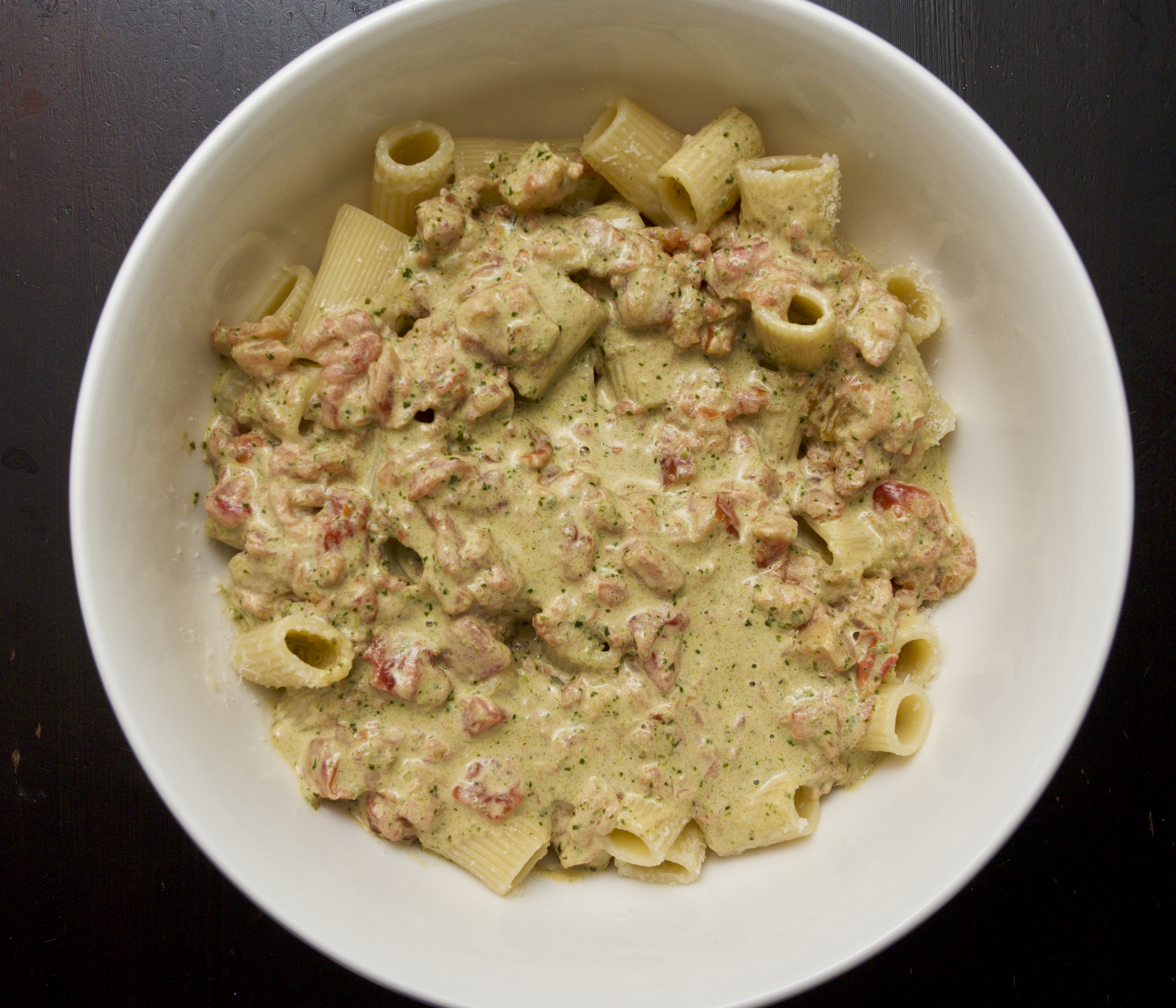
We love a pasta dish with just a few ingredients and this one is light and fresh and conveniently uses tinned tomatoes.
Wine Suggestion: Despite the cream which may suggest an oaked white, this actually works best with an unoaked, textural white instead. Something like the brilliant Dissidents Cassandre, a Vermentino from Maison Ventenac in Carbades which both lifts and expands the flavours, plus the fresh nuttiness cuts through the light cream.
Rigatoni with tomato, cream and pesto – serves 4
200ml double cream
300g tinned tomatoes, drained weight
2 tbsp pesto
350g rigatoni
40g Parmesan
Pour the cream into a saucepan, add the drained tomatoes and cook over a low heat for 10 minutes.
Remove the pan from the heat and stir in the pesto.
Meanwhile, cook the rigatoni in lots of salty water until al dente, then drain and tip it into a warm serving bowl. Sprinkle the pasta with the Parmesan, then spoon over the sauce and serve.
(Original recipe from The Silver Spoon Pasta, Phaidon, 2009.)
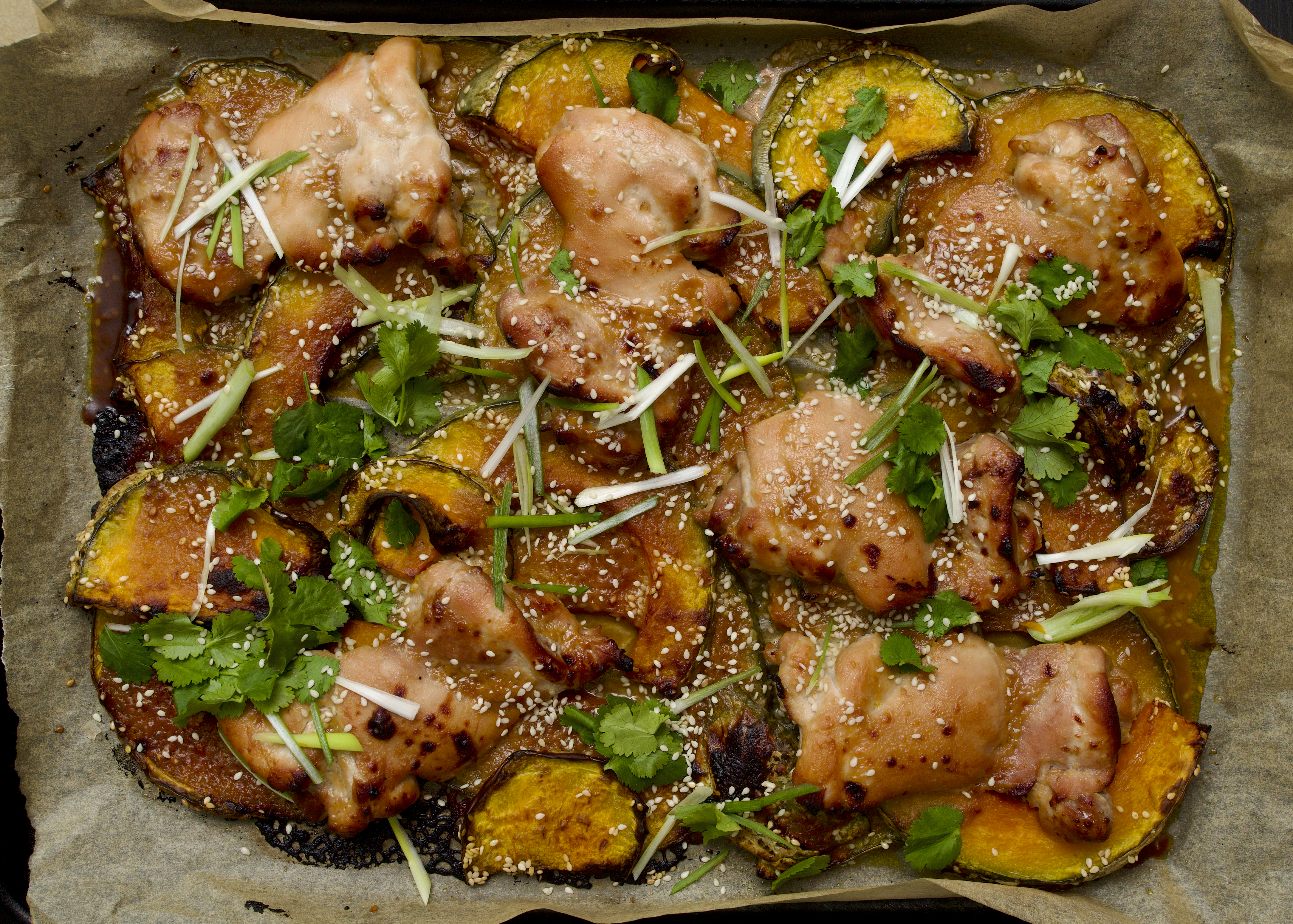
We love pretty much anything with miso. This miso chicken roasted on a bed of sesame pumpkin is an excellent combination.
Wine Suggestion: We’re on a sherry so for this dish we pulled La Gitana Manzanilla out to find if it worked and were delighted to find it really does. If you have a Manzanilla/Fino to hand give it a go, otherwise find a textural Chardonnay which balances the flavours with an extra stalkiness and more time in bottle.
Sticky miso chicken on sesame pumpkin – serves 3
1.5kg pumpkin, thinly sliced (we used crown prince)
2 tbsp extra virgin olive oil
2 tbsp sesame seeds, plus extra to garnish
1 scallion, thinly sliced, to serve
coriander leaves, to serve
FOR THE STICKY MISO CHICKEN:
95g white miso paste
1 tbsp sesame oil
1 tbsp soy sauce
60ml mirin
2 tbsp brown sugar
1 tbsp brown rice vinegar
6 skinless and boneless chicken thigh fillets
Heat the oven to 240C/fan 220C/gas 9 and line a large baking tray with baking paper.
Toss the pumpkin slices in a large bowl with the olive oil, sesame seeds and a good pinch of salt. Spread the pumpkin out over the baking tray and bake in the hot oven for 20 minutes.
To make the chicken, put the miso, sesame oil, soy sauce, mirin, brown sugar and brown rice vinegar into a large bowl and whisk to combine. Add the chicken and toss to coat, then set aside.
After 20 minutes, top the pumpkin with the chicken fillets and pour over any remaining marinade. Roast for another 20 minutes or until the chicken is cooked through.
Sprinkle over sliced scallions, coriander leaves and sesame seeds to serve.
(Original recipe by Donna Hay in Olive Magazine, Christmas 2020.)
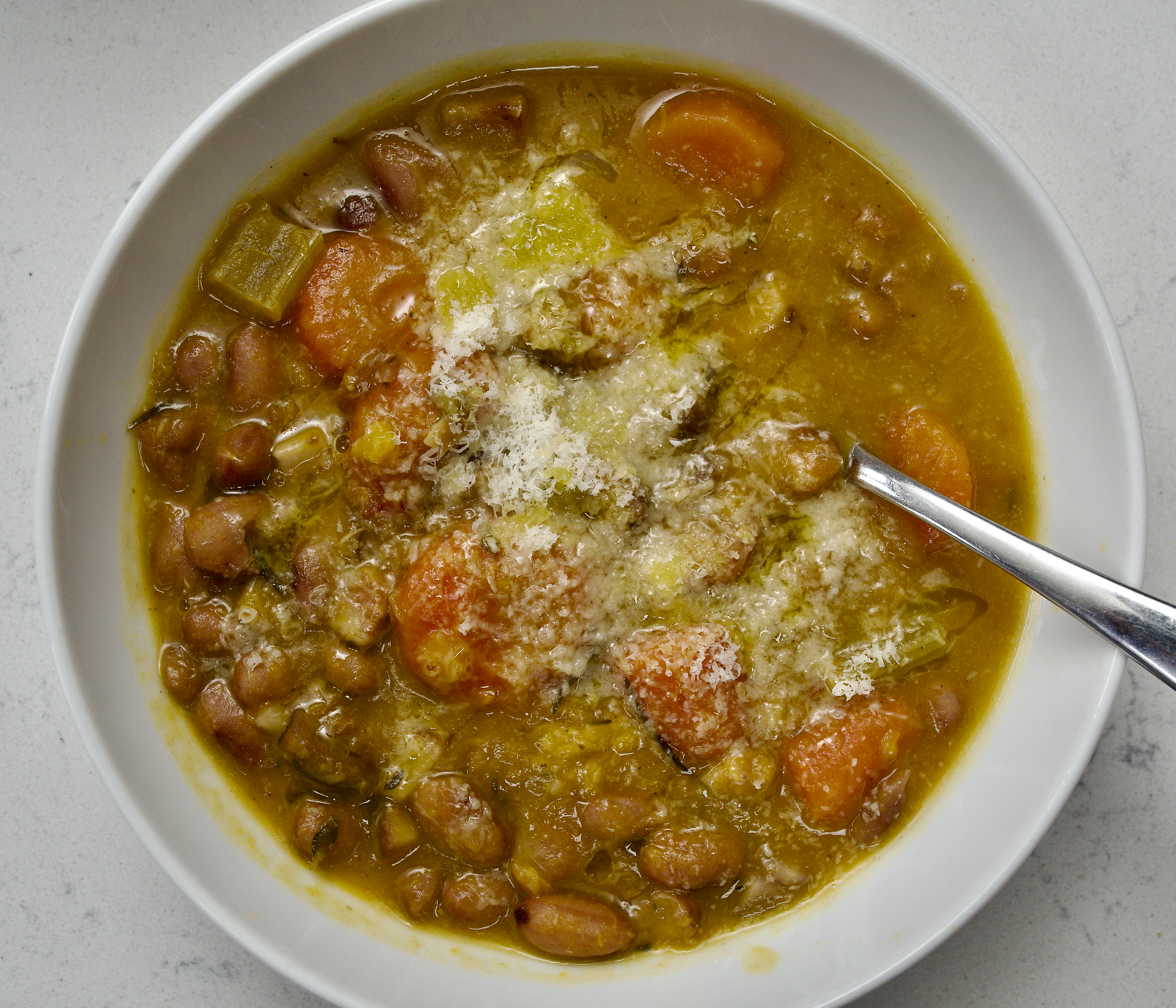
This is a delicious soup recipe from Cooking by Jeremy Lee. Make it on a cold day when you don’t have very much else to do, it takes an age but tastes amazing. You need to soak the beans the night before.
Chestnut, bacon, bean and pumpkin soup – serves 6
2 small onions
3 sticks of celery
3 large carrots
1 smoked ham hock or diced smoked pancetta
4 tbsp olive oil
a small stick of rosemary
a small handful of thyme
4 bay leaves
4 cloves of garlic, peeled
a big pinch of dried chilli flakes
250g dried borlotti beans, soaked overnight in lots of cold water
1 small pumpkin or a wedge of pumkin, roughly 1kg
250g vac-packed chesnuts
Parmesan and good extra virgin olive oil, to serve
Peel and cut the onions, celery and carrot into chunky pieces. If using a smoked ham hock cut it into small cubes.
Warm the olive oil in a wide, heavy saucepan and add the pork, herbs, garlic, chilli flakes and vegetables. Stir well, cover with a lid and cook over a gentle heat, stirring occaionally, for roughly 1½ – 2 hours. If your ring is hot they may take a bit less time than this to become soft and caramelised. The idea is to cook them as slowly as possible until you achieve this then proceed with the recipe.
Drain the beans and rinse under cold water until it runs clear. Put the beans into a saucepan with lots of cold water and bring the boil over a high heat. Drain well and lightly rinse, then tip them on to the vegetables and cover with 4-5cm of water. Bring to the boil, then lower to a simmer and cook for at least an hour or until the beans are tender. Don’t be tempted to stir the soup while the beans are cooking, you want them to hold together.
Heat the oven to 180C and roast the pumpkin whole for 40 minutes to 1 hour or until soft and fudgy. Remove from the oven and leave to cool, then remove the seeds and skin. Purée the cooked pumpkin and add to the cooked beans.
Chop the chestnuts coarsely and add them to the soup, then gently reheat. Take care when stirring to keep the beans as intact as possible. Season well with salt and black pepper.
Serve in warm bowls with lots of grated Parmesan cheese and drizzled with your best olive oil.
(Original recipe from Cooking by Jeremy Lee, 4th Estate, 2022.)






 Jono & Jules do food & wine
