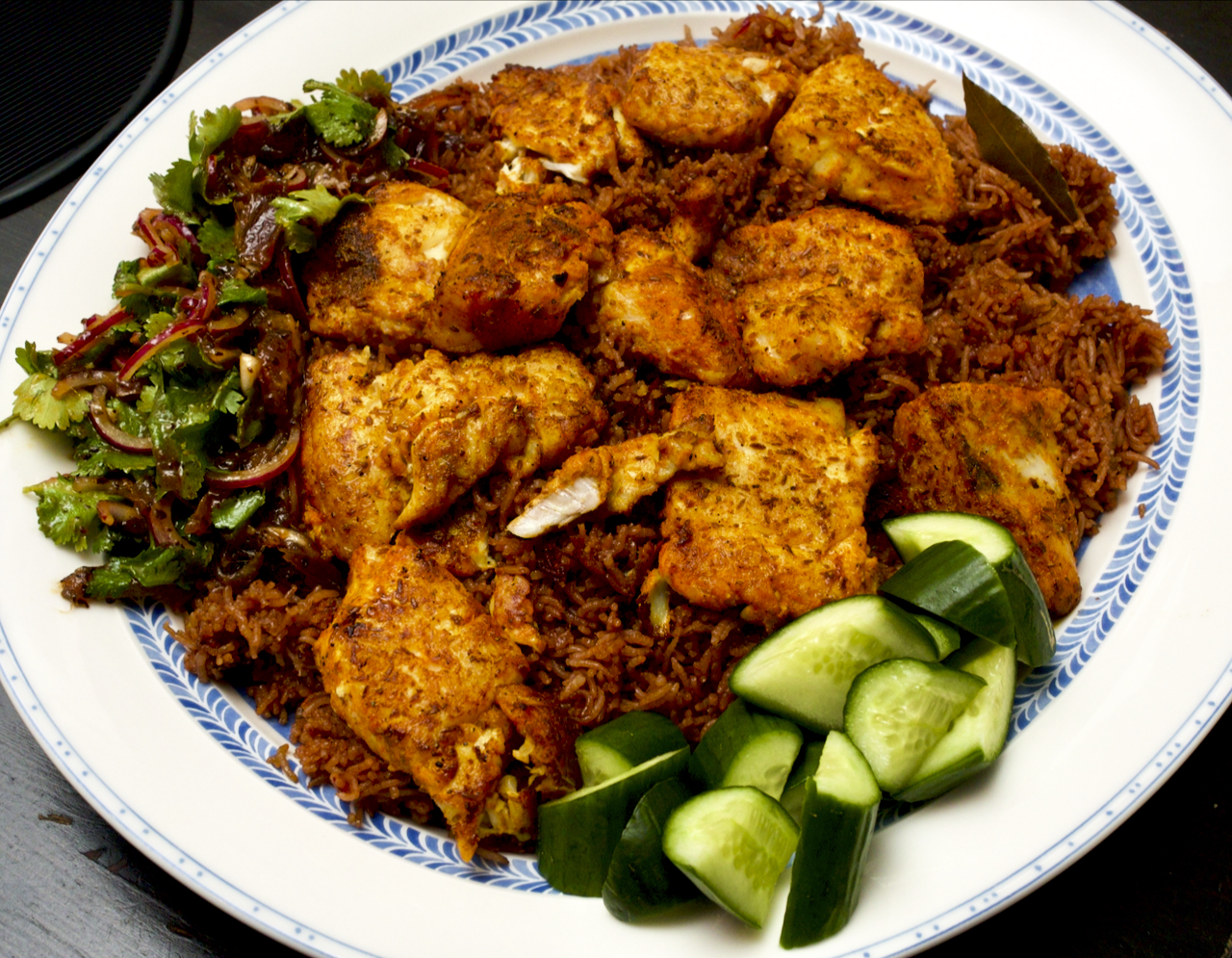
Every element of this dish from Lugma by Noor Murad, but it’s the date pickle that truly brings everything together. It lifts the whole plate and we can definitely see it making repeat appearances alongside all sorts of other dishes.
Wine Suggestion: We’ve been exploring the fresher, lighter reds from north-western Spain, a joyful match for spiced or richly flavoured fish like this. A recent gem is the Finca Millara Lagariza, a youthful, fruit forward and light bodied Mencía that we served lightly chilled. A brilliant pairing.
Fish with rice and date pickle – serves 4
FOR THE FISH:
½ tsp ground turmeric
½ tsp paprika
2 tsp cumin seeds
seeds from 15 cardamom pods
600g skinless hake fillet, cut into 6cm pieces
1½ tbsp melted ghee
½ lemon
FOR THE RICE:
2 tbsp melted ghee
5 cardamom pods
5 cloves
1 cinnamon stick
3 fresh bay leaves
150g date molasses
½ tsp loosely packed saffron threads, roughly crushed
300g basmati rice, washed until the water runs clear, then soaked for at least 20 minutes and up to 2 hours, then drained well
FOR THE DATE PICKLE:
2 tbsp olive oil
1 tsp fennel seeds
1 tsp Aleppo chilli flakes
120g Medjool dates, pitted and thinly sliced
3 tbsp apple cider vinegar
30g red onion, thinly sliced
10g coriander, leaves and soft stems picked
Use a pestle and mortar to finely crush the cumin seeds and cardamom seeds.
Mix all the ground spices for the fish in a large bowl with ½ tsp salt and plenty of black pepper. Add the fish and mix well to coat, then put in the fridge until needed.
For the rice, add the ghee, whole spices and bay leaves to a medium, lidded saucepan and place over a medium heat. Cook for a few minutes, stirring now and then, until fragrant.
Stir in the molasses then pour in 620ml of hot water, the saffron and ¾ tsp salt. Bring to the boil, then stir in the rice. Bring up to a fast boil for exactly 5 minutes, without stirring, until the grains have started to plump up and have absorbed at least half of the water. Cover with a clean tea towel followed by the lid, securing the ends of the tea towel over the lid. Turn the heat to low and cook, without touching, for 30 minutes.
Meanwhile, make the pickle. Add the oil and fennel seeds to a small frying pan over a medium heat. Cook for 2 minutes, until fragrant, then stir in the chilli and a small pinch of salt and pour into a medium heatproof bowl. Allow to cool for 5 minutes, then stir in the dates, vinegar and onion. Set aside to pickle.
When the rice is read, remove the lid and tea towel. Allow the rice to cool slightly while you fry the fish.
Heat the ghee in a large frying pan over a medium-high heat. Add the fish and cook for 2-3 minutes on each side, until nicely browned and cooked through. Squeeze over the lemon juice.
Transfer the rice to a large platter and top with the fish and any fat in the pan. Stir the coriander into the pickle and serve alongside.
(Original recipe from Lugma by Noor Murad, Quadrille, 2025.)
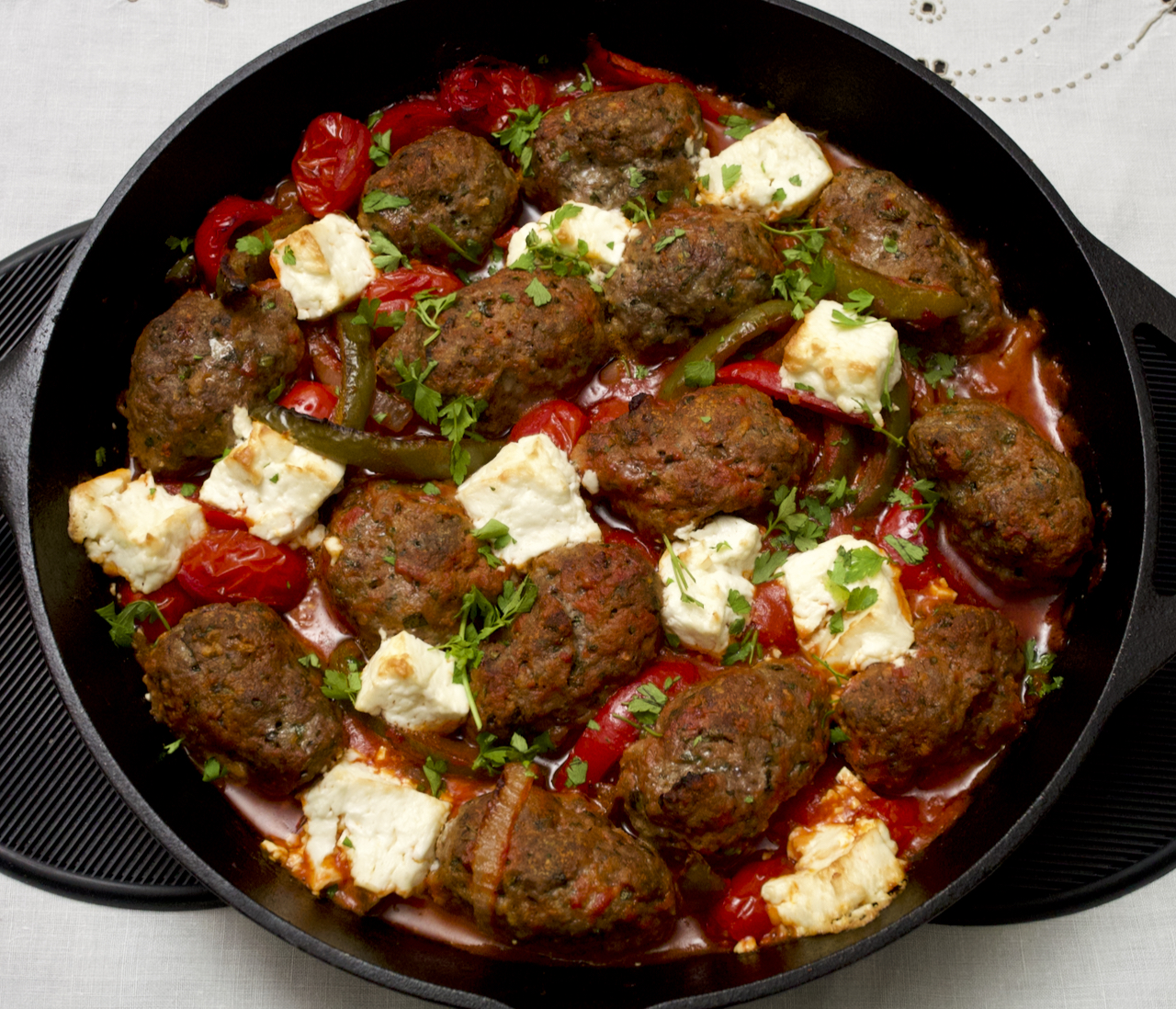
Some bold and tasty flavours in this dish by Noor Murad — lamb koftas baked with sweet peppers, salty feta, and oregano. This is minimal fuss for maximum payoff. Another standout from Noor’s beautiful new book, Lugma, a collection we’re really enjoying cooking from.
Wine Suggestion: Grenache all the way with this one. Tonight, we opened a rare treat, the Edetaria La Personal made from old-vine Garnacha Peluda. You won’t find this particular clone outside of Terra Alta, and we think it’s one to watch in a warming climate. The fine hairs on the backs of the vine leaves help trap humidity and conserve moisture, a clever natural adaptabion. It’s also delicious with the lamb and feta.
Lamb koftas with peppers and feta – serves 4
1 large onion, sliced
1 green pepper, sliced
1 red pepper, sliced
1 tbsp fresh thyme leaves
3 tbsp olive oil, plus a bit extra
1½ tsp sweet paprika
200g Datterini or cherry tomatoes
150g passata
2 tbsp apple cider vinegar
¾ tbsp maple syrup
150g feta, broken into large chunks
FOR THE KOFTAS:
500g lamb mince
40g panko breadcrumbs
20g parsley, leaves and soft stems finely chopped, plus a bit extra to serve
10g oregano leaves, finely chopped, plus a bit extra to serve
3 cloves of garlic, crushed
1 tsp ground cinnamon
1 tsp ground cumin
¼ bicarbonate of soda
1 onion, halved
1 large ripe plum tomato
Heat the oven to 200C fan.
Make the koftas first by adding the lamb mince, panko, herbs, garlic, spices, bicarbonate of soda, 1 tsp of salt and plenty of black pepper to a large bowl. Grate the onion halves on the coarse side of a grater and squeeze out the excess liquid with your hands (it’s easiest in a clean teatowel). Add this to the bowl, then grate the tomato in the same way, straning off the juice through a sieve. Add this to the bowl too.
Grease your hands with a little olive oil and knead the meat mixture for about 4 minutes, then set aside to rest for 20 minutes.
Meanwhile, add the sliced onion, peppers, thyme, 2 tbsp of the oil and ½ tsp salt to a large cast-iron frying pan and mix to combine. Bake for 15 minutes or until starting to brown, then remove from the oven and turn the temperature up to 220C fan.
Divide the meat mixture into 12 pieces, about 55-60g each, and form into torpedo-shaped koftas with oiled hands.
Stir the paprika and the tomatoes into the frying pan.
Whisk the passata, vinegar, maple syrup and ¼ tsp of salt together in a jug, then pour this into the pan.
Add the koftas, then drizzle over the final tbsp of oil.
Return to the oven for 8 minutes, then turn each kofta over. Dot with the feta and bake for 12 minutes or until the feta is nicely browned and the dish is bubbling.
Sprinkle over the extra herbs to finish.
(Original recipe from Lugma by Noor Murad, Quadrille, 2025.)
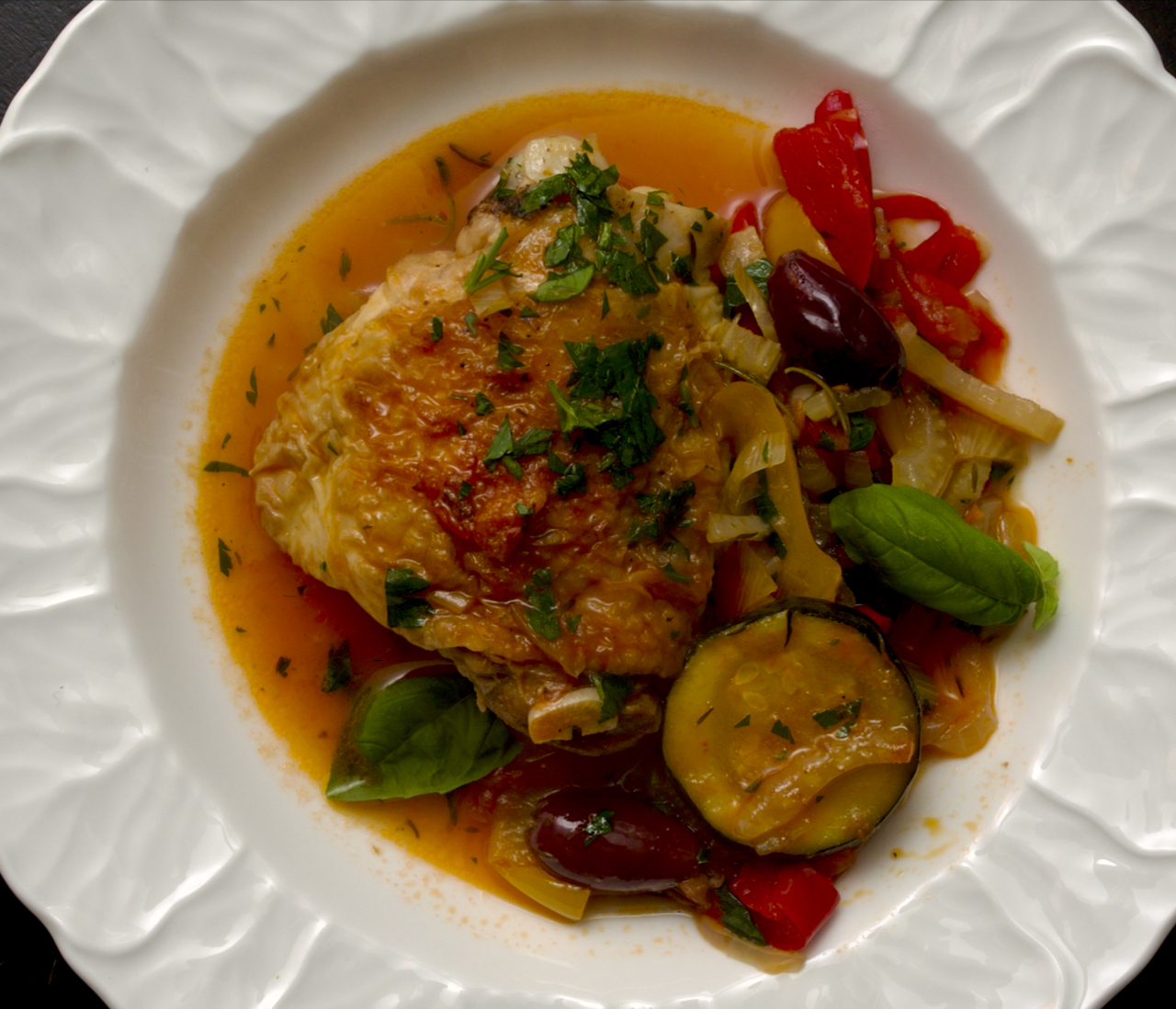
Hanging onto summer like rosé in October… As Autumn seems to appear intermittantly in Dublin, we’re clinging to the flavours of sunnier days. This simple Chicken Provençal is sunshine in a frying pan. You can’t beat the cheerful tones of this French classic, perfect for lifting spirits as the evenings draw in. Serve it with buttery new potatoes or a chunk of crusty baguette.
Wine Suggestion: We paired it with a classic dry Provençal rosé from Château Léoube – textured and full-bodied (for a rosé), yet still elegant and crisp on the finish.
Chicken Provençal – serves 4
2 tbsp olive oil
8 chicken thighs
2 onions, thinly sliced
2 anchovies in oil, chopped
4 sprigs of thyme
2 bay leaves
2 red peppers, cut into strips
1 yellow pepper, cut into strips
1 big fennel bulb, quartered, core removed and thinly sliced
2 courgettes, cut into 1cm thick slices
8 cloves of garlic, thinly sliced
200ml white wine
1 x 400g tin chopped tomatoes
1 litre chicken stock
100g pitted black olives
1 sprig of rosemary
15g flatleaf parsley, leaves only, finely chopped
a handful of small basil leaves
a small handful of capers
Warm the oil in a large, heavy-bottomed saucepan over a medium-high heat. Season the chicken with salt and pepper and brown well. You will probably need to do this in two batches. Put the browned chicken aside on a plate.
Turn the heat down and add the onion, anchovies, bay leaves and thyme with a good pinch of salt. Sauté gently for about 15 minutes or until very soft.
Turn the heat up a little, then add the peppers, fennel and courgettes, then sauté for 5 minutes. Add the garlic and sauté for a further minute.
Pour in the wine and simmer for a couple of minutes, then add the tomatoes, stock, rosemary and olives. Season with salt and pepper and simmer for 5 minutes. Return the chicken to the pan with any juices on the plate and simmer very gently for 35-40 minutes or until the chicken is very tender.
Stir in the parsley, half the basil and the capers. Taste and season again if required.
Serve with the rest of the basil scattered over.
(Original recipe from Lickedspoon with Debora Robertson on Substack, 4 Jun 2025.)
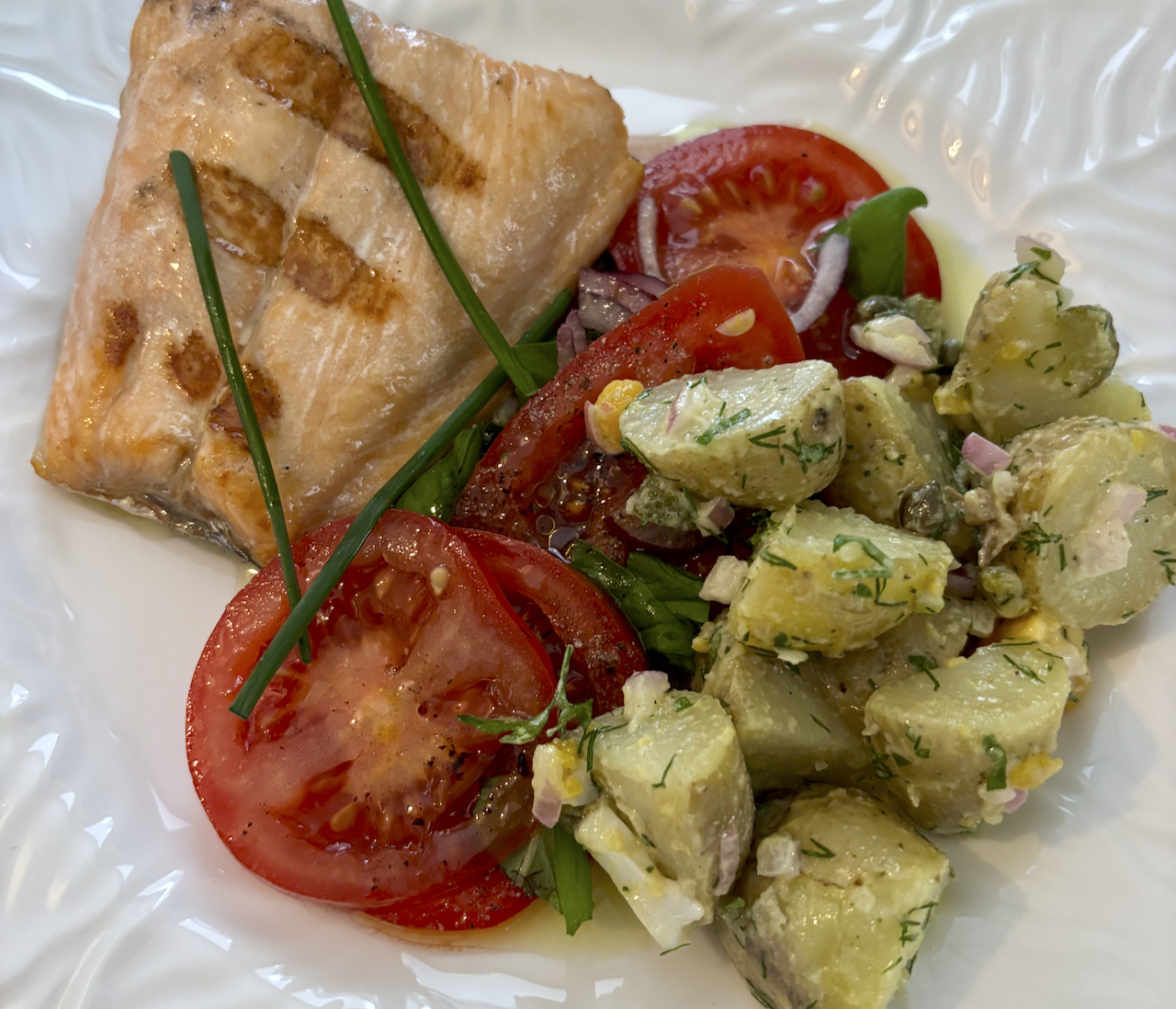
Quite a lot going on here but all very straightforward and not too time-consuming. We highly recommend this potato salad – piquant and not to mayonaisy.
Wine Suggestion: We’ve always enjoyed albariño but have really got into it in a big way recently by exploring the Spanish, Portuguese and new areas in the world making this great grape that pairs with fish and seafood. Tonight a little off-piste the Newton Johnson Albariño from Hermanus in South Africa … which has similar granitic soils to Spain. Sunshine, Antarctic breezes and a southern African hint make this unique but recognisable and delicious with the salmon, capers etc.
Smoked salmon on the barbecue with tomato salad and potato salad – serves 4
4 lightly smoked salmon fillets (we bought ours in M&S)
FOR THE CHIVE DRESSING:
a small bunch of chives
1 small shallot, finely chopped
90ml (6 tbsp) of extra virgin olive oil
1 tbsp white wine vinegar
½ tsp salt
FOR THE TOMATO SALAD:
6 tomatoes, finely sliced
1 smal red onion, finely sliced
a pinch of caster sugar
1 tbsp extra virgin olive oil
1 tsp sherry vinegar
a handful of basil, torn
FOR THE POTATO SALAD:
1 kg new potatoes – we used Jersey Royals
2 banana shallots, finely chopped
2 eggs, hard-boiled, peeled and chopped
2 tbsp capers
a handful of cornichons, finely chopped
4 tbsp olive oil
1 tbsp sherry vinegar
2 tbsp mayonnaise
a small handful of parsley and dill, chopped
Start by boiling the potatoes for the salad in salty water until tender, then drain and set aside to cool.
Get your barbeuce on to heat up.
When the potatoes have cooled, cut them into halves or quarters and mix with the rest of the potato salad ingredients. Set aside until ready to serve.
For the chive dressing, set aside 4 chives for a garnish and finely slice the rest. Mix them with the shallot, olive oil, vinegar and salt.
For the tomato salad, arrange the sliced tomatoes on a serving plattter and scatter over the red onion. Season well with salt, pepper and sugar, then dress with the oil and vinegar and garnish with the basil.
Brush the fish with a little oil and cook over a hot barbecue for a couple of minutes on each side.
Spoon some chive dressing on each plate and top with the cooked salmon. Garnish with the remaining chives and serve with the tomato and potato salad.
(Original recipe from Rick Stein’s Food Stories, BBC Books, 2024.)
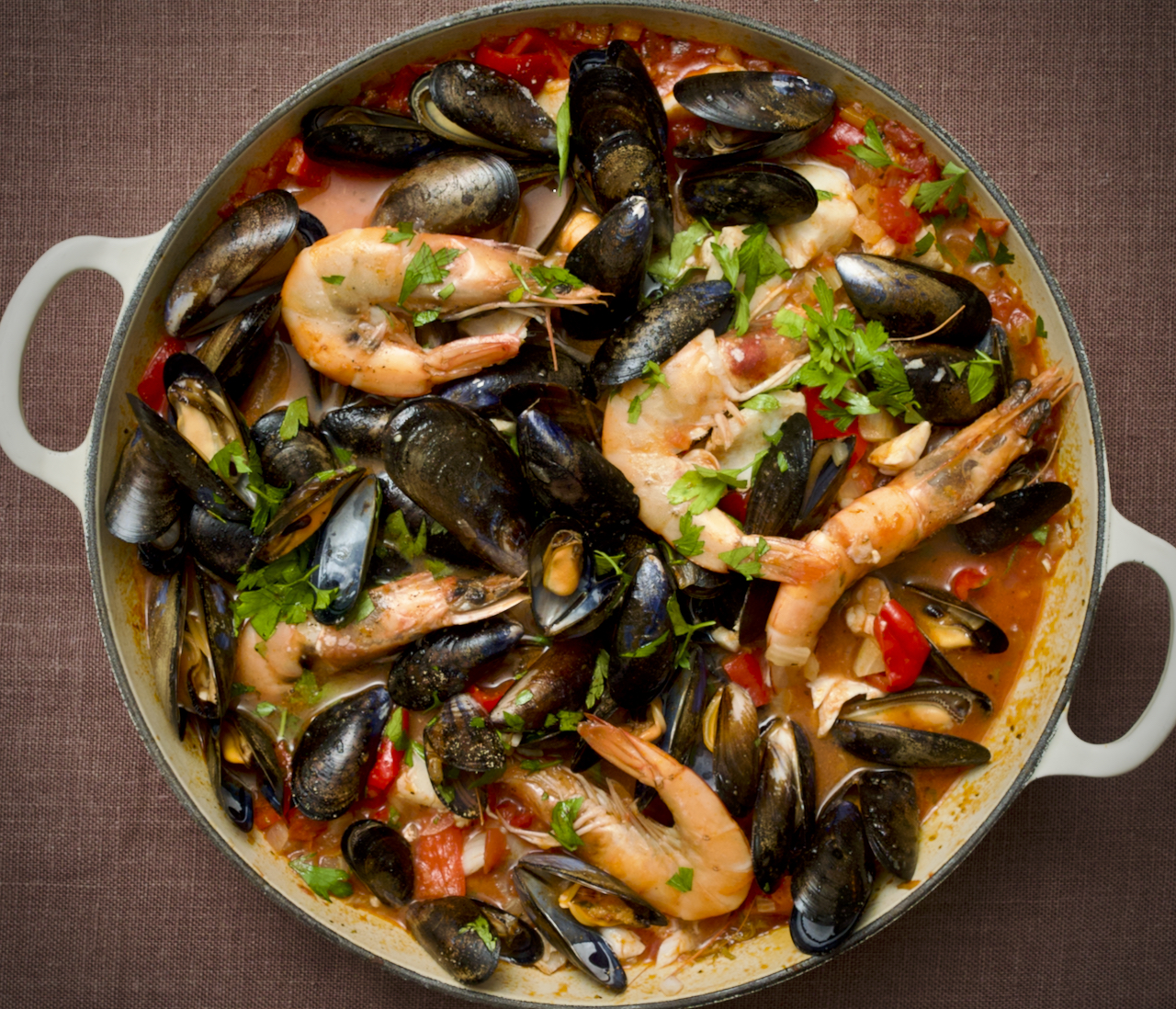
This rich, tomato-based seafood stew is a true taste of San Francisco and packed with fresh shellfish. Cioppino is the perfect Saturday night dinner to share with friends, a bit messy but delicious.
You will need to cook it while everyone is there, but as long as your ingredients are prepped ahead of time, it’s all very straightforward. Make sure you’ve got plenty of bread on hand to soak up all the broth.
Wine Suggestion: A fresh, mineral-driven white is the perfect match for this seafood-rich stew. Something vibrant and clean, without the weight of oak. We didn’t have a Californian wine that quite suited so opened an old favourite, the Céline & Frédéric Chablis. It’s full of white stone fruit, crisp apple and zesty citrus with the distinct limestone chalkiness of Chablis.
Cioppino – serves 4 to 6
2 tbsp olive oil
1 large onion, finely chopped
1 garlic clove, chopped
a small bulb of fennel, finely chopped
2 Romano peppers, chopped
250ml white wine, plus an extra splash for the mussels
400g tin of finely chopped tomatoes
1 tbsp tomato purée
300ml very light chicken stock
1 tsp dried oregano
2 bay leaves
750g mussels, cleaned
300g firm white fish, we used cod, cut into chunks
12 raw shell-on prawns
200g scallops, halved if large
a good handful of parsley, chopped
sourdough baguette and butter, to serve
Heat the oil in a a large wide pan. Add the onion, garlic and fennel with a good pinch of salt and cook gently for 10 minutes until softened but not coloured. Add the peppers and cook for another 5 minutes until softened. Add the wine and simmer for 5 minutes. Add the tomatoes, tomato purée, stock and herbs, then cover and simmer for 20 minutes.
Meanwhile, heat a large pan, then tip in the mussels with the extra splash of white wine. Cover and shake the pan for a few minutes until the mussels have opened. Scoop the mussels out and set aside, keep the cooking liquid.
Add the fish, prawns and scallops to the stew, cover and simmer gently for 3-4 minutes or until the fish is cooked and the prawns are pink. Add the mussels with the reserved cooking liquid (hold back any grit) and cook for another minute to heat through. Taste and season if needed.
Stir in the parsley and serve in bowls with plenty of bread and butter.
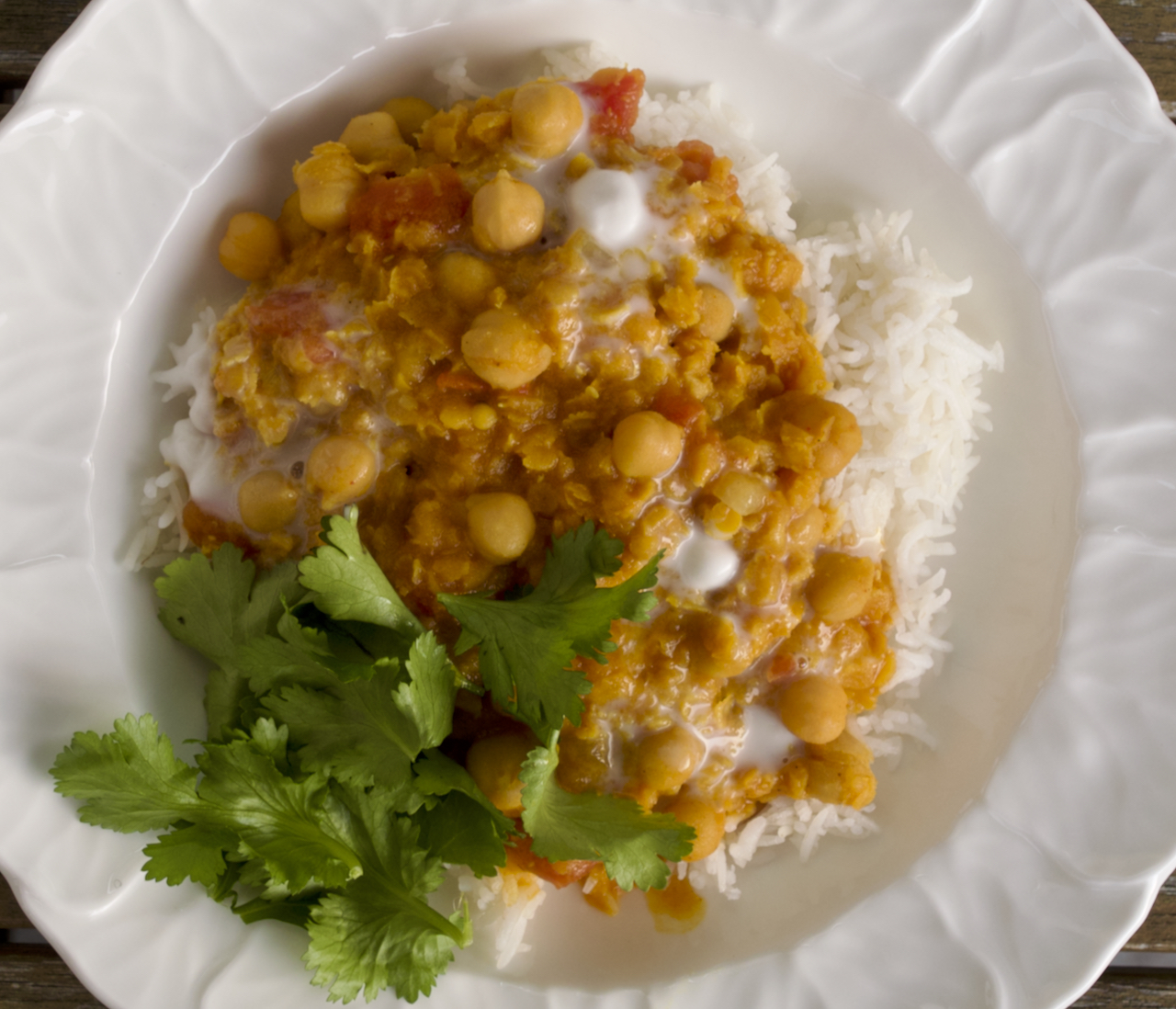
Make this when you want something warm, healthy and with minimum fuss. Exactly what you need after a long day. Ready in less than an hour and the perfect weeknight dinner.
Lentils & Chickpeas with Coconut – serves 8 (freeze leftovers for another day)
400ml tin of coconut milk
2 tbsp ghee or coconut oil
3 cloves of garlic, crushed
1 onion, finely chopped
½ tsp cayenne pepper
½ tsp ground ginger
1 tsp ground turmeric
1 tsp curry powder
1 tsp ground cumin
1½ tsp salt
2 tsp ground coriander
400g tin chopped tomatoes
200g dried split lentils
400g tin chickpeas
a pinch of chilli flakes, to serve
coriander leaves, to serve
steamed basmati rice, to serve
Measure 60ml of the coconut milk and set aside for drizzling over at the end.
Melt the ghee or coconut oil in a large saucepan over a medium-high heat. Add the garlic and onion and cook for a few minutes, then add the spices and stir for 1 minute.
Add the tomatoes, the remaining coconut milk, 750ml of water, lentils and chickpeas. Bring to a simmer, then reduce the heat and simmer gently for 15 minutes, uncovered, sitrring occasionally. The lentils should be soft and creamy.
Serve over steamed rice with a drizzle of the coconut milk, a pinch of chilli flakes and some fresh coriander.
(Original recipe from RecipeTin Eats Tonight by Nagi Maehashi, Pan Macmillan, 2024.)
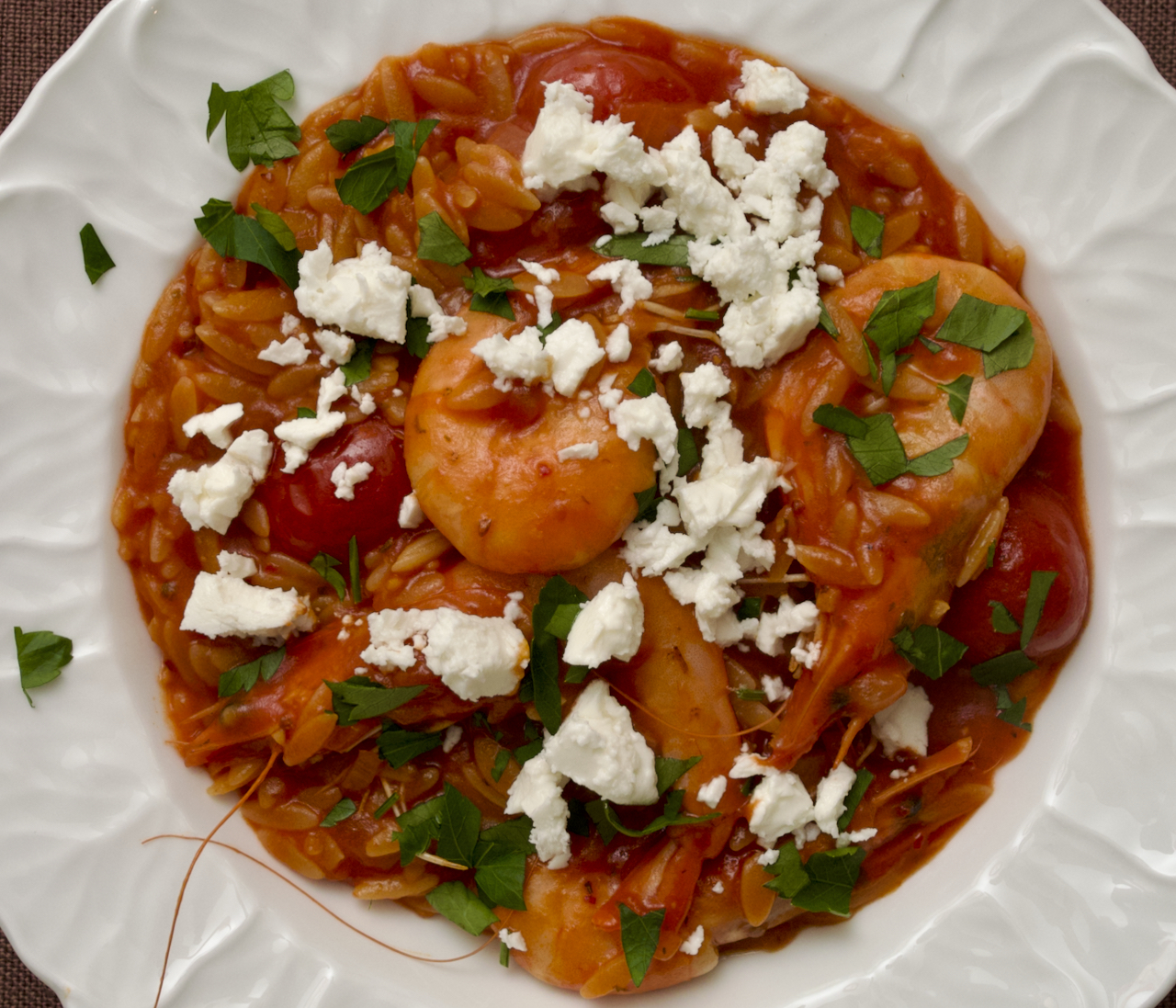
Inspired by the classic Greek saganaki this dish bring together juicy king prawns, bright cherry tomatoes, orzo simmered in wine and stock, a drizzle of lemon and a scatter of feta and parsley. Perfect when you want something that’s quick, feels indulgent, but still very satisfying.
Wine Suggestion: We followed the time-honoured rule of “what grows together, goes together” and opened a bottle of Tetramythos Roditis from the Peloponnese. This dry Greek white is crisp and appley, with a soft, rounded texture through the mid-palate and a clean, saline finish. It worked perfectly with the prawns and the tomato base, echoing the citrusy notes of the lemon while balancing the heat from the chilli. No, we weren’t eating this by the sea in Greece but it certainly felt like we could have been.
Saganaki-style orzo with prawns – serves 4
2 tbsp olive oil
1 large onion, finely chopped
5 cloves of garlic, finely chopped
1 tsp chilli flakes
2 tsp dried oregano
2 tbsp tomato purée
200ml white wine
2 x 400g tin cherry tomatoes
300g orzo
500ml hot chicken stock
350g raw king prawns
a small handful of parsley, finely chopped
50g feta, crumbled
half a lemon, cut into wedges
toasted ciabatta, to serve
Heat the oil in a wide frying pan over a medium heat, then fry the onion with a pinch of salt for a few minutes or until slightly softened.
Add the garlic, chilli, oregano and tomato purée and cook for another couple of minutes.
Turn the heat up high, then add the wine and leave until reduced by half, about 3-5 minutes.
Stir in the cherry tomatoes, orzo and stock, bring to a simmer and cook, stirring occasionally for 5-7 minutes or until the orzo is almost tender.
Stir in the prawns and cook for 2-3 minutes or until cooked through. Season and scatter over the parsley and feta. Serve with lemon wedges for squeezing over.
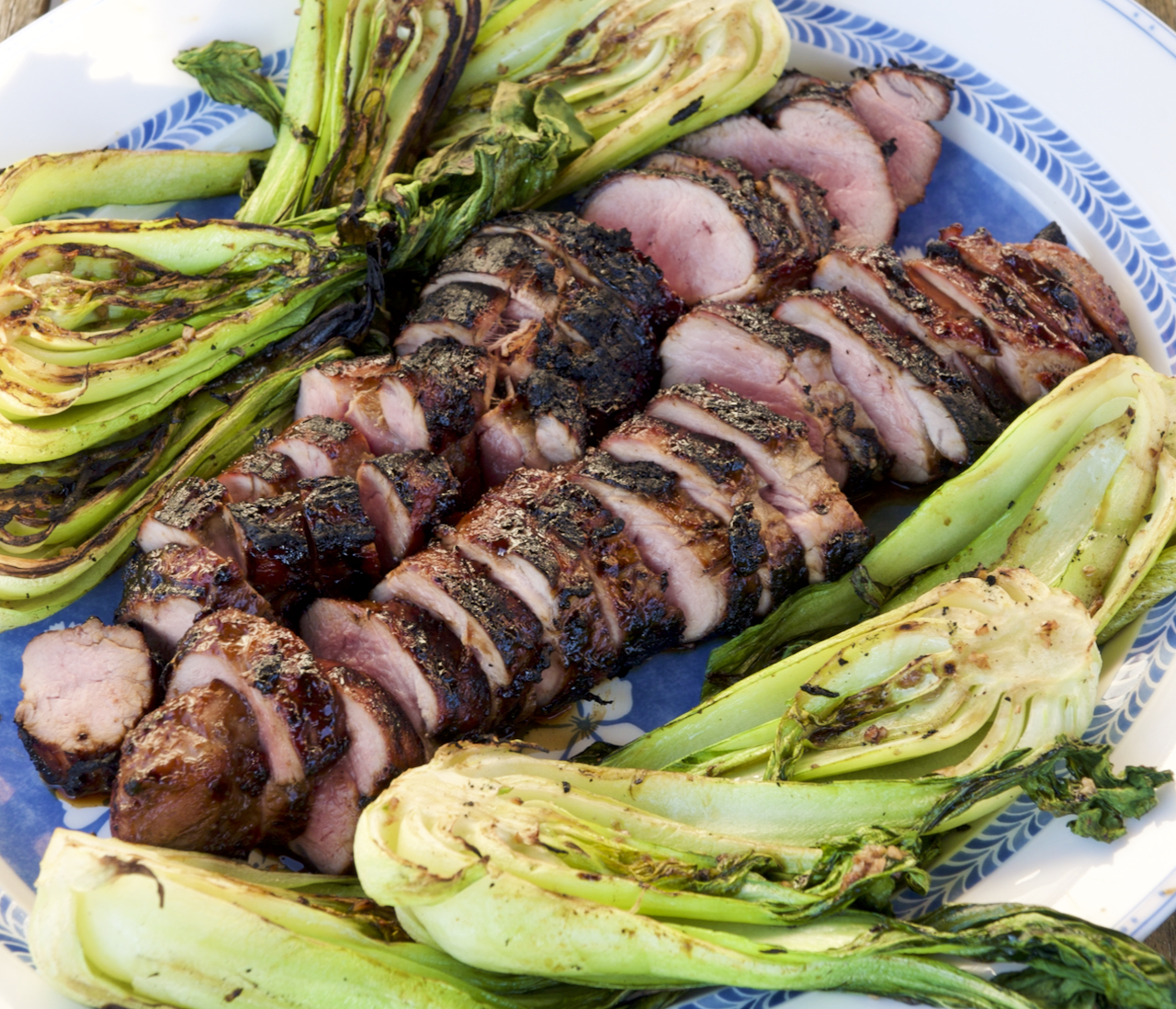
A Chinese classic that couldn’t be easier to master, this char siu pork delivers glossy, caramelized perfection. Sweet, smoky and full of flavour, it’s a guaranteed barbecue winner! Don’t skip the crisp, garlicky pak choi on the side – it’s the fresh balance that really makes this dish.
Wine suggestion: We made this dish during Grenache Month and opened what turned out to be a fantastic pairing: Edetaria’s via Edetana Red , a red blend from Terra Alta, Catalonia, made with Garnatxa Fina and Garnatxa Peluda—two local Garnacha clones known for their balance of freshness and complexity. The wine’s soft spice, red fruit, and smooth texture echoed the sweet-savory glaze of the char siu pork beautifully. Its vibrant acidity brought out the juiciness in the meat, while the subtle earthy and herbal notes in the wine complemented the five-spice and caramelized edges of the pork. If you’re looking for a bottle that can handle bold flavors while adding its own depth, this one’s a winner.
Char Siu Pork – serves 4
2 pork tenderloin fillets, trimmed
FOR THE MARINADE:
1 tbsp vegetable oil
2 cloves of garlic, finely grated
2.5cm piece of ginger, finely grated
2 tsp sesame oil
3 tbsp runny honey
2 tbsp soft light brown sugar
4 tbsp hoisin sauce
1 tbsp oyster sauce
1 tbsp light soy sauce
½ tbsp dark soy sauce
1 tsp Chinese 5-spice powder
½ tsp white pepper
FOR THE PAK CHOI:
4 pak choi, halved lengthways
2 cloves of garlic, finely chopped
3 tbsp light soy sauce
2 tbsp olive oil
½ tsp white pepper
To make the marinade, heat the oil in a saucepan, then add the garlic and ginger and cook for 2 minutes. Add the sesame oil, honey, sugar, hoisin, oyster and soy sauces, 5-spice powder and pepper. Mix well and cook until slightly thickened. Remove from the heat and leave to cool completely.
Put the pork into a large dish. Add the sauce and massage well so it is really well coated. Cover and leave to marinate in the fridge for at least a couple of hours or ideally overnight.
Get your barbecue ready to cook on over direct heat and indirect heat.
Lay the pak choi, cut side up, on a tray. Mix the garlic, soy, olive oil and white pepper together in a small bowl, then spoon over the pak choi.
Remove the pork from the pork from the marinade, reserving the marinade left in the dish. Put the pork over the hottest part of the barbecue and cook for 6 to 8 minutes, turning ofetn and basting with the marinade.
When the pork is cooked, transfer to a tray and leave to rest for 5 minutes.
Meanwhile, transfer the pak choi to the barbecue over indirect heat – with the stems towards the direct heat as they take longer to cook. Cook, turning often and basting with the soy marinade for a few minutes or until charred and tender. Spray with a little water as it cooks to stop it from drying out.
Slice the pork and serve on a platter with the pak choi.
(Original recipe from The BBQ Book by Tom Kerridge, Bloomsbury: Absolute, 2025.)
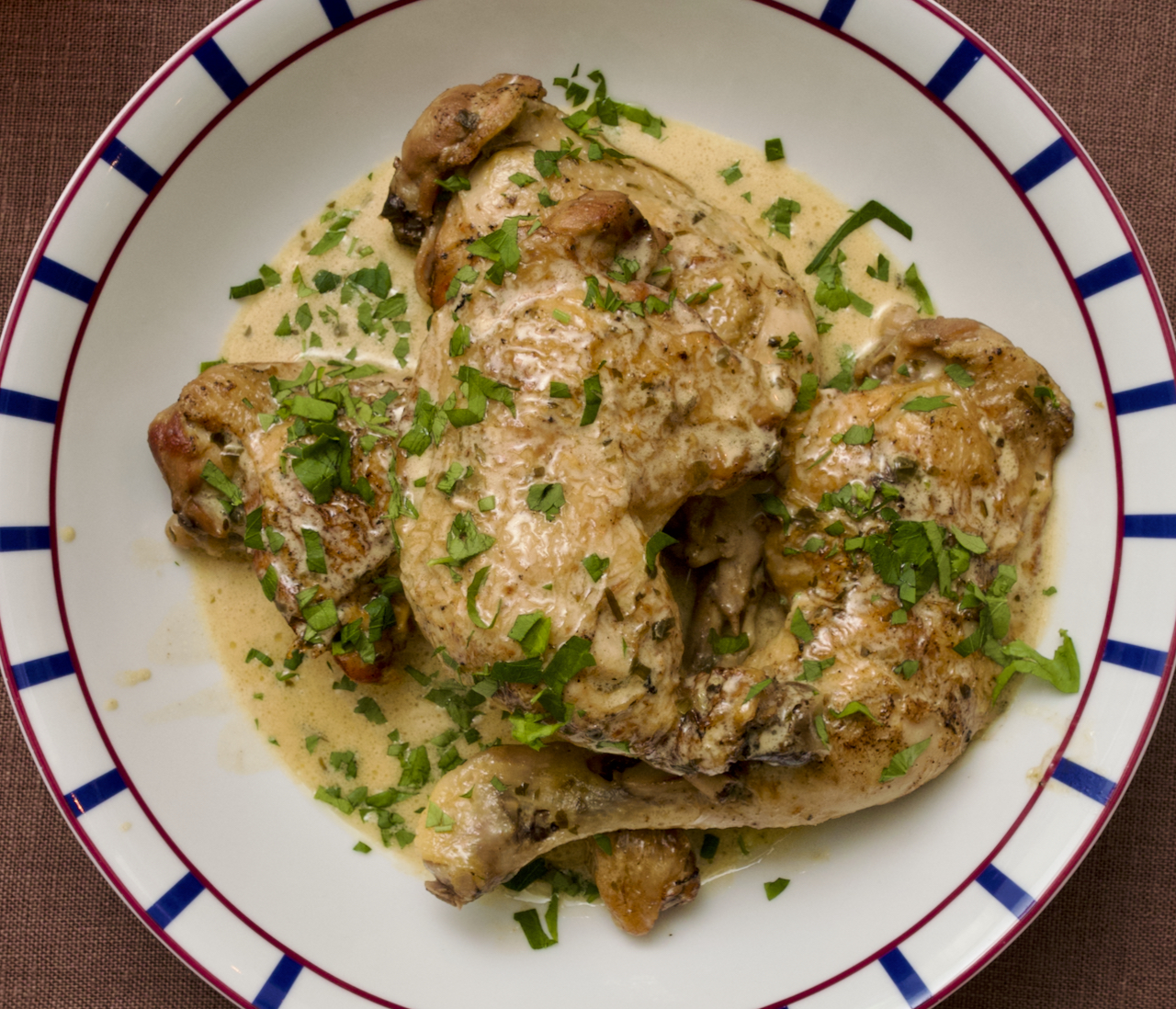
While rummaging through a relative’s bookshelf, we stumbled upon an old cookbook called Cooking with Katie Stewart and took a few recipes along on a recent trip to France — and we’re so glad we did. With some cuisses de poulet from a local butcher and the basic equipment in a holiday kitchen, we cooked a simple tarragon chicken that was so delicious, we made it again as soon as we got home. Proof that sometimes the best recipes are the ones you nearly overlook.
Wine Suggestion: Go classic and open a Chardonnay with a bit of oak — I dare you. It works so well with the tarragon and chicken. Tonight, we went with an old favourite: the Neudorf Tiritiri Chardonnay. Done.
Tarragon Chicken – serves 6
4 tsp dried tarragon
2 tbsp lemon juice
6 chicken joints (we used legs)
50g butter
300ml hot chicken stock
300ml double cream
a handful of flatleaf parsley, roughly chopped
Put the dried tarragon into a small bowl and pour over the lemon juice, then leave to soak for 30 minutes.
Season the chicken with salt and black pepper.
Melt the butter in a large saucepan, then add the chicken pieces and slowly brown them on all sides (this may be easier in two batches). When the chicken is browned all over, about 15 minutes, put all of the chicken into the pan.
Season the chicken again and pour over the tarragon and lemon juice mixture, then add the hot stock and cream. Cover with a lid and simmer gently for about 45 minutes or until the chicken is really tender.
Lift the chicken on to a serving plate and pour over the sauce (you can strain it if you have a sieve). Sprinkle with the chopped parsley and serve.
(Original recipe from Cooking with Katie Steward, Hamlyn, 1974).
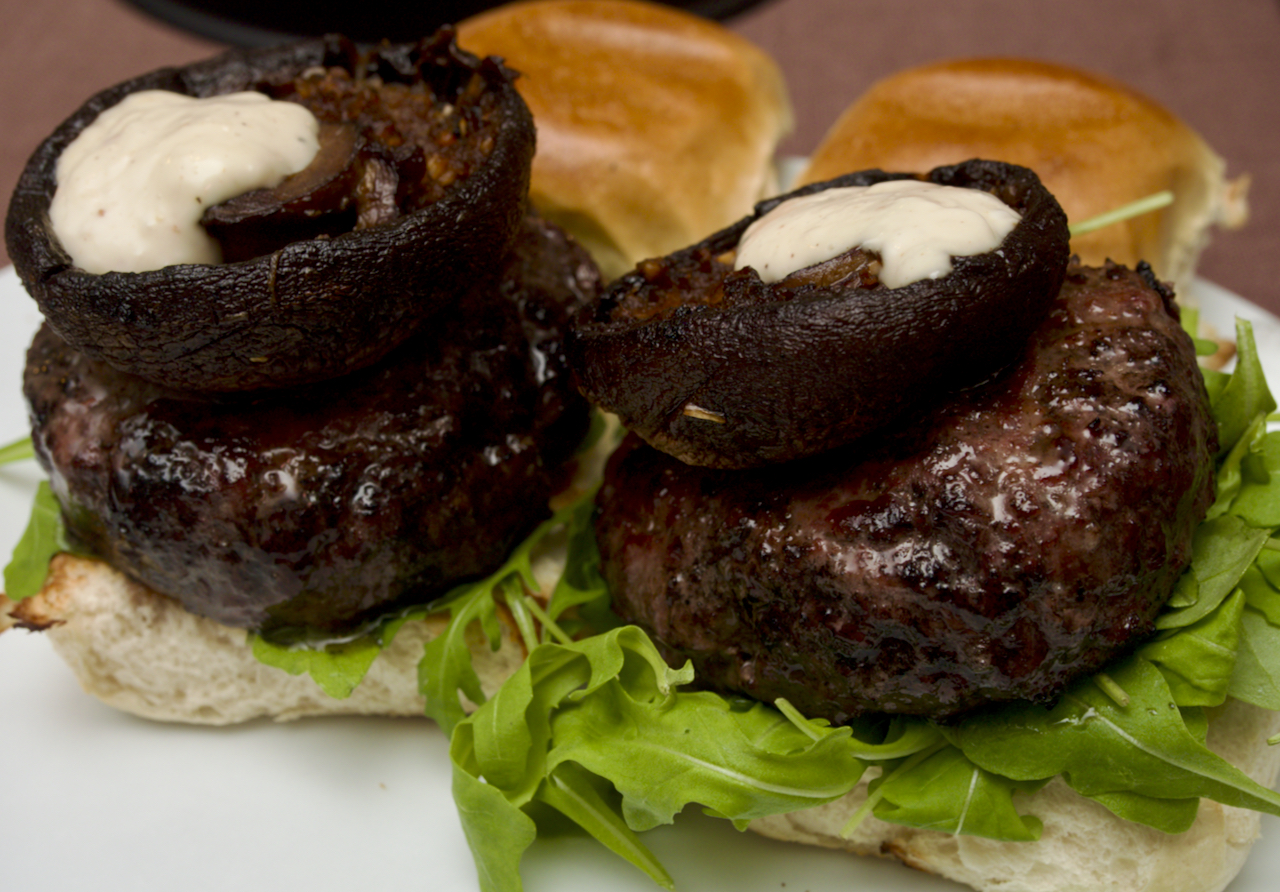
These tasty mushrooms with horseradish mayo are a great addition to a regular barbecued burger. They’re fully of umami savouriness. Make your own burgers, or buy some from a good butcher.
Wine Suggestion: We really enjoy these flavours with a good Pinot Noir with a few years of age, but they’ve got so expensive which is why we opened Dominio de Tares Baltos. A Mencia from Bierzo, north western Spain, this is a wine we’ve enjoyed over the years and think it’s getting better each vintage. Deep and savoury, but with an intrinsic freshness. Our bottle was quite young, but we suspect this will be super with an extra 3-5 years cellaring too.
Burgers with mushrooms and horseradish mayonnaise – serves 4
2 tbsp soy sauce
1 tbsp sesame oil
25g root ginger, grated
1 clove of garlic, finely chopped
2 large portobello mushrooms
4 good-quality shop-bought or home-made beef burgers
4 burger buns, to serve
a large handful of rocket leaves, to serve
FOR THE HORSERADISH MAYONNAISE:
2-3 tbsp mayonnaise
2-3 tsp hot horseradish sauce
Mix the soy sauce, sesame oil, ginger and garlic together in a bowl. Set the mushrooms on a plate, stem side up, and pour over the marinade. Set aside for 30 minutes to 1 hour.
Mix the mayonnaise and hot horseradish sauce together in a bowl and season to taste.
Get your barbecue ready for both direct and indirect cooking.
Place the mushrooms, stem-side up, over the direct heat and cook for 10-15 minutes, or until softened and coloured. Move them to the indirect heat, keeping them stem side up.
Put the burgers over the direct heat, lift the mushrooms with tongs and pour any juices over the burgers as they cook. Keep the mushrooms over the indirect heat but turn them over so they are stem side down. Close the barbecue lid and allow the burgers to cook for 3-4 mintues, then flip them over and cook for the same time on the other side. They should be 71C when cooked through.
Quickly toast the buns, then place a few rocket leaves on the bun base and top with a burger. Cut the mushrooms into slices and divide between the burgers, finishing with some horseradish mayonnaise and the bun lid.
(Original recipe from Foolproof BBQ by Genevieve Taylor, Hardie Grant: Quadrille, 2021.)
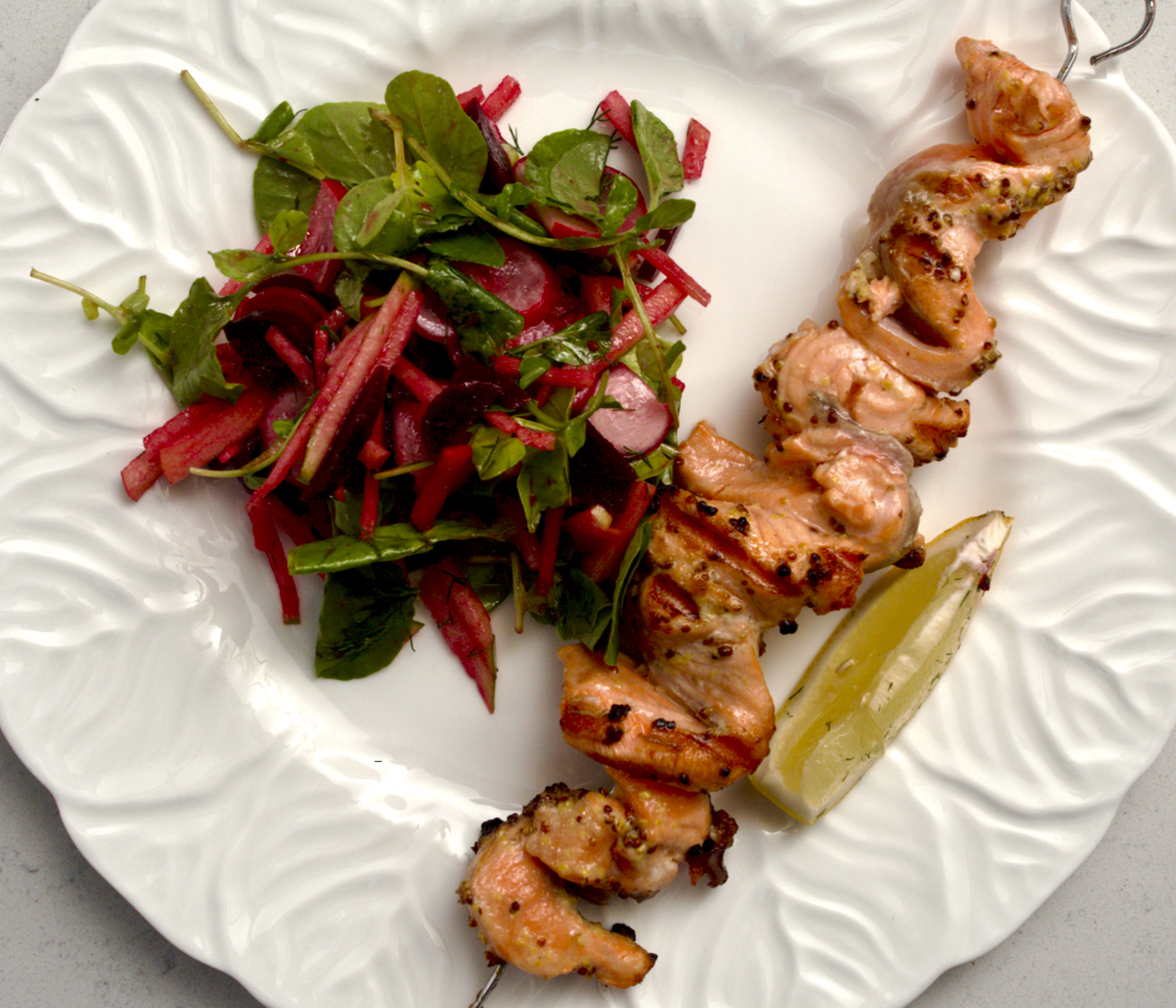
We’ve been having fun and trying to cook a lot more fish on the barbecue. The salad with these skewers is particularly good.
Wine Suggestion: we opened and enjoyed Stephanie and Arnaud Dezat’s Sancerre Blanc. Two of the youngest members of an old family making wine here since the fifteenth century, this was pure and refreshing with a suitable minerally texture.
BBQTrout with beetroot & apple salad – serves 4
600g chunky piece of trout fillet, skinned and pin-boned
2 tbsp olive oil
3 tsp wholegrain mustard
lemon wedges, to serve
FOR THE SALAD:
1 apple
6 radishes, thinly sliced
100g pickled beetroot
30g watercress
1 tbsp finely chopped dill
1 tsp Dijon
1 tbsp apple cider vinegar
1 tsp honey
2 tbsp extra virgin olive oil
Cut the trout fillets into 1cm thick slices. Mix the olive oil and mustard together in a bowl and brush the trout all over with this mixture. Thread the fish onto metal skewers and leave to marinate in the fridge for 30 minutes.
Get your barbecue on and hot for direct cooking.
To make the salad, get a large bowl of iced water ready. Halve and core the apples and cut them into julienne strips and immerce in the iced water with the sliced radishes. Leave to crisp in the water for 10 minutes.
Drain the apples and radishes and pat dry with a clean tea towel, then place in a large bowl. Cut the beetroot into julienne strips and add to the bowl with the watercress and chopped dill. Toss together and leave in the fridge until needed.
Make the dressing by whisking the Dijon mustard, cider vinegar, honey and extra virgin olive oil together with some seasoning in a small bowl. Pour the dressing over the salad just before serving and toss well.
Place the skewers on the hot barbecue and cook for a couple of minutes on each side. Serve the skewers with some salad and a lemon wedge on the side.
(Original recipe from The BBQ Book by Tom Kerridge, Bloomsbury: Absolute, 2025).
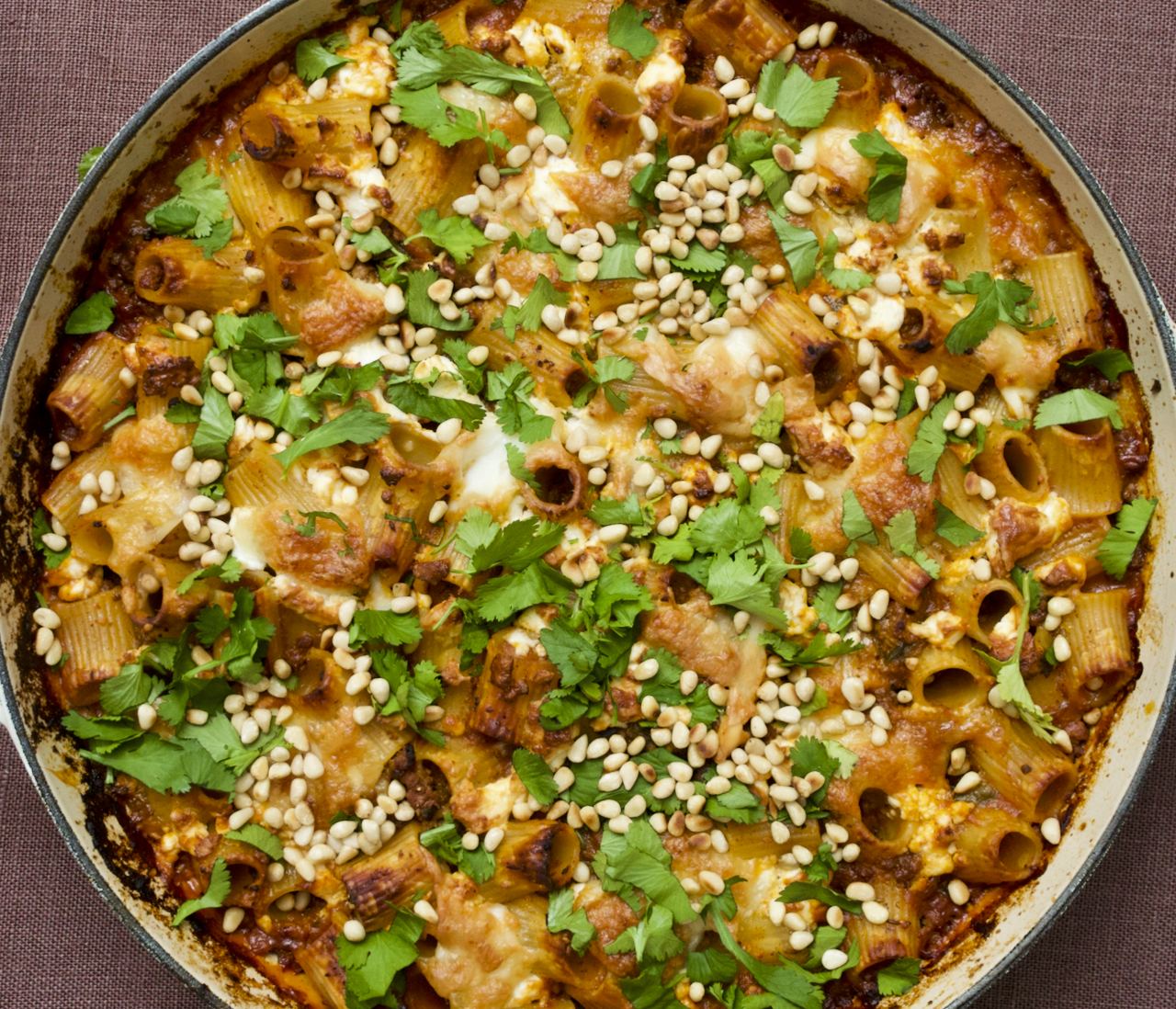
We’re loving Lugma by Noor Murad and this pasta bake is a definate crowd pleaser.
Wine Suggestion: It was a toss up between a rich white and a warm, ripe red like the Condado de Haza Crianza from Ribera de Duero which we ended up pairing with this dish. Rich and deep from the sunshine in Spain, but with an elegance and freshness plus warm spices that make this a great combo.
Middle Eastern Pasta Bake– serves 4 to 6
FOR THE RAGU:
2 tbsp olive oil
1 onion, finely chopped
1 carrot, peeled and finely chopped
1 green pepper, finely chopped
4 garlic cloves, finely chopped
300g beef mince
300g lamb mince
2 cinnamon sticks
3 fresh bay leaves
1 black dried lime, pierced a couple of times with a sharp knife
2 red chillies, pierced a couple of times with a sharp knife
seeds from 15 cardamom pods, finely crushed with a pestle and mortar
1 tbsp cumin seeds, finely crushed with a pestle and mortar
2 tsp coriander seeds, finely crushed with a pestle and mortar
1 tsp Aleppo chilli flakes
1½ tsp dried oregano
1½ tbsp tomato purée
1 chicken stock cube
400g tin plum tomatoes, puréed
150ml full-fat milk
20g coriander, roughly chopped
FOR THE PASTA BAKE:
300g rigatoni pasta
125g feta, rouglhy crumbled
125g buffalo mozzarella, roughly torn
25g pine nuts, well toasted
10g coriander, leaves and soft stems roughly chopped
Make the sauce first by heating the olive oil in a large, deep sauté pan over a medium-high heat. Add the onion, carrot and pepper and cook for about 5 minutes. Add the garlic and cook for 2 more minutes. Stir in the beef and lamb mince and cook for 10 minutes, breaking the mince up with a wooden spoon so it is finely crumbled. Allow the liquid to cook off and the mince will start to brown. Stir in the cinnamon sticks, bay leaves, dried lime, chillies, spices, oregano, tomato purée, stock cube, 1 tsp of salt and plenty of black pepper. Fry for a couple of minutes until fragrant, then pour in the puréed tomatoes and 300ml of water. Bring to a simmer then reduce the heat to the lowest setting and cover with a lid. Leave to cook for 2 hours, stirring every 25 minutes. You should end up with a thick and rich sauce.
Pour in the milk, cover and cook for another 25 minutes. Set aside to cool a bit, then pick out and discard the cinnamon sticks and bay leaves. Remove the dried lime, squeezing any juice into the sauce. Add the chopped coriander. You can now use the sauce or stick it in the fridge or freezer until ready to use.
Heat the oven to 200C fan.
Bring a large pan of water to the boil and add 2 tsp of salt. Cook the pasta in the water until al dente. Remove 130ml of the pasta water before draining in a colander.
You will need a baking dish about 23 x 33cm. Add the drained pasta, the ragu and the reserved pasta cooking water and mix to combine. Pick out the whole chillies and lay over the top, then sprinkle over the feta and mozzarella. Bake for 30 minutes or until browned and crispy.
Sprinkle over the pine nuts and fresh coriander, then serve.
(Original recipe from Lugma by Noor Murad, Quadrille, 2025.)
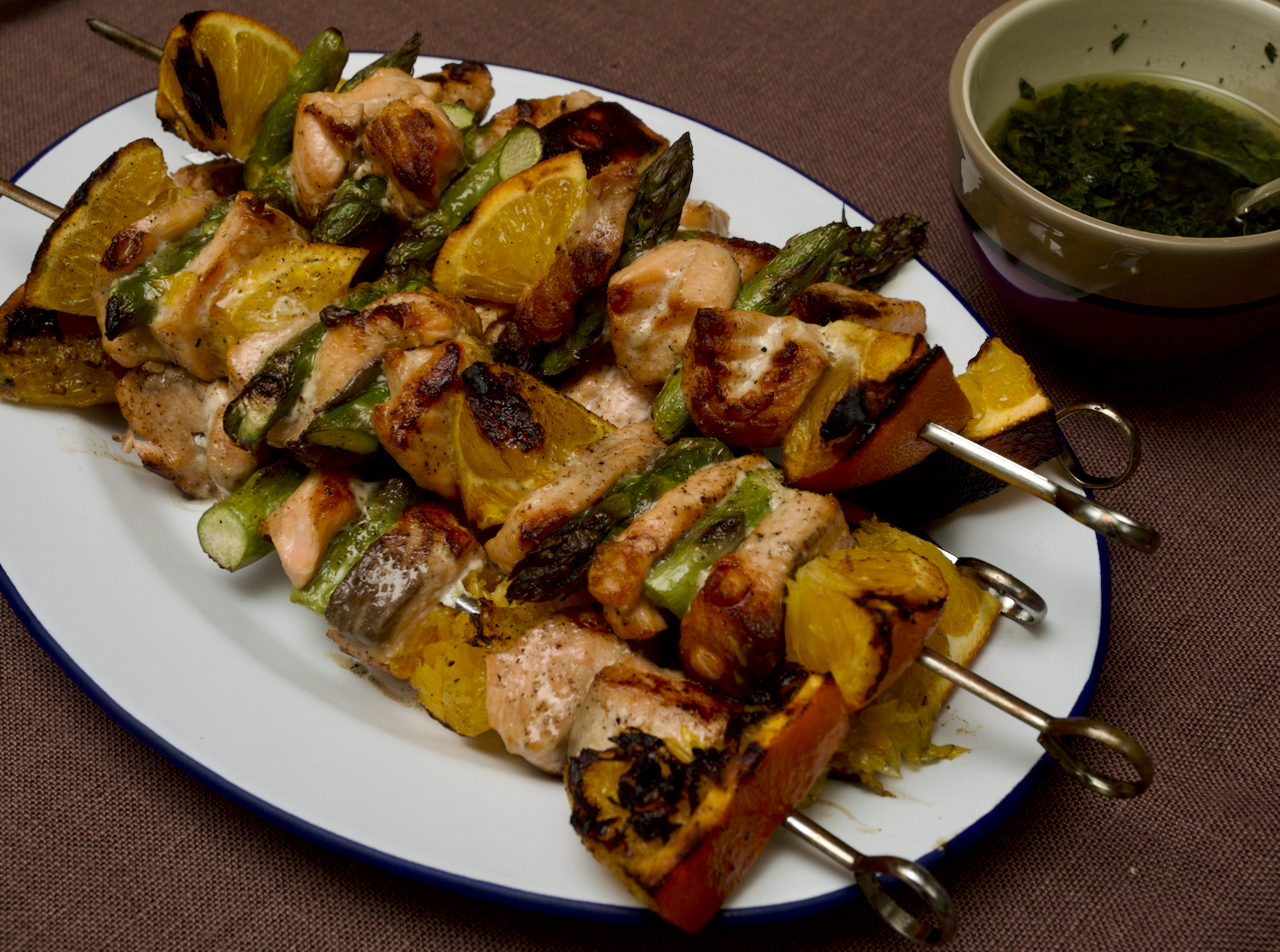
A bit late in the season to post these lovely trout and asparagus kebabs but we couldn’t leave them out.
Wine Suggestion: A bottle from a familiar winery, but one we picked up in Spain as this particular cuvée doesn’t currently make it into Ireland. Bodegas Castro Martin’s A-2-O, a fresh and elegant Albariño from the Val de Salnés in Rías Baíxas.
Trout and Asparagus Kebabs – serves 4
600g trout fillet, without skin – try and get a chunky piece, cut into 3cm pieces
200g asparagus – snap off the ends and slice into short lengths
1 orange, quarter, then slice into small pieces
2 tbsp olive oil
FOR THE HERB OIL:
about 15g of mint leaves, finely chopped
100ml olive oil
1 clove of garlic, crushed
2 tsp red wine vinegar
Thread the trout, asparagus and orange pieces onto 4 metal skewers. If your fish pieces are a bit skinny just fold them over and thread them on to make a chunkier piece.
Drizzle with olive oil and season well.
Heat the barbecue for driect grilling and ideally use a grill tray.
To make the herb oil, put the chopped mint into a small bowl, then stir in the olive oil, garlic, red wine vinegar and seasoning.
Cook the skewers on the hot grill tray (if you have one) for a couple of minutes on each side or until the fish is crispy. Don’t be tempted to turn them too quickly or they might stick.
Serve with the mint oil.
(Original recipe from Scorched by Genevieve Taylor, Hardie Grant: Quadrille, 2024.)
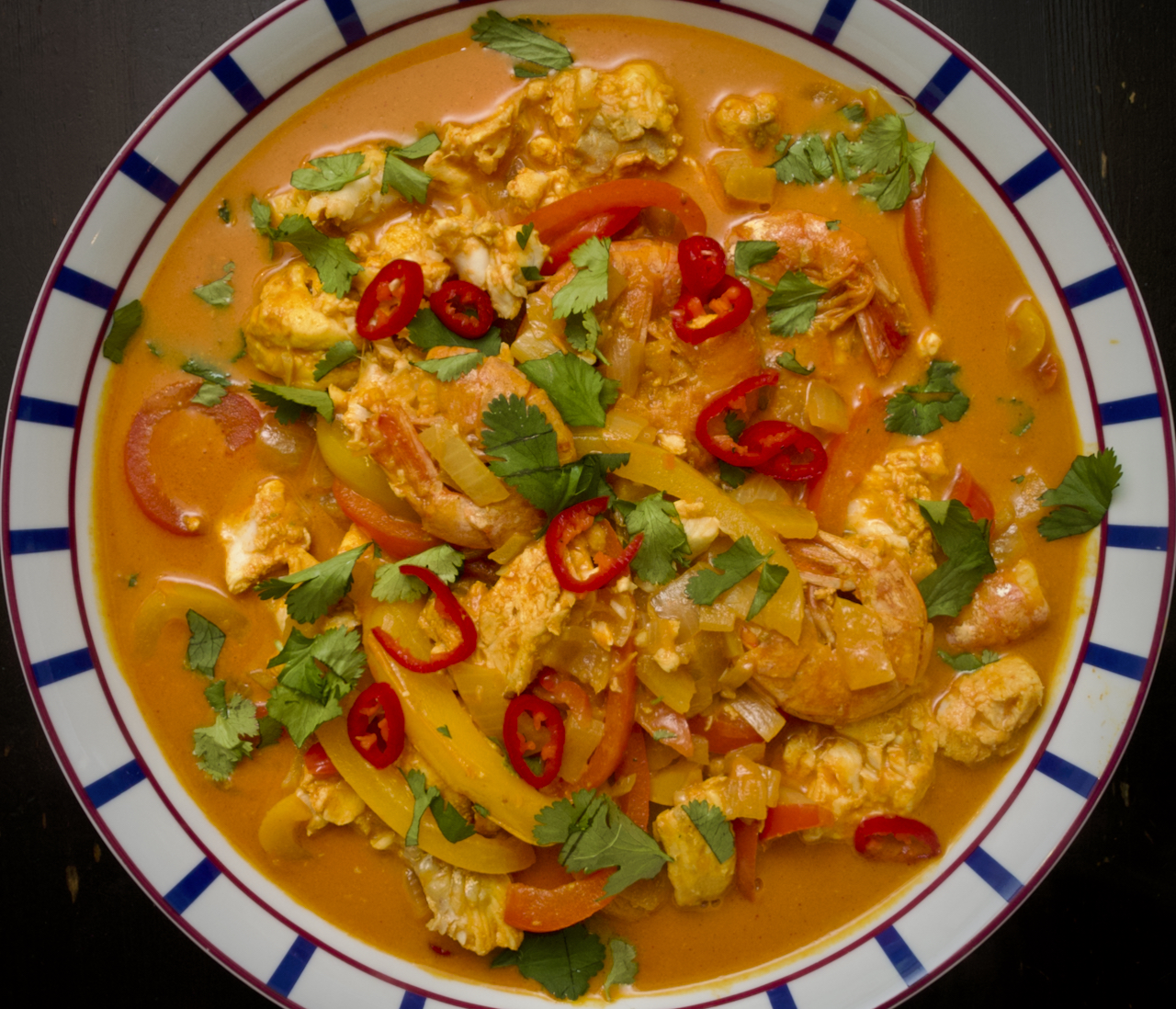
We don’t cook many Brazilian dishes but perhaps we should make more as this one was delicious! Serve with rice or crusty bread.
Wine Suggestion: we had to guess a bit with what to open with this, so chose a warmer climate white with some white flower amd stonefruit characters; dry but with softer fruitiness. So tonight the charming Dominio de Tares Godello La Sonrisa and it was a very pleasant match indeed.
Brazilian seafood moqueca – serves 4 to 6
650g firm white fish fillets (we used hake)
400g whole shell-on prawns (about 12)
3 limes, zested to make 1 tsp, juiced to make 6 tbsp, plus a little extra lime zest to serve
2 tsp sweet paprika
2 tsp ground cumin
2 medium onions, diced
4 fat garlic cloves, crushed
1 large red pepper, cut into strips
1 large yellow pepper, cut into strips
2 tsp coriander seeds, crushed
1 tsp ground turmeric
4 tbsp tomato purée
400ml coconut milk
coriander, chopped, to garnish
red chilli, sliced, to garnish
white rice or crusty bread, to serve
Cut the fish fillets into chunky pieces and de-vein the prawns but leave the shells on (either use a very sharp knife or pointy scissors).
Mix the lime zest, 4 tbsp of the lime juice, 1 tsp of the paprika, 1 tsp of the cumin and 1 tsp of fine salt in a large bowl. Add the fish and prawns and toss gently to coat, then cover and leave aside for 15 minutes.
Heat the oil in a large deep pan and cook the onions for 5 minutes. Add the garlic, peppers and crushed coriander seeds and cook for another 5 minutes.
Add the turmeric, 1 tsp of paprika, 1 tsp of cumin, the tomato purée and a splash of water, then mix well to coat the onions. Add the coconut milk with 200ml of water, then simmer over a medium heat for 8 to 10 minutes. Add 1 tsp of fine salt.
Gently add the fish and prawns to the sauce along with any marinade. The seafood needs to be completely covered so add a little more water if needed. Cover with a lid and simmer for 8-10 minutes or until the seafood is cooked through.
Check the seasoning and add more salt if needed. Stir throught the rest of the lime juice and serve garnished with coriander and chilli.
(Original recipe by Gurdeep Loyal in Olive Magazine, May 2025.)
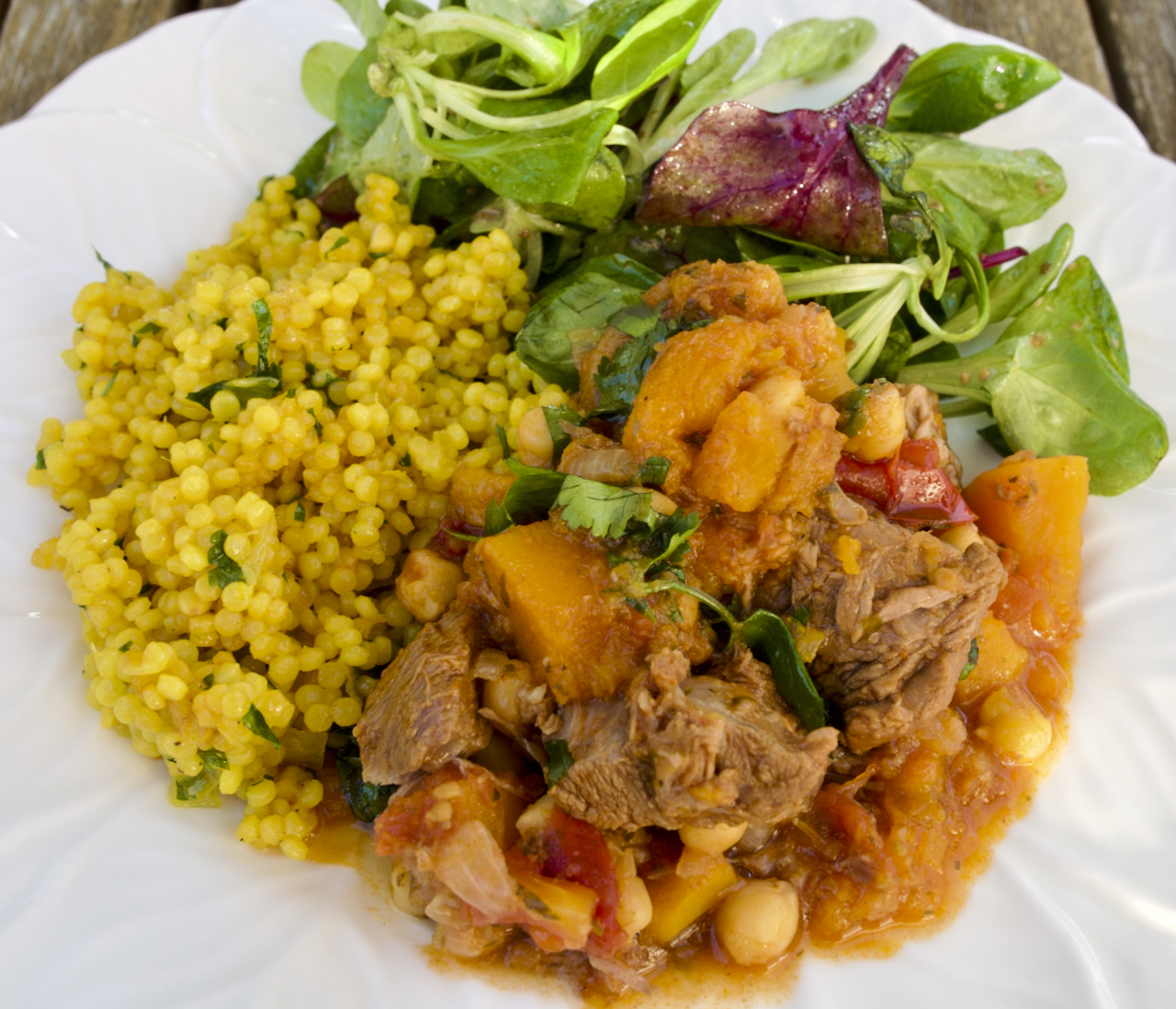
A few fresh apricots during their short season really enhance this lamb tagine. We served with giant couscous cooked with shallot, turmeric, parsley, lemon zest and pine nuts. You need to marinade the lamb overnight (or for at least 2 hours).
Wine Suggestion: we think tagines go well with Grenache based wines, either white or red, and so opened the Edetària via Edetana White which is old vine Garnacha Blanca from unique vineyards in Terra Alta. It combines both power and an undercurrent of fresh salty mineral texture. There’s always a plush, velvety nature to this grape that makes it feel sophisticated. We keep on saying we should put this wine into our cellar and find out what happens with a few years age … but it we haven’t yet had the patience to find out.
Lamb and Apricot Tagine – serves 4
olive oil
1 red onion, halved and sliced
600g lamb neck fillet, cut into chunks
1 tbsp tomato purée
3 ripe tomatoes, chopped
10 soft dried apricots
300g butternut squash, cut into chunks (not too big)
a small jar of chickpeas, drained and rinsed
2 apricots, stoned and cut into wedges
coriander, to serve
FOR THE MARINADE:
a small bunch of coriander, finely chopped
1 tsp hot smoked paprika
1 tsp ground cumin
2 tsp ground coriander
½ tsp ground cinnamon
1 lemon, juiced
2 cloves of garlic, crushed
a small knob of ginger, finely grated
Mix the ingredients for the marinade together in a large bowl. Season, then add the lemon and toss well to coat. Cover and chill overnight or for at least 2 hours.
Heat the oven to 180C/160C fan/gas 4.
Heat a splash of olive oil in a pan and cook the onion over a low-medium heat until very soft. Add the lamb and all of the marinade and cook, stirring, for 5 minutes.
Add the tomato purée, tomatoes and dried apricots, plus 350ml of water. Bring to a simmer then cover and cook for 1 an hour in the oven.
Add the chickpeas and cook for another hour, adding the apricots for the last 10 minutes. Serve with giant or regular couscous and sprinkle with the coriander.
(Original recipe by Janine Ratcliffe in Olive Magazine, June 2025.)
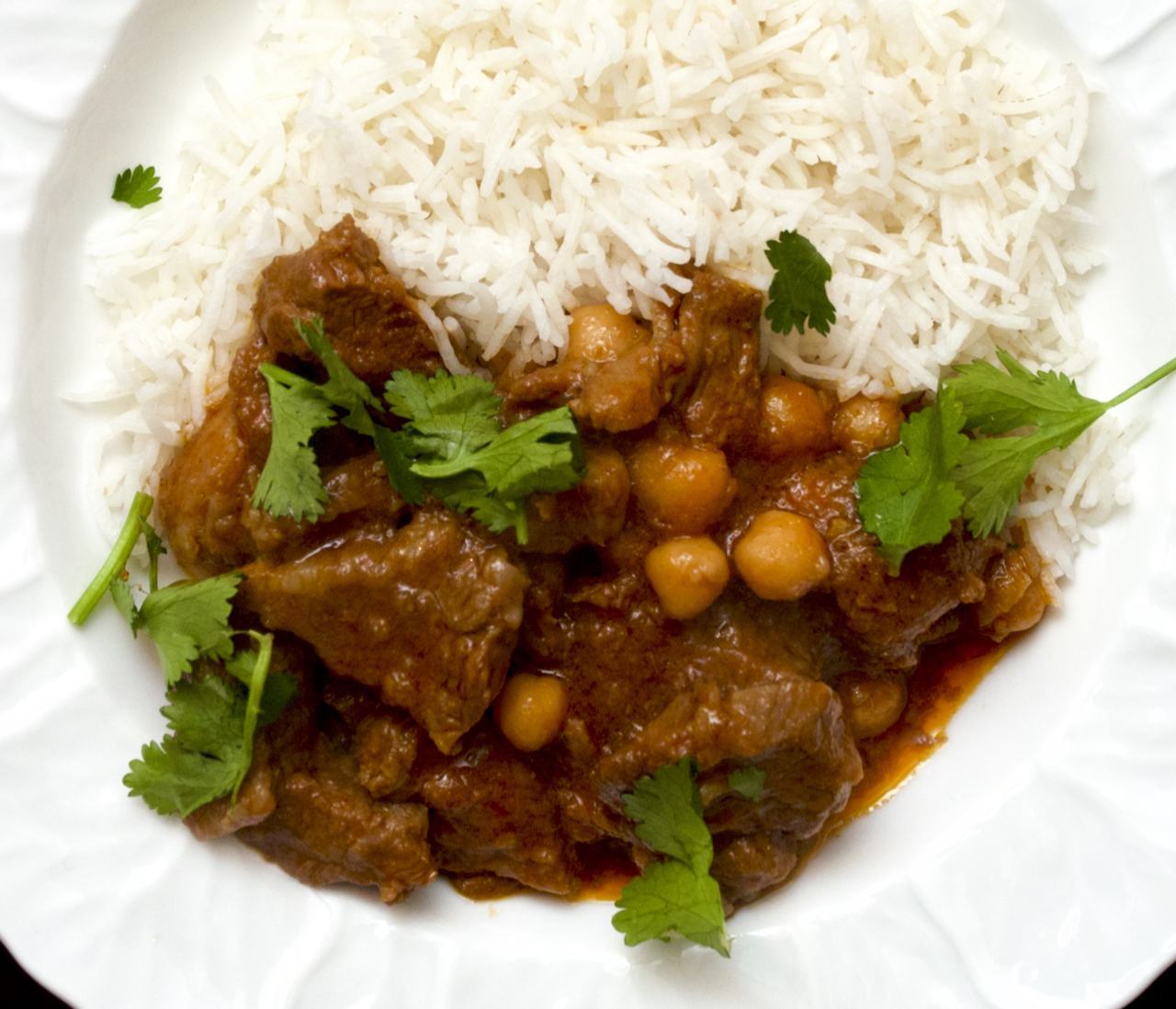
We love a lamb curry and this one uses lamb neck fillet which is a cut that doesn’t take too long to cook and is meltingly tender. Serve with steamed basmati rice.
Wine Suggestion: A juicy red with velvety tannins like Kilikanoon’s Covenant Shiraz which balances ripe plummy fruits with real elegance and finesse.
Lamb and Chickpea Curry – serves 4
1kg lamb neck fillet, cut into large chunks
3 tbsp veg oil
2 large onions, finely diced
4 garlic cloves, finely grated
7.5cm piece of ginger, finely grated
1 cinnamon stick
5 cardamom pods
5 cloves
1 tsp cumin seeds
1 tbsp ground coriander
2 tbsp garam masala
1 tsp Kashmiri chilli powder
2 tsp salt
2 tbsp tomato purée
400g tin chickpeas, drained
coriander leaves, to serve
Heat the oil in a a large casserole over a medium-high heat. Add the onions and cook for at least 10 minutes or until softened and turning deep golden brown.
Turn the heat down a bit and add the garlic and ginger. Stir for 2 minutes, then add the whole and ground spices and the salt. Cook for another 2 minutes before stirring in the the tomato purée and cooking for 2 minutes more.
Add the lamb with 250ml water and bring to a simmer. Reduce the heat and cover with a lid. Cook gently for 15 minutes, then remove the lid and stir. Cook, uncovered, for 30 minutes more, stirring every 10 minutes.
Add the chickpeas and cook for another 15 minutes or until the lamb is very tender. Season to taste.
Serve with steamed rice and the coriander sprinkled over.
(Original recipe from Tom Kerridge Cooks Britain, Bloomsbury Publishing, 2024.)
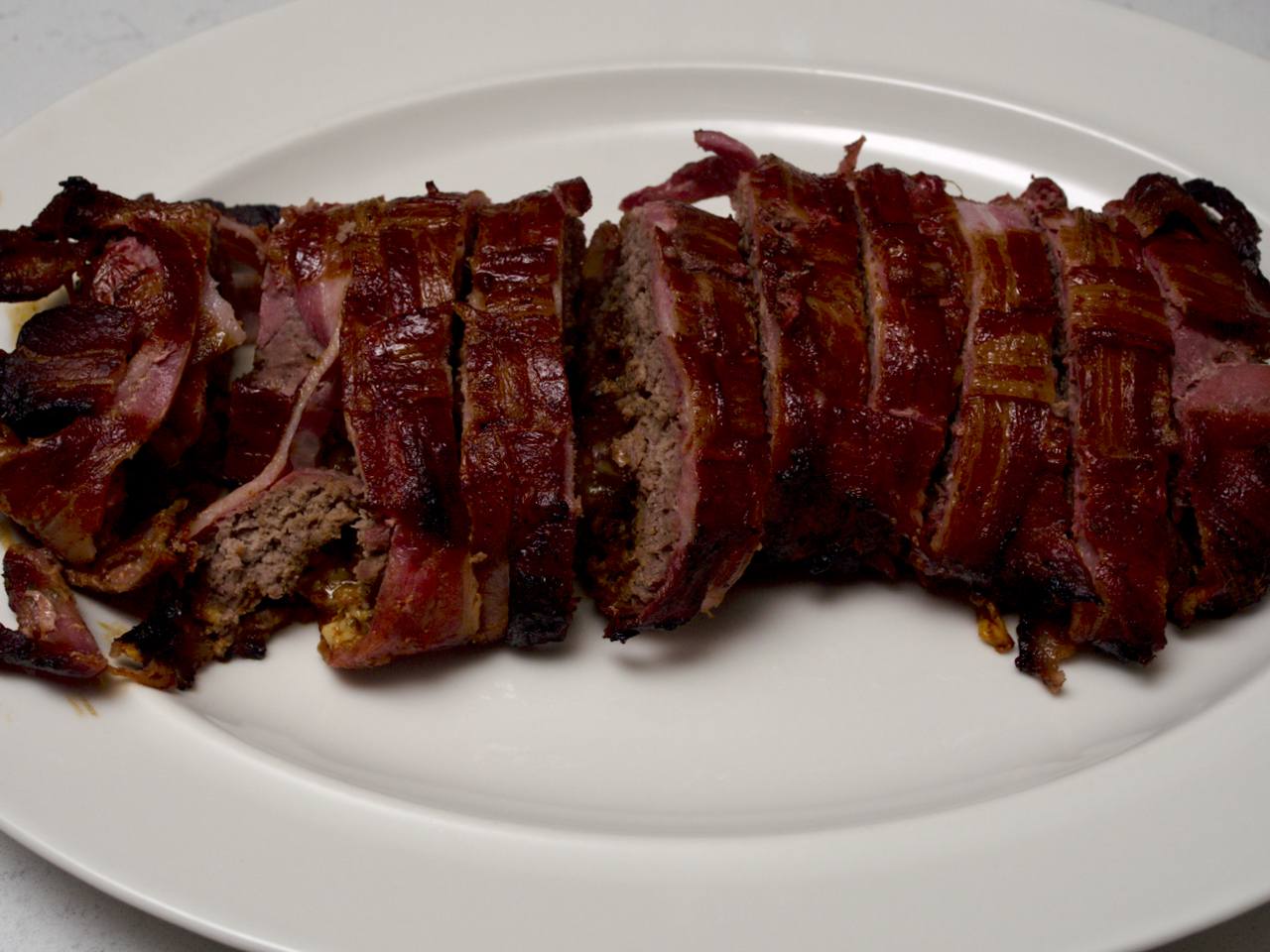
Here is something a bit different for the barbecue. It’s a meatloaf stuffed with cheese and tomato chutney and wrapped in a bacon lattice. Serve in slices with salads and sides.
Wine Suggestion: a lovely, juicy red is what we like with this. Roc des Anges “Segna de Cor” a blend of Grenache, Carignan and Syrah fits this bill with good deal of panache. It’s a wine that reflects the unique soils of Roussillon, but with a layer of brambly, juicy fruits on top.
You need to get your barbecue prepared for indirect cooking so you can cook the meatloaf away from the direct heat of the fire.
Start by making the bacon lattice to wrap the meatloaf. Line up 8 slices of bacon vertically on a flat baking sheet. From left to right, fold every other slice in half upwards. Lay a slice horizontally across the centre of the vertical slices. Unfold the vertical slices back over the horizontal one then fold up the other set of vertical slices. Lay over another horizontal slice and unfold the foleded ones. Repeat until you have a neat lattice.
Place the beef mince over the bacon in an even layer. Sprinkle over the barbecue rub and season with salt and pepper. Scatter the cheese in a line down the centre, then spoon over the relish.
Roll the meatloaf up as tightly as you can into a neat, fat sausage. Place the meatloaf on the barbecue, seam side down, away from the fire. Cover with the lid and cook gently for 35 to 40 minutes, turning with tongs a few times so it browns all over. The meatloaf is cooked when a probe reads 65-70C.
Rest the meatloaf for a few minutes, then carve into thick slices.
(Original recipe from Foolproof BBQ by Genevieve Taylor, Hardie Grant: Quadrille, 2021.)
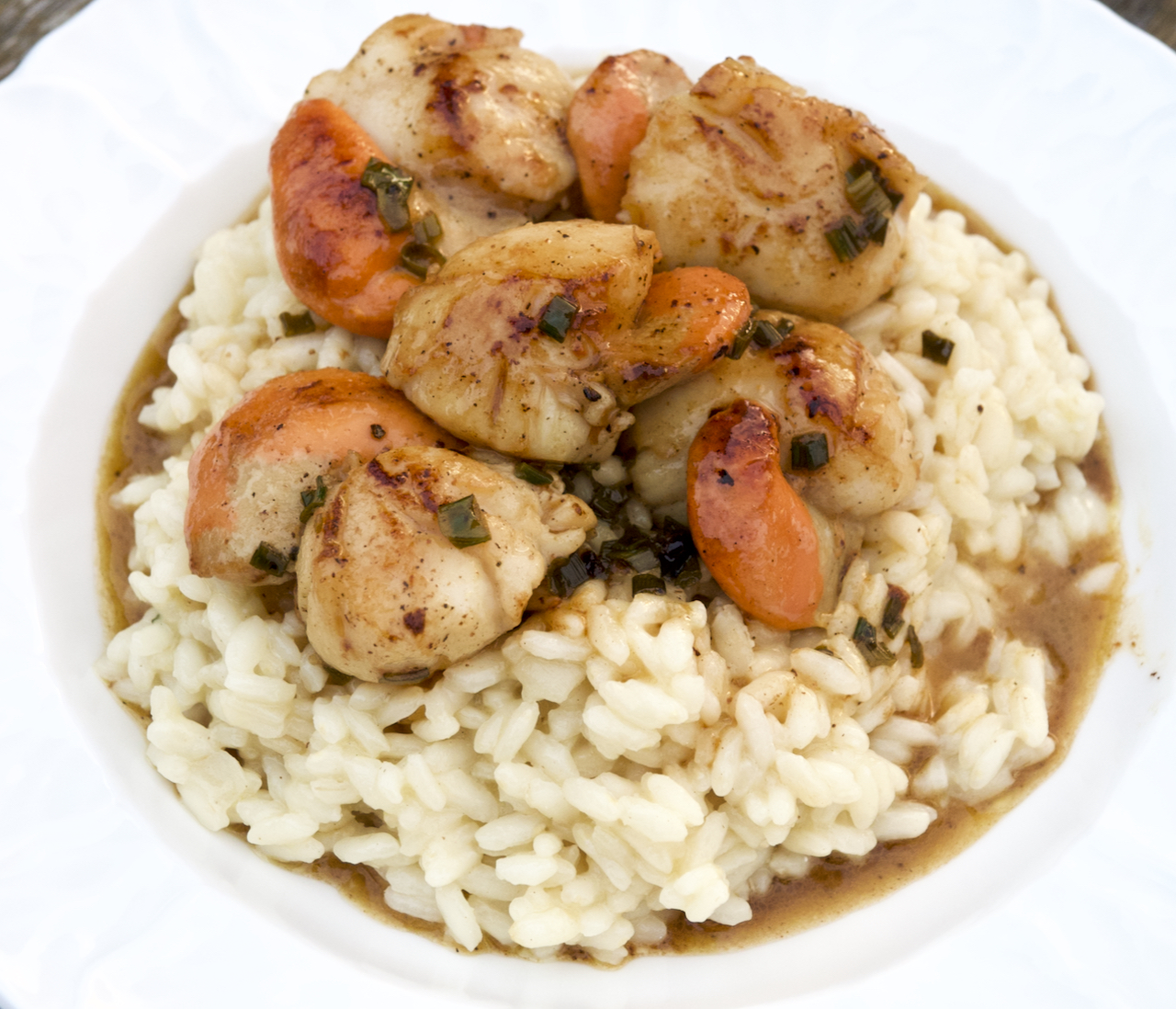
You get a much more generous helping of scallops when you cook them for yourself at home and they make a super fancy risotto.
Wine Suggestion: Keeping it Italian we went for the Murgo Etna Bianco, a blend of Carricante and Catarrato which had body, loads of salty, minerality and bags of freshness.
Scallop risotto with brown butter – serves 2
2 tbsp olive oil
1 shallot, finely chopped
2 cloves of garlic, crushed
200g risotto rice
175ml white wine
500ml hot fish stock
30g Parmesan, finely grated
75g butter
6 large or 12 small scallops (we had a few more than this)
a handful of chives, chopped
juice of half a lemon
a grating of nutmeg
Heat the oil in a deep frying pan and fry the shallot for 6 to 8 minutes or until softened. Add the garlic and fry for another minute, then stir in the rice. Toast for a few minutes and stir to coat the rice in the oil. Add the wine and let it bubble until almost all absorbed.
Add a ladle of the hot fish stock to the rice and stir until it has been absorbed. Keep going like this, adding a ladleful at a time until all the stock is used and the rice is creamy and tender. Season, then stir in the Parmesan and 25g of the butter. Remove from the heat and cover with a lid. It will rest while you cook the scallops.
Heat a frying pan over a high heat. Pat the scallops dry with kitchen pepper, then season and brush lightly with oil. Add the scallops to the hot frying pan and sear for 1 to 2 minutes on each side, depending on the size of your scallops. Remove the scallops to a plate and take the pan off the heat. Add the rest of the butter and stir until it is foaming and browned – it should smell nutty. Season with black pepper, the chives, lemon juice and nutmeg. Return the scallops to the pan and spoon the butter over them.
Give the rice a stir and divide between warm bowls. Place the scallops on top and pour over the brown butter.
(Original recipe by Anna Glover in Olive Magazine, July 2024.)
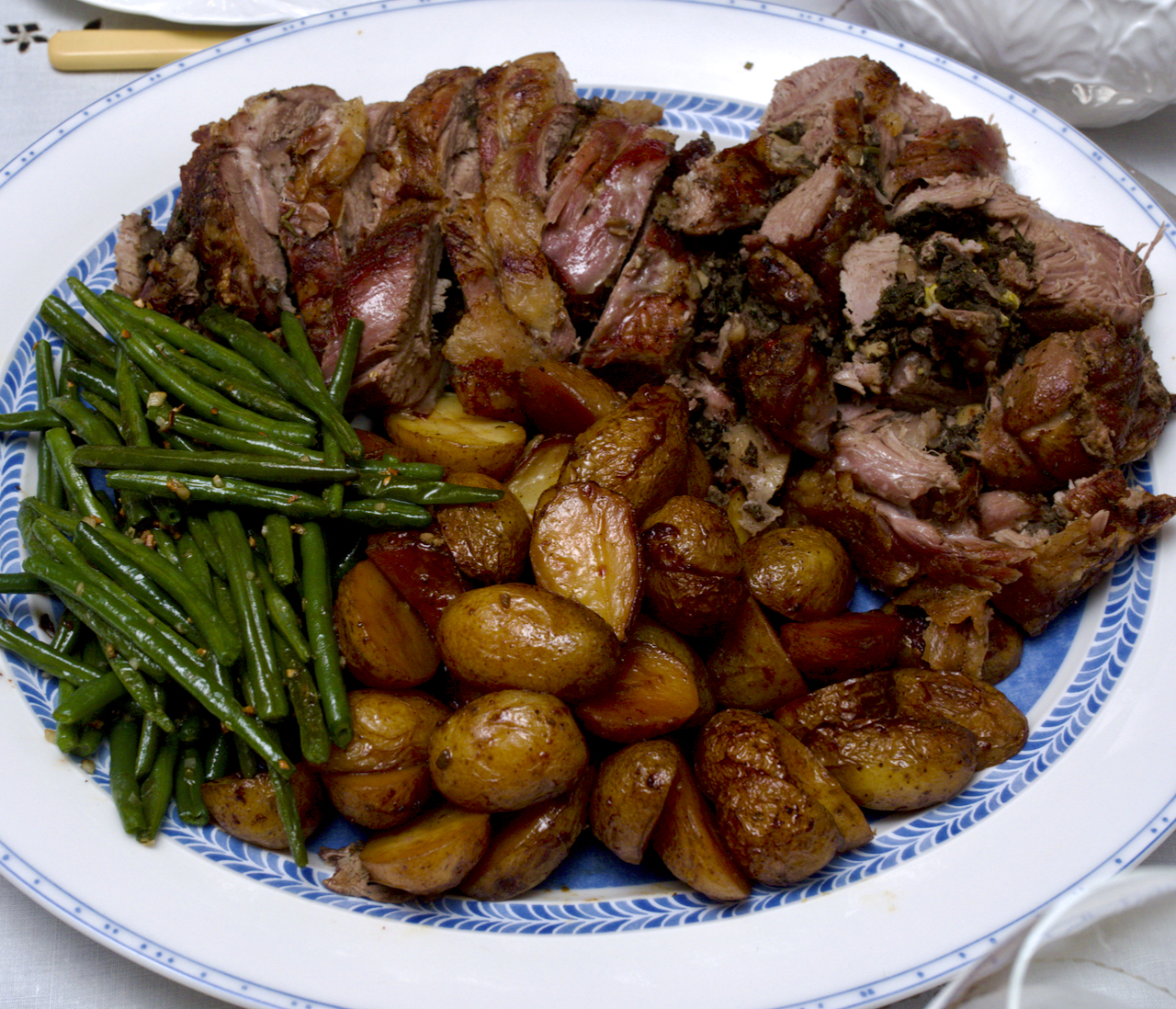
You freeze the stuffing here before rolling up with the the lamb and tying with string – genius! Pretty much a one pot-dish then and you can easily get your beans ready in advance and re-heat with the garlic to serve.
Wine Suggestion: The combination of lamb, nuts and mushrooms lends itself to a good old-vine northern Rhône Syrah like Domain Coursodon’s Olivaie, a St Joseph from one of the best vineyards in this appellation. We opened one 5 years old and it had come together nicely with a rich and velvety texture, hints of plum, raspberries and olives on the nose and a charming length and balance.
Lamb shoulder with potatoes and garlicky green beans – serves 4 with leftovers
1.5kg boneless lamb shoulder
1½ tsp fine sea salt
1 tsp freshly ground black pepper
2 tsp extra virgin olive oil
FOR THE STUFFING:
1 tbsp unsalted butter
2 shallots, finely chopped
3 cloves of garlic, crushed
300g button mushrooms
100g baby spinach, roughly chopped
3 tbsp skinned hazelnuts
3 tbsp pistachios (plus some extra chopped to serve)
1½ tbsp finely chopped parsley
1½ tsp finely chopped rosemary
1 tbsp lemon zest
FOR THE POTATOES:
1kg baby potatoes, halved or quartered if large
1 tbsp extra virgin olive oil
FOR THE GRAVY:
2 tbsp flour
375ml beef stock
¼ tsp dark soy sauce
FOR THE GREEN BEANS:
500 green beans, trimmed
2 tsp fine sea salt
2 tbsp olive oil
4 cloves of garlic, crushed
You need to make the stuffing first and it can be done well in advance and needs to go in the freezer for at least 3 hours.
Heat the oven to 180C/160C fan, then roast the hazelnuts for 8 minutes. Leave them to cool, then roughly chop.
Put the mushrooms in a food processor and whizz until finely chopped.
Melt the butter in a frying pan over a high heat. Add the shallots, garlic and mushrooms and cook for 5 minutes or until any liquid produced by the mushrooms has gone. Add the spinach and stir until just wilted.
Transfer the mushroom mixture to a bowl and allow to cool for 20 minutes, then stir in the remaining stuffing ingredients and season with salt and pepper.
Pile the stuffing onto a piece of cling film, then shape into a long log (about the length of a 30cm ruler). Roll up tightly with the cling film then put into the freezer for at least 3 hours (this can be done a couple of days in advance).
Take your lamb shoulder and place fat-side down . Cover with cling film and use a rolling pin to pound it into a rectangle (roughly 40cm x 22cm) and try to make it as even thickness as possible.
Sprinkle the lamb with salt and pepper, then unwrap the frozen stuffing and roll it up tightly with the lamb, finishing with the seam down.
Secure the lamb with kitchen string every 2cm (ours looked pretty terrible at this point but don’t fear, it will look perfect when cut out at the end).
Heat the oven to 220C/200C fan.
Rub the lamb roll with the olive oil and sprinkle over some salt and pepper.
Toss the potatoe with salt, pepper, and olive oil in a large roasting pan, then place the stuffed lamb on top.
Roast for 30 minutes, then turn the heat down to 160C/140C fan and cook for 2½ hours, or until the meat can be pulled apart easily with a fork.
When the lamb is close to ready, cook the beans. Bring a large saucepan of water to the boil with 1 tsp of salt. Add the beans and cook for 4 minutes, then drain and rinse under the cold tap and drain well.
Remove the lamb and potatoes and loosely cover with foil, while you make the gravy.
Discard all but 3 tbsp of the fat from the pan, you can add a bit of butter if there isn’t enough fat.
Put the roasting tin on the hob over a medium heat. When the fat is hot, stir in the flour for 1 minute.
Keep stirring while you slowly add the stock. Add the soy sauce and stir continuously until it thickens to a gravy-like consistency. Taste and season to taste.
Finish your green beans by heating the oil in a large frying pan over a medium heat. Add the green beans and garlic and stir for 2 minutes until the garlic is cooked and the beans warmed through. Season with salt and pepper.
Remove the string from the lamb and cut into thick slices.
Serve the lamb on a platter with the gravy, potatoes and garlicky green beans.
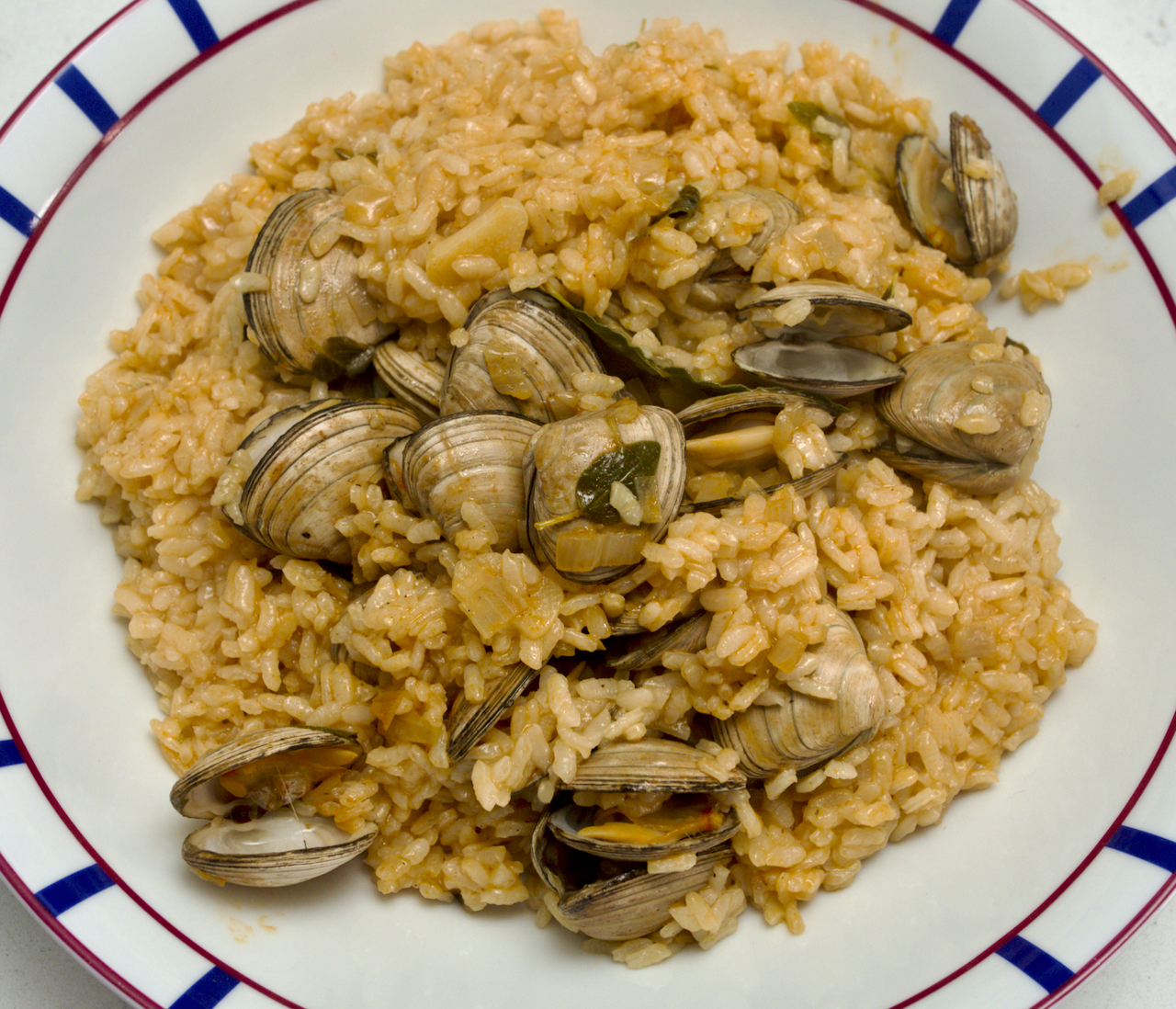
A summery seafood dish with deliciously sweet Irish clams.
Wine Suggestion: A Spanish dish with rice and clams … we just had to open an Albariño! Perrenially reliable, but especially good the last few years is Bodegas Castro Martin; vibrant, salty, and with a great balance of depth, weight and flavour.
Spanish rice and clams – serves 4
2 tbsp olive oil
1 banana shallot, finely chopped
2 garlic cloves, finely sliced
1 bay leaf
2 tsp tomato purée
300g Bomba rice or other short-grain rice
750ml fresh fish stock
a handful of marjoram leaves
500g clams, cleaned
Heat the oil in a shallow casserole or paella pan over a low heat. Add the shallot and cook for 5 minutes to soften. Add the garlic, bay and tomato purée and cook for a further minute.
Stir in the rice and increase the heat to medium-high. Toast the rice for a minute before adding the fish stock, marjoram and plenty of seasoning. Stir and cover, then reduce the heat to low and simmer for 12 minutes until the rice is almost cooked and still soupy.
Add the clams, cover and cook for another 4 minute until the clams have opened (chuck any that stay closed), then serve.
(Original recipe from The Spanish Home Kitchen by José Pizarro, Hardie Grant, 2022.)

 Jono & Jules do food & wine