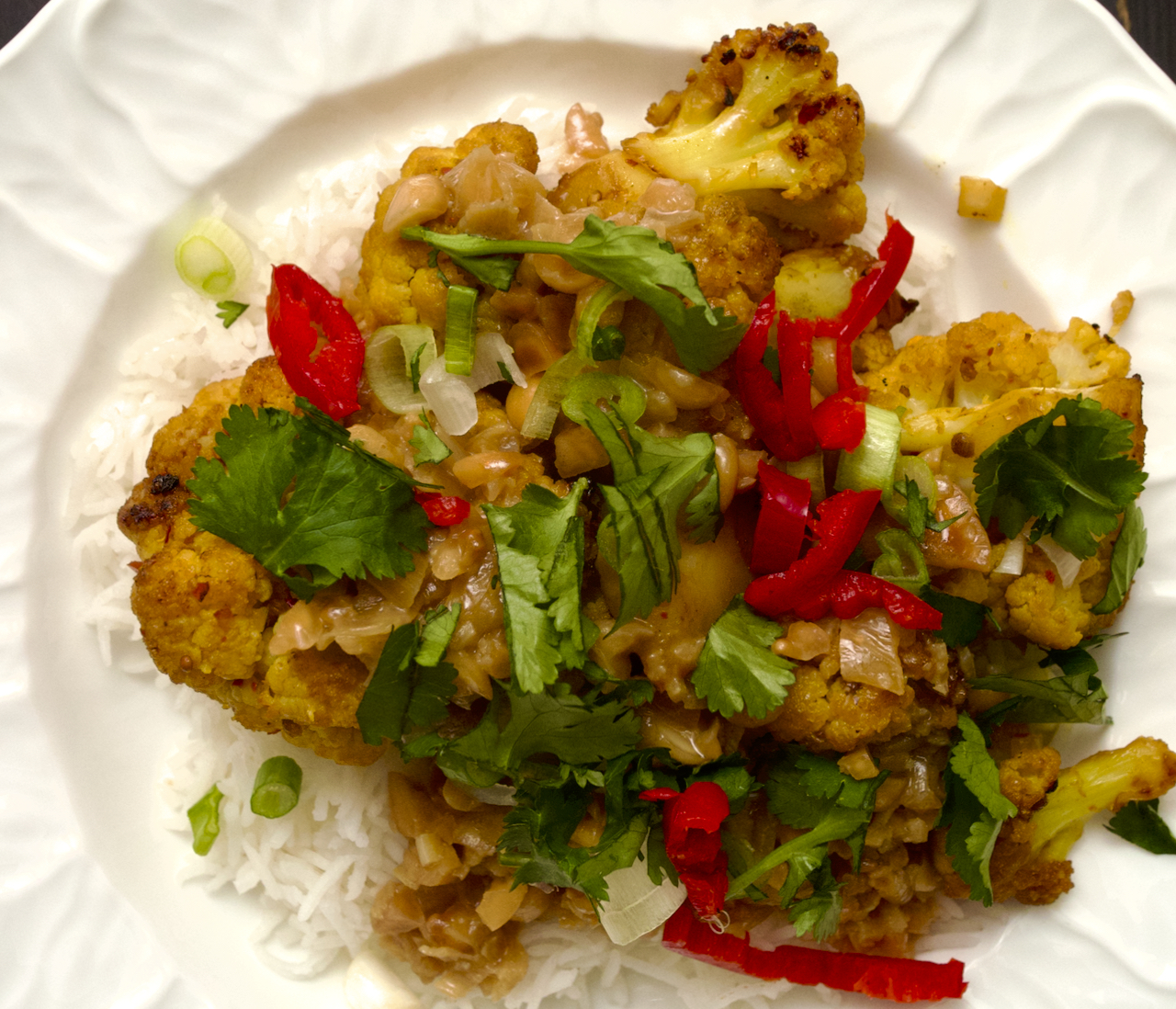
We tend to cook outside when the weather allows but don’t always feel like meat. There are lots of good veggie recipes for the barbecue about now and we particuarly like this one. You won’t miss the burnt sausages.
Wine Suggestion: It was a warm, summer evening so wanted to choose a chilled wine to accompany our dinner. Fortunately this goes great with rosé so we chose the Flying Solo from Domaine Gayda which is just as good as many wines from Provence; dry, textural, easy-drinking but with good weight, plus summery red fruit flavours.
BBQ Cauliflower with Satay Sauce – serves 4 to 6
1 medium cauliflower, broken into florets
FOR THE MARINADE:
1 tbsp coriander seeds
1 tsp chilli flakes
1 tsp ground turmeric
1 banana shallot, finely chopped
⅓ of a 400ml tin coconut milk (use the rest for the sauce)
2 tbsp soy sauce
2 tsp soft brown sugar
2 cloves of garlic, finely chopped
FOR THE SATAY SAUCE:
1 tbsp vegetable oil
2 banana shallots, finely chopped
2 cloves of garlic, finely chopped
2.5cm ginger, grated
1 lemongrass stalk, finely chopped
⅔ of a 400ml tin coconut milk
125g salted peanuts, roughly crushed
2 tbsp soy sauce
TO SERVE:
steamed rice
coriander, roughly chopped
scallions, roughly chopped
red chillies, roughly chopped
Make the marinade first. Put the coriander seeds in a small frying pan and toast over a medium heat for a couple of minutes. Roughly grind in a pestle and mortar, then transfer to a bowl. Add the chilli flakes, turmeric, shallot, coconut milk, soy sauce, brown sugar and garlic. Season with salt and pepper and stir well.
Bring a large pan of water to the pan and add some salt. Blanch the caulilfower for 5 minutes until starting to soften, then drain well and add to the marinade. Stir gently to coat, then set aside for 2 hours.
Next, make the satay sauce. Heat the oil in a small pan over a low heat. Add the shallots and cook gently for 15 minutes, until golden. Add the garlic, ginger and lemongrass and fry for another 5 minutes. Add the rest of the coconut milk, the peanuts and the soy sauce. Simmer for 5 minutes or until thickened, then keep warm while you cook the caulilfower.
When you are ready to cook you need to get your barbecue ready for direct grilling.
Thread the cauliflower onto skewers, reserving any leftover marinade. Put the skewers onto the hot barbecue, cover with the lid and cook for 2-3 minutes, then baste with the leftover marinade and turn them over. Keep cooking and basting for about 10 minutes or until the cauliflower is tender.
Serve the cauliflower over rice and scatter over the coriander, scallions and chillies. Serve the satay sauce on the side.
(Original recipe from Foolproof BBQ by Genevieve Taylor, Quadrille, 2021.)
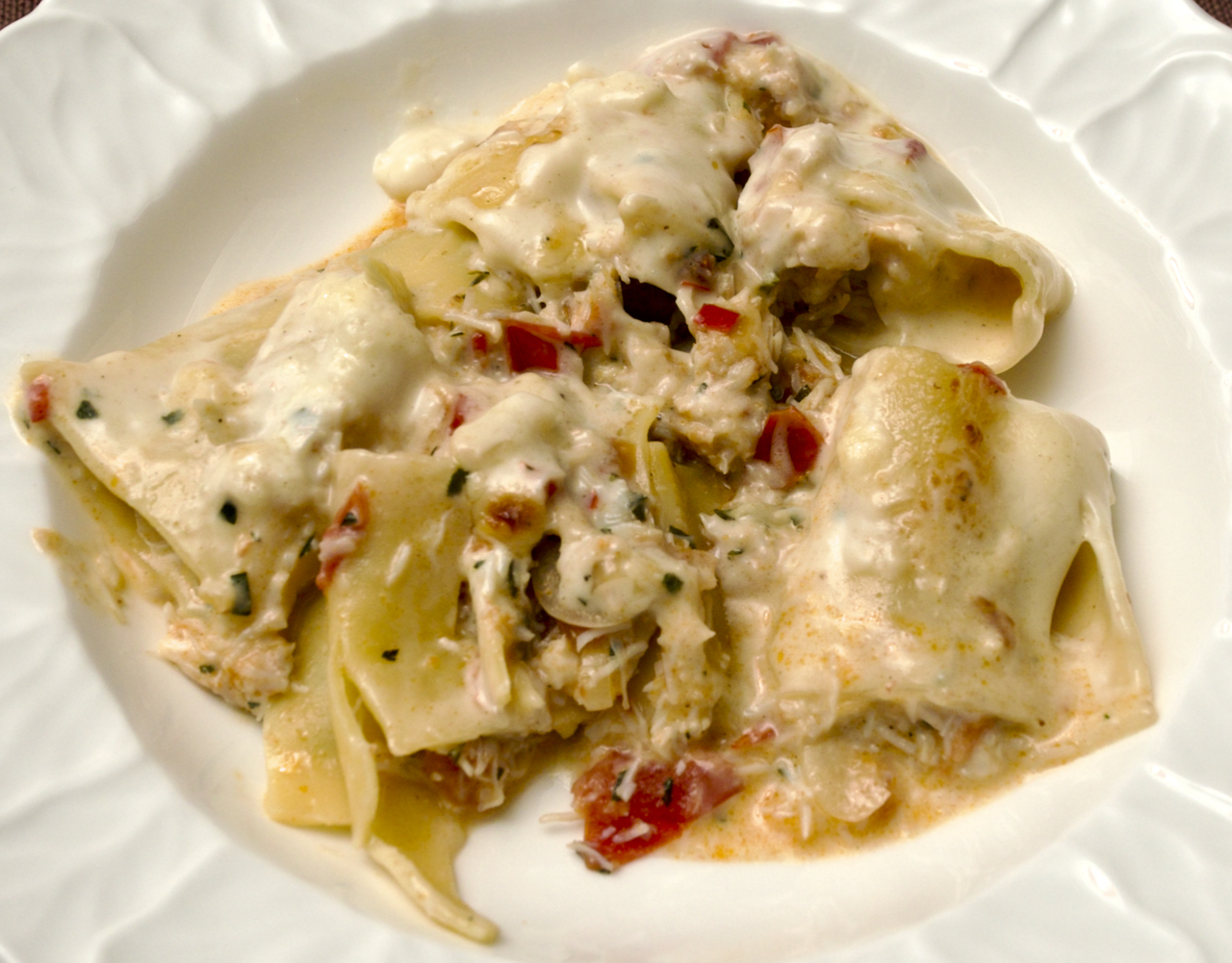
A beautiful Spanish pasta dish made with fantastic Lambay crab. The crab is a bit pricy but it’s worth it for this luxurious dish. Our fishmonger fortunately sells both prepared brown and white crab meat and also shellfish stock which makes this a tad easier.
Wine Suggestion: The richness of this dish demands a fuller-richer white and while this means that Chardonnay was our original thought, we wanted to keep it Spanish given the origin of the dish. Initially we thought a good white Rioja, like the Urbina Blanco Crianza (currently 2016 and 9 years old) which would have been excellent. Instead we stepped sideways and opened the Dominio de Tares Cepas Viejas Godello, an old-vine gem that is fermented in cask and aged on it’s lees to give richness and depth over a lemon, grapefruit and apple fruit flavours, a creamy texture and refined fresh structure.
Crab Canelones – serves 6
45ml olive oil
45g plain flour
500ml fresh shellfish stock (or you could use chicken stock)
300ml double cream
a good grating of nutmeg
80g finely grated Manchego, plus extra for the top
FOR THE FILLING:
60ml olive oil
1 small shallot, finely chopped
2 red chillies, finely chopped
3 garlic cloves, finely sliced
50g brown crab meat
500g ripe tomatoes, diced
150ml shellfish stock (or chicken stock)
500g white crab meat
15g tarragon, finely chopped
250g dried cannelloni tubes
Make the bechamel first. Heat the oil in a saucepan over a medium heat. Stir in the flour and cook for a minute, then gradually add the stock, stirring continuously, until you have a smooth, thick sauce. Add the cream, nutmeg and cheese and season, then set aside.
Heat the olive oil for the filling in a separate saucepan over a very low heat. Add the shallot, chillies and garlic and cook over a very low heat for 15 minutes.
Increase the heat to medium high and add the brown crab meat and fry for 1 minute, then add the tomatoes and the stock. Season and cook for 15 minutes, then take off the heat and stir in the white crab meat and chopped tarragon.
Blanch the pasta tubes in boiling water for 3 minutes, then gently drain and cool under cold running water.
Fill each pasta tube with the crab mixture and fit them snugly into an ovenproof dish, then pour over the bechamel. Scatter over a little more grated cheese, then bake for about 30 minutes or until golden and bubbling. Serve with a green salad.
(Original recipe from The Spanish Home Kitchen by José Pizarro, Hardie Grant, 2022.)
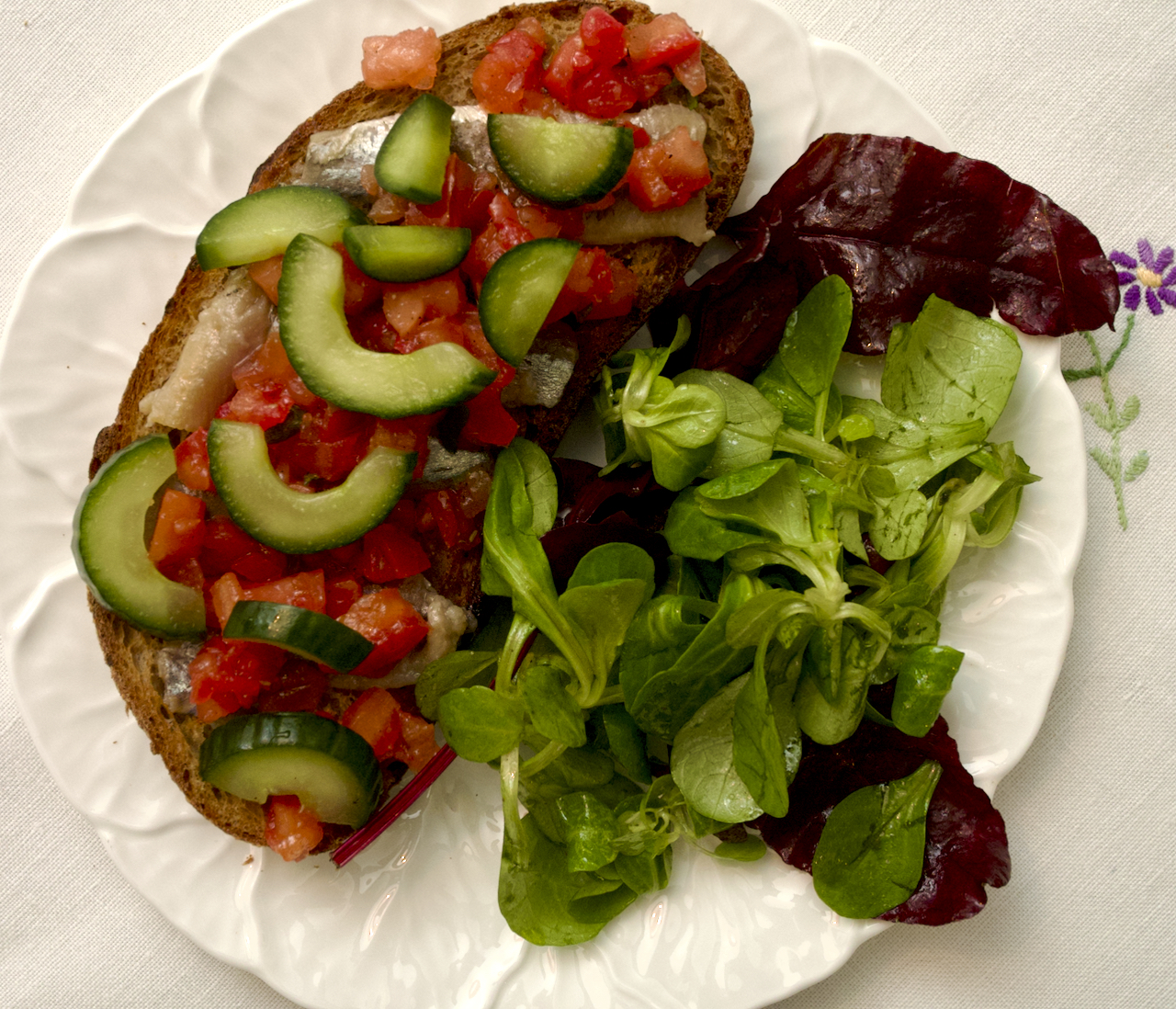
We’re good at picking up fancy tins of fish but less good at using them! Here’s some nice inspiration for a tin of sardines.
Brushette with sardines and pickled cucumber – serves 4
1 x 120g tin of sardines in olive oil, drained
juice of ½ lemon
2 tbsp good olive oil
½ cucumber, peeled, halved lengthways and deseeded
1 tbsp caster sugar, red wine vinegar
1 tsp sea salt
1 tbsp red wine vinegar
1 beef tomato, halved horizontally
½ tsp chopped marjoram
1 tsp miniature capers in vinegar, drained
4 slices of sourdough bread, toasted
1 garlic clove, peeled
green salad, to serve
Remove the large bone in the middle of each sardine and transfer the sardines to a bowl. Mash with a fork, then stir through the lemon juice and 1 tbsp of the olive oil.
Cut the cucumber halves into 1cm slices. Place in a bowl with the sugar, ½ tsp of the salt and the vinegar. Mix well, cover with cling film and leave aside for 10 minutes. Pour off all the excess liquid and put the cucumber slices onto a clean tea towel, gather up the edges and squeeze out the excess moisture. Set aside in a bowl.
Scoop out and discard the tomato seeds. Finely chop the flesh to a pulp with the rest of the salt. Transfer to a colander and leave for 5 minutes to drain. Mix the drained tomatoes with the rest of the olive oil and season with black pepper, then add the marjoram and capers. Set aside.
Gently rub the toasted sourdough with the garlic clove. Divide the sardines equally on top of the sourdough slices and add a spoonful of the chopped tomato mixture. Finish with the pickled cucumber and serve with a dressed green salad.
(Original recipe from The Italian Deli Cookbook by Theo Randall, Quadrille, 2021.)
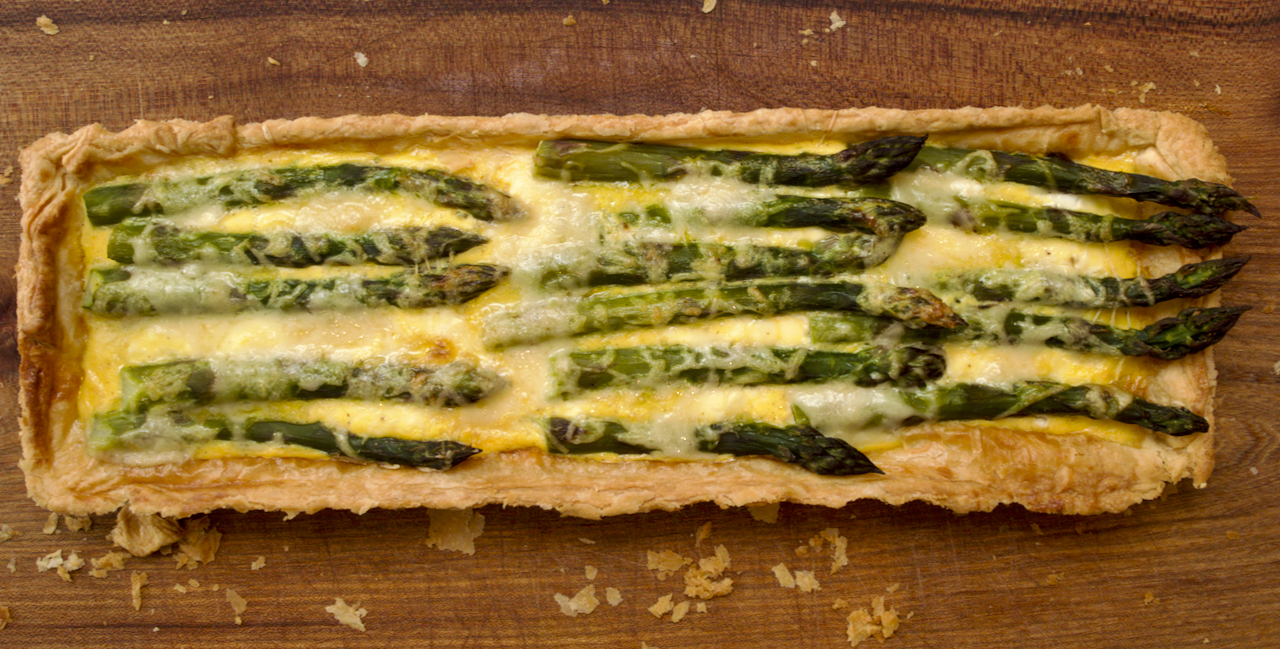
This is perfect for lunch with salad or for a spring starter. We are always nervous with even shop-bought pastry but this is not difficult!
Wine Suggestion: it feels a very French style of dish so we opened a favourite, the Chateau du Hureau Argile, a super dry and savoury Chenin Blanc from Saumur. Ours had a number of years in bottle so had extra roundness and depth but we enjoy this from the moment it released as well.
Asparagus Tart – serves 4 as a main or 6 as a starter
1 x 250g sheet of puff pastry
flour for dusting
1 egg
2 egg yolks
3 tbsp crème fraîche
roughtly 400g asparagus (preferable the fine stuff), snap off the woody ends
30g butter, plus a bit to grease the tin
3 small shallots, thinly sliced
120g chestnut mushrooms, sliced
120g soft, rindless goat’s cheese
25g Parmesan, finely grated
We used a loose bottom rectangular tin 36cm x 12cm.
Lightly grease the tin with butter.
Dust a clean surface with a little flour and roll out the pastry so that it fits in the tin. Chill for 20 minutes (or longer) in the fridge.
Heat the oven to 200C/180C fan/Gas 6.
Beat the egg and egg yolks together with the crème fraîche.
Line the tin with some crumpled baking parchment and fill with baking beans or rice, then bake for about 15 minutes. Carefully remove the paper and beans or rice, then prick the base all over with a fork and brush lightly with the egg mixture.
Put the tart back into the oven for another 10 minute or until the pastry is completely cooked and the base is dry. Press the pastry down with a fork if it has puffed up a bit.
Reduce the oven temperature to 180C/160C fan/Gas 4.
Steam the asparagus for about 5 minutes or until tender, then drain and run under cold water.
Melt the butter in a frying pan and cook the shallot with a good pinch of salt for a few minutes or until softened. Add the mushrooms and turn up the heat. Fry until they have lost their moisture and are starting to colour, then remove from the heat.
Tip the shallots and mushrooms into the cooked pastry case and spread them out evenly. Crumble over the goat’s cheese and arrange the asparagus over the top in a single layer.
Season the egg and crème fraîche mixture then pour evenly over the asparagus. Sprinkle over the grated Parmesan.
Bake the tart until the egg is just set – about 20-25 minutes. Cool slightly before removing from the tin. Serve warm or at room temperature.
(Original recipe from Lickedspoon with Debora Robertson on Substack, 15 APR 2025.)
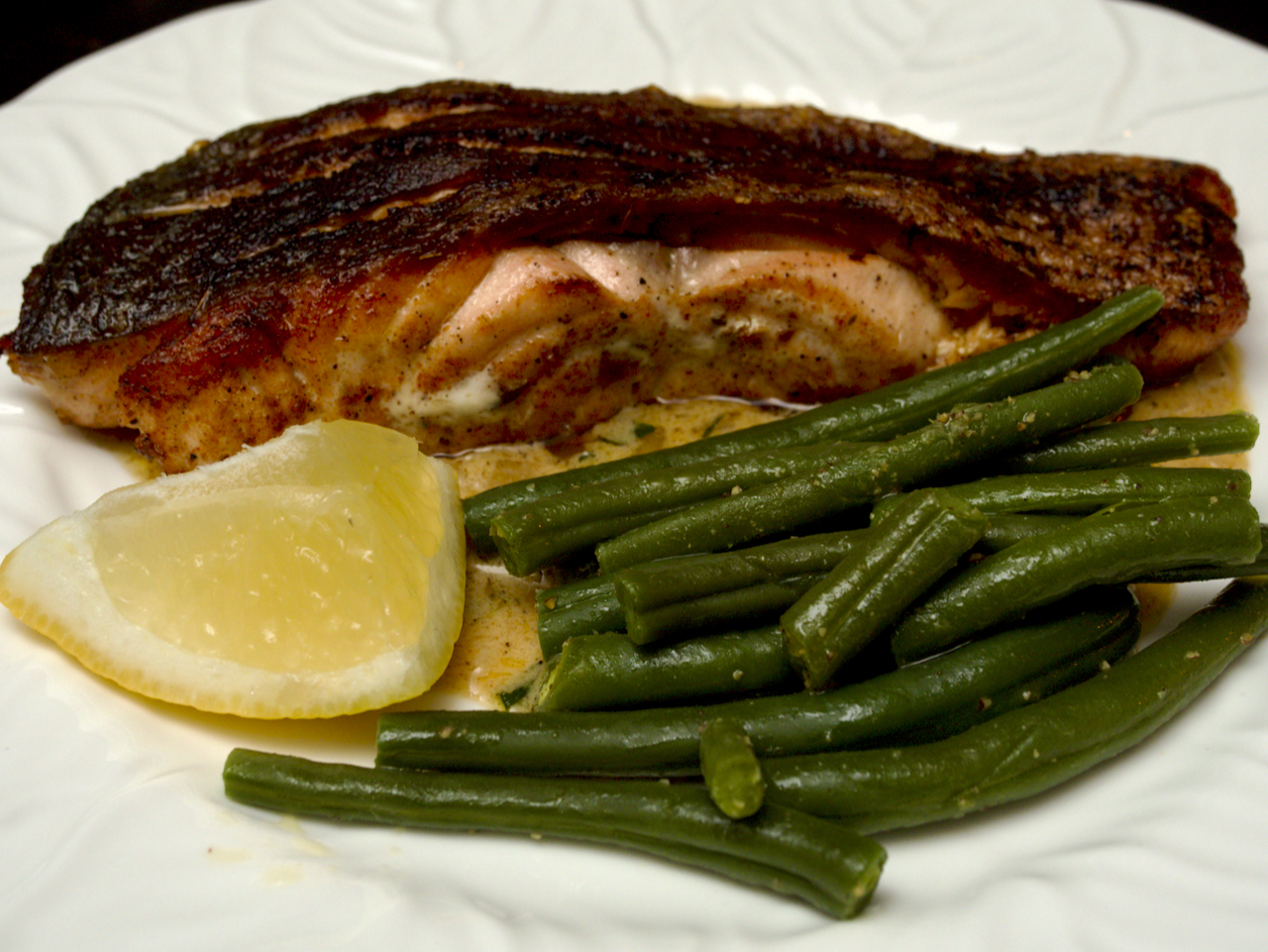
Salmon is one of the most popular dishes in our house so it’s nice to find a recipe with some different flavours.
Wine Suggestion: double down on the citrussy aspect when choosing a wine so for this we headed to a Loire Sauvignon Blanc, but not from one of the “big two”, rather an under-rated Menetou Salon made by Anthony Girard at La Clef du Recit. A touch more grapefruit and orange, but with hints of lemon, the freshness really worked well with the salmon.
Salmon with Cajun spices – serves 2
2 salmon fillets, skin on
2 tsp Cajun spice blend
1-2 tbsp olive oil
30g butter
lemon wedges, to serve
FOR THE SAUCE:
1 tbsp olive oil
2 banana shallots, finely diced
2 cloves of garlic, finely diced
½ tsp Cajun spice blend
150ml fish stock
150ml crème fraîche
juice of 1 lemon
1 tbsp finely chopped flat-leaf parsley
Score the skin of the salmon with a sharp knife, then sprinkle both sides with the Cajun spice mix and a little salt. Heat the olive oil over a medium heat in a frying pan.
Add the salmon to the hot oil, skin side down, pressing the fillets down with a fish slice. Cook for a few minutes on each side, then remove the pan from the heat.
Add the butter to the pan and baste the salmon with it as it melts. Transfer the salmon to a warm plate and leave to rest while you make the sauce.
Put the frying pan back over a medium-high heat and add the olive oil. Add the shallots and cook for a few minutes, then add the garlic and Cajun spice blend and cook for a couple of minutes.
Add the stock to the pan and let it bubble until reduced by half. Stir in the crème fraîche and cook for a minute or two until the sauce thickens. Season and add the lemon juice to taste. Remove from the heat and stir through the parsley.
Spoon the sauce onto warmed serving plates and top with the salmon. Serve with lemon wedges and green beans.
(Original recipe from Tom Kerridge Cooks Britain, Bloomsbury, 2024.)
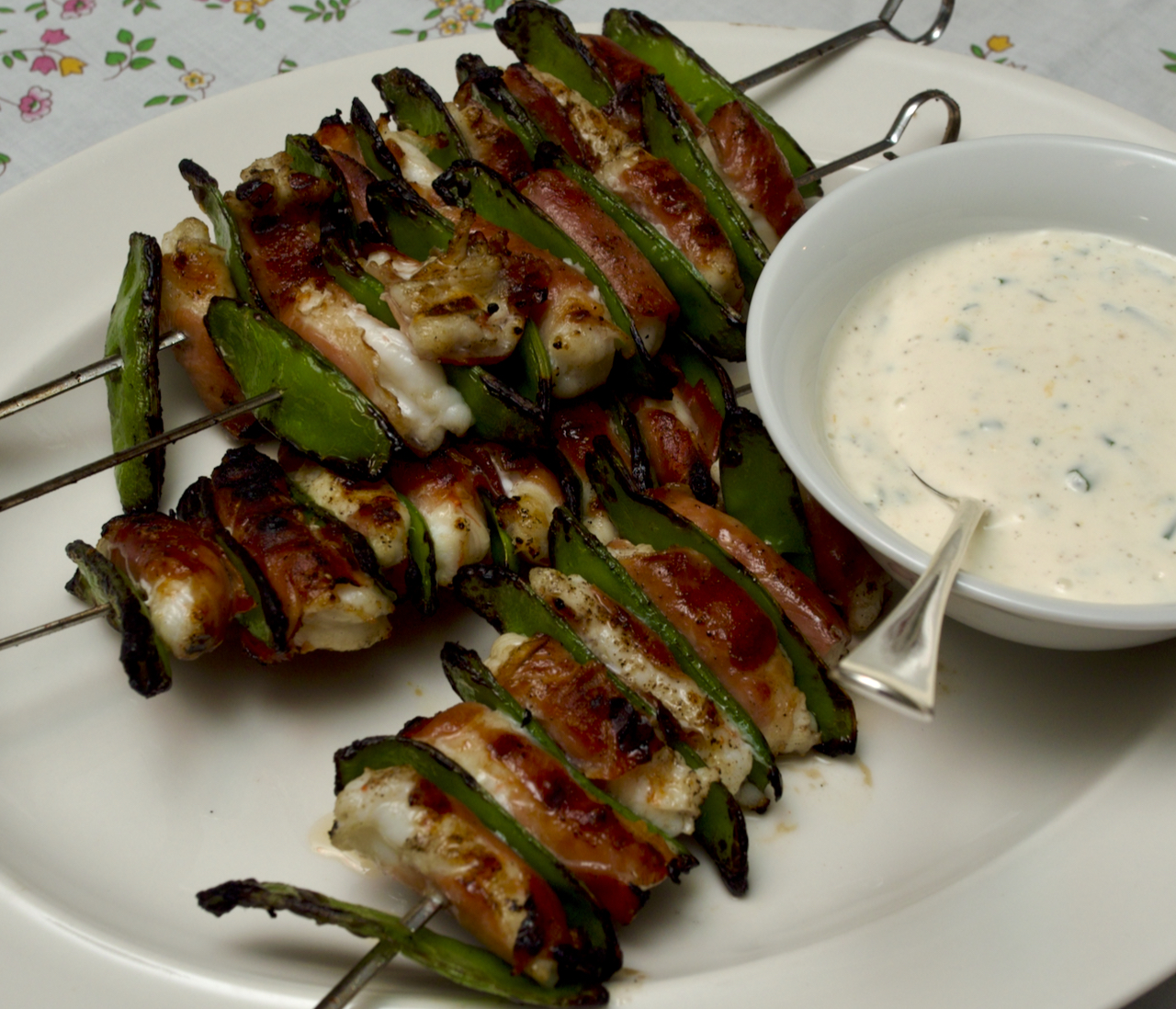
This is an excellent barbecue starter. We have a number of Genevieve Taylor’s barbecue books and they are superb!
Wine Suggestion: You need a wine that loves shellfish, barbecues and salty cured meats which is a bit of a conundrum. The key is both a good amount of fruitiness alongside a minerally freshness; complimetary and contrasting characters. For tonight Pazo Señorans Albariño from Rias Baixas in north western Spain, you almost smell the salty sea air alongside crisp white peaches in the glass and so well structured on the palate. This wine ages superbly and luckily the winery also releases aged bottles so if you get the opportunity do try these too.
Prawns and mangetout on the barbecue – serves 4
300g raw peeled prawns
10 slices of prosciutto
150g mangetout
1 tbsp olive oil
FOR THE LEMONY MAYO:
125g mayonnaise
zest of 1 lemon, and juice to taste
10g chives
Pat the prawns dry with kitchen paper.
Cut each slice of prosciutto into 4 pieces. Wrap each prawn in a piece of prosciutto.
Thread a prawn onto a skewer, followed by a piece of mangetout, then another prawn. Keep going until everything is used up, then brush a little oil over each skewer and season with salt and pepper. Leave them in the fridge until ready to cook.
For the lemony mayo, spoon the mayonnaise into a small bowl and stir through the lemon zest and chives. Add lemon juice to taste (start with half the lemon) and season with salt and pepper. Chill until needed.
Get the barbecue going for hot direct grilling.
Cook the skewers for 1-2 minutes on each side until the ham is crispy and the prawns pink. Serve with the mayo.
(Original recipe from Scorched by Genevieve Taylor, Hardie Grant: Quadrille, 2024.)
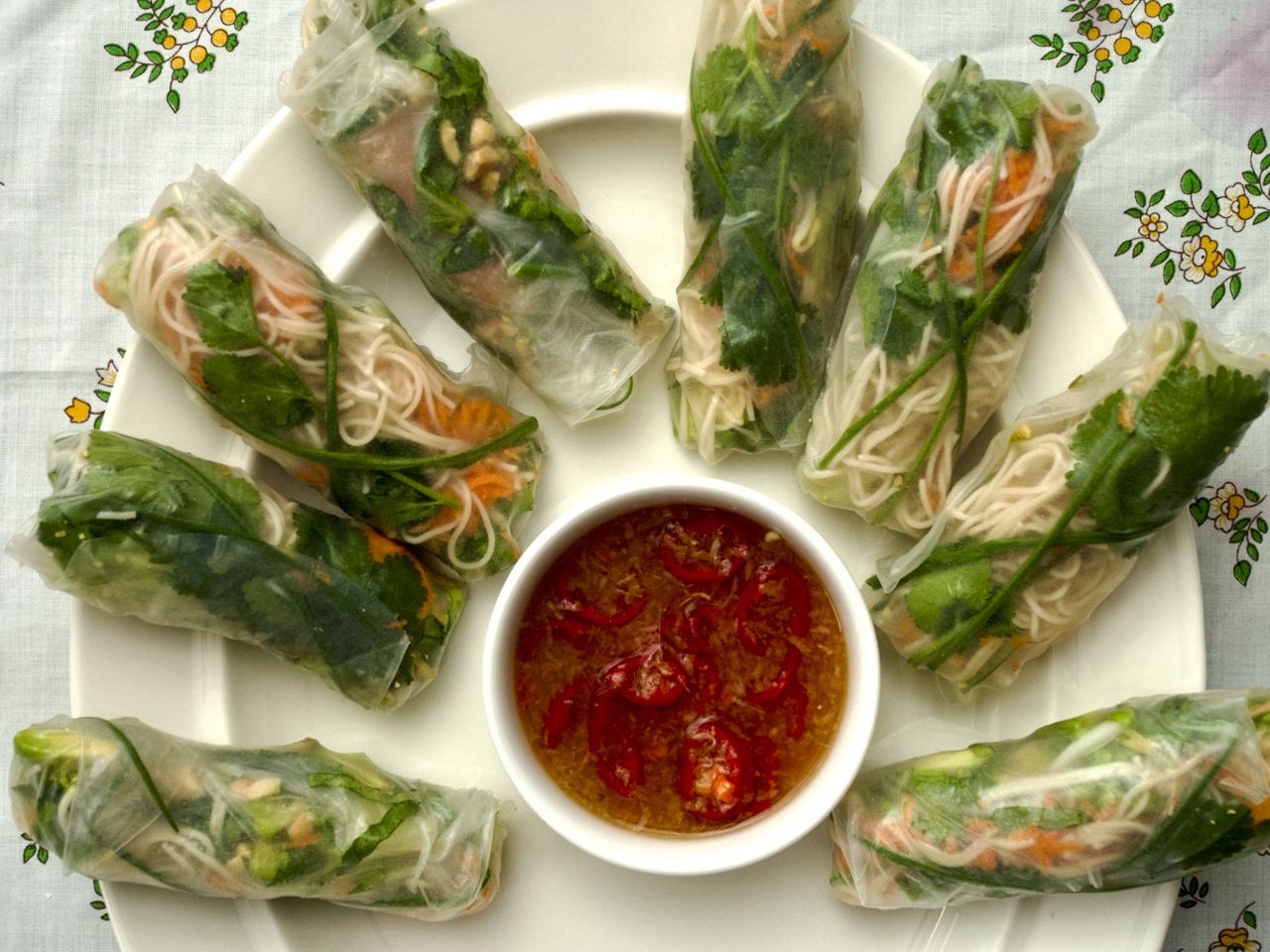
Summer rolls – so simple but they look so impressive. Serve for lunch.
Summer rolls – makes 8
35g rice vermicelli noodles
16 chives
8 sprigs of coriander
1 carrot, cut into matchsticks
¼ cucumber, deseeded and cut into matchsticks
50g bean sprouts
½ little gem lettuce, finely shredded
125g cooked, peeled prawns, halved lengthways
1-2 tbsp roasted peanuts, roughly chopped
16 mint leaves
8 rice paper wrappers
FOR THE CHILLI DIPPING SAUCE:
2 tbsp lime juice
2 tbsp fish sauce
1 tbsp sugar
1 tsp freshly grated root ginger
1 red bird’s eye chilli, thinly sliced
1 clove of garlic, grated
Cook the noodles by bringing a pan of water to the boil. Drop in the noodles and take the pan off the heat. Leave the noodles to soak for 2 minutes, then drain and rinse under cold water. Drain well and set aside.
Mix all the chilli dipping sauce ingredients together with 2 tbsp of cold water and set aside.
Make sure you have all the filling ingredients prepped and to hand.
Dip a rice paper wrapper in a bowl of cold water and leave to soak for up to a minute, then transfer to a damp tea towel.
Add the filling ingredients as follows (making sure to leave a border around the edge so you can seal the roll): arrange two chives in a X in the middle, add a sprig of coriander, then some noodles, carrot, cucumber, bean sprouts, lettuce, prawns and peanuts (careful not to overfill). Top with a couple of mint leaves.
Fold the edge closest to you over the filling, tuck the sides over to enclose then ends, then roll away from you to seal. Set aside under a folded damp tea towel to stop them drying out while you make the rest. Repeat with the remaining rice papers. Serve with the dipping sauce.
(Original recipe from Rick Stein’s Food Stories, BBC Books, Penguin: Random House, 2024.)
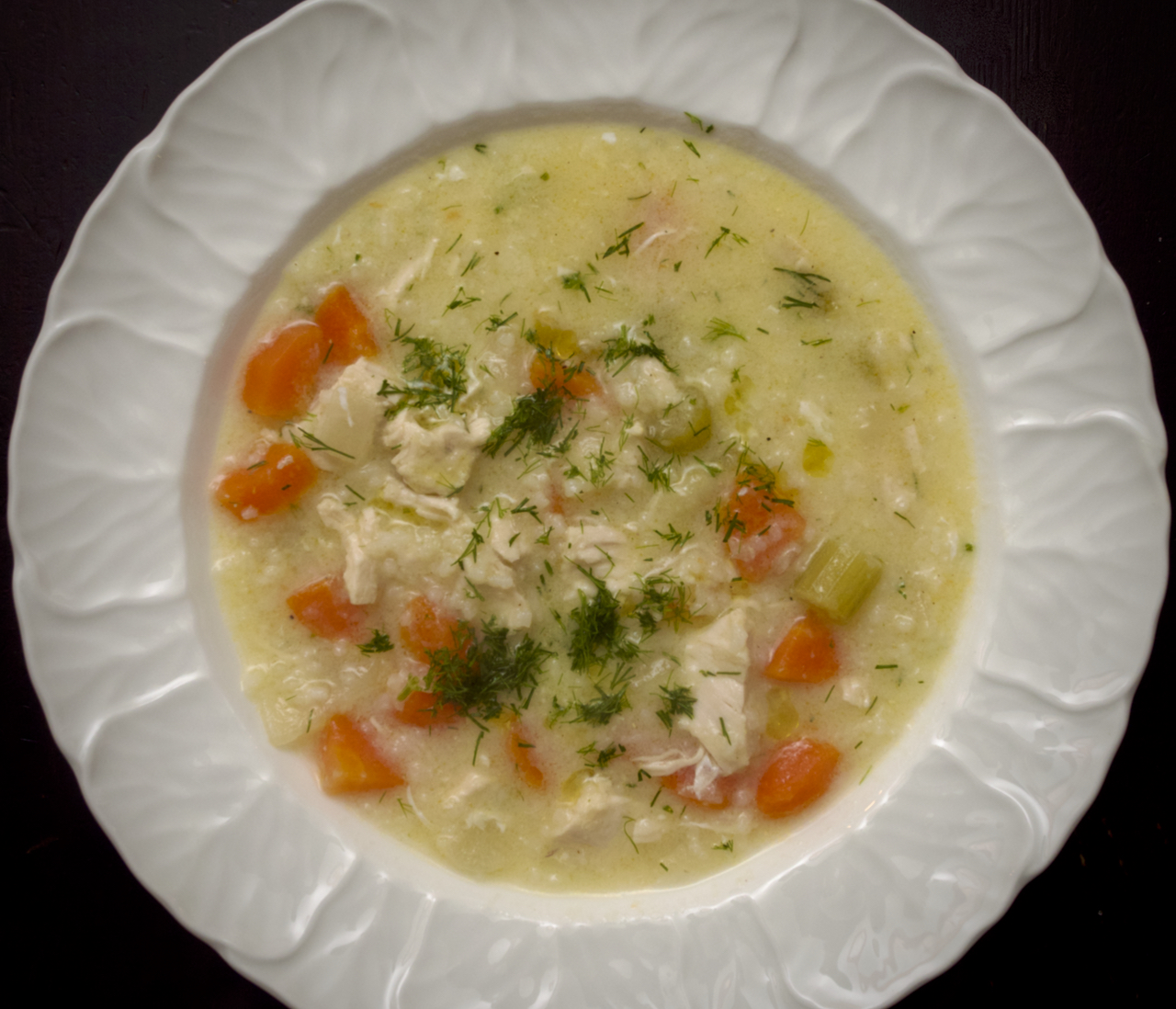
A Greek chicken and rice soup with egg and lemon. Tastes delicious and can only be good for you.
Avgolemono – serves 4 to 6
125g extra virgin olive oil
2 medium white onions, diced into 1cm pieces
2 medium carrots, diced into 1cm pieces
2 ribs of celery, diced into 1cm pieces
3 large cloves of garlic, peeled and finely sliced
3 bay leaves
500g skinless chicken breasts
125g rice
2 large eggs
75g lemon juice
3 tbsp dill, chopped
Heat the oil in a large pot, then add the onions, carrots, celery, garlic, bay leaves and a pinch of salt. Cook gently for about 30 minutes or until soft.
Meanwhile, put the chicken in a single layer in a large pan and cover with 2 litres of water. Add 2 tsp of fine sea salt, then bring to a simmer with the lid on. As soon as the water simmers, turn the heat right down and cook for 5 minutes, then turn the heat off and leave until cool enough to handle.
Remove the chicken and reserve the cooking liquid. Chop the chicken into 1cm pieces.
Add the rice, chicken and chicken cooking waterto the cooked vegetables and bring up to a gentle simmer. Cook for 30 minutes or until the rice is tender.
Whisk the eggs and lemon juice together, then add a couple of ladlefuls of the hot soup to this mix, whisking constantly, before adding the mixture to the soup in a thin stream, stirring all the time.
Bring the soup back to a simmer and leave for another 5 to 10 minutes, stirring constantly until thickened slightly. Remove the bay leaves and check the seasoning. Stir in half the dill, then take off the heat and leave to rest for 10 minutes.
Seve in warm bowls with the rest of the dill, some more black pepper and a drizzle of good olive oil.
(Original recipe by Nick Bramham in FT Magazine, 1/2 March 2025.)
A tasty and colourful dish which we have also successfully cooked with pork fillet so feel free to try that either. The Thai basil makes this dish so we only every make it when we can get that.
Wine Suggestion: Thai basil brings an herbaceousness that we think goes with red Northern Rhone or Burgundy, especially if there’s a little whole bunch fermentation. So for this dish we opened an bottle of Domaine Jamet’s Cotes du Rhone rouge which is made from Syrah grown on the upper slopes around Cote Rotie and with some whole bunch. A wine that benefits from 6 to 12 months in the bottle this had a smoothness, earthiness and well integrated tannins as well as remaining fresh and weightless so not to overwhelm the food.
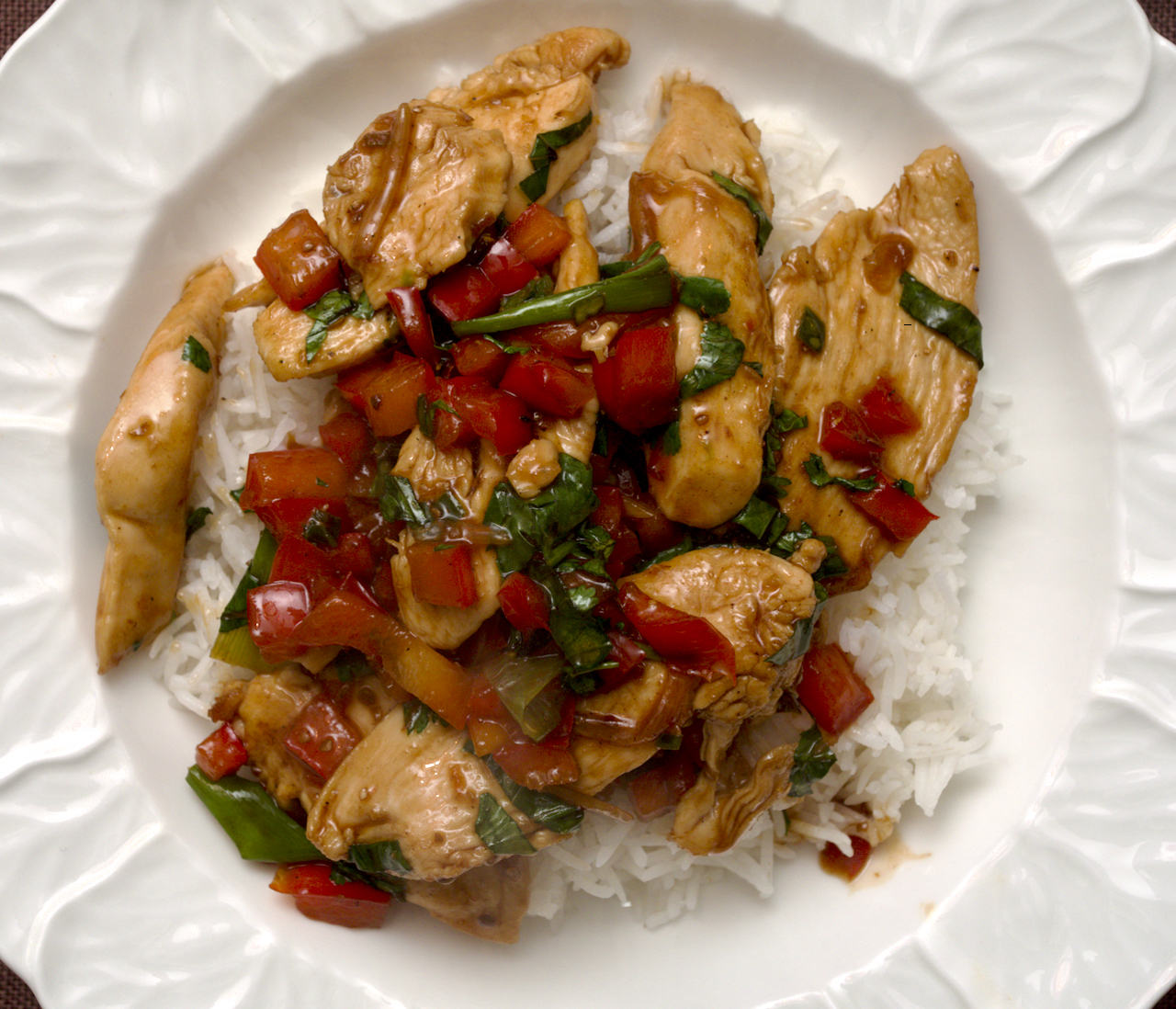
Thai Chicken with Basil – serves 3
2 tbsp vegetable oil
2 skinless chicken breasts, cut into strips
1 Thai green chilli, deseeded and finely chopped
2 cloves of garlic, julienned
1 tbsp sesame oil
1 medium red pepper, deseeded and diced into 1cm pieces
3 scallions, cut into 5cm pieces
1 tsp freshly roasted and ground coriander
1 tbsp palm sugar or soft brown sugar
1 tsp cornflour
2 tbsp fish sauce (nam pla)
1 tbsp light soy sauce
7g fresh Thai basil, shredded
plain rice and fresh coriander, to serve
Heat a tbsp of the vegetable oil in a wok over a high heat, then add half the chicken strips. Add the green chilli and garlic and stir-fry for about 5 minutes or until the chicken has changed colour. Sprinkle with a little of the sesame oil, then remove to a plate.
Add the remaining tbsp of vegetable oil to the wok, then add the red pepper, scallions, ground coriander and sugar. Stir-fry for 2 minutes, then add the chicken.
Mix the cornflour with the fish sauce and soy until smooth, then pour into the pan, stirring constantly for a minute or until the juices thicken slightly. Sprinkle with the remaining sesame oil. Toss in the basil, season to taste and serve with plain rice and lots of chopped coriander.
(Original recipe from Grow, Cook, Nourish by Darina Allen, Kyle Books, 2017.)
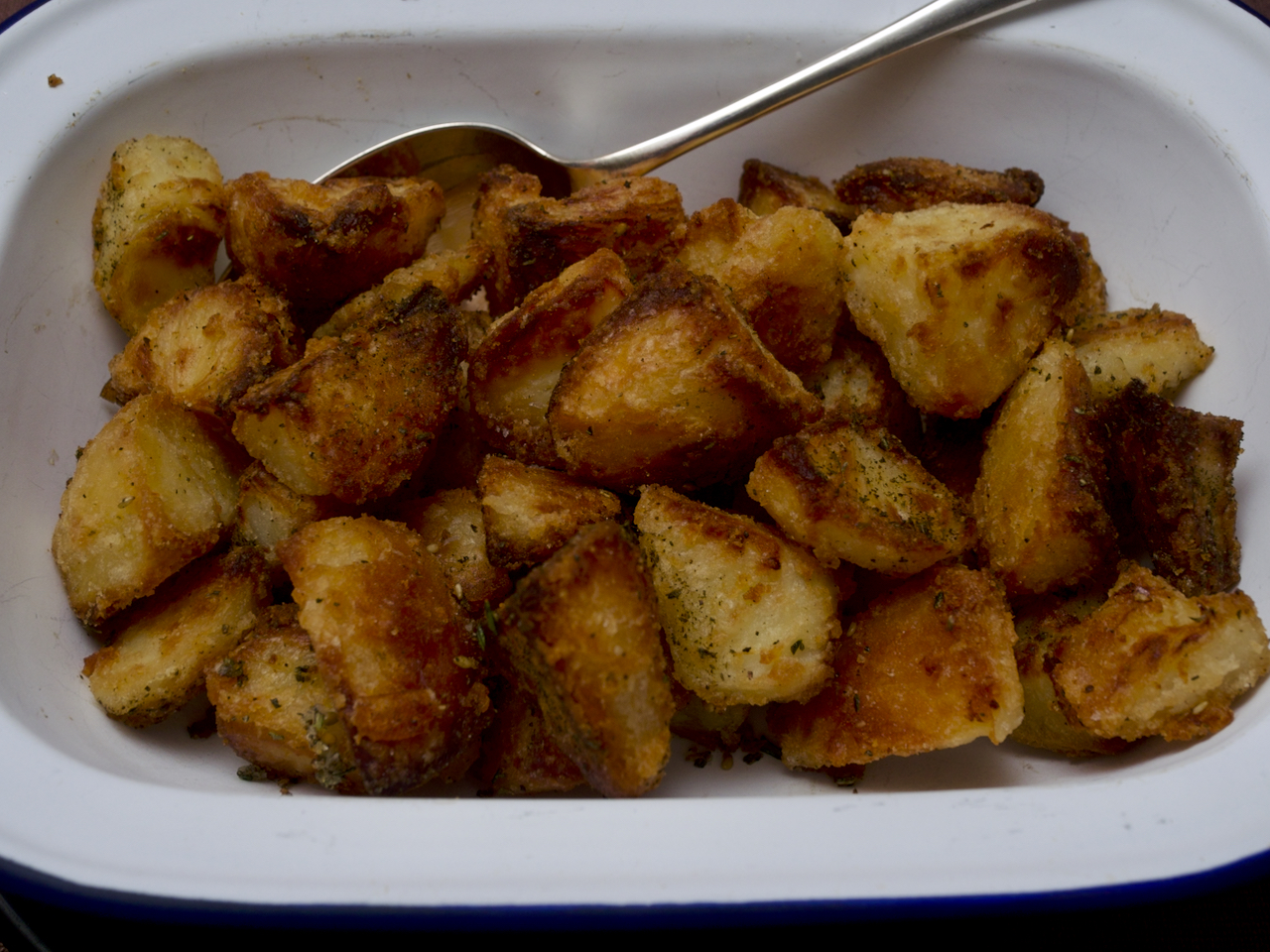
Ottolenghi potato dishes are always a big hit and these were no exception. The rice flour makes them particularly crispy.
Roast potatoes with rosemary & za’atar – serves 6 to 8
2.5kg Maris Piper potatoes, peeled and cut fairly small – about 4-5cm chunks
2 tbsp fine salt
3 large sprigs of rosemary, 1 left whole and the leaves of the other 2 finely chopped
150ml sunflower oil
2 tbsp rice flour
1 tsp sea salt flakes
2 tbsp za’atar
Put the potatoes into a large pan and cover with cold water. Add the fine salt and the whole rosemary sprig, then bring to the boil. Simmer for 10-15 minutes, or until just tender. Drain well and throw away the rosemary, then return the potatoes to the warm pan. Leave to dry for at least 15 minutes.
Heat the oven to 220C Fan.
Put the oil in a large roasting tray and put into the oven to heat for 10 minutes.
Add the rice flour to the dry potatoes and gently toss to coat.
Carefully add the potatoes to the hot oil in the tray, then roast for 50 minutes, turning halfway. Add the chopped rosemary and gently toss, then return to the oven for a further 3 minutes. Remove the potatoes from the oven and stir in the sea salt flakes and za’atar.
(Original recipe from Ottolenghi Comfort, Penguin Random House, 2024.)
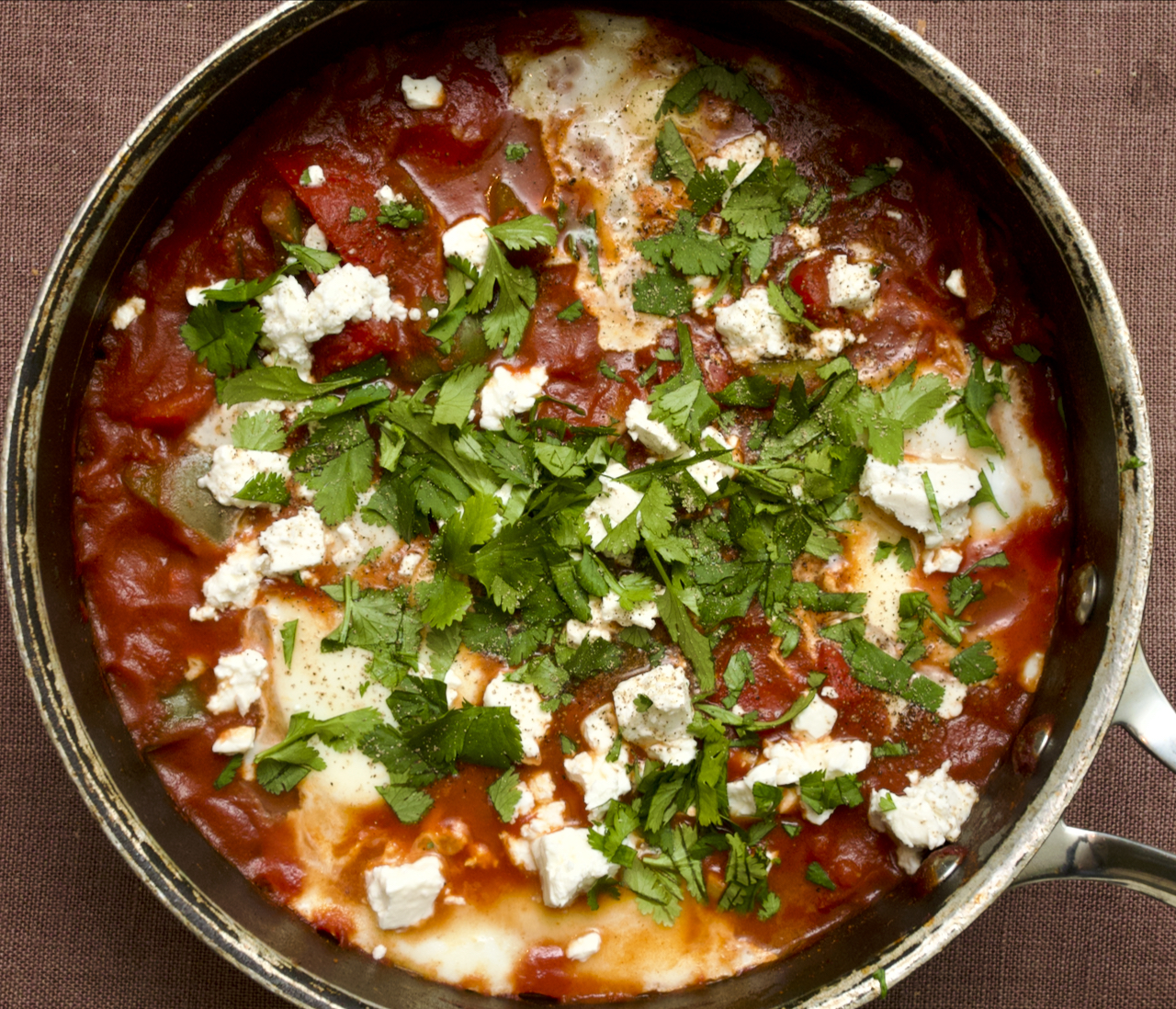
We cook many versions of shakshuka on weekends and they’re all good. Here’s the latest – serve with toasted sourdough.
Shakshuka with feta & coriander – serves 2-3
1 tbsp olive oil
1 red onion, finely sliced
1 red pepper, deseeded and diced
1 green pepper, deseeded and diced
4 cloves of garlic, finely sliced
1 tsp ground cumin
½ tsp ground cinnamon
2 tsp hot smoked paprika
2 x 400g tins chopped tomatoes
4 eggs
100g feta
a large handful of coriander leaves, roughly chopped
Heat the oil in a deep frying pan over a high heat. Add the onion and cook for a couple of minutes, then add the peppers and garlic and cook for another 4 minutes. If the pan looks dry just add a splash of water rather than more oil.
Add the cumin, cinnamon, paprika and some flaky sea salt and stir briefly until the spices smell good. Stir in the tomatoes and simmer for 10-15 minutes to let the sauce thicken a bit.
Make 4 wells in the sauce and crack an egg into each one. Place a lid over the frying pan and leave the eggs to cook for 5 minutes or until the whites are just set.
Crumble the feta over the top, sprinkle with the coriander and season with black pepper.
Serve with toasted sourdough.
(Original recipe from Lose Weight for Good by Tom Kerridge, Bloomsbury Publishing Plc, 2017.)
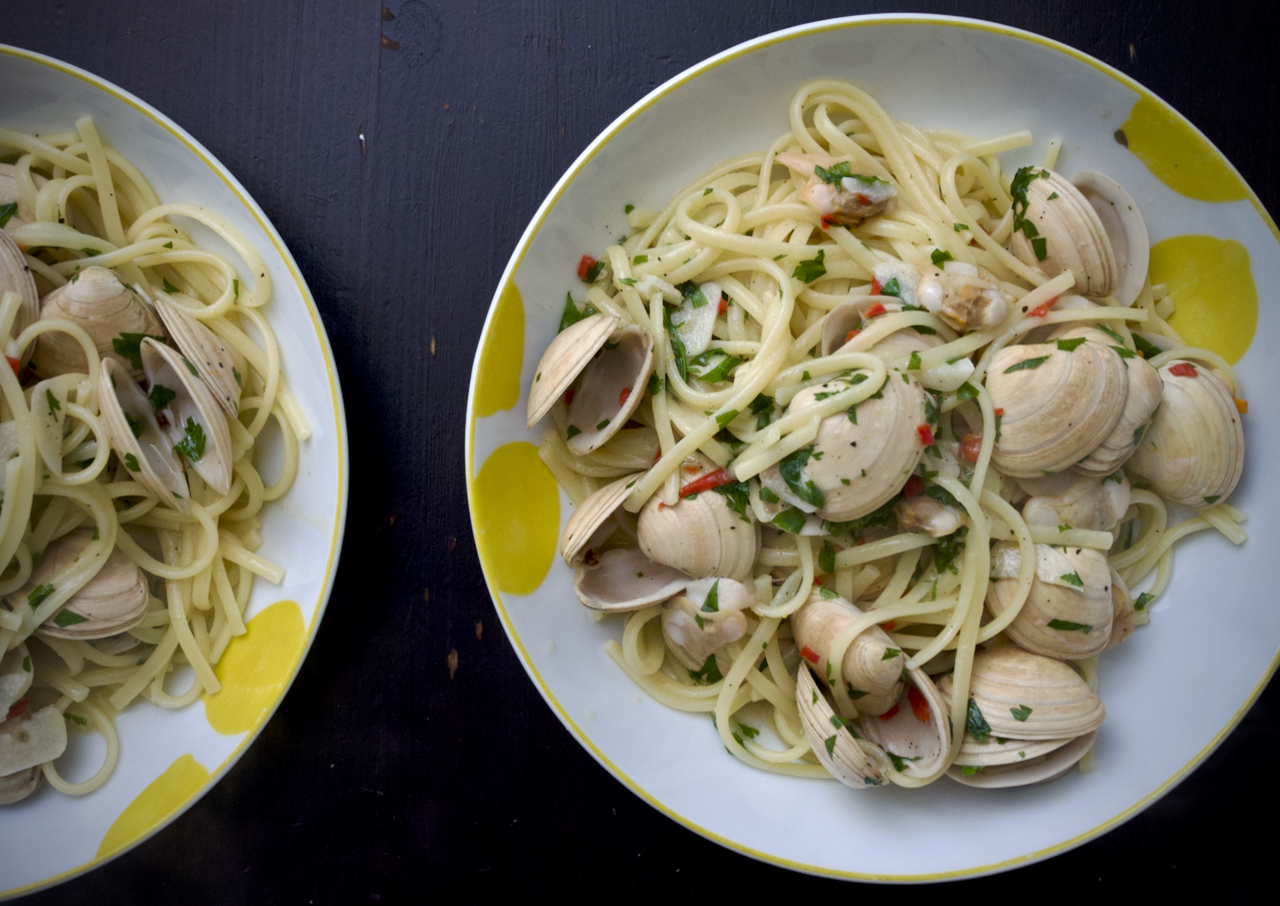
Linguine vongole – possibly the most perfect pasta dish. Lots of garlic and fresh salty clams – delicious!
Wine suggestion: working well with this dish is the under-rated grape from the south of Italy: Fiano. We’d highly recommend seeking it out as it has the beguiling fresh, almost crisp stonefruit character and some sort of citrus twist depending on where it comes from. While most is grown in Campagnia and the south of Italy it’s now being found successfully in Argentina and Australia, like Pikes “Luccio” from the Clare Valley … where the citrus twist is lime and delicious at that.
Linguine Vongole – serves 4
1kg fresh clams
400g linguine
4 tbsp olive oil
6 cloves of garlic, sliced very thinly
1 large red chilli, finely chopped
100ml white wine
30g unsalted butter
20g flatleaf parsley, finely chopped
1 large lemon
Put the clams in a sinkful of water with a decent handful of salt, then discard any that don’t close.
Bring a large pan of salty water to the boil and cook the pasta according to the timings on the pack.
Meanwhile, put the olive oil, garlic and chilli into another large pan, then turn on the heat and allow them to cook gently for a few minutes but without taking on any colour. When it smells really good, add the wine and cover the pan. Turn the heat up high and when the wine is steaming, add the clams. Clamp the lid back on and give the pan a shake, then leave for a few minutes.
Reserve a large mug of the pasta water, then drain the pasta and add it to the pot of cooked clams. Add a good splash of pasta water, the butter and parsley. Mix and toss well to make a sauce that coats the pasta. Squeeze in the juice from half the lemon and grate in some lemon zest. Mix again, then season if needed. Serve with a drizzle of your best olive oil.
(Original recipe from The Farm Table by Julius Roberts, Ebury Press, 2023.)
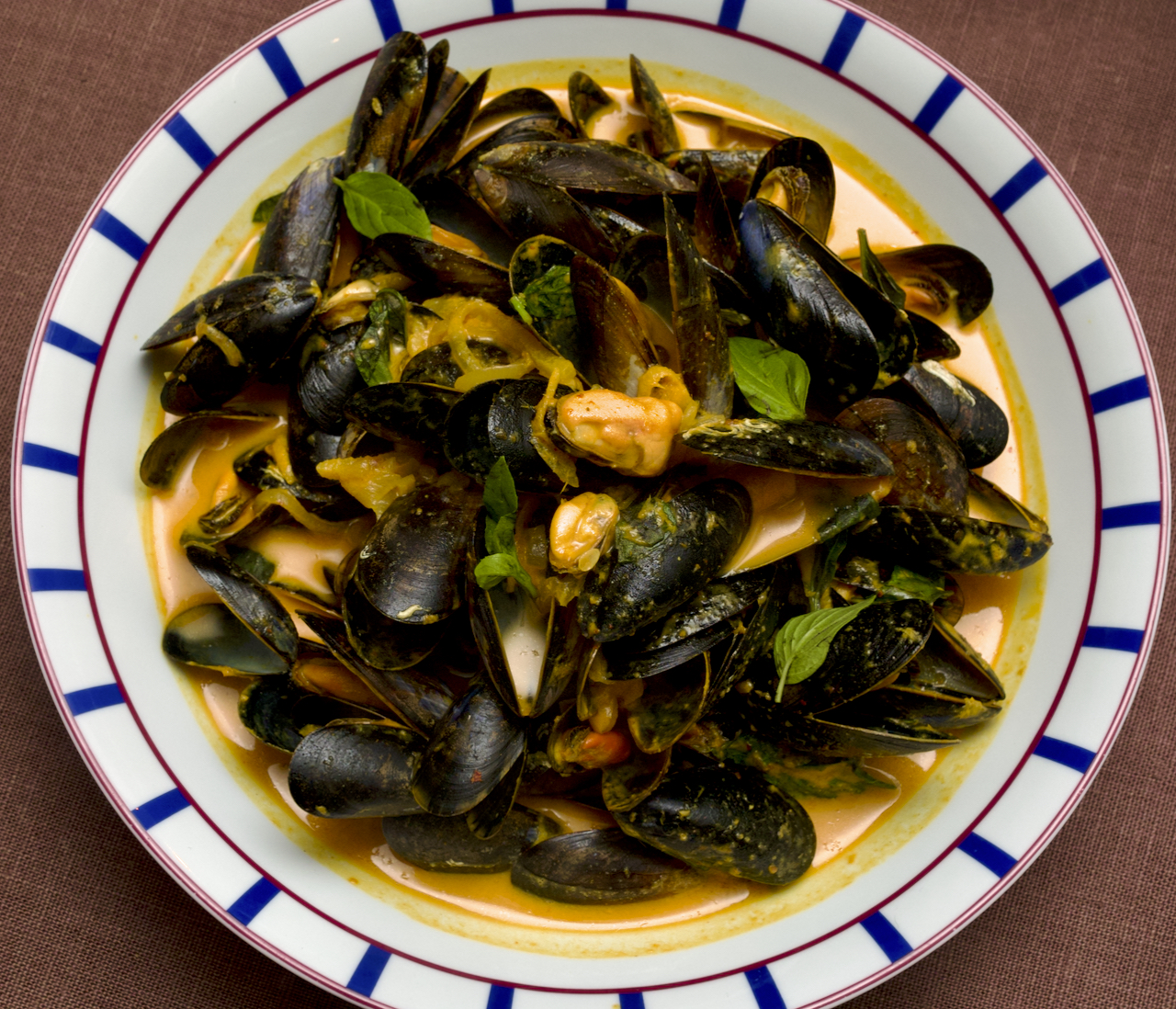
Mussels are a regular Friday night treat for us and this sauce with Thai spices and coconut milk is really delicious. As ever, you will need lots of crusty bread.
Wine Suggestion: We really like matching Thai curries with Riesling, especially if there’s a touch of residual sugar. Unusually for the Clare Valley (which is typically bone dry) Pikes Hills & Valleys Riesling has about 9 grams of residual sugar which makes this fruity, rather than sweet. We had a bottle a few years old which accentuated the lime and lifted aromas and made a wonderful match.
Thai spiced mussels – serves 2
1 tbsp coconut oil
1 onion, peeled and finely sliced
20g ginger, peeled and cut into matchsticks
1 tsp ground turmeric
1 tsp ground coriander
2 tbsp red Thai curry paste
1 tbsp tomato puree
400ml tin coconut milk
1 tsp brown sugar
1 kg mussels, cleaned and debearded (chuck any that don’t close after a sharp tap)
1 lime, juiced
a handful of Thai basil leaves
crusty bread, to serve
Heat the coconut oil in a large casserole or heavy saucepan over a medium heat. Add the onions and ginger and cook gently for 10 minutes. Add the turmeric and coriander and cook for another minute, then add the curry paste and tomato puree and cook for a minute more.
Add the coconut milk and brown sugar, bring to the boil, then turn the heat down to simmer and cook for 5 minutes.
Add the cleaned mussels, then turn up the heat, cover with a lid and cook for 5 minutes or until all the mussels have opened (chuck any that don’t open).
Stir the mussels through the sauce, then add the lime juice and tear in the Thai basil leaves. Serve with lots of crusty bread.
(Original recipe by Georgina Hayden in The Guardian, 11 Feb 2025)
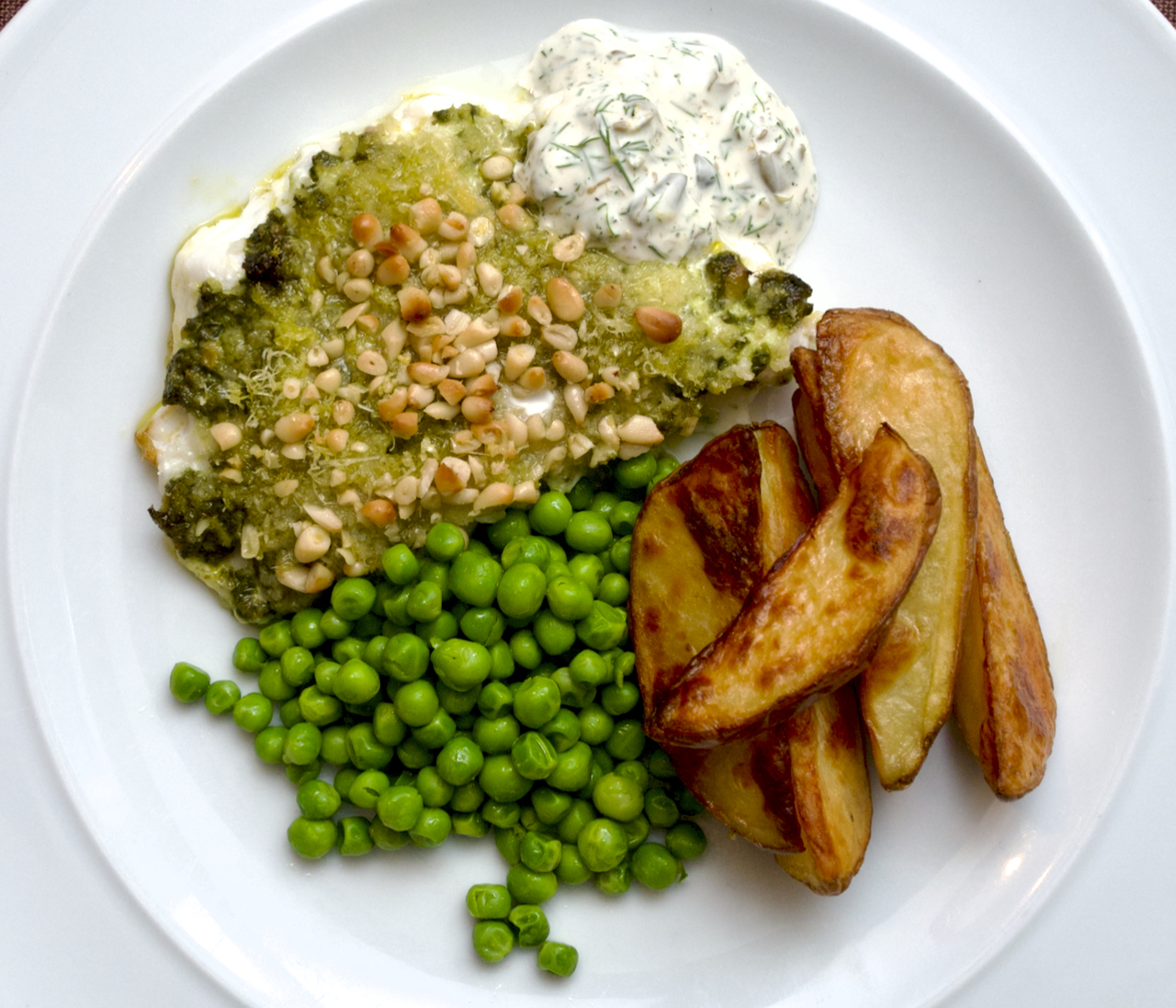
A week night fish dish that was a hit with everyone in our family, and that’s saying something. Peas are obligatory as the side.
Wine Suggestion: this works excellently with a zesty, citrus flavoured white like the Pico Maccario Gavi di Gavi from Piedmont in Italy.
Hake with Panko & Pesto – serves 4
1kg floury potatoes, cut into wedges
2 tbsp olive oil, plus a little extra
4 pieces of hake (or another firm white fish), skin and bones removed
2 tbsp pesto
2 tbsp panko breadcrumbs
2 tbsp finely grated Parmesan
1 tbsp chopped pine nuts
1 tbsp capers, finely chopped
1 tbsp dill, chopped
3 tbsp mayonnaise
¼ lemon, zested and juiced
Heat the oven to 220C/200C fan.
Put the wedges onto a baking tray and drizzle over 1 tbsp of olive oil. Season with salt and pepper, then toss to coat in the oil. Bake for 50-55 minutes, turning halfway, until crispy and golden.
Oil another baking sheet and add the fish pieces. Spread the pesto over the fish pieces and sprinkle over the panko breadcrumbs. Drizzle with a tbsp of olive oil, then sprinkle over the Parmesan and chopped pine nuts. Place in the oven for the final 10-12 minutes of cooking time. The top should be golden and the fish should flake easily.
Mix the capers, dill, mayonnaise, lemon zest and juice with some black pepper in a small bowl. Serve the fish with the wedges, peas and dip.
Melt the butter in a pan and cook the onion and lardons for about 5 minutes over a low heat until the onions have started to soften. Stir in the flour and cook for a minute or two, then add the stock and bring to the boil.
Turn the heat down and add the peas. Cover with a lid and cook for 15-20 minutes. When ready the peas should be slightly soupy.
Season with the sugar, salt and lots of black pepper.
(Original recipe from Rick Stein’s Secret France, BBC Books, 2019.)
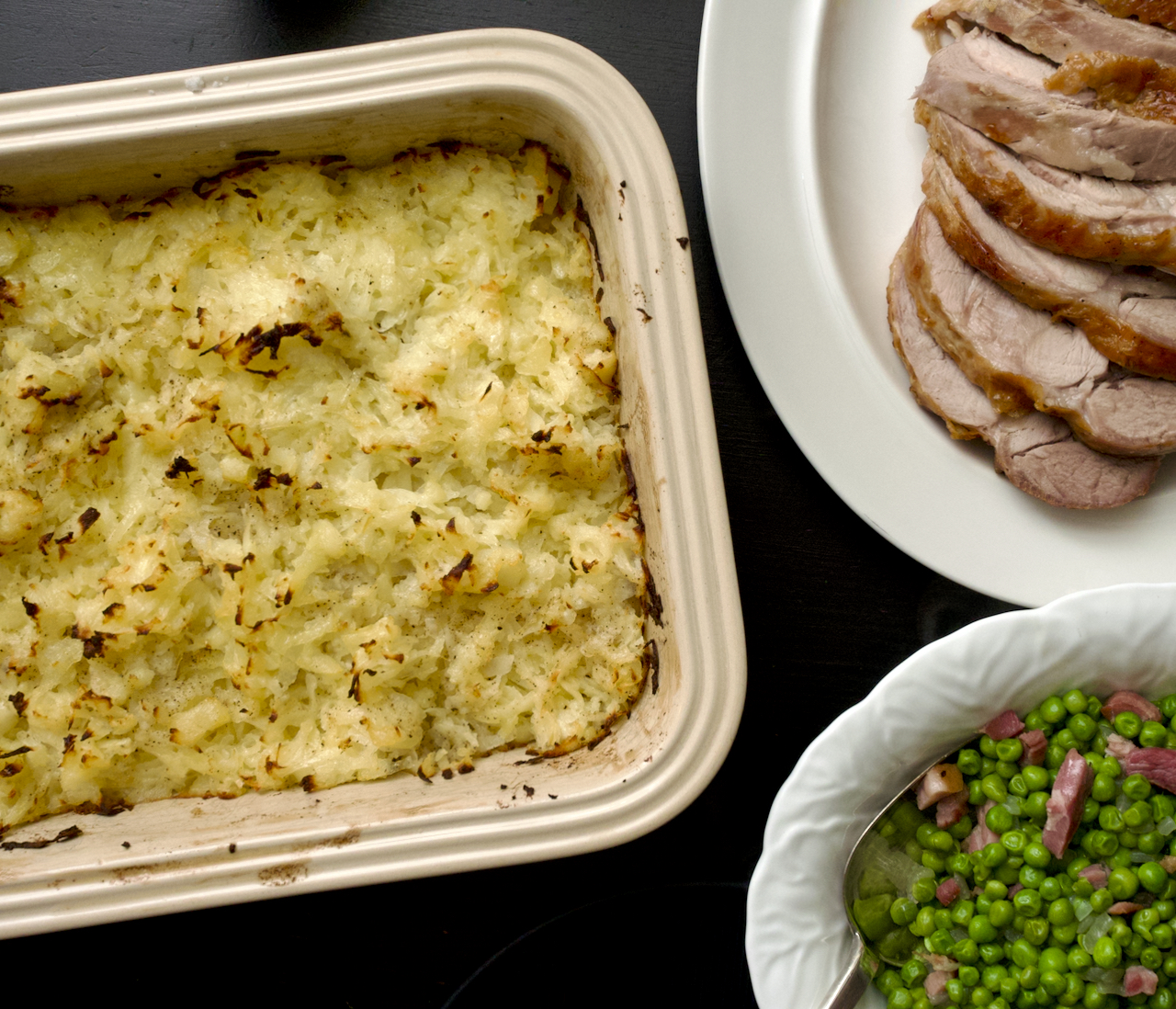
Rösti Potato Gratin – serves 6
900g waxy potatoes
45g butter, melted, plus extra to grease the dish
150ml single cream
Heat the oven to 220C/200C fan.
Scrub the potatoes, then put them into a pan and cover with cold water and add some salt. Cover with a lid, bring to the boil, and cook until just tender – they should be just slightly firm in the centre. Set aside to cool completely.
Butter a 1 litre shallow ovenproof dish.
Peel the potatoes, then use a coarse grater to grate into the buttered dish, sesaon each layer with salt and black pepper. Don’t be tempted to press then down so they remain light and fluffy.
Pour over the melted butter and cream and bake for 20-25 minutes or until crispy and golden brown.
(Original recipe from Mary Berry Cooks Up a Feast with Lucy Young, DK: Penguin Radom House, 2019.)
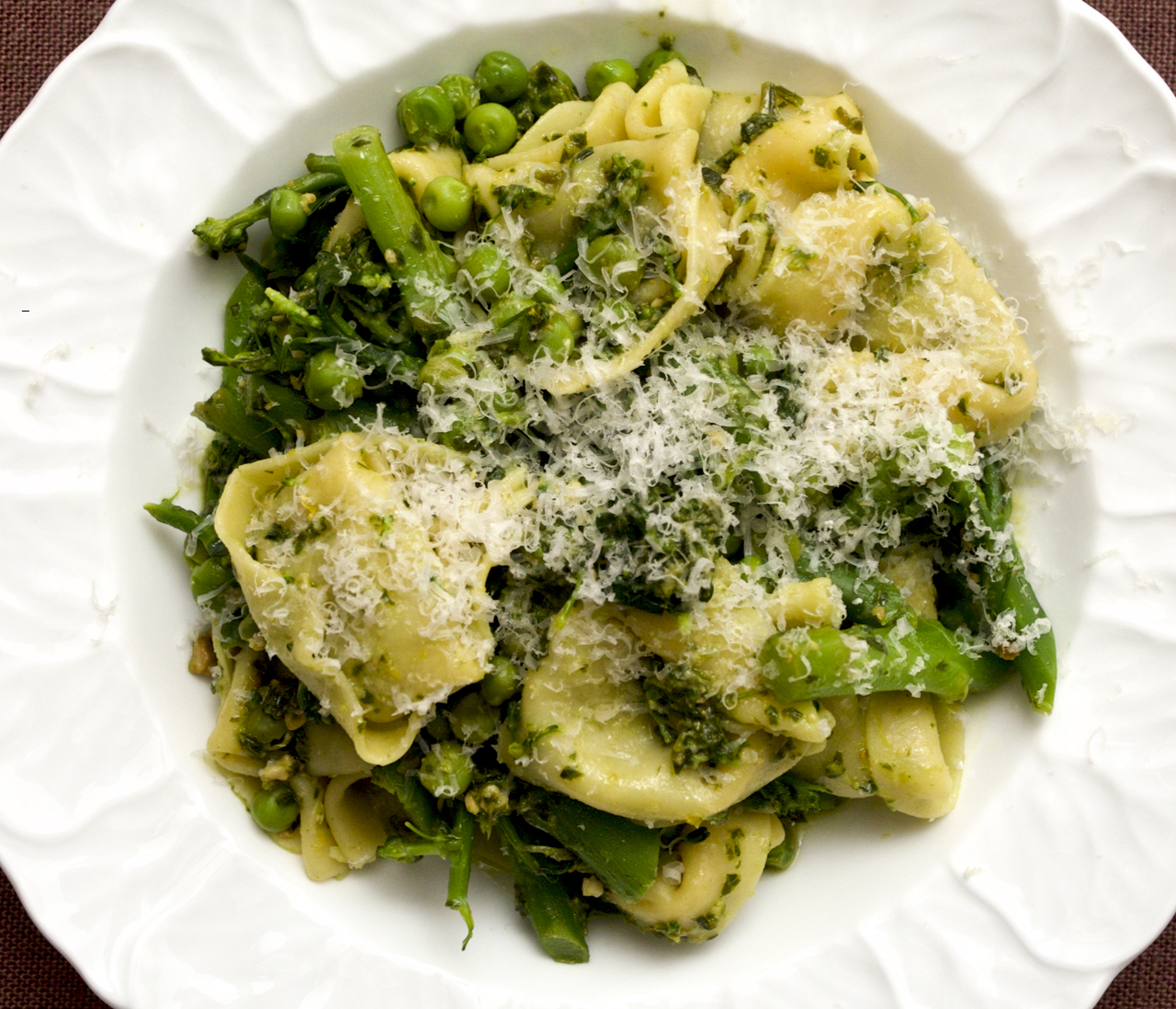
This isn’t really a recipe but it might just save your dinner some evening.
Wine Suggestion: This really works with a zippy, fresh white like the Höpler Gruner Veltliner. Elegant and minerally with a real purity of pear and lemon flavours overlaid with a light white pepperiness and savoury umami finish
Pea, broccoli & pesto tortellini – serves 2
200g tenderstem broccoli, cut into short pieces
100g frozen peas
250g pack spinach & ricotta tortellini
1 lemon, zested and juiced
4 tbsp fresh pesto
Parmesan, to serve
best extra virgin olive oil, to serve
Bring a large pot of salty water to the boil, then add the broccoli and cook for 1 minutes. Add the frozen peas and cook for 2 more minutes, then scoop all the veg out with a slotted spoon and set aside.
Bring the water back to the boil and cook the pasta according to the pack instructions.
Drain the pasta well and return it to the pan. Add the lemon, cooked veg and pesto and gently toss to combine. Serve in warm bowls with Parmesan and a glug of olive oil if you like.
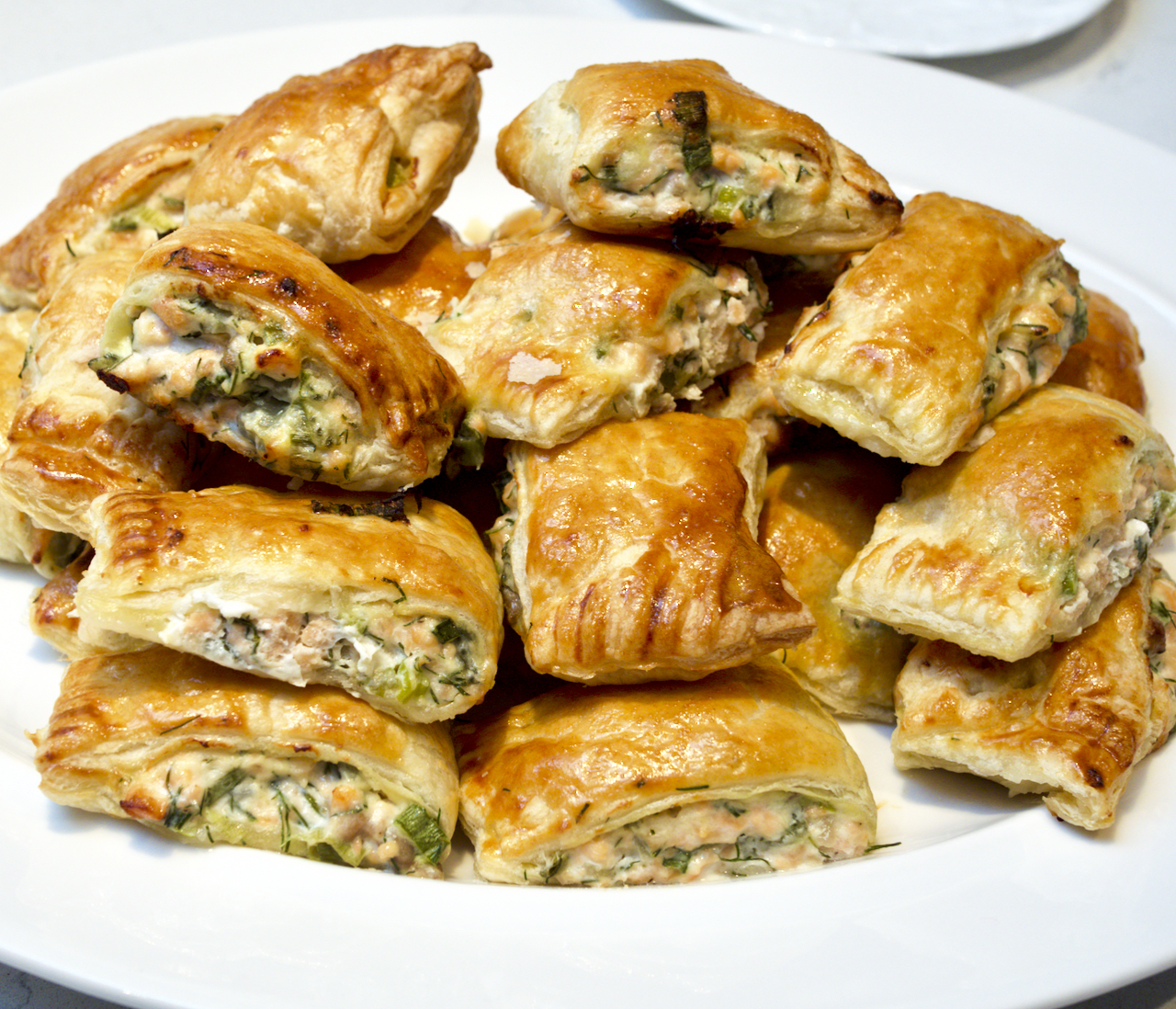
These are great with drinks and much lighter than actual sausage rolls. You can also freeze them uncooked and then cook from frozen for a handy standby.
Wine Suggestion: Bubbles of course … we’re particularly fond of the Domaine de la Taille aux Loups Triple Zero, so named as it uses no chaptilisation, no liquer de tirage and no dosage. As unfettered and refined a Pet Nat you can find anywhere and very special for it.
Little salmon sausage rolls – makes 24
1 x 320g sheet all-butter puff pastry
1 egg beaten
FOR THE FILLING:
200g skinless salmon fillet, finely chopped
115g smoked salmon, finely chopped
125g full-fat cream cheese
25g Parmesan, finely grated
small bunch of dill, finely chopped
6 scallions, finely chopped
juice of ½ lemon
75g dill pickle from a jar, finely chopped
Heat the oven to 200C/180C Fan/Gas 6.
Preheat a large baking tray.
Put all the filling ingredients into a large bowl, season with salt and pepper and mix well.
Roll the puff pastry sheet out on a lightly floured surface to make a rectangle 30 x 40 cm. Brush with the beaten egg, then divide vertically into 3 even-sized pieces.
Divide the filling into 3 and make a mound down each piece of pastry. Lift and fold the pastry over and seal by pressing down with the back of a fork.
Cut each section into 8 and brush the tops with the beaten egg.
Line the hot baking tray with non-stick baking paper and place the rolls on top. Bake for 18-20 minutes or until golden brown.
(Original recipe from Mary’s Foolproof Dinners by Mary Berry, BBC Books, 2024.)
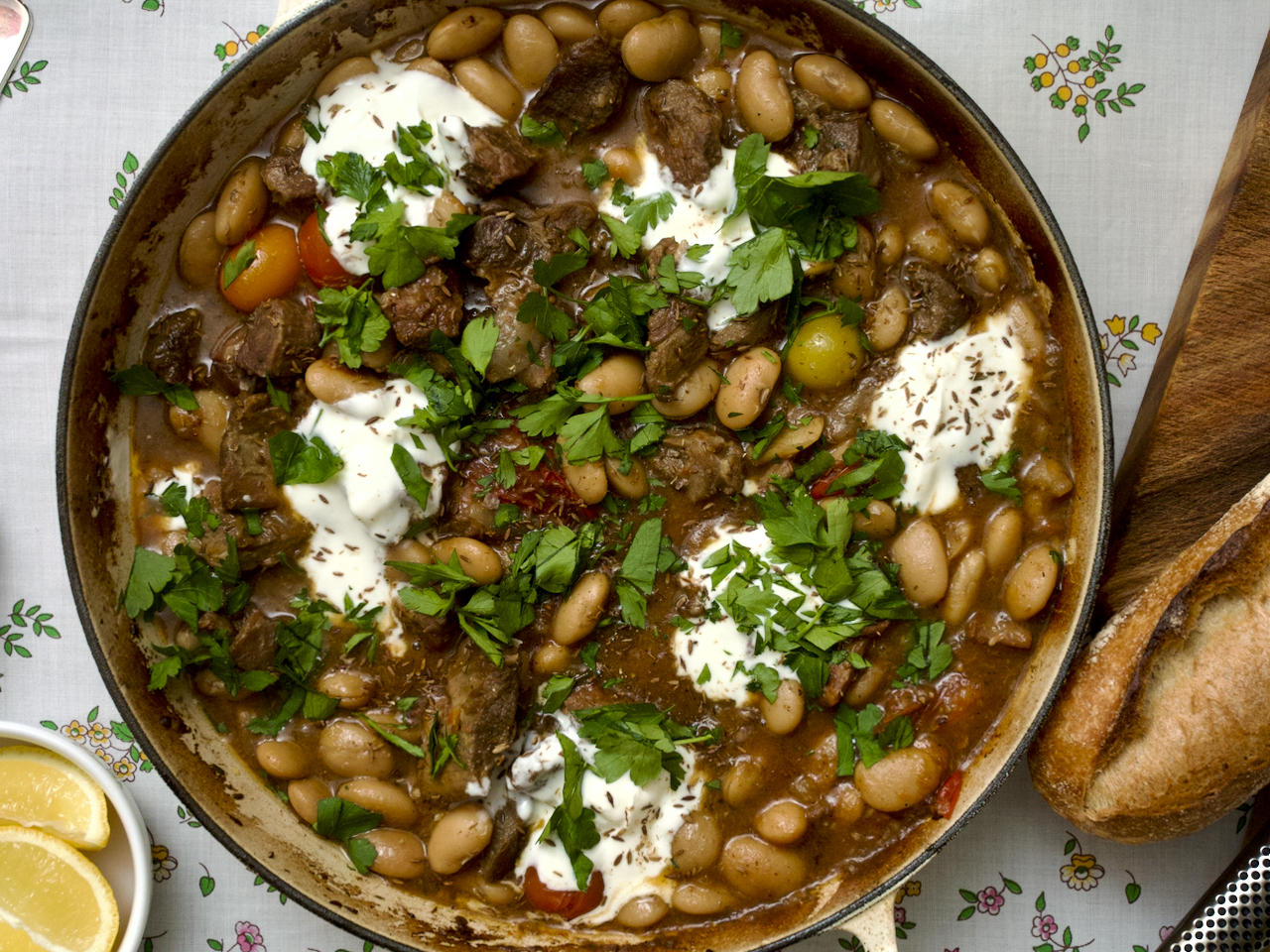
A delicious prep-ahead dish that only improves if made in advance. Serve with salad and crusty bread.
Slow-cooked lamb with butterbeans – serves 4
2 tsp coriander seeds, toasted and lightly crushed
2 ½ tsp cumin seeds, toasted and lightly crushed
¼ tsp sea salt flakes
800g lamb neck, cut into bite-size cubes
4 tbsp olive oil
2 onions, quartered
2 bay leaves
1 lemon, finely shave the skin into strips, then cut into wedges to serve
6 cloves of garlic, peeled and lightly smashed
4 anchovies, finely chopped
1 tbsp thyme leaves
1 tbsp rosemary leaves, finely chopped
250g cherry tomatoes
75ml white wine
500ml chicken stock
1 x 700g jar good quality butter beans, drained and rinsed
150g thick Greek-style yoghurt
10g parsley, roughly chopped
Mix the coriander seeds and 2 tsp of the cumin seeds together in a small bowl.
Mix the remaining ½ tsp of cumin seeds with the sea salt flakes and set aside.
Season the lamb with salt and pepper.
Heat 2 tbsp of the olive oil in a large shallow ovenproof casserole over a medium-high heat. Add the lamb in batches and cook until nicely browned. You can add another tbsp of oil if needed. Scoop out with a slotted spoon onto a plate and set aside.
Add 2 tbsp of the oil to the pan and reduce the heat to medium. Add the onions, bay leaves, lemon strips and garlic and cook for about 6 minutes, stirring now and then. Add the anchovies, the coriander-cumin mix, thyme, rosemary and half the tomatoes. Cook for a minute, then return the lamb to the pan. Cook for a minute, then add the wine. Let it bubble for 30 seconds, then add the stock and season well with salt and pepper. Increase the heat and bring to a simmer, then cover and transfer to the oven for 1½ hours, until the lamb is very soft and the liquid well-reduced.
Add the butter beans and the rest of the tomatoes. Stir, cover again and return to the oven for another 20 minutes. Remove from the oven and allow to rest for 15 minutes.
Serve sprinkled with the salt and cumin seed mix and the chopped parsley.
Salad and crusty bread is all you need on the side.
(Original recipe from Ottolenghi Comfort by Yotam Ottolenghi, Helen Goh, Verena Lochmuller and Tara Wigley, Ebury Press, 2024.)
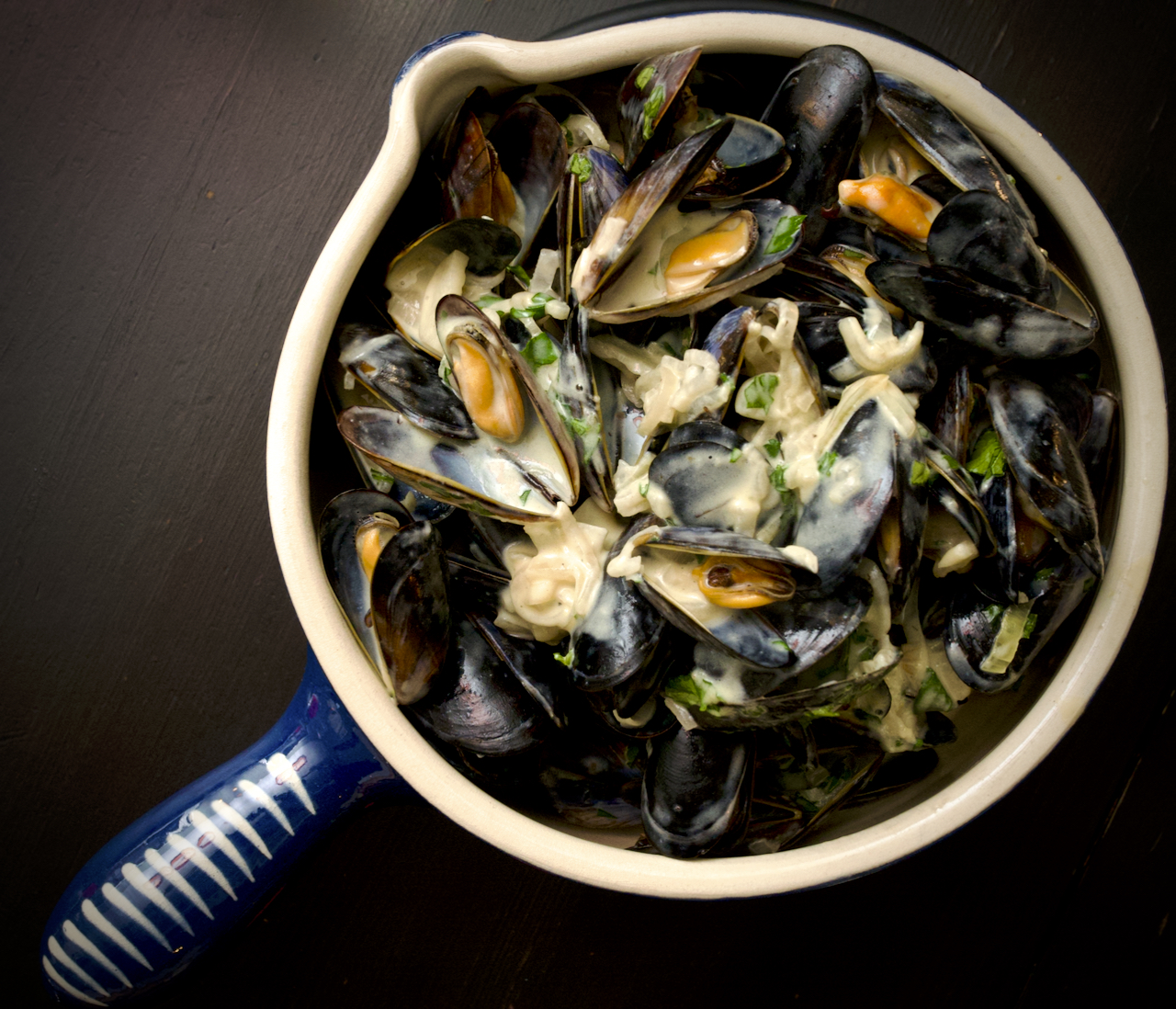
Inspired by a recent trip to Paris by Jules where she had to take shelter in a random place to get out of the rain and they served a delicious moules à la crème. A little bit more effort than Moules Marinière but very much worth it.
Wine Suggestion: Overlooked within Muscadet are certain vineyards and wines that stand out as having something extraordinary to them. Les Clos du Montys Muscadet by Jérémie Huchet is grown on a very special spot with unique soils that give this wine an extra fleshiness and body compared to other Muscadet which enables the wine to stand up to the extra level of richness of the Crème.
Moules à la crème – serves 2or 4 as a starter
1kg mussels (or more if you like), cleaned and debearded (chuck any that won’t close when you give them a sharp tap)
20g butter
3 shallots, thinly sliced
4 cloves of garlic, thinly sliced
2 bay leaves and a few sprigs of thyme tied together to make a bouquet garni
300ml white wine
200ml crème fraîche
2 egg yolks
parsley, finely chopped
Warm the buttter in a large saucepan over a gentle heat. Add the shallot and garlic and cook gently for 5 minutes. Add the white wine, bouquet garni and some black pepper. Turn the heat up and simmer for 10 minutes.
Add the mussels to the pan, stir and clamp on a tight fitting lid. Cook for 2 minutes, then stir, replace the lid and cook for another 2 minutes. The mussels are ready when they have all opened – chuck any that stay closed.
Remove the pan from the heat and scoop out the mussels with a slotted spoon into a bowl.
Return the pan to the heat and boil the stock for 5 minutes. Put a fine sieve over a clean bowl and strain the stock into the bowl. Rinse the saucepan, then pour in the strained stock. Heat to a gentle simmer.
Whisk the crème fraîche and egg yolks together in a bowl. Whisk in a couple of ladles of the stock and then pour into the simmer stock, stirring continuously.
Keep gently warming the sauce and stirring until the sauce thickens slightly, then return the mussels to the pan and warm through briefly. Add the parsley and serve in warm bowls with lots of crusty bread.
(Original recipe from Lickedspoon with Debora Robertson, Substack, 2 Feb 2025.)
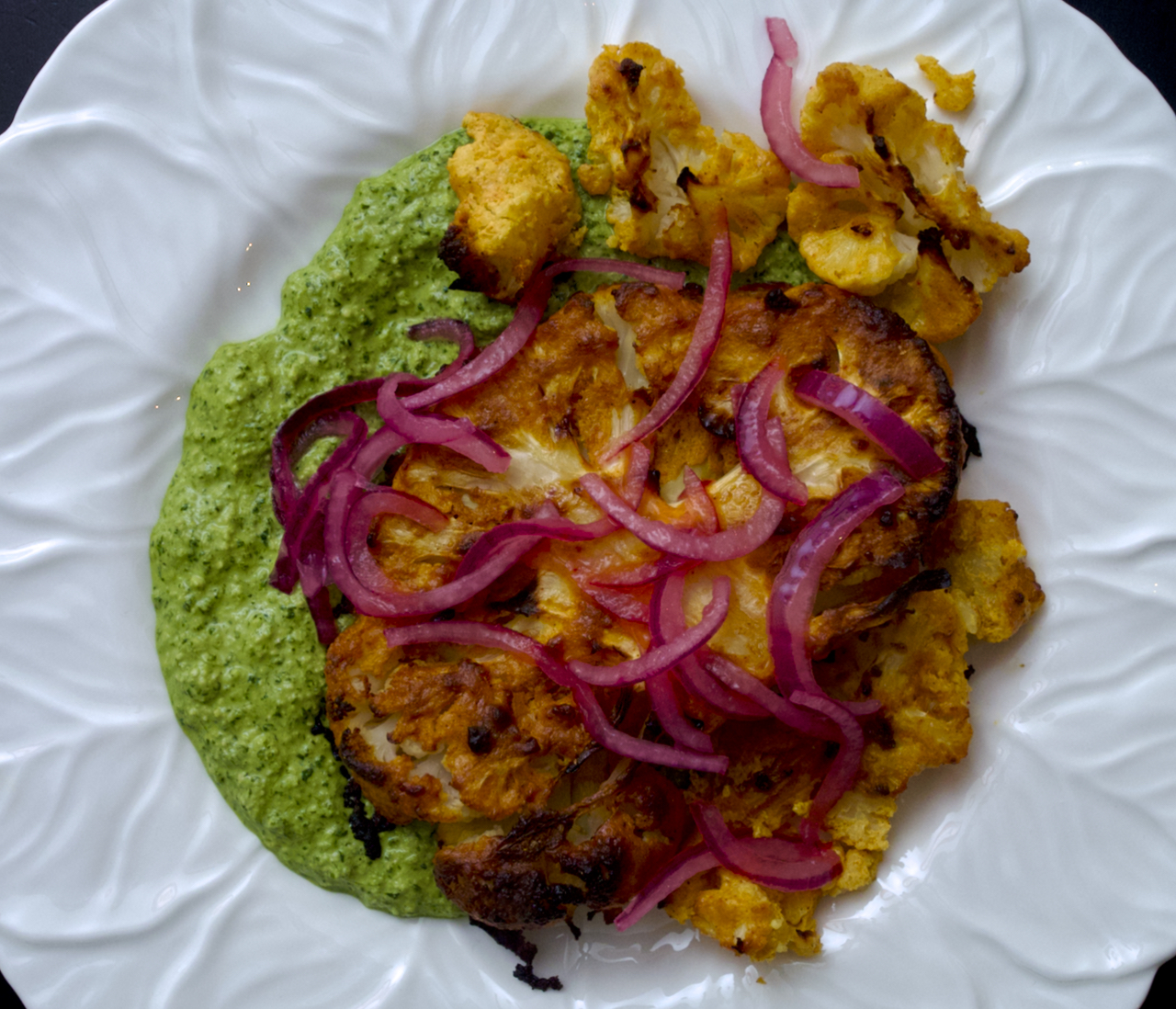
Such a colourful dish and equally delicious. Meera Sodha writes the best vegetarian recipes.
Wine Suggestion: There is definitely a wine match for this, but we had an Asahi beer instead and enjoyed it very much.
Tandoori cauliflower with coriander sauce and quick pickled onions – serves 4
FOR THE PICKLES:
½ red onion, very finely sliced
4 tbsp lemon juice
½ tsp salt
FOR THE CORIANDER SAUCE:
100g unsalted cashews
100g fresh coriander, roughly chopped
¾ tsp caster sugar
3 long green chillies, deseeded and chopped
2 tbsp rapeseed oil
FOR THE TANDOORI CAULIFLOWER:
450g Greek yoghurt
2 tbsp lemon juice
5 cloves of garlic, crushed
2cm piece of ginger, grated
¾ tsp ground turmeric
2 tsp Kashmiri chilli powder
2 tsp salt
1½ tsp garam masala
4 tbsp rapeseed oil
2 tsp English mustard
2 large cauliflower, trimmed
naan breads, to serve
To make the quick pickled onions, put the sliced onion into a small bowl, add the lemon juice and salt, then scrunch with your hands and set aside.
To make the sauce, put the cashew nuts into a small bowl and cover with 125ml of boiling water, then set aside for 5 minutes. Put the cashews and their soaking water into a blender. Add the coriander, sugar, chillies, ½ tsp of salt the oil and 2 tbsp of lemon juice, blend until smooth, then taste and season further if needed.
Line two large baking trays with baking paper and oil them lightly. Heat the oven to 220C Fan/240C.
Place the rest of the cauliflower ingredients (except the cauliflower) in a large bowl and whisk together. Slice the cauliflowers into 1½ cm thick steaks – and keep all the smaller pieces too.
Dip the cauliflower steaks into the marinade, then shake off any extra and place on one of the baking trays. Repeat with the rest of the steaks. Put all the smaller pieces of cauliflower into the marinade and mix to coat well, then lift these out onto the other baking tray. Bake the florets for about 20 minutes and the steaks for about 25 or until the cauliflower is tender and blackened here and there.
Spread some of the coriander sauce on each plate, then top with the cauliflower and sprinkle with the pickled onions. Eat with warm naan breads.
(Original recipe from Dinner by Meera Sodha, FIG TREE, 2024.)

 Jono & Jules do food & wine
