Feeds:
Posts
Comments

Posts Tagged ‘Easy’

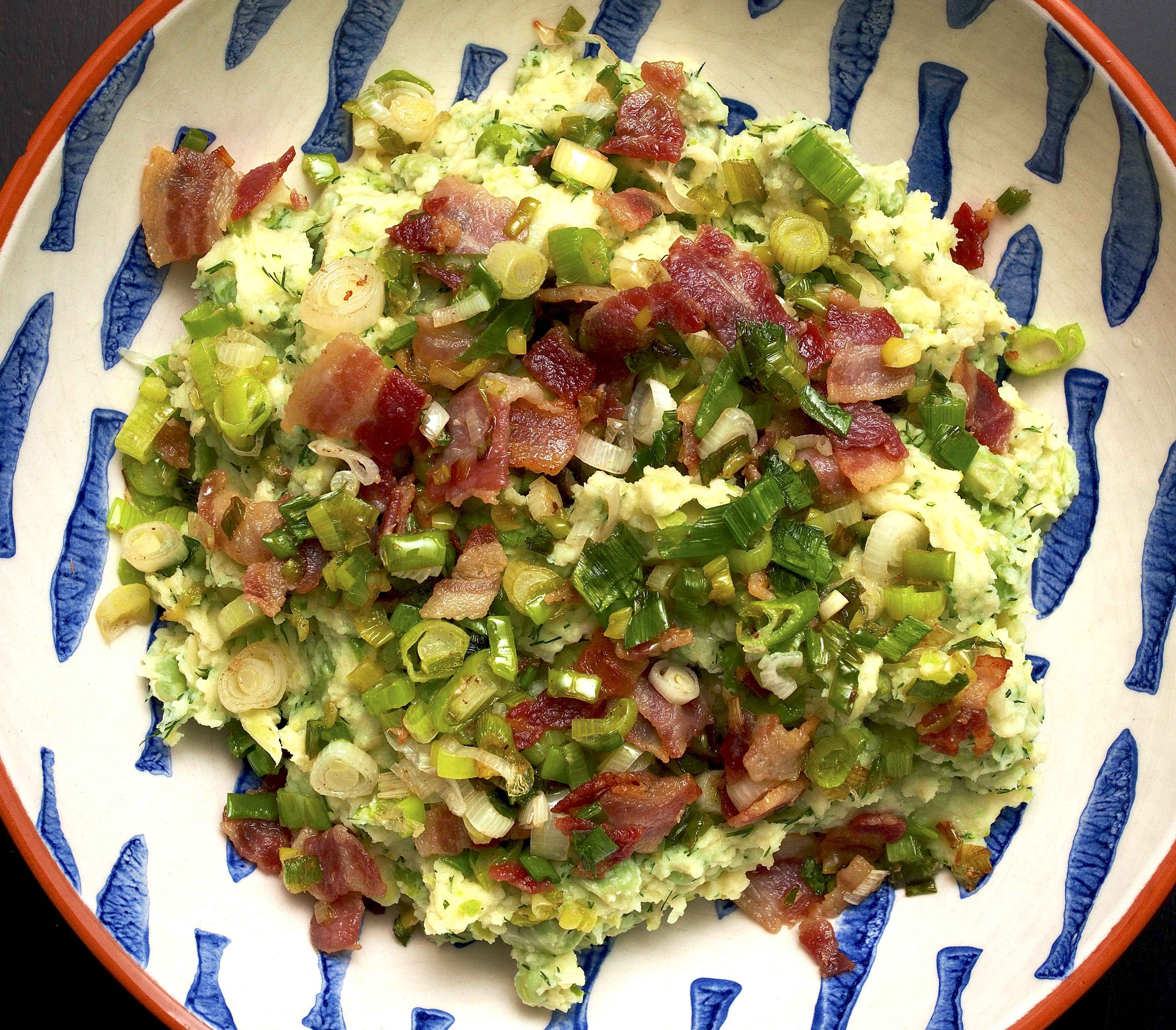
We know it’s not broad bean season, but frozen broad beans are right up there with frozen peas as an excellent frozen veg and so we eat them all year round. This is a recipe from Summer Kitchens by Olia Hercules and the perfect side dish for fish (or indeed fishfingers if you’re avoiding the shops!). It’s different from our usual potatoes as we tend to add lots of Irish butter, we didn’t miss it here, though we did spread some on the potato skins – it would be a shame to waste them!

Crushed potatoes with broad beans – serves 4 as a side

  • 350g baking potatoes, skins on
  • 50g streaky bacon
  • 4 scallions, thinly sliced
  • 150g frozen broad beans
  • 50g crème fraîche
  • 1 tbsp chopped dill

Preheat the oven to 220C.

Bake the potatoes for 20 minutes, then turn the heat down to 200C and cook for 40 minutes to 1 an hour, until completely soft inside. You don’t need the skins but this method will give perfectly crispy skins that you can eat with a bit of butter and salt while you finish the dish.

Meanwhile, heat a splash of vegetable oil in a frying pan over a medium-low heat, add the bacon and fry until the fat starts to release. When it starts to crisp, add the scallions and cook for a few minutes to soften.

Cook the broad beans in a pan of salty boiling water for about 5 minutes, then drain.

Scoop the warm potato out of the skins and put into a saucepan over a very low heat. Add the beans and crush until smoothish, but still with a bit of texture. Stir in the crème fraîche and dill, then season generously with salt and black pepper.

Spoon the bacon and its fat over the dish and serve.

(Original recipe from Summer Kitchens by Olia Hercules, Bloomsbury Publishing, 2020.)

Read Full Post »

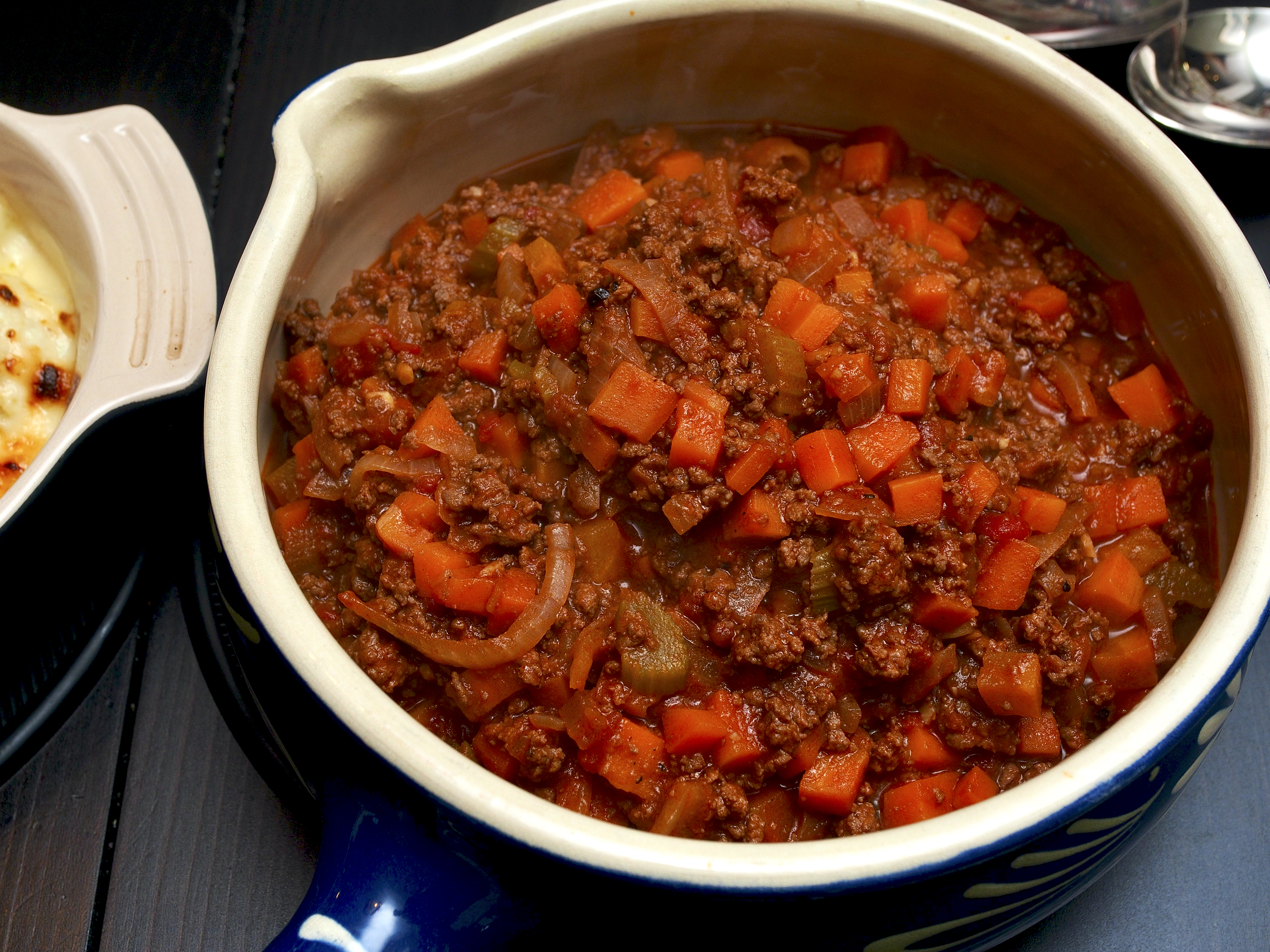
Growing up in Northern Ireland Jules often had mince and potatoes for dinner. The “mince” was minced beef with carrot and onions in gravy and it was served with boiled potatoes. We saw this recipe recently in a book of ‘British Classics’ where it was served with dumplings. Dumplings definitely did not feature on Jules’ childhood dinner table, so we left these out and served it with champ. A huge hit with the 7 year old and much more economical than many of our other weekend recipes.

Wine Suggestion: Keep it simple and choose a Grenache & Syrah blend like a Côtes du Rhône or similar. Rich enough but generally easy drinking with lovely bramble and spice flavours. Our current “find” is Jean-Paul Daumen’s version which balances this ease with a good dollop of class.

Mince – serves 6

  • 2 tbsp veg oil
  • 1 large onion, thinly sliced
  • 2 garlic cloves, finely chopped
  • 2 celery sticks, finely sliced
  • 2 carrots, diced
  • 500g beef mince
  • 400g tin chopped tomatoes
  • 2 tbsp tomato purée
  • 450ml beef stock
  • a pinch of caster sugar
  • 1 bay leaf

Heat the oil in a large pan and cook the onion, garlic, celery and carrots for 15 minutes or until softened and lightly browned.

Add the beef mince and cook for another 5 minutes, until it starts to brown. Break the mince up with a wooden spoon as it browns.

Add the tomatoes, tomato purée, beef stock, sugar and bay leaf. Season with salt and black pepper, then bring to the boil. Reduce the heat and simmer gently for 40 minutes, stirring occasionally. Cover with a lid if it reduces too much but you want it to be nicely thickened.

Serve with green veg and potatoes.

(Original recipe from The Hairy Bikers’ British Classics by Si King & Dave Myers, Seven Dials, 2018.)

Read Full Post »

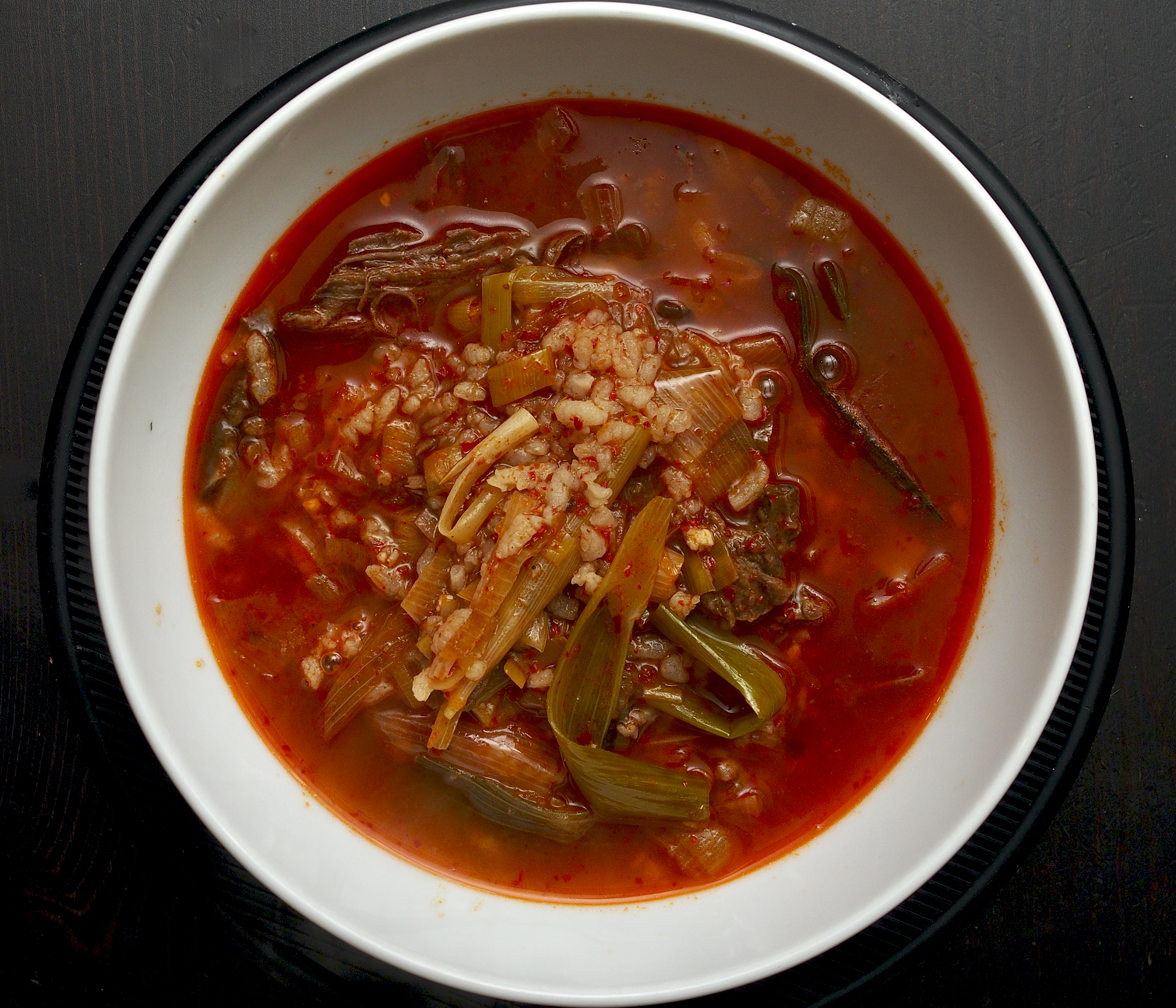
We ate this in those funny days between Christmas and New Year when you’re fed up eating but still feel you need to make the most of the time you have to cook. We’d had enough of leftovers and were craving spicy food, like this spicy beef stew, which is more like a soup, but with lots of sustenance. The recipe is from Our Korean Kitchen by Jordan Bourke & Rejina Pyo, probably our most used book this year. Serve with some sticky rice.

Spicy beef & vegetable stew – serves 4

  • 400g beef brisket
  • 1 onion, quartered
  • 10 cloves of garlic, 6 left whole and 4 crushed
  • 1 tbsp vegetable oil
  • 150g shitake mushrooms, sliced
  • 1 leek, halved and thinly sliced
  • 2 tbsp soy sauce
  • 2 tbsp roasted sesame seed oil
  • 3 tbsp gochugaru red pepper powder
  • 1½ tsp sea salt
  • 10 scallions, halved lengthways, then cut into 6cm strips
  • cooked rice, to serve

Put the brisket into a large pot and cover with 3 litres of water. Bring to the boil, then reduce the heat and add the onion and 6 whole garlic cloves. Simmer for 2 hours with the lid off, remove any scum that comes to the top and add water as needed to ensure the beef is submerged.

Transfer the brisket to a plate and set aside to cool. Strain the stock through a sieve into a jug, and discard the flavouring ingredients. When the brisket is cool enough to handle, tear it into bite-sized pieces, discarding any fat.

In the same pan, heat the vegetable oil over a medium heat, then add the mushrooms and leek and sauté for 5 minutes. Add the beef, soy sauce, crushed garlic, sesame seed oil and gochugaru powder. Turn up the heat and fry for a couple of minutes until aromatic. Pour 1.3 litres of the beef stock into the pan (freeze the rest for another dish). Add the salt and bring to the boil, then reduce the heat a  bit and add the scallions. Simmer for 3 minutes, then serve in bowls with some rice if you like.

(Original recipe from Our Korean Kitchen by Jordan Bourke and Rejina Pyo, Weidenfeld & Nicolson, 2015.)

Read Full Post »

This is a simple tomato sauce for pasta with a bit of magic from Marcella Hazan that makes it taste special. The sauce is intensely mushroomy and absolutely delicious. We don’t often cook from Marcella’s The Essentials of Italian Cooking but we are never disappointed when we do.

Wine Suggestion: This needs a simple red, but with a vibrant core and a new favourite for this brief is the Umani Ronchi Rosso Conero “Serrano”. Mostly Montepulciano but with a touch of Sangiovese this is engagingly easy to drink with ripe cherry flavours and a round and juicy core of fruit; very pleasurable without being too weighty.

Tomato sauce with porcini mushrooms – serves 4

  • 2 tbsp finely chopped shallot or onion
  • 35g butter
  • 1 tbsp vegetable oil
  • 2 tbsp pancetta/prosciutto cut in strips, we used cubed pancetta
  • 400g top quality plum tomatoes, cut up, with their juice
  • 25g dried porcini mushrooms, reconstituted (see below)
  • 450g pasta, we used penne, cooked to serve
  • freshly grated Parmesan, to serve

To reconstitute the mushrooms: soak the mushrooms in 500ml of barely warm for at least 30 minutes. Lift the mushrooms out of the water and squeeze out as much water as possible, do this over the bowl to catch the liquid. Rinse the mushrooms if needed to get rid of any soil, then pat dry with kitchen paper. Reserve the liquid.

Put the shallot into a saucepan with the butter and oil, over a medium heat. Cook until the shallot turns pale golden, then add the pancetta and cook for a couple of minutes.

Add the tomatoes, the reconstituted mushrooms, the reserved mushroom liquid, salt and plenty of black pepper. Let the sauce bubble at a steady simmer for about 40 minutes, you want the fat and the tomato to separate and the sauce to reduce to a nice consistency. Turn it up and bubble a bit faster to reduce if you need.

Toss the pasta with the sauce and serve with grated Parmesan.

(Original recipe from The Essentials of Italian Cooking by Marcella Hazan, Macmillan London Limited, 1992.)

Read Full Post »

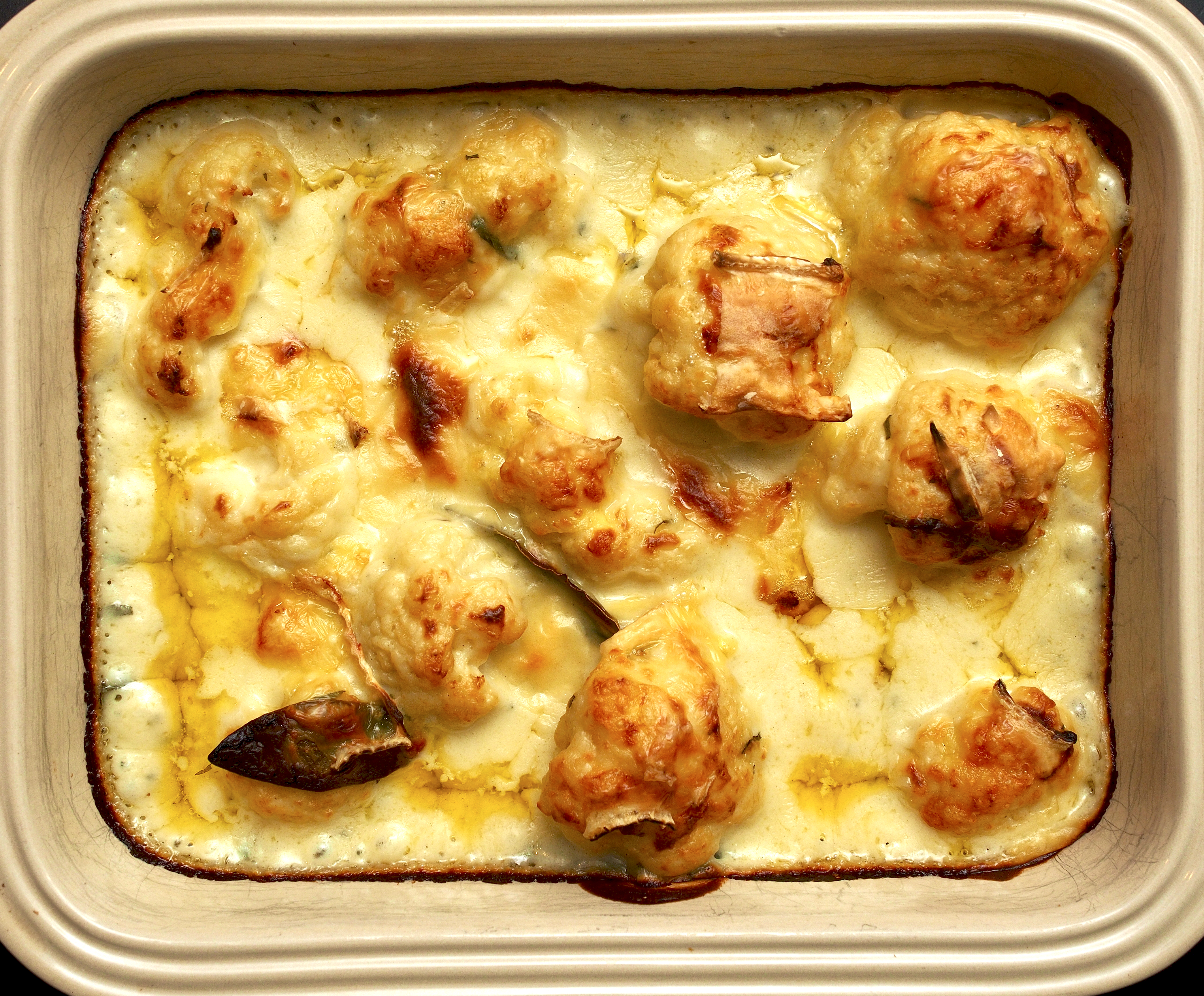
With a few days left before the New Year… when we, like many others are happy to change pace for a bit. For us that means lots of exercise, early nights and healthier food to eat. We don’t go on a diet but after all the excess of Christmas it’s just what we’re craving. All of this means that we have just a few days to get through all the delicious cheese in the fridge. Feel free to play around with the cheeses, we used Cooleeney from Tipperary, but Taleggio or Brie would work too.

Cooleeney & tarragon cauliflower cheese – serves 4 (easily doubled)

  • 50g butter
  • 50g plain flour
  • 500ml full fat milk
  • 1 bay leaf
  • 150g cheddar, grated
  • 50g Parmesan or similar, finely grated
  • 75g Cooleeney (or Taleggio or Brie), sliced
  • 5g tarragon, leaves picked, half chopped, half left whole
  • 1 cauliflower, broken into florets

Heat the oven to 220C/200Cfan/gas 7.

Melt the butter in a heavy-based pan, then stir in the flour to make a paste. Cook for a few minutes, then gradually add the milk, stirring the whole time, until you have a smooth sauce. Season.

Add the bay leaf, cheddar, Parmesan, half the taleggio and the whole tarragon leaves. Heat gently, stirring continuously, for 6 to 8 minutes or until the cheeses have melted and the sauce thickened. Remove from the heat and leave to infuse.

Cook the cauliflower in a steamer for 8 to 10 minutes or until just tender. Put the cauliflower into a baking dish. Add the chopped tarragon to the sauce and pour over the cauliflower.

Dot with the remaining taleggio and bake for 20-25 minutes until golden.

(Original recipe from BBC Good Food)

Read Full Post »

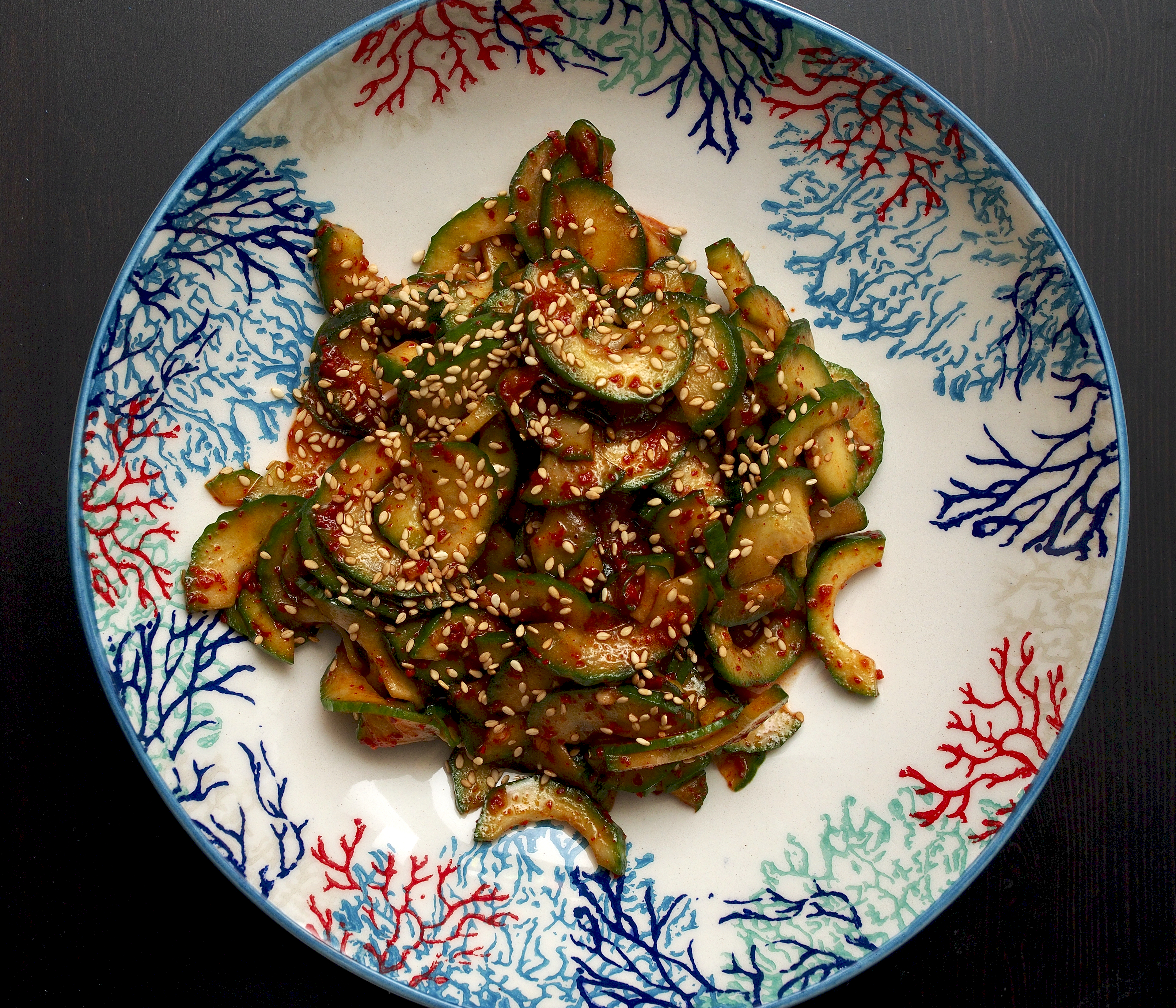
Well this was a revelation! We love kimchi but admit that we’ve only ever bought it in jars and never attempted to make it ourselves; a new year’s resolution in there perhaps. Having no kimchi in the cupboard we decided to give this a go and it’s nothing short of delicious. It’s ideally made with the small Persian cucumbers which we couldn’t find in our local shops over Christmas but a regular cucumber works fine too, just scoop out most of the seeds with a teaspoon first.

Almost-instant cucumber kimchi – serves 4-6 as a side

  • 3 Persian cucumbers or 1 regular cucumber (see note above)
  • 1 tsp fine sea salt
  • 1 garlic clove, crushed
  • 2 tsp gochugaru red pepper powder
  • 2 tsp unrefined sugar or coconut palm sugar
  • 2 ½ tsp rice wine vinegar
  • 2 tsp roasted sesame seed oil
  • 2 tsp toasted sesame seeds

Wash the cucumbers and pat dry. Halve them lengthways and slice very finely. Put the slices into a bowl with the salt, toss to combine, then leave aside for 30 minutes.

Combine the rest of the ingredients, apart from the sesame seeds, in a bowl. Drain the cucumber of any liquid, then add to the bowl with the other ingredients and stir well. Cover and put in the fridge for at least half an hour or until chilled.

Serve sprinkled with the sesame seeds. If you can resist eating it all this will keep in the fridge in a sealed container for up to a week.

(Original recipe from Our Korean Kitchen by Jordan Bourke and Rejina Pyo, Weidenfeld & Nicolson, 2015.)

Read Full Post »

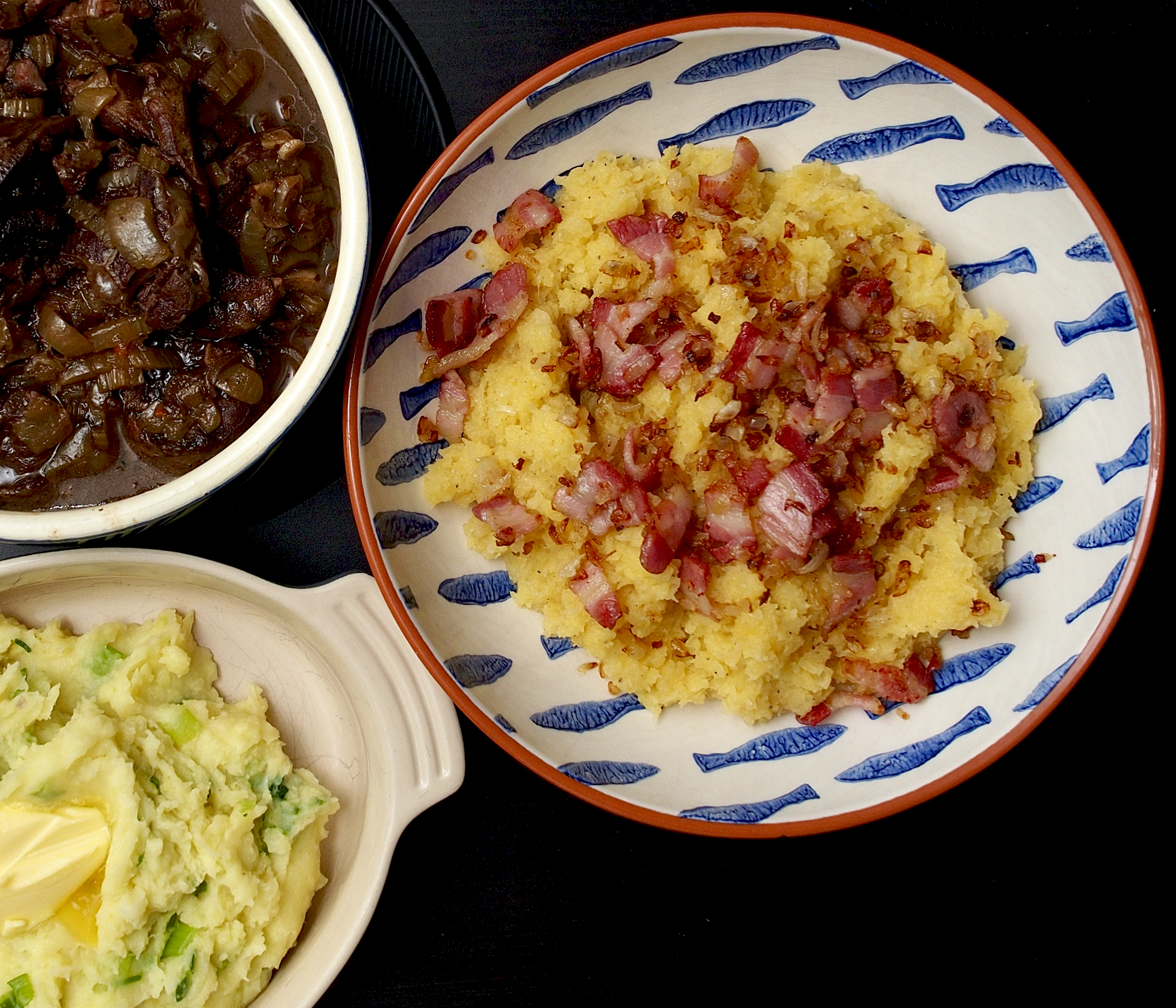
We don’t need to convincing to eat turnip but it is even more delicious with crispy bacon, onions and heaps of black pepper.

Turnip with bacon & onions – serves 4 to 6

  • 900g turnip, peeled and cut into chunks
  • 1 tbsp rapeseed oil
  • 1 small onion, finely chopped
  • 50g smoked bacon, diced
  • 50g butter

Steam the turnip for about 10 minutes or until tender. 

Meanwhile, heat the oil in a frying pan over a medium heat and gently sauté the onion and bacon until the bacon is crispy and onion starting to colour. 

Roughly mash the turnip with the butter, then season with salt and lots of black pepper. 

To serve, put the turnip into a warm dish and sprinkle with the bacon and onions. 

(Original recipe from Nevan Maguire’s Complete Family Cookbook)

Read Full Post »

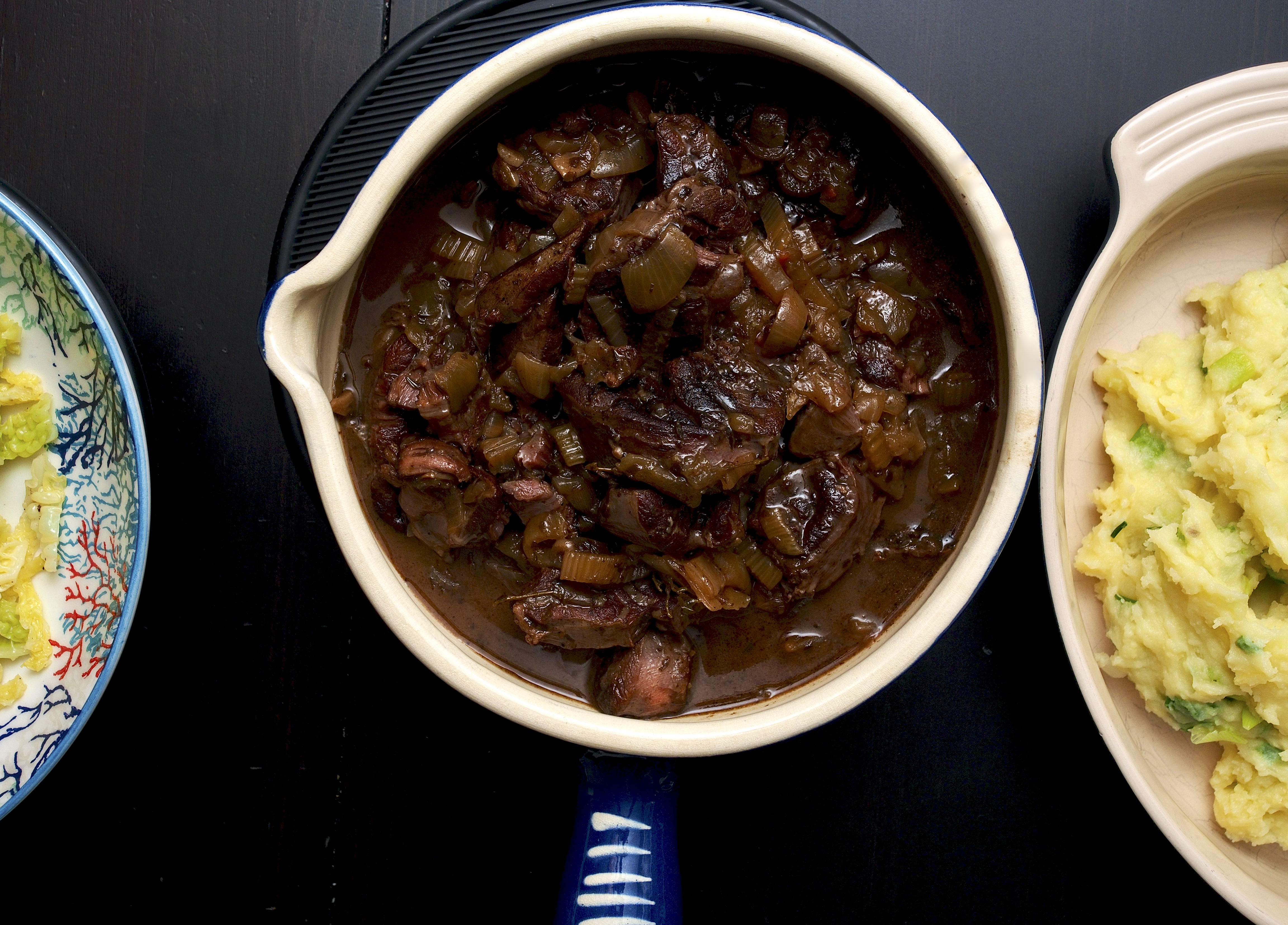
We had to try this idea from Gill Meller’s book Gather in order to use some dulse flakes from Aran Islands Seaweed. The dulse flakes give a smoky umami flavour to the dish. It takes a while in the oven but it otherwise very simple and tastes even better if made in advance, as stews often do. We served with creamy mash, cabbage and turnip for a hearty Sunday lunch.

Wine Suggestion: A dish that needs a suitably rich red wine to match; one where the rich fruit has high levels of anthocyanins and phenols in a ripe framework. The Altosur Malbec from Tuppangato (the highest part of the Mendoza area) in Argentina came out of the rack and its blackberry, blueberry and plum flavours with brambly, rich tannins was an ample choice.

Beef shin with dulse – serves 4

  • 2 tbsp olive oil
  • 800g beef shin, sliced thickly
  • 2 onions, sliced
  • 4 large garlic cloves, peeled and thinly sliced
  • 2 celery sticks, thinly sliced
  • 3-4 sprigs of thyme
  • ½ a glass of red wine
  • 2-3 tsp powdered smoked dulse (we used dulse flakes, see note above)
  • 300ml chicken stock or water

Heat the oven to 120C/Gas 1.

Heat the oil in a heavy flameproof casserole. Season the beef shin well with salt and pepper, then brown on all sides until it takes on a really-good colour all over. Remove from the pan and set aside.

Add the onion, garlic, celery and thyme and cook gently over a low heat until the onions are soft but not coloured. Return the meat the pan, then add the wine, dulse and stock or water and bring to a gentle simmer.

Cover the casserole with a lid and place in the oven for 4-5 hours, or until the meat falls apart easily. Season to taste and leave to rest for 25 minutes before serving with mash and other veg.

(Original recipe from Gather by Gill Meller, Quadrille, 2016.)

Read Full Post »

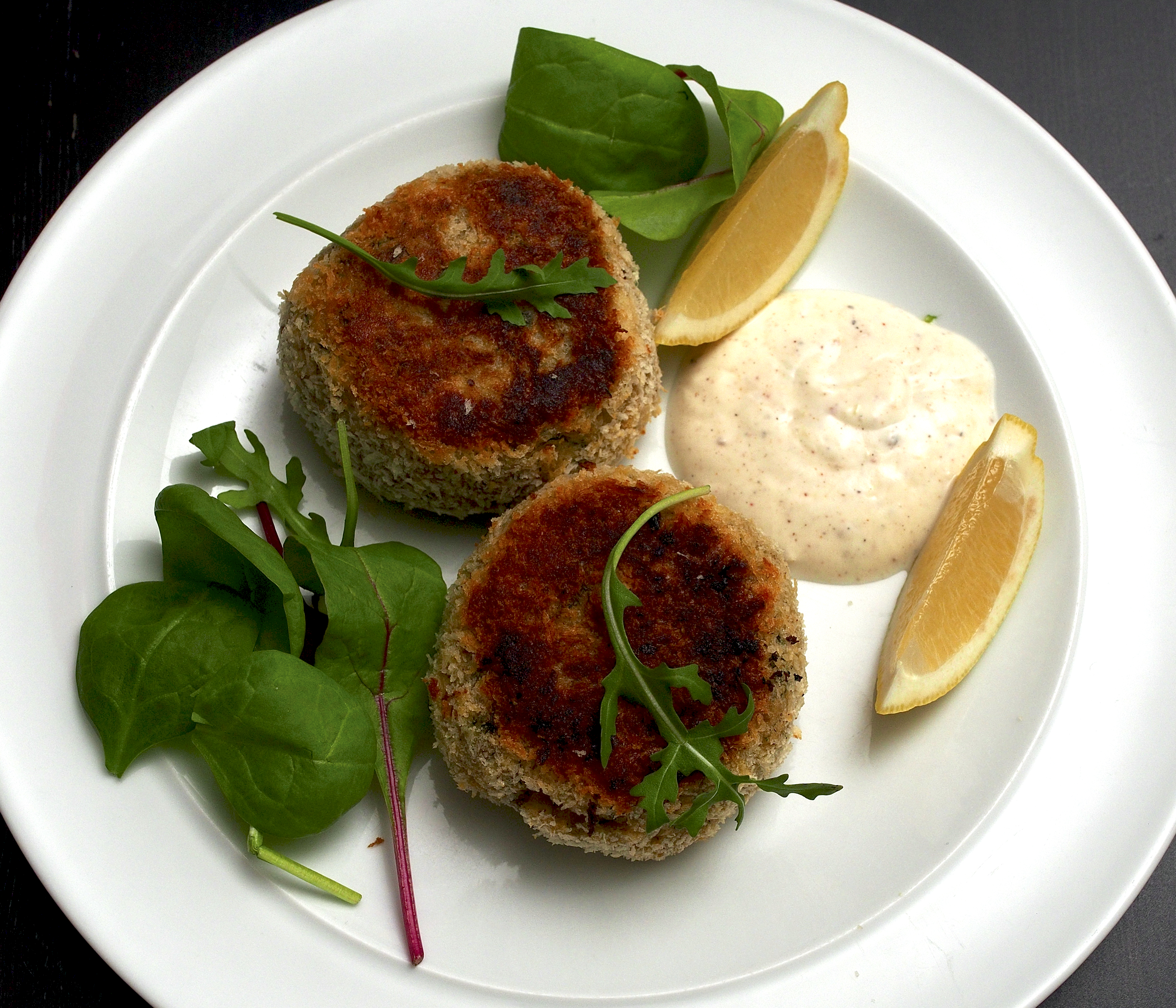
These are great for midweek, quite big, so they filled us up and tasted really good with the spicy yoghurt dip, some salad leaves and lemon. They are quite therapeutic to make too, or at least we thought so.

Wine Suggestion: A classic dish like fish cakes needs a classic match and Domaine de la Chauviniere’s Muscadet Sevre et Maine sur lie was our choice.

Fishcakes with ras el hanout and dill – serves 4

  • 600g floury potatoes, cut into even chunks
  • 300g skinless and boneless white fish
  • 300ml milk
  • 2½ tsp ras el hanout
  • zest of 2 lemons, plus 2 tbsp juice, and wedges to serve
  • small packet of dill, leaves finely chopped
  • 1 large egg, beaten
  • 85g dried breadcrumbs, we used Panko
  • 4 tbsp sunflower oil
  • 300g natural yoghurt
  • 100g bag of salad leaves, to serve

Put the potatoes into a large saucepan, cover with cold salty water, bring to the boil, and cook for 18-20 minutes until cooked. Drain and leave to steam-dry in the pot, then mash.

Meanwhile, put the fish in another saucepan and pour over the milk and about 100ml of water, just to cover. Cover with a lid, bring to a simmer, then turn off the heat and leave aside with the lid on to finish cooking. Remove the fish with a slotted spoon and flake into large chunks with your hands.

Mix 2 tbsp of the poaching liquid into the mashed potatoes with 2 tsp of ras el hanout, the zest of 1 lemon, dill and seasoning. Carefully mix in the fish, trying not to let it break up too much further, you want nice chunks. Shape the potato mixture into 8 large fishcakes, keep them quite flat so they’re easy to brown. Dip each fishcake into the beaten egg, then the dried breadcrumbs to coat.

Heat the oven to 200C/fan 180C/gas 6.

Heat the oil in a large non-stick ovenproof frying pan over a medium heat. Add the fishcakes and fry on each side for about 5 minutes over a medium heat. Keep an eye on them to make sure they don’t brown too much. Transfer the frying pan to the oven and cook for 8-10 minutes until piping hot.

Meanwhile, mix the yoghurt with the rest of the lemon zest, 2 tbsp lemon juice, ½ tsp ras el hanout and seasoning. Serve the fishcakes with salad, spiced yoghurt and lemon wedges.

(Original recipe by Katy Gilhooly in Good Food Magazine, December 2015.)

Read Full Post »

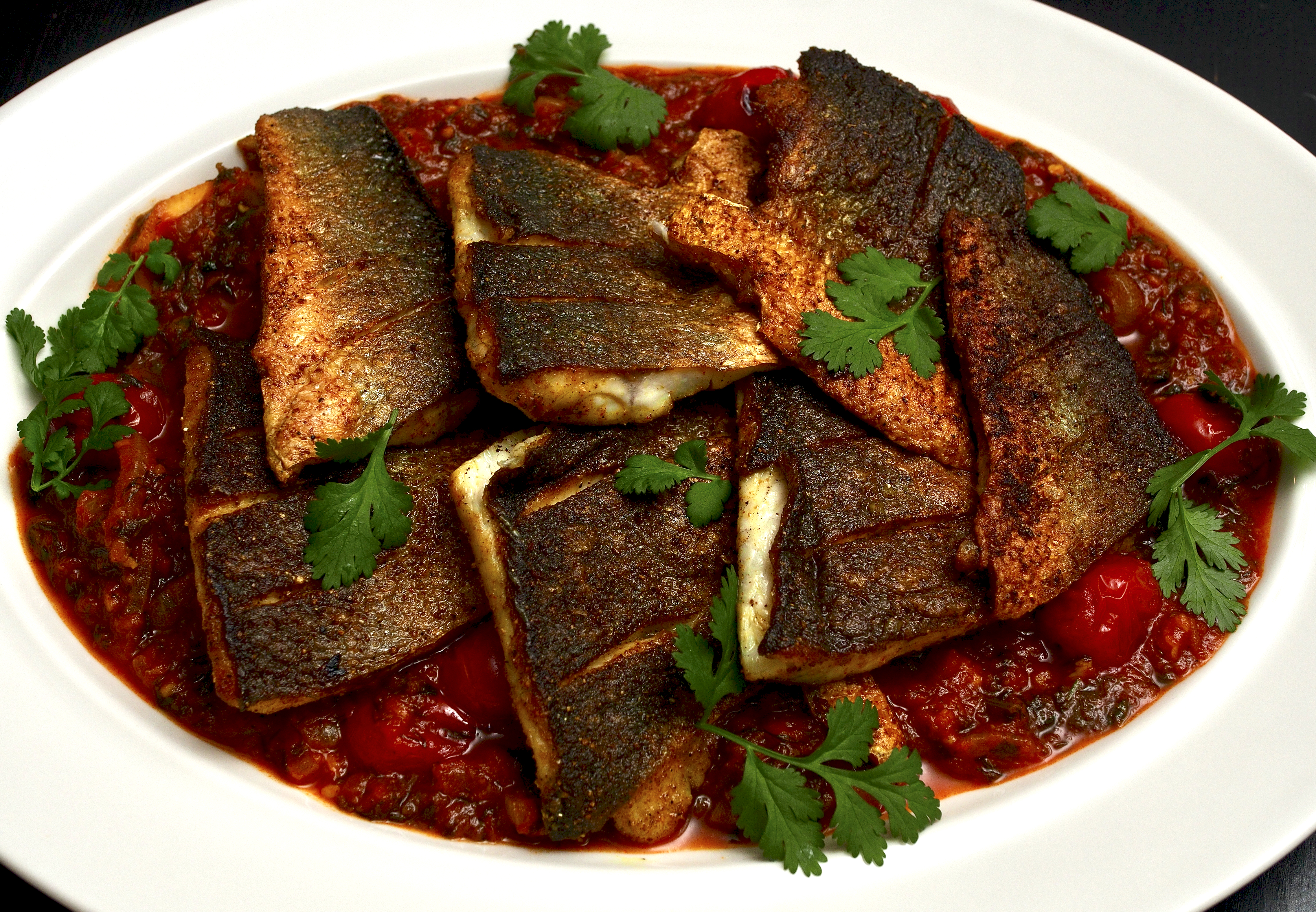
We cooked this fish from Falastin on a Saturday night for our 7 year old, who gets to sit up and have dinner with us at the weekends. Jono’s not too keen on fish skin so I warned him to make sure that Orlaith didn’t see him taking it off, or she wouldn’t eat it either. Orlaith announced very quickly that the skin was the best bit – that’s my girl! Crispy skin is the key and this cooking method delivers it to perfection. Even Jono ate the skin!

Wine Suggestion: A very left-field suggestion tonight, but with some logic: the Herdade de Portacarra Manda Chuva. This is a Blanc de Noirs – a white made from a red grape. In this case Sangiovese which is the logic; this grape works superbly with tomatoes. Interestingly this is from Setubal, in Portugal, and by making a white it makes a great match for both fish and tomatoes.

Seared sea bass with lemon & tomato sauce – serves 4

  • 100ml olive oil
  • 4 tsp fish spice mix (to make: 2 tsp ground cardamom, 2 tsp ground cumin, 1 tsp paprika, 2 tsp turmeric)
  • 8 sea bass fillets, skin on, lightly scored and halved widthways at a slight angle
  • 1 onion, thinly sliced
  • 5 garlic cloves, crushed
  • 25g piece of ginger, peeled and finely grated
  • 1 green chilli, finely chopped, including seeds
  • 1 tbsp tomato purée
  • 1 x 400g tin of peeled plum tomatoes, blitzed in a food processor until smooth
  • 1 ½ tsp caster sugar
  • 20g dill, roughly chopped
  • 25g coriander, roughly chopped, plus extra to garnish
  • 400ml chicken stock
  • 150g datterini or cherry tomatoes
  • ½ a lemon, very thinly sliced into rounds

Combine 2 tbsp of oil, 2½ tsp of fish spice mix, 1 tsp of salt and a plenty of black pepper together in a shallow dish. Add the fish pieces, turn to coat and set aside while you make the sauce.

Put 2 tbsp of oil in a large sauté pan and place on a medium-high heat. Add the onion and cook for about 8 minutes, stirring now and then, until softened and browned. Add the garlic, ginger and chilli and cook for another couple of minutes, until fragrant. Add 1½ tsp fish spice mix and the tomato purée and cook for 30 seconds. Add the tinned tomatoes, sugar, two-thirds of the dill and coriander, the stock, 1 tsp of salt and plenty of pepper. Bring to the boil, then lower the heat to medium and cook for 20 minutes, stirring occasionally, or until the sauce is thick and rich. Keep warm on a low heat.

Toss the little tomatoes with 2 tsps of oil. Put a large frying pan on a hight heat, add the tomatoes, and cook for about 4 minutes, shaking the pan a few times, until charred all over. Add the lemon slices and cook for another 2-3 minutes, shaking the pan a few times. Add this to the tomato sauce along with the remaining herbs and keep warm until ready to serve.

Wipe the frying pan clean and put over a medium-high heat with 1½ tsp of oil. Add a quarter of the sea bass fillets, skin side down, press them gently if necessary to stop them curling. Cook for 4 minutes, or until the skin is crisp and browned, then flip the fish over in the pan. Cook for another 30 seconds, then transfer to a warm plate. Repeat until all the fish is cooked.

Divide the sauce between 4 plates and top with the sea bass. Sprinkle over some coriander leaves to serve.

(Original recipe from Falastin by Sami Tamimi and Tara Wigley, Ebury Press, 2020.)

Read Full Post »

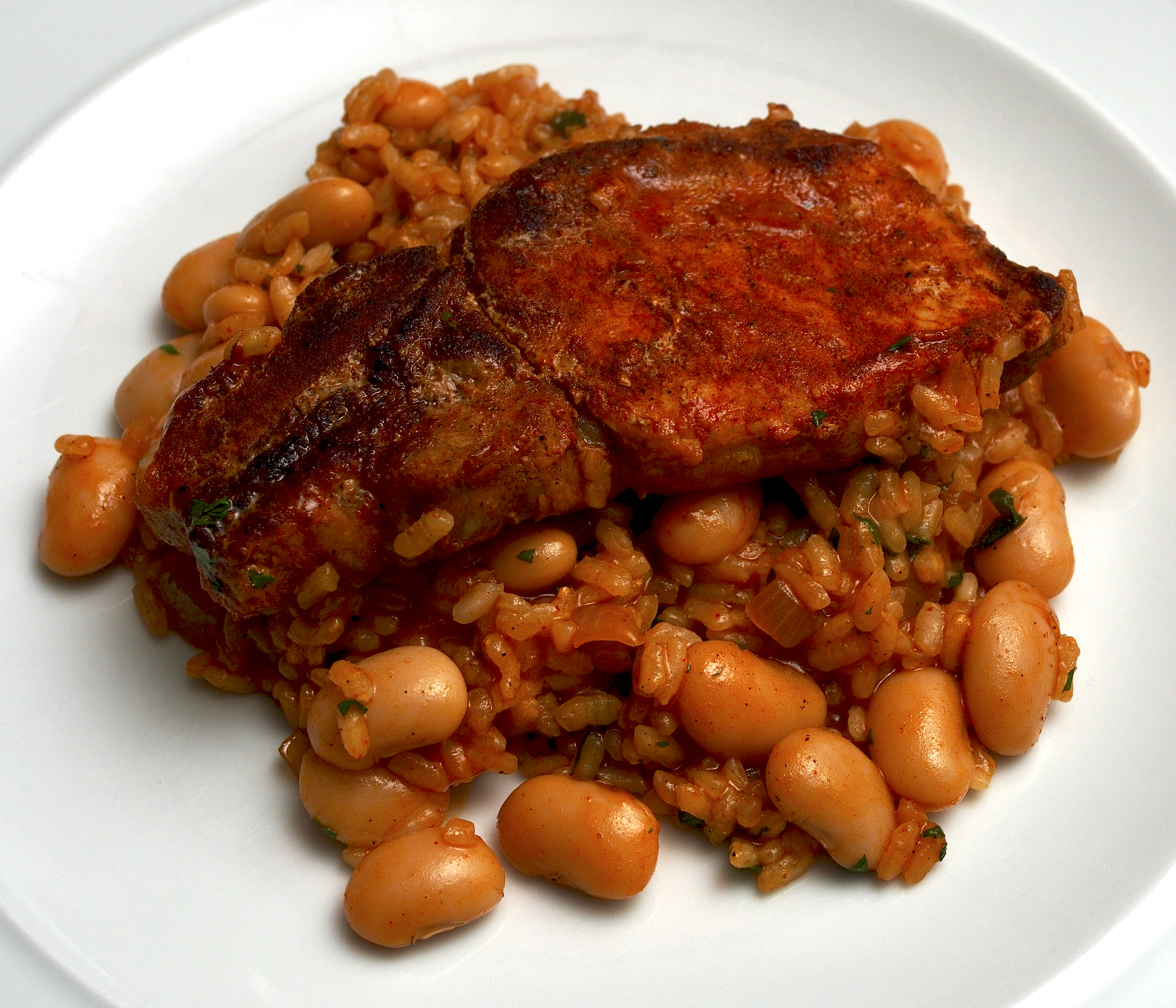
Here’s a quick fix for midweek. Really tasty and super simple to put together, so you can focus on your online shopping.

Wine Suggestion: Go for an earthy Tempranillo that hasn’t got too much extraction (big tannins!) but still has nice fruit. A Rioja Crianza should give the right balance, some blackberries and strawberries, some tannins but not too much, and only a touch of spices that develop with age. Our choice tonight the Paco Garcia Crianza.

Pork and Paprika Rice – serves 2

  • 2 pork chops, trimmed of fat
  • 1 tbsp paprika
  • 1 onion, finely chopped
  • 1 tbsp tomato purée
  • 200g paella rice
  • 100ml dry sherry
  • 400ml stock
  • 200g tin butter beans or other white beans, rinsed and drained
  • 2 tbsp chopped parsley

Rub the pork with the paprika and season generously.

Heat a little olive oil in a frying pan, then fry the pork chops on one side, until browned, then turn over and add the onion and tomato purée. Fry together for 5 minutes.

Stir in the rice, then add the sherry and cook for 1 minute before adding the stock. Bring to a simmer, then cover and cook for 15 minutes or until the rice is just cooked.

Add the beans and parsley, season well, then stand for 5 minutes before serving.

(Original recipe by Lulu Grimes in Olive Magazine, November 2013.)

Read Full Post »

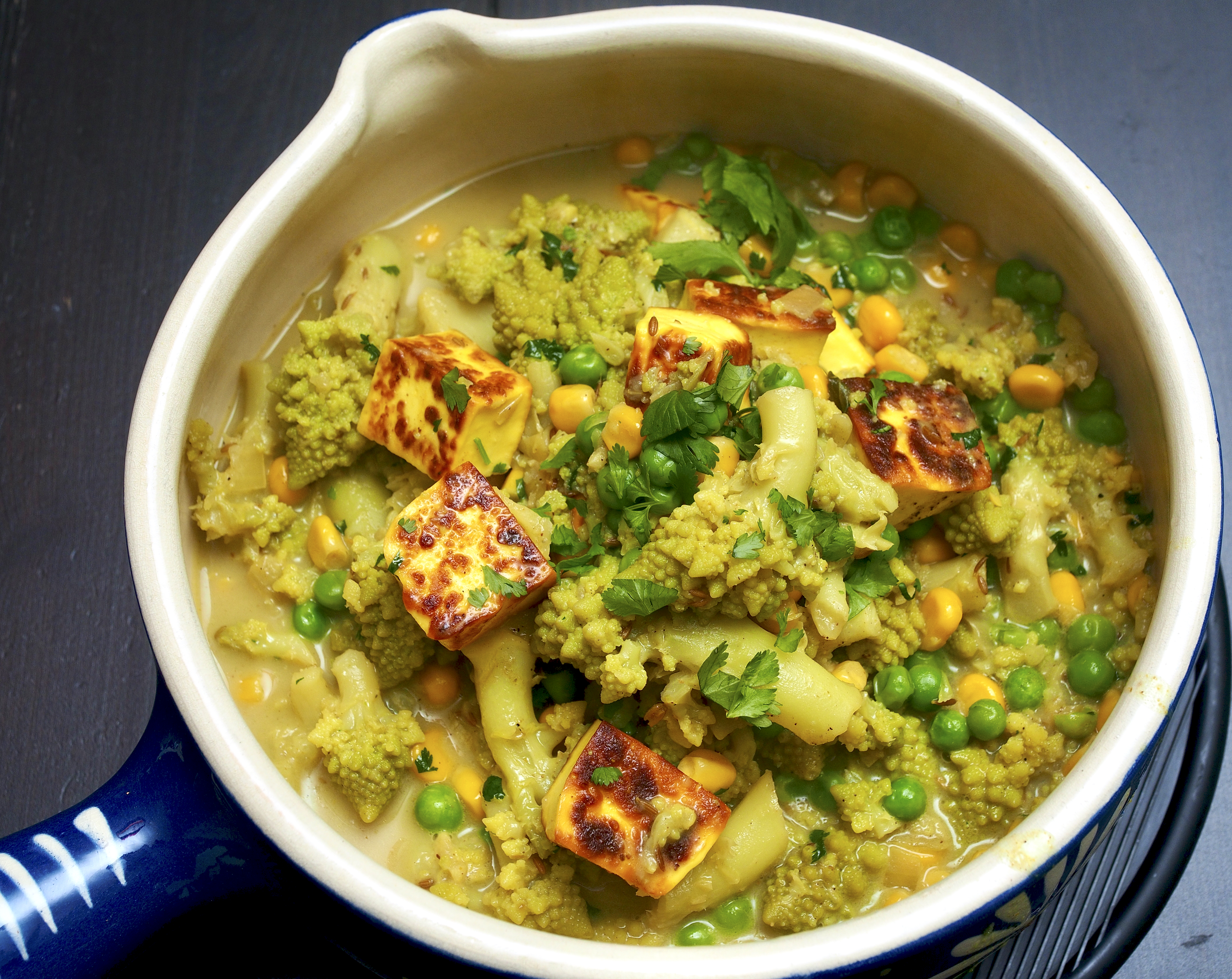
Romanesco has a short season so it’s a grab it when you can sort of vegetable. This means we usually just steam it but we came across this veggie curry recipe by Tom Kerridge and it was the perfect weeknight bowl of goodness.

Wine Suggestion: This works with lighter whites like the La Piuma Pecorino from Italy, but can see it working with so many other whites. Balanced, easy fruit, medium bodied and with enough texture, like Italian whites tend to have, except for Pinot Grigio.

Romanesco, corn and coconut curry – serves 4

  • 2 tbsp vegetable oil
  • 2 tsp cumin seeds
  • 1 onion, finely chopped
  • 4 garlic cloves, finely chopped
  • 2 tsp ground coriander
  • 1 tsp ground turmeric
  • 1 tsp garam masala
  • 500g romanesco, cut into florets
  • 300ml vegetable stock
  • 400ml coconut milk
  • 350g tin sweetcorn, drained
  • 200g frozen peas
  • a handful of coriander, chopped
  • 1 long red chilli, finely sliced
  • cooked rice, to serve

FOR THE FRIED PANEER:

  • 225g paneer, cut into cubes
  • ½ tsp ground turmeric
  • ½ tsp sea salt
  • 1 tbsp vegetable oil

Heat the oil in a wide, deep frying pan. Add the cumin seeds and sizzle for a few seconds, then add the onion. Cook for 5 minutes, then add the garlic and cook for another 2 minutes.

Turn the heat down, then add the ground spices and stir for 1 minute, then add the romanesco and stir-fry for 1 minute. Pour in the veg stock and half the coconut milk and cook for 20 minutes.

Meanwhile, cook the paneer. Put it into a bowl and mix with the turmeric and salt. Heat the oil in a non-stick frying pan over a medium heat. Add the paneer and cook until browned, 5-8 minutes, then remove from the heat.

Add the rest of the coconut milk to the romanesco and stir in the sweetcorn, peas, fried paneer and half the coriander. Bring to a simmer and cook gently for 5 minutes. Season to taste.

Serve scattered with the chilli and the rest of the coriander.

(Original recipe from Tom Kerridge’s Fresh Start, Bloomsbury Absolute, 2018.)

Read Full Post »

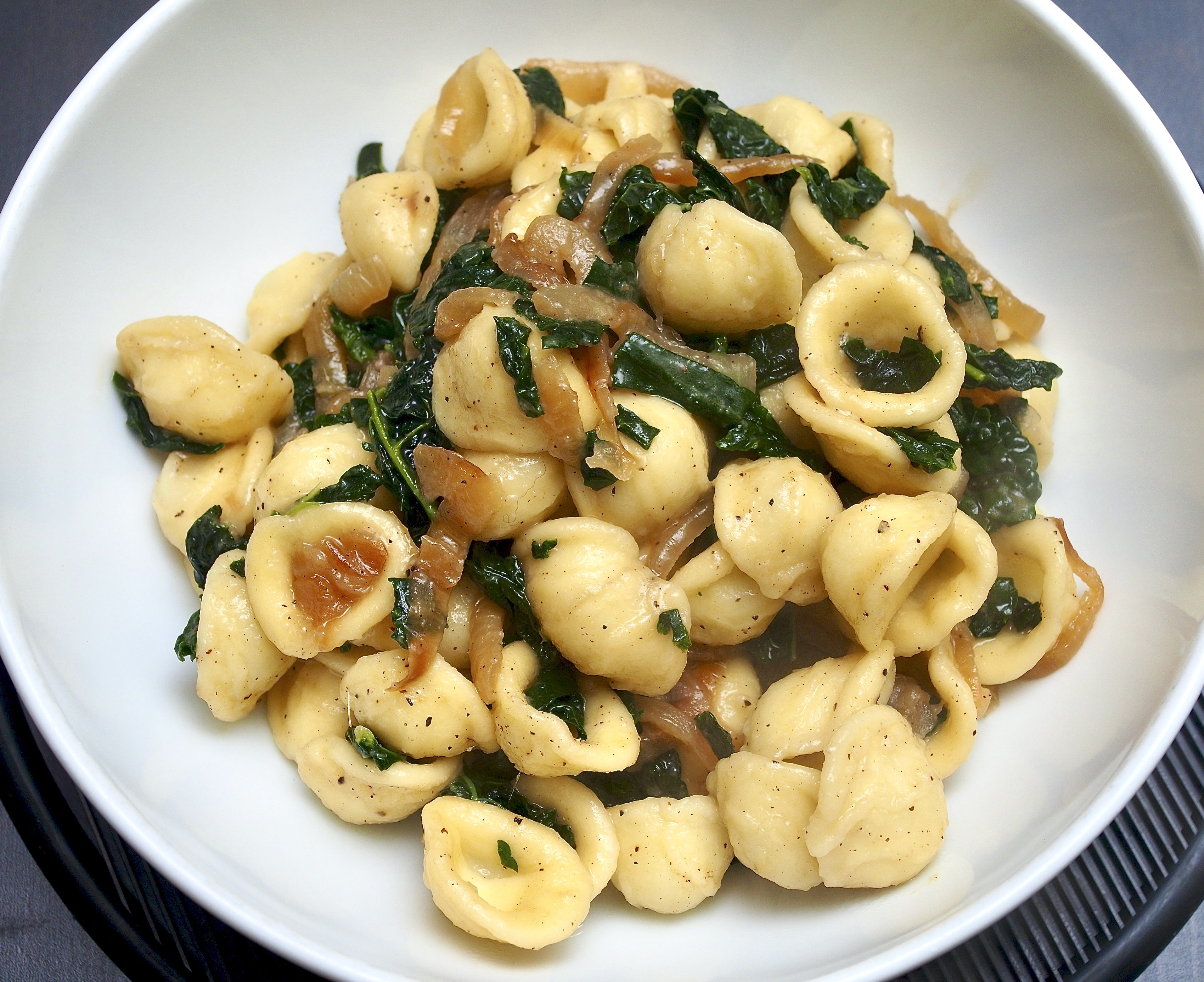
We love cavolo nero and it was so good in this simple pasta dish. No cheese and you won’t miss it as this has a really deep, savoury flavour.

Wine Suggestion: The beauty of this dish is the immediacy and simplicity, so a young red with joyful fruit as you’ll find in Beaujolais is perfect. If you find yourself in Nouveau season then hunt out a good bottle from a quality producer. We’re a few weeks out but had a bottle from Domaine Chasselay still hanging around and it was joyful.

Orecchiette with anchovies, cavolo nero and caramelised onions – serves 2

  • 2 onions, finely sliced
  • 200g orecchiette
  • 4 anchovies in olive oil, drained and cut into pieces
  • 100g cavolo nero, discard the woody stalks and shred the leaves

Fry the onions in a little oil and butter over a medium heat until golden and caramelised, about 30 minutes. Don’t rush this stage as you want proper caramelisation. If they start to stick, just add a splash of water.

Meanwhile, boil the orecchiette in lots of very salty water according to the timing on the pack. Reserve a cup of the pasta cooking water before you drain it.

Add the cavolo nero and anchovies to the onions and fry for a couple of minutes until the anchovies have melted and the cavolo nero has wilted. Add a little more butter if the onions stick. Tip in the drained pasta and a splash of cooking water. Season well and toss to coat.

(Original recipe by Janine Ratcliffe in Olive Magazine, November 2016.)

Read Full Post »

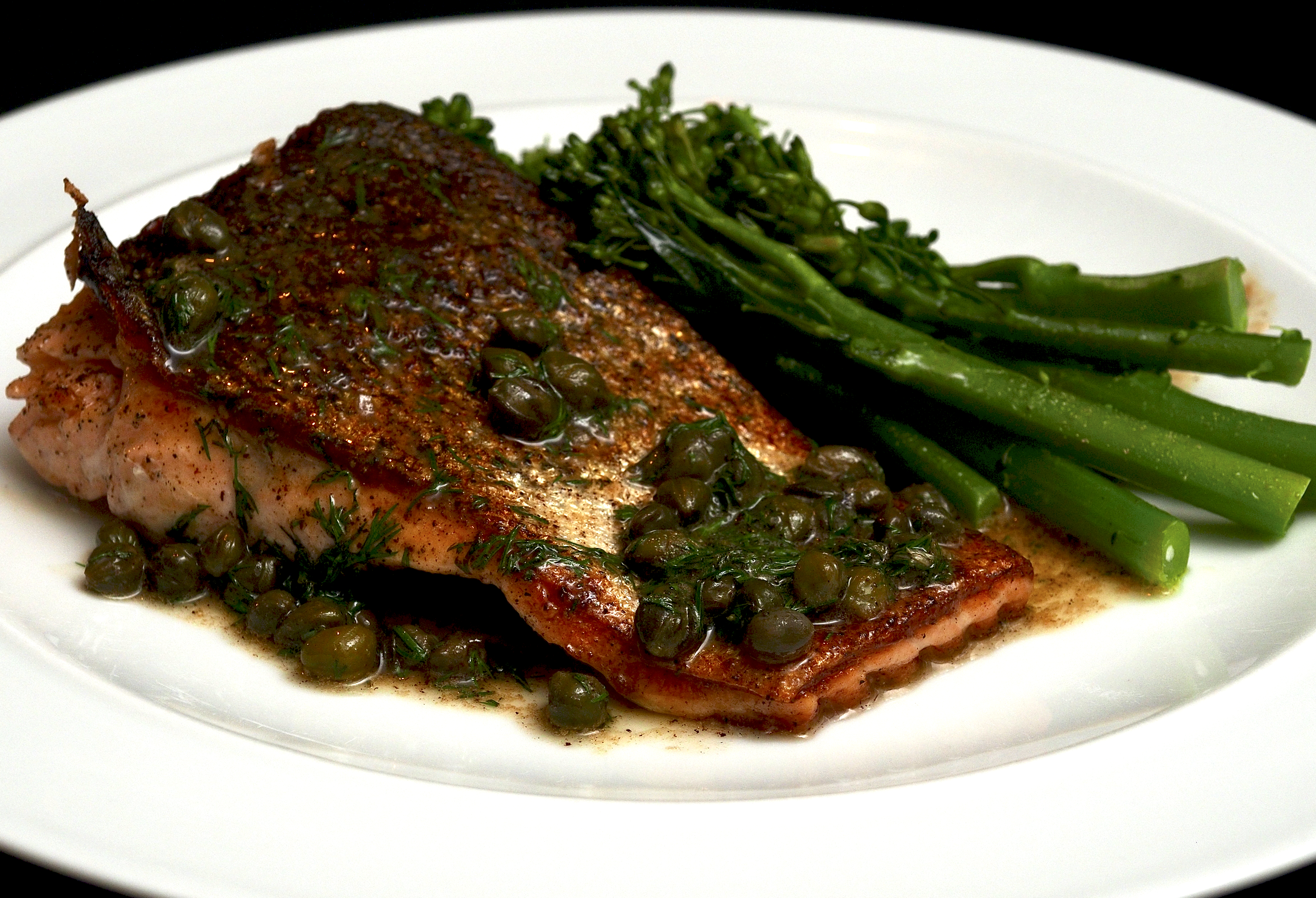
We like weeknight dishes that use fresh dill, like this one, particularly helpful as we often have leftover dill from the weekend. We never mind as we just love the lift dill can bring and hate to waste it. Don’t be tempted to turn the salmon too soon, you want nice crispy skin.

Wine Suggestion: A number of Italian whites have a good affinity to fish and capers so we chose a favourite, the Graziano Prá Soave Classico “Otto”. A DOC with a number of standout winemakers like Prá championing the local grape Garganega; green apple, hints of almond, a mid-weight and refreshing, textured finish.

Salmon with capers & dill – serves 4

  • 50g butter, diced
  • 4 x salmon fillets, preferably with the skin on, seasoned with salt and pepper
  • 4 tbsp capers, drained and rinsed
  • 2 tbsp lemon juice mixed with 6-8 tbsp water
  • 4 tsp chopped dill

Heat a frying pan over a medium-high heat, then add a couple of knobs of butter and add the salmon fillets, skin side down. Fry for 3-4 minutes or until crispy and browned underneath, then turn over and continue to cook for a couple of minutes or until cooked through.

Add the capers, the rest of the butter and the lemon juice mixed with water, boil for 1 minute. Season to taste, then transfer the salmon onto warmed plates, stir in the chopped dill and pour over the fish to serve.

(Original recipe by Rachel Allen in BBC Good Food Magazine, November 2011.)

Read Full Post »

This is a lovely side dish and it was hard not to eat all the roasted Romanesco before it got to the plate. Then you add garlicky tahini sauce and pomegranate seeds … delicious!

We just love the fractal patterened shape of these too. We’ve recently discovered that pomegranate seeds freeze well. Dry them well and spread them over a tray lined with paper, transfer to a bag or tub when frozen.

Roast Romanesco Cauliflower with Tahini and Pomegranates – serves 4

  • 2 heads of Romanesco cauliflower, cut into florets
  • 4 tbsp light olive oil
  • 1 tsp ground cumin
  • 1 tsp ground allspice
  • 2 tbsp pomegranate seeds

FOR THE SAUCE:

  • 75g tahini
  • 4 tbsp lemon juice
  • 1 clove of garlic, crushed

Heat the oven to 200C/180C/Gas 6.

Spread the florets out over a large baking tray. Drizzle with the olive oil and sprinkle with the cumin and allspice. Season with plenty of salt and pepper then toss well to coat.

Roast for 20-30 minutes in the hot oven until tender but firm, give them a toss half way through, then remove from the oven and leave to cool slightly.

To make the tahini sauce mix the tahini, lemon juice and garlic with 100ml of water in a bowl, until smooth and runny.

Put the tahini onto a serving platter, drizzle with the sauce and sprinkle over the pomegranate seeds.

(Original recipe from Zaitoun by Yasmin Khan, Bloomsbury, 2018.)

Read Full Post »

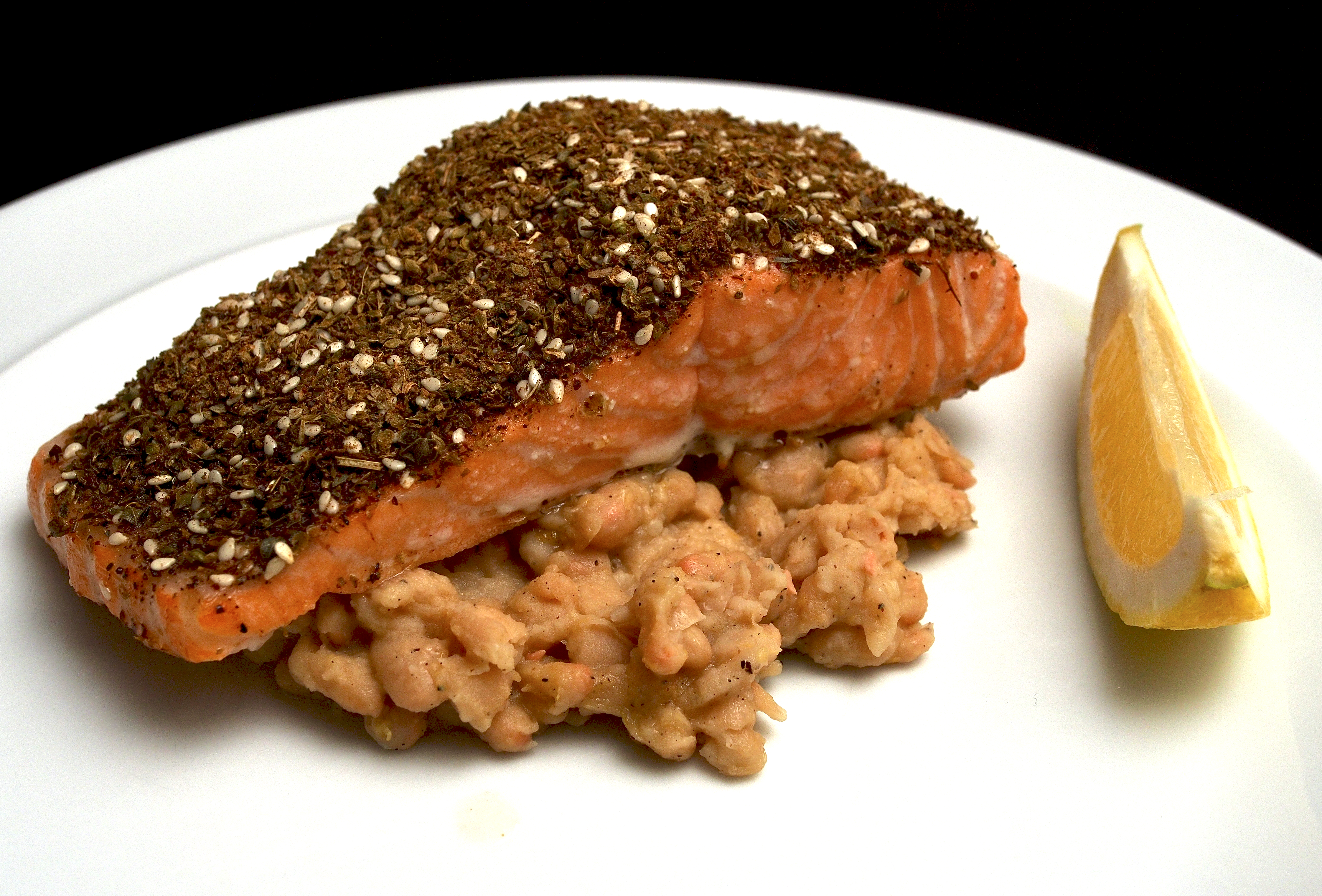
This garlicky bean mash is the perfect match for za’atar coated salmon. An easy dish from Yasmin Khan’s Zaitoun and perfect for a Friday night.

Wine Suggestion: As befitting the easy Friday night we whipped out a Rustenberg Chardonnay from Stellenbosch, South Africa. Despite the class and balance of this oaked Chardonnay it’s relatively inexpensive and one of our standby wines.

Za’atar roast salmon with garlicky bean mash – serves 2

  • 2 salmon fillets with skin on
  • 2 tbsp light olive oil
  • 3 tbsp za’atar
  • 1 clove of garlic, crushed
  • finely grated zest of 1 lemon, plus wedges to serve
  • 25g butter
  • 400g tin of cannellini beans, drained and rinsed

Heat the oven to 200C/fan 180C/Gas 6.

Place the salmon fillets on a baking sheet, skin-side down. Drizzle with the olive oil and season well with salt and pepper. Spoon the za’atar over the fish to completely coat the surface. Cook in the hot oven for 11-13 minutes or until just cooked through.

Melt the butter in a frying pan, then add the garlic and lemon zest and cook for a few minutes. Add the cannellini beans and some salt and pepper. Warm through, then roughly mash, adding a little water if it looks dry.

Serve the salmon with the mash and a lemon wedge.

(Original recipe from Zaitoun by Yasmin Khan, Bloomsbury, 2018.)

Read Full Post »

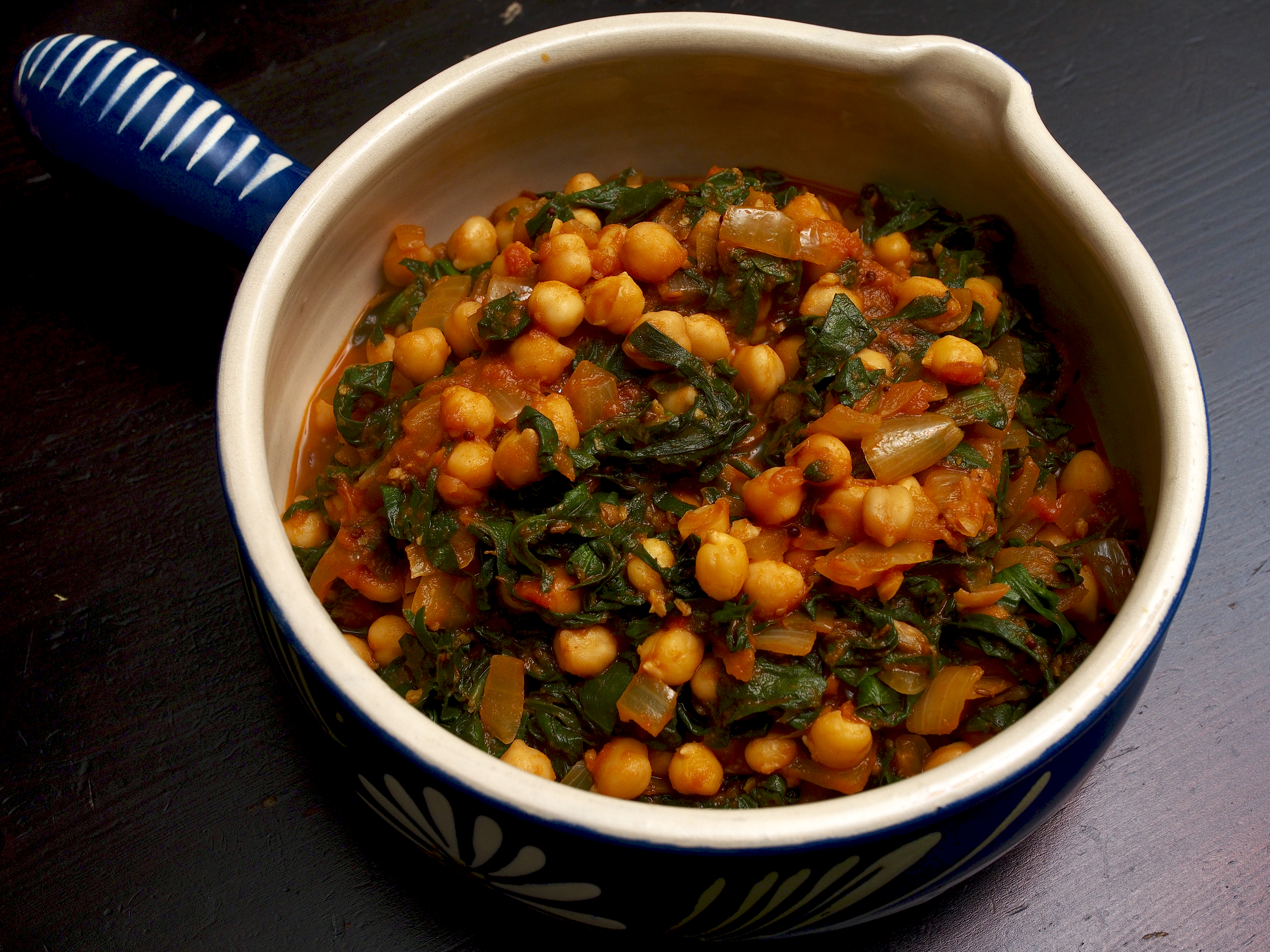
We adore spinach and dishes that are full of it, like this spinach, tomato & chickpea curry. Great served with rice or naan breads and some yoghurt. Couldn’t be easier!

Wine Suggestion: A dish like this loves medium weight Grenache based wines like Roc des Anges, l’Effet de Papillon rouge. A velvety, juicy, damson and raspberry flavoured glass with hints of spice.

Chana Saag – Spinach, tomato & chickpea curry – serves 4

  • 3 tbsp rapeseed oil
  • ½ tsp black mustard seeds
  • 1 tsp cumin seeds
  • 2 large onions, diced
  • 5 cloves of garlic, crushed
  • 2cm ginger, peeled and grated
  • 1 x 400g tin of plum tomatoes
  • 2 x 400g tin of chickpeas, drained
  • 1½ tsp ground coriander
  • 1 tsp chilli powder
  • ½ tsp ground turmeric
  • 1 tsp salt
  • 500g baby spinach, washed

Heat the oil in a large pan over a medium heat, then add the mustard seeds and cumin seeds. Stir for a minute, then add the chopped onions.

Fry for 10 to 12 minutes or until starting to caramelise, then add the garlic and ginger. Stir-fry for a few minutes, then add the tomatoes, crushing them with you hand as they go in. Fill the tin a third full with water and add to the pan.

Cook for 10 minutes or until quite dry and paste-like, then add the chickpeas. Warm through for a few minutes, then add the coriander, chilli powder, turmeric and salt. Stir well to combine, then add the spinach and stir until wilted.

Cook for about 5 minutes or until the spinach is cooked. Serve with naan bread or basmati rice and some yoghurt.

(Original recipe from Fresh India by Meeera Sodha, Fig Tree, 2016.)

Read Full Post »

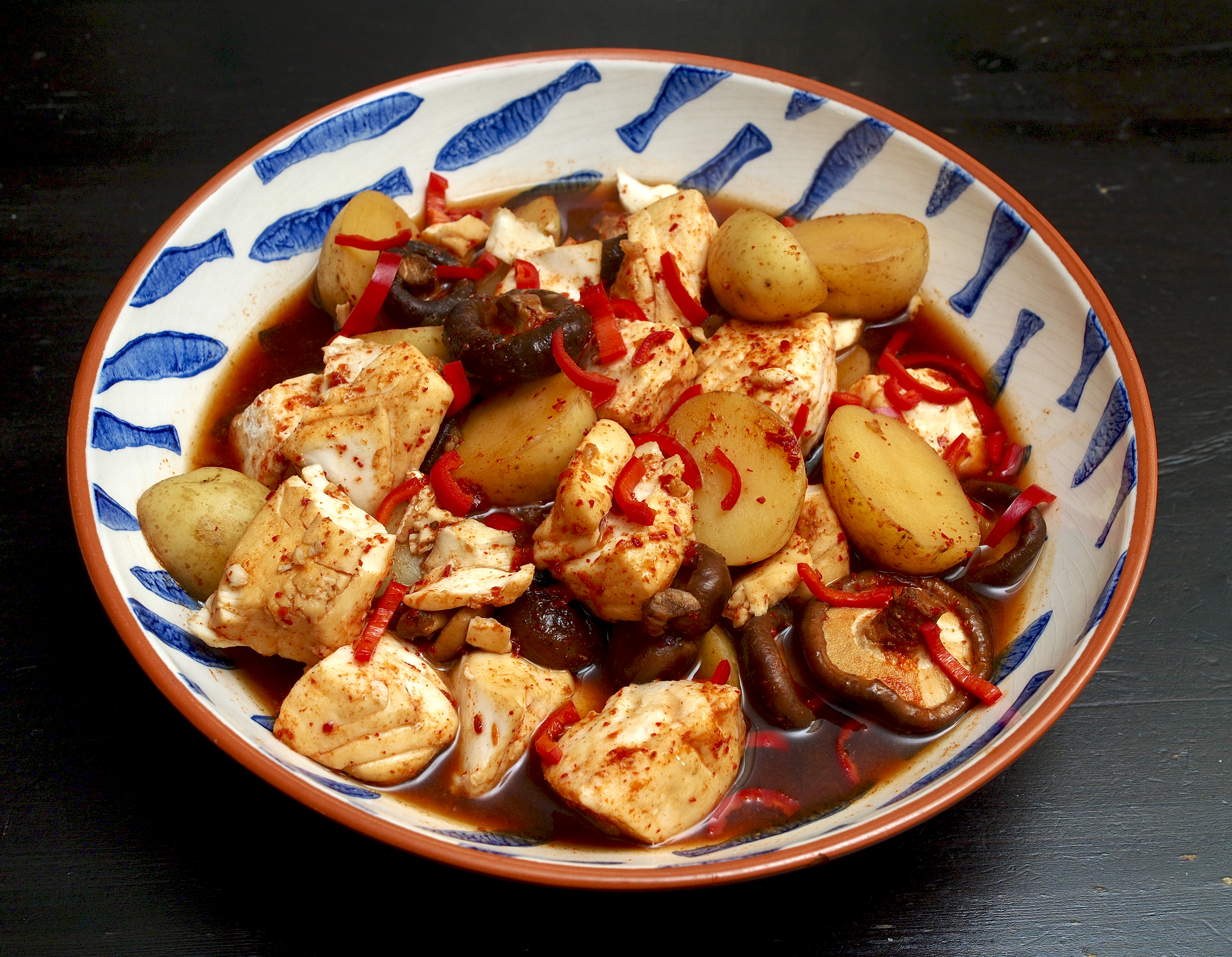
We don’t think we’ve ever cooked halibut at home before; it’s such a luxurious and meaty fish. It’s pricey but worth it we think for this Korean dish. You can of course substitute with cod or another white fish.

Braised halibut in seasoned soy – sengson jjim – serves 2

  • 50ml soy sauce
  • 3 tbsp soju (or sake or 1½ tbsp vodka mixed with 1½ tbsp water)
  • 1 tbsp mirin
  • 1 tbsp honey
  • 2 cloves of garlic, crushed
  • 1 tbsp gochugaru red pepper powder
  • 250g baby new potatoes, halved
  • 400g halibut, cut into large bite-sized chunks
  • 100g shitake mushrooms
  • 1 red chilli, sliced
  • cooked sticky rice, to serve

Mix the soy sauce, soju, mirin, honey, garlic and gochugaru red pepper powder, together in a bowl with 220ml of water.

Put the potatoes into a medium saucepan, then pour over the sauce. Cover and bring to the boil over a high heat, then turn down and simmer for 10 minutes or until almost cooked through. Stir in the mushrooms, then gently add the fish, taking care not to break it up. Simmer for 5-7 minutes or until the potatoes and mushrooms are just cooked.

Spoon into a large serving bowl and sprinkle over chilli. Serve with some sticky rice.

(Original recipe from My Korean Kitchen by Jordan Bourke & Rejina Pyo, Weidenfeld & Nicolson, 2015.)

Read Full Post »

We tried this to use up some Thai basil leftover from the weekend. Leftover ingredients are so often our inspiration for trying new things and sometimes the results are great, as was the case with this. Prep all the ingredients before you start cooking and it will be ready to eat in a flash.

Wine Suggestion: The Kilikanoon Mort’s Block Riesling from the Clare Valley in Australia was both suitably dry but full of fruit and freshly aromatic to sit alongside the strong and aromatic flavours here. We suggest something similar when you make this.

Thai pork with basil & chillies – serves 3

  • 2 tbsp vegetable oil
  • 700g pork fillet, cut into strips (you can use chicken breasts instead)
  • 1 Thai green chilli, finely chopped (deseed if you wish)
  • 2 cloves of garlic, shredded
  • 1 tbsp sesame oil
  • 1 medium red pepper, diced into 8mm pieces
  • 3 scallions, cut into 5cm pieces
  • 1 tsp freshly roasted and ground coriander seeds
  • 1 tbsp palm sugar or soft brown sugar
  • 1 tsp cornflour
  • 2 tbsp fish sauce (nam pla)
  • 1 tbsp light soy sauce
  • 7g Thai basil, shredded (you can use regular basil if you can’t find the Thai version)
  • rice or noodles, to serve
  • a handful of chopped coriander, to serve

Heat 1 tbsp of the vegetable oil in a wok or large frying pan over a high heat, and toss in the pork. Add the chilli and garlic and stir-fry until coloured, about 5 minutes.

Sprinkle with some sesame oil, then remove and set aside. Put another tbsp of vegetable oil into the wok, then add the red pepper, scallions, ground coriander and sugar. Stir-fry for 2 minutes, then return the meat to the wok and mix through.

Mix the cornflour with the fish sauce and soy sauce until smooth, pour this into the pan and stir continuously for a minutes or so, until the juice thickens slightly. Sprinkle with the remaining sesame oil, add the shredded basil, season to taste, then remove from the heat.

Serve straight away over sticky rice or cooked noodles. Sprinkle the chopped coriander over the top.

(Original recipe from Grow Cook Nourish by Darina Allen, Kyle Books, 2017.)

Read Full Post »

A nice salad using raw beetroot. It tastes really fresh and good for you. 

Beetroot with walnuts and cumin – serves 4

  • 75g walnuts
  • 1 tsp cumin seeds
  • about 400g beetroot
  • a handful of parsley, chopped
  • juice of 1 small orange
  • a squeeze of lemon juice
  • 2 tbsp rapeseed oil

Heat a dry frying pan over a medium heat and gently toast the walnuts for a few minutes, until toasted and starting to colour. Remove from the pan and add the cumin seeds. Toast these for 1-2 minutes, until fragrant, then tip onto a plate. 

Peel the beetroot and grate it coarsely into a bowl. Add the parsley, orange juice and a squeeze of lemon juice, 1 tbsp rapeseed oil and salt and pepper. Mix and season again to taste. Leave for 20 minutes or so to marinate and soften. 

Spread the beetroot over a serving dish. Bash the toasted walnuts roughly and scatter over the beetroot. Bash the toasted cumin seeds too, then scatter over the salad. 

Finish with another drizzle of oil. 

(Original recipe from River Cottage Veg Everyday! by Hugh Fearnley-Whittingstall, Bloomsbury, 2011.)

Read Full Post »

« Newer Posts - Older Posts »