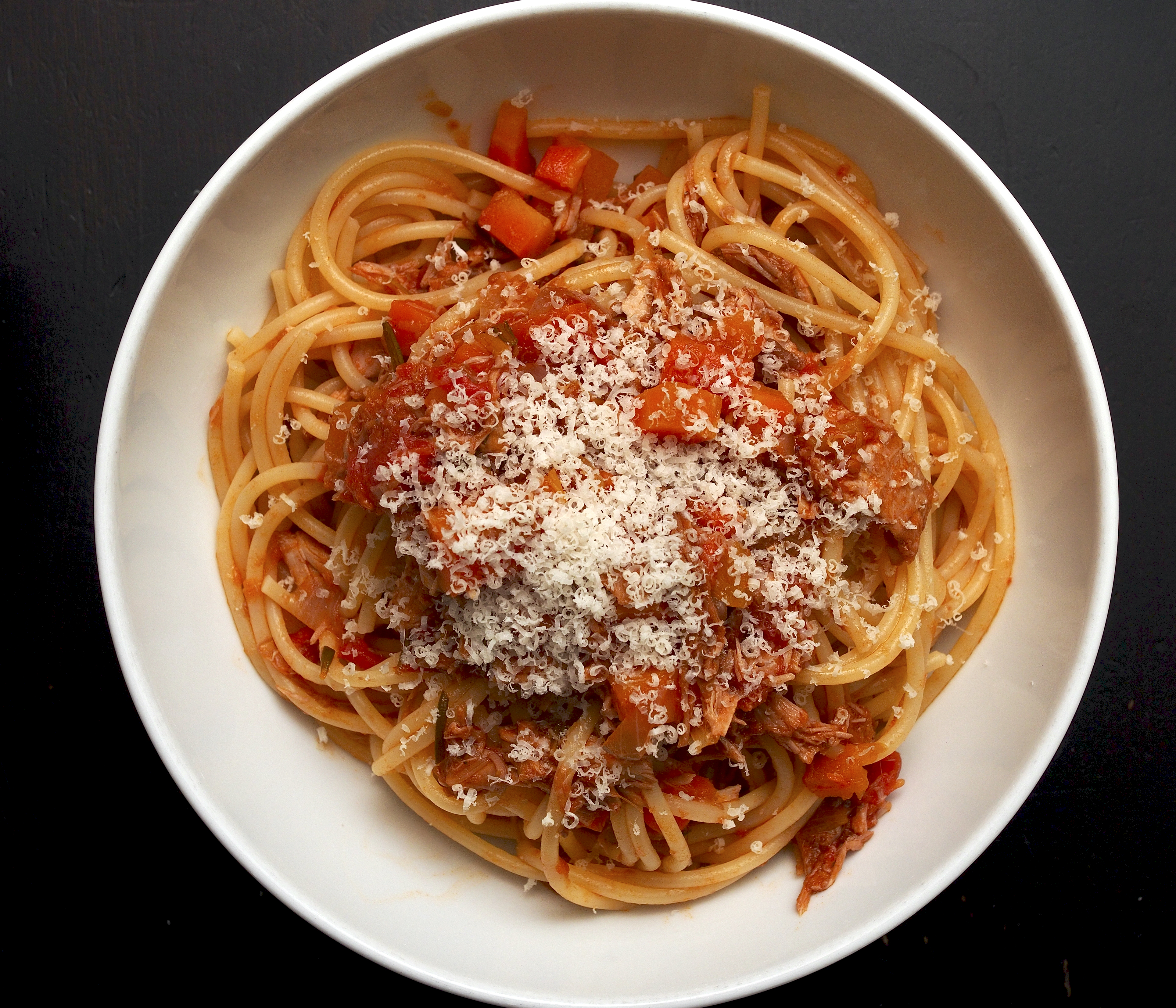
Something to help with the bag of cooked turkey which you might have sitting in the freezer. You can also make this with any leftover cooked meat or a mixture would be good.
Wine Suggestion: finish off the red wine you used to cook with this, ideally a Chianti, or similar made from Sangiovese. It doesn’t need to bee too complex, but good fruit and balance is a must.
Turkey Ragù – serves 6
1 red onion, finely chopped
1 clove of garlic, finely chopped
1 carrot, finely chopped
1 leek, finely chopped
1 stick of celery, finely chopped
1 sprig of rosemary, leaves picked and finely chopped
1 fresh bay leaf
200ml Chianti or similar Italian red wine
2 x 400g tins of plum tomatoes
400g leftover turkey or other cooked meat, roughly chopped or torn into bite-sized pieces
Heat 1 tbsp of the olive oil in a large heavy casserole on a medium-low heat. Add the onion, garlic, carrot, leek, celery, rosemary and bay leaf. Cook for 20 minutes, or until softened, stirring often.
Turn the heat up to high, pour in the wine and let it cook for a few minutes, then add the tomatoes, breaking them ip with a spoon. Half-fill each empty tin with water and pour into the pan. Add the meat and stir well. Reduce the heat to low and simmer for 1 hour 30 minutes or until thick. Season to taste, and stir in some good olive oil to finish.
Serve with pasta, rice, polenta, baked potatoes or crusty bread.
(Original recipe from Jamie Oliver’s Christmas Cookbook, Penguin Random House, 2016.)
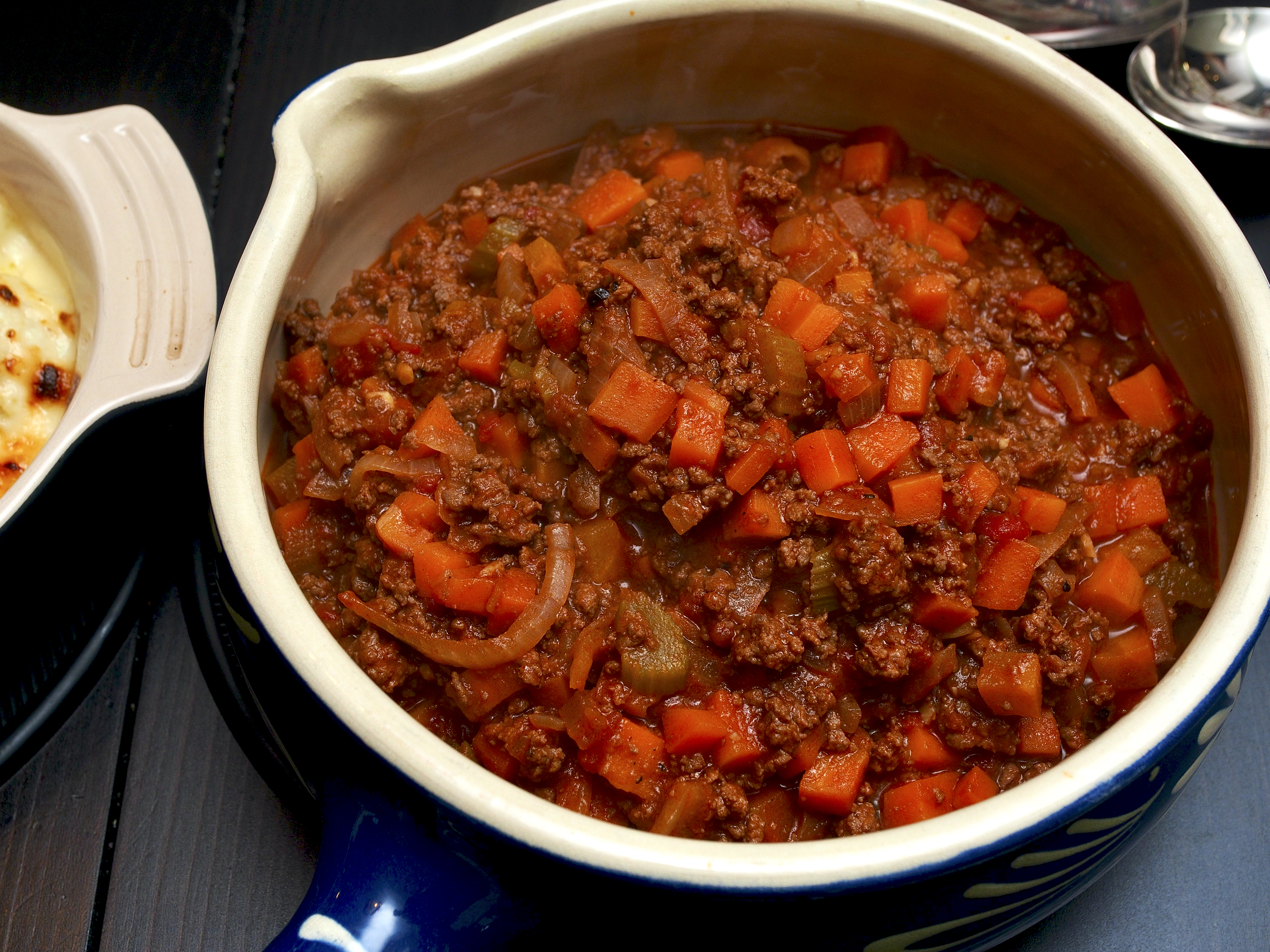
Growing up in Northern Ireland Jules often had mince and potatoes for dinner. The “mince” was minced beef with carrot and onions in gravy and it was served with boiled potatoes. We saw this recipe recently in a book of ‘British Classics’ where it was served with dumplings. Dumplings definitely did not feature on Jules’ childhood dinner table, so we left these out and served it with champ. A huge hit with the 7 year old and much more economical than many of our other weekend recipes.
Wine Suggestion: Keep it simple and choose a Grenache & Syrah blend like a Côtes du Rhône or similar. Rich enough but generally easy drinking with lovely bramble and spice flavours. Our current “find” is Jean-Paul Daumen’s version which balances this ease with a good dollop of class.
Mince – serves 6
2 tbsp veg oil
1 large onion, thinly sliced
2 garlic cloves, finely chopped
2 celery sticks, finely sliced
2 carrots, diced
500g beef mince
400g tin chopped tomatoes
2 tbsp tomato purée
450ml beef stock
a pinch of caster sugar
1 bay leaf
Heat the oil in a large pan and cook the onion, garlic, celery and carrots for 15 minutes or until softened and lightly browned.
Add the beef mince and cook for another 5 minutes, until it starts to brown. Break the mince up with a wooden spoon as it browns.
Add the tomatoes, tomato purée, beef stock, sugar and bay leaf. Season with salt and black pepper, then bring to the boil. Reduce the heat and simmer gently for 40 minutes, stirring occasionally. Cover with a lid if it reduces too much but you want it to be nicely thickened.
Serve with green veg and potatoes.
(Original recipe from The Hairy Bikers’ British Classics by Si King & Dave Myers, Seven Dials, 2018.)
This is an Anthony Bourdain recipe. It’s a bit full on, like the man himself was, with obscene amounts of garlic, but it all works a treat. We made this with cockles tonight as our local fish shop didn’t have clams and it was equally delicious. If you decide to follow our lead with cockles be careful as they cook more quickly than clams.
Wine Suggestion: A seafood friendly wine, the Dominio de Tares “La Sonrisa” Godello from Bierzo in Spain. La Sonrisa means smile and well named indeed
Linguine with white clam sauce – serves 4
5 dozen clams, soaked in lots of fresh water for an hour or so before cooking
4 tbsp top quality olive oil
12 cloves of garlic, finely chopped
1 tsp red pepper flakes, we used chilli flakes, reduce the quantity if you don’t like it too hot
125ml dry white wine
450g linguine
3 tbsp butter, cut into a few pieces
a large handful of coarsely chopped parsley leaves
Put 2-3cm of water into a large, heavy saucepan, season generously with salt and bring to the boil. Gently transfer 4 dozen of the 5 dozen clams into the pot, cover and steam until the clams open, about 5 minutes. Move them around occasionally with a spoon and remove to a bowl as they open. Don’t throw away the cooking liquid.
When the clams are cool enough to handle, remove them from the shell, collecting as much of the liquor from the shells as possible. Strain the cooking liquid through a fine-mesh sieve or a sieve lined with a cloth into a small bowl.
Cook the pasta in a large pot of very salty water.
Warm the oil in a large, heavy sauté pan, then add the garlic and chilli flakes. Cook over a medium-low heat, until softened but not browned. Add the wine, turn up the heat and reduce by half. Add the reserved liquor from the clam shells and a good splash of the cooking liquid, then the remaining uncooked clams. Cover and cook until the clams have opened. Remove to a warm bowl as they open.
Add the reserved cooked clams to the sauté pan and season with salt and pepper. Add the butter, some of the parsley, and toss until everything is hot.
Drain the pasta, but keep a little cooking water in case you need to loosen the sauce. Immediately add the pasta to the clam pan and toss over the heat for 1 minutes, adding a little of the reserved pasta water if needed. Divide the pasta between warmed bowls and garnish with the parsley and clams in their shells.
(Original recipe from Appetites: A Cookbook by Anthony Bourdain, Bloomsbury Publishing, 2016.)
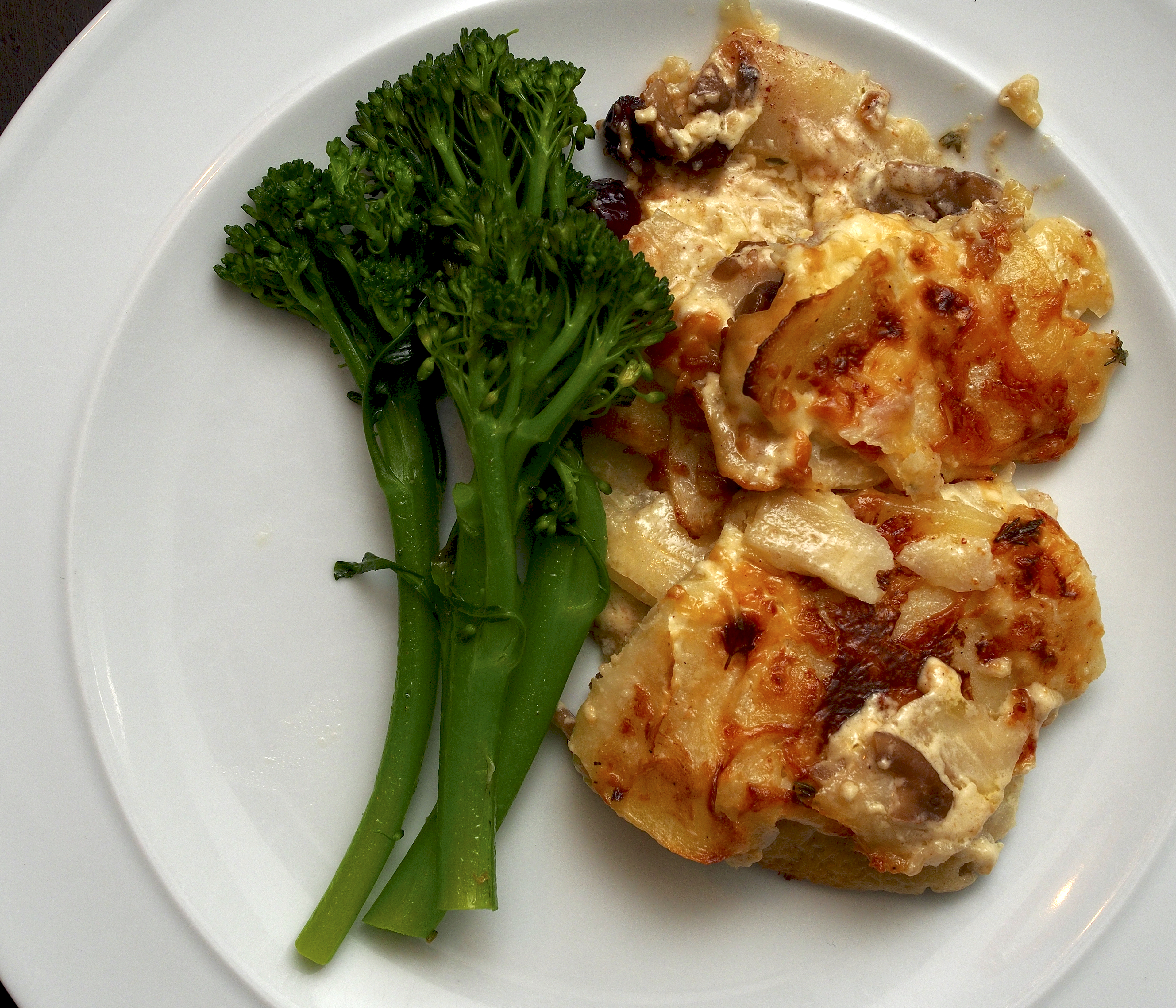
The trick, as with all gratin’s, is to slice the vegetables really thinly. Invest in a mandolin, or use your food processor’s slicing blade, and you’ll get even slices that will cook at the same time. This dish has a lovely festive feel to it and would be great as a side dish for roast chicken (or turkey) or a rich casserole. We served just as it was with some steamed broccoli which was good too.
There was no cheese in the original recipe so feel free to leave it out. We’re still working our way through the cheese mountain in the fridge.
Creamy vegetable gratin with chestnuts and cranberries – serves 4 as a main, 6 as a side
400g potatoes
300g parsnips
300g celeriac
425ml double cream
140ml sour cream
85ml full-fat milk
2 cloves of garlic, very finely sliced
leaves from 2 sprigs of thyme
butter, to grease the dish
50g dried cranberries
100g cooked chestnuts, sliced
a large handful of grated Parmesan
a large handful of grated Cheddar/Gruyere
Preheat the oven to 180C/350F/Gas 4.
Slice the potatoes, parsnips and celeriac very finely, use a mandolin if you have one.
In a large saucepan, mix the creams and milk together, then bring to just under the boil. Add the sliced veg, garlic and thyme and cook gently for 5 minutes.
Season generously and spoon half the vegetables into a buttered gratin dish. Sprinkle the cranberries and chestnuts on top and half of the cheese, then add another layer of vegetables and the rest of the cheese over the top.
Bake for 1 hour or until completely tender. You may need to cover with foil after 45 minutes to stop it browning too much.
(Original recipe from Food from Plenty by Diana Henry, Mitchell Beazley, 2010.)
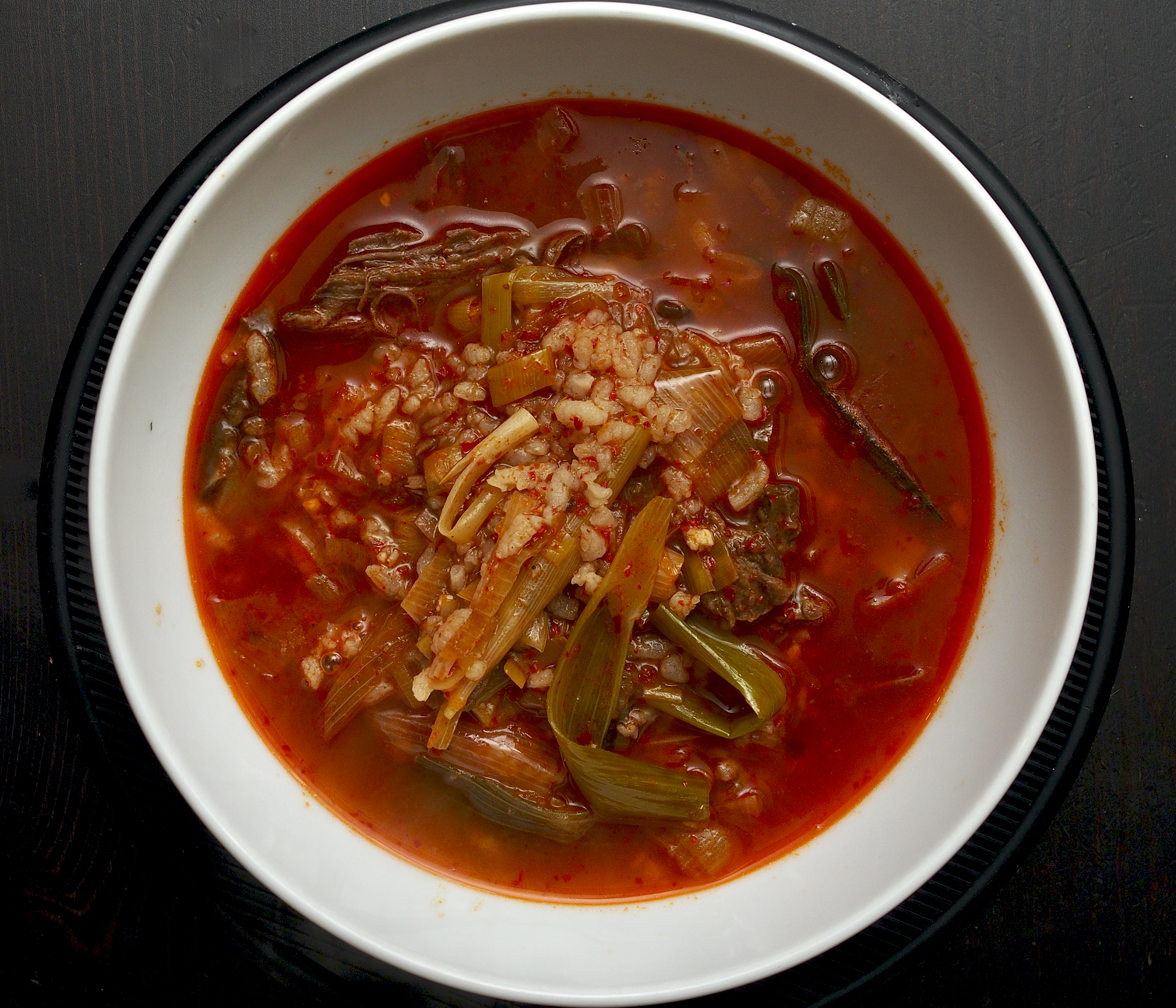
We ate this in those funny days between Christmas and New Year when you’re fed up eating but still feel you need to make the most of the time you have to cook. We’d had enough of leftovers and were craving spicy food, like this spicy beef stew, which is more like a soup, but with lots of sustenance. The recipe is from Our Korean Kitchen by Jordan Bourke & Rejina Pyo, probably our most used book this year. Serve with some sticky rice.
Spicy beef & vegetable stew – serves 4
400g beef brisket
1 onion, quartered
10 cloves of garlic, 6 left whole and 4 crushed
1 tbsp vegetable oil
150g shitake mushrooms, sliced
1 leek, halved and thinly sliced
2 tbsp soy sauce
2 tbsp roasted sesame seed oil
3 tbsp gochugaru red pepper powder
1½ tsp sea salt
10 scallions, halved lengthways, then cut into 6cm strips
cooked rice, to serve
Put the brisket into a large pot and cover with 3 litres of water. Bring to the boil, then reduce the heat and add the onion and 6 whole garlic cloves. Simmer for 2 hours with the lid off, remove any scum that comes to the top and add water as needed to ensure the beef is submerged.
Transfer the brisket to a plate and set aside to cool. Strain the stock through a sieve into a jug, and discard the flavouring ingredients. When the brisket is cool enough to handle, tear it into bite-sized pieces, discarding any fat.
In the same pan, heat the vegetable oil over a medium heat, then add the mushrooms and leek and sauté for 5 minutes. Add the beef, soy sauce, crushed garlic, sesame seed oil and gochugaru powder. Turn up the heat and fry for a couple of minutes until aromatic. Pour 1.3 litres of the beef stock into the pan (freeze the rest for another dish). Add the salt and bring to the boil, then reduce the heat a bit and add the scallions. Simmer for 3 minutes, then serve in bowls with some rice if you like.
(Original recipe from Our Korean Kitchen by Jordan Bourke and Rejina Pyo, Weidenfeld & Nicolson, 2015.)
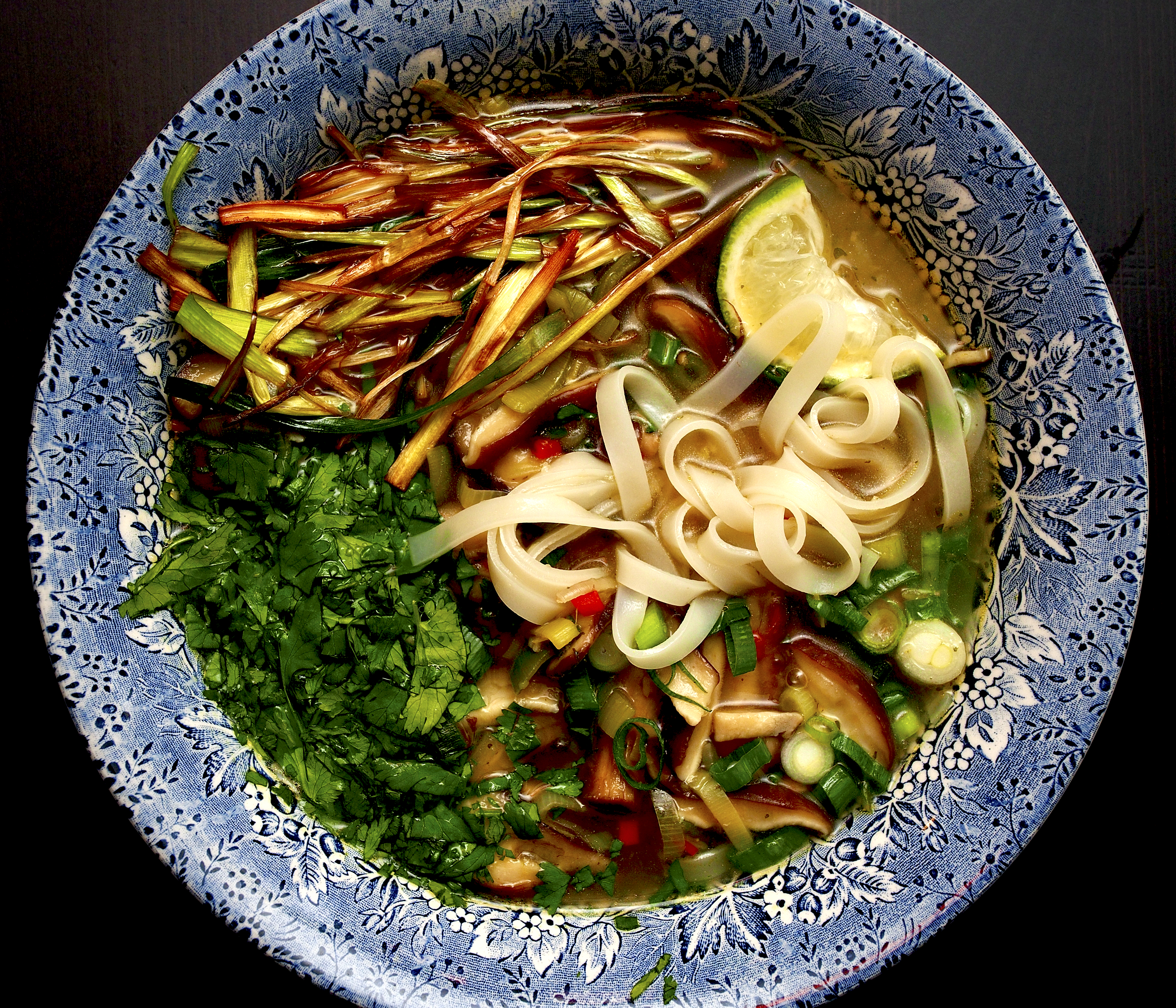
We made this on the first of January. We don’t do veggie January or veganuary but after all the rich food of November and December we were looking forward to some lighter dishes and this felt just right; both elegant and light, but full of lovely layers of flavour and textures.
Wine Suggestion: serve this with an umami rich red wine, but one that isn’t too fruity and rich either. If you can plump for an older, good Barolo lucky you, but tonight we were still lucky enough to have Domaine Jamet’s Côtes du Rhône: 100% northern Rhône Syrah with depth and personality, plums and brambles, peppery spice and savouriness.
Shiitake pho with crispy leeks – serves 4
4 tbsp rapeseed oil, plus extra for shallow-frying
4 banana shallots, thinly sliced (just use an onion if you don’t have shallots)
5cm piece of ginger, peeled and grated
1 star anise
3 cloves
1 cinnamon stick
2 leeks, 1 sliced the other shredded into long strips
2 bird’s eye chillies, very finely chopped
375g fresh shiitake mushrooms, thinly sliced
1 tbsp light soy sauce
6 scallions, very finely sliced
2 litres vegetable stock (vegan if you wish)
200g flat rice noodles
a large handful of fresh coriander leaves, shredded
1 lime, quartered
You need a very big pot for this, at least 3 litres.
Heat the oil in the large pot and fry the shallots for 5 minutes. Add the ginger, star anise, cloves and cinnamon stick, then fry for another 5 minutes or until starting to colour and stick.
Add the finely sliced leek, chillies and mushrooms, and stir-fry for 8-10 minutes, until softened, then add the soy sauce, half the scallions and the stock. Bring to the boil, turn the heat down very low and leave to simmer. Season to taste with salt.
Meanwhile, fry the shredded leek. Pour enough oil into a frying pan to come up to 1cm up the sides, then heat over a medium flame until very hot. Fry the shredded leek in batches, until crispy and golden, then use a slotted spoon to transfer to a plate lined with kitchen paper to drain. Cook the noodles according to the instructions on the pack and drain.
To serve, divide the noodles between 4 large bowls, then ladle the broth on top. Scatter with the coriander, the crispy leeks, scallions and a squeeze of lime.
(Original recipe from East by Meera Sodha, Fig Tree, 2019.)
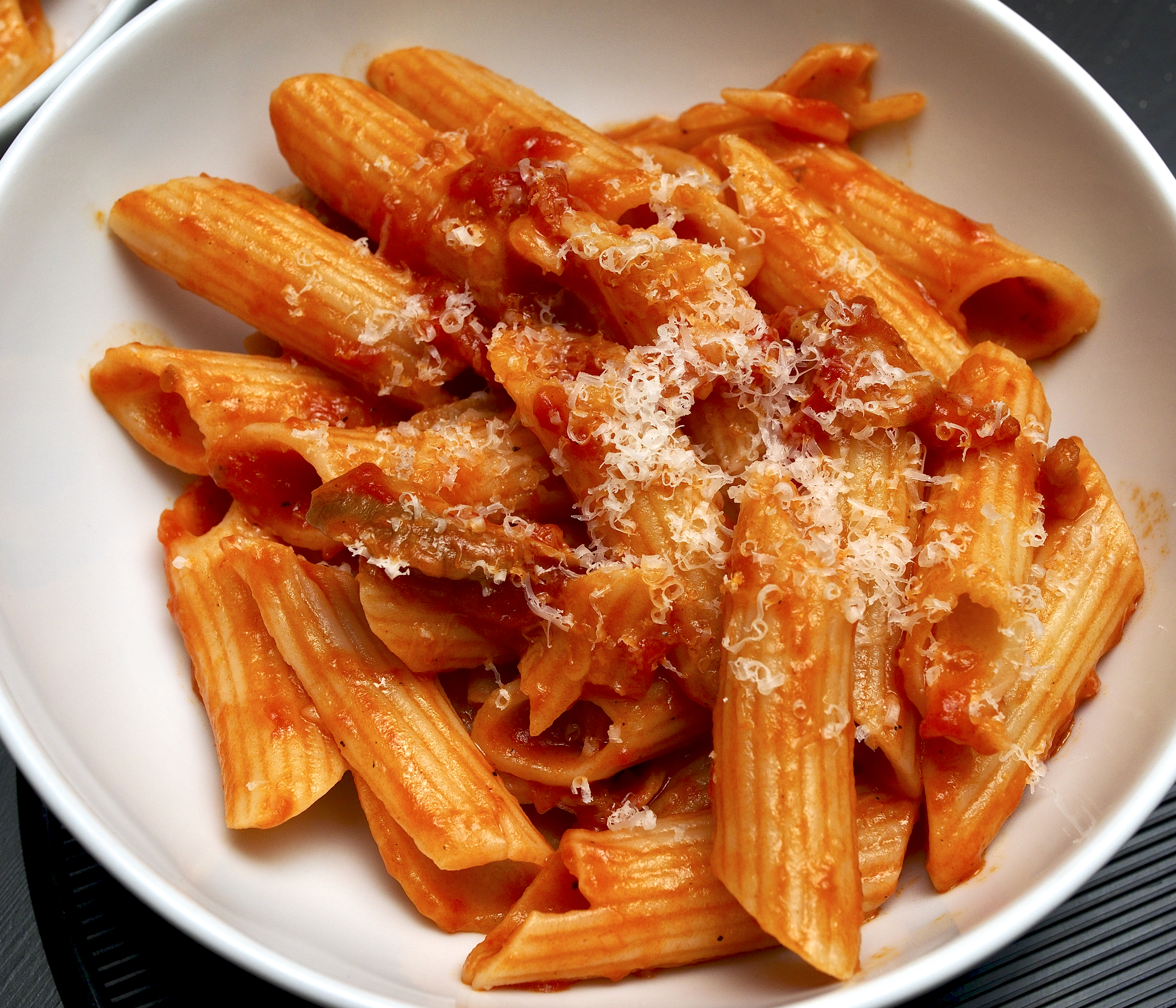
This is a simple tomato sauce for pasta with a bit of magic from Marcella Hazan that makes it taste special. The sauce is intensely mushroomy and absolutely delicious. We don’t often cook from Marcella’s The Essentials of Italian Cooking but we are never disappointed when we do.
Wine Suggestion: This needs a simple red, but with a vibrant core and a new favourite for this brief is the Umani Ronchi Rosso Conero “Serrano”. Mostly Montepulciano but with a touch of Sangiovese this is engagingly easy to drink with ripe cherry flavours and a round and juicy core of fruit; very pleasurable without being too weighty.
Tomato sauce with porcini mushrooms – serves 4
2 tbsp finely chopped shallot or onion
35g butter
1 tbsp vegetable oil
2 tbsp pancetta/prosciutto cut in strips, we used cubed pancetta
400g top quality plum tomatoes, cut up, with their juice
25g dried porcini mushrooms, reconstituted (see below)
450g pasta, we used penne, cooked to serve
freshly grated Parmesan, to serve
To reconstitute the mushrooms: soak the mushrooms in 500ml of barely warm for at least 30 minutes. Lift the mushrooms out of the water and squeeze out as much water as possible, do this over the bowl to catch the liquid. Rinse the mushrooms if needed to get rid of any soil, then pat dry with kitchen paper. Reserve the liquid.
Put the shallot into a saucepan with the butter and oil, over a medium heat. Cook until the shallot turns pale golden, then add the pancetta and cook for a couple of minutes.
Add the tomatoes, the reconstituted mushrooms, the reserved mushroom liquid, salt and plenty of black pepper. Let the sauce bubble at a steady simmer for about 40 minutes, you want the fat and the tomato to separate and the sauce to reduce to a nice consistency. Turn it up and bubble a bit faster to reduce if you need.
Toss the pasta with the sauce and serve with grated Parmesan.
(Original recipe from The Essentials of Italian Cooking by Marcella Hazan, Macmillan London Limited, 1992.)
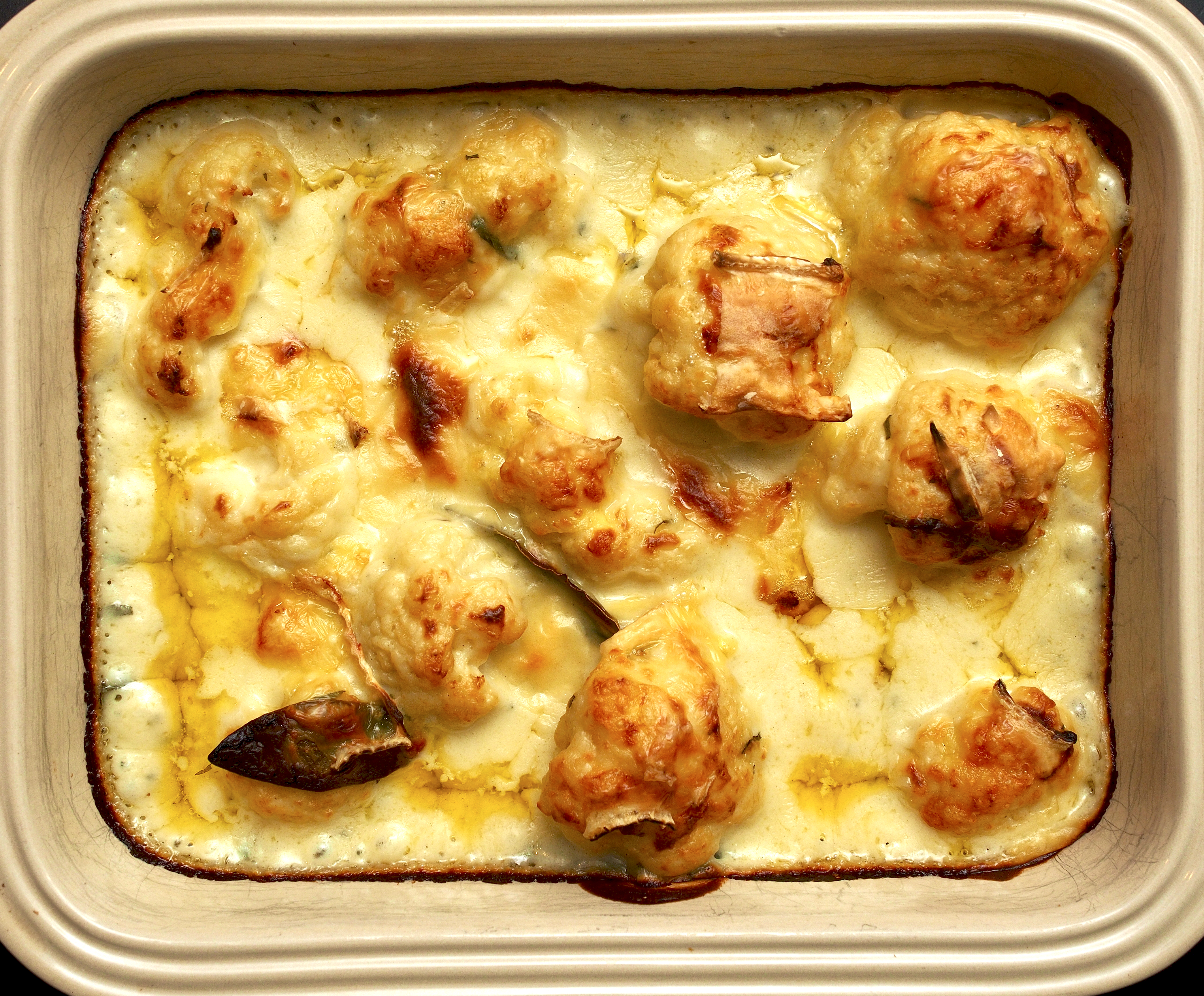
With a few days left before the New Year… when we, like many others are happy to change pace for a bit. For us that means lots of exercise, early nights and healthier food to eat. We don’t go on a diet but after all the excess of Christmas it’s just what we’re craving. All of this means that we have just a few days to get through all the delicious cheese in the fridge. Feel free to play around with the cheeses, we used Cooleeney from Tipperary, but Taleggio or Brie would work too.
5g tarragon, leaves picked, half chopped, half left whole
1 cauliflower, broken into florets
Heat the oven to 220C/200Cfan/gas 7.
Melt the butter in a heavy-based pan, then stir in the flour to make a paste. Cook for a few minutes, then gradually add the milk, stirring the whole time, until you have a smooth sauce. Season.
Add the bay leaf, cheddar, Parmesan, half the taleggio and the whole tarragon leaves. Heat gently, stirring continuously, for 6 to 8 minutes or until the cheeses have melted and the sauce thickened. Remove from the heat and leave to infuse.
Cook the cauliflower in a steamer for 8 to 10 minutes or until just tender. Put the cauliflower into a baking dish. Add the chopped tarragon to the sauce and pour over the cauliflower.
Dot with the remaining taleggio and bake for 20-25 minutes until golden.
This pasta dish by Gizzi Erskine certainly packs a punch. Roasted cauliflower is a bit trendy at the moment but we don’t think we’ll tire of it and the additions of preserved lemon, chilli and cream makes a great combination.
Wine Suggestion: The Edetària via Edetana Blanc from DO Terra Alta, near Tarragona in Spain is an old vine Granacha Blanca (70%) with the remainder being Viognier. Wonderfully bright and pure with both an exotic lushness and cream on the palate as well as a blindingly salty, mineral finish. Bravo to the winemakers.
Roasted cauliflower, preserved lemon and chilli pasta – serves 4
1 medium cauliflower, cut into florets, and the inner leaves
100ml olive oil, plus 1 tbsp for roasting the cauliflower
40g rye bread, blitzed into breadcrumbs (we used some stale sourdough which worked perfectly too)
250g ditali pasta, macaroni, mezzi, rigatoni or orecchiette
6 cloves of garlic, finely chopped
1 dried chilli, crushed
3 egg yolks
200g sour cream
80g Parmesan, grated
a large handful of flat-leaf parsley, leaves finely chopped
2 preserved lemons, pips discarded and skin thinly sliced
grated zest of 1 lemon
Preheat the oven to very hot, about 260C/Gas 10 or as high as your oven goes.
Spread the cauliflower and leaves on a baking tray, drizzle over 1 tbsp of olive oil and sprinkle with 1 tsp of salt. Toss with your hands to coat in the oil. Roast in the hot over for 15 minutes, until cooked through and browned, a bit of charring is fine.
Meanwhile, heat half the oil in a small frying pan over a medium heat. Add the breadcrumbs and fry until crispy and golden, then drain on some kitchen paper and set aside.
Cook the pasta in lots of very salty water for a couple minutes less than the pack instructions, it will finish cooking in the sauce. Drain, and keep 100ml of the pasta cooking water in case you need to thin the sauce later.
While the pasta is cooking, heat the rest of the oil in a separate frying pan with the garlic and chilli and cook gently for 5 minutes, until softened, then set aside.
Whisk the egg yolks, cream and Parmesan together in a bowl. Put the pasta pan back over a medium heat and stir in the egg mixture, then the garlic and chilli oil, parsley, preserved lemon, lemon zest and plenty of black pepper. Mix for a couple of minutes until the sauce thickens slightly, check for seasoning and stir through the roasted cauliflower. You can loosen a little with the reserved pasta cooking water if needed. Serve on warm plates with the crispy breadcrumbs sprinkled over and a little extra Parmesan if you like.
(Original recipe from Restore by Gizzi Erskine, HQ, 2020.)
This is a fish dish but the star of the show is definitely the Jerusalem artichokes, which soak up all the bacon fat. A stunner of a winter fish dish by Gill Meller who is fast becoming one of our favourite recipe writers.
Wine Suggetion: You need a good white that suits both fish, the rich bacon and earthy Jerusalem artichokes. Soalheiro’s Alvarinho from northern Portugal is a firm favourite and is both minerally-fresh and also texturally full-bodied.
500g Jerusalem artichokes, peeled and cut into large pieces
2 red onions, cut into wedges
250g smoked bacon lardons
a small bunch of thyme
4 garlic cloves, bashed, no need to peel
2 tbsp extra-virgin olive oil
1 large bream (about 1kg) or another white fish, we used two small bream to serve 2
Preheat the oven to 180C/350F/gas mark 6.
Scatter the artichokes, onion, bacon, thyme and garlic over a large heavy roasting tray or dish. Drizzle over the olive oil and season well with salt and black pepper.
Cover loosely with some baking parchment, then roast for 35-45 minutes or until the artichokes are tender, give everything a toss occasionally.
Slash the fish 3-4 times on each side, then lay on top of the artichokes. Baste the fish with some bacon fat, then season the fish with salt and pepper. Turn over onto the other side and baste and season again.
Return to the oven and bake for 20 minutes, or until the fish is just cooked through. The flesh should come away easily from the bone.
(Original recipe from Time by Gill Meller, Quadrille, 2018.)
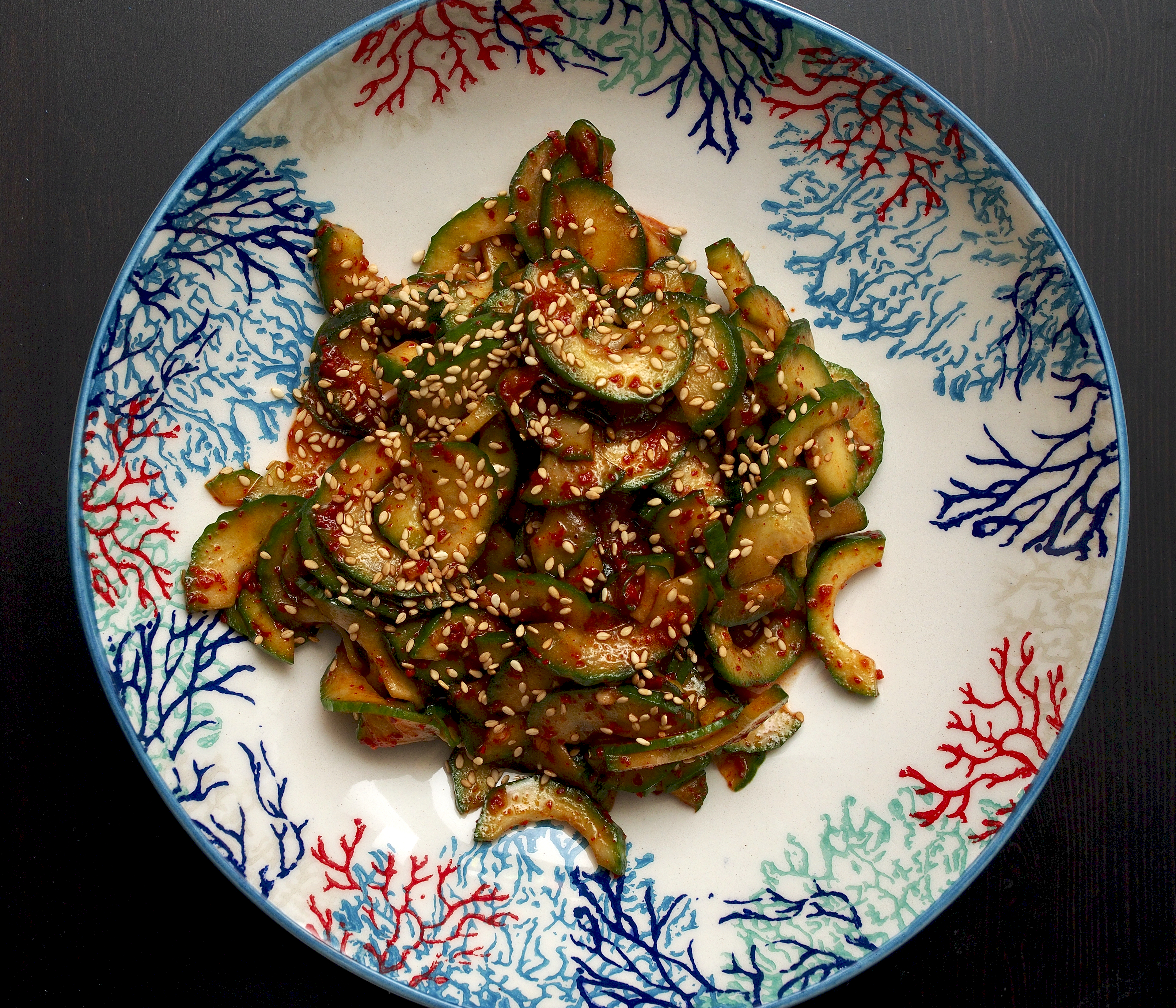
Well this was a revelation! We love kimchi but admit that we’ve only ever bought it in jars and never attempted to make it ourselves; a new year’s resolution in there perhaps. Having no kimchi in the cupboard we decided to give this a go and it’s nothing short of delicious. It’s ideally made with the small Persian cucumbers which we couldn’t find in our local shops over Christmas but a regular cucumber works fine too, just scoop out most of the seeds with a teaspoon first.
Almost-instant cucumber kimchi – serves 4-6 as a side
3 Persian cucumbers or 1 regular cucumber (see note above)
1 tsp fine sea salt
1 garlic clove, crushed
2 tsp gochugaru red pepper powder
2 tsp unrefined sugar or coconut palm sugar
2 ½ tsp rice wine vinegar
2 tsp roasted sesame seed oil
2 tsp toasted sesame seeds
Wash the cucumbers and pat dry. Halve them lengthways and slice very finely. Put the slices into a bowl with the salt, toss to combine, then leave aside for 30 minutes.
Combine the rest of the ingredients, apart from the sesame seeds, in a bowl. Drain the cucumber of any liquid, then add to the bowl with the other ingredients and stir well. Cover and put in the fridge for at least half an hour or until chilled.
Serve sprinkled with the sesame seeds. If you can resist eating it all this will keep in the fridge in a sealed container for up to a week.
(Original recipe from Our Korean Kitchen by Jordan Bourke and Rejina Pyo, Weidenfeld & Nicolson, 2015.)
Pure pumpkin flavour is what you get in this soup from Marcus Wareing. The maple-toasted seeds on top definitely make it a bit special. Our favourite pumpkin variety is Crown Prince.
Pumpkin soup with maple-toasted seeds – serves 8
1 pumpkin, approximately 2kg
1 bay leaf
1 sprig of rosemary
125g butter
1 tsp sea salt
250ml milk
FOR THE MAPLE-TOASTED SEEDS:
60 pumpkin seeds
1 tbsp maple syrup
½ tbsp olive oil, plus extra to serve
¼ tsp sea salt
Peel and quarter the pumpkin and reserve the skin and seeds.
Cut the pumpkin flesh into 2cm chunks, and set aside.
Put the skin, seeds and trimmings into a large saucepan with the bay leaf, rosemary and 2.5 litres of water. Bring to the boil and simmer for 1 hour, then strain and reserve the stock.
Meanwhile, preheat the oven to 200C/180C fan/gas 6.
Mix the pumpkin seeds with the maple syrup, olive oil and salt. Scatter over a baking tray and bake in the oven for 8-10 minutes, until golden. Remove and allow to cool, then roughly chop.
Melt the butter in a large saucepan over a medium heat, then add the pumpkin chunks and 1 tsp of salt. Cook for about 5 minutes or until starting to soften.
Pour in about half the pumpkin stock and bring to a simmer. Cook for 10 minutes, until the pumpkin is completely soft and starting to break down. Stir in the milk, remove the rosemary sprig and bay leaf. Blend with a stick blender or processor until completely smooth, adding more stock if needed. Season to taste.
Serve the soup scattered with the pumpkin seeds and drizzled with some good olive oil.
(Original recipe from Marcus at Home by Marcus Wareing, HarperCollins Publishers, 2016.)
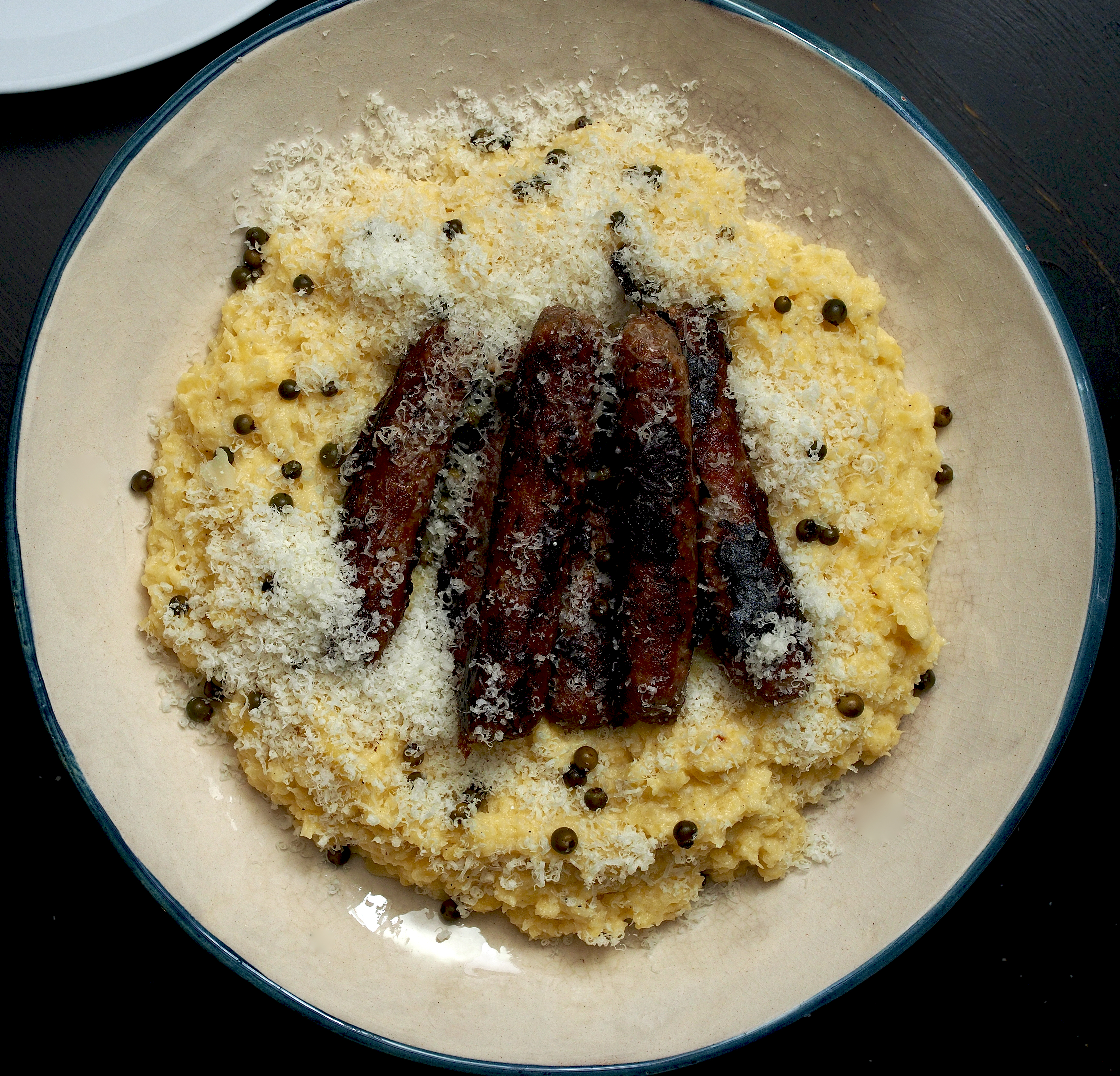
This recipe by Gill Meller has to be one of the nicest things you can do with a turnip. By turnip we mean the large, orange-fleshed variety that some call swedes. We’re so busy cooking new things that we rarely do things again, but we’ve made an exception for this dish already. It goes without saying that you should use top quality sausages!
Wine Suggestion: This dish needs the comforting, warm spices of a Southern Rhone red with a good dollop of Grenache, some Syrah and possibly other varieties thrown in. Given the festive season we opened a bottle of Les Palliéres Racines Gigondas. Made by the Brunier’s of Domaine Vieux Télégraphe this is velvety and deep; a real treat.
Turnip with fried sausages, green peppercorns & Parmesan – serves 2
1 turnip (or swede), cut into 2cm cubes
top quality sausages
50g butter
100ml double cream
50g Parmesan, grated
2-3 tsp green peppercorns in brine
Bring a large pot of salty water to the boil. Add the turnip and cook until tender, about 20-30 minutes.
Meanwhile, heat a frying pan over a medium heat. Add a little bit of oil, then add the sausages and cook slowly until well browned on all sides and cooked through, about 20 minutes. Don’t be tempted to speed up this process.
When the turnip is tender, drain and leave in a colander to steam. Put the pot back over a low heat and add the butter and cream. When this is bubbling, return the turnip to the pan. Mash the turnip until smooth, then season generously with black pepper, salt and most of the Parmesan.
Spoon the turnip onto a platter, pile the sausages on top, scatter over the peppercorns and sprinkle over the remaining Parmesan.
(Original recipe from Time by Gill Meller, Quadrille, 2018.)
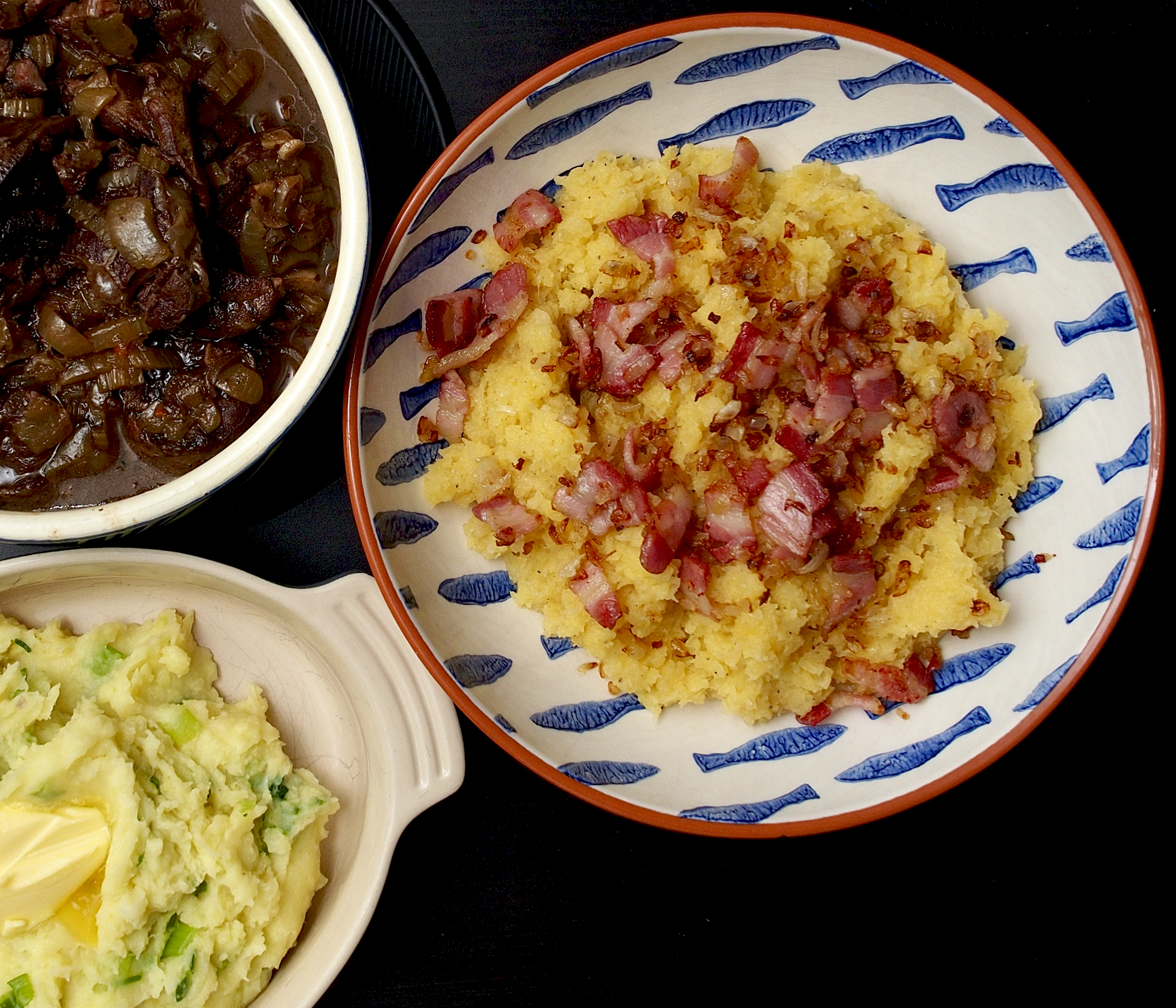
We don’t need to convincing to eat turnip but it is even more delicious with crispy bacon, onions and heaps of black pepper.
Turnip with bacon & onions – serves 4 to 6
900g turnip, peeled and cut into chunks
1 tbsp rapeseed oil
1 small onion, finely chopped
50g smoked bacon, diced
50g butter
Steam the turnip for about 10 minutes or until tender.
Meanwhile, heat the oil in a frying pan over a medium heat and gently sauté the onion and bacon until the bacon is crispy and onion starting to colour.
Roughly mash the turnip with the butter, then season with salt and lots of black pepper.
To serve, put the turnip into a warm dish and sprinkle with the bacon and onions.
(Original recipe from Nevan Maguire’s Complete Family Cookbook)
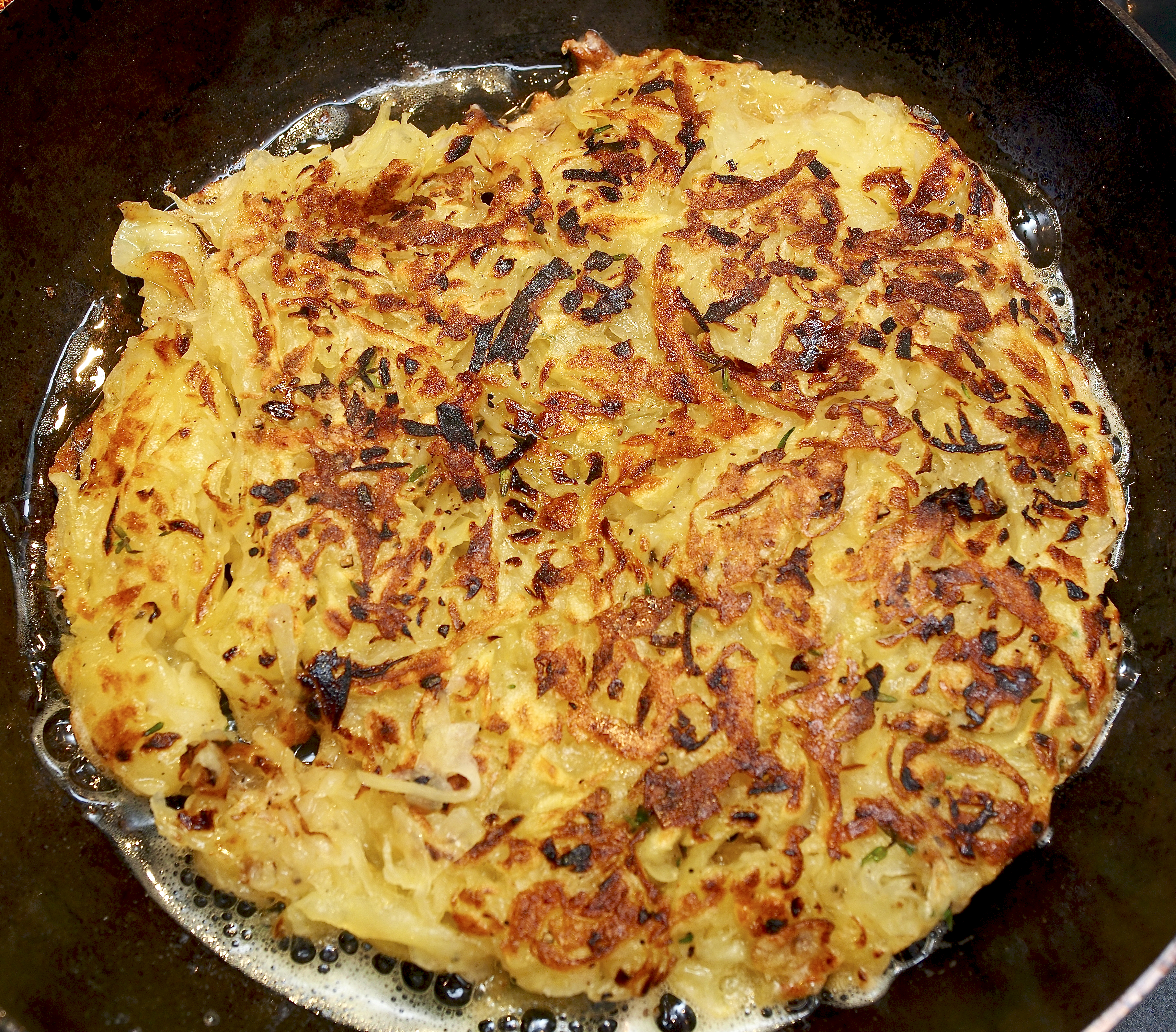
Inspired by a clip we saw of Marcus Wareing while browsing online one lazy Sunday. Dead easy, we wish we’d discovered this method before and will be doing this from now on. The trick is getting the moisture out of the potatoes, and the result is crusty potato with a moist soft centre. We served with barbecued bacon and poached eggs.
Potatoes for two people – we used three medium ones
a small onion or shallot
butter
Peel and coarsely grate the potatoes. Spread out on a tray and sprinkle with salt.
Coursely grate the onion.
After a few minutes put the grated potato into the middle of a clean tea towel and twist up over a sink. Squeeze out all the liquid – make sure it’s dry.
Mix grated potato and onions in a bowl and season generously.
Heat a little vegetable oil in a non-stick pan over a medium heat and when hot add the potato mix. Use a spoon to flatten out into a circle and then push the sides inwards to shape and form into a cake. Fry until starting to form a crust; you’ll need to lift an edge and peak to find out.
Place a plate the same size as the rosti on top of it and turn the pan over holding the plate as well. Slide the rosti back into the pan, now crusty side up. Put generous lumps of butter around the cooking rosti. Fry this side until crusty underneath too.
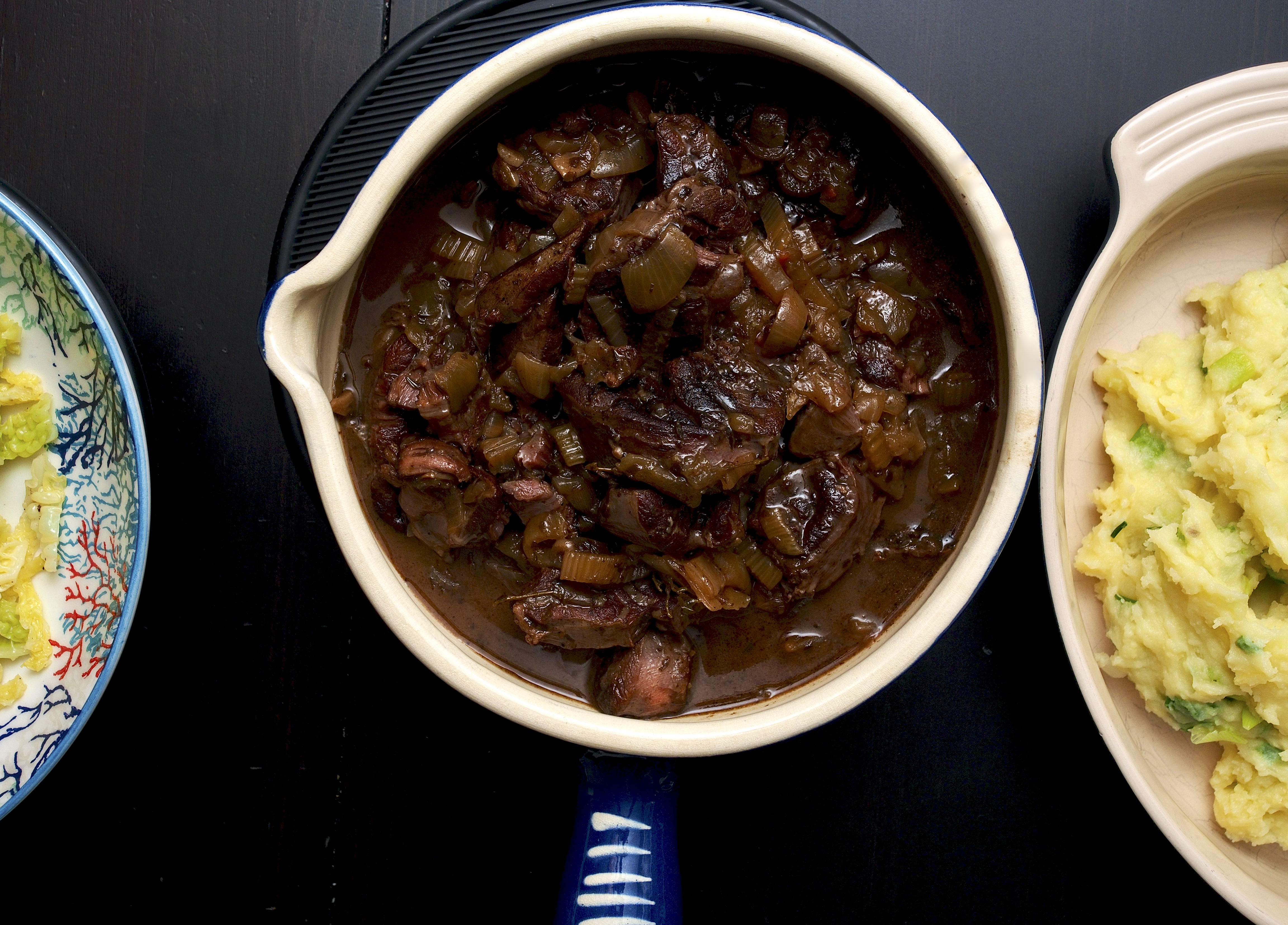
We had to try this idea from Gill Meller’s book Gather in order to use some dulse flakes from Aran Islands Seaweed. The dulse flakes give a smoky umami flavour to the dish. It takes a while in the oven but it otherwise very simple and tastes even better if made in advance, as stews often do. We served with creamy mash, cabbage and turnip for a hearty Sunday lunch.
Wine Suggestion: A dish that needs a suitably rich red wine to match; one where the rich fruit has high levels of anthocyanins and phenols in a ripe framework. The Altosur Malbec from Tuppangato (the highest part of the Mendoza area) in Argentina came out of the rack and its blackberry, blueberry and plum flavours with brambly, rich tannins was an ample choice.
Beef shin with dulse – serves 4
2 tbsp olive oil
800g beef shin, sliced thickly
2 onions, sliced
4 large garlic cloves, peeled and thinly sliced
2 celery sticks, thinly sliced
3-4 sprigs of thyme
½ a glass of red wine
2-3 tsp powdered smoked dulse (we used dulse flakes, see note above)
300ml chicken stock or water
Heat the oven to 120C/Gas 1.
Heat the oil in a heavy flameproof casserole. Season the beef shin well with salt and pepper, then brown on all sides until it takes on a really-good colour all over. Remove from the pan and set aside.
Add the onion, garlic, celery and thyme and cook gently over a low heat until the onions are soft but not coloured. Return the meat the pan, then add the wine, dulse and stock or water and bring to a gentle simmer.
Cover the casserole with a lid and place in the oven for 4-5 hours, or until the meat falls apart easily. Season to taste and leave to rest for 25 minutes before serving with mash and other veg.
(Original recipe from Gather by Gill Meller, Quadrille, 2016.)
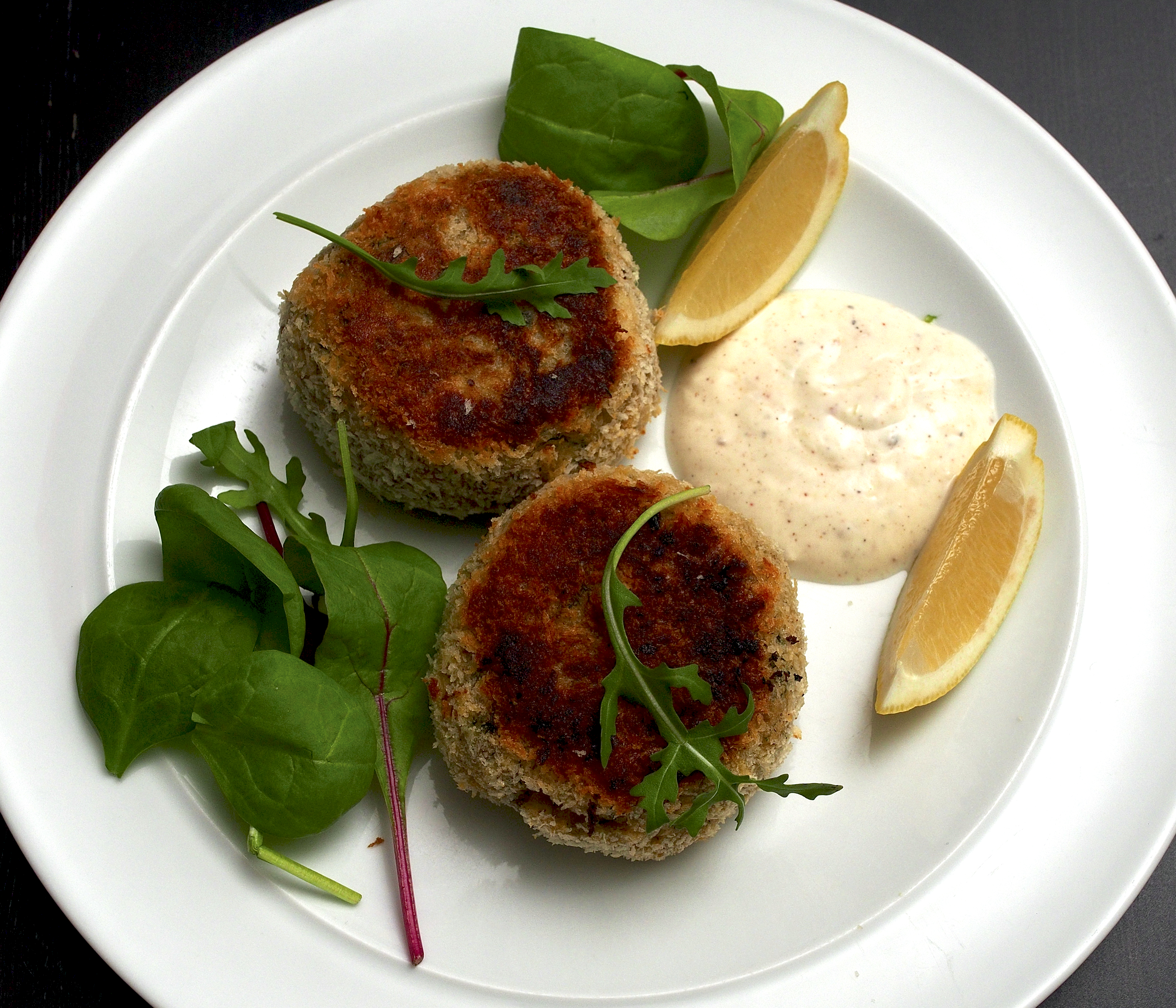
These are great for midweek, quite big, so they filled us up and tasted really good with the spicy yoghurt dip, some salad leaves and lemon. They are quite therapeutic to make too, or at least we thought so.
Wine Suggestion: A classic dish like fish cakes needs a classic match and Domaine de la Chauviniere’s Muscadet Sevre et Maine sur lie was our choice.
Fishcakes with ras el hanout and dill – serves 4
600g floury potatoes, cut into even chunks
300g skinless and boneless white fish
300ml milk
2½ tsp ras el hanout
zest of 2 lemons, plus 2 tbsp juice, and wedges to serve
small packet of dill, leaves finely chopped
1 large egg, beaten
85g dried breadcrumbs, we used Panko
4 tbsp sunflower oil
300g natural yoghurt
100g bag of salad leaves, to serve
Put the potatoes into a large saucepan, cover with cold salty water, bring to the boil, and cook for 18-20 minutes until cooked. Drain and leave to steam-dry in the pot, then mash.
Meanwhile, put the fish in another saucepan and pour over the milk and about 100ml of water, just to cover. Cover with a lid, bring to a simmer, then turn off the heat and leave aside with the lid on to finish cooking. Remove the fish with a slotted spoon and flake into large chunks with your hands.
Mix 2 tbsp of the poaching liquid into the mashed potatoes with 2 tsp of ras el hanout, the zest of 1 lemon, dill and seasoning. Carefully mix in the fish, trying not to let it break up too much further, you want nice chunks. Shape the potato mixture into 8 large fishcakes, keep them quite flat so they’re easy to brown. Dip each fishcake into the beaten egg, then the dried breadcrumbs to coat.
Heat the oven to 200C/fan 180C/gas 6.
Heat the oil in a large non-stick ovenproof frying pan over a medium heat. Add the fishcakes and fry on each side for about 5 minutes over a medium heat. Keep an eye on them to make sure they don’t brown too much. Transfer the frying pan to the oven and cook for 8-10 minutes until piping hot.
Meanwhile, mix the yoghurt with the rest of the lemon zest, 2 tbsp lemon juice, ½ tsp ras el hanout and seasoning. Serve the fishcakes with salad, spiced yoghurt and lemon wedges.
(Original recipe by Katy Gilhooly in Good Food Magazine, December 2015.)
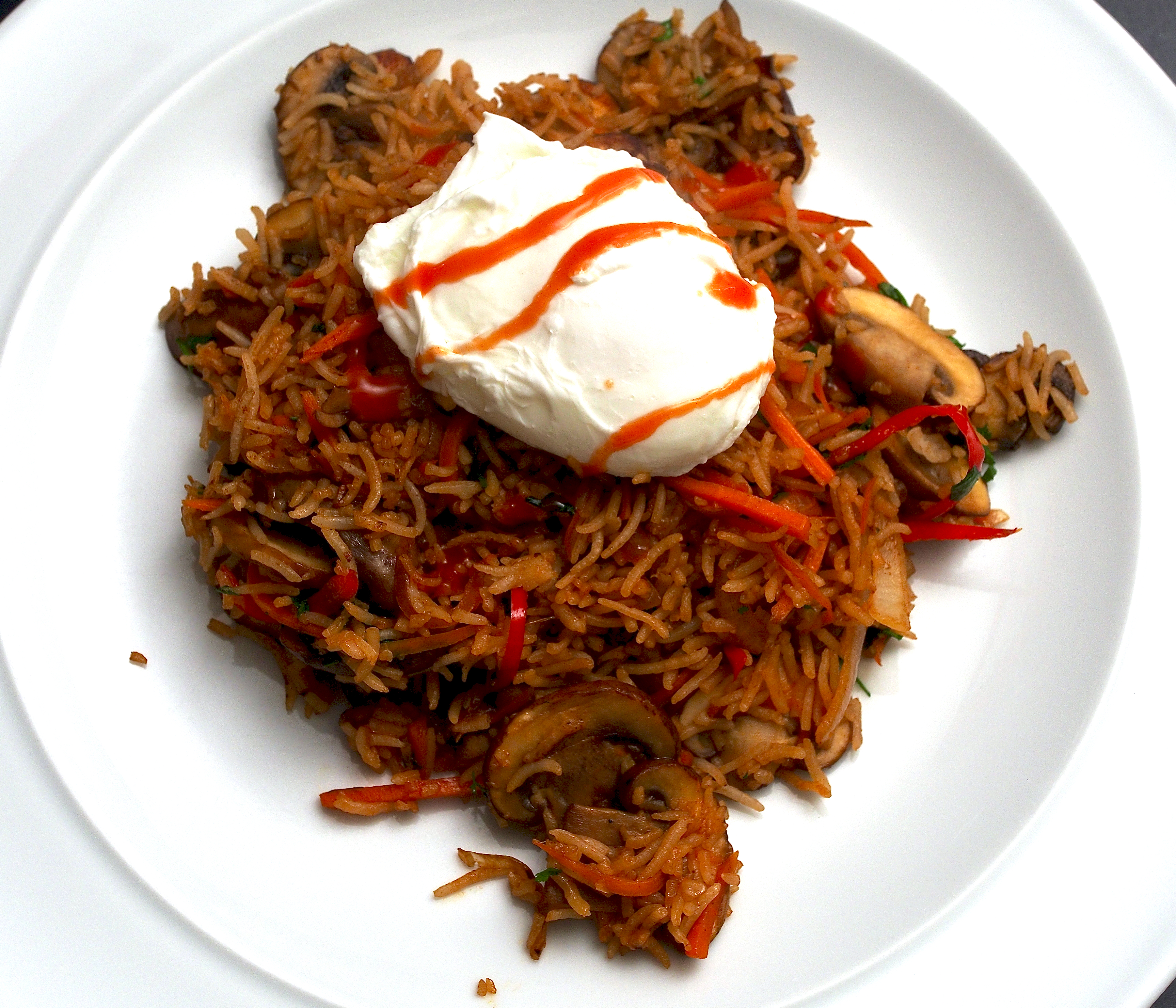
We are forever cooking too much rice and this is our favourite way to use it. It’s also an excellent recipe for using up odds and ends in the fridge.
Nasi goreng with poached eggs – serves 2
1 tbsp olive oil
2 red chillies, shredded
4 shallots or a small onion, finely sliced
1 clove of garlic, finely chopped
1 large carrot, peeled and julienned
150g chestnut mushrooms, sliced
250g pack of ready-cooked rice or leftover cooked rice
2 tsp brown sugar
1 tbsp soy sauce
2 tbsp Asian chilli sauce, plus extra to serve – we use sriracha
a handful of coriander leaves, chopped
2 eggs, poached, to serve
Heat the olive oil in a large non-stick pan or wok.
Cook the chilli, shallots, garlic, carrot and mushrooms for 3-4 minutes.
Add the rice and cook for another 2 minutes, breaking it up with a wooden spoon. Mix the brown sugar with and the chilli sauce until dissolved, then stir through the rice. Stir in the coriander.
Divide the rice between two dishes then top with a poached egg and another drizzle of chilli sauce.
(Original recipe by Janine Ratcliffe in Olive Magazine, December 2012.)
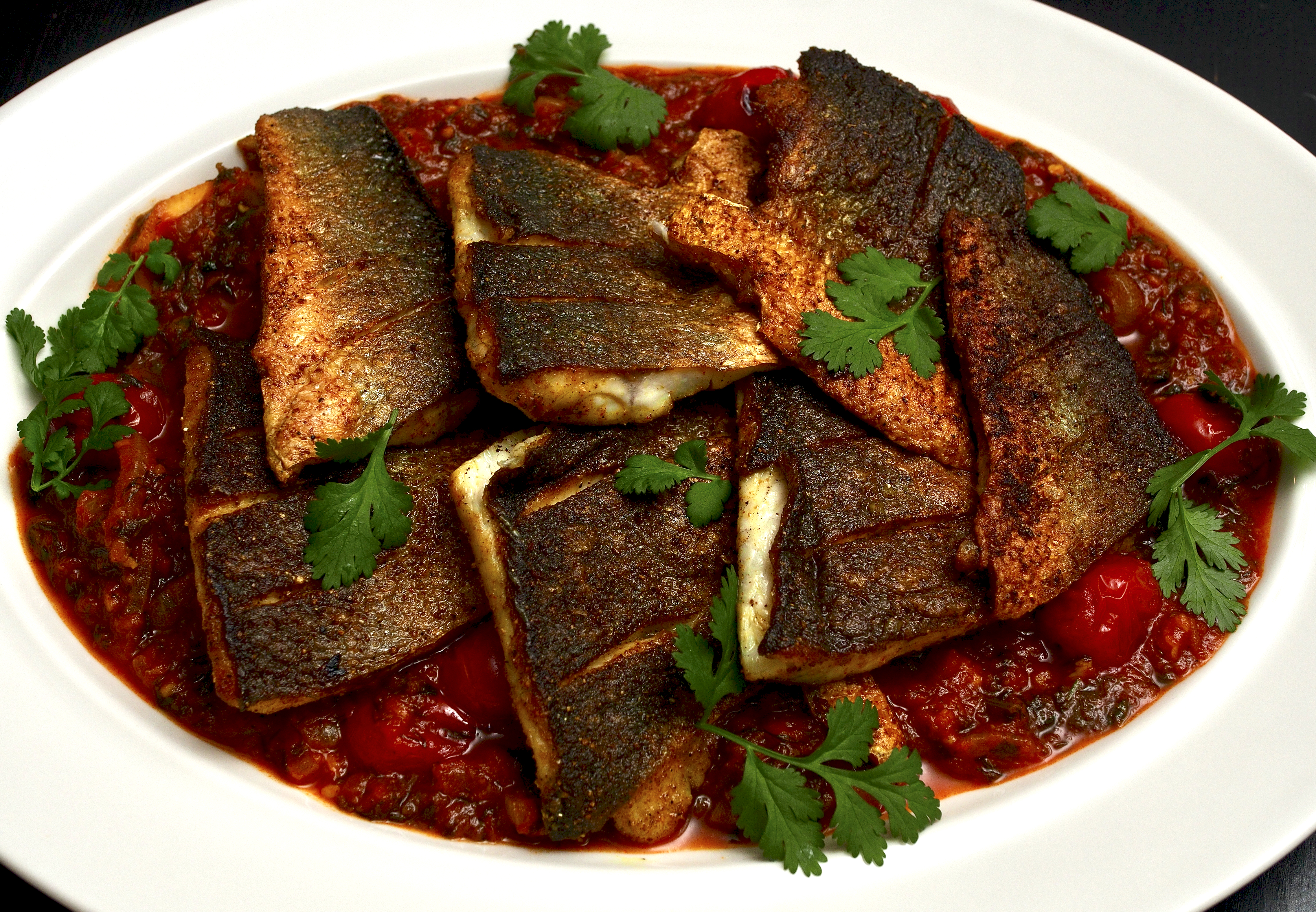
We cooked this fish from Falastin on a Saturday night for our 7 year old, who gets to sit up and have dinner with us at the weekends. Jono’s not too keen on fish skin so I warned him to make sure that Orlaith didn’t see him taking it off, or she wouldn’t eat it either. Orlaith announced very quickly that the skin was the best bit – that’s my girl! Crispy skin is the key and this cooking method delivers it to perfection. Even Jono ate the skin!
Wine Suggestion: A very left-field suggestion tonight, but with some logic: the Herdade de Portacarra Manda Chuva. This is a Blanc de Noirs – a white made from a red grape. In this case Sangiovese which is the logic; this grape works superbly with tomatoes. Interestingly this is from Setubal, in Portugal, and by making a white it makes a great match for both fish and tomatoes.
8 sea bass fillets, skin on, lightly scored and halved widthways at a slight angle
1 onion, thinly sliced
5 garlic cloves, crushed
25g piece of ginger, peeled and finely grated
1 green chilli, finely chopped, including seeds
1 tbsp tomato purée
1 x 400g tin of peeled plum tomatoes, blitzed in a food processor until smooth
1 ½ tsp caster sugar
20g dill, roughly chopped
25g coriander, roughly chopped, plus extra to garnish
400ml chicken stock
150g datterini or cherry tomatoes
½ a lemon, very thinly sliced into rounds
Combine 2 tbsp of oil, 2½ tsp of fish spice mix, 1 tsp of salt and a plenty of black pepper together in a shallow dish. Add the fish pieces, turn to coat and set aside while you make the sauce.
Put 2 tbsp of oil in a large sauté pan and place on a medium-high heat. Add the onion and cook for about 8 minutes, stirring now and then, until softened and browned. Add the garlic, ginger and chilli and cook for another couple of minutes, until fragrant. Add 1½ tsp fish spice mix and the tomato purée and cook for 30 seconds. Add the tinned tomatoes, sugar, two-thirds of the dill and coriander, the stock, 1 tsp of salt and plenty of pepper. Bring to the boil, then lower the heat to medium and cook for 20 minutes, stirring occasionally, or until the sauce is thick and rich. Keep warm on a low heat.
Toss the little tomatoes with 2 tsps of oil. Put a large frying pan on a hight heat, add the tomatoes, and cook for about 4 minutes, shaking the pan a few times, until charred all over. Add the lemon slices and cook for another 2-3 minutes, shaking the pan a few times. Add this to the tomato sauce along with the remaining herbs and keep warm until ready to serve.
Wipe the frying pan clean and put over a medium-high heat with 1½ tsp of oil. Add a quarter of the sea bass fillets, skin side down, press them gently if necessary to stop them curling. Cook for 4 minutes, or until the skin is crisp and browned, then flip the fish over in the pan. Cook for another 30 seconds, then transfer to a warm plate. Repeat until all the fish is cooked.
Divide the sauce between 4 plates and top with the sea bass. Sprinkle over some coriander leaves to serve.
(Original recipe from Falastin by Sami Tamimi and Tara Wigley, Ebury Press, 2020.)
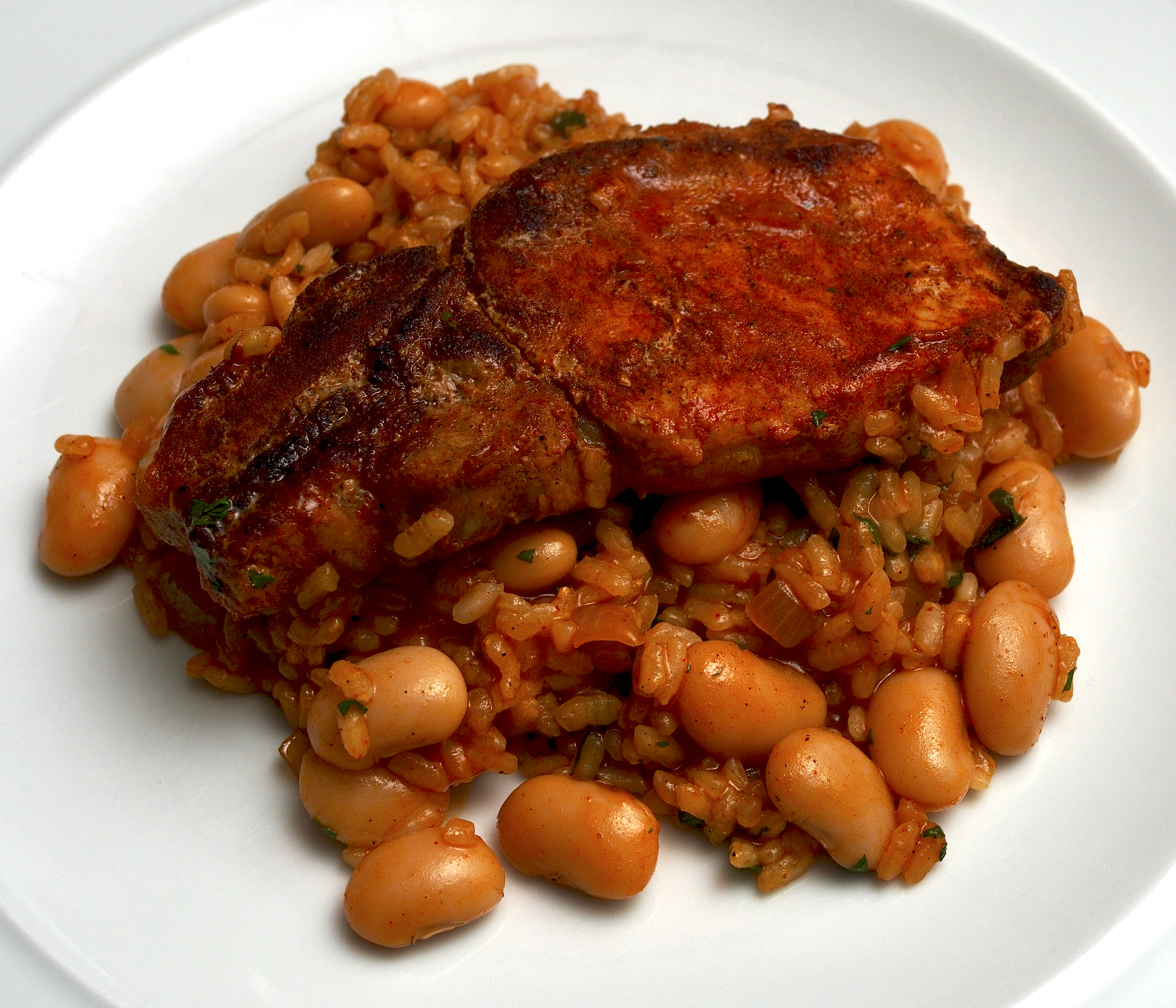
Here’s a quick fix for midweek. Really tasty and super simple to put together, so you can focus on your online shopping.
Wine Suggestion: Go for an earthy Tempranillo that hasn’t got too much extraction (big tannins!) but still has nice fruit. A Rioja Crianza should give the right balance, some blackberries and strawberries, some tannins but not too much, and only a touch of spices that develop with age. Our choice tonight the Paco Garcia Crianza.
Pork and Paprika Rice – serves 2
2 pork chops, trimmed of fat
1 tbsp paprika
1 onion, finely chopped
1 tbsp tomato purée
200g paella rice
100ml dry sherry
400ml stock
200g tin butter beans or other white beans, rinsed and drained
2 tbsp chopped parsley
Rub the pork with the paprika and season generously.
Heat a little olive oil in a frying pan, then fry the pork chops on one side, until browned, then turn over and add the onion and tomato purée. Fry together for 5 minutes.
Stir in the rice, then add the sherry and cook for 1 minute before adding the stock. Bring to a simmer, then cover and cook for 15 minutes or until the rice is just cooked.
Add the beans and parsley, season well, then stand for 5 minutes before serving.
(Original recipe by Lulu Grimes in Olive Magazine, November 2013.)





 Jono & Jules do food & wine