Feeds:
Posts
Comments

Posts Tagged ‘Recipe’

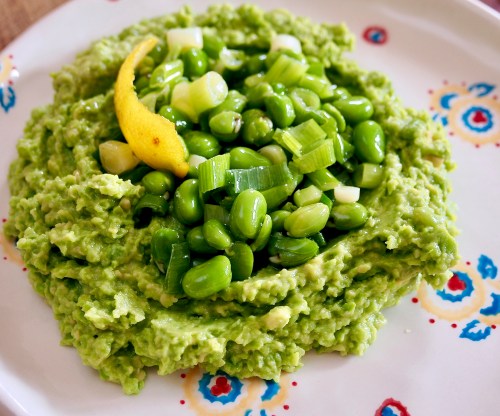
Avocado & Broad Bean Mash

This makes a nice light starter to share with some crusty bread, crackers or breadsticks.

Wine Suggestion: Rosé because it matches the mood and season, and also because a good, dry, rosé is both refreshing and a good match for food. Today it was the Ch de la Negly “les Terrasses” from the Languedoc.

Avocado & broad bean mash – serves 4

  • 250g podded broad beans, fresh or frozen
  • a large avocado, peeled and roughly chopped
  • a lemon, finely shave with a peeler to get one long strip of zest, then juice to give 1 ½ tbsp
  • 4 tbsp of olive oil
  • 2 scallions, finely sliced

Bring a pan of salty water to the boil and blanch the beans for 2 minutes, then drain, run under cold water and drain again. Remove the skin from the beans and discard, they should pop off easily. Set 50g of beans aside and put the rest into a food processor with the avocado, lemon juice, 2 tbsp of oil and ¼ tsp salt, then whizz until almost smooth.

Heat the remaining 2 tbsp of oil in a small frying pan, then gently fry the scallions and lemon skin for a minute. Remove from the heat and stir in the reserved broad beans and a pinch of salt.

Check the the avocado and broad bean mixture for seasoning then spread over a plate, making a rim around the edge. Spoon the spring onion mix into the middle just before serving.

(Original recipe from Ottolenghi Simple by Yotam Ottolenghi with Tara Wigley and Esme Howarth, Ebury Press, 2018.)
Read Full Post »

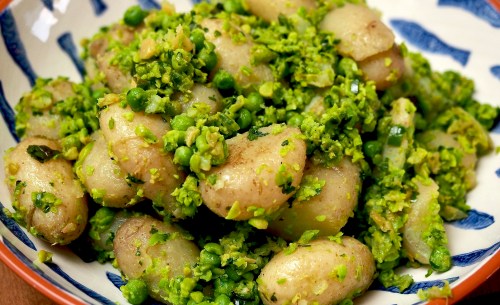
New potatoes with peas and corianderWe’ve just had a sunny Easter weekend, so we cooked lots of Spring side dishes from Ottolenghi Simple. These potatoes are lovely and fresh and tasted good with some barbecued lamb gigot chops. We’re binge eating Jersey Royals while we can get them.
New potatoes with peas & coriander – serves 4

  • 300g fresh or frozen peas
  • 2 green chillies, finely chopped
  • 1 small preserved lemon, pips discarded
  • 15g coriander, roughly chopped, plus an extra 5g leaves to garnish
  • 60ml olive oil
  • 1 small lemon, finely grate the zest, then juice to give 1 tsp
  • 750g new potatoes, halved if large

Blanch the peas in a saucepan of boiling water for 1 minute, then drain and set a third of them aside.

Put the remaining peas in a food processor with the chillies, preserved lemon, coriander, olive oil, lemon zest, ½ tsp of salt and plenty of pepper. Blitz to a rough paste and set aside.

Cook the potatoes in a large pan of boiling salty water for about 15 minutes or until soft. Drain and steam dry in the warm pot.

Roughly crush the potatoes, leaving about a third of them whole. Add the reserved peas, the pea mixture, the lemon juice and the coriander leaves. Gently stir and serve warm (though we found the leftovers were quite nice cold the following day).

(Original recipe from Ottolgenghi Simple by Yotam Ottolenghi with Tara Wigley & Esme Howarth, Ebury Press, 2018.)

Read Full Post »

Spinach & Gorgonzola-stuffed Jacket Potatoes

These would make a great side for a barbecue or you can have them on their own with some salad. Seriously good spuds.

Wine Suggestion: the Sartarelli Verdicchio dei Castelli di Jesi Classico Superiore Tralivio was our choice and it combines freshness, texture and a great balance between full-body and an easy vibrancy.

Spinach and Gorgonzola-stuffed jacket potatoes – serves 2 as a main or 4 as a side

  • 2 large baking potatoes (about 700g)
  • 25g unsalted butter
  • 3 tbsp double cream
  • 60g Gorgonzola
  • 200g baby spinach leaves
  • 20g walnut halves, lightly toasted and broken into 1cm pieces

Preheat the oven to 220°C fan.

Prick the potatoes with a fork and put onto a parchment-lined baking tray. Bake for an hour (or until completely soft). Slice the cooked potatoes in half, lengthways, and scoop the flesh out into a bowl. Set the skins back onto the tray. Roughly mash the potatoes with 20g of the butter, the cream, Gorgonzola, ½ tsp of salt and plenty of black pepper.

Divide the remaining 5g of butter between the potato skins. Sprinkle generously with salt and put back in the oven for 8 minutes, until crispy.

Bring a medium pot of salted water to the boil, then add the spinach and wilt for just 10 to 15 seconds before draining. Squeeze as much water as possible out of the spinach, then stir into the potato mixture. Check the seasoning then pile the mixture into the potato skins. Bake for 15 minutes until crisp and browned. Sprinkle with the walnuts and serve.

(Original recipe from Ottolenghi Simple, Ebury Press, 2018.)

Read Full Post »

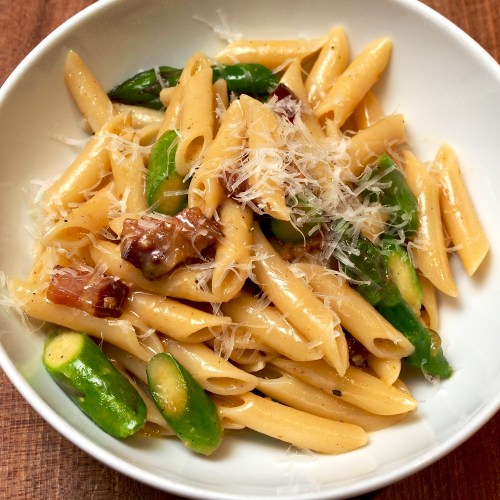
Asparagus Carbonara

Classic carbonara is in no way sullied by the addition of asparagus and in our house at the moment it’s asparagus with everything!!

Wine Suggestion: A difficult decision given the awkwardness of asparagus and wine, plus the creamy richness of the sauce. We settled on the delightful Chateau les Charmes Godard, a Sauvignon (Blanc & Gris) and Semillon blend from Bordeaux and were reminded why we love whites from this region, especially with food.

Asparagus Carbonara – serves 4

  • 200g pancetta or streaky bacon, cut into bite-sized pieces
  • 350g pasta
  • 2 bunches of thin asparagus, trimmed and cut into bite-size pieces
  • 2 cloves of garlic, finely chopped
  • 3 eggs
  • a large handful of grated Parmesan, plus extra to serve

Heat some olive oil in a frying pan over a moderate heat. Add the pancetta and fry for about 5 minutes, or until turning crispy.

Meanwhile, bring a large pan of salty water to the boil. Boil the pasta until al dente, then drain and reserve some of the pasta cooking water.

Add the asparagus and garlic to the pan with the bacon. Season with lots of black pepper and cook for 4-5 minutes or until the asparagus is cooked (it will take a bit longer if your asparagus is thick).

Break the eggs into a small bowl and whisk with the Parmesan and a splash of the cooking water.

Add the cooked pasta to the asparagus pan, then remove from the heat and stir in the egg mixture to combine. Add another splash of cooking water if needed to make a sauce.

Serve right away with extra Parmesan.

(Original recipe from New Kitchen Basics by Claire Thomson, Quadrille, 2019.)

Read Full Post »

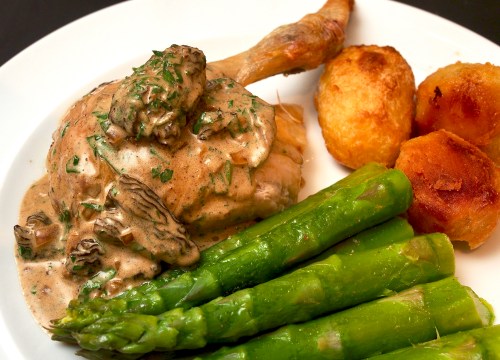
Roast Chicken with Morels

We’ve never managed to find fresh morels but they’re such a reminder of Spring that we like to cook with the dried ones at this time of year. The sauce with this simple roast chicken is delicious. Some steamed asparagus is good on the side.

Wine Suggestion: with the classic French flavours of morels, brandy and crème fraîche we had to go with a classic white Burgundy. Tonight a favourite, Patrick Javillier’s Bourgogne Cuvée des Forgets … our mini Meursault.

Roast chicken with morels – serves 4

  • 20g dried porcini
  • a whole chicken, about 1.5kg (if you have a different sized chicken cook for 15 minutes per 450g plus an extra 20 minutes)
  • 100g butter, at room temperature
  • vegetable oil
  • 2 small shallots, finely diced
  • a handful of dried morels, soaked (or fresh if you can get them)
  • a splash of brandy
  • 200ml crème fraîche
  • a small bunch of parsley, leaves stripped and roughly chopped
  • a small bunch of tarragon, leaves stripped and roughly chopped

Soak half the porcini in a small bowl of boiling water for 10 minutes.

Heat the oven to 200C/fan 180C/gas 6.

Put the butter into a small bowl. Drain the porcini, pat dry, then roughly chop and mix with the butter and some seasoning. Put the porcini butter inside the chicken and lift into a roasting tin. Pour 100ml of water inside the chicken too. Rub the chicken all over with vegetable oil and season. Roast in the hot oven for 1 hour and 15 minutes.

Grind the rest of the dried porcini to a powder.

Check the chicken is cooked and cook for longer if needed. Lift the chicken out of the roasting tin carefully and try not to let the butter inside escape. Keep warm.

Remove half the fat from the roasting tin. Put the tin over a low heat and gently cook the shallots. Add the dried porcini powder and cook for a couple of minutes. Add the brandy and flambé carefully. When the flames die down, add the soaked morels, then add the juices, butter and porcini from the chicken and bring to a simmer. Cook for a few minutes, then add the crème fraîche and mix well. Stir in the herbs and serve the chicken with the sauce.

(Original recipe by John Torode in Olive Magazine, April 2011.)

Read Full Post »

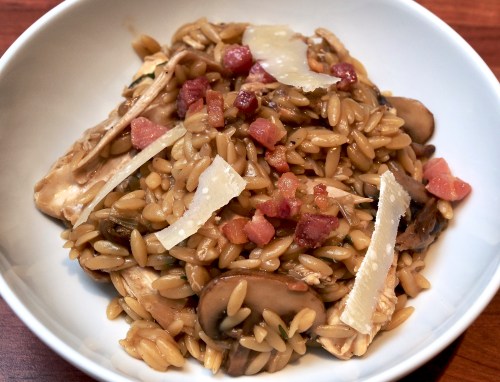
Roast Chicken, Pancetta & Mushroom Orzo

We really liked this easy recipe for leftover roast chicken, a very tasty dish for midweek.

Wine Suggestion: mid-week, or weekend, this works great with a Pinot Noir-Gamay blend like you can find in Cheverny in the Loire; freshness from Pinot and smoothness from the Gamay … both earthy and the right flavours for this dish. Our choice tonight was an old favourite Domaine Bellier.

Roast chicken, pancetta & mushroom orzo – serves 4

  • 15g porcini mushrooms
  • 30g pancetta cubes
  • 2 shallots, finely chopped
  • 2 garlic cloves, crushed
  • 50g chestnut mushrooms, sliced
  • 50g button mushrooms, sliced
  • 300g orzo
  • 2 sprigs of thyme, leaves stripped
  • 1 litre chicken stock
  • 300g roast chicken, skin removed and shredded
  • Parmesan, shaved to serve

Soak the porcini mushrooms in a small bowl of boiling water for 15 minutes.

Heat 2tbsp of olive oil in a large heavy-based frying pan. Cook the pancetta until golden, then scoop out with a slotted spoon.

In the same pan, cook the shallots and garlic until softened. Add the fresh mushrooms and fry until golden. Add the drained porcini, reserving the liquid, and cook for a minute.

Add the orzo and thyme and stir to coat in the oil, then add the porcini’s liquid and enough stock to cover. Simmer gently for 10-12 minutes, adding stock as needed, until tender.

Add the chicken and heat through, then serve with the pancetta and some Parmesan shavings sprinkled over.

(Original recipe by Justin Turner in Olive Magazine, April 2012.)

Read Full Post »

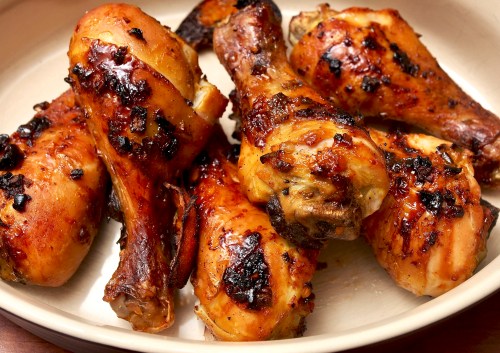
Chicken Sours

We’re forever looking for things to do with chicken drumsticks. This spicy and zesty recipe from Claire Thompson’s New Kitchen Basics doesn’t disappoint. Serve with some rice if you like.

Wine Suggestion: a zesty, dry Riesling is our choice. Something like the Pikes Riesling from the Clare Valley, or alternately the Dönnhoff QbA Dry Riesling (or even better one of their Grosses Gewächs (great growth) dry wines) from the Nahe in Germany.

Chicken sours – serves 4

  • 1kg chicken drumsticks and/or chicken wings
  • 2 small unwaxed oranges
  • 1-2 jalapeños or other green chillies, finely chopped
  • 3 cloves of garlic, peeled and finely chopped
  • 2 tsp runny honey
  • 2 tbsp vegetable oil
  • juice of 1 lime

Preheat the oven to 200C/fan 180C/gas 6.

Season the chicken with 1 tsp of salt and lots of coarsely ground pepper. Place on baking tray.

Grate the zest and squeeze the juice from 1½ of the oranges; finely slice the remaining half.

Combine the chilli, garlic, honey, oil, lime & orange zest and juice in a bowl, then brush over the chicken pieces.

Arrange the orange slices on the tray with the chicken and bake for 40-45 minutes or until cooked through and glazed. Baste occasionally with the pan juices as it cooks.

(Original recipe from New Kitchen Basics by Claire Thompson, Quadrille, 2019.)

Read Full Post »

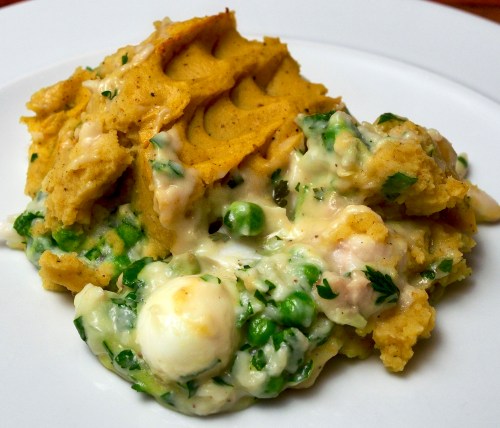
Kedgeree Fish Pie

This spicy fish pie makes a nice change from the traditional version. There’s a few processes but it can all be assembled ahead of time and baked when needed.

Wine Suggestion: Open a white with a bit of backbone and depth but not too much acidity; a Chardonnay or similar is our suggestion. Tonight we opened Domaine Rochette’s Beaujolais Blanc, a Chardonnay  from an area more famously known for its reds.

Kedgeree Fish Pie – serves 6

  • 12 quail’s eggs
  • 400g tin light coconut milk
  • 400ml whole milk
  • ½ small pack coriander, leaves chopped, stalks left whole
  • ½ small pack parsley, leaves chopped, stalks left whole
  • 350g skinless smoked haddock fillet, cut into 2-3cm cubes
  • 350g white fish e.g. cod or haddock, cut into 2-3cm cubes
  • 85g butter
  • 1 large onion, finely chopped
  • 85g plain flour
  • zest and juice of 1 lemon
  • 200g fresh or frozen peas

FOR THE MASH

  • 1.4kg floury potatoes, cut into large chunks
  • 2 tsp turmeric
  • 25g butter
  • 2 tbsp mild curry powder
  • 300ml milk

Bring a large pot of water to the boil and add the potatoes and turmeric. Simmer until tender, then drain well and dry over a low heat. Meanwhile, melt the butter for the mash in a small pan. Add the curry powder and cook for a couple of minutes. Stir in the milk and warm through. Mash the potatoes until smooth, then stir in the curried milk. Season well and set aside.

Bring a medium pan of water to the boil. Add the quail’s eggs and boil for 3 minutes, then plunge into a bowl of cold water to cool quickly, then peel carefully.

Mix the coconut milk and whole milk in a frying pan with the coriander stalks and parsley stalks. Heat until just coming to a simmer, then add the fish, cover and cook gently for 5-8 minutes or until just cooked. Remove the fish onto a plate and strain the milk into a jug.

Melt the butter in a large frying pan, add the onion and fry gently until soft. Stir in the flour for 2 minutes, then gradually stir in reserved milk to make a smooth sauce. Bring to the boil and simmer for 5 minutes, stirring continuously until thickened. Turn off the heat and stir in the lemon zest and juice, peas and chopped herbs with some seasoning.

Put the fish and quail’s eggs back into the pan, then tip into an ovenproof dish. Spoon the mash on top. Cover with cling film and chill until ready to cook.

Heat the oven to 200C/180C fan/gas 6 and bake for 30-35 minutes or until golden on top and bubbling underneath.

(Original recipe from BBC Good Food)

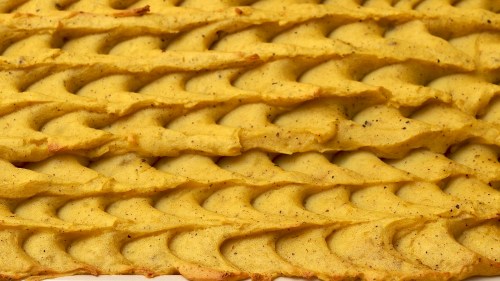
Kedgeree Fish Pie topping

Read Full Post »

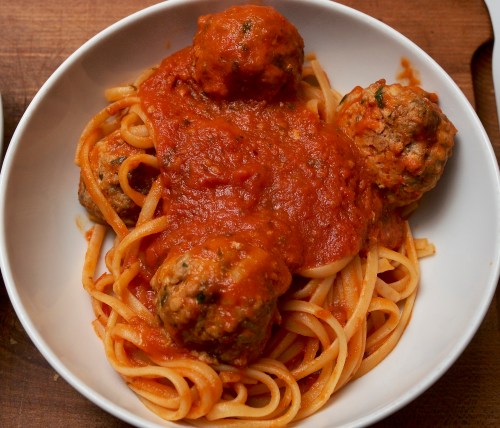
Pork & Beef Polpette with Tomato Sauce

This is a great tomato sauce and of course can be made without meatballs and used in all sorts of things. We like to make the entire recipe and freeze the leftover meatballs in the sauce for tasty meals for kids or when we don’t have time to cook. They’re good served with linguine –  toss the pasta with the meatballs and sauce before serving with some grated Parmesan.

Wine Suggestion: with the higher proportion of pork in the meatballs we think a medium bodied red works better than richer, fuller-bodied wines with this. We went with a Chateau Manoir du Gravoux from Castillon in Bordeaux. A Merlot, Cabernet Franc blend with a lovely freshness and pure, mineral character made a good match.

Pork & Beef Polpette with Tomato Sauce – makes about 40 meatballs and 1.5 litres of sauce

FOR THE TOMATO SAUCE:

  • 100ml extra virgin olive oil
  • 1 onion, finely sliced
  • 1 garlic clove, chopped
  • scant ½ tbsp fine salt
  • ¾ tsp black pepper
  • small pinch of chilli flakes
  • 750g fresh tomatoes, quartered
  • 3 x 400g tins of chopped tomatoes
  • 1 small handful of oregano, chopped
  • caster sugar, if needed

FOR THE POLPETTE:

  • 1kg minced pork
  • 500g minced beef
  • 3 medium eggs
  • scant ½ tbsp fine salt
  • 1 tsp black pepper
  • 150g breadcrumbs
  • small pinch of dried chilli flakes
  • 3 garlic cloves, finely chopped
  • ½ handful of flat-leaf parsley leaves, chopped
  • cooked linguine pasta and grated Parmesan cheese, to serve

Heat half the oil in a saucepan on a medium-low heat and sweat the onion, garlic, salt, pepper and chilli for 15 minutes. Add the fresh tomatoes and the rest of the oil and cook gently for another 15 minutes.

Add the tinned tomatoes and simmer on a very low heat for an hour.

Remove the pan from the heat and add the oregano. Season with a little sugar if needed, then whizz using a hand-blender or food processor for a few minutes.

Preheat the oven to 220°C/Gas 7.

Combine all of the meatball ingredients and mix together well with your hands, then roll into golf ball sized meatballs. They should weigh about 45g each. Place on a large greased baking tray and roast for 10 minutes, turning once, until starting to brown.

Add the meatballs to the hot sauce and poach for 10 minutes with the lid on.

Serve with linguine and grated Parmesan.

(Original recipe from Polpo by Russell Norman, Bloomsbury, 2012.)


Read Full Post »

Confit Salmon with Citrus & Herb Salad

Alison Roman is often featured in the New York Times and her recipes have a huge following – check out #alisonroman on Instagram. Jono was gifted a copy of her fabulous cookbook, Dining In, and it has now been released in the UK. We suggest you order a copy and in the meantime try her excellent method for cooking salmon. You’ll find the salmon almost impossible to overcook and it ends up meltingly tender.

Wine Suggestion: We think that a fresh white works best and we’d suggest either a Verdicchio or a white Bordeaux made from Semillon & Sauvignon blanc both of which have fresh acidity and texture but won’t overwhelm the melt in the mouth flavours.

Slow Salmon with Citrus & Herb Salad – serves 4 to 6

  • 700g piece of skinless salmon
  • 2 lemons, thinly sliced
  • 1 blood orange or regular orange, thinly sliced
  • 6 sprigs of thyme, rosemary, oregano or marjoram (optional)
  • 375ml olive oil
  • a large bunch of parsley, coriander, dill and tarragon, leaves picked
  • 1 tbsp lemon juice

Preheat the oven to 150C.

Season the salmon with salt and black pepper on both sides and place in a large baking dish with the lemons, oranges and herb sprigs (if using).

Drizzle the olive oil over everything and cook in the oven for 20-25 minutes or until almost cooked through.

Toss the herbs with the lemon juice and some sea salt flakes and serve with the salmon.

(Original recipe from Dining In by Alison Roman, Clarkson Potter, 2017.)

Read Full Post »

Tagliolini au Gratin with Prawns & Treviso

This baked pasta dish from Jacob Kennedy’s fabulous Bocca cookbook is truly delicious. Quick to cook and an excellent treat for a Friday night when energy levels are low. We find radicchio di Treviso hard to resist with its pretty dark purple leaves. They’re in season and in shops now and we’ve had our eyes on this dish for a while, we weren’t disappointed.

Wine Suggestion: While not our first thought we had a bottle of the Altos de Torona Albariño from northern Spain in the fridge and it proved a delightful match.

Tagliolini au Gratin with Prawns and Treviso – serves 2 as a main, 4 to 6 as a starter

  • 120g dried tagliolini
  • 50g butter
  • ½ a small red onion or 1 shallot, thinly sliced across the grain
  • 1 medium head Radicchio di Treviso, shredded 3-5mm
  • 200g peeled raw prawns
  • 60ml white wine
  • 200ml double cream
  • 4 tbsp grated Parmesan

Melt the butter over a medium heat. Add the onion and a pinch of salt and fry for a few minutes, then add the radicchio and sauté gently for 4-5 minutes or until wilted. Add the prawns, then the wine and let it boil for a couple of minutes or until the liquid has almost evaporated. Add the cream and at the same time put the tagliolini into a pan of boiling, salted water. Boil both until the tagliolini is undercooked (about half the recommended time) and the sauce just runnier than cream.

Drain the pasta and add to the sauce. Toss over the heat for a minute to coat the pasta with the cream, then season with salt and pepper and transfer to a baking dish (or divide between a number of smaller dishes). Sprinkle with the Parmesan and brown the top under a hot grill. Serve immediately.

(Original recipe from Jacob Kennedy’s ‘Bocca Cookbook’, Bloomsbury, 2011.)

Read Full Post »

Smoked Salmon, Horseradish & Dill Crostini

Do try this. It looks like regular smoked salmon crostini but the balance of ingredients is perfect, including the rather generous portion of salmon per toast. Don’t be tempted to scrimp on either quantity or quality!

Wine Suggestion: excellent with sparkling – your choice of Crémant, Champagne, or your local version. Just make sure that it a fresh, more acidic style … Prosecco need not apply as it doesn’t have enough zing for this. Tonight the Soalheiro Espumante, a sparkling made from alvarinho in northern Portugal and wonderfully citrus, vibrant and refreshing.

Smoked salmon, horseradish & dill crostini – makes 20 crostini

  • 250g crème fraîche
  • 2 tbsp Dijon mustard
  • about 3 tbsp freshly grated horseradish
  • pinch of caster sugar (optional)
  • 1 French stick, cut into discs and lightly toasted
  • 500g thinly sliced top quality smoked salmon
  • 20 dill sprigs
  • lemon juice

Make the horseradish cream by mixing together the crème fraîche, mustard and horseradish. Season with salt and pepper and add a little sugar if it tastes tart.

Put a generous slice of salmon in each piece of toast and top with a spoonful of horseradish cream. Decorate with a sprig of dill. Add a few drops of lemon juice and some black pepper before serving.

(Original recipe from Polpo: A Venetian Cookbook (of sorts) by Russell Norman, Bloomsbury, 2012.)

Read Full Post »

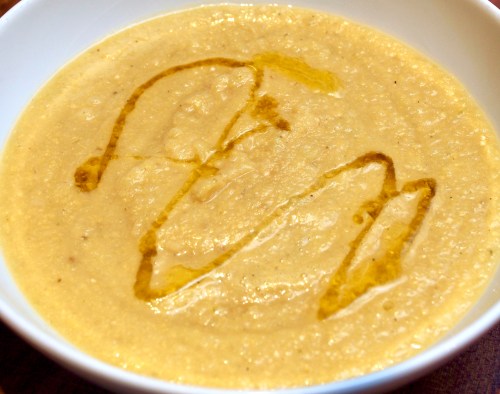
Chickpea fennel & leek soup

We recently bought a copy of the Venetian cookbook, Polpo, by Russell Norman – it’s about 7 years since it was published and we’ve been coveting it ever since. This soup doesn’t sound exciting but it’s absolutely delicious and will fill even the hungriest of bellies (perhaps with some bread).

Chickpea, leek  & fennel soup – serves 6 to 8

  • 500g dried chickpeas
  • 2 litres chicken stock
  • a pinch of dried chilli flakes
  • 2 shallots, finely diced
  • 2 leeks, cut into 1cm pieces
  • 2 small fennel bulbs, cut into 1cm pieces

Cover the chickpeas in water and soak overnight. Drain and put into a heavy-based pan with the chicken stock. The stock needs to cover the chickpeas by about 3 cm. Add the dried chilli and cook until tender (start checking after the first 30 minutes but they could take an hour).

Heat a little olive oil in another heavy pan and sweat the shallots, leeks and fennel until soft. Season with salt and pepper. Combine the chickpeas and stock with the sweated vegetables and simmer for 5 minutes.

Remove about a quarter of the veg and chickpeas and set aside (we forgot to do this!). Blend the remainder until smooth. Return the reserved veg and chickpeas to the pan and season to taste. Serve with a drizzle of good olive oil.

(Original recipe from Polpo: A Venetian Cookbook (of sorts) by Russell Norman, Bloomsbury, 2012.)


Read Full Post »

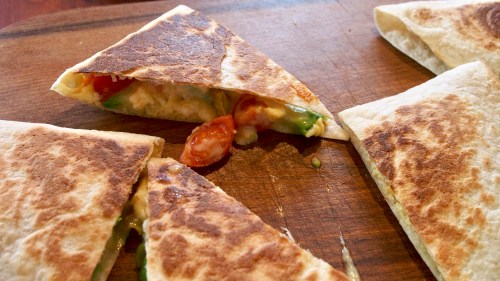
Breakfast quesadilla

Quesadillas are a regular feature on our weekend breakfast/lunch table as we often have tortilla wraps leftover from pack lunches in the week. We loved these spicy, veggie ones for Saturday breakfast.

Breakfast Quesadillas – serves 2

  • a knob of butter
  • 2 eggs, beaten
  • ½ an avocado, sliced
  • 2 flour tortillas
  • 4 cherry tomatoes, chopped
  • 25g cheddar cheese, grated
  • 2 pickled jalapeños, chopped

Heat the butter in a small pan, tip in the eggs and stir until scrambled.

Scatter the avocado over one of the tortillas. Top with the scrambled eggs, the cherry tomatoes, the cheddar and the jalapeños. Top with the other tortilla and slide into a hot non-stick frying pan (we brush the tortillas on the outside with a tiny bit of oil to help them brown). Cook for 2-3 minutes then flip over and continue to cook until the cheese is melted and the insides are hot. Cut into wedges to serve.

(Original recipe by Janine Ratcliffe in BBC Olive Magazine, March 2019.)

Read Full Post »

Turmeric Roasted Cauliflower with Dhal

A vegan dish for mid-week that is not only super-healthy but very tasty too.

Turmeric Roasted Cauliflower with Dhal – serves 4

FOR THE CAULIFLOWER:

  • 1 large cauliflower, sliced into 1cm steaks (or you can break into florets but don’t waste the stalk)
  • 1 tbsp olive oil
  • 1 tsp ground turmeric
  • 1 garlic clove, thinly sliced

FOR THE DHAL:

  • ½ tbsp coconut oil
  • 1 onion, diced
  • 1 red chilli, deseeded and finely diced
  • 1 tsp cumin seeds
  • 2 garlic cloves, crushed
  • 1 tbsp medium curry powder
  • 250g red lentils
  • 400ml tin light coconut milk
  • 400ml vegetable stock
  • generous handful of spinach leaves
  • 2 tbsp fresh coriander, chopped
  • juice of ½ a lemon
  • 2 tbsp flaked almonds, toasted

Preheat the oven to 200C/Fan 180C/Gas 6.

Put the cauliflower into a large roasting tin and sprinkle with the olive oil.

Roast the cauliflower for 15 minutes, then remove from the oven and scatter over the turmeric and garlic. Return to the oven for a further 15 minutes or until browned and tender.

Meanwhile, heat the coconut oil in a lidded saucepan and gently fry the onion and chilli for about 4 minutes.

Add the cumin, garlic and curry powder and cook for another couple of minutes before stirring in the lentils, coconut milk and stock. Bring to the boil then cover and simmer for 15 minutes or until the lentils are soft.

Add the spinach and stir until wilted. Stir in the coriander and season to taste.

Squeeze the lemon over the cauliflower and serve with the dhal and the toasted almonds.

(Original recipe from The Fast 800 by Michael Mosley, Short Books, 2019.)


Read Full Post »

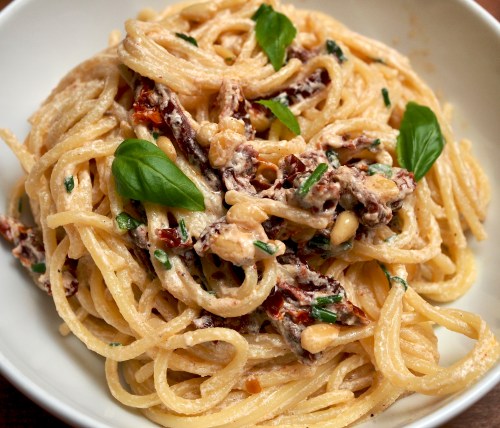
Spaghetti with Ricotta & Toasted Pine Nuts

Mondays are all about leftovers in our house and we’re determined to use all bits and pieces hanging around after the weekend. This pasta dish helped us out with the remains of a jar of sundried tomatoes and some ricotta cheese. Also great to use the chives that have recently sprouted up in the garden – a positive sign of things to come.

Wine Suggestion: Look for a good Verdicchio with a fuller body, but still fresh and balanced. Tonight an old favourite, the Sartarelli Tralivio.

Spaghetti with Ricotta Cheese & Toasted Pine Nuts – serves 4 (easily halved)

  • 6 tbsp pine nuts
  • 250g ricotta cheese
  • 100g sundried tomatoes in oil, drained and sliced into thin strips
  • ¼ tsp freshly grated nutmeg
  • 10 fresh basil leaves, chopped, plus extra to garnish
  • 4 tbsp extra virgin olive oil
  • 2 tbsp hot water
  • 500g spaghetti

Toast the pine nuts in a dry frying pan until golden brown, then set aside.

Put the ricotta cheese, sundried tomatoes, chives, nutmeg, pine nuts and basil into a large bowl. Pour over the oil and hot water, season with salt and pepper, and mix together. Leave to rest at room temperature while you cook the pasta.

Cook the spaghetti in a large saucepan of boiling salty water until al dente. Drain and tip into the bowl with the ricotta mixture (don’t be too particular when draining as a little water will help to loosen the sauce). Gently fold everything together for 30 seconds to combine. Serve with the extra basil.

(Original recipe from Gino’s Pasta by Gino D’Acampo, Kyle Books, 2010.)

Read Full Post »

Harissa & Goat's Cheese Buns

Try these at the weekend, they’re a good accompaniment for drinks, something fizzy perhaps. They taste best hot but you can have them all prepped on trays in the fridge ready to slide into the oven as people arrive. A nice idea from two of our very favourite cooks – Sarit Packer & Itamer Srulovich of Honey & Co.

Wine suggestion: a good crémant. For fun we opened the Taille Princess Blanc de Gérard Depardieu by Bouvet-Ladubay, a Chenin Blanc-Chardonnay sparkling from Saumur. We chuckle every time with the liberal use of Gérard’s branding and his portrait on the label and on the capsule. That said it is an excellent crémant and a good match to savoury cheese bites like these.

Harissa & Goat’s Cheese Buns – makes about 20 

  • 175g self-raising flour
  • 100g butter (at room temperature), diced
  • 1 egg, lightly whisked and divided into 2 small bowls
  • 60g grated pecorino or Parmesan
  • 125g ricotta
  • 125g soft, young, rindless goat’s cheese
  • 30g rose harissa paste
  • 1 tsp sea salt
  • 1 tsp whole cumin seeds

Put the flour and butter in a mixer bowl with a paddle attachment and combine to a crumb-like consistency.

Add half the egg and half the grated pecorino or Parmesan, along with the ricotta, goat’s cheese, harissa paste and salt. Mix together to form a soft, pliable dough.

Divide the dough into two pieces and roll each one into a log about 20cm long. Brush each log all over with the other half of the egg.

Mix the rest of the cheese with the cumin seeds and sprinkle over the work surface. Roll the logs in the mixture until coated all over. Put the logs on a try in the fridge to rest for at least an hour or up to 48 hours.

When ready to bake, heat the oven to 200C/180C fan/gas 6.

Cut each log into about 10 slices, about 2cm thick, and lay them on a lined baking tray. Bake for 13-15 minutes until teh cheese is golden but the buns are still soft. Serve hot.

(Original recipe from Honey & Co. At Home by Sarit Packer & Itamar Srulovich, Pavilion, 2018.)

Read Full Post »

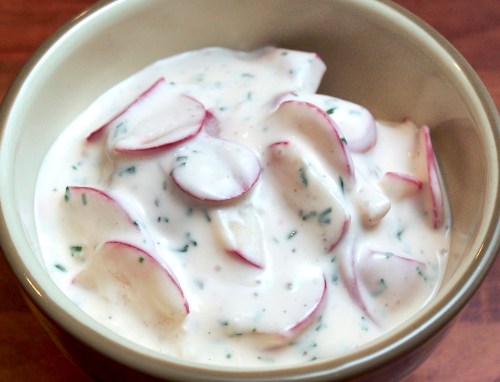
Radish Raita

This makes a nice change from the usual cucumber variety. Good with barbecued lamb or pork and dishes with Greek flavours. We liked it on the side of our giant beans and spinach rice.

Radish Tzatziki – serves 2

  • 100g Greek yoghurt
  • ½ tbsp chopped dill, plus extra to serve
  • 8 small radishes, roughly chopped or sliced
  • ½ clove of garlic, crushed
  • juice of ½ lemon

Mix all the ingredients together and season. Garnish with some extra dill.

(Original recipe from BBC Good Food)

Read Full Post »

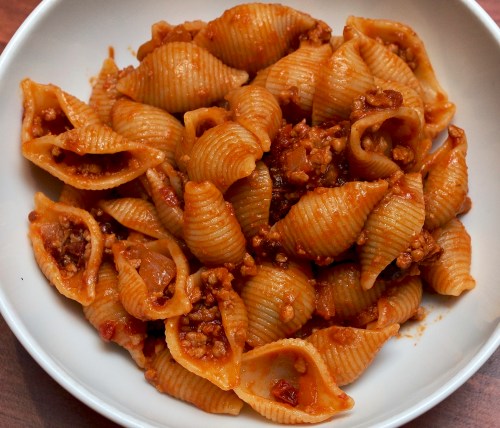
Conchiglie Rigate Piccanti

This pasta sauce is rich and full of flavour and works best without cheese, so don’t be tempted to add any. A new favourite for us and great for using up sun-dried tomatoes.

Wine Suggestion: Pico Maccario make some delicious Barbera and their entry “Lavignone” is a benchmark for the Asti region (Piedmont). Not only does it work with this dish, but we’d suggest versatile for many other dishes and occasions; a crowd pleaser and very food friendly.

Conchiglie Rigate Piccanti – serves 4

  • 5 tbsp olive oil
  • 1 onion, finely chopped
  • 80g pitted Kalamata olives, halved
  • 1 hot red chilli, deseeded and finely chopped
  • 80g sun-dried tomatoes in oil, drained and finely chopped
  • 300g pork mince
  • 300g passata
  • 400g conghiglie rigate (medium shell pasta)

Heat the oil in a medium saucepan over a medium heat and fry the onion and olives for a couple of minutes, stirring now and then.

Add the chilli, sun-dried tomatoes and the pork mince and continue frying for another 6 minutes.

Stir in the passata and gently simmer, uncovered, for 15 minutes. Keep stirring every couple of minutes. Season with salt and remove from the heat.

Meanwhile, cook the pasta in plenty of salty water according the timings on the pack. Drain and tip back into the saucepan.

Pour the sauce into the pasta pan and stir over a low heat for 30 seconds to combine.

(Original recipe from Gino’s Pasta by Gino D’Acampo, Kyle Books, 2010.)

Read Full Post »

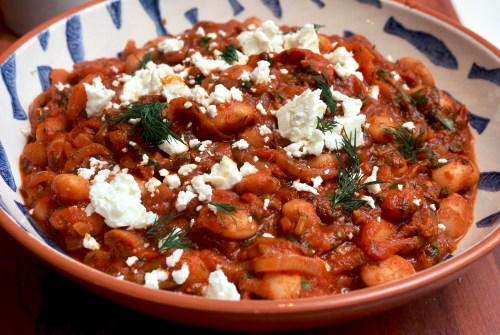
Giant Butter Bean Stew

This Greek butter bean stew can be served on it’s own either as a starter or as a veggie main. The kitchen smells fab as it cooks and you can have it ready in advance and just reheat to serve. We like it served on the side of some barbecued lamb, spinach rice and radish tzatziki.

Wine Suggestion: This dish shines with light and fresh red wines with little or no oak. Good on it’s own with the Rocca delle Macie Chianti Vernaiolo, an unoaked and youthful wine. However, the other night we served it with lamb, as part of a larger meal so chose the vibrant Gulfi Cerasuolo, a Nero d’Avola and Frappato blend from Sicily. Bright red fruits, an earthy depth and fresh finish complimented the lamb to the dill and feta. I think we’ll be drinking more of this wine in future.

Giant Butter Bean Stew – serves 6 as a side

  • 2 x 400g tins good quality butter beans
  • 50ml extra virgin olive oil
  • 1 large red onion, finely sliced
  • 1 large carrot, finely sliced
  • 1 celery stalk with leaves, finely chopped
  • 2 sundried tomatoes, sliced
  • 2 x 400g tins plum tomatoes
  • 2 garlic cloves, chopped
  • ½ tsp paprika
  • ½ tsp ground cinnamon
  • 1 tbsp tomato purée
  • ½ tsp sugar
  • small pack flat-leaf parsley, finely chopped
  • small pack dill, finely chopped
  • 100g feta, crumbled

Drain the butter beans and reserve 100ml of the liquid.

Heat the oil in a large flameproof casserole dish and cook the onions, carrots and celery until tender and the onions are soft and transparent, but not coloured. Stir in the rest of the ingredients, reserving half of the chopped herbs and feta, and season. Squeeze the tinned tomatoes with your hands as you add them to the dish to break them up.

Heat the oven to 180C/160C fan/gas 4.

Cook over a gentle heat for another 5 minutes, then add the reserved liquid. Cover the dish and bake in the oven for 40 minutes. Check occasionally and add more water if the dish looks dry.

Remove the lid and cook for another 10 minutes. Stir through the reserved herbs, season to taste, then crumble over the remaining feta.

(Original recipe from BBC Good Food)


Read Full Post »

« Newer Posts - Older Posts »