Feeds:
Posts
Comments

Posts Tagged ‘Recipe’

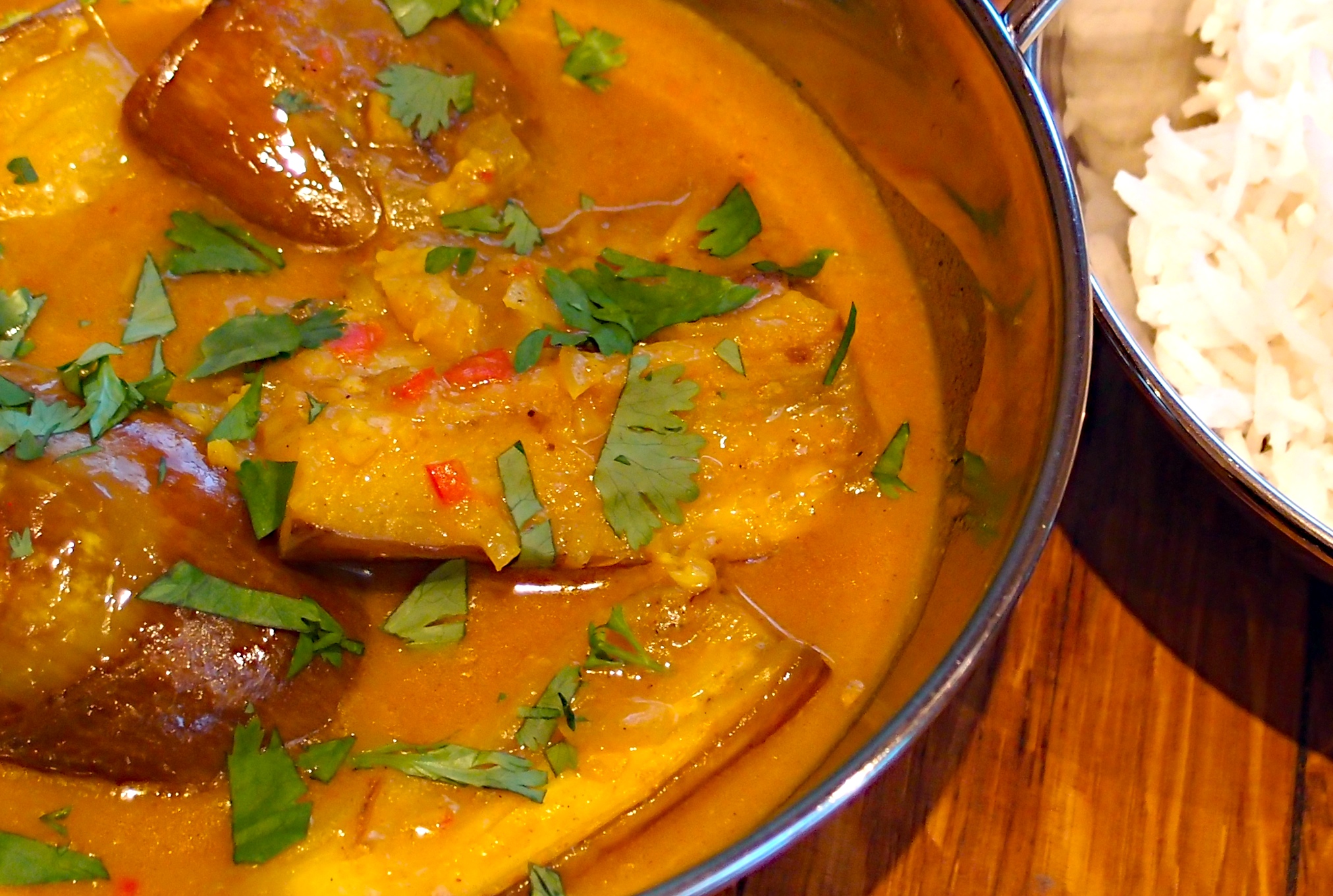
This is a really straightforward curry and we are glad to say it didn’t disappoint. The aubergine melts in the mouth and the spices are lovely and fresh as well as warming and comforting. Also takes no time at all to make.

Aubergine Curry with Lemongrass & Coconut Milk – serves 4

  • 3 large chillies, deseeded and chopped
  • 6 garlic cloves, roughly chopped
  • knob of fresh ginger, peeled and chopped
  • 2 lemongrass stalks, peeled and chopped
  • 2 tbsn ground turmeric
  • 1 tsp chilli powder
  • 2-3 aubergine (approx 600g) quartered lengthways then halved
  • 1 tbsp olive oil
  • 1 tbsp sugar
  • 6 shallots, finely chopped
  • 1 tbsp Fish Sauce (nam pla)
  • 400ml can coconut milk
  • 400ml vegetable stock
  • small bunch coriander, roughly chopped

Pulse  to a coarse paste chillies, garlic, ginger and lemongrass in a food processor. Set aside

Mix the turmeric and chilli powder together and rub it all over the aubergine wedges. Don’t worry if it look like a lot of spices – it works!

Heat olive oil in frying pan and brown aubergine in batches, setting the aubergine aside when done. Add the paste, sugar and shallots to pan and cook for a few minutes until the shallots and garlic soften.

Return aubergine to pan. Add fish sauce, coconut milk and stock, mix well and bring to the boil. Reduce heat and cook gently for about 15 minutes and until aubergine is tender but not mushy. Season and sprinkle coriander on top.

Serve hot with steamed rice.

Drink with: a aged Clare Valley riesling (at least 5 or six years old) or a fruity young Mosel Riesling.
Read Full Post »

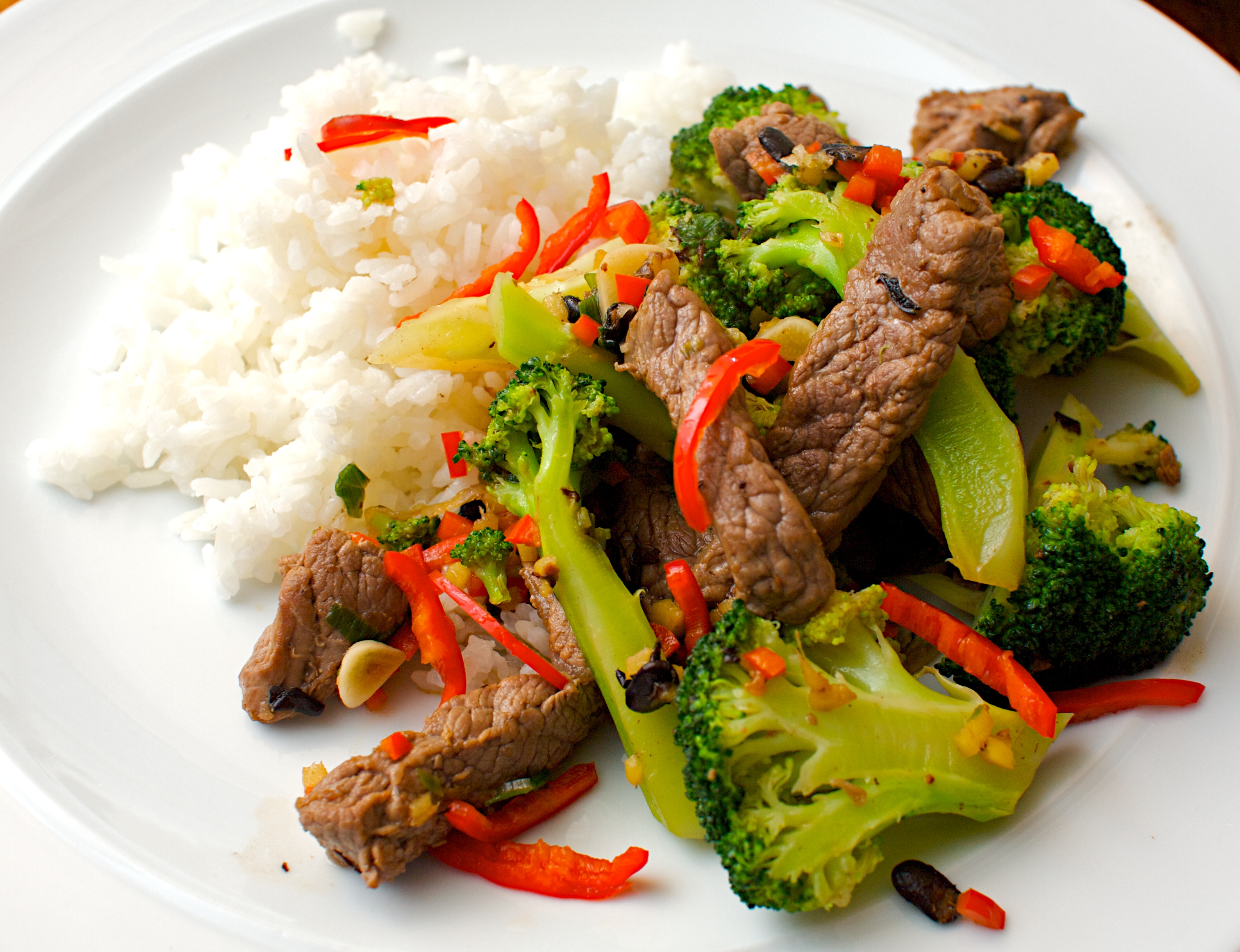
Gok Wan has reinvigorated our enjoyment of Chinese food. This is not the black-bean sauce we have been used to getting in restaurants and manages to be both light and have great depth with very distinctive Chinese flavours and aromas. Don’t be tempted to omit the pickled chilli as it really makes the dish.

Warning: this is nothing like the gloopy stuff you get from the Chinese take-away. Just so you know.

Beef in Fragrant Black Bean Sauce – to serve 2

  • 250g broccoli, cut into small florets
  • 3 tsp sesame oil
  • 1 tbsp groundnut oil
  • a 2cm pice of fresh ginger, peeled and finely chopped
  • 2/3 cloves of garlic, thinly sliced
  • 1 scallion, finely chopped
  • 1 tbsp fermented black beans, soaked for 5 minutes in warm water and drained
  • 250 sirloin steak, fat removed and sliced into strips
  • 1 fresh red chilli, deseeded and finely chopped
  • ground white pepper
  • 1 tbsp Shaoxing rice wine or dry sherry
  • light soy sauce, to taste

FOR THE QUICK PICKLED CHILLI

  • 1 red chilli, sliced into long diagonal strips
  • 2 tbsp rice wine vinegar
  • 1-2 tsp caster sugar

Firs make the pickled chilli by putting the strips of chilli into a bowl and cover with rice vinegar. Sprinkle with the caster sugar and leave to soak.

Blanch the broccoli in salted water for 2 minutes, then drain and season with a drizzle of sesame oil and some salt.

Heat a wok over a high heat and add a good splash of oil. Add the ginger, garlic and scallion and stir-fry for about 10 seconds, just to soften the garlic. Add the black beans and cook for 20 seconds more.

Add the steak and cook for 2-3 minutes, or until sealed on all sides. Add the chilli, blanched broccoli and some salt and white pepper, along with the Shaoxing rice wine, 1 tsp of soy sauce and 1 tbsp water. Toss together, then taste and adjust the seasoning if necessary.

Drain the pickled chilli and serve with the beef and some rice.

(Original recipe from Gok Cooks Chinese, Penguin, 2012.)


Read Full Post »

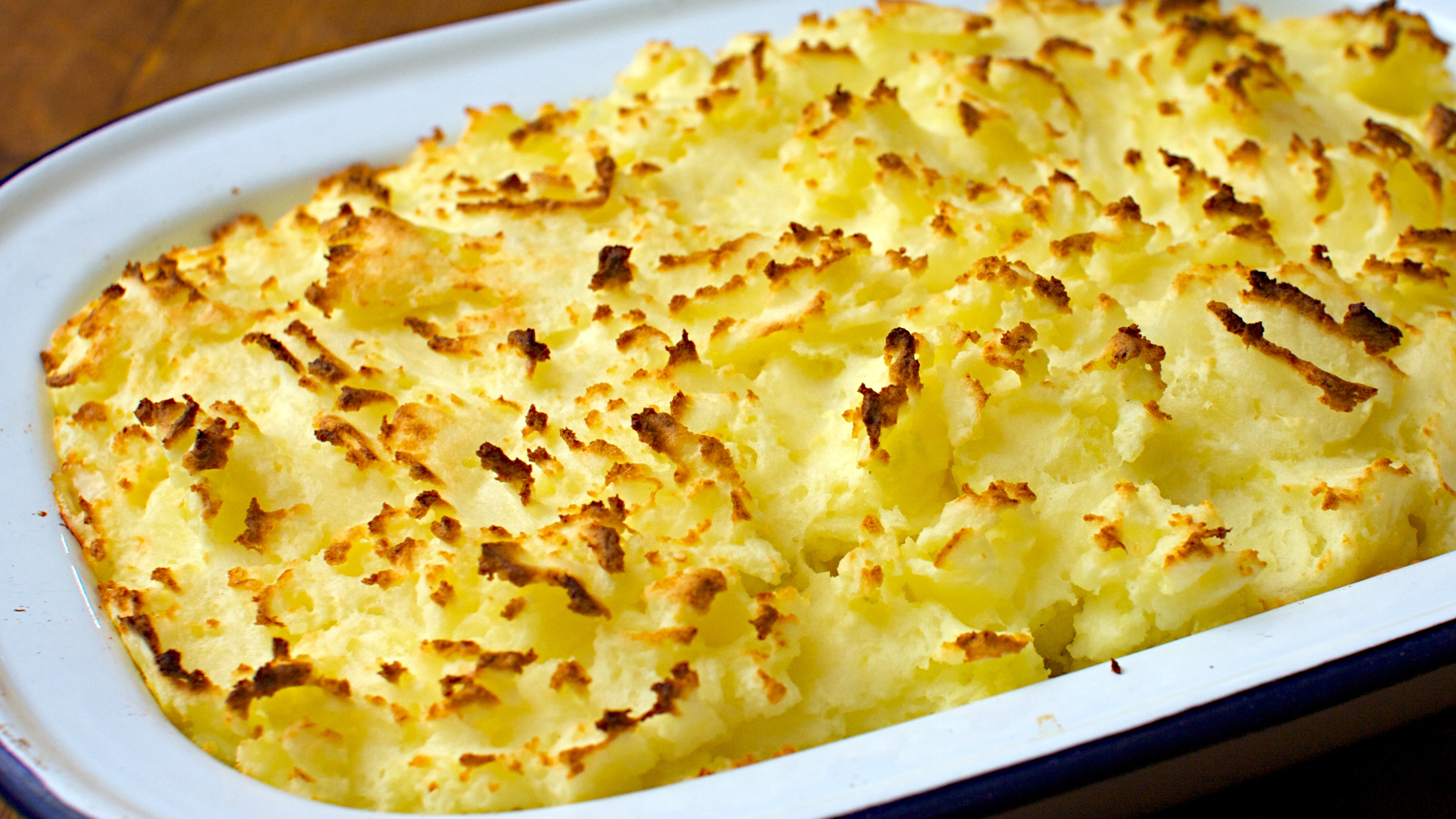
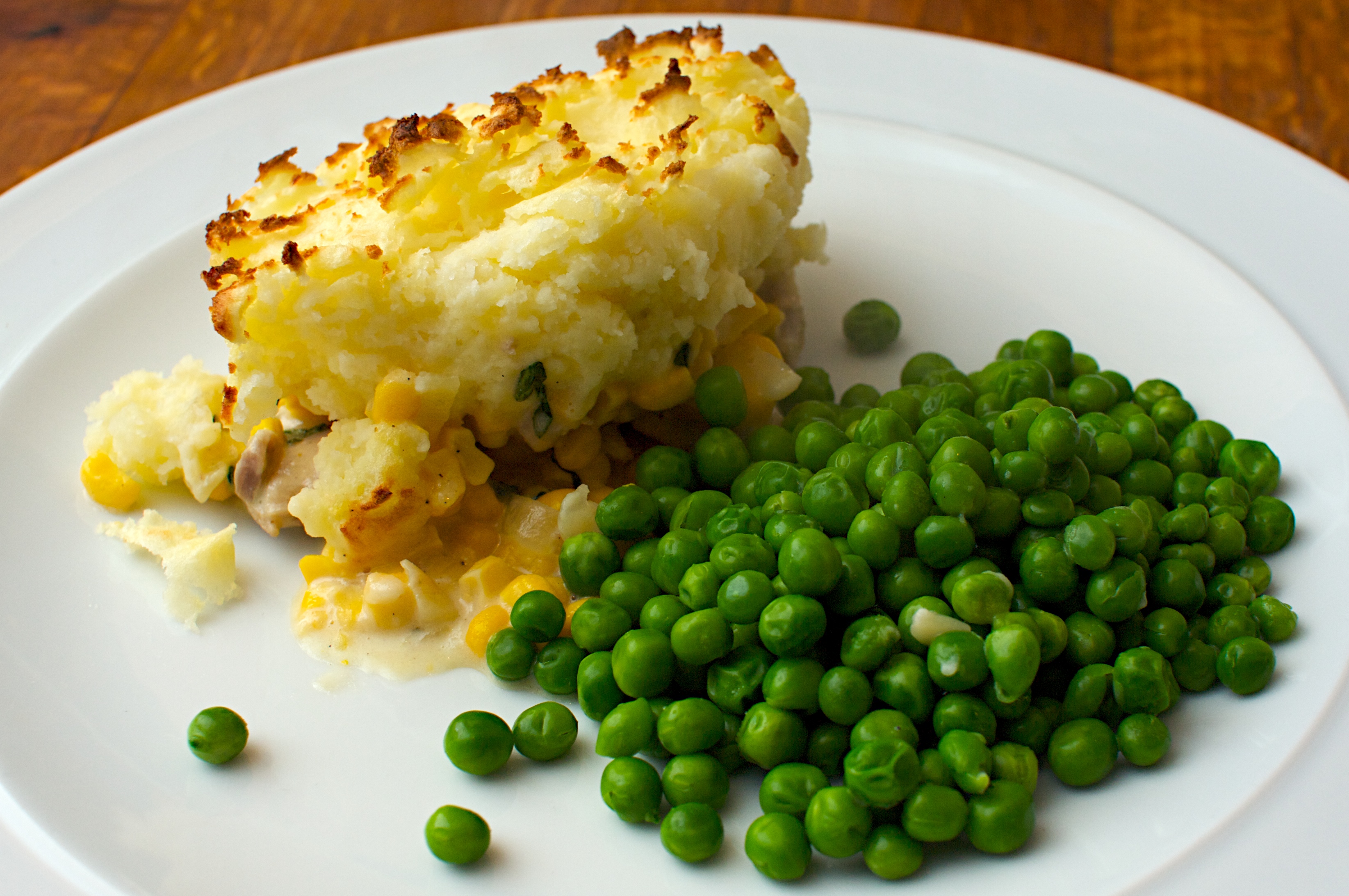
One of those recipes that work because of their simplicity. The flavours all work together so there is no need to mess with them.

Easy Chicken & Corn Pie – to serve 4

  • 1 onion, sliced
  • 400g chicken thighs, cut into bite-size pieces
  • 1 tbsp vegetable oil
  • 150ml chicken stock
  • 325g can sweetcorn, drained
  • 6 tbsp crème fraîche
  • handful of parsey or basil, chopped
  • 750g potatoes, cuts into chunks

Fry the onion and chicken in the oil for 5-10 minutes or until the onion is soft and the chicken golden. Pour over the stock, bring to the boil, then simmer for 20 minutes or until the chicken is cooked. Add the corn, half of the crème fraîche,  the herbs and some seasoning.

Meanwhile, boil potatoes until soft, then drain and mash with the rest of the crème fraîche and some salt and pepper. Pour the chicken into a pie dish and top with the mash. Put the dish on a baking tray and put under the grill until golden.

Drink with: a glass of full-bodied, oaked Chardonnay.

(Original recipe from BBC Good Food)

Read Full Post »

With a small tub of cooked prawns we were able to use up left over ingredients from the weekend with this fresh and summery Linguine. Tasty food doesn’t need many ingredients, just good quality ones.

Creamy Prawn Linguine – to serve 2

  • 200g linguine
  • 100g cooked prawns (defrosted if frozen)
  • 2 tbsp crème fraîche
  • handful of grated Parmesan

Cook the linguine according to the pack instructions. Scoop out a little of the cooking water and reserve, then throw in the prawns before draining, just to heat them through.

Return the pasta and prawns to the pan, then add the rest of the ingredients and season well. Add a bit of the pasta cooking water if it looks dry. Serve with some extra Parmesan.

Drink with: a wine as straightforward and easy as the dish – we’d go for a light and uncomplicated Frascati from the Lazio/Rome area. Also a good match for football 🙂

Read Full Post »

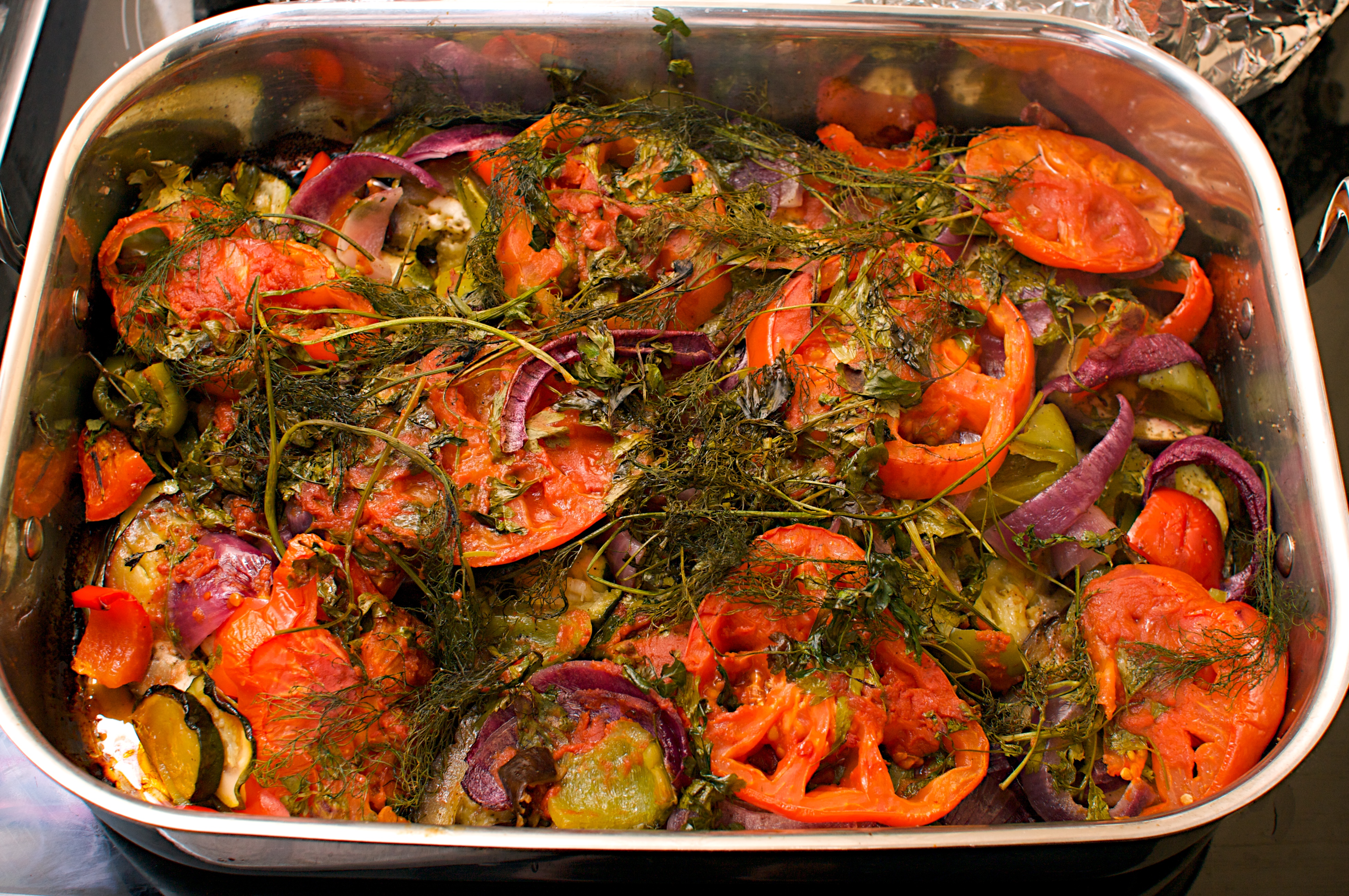
This has such great flavours that we made it two days in a row – it’s even great cold the next day so don’t be put off by the large quantities. Serve with barbecue lamb or just some feta cheese.

Briam – to serve 8 

  • 150ml extra virgin olive oil, plus a bit extra to grease the tin
  • 500g waxy potatoes, peeled and cut lengthways into ½ cm thick slices
  • 6 garlic cloves, sliced
  • 2 large courgettes, sliced
  • 1 large aubergine, cut into 1cm thick slices
  • 1 large green pepper, cut into chunks
  • 1 large red pepper, cut into chunks
  • 1 large red onion, thickly sliced
  • 15-20g dill sprigs
  • 15-20g flat-leaf parsley sprigs
  • 200ml passata

Preheat the oven to 190ºC.

Oil a large roasting tin (about 26 x 36 cm) well and spread the potatoes on the base in a single layer. Season with salt and pepper, then scatter over the garlic and courgettes. Season again, then add a layer each of the aubergine, peppers and onion, seasoning between each layer. Scatter over half the dill and parsley sprigs, cover with tomato slices and then add the rest of the herbs and season again. Pour the sieved tomatoes over the top, followed by the olive oil.

Cover the roasting tin tightly with foil and bake for about 1½ hours or until the vegetables are tender.

If you have a lot of juices in the tin, carefully pour them into a wide pan and boil until reduced and concentrated. Pour back over the vegetables and leave to cool a bit before serving.

(Original recipe from Rick Stein’s Mediterranean Escapes, BBC Books, 2007.)

Read Full Post »

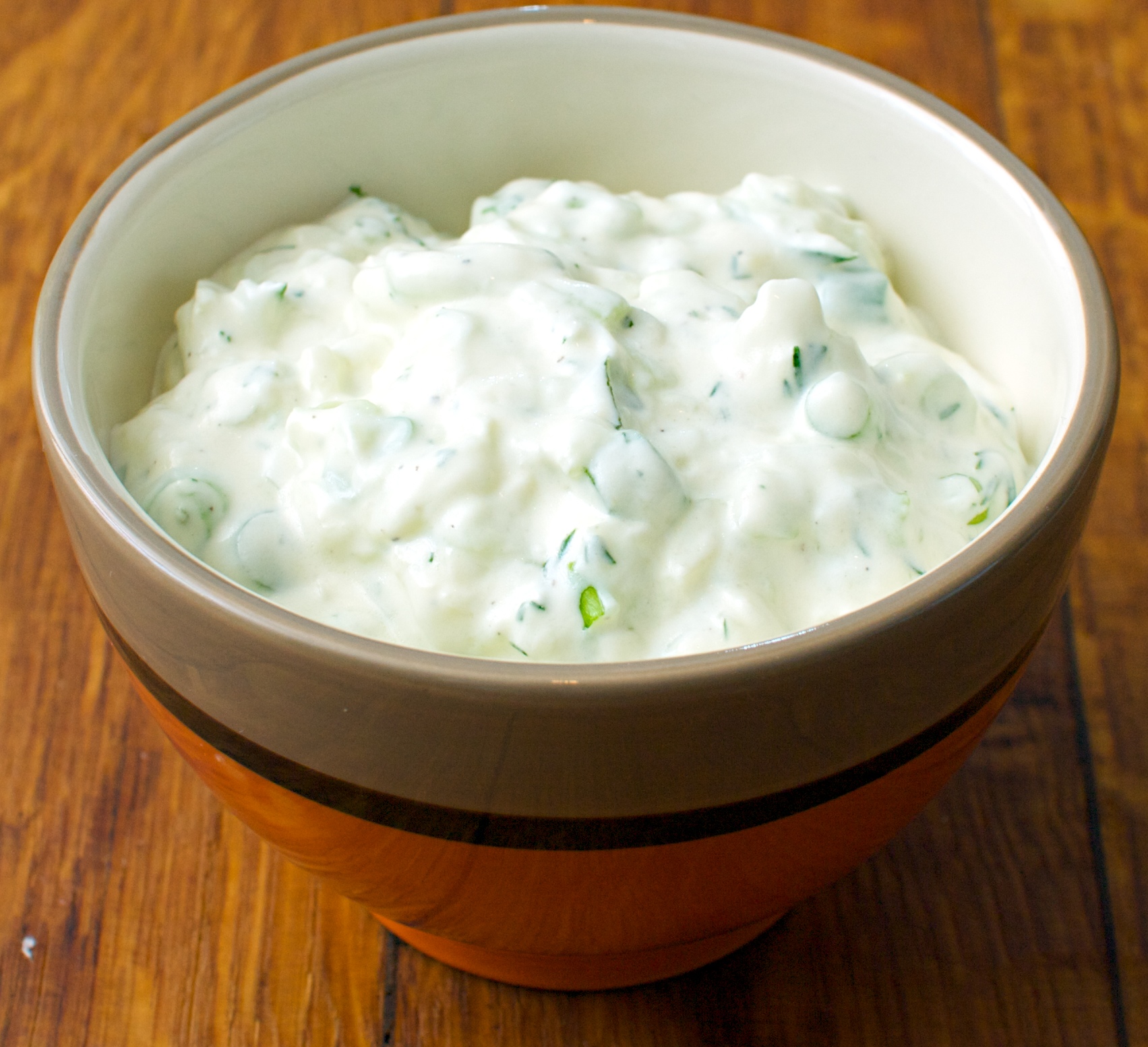
The best Tzatziki we’ve made with great flavour and a really thick creamy texture. Totally different to the watery shop-bought versions. Serve with lightly toasted pitta breads, for dipping, or Greek lamb kebabs.

Tzatziki – to serve 6 

  • 1 large cucumber
  • 2 garlic cloves
  • 500g natural Greek ewe’s milk yogurt (‘Total’ if you can find it – don’t buy a low-fat version for this)
  • 75g scallions, finely chopped
  • 2 tbsp chopped fresh dill or mint
  • 2 tbsp extra virgin olive oil
  • 1 tsp white wine vinegar

Peel most of the skin off the cucumber but not all of it. Coarsely grate the cucumber, put into a clean tea towel and squeeze out most of the excess liquid.

Crush the garlic into a smooth paste by adding a large pinch of salt and crushing on a board with the back of a large knife.

Put the yogurt into a bowl and stir in the cucumber, garlic, scallions, dill or mint, olive oil, vinegar and some seasoning.

(Original recipe from Rick Stein’s Mediterranean Escapes, BBC Books, 2007.)

Read Full Post »

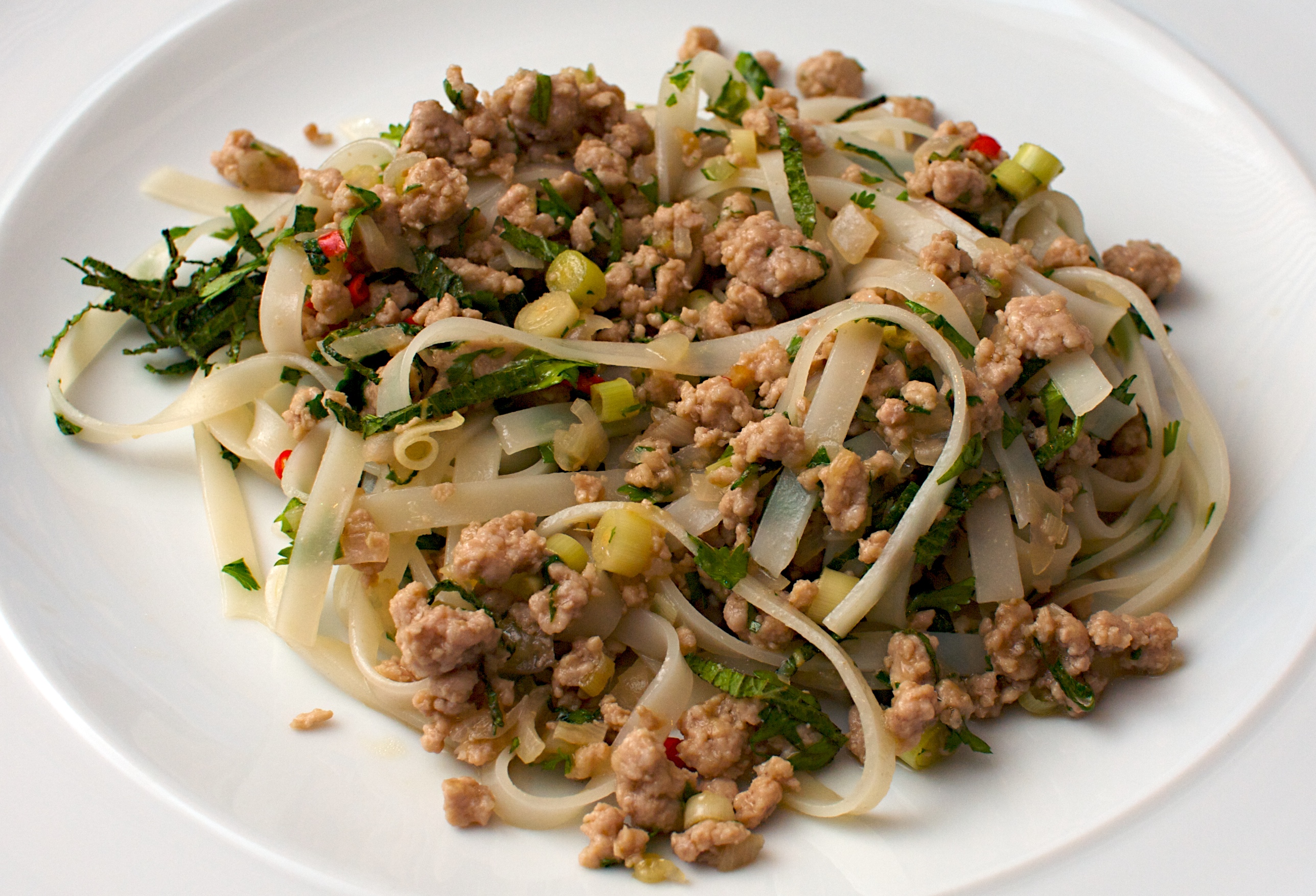
This is really quick and healthy, with nice fresh flavours.

Asian Pork Noodle Salad – to serve 2

  • 100g rice noodles
  • 2 stalks of lemongrass, chopped
  • 2 shallots, finely chopped
  • 200g lean minced pork
  • ½ tsp soft brown sugar
  • small bunch coriander, roughly chopped
  • small bunch mint, roughly chopped
FOR THE DRESSING:
  • ½ garlic clove, crushed
  • 1 red chilli, finely chopped
  • ½ tbsp soft brown sugar
  • 2 limes, juiced
  • 1 tbsp fish sauce

Pour boiling water over the noodles and leave to soak according to the pack instructions. Drain and cool under running water.

Cook the lemon grass and shallots for a couple of minutes, then add the pork and cook until browned and cooked through. Stir in the sugar and stir to dissolve.

Mix the dressing ingredients together and toss with the noodles and pork, then add the coriander and mint and serve.

Drink with: a glass of Riesling – try with one of the slightly off-dry New Zealand styles.

(Original recipe from BBC Good Food)

Read Full Post »

This dish is easily doubled to make two pies, particularly if you are like us and had to defrost a whole packet of filo pastry.  The filo is very forgiving so don’t worry if you’re pastry sheets don’t look too neat and tidy. You could add some cooked chicken if you like things meaty.

Easy Veggie Filo Pie – to serve 4

  • 200g spinach leaves
  • 175g jar sundried tomatoes in oil
  • 100g feta, crumbled
  • 2 eggs
  • ½ 250g pack filo pastry

Put the spinach into a large pan. Add a 2 tbps water, then cook until just wilted. Drain in a sieve, then squeeze out with your hands once it’s cold enough to handle. Roughly chop and put into a bowl. Roughly chop the tomatoes (reserve the oil) and add to the spinach with the feta and eggs. Mix well.

Unroll the pastry and be careful not to tear the sheets too much. Cover with some damp kitchen roll to stop it drying out. Take a sheet of pastry and brush really well with some of the oil from the tomatoes. Drape the sheet, oil-side down, in a 22cm loose-bottomed cake tin, leaving some pastry hanging over the sides. Brush another sheet and place in the tin at a slightly different angle. Keep doing this until you have used about 3 of the pastry sheets. Pull the sides into the middle, making sure the filling is totally covered. Brush with a bit more oil on the top if necessary.

Heat oven to 180C/fan 160C/gas 4. Cook the pie for 30 minutes or until the pastry is crisp and browned. Slice into wedges and serve with a salad and some tzatziki.

Drink with: a glass of Chablis which should have a saline quality to compliment the salty feta.

(Original recipe from BBC Good Food)

Read Full Post »

Jono’s boss grows his own courgettes and they’re coming out his ears at the moment, so we are happily helping him eat them!

Courgette & Lemon Linguine – to serve 4

  • 300g linguine
  • 3 courgettes, grated
  • 1 tbsp olive oil
  • 1 garlic clove, crushed
  • 1 tsp chilli flakes
  • zest of 1 lemon
  • handful of basil leaves, torn

Bring a large pot of salted water to the boil and cook the linguine according to the pack instructions.

Meanwhile, heat the oil and fry the courgettes over a high heat for a few minutes. Add the garlic and chilli and cook for another minute or so.

Drain the pasta and tip into the courgettes, then add the lemon zest. Season, drizzle with some extra olive oil and scatter over the basil.

Drink with: a glass of Italian Pinot Grigio. Try and find one of the more aromatic versions from Friuli, the Alto Adige or a Riserva from the Veneto.

Read Full Post »

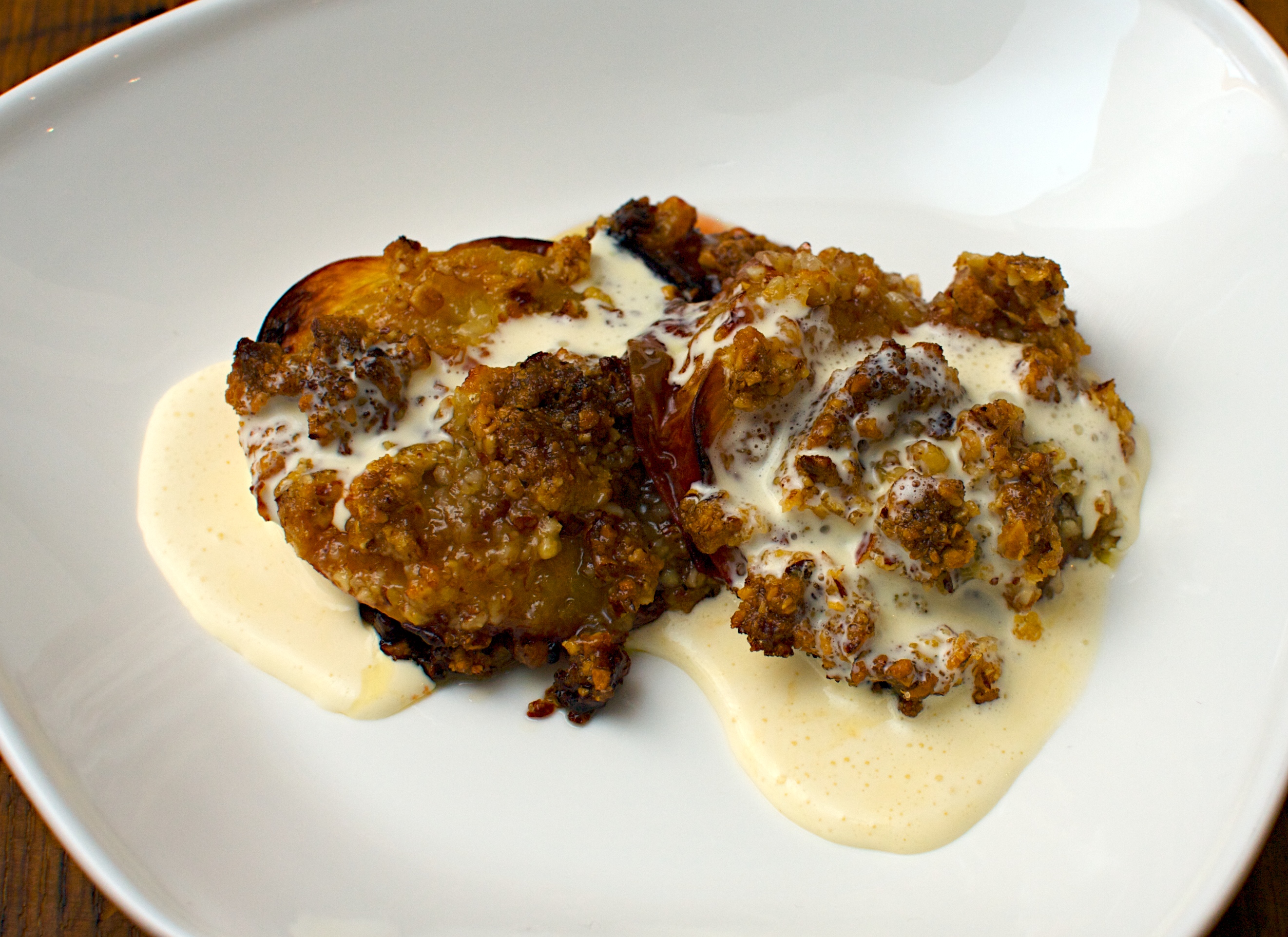
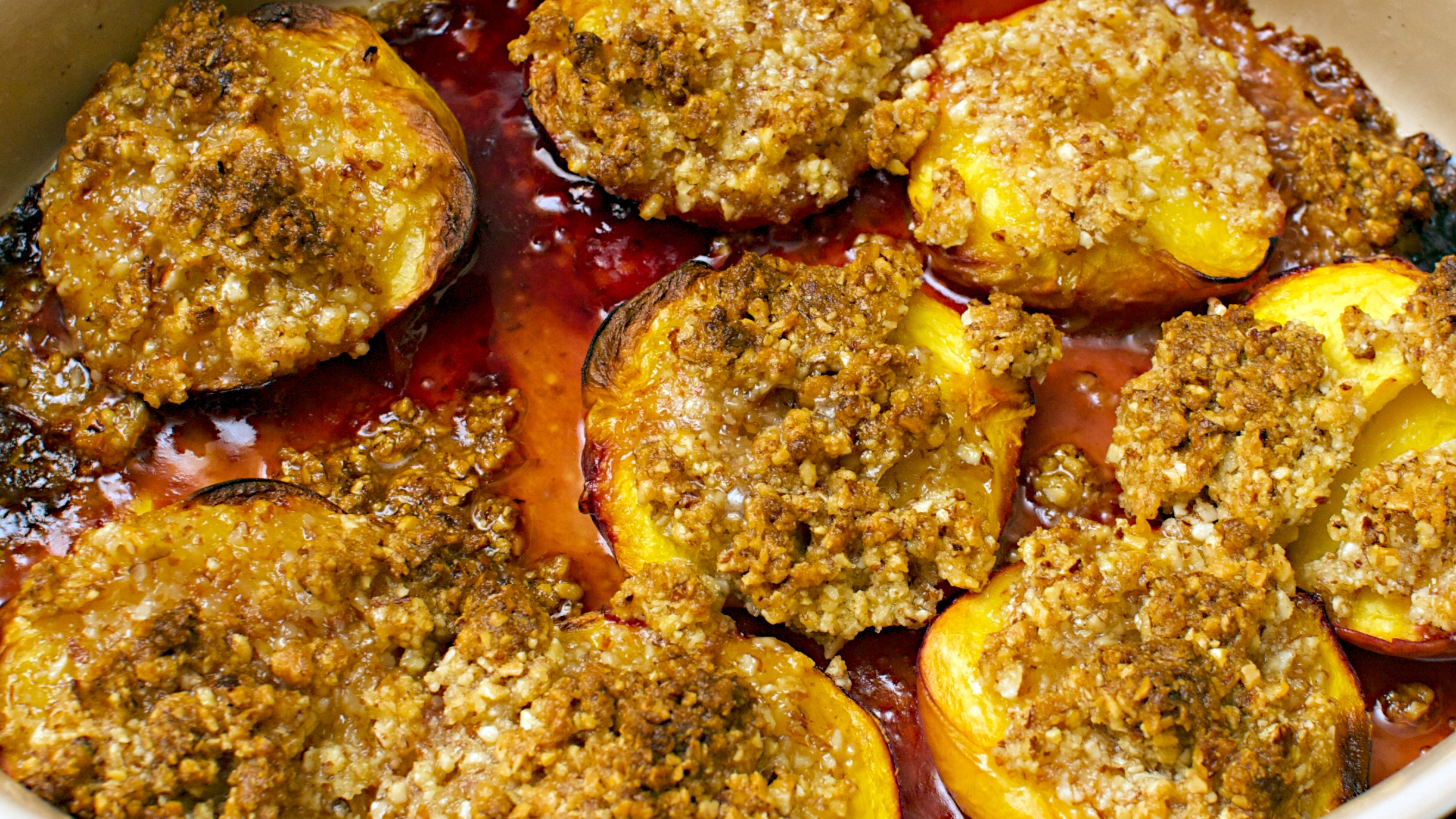
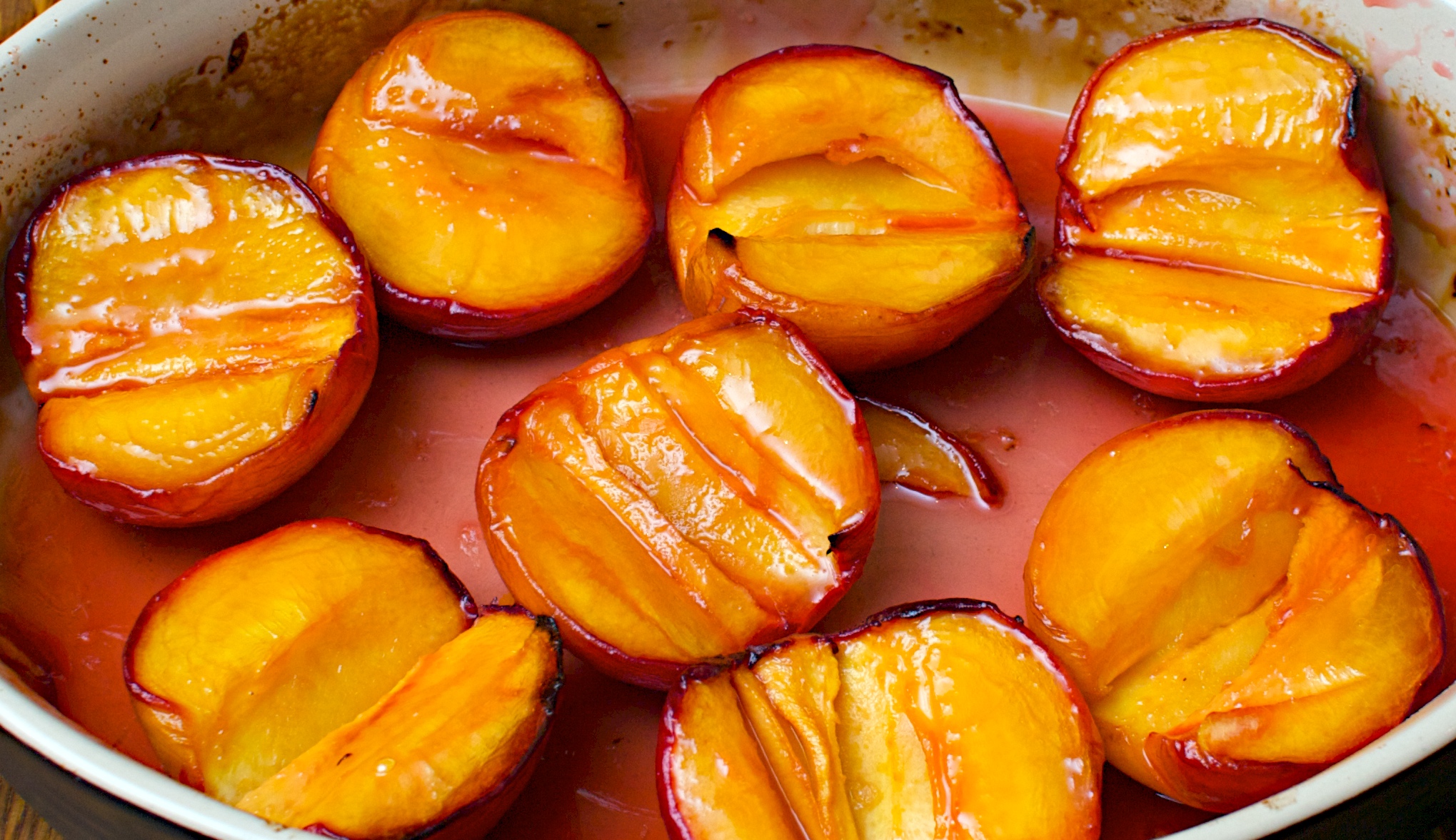
The peaches at the moment are really tasty so we’re gorging on them while they’re in season. Here are two easy and delicious dessert recipes to distract ourselves from just eating the peaches fresh.

Baked peaches with an almond crust – to serve 4

  • 4 ripe peaches
  • 50g almonds – no need to skin
  • 50g golden caster sugar
  • 45g butter

Preheat the oven to 180ºC. Cut the peaches in half, remove the stones and put them in a shallow baking dish cut-side up.

Blitz the almonds in a food processor until you have a coarse rubble. Add the sugar and butter and mi again briefly.

Spoon the almond mixture on top of the peaches and bake for about ¾ of an hour or until the peaches are super-soft and the topping is crispy. Pour a little double cream over to serve.

Baked peaches with maple syrup and vanilla – to serve 4

  • 4 ripe peaches
  • 4 tbsp maple syrup
  • 1 vanilla pod
  • juice of a lime

Preheat the oven to 200ºC. Cut the peaches in half, remove the stones and put in a shallow baking dish cut-side up.

Pour the maple syrup into a bowl. Scrape the vanilla seeds from the pod and add to the maple syrup along with the lime juice. Bake for about 35 minutes or until the peaches are really soft. Baste them occasionally while they cook.

Drink with: a fragrant and slightly frothy Moscato d’Asti from the Piemonte region in Italy. Moscato is a completely under-rated wine that is fruity and light (about 5% alc.) and won’t overwhelm the dessert. We find that Moscato is quite often a much better match for fruit based desserts than traditional, much sweeter, “dessert” wines.

(Both recipes are adapted from Nigel Slater’s Tender: Volume II, Fourth Estate, 2010.)

Read Full Post »

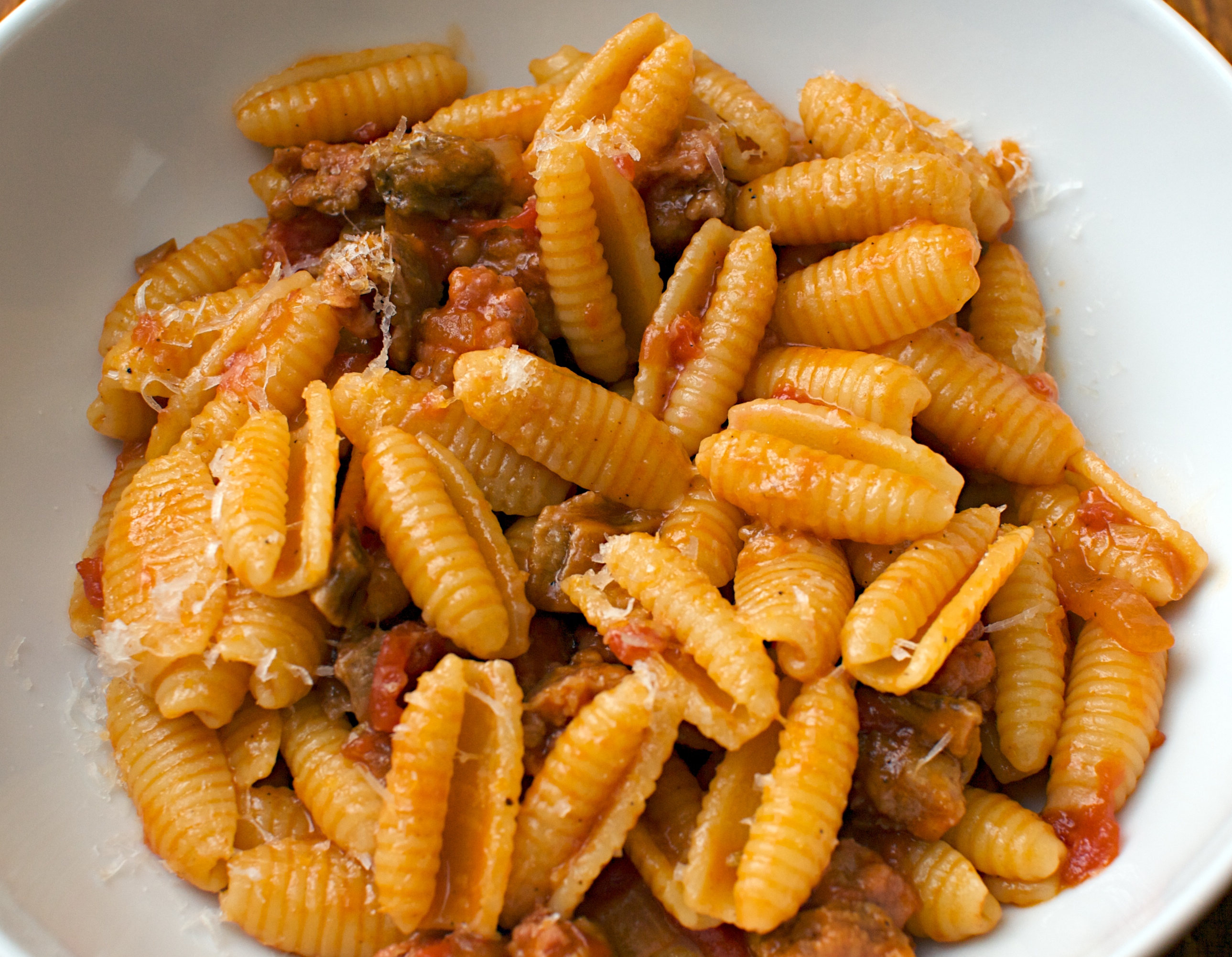
Gnochetti sardi is a Sardinian pasta shape which is shaped like gnocchi but made of durum wheat semolina and no eggs. It is a staple in Sardinia and usually prepared with a heavy tomato based  ragù or sauce made with beef, lamb or sausage. The ragù clings to the heavy ridged pasta shape.

If you can’t find gnochetti sardi then another short pasta shape, like penne, will do. This will serve 4 as a main course but stretches to many more as a first course which is how we like to serve it.

Sardinian Pasta with Sausage and Tomato Sauce – to serve 4

  • 500g bag of gnocchetti sardi pasta
  • 15g dried porcini
  • 3 tbsp extra virgin olive oil
  • 1 onion, finely chopped
  • ½ tsp crushed dried chillies
  • 1 tsp fennel seeds, lightly crushed
  • 350g Italian sausages or other meaty pork sausages
  • 120 ml dry white wine
  • 400g tin chopped tomatoes
  • Pecorino or Parmesan to serve

Soak the porcini mushrooms in 100ml of boiling water for about 30 minutes. Drain the mushrooms and chop but don’t throw away the soaking liquid as you’ll need it later.

Bring a really large pan of salted water to the boil. Meanwhile, skin the sausages and break the meat up into little pieces.

Heat the oil in a large frying pan, then add the onion, garlic, chilies and fennel seeds and fry gently until nicely coloured.

Add the sausagemeat and mushrooms and continue to fry for another 5 minutes. Add the wine and bubble for a couple of minutes to reduce, then add the tomatoes and mushroom soaking liquid. Season well with salt and pepper. Leave the sauce to simmer for about half an hour.

Cook the pasta according to the pack, then drain and add to the sauce. Pass around the cheese and let people help themselves.

Drink with: the Sardinian red wines would work a treat, especially the ones made from Cannonau or Carignano. These two grape varieties are better known as Grenache and Carignan, so if there are no Sardinian gems in the local, find something made from these grapes and you’ll have a match.

Read Full Post »

Some industrious fellow has imported real live Water Buffalos and is making proper Irish Buffalo mozzarella in Macroom. Well done him! This stuff is truly delicious and deserves to be the star of the show so we suggest serving it generously with some complementary bits (instead of putting it on a pizza!). Here’s what we tried first and we’ll defo be back for more. If you’re in Dublin you can pick some up in Fallon & Byrne on Exchequer Street or at any Real Olive Company stall at your local market.

Real Live Irish Buffalo Mozzarella Salad (with beetroot, capers & tomatoes) – to serve 4

  • 4 balls of fresh buffalo mozzarella (don’t substitute the cheaper cows milk stuff for this recipe)
  • 4 medium-sized beetroot
  • 4 ripe plum tomatoes
  • 2 tbsp salted capers, rinsed and drained
  • 1tbsp red wine vinegar
  • 2 tbsp top-quality extra virgin olive oil
  • handful of torn basil leaves
Cook the beetroot in boiling water for about an hour or until tender (the cooking time will vary slightly with different beetroot sizes so best to cook them earlier in the day and leave to cool). Peel and cut into chunky slices. Slice the tomatoes into chunky slices too.
Make a dressing with the vinegar and olive oil and pour into a bowl. Add the beetroot, tomatoes and capers, season well and toss gently.
Serve the salad with the mozzarella and scatter over the basil leaves.
Drink with: a northern Italian red. Try Dolcetto for freshness, Barbera for a bit of earthiness or Teroldego for freshness and gentle pepper spices.

Read Full Post »

This is a Basque inspired dish where fresh fish is cooked really simply over hot coals. Firm fish like Monkfish, or Grouper, will not fall apart as easily so make them perfect for barbecuing. Serve with a green salad and some bread.

Barbecue Monkfish Kebabs – to serve 4

  • 1 kg monkfish fillets, cut into large chunks
  • 12 tbsp olive oil
  • 3 large garlic cloves, thinly sliced
  • 1 tsp dried chilli flakes
  • 4 tbsp white wine vinegar
  • 1 tbsp finely chopped parsley
  • 3 tbsp lemon juice

Light the barbecue and wait until it is really hot before you start cooking.

Thread the monkfish onto 4 metal skewers. Make a marinade using 6 tbsp of the olive oil, the lemon juice, 3 tbsp of the white wine vinegar and 1 tsp salt. Brush this lightly over the kebabs and barbecue until the fish is browned and cooked through. Keep brushing with the marinade as the fish cooks.

Put 6 tbsp olive oil, the garlic and chilli flakes into a small pan and heat over a high heat until the garlic turns golden (but don’t let it go brown as it will turn bitter). Take off the heat and stir in the parsley, 1 tbsp white wine vinegar and ½ tsp salt. Drizzle over the fish and serve.

Drink with: a chilled glass of Txakoli if you can find it. This Basque speciality is hard to find outside Spain but an Albarino from Galicia makes a more than satisfactory substitute.

Read Full Post »

There is huge quantity of cherry tomatoes in this but they break down into a great pasta sauce. You can serve this as a main course for 4 people or a starter for 6-8. It’s really quick and easy to throw together.

Roast tomato & basil orecchiette – to serve 4 (or 6-8 as a starter)

  • 1.3kg cherry tomatoes
  • 4 garlic cloves, sliced thinly
  • olive oil
  • 500g dried orecchiette
  • 30 large basil leaves
  • 4 tbsp double cream
  • grated Parmesan or pecorino
Pre-heat the grill.
Put the tomatoes in a single layer in a large roasting tray. Scatter the sliced garlic over the tomatoes and drizzle with olive oil. Put the tomatoes under the grill and leave until starting to burst and turning black in places. Meanwhile, cook the pasta according to the packet.
Crush the tomatoes with a fork, then stir in the basil leaves. Stir in the cream and a handful of grated Parmesan or pecorino. Season to taste and serve with more cheese for people to add themselves.
Drink with: a light Chianti Rufina.

(Original recipe from Nigel Slater: the kitchen diaries, Fourth Estate, 2005.)

Read Full Post »

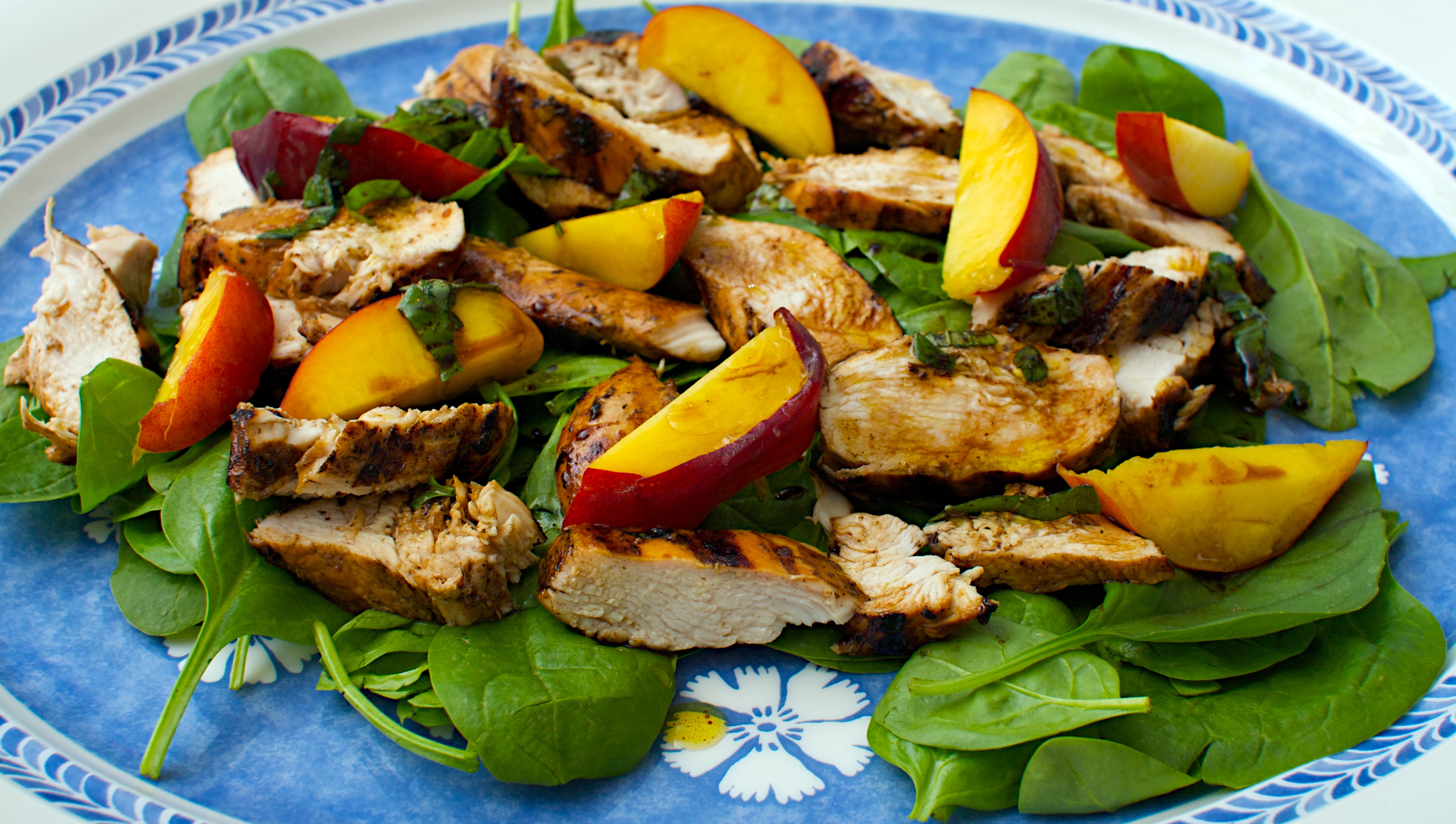
Our local supermarket, which will remain nameless, has perfectly ripe Spanish peaches at the moment. Absolutely perfect for a summer barbecue salad. It’s worth paying the extra for free-range chicken from a reliable source (probably not the local supermarket).

Warm Chicken & Peach Salad – to serve 4

  • 500g good-quality chicken breasts
  • 2 tbsp balsamic vinegar
  • olive oil
  • baby spinach leaves
  • ripe peaches
  • basil

Heat the barbecue.

Put the chicken breast in a shallow dish. Add 1 tbsp balsamic vinegar, 1 tbsp olive oil and plenty of salt and pepper. Turn the chicken breasts in the marinade until they are well-coated.

Cook the chicken on the hot barbecue until cooked through (ours took about 6 minutes on each side). You are going to slice the chicken anyway so it’s no problem to slice open one of the fillets to check.

Scatter a good few handfuls of spinach and a small handful of basil leaves over a large serving platter.

Mix 1 tbsp balsamic vinegar, 2 tbsp olive oil, a few shredded basil leaves and some salt and pepper together to make a dressing.

Slice the chicken and peaches and toss gently with the salad leaves. Drizzle over the dressing and serve.

Drink with: either Roussanne or Marsanne with their stone-fruit flavours to complement the light peachy flavours of the salad. We had a glass of a St Joseph white from Pierre Gaillard made from Roussanne which is amazing on it’s own and a perfect match for this dish.

Read Full Post »

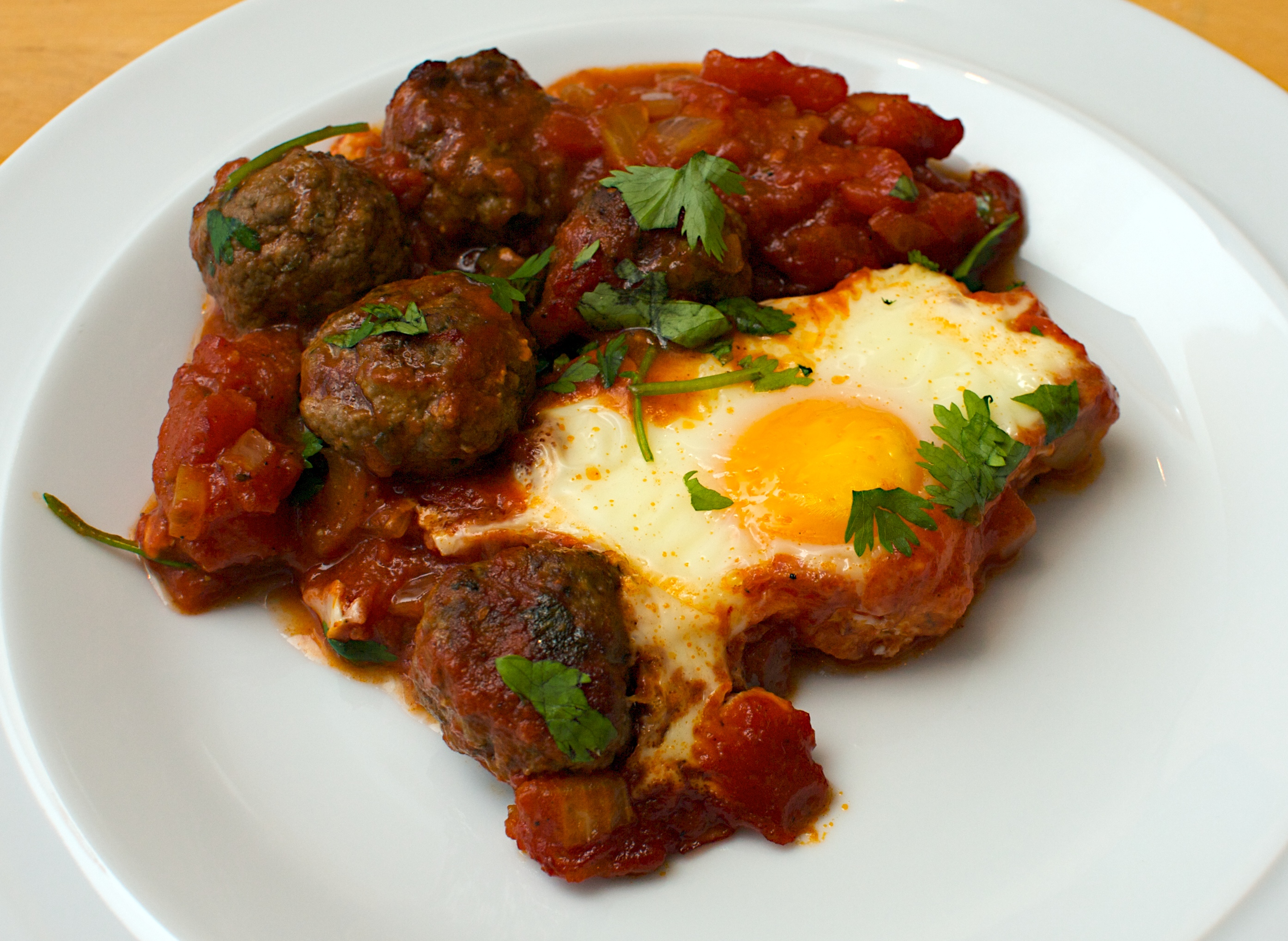
In Morocco they serve bread with every meal. If you want eat this Moroccan-style, put the dish in the middle of the table and use flat-breads to mop up the little meatballs and eggs. It’s really worthwhile seeking out hot paprika (the paprika available in supermarkets is the sweet version), but don’t be tempted to use smoked paprika as it has a much stronger flavour and will overpower the dish. You can use minced lamb instead of beef if you prefer. The tagine also works well without the eggs, but they do add an extra layer of flavour and texture.

Kefta Mkaouara – to serve 4

  • 500g minced beef
  • small handful chopped parsley
  • 2 tsp ground cumin
  • 1 tsp hot paprika
  • olive oil
  • 1 onion, finely chopped
  • 2 x 400g tins chopped tomatoes
  • 2 garlic cloves, crushed
  • fresh ground black pepper
  • sea salt
  • 4 eggs (optional)
  • handful fresh coriander, chopped

Preheat the oven to 200ºC.

Mix the mince with the parsley, 1 tsp of the cumin and ½ tsp of the paprika, some black pepper and about 1 tsp salt. Wet your hands and make lots of tiny meatballs (about the size of cherry tomatoes).

Heat a couple of good glugs of olive oil in a frying pan and brown the meatballs in batches. Remove them with a slotted spoon.

Add the onion to the pan with a little extra oil if necessary and cook gently until very soft (about 10 minutes). Add the tomatoes, the rest of the cumin and paprika, 1tsp ground black pepper and the garlic. Simmer gently for about 20 minutes but be careful that it doesn’t reduce down too much and become thick. Season well.

Add the meatballs to the tomato sauce and pour into a shallow ovenproof dish. Push the back of a ladle into the mixture to make 4 wells to crack the eggs into. Bake for about 15 minutes or until the eggs are just set. Serve with the coriander and some warm flatbreads.

Drink with: a fruity red. We had a glass of our favourite “everyday” wine of the moment which the the Selvapiana Chianti Rufina and it worked a treat.

Read Full Post »

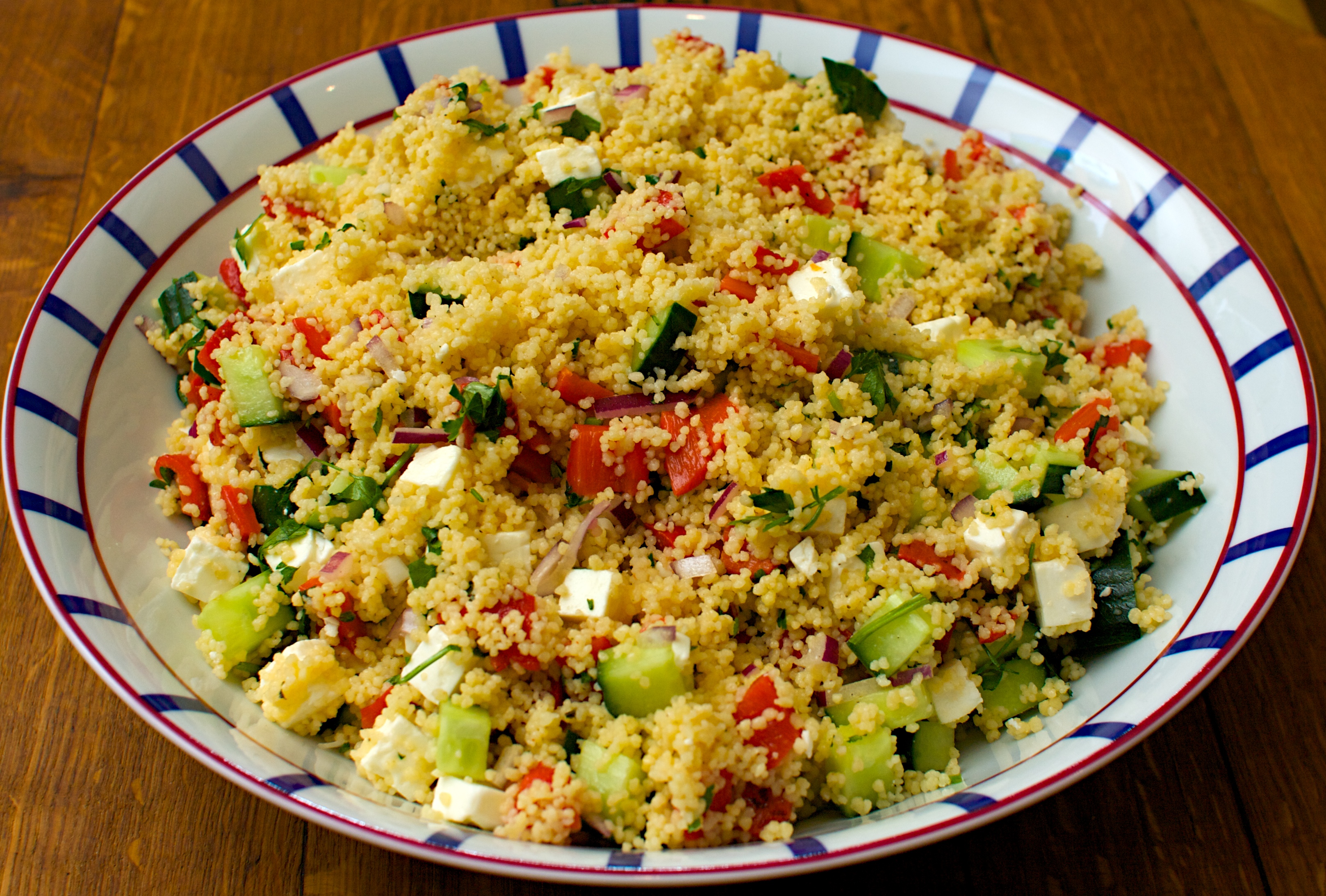
We’re always looking for easy things to take to work for lunch. This can be made with almost anything you have left in the fridge but we make it most often when we’ve only used half a pack of feta cheese for another recipe. The more herbs you add the better so its great for using up the ends of those little packs.

Quick couscous salad – makes 4 large portions 

  • 250g couscous
  • 400ml hot chicken or vegetable stock
  • olive oil
  • lemon juice
  • small jar of chargrilled red peppers in olive oil, drained and diced
  • ½ cucumber, chopped small
  • scallions, finely chopped
  • feta cheese, cut into cubes
  • lots of chopped herbs

Put the couscous in a large bowl and cover with the hot stock. Cover the bowl with cling film and leave for 10 minutes. Remove the cling film, drizzle with olive oil, lemon juice, and season.  Separate the grains with a fork and leave to cool a bit.

While the couscous is still warmish, add the rest of the ingredients and toss gently. Taste and adjust the seasoning and add more oil if it needs moisture. Eat at room temperature.

Read Full Post »

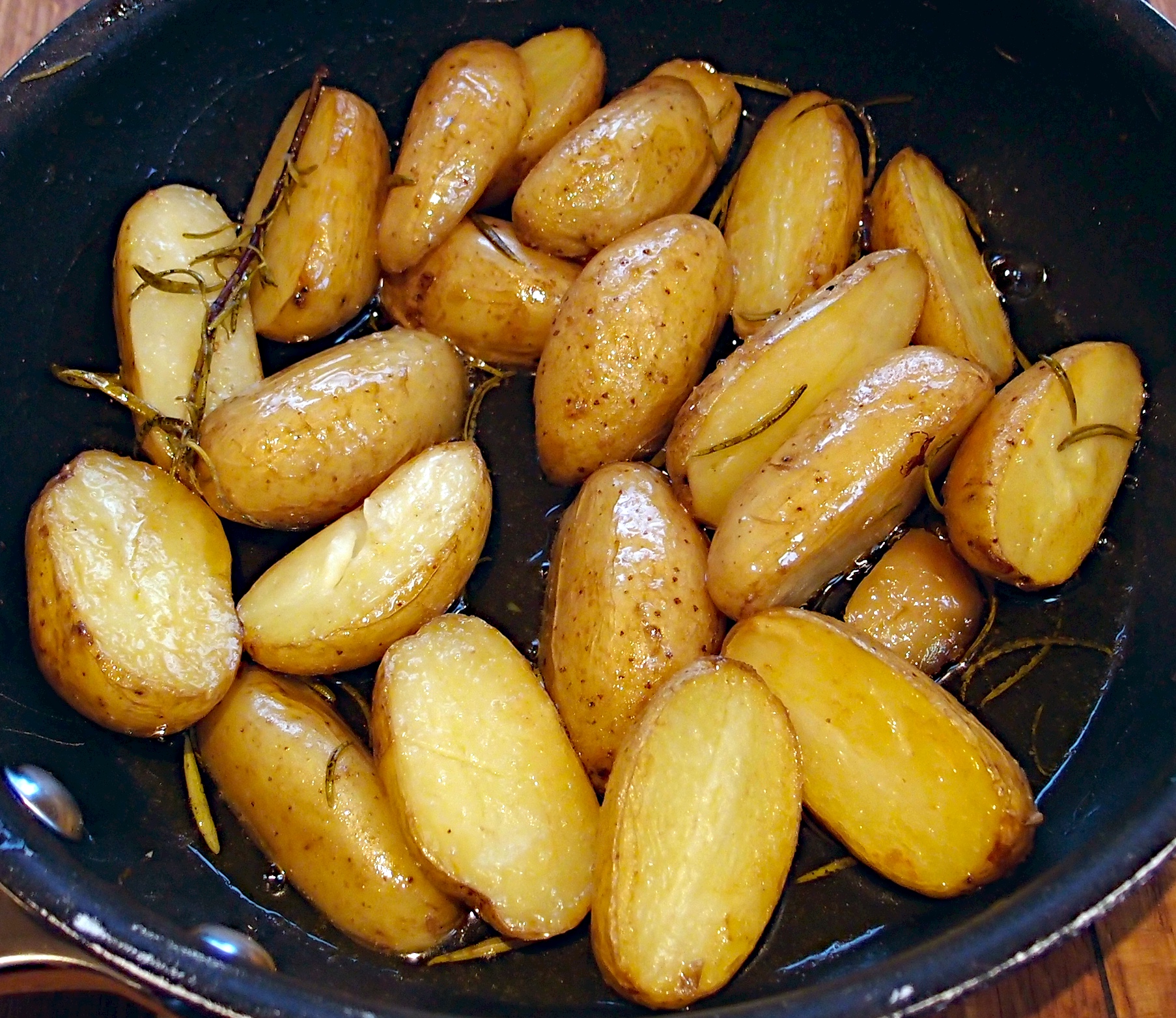
Rosemary flavoured potatoes are available everywhere in Tuscany and we love them!

Patatine Novelle al Rosmario – to serve 4

  • 25g butter
  • 100ml olive oil
  • 1 fresh rosemary sprig
  • 1 garlic clove
  • 750g new potatoes

Heat the butter and oil in a large pan, add the rosemary, garlic and new potatoes, then cover. Cook on a low heat until golden brown. Discard the garlic and rosemary and sprinkle with some sea salt to serve.

(Original recipe from The Silver Spoon, Phaidon Press Ltd. 2005)

Read Full Post »

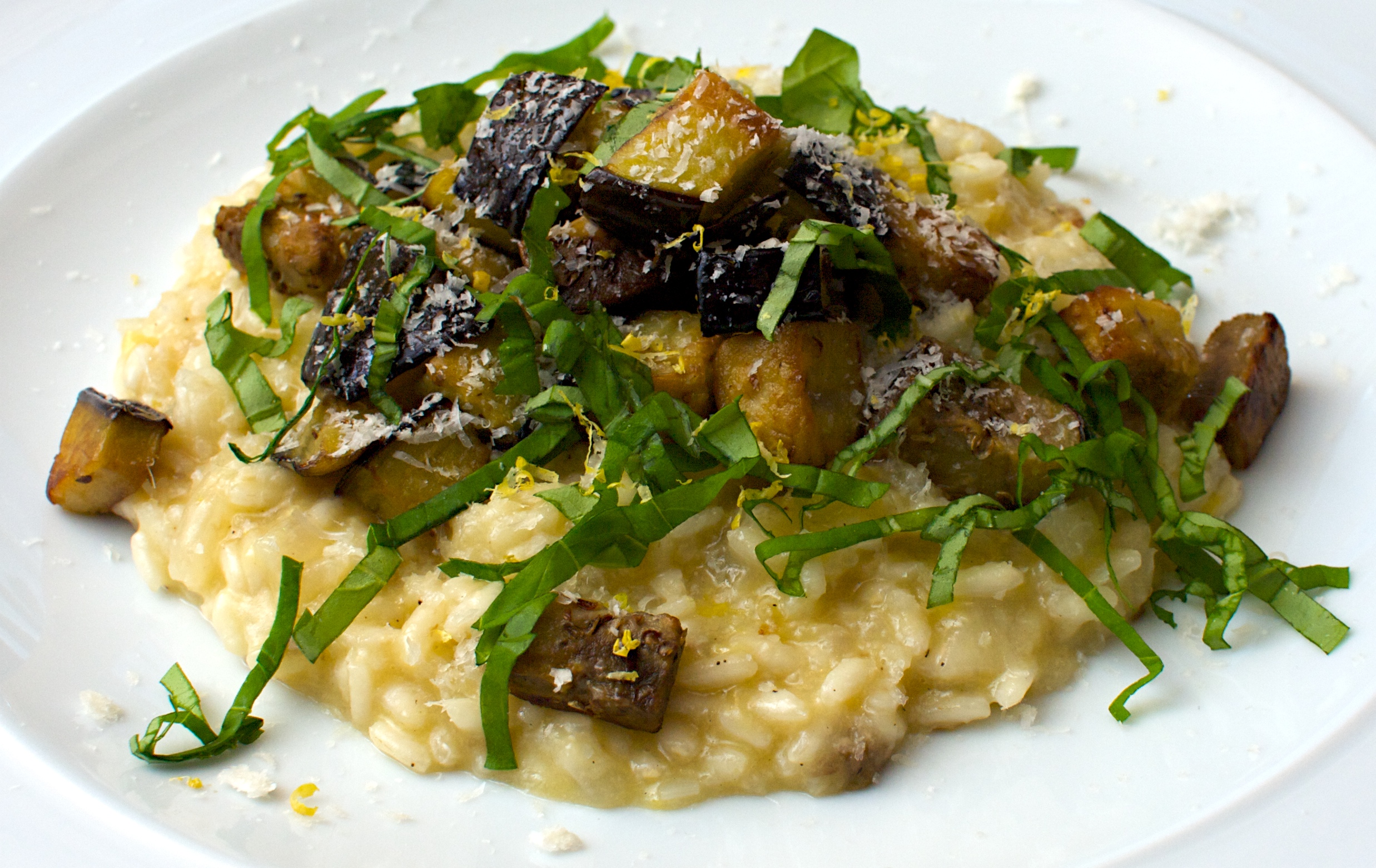
Another delicious dish by Yotam Ottolenghi who recommends making some home-made stock which we duly did. Throw some aromatic vegetables and herbs into a large pot (we used carrot, celery, onion, parsley, garlic, lemongrass and fennel), cover with water and simmer for 30 minutes. This dish does take some time to make but is completely worth the effort and time with levels of flavour and texture that really make this risotto special.

Lemon and aubergine risotto – to serve 4

  • 2 medium aubergines
  • 130ml olive oil
  • 1 medium onion, finely chopped
  • 2 garlic cloves, crushed
  • 200g good-quality risotto rice
  • 120ml white wine
  • 750ml hot vegetable stock
  • grated zest of 1 lemon
  • 2 tbsp lemon juice
  • 20g butter
  • 50g Parmesan, grated
  • 10g basil leaves, shredded

First you need to literally burn one of the aubergines. Pierce it with a sharp knife then put on a foil-lined tray and place under a hot grill for an hour, turning now and then. You need the aubergine to deflate and the skin to be burnt and breaking. Carefully spoon out the soft flesh without getting any of the burnt skin, then chop the flesh roughly and set aside.

Cut the other aubergine into 1.5 cm cubes. Heat 80ml of the olive oil in a frying pan and fry the aubergine in batches until golden and crisp. Transfer to a colander, sprinkle with salt and leave to cool.

Put the onion and the rest of the oil in a heavy-based pan and fry slowly until soft. Add the garlic and cook for 3 minutes. Turn up the heat and add the rice, stirring until it is well coated with oil. Fry for a few minutes, then add the wine and cook until nearly evaporated. Turn the heat down to medium.

Start adding the hot stock to the rice, a ladeful at at time, and wait until each addition is absorbed before adding the next and stirring all the time. When all the stock has been added take the pan off the heat. Add half the lemon zest, the lemon juice, grilled aubergine flesh, butter, most of the Parmesan and ¾ tsp salt. Stir well, then cover and leave to rest for 5 minutes. Taste and correct the seasoning with more salt and some black pepper.

Serve the risotto sprinkled with the diced aubergine, the rest of the Parmesan, the basil and the rest of the lemon zest.

Drink with: an Italian red to complement the earthy flavour of the charred aubergine and stand up to the acidity of the lemon. We drank a Chianti Rufina made by Selvapiana, where we visited in April, and it was superb.

(Original recipe from Plenty by Yotam Ottolenghi, Ebury Press, 2010.)

Read Full Post »

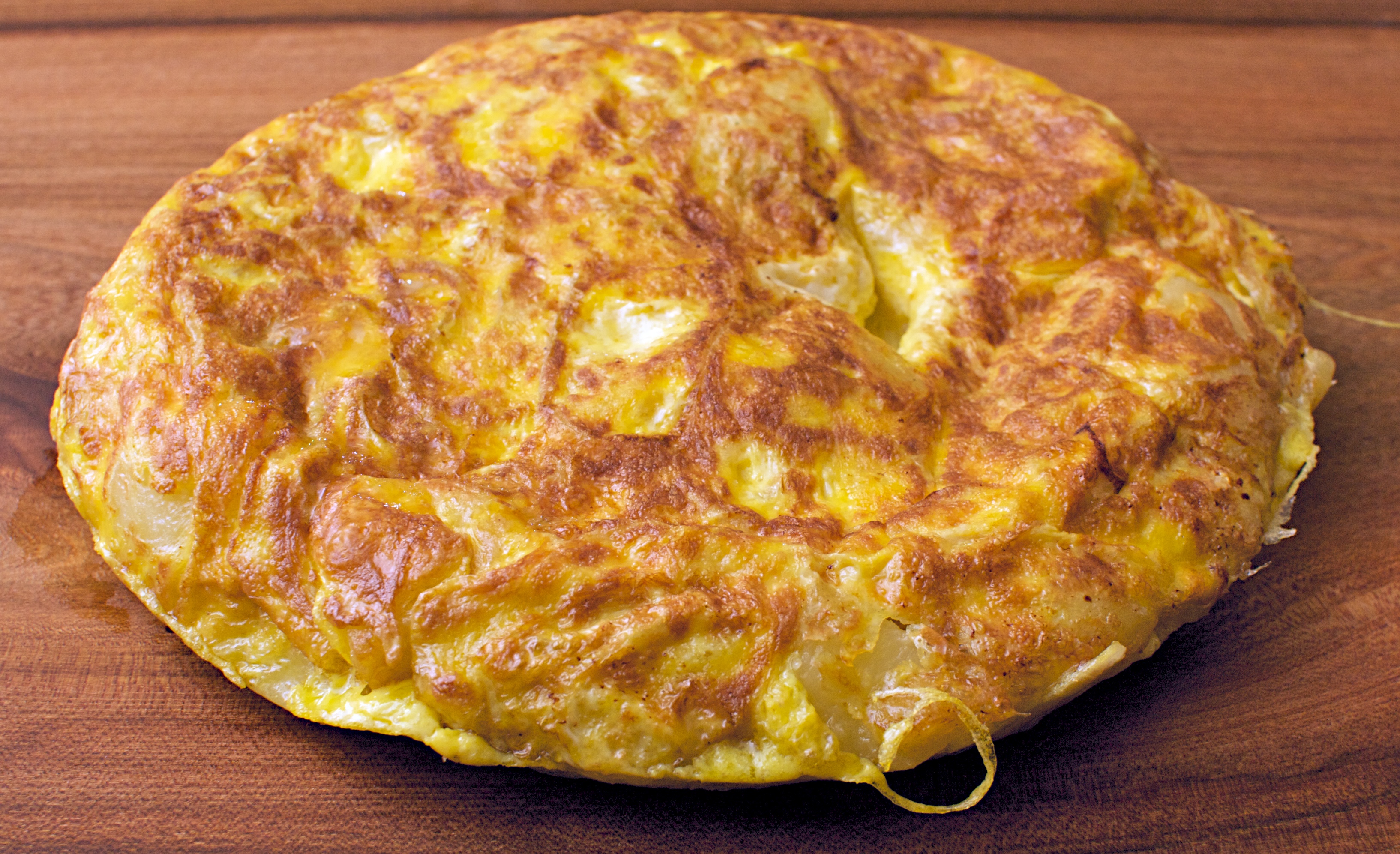
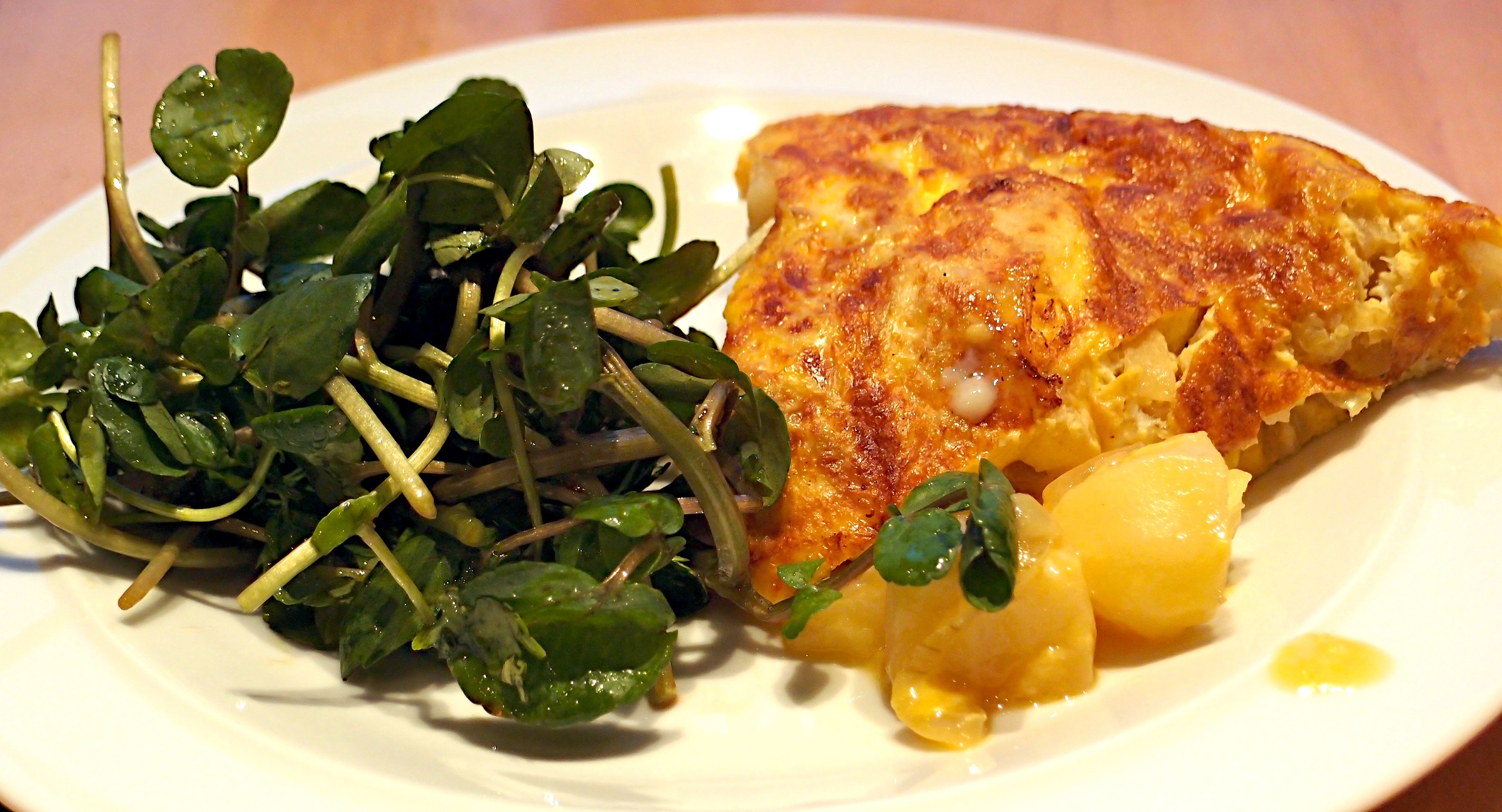
We’ve made plenty of variations on Spanish potato omelettes or tortilla but it’s hard to know when the centre is cooked. We’ve also found grilling the surface under the grill much less daunting than trying to flip a semi-liquid pan full of hot ingredients! So we were relieved to read that Claudia Roden has had similar issues and this time followed the advice she got from a Spanish friend and recounts in her fabulous book The Food of Spain. The trick is to use a smaller non-stick pan and a slightly concave saucepan lid, larger than the pan, to catch the liquid when you turn the omelette upside down. It worked for us!

Tortilla de patatas – to serve 4

  • 250g new or waxy potatoes, peeled and cut in 1.5cm cubes
  • 300ml olive oil
  • 1 medium onion, sliced thin
  • salt
  • 6 large eggs
Dry the potatoes with some kitchen roll as soon as you dice them.

Heat the oil in a smallish non-stick frying pan that will hold all the ingredients over a medium heat and add the potatoes and onions. Cook and cook over a low heat for 20-30 minutes or until the potatoes are tender. Give them a gentle shake now and again and don’t let them colour. Drain in a colander and keep the oil which you can use again. Spread the potatoes out on kitchen roll and sprinkle lightly with salt.

Beat the eggs lightly and add a little salt. Add the potatoes and onions and gently mix together.

Pour 1 tbsp of your reserved oil back into the frying pan and heat until almost smoking. Pour in the egg mixture and turn the heat to low. Cook for 3-4 minutes until the eggs set at the bottom, shaking now and then with a circular motion to stop it sticking. Put a slightly concave lid larger than the pan on top and flip the pan over quickly to leave the omelette on the lid of the pan. Pour another tbsp of the reserved oil into the pan and gently slide the omelette back in, uncooked side down, and lower the heat. Cook for 2 minutes more until just set. Run a wooden spoon round the edge of the omelette to make it neat before turning out.

Serve warm or at room temperature.

Read Full Post »

« Newer Posts - Older Posts »