Feeds:
Posts
Comments

Posts Tagged ‘Recipes’

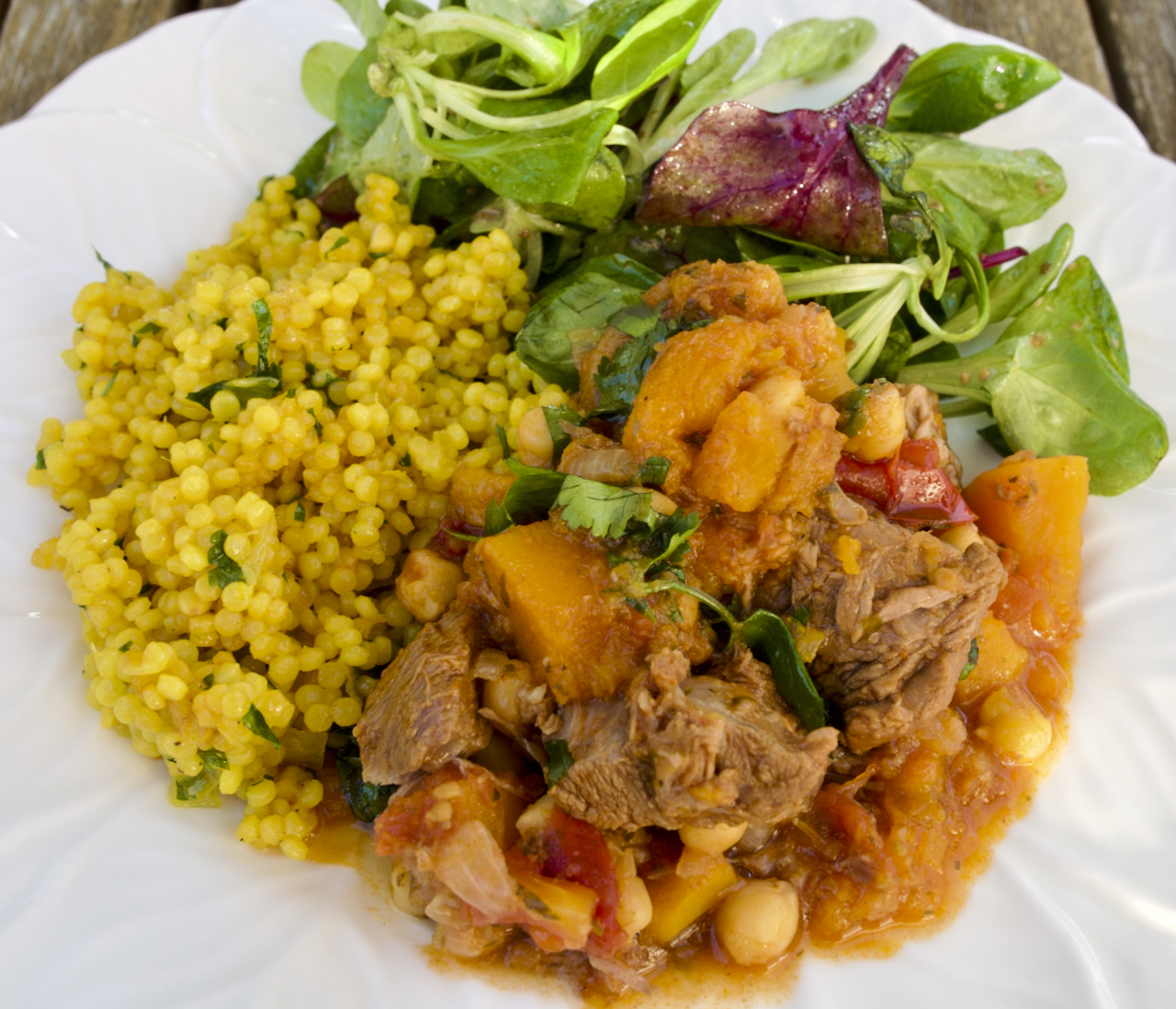
A few fresh apricots during their short season really enhance this lamb tagine. We served with giant couscous cooked with shallot, turmeric, parsley, lemon zest and pine nuts. You need to marinade the lamb overnight (or for at least 2 hours).

Wine Suggestion: we think tagines go well with Grenache based wines, either white or red, and so opened the Edetària via Edetana White which is old vine Garnacha Blanca from unique vineyards in Terra Alta. It combines both power and an undercurrent of fresh salty mineral texture. There’s always a plush, velvety nature to this grape that makes it feel sophisticated. We keep on saying we should put this wine into our cellar and find out what happens with a few years age … but it we haven’t yet had the patience to find out.

Lamb and Apricot Tagine – serves 4

  • olive oil
  • 1 red onion, halved and sliced
  • 600g lamb neck fillet, cut into chunks
  • 1 tbsp tomato purée
  • 3 ripe tomatoes, chopped
  • 10 soft dried apricots
  • 300g butternut squash, cut into chunks (not too big)
  • a small jar of chickpeas, drained and rinsed
  • 2 apricots, stoned and cut into wedges
  • coriander, to serve

FOR THE MARINADE:

  • a small bunch of coriander, finely chopped
  • 1 tsp hot smoked paprika
  • 1 tsp ground cumin
  • 2 tsp ground coriander
  • ½ tsp ground cinnamon
  • 1 lemon, juiced
  • 2 cloves of garlic, crushed
  • a small knob of ginger, finely grated

Mix the ingredients for the marinade together in a large bowl. Season, then add the lemon and toss well to coat. Cover and chill overnight or for at least 2 hours.

Heat the oven to 180C/160C fan/gas 4.

Heat a splash of olive oil in a pan and cook the onion over a low-medium heat until very soft. Add the lamb and all of the marinade and cook, stirring, for 5 minutes.

Add the tomato purée, tomatoes and dried apricots, plus 350ml of water. Bring to a simmer then cover and cook for 1 an hour in the oven.

Add the chickpeas and cook for another hour, adding the apricots for the last 10 minutes. Serve with giant or regular couscous and sprinkle with the coriander.

(Original recipe by Janine Ratcliffe in Olive Magazine, June 2025.)

Read Full Post »

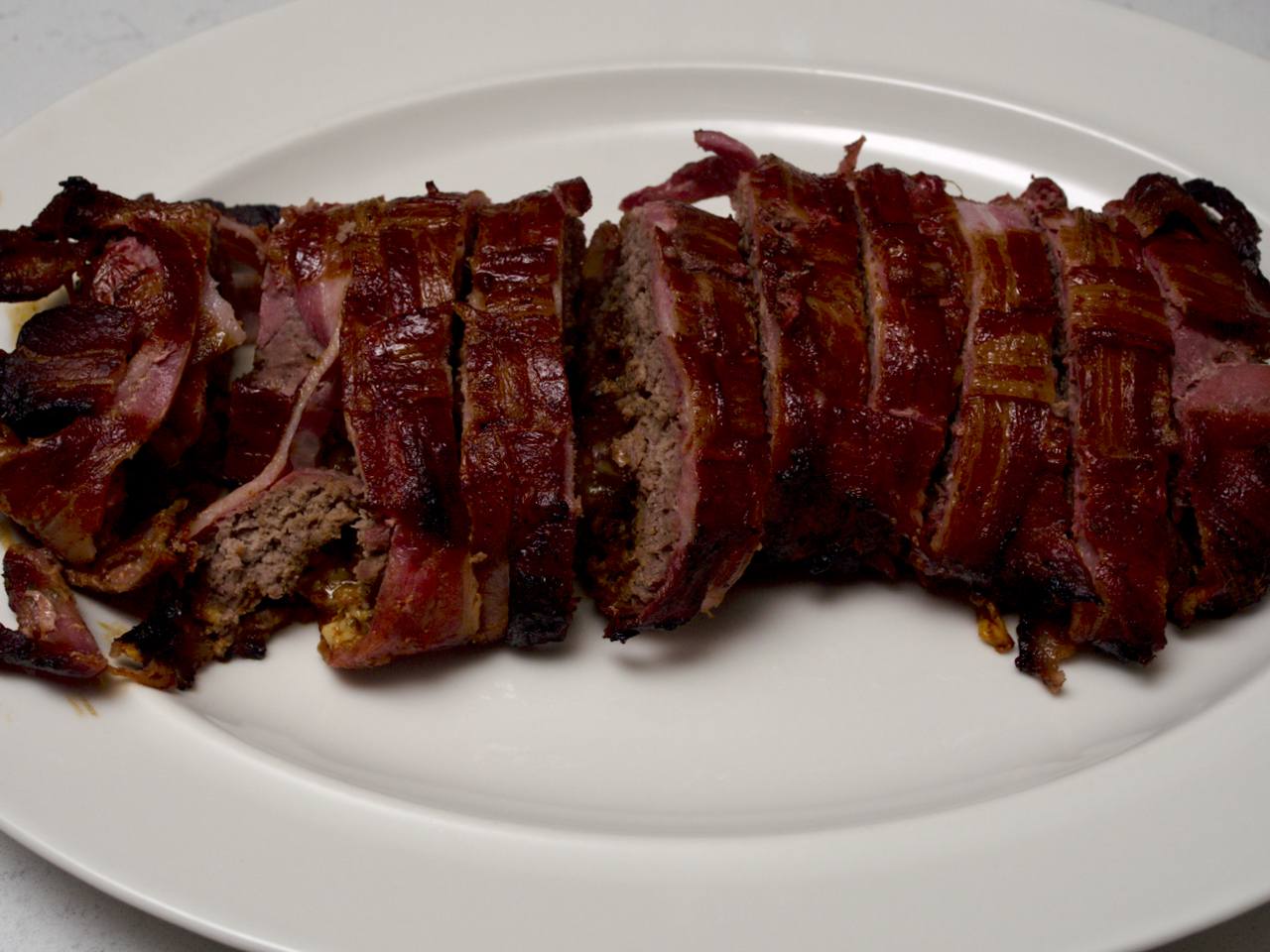
Here is something a bit different for the barbecue. It’s a meatloaf stuffed with cheese and tomato chutney and wrapped in a bacon lattice. Serve in slices with salads and sides.

Wine Suggestion: a lovely, juicy red is what we like with this. Roc des Anges “Segna de Cor” a blend of Grenache, Carignan and Syrah fits this bill with good deal of panache. It’s a wine that reflects the unique soils of Roussillon, but with a layer of brambly, juicy fruits on top.

Barbecued meatloaf – serves 4 to 6

  • 16 slices smoked streaky bacon
  • 400g beef mince
  • 2 tbsp barbecue spice rub (we used Pitt Bros Charr’d Rub)
  • 100g mature cheddar, grated
  • 3 tbsp spicy tomato relish (we used Ballymaloe)

You need to get your barbecue prepared for indirect cooking so you can cook the meatloaf away from the direct heat of the fire.

Start by making the bacon lattice to wrap the meatloaf. Line up 8 slices of bacon vertically on a flat baking sheet. From left to right, fold every other slice in half upwards. Lay a slice horizontally across the centre of the vertical slices. Unfold the vertical slices back over the horizontal one then fold up the other set of vertical slices. Lay over another horizontal slice and unfold the foleded ones. Repeat until you have a neat lattice.

Place the beef mince over the bacon in an even layer. Sprinkle over the barbecue rub and season with salt and pepper. Scatter the cheese in a line down the centre, then spoon over the relish.

Roll the meatloaf up as tightly as you can into a neat, fat sausage. Place the meatloaf on the barbecue, seam side down, away from the fire. Cover with the lid and cook gently for 35 to 40 minutes, turning with tongs a few times so it browns all over. The meatloaf is cooked when a probe reads 65-70C.

Rest the meatloaf for a few minutes, then carve into thick slices.

(Original recipe from Foolproof BBQ by Genevieve Taylor, Hardie Grant: Quadrille, 2021.)

Read Full Post »

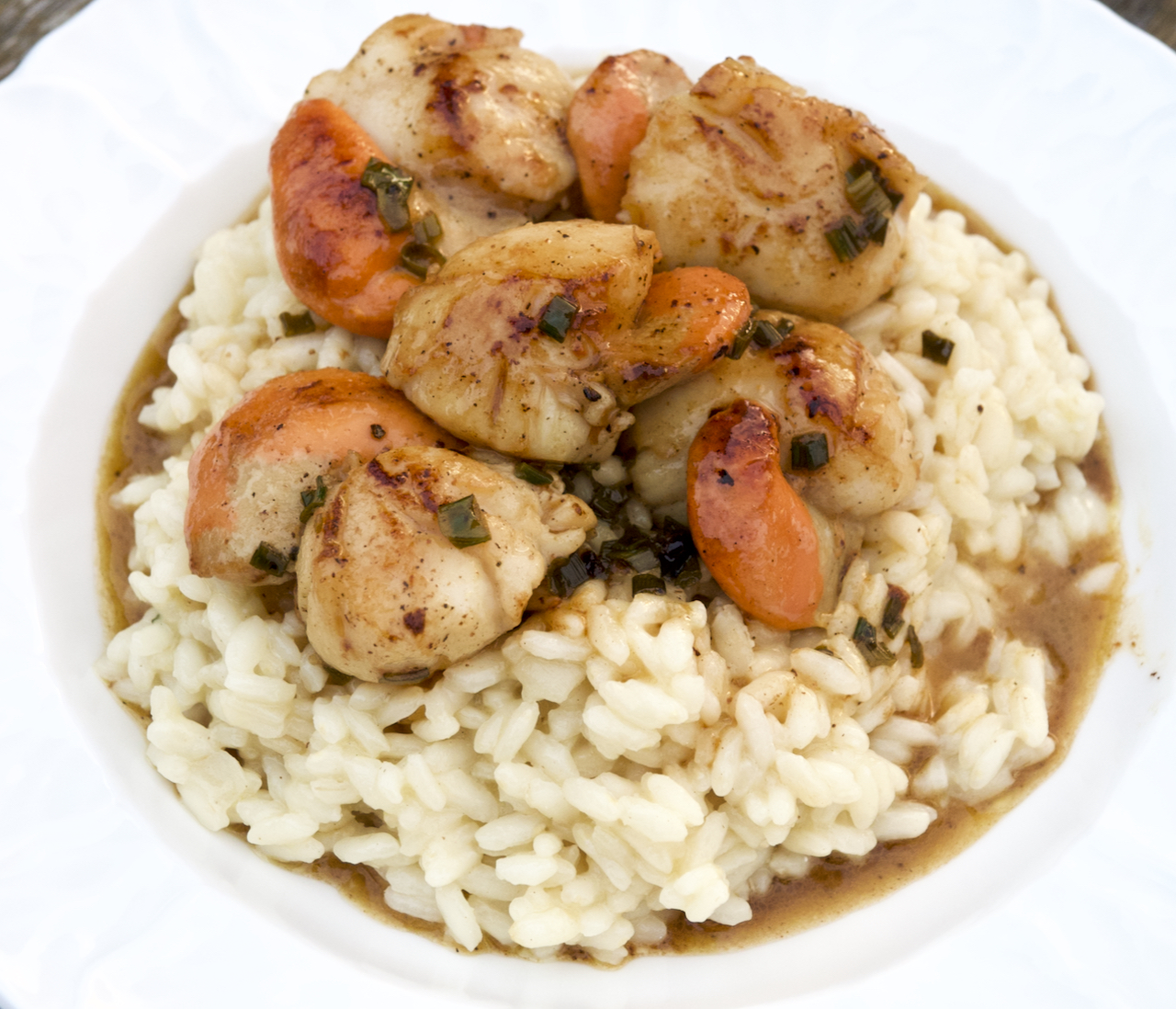
You get a much more generous helping of scallops when you cook them for yourself at home and they make a super fancy risotto.

Wine Suggestion: Keeping it Italian we went for the Murgo Etna Bianco, a blend of Carricante and Catarrato which had body, loads of salty, minerality and bags of freshness.

Scallop risotto with brown butter – serves 2

  • 2 tbsp olive oil
  • 1 shallot, finely chopped
  • 2 cloves of garlic, crushed
  • 200g risotto rice
  • 175ml white wine
  • 500ml hot fish stock
  • 30g Parmesan, finely grated
  • 75g butter
  • 6 large or 12 small scallops (we had a few more than this)
  • a handful of chives, chopped
  • juice of half a lemon
  • a grating of nutmeg

Heat the oil in a deep frying pan and fry the shallot for 6 to 8 minutes or until softened. Add the garlic and fry for another minute, then stir in the rice. Toast for a few minutes and stir to coat the rice in the oil. Add the wine and let it bubble until almost all absorbed.

Add a ladle of the hot fish stock to the rice and stir until it has been absorbed. Keep going like this, adding a ladleful at a time until all the stock is used and the rice is creamy and tender. Season, then stir in the Parmesan and 25g of the butter. Remove from the heat and cover with a lid. It will rest while you cook the scallops.

Heat a frying pan over a high heat. Pat the scallops dry with kitchen pepper, then season and brush lightly with oil. Add the scallops to the hot frying pan and sear for 1 to 2 minutes on each side, depending on the size of your scallops. Remove the scallops to a plate and take the pan off the heat. Add the rest of the butter and stir until it is foaming and browned – it should smell nutty. Season with black pepper, the chives, lemon juice and nutmeg. Return the scallops to the pan and spoon the butter over them.

Give the rice a stir and divide between warm bowls. Place the scallops on top and pour over the brown butter.

(Original recipe by Anna Glover in Olive Magazine, July 2024.)

Read Full Post »

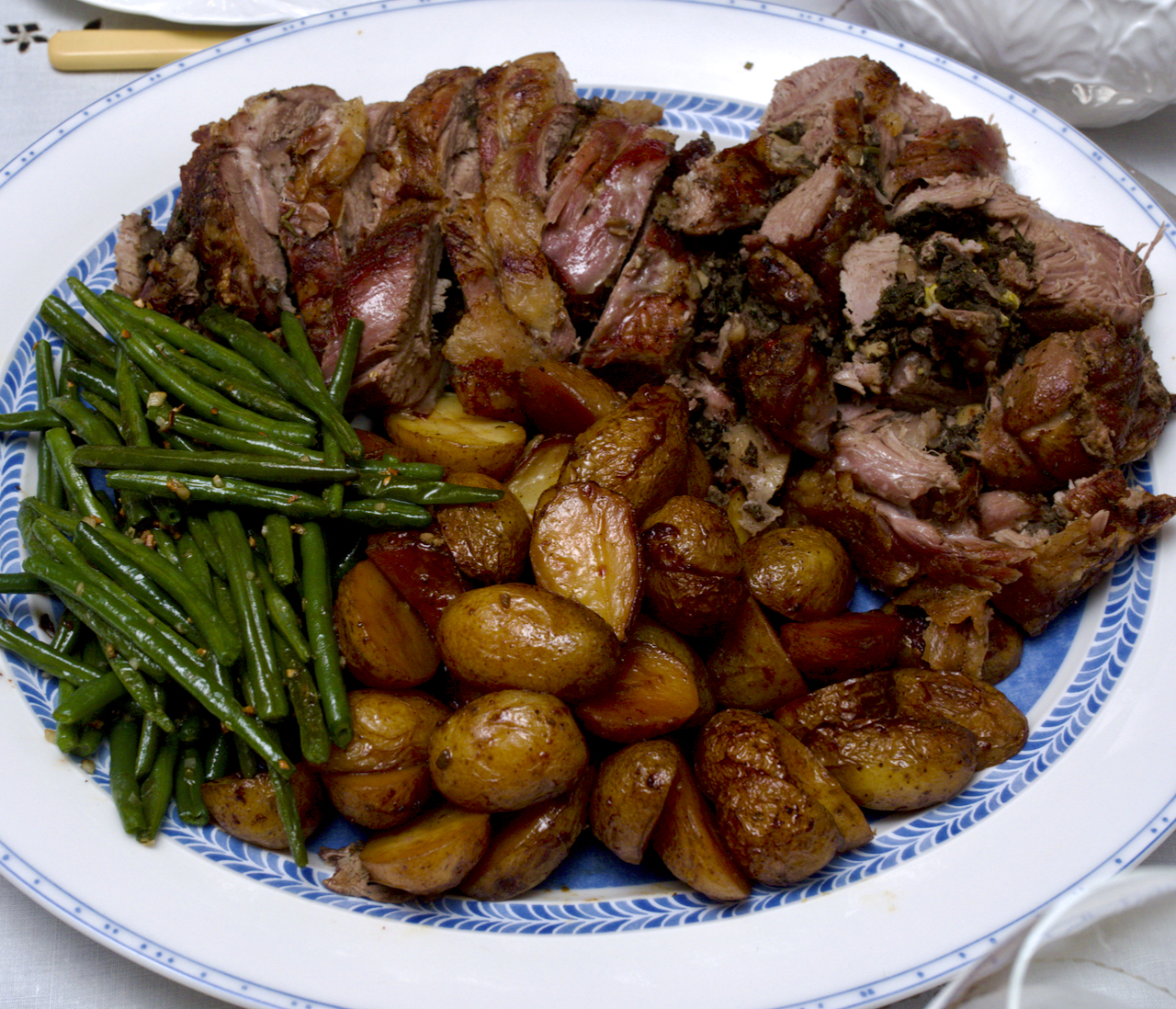
You freeze the stuffing here before rolling up with the the lamb and tying with string – genius! Pretty much a one pot-dish then and you can easily get your beans ready in advance and re-heat with the garlic to serve.

Wine Suggestion: The combination of lamb, nuts and mushrooms lends itself to a good old-vine northern Rhône Syrah like Domain Coursodon’s Olivaie, a St Joseph from one of the best vineyards in this appellation. We opened one 5 years old and it had come together nicely with a rich and velvety texture, hints of plum, raspberries and olives on the nose and a charming length and balance.

Lamb shoulder with potatoes and garlicky green beans – serves 4 with leftovers

  • 1.5kg boneless lamb shoulder
  • 1½ tsp fine sea salt
  • 1 tsp freshly ground black pepper
  • 2 tsp extra virgin olive oil

FOR THE STUFFING:

  • 1 tbsp unsalted butter
  • 2 shallots, finely chopped
  • 3 cloves of garlic, crushed
  • 300g button mushrooms
  • 100g baby spinach, roughly chopped
  • 3 tbsp skinned hazelnuts
  • 3 tbsp pistachios (plus some extra chopped to serve)
  • 1½ tbsp finely chopped parsley
  • 1½ tsp finely chopped rosemary
  • 1 tbsp lemon zest

FOR THE POTATOES:

  • 1kg baby potatoes, halved or quartered if large
  • 1 tbsp extra virgin olive oil

FOR THE GRAVY:

  • 2 tbsp flour
  • 375ml beef stock
  • ¼ tsp dark soy sauce

FOR THE GREEN BEANS:

  • 500 green beans, trimmed
  • 2 tsp fine sea salt
  • 2 tbsp olive oil
  • 4 cloves of garlic, crushed

You need to make the stuffing first and it can be done well in advance and needs to go in the freezer for at least 3 hours.

Heat the oven to 180C/160C fan, then roast the hazelnuts for 8 minutes. Leave them to cool, then roughly chop.

Put the mushrooms in a food processor and whizz until finely chopped.

Melt the butter in a frying pan over a high heat. Add the shallots, garlic and mushrooms and cook for 5 minutes or until any liquid produced by the mushrooms has gone. Add the spinach and stir until just wilted.

Transfer the mushroom mixture to a bowl and allow to cool for 20 minutes, then stir in the remaining stuffing ingredients and season with salt and pepper.

Pile the stuffing onto a piece of cling film, then shape into a long log (about the length of a 30cm ruler). Roll up tightly with the cling film then put into the freezer for at least 3 hours (this can be done a couple of days in advance).

Take your lamb shoulder and place fat-side down . Cover with cling film and use a rolling pin to pound it into a rectangle (roughly 40cm x 22cm) and try to make it as even thickness as possible.

Sprinkle the lamb with salt and pepper, then unwrap the frozen stuffing and roll it up tightly with the lamb, finishing with the seam down.

Secure the lamb with kitchen string every 2cm (ours looked pretty terrible at this point but don’t fear, it will look perfect when cut out at the end).

Heat the oven to 220C/200C fan.

Rub the lamb roll with the olive oil and sprinkle over some salt and pepper.

Toss the potatoe with salt, pepper, and olive oil in a large roasting pan, then place the stuffed lamb on top.

Roast for 30 minutes, then turn the heat down to 160C/140C fan and cook for 2½ hours, or until the meat can be pulled apart easily with a fork.

When the lamb is close to ready, cook the beans. Bring a large saucepan of water to the boil with 1 tsp of salt. Add the beans and cook for 4 minutes, then drain and rinse under the cold tap and drain well.

Remove the lamb and potatoes and loosely cover with foil, while you make the gravy.

Discard all but 3 tbsp of the fat from the pan, you can add a bit of butter if there isn’t enough fat.

Put the roasting tin on the hob over a medium heat. When the fat is hot, stir in the flour for 1 minute.

Keep stirring while you slowly add the stock. Add the soy sauce and stir continuously until it thickens to a gravy-like consistency. Taste and season to taste.

Finish your green beans by heating the oil in a large frying pan over a medium heat. Add the green beans and garlic and stir for 2 minutes until the garlic is cooked and the beans warmed through. Season with salt and pepper.

Remove the string from the lamb and cut into thick slices.

Serve the lamb on a platter with the gravy, potatoes and garlicky green beans.

(Original recipe from recipetineats)

Read Full Post »

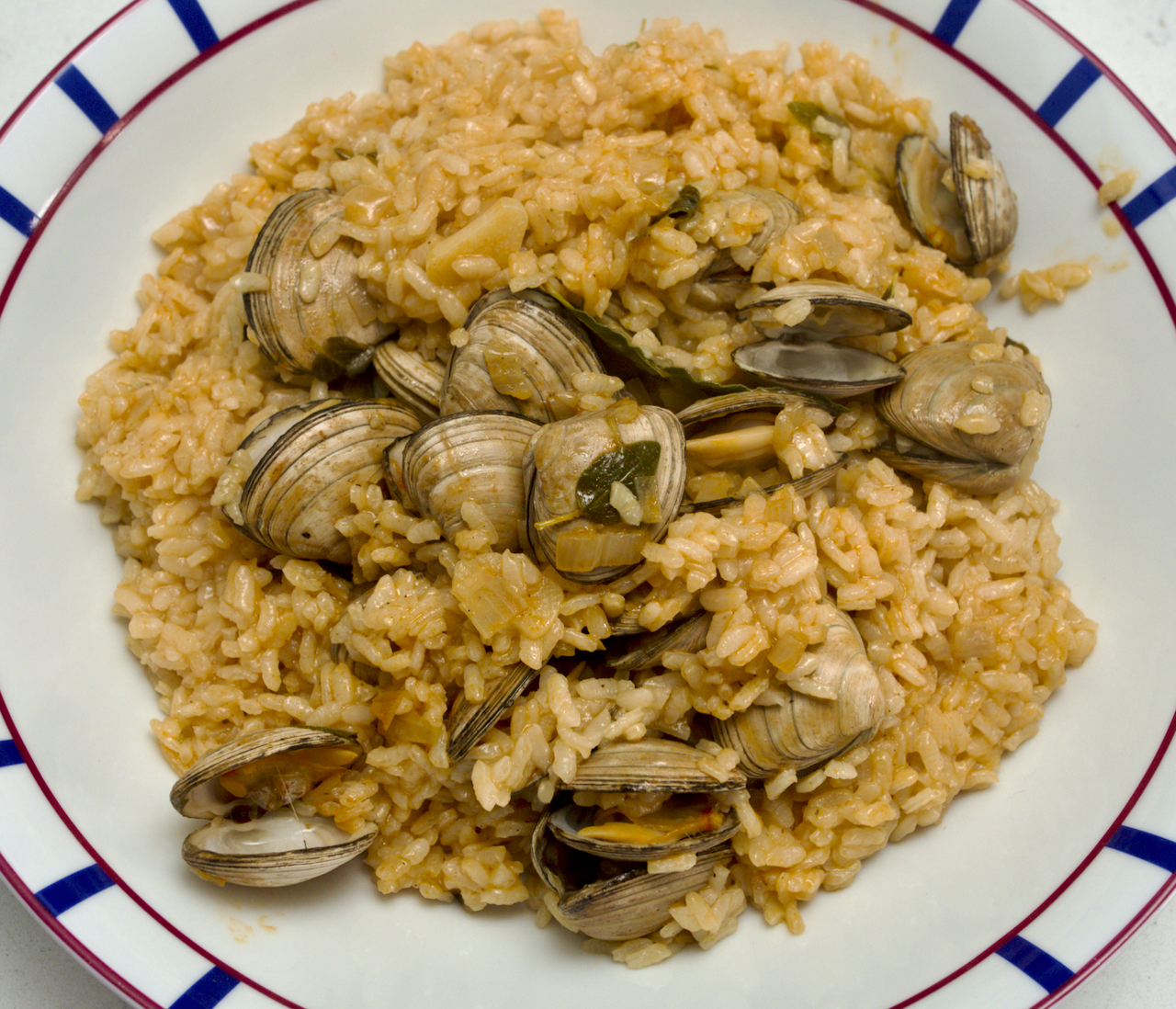
A summery seafood dish with deliciously sweet Irish clams.

Wine Suggestion: A Spanish dish with rice and clams … we just had to open an Albariño! Perrenially reliable, but especially good the last few years is Bodegas Castro Martin; vibrant, salty, and with a great balance of depth, weight and flavour.

Spanish rice and clams – serves 4

  • 2 tbsp olive oil
  • 1 banana shallot, finely chopped
  • 2 garlic cloves, finely sliced
  • 1 bay leaf
  • 2 tsp tomato purée
  • 300g Bomba rice or other short-grain rice
  • 750ml fresh fish stock
  • a handful of marjoram leaves
  • 500g clams, cleaned

Heat the oil in a shallow casserole or paella pan over a low heat. Add the shallot and cook for 5 minutes to soften. Add the garlic, bay and tomato purée and cook for a further minute.

Stir in the rice and increase the heat to medium-high. Toast the rice for a minute before adding the fish stock, marjoram and plenty of seasoning. Stir and cover, then reduce the heat to low and simmer for 12 minutes until the rice is almost cooked and still soupy.

Add the clams, cover and cook for another 4 minute until the clams have opened (chuck any that stay closed), then serve.

(Original recipe from The Spanish Home Kitchen by José Pizarro, Hardie Grant, 2022.)

Read Full Post »

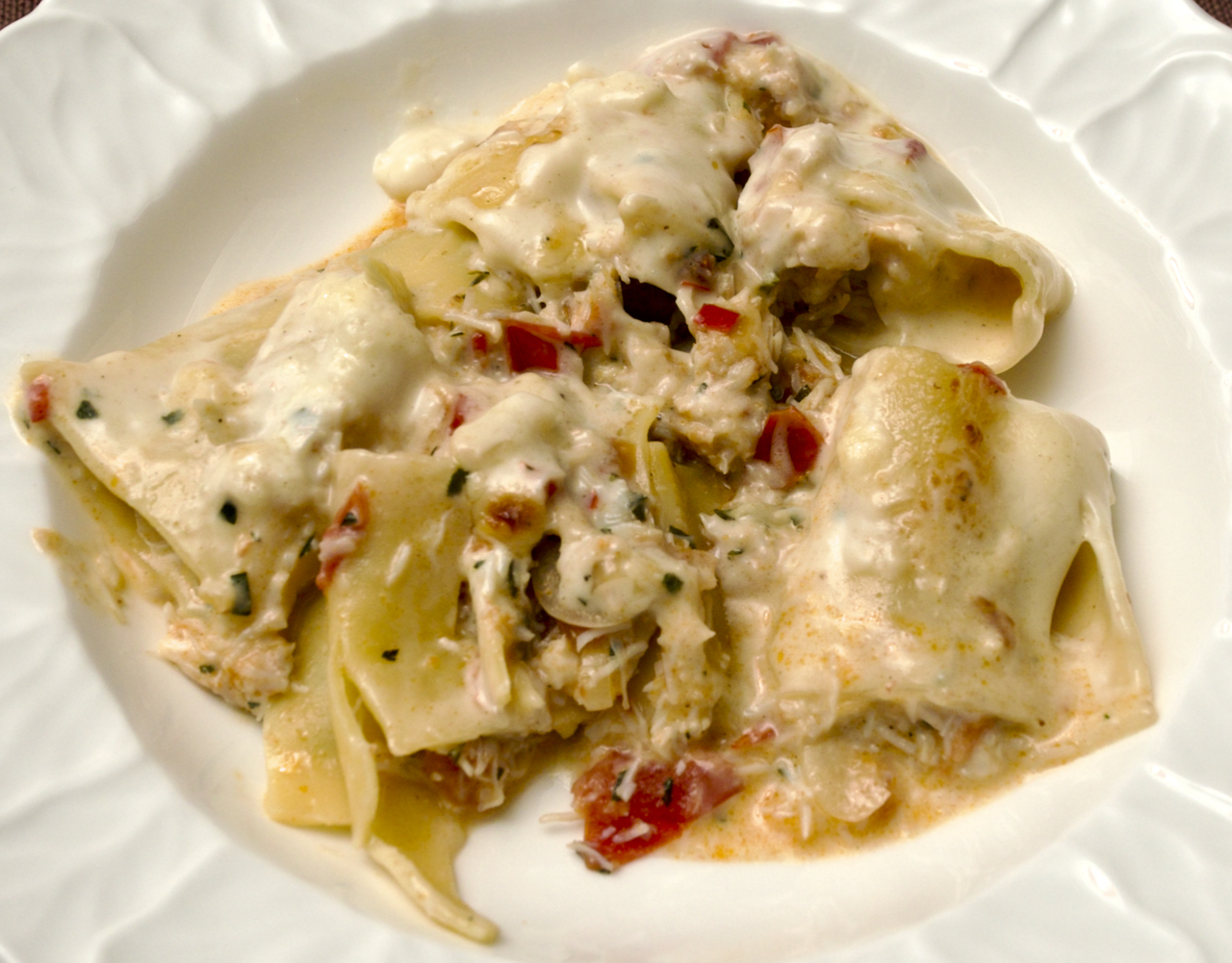
A beautiful Spanish pasta dish made with fantastic Lambay crab. The crab is a bit pricy but it’s worth it for this luxurious dish. Our fishmonger fortunately sells both prepared brown and white crab meat and also shellfish stock which makes this a tad easier.

Wine Suggestion: The richness of this dish demands a fuller-richer white and while this means that Chardonnay was our original thought, we wanted to keep it Spanish given the origin of the dish. Initially we thought a good white Rioja, like the Urbina Blanco Crianza (currently 2016 and 9 years old) which would have been excellent. Instead we stepped sideways and opened the Dominio de Tares Cepas Viejas Godello, an old-vine gem that is fermented in cask and aged on it’s lees to give richness and depth over a lemon, grapefruit and apple fruit flavours, a creamy texture and refined fresh structure.

Crab Canelones – serves 6

  • 45ml olive oil
  • 45g plain flour
  • 500ml fresh shellfish stock (or you could use chicken stock)
  • 300ml double cream
  • a good grating of nutmeg
  • 80g finely grated Manchego, plus extra for the top

FOR THE FILLING:

  • 60ml olive oil
  • 1 small shallot, finely chopped
  • 2 red chillies, finely chopped
  • 3 garlic cloves, finely sliced
  • 50g brown crab meat
  • 500g ripe tomatoes, diced
  • 150ml shellfish stock (or chicken stock)
  • 500g white crab meat
  • 15g tarragon, finely chopped
  • 250g dried cannelloni tubes

Make the bechamel first. Heat the oil in a saucepan over a medium heat. Stir in the flour and cook for a minute, then gradually add the stock, stirring continuously, until you have a smooth, thick sauce. Add the cream, nutmeg and cheese and season, then set aside.

Heat the olive oil for the filling in a separate saucepan over a very low heat. Add the shallot, chillies and garlic and cook over a very low heat for 15 minutes.

Increase the heat to medium high and add the brown crab meat and fry for 1 minute, then add the tomatoes and the stock. Season and cook for 15 minutes, then take off the heat and stir in the white crab meat and chopped tarragon.

Blanch the pasta tubes in boiling water for 3 minutes, then gently drain and cool under cold running water.

Fill each pasta tube with the crab mixture and fit them snugly into an ovenproof dish, then pour over the bechamel. Scatter over a little more grated cheese, then bake for about 30 minutes or until golden and bubbling. Serve with a green salad.

(Original recipe from The Spanish Home Kitchen by José Pizarro, Hardie Grant, 2022.)

Read Full Post »

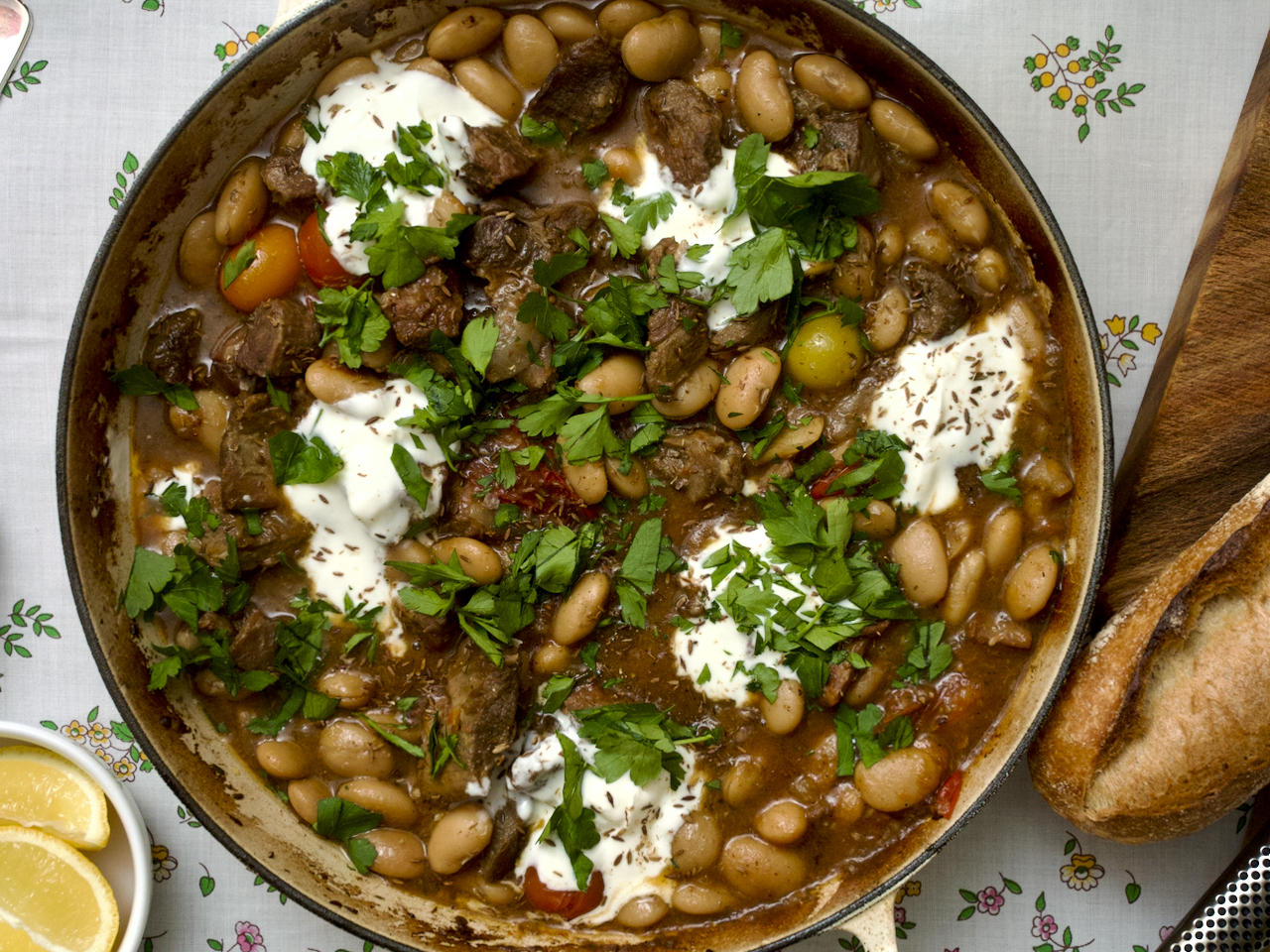
A delicious prep-ahead dish that only improves if made in advance. Serve with salad and crusty bread.

Slow-cooked lamb with butterbeans – serves 4

  • 2 tsp coriander seeds, toasted and lightly crushed
  • 2 ½ tsp cumin seeds, toasted and lightly crushed
  • ¼ tsp sea salt flakes
  • 800g lamb neck, cut into bite-size cubes
  • 4 tbsp olive oil
  • 2 onions, quartered
  • 2 bay leaves
  • 1 lemon, finely shave the skin into strips, then cut into wedges to serve
  • 6 cloves of garlic, peeled and lightly smashed
  • 4 anchovies, finely chopped
  • 1 tbsp thyme leaves
  • 1 tbsp rosemary leaves, finely chopped
  • 250g cherry tomatoes
  • 75ml white wine
  • 500ml chicken stock
  • 1 x 700g jar good quality butter beans, drained and rinsed
  • 150g thick Greek-style yoghurt
  • 10g parsley, roughly chopped

Mix the coriander seeds and 2 tsp of the cumin seeds together in a small bowl.

Mix the remaining ½ tsp of cumin seeds with the sea salt flakes and set aside.

Season the lamb with salt and pepper.

Heat 2 tbsp of the olive oil in a large shallow ovenproof casserole over a medium-high heat. Add the lamb in batches and cook until nicely browned. You can add another tbsp of oil if needed. Scoop out with a slotted spoon onto a plate and set aside.

Add 2 tbsp of the oil to the pan and reduce the heat to medium. Add the onions, bay leaves, lemon strips and garlic and cook for about 6 minutes, stirring now and then. Add the anchovies, the coriander-cumin mix, thyme, rosemary and half the tomatoes. Cook for a minute, then return the lamb to the pan. Cook for a minute, then add the wine. Let it bubble for 30 seconds, then add the stock and season well with salt and pepper. Increase the heat and bring to a simmer, then cover and transfer to the oven for 1½ hours, until the lamb is very soft and the liquid well-reduced.

Add the butter beans and the rest of the tomatoes. Stir, cover again and return to the oven for another 20 minutes. Remove from the oven and allow to rest for 15 minutes.

Serve sprinkled with the salt and cumin seed mix and the chopped parsley.

Salad and crusty bread is all you need on the side.

(Original recipe from Ottolenghi Comfort by Yotam Ottolenghi, Helen Goh, Verena Lochmuller and Tara Wigley, Ebury Press, 2024.)

Read Full Post »

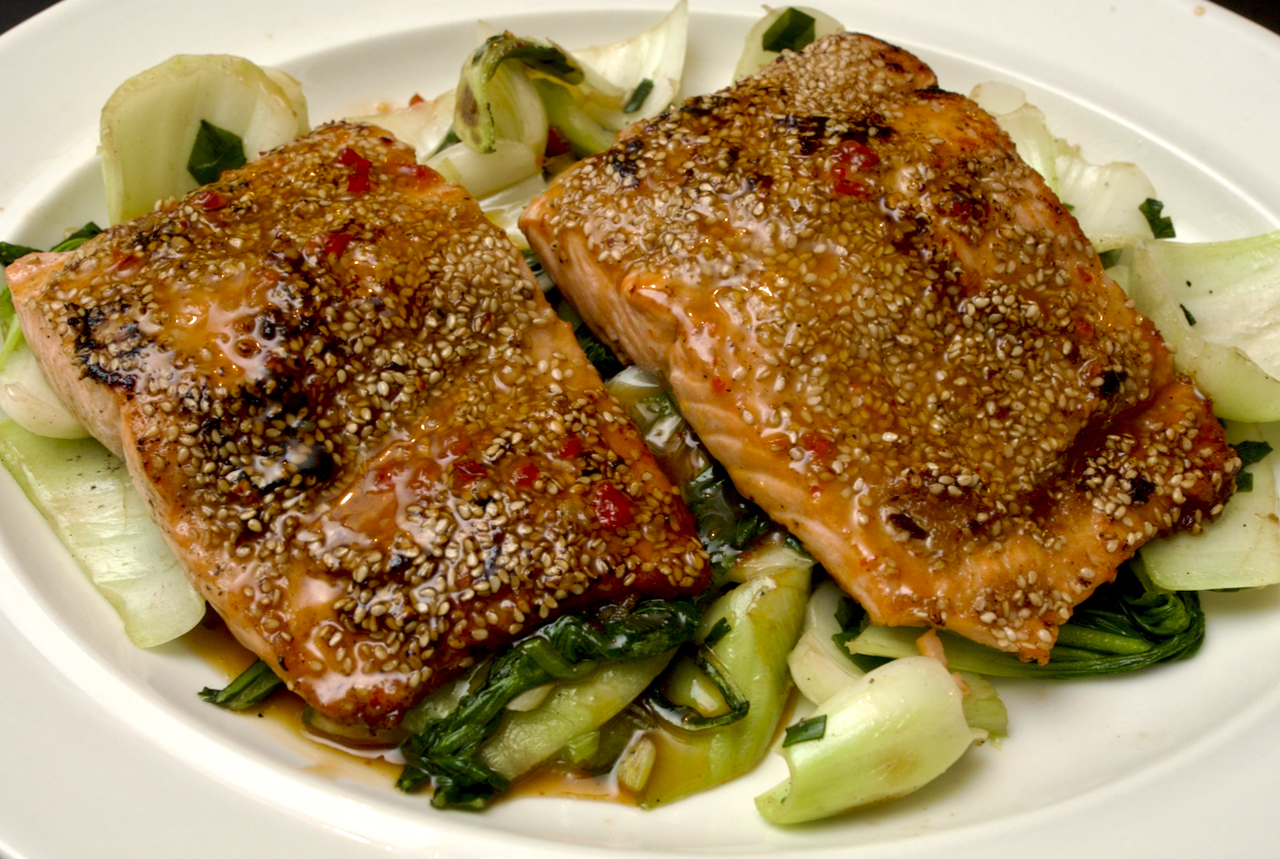
Everyone loves trout in our house and especially with miso – a master combination.

Wine Suggestion: You need a white with a touch of acidity and umami-savouriness here to both balance and compliment the flavours. Something like the Höpler Grüner Veltliner from Burgenland in Austria would work a treat.

Sesame miso trout – serves 4

  • 4 fresh trout fillets, skin on
  • 4 tsp white miso paste
  • 3 tbsp toasted sesame seeds
  • 2 tbsp olive oil, plus a bit extra for the veg
  • a knob of butter
  • 4 pak choi, sliced into big pieces
  • 6 scallions, finely sliced

FOR THE GLAZE:

  • 4 tbsp sweet chilli sauce
  • 1 tsp white miso paste
  • 2 tsp sesame oil

Heat the oven to 200C/180C Fan/Gas 6.

Line a baking sheet with non-stick paper.

Whisk the ingredients for the glaze together in a bowl alongwith 6 tbsp of water, then set aside.

Season the fish fillets and spread the miso paste on the flesh side. Sprinkle the sesame seeds on top and press down so they stick to the paste.

Heat the oil in a frying pan over a medium heat. Add the fish fillets, sesame seed side down, and fry for 2-3 minutes, or until golden brown. Carefully turn them over and fry for another 2 minutes on the skin side. Add the knob of butter and when it foams, use a small spoon to baste the trout with it.

Transfer the fish to the lined baking sheet, skin-side down, and cook in the oven for 7-8 minutes or until just cooked through.

Meanwhile, wipe the frying pan clean, add a little oil and put over a high heat. Add the pak choi, scallions and seasoning and stir until just wilted.

Spoon the veg onto a serving dish and put the fish on top. Add the glaze ingredients to the pan and gently warm until just bubbling, spoon over the trout and serve.

(Original recipe from Mary’s Foolproof Dinners, BBC Books, 2024.)

Read Full Post »

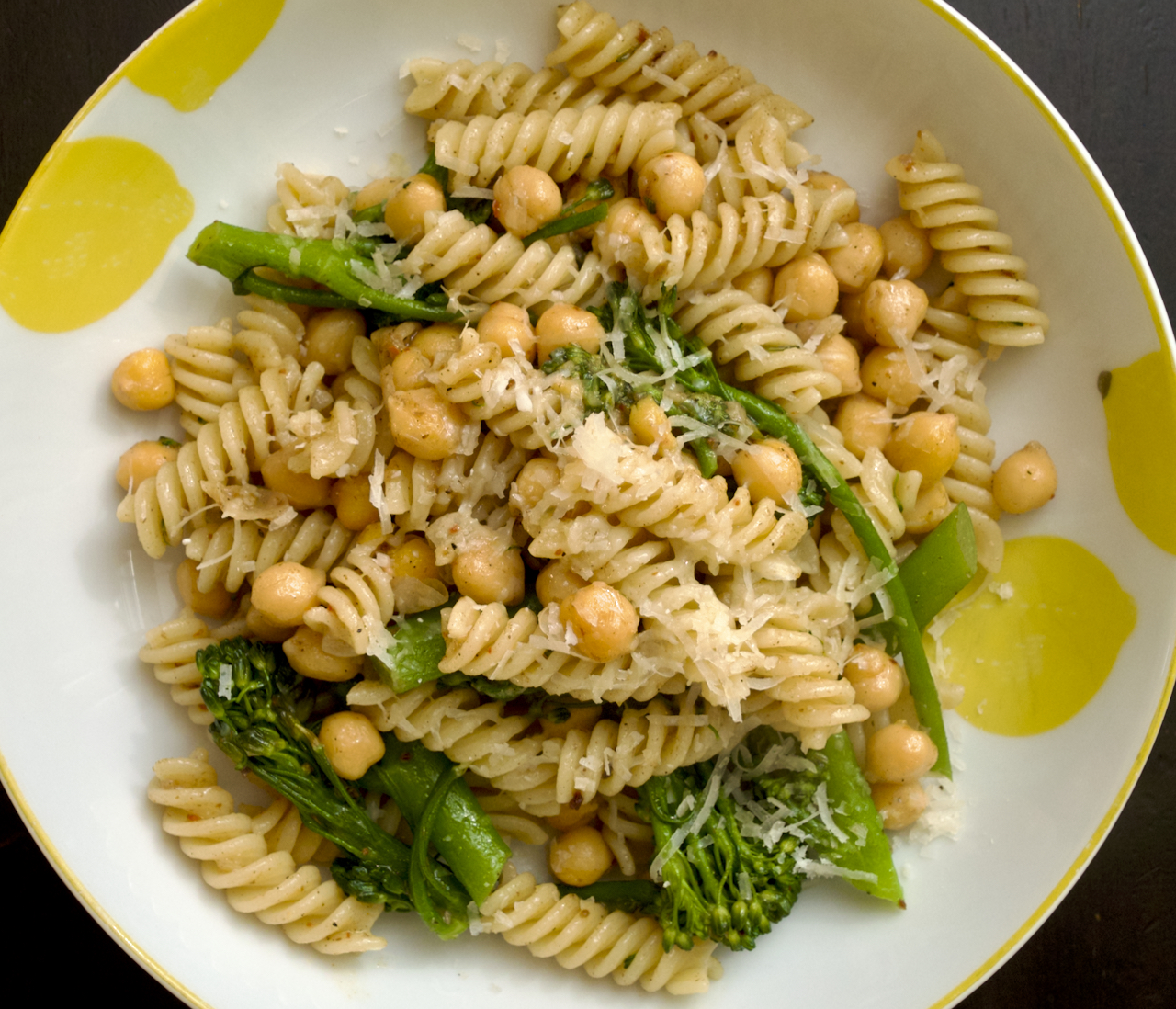
Back to school routine and quick fixes are required. This one is nice!

Wine Suggestion: An uncomplicated, but tasty dish requires similar from a wine. Tonight’s choice was Graziano Pra’s “Otto” Soave Classico with classic green apple and almond flavours. Fresh and lighlty floral with a gentle texture that helps it pair with food.

Pasta with broccoli, anchovy and cumin – serves 4

  • 300g dried fusilli or other short pasta
  • 90ml olive oil
  • 3 cloves of garlic, peeled and crushed
  • 6 anchovy fillets, drained and finely chopped
  • zest and juice of ½ lemon
  • 1 tsp ground cumin
  • 370g jarred chickpeas, drained (but don’t rinse)
  • 1 tsp aleppo chilli powder
  • 200g tenderstem broccoli, cut into 2½ cm lengths
  • 30g Parmesan, finely grated

Bring a large pan of water to the boil and add plenty of salt. Add the pasta and cook for 3 minutes less than the time indicated on the pack.

Meanwhile, pour the oil into a large sauté pan and put over a medium heat. Add the garlic and fry for a minute, then stir in the anchovies, lemon zest and cumin, and cook for another couple of minutes. Add the chickpeas, chilli and a good grind of black pepper, mix well and turn off the heat.

When the timer goes for the pasta, add the broccoli to the pasta pot and cook for the remaining 3 minutes. Reserve about 100ml of the pasta cooking water, then drain and add the pasta and broccoli to the chickpea pan. Scatter over two-thirds of the Parmesan, then return the pan to the heat and toss well for a minute, adding enough of the reserved pasta water to make a sauce that coats the pasta.

Spoon into warm bowls, add a squeeze of lemon juice, a pinch of aleppo chilli and the remaining Parmesan.

(Original recipe by Yotam Ottolenghi in The Guardian, 13 Apr 2024.)

Read Full Post »

We can’t get enough of roasted cauliflower and it’s at it’s best in this recipe with caramelised onions and smothered in tahini dressing.

Wine Suggestion: We’re mad for Loire Cabernet Franc and found a new vigneron on our last trip to Saumur: Domaine Théo Blet. We picked up his Saumur Rouge “les Fabureaux” and were completely charmed. Plus it went delightfully with this dish, complementing the spices and earthy tahini.

Cauliflower ‘shawarma’ – serves 2 as a main or more as a side or starter

  • 1 medium cauliflower, leaves attached
  • 2 tbsp olive oil
  • 3 tbsp baharat spice mix
  • 1 tsp sea salt

FOR THE CARAMELISED ONIONS:

  • 2 large onions, peeled and sliced
  • 1 tbsp olive oil
  • ½ tsp salt
  • 1 tsp sugar

FOR THE TAHINI DRESSING:

  • 1 lemon
  • 125g tahini paste
  • a pinch of salt
  • 100-130ml water

FOR THE GARNISH:

  • 2 tbsp roasted pine nuts
  • 1 tsp sumac
  • pittas or crispy pitta shards, to serve

Preheat the oven to 200C/180C Fan/Gas mark 6.

Put the whole cauliflower, including the leaves, into an ovenproof saucepan that it fits in snugly. Fill the pan with enough water to just cover the stem and leaves. Drizzle the oil all over the florets and sprinkle with the baharat spice mix and sea salt – it will seem like a lot but go with it. Put the pan into the oven and roast for 1-1½ hours. It is ready when you can easily insert a small knife right down the stem.

Meanwhile, put the onions in a frying pan with the oil and salt and fry over a low heat until soft and golden. Add the sugar and cook until the onions are caramelised and brown, then remove from the heat.

Mix the tahini paste in a small bowl with the juice of half the lemon and the salt. Add 100ml water and mix well. Keep stirring and gradually adding water until the paste has a loose creamy texture.

Lift the cooked cauliflower out of the water and cut into thick slices, including the stems and leaves. Divide between plates, then squeeze over the other half of the lemon and top with the caramelised onions and tahini paste. Garnish with pine nuts and sumac and serve with warm pittas or crispy flatbread.

(Original recipe from Honey & Co. Food from the Middle East by Sarit Packer & Itamar Srulovich, Saltyard Books, 2014.)

Read Full Post »

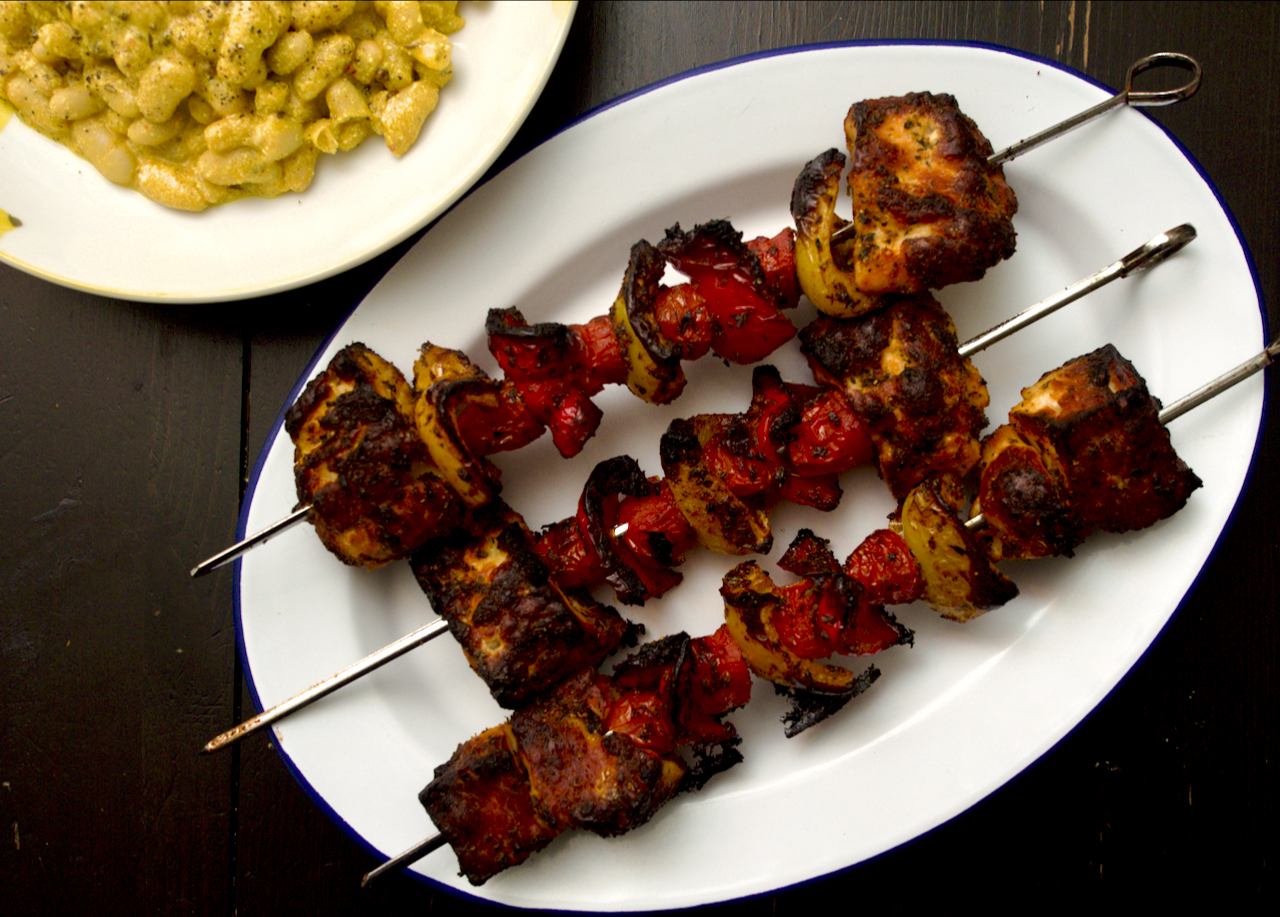
An excellent recipe for squeaky cheese aka halloumi. Great as a main course (we served with a bean dish and flatbreads) or as a side.

Marinated halloumi – serves 3

  • 250g block of halloumi, cut into 6 cubes
  • ½ red pepper, cut into 6 pieces
  • ½ yellow pepper, cut into 6 pieces
  • 6 cherry tomatoes, halved
  • 1 tsp dried mint
  • 1 tsp dried oregano
  • 1 tsp ground coriander
  • 1 tsp paprika
  • 3 tbsp garlic oil

TO SERVE:

  • flatbreads
  • chilli sauce
  • lemon wedges
  • honey for drizzling

Heat your oven as high as it will go and line a tray with baking paper.

Put the halloumi, peppers and tomatoes into a mixing bowl, then add the herbs, spices, garlic oil and lots of black pepper and gently mix.

Divide the mixture between 3 skewers, then put the skewers onto the paper-lined tray and roast for about 15 minutes.

Serve with flatbreads, chilli sauce, lemon wedges and a drizzle of honey.

(Original recipe from Flavour by Sabrina Ghayour, Aster*, 2023.)

Read Full Post »

We made these noodles on the day we got our new puppy, Remy. We can barely remember what they tasted like as we were too busy congratulating ourselves on picking the best little dog ever. However we wrote, usefully, on the recipe that they tasted very good indeed … so we’ll go with that.

Wine Suggestion: The coconut and turmeric elements to this dish work really well with an off-dry Riesling, like those from the Mosel in Germany. The Dr Loosen “L” Riesling is an inexpensive, but very well made option with charming fruit and a very good balance, finishing clean and fresh.

Spicy Coconut and Chicken Noodles – serves 4

  • vegetable oil
  • 2 onions, roughly chopped
  • 600g boneless and skinless chicken thighs
  • 4 green cardamom pods, lightly crushed
  • 1 tsp cumin seeds
  • 2 tsp ground turmeric
  • 2 tbsp rose harissa
  • 400ml tin coconut milk
  • 300g medium egg noodles

TO SERVE:

  • a handful of bean sprouts
  • lime wedges
  • coriander leaves, roughly chopped

Put a large saucepan over a medium-high heat, drizzle in some vegetable oil and fry the onions until soft. Add the chicken and dry spices along with lots of salt and pepper and stir to coat the chicken in the mixture, then stir-fry for a few minutes. Add the harrisa and stir-fry for a few more minutes.

Reduce the heat to medium, then pour in the coconut milk and some water so that the chicken is just covered. Stir, then cover the pan with a lid and cook gently for an hour, stirring now and then to make sure it hasn’t stuck. You can top up the liquid a little if needed.

Cook the noodles according to the pack instructions, then drain and divide between 4 bowls.

Pour the chicken over the cooked noodles, then add the bean sprouts, lime wedges and coriander.

(Original recipe from Flavour by Sabrina Ghayour, Aster*, 2023.)

Read Full Post »

Jeez this sauce is good. A stunning recipe from Mezcla by Ixta Belfrage. There are a good few steps in the recipe, but prep everything first and you will be fine.

Wine Suggestion: Don’t push the boat out for a wine match as the gutsy flavours just need an easy, well made, rounded Chardonnay. Go anymore complex and the subtlety will be lost. For us tonight Domaine Gayda’s Sphere Chardonnay which see’s wonderful sunshine in the Languedoc, but maintains it’s freshness as the vineyards are on the foothills of the Pyrenees and juducious and light use of oak barrels to bring it together.

Duck with pepper sauce and green salsa – serves 2

  • 2 skin-on duck breasts
  • 1 lime, cut into wedges, to serve

FOR THE MARINADE:

  • 2 tbsp soy sauce
  • 1¼ tbsp Worcestershire sauce
  • ½ tbsp maple syrup
  • ⅛ tsp fine salt

FOR THE SALSA:

  • 2 scallions, very finely chopped
  • 5g chives, very finely chopped
  • 5g fresh ginger, peeled and very finely chopped
  • ½ jalapeño, very finely chopped
  • 3 tbsp olive oil
  • 1 tsp lime juice
  • ⅛ tsp fine salt

FOR THE SAUCE:

  • 1 tbsp unsalted butter
  • 1½ tbsp olive oil
  • 1 banana shallot, very finely chopped
  • 1 clove of garlic, very finely chopped
  • ⅛ tsp fine salt
  • ½ tsp freshly ground black pepper
  • 2 tsp green peppercorns, roughly crushed (the pickled green peppercorns are best for this)
  • ½ tsp chipotle chilli flakes
  • 1¼ tsp ground cumin
  • 2 tbsp water
  • 130g cream

Get a dish that will fit both duck breasts in a single layer. Mix the marinade ingredients together, then arrange the duck in the marinade, skin side up – try your best not to get any marinade on the skin. Marinate for a minimum of 2 hours at room temperature, or ideally, overnight in the fridge. Don’t cover the container either way, as you want the skin to dry out. Bring to room temperature for 2 hours before cooking.

Prep the salsa by mixing all the ingredients together, then set aside.

Take the duck out of the marinade and transfer to a tray lined with a clean cloth, flesh side down, so the flesh dries out. Blot the skin with kitchen paper to make sure it’s as dry as possible. Rub some salt and pepper into the skin. Reserve the marinade.

Put the duck breasts into a cold, non-stick frying pan, skin-side down and spaced apart. Put the pan over a low heat and gently fry, pressing down on the duck, for about 10 minutes or until the skin is crisp and deep brown (keep going longer to achieve this if you need). Spoon away the duck fat that renders in the pan (keep for roasties another day). Transfer the duck breasts to a plate, skin side up, then increase the pan heat to high.

When the pan is very hot, return the breasts to the pan, flesh side down. Move breasts around for about 3 minutes to get them coloured evenly. Transfer the duck to a plate and rest, uncovered, for a full 12 minutes.

Either wash out the pan and allow it to cool or start with another non-stick frying pan. Add the butter, oil, shallots, garlic and salt to the cold frying-pan. Put over a medium-low heat and fry gently for 6-7 minutes, stirring, until the onion is soft and golden. Add the black pepper, pepercorns, chipotle chilli flakes, and cumin and cook for another minute.

Pour the reserved marinade and the 2 tbsp water into the pan, turn the heat to hight and allow to bubble for 1½ minutes. Turn the heat down low and stir in the cream and cook for 1 minute to warm through.

Pour the sauce onto a plattter, then slice the duck and arrange it on top. Finish with the green salsa and serve with the lime wedges.

(Original recipe from Mexcla by Ixta Belfrage, Ebury Press, 2022.)

Read Full Post »

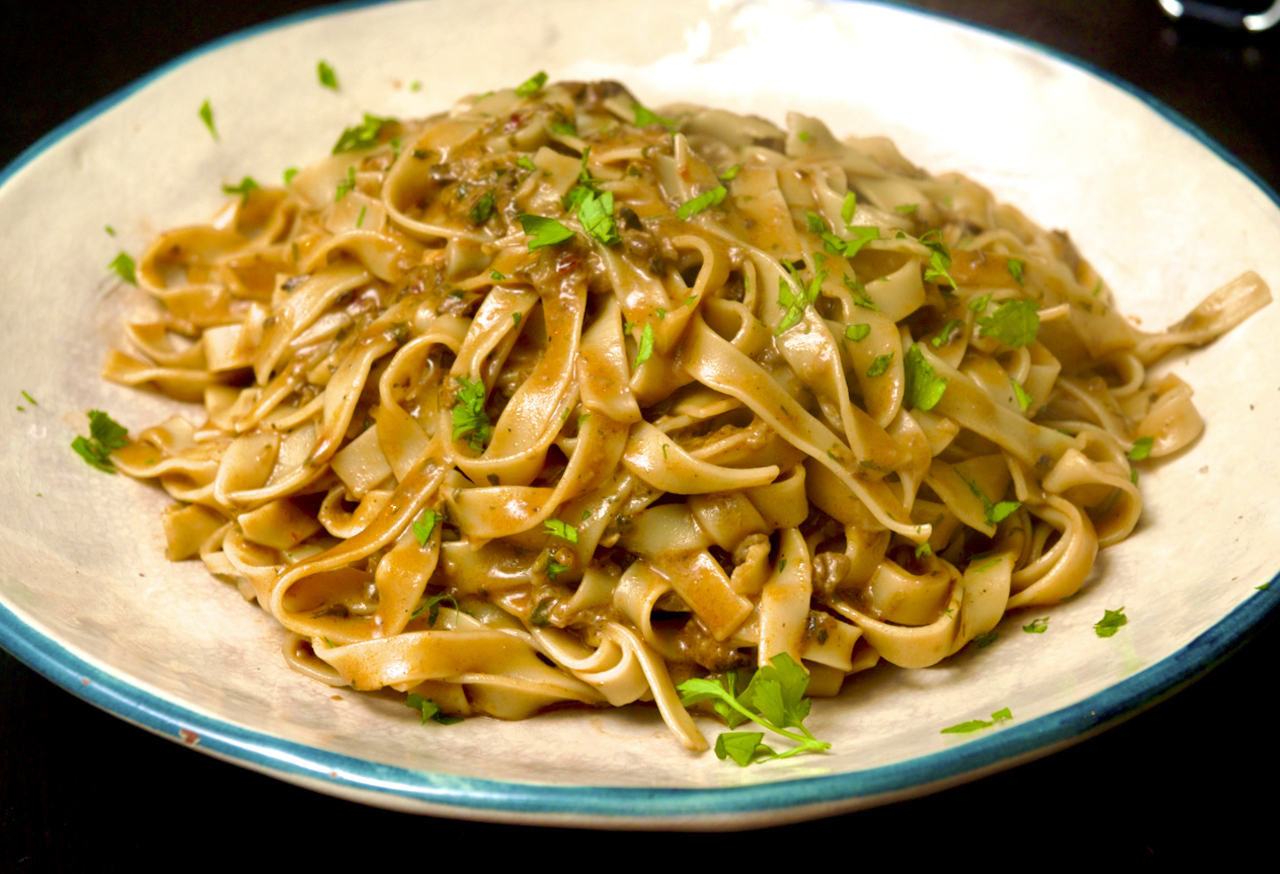
This has a surprising umaminess given the short cooking time. A dish for mushroom lovers.

Wine Suggestion: We enjoy pairing mushroom dishes with Nebbiolo and really enjoy stepping outside the box to find versions made outside it’s native Piedmont. Tonight a glass of Clendenen Family Vineyards (Au Bon Climat) “Pip” from the Santa Maria Valley in California, which despite it getting some of the famous sunshine, is also a very cool area with fog … just like Piedmont. We liked it a lot.

Porcini sauce for tagliatelle – serves 2

  • 40g dried porcini
  • 4 tbsp olive oil
  • 3 cloves of garlic, very finely chopped
  • ½ tsp chilli flakes
  • 10g fresh parsley (stalks and leaves), finely chopped, plus extra to serve
  • a big pinch of fine sea salt
  • 1½ tbsp tomato purée
  • about 50 twists of freshly ground black pepper
  • 250g dried tagliatelle
  • 40g Parmesan, very finely grated, plus extra to serve
  • 3 tbsp double cream

Put the dried porcini into a bowl and cover with boiling water, then leave to soak for 10 minutes. Drain, reserving 75g of the soaking liquid. Very finely chop the porcini so it is like the consistency of mince, then set aside.

Put the oil, garlic, chilli flakes, parsley and fine salt into a large sauté pan, then place over a medium-low heat. Fry very gently for 5 minutes or until soft, taking care that the garlic doesn’t turn brown.

Increase the heat, then add the chopped porcini, tomato purée and the pepper. Stir-fry for a few minutes, then set the pan aside while you cook the tagliatelle.

Cook the pasta in boiling salty water until al dente, then drain and reserve 350g of the pasta water.

Return the sauté pan to a medium-high heat, then add the reserved porcini and pasta water. Bring to a simmer and leave to bubble for a few minutes. Add half the Parmesan, stir until melted before adding the rest. Lower the heat, then stir in the cream, followed by the cooked pasta. Toss over the heat for a minute or two until the sauce comes together.

Remove from the heat and serve with more Parmesan and olive oil.

(Original recipe from Mezcla by Ixta Belfrage, Ebury Press, 2022.)

Read Full Post »

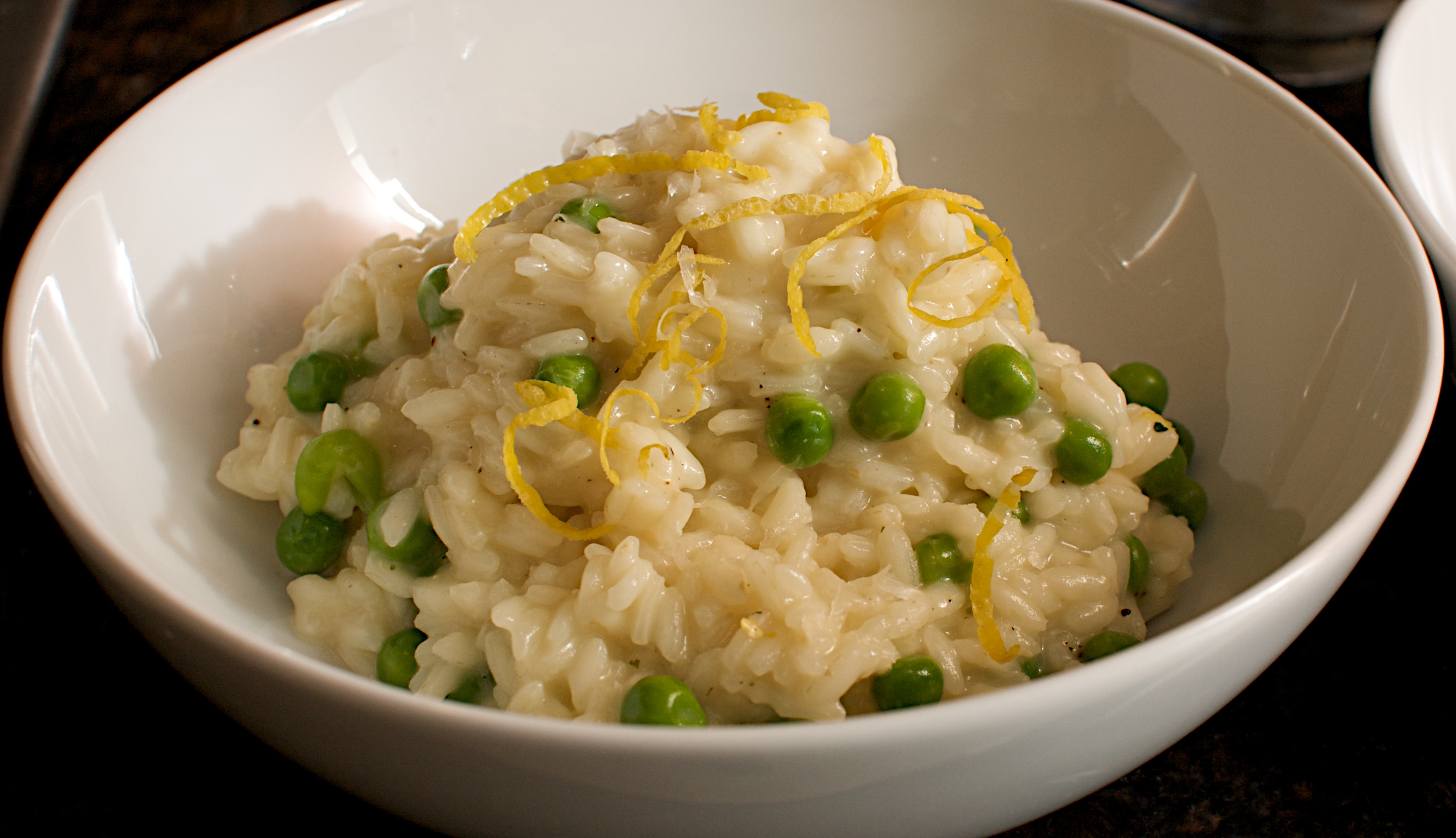
An easy and healthy after-work dish done in under half an hour and using things you probably have in the cupboard. We had to buy a lemon, and only because the one on the shelf looked a bit past it.

Serves 2, but easily doubled

  • 200g risotto rice
  • 850ml hot vegetable stock
  • 50g frozen peas
  • 50g Parmesan, grated, plus a bit more for over the top at the end
  • juice and zest of 1/2 a lemon

Heat a large saucepan over a medium heat, then toast the rice, stirring constantly, for 1 minute.

Add one ladle of hot stock and keep stirring until absorbed. The first ladle will be really quick.

Add the rest of the stock, a ladle at a time, until the rice is almost cooked, keep stirring it all the time. It will take about 20 minutes for you to stir in all your stock.

Stir in the peas and cook for 3-5 minutes and remove the pan from the heat.

Add the cheese, lemon juice, seasoning and then stir. Stick the lid on and let it rest for a minute.

Serve in bowls with the zest and a bit more Parmesan over the top.

(Original recipe from BBC Good Food)

Wine suggestion: Have a glass of something white if you have some leftover from the weekend.

Read Full Post »

« Newer Posts