Feeds:
Posts
Comments

Archive for the ‘Fish’ Category

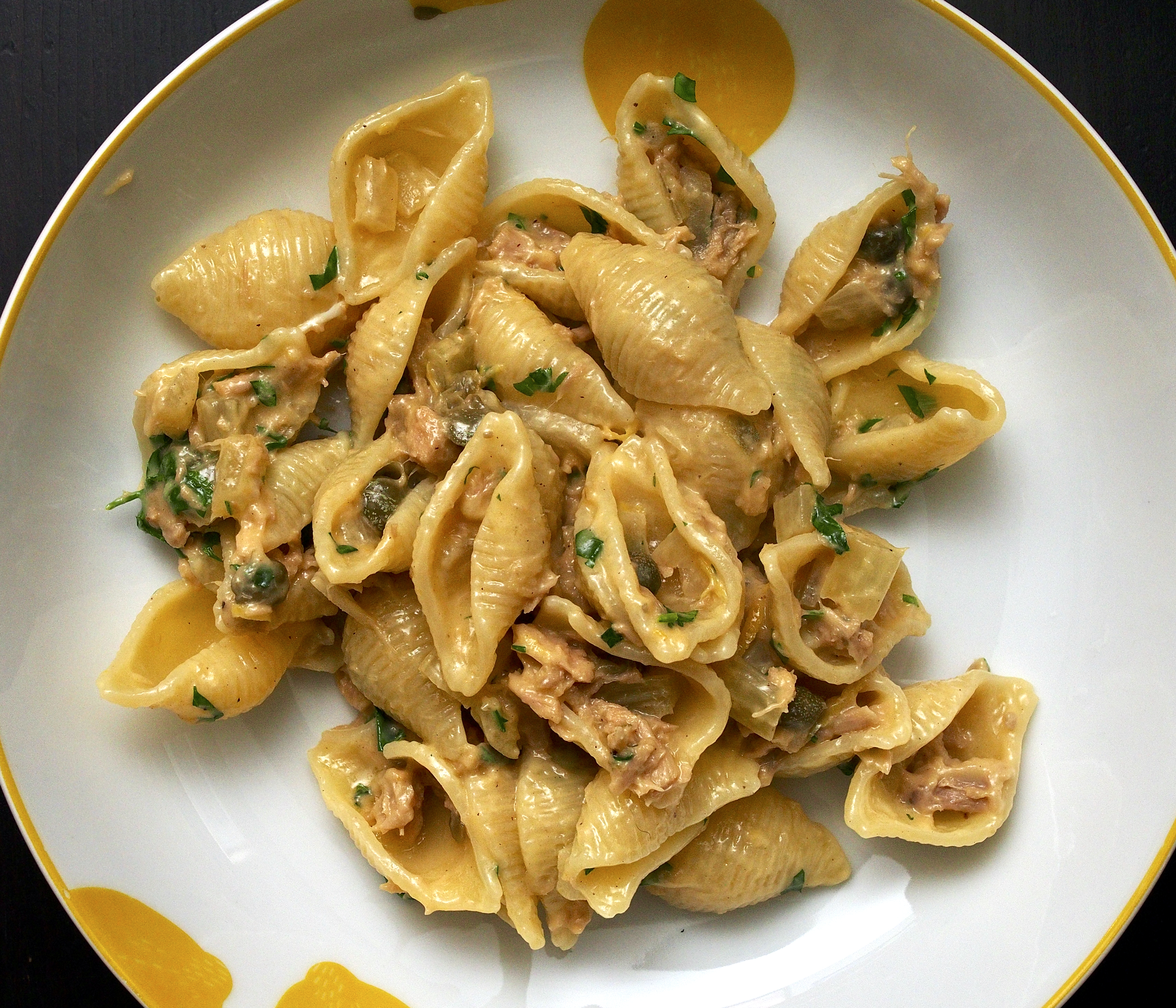
This recipe is from Rachel Roddy’s fabulous book, An A-Z of pasta. She introduces this one by asking if you are familar with vitello tonnato, which happens to be one of Jules’ favourite dishes, so we had to try it. Rachel uses the lumache pasta shape, which means snails and they are a bit like snail shells. We found these hard to find so we substituted conchiglie to great effect.

Wine Suggestion: look for a crisp, fresh white with a good body/structure like a dry, unoaked chardonnay from a cooler region. For us it was Céline & Frèdéric Gueguen’s Bourgogne Côtes Salines. Grown in vineyards just outside the Chablis appellation this is vibrantly fresh apple and melon flavoured with a savoury mid-palate that just melts into the tuna sauce.

Conchiglie with tuna, egg & capers – serves 4

  • 1 large onion, peeled and finely chopped
  • 1 stick of celery, trim to the palest bit, pull of any strings, and finely chop
  • 6 tbsp olive oil
  • 1 x 200g tin of tuna in olive oil, drained
  • 2 tbsp tiny capers, rinsed
  • 200ml white wine
  • 1 unwaxed lemon, zested and juiced
  • 400g conchiglie (or lumache)
  • a sprig of flat-leaf parsley, finely chopped
  • 2 egg yolks, beaten

Bring a large pan of water to the boil and add a generous amount of salt.

Warm the olive oil in a frying pan, then add the onion and celery with a pinch of salt and cook on a medium-low heat, until soft. You need to be patient as this will take a while.

Add the tuna and capers, stir for a minute, then add the wine and allow to bubble for 10 minutes, adding 3 tbsp of lemon juice and some zest for the last few minutes. You are looking for a saucy consistency so cook for a bit longer if it is still watery.

Meanwhile, cook the pasta according to the packet timings, then drain and tip into a warm bowl, pour the sauce over the top, add the parsley, toss together, then quickly add the egg yolks and toss again.

(Original recipe from An A-Z of Pasta by Rachel Roddy, Penguin: Fig Tree, 2021.)

Read Full Post »

A simple idea to serve with drinks, something sparkly perhaps.

Wine Suggestion: a great match for any sparkling wine made with the Champenois method, double fermented in the bottle, and with some autolytic, yeasty, bready aromas that help give the structure for the food. Tonight a 100% Pinot Meunier from Laurent Lequart in the Vallée de la Marne, Champagne.

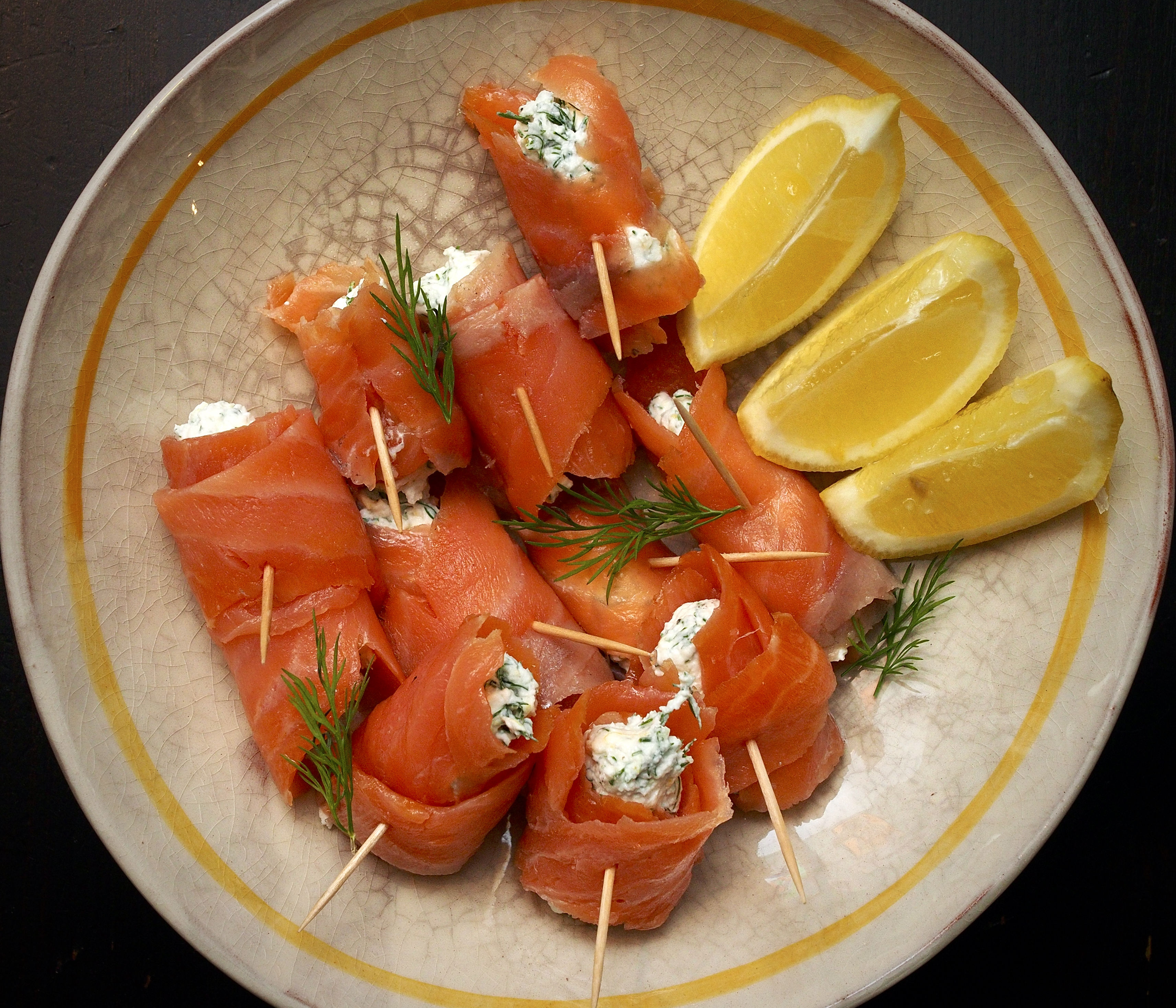
Smoked salmon, ricotta & dill wraps – makes 16

  • 300g soft ricotta
  • zest and juice of 1 lemon (use a zester if you have one rather than a grater)
  • a handful of dill, chopped, plus a bit extra to serve
  • 16 thin slices of smoked salmon

Mix the ricotta, lemon zest and dill together in a bowl. Season to taste with sea salt and black pepper.

Put 1 tsp of the ricotta mixture onto each slice of salmon and roll up, then skewer with a cocktail stick.

Arrange on a plaste and garnish with extra dill. Squeeze over some fresh lemon juice just before serving.

(Original recipe from Polpo by Russell Norman, Bloomsbury, 2012.)

Read Full Post »

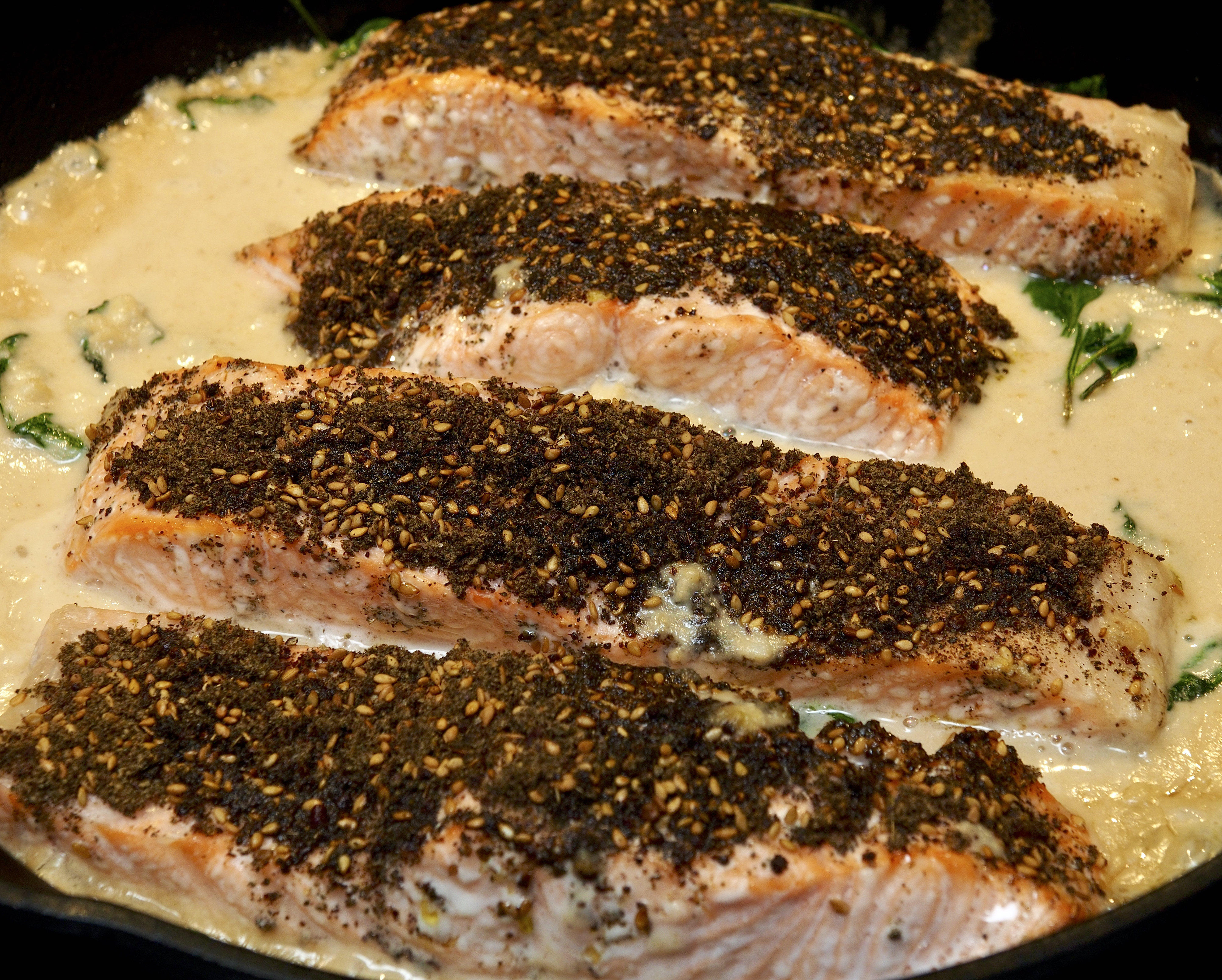
We’ve made plenty of fish and tahini dishes before but particularly liked this one with the additions of zingy za’atar and fresh spinch.

Wine suggestion: this works brilliantly with a juicy, crisp Verdejo, especially those that come from Rueda in Spain. Crunchy, juicy apples, lemons and grapefuit. In our glass was Dominio la Granadilla which demonstrates a passionate family all working together and speaking of the place they grew up.

Za’atar salmon and tahini – serves 4

  • 4 salmon fillets (about 600g in total), skin on
  • 2 tbsp za’atar
  • 2 tsp sumac, plus and extra ½ tsp for sprinkling at the end
  • 4 tbsp olive oil
  • 250g baby spinach
  • 90g tahini
  • 3 cloves of garlic, crushed
  • 3½ tbsp lemon juice
  • 1½ tbsp roughly chopped coriander leaves

Heat the oven to 220C Fan.

Pat the salmon dry with kitchen paper and season.

Mix the za’atar and sumac together in a small bowl, then sprinkle this over the top of the salmon to form a crust.

Put a large ovenproof sauté pan over a medium-high heat and add 1 tbsp of the oil. When the pan is hot, add the spinach with a little seasoning and cook for 2-3 minutes or until just wilted.

Set the salmon fillets on top of the spinach, skin side down, then drizzle the top of the fish with 2 tbsp of oil. Bake in the hot oven for 5 minutes.

Meanwhile, whick the tahini, garlic, 2½ tbsp of lemon juice, a good pinch of salt and 100ml of water together until smooth. It will be quite runny.

Pour the tahini around the salmon (but not over the fish) and bake for another 5 minutes, or until the fish is just cooked through and the sauce is bubbling. Spoon over the rest of the lemon juice and oil and top with the coriander and extra sprinkle of sumac.

(Original recipe from Ottolenghi Test Kitchen: Shelf Love by Noor Murad & Yotam Ottolenghi, Ebury Press, 2021.)

Read Full Post »

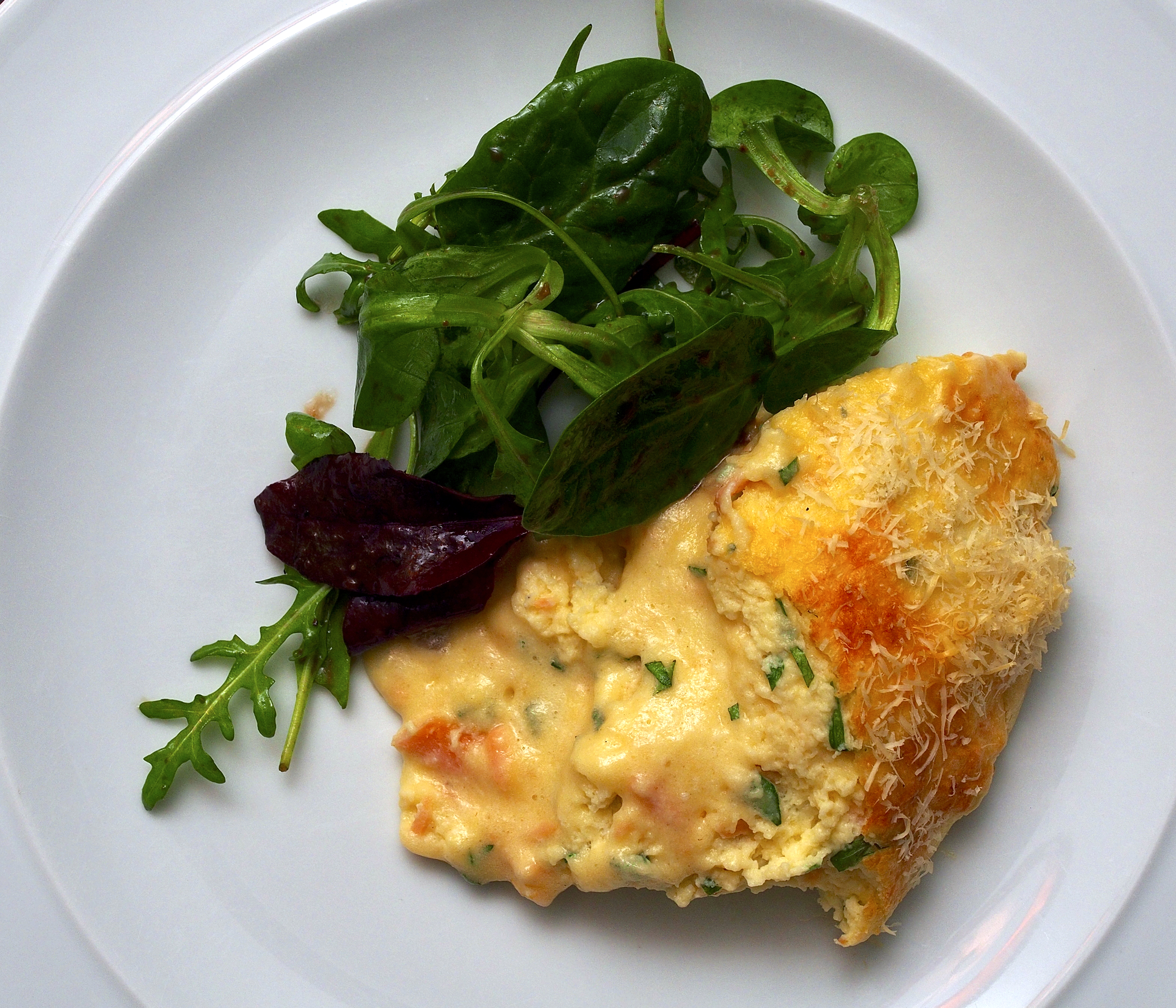
This has to be the perfect post-Christmas dish; great for using up the cheeseboard leftovers and all that smoked fish you though you would eat. Our daughter was so enamoured of this that she has been demanding it ever since. Serve with a green salad and some crusty bread.

Wine Suggestion: Find yourself a Chardonnay made on the lees, but not necessarily in oak. This will preserve a freshness and mid-weight while giving a yeasty, buttery character. A good producer from the Maçon, like Manciat-Poncet, would be ideal and that’s what we had.

Smoked Salmon Soufflé – Serves 3

  • 20g freshly grated Parmesan, plus an extra 1 tbsp
  • 1 small onion, peeled
  • 100g smoked salmon or smoked trout, finely chopped
  • 300ml full fat milk
  • 1 bay leaf
  • 50g butter
  • 55g plain flour
  • 4 large eggs, separated
  • 2 tbsp chopped tarragon

You will need a soufflé dish or baking dish, approximately 18-20cm.

Lightly grease the inside of the dish with butter, then dust with the 2 tbsp of grated Parmesan.

Preheat the oven to 200C/Gas 6.

Put the milk into a small saucepan with the onion and bay leaf. Bring to the boil, then remove from the heat and leave to sit for a few minutes. Remove the onion and bay leaf and discard.

Melt the butter in a heavy saucepan, then stir in the flour and cook, stirring, for a few minutes. Then pour in the warm milk and stir vigorously until you have a smooth, thick sauce. Continue to cook for another couple of minutes, then remove from the heat.

Lightly beat the the egg yolks with a fork, then stir them into the sauce with 20g of Parmesan, the chopped fish and the tarragon.

Beat the egg whites until stiff with a whisk in a large bowl. Fold the egg whites into the sauce, then spoon into the buttered dish. Smooth the top if needed, then sprinkle over the remaining Parmesan. Put the dish onto a baking sheet and bake for 20-25 minutes. The crust should be pale brown and the centre slightly soft, it should still have a little wobble when you give it a shake.

Serve immediately with dressed salad leaves and crusty bread. You need to eat it all up as this dish will not keep.

(Original recipe by Nigel Slater in The Guardian, Tuesday, 28 December 2021.)

Read Full Post »

A simple fish dish for weeknights, and something a bit lighter before the feasting starts.

Wine Suggestion: A delight with a light, playful Riesling like Korrell’s Slice of Paradise from the Nahe in Germany, or Pikes Traditionale from the Clare Valley.

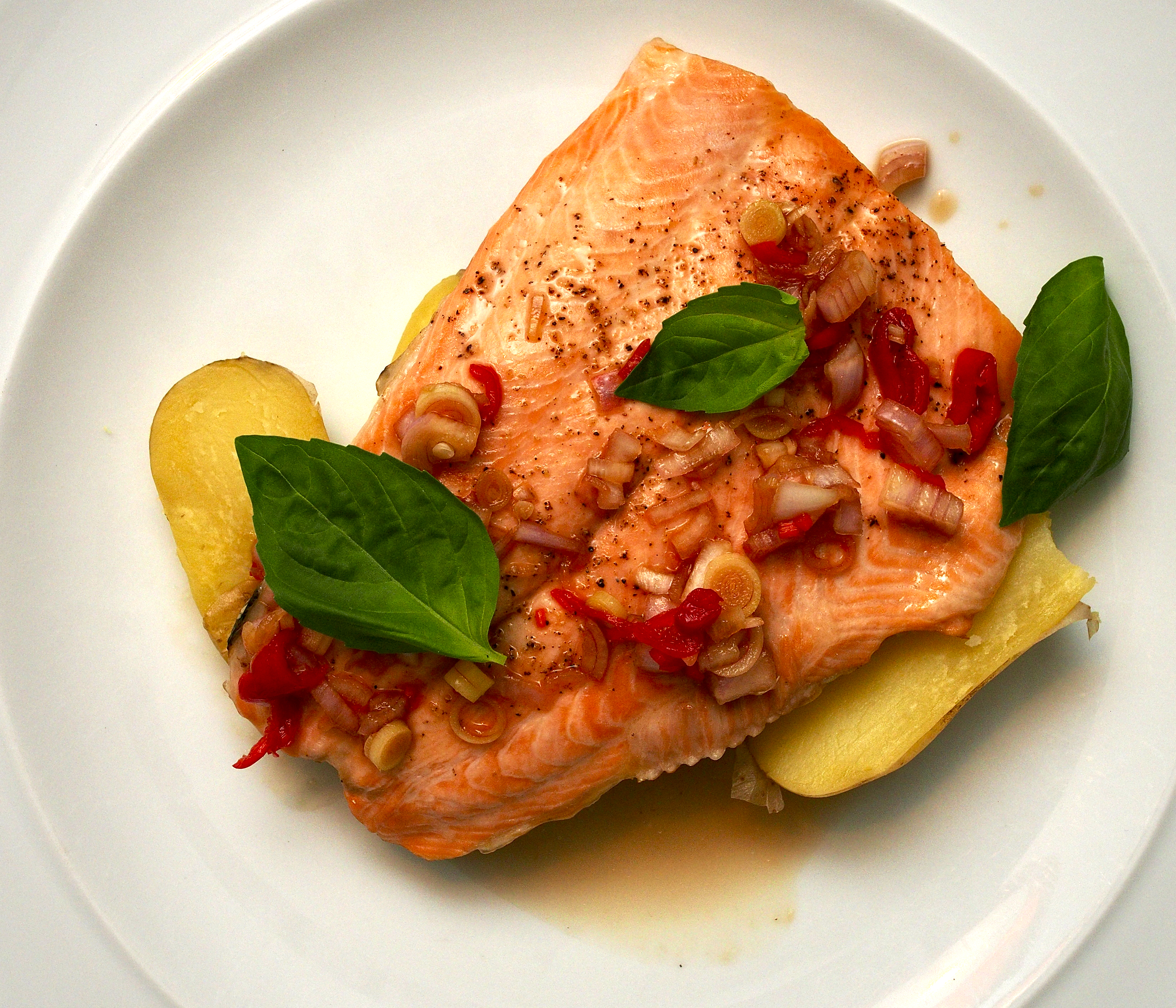
Grilled trout with Asian dressing – serves 2

  • 300g Charlotte potatoes
  • 2 skinless trout fillets
  • Thai basil or regular basil, to serve

FOR THE DRESSING:

  • 1 small shallot, finely chopped
  • 1 lemongrass stalk, remove the woody outer leaves and finely chop
  • 2 tbsp lime juice
  • 1 tbsp fish sauce
  • 1 tsp brown sugar
  • 1 red chilli, finely chopped

Boil the potatoes in salty water until tender, then drain and slice thickly, lengthways.

Season the trout, then grill for 3-4 minutes.

Arrange the potatoes onto plates and top with the trout. Whisk the dressing ingredients together and spoon over the top, then garnish with basil leaves.

(Original recipe by Janine Ratcliffe in Olive Magazine, November 2014.)

Read Full Post »

A simple fish supper for two, but with plenty of flavour; both delicate, fresh and rich.

Wine Suggestion: The higher acidity, fuller body and citrus-minerality of a good Albariño make this a match worth trying. Tonight Quinta Soalheiro’s Primeiras Vinhas Alvarinho from their oldest vineyards and partially made in oak really makes a statement. A velvety texture, deep and soulful, long, serious and elegant in the same breath. This wine makes a case for this grape to be considered “noble” and makes a good partner to the fattier fish and vibrant asian acidity, umami flavours.

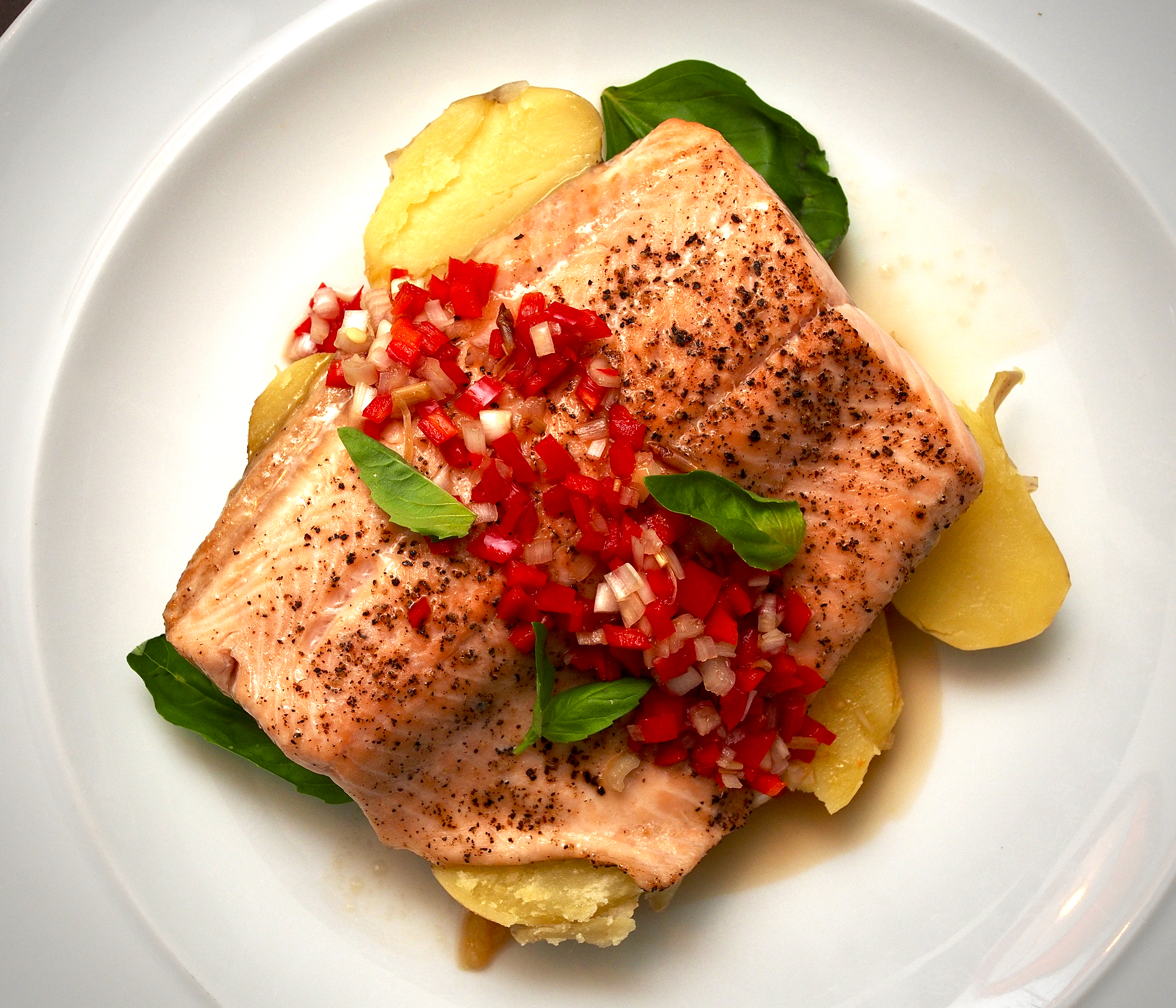
Grilled trout with Asian Dressing – serves 2

  • 300g Charlotte potatoes
  • 2 skinless fillets of trout
  • a few basil leaves, Thai would be nice but regular will do

FOR THE DRESSING:

  • 1 small shallot, finely chopped
  • 1 lemongrass stalk, remove the woody outer leaves and finely chop
  • 2 tbsp lime juice
  • 1 tbsp fish sauce
  • 1 tsp brown sugar
  • 1 red chilli, finely chopped

Boil the potatoes in salty water until tender, then drain and slice thickly, lengthways.

Season the trout, then grill for a few minutes.

Arrange the potatoes over two plates, then top each with a piece of fish.

Whisk the dressing ingredients together and sppon over the fish, and finish with a few basil leaves.

(Original recipe by Janine Ratcliffe, Olive Magazine, November 2014.)

Read Full Post »

A perfect weekday fish dish. Serve with some baby roast potatoes and steamed greens.

Wine Suggestion: The orange and dill hint at southern France, so we chose Domaine Gayda’s Freestyle Blanc, a blend of Grenache Blanc and Gris, Maccabeu, Marsanne, and Roussanne. Layered and fresh like the food, this also had hints of orange citrus fruits and herbal twists on the finish. Both complementary and adding subtle contrasts. Made us wish we were sitting in the sunshine at a French bistro enjoying the food and wine there!

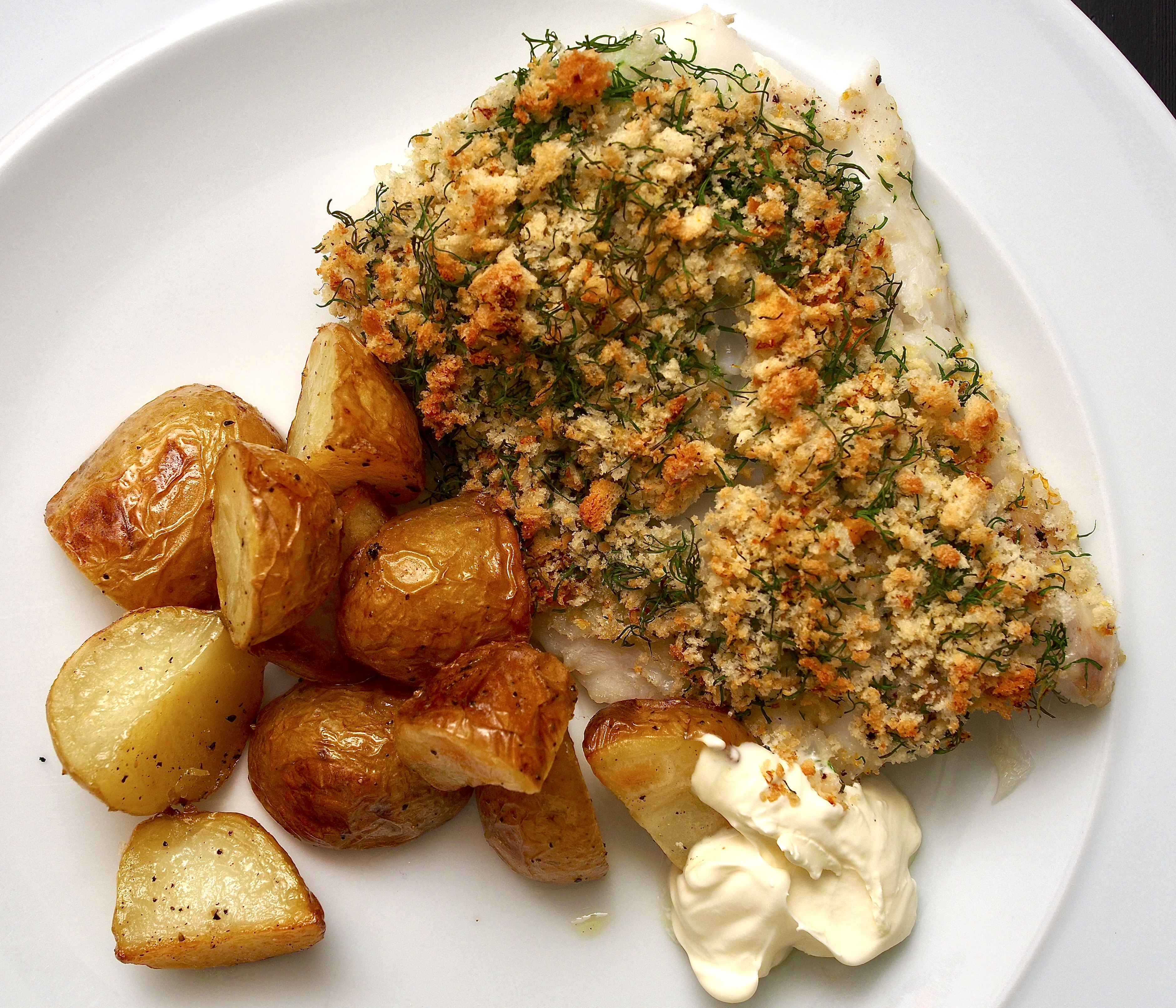
Cod with Orange & Dill – serves 2

  • 2 large pieces of cod fillet
  • a large handful of breadcrumbs, sourdough works well
  • zest of 1 orange
  • 1 clove of garlic, crushed
  • a large handful of dill
  • a drizzle of olive oil
  • 2 tbsp crème fraîche, to serve

Heat the oven to 220C/200C fan/gas 7.

Combine the breadcrumbs with the orange zest, dill, garlic and seasoning.

Season the cod, place on a baking tray and press the crumbs on top.

Bake for 12-15 minutes or until cooked through.

Serve with the crème fraîche.

(Original recipe from BBC Good Food)

Read Full Post »

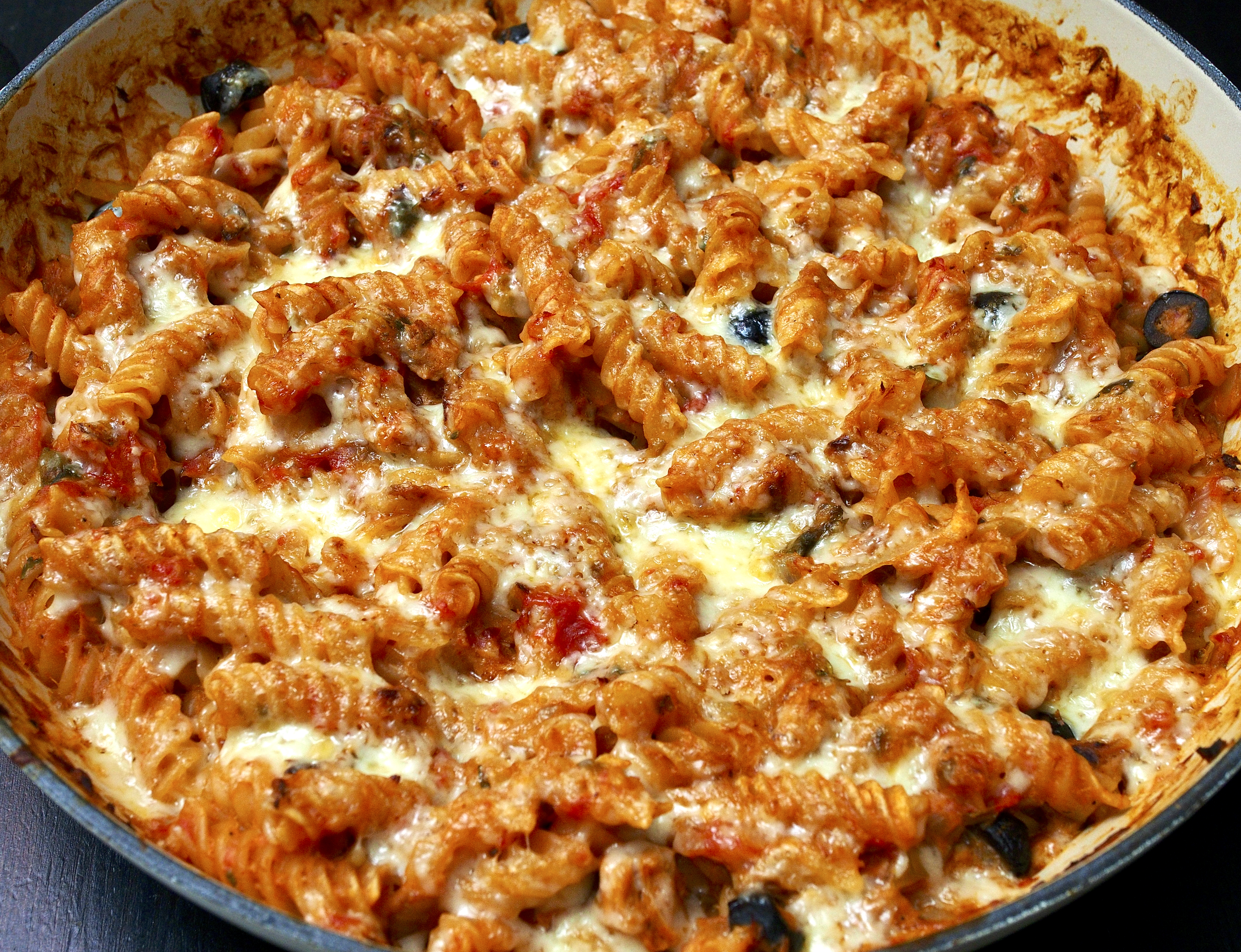
Who doesn’t love tuna pasta bake. We’re a bit sceptical about one pot cooking … what’s the big deal with using more pots? Anyhow, the one pot works in this case as the pasta absorbs all the flavours. This is also another dish that breaks the nonsense “no cheese with fish” rule.

This is easily halved and can be whipped up from store cupboard ingredients mid-week.

Wine Suggestion: A light, youthful sangiovese with plenty of fruit like Rocca delle Macie’s Chianti Vernaiolo.

Tuna Pasta Bake – serves 4

  • 2 tbsp olive oil
  • 1 onion, finely chopped
  • 2 cloves of garlic, finely chopped
  • 2 tins of tuna, drained
  • 400g tin of chopped tomatoes
  • 25g capers
  • 25g black olives, halved
  • 1 tsp lemon zest
  • leaves from 1 sprig of thyme
  • ½ tsp chilli flakes
  • 400g short pasta, we used fusilli
  • 75g Cheddar cheese, grated

Heat the oil in a large flameproof casserole, we have a shallow one which works well for this, then add the onion and cook until very soft. Add the garlic and cook for another couple of minutes. Add the tuna, tomatoes, capers, olives, lemon zest, thyme and chilli flakes. Stir until well combined, then add the pasta. Season with salt and pepper, then stir until the pasta is completely coated in sauce.

Pour in enough water to just cover the pasta and bring to the boil. Turn the heat down to a simmer and cover the pot. Cook until the pasta is al dente and has absorbed most of the water. This will take between 10 and 15 minutes, start checking at 10. You might need to stir now and again to stop it sticking to the bottom.

Heat the grill to high.

Sprinkle the dish with the cheese, then place under the grill until browned and bubbling.

(Original recipe from The Hairy Bikers’ One Pot Wonders by Si King & Dave Myers, Seven Dials, 2019.)

Read Full Post »

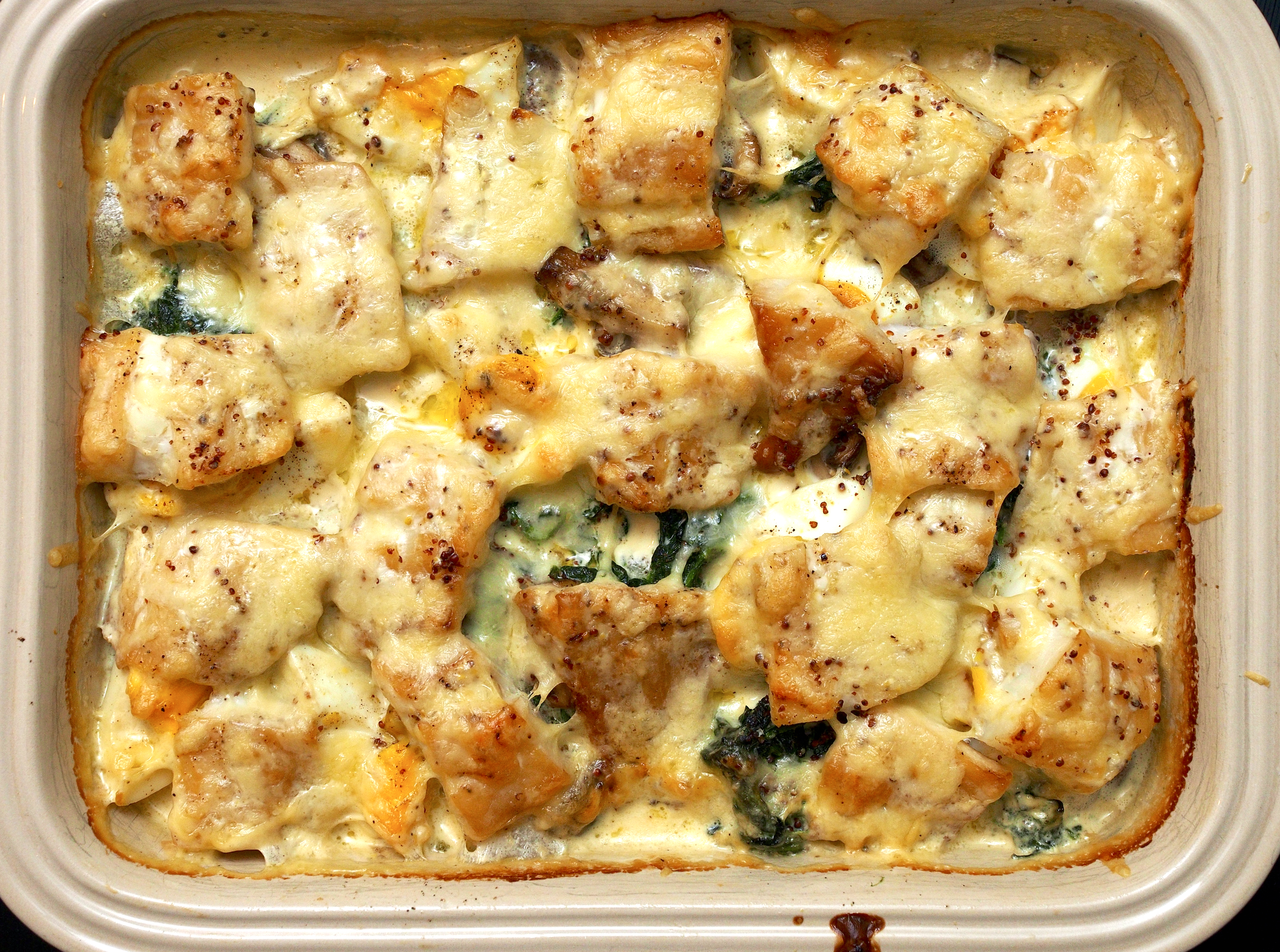
This is like a fish pie … but is so much easier to make and perfect for a Friday night after a long week. It’s also usefully gluten-free, unlike many other fish pies. Serve with a big bowl of peas.

Wine Suggestion: A new find from Cabardes in France, Domaine Ventenac’s “les Dissidents” Cassandre. A joyfully fresh Vermentino, a grape we think is the next big thing from southern France.

Haddock Bake – serves 6

  • 350g floury potatoes, peeled and cut into 2cm cubes
  • 500g baby spinach
  • 1 tbsp olive oil
  • 250g chestnut mushrooms, quartered
  • 3 eggs, hard-boiled and cut into quarters (put them into boiling water and time for 8 minutes)
  • 500g skinless smoked haddock, cut into large chunks
  • 300ml double cream
  • 2 tsp grainy mustard
  • 75g mature Cheddar cheese, grated

Heat the oven to 200C/180C fan/Gas 6.

Put the potatoes into cold salted water, cover and bring to the boil, then cook for about 10 minutes or until just cooked. Drain well and leave to steam dry in the pot

Heat a large fring pan, add the spinach, and cook until just wilted, then drain in a colander. You will need to do this in batches. Squeeze the spinach against the colander to get rid of as much water as possible. When cool enough to handle you can squeeze it again with your hands.

Heat the oil in the same frying pan, add the mushrooms, and fry for a few minutes until just cooked.

Grease a 2 litre shallow oven-proof dish with a little butter.

Scatter the potatoes, spinach and mushrooms over the base of the dish, then spread the haddock and eggs over the top and season.

Mix the cream and mustard together with some seasoning, then pour over the dish and sprinkle the cheese over the top.

Bake in the oven for 25 minutes, until bubbling and browned on top.

Serve with lots of peas.

(Original recipe from Mary Berry Cooks up a Feast with Lucy Young, DK, 2019.)

Read Full Post »

Spanish seafood pasta, made like a paella and with a dollop of alioli … what could be more reminiscent of dinner by the sea on holidays; this dish smells like Spain. Lightly does it when cooking the seafood.

Wine Suggestion: A lighltly chilled Garnacha Negra (Grenache Noir) from Terra Alta springs to mind – they really have a wonderful affinity for this grape there, alongside the Garnacha Blanca too. Edetaria’s basic “via Terra” has all the joy, freshness and perfume to compliment the flavours of the food while adding an extra warm spice and red fruits to lift it further. 30 minutes in the fridge was enough to make it taste and feel like sunshine in Spain, even if the weather outside isn’t quite like that at the moment.

Seafood pasta – serves 6 (easily halved)

  • 6 tbsp olive oil
  • 400g monkfish fillet
  • 4 baby squid, cleaned and bodies cut into rings
  • 12 raw peeled king prawns
  • 12 queen scallops (or you can cut bigger ones in half)
  • 4-5 cloves of garlic, crushed
  • 3 tomatoes, peeled and chopped
  • 1 tsp sweet paprika
  • a good pinch of saffron threads
  • 1.25 litres of fish or chicken stock
  • 500g fideua pasta (or you can use vermicelli or spaghettini)
  • 3 tbsp chopped flatleaf parsley
  • lemons quarters, to garnish
  • garlic mayonnaise or alioli, to serve

Heat 4 tbsp of the oil in a large paella pan (40-45cm). Add the monkfish, sprinkle with salt, and cook for a few minutes, turning. Add the squid and cook, stirring, for a couple of minutes. Add the prawns and scallops and turn until the prawns are pink and scallops just seared, just a minute or two. Transfer the cooked seafood to a platter and pour off and reserve any cooking liquid.

Heat the rest of the oil in the same pan, stir in the garlic and stir briefly, then stir in the tomatoes. Add the paprika, saffron and some salt, and cook for 10 minutes, stirring now and then, until the liquid has almost evaporated.

Meanwhile, bring the stock and cooking liquid to the boil. Add the pasta to the sauce in the paella pan and cook, stirring, until well coated. Pour in the boiling and cook until the pasta is al dente. Place the seafood on top a few minutes before the end.

Serve sprinkled with parsley and with lemon and alioli or galric mayonnaise on the side.

(Original recipe from Claudia Roden, The Food of Spain, Michael Joseph, 2012.)

Read Full Post »

We love squid and are not sure why people don’t cook it more often. It’s cheap and sustainable, and this sweet and sour version is delicious! We served with some plain couscous.

Wine Suggestion: This is excellent with a youthful and medium bodied Sangiovese with its bright acidity. Instead of looking to Tuscany tonight, we had a Corsican Niellucio which is the same grape

Slow-cooked squid with peperonata and butter beans – serves 4 to 6

  • 4 tbsp olive oil
  • 4 red, yellow or orange peppers, a mixture ideally, deseeded and sliced
  • 1 red onion, finely sliced
  • 100g soft cooking chorizo, finely chopped
  • ½ tsp chilli flakes
  • 4 sprigs thymes
  • 4 cloves of garlic, sliced
  • 1 bay leaf
  • 50ml red wine vinegar
  • 25g caster sugar
  • 500ml passata
  • 400g squid, cleaned and sliced (we used a packet of frozen squid tubes, defrosted)
  • 1 x 400g tin butter beans, drained and rinsed
  • a handful of chopped flat-leaf parsley

Heat the oil in a large pan and fry the peppers and onions over a medium heat for 20-25 minutes or until very soft, stir now and then and add a splash of water if they start to catch.

Add the chorizo and chilli flakes and cook for another 5 minutes or until the chorizo has released its oil. Add the thyme, garlic, and bay, and simmer for another couple of minutes, then add the vinegar and sugar and stir until the sugar has dissolved.

Add the passata, then swirl a splash of water round the jar and add that too. Season and bring to a simmer.

Stir the squid into the simmering sauce, then cover with a lid and cook over a low heat for 1 hour. If the liquid doesn’t cover the squid you can add a splash of water. Check after the hour to see if the squid is tender but don’t let it go to mush.

Stir in the butter beans and check the seasoning, then simmer, uncovered, to thicken the sauce a little. Cook for another 10 minutes, then stir in the parsley and serve with couscous or crusty bread.

(Original recipe by Anna Glover in Olive Magazine, September 2021.)

Read Full Post »

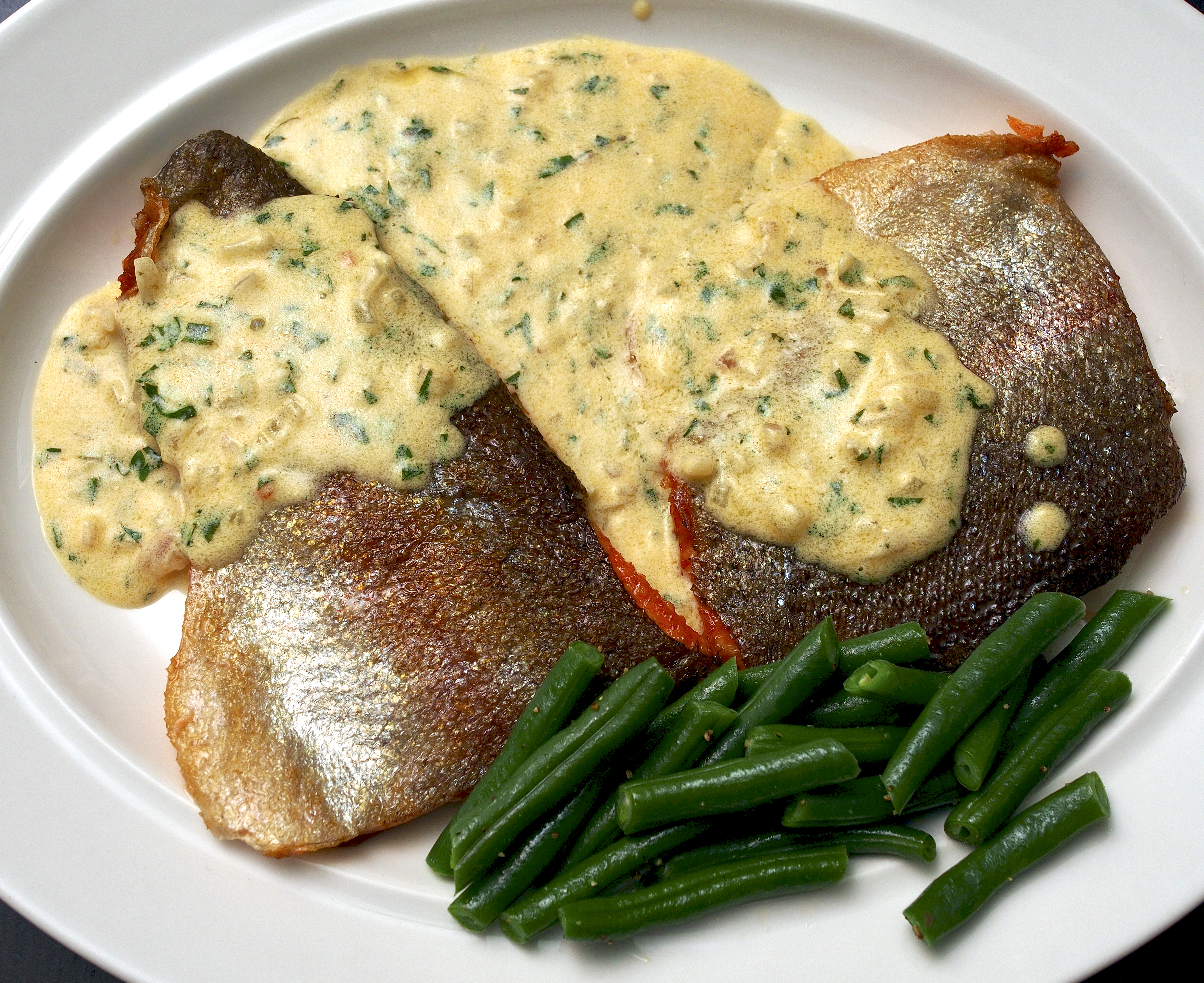
The rich sauce here is inspired by the sherry-like Savignin from the Jura. It’s a while since we’ve been there so we had to settle for dry sherry which still made a delicious sauce. Green beans and some new potatoes are perfect on the side.

Wine Suggestion: We think this works with a mountain wine of some sort, where you get the bracing freshness of altitude but can also get depth and body to stand up to the flavoursome sauce. In the absence of a Savignin in the fridge we turned to a Côtes du Jura Chardonnay by Chevasu-Fassenet. Rich, creamy, with hints of oak and a layer of oxidative flor mingled in with the fruit giving this a grip and extra zip.

Sautéed sea trout with sherry sauce – serves 2

  • 50g butter
  • 1 shallot, finely chopped
  • 60ml dry sherry
  • 300ml chicken stock
  • 100g full-fat crème fraîche
  • ½ tsp dry sherry
  • 1 tsp finely chopped parsley
  • a pinch of sugar
  • 2 tbsp olive oil
  • sea trout fillets, enough for 2

Heat 30g of the butter in a pan and gently cook the shallot until softened. Add the sherry and chicken stock, then reduced by three-quarters. Whisk in the crème fraîche and reduced for a couple of minutes, then whisk in the rest of the butter.

Reduce the sauce until it coats the back of a spoon, then take off the heat and add the extra ½ tsp of sherry and parsley. Season with a pinch of salt and sugar and keep warm.

Heat the oil in a large frying pan and cook the trout, skin-side down, for about 4 minutes. Turn when the skin is crispy and finish cooking briefly on the other side.

Serve with the sauce, some green beans and new potaotes.

(Original recipe from Rick Stein’s Secret France, BBC Books, 2019.)

Read Full Post »

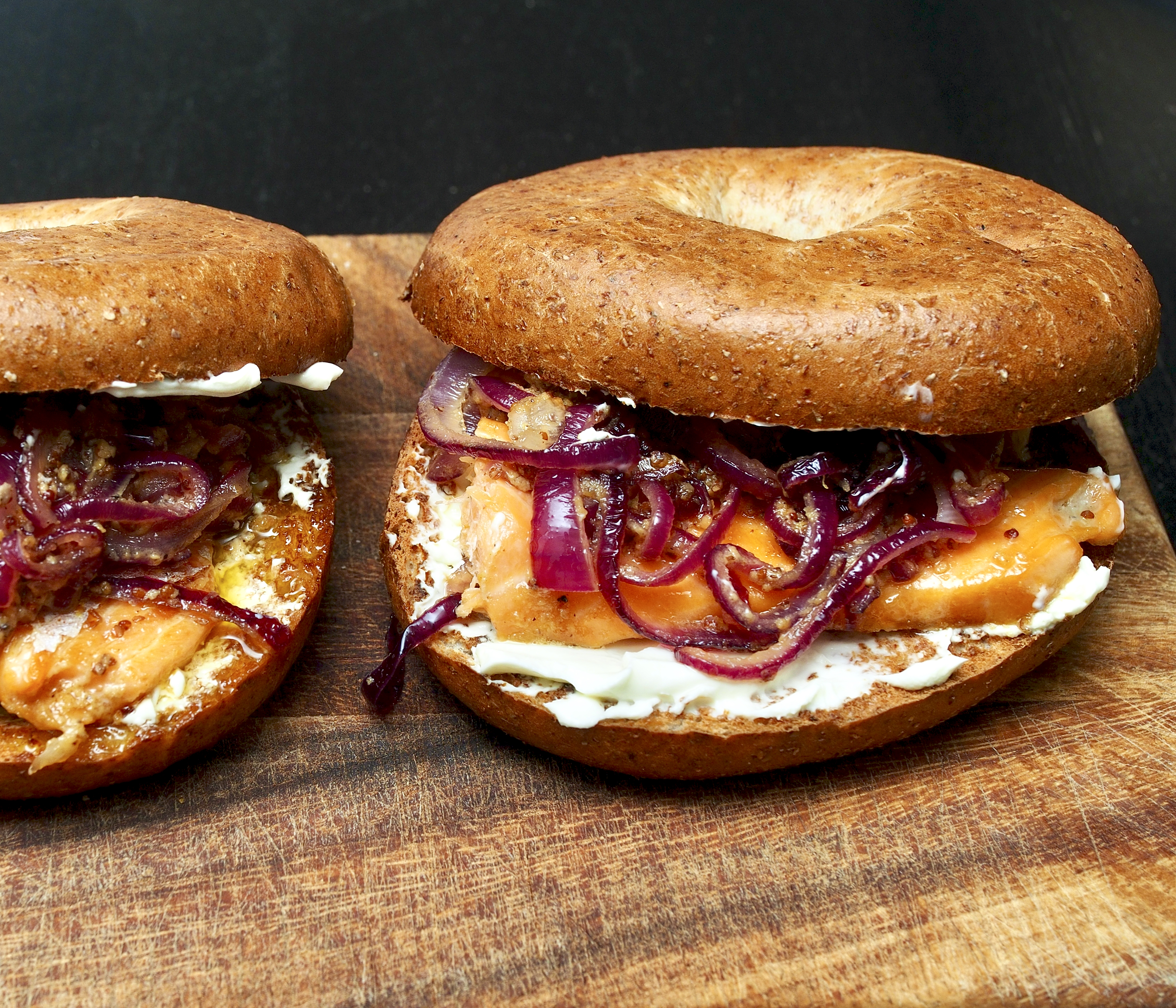
This brunch dish is from Camper Van Cooking by Claire Thompson and Matt Williamson. We cook in a tent which is a similar endeavour but sadly not this year. Still, it’s been fun trying out the recipes for when the time comes.

Hot-smoked trout bagels with mustard butter and cream cheese – serves 4

  • 5 tbsp butter, softened
  • 2 tsp Dijon mustard
  • 2 tsp wholegrain mustard
  • juice and finely grated zest of ½ a lemon
  • 1 small red onion, very thinly sliced
  • 150g-200g hot-smoked trout fillets (we used trout as we love the rainbow trout from Goatsbridge Trout Farm in Kilkenny) but you could also use hot-smoked salmon, break it into bite-size pieces
  • 4 wholemeal bagels
  • 150g full-fat cream cheese

Beat three-quarters of the butter with the mustards, lemon zest, black pepper and a little salt.

Melt the rest of the butter in a frying pan over a medium heat, then add the onion and cook for about 5 minutes or until softened.

Add the salmon pieces and heat through for a couple of minutes, then add the mustard butter and cook for another 5 minutes or until hot and the onions are very soft. Try not to break the salmon up too much.

Lightly toast the bagels and spread with the cream cheese, then add the salmon, sprinkle with lemon juice and serve.

(Original recipe from Camper Van Cooking by Claire Thomoson and Matt Williamson, Hardie Grant: Quadrille, 2021.)

Read Full Post »

Don’t pack the barbecue away yet, you really should make this first. The smoky potato salad is good even if the fish is not your thing.

Wine Suggestion: a new find from Portugal: the Companhia de Vinhos Invencival “Natural Mystic”. An Alvarinho, Arinto, Loureiro blend from the far north, this is light and fresh and yet rounded and full flavoured standing up to the barbecued fish flavours and adding it’s own extra bit of pizzazz for a great combo.

BBQ Bream with Smoked Potato Salad – serves 2 (with salad leftover)

  • 2 whole bream, gutted and fins and other sharp bits removed
  • 1 lemon, halved

SPICE RUB FOR THE FISH:

  • 3 sprigs of rosemary, leaves chopped
  • 4 tbsp olive oil
  • 1 tbsp flaky sea salt
  • 1 tsp smoked paprika
  • 2 tsp fennel seeds, lightly ground
  • 1 ½ tsp garlic powder

FOR THE SMOKED POTATO SALAD:

  • 800g cooked new potatoes
  • 3 tbsp mayonnaise
  • 3 tbsp crème fraîche
  • 6 celery sticks, finely chopped
  • 50g cornichons, sliced
  • 2 tbsp dill, roughly chopped
  • 2 tbsp finely chopped flat-leaf parsley

You will need to get a charcoal barbecue nice and hot to cook on.

Prep the fish first by placing on a board and slashing through the skin a few times on both sides.

Put all of the spice rub ingredients into a shallow dish, big enough to hold the fish, and mix together. Put the fish on top and rub the spice rub all over the fish and and into the cuts you made.

Lay the fish onto a hot barbecue and leave for 5-6 minutes to allow the skin to crisp up. Turn carefully and repeat on the other side.

Carefully remove the fish from the barbecue and leave to rest for a few minutes. Squeeze over the lemon halves.

Put the potatoes directly onto the cooling embers. Meanwhile, mix the rest of the potato salad ingredients together in a a large bowl and season. Add the smoked potatoes and toss to coat.

Serve the fish with the warm potato salad.

(Original recipe from Outdoor Cooking by Tom Kerridge, Bloomsbury Absolute, 2021.)

Read Full Post »

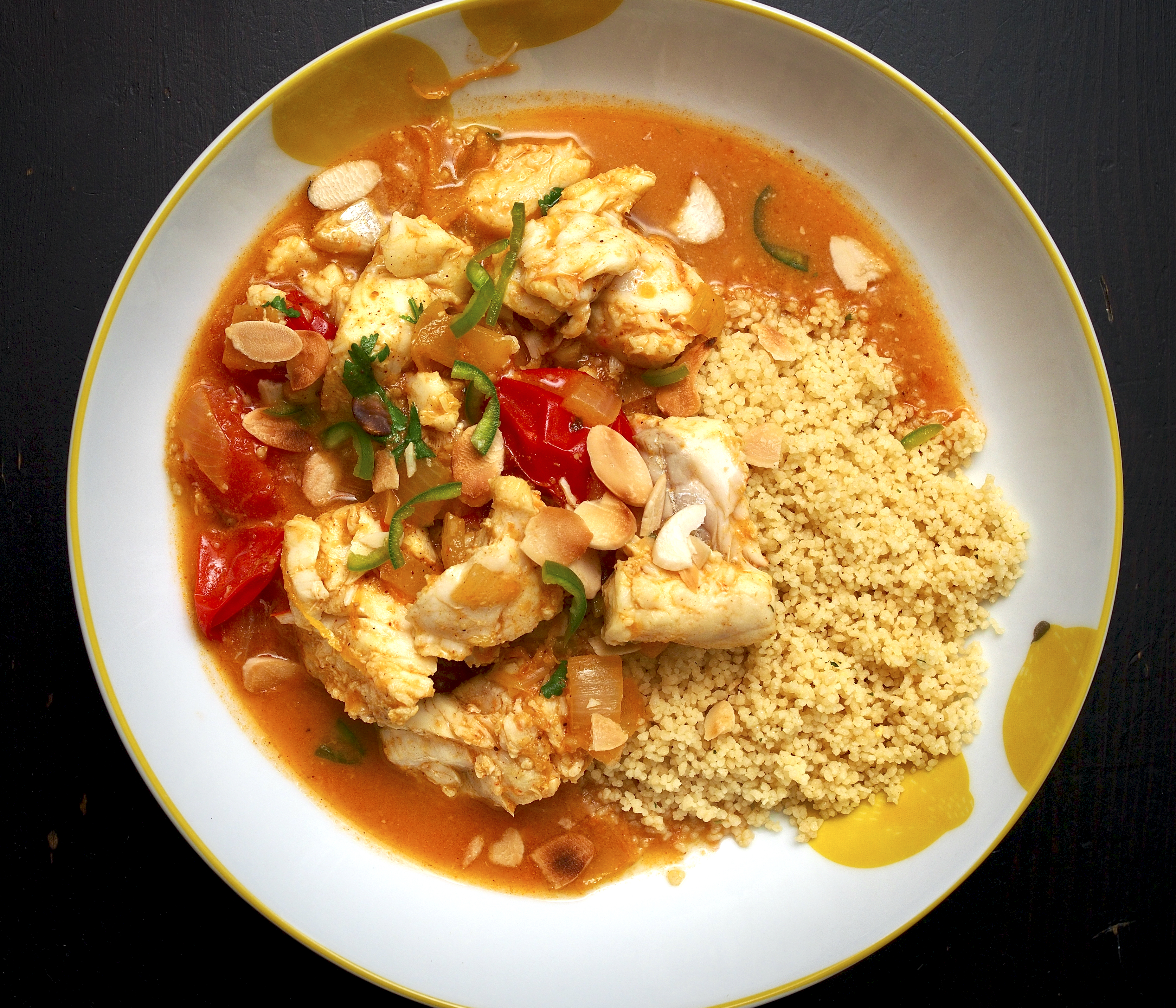
A Moroccan-inspired fish dish for mid-week. Some couscous and yoghurt on the side are good additions.

Wine Suggestion: this works well with Grenache Blanc and we’ve fallen in love with one from Terra Alta in the south of Catalonia made by Edetaria. As it’s mid-week, the basic and joyful “via Terra” Garnatxa Blanca with its perfume and balance af fresh and ripe fruit flavours is perfect.

Fish Tagine with Saffron & Almonds – serves 4

  • 1 tbsp olive oil
  • 1 onion, chopped
  • a good pinch of saffron
  • 600ml hot fish stock or chicken stock
  • 2 cloves of garlic, crushed
  • a thumb-sized piece of ginger, peeled and grated
  • ½ a green chilli, thinly sliced (keep the other half to serve)
  • 2 tsp ground cumin
  • 1 tsp ground coriander
  • 1 tsp cinnamon
  • 1 tbsp tomato purée
  • 10 cherry tomatoes, halved
  • 2 tbsp ground almonds
  • zest of 1 orange, juice of ½
  • 1 tbsp honey
  • 700g white fish, cut into large chunks, we used hake
  • a small bunch of coriander, chopped
  • a handful of flaked almonds, toasted
  • ½ green chilli, to serve

Heat the oil in a large pan. Add the onion and cook for a few minutes to soften.

Meanwhile, put the saffron in the hot stock and leave to steep.

Add the garlic, ginger and chilli to the pan and cook for another few minutes. Add the spices and tomato purée, stir for a few minutes until fragrant, then add the tomatoes, ground almonds, orange zest and juice, honey and saffron-stock. Simmer, uncovered, for 10 minutes, until the tomatoes have broken down and the sauce has thickened slightly.

Add the fish and nestle it well down into the sauce. Cover with a lid and simmer on a low heat for 2-3 minutes or until just cooked. Season to taste, then add the coriander and scatter with the toasted almonds. Scatter with the extra green chilli to serve.

(Original recipe from BBC Good Food)

Read Full Post »

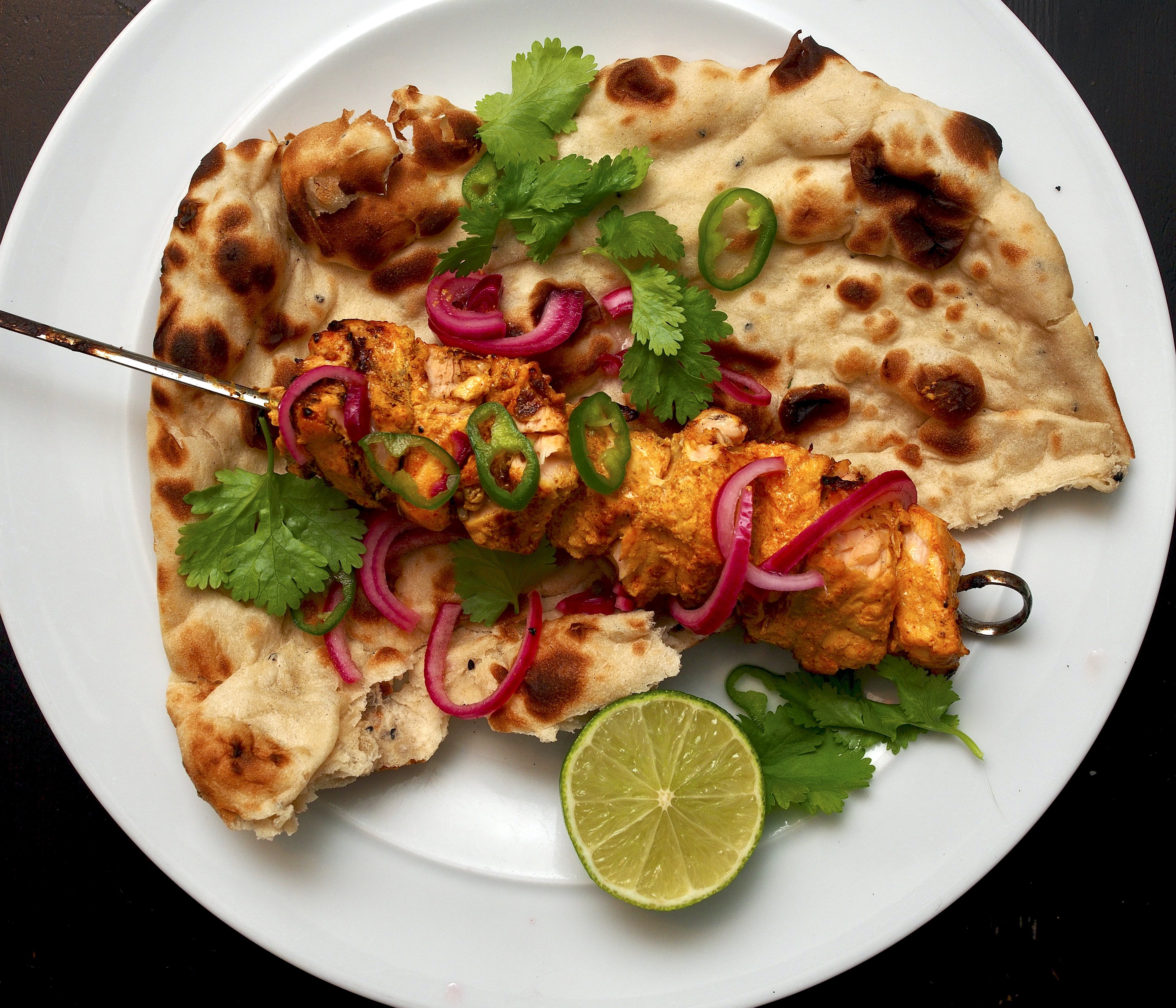
These are super tasty, especially with the quick pickled onions and some naan breads from the takeaway.

Wine Suggestion: Cline Cellar’s Sonoma Coast Viognier; a wonderfully fresh, stonefruit flavoured wine with a soft acidity. Rich and flavoursome to match the flavour depth of salmon and spices. This is dry with low residual sugar levels, however it has juicy, fruit flavours carrying the chilli and paprika well and complementing the ginger and lime.

Tandoori Fish Skewers – serves 8 (easily halved)

  • 8 salmon fillets, skin removed (about 125g each)
  • 2 large garlic cloves, grated
  • 2.5 cm piece of ginger, grated
  • juice of 1 lime
  • 200g Greek yoghurt
  • 1 tsp Kashmiri chilli powder
  • 1 tsp ground turmeric
  • 1 tsp ground cumin
  • 2 tsp ground coriander
  • 2 tsp sweet smoked paprika
  • veg oil for brushing

FOR THE QUICK PICKLED RED ONIONS:

  • 2 small red onions
  • 125ml water
  • 125ml white white vinegar
  • ½ tsp fennel seeds
  • ½ tsp cumin seeds
  • 1 tbsp salt
  • 2 tbsp sugar

TO SERVE:

  • warm naan breads
  • a handful of coriander leaves
  • 1 long green chilli, finely sliced
  • lime halves
  • sweet chilli sauce

You can start the pickled onions about an hour ahead. Slice them finely and put into a bowl.

Put the water, wine vinegar, fennel and cumin seeds, salt and sugar into a small pan over a medium heat and stir until the sugar has dissolved. Pour this hot liquid over the onions and leave to cool, then cover the bowl and leave in the firdge.

Cut the salmon fillets into large chunks. Put into a bowl with the garlic, ginger and lime juice and mix well.

Put the yoghurt into a bowl, then mix in the spices and some seasoning. Add the spiced yoghurt to the salmon and mix gently, then leave to marinate in a cool place for about 20 minutes.

Thread the salmon onto skewers, brush the barbecue witha little veg oil, then cook for 2-3 minutes on each side until lightly charred.

Serve the skewers on warm naan breads with pickled red onions, coriander and green chilli sprinkled over. Serve with some lime for squeezing over and sweet chilli sauce (we served with our hot pepper jam).

(Original recipe from Outdoor Cooking by Tom Kerridge, Bloomsbury Absolute, 2021.)

Read Full Post »

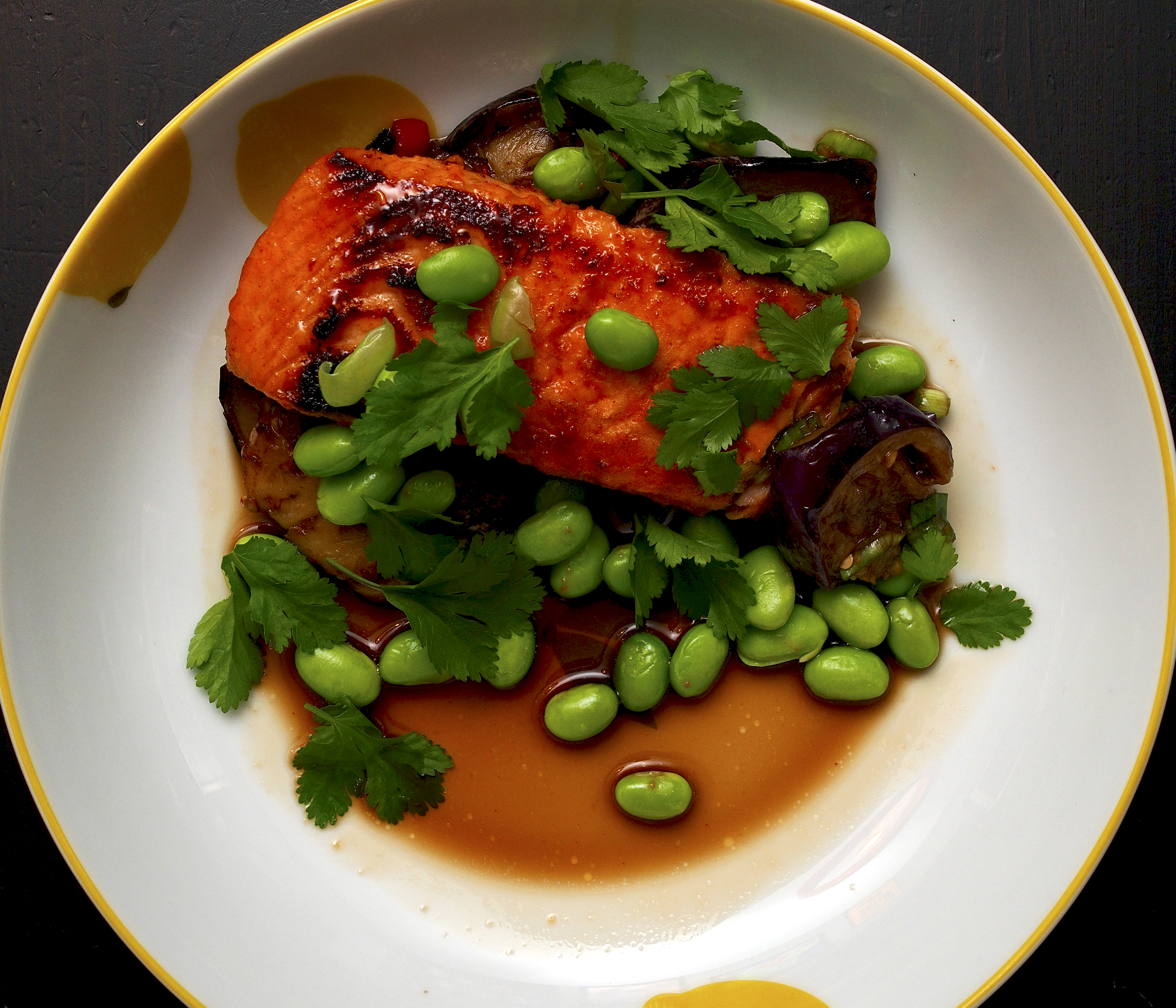
This dish was inspired by the prettiest striped baby aubergines in our local grocers. The recipe is from a new book of ours, Australian Food by Bill Granger. We all loved this dish, jam-packed with Asian flavours and truly delicious. You need to marinade the salmon the day before. Serve with rice.

Wine Suggestion: A friend had given us a bottle of Albert Pic Chablis which we found a surprising match for this dish as we’d thought the aromatics, chilli and spices might fight the wine, but no! A relatively rich and full-flavoured Chablis, the dryness inherent in the wine just accentuating and complimenting the umami savouriness through the dish. We like surprises.

Chilli miso salmon with hot & sour aubergine – serves 4

  • 4 tbsp sugar
  • 4 tbsp mirin
  • 2 tbsp sake
  • 6 tbsp white miso paste
  • 2 tbsp gochujang paste
  • 4 x 250g pieces skinless salmon fillet
  • 100g frozen edamame beans
  • a small handful of pea shoots (if you can find them, don’t worry if not)
  • a handful of coriander leaves
  • lime wedges, to serve

FOR THE HOT & SOUR AUBERGINE:

  • 125ml light flavoured oil, for frying
  • 4 baby aubergines, thickly sliced
  • 100ml tamari soy sauce (if you don’t have this use dark soy instead)
  • 100ml mirin
  • 50ml rice vinegar
  • 1 tbsp runny honey
  • 1 small chilli, finely sliced
  • 4cm piece fresh ginger, peeled and sliced into matchsticks
  • 2 scallions, finely sliced

You need to marinade the salmon fillets the day before. Make the marinade by mixing the sugar, mirin and sake together in a small pan and bring to the boil. Reduce the heat and simmer for 2-3 minutes, stirring until the sugar has dissolved. Take off the heat and whisk in the miso, then stir in the gochujang paste and leave to cool.

Put the salmon into a dish, cover with the marinade, then cover and leave overnight in the fridge.

To make the hot & sour aubergine, heat the oil in a large frying pan over a medium heat. Shallow-fry the aubergine in batches, turning after 1 minute, until golden and tender. Drain on kitchen paper.

To make the dressing for the aubergine, whisk together the tamari, mirin, rice vinegar and honey in a large bowl. Whisk in the chilli, ginger and scallions. Add the cooked aubergine and toss gently to coat. Set aside.

Cook the edamame beans according to the instructions on the pack, then drain.

Lift the salmon pieces out of the marinade. Heat a large frying pan over a medium-high heat and cook the salmon for 6-8 minutes, turning once.

Serve the aubergine and salmon with the edamame, pea shoots and coriander sprinkled over and with lime wedges on the side.

(Original recipe from Australian Food by Bill Granger, Murdoch Books, 2020.)

Read Full Post »

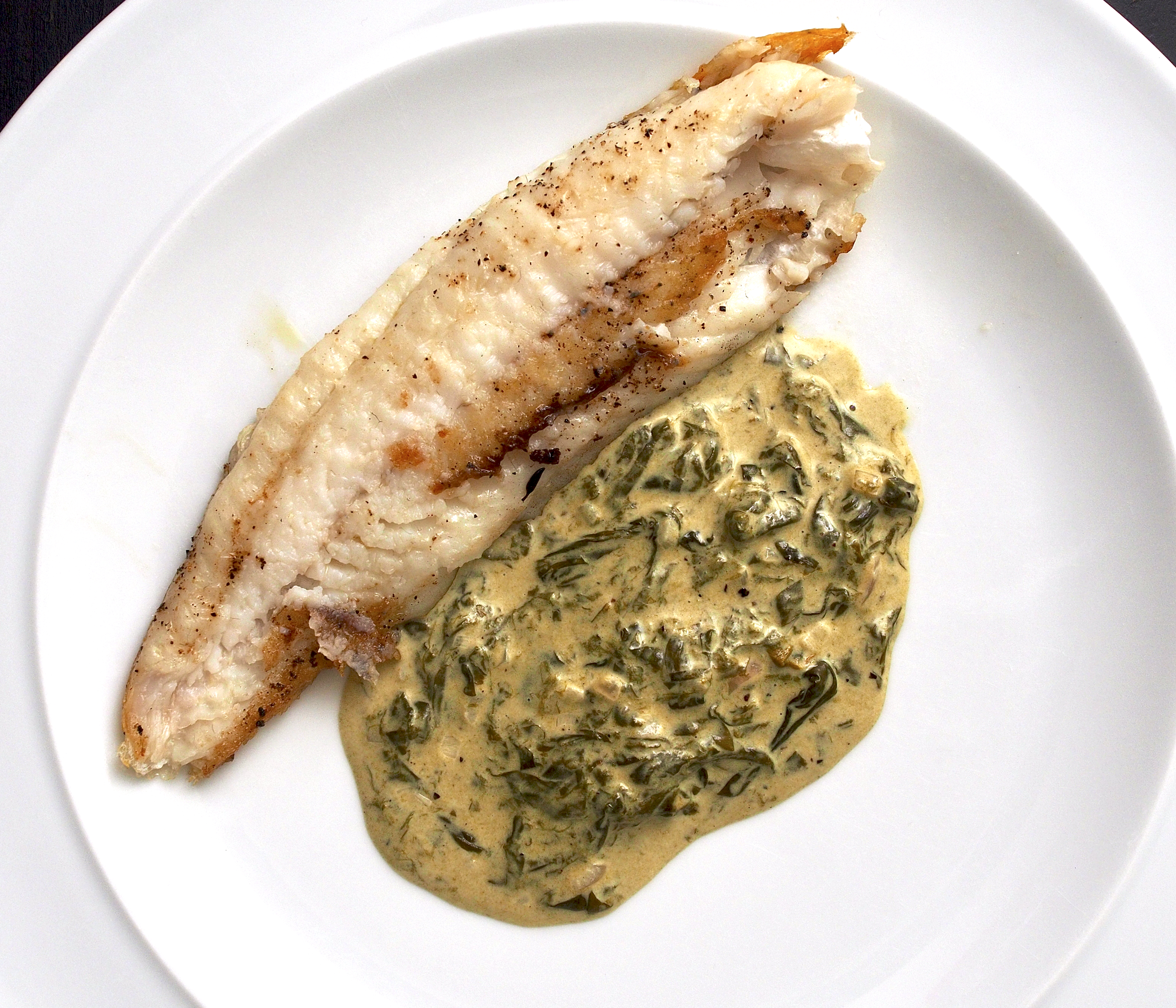
We don’t cook with sorrel very often, perhaps once or twice a year when we see it and grab a bag. It has an unusual sour and citrussy flavour that always reminds us of holidays in France. Sorrel sauce is an excellent match for fish and goes particularly well with brill as expertly suggested by Gill Meller. A few crispy potatoes on the side would be a good addition.

Wine Suggestion: This goes great with a dry Chenin Blanc, like one of our favourites the Chateau du Hureau Argile which always has great depth of flavour alongside a crisp zestiness and dry texture, bound together with a lemony, citrus zing – very complimentary to the sorrel and able to match the rich cream and fish.

Brill with sorrel sauce – serves 4

  • 4 brill fillets (120-150g each), skin on
  • 1 tbsp olive oil
  • 4 bay leaves
  • 2-4 thyme sprigs
  • 2 garlic cloves, skin on and bashed
  • a small knob of butter

FOR THE SAUCE:

  • a large knob of butter
  • 1 shallot, very finely diced
  • 100ml fish stock if you have it though water will be fine
  • a large bunch of sorrel (about 150g), stalks removed and cut into rough ribbons
  • 150ml double cream

Make the sauce first. Melt the butter in a small saucepan, then add the chopped shallot and cook until soft but not coloured. Pour in the stock/water and simmer until the liquid has almost evaporated.

Add the sorrel leaves and stir a few times until wilted. Add the cream, stir, and bring the sauce to a simmer. Cook for a couple of minutes to thicken it slightly. Season with salt and pepper, then cover with a lid and set aside.

Season the fish all over. Heat the oil with the bay leaves, thyme and garlic, in a large non-stick frying pan on a medium-high heat. Put the brill into the hot pan, skin-side down and cook for 5-6 minutes, until the fish is cooked at least three-quarters of the way up its edge. Turn the fish with a spatula and cook for a minute more on the other side, then add a small knob of butter and remove from the heat. Rest for a minute as the butter belts.

Serve the brill with the sauce on the side.

(Original recipe from Gather by Gill Meller, Quadrille, 2017.)

Read Full Post »

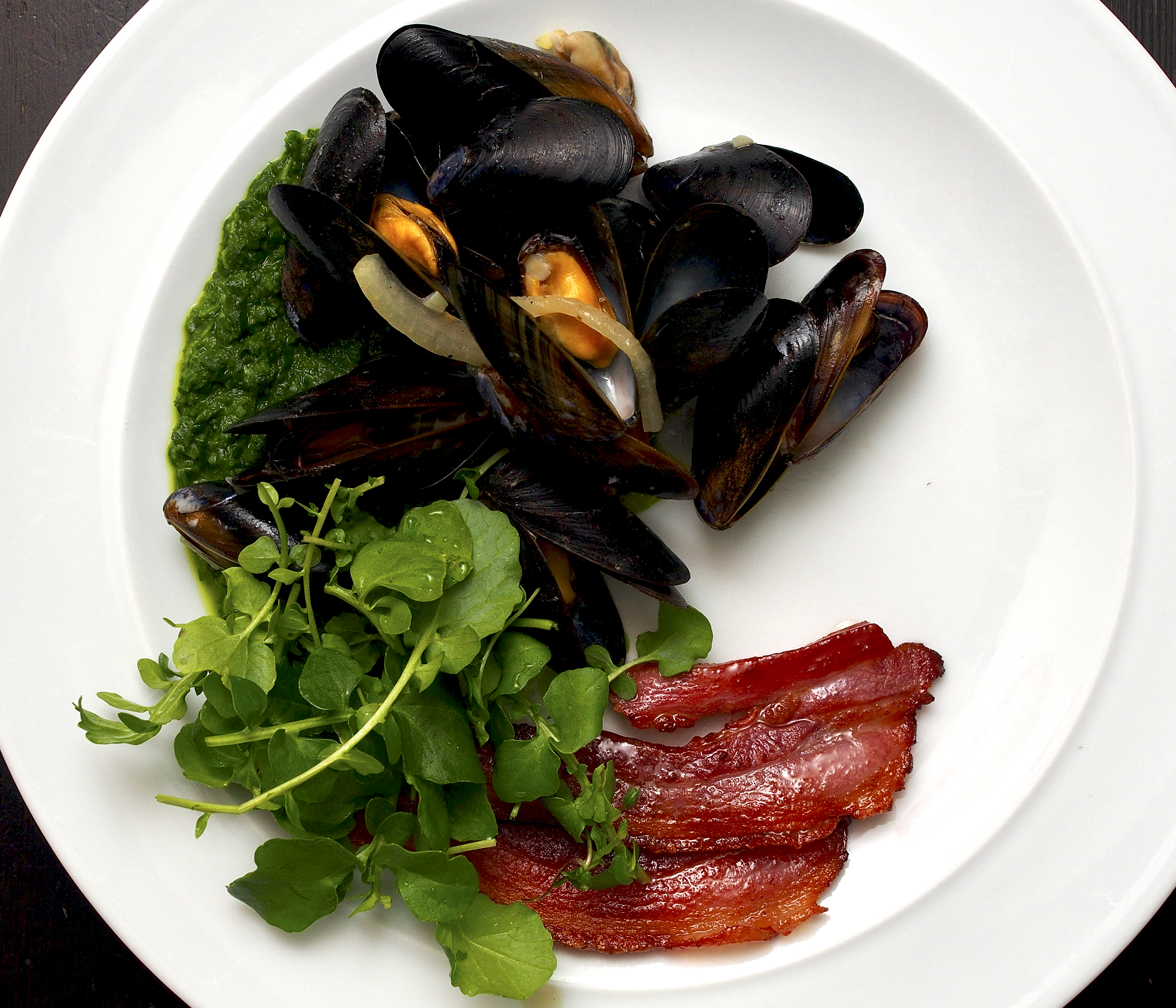
We loved this mussel dish from Gill Meller’s book, Gather. Mussels, watercress and bacon are a truly fabulous combination, but not one we’d thought of before. Our farm shop had landcress rather than watercress available so that’s what we used, but it’s very similar, just not grown in running water. Cleaning mussels is a job I love and hate in equal measure, same with cleaning mushrooms. 

Wine Suggestion: A new find – the Quinta de Chocapalha Arinto from near Lisbon in Portugal; zesty citrus and hints of saltiness. So fresh and tasting of days at beachside restaurants eating mussels, helpful when travel is restricted.

Mussels with watercress and bacon – serves 2

  • 2-4 rashers streaky bacon
  • a small knob of butter
  • ½ a small onion, sliced
  • 1 clove of garlic, peeled and sliced
  • 1kg mussels, cleaned
  • 150g watercress, plus extra to serve

Heat a splash of olive oil in a frying pan, then cook the bacon for 6-8 minutes, or until crispy. Keep warm.

Put a knob of butter and a spoon of bacon fat from the pan into a large sauce pan. Heat until bubbling, then add the onions and garlic and season with a little salt and pepper. Cook for a few minutes or until the onion is soft but not coloured, then add the mussels with 2 tbsp of water. Bring to the boil, then cover the pan with a lid and shake gently. Cook the mussels for a couple of minutes or until the shells are just open. Throw away any that don’t open.

Use a slotted spoon to remove the mussels from the pan into a warm bowl, leave the onion and cooking liquor behind on the heat. Cover the mussels with a tea towel and put somewhere warm. You need to work quickly now to make the sauce while the mussels stay warm.

Put the watercress into the pan and cook for a minute or two until wilted, then tip into a  food processor and purée until smooth. This should be quite thick so if it’s too liquid, put it back into the pan and boil off the excess liquid over a high heat.

Put a generous spoon of purée on each plate with the mussels, crispy bacon and a little fresh watercress.

(Original recipe from Gather by Gill Meller, Quadrille, 2017.)

Read Full Post »

We’ve tried this Spanish pasta dish before, but with limited success, however this version was a triumph. We had the proper fideos noodles this time which we think might have helped. As we can’t go on holidays at the moment we thought we’d cook holiday dishes instead. Serve with some aïoli.

Wine Suggestion: this dish cries out for a fresh Garnacha like the Edetaria via Terra which is from Terra Alta DO in the south of Catalonia. Inland, at some altitude and on specific soils this area produces some of the best wines from this grape anywhere with a freshness and weightlessness from lovely ripe grapes.

Prawn fideua – serves 4

  • olive oil
  • 1 onion, finely chopped
  • 1 red pepper, finely chopped
  • 100g chorizo, thinly sliced
  • 3 cloves of garlic, finely chopped
  • 1 tsp sweet paprika
  • a pinch of saffron strands
  • 1 tsp salt
  • 400g tin of plum tomatoes, lift the tomatoes out of the juice with a spoon and discard the juice left in the tin
  • 350g fideos noodles
  • 600ml freshly boiled water
  • 400g whole shell-on prawns
  • lemon wedges, to serve

Cover the base of a paella or sauté pan with olive oil, then warm over a medium heat. Add the onion, pepper, chorizo and garlic and cook for about 10 minutes or until the onions and peppers are soft.

Add the paprika, saffron and salt and stir over the heat for a minute, then add the tomatoes – squeezing them with your hands as you add them to the pan to break them up. Cook for 2 minutes to thicken.

Add the fideos noodles and stir to coat well, then add the boiled water. Cover and cook for 5 minutes, then spread the prawns over the surface and cook uncovered for another 5 minutes, or until the water has evaporated and a crust is forming on the bottom of the pan. The prawns will turn pink when cooked, you can turn them over to help them along.

Remove from the heat and rest for 5 minutes before serving with lemon wedges and aïoli.

(Original recipe from New Kitchen Basics by Claire Thomson, Quadrille, 2019.)

Read Full Post »

« Newer Posts - Older Posts »