Feeds:
Posts
Comments

Archive for the ‘Food’ Category

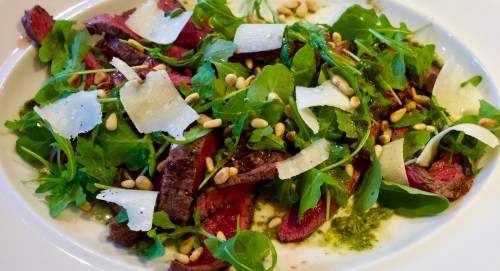
Italian seared beef

So this is a bit of a treat and yet has very few ingredients and takes very little time to prepare. Hail to that.

Wine Suggestion: fresher and bit more rustic than Bordeaux is Bergerac, into the Dordogne River to the east. The best vineyards are in the Pecharmant AC and have Cabernet Sauvignon, Cabernet Franc and Merlot as the dominant varieties. We found some unoaked wines on our last trip from Domaine des Costes, Cuvée Tradition which, while simple, had a joy and juiciness that perfectly complemented the beef, pesto and rocket.

Italian Seared Beef – serves 2

  • 1 tbsp pine nuts, toasted in a dry pan until golden
  • 250g rump steak
  • 2 heaped teaspoons pesto
  • 40g rocket
  • 15g Parmesan cheese

Put a large non-stick frying pan over a high heat. Cut the fat of the steak, finely chop the fat and put into the hot pan to crisp up. Cut the sinew off the rump and season with salt and black pepper. Put the steak between two sheets of greaseproof paper and bash with a rolling pin until it is an even thickness of about 1 cm. Scoop out the crispy fat and set aside, then sear the steak in the hot pan for 1 minute per side or until golden but still pink in the middle (as per photo). Remove the steak to a board to rest.

Spread the pesto over a serving plate. Thinly slice the steak at an angle and scatter over the plate. Pile the rocket on top, then scatter over the pine nuts and crispy fat (you don’t have to eat the fat if you would rather not –  we’ll have it!). Mix the resting juices with a tbsp of good olive oil and drizzle over. Shave the Parmesan over to serve.

(Original recipe from 5 Ingredients by Jamie Oliver, Michael Joseph, 2017.)
Read Full Post »


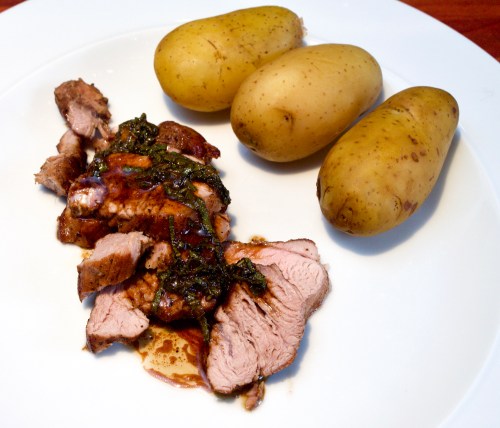
Pork tenderloin with madeira & sage

We cooked this just before we went on holidays and were determined not to buy any ingredients that needed used up. We have a huge sage bush in the garden that we definitely under-utilize and there are always bottles of all sorts of beverages lurking in the back of our cupboards. Madeira lasts forever, even when opened which is very useful.

Wine Suggestion: The madeira sauce with the sage is richer than you may expect and we find it works with juicy Côtes du Rhône reds, especially with a good dollop of Grenache. We had an uncomplicated Reserve des Armoiries which was juicy and had hints of Southern French spices made without oak; complimentary and almost celebratory of our impending holiday with its joyful fruit.

Pork tenderloin with madeira and sage – serves 4

  • butter
  • 1 pork tenderloin c. 400g
  • 100ml madeira
  • a small bunch of sage, leaves picked and chopped

Heat the oven to 220C/Fan 200C/Gas 7.

Heat a knob of butter and a splash of olive oil in an ovenproof frying pan. Season the pork and brown really well on all sides to form a crust. Add the madeira then transfer to the oven and cook for 15-20 minutes.

Remove the meat from the pan, cover with foil and leave aside to rest for 10 minutes. Meanwhile, reduce the pan juices with another knob of butter on a low heat, and season.

To serve, cut the pork into thick slices, then dress with the pan juices and lots of chopped sage.

(Original recipe by Alex Szrok in BBC Olive Magazine, May 2016.)

Read Full Post »

Linguine with Creamy Tomato, Rosemary & Caper Sauce

Super simple weeknight pasta that tastes delicious.

Wine suggestion: A youthful Sangiovese from Tuscany is our pick with the wine at hand the Rocca delle Macie Vernaiolo which we find a great unoaked and fresh red wine. We like to put it in the fridge for 30 minutes before opening at this time of the year.

Linguine with creamy tomato, rosemary & caper sauce – serves 2

  • 2 cloves of garlic, crushed
  • a pinch of chilli flakes
  • 2 tsp chopped rosemary
  • 1 tin of plum tomatoes
  • 1 tbsp capers
  • 3 tbsp double cream
  • 150g linguine
  • Parmesan, grated, to serve

Heat 1 tbsp of olive oil in a saucepan. Add the garlic and cook for a couple of minutes, then add the chilli & rosemary and cook for another minute. Add the tin of tomatoes.

Simmer the sauce for 20 minutes, squashing the tomatoes with a wooden spoon occasionally so they break down into a thick sauce. Add the capers and cream and simmer for another 3-4 minutes.

Meanwhile, cook the linguine according to the pack, then drain well. Tip the pasta into the sauce and toss together. Serve in warm bowls with some Parmesan for sprinkling over.

(Original recipe by Janine Ratcliffe IN: BBC Olive Magazine, May 2015.)


Read Full Post »

Chicken Saltimbocca

This is an easy version of an Italian dish which is perfect for a tasty mid-week dinner. A great combination of chicken, ham & sage. Also easily halved if you are only two.

Wine Suggestion: When considering a match for the salty prosciutto and savoury sage we thought of two wines straight away. The first a good Verdicchio dei Castelli di Jesi from the Marche in Italy, like Sartarelli. The second a choice between a good Pinot Blanc or Gris from Alsace. Each should have a minerality, nuttiness and textural spices on the palate with a good balance of vibrant fruit.

Chicken saltimbocca – serves 4 

  • 4 chicken breasts (skinless & boneless)
  • 8 thin slices of prosciutto
  • 8 sage leaves
  • 2 tbsp plain flour, seasoned
  • 4 tbsp extra virgin olive oil
  • 25g butter
  • 100ml dry white wine
  • juice of ½ a lemon
  • 1 tbsp finely chopped parsley

Flatten the chicken breasts between two sheets of cling film by bashing with a rolling pin. Cut the flattened chicken in half lengthways. Put a piece of prosciutto and a sage leaf onto each piece of chicken and attach with a cocktail stick. Coat the chicken in the flour.

Heat half the oil in a large frying pan and cook 4 of the chicken pieces at a time for 3 minutes on each side or until golden brown but a little undercooked. Set aside and cook the rest of the chicken in the remaining oil.

Wipe out the frying pan with a piece of kitchen paper, then add the butter. Heat until frothy, then add the wine and lemon juice and bring to the boil. Bubble the sauce for about a minute before adding all of the chicken back to the pan and cooking for a further 2 minutes. Sprinkle the parsley over the top and cook for another minute, then serve immediately with the sauce.

Serve with new potatoes or green veg.

(Original recipe by Aldo Zilli IN: BBC Good Food Magazine, May 2001.)


Read Full Post »

Chargrilled Pepper & Lime Chicken with Lime Aïoli

We’re just back from holidays in France and there seems to be a little heatwave going on. You can’t get more straight forward than this for tasty barbecued chicken and a cheat’s aïoli. Less time spent inside and more time to sit in the sun. We actually cooked this back in May when the sun was also shining – serve with some seasonal veg or salad.

Wine Suggestion: one of the wines we picked up on our trip was Chateau du Hureau’s Foudre blanc, 100% Chenin Blanc made and matured in large 20hl oak casks. A good choice.

Chargrilled pepper chicken with lime aïoli – serves 2

  • 4-6 skinless boneless chicken thighs
  • 1 lime, juiced
  • 4 tbsp mayonnaise
  • ½ a clove of garlic, crushed

Trim any big bits of fat off the chicken thighs. Lay them out on a piece of cling film and put another piece of cling film on top. Gently bash the chicken with a rolling pin to flatten.

Put the chicken into a dish and add half of the lime juice, 1 tbsp of olive oil, some salt and lots of black pepper. Leave to marinate for about 15 minutes.

To make the aïoli, put the mayonnaise into a dish and add the rest of the lime juice, the garlic and some seasoning. Stir together until combined.

Shake off excess marinade and cook the chicken on a hot griddle or barbecue for about 4 minutes on each side.

Serve with the aïoli. Some chips would also be good.

(Original recipe from BBC Olive Magazine, June 2011.)


Read Full Post »

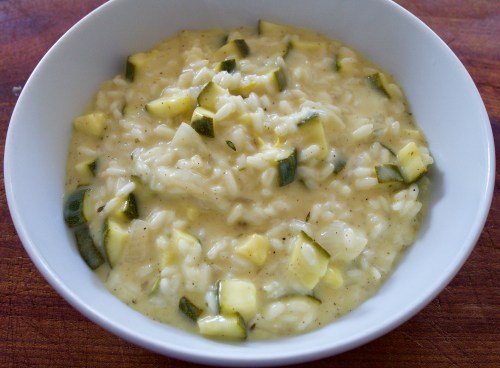
Courgette & lemon risotto

A weekend lunch treat for the three of us as we had courgettes lying around begging to be used.

Wine Suggestion: a crunchy white was demanded here and an old favourite was opened to match; the Chateau du Hureau Saumur Blanc “Argile”. A vibrant Chenin Blanc with texture, vibrant, crunchy, apply fruit plus a real sense of place.

Courgette & lemon risotto – serves 2

  • 50g butter
  • 1 onion, finely chopped
  • 1 large garlic clove, crushed
  • 180g risotto rice
  • 1 litre of hot vegetable stock
  • zest and juice 1 lemon
  • 2 lemon thyme sprigs
  • 250g courgette, diced
  • 50g parmesan, grated
  • 2 tbsp crème fraîche

Melt the butter in a deep frying pan and gently fry the onion until softened, about 8 minutes. Add the garlic and stir for another minute. Pour in the rice and stir for a couple of minutes until it glistens.

Add a ladle of the stock to the rice, along with the lemon juice and thyme. Bubble over a medium heat, stirring constantly. When almost all the liquid has been absorbed, add another ladle and continue to stir. Tip in the courgette and keep adding the stock, stirring every now and then until the rice is just tender and creamy.

Season to taste and stir in the lemon zest, Parmesan and crème fraîche.

(Original recipe from BBC Good Food)

Read Full Post »

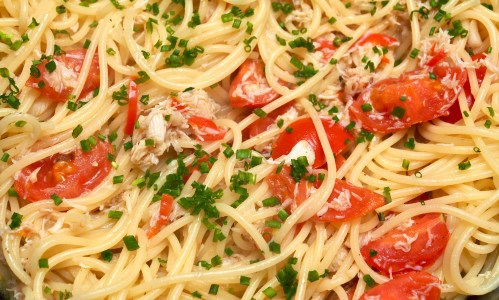
Spaghetti with crab, cherry tomatoes & fresh chillies

This is really simple and fresh and we love it on a Friday night with a glass of chilled white wine. By all means cook a crab but our local fish shop sells cooked and picked crabmeat which makes this extra quick and easy.

Wine Suggestion: One of our stand-by wines for seafood is Muscadet and for this dish it was a good choice. A long standing favourite, the Domaine de la Chauviniere Muscadet sur lie always has good fruit, great texture and freshness and accentuated the flavours of the crab in a very nice way.

Spaghetti with Crab, Cherry Tomatoes and Chillies – serves 4

  • 500g spaghetti
  • 8 tbsp extra virgin olive oil
  • 2 garlic cloves, finely sliced
  • 1 medium hot red chilli, deseeded and finely sliced
  • 200g cherry tomatoes, halved
  • 100ml white wine
  • 200g white crabmeat
  • 3 tbsp freshly chopped chives

Cook the pasta in a very large pot of boiling salty water until al dente.

Meanwhile, gently heat the oil in a large frying pan and fry the garlic and chilli for 30 seconds.

Add the tomatoes and cook for 2 minutes before adding the wine and bringing to a simmer. Add the crab and cook for a minute to just warm through.

Drain the pasta well and tip into the pan with the crab sauce. Stir to combine, sprinkle over the chives, and serve.

(Original recipe from Pronto! by Gino D’Acampo, Kyle Books, 2014.)

Read Full Post »

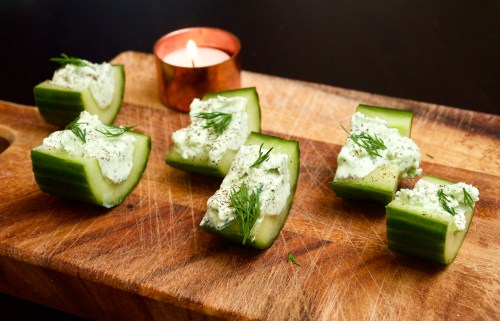
Feta & Cucumber Bites

We served these on New Year’s Day with other canapés but by the time we’d typed up the recipe we thought everyone might be a bit partied out. So we’ve saved this post for summertime when these tasty bites would be delicious served outside with cool drinks before dinner.

Feta & Cucumber Bites – makes 24

  • 1 garlic clove, crushed
  • 200g feta
  • 100g ricotta
  • 4 tbsp chopped dill, plus extra fronds, to garnish
  • 1 large cucumber, halved lengthways, seeds scooped out and discarded

Whizz the garlic, feta, ricotta and dill in a food processor until smooth but thick.

Fill the scooped out cucumber with the cheese mixture and smooth over. Cut into 3-cm thick slices. Grind over some black pepper and garnish with some more dill.

(Original recipe from BBC Good Food.)

Read Full Post »

Spiced Shepherd's Pie with Parsnip Mash

There’s definitely a move away from comfort food in our house but a bunch of fine looking Irish parsnips were just too hard to resist and why not enjoy them for a while longer.

Wine Suggestion: we opened the Cline Lodi Zinfandel from California and it was delicious with this.

Spiced Shepherd’s Pie with Parsnip Mash – serves 4

  • 1 large onion, chopped
  • 2 celery sticks, finely chopped
  • 2 carrots, finely chopped
  • 500g lamb mince
  • 1 heaped tsp ground cumin
  • ¼ tsp cinnamon
  • a good pinch of chilli flakes
  • 2 good tsp of plain flour
  • 2 tbsp tomato purée
  • 400ml lamb or chicken stock

FOR THE MASH:

  • 1kg parsnips, peeled and cut into chunks
  • butter
  • cream/crème fraîche

Put the parsnips in large pot and cover with cold water, season with salt and simmer for 15 to 20 minutes or until very tender. Drain well and mash with plenty of butter, a splash of cream and seasoning.

Meanwhile, heat 1 tbsp of oil in a pan and cook the onion, celery and carrot with a pinch of salt for about 5 minutes or until softened. Turn up the heat then add the lamb and cook until browned. Add the spices and continue to cook for another minute, then stir in the flour and cook for a minute more.

Stir in the tomato purée and stock then simmer for about 15 minutes until thickened.

Heat the oven to 200C/Fan 180C/Gas 6.

Tip the lamb into a baking dish and top with the parsnip mash. Use a fork to mark the top and dot with a little more butter. Bake for 25 to 30 minutes or until browned and bubbling.

(Original recipe by Janine Radcliffe IN: BBC Olive Magazine, May 2014)

Read Full Post »

Pasta with broccoli & gorgonzola

This is particularly good with purple sprouting broccoli when it’s around. Don’t be tempted to strip off the leaves they’re just as good to eat as the florets. Hardly a recipe at all but very satisfying.

Wine Suggestion: try an Italian white from the Marches or Abruzzo. Our choice this evening was the La Piuma (feather) Pecorino Terre di Chieti; charming fruit and with little twists of nuts, herbs and citrus that played with the food in a great way.

Cheese & broccoli pasta – serves 2

  • 200g pasta (use whatever you have)
  • a bunch of purple sprouting broccoli – about 6 to 8 stems (or a head of ordinary broccoli)
  • about 250g of ripe Gorgonzola

Cook the pasta in a generous amount of boiling salty water.

Cut the broccoli into small florets and thin pieces of stalk (discard any thick woody stems).

Lightly salt another pan of boiling water and cook the broccoli for a few minutes or until tender.

Put the cheese into a large warm bowl, then add the hot drained broccoli followed by the lightly drained pasta (a bit of water will help make a sauce). Stir until melting and serve.

(Original recipe from Appetite by Nigel Slater, Fourth Estate, 2001)

Read Full Post »

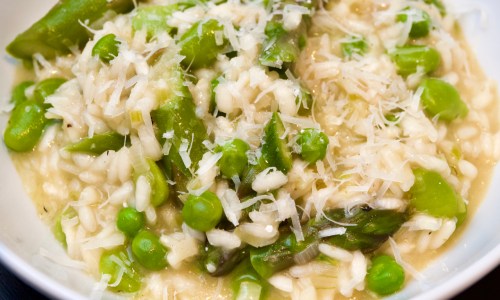
Risotto Primavera

Do it now when there is lots of asparagus in the shops! If you have peas and broad beans growing you should of course use these rather than our frozen substitutes.

Wine Suggestion: we had opened a delightful Touraine Sauvignon Blanc from Domaine Octavie which not only matched the food, it also matched the sunshine with us this evening.

Risotto Primavera – serves 4

  • 200g frozen broad beans
  • 4 medium shallots, finely chopped
  • 3 scallions, finely chopped
  • 1 small garlic clove, finely chopped
  • 250g asparagus, woody ends snapped off and chopped into 4 pieces
  • 1.3 litres of good chicken or vegetable stock – homemade if you have it
  • 1 tbsp olive oil
  • 85g butter
  • 350g Carnaroli or other risotto rice
  • 100ml dry white wine
  • 140g frozen peas, defrosted
  • 100g Parmesan, finely grated

Tip the broad beans into boiling water and simmer for 1 minute, then drain and remove the skins.

Meanwhile, bring the stock to the boil in a saucepan.

Heat the oil and half the butter in a heavy, wide pan. Add the shallots, scallions & garlic and cook for a few minutes until soft and translucent but not browned.

Keep the heat at medium and add the rice to the pan and stir for a few minutes so it gets toasted and very hot. When it starts to hiss, pour in the wine and stir for another minute or so until the wine has evaporated.

Set a timer for 20 minutes, then start adding the stock starting with a ladle and a half. It should be gently simmering and you need to stir continuously until the liquid had been absorbed. Keep adding the stock a ladleful at a time and allowing it to be absorbed before adding another.

After 14 minutes, add the beans and peas to the rice with some seasoning. Meanwhile, add the asparagus pieces to the simmering stock and cook for 4 minutes, then remove with a slotted spoon and add to the rice. Start tasting the rice to check if it is done – you’re looking for soft rice with a little bite. Keep adding stock until cooked, then take the pan off the heat and add half the Parmesan and the remaining butter along with another splash of stock. Cover with a lid and leave to rest for a few minutes.

Serve with the rest of the Parmesan.

(Original recipe from BBC Good Food)


Read Full Post »

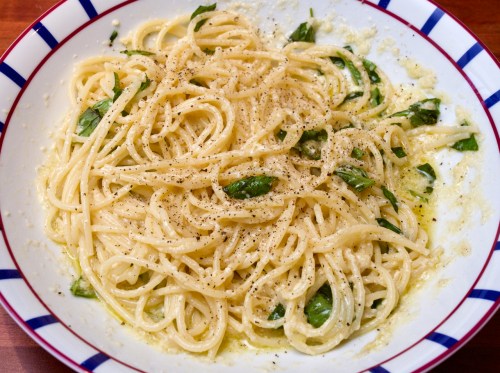
Lemon & basil linguine

Sometimes the simplest of ideas turn out the best.

Wine Suggestion: we had a glass of the Adi Badenhorst Secateurs Chenin Blanc which he’s now experimenting with a little bit of skin contact. We don’t disagree, it adds a touch of extra texture and complexity to such a great value wine.

Lemon & basil linguine – serves 2

  • 200g linguine
  • 1 large lemon, juiced
  • 75ml good olive oil
  • 75g Parmesan
  • a large handful of basil leaves

Put a large pan of water on to boil, add loads of salt and cook the pasta according to the time suggested on the packet.

Put the lemon juice, olive oil and Parmesan into a large warmed bowl and beat with a small whisk to combine and thicken. Tear the basil leaves into the bowl and add plenty of black pepper.

Drain the pasta and toss with the mixture in the bowl.

(Original recipe from The Kitchen Diaries  by Nigel Slater, Fourth Estate, 2005.)

Read Full Post »

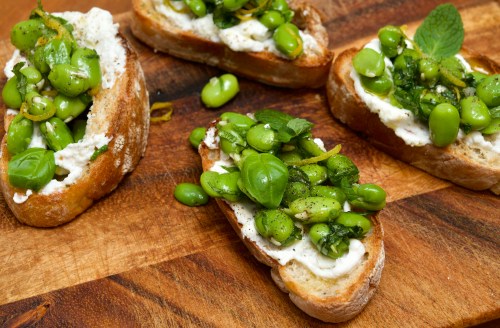
Broad Bean Bruschetta

A real burst of summer freshness that we assembled using frozen broad beans on a grey winter day. It is now Spring however and you might be the lucky person with some freshly picked broad beans. You can of course use frozen beans which for us are right up there with peas as an absolute freezer essential.

Wine Suggestion: We opened a vibrant Verdicchio from Umani Ronchi; their CaSal di Serra. Thirst quenching and pure peach, apple and lemon fruits that match the season as well.

Ricotta & Broad Bean Bruschetta – enough to make 4

  • 4 slices of rustic sourdough bread
  • 1 clove of garlic, halved
  • 200g broad beans (podded weight)
  • 250g ricotta
  • juice and zest of 1 lemon
  • 2 tbsp olive oil
  • a few small mint leaves
  • a few basil leaves, shredded

Toast the bread until light golden brown, then rub on one side with the cut garlic clove.

Bring a saucepan of salted water to the boil and cook the broad beans for 2 minutes, then drain and run under cold water. The beans will now be very easy to pop gently from their skins.

Break the ricotta up with a fork and add the lemon juice, then stir to combine. Spread the ricotta mixture over the toasted bread and drizzle lightly with olive oil. Toss the broad beans with the mint, basil, lemon zest and remaining olive oil. Pile on top of the ricotta and season with salt and black pepper.

(Original recipe from The Hairy Bikers’ Mediterranean Adventure by Si King & Dave Myers, Seven Dials, 2017.)

Read Full Post »

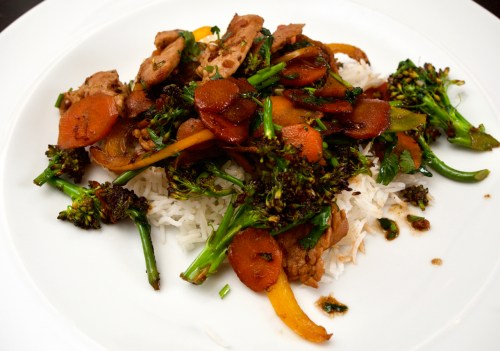
Ginger pork stir-fry

A light and tasty stir-fry to use up bits of veg leftover from the weekend. Feel free to use what you have rather than the suggestions below and prep all the ingredients before you start as this takes minutes to cook. Serve with rice or noodles.

Wine Suggestion: If you can find it, the Zind Humbrecht Muscat Grand Cru Goldberg 2013, was an amazing match. This is a truly astonishing wine that confounds the stereotype of Muscat because of the terroir and winemaker, being fresh, vibrant and dry. Alongside the ginger and soy this danced a fine line of complementary and contrasting flavours.

Ginger Pork Stir-fry – serves 4

  • 25g root ginger, peeled and cut into thin matchsticks
  • 1 tbsp finely grated root ginger
  • 2 tbsp sunflower oil
  • 200g pork fillet, trimmed and sliced into 5mm slices
  • 2 large cloves of garlic, peeled and crushed/grated
  • 150g carrots, peeled and finely sliced
  • 150g purple-sprouting broccoli or small broccoli florets
  • 1 red or yellow pepper, finely sliced
  • 75g kale (stalks removed), shredded
  • 2 tbsp sesame oil
  • 1-2 tbsp soy sauce
  • 3 tbsp roughly chopped coriander (leaves & stalks)

Bring a small saucepan of water to the boil, add the sliced ginger and boil for 1 minute, then drain.

Get a wok or a large frying pan smoking hot, then pour in the oil and stir-fry the boiled ginger for 30-60 seconds, remove with a slotted spoon and drain on kitchen paper.

Add the pork, garlic, grated ginger and carrots. Stir-fry for 2 minutes or until the pork is cooked, then add the broccoli and peppers.

Keep frying for another minute, then add the kale and toss for briefly to wilt.

Finally, add the sesame oil, soy sauce and chopped coriander. Toss together quickly then serve over rice or noodles and garnish with the crispy ginger.

(Original recipe from Rachel’s Everyday Kitchen by Rachel Allen, Harper Collins, 2013.)

Read Full Post »

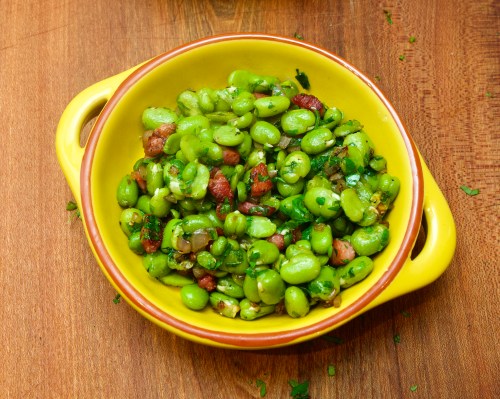
Broadbeans with pancetta

A tasty side dish that works at any time of the year provided you’ve a stash of broad beans in the freezer.

Broad beans with pancetta – serves 4

  • 500g frozen broad beans
  • 70g cubetti di pancetta
  • 2 shallots, finely chopped
  • a small bunch of flatleaf parsley, chopped

Cook the beans in boiling water for 2 minutes then drain and remove from the skins.

Fry the pancetta in a dry pan until the fat runs, then turn the heat up and brown well. Add the shallots for a couple of minutes to soften, then add the broad beans to heat through. Stir through the parsley and season before serving.


Read Full Post »

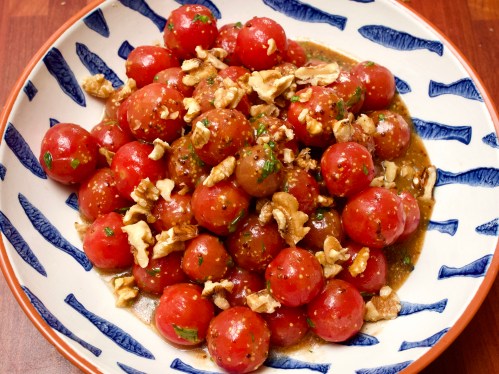
Cherry tomato salad with wholegrain mustardSuch a nice tomato salad with lots of delicious dressing for which you will require some crusty bread. You do need to skin the tomatoes but it actually takes no time at all if you follow the instructions below and it allows them to soak up the dressing so don’t be tempted to leave that step out.

Cherry tomato salad with wholegrain mustard – serves 4 to 6

  • 900g cherry tomatoes
  • 50g walnuts, coarsely chopped

FOR THE DRESSING:

  • small bunch of tarragon
  • 2 tbsp balsamic vinegar
  • 1 heaped tbsp wholegrain Dijon mustard
  • 125ml walnut oil or olive oil

Peel the tomatoes by cutting a slit in the base of each then putting them into a large bowl. Pour over some boiling water from the kettle and immediately drain – the skins should peel of easily.

Keep a sprig of tarragon to garnish and remove the rest of the leaves from the stalks. Coarsely chop the leaves and discard the stalks. Whisk the vinegar and mustard together with some salt and pepper. Gradually whisk in the oil so the dressing thickens slightly, then whisk in the chopped tarragon.

Pour the dressing over the tomatoes,  mix gently and taste for seasoning. You can leave at room temperature for a couple of hours at this point. Pile into a salad bowl and sprinkle with the walnuts and the reserved tarragon just before serving.

(Original recipe by Anne Willan IN: BBC Good Food Magazine, April 2002)

Read Full Post »

Watercress & Scallion salad

We love this green salad with barbecues as the scallions taste amazing and you’re not likely to get the barbecue out just for a green salad.

Watercress & scallion salad – serves 8 to 10

  • 6 tbsp olive oil
  • 4 shallots, sliced into fine rings
  • 2 tsp caster sugar
  • 4 tbsp white wine vinegar
  • 3 bunches scallions, trimmed
  • 4 bunches of watercress (or failing that a bag of mixed salad leaves as we had to resort to this time but it we prefer it with watercress)

Heat a pan over a medium heat, then fry the shallots for a few minutes with a splash of oil, then add the sugar and vinegar. Bring to the boil, then set to one side.

Toss the scallions in a little oil then cook on a hot barbecue for a a couple of minutes on each side (use a griddle pan if that’s easier). Put the scallions in a bowl with the shallots and the rest of the olive oil. Season and toss with the watercress.

(Original recipe by James Martin IN: BBC Good Food Magazine, April 2008)

Read Full Post »

Left-over Chicken Curry

A quick curry made with leftover roast chicken. We liked it and the fresh tomatoes definitely lighten things up for this time of year. We didn’t have any coriander but mint was a good substitute. Rachel Kelly also says that you can just use 2 tsp each of garam masala, coriander and ground cumin if you don’t have all the spices.

Wine Suggestion: This is quite a mild curry and we think you could choose most fruity, white wines and lighter, juicy reds easily. We had a glass of La Piuma Pecorino from the Marches in Italy and it was a refreshing match.

Leftover Chicken Curry – serves 4

  • vegetable oil
  • 1 onion, finely chopped
  • 3 garlic cloves, very finely chopped
  • 1 tbsp fresh ginger, very finely chopped
  • 2-3 large tomatoes, chopped (plus some extra to serve)
  • 300ml chicken stock
  • leftover roast chicken, roughly chopped
  • 2 tbsp plain yoghurt
  • 2 tsp ground coriander
  • 1 tsp ground cumin
  • 1 tsp garam masala
  • ½ tsp ground cardamom
  • ½ tsp ground cinnamon
  • ½ tsp ground turmeric
  • ½ tsp chilli powder
  • cooked basmati rice, to serve
  • coriander, chopped, to serve

Heat 2 tbsp of vegetable oil in a large heavy-based saucepan. Gently fry the onion with a pinch of salt for about 15 minutes or until softened, then add the garlic and ginger. Continue to fry gently for another few minutes.

Add the spices and mix well with the onion. Fry for another 3 minutes.

Add the chopped tomatoes and cook for another minute or two then add the chicken stock. Bring to the boil and simmer for 15 minutes.

Add the cooked chicken and warm through. Dollop in about 2 tbsp of yoghurt, then warm gently – easy does it here so the sauce doesn’t curdle.

Serve with steamed rice and sprinkle over some fresh coriander and chopped tomato.

(Original recipe by Rachel Kelly in The Guardian)

Read Full Post »

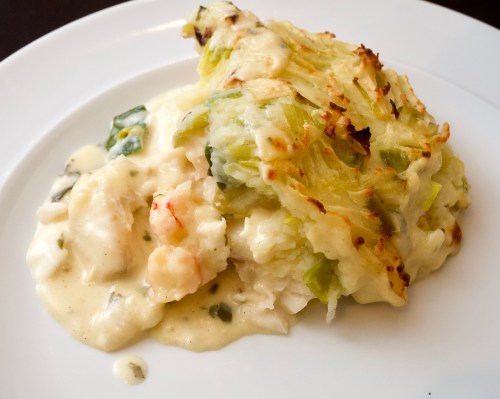
Fish pie with leek mash

No sooner had we given up all hope and planned a hearty fish pie for dinner, than the sun finally came out. The leek mash brightens it up a bit and if served with some green peas it works not too bad for a fine weather dish – just pity the poor cook stuck in the kitchen! We fear you might be horrified when you read the list of ingredients but if the rogue ingredient turns you right off you can always leave it out. It’s also our secret weapon for a prawn cocktail so there’s usually some in our fridge, and it turns out that it tastes surprisingly good in a fish pie too.

Wine Suggestion: this works with a crisp version of Chardonnay; we chose an organic Chablis made by the Gueguen family.

Fish pie with leek mash – serves 6

  • 900g white fish fillets, in large chunks (we used cod)
  • 425ml full-fat milk
  • 100g butter
  • 50g plain flour
  • juice of ½ a small lemon
  • 3 tsp Dijon mustard
  • 1½ tbsp Heinz salad cream (optional)
  • 125ml double cream
  • 3 tbsp finely chopped dill or parsley
  • 200g cooked, peeled prawns
  • 500g leeks, sliced
  • 800g floury potatoes, in chunks

Put the fish and milk into a sauté pan. Bring to a simmer and poach for about 3 minutes. Remove the fish with a slotted spoon and set aside. Reserve the milk.

Melt 50g of the butter in a saucepan, then stir in the flour. Remove the pan from the heat and gradually add the milk, a ladleful at a time, beating with a wooden spoon after each addition. When the milk has all been added, return the pan to the heat and keep stirring as you bring it the boil. It should be very thick. Season, then add the lemon juice, mustard and salad cream. Reduce the heat and cook for 2 minutes. Add the cream and herbs and continue to simmer for another minute. Taste and adjust the seasoning – you want this well-flavoured.

Put the fish and prawns into a 2.4 litre pie dish. Stir any liquid under the fish into the sauce. Pour the sauce over the fish and mix gently, then leave to cool before refrigerating to make it easier to spoon on the mash.

Preheat the oven to 200C/400F/Gas 6.

Melt the remaining 50g of butter in a heavy saucepan and add the leeks. Turn to coat in the butter and season, then add 2 tbsp of water, cover and sweat over a low heat for about 15 minutes or until very soft. Check occasionally and add another spoon of water if needed.

Cook the potatoes in boiling salted water until tender, then drain. Return to the warm pan, cover with a clean tea towel and a lid, then place over a very low heat for a couple of minutes to dry.

Mash the potatoes until smooth, then add the leeks and their juices and season well. Spread the mash over the fish and bake for 30 minutes or until golden and bubbling.

Serve with peas – as with all pies.

(Original recipe from Food from Plenty by Diana Henry, Mitchel Beazley, 2010.)

Read Full Post »


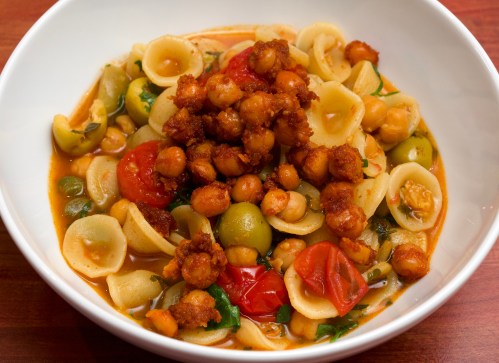
Big mouthfuls of flavour with this somewhat unconventional pasta dish – Italians might like to avert their eyes! The capers steal the show in some ways so you really need to like these and the spicy, garlicky chickpeas are to die for. If this dish is wrong we don’t want to be right!

Wine Suggestion: We had a glass of the Domaine de la Chauviniere Muscadet sur lie which might not be the obvious choice but it worked. Fresh and light, but with great fruit and texture, we’d highly recommend this to match the vibrant, flavour packed dish.

Orecchiette cooked in chickpea & tomato sauce – serves 4

  • 50ml olive oil, plus extra to serve
  • 6 cloves of garlic, peeled and crushed
  • 400g tin of chickpeas, drained and patted dry
  • 2 tsp hot smoked paprika
  • 2 tsp ground cumin
  • ¾ tbsp tomato purée
  • 40g parsley, leaves picked and roughly chopped
  • 2 tsp lemon zest
  • 4 tbsp baby capers
  • 80g good quality green olives, pitted and roughly torn
  • 250g cherry tomatoes
  • 2 tsp caster sugar
  • ½ tbsp caraway seeds, lightly toasted and crushed
  • 250g dried orecchiette pasta
  • 500ml vegetable stock

Put the first 6 ingredients along with 2 tsp of salt in a large sauté pan and fry gently over a medium heat for about 8 minutes, until the chickpeas are slightly crisp. Reserve about a third of the chickpeas to use as a garnish at the end.

Combine the parsley, lemon zest, capers and olives in a bowl, then add two-thirds of this to the pan with the cherry tomatoes, sugar and caraway seeds. Cook and stir for another 2 minutes.

Add the pasta and stock and bring to a simmer. Cover with a lid and cook over a medium heat for 12 minutes, undisturbed. Check the pasta is cooked and if not continue cooking for another minute or two.

Stir in the remaining parsley mixture, drizzle with 2 tbsp of olive oil and garnish with the reserved chickpeas and some black pepper.

(Original recipe by Yotam Ottolenghi in The Guardian)

Read Full Post »

« Newer Posts - Older Posts »