Feeds:
Posts
Comments

Archive for the ‘Food’ Category

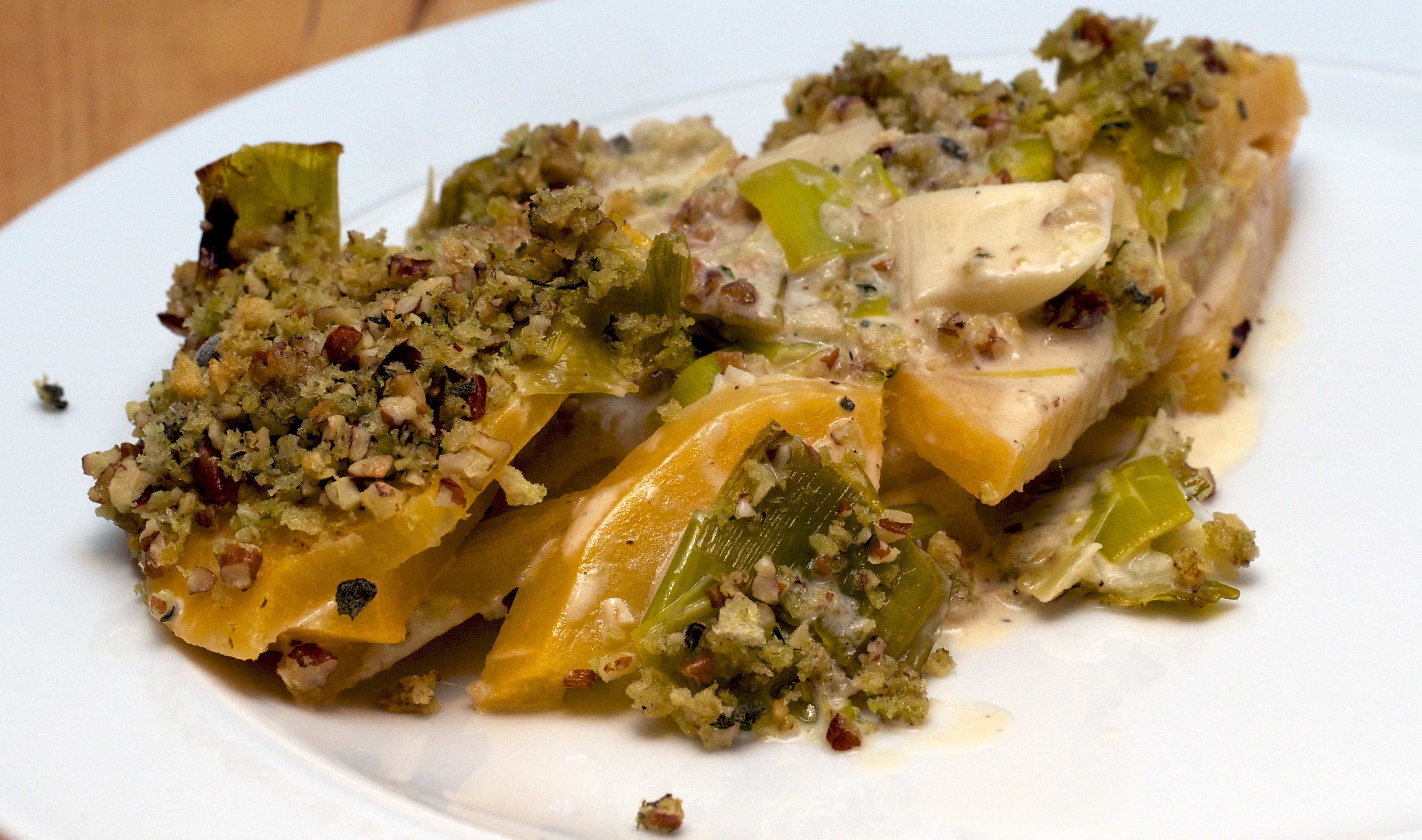
We love turnips (or swedes as the rest of the world calls them) and think that they deserve a bigger part of the limelight. This puts them centre stage and celebrates their earthiness and sweet character. This recipe comes from Denis Cotter, of Café Paradiso in Cork, and like many of his dishes it is pretty sweet for a savoury dish and has the potential to divide your dinner guests. Our guest is not usually a fan of turnip but she loved this dish.

Swede & Leek Gratin in Maple Cream with Sage & Walnut Crust – serves 4-6

  • 1 large swede
  • 2 leeks, halved lengthways and well washed
  • 30g butter, plus extra for greasing
  • 3 garlic cloves, finely chopped
  • 2 sprigs of fresh thyme
  • 100ml dry white wine
  • 250ml double cream
  • 4 tbsp maple syrup

For the crust: 

  • 8 fresh sage leaves
  • 1 tbsp chopped chives
  • 50g white bread
  • 50g walnuts
  • 30g butter

Preheat the oven to 150ºC/300ºF/gas mark 2.

Bring a large saucepan of water to the boil. Peel and quarter the swede, then chop into slices about 5mm thick. Simmer in the water for 10 minutes, then remove and partly cool them in a bowl of cold water. Drain and set aside.

Chop the leeks into 2cm pieces. Melt the butter in a large pot, over a high heat, add the leeks and garlic and cook, stirring, for 8-10 minutes. Add the thyme and white wine, and boil for 1 minute, then pour in the cream and maple syrup. Bring back to the boil and then take off the heat. Season with salt and pepper.

Grease an oven dish with butter and arrange a layer of swede slices on the bottom. Spoon a third of the leeks on top and cover with another layer of swede. Repeat to get 3 layers of each, finishing with the leeks. Press firmly on the top and put the dish in the oven. Bake for 30 minutes.

To make the crust: put the sage, chives and bread in a food processor and pulse to a fine crumb. Add the walnuts and butter and pulse briefly to chop the walnuts coarsely.

Increase the oven to 180ºC/350ºF/gas mark 4.

Scatter the sage and walnut topping over the gratin and return to the oven for 5 minutes.

Remove from the oven and leave to rest for about 5 minutes before serving.

Wine Suggestion: You’ll have some wine left in the bottle you used for this dish. A dry chenin would be good as it will carry the earthy and sweet characters of this dish but also has enough acidity and texture to cut through the richness.

(Original recipe form Denis Cotter’s For the Love of Food, Harper Collins, 2011.)

Read Full Post »

Cooked on an afternoon off and then shared with friends … perfect. This takes some time, particularly as you need to roast the duck first, but it is worth it.

Slow-roasted Duck Ragú – serves 4 to 6

  • 1 Duck, try to get a Gressingham or at least free-range for extra flavour
  • 2 oranges, 1 quartered – the other zested & juiced
  • 6 slices Pancetta, diced
  • 1 red onion, diced
  • 2 carrots, peeled & chopped
  • 2 sticks celery, diced
  • 6 sprigs rosemary, leaves picked and chopped
  • 1 stick cinnamon
  • 4 cloves garlic, finely sliced
  • 2 x 400g tins plum tomatoes
  • 1/2 bottle fruity red wine, we used a Chianti
  • 500ml Chicken Stock
  • a handful of sultanas
  • a handful of pinenuts
  • 600g Rigatoni, or other large tubular pasta
  • 2 knobs butter
  • large handful Parmesan, grated
  • small bunch parsley, chopped
  • red wine vinegar

Preheat the oven to 180 C. Rub duck all over with olive oil and season generously with salt and pepper.

Push the orange quarters inside the cavity and place the duck breast-side down in a roasting tray. Cook for 2 hours, turning it every 30 minutes until the skin goes thin and crispy and the meat is tender and fragrant with the oranges.

Remove the duck from the tray and pour the fat into a jar, making sure you avoid the meat juice the fat is floating upon. This fat can be used to roast potatoes another day.

Leave the duck to cool slightly then pull all the meat from the bones and shred it.

Pour a tablespoon of olive oil into a large pot and fry the pancetta on a medium heat until lightly golden. Add the onion, carrots, celery, rosemary, garlic and cinnamon and fry gently for 10 minutes until soft.

Add the tomatoes and red wine and simmer slowly for 25 minutes.

Add the duck meat and some chicken stock (if the sauce is a little dry) and simmer for another 30 minutes.

Remove the cinnamon stick, taste for seasoning and throw in the sultanas and pinenuts.

Cook the pasta according to instructions. Reserve some cooking water, then drain in colander and add to the sauce.

Remove from the heat and stir in the butter, Parmesan, parsley, orange zest and juice plus a good splash of vinegar.

Check for seasoning again and loosen with the reserved cooking water if necessary. Serve and enjoy!

Wine suggestion: A perfect match for a deep and profound Brunello di Montalcino or your favourite Tuscan red. Alternately look out for a good Bandol or Mourvedre based wine where the earthiness will also compliment the duck and pasta.

(Original recipe from Cook by Jamie Oliver, Penguin Books, 2009.)

Read Full Post »

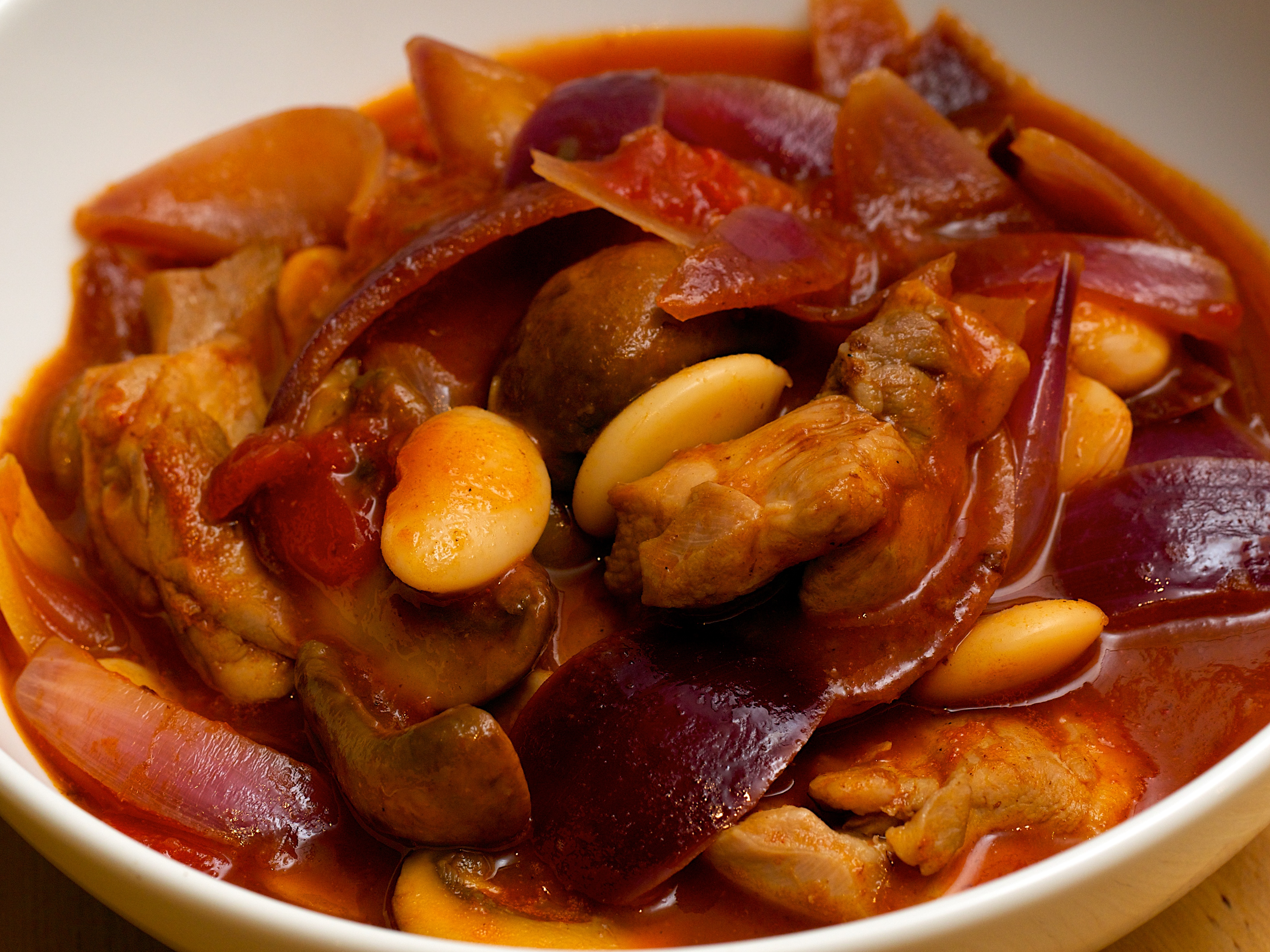
This is one of our hearty dinners from the 5:2 diet we are on and it was very welcome this evening after getting in from the rain and cold. Full of flavour and filling despite the low calories!

Chicken, Red Onion and Mushroom Stew with Sherry and Butterbeans, serves 4

  • 6 Chicken thighs, skinned and boned then quartered
  • 1 tbsp smoked paprika
  • 1 garlic clove, chopped
  • 2 red onions, cut into thick wedges
  • 200g chestnut mushrooms, thickly sliced
  • 100ml dry sherry
  • 400ml chicken stock
  • 400g tin chopped tomatoes
  • 400g tin butterbeans, drained and rinsed
  • small bunch parsley, chopped

Heat a little olive oil to a medium-high heat in a pan and add the chicken, browning until golden on all sides.

Add the paprika, garlic onions and mushrooms and cook until the onions and mushrooms have softened. This should take about 5 minutes.

Add the sherry and scrape the bottom of the pan for a second to deglaze, then add the chicken stock, tomatoes and butterbeans.

Bring to a boil then turn down and simmer for 15 minutes.

Serve with the parsley sprinkled over the top and some crusty bread if you like.

Wine suggestion: If you feel like a glass with this we’d suggest trying a red from Navarra, an under-rated region in Spain. The balance of juiciness and structure would work with the simple, smokey and rustic flavours of the dish.

(Original recipe from BBC Good Food)

Read Full Post »

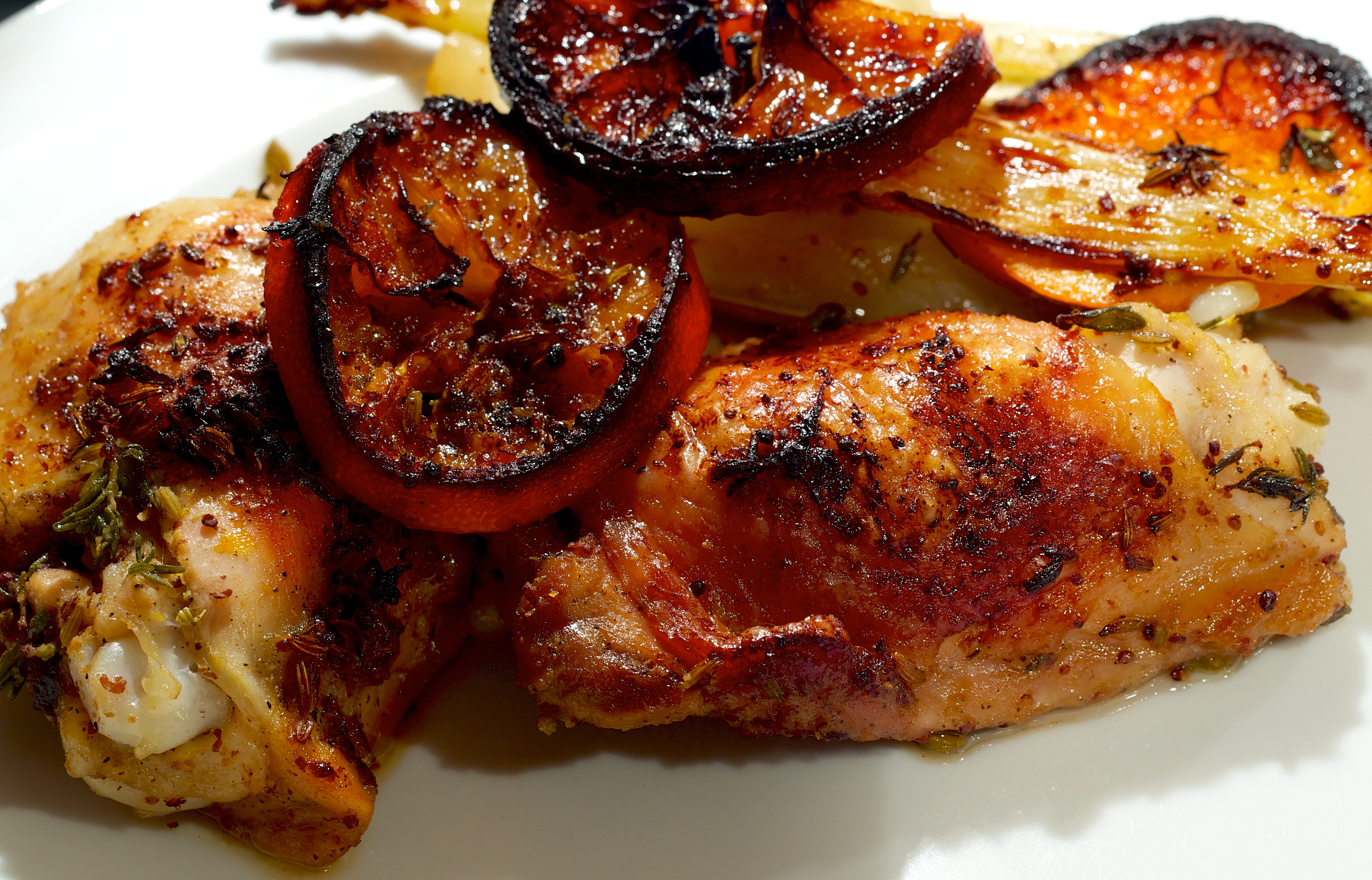
This dish has proved so delicious we’ve had it for dinner twice already this week and plan for another night with friends on Friday. Strictly speaking it isn’t as described as we substituted Pernod for Arak which was what we had to hand; you could also use Ouzo if you have some of this instead. The dish is bursting with flavour so some plain rice is all that’s needed on the side. Start ahead of time if you can so the chicken has time to marinate.

Roasted chicken with clementines & arak – to serve 4

  • 100ml Pernod (or arak or ouzo)
  • 4 tbsp olive oil
  • 3 tbsp freshly squeezed orange juice
  • 3 tbsp lemon juice
  • 2 tbsp grainy mustard
  • 3 tbsp light brown sugar
  • 2 medium fennel bulbs
  • 1.3kg chicken thighs (with skin and bone in)
  • 4 clementines, unpeeled, sliced horizontally into ½cm slices
  • 1 tbsp thyme leaves
  • 2½ tsp fennel seeds, slightly crushe
  • salt and black pepper
  • chopped flat parsley, to garnish

Put the first six ingredients in a large bowl and add 2½ tsp of salt and 1½ tsp of black pepper. Whisk well.

Trim the fennel and cut each in half lengthways. Cut each half into 4 wedges. Add the fennel to the liquid, along with the chicken, clementine slices, thyme and fennel seeds. Combine with your hands then leave to marinate in the fridge for a few hours or overnight (or skip this stage if you don’t have the time).

Preheat the oven to 220°C/200°C Fan/Gas Mark 7.

Transfer the chicken and marinade to a large oven-proof tray that can hold everything in a single layer; make sure the chicken skin is facing up.

Put the tray in the oven and roast for 35-45 minutes, or until the chicken is well browned and cooked through.

Remove the chicken, fennel and clementines from the tray and arrange on a serving plate; cover and keep warm. Pour the cooking liquids into a small pan, place on a medium-high heat, bring to a boil and simmer until reduced by a third – you should have about 80ml left. Pour the hot sauce over the chicken, garnish with some chopped parsley and serve with plain steamed rice.

Wine Suggestion: There’s lots of flavour going on in this dish so beware of going too neutral with the wine. A richer Vermentino from Sardinia would work well, where they have really mastered this grape.

(Original recipe from Jerusalem by Yotam Ottolenghi and Sami Tamimi, Ebury Press, 2012.)

Read Full Post »

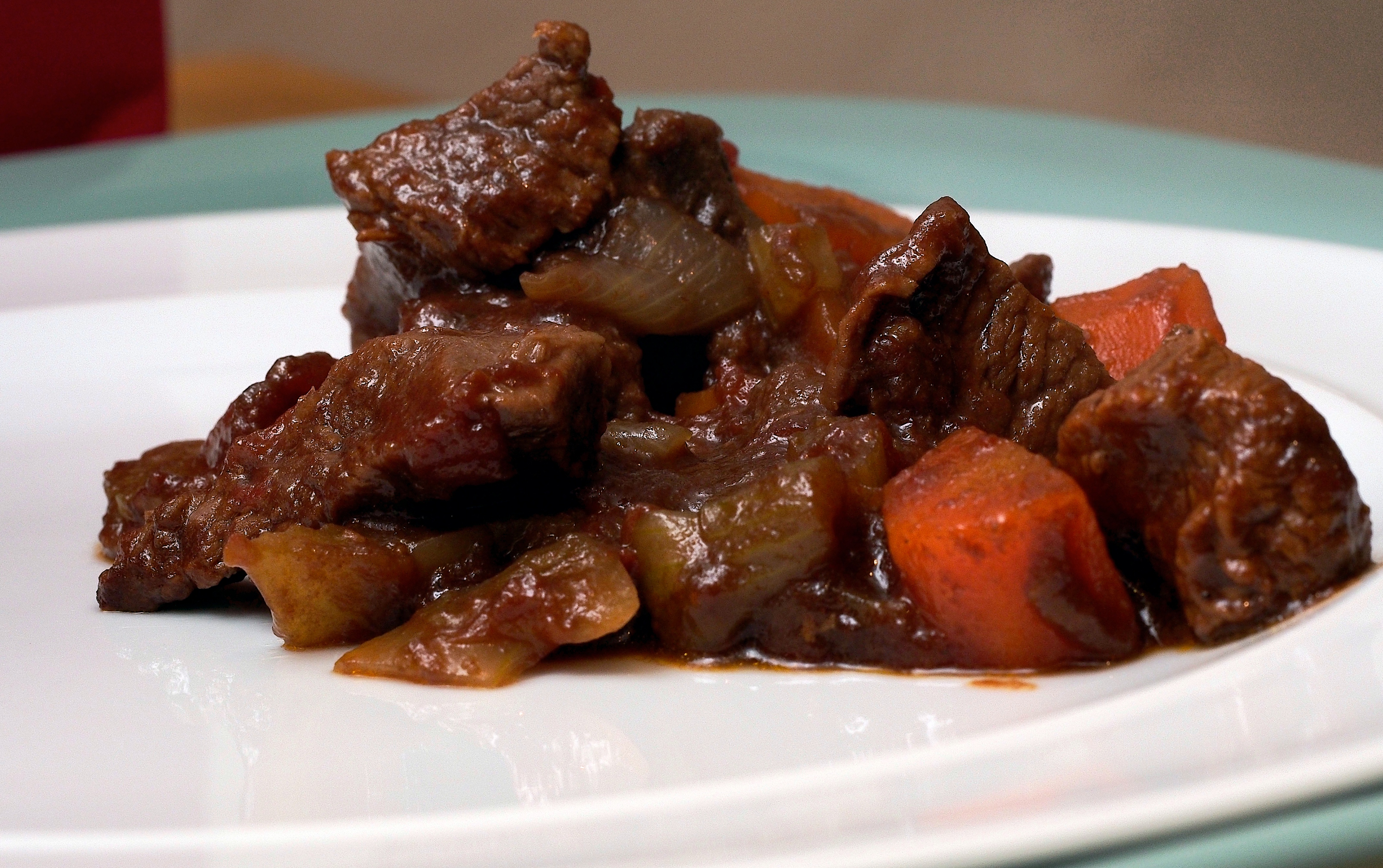
A simple thing to make, and always well enjoyed. It’s a bit difficult to take nice pictures of brown dishes – we’ll have to work on it. This is an absolute doddle to make and a very appropriate dish for the 17th March!

St Patrick’s Day Beef & Guinness Stew – serves 4-6 

  • 2 sticks of celery
  • 2 medium onions
  • 2 carrots
  • 2 tbsp olive oil
  • 1 heaped tbsp plain flour
  • 1 x 400g tin of chopped tomatoes
  • 3 bay leaves
  • 500-750g diced stewing beef
  • 500ml Guinness

Preheat the oven to 160ºC Fan/180°C/gas 4.

Roughly chop the celery, onions and carrots.

Heat the olive oil in a large casserole on a medium heat. Add all the vegetables and bay leaves and fry for about 10 minutes.

Add the meat, flour, Guinness and tinned tomatoes. Stir and season well with salt and black pepper. Bring to the boil, put a lid on the casserole and cook in the oven for approximately 3 hours or until the meat is meltingly tender.

Check about half an hour before the end of the cooking time and add a splash of water if it looks a bit dry. Season to taste again before serving with potatoes in the proper Irish fashion.

Wine Suggestion: Something equally hearty, perhaps an Australian Shiraz, or if you’re going really in for the Irish theme you could try a wine called Sásta by Niepoort. This wine, from the Douro in Portugal, sports a great label depicting a drunken Saint Patrick chasing the snakes out of Ireland (available from The Wicklow Wine Company or Mitchell & Son).

(Original recipe from Jamie’s Ministry of Food by Jamie Oliver, Penguin 2008.)

Read Full Post »

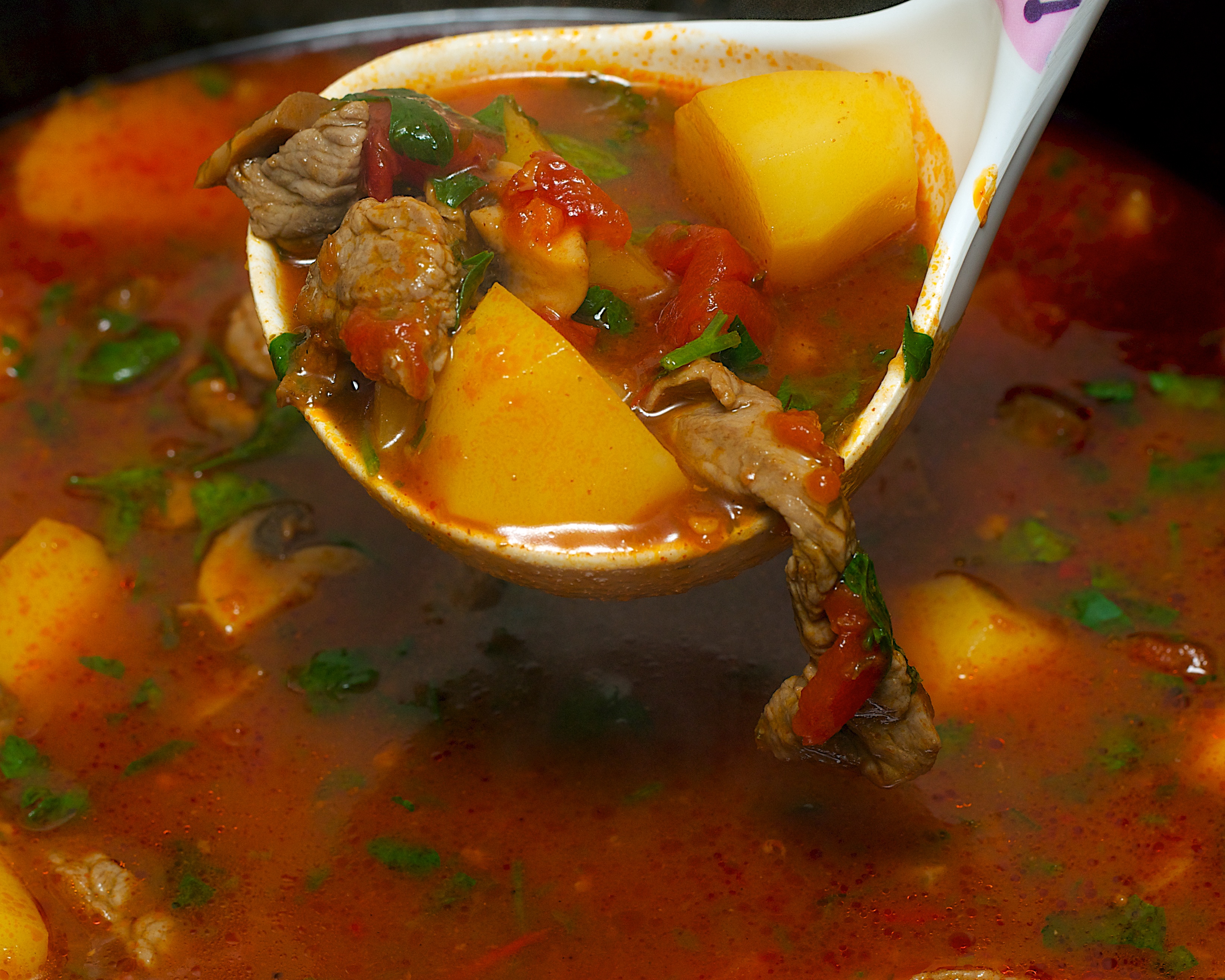
A mid-week creation that satisfies on flavour without any excess in calories or expense. Very like the Hungarian style of Goulash – much more soup like than a stew, so use a spoon to eat this!

Easy Goulash – to serve 4

  • 1tbsp vegetable oil 
  • 300g stir-fry strips, or minute steak cut into strips
  • 100g chestnut mushrooms, quartered
  • 2 tsp paprika
  • 500g potatoes, peeled and cut into smallish chunks
  • 600ml hot beef stock
  • 500g jar tomato-based cooking sauce
  • handful of parsley, chopped
  • natural yoghurt – to serve

Heat half the oil in a non-stick pan and fry the beef for a couple of minutes. Do this in batches so the beef fries rather than stews. Remove the meat from the pan, add a the rest of the oil and fry the mushrooms for a few minutes or until they start to brown.

Sprinkle the paprika into the pan and fry briefly, then add potatoes, stock and tomato sauce. Cover and simmer for about 20 minutes or until the potato chunks are tender. Add the beef back to the pan to warm through. Stir in the parsley and serve with some natural yogurt (if you’re not trying to keep this under 300 calories).

Wine Suggestion: We had a good Rioja Crianza with this and found the juicy fruit and flavours really matched the rich tomatoes and paprika well (well we would have if it hadn’t been a fast day on our diet!)

(Original recipe from BBC Good Food)


Read Full Post »

The combination of flavours and textures made this a delicious Wednesday night feast. It’s also really healthy and low in calories (305 to be exact, so you can even squeeze it in if you’re on the 5:2 diet). You could use haddock or cod but whiting is much cheaper and tastes just as good.

Zesty Whiting with Crushed Potatoes & Peas – to serve 4

  • 600g potatoes, peeled and cut into chunks – we used Nicola which gave an interesting texture but floury mashing ones would be good too
  • 140g frozen peas
  • extra virgin olive oil
  • juice and zest of ½ a lemon
  • 1 tbsp capers
  • 2 tbsp snipped chives
  • 4 fillets of chunky white fish (about 120g each)
  • 2 tbsp flour

Boil the potatoes until tender, adding the peas for the final minute of cooking. Drain and roughly crush together, adding lots of salt and pepper and about a tablespoon of the oil.

To make the dressing mix 1 tbsp of the oil with the lemon juice and zest, the capers, the chives and some seasoning.

Dust the fish in the flour, tapping off any excess, and season. Heat a small splash of oil in non-stick frying pan and fry the fish for a couple of minutes on each side, or until cooked, then add the dressing to the pan to warm through.

Serve with some steamed broccoli if you like.

Wine Suggestion: Picpoul de Pinet from the Languedoc is good value and has a nice, refreshing zesty flavour that is a great match for fish. Despite coming from a warm area, this wine maintains good acidity and minerality and is well worth seeking out.

(Original recipe from BBC Good Food)

Read Full Post »

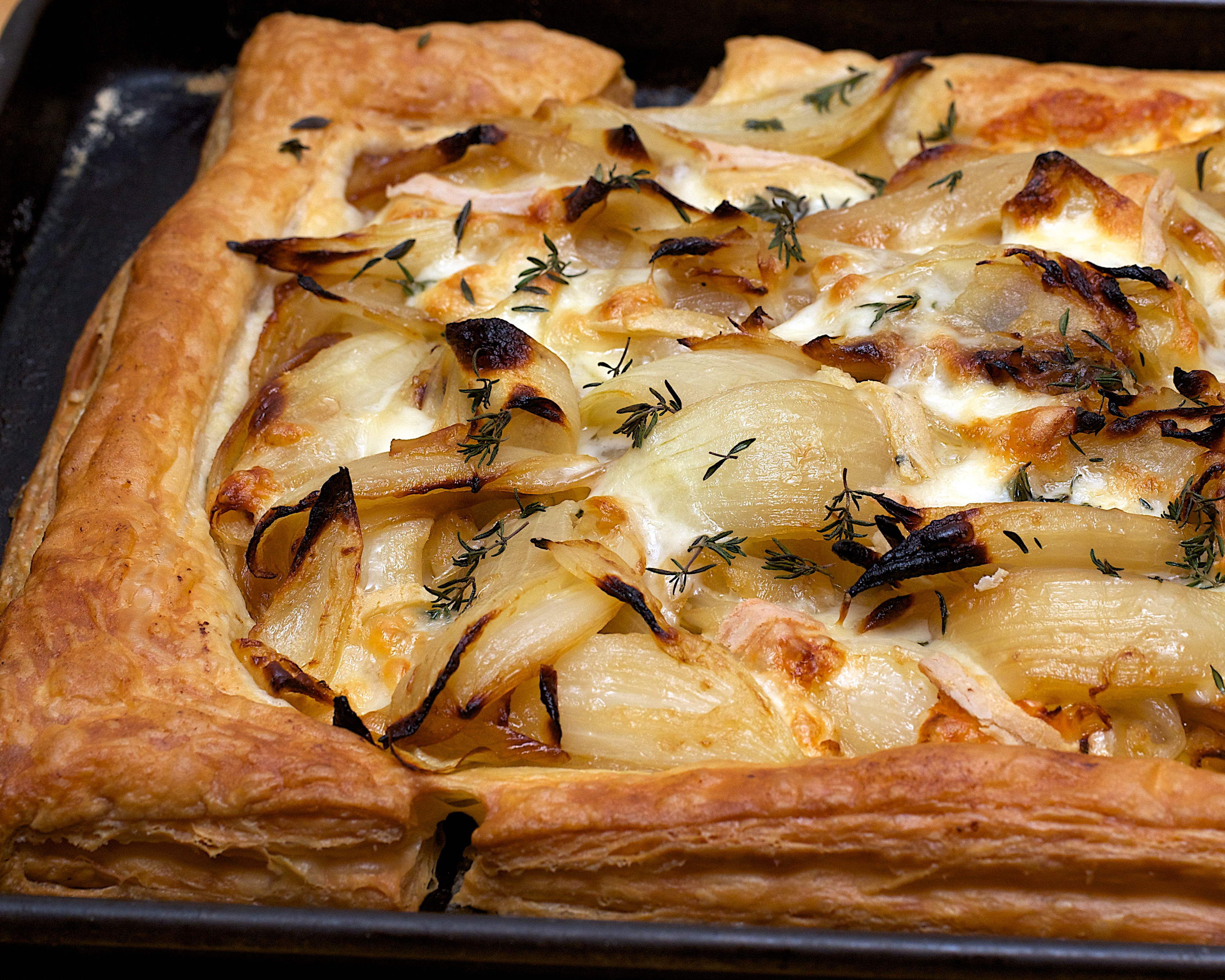
If you have some ready-rolled puff pastry in the freezer and a few leftovers in the fridge you can make an easy and delicious tart for supper. My friends might have been more impressed if they hadn’t seen me assemble it in 3 minutes flat before turfing it into the oven! Try this with anything you fancy on the top, though a bit of cheese is a must.

Onion & Taleggio Tart – to serve 4

  • 6 smallish onions
  • 50g butter
  • a sheet of ready-rolled puff pastry (about 200g)
  • 120g Taleggio
  • thyme

Peel the onions and cut into wedges. Put them into a shallow pan with the butter and cook over a fairly low heat until they are soft, golden and sticky. This will probably take about 40 minutes or so.

Heat the oven to 220ºC/Gas 7. Unroll the pastry onto a lightly floured baking tray. Score a border about 2cm from each edge and prick all over with a fork.

Tip the onions on to the pastry, pushing them almost to the border. Brush the rim with some melted butter or some of the onion butter if there is some left in the pan. Slice the cheese thinly, then break it into small pieces, and distribute these through the onions. Scatter over some picked thyme leaves. Bake for 15-20 minutes or until the pastry is puffed and golden.

Serve with a green salad.

Wine Suggestion: this calls for a white wine from the mountains: try an oaked Chardonnay from the Jura or if you want something amazing look out for the “Vigna della Oche” Riserva from Fattoria San Lorenzo in the Marche, Italy; a fantastic and truly amazing Verdicchio – a white wine that lasts a decade or two and just becomes more and more complex and complete.

(Original recipe from Nigel Slater’s Appetite, Fourth Estate, 2001.)

Read Full Post »

Wholesome and earthy, obviously don’t try this if you don’t like liver. We do and it was delicious.

Pappardelle with Chicken Liver Ragù – to serve 2 as a main or 4 as a starter

  • 200g dried pappardelle 
  • Freshly grated Parmesan, to serve

FOR THE RAGU: 

  • 200g chicken livers
  • 4 tbsp extra virgin olive oil
  • ½ small onion, chopped
  • 1 celery stalk, chopped
  • 1 garlic clove, chopped
  • 150ml dry Marsala
  • 100ml white wine
  • 1 tbsp chopped rosemary
  • 2 tbsp chopped flat-leaf parsley
  • 40g butter

Heat a wide frying pan over a high heat until super hot and smoking. Toss the chicken livers in a bowl with 1 tbsp of the oil and some salt and pepper, then pour into the hot pan in a single layer. Fry for a couple of minutes without moving, until well browned on one side. Turn and fry the second side for 2 minutes, then transfer to a plate to cool. When cool enough to handle, chop the livers finely, reserving any juices.

Fry the onion, celery and garlic in the rest of the oil with salt and pepper in a small saucepan over a lowish heat. When very soft (about 10 minutes), add the chopped liver and its juices and fry for a couple of minutes until heated through. Add the Marsala and wine and cook at a very gentle simmer until the sauce is very thick (almost like a pâté) with a little oil risen to the surface, at least an hour. Add about 100ml of water during the cooking if it starts to dry out. Stir in the rosemary and remove from the heat.

Cook the pasta according to the pack and re-heat the sauce in a wide frying pan. Add a splash of water to the sauce if you need to thin it slightly (the liquid part should be creamy). Drain the pasta and add to the sauce with the parsley and butter. Cook together for a few minutes or until the butter has melted and the pasta is well coated in the sauce. Serve with the Parmesan.

Wine Suggestion: Chicken livers have a really strong and rich flavour which should pair well with a good quality Rioja with a little age, such as one of  La Rioja Alta Gran Reservas.

(Original recipe from Bocca Cookbook by Jacob Kennedy, Bloomsbury, 2011.)

Read Full Post »

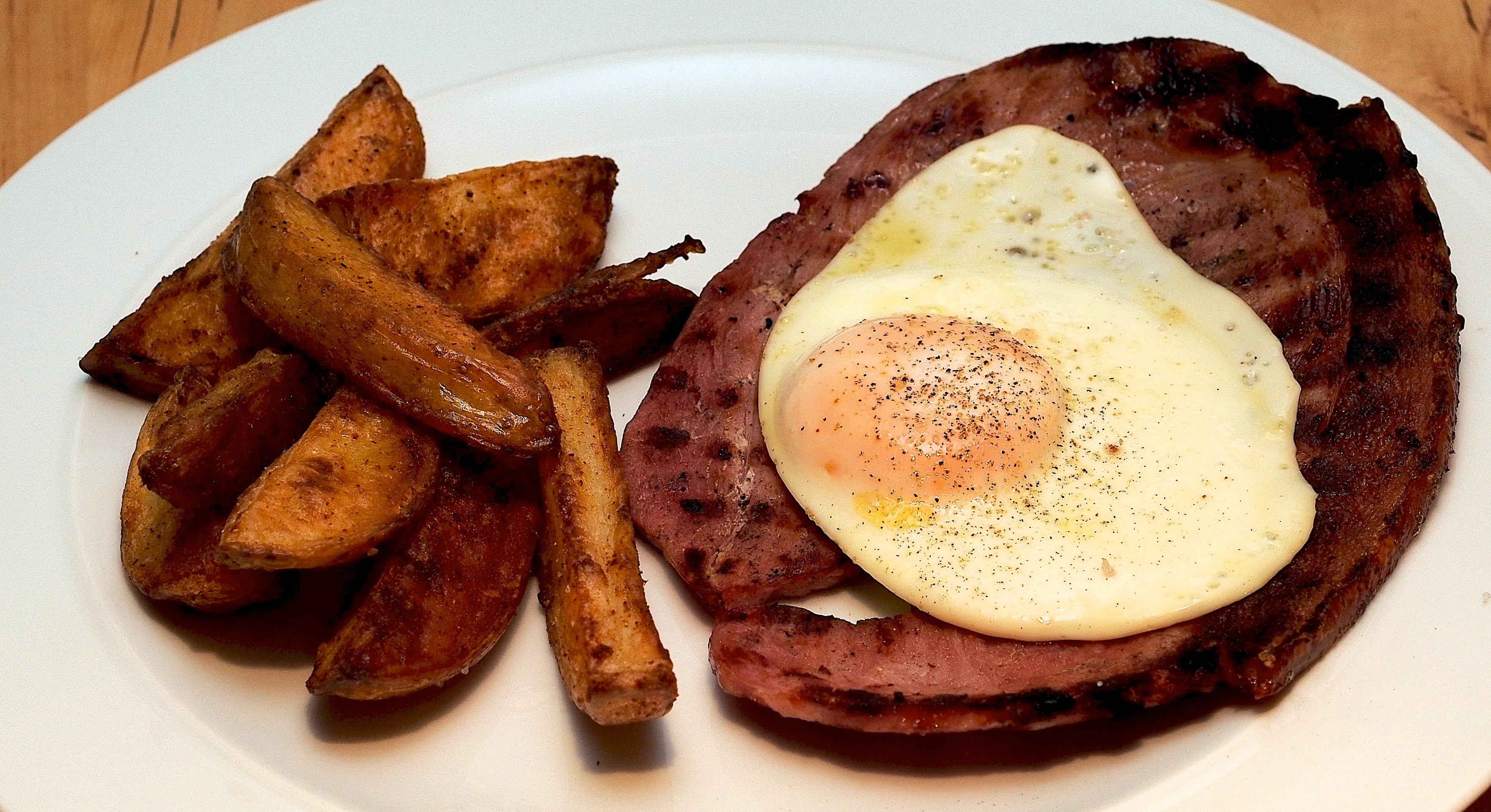
Gammon Egg & Chips

Not every meal needs to be fancy, but it does have to be tasty. Like this one was 🙂

Grilled ham, egg & chips – to serve 2

  • 2 large baking potatoes
  • 4 tbsp sunflower oil
  • pinch of  paprika
  • pinch of cayenne pepper
  • 2 gammon steaks
  • 2 eggs

Heat the oven to 200C/gas 6.

Cut the potatoes into chunky chips, put in a pan of salted water and bring to the boil. Simmer for 5 minutes or until slightly softened, then drain and steam-dry in the pot for a few minutes.

Pour 3 tbsp of the oil into a shallow baking tray and heat in the oven for 5 minutes. Toss the chips with the paprika, cayenne pepper and some salt. Tip the chips into the hot oil and bake for 40 minutes, tossing halfway through.

Before the chips are ready, cook the gammon slices on the barbecue or on a griddle pan. Use the last bit of oil to fry the eggs.

Serve the gammon steaks with an egg on top and some chips on the side.

Wine Suggestion: We probably wouldn’t have wine with this but if you’re in the mood you could try a light red that’s been slightly chilled.


Read Full Post »

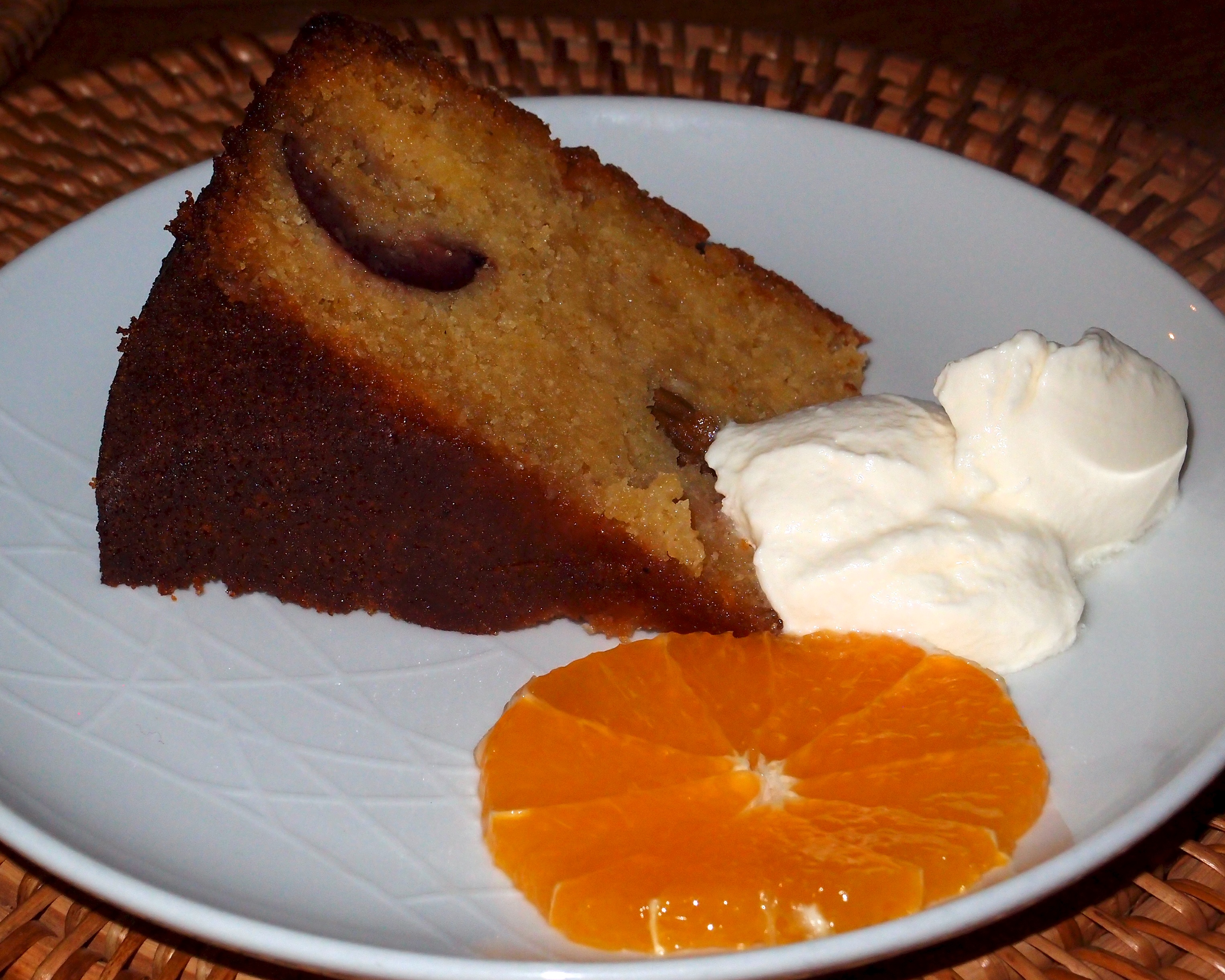
Almond & Fig cake

We made this when figs were in season and brought it to a friends house for lunch, then forgot about it. Here’s the recipe for the next time you find some fresh figs.

Fig, orange and polenta cake – to serve 8

  • 220g butter
  • 220g golden caster sugar
  • 150g almonds
  • 150g ground almonds
  • 3 large eggs
  • 150g polenta
  • a level teaspoon of baking powder
  • finely grated zest and juice of a large orange
  • 12 green cardamom pods
  • 6 figs

FOR THE SYRUP:

  • the juice of 2 oranges
  • the juice of 2 lemons
  • 4 tbsp honey

Line the base of a loose-bottomed non-stick 20cm cake tin with baking parchment. Preheat the oven to 180°C/Gas 4.

Beat the butter and sugar until light and fluffy. Pour boiling water over the almonds, drain with a spoon and remove the skins. Finely chop the almonds in a food processor or by hand, then add them, along with the ground almonds to the cake mix.

Break the eggs into a small bowl, beat them lightly and add to the mix. Mix the polenta and baking powder together, then fold them into the mixture together with the grated orange zest and juice. Crush the cardamom pods and remove the tiny black seeds, then grind them to a fine powder with a pestle and mortar or spice grinder. Add to the cake mix.

Cut the figs in half. Put half the cake mixture into the lined tin, add the figs, then add the rest of the cake mix and smooth the top level. Bake for 30 minutes, then turn the heat down to 160°C/Gas 3 and bake for a further 25-30 minutes or until the cake feels firm. Insert a metal skewer into the centre of the cake – if it comes out clean the cake is ready.

To make the syrup , squeeze the orange and lemon juice into a stainless steel saucepan, bring to the boil and dissolve the honey in it. Keep at the boil for 4-5 minutes or until a thick syrup has formed.

Poke holes in the top of the cake with a skewer, then spoon over the hot syrup. Leave until almost cool, then remove from the tin. Serve with some thinly sliced oranges and natural yoghurt.

(Original recipe from Nigel Slater’s Tender Volume II, Fourth Estate, London 2010.)

Read Full Post »

Yet another Lebanese dish, we’ll have to move onto another theme soon! This is delicious and quite rich so probably best served as a mezze dish or shared starter, though it will feed 2 people as a main dish.

Sea Bass with Tahini and Curry Sauce – to serve 2 as a main or 4 as a starter

  • 4 sea bass fillets
  • 1 tbsp butter
  • 1 tsp sesame seeds, toasted
  • 2 tbsp chopped coriander
  • squeeze of lemon juice, to serve

FOR THE SAUCE 

  • 6 tbsp tahini
  • 1 tsp salt
  • juice of 1 lemon
  • 1 tsp hot curry powder
  • 120ml water

Preheat the oven to 180ºC/Fan 160ºC/Gas 4.

Mix all the sauce ingredients together in a bowl. Pour the sauce into an ovenproof dish and put in the oven to warm.

Cut each fillet in half, score the skin with 2 slashes, and season well.

Heat a frying pan, add the butter, and when melted, add the fish, skin side down. Cook for about 2 minutes or until the skin is crispy and golden. Turn the fillets over and cook for another minute or two until the flesh flakes easily.

Take the dish out of the oven, add the fish to the sauce, and sprinkle with sesame seeds. Put the dish back into the oven for 5 minutes.

Sprinkle with chopped coriander and a squeeze of lemon before serving.

Wine Suggestion: A full-bodied textural white, like an oaked Vermentino.

(Original recipe from The Lebanese Kitchen by Salma Hage, Phaidon, 2012.)

Read Full Post »

One of those dishes that was even better than expected.We served this with lamb chops with seven spices but it would make a nice mezze dish or a side for any grilled fish or meat.

Giant Couscous & Chickpea Salad – to serve between 4 & 6

  • 12 cherry tomatoes, halved
  • 3 tbsp olive oil
  • 500ml vegetable stock
  • 120g giant couscous
  • 400g tin chickpeas, drained and rinsed
  • 1 onion, chopped
  • 2 tbsp ground cumin
  • 2 tbsp ground coriander
  • 1 tsp ground ginger
  • 3 tbsp chopped coriander
  • 3 tbsp chopped parsley
  • juice of ½ a lemon

Heat the oven to 200ºC/Fan 180ºC/Gas 6.

Put the tomatoes on a baking tray, drizzle with 1 tbsp of the oil and season with salt and pepper. Bake for about 20 minutes or until soft.

Pour the vegetable stock into a small saucepan and bring to the boil. Add the couscous and simmer for about 10 minutes or until tender (check it as it may not take the full 10 minutes). Strain, tip into a bowl and add the chickpeas.

Heat the rest of the oil in a frying pan, add the onion, and cook over a low heat for 5 minutes or until soft. Stir in the spices and cook for another minute. Remove from the heat and stir the spiced onion into the couscous and chickpea mixture.

Add the coriander, parsley, and roasted tomatoes, and season well with salt and pepper and a squeeze of lemon.

(Original recipe from The Lebanese Kitchen by Salma Hage, Phaidon, 2012.)

Read Full Post »

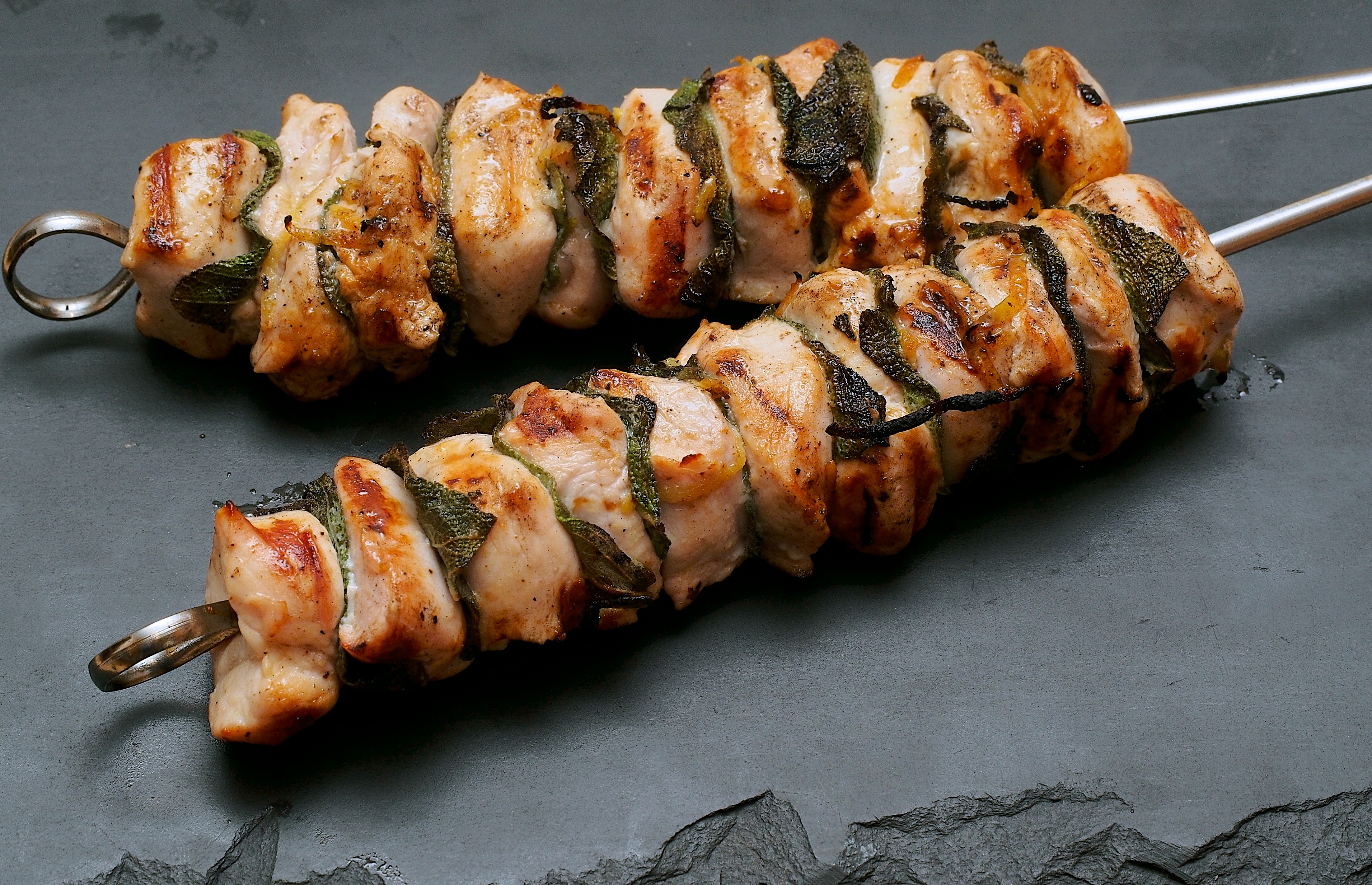
This chicken in this is so juicy and flavoursome and would be great for crowds as well as a quiet night at home. You could grill them but we recommend you get the barbecue out – it will warm your hands against all this cold winter weather!

Sage & Lemon Chicken Skewers – to serve 4

  • 3 skinless chicken breasts
  • olive oil
  • 1 garlic clove, crushed
  • 1 lemon, zested and juiced
  • a handful of sage leaves

Cut the chicken breasts into bite-sized cubes and toss with a little olive oil, the garlic and the lemon zest and juice. Season well. Thread onto 4 metal skewers, alternating chicken with sage.

Grill for about 5 minutes on each side or until the chicken is cooked.

Wine Suggestion: Something simple, light and lemony is all that is required here. We had an Italian white, made from the Falanghina grape, which was yummy.

(Original recipe from BBC Olive Magazine, January 2013)

Read Full Post »

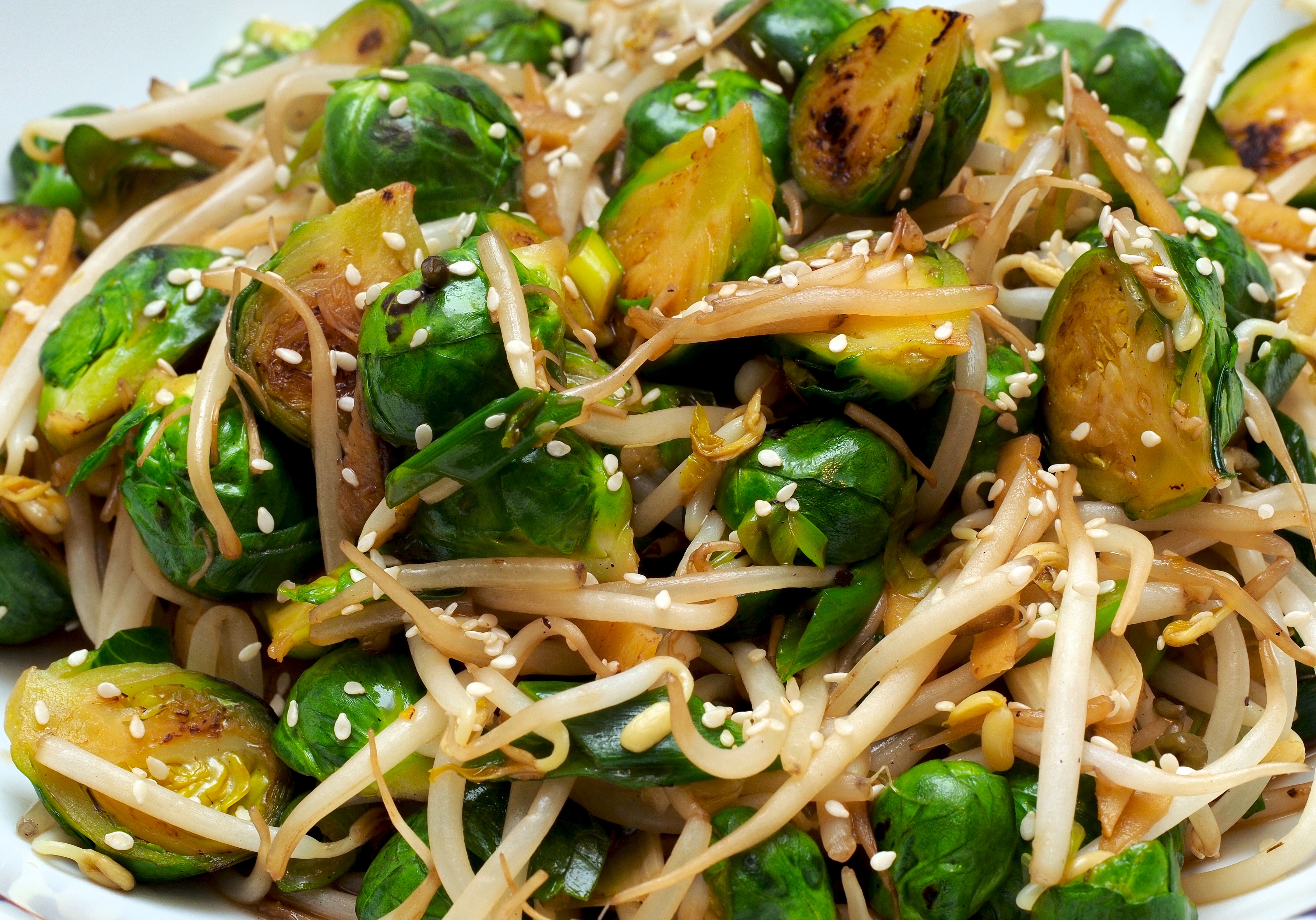
A stir-fry of Sprouts; Brussels & Bean. A delight and a real treat as a healthy midweek supper.

Sprouts with Sesame & Spring Onions – to serve 2 (or 4 as a side)

  • 1 tbsp sesame oil
  • thumb-size piece ginger, cut into matchsticks
  • 300g Brussels sprouts, halved
  • 250g beansprouts
  • small bunch spring onions, sliced diagonally
  • 1 tbsp clear honey
  • 2 tbsp soy sauce, plus extra to serve
  • 1 tbsp sesame seeds

Heat the oil in a wok. Fry the ginger and Brussels sprouts, tossing, for 5-6 minutes, until slightly browned. Add a few tbsp water while they’re cooking if you need to stop them sticking, though the odd crusty bit will only improve things.

Add the beansprouts, spring onions, honey and soy sauce, then stir-fry for 1 minute. Sprinkle over the sesame seeds and serve with some extra soy sauce.

(Original recipe from BBC Good Food)

Read Full Post »

El Bulli Carbonara

Some of our Italian friends will tell us off for using cream, but we thought this recipe from Ferran Adrià was delicious. We cooked this for two but you can also make it for 6, 20 or even 75 people! We’ve given the quantities here for 2 and for 6 people.

Tagliatelle Carbonara – to serve 2 (or 6)

  • 120g (360g) smoked streaky bacon
  • 1½ tbsp (6 tbsp) olive oil
  • 200ml (600ml) whipping cream
  • 600ml (1.8 l) water
  • 1 tsp (1 tbsp) salt
  • 200g (600g) egg tagliatelle
  • 2 (6) egg yolks
  • 40g (150g) Parmesan cheese, grated

Remove the rind and cut the bacon into small strips. Put a large saucepan over a low heat, then add the oil and bacon. Fry gently for 10 minute or until the bacon has browned.

Reserve one-eighth of the cream and add the rest to the bacon. Simmer for 20 minutes. Season well with salt and pepper before removing from the heat.

Bring the water to the boil, add the salt, and cook the pasta according to the pack instructions.

Whisk the egg yolks together with the reserved cream.

Drain the pasta and return it to the pan. Add the bacon cream to the pasta.

Stirring constantly, add the egg yolk mixture. The eggs will thicken a bit and will coat the hot pasta.

Serve with the Parmesan.

Wine Suggestion: The key to pairing this dish is to provide both acidity and texture in a medium weighted wine. There are some fascinating southern Italian white wines that have been macerated on their skins that may suit, or in contrast an oaked Sauvignon Blanc from the Loire would also work well. If you feel like a red go for a lighter, young and unoaked red made from Cabernet Franc or a blend that includes Sangiovese.

(Original recipe from The Family Meal: Home cooking with Ferran Adrià, Phaidon, 2011.)

Read Full Post »

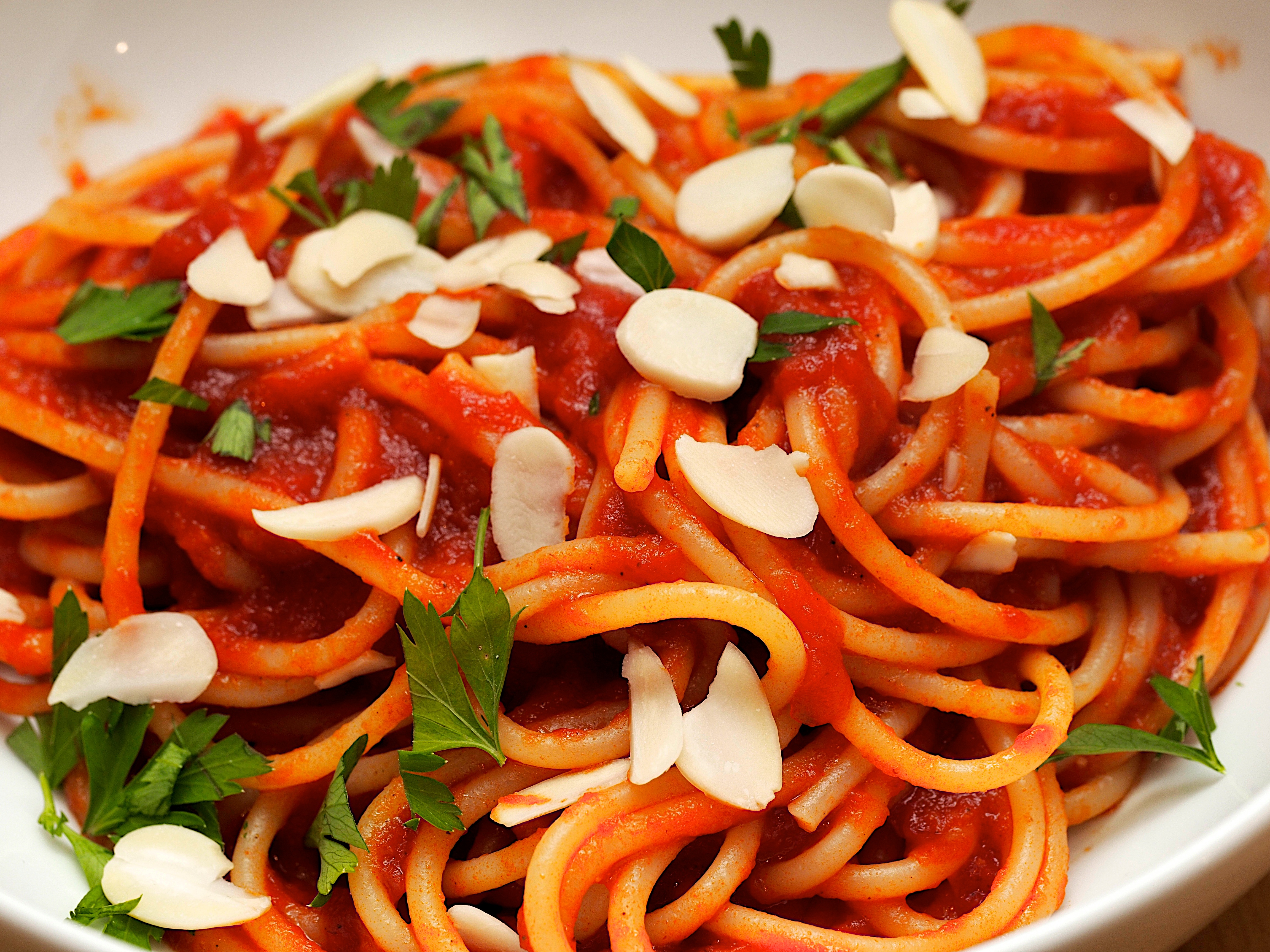
A Lebanese twist to tomato sauce with gentle spices and almonds; a lovely variation on a theme. The proportion of sauce to spaghetti is also very different to how the Italian’s make pasta so there is a lot of sauce for this dish. This worked for us but you could use the same amount of sauce for a greater quantity of pasta and therefore serve more people if you’d like.

The spices are subtle and warming and the pinches can be generous if you like.

Spaghetti with a Rich Tomato Sauce & Toasted Almonds – serves 2 generously

  • 2 x 400g tins chopped tomatoes
  • 2 tbsp tomato purée
  • 3 garlic cloves, grated
  • 1 tsp brown sugar
  • 1 tbsp olive oil
  • pinch ground cinnamon
  • pinch ground allspice
  • pinch grated nutmeg
  • 1/2 tsp salt
  • pinch ground pepper
  • 200g spaghetti
  • 50g flaked almonds, toasted
  • 2 tbsp chopped parsley

Put the tomatoes, tomato purée, garlic and sugar into a pan and simmer over a low heat. Stir frequently and simmer for 30 minutes.

Stir in the olive oil, cinnamon, allspice, nutmeg, salt and pepper and cook for a further 20 minutes.

Meanwhile bring a large pot of salted water to a boil, add the spaghetti and cook according to packet instructions (usually between 10-12 minutes). Reserve 3 tablespoons of the cooking water and then drain the cooked spaghetti.

Return the spaghetti to the cooking pot with the reserved cooking water and the tomato sauce.

Toss well and then serve sprinkled with the almonds and parsley.

Wine Suggestion: we drank a Valpolicella Ripasso with this dish and the ripe, juicy spices went well with the warming spices of the sauce.

(Original recipe from The Lebanese Kitchen by Salma Hage, Phaidon, 2012.)

Read Full Post »

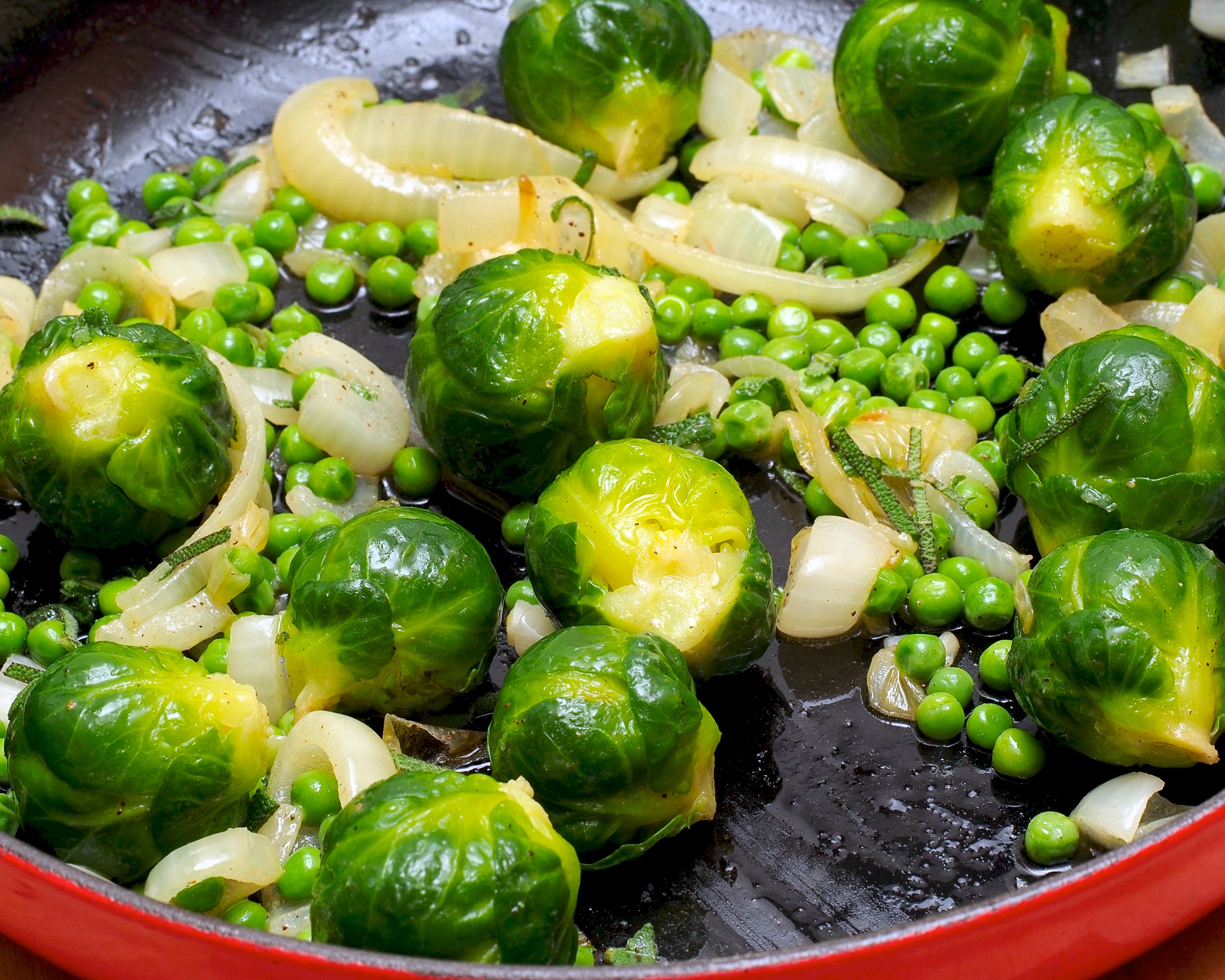
Simple dishes like this show off the flavours of the ingredients so well. This is a perfect dinner party side dish. Don’t worry too much about the sprout haters – more for us!!

Buttery Sage & Onion Sprouts – to serve 8 

  • 85g butter
  • 3 onions, cut into thickish slices
  • 8 sage leaves, chopped
  • 350g Brussels sprouts
  • 200g frozen peas

Heat half the butter in a large frying pan and soften the onions over a low heat for about 15 minutes. You want them really soft but not brown. Add most of the sage.

Meanwhile, cook the sprouts in a pan of boiling water for about 4 minutes, add the peas and cook for another minute or until just tender.

Drain, reserving splash of water, then add the sprouts to the peas and onions, along with the rest of the butter, stirring well so everything is coated in butter. Add the reserved cooking water if you think it needs it.

Season with loads of black pepper and some salt and sprinkle the reserved sage on top.

(Original recipe from BBC Good Food)

Read Full Post »

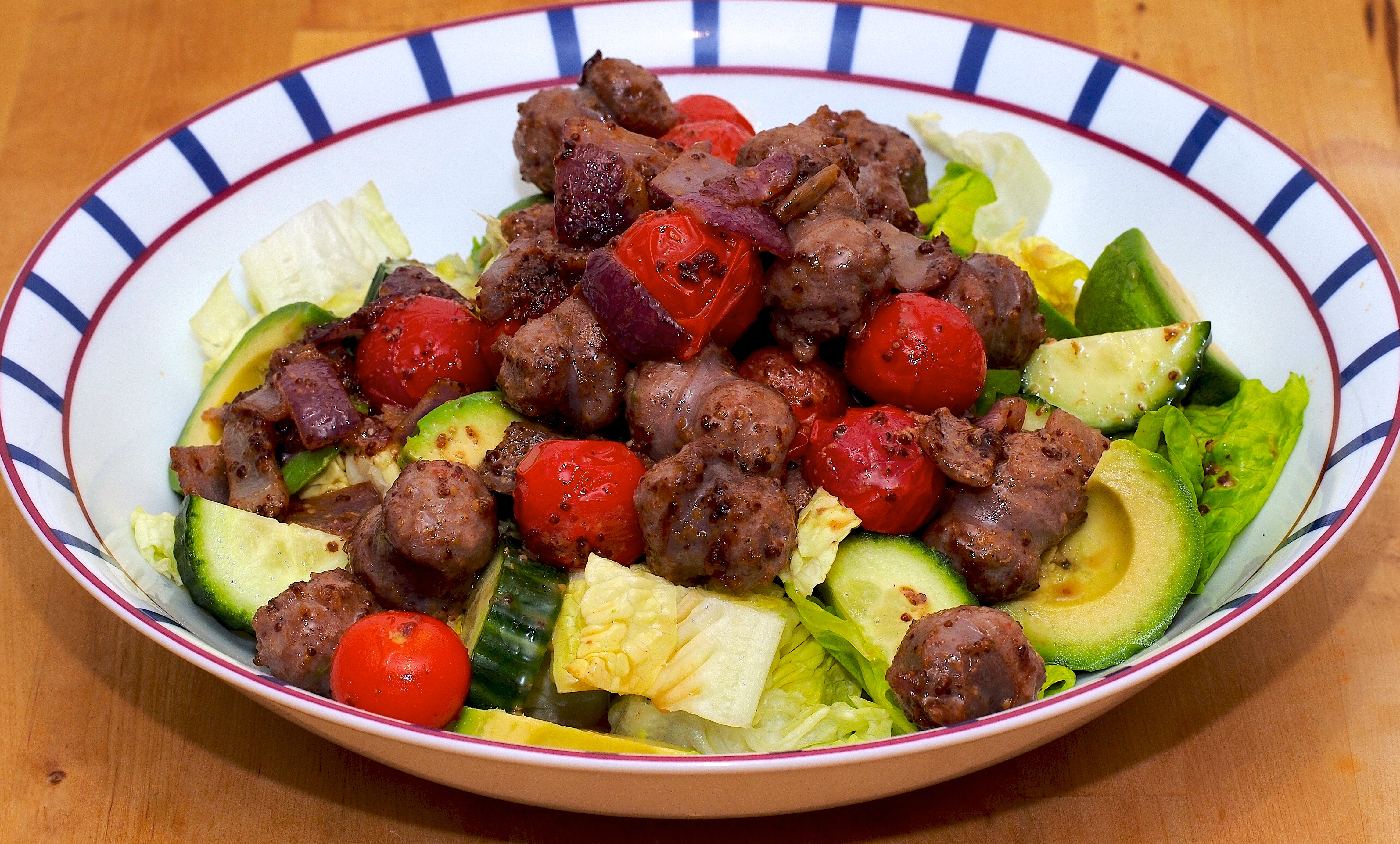
Sausage Salad

We wouldn’t normally think of putting sausages in our salad but this worked surprisingly well.

Sausage Salad – to serve 4

  • 1 tbsp olive oil 
  • 400g good-quality sausages, snipped with scissors into bite-size chunks
  • 1 red onion, roughly chopped
  • 1 heaped tbsp grainy mustard
  • 1 tbsp light muscovado sugar
  • 16 cherry tomatoes
  • 2 little gem lettuces
  • 1 large avocado
  • ¼ cucumber
  • 1 tbsp red wine vinegar

Heat the oil in a deep frying pan. Add the sausages and onion and fry for a couple of minutes or until browned.

Add the mustard, sugar and tomatoes and cook for another few minutes or until the tomatoes are starting to split and everything is well coated.

Meanwhile, separate the lettuce leaves, slice the avocado and the cucumber. Toss together in a salad bowl. Spoon the hot sausages over the top.

Add the vinegar and 1 tbsp water to the hot pan and stir over the heat, scraping all the sticky bits from the bottom of the pan. Spoon the pan juices over the salad and serve with some crusty bread.

Wine Suggestion: This is definitely a week-night dish so no need to blow the budget on the wine. A red Côtes du Rhône or a Languedoc would do nicely.

(Original recipe from BBC Good Food)

Read Full Post »

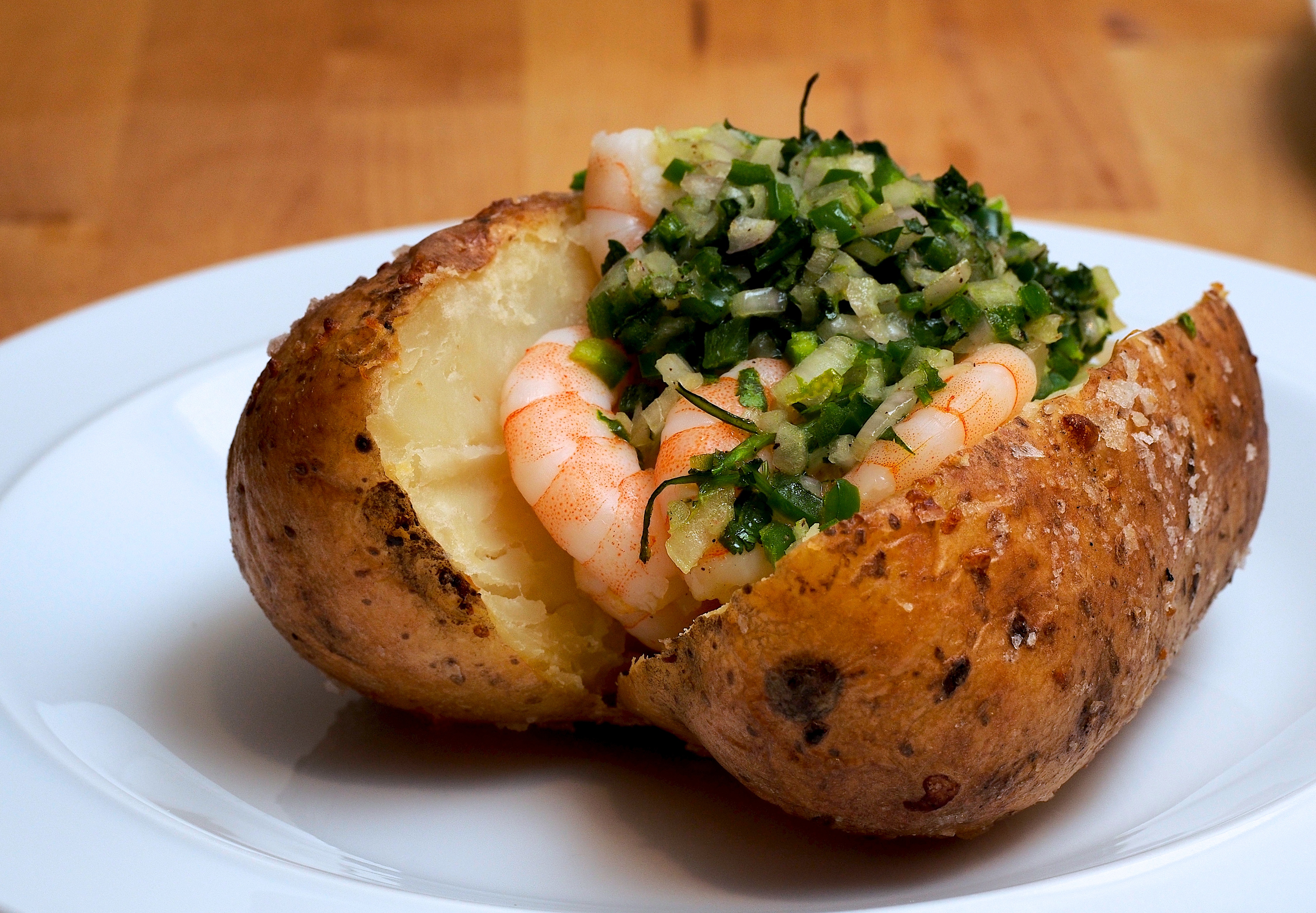
OLYMPUS DIGITAL CAMERA

A weeknight feast; perfect after a long day at work and a cold, wet Winters’ day. We weren’t too sure about the recipe at first but it’s definitely a keeper!

Salt-baked Potatoes with Prawns, Jalapeño & Coriander Butter – to serve 4

  • oil 
  • 4 baking potatoes
  • 1 tbsp sea salt flakes
  • 75g butter, softened
  • 2 shallots, finely chopped
  • 2 garlic cloves, crushed
  • 2 tbsp chopped jalapeño peppers
  • 1 lime, zest and juice
  • small bunch of coriander, chopped
  • 175g cooked prawns

Heat the oven to 220C/fan 200/gas 7.

Rub a little oil over the potatoes and prick them all over with a fork, sprinkle with the salt and put on the top shelf of the oven.

Bake for 20 minutes, then turn the oven down to 190C/fan 170/gas 5 and bake for about an hour or until the skin is crispy and the potatoes are soft inside.

Beat the butter until creamy, then stir in the shallots and garlic. Add the jalapeño peppers, lime zest, coriander and some seasoning.

Split the cooked potatoes, divide the prawns between them and spoon the butter on top. Put back into the oven for a few minutes and squeeze over the lime juice before serving.

Wine Suggestion: A fresh white, like an Albariño from the Rías Baixas DO,in Spain.

(Original recipe from BBC Good Food)

Read Full Post »

« Newer Posts - Older Posts »