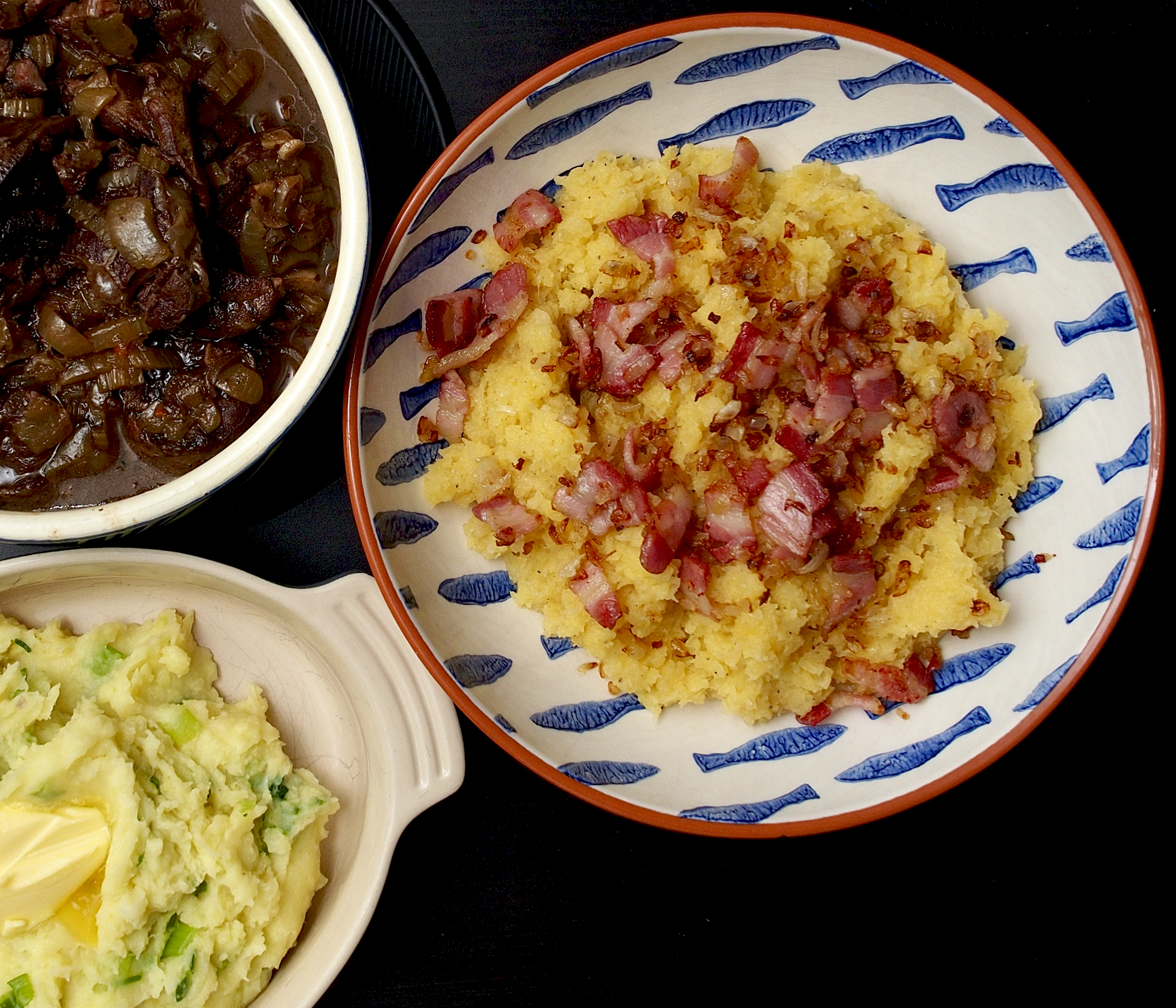
We don’t need to convincing to eat turnip but it is even more delicious with crispy bacon, onions and heaps of black pepper.
Turnip with bacon & onions – serves 4 to 6
900g turnip, peeled and cut into chunks
1 tbsp rapeseed oil
1 small onion, finely chopped
50g smoked bacon, diced
50g butter
Steam the turnip for about 10 minutes or until tender.
Meanwhile, heat the oil in a frying pan over a medium heat and gently sauté the onion and bacon until the bacon is crispy and onion starting to colour.
Roughly mash the turnip with the butter, then season with salt and lots of black pepper.
To serve, put the turnip into a warm dish and sprinkle with the bacon and onions.
(Original recipe from Nevan Maguire’s Complete Family Cookbook)
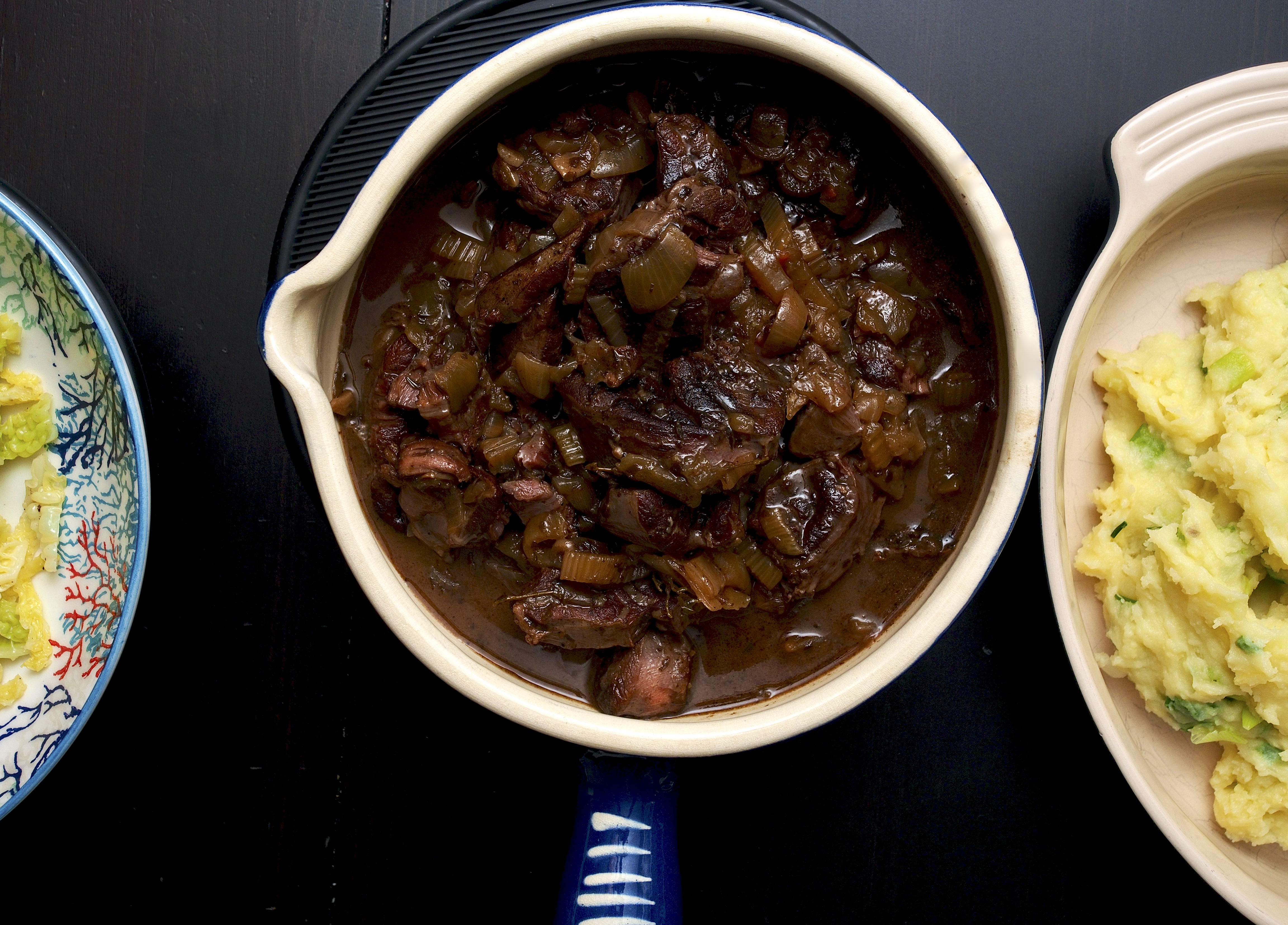
We had to try this idea from Gill Meller’s book Gather in order to use some dulse flakes from Aran Islands Seaweed. The dulse flakes give a smoky umami flavour to the dish. It takes a while in the oven but it otherwise very simple and tastes even better if made in advance, as stews often do. We served with creamy mash, cabbage and turnip for a hearty Sunday lunch.
Wine Suggestion: A dish that needs a suitably rich red wine to match; one where the rich fruit has high levels of anthocyanins and phenols in a ripe framework. The Altosur Malbec from Tuppangato (the highest part of the Mendoza area) in Argentina came out of the rack and its blackberry, blueberry and plum flavours with brambly, rich tannins was an ample choice.
Beef shin with dulse – serves 4
2 tbsp olive oil
800g beef shin, sliced thickly
2 onions, sliced
4 large garlic cloves, peeled and thinly sliced
2 celery sticks, thinly sliced
3-4 sprigs of thyme
½ a glass of red wine
2-3 tsp powdered smoked dulse (we used dulse flakes, see note above)
300ml chicken stock or water
Heat the oven to 120C/Gas 1.
Heat the oil in a heavy flameproof casserole. Season the beef shin well with salt and pepper, then brown on all sides until it takes on a really-good colour all over. Remove from the pan and set aside.
Add the onion, garlic, celery and thyme and cook gently over a low heat until the onions are soft but not coloured. Return the meat the pan, then add the wine, dulse and stock or water and bring to a gentle simmer.
Cover the casserole with a lid and place in the oven for 4-5 hours, or until the meat falls apart easily. Season to taste and leave to rest for 25 minutes before serving with mash and other veg.
(Original recipe from Gather by Gill Meller, Quadrille, 2016.)
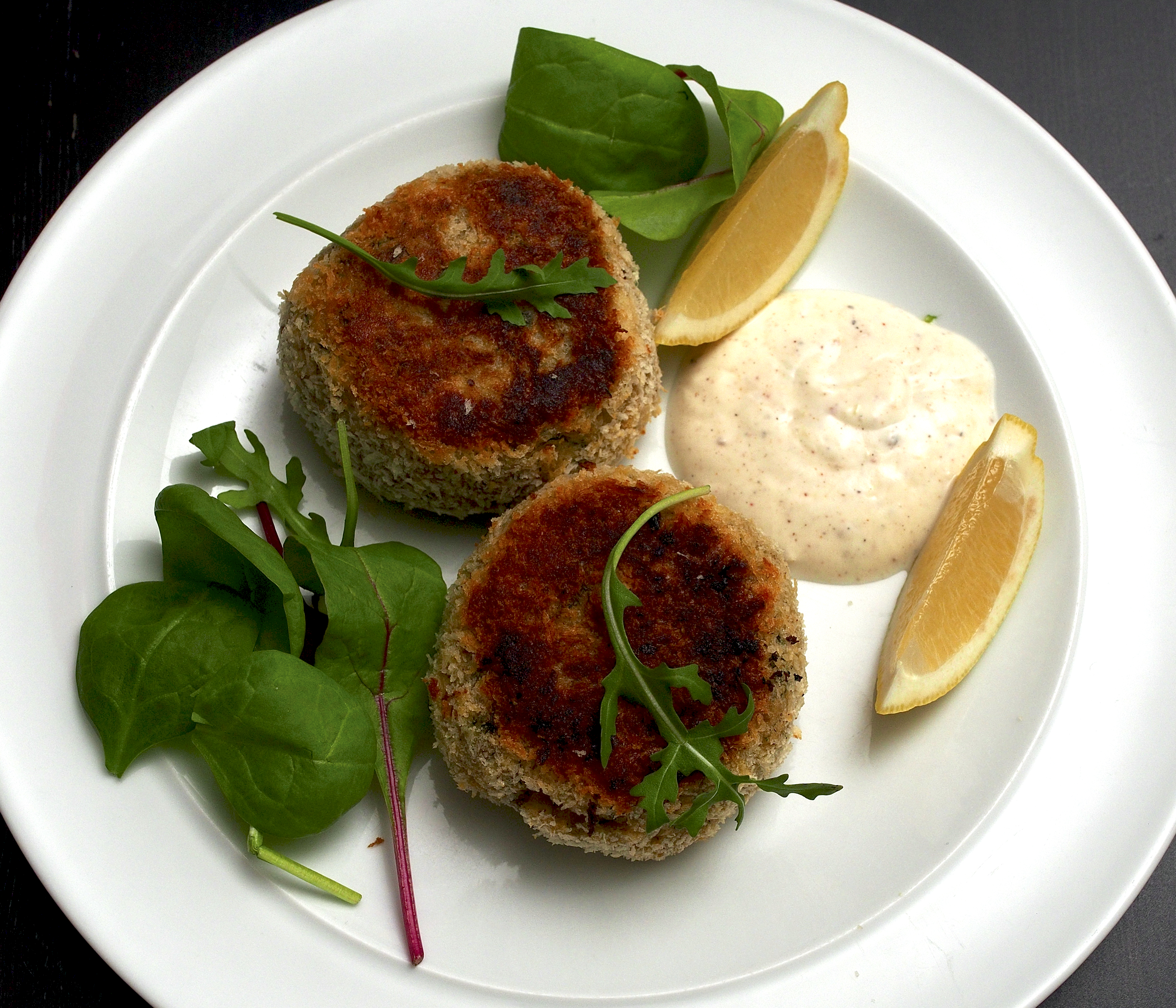
These are great for midweek, quite big, so they filled us up and tasted really good with the spicy yoghurt dip, some salad leaves and lemon. They are quite therapeutic to make too, or at least we thought so.
Wine Suggestion: A classic dish like fish cakes needs a classic match and Domaine de la Chauviniere’s Muscadet Sevre et Maine sur lie was our choice.
Fishcakes with ras el hanout and dill – serves 4
600g floury potatoes, cut into even chunks
300g skinless and boneless white fish
300ml milk
2½ tsp ras el hanout
zest of 2 lemons, plus 2 tbsp juice, and wedges to serve
small packet of dill, leaves finely chopped
1 large egg, beaten
85g dried breadcrumbs, we used Panko
4 tbsp sunflower oil
300g natural yoghurt
100g bag of salad leaves, to serve
Put the potatoes into a large saucepan, cover with cold salty water, bring to the boil, and cook for 18-20 minutes until cooked. Drain and leave to steam-dry in the pot, then mash.
Meanwhile, put the fish in another saucepan and pour over the milk and about 100ml of water, just to cover. Cover with a lid, bring to a simmer, then turn off the heat and leave aside with the lid on to finish cooking. Remove the fish with a slotted spoon and flake into large chunks with your hands.
Mix 2 tbsp of the poaching liquid into the mashed potatoes with 2 tsp of ras el hanout, the zest of 1 lemon, dill and seasoning. Carefully mix in the fish, trying not to let it break up too much further, you want nice chunks. Shape the potato mixture into 8 large fishcakes, keep them quite flat so they’re easy to brown. Dip each fishcake into the beaten egg, then the dried breadcrumbs to coat.
Heat the oven to 200C/fan 180C/gas 6.
Heat the oil in a large non-stick ovenproof frying pan over a medium heat. Add the fishcakes and fry on each side for about 5 minutes over a medium heat. Keep an eye on them to make sure they don’t brown too much. Transfer the frying pan to the oven and cook for 8-10 minutes until piping hot.
Meanwhile, mix the yoghurt with the rest of the lemon zest, 2 tbsp lemon juice, ½ tsp ras el hanout and seasoning. Serve the fishcakes with salad, spiced yoghurt and lemon wedges.
(Original recipe by Katy Gilhooly in Good Food Magazine, December 2015.)
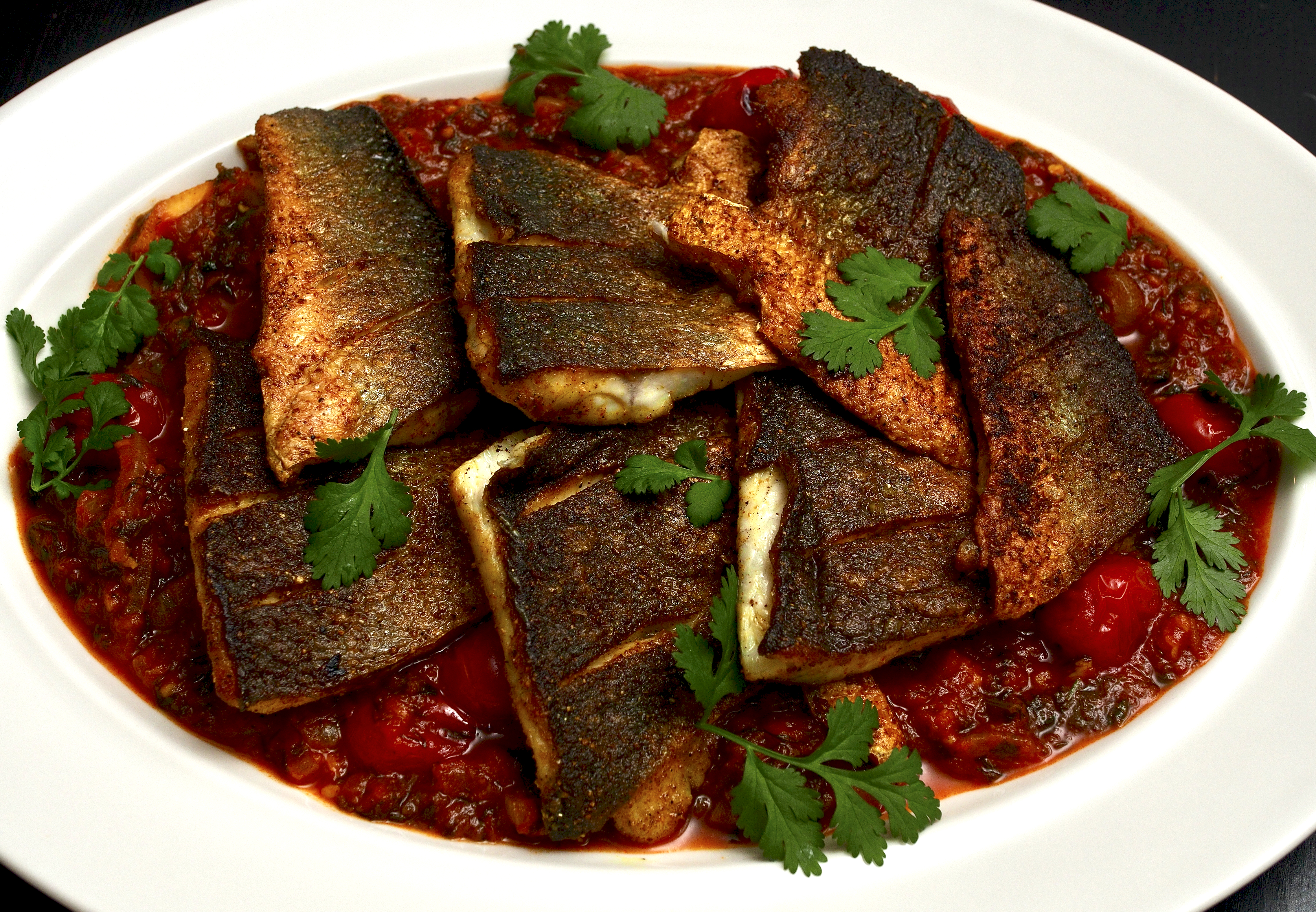
We cooked this fish from Falastin on a Saturday night for our 7 year old, who gets to sit up and have dinner with us at the weekends. Jono’s not too keen on fish skin so I warned him to make sure that Orlaith didn’t see him taking it off, or she wouldn’t eat it either. Orlaith announced very quickly that the skin was the best bit – that’s my girl! Crispy skin is the key and this cooking method delivers it to perfection. Even Jono ate the skin!
Wine Suggestion: A very left-field suggestion tonight, but with some logic: the Herdade de Portacarra Manda Chuva. This is a Blanc de Noirs – a white made from a red grape. In this case Sangiovese which is the logic; this grape works superbly with tomatoes. Interestingly this is from Setubal, in Portugal, and by making a white it makes a great match for both fish and tomatoes.
8 sea bass fillets, skin on, lightly scored and halved widthways at a slight angle
1 onion, thinly sliced
5 garlic cloves, crushed
25g piece of ginger, peeled and finely grated
1 green chilli, finely chopped, including seeds
1 tbsp tomato purée
1 x 400g tin of peeled plum tomatoes, blitzed in a food processor until smooth
1 ½ tsp caster sugar
20g dill, roughly chopped
25g coriander, roughly chopped, plus extra to garnish
400ml chicken stock
150g datterini or cherry tomatoes
½ a lemon, very thinly sliced into rounds
Combine 2 tbsp of oil, 2½ tsp of fish spice mix, 1 tsp of salt and a plenty of black pepper together in a shallow dish. Add the fish pieces, turn to coat and set aside while you make the sauce.
Put 2 tbsp of oil in a large sauté pan and place on a medium-high heat. Add the onion and cook for about 8 minutes, stirring now and then, until softened and browned. Add the garlic, ginger and chilli and cook for another couple of minutes, until fragrant. Add 1½ tsp fish spice mix and the tomato purée and cook for 30 seconds. Add the tinned tomatoes, sugar, two-thirds of the dill and coriander, the stock, 1 tsp of salt and plenty of pepper. Bring to the boil, then lower the heat to medium and cook for 20 minutes, stirring occasionally, or until the sauce is thick and rich. Keep warm on a low heat.
Toss the little tomatoes with 2 tsps of oil. Put a large frying pan on a hight heat, add the tomatoes, and cook for about 4 minutes, shaking the pan a few times, until charred all over. Add the lemon slices and cook for another 2-3 minutes, shaking the pan a few times. Add this to the tomato sauce along with the remaining herbs and keep warm until ready to serve.
Wipe the frying pan clean and put over a medium-high heat with 1½ tsp of oil. Add a quarter of the sea bass fillets, skin side down, press them gently if necessary to stop them curling. Cook for 4 minutes, or until the skin is crisp and browned, then flip the fish over in the pan. Cook for another 30 seconds, then transfer to a warm plate. Repeat until all the fish is cooked.
Divide the sauce between 4 plates and top with the sea bass. Sprinkle over some coriander leaves to serve.
(Original recipe from Falastin by Sami Tamimi and Tara Wigley, Ebury Press, 2020.)
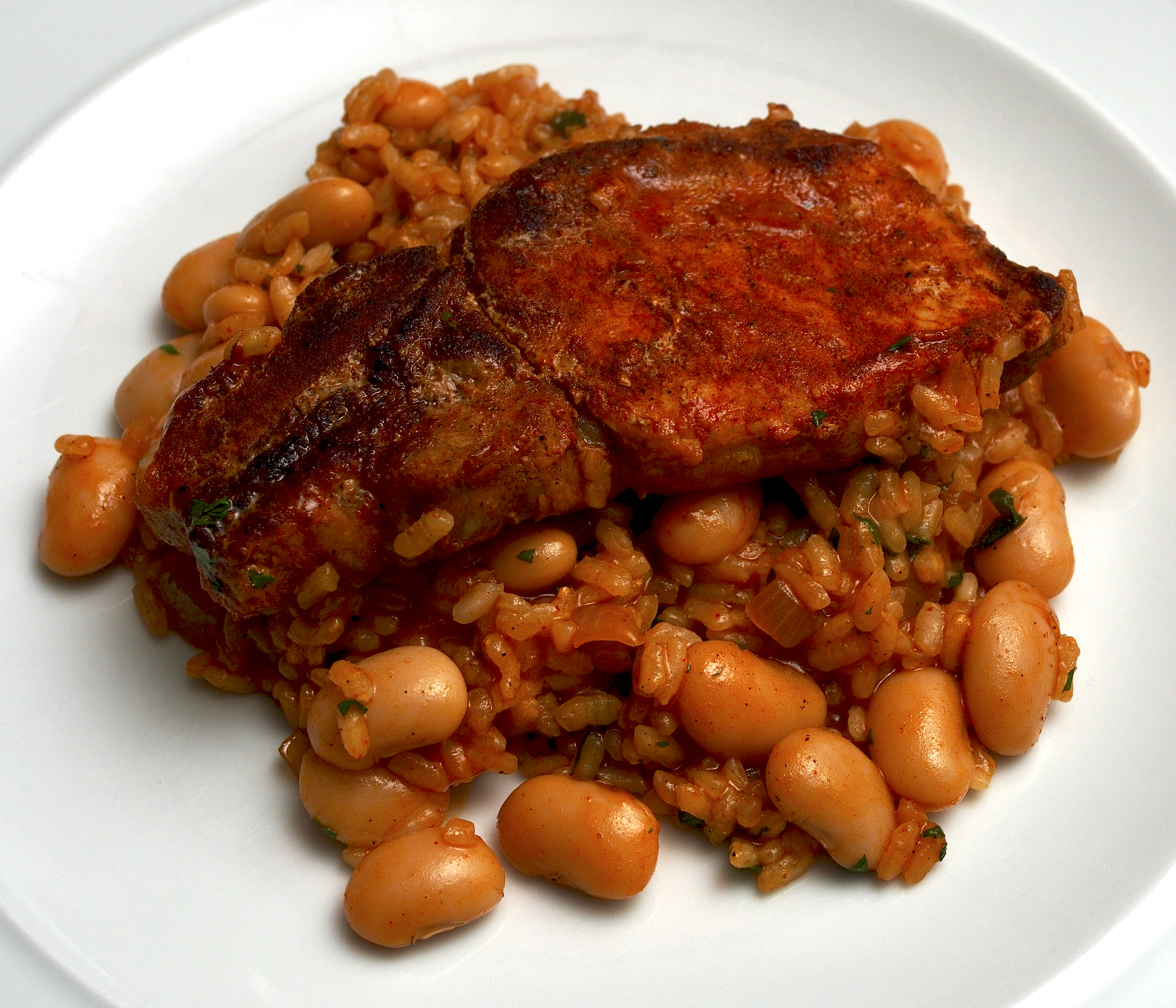
Here’s a quick fix for midweek. Really tasty and super simple to put together, so you can focus on your online shopping.
Wine Suggestion: Go for an earthy Tempranillo that hasn’t got too much extraction (big tannins!) but still has nice fruit. A Rioja Crianza should give the right balance, some blackberries and strawberries, some tannins but not too much, and only a touch of spices that develop with age. Our choice tonight the Paco Garcia Crianza.
Pork and Paprika Rice – serves 2
2 pork chops, trimmed of fat
1 tbsp paprika
1 onion, finely chopped
1 tbsp tomato purée
200g paella rice
100ml dry sherry
400ml stock
200g tin butter beans or other white beans, rinsed and drained
2 tbsp chopped parsley
Rub the pork with the paprika and season generously.
Heat a little olive oil in a frying pan, then fry the pork chops on one side, until browned, then turn over and add the onion and tomato purée. Fry together for 5 minutes.
Stir in the rice, then add the sherry and cook for 1 minute before adding the stock. Bring to a simmer, then cover and cook for 15 minutes or until the rice is just cooked.
Add the beans and parsley, season well, then stand for 5 minutes before serving.
(Original recipe by Lulu Grimes in Olive Magazine, November 2013.)
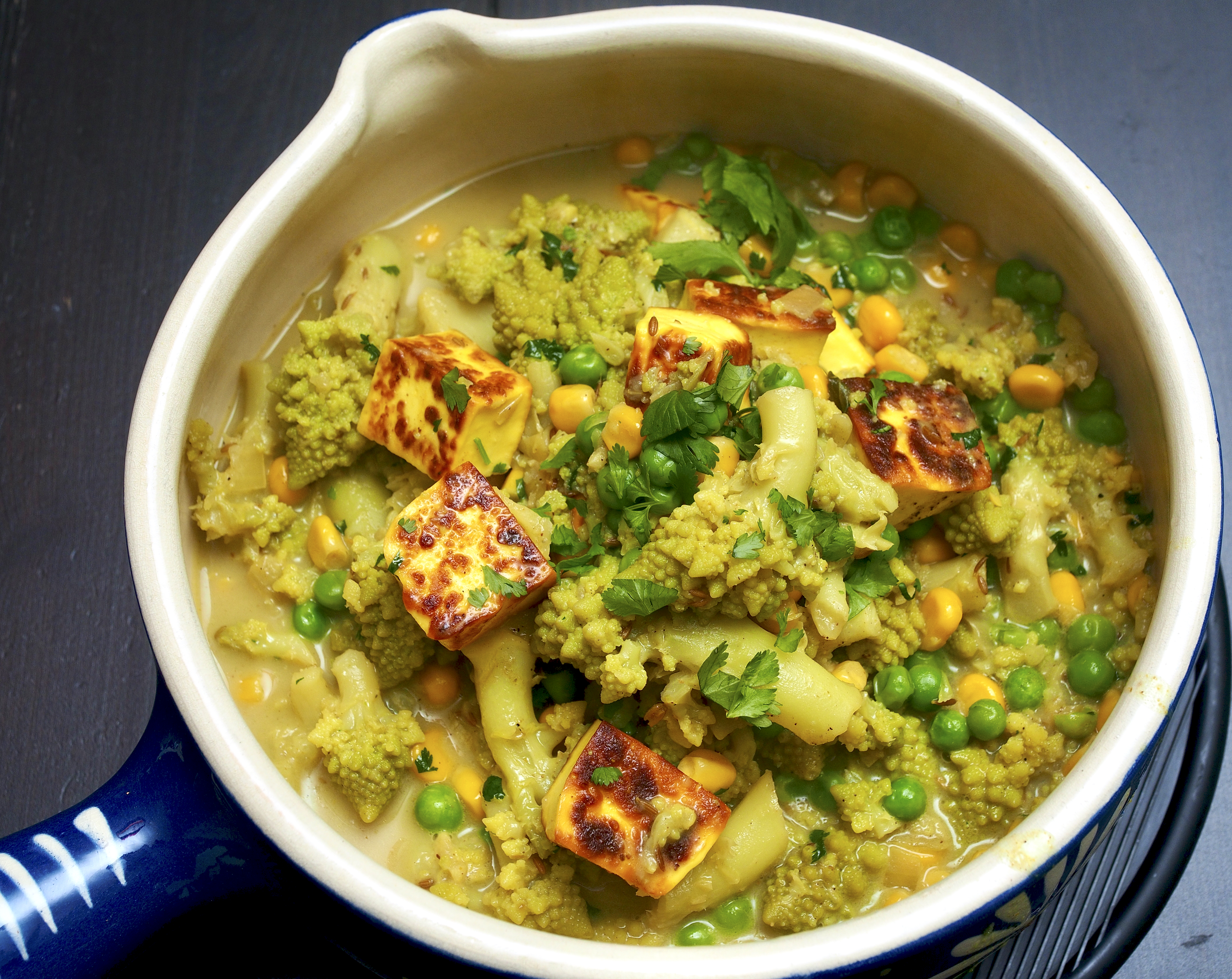
Romanesco has a short season so it’s a grab it when you can sort of vegetable. This means we usually just steam it but we came across this veggie curry recipe by Tom Kerridge and it was the perfect weeknight bowl of goodness.
Wine Suggestion: This works with lighter whites like the La Piuma Pecorino from Italy, but can see it working with so many other whites. Balanced, easy fruit, medium bodied and with enough texture, like Italian whites tend to have, except for Pinot Grigio.
Romanesco, corn and coconut curry – serves 4
2 tbsp vegetable oil
2 tsp cumin seeds
1 onion, finely chopped
4 garlic cloves, finely chopped
2 tsp ground coriander
1 tsp ground turmeric
1 tsp garam masala
500g romanesco, cut into florets
300ml vegetable stock
400ml coconut milk
350g tin sweetcorn, drained
200g frozen peas
a handful of coriander, chopped
1 long red chilli, finely sliced
cooked rice, to serve
FOR THE FRIED PANEER:
225g paneer, cut into cubes
½ tsp ground turmeric
½ tsp sea salt
1 tbsp vegetable oil
Heat the oil in a wide, deep frying pan. Add the cumin seeds and sizzle for a few seconds, then add the onion. Cook for 5 minutes, then add the garlic and cook for another 2 minutes.
Turn the heat down, then add the ground spices and stir for 1 minute, then add the romanesco and stir-fry for 1 minute. Pour in the veg stock and half the coconut milk and cook for 20 minutes.
Meanwhile, cook the paneer. Put it into a bowl and mix with the turmeric and salt. Heat the oil in a non-stick frying pan over a medium heat. Add the paneer and cook until browned, 5-8 minutes, then remove from the heat.
Add the rest of the coconut milk to the romanesco and stir in the sweetcorn, peas, fried paneer and half the coriander. Bring to a simmer and cook gently for 5 minutes. Season to taste.
Serve scattered with the chilli and the rest of the coriander.
(Original recipe from Tom Kerridge’s Fresh Start, Bloomsbury Absolute, 2018.)
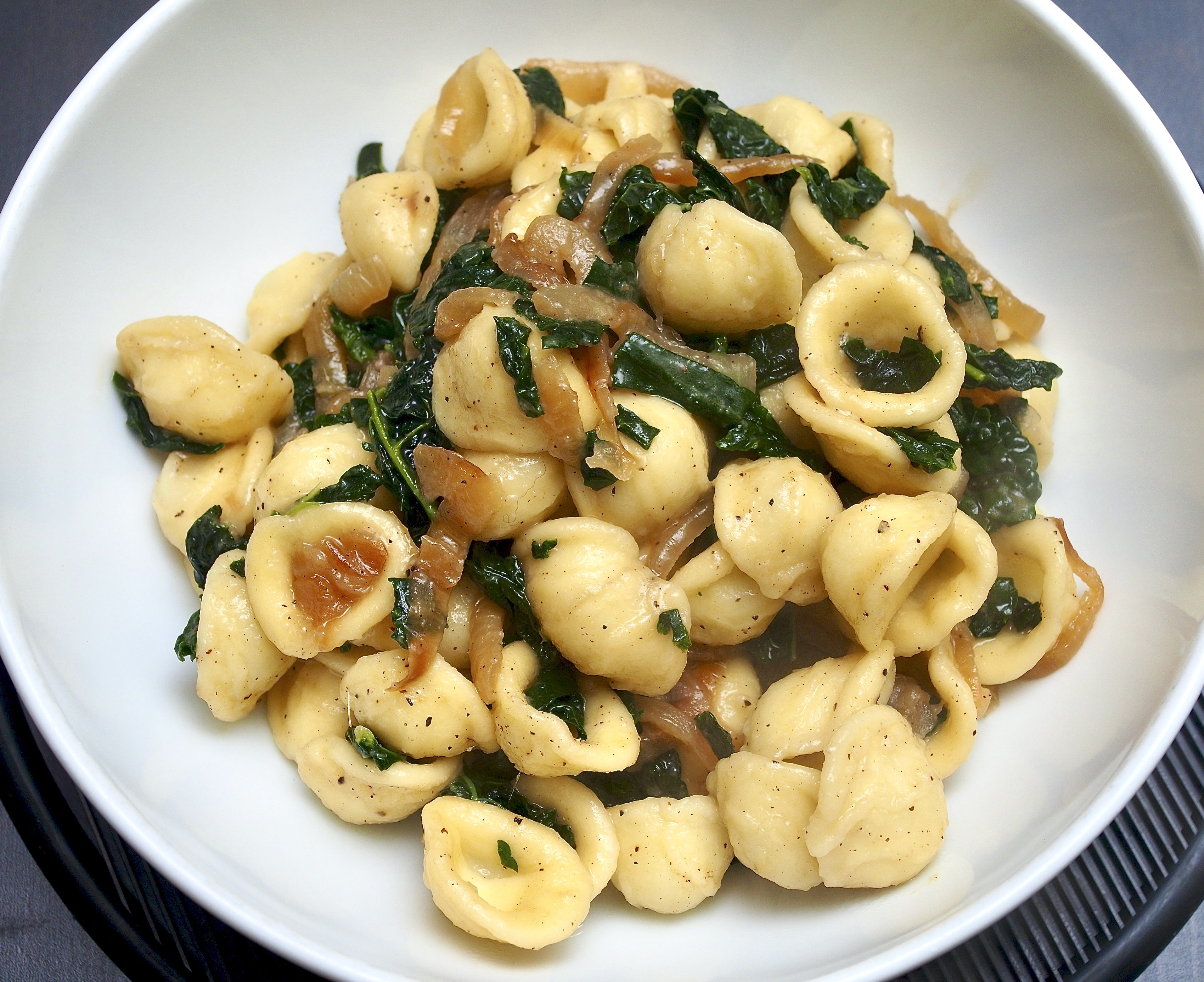
We love cavolo nero and it was so good in this simple pasta dish. No cheese and you won’t miss it as this has a really deep, savoury flavour.
Wine Suggestion: The beauty of this dish is the immediacy and simplicity, so a young red with joyful fruit as you’ll find in Beaujolais is perfect. If you find yourself in Nouveau season then hunt out a good bottle from a quality producer. We’re a few weeks out but had a bottle from Domaine Chasselay still hanging around and it was joyful.
Orecchiette with anchovies, cavolo nero and caramelised onions – serves 2
2 onions, finely sliced
200g orecchiette
4 anchovies in olive oil, drained and cut into pieces
100g cavolo nero, discard the woody stalks and shred the leaves
Fry the onions in a little oil and butter over a medium heat until golden and caramelised, about 30 minutes. Don’t rush this stage as you want proper caramelisation. If they start to stick, just add a splash of water.
Meanwhile, boil the orecchiette in lots of very salty water according to the timing on the pack. Reserve a cup of the pasta cooking water before you drain it.
Add the cavolo nero and anchovies to the onions and fry for a couple of minutes until the anchovies have melted and the cavolo nero has wilted. Add a little more butter if the onions stick. Tip in the drained pasta and a splash of cooking water. Season well and toss to coat.
(Original recipe by Janine Ratcliffe in Olive Magazine, November 2016.)
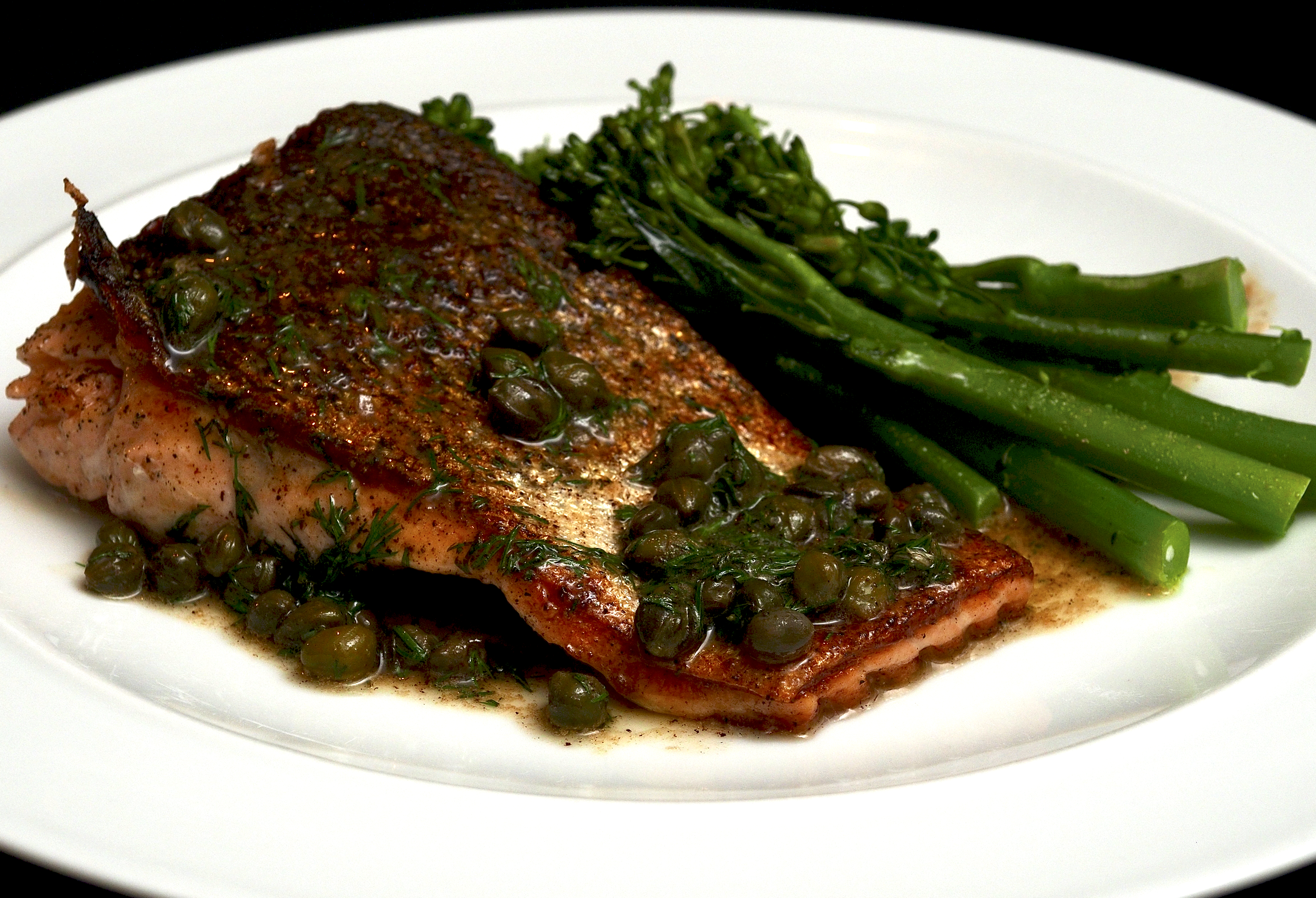
We like weeknight dishes that use fresh dill, like this one, particularly helpful as we often have leftover dill from the weekend. We never mind as we just love the lift dill can bring and hate to waste it. Don’t be tempted to turn the salmon too soon, you want nice crispy skin.
Wine Suggestion: A number of Italian whites have a good affinity to fish and capers so we chose a favourite, the Graziano Prá Soave Classico “Otto”. A DOC with a number of standout winemakers like Prá championing the local grape Garganega; green apple, hints of almond, a mid-weight and refreshing, textured finish.
Salmon with capers & dill – serves 4
50g butter, diced
4 x salmon fillets, preferably with the skin on, seasoned with salt and pepper
4 tbsp capers, drained and rinsed
2 tbsp lemon juice mixed with 6-8 tbsp water
4 tsp chopped dill
Heat a frying pan over a medium-high heat, then add a couple of knobs of butter and add the salmon fillets, skin side down. Fry for 3-4 minutes or until crispy and browned underneath, then turn over and continue to cook for a couple of minutes or until cooked through.
Add the capers, the rest of the butter and the lemon juice mixed with water, boil for 1 minute. Season to taste, then transfer the salmon onto warmed plates, stir in the chopped dill and pour over the fish to serve.
(Original recipe by Rachel Allen in BBC Good Food Magazine, November 2011.)
This is a lovely side dish and it was hard not to eat all the roasted Romanesco before it got to the plate. Then you add garlicky tahini sauce and pomegranate seeds … delicious!
We just love the fractal patterened shape of these too. We’ve recently discovered that pomegranate seeds freeze well. Dry them well and spread them over a tray lined with paper, transfer to a bag or tub when frozen.
Roast Romanesco Cauliflower with Tahini and Pomegranates – serves 4
2 heads of Romanesco cauliflower, cut into florets
4 tbsp light olive oil
1 tsp ground cumin
1 tsp ground allspice
2 tbsp pomegranate seeds
FOR THE SAUCE:
75g tahini
4 tbsp lemon juice
1 clove of garlic, crushed
Heat the oven to 200C/180C/Gas 6.
Spread the florets out over a large baking tray. Drizzle with the olive oil and sprinkle with the cumin and allspice. Season with plenty of salt and pepper then toss well to coat.
Roast for 20-30 minutes in the hot oven until tender but firm, give them a toss half way through, then remove from the oven and leave to cool slightly.
To make the tahini sauce mix the tahini, lemon juice and garlic with 100ml of water in a bowl, until smooth and runny.
Put the tahini onto a serving platter, drizzle with the sauce and sprinkle over the pomegranate seeds.
(Original recipe from Zaitoun by Yasmin Khan, Bloomsbury, 2018.)
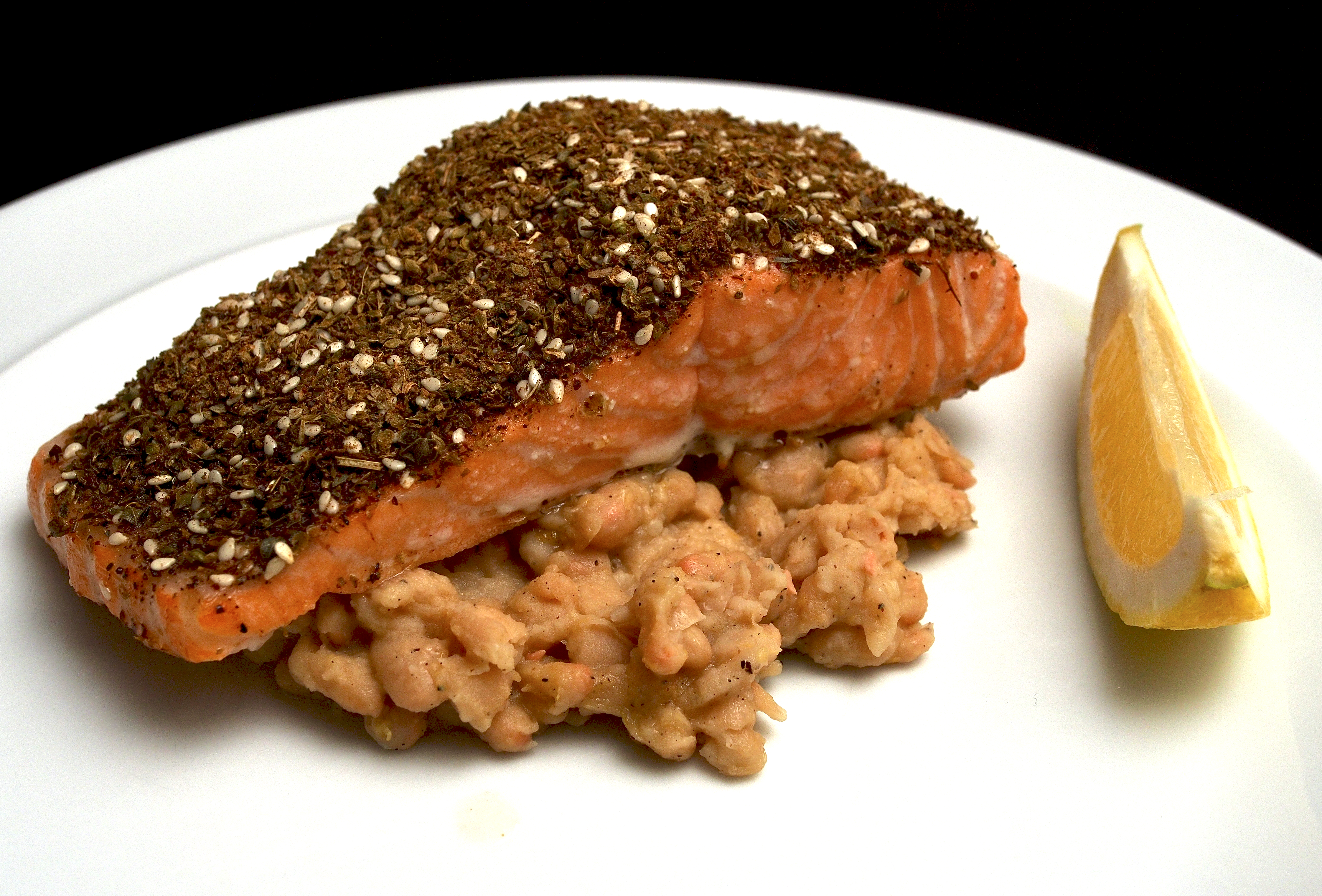
This garlicky bean mash is the perfect match for za’atar coated salmon. An easy dish from Yasmin Khan’s Zaitoun and perfect for a Friday night.
Wine Suggestion: As befitting the easy Friday night we whipped out a Rustenberg Chardonnay from Stellenbosch, South Africa. Despite the class and balance of this oaked Chardonnay it’s relatively inexpensive and one of our standby wines.
Za’atar roast salmon with garlicky bean mash – serves 2
2 salmon fillets with skin on
2 tbsp light olive oil
3 tbsp za’atar
1 clove of garlic, crushed
finely grated zest of 1 lemon, plus wedges to serve
25g butter
400g tin of cannellini beans, drained and rinsed
Heat the oven to 200C/fan 180C/Gas 6.
Place the salmon fillets on a baking sheet, skin-side down. Drizzle with the olive oil and season well with salt and pepper. Spoon the za’atar over the fish to completely coat the surface. Cook in the hot oven for 11-13 minutes or until just cooked through.
Melt the butter in a frying pan, then add the garlic and lemon zest and cook for a few minutes. Add the cannellini beans and some salt and pepper. Warm through, then roughly mash, adding a little water if it looks dry.
Serve the salmon with the mash and a lemon wedge.
(Original recipe from Zaitoun by Yasmin Khan, Bloomsbury, 2018.)
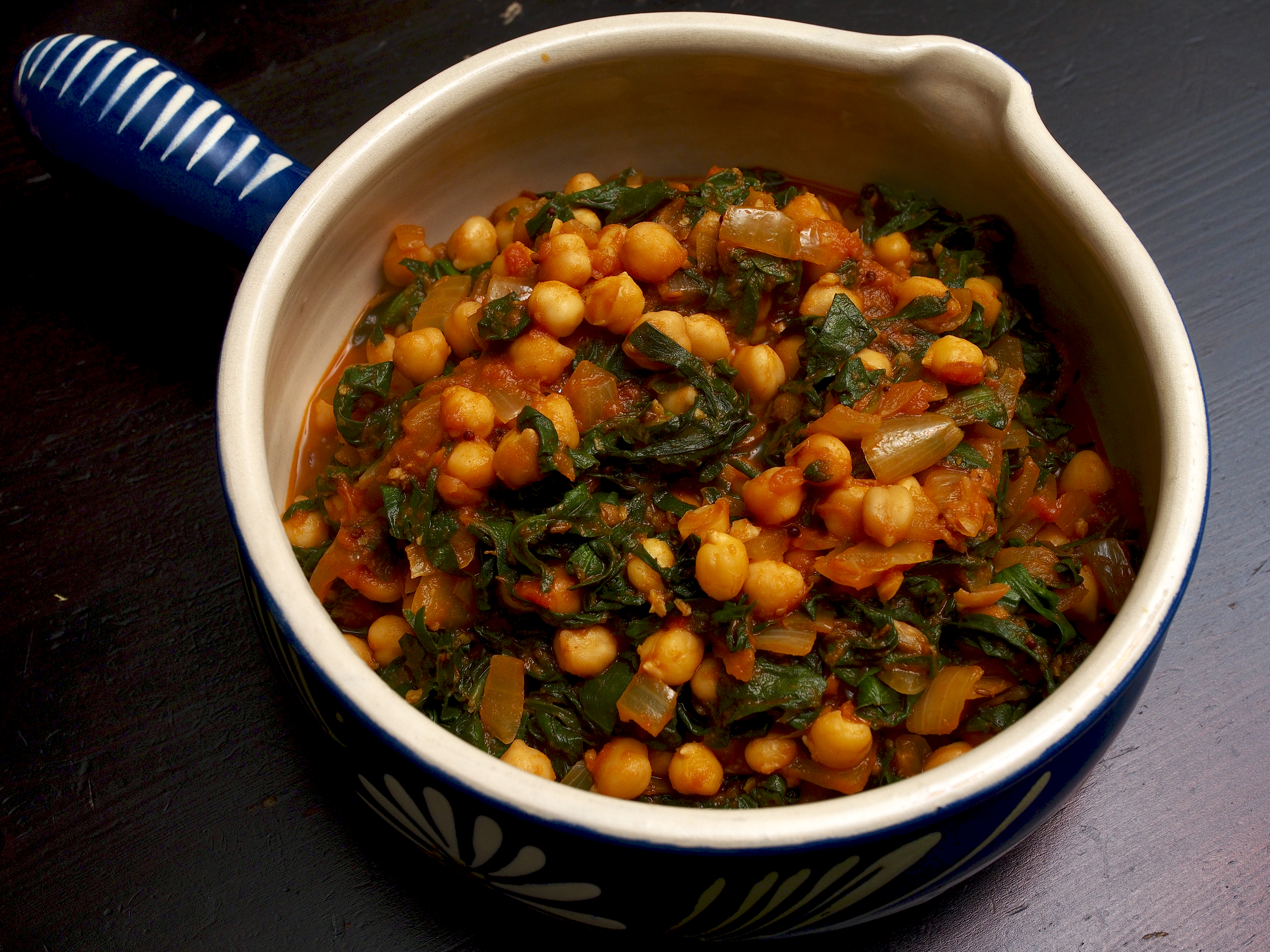
We adore spinach and dishes that are full of it, like this spinach, tomato & chickpea curry. Great served with rice or naan breads and some yoghurt. Couldn’t be easier!
Wine Suggestion: A dish like this loves medium weight Grenache based wines like Roc des Anges, l’Effet de Papillon rouge. A velvety, juicy, damson and raspberry flavoured glass with hints of spice.
Heat the oil in a large pan over a medium heat, then add the mustard seeds and cumin seeds. Stir for a minute, then add the chopped onions.
Fry for 10 to 12 minutes or until starting to caramelise, then add the garlic and ginger. Stir-fry for a few minutes, then add the tomatoes, crushing them with you hand as they go in. Fill the tin a third full with water and add to the pan.
Cook for 10 minutes or until quite dry and paste-like, then add the chickpeas. Warm through for a few minutes, then add the coriander, chilli powder, turmeric and salt. Stir well to combine, then add the spinach and stir until wilted.
Cook for about 5 minutes or until the spinach is cooked. Serve with naan bread or basmati rice and some yoghurt.
(Original recipe from Fresh India by Meeera Sodha, Fig Tree, 2016.)
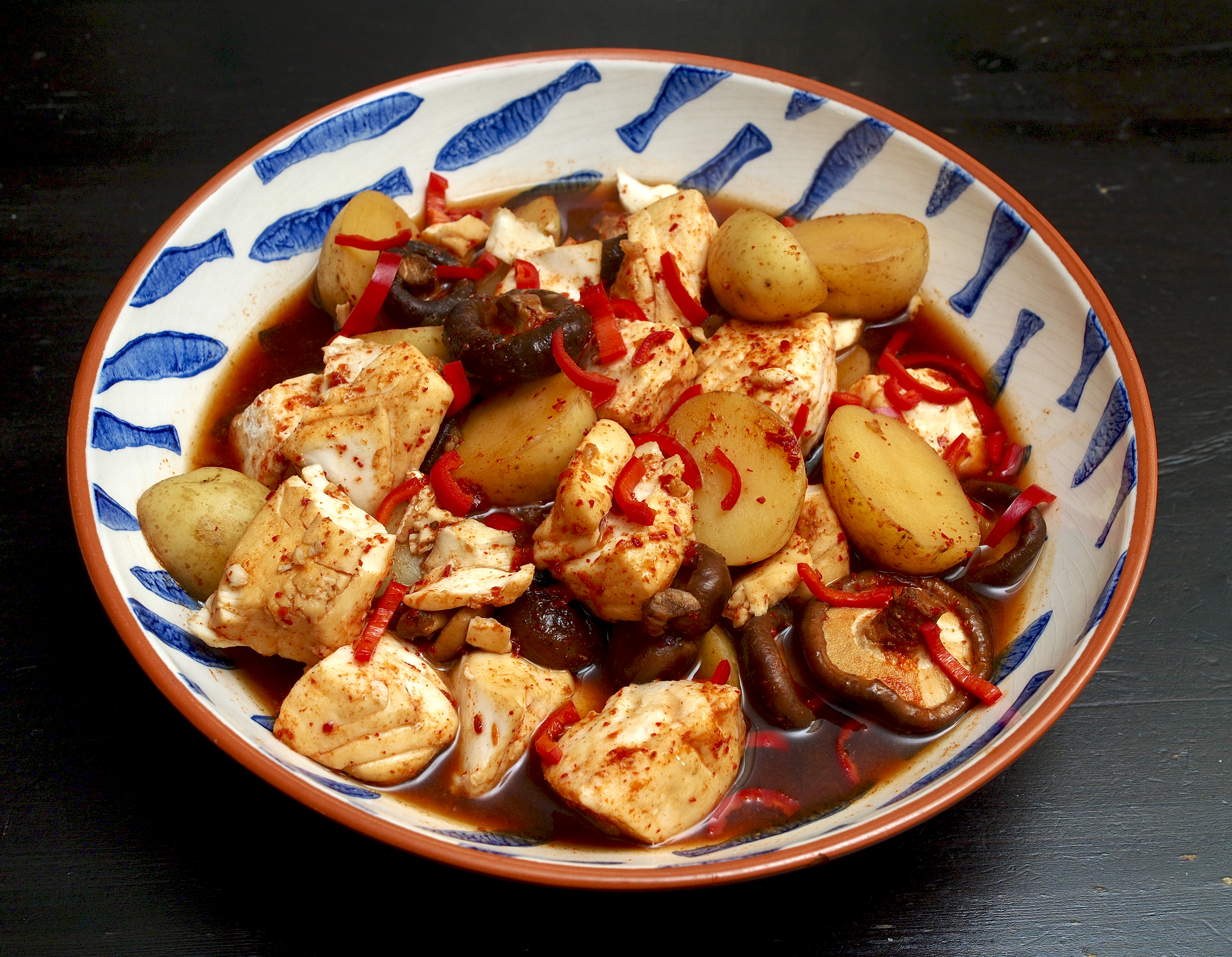
We don’t think we’ve ever cooked halibut at home before; it’s such a luxurious and meaty fish. It’s pricey but worth it we think for this Korean dish. You can of course substitute with cod or another white fish.
3 tbsp soju (or sake or 1½ tbsp vodka mixed with 1½ tbsp water)
1 tbsp mirin
1 tbsp honey
2 cloves of garlic, crushed
1 tbsp gochugaru red pepper powder
250g baby new potatoes, halved
400g halibut, cut into large bite-sized chunks
100g shitake mushrooms
1 red chilli, sliced
cooked sticky rice, to serve
Mix the soy sauce, soju, mirin, honey, garlic and gochugaru red pepper powder, together in a bowl with 220ml of water.
Put the potatoes into a medium saucepan, then pour over the sauce. Cover and bring to the boil over a high heat, then turn down and simmer for 10 minutes or until almost cooked through. Stir in the mushrooms, then gently add the fish, taking care not to break it up. Simmer for 5-7 minutes or until the potatoes and mushrooms are just cooked.
Spoon into a large serving bowl and sprinkle over chilli. Serve with some sticky rice.
(Original recipe from My Korean Kitchen by Jordan Bourke & Rejina Pyo, Weidenfeld & Nicolson, 2015.)
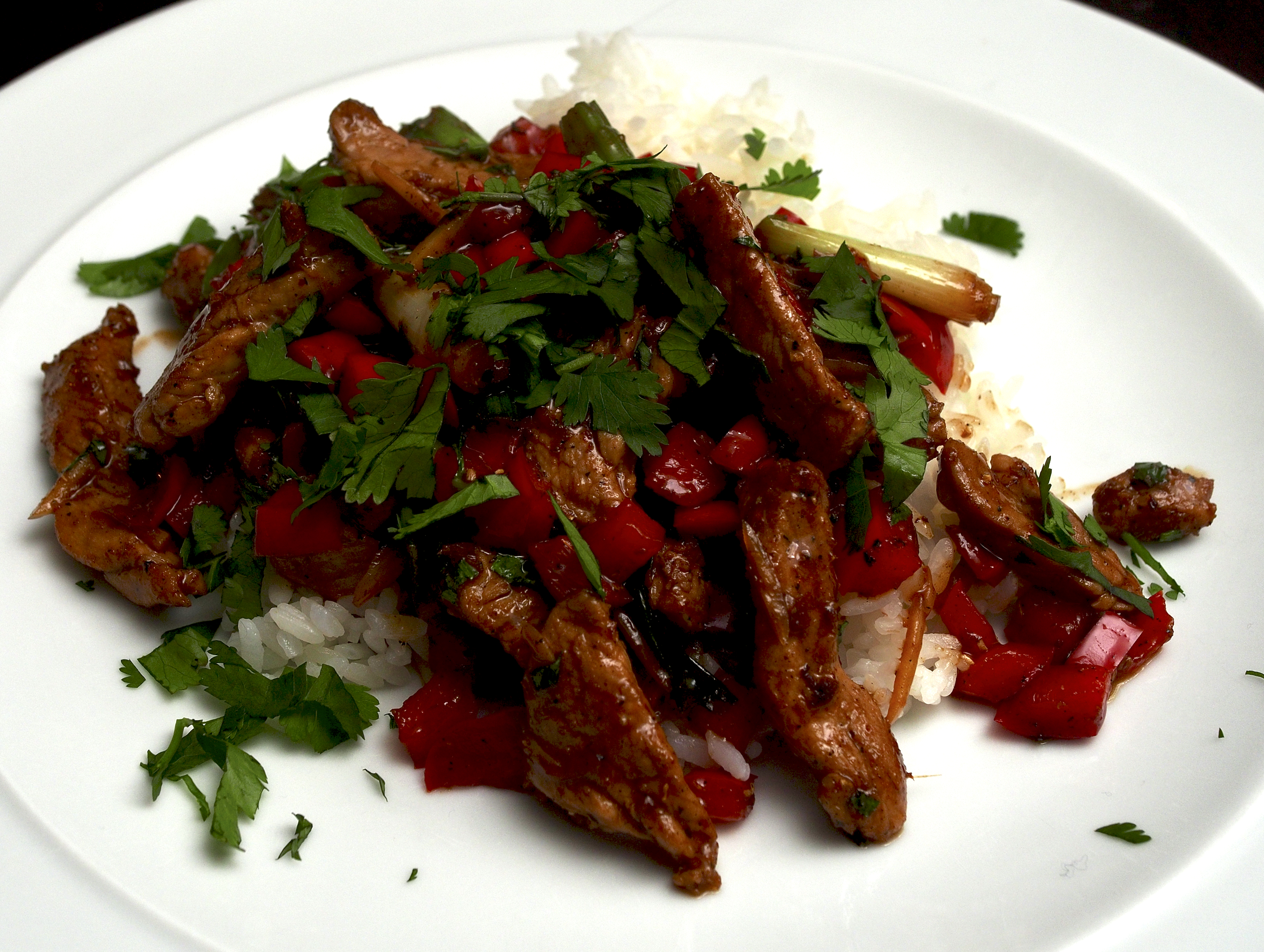
We tried this to use up some Thai basil leftover from the weekend. Leftover ingredients are so often our inspiration for trying new things and sometimes the results are great, as was the case with this. Prep all the ingredients before you start cooking and it will be ready to eat in a flash.
Wine Suggestion: The Kilikanoon Mort’s Block Riesling from the Clare Valley in Australia was both suitably dry but full of fruit and freshly aromatic to sit alongside the strong and aromatic flavours here. We suggest something similar when you make this.
Thai pork with basil & chillies – serves 3
2 tbsp vegetable oil
700g pork fillet, cut into strips (you can use chicken breasts instead)
1 Thai green chilli, finely chopped (deseed if you wish)
2 cloves of garlic, shredded
1 tbsp sesame oil
1 medium red pepper, diced into 8mm pieces
3 scallions, cut into 5cm pieces
1 tsp freshly roasted and ground coriander seeds
1 tbsp palm sugar or soft brown sugar
1 tsp cornflour
2 tbsp fish sauce (nam pla)
1 tbsp light soy sauce
7g Thai basil, shredded (you can use regular basil if you can’t find the Thai version)
rice or noodles, to serve
a handful of chopped coriander, to serve
Heat 1 tbsp of the vegetable oil in a wok or large frying pan over a high heat, and toss in the pork. Add the chilli and garlic and stir-fry until coloured, about 5 minutes.
Sprinkle with some sesame oil, then remove and set aside. Put another tbsp of vegetable oil into the wok, then add the red pepper, scallions, ground coriander and sugar. Stir-fry for 2 minutes, then return the meat to the wok and mix through.
Mix the cornflour with the fish sauce and soy sauce until smooth, pour this into the pan and stir continuously for a minutes or so, until the juice thickens slightly. Sprinkle with the remaining sesame oil, add the shredded basil, season to taste, then remove from the heat.
Serve straight away over sticky rice or cooked noodles. Sprinkle the chopped coriander over the top.
(Original recipe from Grow Cook Nourish by Darina Allen, Kyle Books, 2017.)
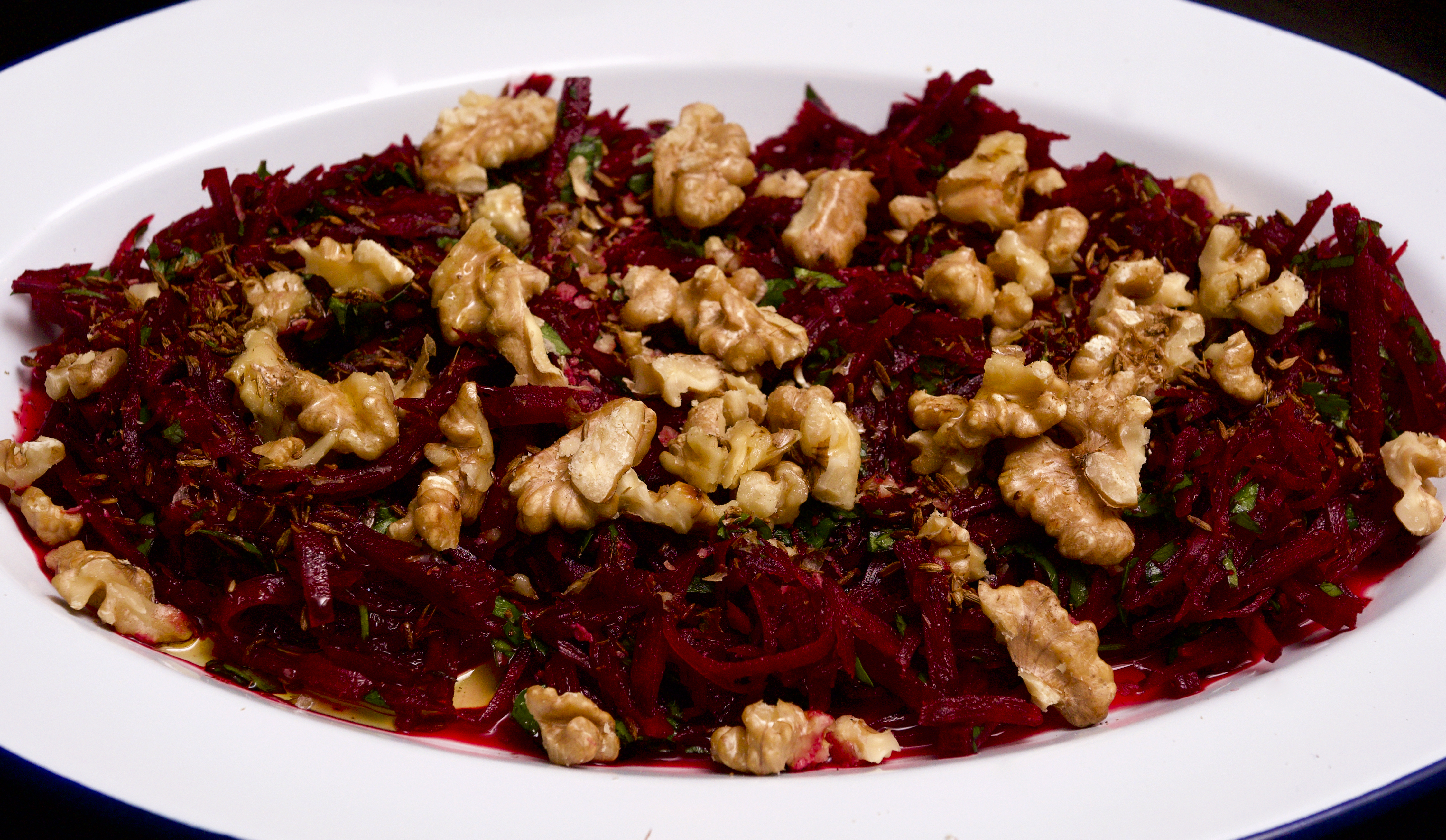
A nice salad using raw beetroot. It tastes really fresh and good for you.
Beetroot with walnuts and cumin – serves 4
75g walnuts
1 tsp cumin seeds
about 400g beetroot
a handful of parsley, chopped
juice of 1 small orange
a squeeze of lemon juice
2 tbsp rapeseed oil
Heat a dry frying pan over a medium heat and gently toast the walnuts for a few minutes, until toasted and starting to colour. Remove from the pan and add the cumin seeds. Toast these for 1-2 minutes, until fragrant, then tip onto a plate.
Peel the beetroot and grate it coarsely into a bowl. Add the parsley, orange juice and a squeeze of lemon juice, 1 tbsp rapeseed oil and salt and pepper. Mix and season again to taste. Leave for 20 minutes or so to marinate and soften.
Spread the beetroot over a serving dish. Bash the toasted walnuts roughly and scatter over the beetroot. Bash the toasted cumin seeds too, then scatter over the salad.
Finish with another drizzle of oil.
(Original recipe from River Cottage Veg Everyday! by Hugh Fearnley-Whittingstall, Bloomsbury, 2011.)
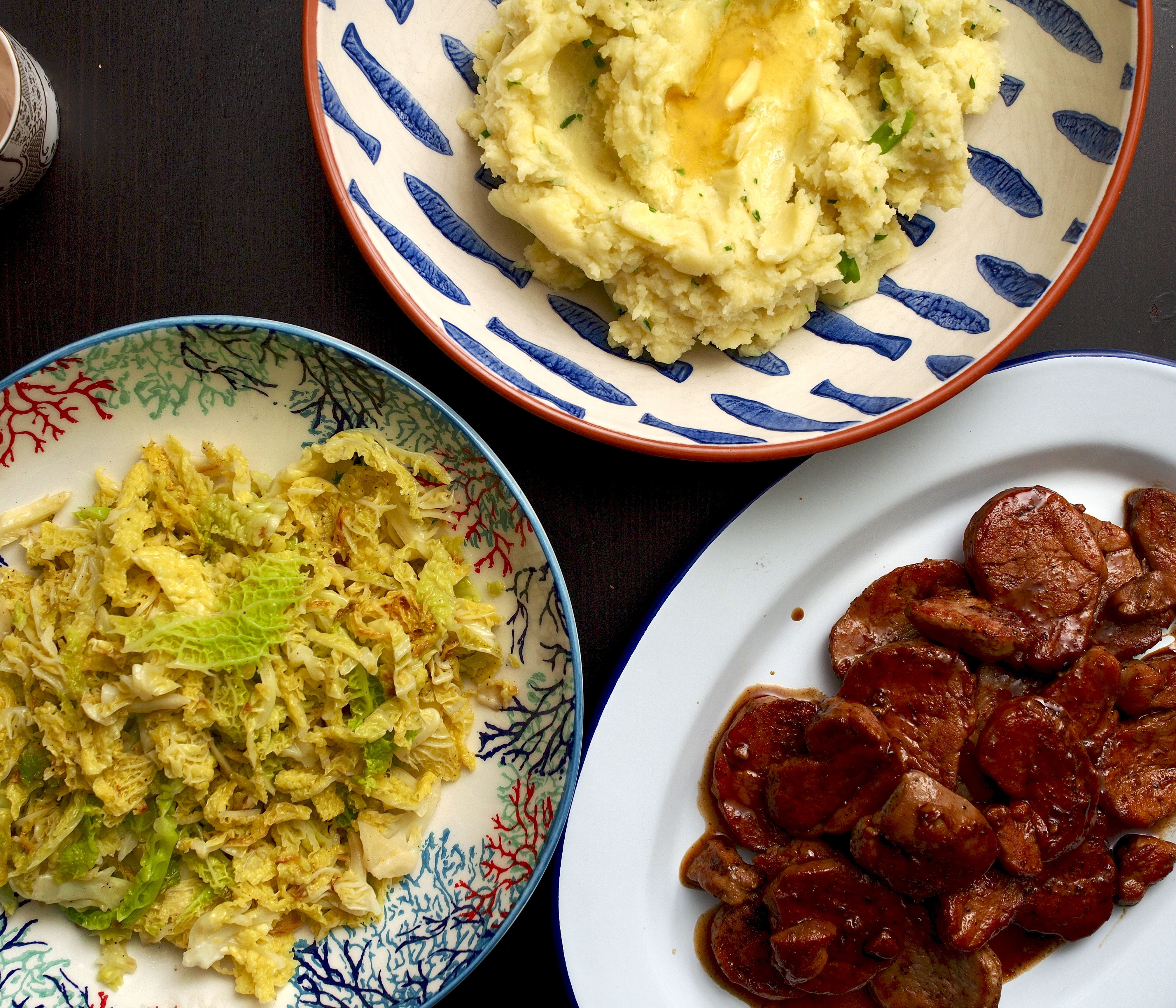
We don’t often cook dishes more than once but we always make a note on the recipe, telling us when we cooked it and what we thought of it. The last time we cooked this, or Jules did, was on the 16th August 2005. She thought it was very good then, and we both thought it was very good this time round too. We served with champ and sautéed cabbage.
Wine Suggestion: Despite Marsala hailing from Sicily we quite like a nice red Côtes du Rhône or similar with this dish. If you’re fortunate to find Domaine Jamet’s version made with 100% Syrah then snap up a bottle and then make this.
Sautéed pork medallions with Marsala – serves 4
2 pork fillets, about 1kg in total
4 tbsp sunflower oil
150ml sweet Marsala
Cut the pork into medallions, about 1cm thick. Season with salt and pepper.
Heat the sunflower oil in a large frying pan, add the pork and sauté quickly over a high heat to brown on both sides. We find it’s much easier to do this in a few batches.
Return all the pork to the pan, add another bit of seasoning, then pour in the Marsala. Cook for a few minutes, or until the meat is cooked through and the liquid slightly reduced. Keep an eye on it as it the sauce will reduce quickly.
(Original recipe from Foolproof Mediterranean Cookery by Claudia Roden, BBC Worldwide Ltd, 2003.)
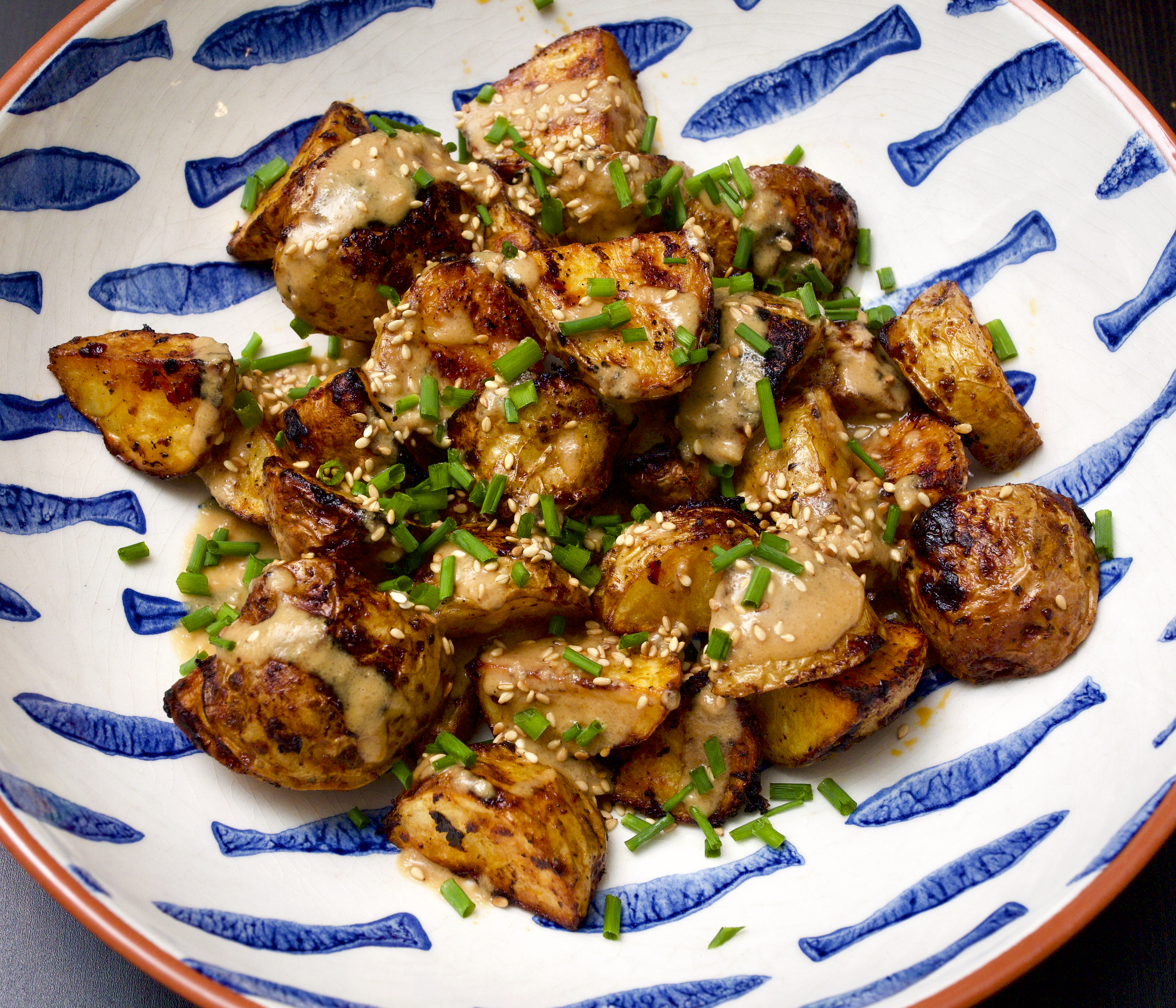
We made this the day that Ottolenghi Flavour arrived in the post as we had all the ingredients and were feeling enthusiastic! We haven’t tried too many dishes since then but we will. Just when we think we’ve tasted pretty much every flavour combination Yotam and his pals remind us that we haven’t, not by a long way!
We can’t remember now what we served this with but think it’s safe to say you could eat a bowlful on their own!
Spicy roast potatoes with tahini and soy – serves 4 as a side
900g roasting potatoes, leave the skin on and cut into 3cm cubes
50g rose harissa
1 garlic clove, crushed
3 tbsp olive oil
1½ tbsp chives, finely chopped
1½ tbsp black and/or white sesame seed, toasted
FOR THE DRESSING:
60g tahini (stir well before using)
2 tbsp soy sauce
1½ tbsp mirin (or maple syrup)
1½ tbsp rice vinegar
Preheat the oven to 240°C fan.
In a large bowl, mix the potatoes, rose harissa, garlic and olive oil together with ¾ tsp of salt and plenty of black pepper. Transfer the mixture to a parchment-lined baking tray and spread out, then cover tightly with foil and roast for 15 minutes.
Remove the foil, reduce the heat to 200°C and roast for another 25 minutes, uncovered, stirring halfway, until the potatoes are cooked and browned.
Meanwhile, whisk all of the ingredients for the dressing together with 1 tbsp of water until smooth.
Transfer the potatoes to a shallow serving bowl and drizzle over the dressing. Garnish with the chives and sesame seeds.
(Original recipe from Ottolenghi Flavour by Yotam Ottolenghi and Ixta Belfrage, Ebury Press, 2020)
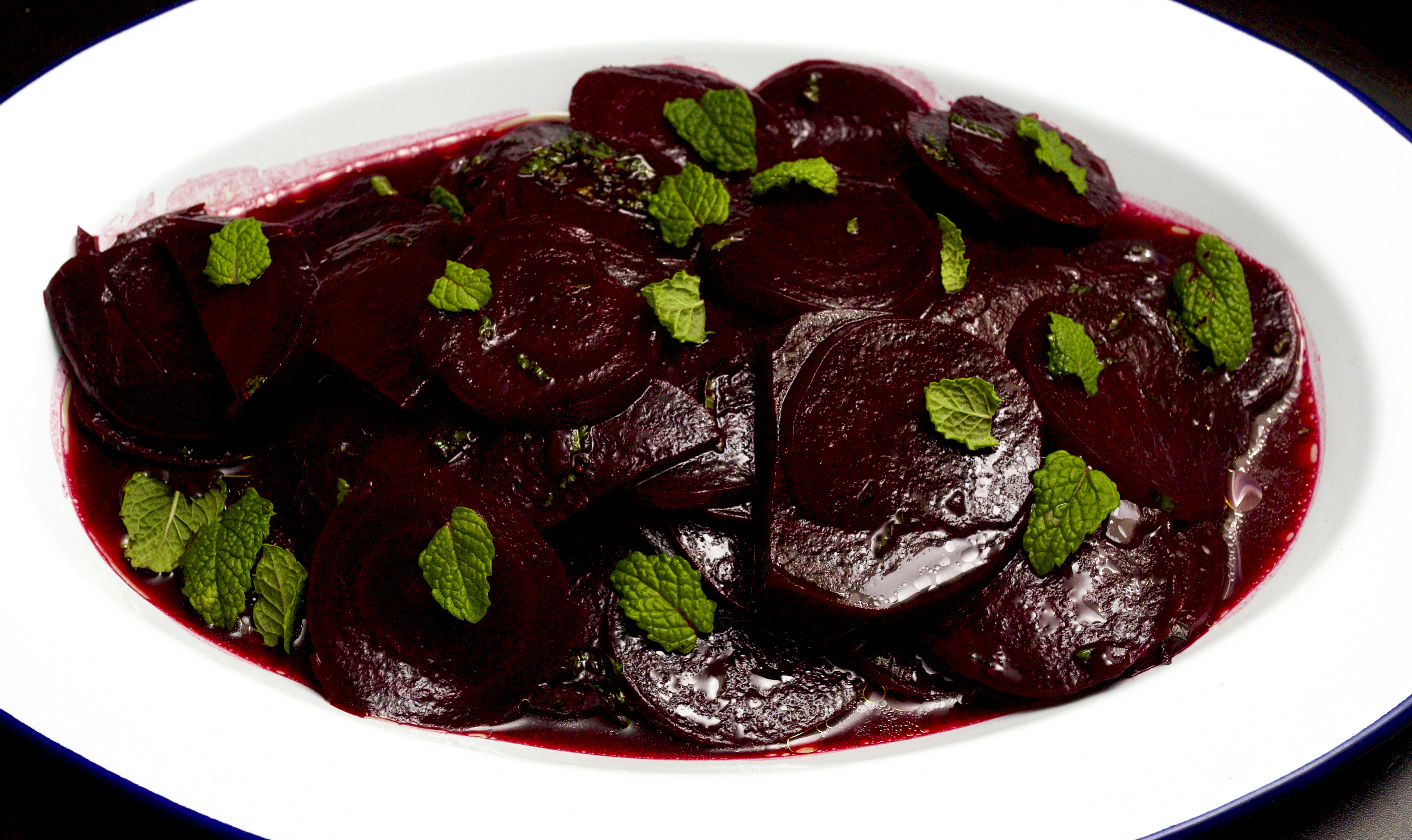
You need cooked beetroots for this. You can of course buy them pre-cooked in vac packs but they’re much nicer when you cook them fresh. Just give them a good scrub, dry with paper and wrap in tin foil. Roast for about an hour (or as long as it takes) at 200ºC. Let them cool before making the salad. We served this with roast chicken and the next day with a ham salad. Make this up at least an hour in advance to allow the flavours to mingle.
Beetroot & mint salad – serves 4 to 6
4 tsp caster sugar
4 tbsp balsamic vinegar
juice of 2 lemons
4 tbsp extra virgin olive oil
12 cooked beetroots, finely sliced into rounds
a small bunch of mint leaves
Whisk the sugar, vinegar, lemon juice, olive oil and a pinch of salt in a small bowl.
Put the sliced beetroot into a bowl. Roughly chop half the mint leaves, and add to the beetroots before pouring over the dressing. Leave in the fridge for an hour or so.
To serve, drain off some of the marinade, arrange the slices on a platter and scatter over the rest of the mint.
(Original recipe from Skye McAlpine’s A Table for Friends: The Art of Cooking for Two or Twenty, Bloomsbury, 2020.)
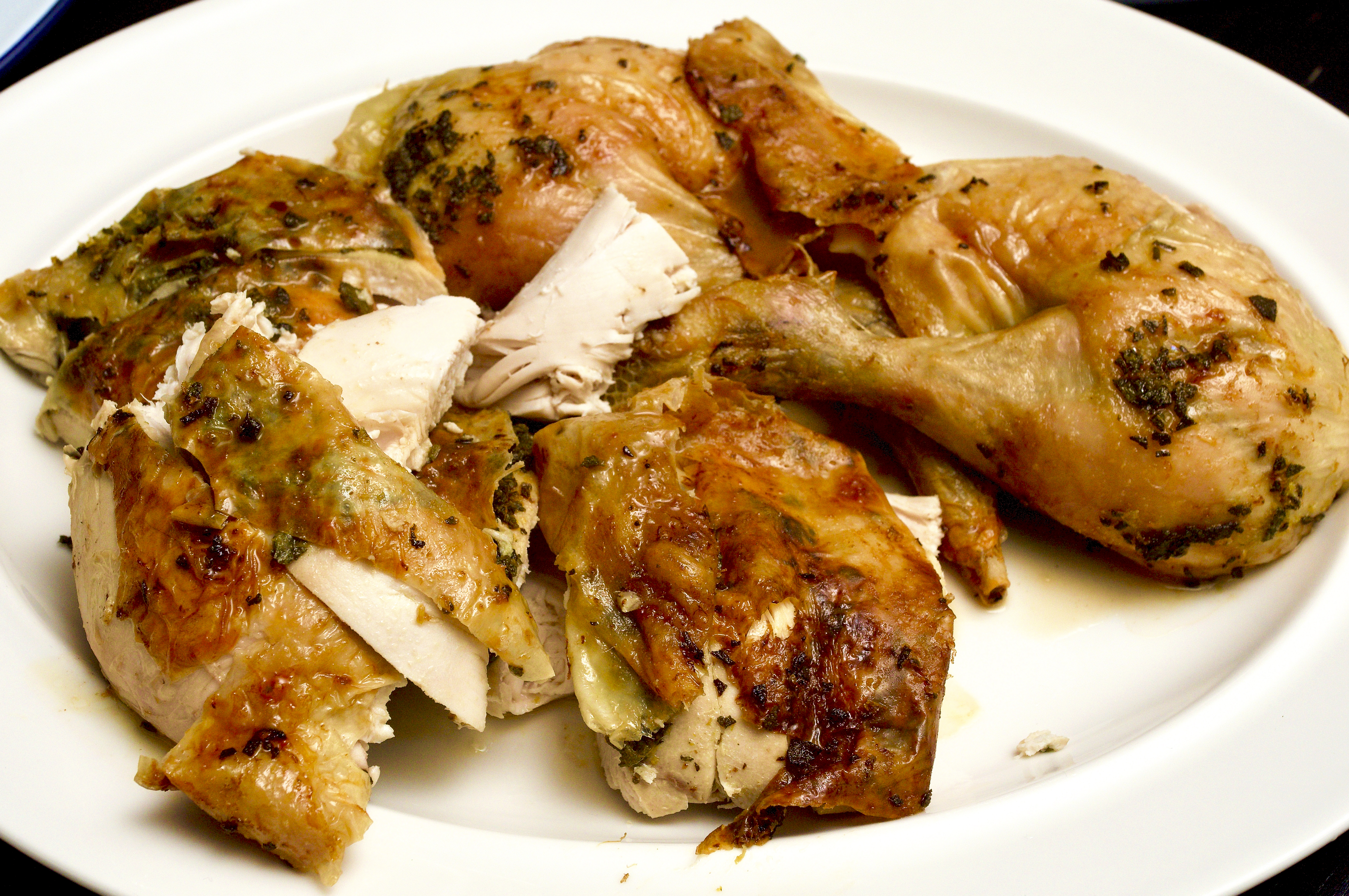
We recently bought Skye McAlpine’s book, A Table for Friends, which has lovely menus for each season. We’re well and truly into Autumn now and the farm shop is full of potatoes, pumpkins and beetroots. Tonight we made Skye’s suggested autumn menu of buttery lemon roast chicken, beetroot & mint salad, butter & sage roast pumpkin and roast potatoes. A perfect combination of dishes and all can be prepped in advance. Unfortunately we were minus the friends but hopefully those days will be back again before too long.
We ignore all timings for roast chicken these days and stick to Diana Henry’s failsafe instructions to roast for 20 minutes at 190C for each 500g plus an extra 10 minutes.
Wine Suggestion: Quite often with roast chicken we lean towards oaked Chardonnay as it’s such a classic match but tonight we remembered that another great match is good red Bordeaux from the Left Bank, so Cabernet Sauvignon dominant, and also with a little age, but not too much. We continued our lockdown habit of dipping into the cellar once a week and pulled out a Domaine de Chevalier red from 2010. It still has years, if not a couple of decades of life ahead of it but at 10 years old it still has a spriteliness of youth while all components have come together harmoniously into a smooth, elegant wine.
Buttery Lemon Roast Chicken – serves 4
a large bunch of sage
1 lemon, finely zested
50g butter, softened
1 tsp sea salt flakes
1 free-range chicken
You can prep the chicken early in the day and keep in the fridge but make sure you take it out an hour or two before you want to put it into the oven so it’s at room temperature.
Heat the oven to 190C.
Finely chop half the sage and mash in a bowl with the butter, lemon zest and salt.
Put the chicken into a roasting tray. Cut the lemon in half and squeeze some of the juice into the cavity, then stuff the halves into the chicken with the remaining sage.
Gently lift the skin over the breast and smear a quarter of the butter mixture under the skin over each breast. You should be able to push the butter quite far down with your fingers, but careful not tear the skin. Rub the rest of the butter over the chicken and sprinkle with some extra salt.
Roast the chicken according to the timings given above. When cooked the legs should feel loose and the juice should run clear when you pierce a thick bit with a sharp knife.
Leave to rest for 10 minutes before carving and served with some of the juices spooned over.
(Original recipe from A Table for Friends: The Art of Cooking for Two or Twenty by Skye McAlpine, Bloomsbury, 2020.)
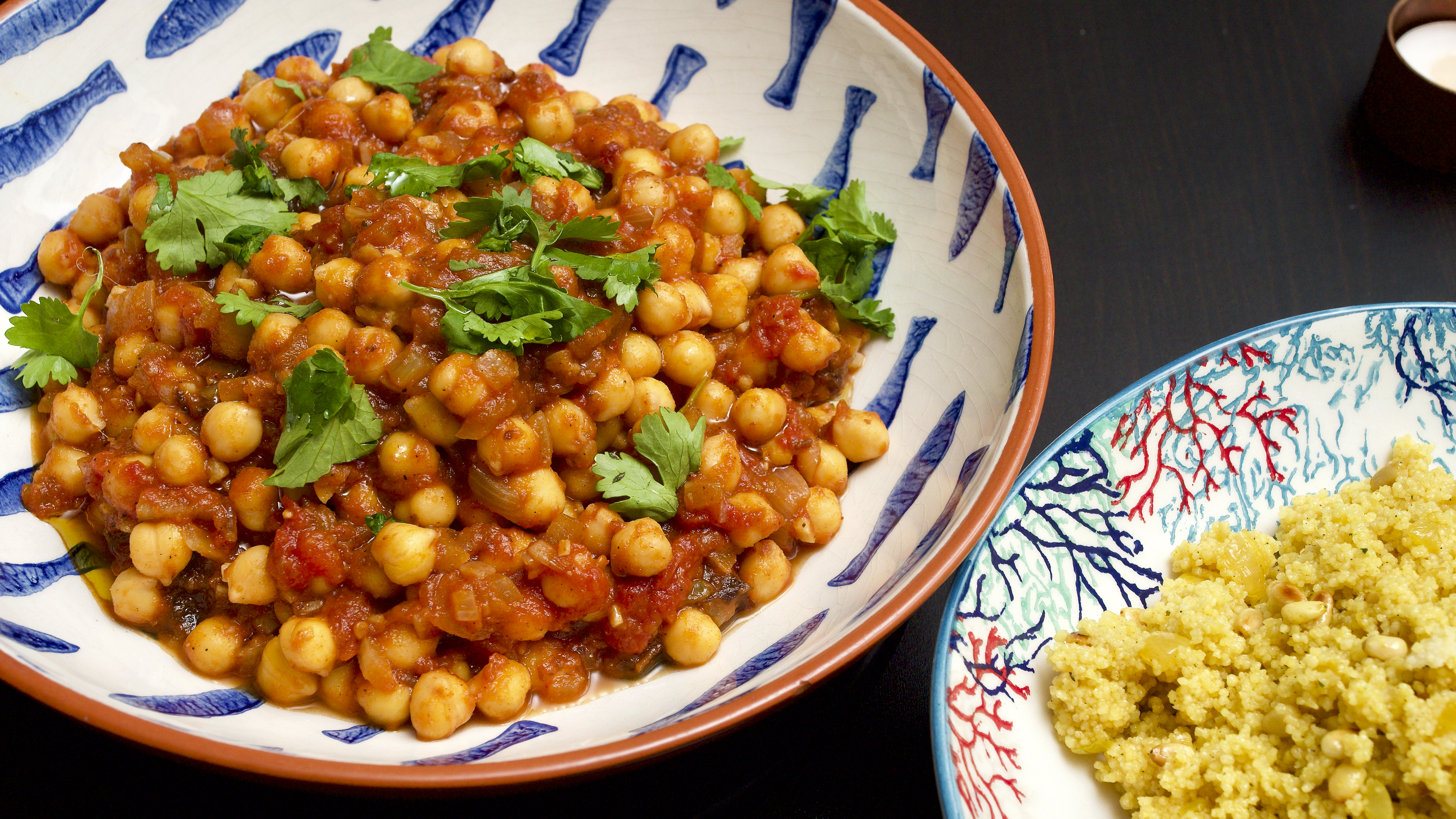
We made this by accident having planned to do a different tagine from a magazine, only to realised that it required a slow-cooker, so this was a last-minute substitute. It is really and truly delicious, so you must try making this dish at some stage. You can serve with plain couscous but it’s particularly good with this. If chickpeas don’t float your boat as a main course for Sunday lunch both dishes would be excellent with some roast lamb.
Wine Suggestion: this is great with a juicy, brambly Grenache, or a blend with this in it. We had the joyful Les Dissidents “le Paria” made by Domaine Ventenac from 100% Grenache and made without sulphur; fresh, juicy and minerally.
Tomato, date & chickpea tagine – serves 4
2 tbsp olive olive oil or unsalted butter
1 large onion, finely chopped
1 x 400g tin plum tomatoes
120g pitted dates, halved
4 cloves of garlic, finely chopped
a small bunch of coriander, leaves roughly chopped and stalks reserved
1 tsp ground cumin
1 tsp ground coriander
1 tsp ground ginger
½ tsp ground cinnamon or 1 cinnamon stick
2 strips of lemon zest and the juice of ½ a lemon
2 x 400g tins of chickpeas, drained and rinsed
FOR THE SEASONED YOGHURT
200g natural yoghurt
juice of ½ a lemon
Heat the oil or butter in a frying pan over a medium heat, then add the onion and fry for 8-10 minutes, until soft.
Whizz half the tomatoes with half of the dates, then add the rest of the tomatoes to the mixture and set aside.
Add the garlic, coriander stalks and all of the spices to the cooked onions, stir and cook for 1 minute. Add the tomato mixture, the lemon zest and 100ml of water, season well with salt and pepper, then cook for 10 minutes or until rich and thickened.
Meanwhile, make the seasoned yoghurt. Mix the yoghurt with the lemon juice and a good pinch of salt in a bowl, then set aside.
Stir the chickpeas and the rest of the dates into the tomato mixture and cook for 5 minutes to heat through. Add the lemon juice and check the seasoning. Discard the pieces of lemon zest, then remove the dish from the heat.
Stir in the coriander leaves and serve with some seasoned yoghurt and golden couscous.
(Original recipe from New Kitchen Basics by Claire Thompson, Quadrille, 2019.)
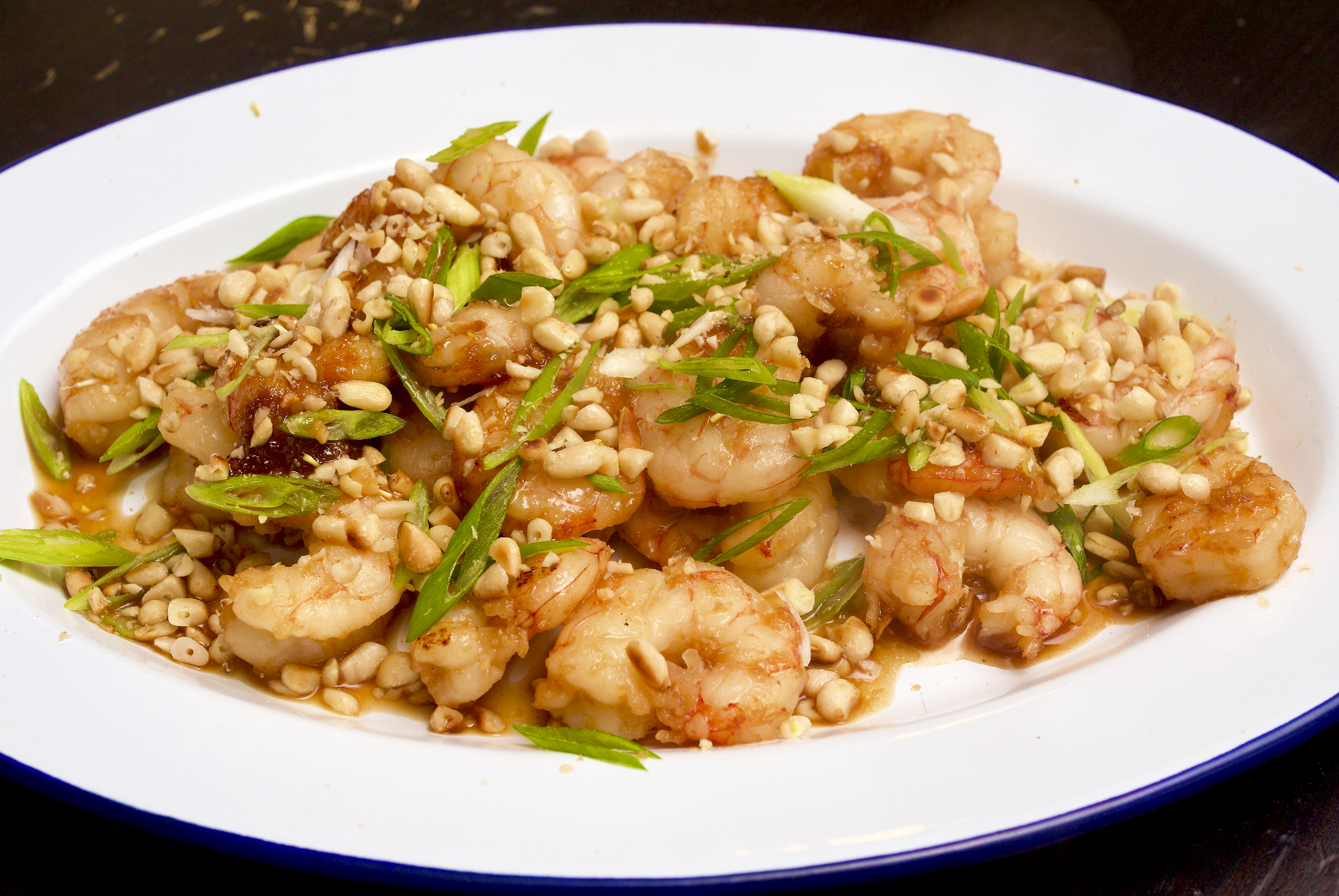
We’ve done this Korean dish before, but it’s worth revisiting because its so easy and delicious. It’s a nice starter to throw together for guests as they arrive, presuming you’re allowed to have guests. For now we have that on hold but it makes an event for the two of us.
Aperitif Suggestion: A good dry Oloroso sherry, or a Manzanilla sherry with a bit of age, we had La Gitana’s single vineyard Pasada Pastrana.
Pan-Fried King Prawns – serves 2 but easily doubled
1 garlic clove, crushed
1/2 cm piece of ginger, peeled & finely grated
2 tsp soy sauce
2 tsp roasted sesame oil
1 tsp honey
1 tsp vegetable oil
150g king prawns, shelled
1 scallion, thinly sliced
2 tsp roasted pine nuts, roughly chopped
Make the sauce by combining the garlic, ginger, soy sauce, sesame oil and honey in a bowl.
Heat the vegetable oil in a wok, or pan, over a high heat. When very hot add the prawns and cook for a minute. Turn over and add the sauce. Fry for a further minute or until cooked through. Use your instinct here this depends on the size of your prawns and the heat of your pan. Don’t let them overcook!
Remove and pile onto a plate, sprinkle over the scallions and pine nuts, then serve.
(Original recipe from Our Korean Kitchen by Jordan Bourke & Rejina Pyo, Weidenfeld & Nicolson, 2015.)


 Jono & Jules do food & wine