Feeds:
Posts
Comments

Posts Tagged ‘Gluten-free’

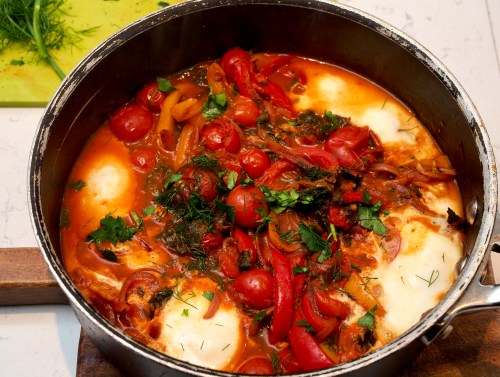
Shakshuka

We needed a green pepper for another dish, but could only get a mixed bag of three leaving us with a red and yellow pepper needing to be used. The clocks have changed and so we had brunch, very unusual in this house where our human alarm clocks goes off at 6am most days. Jono has been mastering a new skill and so we had this with freshly baked sourdough. Don’t think we’ll be eating another bite until this evening!

Shakshuka – serves 2

  • 1 tbsp cold pressed rapeseed oil (we used olive oil)
  • 1 red onion, cut into thin wedges
  • 1 red pepper, finely sliced
  • 1 yellow pepper, finely sliced
  • 3 large garlic cloves, crushed
  • 1 tsp cumin seeds
  • 1 tsp coriander seeds, crushed
  • 1 heaped tsp sweet smoked paprika
  • 400g tin of cherry tomatoes
  • 115g baby spinach (we used frozen spinach, boil for a minute or two to wilt, then drain, squeeze out water with hands and chop)
  • 4 medium eggs
  • ½ small bunch of coriander, roughly chopped
  • ½ small bunch of dill, roughly chopped (we didn’t have any dill but used some fennel fronds)

Heat the oil in a large, non-stick frying pan. Add the onions and peppers and cook over a medium heat for 8-10 minutes or until starting to soften. Add the garlic and spices and stir for another minute, then add the tomatoes, spinach and 100ml of water. Turn the heat down and simmer, uncovered, for 10 minutes. Season to taste.

Make four indentations in the mixture and gently crack an egg into each one (we find it easier to crack the eggs into mugs and pour them in). Cover with a lid or foil and cook over a low heat for 8-10 minutes or until the eggs are just set. Scatter over the herbs and serve.

(Original recipe from BBC Good Food)

Read Full Post »

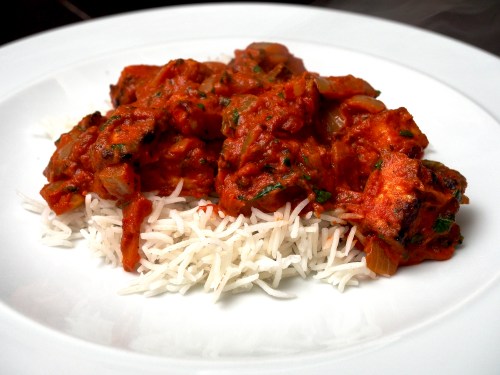
Paneer Tikka Masala

Being thankful for sunshine and all we have this evening. The clocks will change tomorrow and hopefully things will take a turn for the better soon. In the meantime stay at home and eat well. This is super straightforward but flavour-packed! Serve with steamed basmati rice and naan bread from your local takeaway.

Wine Suggestion: A lager style beer. To be a little “craft”, even though they’ve been brewing since 1824, we chose the C&A Veltins Grevensteiner Helles which had character and smoothness in equal proportions.

Paneer tikka masala – serves 3

  • 3 tbsp curry powder (the recipe suggests tikka curry powder, we had hot so that’s what we got)
  • 2 tbsp natural yoghurt
  • 200g paneer, cut into small cubes
  • 1 green pepper, diced
  • 1 tbsp groundnut oil
  • 1 onion, finely chopped
  • 1 tbsp grated ginger
  • 1 clove of garlic, crushed
  • 400g passata
  • 2 tsp tomato purée
  • 2 tsp caster sugar
  • 4 tbsp double cream
  • a knob of butter
  • a handful of chopped coriander
  • steamed basmati rice and naan bread (to serve)

Mix the 1 tbsp of the curry powder and the yoghurt together in a bowl, then stir in the paneer and peppers and leave to marinade while you make the sauce.

Heat the oil in a pan, then add the onion and cook until soft and starting to brown a little. Add the ginger and garlic and continue cooking for a couple of minutes.

Stir in the remaining 2 tbsp of curry powder and stir until fragrant, then stir in the passata, tomato purée and sugar. Bring to the boil, then reduce the heat and simmer for 10 to 15 minutes, or until thickened. Stir in the cream and cook for another couple of minutes.

Meanwhile, heat the grill to high. Spread the paneer and pepper out over a non-stick baking tray or a tray lined with foil, then place under the grill until charred and sizzling. Turn everything over to brown on both sides.

Tip the panner and peppers into the sauce, add a knob of butter, the coriander and some seasoning and cook for a couple of minutes. Serve the curry with rice and naan.

(Original recipe by Janine Ratcliffe in BBC Olive Magazine, March 2020)


Read Full Post »

Genoese Squid with Potatoes

Mothers Day dinner 2020. Not a huge roast or a barbecue with the rest of the family but a glorious sunny day and this Diana Henry recipe, which was perfect! Great for all of us on a budget now too, squid is cheap, and not everyone realises that you can slow cook it. The sauce this dish has is so vibrant and rich and when we reheated the leftovers in the oven two days later it was still amazing.

Wine Suggestion: we chose a classic wine for seafood and an explemary winery, the  Pazo de Señorans Albariño 2018 which is a wine we love both in youth and as it ages and gains texture and complexity. The salty sea air ideas you get from Albariño just seem to work so well.

Genoese squid with potatoes – serves 4

  • 750g squid, cleaned (look up online how to do it if you need, we used some pre-cleaned squid tubes from the fish shop)
  • 550g waxy potatoes
  • 5 tbsp olive oil
  • 4 cloves of garlic
  • 350ml white wine
  • leaves from 2 oregano/marjoram sprigs
  • 2½ tbsp chopped flat leaf parsley
  • 400g tin cherry tomatoes
  • extra virgin olive oil, to finish

Wash the squid and remove any gunge from the inside the tubes. Cut the tubes into thick rings. Cut the hard bit from the end of each tentacle and slice the wings into 2 or 3. Cut the tentacles too if they’re big. Rinse everything in a sieve, then dry well with kitchen roll.

Wash the potatoes (you can peel or not) and cut into 4cm thick slices.

Heat the olive oil in a large sauté pan. When the oil is really hot, tip in the squid and garlic and toss around for a minute. Add the white wine, oregano, 1½ tbsp of the parsley, tomatoes and plenty of seasoning. Cover, reduce the heat, and simmer for 30 minutes.

Add the potatoes, then season again, cover and cook for a further 30 minutes or until the potatoes are tender. Taste again for seasoning, you might need to add a bit of extra salt to make the sauce sing, sprinkle over the rest of the parsley and serve with your best olive oil drizzled on top.

(Original recipe from Food from Plenty by Diana Henry, Mitchell Beazley, 2010)


Read Full Post »

Sticky glazed gammon with creamy, mustard cabbage

We’re managing being stuck at home by keeping up our cooking routine and making something delicious to eat everyday. However, like many of the you, our budget has been restricted. So, we’re using everything up in the cupboards and buying good value items like gammon and a gigantic cabbage from our local farm shop which lasted us for days!

It’s also a good distraction from some of the daily events of the world to have to be creative with ingredients

Wine Suggestion: a light, juicy and relatively simple red works well with this. Tonight it’s the La Combe St Roche red from the Languedoc; an inexpensive and easy drinking blend of Grenache, Cinsault, Carignan and Merlot.

Sticky glazed gammon with creamy mustard cabbage – serves 2

  • ½ savoy cabbage, shredded
  • butter
  • unsmoked gammon steaks
  • 1 tbsp runny honey
  • a dash of Worcestershire sauce
  • 2 tbsp half-fat crème fraîche
  • 1 tbsp grainy mustard

Cook the cabbage in boiling salted water for a few minutes or until tender, then drain really well. Tip the cabbage out onto some kitchen roll to get rid of any extra moisture.

Heat a knob of butter in a large frying pan until foaming, then add the gammon and cook for 2 minutes on each side until golden. Add the honey and Worcestershire sauce, turn up the heat and continue to cook for another couple of minutes or until sticky and glazed.

Heat the crème fraîche and mustard in a pan, add the cabbage, heat until piping hot, then season. Spoon the cabbage unto plates and top with the gammon.

(Original recipe by Janine Ratcliffe in Olive Magazine, March 2016.)

Read Full Post »

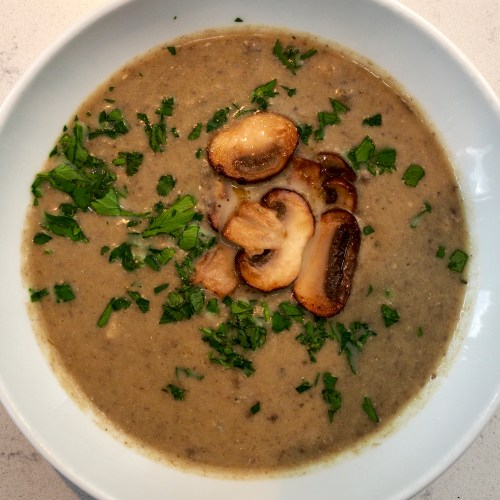
Mushroom, Cider & Blue Cheese Soup

We made this soup on the strangest St Patrick’s day ever. There was no parade, the restaurants have all closed down and city streets are virtually empty. There is lots of panic buying going on, the supermarket aisles for tinned goods and toilet rolls have been decimated. We’re not down though, we’re positive we’ll all get through this and hopefully be stronger and better people on the other side. We’re continuing to buy fresh food, there’s lots of it available, and cook nice recipes like this soup by Gill Meller.

Mushroom, cider & blue cheese soup – serves 4 to 6

  • 500g wild and cultivated mushrooms (we used all chestnut mushrooms as it’s not autumn and wild ones aren’t available)
  • 25g butter, plus an extra bit, for frying
  • 1 leek, sliced
  • 1 small potato, peeled and diced
  • 1 large onion, chopped
  • 2 garlic cloves, peeled
  • 1 tsp thyme leaves
  • 750ml veg stock or chicken stock
  • 250ml dry cider
  • 100ml double cream
  • 75g blue cheese, plus extra to serve if you like
  • a small bunch of parsley, finely chopped, to serve

Clean the mushrooms with a damp piece of kitchen paper and roughly chop them but keep about 100g over to fry and use as a garnish. The mushrooms for the garnish can be sliced.

Melt the butter in a large pan with a splash of olive oil, over a medium heat. When it starts to foam, add the leek, potato, onion and garlic. Cook for 10 to 15 minutes or until the onion is soft but not browned. Add the mushrooms and thyme and cook for another 5 minutes. Add the stock, cider and some seasoning, then bring to a simmer. Cook for 12 to 15 minutes or until tender. Purée the soup until smooth (or smoothish if you’re using a stick blender).

Add the cream and blue cheese to the soup and gently return to a simmer. Season to taste and keep warm over a very low heat.

Heat a knob of butter and a splash of oil in a frying pan and sauté the reserved mushrooms for 8 to 10 minutes or until well cooked and golden brown. Season the mushrooms.

Serve the soup in warm bowls with the mushrooms and parsley sprinkled over. You can also sprinkle over some more crumbled blue cheese if you like.

(Original recipe from Time by Gill Meller, Quadrille, 2018.)

Read Full Post »

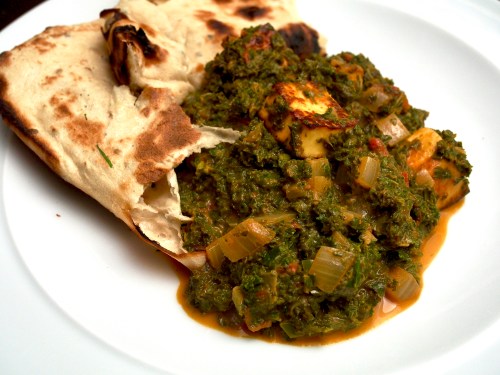
Paneer, Tomato and Kale Saag

This is from Meera Sodha’s amazing veggie book, East. We have Meera’s Indian recipe books and we often cook the recipes she writes for the Guardian. This book has an Eastern, but not exclusively Indian, influence and the recipes are mouthwateringly good. We’ve noticed people have mixed reactions towards kale, if you’re on the fence we reckon this is probably the best kale-based dish we’ve ever eaten. We served with naan bread from the local takeaway.

Panner, tomato & kale saag – serves 4

  • 500g kale, discard the stems and roughly chop the rest
  • rapeseed oil
  • 450g paneer, cut into 2cm dice (if you’re buying 200g packs just buy 2)
  • 2 onions, finely chopped
  • 2 cm ginger, peeled and grated
  • 4 cloves of garlic, crushed
  • 2 green finger chillies, finely chopped
  • 1 x 400g tin chopped tomatoes
  • 1½ tsp ground coriander
  • 1½ tsp ground cumin
  • ½ tsp ground turmeric
  • 1½ tsp salt
  • 1 tsp brown rice syrup (we used runny honey)
  • 1 x 400ml tin coconut milk

Blitz the kale in a food processor and chop it very finely. Unless your food processor is huge you will need to do a few batches.

Heat 2 tbsp of the oil in a large, nonstick frying pan, that you have a lid for. Fry the cubes of paneer for a couple of minutes on each side or until they have taken on a nice golden colour. Remove from the pan and set aside.

Heat another 2 tbsp of oil in the same pan and cook the onions over a medium heat for about 10 minutes or until soft. Add the ginger, garlic and chillies and continue to cook for another 5 minutes.

Stir in the tin of tomatoes and cook for 10 minutes or until reduced to a paste. Add the coriander, cumin, turmeric, salt and honey (or brown rice syrup) and mix in well.

Stir in a handful of kale at a time. It will seem like you have too much but it will wilt in perfectly. Stir in the coconut milk, then bring to a simmer, cover with a lid, and simmer gently for 15 minutes.

Add the paneer to the pan and cook for another 10 minutes with the lid on. Keep an eye that it doesn’t dry out and add a splash of water if necessary.

Taste to check that it has all come together and the kale is tender. Remove from the heat and serve with warm naan bread.

(Original recipe from East by Meera Sodha, Penguin Books, 2019.)

Read Full Post »

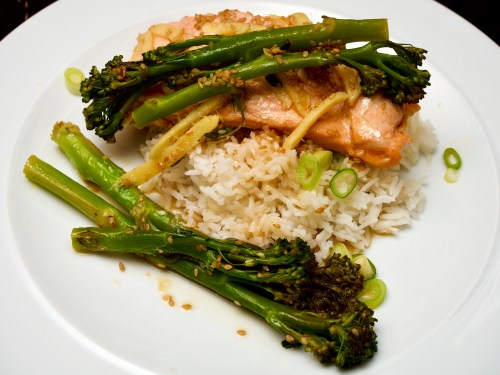
Baked salmon parcels with ginger, soy, honey, toasted sesame seeds & broccoli

We love a simple salmon recipe and this one, by Neven Maguire, is particularly handy as it’s all cooked in a tidy parcel in the oven. Serve with steamed rice with a some scallions sprinkled over.

Wine suggestion: delicious with a good, dry Riesling like Weingut Korrell’s Slice of Paradise from the Nahe in Germany which has a delicate dance of fruit, aromatics and a wonderful core of bright acidity and texture.

Soy and honey salmon parcels with tenderstem broccoli – serves 4

  • 2 tbsp toasted sesame seeds (just toast them gently in a dry frying pan)
  • 2 tbsp light soy sauce
  • 2 tbsp clear honey
  • juice of a lime
  • 1 garlic clove, crushed
  • rapeseed oil, for brushing
  • 4 x 100g salmon fillets, skin and bones removed
  • 250g tenderstem broccoli, trimmed
  • 2.5cm piece of ginger, peeled and cut into matchsticks
  • steamed basmati rice, to serve
  • finely chopped scallions, to serve

Preheat the oven to 200C/400F/Gas 6.

Whisk the sesame seeds, soy sauce, honey, lime juice and garlic together in a bowl, then set aside.

Cut out 4 squares of tin foil about 50cm square. Brush the foil with oil and put a piece of salmon in the middle of each one.

Blanch the broccoli for a minute, then drain and refresh in iced water.

Sprinkle the ginger over the salmon, then divide the broccoli between each parcel. Spoon over the soy sauce mixture and drizzle each piece of fish with about ½ tsp of oil. Fold the edges of the foil together to seal and place them on a baking tray.

Cook the parcels in the oven for 10 minutes or until the salmon is just cooked. You can leave it for a bit longer if you prefer your salmon well done but we wouldn’t recommend it.

Serve the parcels with a large bowl of rice sprinkled with the scallions.

(Original recipe from Neven Maguire’s Complete Family Cookbook, Gill Books, 2016.)

Read Full Post »

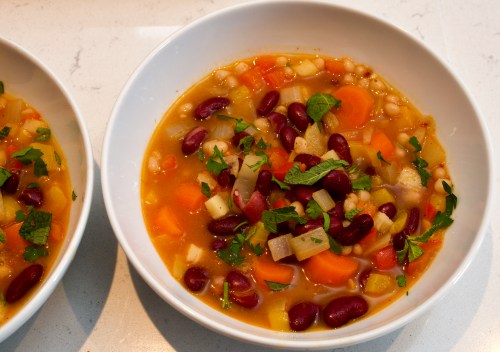
Monastery Soup

The second Bulgarian recipe we’ve cooked from Black Sea by Caroline Eden and one of the best soups we’ve had in ages. We think it’s the combination of sweet peppers and parsnip with the spicy broth that makes it so good. Serve with a good slick of olive oil and a dollop of sour cream on top.

Monastery Soup – serves 4

  • 2 tbsp sunflower oil
  • 1 large red or yellow pepper, diced very finely
  • 1 large onion, finely diced
  • 1 parsnip, finely diced
  • 2 carrots, sliced into thick rounds
  • 1 tsp sweet paprika
  • a good pinch of chilli flakes
  • 2 garlic cloves, crushed
  • 700ml veg stock
  • a tin of haricot beans, drained and rinsed
  • a tin of kidney beans, drained and rinsed
  • flat-leaf parsley & mint, chopped (to serve)
  • 1 tbsp extra virgin olive oil (to serve)
  • 2 tbsp sour cream or crème fraîche (to serve, optional but good)

Warm the sunflower oil in a large pot, then add the pepper, onion, parsnip and carrot with some salt. Cook for about 7 minutes or until the onion is translucent.

Add the paprika, chilli flakes, garlic and some black pepper and continue to cook for another few minutes. Add the stock and beans and turn up the heat. When the soup starts to boil, turn the heat down and leave to simmer for 20 minutes, or until the vegetables are cooked through (try one of the carrots). Remove from the heat and divide between warm bowls. Sprinkle over the herbs and a drizzle of olive oil. A spoon of sour cream on top is also really good.

(Original recipe Black Sea by Caroline Eden, Quadrille, 2018)


Read Full Post »

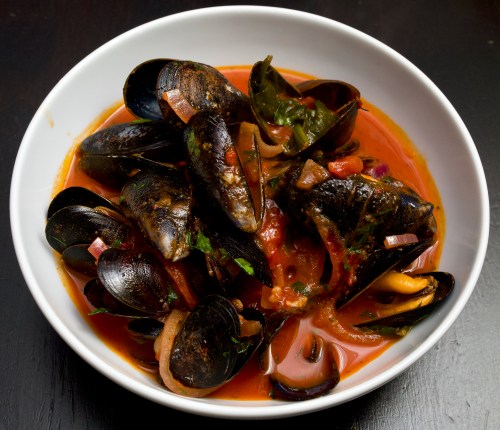
Spicy Dalboka Mussels

We cooked these mussels on Friday night form Caroline Eden’s ‘Black Sea’. A book that is as good to read as to look at. The recipe is Bulgarian with the mussels cooked in a spicy tomato soup. You will need lots of crusty white bread to go with.

Wine Suggestion: This pairs superbly with a good new world Pinot Noir, ideally from a producer that values freshness. If you can push the boat out a bit we’d suggest a Felton Road from Central Otago or a Tyler from Santa Barbera but tonight it was Newton Johnson’s Felicite from Hermanus to equally good effect.

Spicy Dalboka Mussels – serves 2 as a main or 4 as a starter

  • 500g mussels, scrubbed and beards and barnacles removed (chuck any that don’t close tightly when tapped)
  • 2 tbsp olive oil
  • 1 large red onion, finely sliced
  • 3 garlic cloves, crushed
  • 1 tsp chilli powder/pul biber (Turkish pepper flakes)
  • 1 tsp paprika
  • 10 pink peppercorns, crushed
  • 300ml vegetable stock
  • 1 tbsp white wine vinegar
  • 1 x 400g tin chopped tomatoes
  • a decent handful of spinach (or lovage when it’s around)
  • ¼ tsp salt
  • juice of ½ lemon
  • small bunch of dill, chopped
  • small bunch of parsley, chopped

Warm the olive oil in a large heavy-based casserole, then sauté the onion until translucent. Add the garlic, chilli, paprika and peppercorns, then the stock, vinegar and tomatoes – simmer for 15 minutes.

Turn the heat up to hight and add the mussels, spinach and salt. Cover and steam for a few minutes or until the mussels have opened (don’t eat any that haven’t opened).

Take the pan off the heat and add the lemon juice and herbs. Serve in bowls with lots of crusty white bread.

(Original recipe from Black Sea by Caroline Eden, Quadrille, 2018.)

Read Full Post »

Chilli and Garlic Kebab - Kabab Khashkhash

We’ve had The Aleppo Cookbook for ages and for some reason haven’t cooked too much out of it. It’s really dense with recipes and not so many photos – not that photos are essential, but they’re definitely helpful when flicking for inspiration. Anyhow, we took this book out a few weeks ago, determined to cook something, and chose these little kebabs for the barbecue. They were stunning! We served with spicy roast potatoes and salad but they would also be great as a starter with some sort of yoghurty dip.

Wine Suggestion: we love how these go so well with a good Tempranillo, a grape that flatters lamb and with a deft touch in the winery gives wonderful, complementary spices that work superbly with the warm spices of the Levant. For a bit of sophisticated elegance we had a glass of the Cantos de Valpiedra Rioja which is silky, smooth and refined.

Chilli and garlic kebab – Kabab Khashkhash – makes 10 skewers

  • 450g lamb mince
  • 4 garlic cloves, crushed
  • 1-2 hot red chillies, seeds removed and chopped
  • 15g finely chopped parsley
  • 2 tsp Aleppo pepper or paprika (do try and find Aleppo pepper)
  • 1 tbsp Aleppo spice mix or seven-spice powder
  • ½ tsp cinnamon
  • 1½ tsp salt, or to taste

Combine all of the ingredients in a bowl and mix well – hands are good for this. Transfer to a clean surface and knead for 30 seconds as you would bread dough.

Moisten your hands with water, then divide the meat into 10 prune-sized portions and form into balls.

Insert a wide, flat metal skewer through the middle of each meatball; then form the meat around the skewer to a length of about 14cm (similar to the picture above). Suspend the finished kebab over a deep baking dish resting the skewers on the sides.

Preheat a barbecue (preferably charcoal)and grill the kebabs until cooked how you like them.

(Original recipe from The Aleppo Cookbook by Marlene Matar, Head of Zeus, 2017.)

Chilli and Garlic Kebab

Read Full Post »


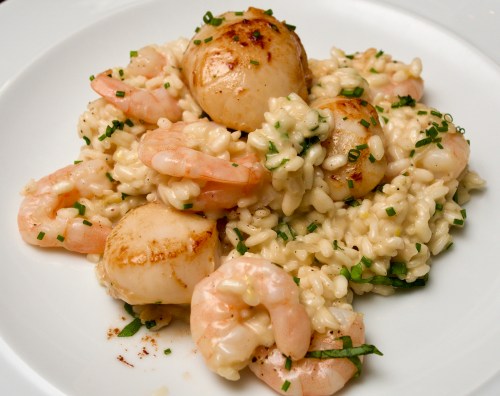
Scallop & prawn risotto

We brought in the new decade with this fabulous scallop and prawn risotto. Couldn’t be simpler to make but tastes really special. Scallops aren’t cheap but you only need a few for this and they are totally worth it.

Wine Suggestion: A special occasion with a special person requires a special wine. Made by the brilliant Dermot Sugrue, his Cuvée Dr Brendan O’Regan is multilayered, multidimensional and complex. To be honest this is the best English Sparkling we’ve tasted and it has a great roundness and weight alongside it’s natural freshness which allowed us to start with seaside, fresh oysters and then segue to a much richer risotto without breaking a sweat.

Scallop & Prawn Risotto – serves 4

  • 100g butter, plus a bit extra
  • 2 shallots, finely chopped
  • 450g risotto rice
  • 750ml-1 litre, hot fish or light chicken stock
  • 350-400g raw peeled prawns
  • 1 lemon, zested and juiced
  • 3 tbsp mascarpone
  • 12 scallops, orange roe and side muscles removed
  • a bunch of chives, finely chopped
  • a small bunch of basil, chopped

Melt the butter in a large heavy-based pan and gently cook the shallot until soft but not coloured. Add the rice and stir until the grains are coated in butter.

Gradually add the hot stock, stirring all the time, until the rice is just tender – about 20 minutes. Add the prawns when the rice is cooked but al dente, then season and add the lemon zest and juice. Turn the prawns until they have turned pink all over, then add the mascarpone and gently fold in.

Allow the risotto to rest for 5 minutes while you fry the scallops for a minute on each side in a knob of butter in a frying pan. Add these to the risotto and sprinkle with the herbs.

(Original recipe by Lulu Grimes in Olive Magazine, December 2015.)

Read Full Post »

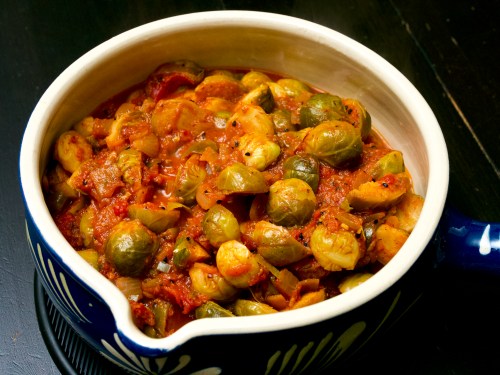
Vegan Achari Brussels Sprout Curry

Sprouts are not just for Christmas. They’ll be around for ages yet and we love them. This is also a useful dish for those choosing a spell of Veganism. Serve with yoghurt (non-dairy if you wish) and naan breads.

Wine Suggestion: tonight we opened a German white lager, the Grevensteiner Naturtrübes Helles. A slightly cloudy and smooth beer with fruit hints and a refined malty touch. This has character and roundness and is a good foil to the curry and a compliment to the Brussels.

Vegan Achari Brussels Sprout Curry – serves 2

  • 750g brussels sprouts, trimmed and quartered or halved depending on size
  • 1 tsp black mustard seeds
  • 1 tsp cumin seeds
  • 1 tsp coriander seeds
  • 1 tsp fennel seeds
  • 1 tsp nigella seeds
  • rapeseed oil
  • 1 onion, diced
  • 2cm piece of ginger, peeled and finely grated
  • 3 garlic cloves, peeled and crushed
  • 2 green chillies, very finely chopped
  • 1 x 400g tin of chopped tomatoes
  • 2 tbsp tomato purée
  • 1½ tsp salt
  • 1-2 tbsp lemon juice

Bash the mustard, cumin, coriander and fennel seeds together in a mortar as finely as you can, then stir in the nigella seeds.

Heat a large frying pan, then add 2 tbsp of oil. When hot, add the onion and fry for 5 minutes before adding the spice mix, then continue to cook for another 5 minutes or until the onions are soft and browning. Stir in the ginger, garlic and chilli and cook for a few minutes more.

Add the tomatoes, tomato purée and the salt, then cook for 15 minutes. Add 400ml water and the sprouts, cover with a lid and leave to simmer for until just tender – start checking after 12 minutes. Remove from the heat and season with lemon juice before serving.

(Original recipe by Meera Sodha in The Guardian, Saturday, 21 December 2019.)

Read Full Post »

Horseradish Bloody Mary's

We start every year with a great big lunch with friends, some of whom may require a pick me up after the night before. What better excuse to make some horseradish spiked vodka! Not for the faint-hearted mind and you can of course use any good-quality vodka.

Blood Mary – serves 8 – 10 

  • 1 tsp sweet smoked paprika
  • 2-3 tsp Tabasco
  • 3 tsp Worcestershire sauce
  • 2 tsp sherry vinegar
  • 2 tsp soft brown sugar
  • 2 tsp celery salt, plus extra to serve
  • ½ tsp freshly ground black pepper, plus extra to serve
  • 350ml horseradish vodka (see below) or any good vodka, chilled
  • about 1 litre good-quality tomato juice, chilled
  • sticks of leafy celery, to serve
  • thyme sprigs, to serve

FOR THE HORSERADISH VODKA:

  • 1 horseradish root
  • 2 thyme sprigs
  • 1 tbsp runny honey
  • 1 litre good-quality vodka

To make the horseradish vodka: Peel the horseradish root and slice into long thin pieces. Put the horseradish and thyme into a clean 1 litre glass bottle. Combine the honey with a splash of vodka in a small bowl and stir to dissolve. Pour this into the bottle with the horseradish and thyme, then top up with the remaining vodka. Leave in a dark place to infuse for 3-5 days. When ready, pass the vodka through a sieve and throw away the horseradish (or make sauce!) and thyme. Return the vodka to the bottle and seal. It will keep for a long time.

To make the Bloody Mary, whisk the smoked paprika, Tabasco, Worcestershire sauce, vinegar, sugar, celery salt and black pepper together in a large, wide jug. Pour over the vodka and tomato juice and stir well.

Divide the Bloody Mary between glasses, then garnish each with a celery stick, a sprig of thyme, a pinch of celery salt and a twist of black pepper. Serve immediately.

(Original recipe from Time by Gill Meller, Quadrille, 2018.)

Read Full Post »

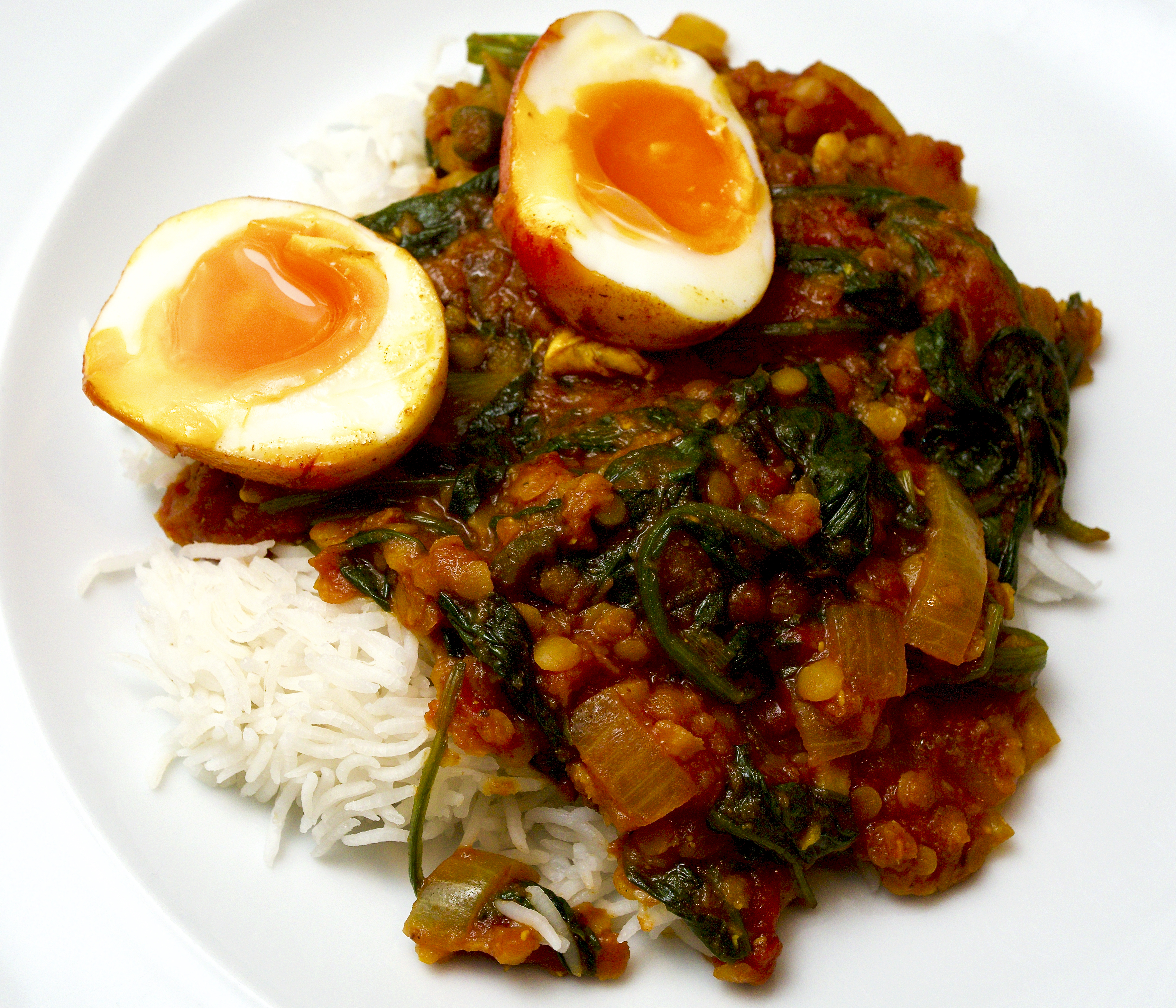
Spiced Crispy Egg & Lentil Curry

This is a great lentil curry but the star of the show is definitely the spiced crispy eggs. We’ll definitely be making these again with other dishes that could do with a crispy egg. Serve with steamed basmati rice.

Wine Suggestion: the spices in this dish will fight with tannins so we’d suggest pairing with a white wine. Our choice this evening was the Chayeau Pesquie Terrasses Blanc, a blend of Viognier, Roussanne, Clairette and Grenache Blanc – a real southern Rhône style blend with fresh stone fruit and citrus flavours.

Spiced crispy egg and lentil curry – serves 4

  • 100g red lentils
  • 2 onions, roughly chopped
  • 400g tin chopped tomatoes
  • 1 tsp ground turmeric
  • 2 tbsp oil for frying
  • 1½ tsp ground cumin
  • 1½ tsp ground coriander
  • 4 cardamom pods, squashed
  • a thumb-sized piece of root ginger, finely chopped
  • 4 cloves of garlic, crushed
  • 2-3 green chillies, sliced
  • 100g baby spinach, chopped
  • 1 tsp garam masala
  • a small bunch of coriander, chopped

FOR THE CRISPY EGGS

  • 6 eggs
  • ¼ tsp ground turmeric
  • ¼ tsp paprika

Put the lentils, onions and tomatoes in a pan with the turmeric and a teaspoon of salt. Add water to just cover, then simmer gently for 20 minutes or until the lentils are tender.

Drop the eggs into boiling water and cook for 7 minutes, then plunge them into iced water and leave to cool.

Heat 1 tbsp of the oil in a large pan, then stir in the cumin, coriander and cardamom. Cook for a couple of minutes, then add the ginger, garlic & chillies. Cook for a few minutes before adding the cooked lentils and 100ml water. Cover and simmer for 30 minutes, then add the spinach and cook for another 10 minutes.

Peel the eggs and heat the tbsp of oil in a frying pan. Add the eggs, turmeric, paprika and some salt. Cook the eggs until they start to blister and crisp.

Stir the garam masala and fresh coriander into the curry and serve with the halved eggs and some steamed basmati rice.

(Original recipe by Janine Ratcliffe in BBC Olive Magazine, December 2017)

Read Full Post »

Cauliflower & chestnut soup

Got chestnuts? We made this with a vac-pack we still had in the drawer from last Christmas. A really delicious soup and perfect for using a post- or pre-season chestnut surplus!

Cauliflower & Chestnut Soup – serves 4

  • ½ tbsp olive oil
  • 1 large onion, finely chopped
  • 1 large cauliflower, cut into florets
  • 250ml milk
  • 850ml vegetable stock
  • 150ml double cream
  • 200g pack vacuum-packed chestnuts, roughly chopped
  • 25g grated Parmesan, to serve

Heat the olive oil in a large saucepan, then add the onion and cook gently for 8 to 10 minutes or until softened. Add the cauliflower, milk and stock, then bring to a simmer and cook for 10 to 12 minutes or until the cauliflower is tender.

Add the cream, season well, and bring back to the boil. Remove from the heat and add the chestnuts, then blend with a hand blender until smooth. Season to taste and serve with shaved Parmesan, lots of black pepper and a drizzle of olive oil.

(Original recipe from BBC Good Food)

Read Full Post »

Spanish rice with pork & spinach

Another great one-pot dish by Diana Henry – one our absolute favourite food writers (we might have said that already). Don’t be tempted to stir the rice, it’s not a risotto.

Wine Suggestion: this dish goes with juicy Spanish reds with a good option being the Finca Antigua Syrah from La Mancha. While not a traditional grape variety for Spain, Syrah is increasingly seen and seems to take on a local twist which we find works really well; creamy with warm spices.

Spanish rice with pork and spinach – serves 6

  • 350g pork fillet, halved lengthways and sliced
  • 7 tbsp olive oil
  • 100 chorizo, skin removed and cut into chunks
  • 300g bacon, cut into meaty chunks (you might have to order a piece of bacon from your butcher)
  • 2 large onions, roughly chopped
  • 2 red peppers, sliced
  • 4 garlic cloves, finely chopped
  • 2 tsp smoked paprika
  • ¼ tsp dried chilli flakes
  • 300g paella rice
  • 1.2 litres hot chicken stock
  • 650g spinach
  • 1 lemon

Season the pork. Heat 3 tbsp of the olive oil in a large frying pan and quickly brown the pork until cooked through, then set aside.

Reduce the heat and add another 3 tbsp of the oil and the chorizo and bacon. Sauté for a couple of minutes, then add the onions and peppers and cook over a medium-low heat for 20 minutes or until soft. Add the garlic, paprika and chilli and cook for another couple of minutes, then add the rice. Stir the rice into the juices (this is the only time you will stir it), then add the stock and season. Bring to the boil, then reduce to a simmer and cook for 15 minutes or until there is only a little liquid left and the rice almost tender.

Meanwhile, wilt the spinach in the last tbsp of oil and season. Scatter the spinach over the rice and tuck in the pork pieces. Check for seasoning, then reduce the heat to its lowest, cover and leave for 5 minutes. Squeeze lemon juice over the top and serve.

Original recipe from Food from Plenty by Diana Henry, Mitchell Beazley, 2010.)

Read Full Post »

Haricot Beans with Rice & Onions

Another dish made for no other reason than half a bag of fresh dill in the fridge, threatening to go to waste. This is a big bowl of buttery deliciousness and the perfect comfort food for a cold night.

Wine Suggestion: to match the cold and damp evening, and this comfort food you need to look at a comforting, juicy red; tonight the Altosur Malbec, a wine that genuinely outperforms its pricepoint.

Haricot beans with rice and onions – serves 2

  • 2 medium onions, peeled and cut into thin rings
  • 1 clove of garlic, peeled and thinly sliced
  • 3 tbsp olive oil
  • 150g white long-grain rice
  • 2 cloves
  • 6 black peppercorns
  • 1 x 400g tin of haricot beans, drained
  • 60g butter
  • 2 tsp cumin seeds
  • 1 tsp turmeric
  • a handful of chopped dill

Warm the olive oil in a saucepan, add the garlic, then the onions, and leave to cook over a moderate heat until soft and golden. Remove from the heat, scoop out the onions and keep the pan for later.

Wash the rice in warm water, then drain and transfer to a saucepan and pour in water to cover by 2cm. Add salt, the cloves and the peppercorns, then bring to the boil. Turn down to a simmer, then cover tightly with a lid and leave for 10 minutes. Turn off the heat and leave the lid on for a further 5 minutes.

Melt the butter in the onion pan, then cook the cumin seeds and turmeric for a minute or until fragrant. Add the beans and heat through.

Fork through the rice, check the seasoning and pick out the cloves. Stir in the dill and divide between two bowls. Spoon over the hot beans and top with the fried onions.

(Original recipe from Greenfeast: autumn, winter by Nigel Slater, 4th Estate, 2019.)


Read Full Post »

Carrot & Ginger mash with pan fried codSo, this is a full-on diet dish, but the carrot and ginger mash is spectacular and we couldn’t recommend it highly enough for nights when you need some restraint. We are a greedy household and require restraint on a regular basis – no wine for us tonight!

Carrot & Ginger Mash with Pan-fried Cod – serves 2

  • 2 large carrots (about 300g), thickly sliced
  • 1 garlic clove, peeled
  • 15g fresh root ginger, peeled
  • 15g butter
  • ½ tbsp fresh lemon juice
  • 2 thick, skinless cod fillets
  • 1 tbsp olive oil
  • dried chilli flakes

Put the carrots, garlic & ginger in a medium saucepan and cover with water. Bring to the boil then simmer for 15 minutes or until soft.

Take the pan off the heat, reserve a ladle of the cooking water, then drain. Return the carrot mixture to the pan and add 3 tbsp of the reserved cooking water, the butter, and the lemon juice. Whizz the carrots to a purée with a stick blender, adding a bit more of the water if needed. Season with salt and black pepper.

Season the cod with sea salt and black pepper. Heat the oil in a non-stick frying pan over a medium heat. Fry the cod for about 4 minutes, then turn, sprinkle with a few chilli flakes, and cook on the other side for 3 to 5 minutes, depending on how thick they are.

Spoon the purée onto warm plates and serve with the fish on top and plenty of green veg.

(Original recipe from The Fast 800 Recipe Book by Dr Claire Bailey & Justine Pattison, Short Books, 2019.)


Read Full Post »

Honey glazed chicken wings

We love a good chicken wing and the only way to eat them is with your fingers – like we need an excuse. Cheap as chips too. What’s not to love?

Wine Suggestion: keeping it simple we pulled out a bottle of the Petit Mazuret Viognier from southern France. Not complex, but rich and able to stand up to the flavours of the chicken; a very satisfying accompaniment

Honey-glazed Chicken Wings – serves 6 as a starter

  • 1kg chicken wings
  • 2 tbsp clear honey
  • 2 tbsp soy sauce
  • 1 tbsp sesame seeds
  • 100ml sour cream
  • 100ml buttermilk
  • 100g mayonnaise
  • 2 tsp lemon juice
  • pinch of smoked paprika
  • 2 red chillies, deseeded and finely sliced
  • celery sticks, to serve (optional)

Heat the oven to 200C/200C fan/gas 6.

Put the wings in a large roasting tin. Mix the honey, soy and ½ tbsp sesame seeds in a bowl, then pour over the wings. Mix well with your hands to coat, then roast for 20 minutes or so until browned, sticky and cooked through.

Meanwhile, combine the sour cream, buttermilk, mayonnaise, lemon juice and paprika. Season well, then chill until ready to serve.

When cooked, sprinkle over the rest of the sesame seeds and the chilli. Serve with the dip and some celery sticks if you like.

(Original recipe from BBC Good Food)


Read Full Post »

Mussels with red onions, cider and creme fraiche

We associate mussels with cold weather and cook them often in the darker months. Makes no sense really when we’ve no issue eating buckets of them in the sunshine on holidays. We loved the creamy sauce on these – crusty bread essential!

Wine Suggestion: it feels natural to use the cider you cook with as the accompaniment. Our choice was the artisanale and organic Cidrerie le Maitre, a very new, young producer in Brittany we stumbled upon by following little signs off the main roads into a winding, forgotten lane in the middle of the French countryside. Daniel le Maitre uses 12 ancient local varieties of apples and the result is dry, very fruity and appley but with a wonderful texture of apple skins and a great depth of flavour which makes it a great food match. A happy discovery, and their Cider Vinegar is also a good addition to our cupboard too.

Mussels with Red Onion, Cider & Crème Fraîche – serves 2

  • 1kg mussels
  • 25g unsalted butter
  • 2 small red onions, thinly sliced
  • 1 garlic clove, chopped
  • 150ml dry cider
  • 2 tsp finely chopped sage
  • 150ml crème fraîche

Scrub the mussels, and discard if open and they won’t close when you give them a sharp tap.

Melt the butter in a large pan, cook the onions for a few minutes, then add the garlic. Pour the cider over and add the sage, then bring to the boil. Turn the heat down to a simmer and cook until reduced by half.

Add the mussels, then cover and cook over a medium heat (shaking the pan occasionally) for 3-4 mins or until they have opened. Lift the mussels into a bowl and keep warm.

Bubble the cooking liquid in the pan for a couple of minutes, then gradually blend in the crème fraîche. Heat the sauce through and pour over the mussels to serve.

(Original recipe from BBC Good Food)

Read Full Post »

« Newer Posts - Older Posts »