Feeds:
Posts
Comments

Posts Tagged ‘lemon’

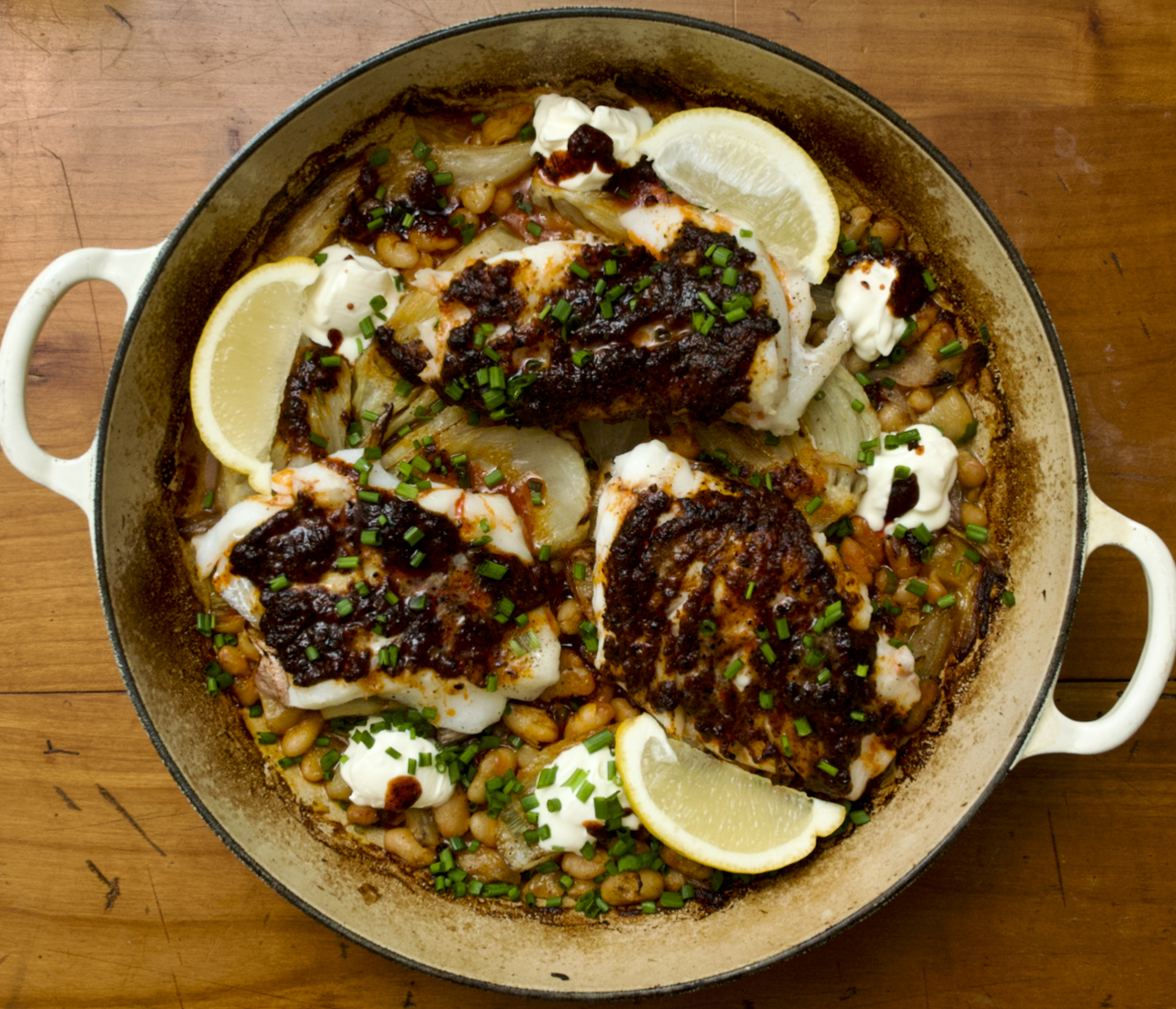
There are all sorts of good things going on in this dish from Ottolenghi Comfort. The beans turn lovely and creamy, the fennel is soft and sort of caramelised and the smoky ‘nduja butter is delicious. Highly recommended!

Wine Suggestion:

Braised fennel and cod with beans and ‘nduja butter – serves 4

  • 60ml olive oil
  • 2-3 large fennel bulbs, halved and cut into wedges
  • 3 banana shallots, quartered lengthwise and peeled
  • 1 head of garlic, unpeeled and halved widthways
  • 1 x 400g tin of cannellini beans (or black-eyed beans – we couldn’t get these this time)
  • 150ml chicken stock
  • 125ml dry white wine (or dry vermouth if you have it)
  • 4 skinless cod fillets (or haddock or hake)
  • 50g crème fraîche
  • 5g chives, finely chopped
  • lemon wedges, to serve

FOR THE ‘NDUJA BUTTER:

  • 45g unsalted butter
  • 25g ‘nduja paste (we used an Irish one from Corndale Farm in Limavady)
  • ¾ tsp Urfa chilli flakes
  • ¾ tsp chipotle chilli flakes
  • ½ tsp smoked paprika

Heat the oven to 220C fan.

You need a shallow casserole dish with a lid. Cut out a piece of baking paper into a circle roughly a cm less than the width of your dish.

Put the olive oil into the casserole and put over a medium-high heat. Add the fennel, shallots and garlic and sauté for about 6 minutes, or until the veg starts to catch a little.

Add the beans, stock, wine, 1 tsp of salt and a generous amount of black pepper. Stir gently and bring to a simmer, then place the paper on top, cover with the lid and bake in to the hot oven for 30 minutes or until the vegetables are soft. Remove the parchment and return to the oven without the lid (you can add a splash more stock or water if it looks a bit dry). Bake for another 10-15 minutes, until the vegetables have browned here and there.

Meanwhile, combine all the ingredients for the ‘nduja butter in a small saucepan and put over a medium-low heat. Bring to a gentle simmer, breaking the ‘nduja up with the back of a spoon to incorporate with the butter, then remove from the heat.

Season the fish very lightly with salt and some pepper. Drizzle 1½ tsp of the ‘nduja butter over each fish fillet and reserve the rest. Take the pan out of the oven and place the fish on top. Return to the oven, uncovered, for 7-10 minutes or until the fish is just cooked.

Remove from the oven and allow to rest for 5 minutes, then dollop on the crème fraîche, drizzle with the rest of the ‘nduja buttter and sprinkle with the chives. Serve with the lemon wedges for squeezing over.

(Original recipe from Ottolenghi Comfort by Yotam Ottolenghi, Helen Goh, Verena Lochmuller & Tara Wigley, Ebury Press, 2024.)
Read Full Post »

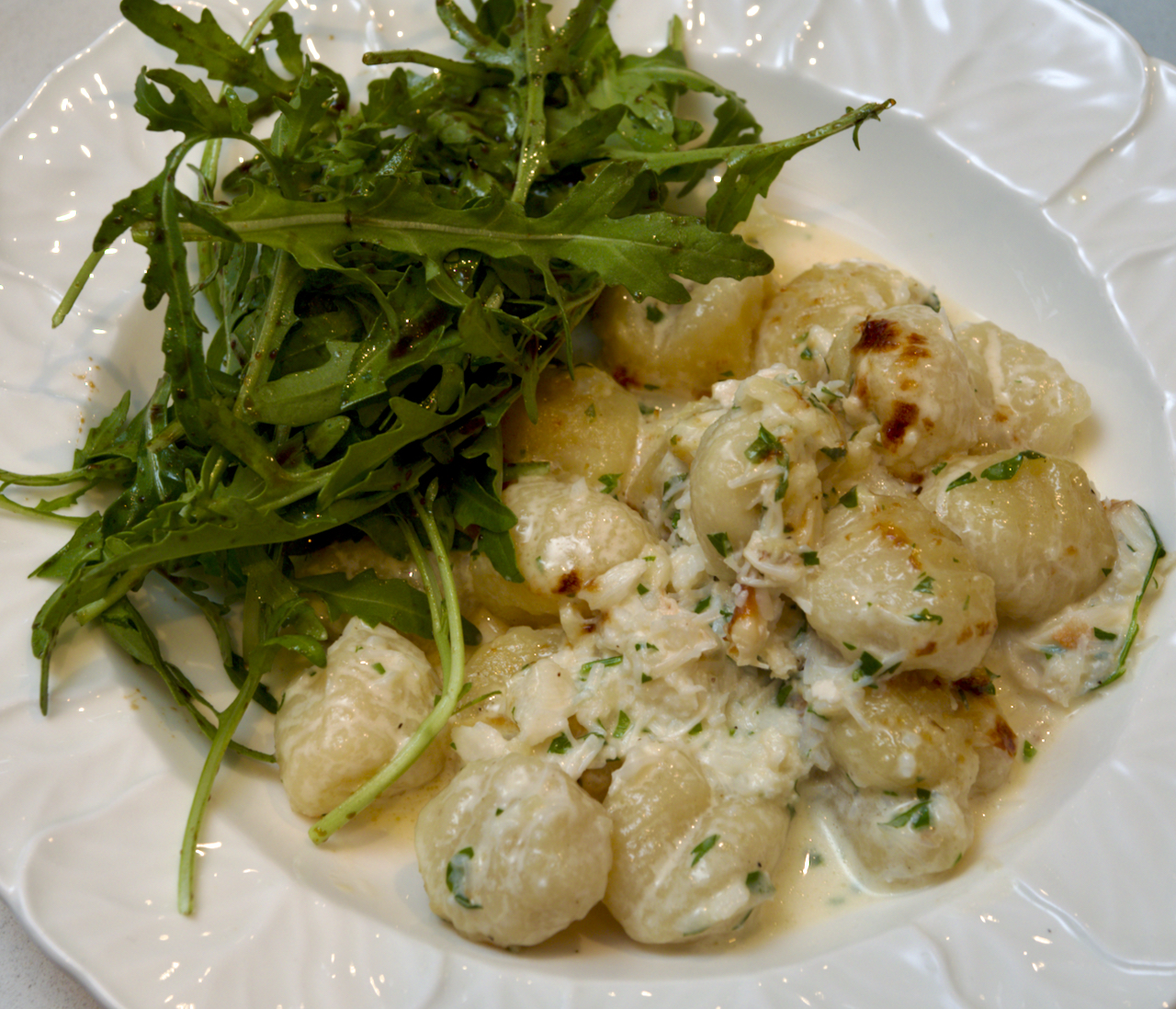
We buy big tubs of Lambay Island white crabmeat and freeze it in small portions so we can have weeknight dishes like this one. Really simple but tastes luxurious.

Wine Suggestion: This demands a richer white, but with a core of minerality, texture and acidity. Tonight we opened a La Clef du Recit Sancerre Le Chêne Fourchu … an uncommonly oaked Sauvignon Blanc which, when handled deftly like this, adds layers and structure. We love how this has hints of tropical fruits, lemon and mandarin.

Baked crab and lemon gnocchi – serves 2

  • 1 pack of pre-made gnocchi – about 400g – go for a good quality one
  • 150ml double cream
  • 30g Parmesan, finely grated, plus a bit extra
  • juice of ½ lemon
  • 100g white crabmeat
  • a handful of flatleaf parsley, chopped
  • dressed green salad, to serve

Cook the gnocchi in boiling salty water until if floats to the top, then scoop it out and set aside.

Heat the cream in a large pan, then add the Parmesan and lemon juice. Let it bubble up, then turn off the heat and add the crab, parsley and gnocchi. Sesson well with black pepper, then tip it all into a baking dish.

Sprinkle over some more Parmesan and place under a hot grill for a few minutes or until brown and bubbling.

(Original recipe by Janine Ratcliffe in Olive Magazine, August, 2016.)

Read Full Post »

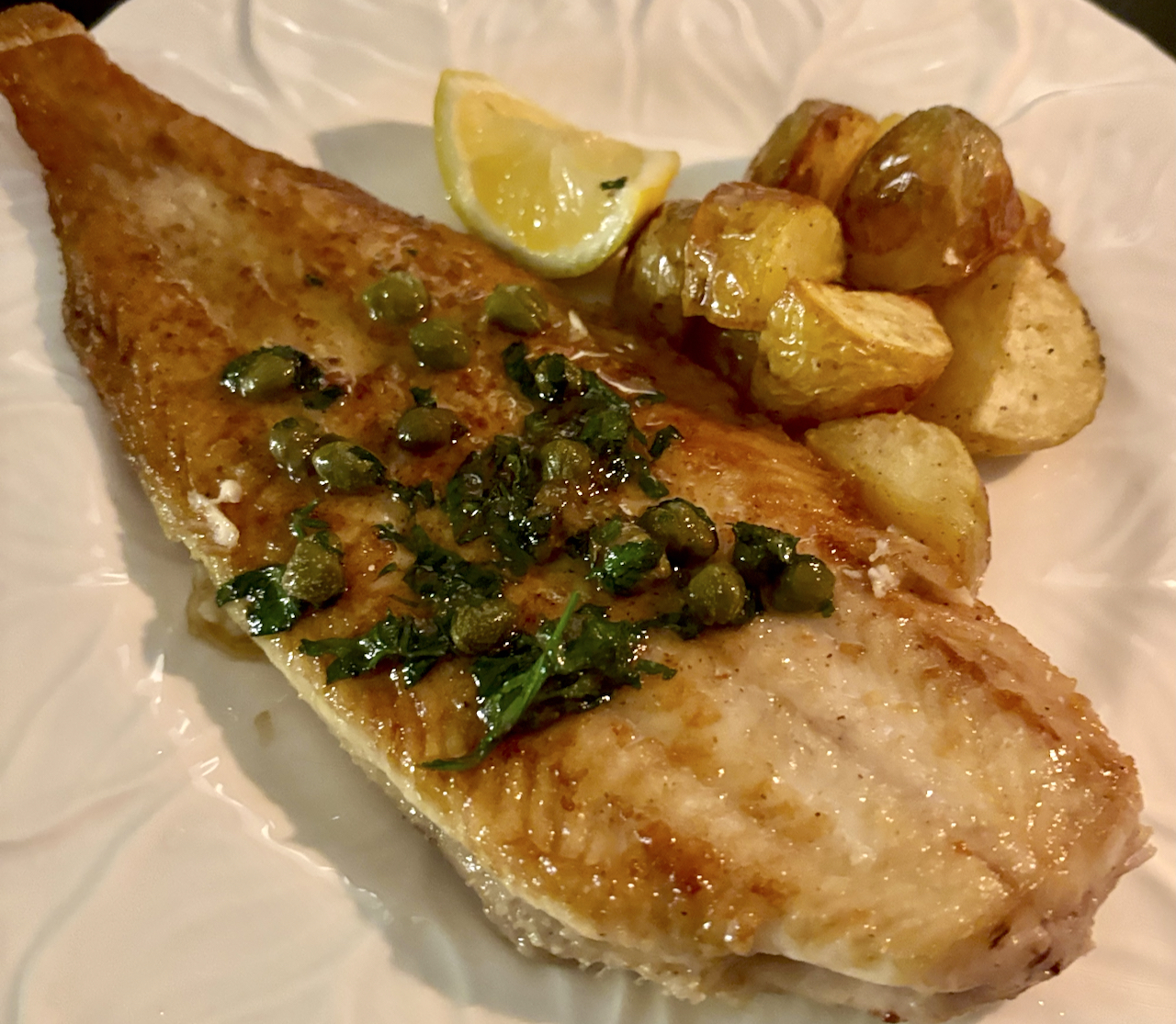
This might just be our favourite fish dish — and honestly, we can’t believe it took us this long to realise how utterly simple it is to cook. Dover sole (also known as black sole here in Ireland) is a truly special fish: delicate, buttery, and elegant with very little effort required in the kitchen. Since subscribing to a fish box from Urban Monger, we’ve been pushed out of our comfort zone and into cooking more seafood. This recipe is a great confidence booster: classic, quick, and very satisfying.

Wine Suggestion: Such a lovely fish needs respect, so don’t skimp on quality and look for a crisp, dry white with depth and personality. We chose a Chablis from Nathalie & Gilles Fèvre which is made in stailess steel, but left on its fine lees to add texture to an already layered, pure fruited wine: white stonefruit, a lemony twist and a limestone backbone.

Dover sole à la meunière – serves 2

  • 2 x 400-450g Dover soles trimmed and skinned (the ones we had were labelled black sole in Ireland but they are the same thing)
  • 25g plain flour
  • 4 tbsp flour
  • 50g unsalted butter
  • 2 tsp lemon juice
  • 1 tbsp chopped parsley
  • 2 tsp capers
  • lemon wedges, to serve
  • roast baby potatoes, to serve

If you need to trim the fish yourself, take a pair of scissors and cut the frilly fins and the fleshy bones off both sides. You will be removing about 4 cm off all around so you are left with just the 4 fillets on the backbone.

Season the fish with salt and white pepper, then dip both sides into the flour and pat off any excess.

Heat the oil in a non-stick for well-seasoned frying pan. Add one of the soles, lower the heat slightly and add a small piece of the butter. Fry over a moderate heat for 4-5 minutes until golden brown and cooked through. Transfer to a plate and keep warm while you cook the second fish.

Pour off the frying oil and discard. Add the rest of the butter to the pan and allow to melt over a moderate heat. When it starts to smell nutty and turn brown, add the lemon juice, parsley, capers and some seasoning. Pour some of the beurre noisette over each fish and serve with the lemon wedges and some roast baby potatoes.

(Original recipe from Rick Stein’s Food Stories, BBC Books, Penguin Random House, 2024.)

Read Full Post »

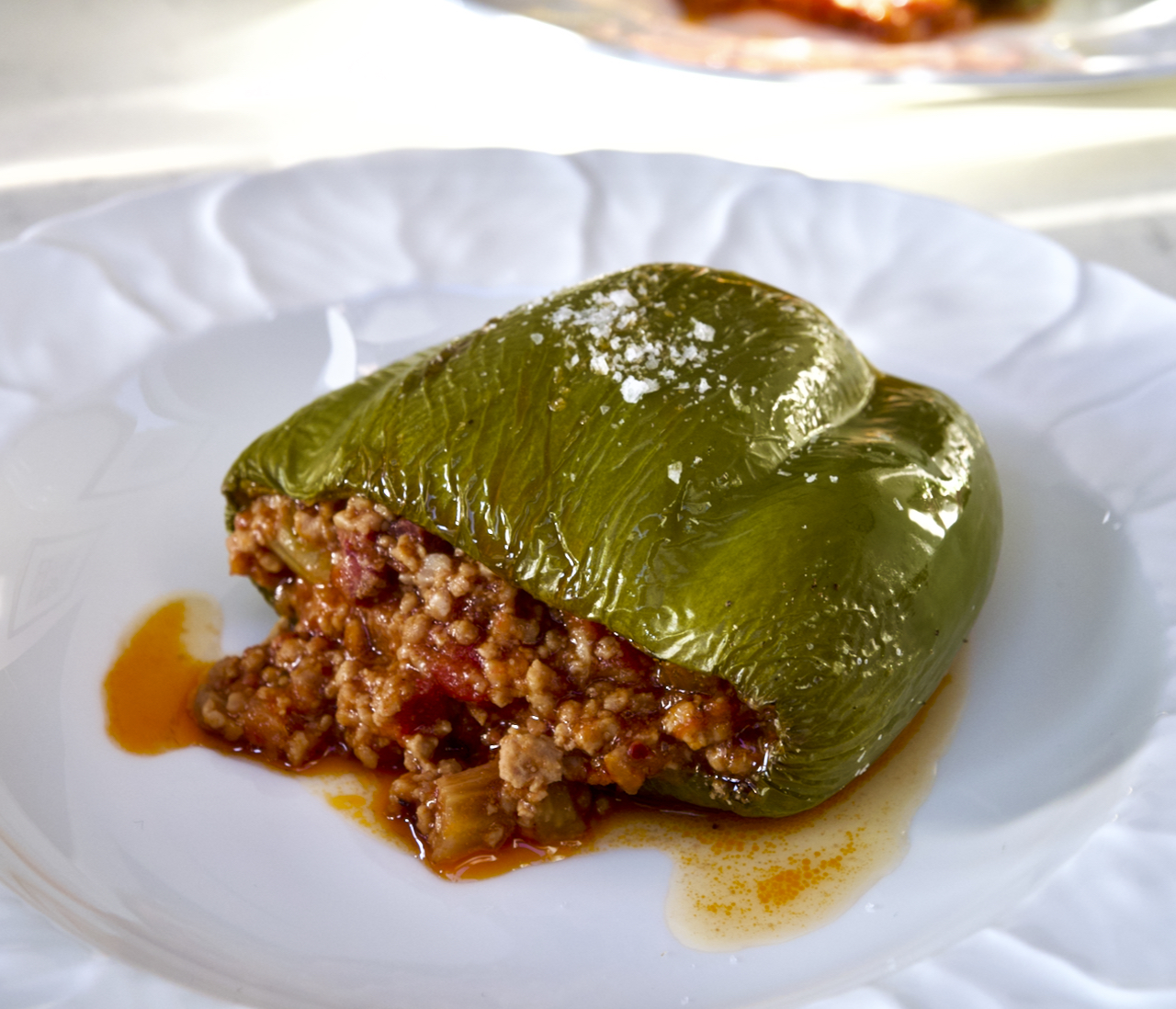
Roasted green peppers stuffed with a delicious slow-cooked ragu with pork and chorizo. If you cook the ragu in advance this is a quick and simple dinner and it tastes absolutely delicious. Something good to have in the freezer for a rainy day. Serve with a salad on the side.

Wine Suggestion: José Pizarro recommends serving with a rich Bobal from Vanencia or Utiel-Requena which sounds pretty good to us.

Spanish Stuffed Peppers – serves 8

  • 3 tbsp olive oil
  • 1 large onion, finely chopped
  • 2 celery stalks, finely chopped
  • 2 garlic cloves, crushed
  • 200g cooking chorizo, skin removed and finely chopped
  • 500g pork mince
  • 1 star anise
  • finely grated zest of 1 lemon
  • 200ml white wine
  • 400g tin of chopped tomatoes
  • 2 tbsp tomato purée
  • 350ml chicken stock
  • 8 large green peppers

Heat the oil in a large, deep frying pan and gently fry the onion and celery for 10 minutes or until very soft. Add the garlic and chorizo and cook for 5 minutes or until the chorizo has released its oil.

Turn up the heat and add the pork mince. Stir and break it up with a wooden spoon until browned all over.

Add the star anise, lemon zest, and white wine and allow to bubble for a few minutes.

Add the tomatoes, tomato purée and chicken stock. Season well with salt and pepper and bring to the boil, then reduce and simmer for 2-3 hours. Give it a stir now and then and add a little stock or water if it reduces too much.

At this point you can either proceed with the recipe or cool the ragu and store in the fridge or freezer for later.

Heat the oven to 180C fan.

Cut the tops off the peppers and deseed them. Put the peppers upright in a roasting tin so they fit snugly and won’t fall over. Drizzle with olive oil and season well with salt and pepper. Roast for 20 minutes or until softened but still holding their shape (we had large peppers so we cooked them for a bit longer than this).

Fill the peppers with the ragu and roast for another 15 minutes or until bubbling.

(Original recipe from The Spanish Pantry by José Pizarro, Quadrille, 2025.)

Read Full Post »

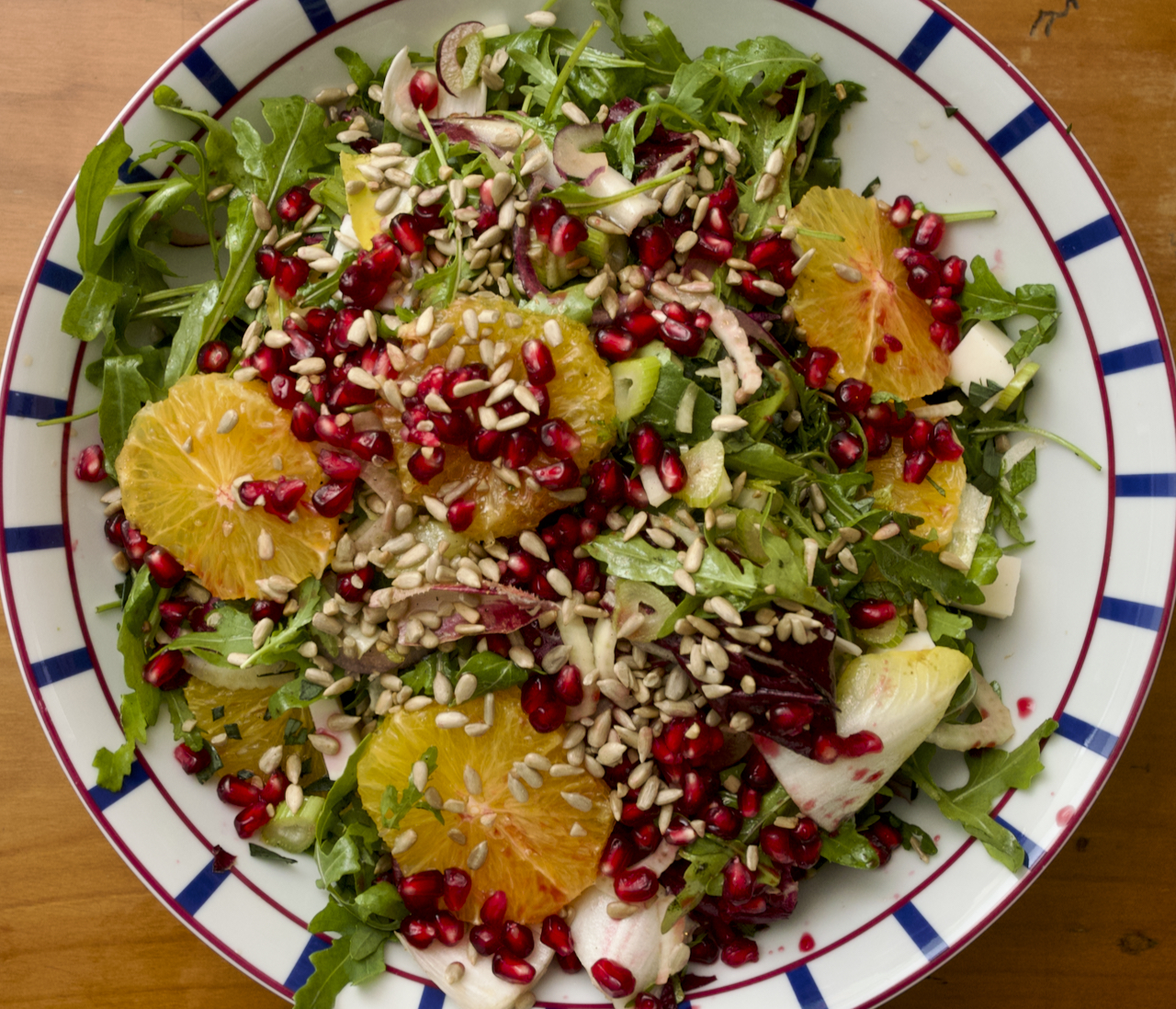
This stunning salad is a riot of colour, texture, and flavours. From Boustany by Sami Tamimi, this is not your average side salad. We served it alongside pan-fried duck breasts.

Bitter leaves with orange and fennel – serves 4 to 6

  • 4 blood oranges (or regular oranges)
  • 4 tbsp lemon juice
  • 2 tbsp orange juice
  • 75ml olive oil
  • 1 tbsp pomegranate molasses
  • 2 tsp orange blossom water
  • 100g radicchio leaves
  • 100g white or red endive
  • ½ small red onion, very thinly sliced
  • 1 small fennel bulb, very thinly sliced
  • 120g rocket
  • 5g fresh tarragon leaves
  • 70g hard goat’s cheese, broken into chunks
  • 3 tbsp pomegranate seeds
  • 25g sunflower seeds, toasted

Remove the skin and white pith from the oranges (use a sharp knife), then slice the oranges into ½ cm slices.

Make the dressing by putting the lemon juice, orange juice, olive oil, pomegranate molasses and orange blossom water into a small bowl. Add ½ tsp of salt and plenty of black pepper, then whisk well and set aside.

Separate the radicchio and endive into leaves and tear into large pieces, then add to a mixing bowl. Add the onion, fennel and rocket. Pour over about a quarter of the dressing, add a pinch of salt and some black pepper and toss well.

Layer the leaves, oranges, goat’s cheese and herbs onto a large platter or salad bowl. Finish with a few pieces of orange, some chunks of cheese and spoon over the dressing. Scatter the pomegranate and sunflower seeds over, then serve.

(Original recipe from Boustany by Sami Tamimi, Ebury Press, 2025.)

Read Full Post »

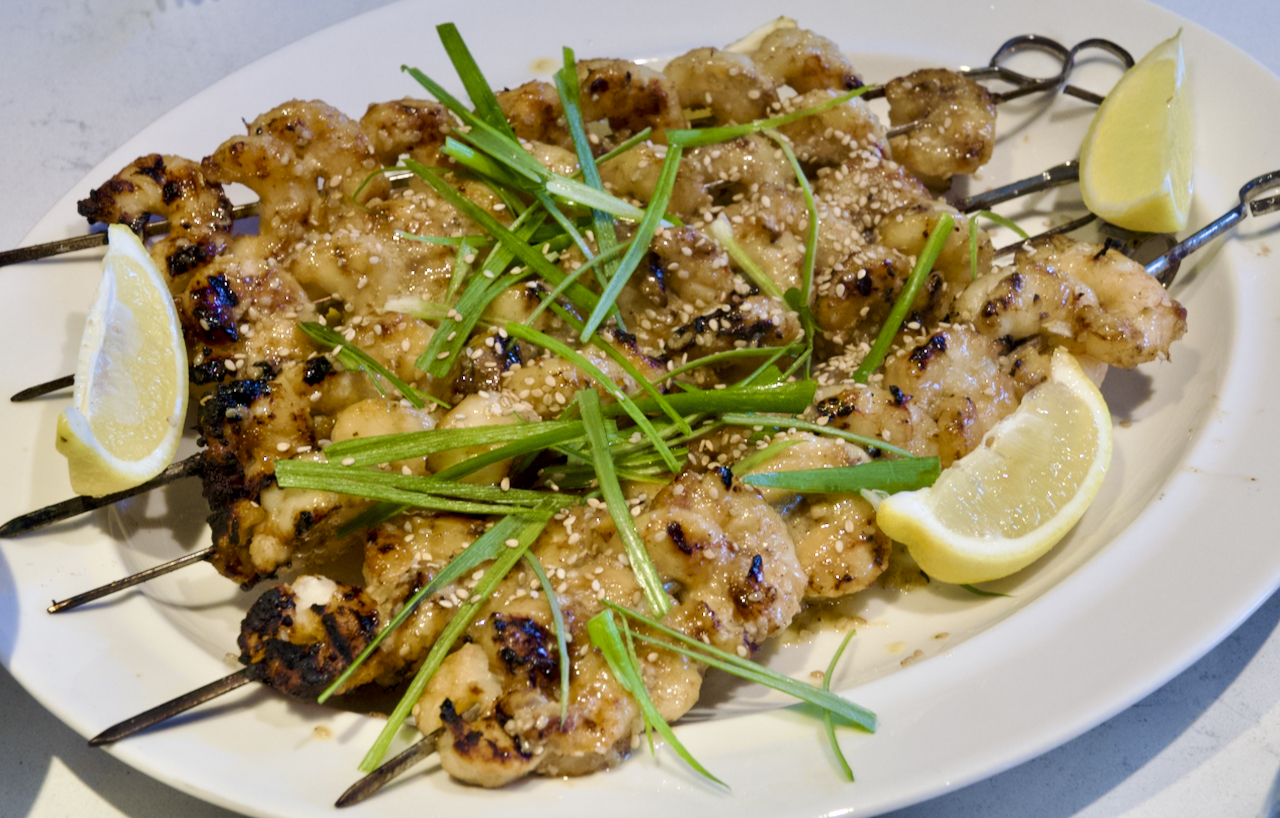
Smoky and savoury, these barbecue prawns with miso are the ultimate snack to kick off any gathering. A generous starter made for sharing that is perfect with cold drinks and good company.

Wine Suggestion: We’ve been exploring the wines of Quincy from the Loire Valley on our travels and discovering how universally well made and exciting they seem to be. Fortuitously the whites, made from Sauvignon Blanc, pair well with this dish. Anthony Girard’s La Clef du Recit is crisp, dry and pure fruited with a real depth and vibrant citrus fruits.

BBQ Prawns with Miso – makes 10

  • 750g large tiger prawns, peeled but with tails left on
  • 6 cloves of garlic, finely chopped
  • 2.5cm piece of ginger, finely grated
  • 2 tbsp miso paste
  • 1 tbsp soy sauce
  • 2 tbsp honey
  • 80g butter
  • 1 tsp sesame oil
  • finely grated zest and juice of a lemon
  • 2 tsp tahini
  • 2 tbsp toasted sesame seeds
  • 2 scallions, green part only, finely shredded
  • 2 tbsp black sesame seeds
  • lemon wedges

Put the prawns into a large bowl and add the garlic, ginger, miso, soy sauce and honey. Mix well and leave to marinate in the fridge for an hour.

Get your barbecue going for direct cooking.

Meanwhile, put the butter into a small saucepan with the sesame oil. Put the pan over a medium heat and stir until the butter has melted. Remove from the heat and stir in the lemon zest and juice, tahini and toasted sesame seeds. Stir well and set aside.

Thread the prawns onto kebab sticks, then cook on your hot barbecue for 2-3 minutes on each side.

Put the prawns skewers on a serving platter and brush with the sesame butter. Pour the rest of the butter into a bowl and serve it alongside.

Scatter over the scallions and black sesame seeds and serve with lemon wedges.

(Original recipe from The BBQ Book by Tom Kerridge, Bloomsbury: Absolute, 2025.)

Read Full Post »

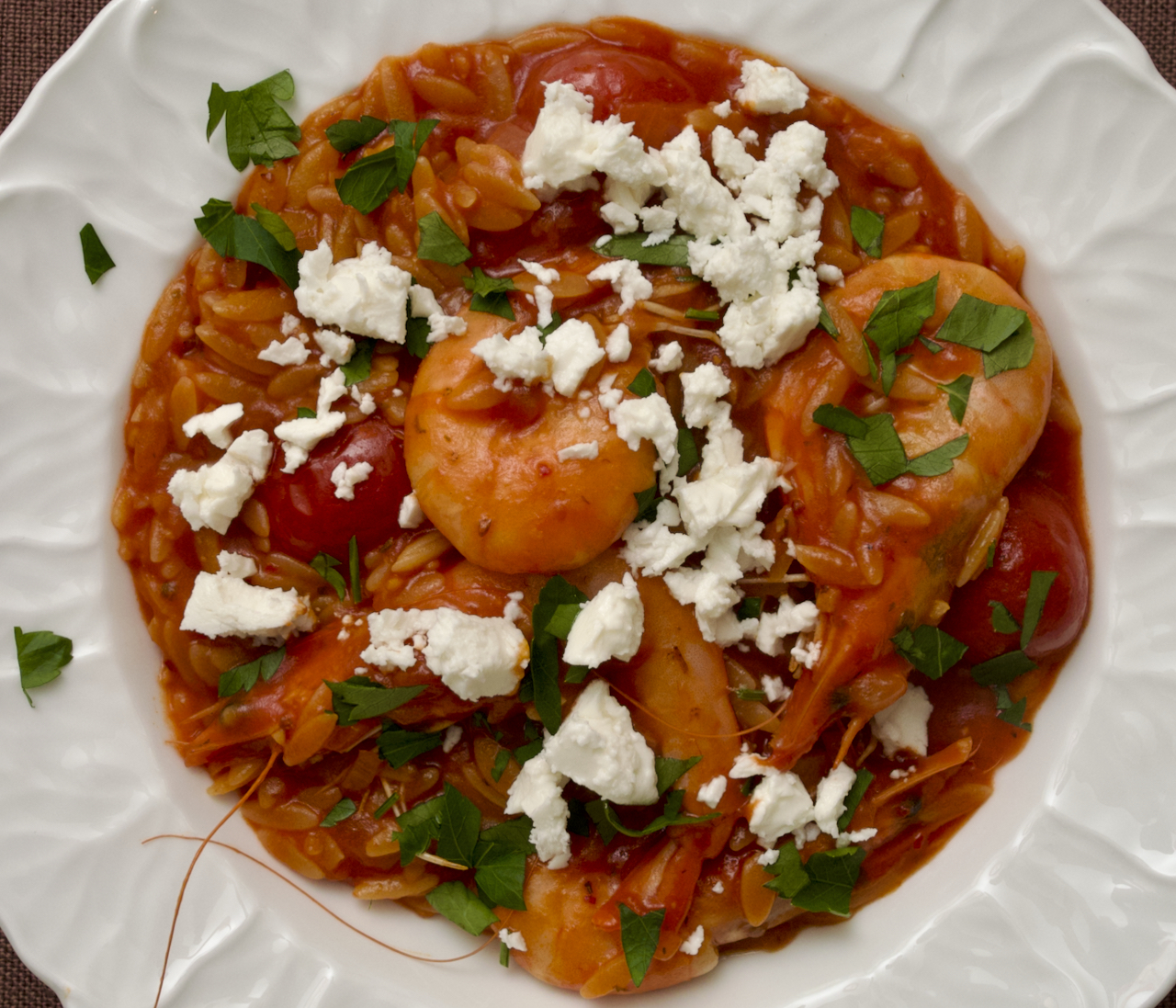
Inspired by the classic Greek saganaki this dish bring together juicy king prawns, bright cherry tomatoes, orzo simmered in wine and stock, a drizzle of lemon and a scatter of feta and parsley. Perfect when you want something that’s quick, feels indulgent, but still very satisfying.

Wine Suggestion: We followed the time-honoured rule of “what grows together, goes together” and opened a bottle of Tetramythos Roditis from the Peloponnese. This dry Greek white is crisp and appley, with a soft, rounded texture through the mid-palate and a clean, saline finish. It worked perfectly with the prawns and the tomato base, echoing the citrusy notes of the lemon while balancing the heat from the chilli. No, we weren’t eating this by the sea in Greece but it certainly felt like we could have been.

Saganaki-style orzo with prawns – serves 4

  • 2 tbsp olive oil
  • 1 large onion, finely chopped
  • 5 cloves of garlic, finely chopped
  • 1 tsp chilli flakes
  • 2 tsp dried oregano
  • 2 tbsp tomato purée
  • 200ml white wine
  • 2 x 400g tin cherry tomatoes
  • 300g orzo
  • 500ml hot chicken stock
  • 350g raw king prawns
  • a small handful of parsley, finely chopped
  • 50g feta, crumbled
  • half a lemon, cut into wedges
  • toasted ciabatta, to serve

Heat the oil in a wide frying pan over a medium heat, then fry the onion with a pinch of salt for a few minutes or until slightly softened.

Add the garlic, chilli, oregano and tomato purée and cook for another couple of minutes.

Turn the heat up high, then add the wine and leave until reduced by half, about 3-5 minutes.

Stir in the cherry tomatoes, orzo and stock, bring to a simmer and cook, stirring occasionally for 5-7 minutes or until the orzo is almost tender.

Stir in the prawns and cook for 2-3 minutes or until cooked through. Season and scatter over the parsley and feta. Serve with lemon wedges for squeezing over.

(Original recipe from BBC Good Food)

Read Full Post »

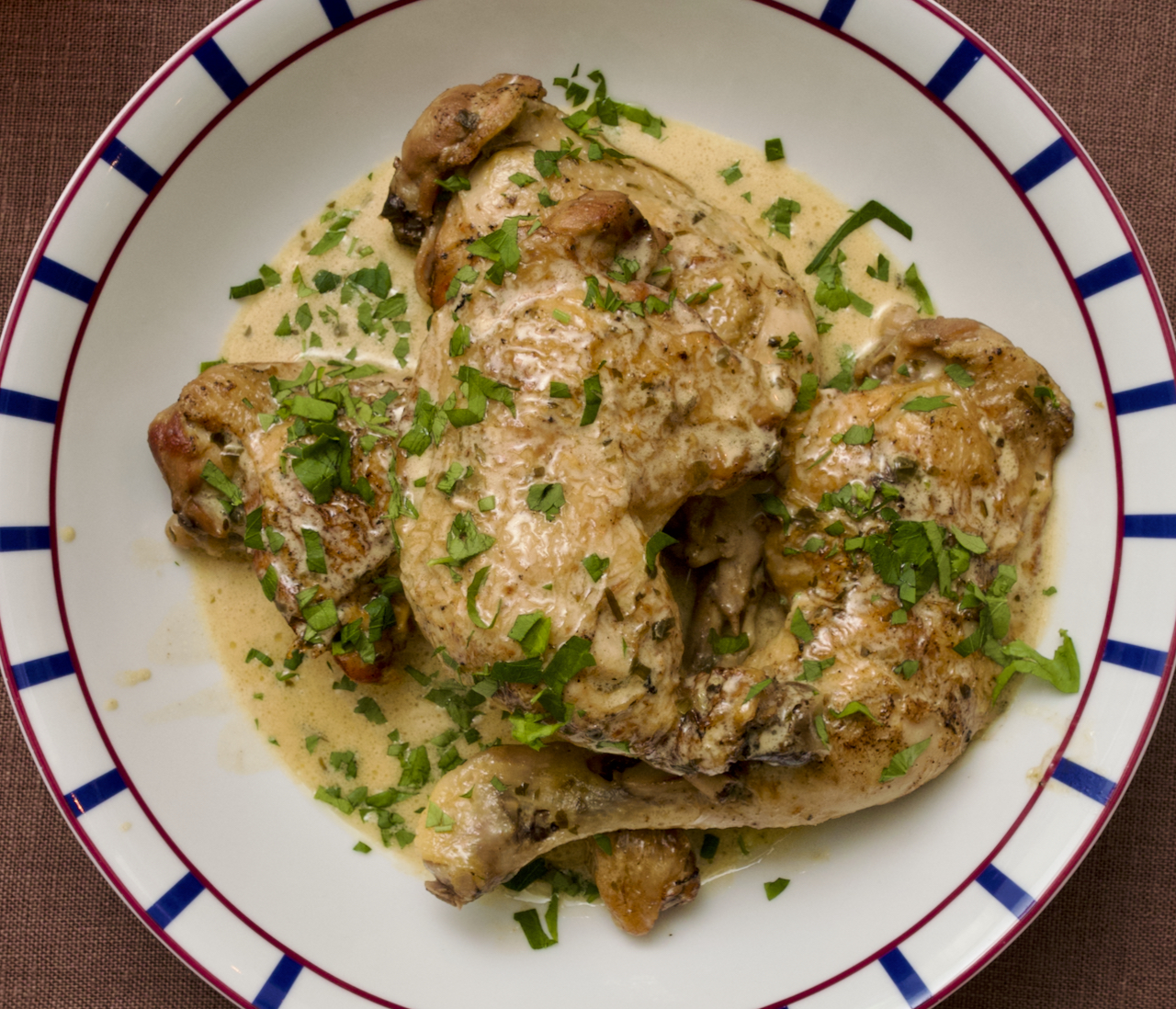
While rummaging through a relative’s bookshelf, we stumbled upon an old cookbook called Cooking with Katie Stewart and took a few recipes along on a recent trip to France — and we’re so glad we did. With some cuisses de poulet from a local butcher and the basic equipment in a holiday kitchen, we cooked a simple tarragon chicken that was so delicious, we made it again as soon as we got home. Proof that sometimes the best recipes are the ones you nearly overlook.

Wine Suggestion: Go classic and open a Chardonnay with a bit of oak — I dare you. It works so well with the tarragon and chicken. Tonight, we went with an old favourite: the Neudorf Tiritiri Chardonnay. Done.

Tarragon Chicken – serves 6

  • 4 tsp dried tarragon
  • 2 tbsp lemon juice
  • 6 chicken joints (we used legs)
  • 50g butter
  • 300ml hot chicken stock
  • 300ml double cream
  • a handful of flatleaf parsley, roughly chopped

Put the dried tarragon into a small bowl and pour over the lemon juice, then leave to soak for 30 minutes.

Season the chicken with salt and black pepper.

Melt the butter in a large saucepan, then add the chicken pieces and slowly brown them on all sides (this may be easier in two batches). When the chicken is browned all over, about 15 minutes, put all of the chicken into the pan.

Season the chicken again and pour over the tarragon and lemon juice mixture, then add the hot stock and cream. Cover with a lid and simmer gently for about 45 minutes or until the chicken is really tender.

Lift the chicken on to a serving plate and pour over the sauce (you can strain it if you have a sieve). Sprinkle with the chopped parsley and serve.

(Original recipe from Cooking with Katie Steward, Hamlyn, 1974).

Read Full Post »

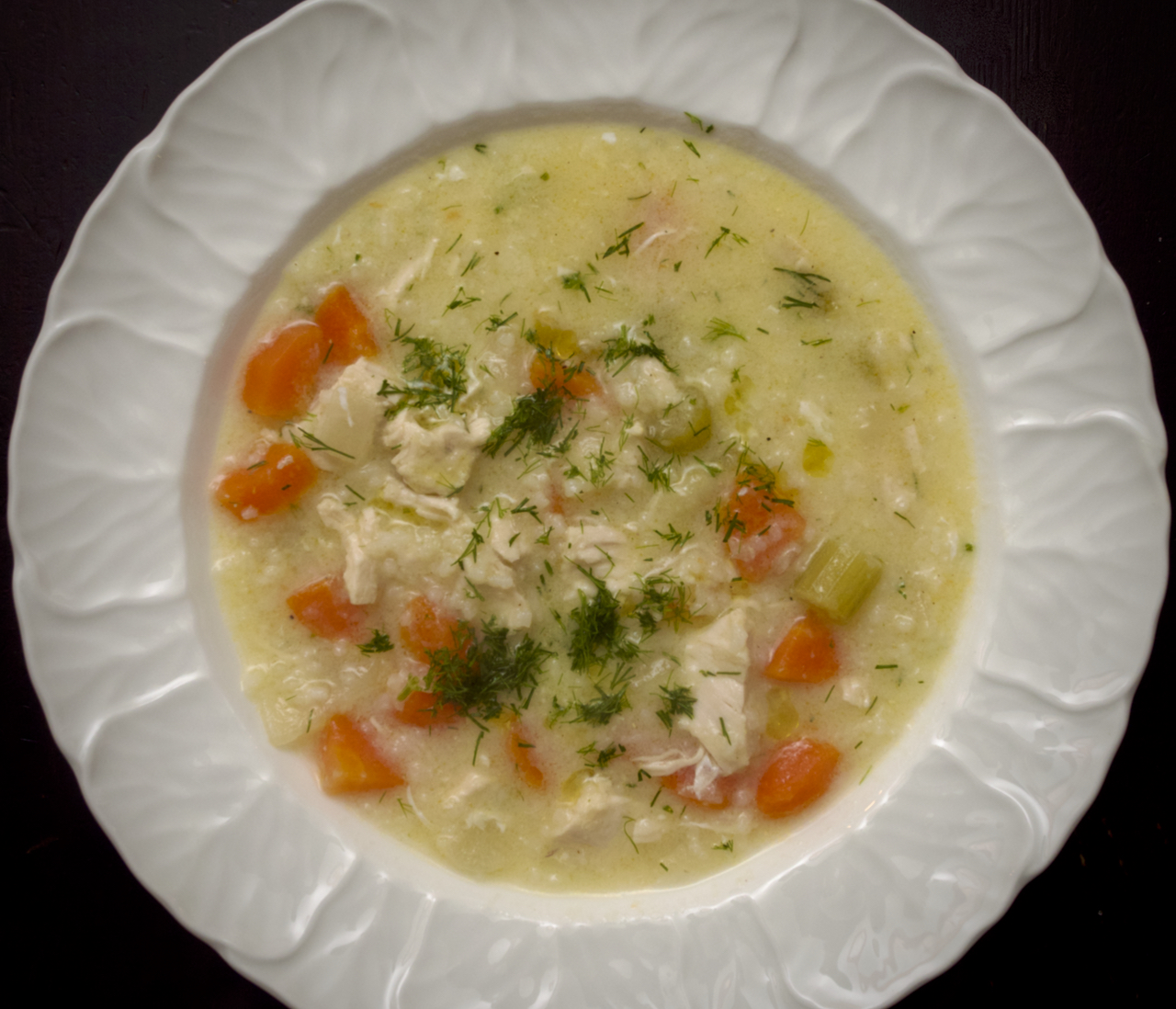
A Greek chicken and rice soup with egg and lemon. Tastes delicious and can only be good for you.

Avgolemono – serves 4 to 6

  • 125g extra virgin olive oil
  • 2 medium white onions, diced into 1cm pieces
  • 2 medium carrots, diced into 1cm pieces
  • 2 ribs of celery, diced into 1cm pieces
  • 3 large cloves of garlic, peeled and finely sliced
  • 3 bay leaves
  • 500g skinless chicken breasts
  • 125g rice
  • 2 large eggs
  • 75g lemon juice
  • 3 tbsp dill, chopped

Heat the oil in a large pot, then add the onions, carrots, celery, garlic, bay leaves and a pinch of salt. Cook gently for about 30 minutes or until soft.

Meanwhile, put the chicken in a single layer in a large pan and cover with 2 litres of water. Add 2 tsp of fine sea salt, then bring to a simmer with the lid on. As soon as the water simmers, turn the heat right down and cook for 5 minutes, then turn the heat off and leave until cool enough to handle.

Remove the chicken and reserve the cooking liquid. Chop the chicken into 1cm pieces.

Add the rice, chicken and chicken cooking waterto the cooked vegetables and bring up to a gentle simmer. Cook for 30 minutes or until the rice is tender.

Whisk the eggs and lemon juice together, then add a couple of ladlefuls of the hot soup to this mix, whisking constantly, before adding the mixture to the soup in a thin stream, stirring all the time.

Bring the soup back to a simmer and leave for another 5 to 10 minutes, stirring constantly until thickened slightly. Remove the bay leaves and check the seasoning. Stir in half the dill, then take off the heat and leave to rest for 10 minutes.

Seve in warm bowls with the rest of the dill, some more black pepper and a drizzle of good olive oil.

(Original recipe by Nick Bramham in FT Magazine, 1/2 March 2025.)

Read Full Post »

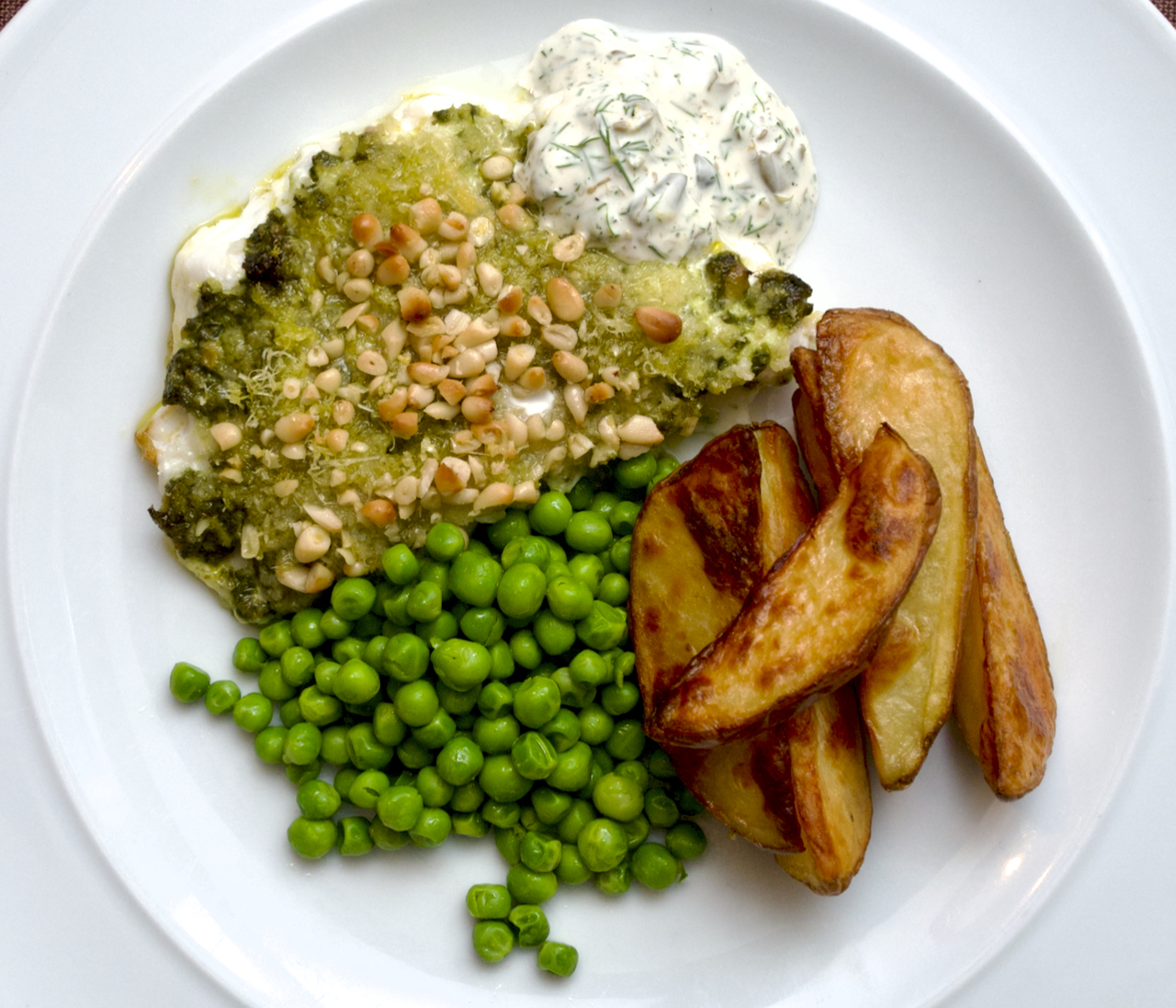
A week night fish dish that was a hit with everyone in our family, and that’s saying something. Peas are obligatory as the side.

Wine Suggestion: this works excellently with a zesty, citrus flavoured white like the Pico Maccario Gavi di Gavi from Piedmont in Italy.

Hake with Panko & Pesto – serves 4

  • 1kg floury potatoes, cut into wedges
  • 2 tbsp olive oil, plus a little extra
  • 4 pieces of hake (or another firm white fish), skin and bones removed
  • 2 tbsp pesto
  • 2 tbsp panko breadcrumbs
  • 2 tbsp finely grated Parmesan
  • 1 tbsp chopped pine nuts
  • 1 tbsp capers, finely chopped
  • 1 tbsp dill, chopped
  • 3 tbsp mayonnaise
  • ¼ lemon, zested and juiced

Heat the oven to 220C/200C fan.

Put the wedges onto a baking tray and drizzle over 1 tbsp of olive oil. Season with salt and pepper, then toss to coat in the oil. Bake for 50-55 minutes, turning halfway, until crispy and golden.

Oil another baking sheet and add the fish pieces. Spread the pesto over the fish pieces and sprinkle over the panko breadcrumbs. Drizzle with a tbsp of olive oil, then sprinkle over the Parmesan and chopped pine nuts. Place in the oven for the final 10-12 minutes of cooking time. The top should be golden and the fish should flake easily.

Mix the capers, dill, mayonnaise, lemon zest and juice with some black pepper in a small bowl. Serve the fish with the wedges, peas and dip.

(Original recipe from BBC Good Food)

Read Full Post »

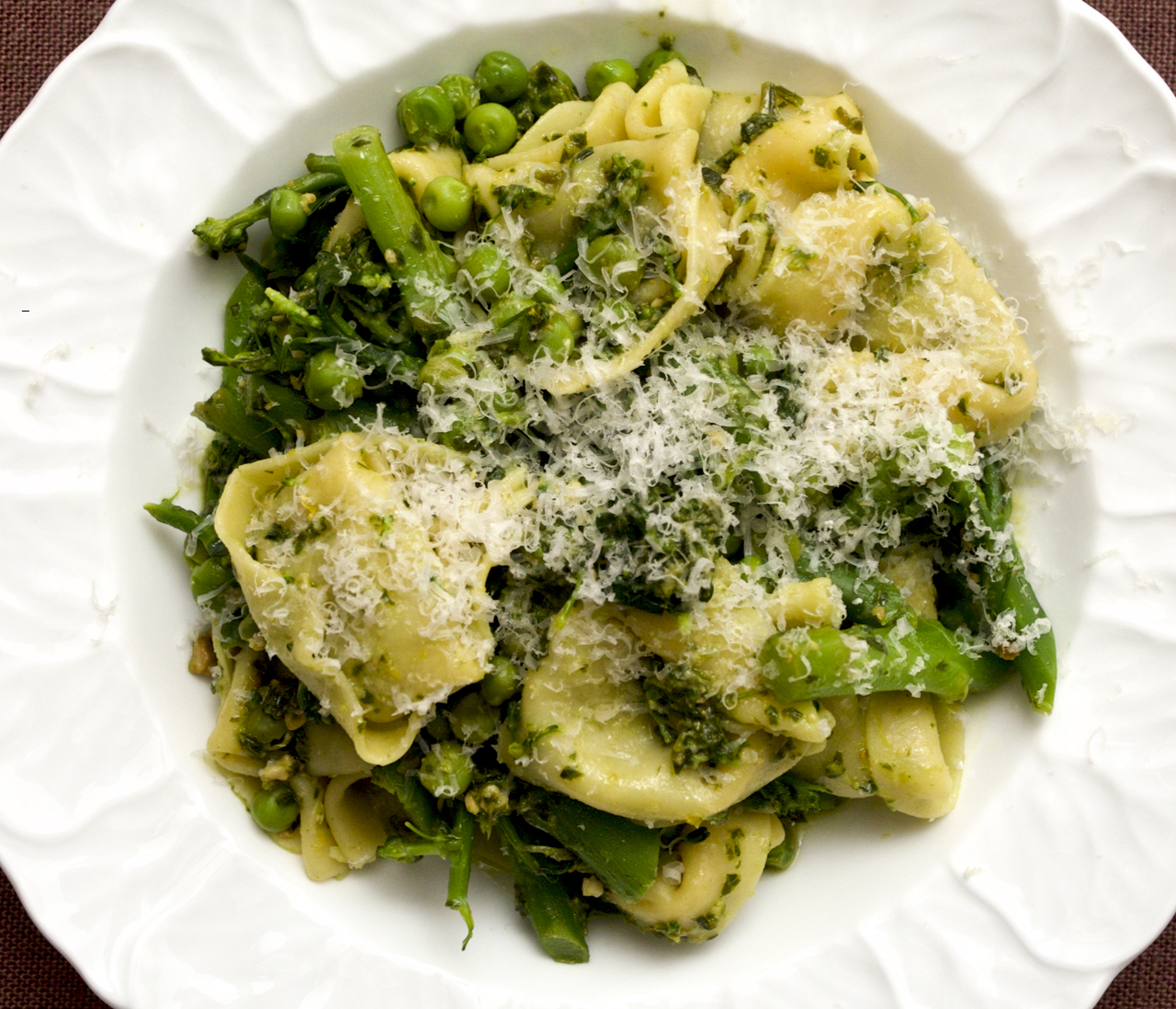
This isn’t really a recipe but it might just save your dinner some evening.

Wine Suggestion: This really works with a zippy, fresh white like the Höpler Gruner Veltliner. Elegant and minerally with a real purity of pear and lemon flavours overlaid with a light white pepperiness and savoury umami finish

Pea, broccoli & pesto tortellini – serves 2

  • 200g tenderstem broccoli, cut into short pieces
  • 100g frozen peas
  • 250g pack spinach & ricotta tortellini
  • 1 lemon, zested and juiced
  • 4 tbsp fresh pesto
  • Parmesan, to serve
  • best extra virgin olive oil, to serve

Bring a large pot of salty water to the boil, then add the broccoli and cook for 1 minutes. Add the frozen peas and cook for 2 more minutes, then scoop all the veg out with a slotted spoon and set aside.

Bring the water back to the boil and cook the pasta according to the pack instructions.

Drain the pasta well and return it to the pan. Add the lemon, cooked veg and pesto and gently toss to combine. Serve in warm bowls with Parmesan and a glug of olive oil if you like.

Read Full Post »

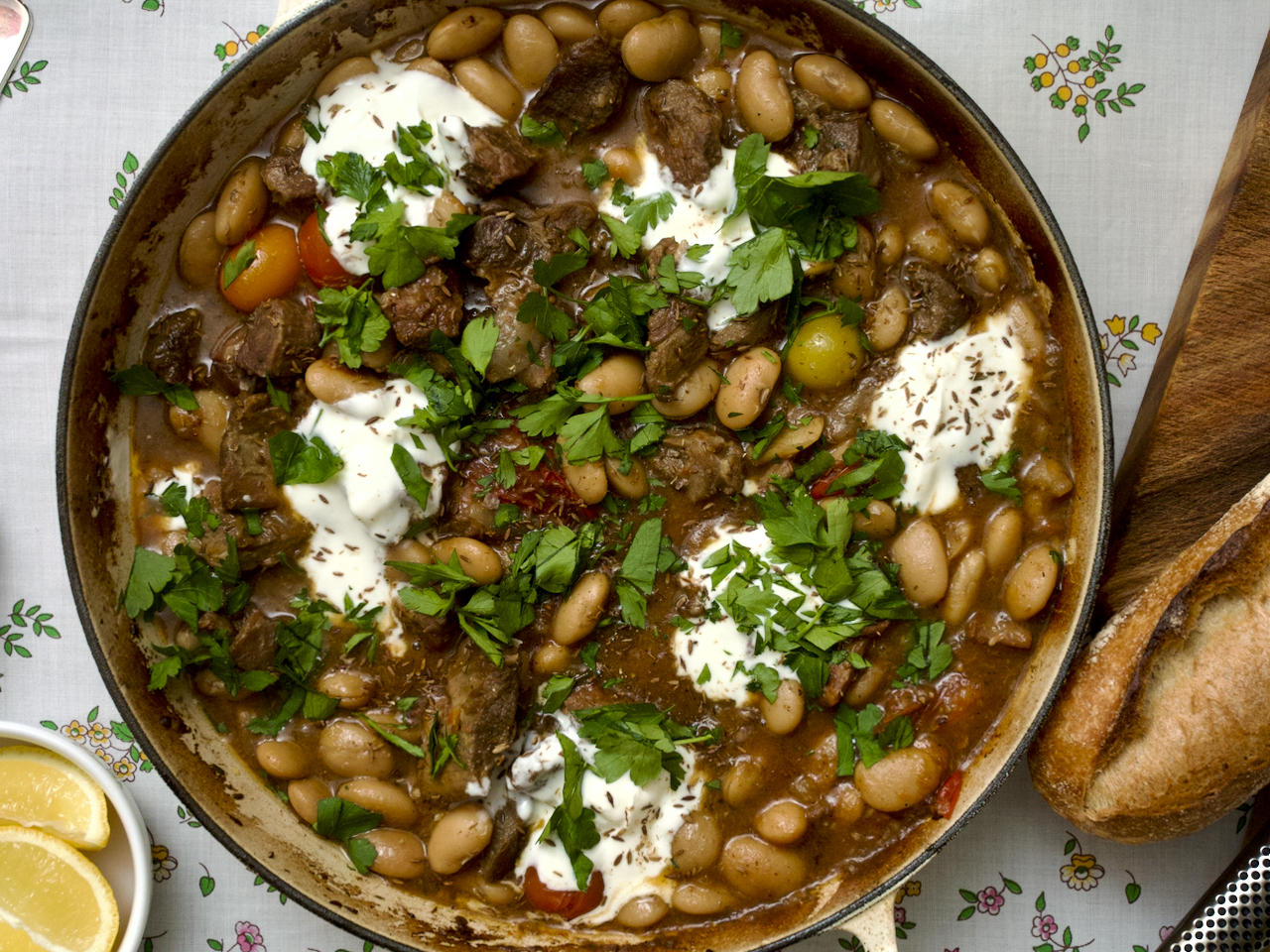
A delicious prep-ahead dish that only improves if made in advance. Serve with salad and crusty bread.

Slow-cooked lamb with butterbeans – serves 4

  • 2 tsp coriander seeds, toasted and lightly crushed
  • 2 ½ tsp cumin seeds, toasted and lightly crushed
  • ¼ tsp sea salt flakes
  • 800g lamb neck, cut into bite-size cubes
  • 4 tbsp olive oil
  • 2 onions, quartered
  • 2 bay leaves
  • 1 lemon, finely shave the skin into strips, then cut into wedges to serve
  • 6 cloves of garlic, peeled and lightly smashed
  • 4 anchovies, finely chopped
  • 1 tbsp thyme leaves
  • 1 tbsp rosemary leaves, finely chopped
  • 250g cherry tomatoes
  • 75ml white wine
  • 500ml chicken stock
  • 1 x 700g jar good quality butter beans, drained and rinsed
  • 150g thick Greek-style yoghurt
  • 10g parsley, roughly chopped

Mix the coriander seeds and 2 tsp of the cumin seeds together in a small bowl.

Mix the remaining ½ tsp of cumin seeds with the sea salt flakes and set aside.

Season the lamb with salt and pepper.

Heat 2 tbsp of the olive oil in a large shallow ovenproof casserole over a medium-high heat. Add the lamb in batches and cook until nicely browned. You can add another tbsp of oil if needed. Scoop out with a slotted spoon onto a plate and set aside.

Add 2 tbsp of the oil to the pan and reduce the heat to medium. Add the onions, bay leaves, lemon strips and garlic and cook for about 6 minutes, stirring now and then. Add the anchovies, the coriander-cumin mix, thyme, rosemary and half the tomatoes. Cook for a minute, then return the lamb to the pan. Cook for a minute, then add the wine. Let it bubble for 30 seconds, then add the stock and season well with salt and pepper. Increase the heat and bring to a simmer, then cover and transfer to the oven for 1½ hours, until the lamb is very soft and the liquid well-reduced.

Add the butter beans and the rest of the tomatoes. Stir, cover again and return to the oven for another 20 minutes. Remove from the oven and allow to rest for 15 minutes.

Serve sprinkled with the salt and cumin seed mix and the chopped parsley.

Salad and crusty bread is all you need on the side.

(Original recipe from Ottolenghi Comfort by Yotam Ottolenghi, Helen Goh, Verena Lochmuller and Tara Wigley, Ebury Press, 2024.)
Read Full Post »

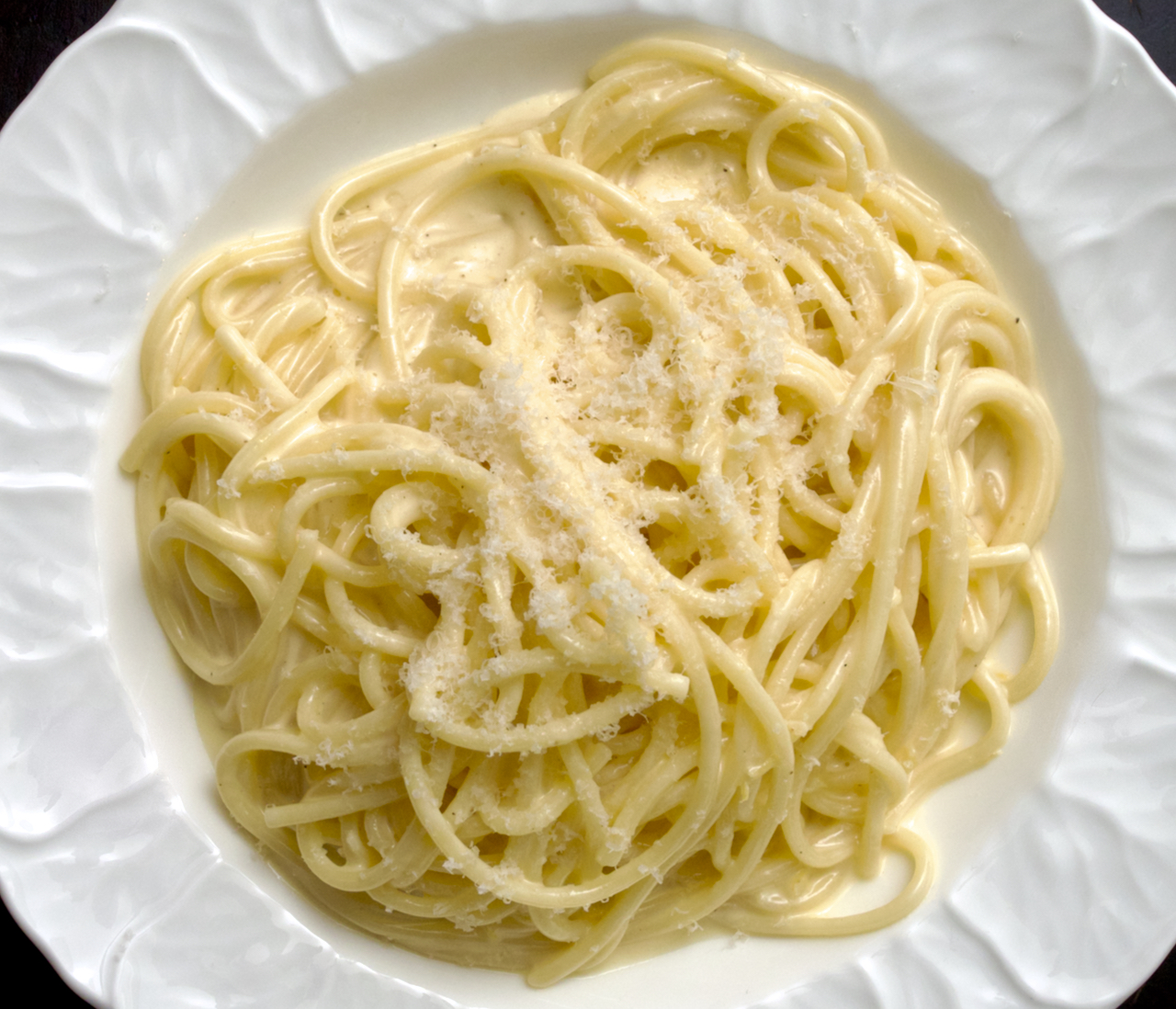
This is very rich and delicious so you can serve it in slightly smaller portions. The cooking time is a bit longer than our usual lemon spaghetti but it’s worth it for the flavour and silky texture. Perfect for an indulgent lunch at the weekend.

Wine Suggestion: An oaky white like the Dominio de Tares Old Vine Godello which is fermented with wild yeasts and aged in oak barrels. This makes it more complex, savoury and gtreat with rich, velvety foods like this.

Spaghetti al Limone – serves 6

  • 225ml cream
  • 2 unwaxed lemons (zest of 2 and juice of 1)
  • 100g butter
  • 500g spaghetti
  • 150g grated Parmesan cheese, plus extra to serve

Put the cream and the lemon zest into a large heavy-based saucepan and bring to the boil. Lower the heat and simmer for 2 minutes.

Now start adding the butter, about 1 tbsp at a time while stirring continuously. Wait for 30-45 seconds before adding the next tbsp of butter – it should be completely melted before you add any more. Keep going until you have used all the butter and you have a rich sauce. Set aside.

Cook the spaghetti in lots of salty water until al dente. Scoop out a mugful of the pasta water before draining.

Add half the pasta water to the cream sauce and bring to a simmer. Season generously with salt and pepper.

Turn the heat back down to low, then add the cooked spaghetti and toss to coat. Add the Parmesan, 1 tbsp at a time, as you did with the butter and waiting 30-45 seconds between each addition. Stir continuously and add another splash of pasta water if it starts to get stiff. Keep going until all the Parmesan has been added, then pour in the lemon juice and toss once more.

Serve in warm pasta bowls and top with a little extra Parmesan.

(Original recipe from Avoca at Home, Penguin Random House, 2022.)

Read Full Post »

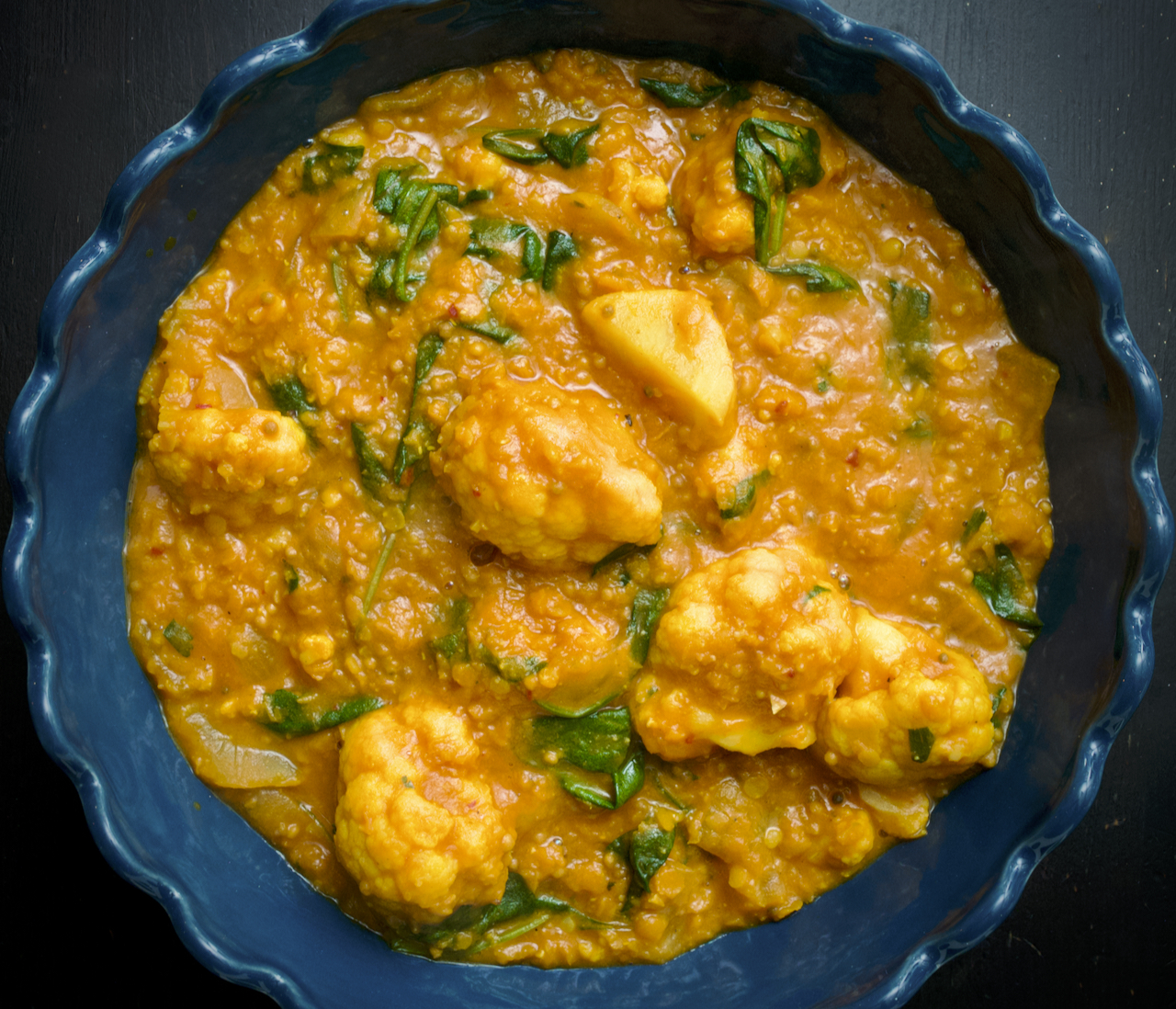
There is one person in our household of 3 who has decided to be a vegetarian for January. We’re not all joining in as there was far too much other stuff in the freezer but we’re trying to batch cook things like this to keep her going for the month and to avoid her living on koka noodles. This is a simple and lovely dahl. Serve with rice and naan or flatbreads. It is also suitable for those doing veganuary.

Wine Suggestion: We quite like an earthy dahl with a beer and chose a local brew, the Barrelhead Hopsburgh Helles, a creamy pale golden German style lager that’s lovely and smooth.

Cauliflower, lentil & coconut dahl – serves 4 to 6

  • 4 tbsp coconut oil
  • 2 tbsp mustard seeds
  • 1 large onion, diced
  • 4 cloves of garlic, finely chopped
  • 2 tsp ground coriander
  • 2 tsp ground turmeric
  • 1 tsp ground cumin
  • ½ to 1 tsp chilli flakes, to taste
  • 1 medium head of cauliflower, cut into bite-size pieces
  • 180g dried red lentils
  • 1 x 400ml tin coconut milk
  • 400ml tomato passata
  • 600ml water
  • 75g baby spinach
  • 2 tbsp chopped coriander
  • juice of 1 lemon

Melt the coconut oil in a large heavy-based saucepan over a medium heat. Add the mustard seeds and cook until they start to pop.

Add the onion with a large pinch of salt and cook for 10 minutes, until softened but not browned. Add the garlic and cook for a further minute, then add the ground coriander, turmeric, cumin and chilli flakes and cook for another minute.

Add the cauliflower, lentils, coconut milk, tomato passata and water. Stir well and bring to the boil, then reduce the heat and simmer for 20 to 25 minutes or until the lentils and cauliflower are cooked. Give it a stir occasionally to prevent it sticking.

Add the spinach, coriander and lemon juice and season well with salt and pepper.

Serve with rice and daal or flatbreads.

(Original recipe from Avoca at Home, Penguin Random House, 2022.)

Read Full Post »

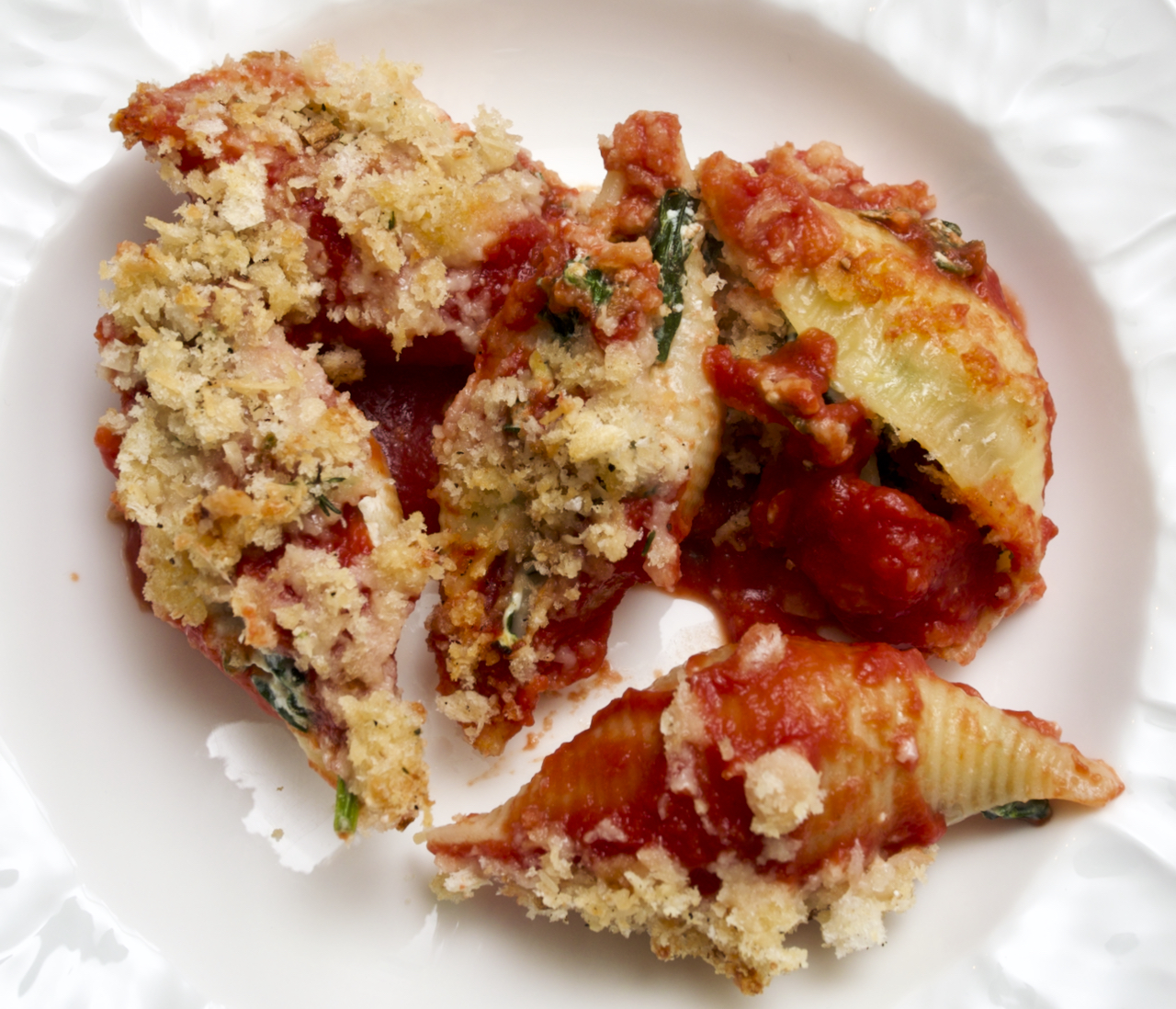
A vegetarian dish picked by Orlaith who wants to be a vegetarian for January – we’ll see how she goes! She wasn’t put off by this dish anyhow.

Wine Suggestion: A juicy, youthful Sangiovese or similar, like Umani Ronchi’s Serrano Rosso Conero which is a Montepulciano-Sangiovese blend. Bright, joyful red fruits with a smooth elegance and vivacity of youth.

Baked pasta shells – serves 4

  • 250g conchiglioni (big pasta shells)
  • 1 tbsp rapeseed oil, plus a bit extra
  • 400g baby spinach
  • 250g ricotta cheese
  • 200g Greek yoghurt
  • 30g grated Parmesan cheese,
  • 2 garlic cloves, crushed
  • zest of 2 lemons
  • 10 fresh basil leaves, shredded
  • ¼ tsp ground nutmeg
  • 1 x 700g jar of tomato passata

FOR THE TOPPING:

  • 70g fresh breadcrumbs
  • 70g grated Parmesan cheese
  • 1 tsp chopped fresh thyme
  • 1 tbsp butter, melted

Heat the oven to 170C.

Bring a large pan of very salty water to the boil. Add the pasta shells and cook for no more than 9 minutes – they need to be undercooked. Drain and cool under running cold water, then drain again and drizzle with a little oil to stop the shells sticking together, then set aside.

Heat the oil in a large frying pan over a medium heat. Add the spinach and cook for 1-2 minutes, until just wilted. Remove the pan from the heat and leave to cool, then squeeze out any moisture and roughly chop it.

Put the chopped spinach into a large bowl with the ricotta, yoghurt, Parmesan, garlic, lemon zest, basil and nutmeg and mix to combine. Season with salt and pepper.

Pour half the passata over the bottom of a large baking dish and season with salt and pepper. Stuff the shells with the ricotta and spinach mixture, then add the shells to the dish on top of the sauce, stuffed side up. Pour over the rest of the passata and season with a little more salt and pepper.

Mix the breadcrumbs, Parmesan and thyme in a small bowl, then pour over the melted butter and toss to combine. Sprinkle this over the top of the pasta, then bake in the preheated oven for 25 to 30 minutes, until the breadcrumbs are golden and the pasta is bubbling.

(Original recipe from Avoca at Home, Penguin Random House, 2022.)

Read Full Post »

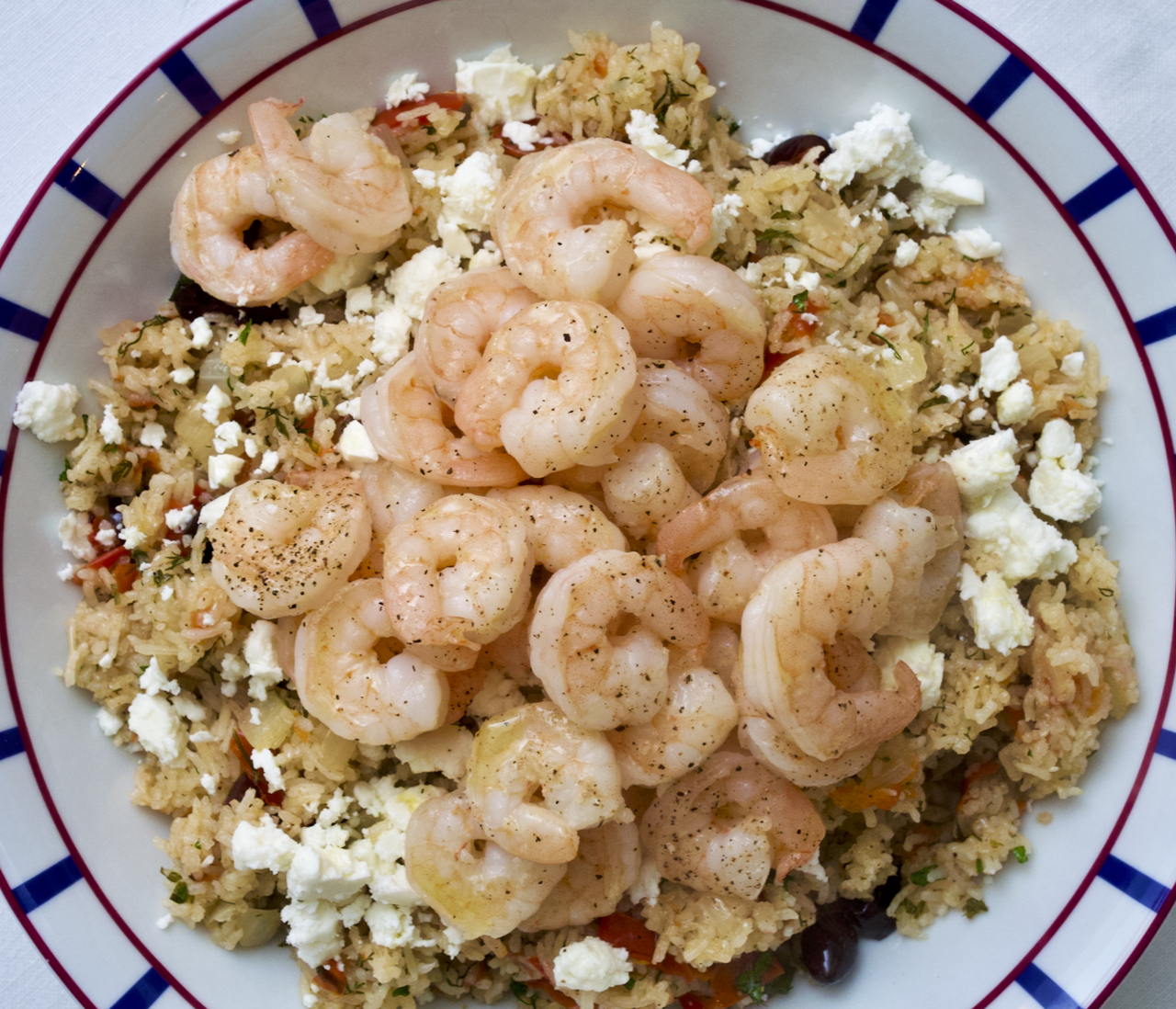
Prawns actually pair very well with feta, which is always a bit suprising to us. It’s nice to have a lighter dish amongst all the winter soups and stews.

Wine Suggestion: we think this suits a white grown somehwere around the Mediterranean, like tonight’s choice of the Hatzidakis Santorini Cuvée 15, a wonderfully fresh and complex Assyrtiko with honeysuckle and herbs on the nose followed by a textured, almost salty palate.

Prawn & feta pilaf – serves 4

  • 225g basmati rice
  • 15g unsalted butter
  • 2 tbsp olive oil, plus a bit extra to
  • 1 onion, finely chopped
  • 1 clove of garlic, crushed
  • 275g tomatoes, deseeded and roughly chopped
  • a big bunch of dill, chopped
  • a big bunch of flat leaf parsley, leaves chopped
  • a handful of mint leaves, chopped
  • 400ml fish stock or light chicken stock
  • 350g raw prawns, shelled and deveined
  • juice of ½ lemon, plus lemon wedges to serve
  • 55g black kalamata olives, pitted and roughly chopped
  • 75g feta cheese, crumbled

Rince the rice in a sieve under cold running water until the water runs clear. Leave to soak for an hour if you have the time, then rinse again.

Heat the butter and 2 tbsp of olive oil in a saucepan and cook the onion until it starts to soften. Add the garlic and tomatoes and continue to cook, stirring now and then, until the onion is cooked and the tomatoes have softened. Stir in the rice and half the herbs, season well, then pour in the stock and bring to the boil. Boil hard until the rice starts to look pitted, with little holes in the service and it seems like the liquid has disapeared.

Wrap a clean tea towel around the lid of the pan and cover the pan. Reduce the heat to low and leave to cook for 20 minutes.

When the rice is almost ready, dry the prawns on kitchen paper and quickly sauté in a little olive oil over a high heat. Squeeze over the lemon juice and season with black pepper and salt.

When the rice is cooked, fork through the olives, remaining herbs and lemon juice with a good glug of your best extra virgin olive oil. Transfer to a serving platter, then scatter over the feta and mound the prawns on top. Drizzle again with olive oil and serve with lemon wedges.

(Original recipe from Crazy Water, Pickled Lemons by Diana Henry, Aster*, 2024.)

Read Full Post »

Everyone loves a piece of barbecued chicken. This was has a tasty herb marinade.

Wine Suggestion: to hand a bottle of Domaine Gayda “Sphere” Chardonnay and we were pleased with the match. Southern French sunshine, organic vineyards, cooling mountains behind, limestone soils, wild ferment and aging on lees in a mix of concrete tanks and barrels.

Barbecued Chicken – serves 6

  • 3-4 tbsp olive oil
  • ½ tsp English mustard
  • 3 tbsp of chopped herbs – we used parsley chives and tarragon (you could also use thyme)
  • a little grated lemon zest
  • a squeeze of lemon juice
  • a small garlic clove, very finely chopped
  • 1 chicken, jointed

Combine the oil, mustard, herbs, lemon zest and juice, garlic and plenty of black pepper in a large bowl. Slash the chicken in a few places, then toss the pieces in the marinade and leave in the fridge for at least an hour or up to 4 hours.

Get your barbecue fired up.

Before cooking, pat away any excess oil, then seasson with salt. Grill on a moderately hot barbecue, turning often, until cooked through (best to use a meat thermometer and check for 74C). The breast pieces should take about 15 minutes on the hotter part of the barbecue and legs and wings on a cooler part for at least 25 minutes.

Transfer to a warm dish, sprinkle with a little more seasoning and leave to rest for 5-10 minutes before serving.

(Original recipe from River Cottage Everyday by Hugh Fearnley-Whittingstall, Bloomsbury, 2009.)

Read Full Post »

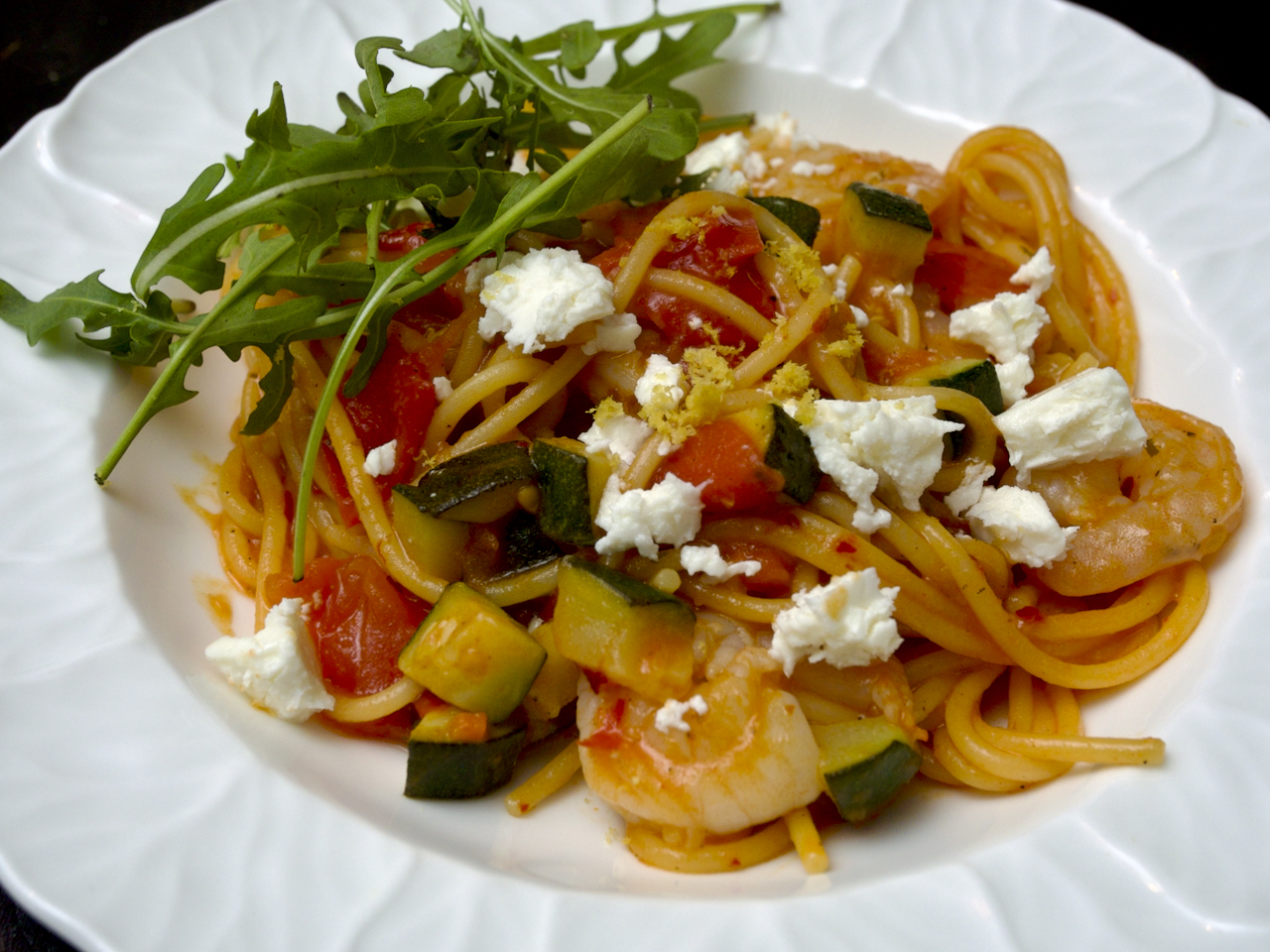
We’ve had mixed success with these all-in one pot pasta dishes with some working really well and others not quite! We were pleased with this one which worked out really well. Delicious sauce and lovely fresh flavours.

Spicy prawn spaghetti – serves 2

  • 2 tbsp olive oil
  • 1 courgette, diced quice small, about 1cm pieces
  • 165g pack raw peeled prawns
  • zest and juice of ½ lemon, plus wedges to serve
  • 2 cloves of garlic, sliced
  • 1 tbsp harissa paste
  • ½ tbsp tomato purée
  • 2 tbsp vodka
  • 2 biggish tomatoes, roughly chopped
  • 600ml hot veg stock
  • 150g spaghetti
  • ½ tsp fine sea salt
  • 75g feta, crumbled
  • a handful of rocket, to serve

Heat 1 tbsp of oil in a large sauté pan, then add the courgette and cook for a few minutes, until just starting to colour. Add the prawns and season lightly with salt and black pepper. Stir for a couple of minutes until the prawns are pink and just cooked. Squeeze in some lemon juice, then tip into a bowl and set aside.

Add another tbsp of oil to the pan and cook the garlic until it sizzles. Add the tomato purée and harissa and cook for 30 seconds, before adding the vodka, followed by the tomatoes. Pour in the stock and add the spaghetti, the salt and some black pepper. Bring the boil, mixing well. Cook at a brisk bubble, without a lid, for 15 minutes or until the pasta is al dente and is coated in the sauce. You can add extra water at any point if needed.

Tip the courgettes and prawns into the pan and toss until piping hot. Taste and add more lemon juice if you like. Serve in pasta bowls with the feta and lemon zest scattered over and a pile of rocket on top.

(Original recipe by Tasmin Burnett-Hall in Sainsburys Magazine, September 2024.)

Read Full Post »

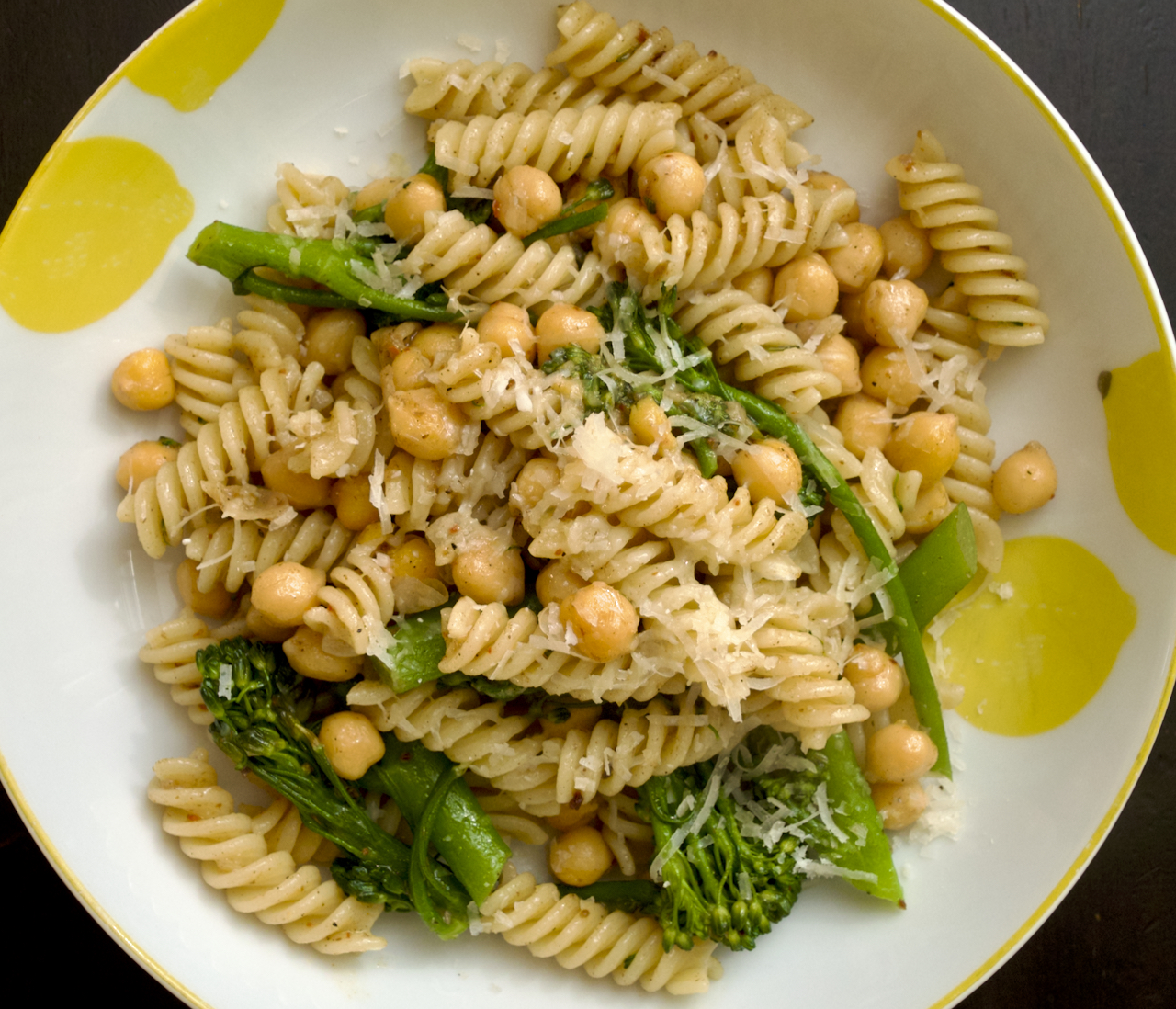
Back to school routine and quick fixes are required. This one is nice!

Wine Suggestion: An uncomplicated, but tasty dish requires similar from a wine. Tonight’s choice was Graziano Pra’s “Otto” Soave Classico with classic green apple and almond flavours. Fresh and lighlty floral with a gentle texture that helps it pair with food.

Pasta with broccoli, anchovy and cumin – serves 4

  • 300g dried fusilli or other short pasta
  • 90ml olive oil
  • 3 cloves of garlic, peeled and crushed
  • 6 anchovy fillets, drained and finely chopped
  • zest and juice of ½ lemon
  • 1 tsp ground cumin
  • 370g jarred chickpeas, drained (but don’t rinse)
  • 1 tsp aleppo chilli powder
  • 200g tenderstem broccoli, cut into 2½ cm lengths
  • 30g Parmesan, finely grated

Bring a large pan of water to the boil and add plenty of salt. Add the pasta and cook for 3 minutes less than the time indicated on the pack.

Meanwhile, pour the oil into a large sauté pan and put over a medium heat. Add the garlic and fry for a minute, then stir in the anchovies, lemon zest and cumin, and cook for another couple of minutes. Add the chickpeas, chilli and a good grind of black pepper, mix well and turn off the heat.

When the timer goes for the pasta, add the broccoli to the pasta pot and cook for the remaining 3 minutes. Reserve about 100ml of the pasta cooking water, then drain and add the pasta and broccoli to the chickpea pan. Scatter over two-thirds of the Parmesan, then return the pan to the heat and toss well for a minute, adding enough of the reserved pasta water to make a sauce that coats the pasta.

Spoon into warm bowls, add a squeeze of lemon juice, a pinch of aleppo chilli and the remaining Parmesan.

(Original recipe by Yotam Ottolenghi in The Guardian, 13 Apr 2024.)

Read Full Post »

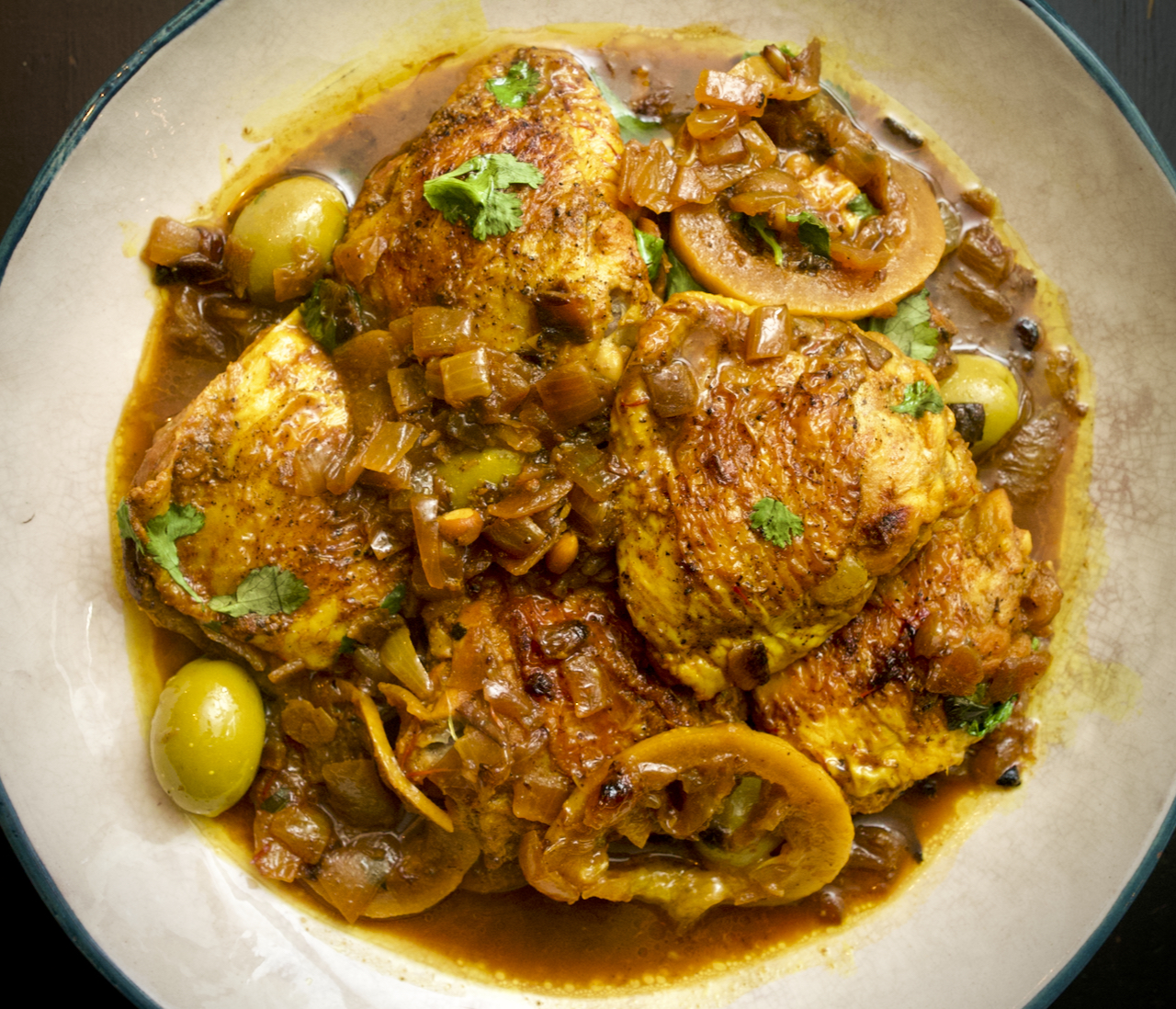
A dish full of all the flavours we love!

Wine Suggestion: Choose a white with a definite Mediterranean aspect. We opened a bottle of Domaine Ventenac’s “Dissidents” Cassandre. Made from Vermentino which is found in quite a few countries around Europe under a load of names. This was dry and tasting of grapefruits with hints of apricot and a really nutty, textural oiliness that matched the olives in this dish. Sunshine with substance in a glass.

Chicken with olives and lemon – serves 3

  • 6 skin-on chicken thighs
  • 2 onions, chopped
  • 1 lemon, thinly sliced
  • a good pinch of saffron strands
  • a handful of green olives
  • a handful of coriander, roughly chopped
  • olive oil

FOR THE SPICE PASTE:

  • 3 cloves of garlic
  • a few pinches of smoked paprika
  • 1 tbsp ground turmeric
  • 1 tsp cumin seeds
  • olive oil

Make the spice paste first by crushing the garlic with a good pinch of sea salt using a pestle and mortar. Add the smoked paprika, turmeric and cumin seeds and grind to a paste, then mix in a couple of tbsps of olive oil or enough to make a paste that will coat the chicken.

Put the chicken thighs in a bowl, then add the spice paste and toss to coat. Cover with cling film and leave to marinate at room temperature for an hour or overnight in the fridge.

Heat a splash of olive oil in a large, shallow pan. Add the onions and soften a little, before adding the chicken thighs and cooking until coloured lightly on both sides.

Add the lemon to the pan and enough water to come halfway up the chicken pieces. Stir in the saffron, season well, then cover with a lid and simmer for 25 minutes, or until the chicken is cooked through. Add the olives and coriander and serve.

(Original recipe from The Kitchen Diaries II by Nigel Slater, Fourth Estate, 2012.)

Read Full Post »

Older Posts »