Feeds:
Posts
Comments

Archive for the ‘Gluten-free’ Category

Cheesy leek baked potatoes

We’re regularly left with a rogue leek in the bottom of the fridge and it usually finds its way into a dish like this, particularly if there is some cream lurking as well. Quantities don’t matter too much here so use what you’ve got.

  • Baking potatoes
  • Butter
  • Leeks, sliced finely
  • Cream
  • Cheddar cheese, grated

Heat the oven to 220°C.

Rub the potatoes with olive oil and place on a tray in the oven to bake for 20 minutes. Turn the oven down to 200ºC and continue to cook for about another hour.

Meanwhile, melt the butter in a large frying pan and gently sauté the leeks until they are meltingly tender. Add the cream and bubble together until you have a thick sauce.

When the potatoes are soft, cut them in half and scoop out the centres, leaving a thin layer of potato on the skins. Mash the removed potato, mix with the creamy leeks and season with salt and lots of pepper. Pile this mixture back into the potato skins and sprinkle over the grated cheese. Return to the oven for a few minutes until the cheese has melted and started to brown.

Serve this on its own for a midweek supper or as a side dish with chargrilled chops or sausages.

Read Full Post »

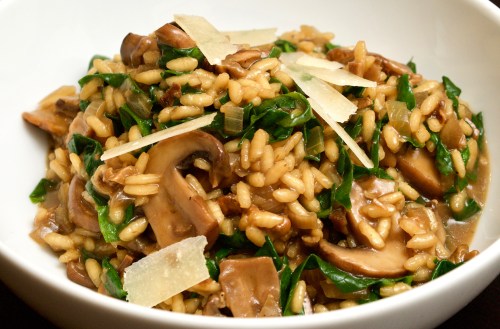
Porcini & spinach risottoWe love a good risotto and this simple one doesn’t disappoint. Perfect cold weather comfort food.

Wine Suggestion: as this is a richer flavoured mushroom dish our first choice would be to head to a Nebbiolo, especially a good Barolo. With the addition of the spinach which has a fresh, iron bitterness we would swing back to a full-bodied white and go for a good Alsace Pinot Gris. The depth of flavour of this dish can balance a really intense Pinot Gris like one from Zind- Humbrecht, which sometimes can be edgy and a bit much for many foods. This one can handle it so push the boat out for flavour and enjoy.

As we had this as a weeknight treat, however, we found that a more humbleVilla Wolf Pinot Gris from the Pfalz also worked.

Porcini & spinach risotto – serves 2

  • 25g dried porcini mushrooms
  • 50g butter
  • 1 small onion, finely chopped
  • 1 garlic clove, crushed
  • 200g chestnut mushrooms, sliced
  • 150g risotto rice
  • a glass of white wine
  • 750ml veg stock, simmering (we use Marigold Swiss Bouillon powder)
  • 100g spinach, washed & chopped
  • parmesan shavings

Soak the porcini mushrooms in a cup of boiling water for 10 minutes. Strain the liquid through a sieve to remove any gritty bits and keep for later. Roughly chop the porcini.

Heat the butter in a wide shallow pan and cook the onion and garlic until softened. Add the chestnut mushrooms and cook for 5 minutes, then add the porcini and risotto rice and stir until coated.

Pour in the wine and bubble until it has been absorbed by the rice. Gradually add the stock and porcini soaking liquid, stirring until the rice is al dente (you may not need all of the stock). Stir through the spinach until just wilted and serve sprinkled with shavings of parmesan.

(Original recipe by Janine Ratcliffe in BBC Olive Magazine, February 2009.)

Read Full Post »

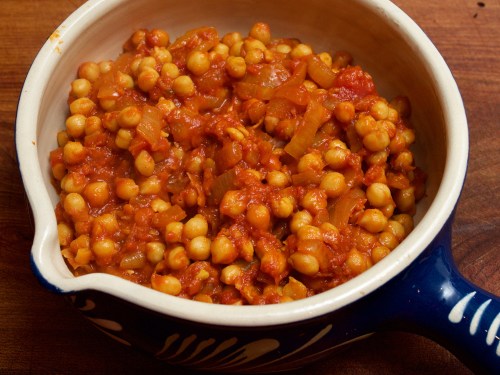
Chana masala

Meehra Sodha describes this as a Workers’ Curry variations of which are eaten all over India. We love the flavours and textures here and have eaten this part of a wider spread of dishes and also on its own with some naan bread from the local takeaway. It’s worth soaking your own chickpeas if you can as they have a better texture. Thi

Wine suggestion: a simple, medium-bodied and earthy red is required here, nothing fancy. We had a bottle of the Monfil Garnacha from Cariñena in Spain which is uncomplicated but satisfying.

Chana masala – serves 4

  • 200g dried chickpeas (or 2 x 400g tins of chickpeas)
  • 1 tsp bicarbonate of soda
  • 3cm piece of ginger, peeled and roughly chopped
  • 2 garlic cloves, roughly chopped
  • 1 green chilli, roughly chopped
  • salt
  • 3 tbsp rapeseed oil
  • 2 onions, sliced
  • 1 tin of plum tomatoes
  • 1 tbsp tomato puree
  • 1 tsp garam masala
  • ¾ tsp ground cumin
  • ½ tsp chilli powder
  • ¼ tsp ground turmeric

Put the dried chickpeas into a large bowl, cover with cold water, then add the bicarbonate of soda and soak overnight or for at least 6 hours. Rinse and drain the chickpeas, then cover with more cold water and boil for 30-45 minutes, until soft, keep spooning off any scum that rises to the surface. (If you are using tinned chickpeas you just need to rinse and drain them.)

Crush the ginger, garlic & green chilli together in a pestle and mortor with a pinch of salt to make a paste.

Put the oil into a large frying pan over a medium heat. When the oil is hot, add the onions and cook for 10-12 minutes, or until golden brown. Stir the ginger and chilli paste through the onions, then tip in the tomatoes, crushing them with your hands. Add the tomato puree, stir well and cook for 8-10 minutes or until you have a rich, thick sauce.

Add the garam masala, 1½ tsp of salt, cumin, chilli powder & turmeric, and cook for a couple of minutes before adding the drained chickpeas. You can add some water at this point to thin the sauce a bit, start with about 5 tbsp and add more if necessary. Taste and season.

Serve with naan breads or as alongside a few other Indian dishes.

(Original recipe from Made in India by Meera Sodha, Penguin, 2014.)

Read Full Post »

Monkfish & saffron pilaf

The traditional fish used for this dish from Central Asia is sturgeon, which we don’t see so often in Dublin, so we substituted monkfish to very good effect. Don’t be shy with the pepper as this really informs the character of the dish providing a warm and distinctive flavour. We were really excited by the flavours here and have made this a few times now as we enjoy it a lot.

Wine Suggestion: Black pepper has it’s own umami-rich tannins which for some people means that it won’t work with wine very well. What you need to do, though, is work with this and use either a red with appropriate tannins or spices, or a white with pepper characteristics too. We chose a rich, dry F.X. Pichler Grüner Veltliner Loibner Loibenberg which we picked up from our friend Gerard Maguire in Glasthule. A stunning wine that stood up magnificently to the bold pepper flavours; a lighter wine would have felt short and inadequate.

Fish & Saffron Pilaf – serves 4

  • 275g basmati rice
  • 4 onions (1 halved and 3 thinly sliced)
  • 1 tbsp black peppercorns, crushed
  • 1 bay leaf
  • a small bunch of flatleaf parsley
  • 4 sturgeon, monkfish or halibut fillets
  • 4 tbsp sesame oil
  • 3 carrots, sliced into matchsticks
  • a small handful of dill
  • 1 tsp dill seeds (optional)
  • 1 tsp ground black pepper
  • large pinch of saffron strands, soaked in 3 tbsp water
  • 120g sour cream
  • juice of 1 lemon

Put the rice into a large bowl, cover with water and leave to soak.

Bring 1 litre of water to the boil in a large pan and add the halved onion, crushed peppercorns, bay leaf and parsley stalks (keep the leaves aside for now). Season the water well with salt and gently lower in the fish fillets. Cook at a very gentle simmer until just opaque, about 10 minutes depending on how thick your fillets are. Remove the fish with a slotted spoon and set aside. Strain the cooking liquid and reserve. Set the pan aside for using again later.

Heat a second large cooking pot for cooking the rice. Heat the sesame oil until almost smoking, then add the onions and carrots. Stir-fry until starting to soften. Drain the rice and add to the pot, smoothing it down with the back of a spoon. Pour over the fish broth until it covers the rice by about 1cm and add plenty of salt. Bring to the boil and cook on a high heat until the broth has boiled off. Poke a few steam holes in the rice with the end of a spoon to help it along. Cover with a lid or tight-fitting layer of foil and remove from the heat. Leave to steam for 20 minutes by which time the rice will be cooked through.

Chop the parsley and dill and add to the empty fish pan. Add the dill seeds (if using), ground black pepper, saffron and its soaking liquid and season with salt. Stir in the soured cream and set over a low heat to warm through. Carefully return the fish fillets to the pan to warm through before serving.

Turn the rice out onto a large platter and squeeze over the lemon. Spoon the fish and creamy sauce over the top.

(Original recipe from Samarkand by Caroline Eden & Eleanor Ford, Kyle Books, 2016.)

Read Full Post »

Vegan Pie

Vegan Pie

Vegan recipes often get bad press, not helped by the poor offerings of restaurants. This dish has bags of flavour and doesn’t require any extras to make it a whole meal. A big splodge of ketchup on the side doesn’t go a miss if you’re that way inclined.

Wine Suggestion: not all wines are Vegan, but there are no standards on stating this on a bottle or to say what fining agents (which determines if it is Vegan friendly) have been used in making the wine.

Fining agents are used by winemakers to make a bright, clean coloured and tasting wine. Naturally most wines begin quite cloudy or hazy because of proteins, tannins, tartrates and phenolics. Winemakers traditionally add fining agents to rectify this and these include casein (a milk protein), albumin (egg whites), gelatin (animal protein) and isinglass (fish bladder protein) as well as others like various clays. These bind with the proteins etc which then fall out of the wine. So by the time it reaches the bottle and then your glass there are no traces of these products. However they have been used and part of Veganism is not only if the product is not in the food, but also the use in the production.

A lot of wines are potentially Vegan friendly, but quite often don’t say on the label and aren’t obliged to so don’t dismiss a wine for not being Vegan if it doesn’t say so, it may still be.

Look online on the winery sites if you are in doubt and even email the winemakers – they love to discuss their wines and are happy to answer questions on how each wine is made.

We drank some Domaine du Joncier Lirac Blanc from a wonderful, biodynamic and natural wine maker Marine Roussel. A blend of Roussanne, Marsanne and Bourboulenc and fined naturally with time and gentle handling this is both round, fresh and full of depth.

Vegan Shepherd’s Pie – serves 8 (make in 2 dishes and freeze one for later)

  • 1.2kg floury potatoes, such as Maris Piper
  • 50ml vegetable oil
  • 30g dried porcini mushrooms, soaked in hot water for 15 mins, then drained (reserve the liquid)
  • 2 large leeks, chopped
  • 2 small onions, chopped
  • 4 medium carrots, cut into small cubes
  • 1 vegetable stock cube
  • 3 garlic cloves, crushed
  • 2 tbsp tomato purée
  • 2 tsp smoked paprika
  • 1 small butternut squash, peeled and cut into small cubes
  • a handful of marjoram or oregano, leaves picked and roughly chopped
  • a handful of thyme, leaves picked
  • a handful of sage, leaves picked and roughly chopped
  • 4 celery sticks, chopped
  • 1 tin of chickpeas
  • 300g frozen peas
  • 300g frozen spinach
  • 20ml olive oil
  • a handful of flat-leaf parsley, chopped
  • tomato ketchup, to serve (optional)

Put the unpeeled potatoes in a large saucepan, cover with water, bring to the boil and simmer for 30-40 mins until the skins start to split. Drain and leave to cool a little.

Meanwhile, heat the vegetable oil in a large casserole dish. Add the mushrooms, leeks , onions, carrots and stock cube and cook gently for 5 minutes, stirring.

Add the garlic, tomato purée, paprika, squash and herbs. Stir and turn the heat up a bit, cook for 3 mins, then add the celery and continue to stir and cook for a few more mins.

Tip in the chickpeas along with the water in the can and reserved mushroom stock. Add the peas and spinach and stir well. Cook for 5 mins, stirring occasionally, then season, turn off and set aside.

Peel the potatoes and discard the skin. Mash 200g with a fork and stir into the veg. Break the rest of the potatoes into chunks, mix with the olive oil and parsley and season.

Divide the filling into two pie dishes and top with the potatoes. Heat oven to 190C/170C fan/gas 5 and bake the pies for 40-45 mins, until the top is golden and the filling is heated through.

(Original recipe from BBC Good Food)

Read Full Post »

Spiced yoghurt roast chicken

Our local butcher, Brady’s, stocks excellent free-range chickens which are juicier and have more flavour than most super-market offerings. Being a very cheap meat overall we think it is worth spending a bit more as the benefits far outweigh the cost difference.

We never tire of roast chicken recipes as they’re usually straight forward and provide lots of leftovers. We challenge you to resist the skin on this one!

Wine Suggestion: we felt like a red so went for the Chateau de Beauregard Fleurie as it has a lighter body and a lower acidity than a Pinot Noir which matched this dish really well. The chicken was moist, but not fatty so the medium acidity was a perfect foil and neither wine nor food overwhelmed the other.

Spiced-yoghurt Roast Chicken with Potatoes – serves 4

  • 1 whole chicken, approximately 1.5kg
  • salad potatoes e.g. Charlotte
  • 1 tsp cumin seeds
  • a pinch of chilli flakes
  • 2 tbsp olive oil

For the marinade:

  • small chunk of ginger, finely grated
  • 2 cloves of garlic, crushed
  • 1 green chilli, finely chopped
  • 2 tsp ground cumin
  • 2 tsp ground coriander
  • 1 tsp ground turmeric
  • 1 lemon, zested and juiced, keep the squeezed out halves to put inside the chicken
  • 100g natural yoghurt

Heat the oven to 190C/Fan 170C/Gas 5.

Mix all of the marinade ingredients together and season with some salt and pepper.

Put the chicken into a large roasting tray and rub the marinade all over the skin with your hands. Put the squeezed lemon halves inside the cavity and roast for 1 hour 30 minutes, then rest for 20 minutes under some foil before carving.

Cut the potatoes in half and toss with the cumin seeds, chilli flakes, 2 tbsp olive oil and plenty of salt and pepper. Tip into a shallow roasting tray and put in the oven above the chicken for the last 20 minutes. Turn over once during cooking and continue to cook for a further 20 minutes while the chicken is resting.

Delicious served with some coleslaw on the side.

(Original recipe from BBC Olive Magazine, December 2016.)

Read Full Post »

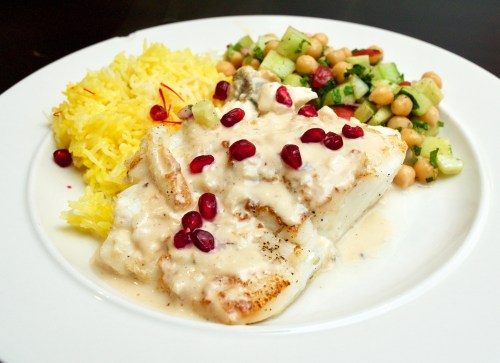
Cod in a tahini sauce

Our menus have featured a lot of meat recently so we’ve focused and had a few fishy weekends to redress the balance. This is another great recipe from Moro, really delicate and delicious. We followed their suggestion and served with a chickpea salad and saffron rice. A rare Saturday night treat for just the two of us; we made the full sauce but only used two cod fillets.

Get started early as the rice needs to soak for a few hours.

Wine Suggestion: a light, dry white wine with good flavour and texture is what we think goes best. We had a good Muscadet from Domaine de la Chauviniere which has a good depth of flavour despite it’s light body. Alternately a good Alvarinho/Albariño would be a good match too.

Cod Baked with Tahini Sauce & Saffron Rice – serves 4

  • 4 thick cod fillets with skin, about 200g each
  • 3 tbsp olive oil

Tahini Sauce

  • 2 cloves of garlic
  • 3 tbsp tahini paste
  • juice of 1 lemon
  • 5 tbsp water

Saffron Rice

  • 80g unsalted butter
  • ½ cinnamon stick
  • 5 green cardamom pods, cracked
  • 3 black peppercorns
  • 200g basmati rice, washed and soaked in salted water for 3 hours
  • a good pinch of saffron threads infused in 4 tbsp boiling water

To Serve: 

  • small bunch of flat-leaf parsley, roughly chopped
  • 2 tbsp pomegranate seeds
  • 1 lemon, quartered

Start by making the tahini sauce and the rice as the fish won’t take long at the end.

For the Tahini Sauce:

Crush the garlic cloves with a good pinch of salt in a mortar and pestle until you have a paste. Transfer the paste to a small bowl and whisk in the tahini and lemon juice. Add the water until you get a sauce the consistency of double cream. Taste and season.

For the Saffron Rice:

Gently melt the butter in a saucepan. Add the cinnamon, cardamom pods and black peppercorns and fry gently for about 4 minute or until aromatic.

Drain the rice and add to the butter, stirring to coat in the butter. Turn the heat up to medium-high and pour over enough water to cover by about 1cm, season with salt.

Place a piece of greaseproof paper on the surface of the water, then cover, bring to the boil and simmer for 5 minutes. Remove the lid and paper and drizzle the saffron water evenly over the rice. Cover again with the paper and the lid, turn the heat to low and cook for another 4-5 minutes.

For the Cod: 

Preheat the oven to 220C/425F/Gas 7.

You need to cook the cod on the hob first ideally in an ovenproof frying pan or failing that a roasting tray that can go on the hob.

Add the olive oil to cover the base of the pan. Season the cod generously with salt and pepper, then place in the pan with the skin side up, keep shaking the pan all the time to prevent sticking. Cook for a couple of minutes to seal. Turn the fish over carefully and put the pan in the oven for 5-8 minutes, depending on the size of your fish. The fish is cooked when it is easy to flake and looks completely white inside.

Pour the tahini sauce into the pan with the fish to warm for 30 seconds, then transfer to hot plates. Spoon the sauce over the fish and garnish with the parsley and pomegranate seeds.

Serve with the chickpea salad, saffron rice & lemon.

(Original recipe from Moro the Cookbook by Sam & Sam Clark, Ebury Press, 2001.)

Read Full Post »

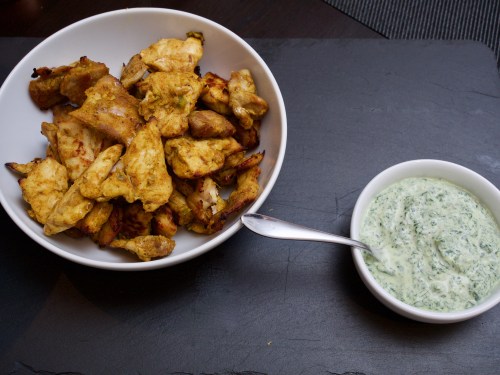
Chicken tikka with mint chutney

From Meera Sodha’s fabulous book, Made in India, we continue to make very successful dishes. We made this for a Christmas party alongside Meera’s Cinnamon lamb curry,  and coconut fish curry. All very straightforward particularly if you get the lamb cooked the night before and serve with a load of rice (cooked and kept warm in a rice cooker if you have one) and a simple salad.

We used small green birds-eye chillies with their seeds removed and while these were hot on their own they gave the right amount of background heat to each dish: think of it as a mild curry with a tiny, perfect kick.

If you prefer you can thread the chicken pieces onto kebab sticks before roasting. You will need to soak wooden sticks in water for about 20 minutes before using to stop them burning in the oven.

The Mint chutney was amazing and not only works with the chicken tikka but is also great with a roast or grilled lamb instead of the usual mint sauce/jelly.

Oven-roasted Chicken Tikka (Murghi na tikka) – serves 4-6 as a starter or with other dishes

  • rapeseed oil
  • 600g skinless, boneless chicken thighs, trimmed of any fat
  • 4cm ginger, peeled and roughly chopped
  • 4 cloves of garlic, roughly chopped
  • 1 fresh green chilli, roughly chopped
  • salt
  • 130ml whole-milk yoghurt
  • ½ tsp chilli powder
  • ½ tsp ground turmeric
  • ¾ tsp cumin seeds, crushed
  • ¾ tsp sugar
  • 1 tsp sweet paprika
  • 1 tsp garam masala

Preheat the oven to 200C/400F/Gas 6.

Line 2 oven trays and brush with a very light layer of oil.

Chop the chicken into bite-sized pieces and put into a bowl.

Pound the ginger, garlic and green chilli with a pinch of salt using a pestle and mortar, until it turns into a paste. Add the paste to the chicken, then add the remaining ingredients to the bowl along with 1¼ tsp salt. Mix well and cover. Leave to marinate for at least 15 minutes or in the fridge for a a few hours if you can.

Shake the excess marinade from the chicken and divide between the lined trays. Cook for about 20 minutes, turning once.

Serve with salad and the Mint & Yoghurt Chutney below.

Mint & Yoghurt Chutney (Fodina anna dahi nu chatni) – makes a small jar

  • 5 tbsp Greek yoghurt
  • 20g fresh mint
  • 1 fresh green chili, deseeded and finely sliced
  • 1 tsp sugar
  • juice of ½ a lemon
  • a pinch of salt

Put the ingredients into a blender and whizz until mixed. Taste and adjust the seasoning if necessary.

The chutney will keep for a day in the fridge if you want to make it in advance.

(Original recipes from Made in India by Meera Sodha, Fig Tree, 2014.)


Read Full Post »

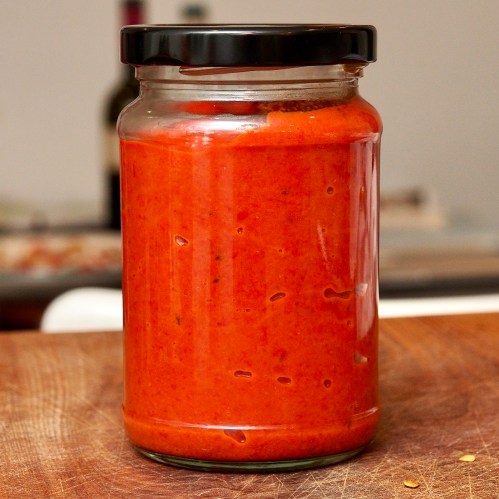
Red pepper paste

This red pepper paste is used in loads of Turkish dishes. It’s a very useful paste to have in the fridge and is particular good on a pizza instead of tomato sauce. You can buy Turkish pepper paste in specialist shops but it’s very easy to make and will keep for about a week in the fridge.

Turkish Red Pepper Paste

  • 660g red peppers
  • 50g tomato purée
  • ½ tsp salt
  • 1 tsp cayenne pepper
  • 30ml olive oil

Roast the peppers for about 30 minutes at 220ºC/gas 7 until charred & soft. Put in a bowl and cover with cling film, then leave until cool enough to peel. Remove the charred skins, stalks and seeds. Blitz the roasted peppers with the other ingredients in a blender. Store in a jar in the fridge until needed.

(Original recipe from Venice to Istanbul by Rick Stein, BBC Books, 2015.)

Read Full Post »

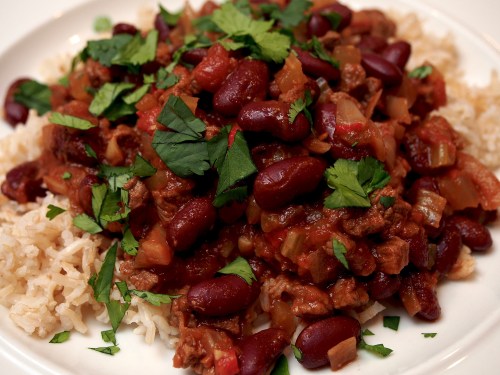
Chilli con carne

Oh yes, another chilli recipe. This one is interesting though as it uses braising steak instead of mince. We loved it!

Wine Suggestion: A juicy red with a bit of spice is our choice for this dish especially those with a good dollop of Grenache in them. First choice might be a good Cotes du Rhone, but venturing a bit from the tried and trusted we found a Spanish Garnacha made by Bodegas Monfil. An inexpensive wine from the Cariñena region is Spain with bags of flavour but also open, round and juicy; perfect for a Chilli!

Chilli Con Carne – serves 4

  • olive oil
  • 2 medium onions, finely chopped
  • 2 celery sticks, finely chopped
  • 400g braising steak, trimmed and cut into very small pieces
  • 3 garlic cloves, chopped
  • 1 red chilli, chopped
  • 1 heaped tsp ground cumin
  • 1 heaped tsp paprika
  • 1 tin of plum tomatoes
  • 1 beef stock cube
  • ½-1 tsp dried chilli flakes
  • 1 small square 85% cocoa dark chocolate (optional)
  • tin red kidney beans, drained
  • sour cream, to serve
  • chopped coriander, to serve
  • cooked brown rice, to serve

Heat 1 tbsp oil in a casserole dish over a low heat. Fry the celery and onions over a gentle heat until softened and translucent.

Add the garlic & chilli and fry until the garlic is cooked, then add the cumin and paprika and cook stirring for another 30 seconds. Remove this mixture from the pan and set aside. Add another tbsp of oil to the pan, turn up the heat, and quickly fry the meat in batches to brown it.

Return the onions to the pan and add the tin of tomatoes, breaking the tomatoes up with the back of a spoon. Crumble the stock cube into the tomato tin, fill with water and tip into the pan. Add the chilli flakes and simmer gently for 2 hours, or until thick and glossy, stirring now and then.

Add the chocolate and stir in, then stir in the kidney beans and heat through.

Serve with brown rice, coriander & sour cream.

(Original recipe by Victoria Moore in BBC Olive Magazine, April 2013.)

Read Full Post »

Garlic sauce

This is a great sauce for a beef or lamb steak. Don’t be put off by the amount of garlic; the poaching process takes away any harshness from the garlic and results in a sweet and delicious sauce.

Wine Suggestion: While your choice of wine might be determined somewhat by the type of meat you have, with the garlic sauce the key is to choose something robust, not delicate. For this steak we had an old vine Carignan (with a touch of Grenache and Syrah in the blend) from Domaine Roc des Anges in Roussillon. Their “Reliefs” cuvée is one of the best we’ve tasted of this grape variety. It is smooth and sophisticated and yet down deep it seems informed by a rustic prehistoric core.  Supple, deep and fleshy with sheets of shimmering tannin, great driving depth, cherry and dark chocolate flavours and a full, juicy and balanced finish.

Poached Garlic Sauce – serves 4

  • 3 garlic bulbs
  • milk
  • 3 tsps extra virgin olive oil
  • ½-¾ tablespoon sherry vinegar

Break up the garlic bulbs and throw away the woody roots. Put the garlic cloves, skins on, into a small saucepan and cover with milk by at least 3cm. Bring the milk and garlic to a simmer and cook gently for about 20 minutes or until the garlic is soft. Reserve 6 tablespoons of the poaching milk and discard the rest. Either put the garlic through a mouli or squeeze the soft garlic out of each skin and mash to a puree. Add the reserved milk to thin it slightly , then stir in the olive oil and sherry vinegar. Season well with salt and black pepper.

(Original recipe from Moro: The Cookbook by Sam & Sam Clark, Ebury Press, 2001.)

Read Full Post »

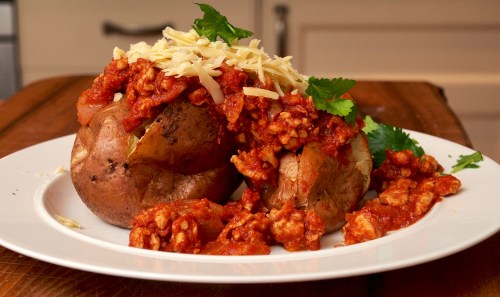
Turkey Chilli with jacket potatoes

This is a good chilli for mid-week. It uses turkey mince which is lean, and easy to pick up now in supermarkets. It’s not lacking in flavour and we will definitely be doing it again.

Wine Suggestion: a lighter Spanish red is the trick here; make sure it doesn’t have too many tannins. Our find of the moment is a rarity from Teruel, in Aragon which has a harsh climate of hot summers and very bitterly cold winters. From a resurrected-reinvented vineyard the Jesus Romero Rubus is an unoaked blend of Garnacha, Tempranillo and Syrah. The beauty of this wine is the purity of fruit that sings and layers itself across the palate and has a very long finish. Never heavy, yet full of life. That said, it’s mid-week, so go for it, have whatever is open and it’ll be grand!

Turkey Chilli Jacket Potatoes – serves 4

  • 4 large baking potato
  • 1 tbsp olive oil
  • 1 onion, chopped
  • 1 garlic clove, crushed
  • 300g turkey mince
  • 1 tbsp smoked paprika
  • 1 tbsp ground cumin
  • 1 tbsp cider vinegar
  • 1 tbsp soft light brown sugar
  • 350ml passata
  • cheddar cheese, grated, to serve
  • 4 scallions, chopped, to serve

Heat oven to 220ºC.

Prick the potatoes all over with a fork. Rub with a little oil, and bake for 20 mins, then turn the oven down to 200ºC and cook for 45 mins-1 hour depending on the size of your spuds.

Meanwhile, heat the remaining oil in a large frying pan over a medium heat. Add the onion, garlic and some seasoning, and cook for 5 mins until soft. Add the turkey mince and season again, then increase the heat and break up the mince with the back of your spoon. When it’s cooked through, add the spices, vinegar, sugar and passata. Reduce to a simmer and cook for 10 mins or until the liquid has reduced.

Cut a cross in the potatoes and serve filled with the chilli, some chopped scallions and grated cheese.

(Original recipe from BBC Good Food)

Read Full Post »
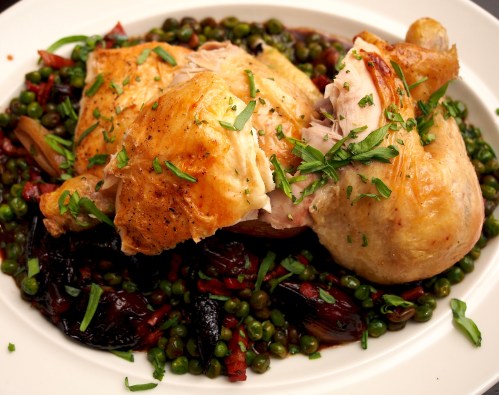
Herb roast chicken

This is an easy solution for feeding a crowd and almost everyone likes roast chicken. All you need is some new potatoes or creamy mash on the side. We love the fresh tarragon with the peas but you could use mint if you prefer. The combination of the peas, shallots, herbs and pancetta really add extra depth to the chicken and lift even ordinary chickens to feast-like levels. Of course, if the budget allows, get a good, free-range one as the extra flavour is really worth it.

Wine Suggestion: As this dish is a bit richer than your standard roast chicken it demands more than most white wines can deliver. We find Pinot Noir a good choice. This time we chose the Justin Girardin Santenay 1er Clos Rousseau and the earthy flavours danced with the salty, crispy pancetta and sweet peas. The tarragon made it all the more reminiscent of holidays in France.

Herb-Roast Chicken – serves 8-10 (easily halved)

  • 200g cubetti di pancetta
  • 800g shallots, trimmed
  • 2 tbsp olive oil
  • 2 chickens (about 1.5kg each)
  • 500ml hot chicken stock
  • 800g peas (frozen will be fine)
  • small pack tarragon, roughly chopped

Heat oven to 190C/170C/gas 5.

Fry the pancetta gently in a heavy frying pan until crisp – if you start with a cold pan you shouldn’t need to add any oil. Remove with a slotted spoon and set aside. Add the shallots to the pan and fry in the pancetta fat for 10-15 minutes or until golden and starting to soften. Tip the shallots into a very large roasting tin.

Rub the olive oil over the chickens and season well with salt and pepper, then place the chickens into the roasting tin with the shallots. Roast for about 1 hour 20 minutes or until golden and cooked through. Remove the chickens from the tin and cover with foil.

Put the roasting tin directly onto the hob and stir in the stock. Bubble for a few minutes and scrape any sticky bits off the bottom of the tin with a wooden spoon. Add the peas, pancetta and most of the tarragon to the stock and bubble for a few minutes or until the peas are cooked, then season.

Meanwhile carve the chicken into large pieces. Transfer the peas to a warm serving platter and serve the chicken on top with the rest of the tarragon sprinkled over.

(Original recipe from BBC Good Food Magazine, April 2010.)

Read Full Post »

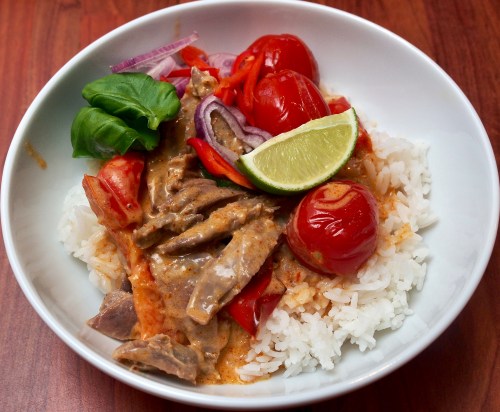
Ripped red pepper duck curry

Ripped red pepper duck curry

The addition of fresh red peppers and cherry tomatoes gives this curry a really fresh and summery feel. Perfect for when you fancy something spicy on a warm evening. It is also equally at home as the nights draw in, like the moment in Dublin and you fancy an open fire to cosy up to.

Wine Suggestion: A good Gewürztraminer makes a surprisingly brilliant match for this dish with enough weight for the richness and texture and plenty of aromatics to compliment the flavours. Our choice this time was the excellent Cave de Turckheim’s Reserve Gewürz, an off-dry wine that balanced perfectly with the heat of the red curry paste.

Ripped Red Pepper Duck Curry – serves 4

  • 4 duck legs
  • 1 tbsp fish sauce
  • 1 stick lemongrass, finely chopped
  • 2 large cloves of garlic, crushed
  • vegetable oil
  • 2 red peppers, deseeded and sliced lengthway
  • 5 tbsp Thai red curry paste
  • 2 x 400ml tins coconut milk
  • 3 tsp sugar
  • juice of ½ a lime, plus wedges for serving
  • 12 baby plum tomatoes
  • a handful of Thai or regular basil
  • red chilli and shallots, sliced finely to serve
  • steamed rice, to serve

Preheat the oven to 200ºC/180ºC fan/Gas 6.

Rub the duck legs with some salt and pepper, 1 tbsp of the fish sauce, lemongrass, crushed garlic and 2 tbsp of oil. Place in a roasting tin, cover with foil and bake for 1 hour. Remove the foil and add the sliced red peppers to the tin, tossing them in a little of the duck fat. Turn up the oven to 220ºC/200ºC fan/Gas 7 and roast uncovered for another 15 minutes or until the duck skin has crisped and the pepper slices are blistered. Remove the peppers and keep to one side. Pull the duck meat and skin from the bones and keep to one side.

Simmer the bones in 500ml water for about 30 minutes to make a stock.

In a saucepan, fry the curry paste in the oil until darkened in colour. Stir in the coconut milk, then add the stock, fish sauce and sugar and simmer for about 20 minutes or until it has thickened slightly. Squeeze in the lime juice. Stir in the strips of pepper, baby plum tomatoes and the shredded duck – reserving some crispy-skinned pieces for serving – and gently simmer for about 3 minutes or until heated through.

Remove from the heat and stir in a small handful of basil leaves. Ladle into bowls, piling on top the reserved crispy duck, some extra basil and shredded chilli and shallots to taste. Serve with lime wedges and steamed rice.

(Original recipe by Alastair Hendy in BBC Olive Magazine, August, 2014.)


Read Full Post »

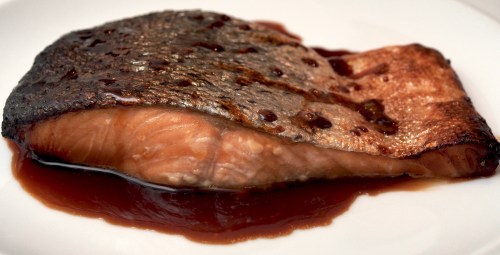
Salmon Teriyaki

Really delicious salmon with crispy skin and a rich sauce. Serve with rice and some asian greens.

Wine Suggestion: Soy sauce accentuates tannins in wine so we’d suggest avoiding reds for this dish. With ingredients that include Sake, Mirin/Sherry and sugar there are two options that we find work really well, and in a contrasting way. Firstly a non-dry, slightly sweet Oloroso sherry, like the Valdespino 1842 VOS Oloroso, will work with the umami savoury characters and compliment the rich sweetness. Alternately play with a bit of contrast and pick a good Rosé Champagne, like Billecart-Salmon’s benchmark example; this plays with the senses and adds an extra vibrancy to a dish already replete with flavour.

Salmon Teriyaki – serves 4

  • 250ml light soy sauce
  • 125ml sake or rice wine
  • 125ml mirin or dry sherry
  • 100g caster sugar
  • 4 salmon fillets, skin-on
  • 1 tbsp sunflower oil

Mix the first 4 ingredients together and stir until the sugar has dissolved to make a teriyaki sauce. Marinade the salmon in half of the sauce for at least 3 hours. Pour the rest of the sauce into a saucepan and bubble gently on a low heat for 30 minutes or until reduced and thickened.

Heat the oven to as high as it goes, then put the drained salmon fillets in an ovenproof dish, skin upwards. Cut small squares of foil to cover the salmon skin and stop it burning.

Bake for 5-6 minutes, then remove the foil and brush oil over the skin. Return to the oven for another 5-6 minutes or until the skin is crispy and starting to char.

Pour some of the reduced sauce onto each plate and sit the salmon on top to serve.

(Original recipe by Reiko Hashimoto-Lamber IN: BBC Good Food Magazine, April 2008.)

Read Full Post »

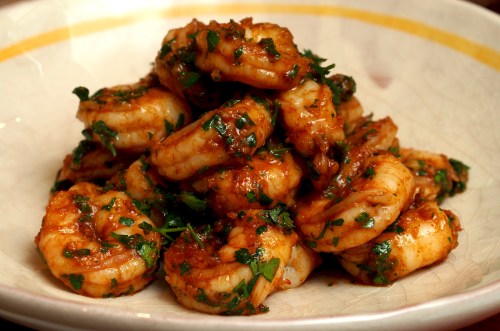
Spicy Prawns

These prawns, flavoured with lots of garlic and warm spices, make a simple but really tasty starter. Serve with plenty of bread for mopping up the juices.

Wine Suggestion: We really like unoaked, slightly lighter, Spanish reds with this dish especially with 30 minutes in the fridge to give a cool edge to them. A newish find has been the Jesus Romero “Rubus”, a delicious blend of Garnacha, Tempranillo and Syrah which has a purity and persistence of fruit that charms us every time.

Spicy Prawns – serves 4

  • 300g raw peeled king prawns
  • 4tbsp olive oil
  • 4 garlic cloves, crushed
  • 2 tsp paprika
  • 1½ tsp ground cumin
  • ¾ tsp ground ginger
  • a good pinch of cayenne pepper or chilli powder
  • 5 tbsp chopped coriander or parsley

Heat the oil with the garlic and spices in a large frying pan. Keep stirring until aromatic, then throw in the prawns and fry quickly over a medium heat until pink – about a minute. Stir in the coriander or parsley and serve.

(Original recipe from Foolproof Mediterranean Cookery by Claudia Roden, BBC Worldwide Ltd., 2003.)

Read Full Post »

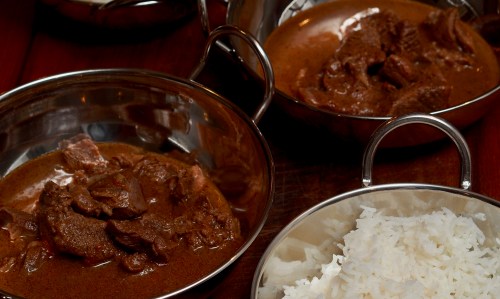
Howrah Express

Brown food is just not photogenic but this really is a delicious lamb curry. Lamb neck is one of our favourite cuts; cheap and meltingly tender when cooked slowly.

Wine Suggestion: We’ve yet to find a wine that we think works with the intense flavours in this dish. Try an Indian beer such as Singah.

Cinnamon Lamb Curry – serves 8

  • 4 tbsp rapeseed oil
  • 2 large onions, finely chopped
  • 8 cloves of garlic, finely chopped
  • 1 x 400g tin of plum tomatoes
  • 1½ tsp garam masala
  • 1¼ tsp chilli powder
  • 2 tsp ground cumin
  • 1½ tbsp ground cinnamon
  • 1½ tsp salt
  • 1.2kg lamb neck fillet, chopped into chunks
  • 150ml full-fat yoghurt, whisked

Heat the oil in a large, heavy casserole dish over a medium heat. Add the onions when the oil is hot and fry until golden, about 8-10 minutes, then add the garlic and stir-fry for another couple of minutes.

Pour the tinned tomatoes into a bowl and crush a little with your hands before adding to the casserole. Cook for about 6 minutes or until the sauce has thickened.

Add the garam masala, chilli powder, cumin, cinnamon and salt, and mix. Add the lamb and cook until sealed all over. Add the yoghurt one spoon at a time while slowly stirring (to prevent splitting) and then add 200ml of warm water – you want it to just cover the lamb.

Bring the mixture to the boil, then cover and turn the heat to low. Simmer for 1½ hours or until the lamb is soft and falling apart. Take the lid off the pan and reduce the sauce to a consistency you like, then remove from the heat. Season to taste and serve with naan breads or steamed rice.

(Original recipe from Made in India by Meera Sodha, Penguin, 2014.)

Read Full Post »

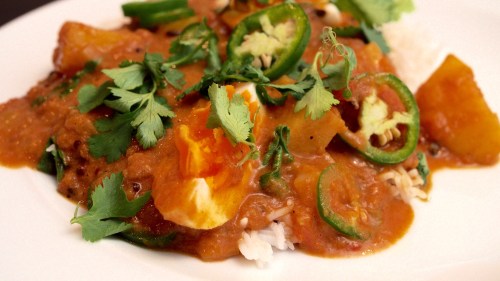
Egg & potato curry 1

A tasty mid-week veggie curry for two. Not much more to say really. Serve with a cold beer if you’ve got one.

Bombay Egg & Potato Curry – serves 2

  • 2 onions, 1 chopped and 1 quartered
  • sunflower oil
  • 2 green chillies, 1 halved and deseeded and the other finely sliced
  • 2 garlic cloves
  • a handful of coriander, leaves and stalks separated
  • 2 tsp turmeric
  • 2 tsp garam masala
  • 2 tsp ground cumin
  • 2 tsp fennel seeds
  • 2 tsp black mustard seeds
  • 1 vegetable or chicken stock cube
  • 1 tin chopped tomatoes
  • 150ml coconut milk
  • 400g potatoes, peeled and cut into 2.5cm dice
  • 3 eggs
  • juice of 1 lemon
  • basmati rice to serve

Fry the chopped onion in 1 tbsp of sunflower oil in a large frying pan or shallow casserole until soft and golden.

Meanwhile, whizz the quartered onion, halved chilli, garlic & coriander stalks with ¼ tsp salt to a paste – you might need to add a splash of water.

When the onions are softened, stir in the paste and spices and fry for about 5 minutes or until fragrant. Crumble in the stock cube, stir in the tomatoes and coconut milk along with a tinful of water and bring to a simmer. Add the potatoes, then cover and simmer for about 8 minutes.

Meanwhile, boil the eggs in boiling water for about 8 minutes, then cool under cold running water, peel and quarter.

Remove the lid from the curry and continue to simmer for another 10-15 minutes or until the potatoes are tender and the sauce has reduced and thickened.

Taste the curry and season with salt, black pepper and lemon juice to taste. Gently lay the quartered eggs into the sauce, turn off the heat and replace the lid to allow the eggs to gently warm for a minute or so.

Serve with the sliced green chilli, coriander leaves and steamed basmati rice.

(Original recipe by Sarah Cook in BBC Olive Magazine, April 2015.)

Egg & potato curry 2

Read Full Post »

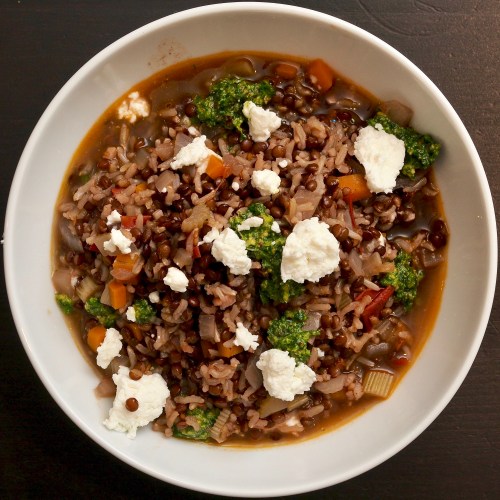
Tajik green lentil & rice soup

We made this because we had lentils, onions, celery and carrots lying around and we hate wasting anything. This is  hearty and perfectly adequate as as a stand-alone dish. The herb paste and goat’s cheese make it extra special.  Not at all bad for a leftovers soup!

Wine Suggestion: as this is so hearty and earthy a round, juicy red matches this dish well. The Beelgara Shiraz from the Riverland in Australia, while not particularly complex works well because of the warm bramble and plum flavours, medium body and gentle tannins that don’t dominate but rather sit delightfully alongside the flavours of the lentils, pesto and cheese.

Tajik Green Lentil & Rice Soup – serves 4

  • olive oil
  • 1 onion, finely chopped
  • 1 carrot, finely chopped
  • 4 tomatoes, chopped
  • 3 garlic cloves, finely chopped
  • 2 tsp cumin seeds
  • ½ tsp ground allspice
  • 200g green or brown lentils, washed
  • 150g brown rice, washed
  • 2 bay leaves
  • 1 litre hot vegetable stock
  • 120g crumbly goat’s or sheep’s cheese

For the herb paste:

  • 6 tbsp olive oil
  • a good handful of flat-leaf parsley
  • a good handful of coriander
  • a handful of mint
  • a handful of pistachios
  • a squeeze of lemon juice

Heat a large saucepan over a medium heat and add a good glug of olive oil. Throw in the onion, celery, carrot & tomatoes and cook until softened. Add the garlic, cumin seeds & allspice. Cook for another minute then stir in the lentils, rice & bay leaves.

Pour in the vegetable stock, bring to the boil, then turn down and cover the pan. Cook for 20-30 mintues or until the rice and lentils are tender.

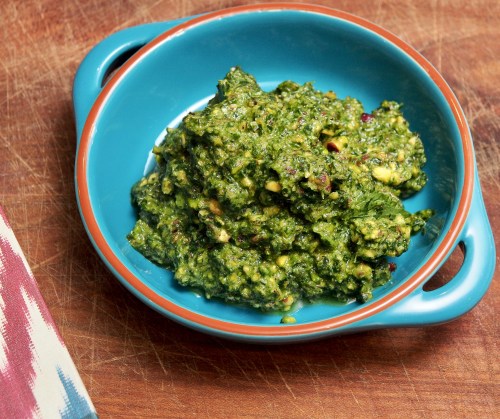
To make the herb paste: put all the ingredients in a small blender with a good pinch of salt and pepper, then whizz to a thick puree.

Thin the soup with a little hot water and taste for seasoning. Serve in bowls with the herb paste & crumbled cheese on top.

(Original recipe from Samarkand by Caroline Eden & Eleanor Ford, Kyle Books, 2016.)

Tajik herb paste


Read Full Post »

Marsala honey pears with Gorgonzola & walnuts

A dessert and a cheese course all at once, solving the problem of which goes first. This is really delicious Autumn dish. Make sure you serve the creamy gorgonzola at room temperature. Marsala is a dessert wine from Sicily which is relatively easy to find, it also works well with figs – see Roast Figs with Marsala.

Wine Suggestion: naturally the Marsala from the recipe is a great match, look out for Florio or Pellegrino amongst others. Alternately a really good Sauternes emphasises the honey or a white Maury brings out the pears and all will work well with the Gorgonzola.

Marsala Honey Pears with Gorgonzola – serves 6-8

  • 2 tbsp olive oil
  • 2 pears, about 500g in total, cored and cut into eighths
  • 3 tbsp Marsala
  • 2 tbsp honey
  • 50g walnut halves
  • 500g ripe Gorgonzola – keep in a cool place but avoid putting it in the fridge if at all possible

Heat the oil in a large frying pan, then fry the pears for 3 minutes per side.

Mix the Marsala and honey together,  add to the pears and allow the mixture to bubble furiously, then transfer to a plate.

Add the walnut halves to the juices left in the pan and stir-fry for about a minute or until browned and sticky. Remove from the pan and scatter over the pears. Serve with the creamy slab of Gorgonzola on the side.

(Original recipe from Nigella Express by Nigella Lawson, Chatto & Windus, 2007.)

Read Full Post »

« Newer Posts - Older Posts »