Feeds:
Posts
Comments

Archive for the ‘Indian’ Category

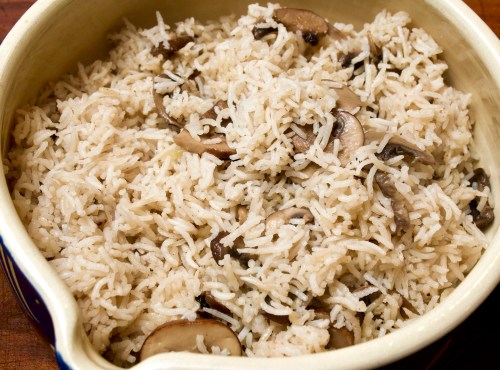
Mushroom Pullao - Khumbi pullao

A gently spiced rice dish flavoured with mushrooms. The perfect accompaniment to a meat curry.

Mushroom Pullao (Khumbi pullao) – serves 6

  • 450ml long-grain rice (use a jug to measure)
  • 1.2 litres plus 600ml of water
  • 150g mushrooms, sliced into 3mm thick slices
  • 1 small onion, peeled and sliced very thinly
  • 3 tbsp vegetable oil
  • 1 clove of garlic, peeled and finely chopped
  • ½ tsp peeled, finely grated fresh ginger
  • ¼ tsp garam masala
  • 1 tsp salt

Wash the rice in several changes of water, then drain. Put the rice in a bowl with the 1.2 litres of water and leave to soak for 30 minutes, then drain.

Heat the oil in a heavy pot over a medium-high heat. When hot, add the onions and garlic and stir-fry for about 2 minutes or until the onions start to brown at the edges. Add the mushrooms and stir for another 2 minutes, then add the rice, ginger, garam masala and 1 tsp of salt. Turn the heat to medium-low, then stir and sauté the rice for 2 minutes.

Pour in the 600ml of water and bring to a boil. Cover very tightly, turn the heat to very, very low and cook for 25 minutes. Remove from the heat and sit, covered and undisturbed for another 5 minutes.

(Original recipe from Madhur Jaffrey’s Indian Cooking, Barron’s Educational Series, 2002.)
Read Full Post »

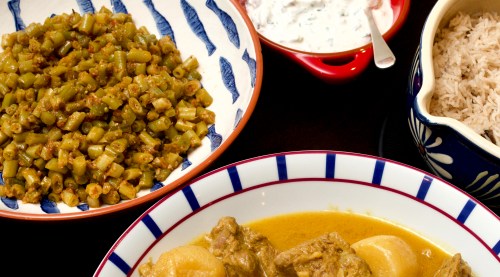
Spicy Green Beans - Madaledar sem

These green beans are full of Indian flavour and make a great side for curries and other Indian dishes but they would also add interest to a roast chicken. Chopping them up small changes the texture in a nice way too.

Spicy Green Beans (Masaledar sem) – serves 6

  • 750g green beans, trimmed and cut into 5mm lengths
  • 4cm piece fresh ginger, peeled and coarsely chopped
  • 10 cloves of garlic, peeled
  • 350ml water
  • 5 tbsp vegetable oil
  • 2 tsp cumin seeds
  • 1 dried hot red chilli, lightly crushed in a mortar
  • 2 tsp ground coriander
  • 2 medium tomatoes, peeled and finely chopped (to peel the tomatoes drop into boiling water for 15 seconds after which the skins should come off easily)
  • 3 tbsp lemon juice, or to taste
  • 1 tsp ground, roasted cumin seeds

Put the ginger and garlic into a blender or food processor with 120ml of the water and blend until fairly smooth.

Heat the oil in a wide, heavy pot over a medium-high heat. When hot put in the cumin seeds, and 5 seconds later the crushed chilli. As soon as it darkens add the ginger-garlic paste, then stir and cook for a minute. Stir in the coriander, then add the chopped tomato. Stir and cook for 2 minutes, mashing the tomatoes with the back of a spoon.

Add the beans, about 1¼ tsp salt and the rest of the water, then bring to a simmer. Cover, turn the heat to low, and cook for 8-10 minutes or until the beans are tender.

Remove the cover. Add the lemon juice, the ground roasted cumin seeds, and plenty of freshly ground black pepper. Increase the heat and boil away the liquid while gently stirring the beans.

(Original recipe from Madhur Jaffrey’s Indian Cooking, Barron’s Educational Series, 2002.)
Read Full Post »

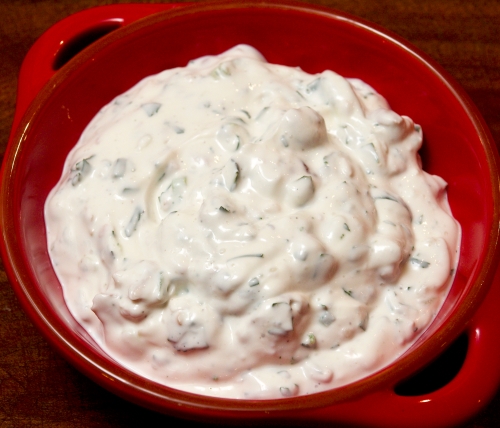
Akhrote ka raita

We’re sad to say that we’ve finally used up the enormous stash of walnuts we couldn’t resist at a French market. When we got home we thought we’d never get through them. This dish was a fitting end for the last few handfuls and we need to plan another trip. Try this raita with Indian dishes as a refreshing change from the usual cucumber raita.

Yoghurt with walnuts & coriander (Akhrote ka raita) – serves 6

  • 600ml plain yoghurt
  • 2 tbsp finely chopped coriander
  • ½ a fresh hot green chilli, very finely chopped
  • 1 scallion, very finely sliced
  • 65g shelled walnuts, roughly broken into small pieces

Put the yoghurt into a bowl and beat lightly with a fork or whisk until smooth and creamy.

Add the rest of the ingredients plus a good grinding of black pepper and about ½ tsp of salt. Stir to mix.

(Original recipe from Madhur Jaffrey’s Indian Cooking, Barron’s Educational Series, 2002.)
Read Full Post »

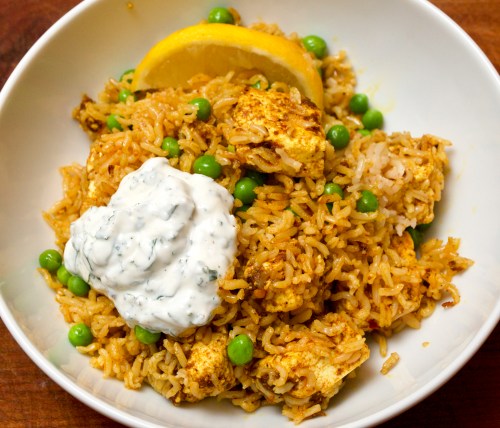
Spiced Paneer and Pea rice

This is barely a recipe, more a quick assembly of things that happen to be lying around. Typical of the sort of meal we have near the end of the week, when ingredients are running low. The paneer cheese bulks out the rice and the cool yoghurt negates the need for a sauce.

Spiced paneer and pea rice – serves 2

  • 200g pack of paneer (Indian cheese), diced
  • 2 tbsp curry paste (we like Patak’s Madras)
  • a pouch of ready-to-eat brown basmati (or use can cook your own)
  • 100g frozen peas, defrosted
  • 4 tbsp natural yoghrut
  • a handful of mint, chopped
  • naan breads and lemon wedges to serve

Heat 2 tbsp of olive oil in a pan, then fry the paneer until golden.

Add the curry paste and fry.

Heat the rice in a microwave according to the pack instructions, then tip into the pan with the peas and toss together.

Mix the yoghurt with the mint and season.

Serve the rice with the yoghurt, naan bread and lemon wedges.

(Original recipe by Janine Ratcliffe in Olive Magazine, September 2017.)


Read Full Post »

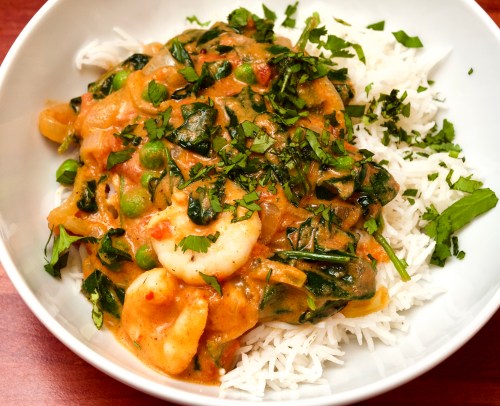
Prawn & Spinach Curry

An easy weeknight curry and perfect for using up that bag of frozen prawns in the freezer. Serve with steamed rice.

Wine Suggestion: As it was a hot night and we needed cooling down, a bottle of beer (Peroni to be precise) from the fridge hit the spot with this. Refreshing and we just like beer with curry.

Prawn & Spinach Curry – serves 4

  • 3 tbsp vegetable oil
  • 1 large onion, thinly sliced
  • 2 tbsp hot curry paste (we like Patak’s Madras)
  • 400g tin chopped tomatoes
  • 300ml vegetable stock
  • 1 tbsp sugar
  • 200g carton creamed coconut
  • 400g raw peeled tiger prawns, defrosted
  • 250g baby spinach leaves
  • large handful of frozen peas
  • bunch of coriander, roughly chopped

Heat the oil in a pan and fry the onions for about 5 minutes to soften, then stir in the curry paste and fry for another minute. Add the tomatoes, stock, sugar, and coconut cream, then season. Cook gently for 15 minutes until thickened.

Add the prawns and spinach, then cook for a few minutes. Stir in the peas and heat for another few minutes. Sprinkle with coriander and serve with steamed rice.

(Original recipe from BBC Good Food Magazine, July, 2005)

Read Full Post »

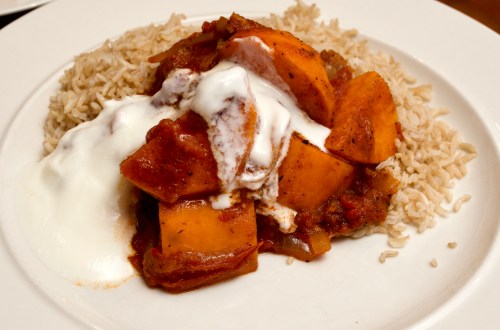
Sweet potato vindaloo

It hasn’t happened just yet but there will come a time when we will grow tired of all the winter root veg and will be hankering for spring and some lighter dishes. If you start to feel this way we recommend turning to cookbooks inspired by India which often contain some of the most interesting and delicious veggie dishes. Don’t be put off by the fiery connotations of ‘vindaloo’, this is a spicy dish but nothing too scary and is tamed by the additions of fluffy white rice and cool yoghurt.

Sweet potato vindaloo – serves 4

  • 4 tbsp rapeseed oil
  • 6 cloves
  • 1 star anise
  • 20 black peppercorns
  • 1 cinnamon stick
  • 2 tsp cumin seeds
  • 6 cloves of garlic, crushed
  • 4cm piece of ginger, peeled and grated
  • 5 tbsp white wine vinegar
  • ¾ tbsp chilli powder (feel free to adjust to your own tolerance level)
  • 2 medium onions, finely sliced
  • 1 tsp salt
  • 1 tsp sugar
  • 1 x 400g tin of plum tomatoes
  • 1kg sweet potatoes, peeled and cut into bite-size cubes
  • yoghurt, to serve
  • steamed white basmati rice, to serve

Heat 1 tbsp of the oil in a large frying (for which you have a lid) over a medium heat, then add the cloves, star anise, black peppercorns, cinnamon stick and cumin seeds. Stir-fry for a couple of minutes until fragrant and then remove from the heat and grind in a spice grinder or pestle and mortar. Add the garlic, ginger & vinegar and continue to grind to a smooth paste, then mix in the chilli powder.

Heat the remaining 3 tbsp of oil in the same pan over a medium heat, then add the onions. Cook for 15 minutes or more until brown and caramelised. Add the spice paste, salt and sugar, then cook for another couple of minutes before tipping in the tomatoes and crushing with a wooden spoon. Fill the empty tomato tin half full with water and add to the pan. Cover the pan with a lid and cook for around 5 minutes, then add the sweet potatoes.

Bring the curry to the boil, then cover and simmer for 20 to 25 minutes or until the sweet potato is completely tender. Serve with cool natural yoghurt and hot basmati rice.

(Original recipe from Fresh India by Meera Sodha, Penguin, 2016.)

Read Full Post »

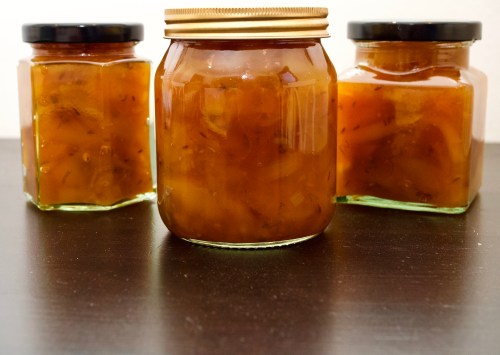
Mango chutney

Mangoes are cheap at this time of year so if you see them on offer pick them up and make this delicious chutney. Very straightforward but you do need to start the night before.

Mango Chutney – makes 700ml

  • 1 tsp each of cumin, coriander and cardamom seeds
  • 4 firm mangoes, sliced
  • 350g golden caster sugar
  • ½ tsp each of cayenne pepper and turmeric
  • 1 green chilli, split lengthways
  • 3 garlic cloves, crushed
  • 1 onion, finely chopped
  • small knob of fresh ginger, grated
  • juice of 4 limes and zest of 2
  • 4 bay leaves
  • 300ml white wine vinegar

Toast the cumin, coriander and cardamom seeds in a dry frying pan, then tip into a bowl with all the other ingredients except the vinegar. Mix together, then cover and leave to macerate overnight (or for a minimum of 3 hours).

Tip the mix into a large pan and pour in the vinegar. Bring to the boil, then turn down the heat and simmer for 1½ hours or until sticky, stir regularly as it gets closer to the end of the cooking time to ensure it doesn’t catch on the bottom. Leave to cool, then tip into sterilised jars.

To sterilise jars: wash the jars in very hot water, drip-dry and put into the oven at 160C/Fan 140C/Gas 4 for 10 minutes.

Read Full Post »

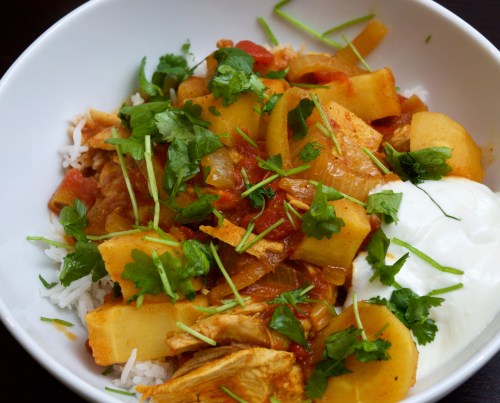
Turkey & parsnip curry

A regular post-Christmas dish in our house. It’s a bit Bridget Jones but really tasty and fairly light and healthy too. Just what you need if you’ve been on the mince pies 😉

Wine Suggestion: We love a nice Alsace Pinot Gris with this which is rich enough to stand up to the flavours and also contributes it’s own spices and freshness. We had an older Marcel Deiss Pinot Gris which was found in the cellar and it was deliciously complex, but an easier, younger wine would be good too.

Turkey & Parsnip Curry – serves 4

  • 2tbsp vegetable oil
  • 2 onions, thinly sliced
  • 500g parsnips, peeled and cut into chunks
  • 5 tbsp Madras curry paste (we like Patak’s)
  • 400g tin chopped tomatoes
  • 500g cooked turkey, torn into chunks
  • handful of chopped coriander, to serve
  • 150g natural yoghurt, to serve
  • cooked basmati rice, to serve

Heat the oil in a saucepan, then fry the onions gently for about 10 minutes or until softened and lightly coloured. Stir in the parsnips.

Stir in the curry paste, then add the tin of tomatoes with a little salt. Add 1½ tinfuls of water and bring to the boil, then reduce the heat, cover and simmer for 15 to 20 minutes or until the parsnips are just tender.

Stir in the turkey, then cover the pan and cook for another 5 minutes to heat through.

Serve over steamed basmati rice with some yoghurt on the side and coriander on the top.

(Original recipe from BBC Good Food Magazine, January 2003.)

Read Full Post »


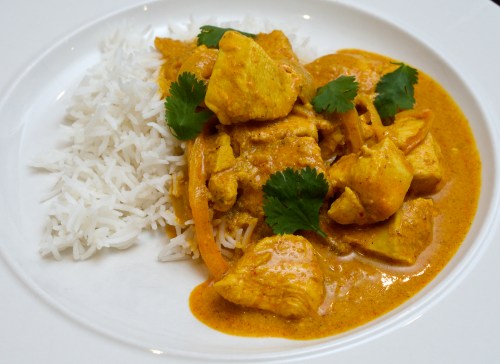
Butter chicken

Not an authentic recipe by any means but really tasty and much healthier than anything available in the local take-away. We have also made this with leftover cooked chicken with good results.

Wine Suggestion: We want to like wine with curry but most times we prefer something cool and bubbly – like beer! With this we had a bottle of Cooper’s Original Pale Ale to remind us of recent travels in Australia.

Butter Chicken Curry – serves 4

  • 500g skinless chicken breasts, cut into chunks
  • 1 tsp ground turmeric
  • a thumb-sized piece of ginger, peeled and grated
  • 2 cloves of garlic, crushed
  • ½ a lemon, juiced
  • 35g butter
  • 1 large onion, thinly sliced
  • curry paste (we used half a jar of Patak’s Madras which is quite spicy but use what you like)
  • 1 tbsp tomato purée
  • 2 tbsp ground almonds
  • 175ml full-fat natural yoghurt
  • 150ml chicken stock
  • coriander leaves
  • cooked basmati rice, to serve

Toss the chicken pieces with the turmeric, ginger, garlic, lemon juice and ½ tsp salt. Heat the butter in a large wide pan, then cook the onion for about 10 minutes or until soft and golden. Add the curry paste and tomato purée and cook for another 3 minutes. Add the chicken and cook until opaque (if using cooked chicken just heat through).

Mix the almonds and yoghurt together in a bowl then stir into the curry and cook for another 2-3 minutes. Add the stock and simmer gently for 10 minutes. Scatter over the coriander and serve with the rice.

(Original recipe from BBC Olive Magazine, April, 2017.)

Read Full Post »

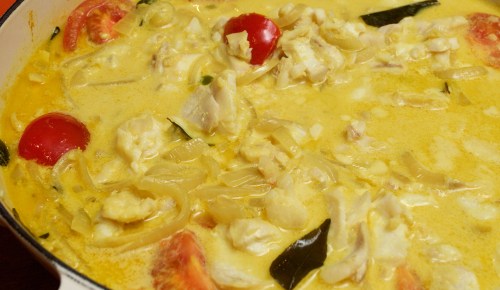
Coconut fish curry

We love to serve a fish curry alongside other Indian dishes to serve a crowd. Try this with some chicken tikka, mint & yoghurt chutney, cinnamon lamb curry, steamed basmati rice & some naan bread from the takeaway. Also great on its own with rice of course.

Coconut Fish Curry (Fish moilee) – serves 4

  • 5 cm piece of ginger, peeled and roughly chopped
  • 4 cloves of garlic, roughly chopped
  • 1 green chilli, roughly chopped (deseed if you don’t want too much heat)
  • salt
  • 3 tbsp coconut oil/rapeseed oil
  • 20 fresh curry leaves (optional but handy to buy fresh, then keep in the freezer for dishes like this)
  • 2 medium onions, thinly sliced
  • 2 big ripe tomatoes, quartered
  • ¾ tsp ground turmeric
  • ½ tsp chilli powder
  • 300ml coconut milk
  • 4 white fish fillets e.g. hake, haddock or cod (we use hake as it’s cheaper)
  • 1 lime, quartered

Put the ginger, garlic,  green chilli and a pinch of salt in a pestle & mortar and bash until you have a paste.

Put the oil into a wide, shallow pan over a medium heat. When the pan is hot, add the curry leaves, followed by the onions and cook for 8-10 minutes or until pale gold. Add the ginger, garlic & chilli paste and cook for another 2-3 minutes. Add the tomatoes, 1½ tsp salt, the turmeric & chilli powder. Cover the pan and cook for a couple of minutes.

Meanwhile, dilute the coconut milk with 100ml of water and add to the pan. When the milk begins to bubble, add the fish, then turn the heat down, cover and cook for 5-7 minutes or until the fish is cooked through.

Serve with a squeeze of lime and rice on the side.

(Original recipe from Made in India by Meera Sodha, Penguin, 2014.)


Read Full Post »

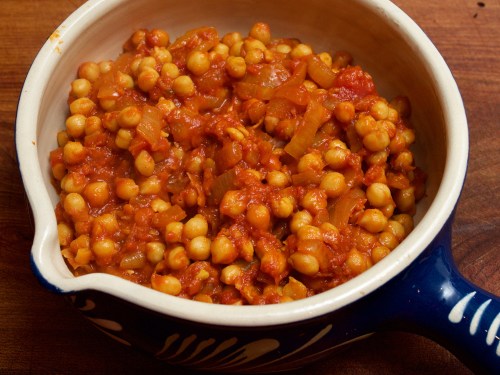
Chana masala

Meehra Sodha describes this as a Workers’ Curry variations of which are eaten all over India. We love the flavours and textures here and have eaten this part of a wider spread of dishes and also on its own with some naan bread from the local takeaway. It’s worth soaking your own chickpeas if you can as they have a better texture. Thi

Wine suggestion: a simple, medium-bodied and earthy red is required here, nothing fancy. We had a bottle of the Monfil Garnacha from Cariñena in Spain which is uncomplicated but satisfying.

Chana masala – serves 4

  • 200g dried chickpeas (or 2 x 400g tins of chickpeas)
  • 1 tsp bicarbonate of soda
  • 3cm piece of ginger, peeled and roughly chopped
  • 2 garlic cloves, roughly chopped
  • 1 green chilli, roughly chopped
  • salt
  • 3 tbsp rapeseed oil
  • 2 onions, sliced
  • 1 tin of plum tomatoes
  • 1 tbsp tomato puree
  • 1 tsp garam masala
  • ¾ tsp ground cumin
  • ½ tsp chilli powder
  • ¼ tsp ground turmeric

Put the dried chickpeas into a large bowl, cover with cold water, then add the bicarbonate of soda and soak overnight or for at least 6 hours. Rinse and drain the chickpeas, then cover with more cold water and boil for 30-45 minutes, until soft, keep spooning off any scum that rises to the surface. (If you are using tinned chickpeas you just need to rinse and drain them.)

Crush the ginger, garlic & green chilli together in a pestle and mortor with a pinch of salt to make a paste.

Put the oil into a large frying pan over a medium heat. When the oil is hot, add the onions and cook for 10-12 minutes, or until golden brown. Stir the ginger and chilli paste through the onions, then tip in the tomatoes, crushing them with your hands. Add the tomato puree, stir well and cook for 8-10 minutes or until you have a rich, thick sauce.

Add the garam masala, 1½ tsp of salt, cumin, chilli powder & turmeric, and cook for a couple of minutes before adding the drained chickpeas. You can add some water at this point to thin the sauce a bit, start with about 5 tbsp and add more if necessary. Taste and season.

Serve with naan breads or as alongside a few other Indian dishes.

(Original recipe from Made in India by Meera Sodha, Penguin, 2014.)

Read Full Post »

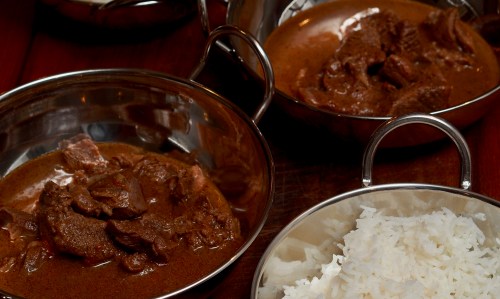
Howrah Express

Brown food is just not photogenic but this really is a delicious lamb curry. Lamb neck is one of our favourite cuts; cheap and meltingly tender when cooked slowly.

Wine Suggestion: We’ve yet to find a wine that we think works with the intense flavours in this dish. Try an Indian beer such as Singah.

Cinnamon Lamb Curry – serves 8

  • 4 tbsp rapeseed oil
  • 2 large onions, finely chopped
  • 8 cloves of garlic, finely chopped
  • 1 x 400g tin of plum tomatoes
  • 1½ tsp garam masala
  • 1¼ tsp chilli powder
  • 2 tsp ground cumin
  • 1½ tbsp ground cinnamon
  • 1½ tsp salt
  • 1.2kg lamb neck fillet, chopped into chunks
  • 150ml full-fat yoghurt, whisked

Heat the oil in a large, heavy casserole dish over a medium heat. Add the onions when the oil is hot and fry until golden, about 8-10 minutes, then add the garlic and stir-fry for another couple of minutes.

Pour the tinned tomatoes into a bowl and crush a little with your hands before adding to the casserole. Cook for about 6 minutes or until the sauce has thickened.

Add the garam masala, chilli powder, cumin, cinnamon and salt, and mix. Add the lamb and cook until sealed all over. Add the yoghurt one spoon at a time while slowly stirring (to prevent splitting) and then add 200ml of warm water – you want it to just cover the lamb.

Bring the mixture to the boil, then cover and turn the heat to low. Simmer for 1½ hours or until the lamb is soft and falling apart. Take the lid off the pan and reduce the sauce to a consistency you like, then remove from the heat. Season to taste and serve with naan breads or steamed rice.

(Original recipe from Made in India by Meera Sodha, Penguin, 2014.)

Read Full Post »

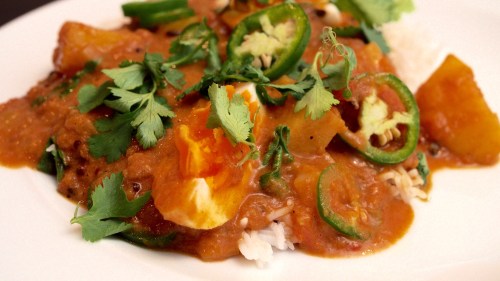
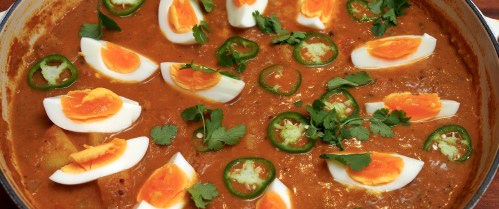
Egg & potato curry 1

A tasty mid-week veggie curry for two. Not much more to say really. Serve with a cold beer if you’ve got one.

Bombay Egg & Potato Curry – serves 2

  • 2 onions, 1 chopped and 1 quartered
  • sunflower oil
  • 2 green chillies, 1 halved and deseeded and the other finely sliced
  • 2 garlic cloves
  • a handful of coriander, leaves and stalks separated
  • 2 tsp turmeric
  • 2 tsp garam masala
  • 2 tsp ground cumin
  • 2 tsp fennel seeds
  • 2 tsp black mustard seeds
  • 1 vegetable or chicken stock cube
  • 1 tin chopped tomatoes
  • 150ml coconut milk
  • 400g potatoes, peeled and cut into 2.5cm dice
  • 3 eggs
  • juice of 1 lemon
  • basmati rice to serve

Fry the chopped onion in 1 tbsp of sunflower oil in a large frying pan or shallow casserole until soft and golden.

Meanwhile, whizz the quartered onion, halved chilli, garlic & coriander stalks with ¼ tsp salt to a paste – you might need to add a splash of water.

When the onions are softened, stir in the paste and spices and fry for about 5 minutes or until fragrant. Crumble in the stock cube, stir in the tomatoes and coconut milk along with a tinful of water and bring to a simmer. Add the potatoes, then cover and simmer for about 8 minutes.

Meanwhile, boil the eggs in boiling water for about 8 minutes, then cool under cold running water, peel and quarter.

Remove the lid from the curry and continue to simmer for another 10-15 minutes or until the potatoes are tender and the sauce has reduced and thickened.

Taste the curry and season with salt, black pepper and lemon juice to taste. Gently lay the quartered eggs into the sauce, turn off the heat and replace the lid to allow the eggs to gently warm for a minute or so.

Serve with the sliced green chilli, coriander leaves and steamed basmati rice.

(Original recipe by Sarah Cook in BBC Olive Magazine, April 2015.)

Egg & potato curry 2

Read Full Post »

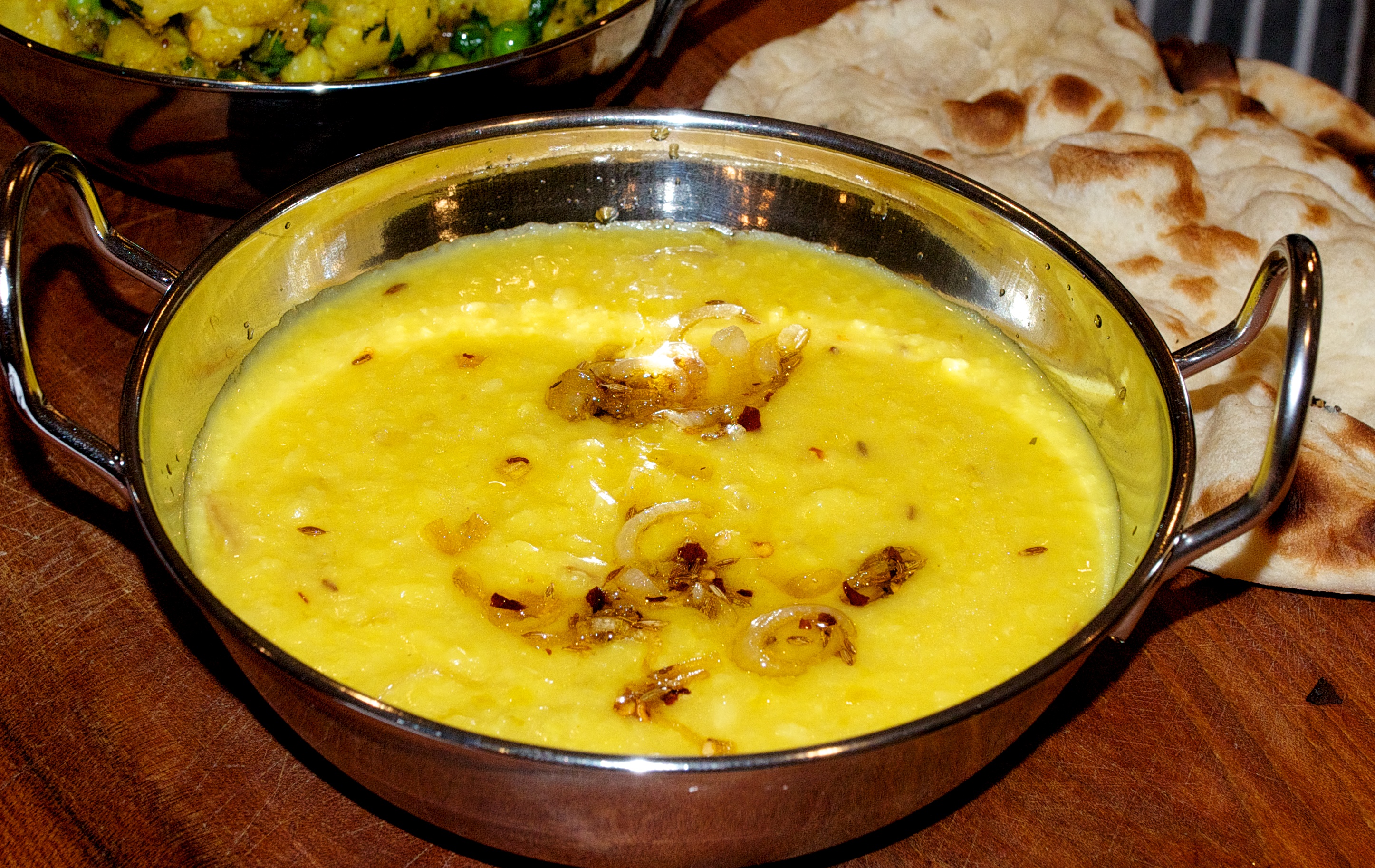
Moong dal

This is Madhur Jaffrey’s “everyday moong dal”, the one she serves regularly to her family and friends alike. It is quite a wet style which we really liked. Serve alongside your favourite curry; it was particularly good with the pea & cauliflower one below.

Moong dal – serves 4-6

  • 200g moong dal (skinned and split mung beans), washed and drained
  • ¼ tsp ground turmeric
  • ¾ tsp salt
  • 2 tbsp olive oil or ghee
  • 1/8 tsp ground asafoetida
  • ½ tsp whole cumin seeds
  • 1-2 whole hot, dried red chillies (we used 1 tsp dried chilli flakes)
  • 1 medium shallot, peeled and cut into fine slivers

Put the moong dal in a medium saucepan, add 800ml water and bring to the boil.

Skim off the white froth and stir in the turmeric.

Cover partially, reduce to a gentle simmer and cook for 45 minutes. Stir in the salt, then turn off the heat.

Heat the oil in a small frying pan over a medium-high heat, then quickly add the asafoetida, cumin seeds and chillies in that order. As soon as the chillies start to darken (a few seconds), quickly pour the contents of the pan over the cooked dal. Stir to mix through.

(Original recipe from Madhur Jaffrey’s Curry Easy, Ebury Press, 2010.)

Read Full Post »

OLYMPUS DIGITAL CAMERA

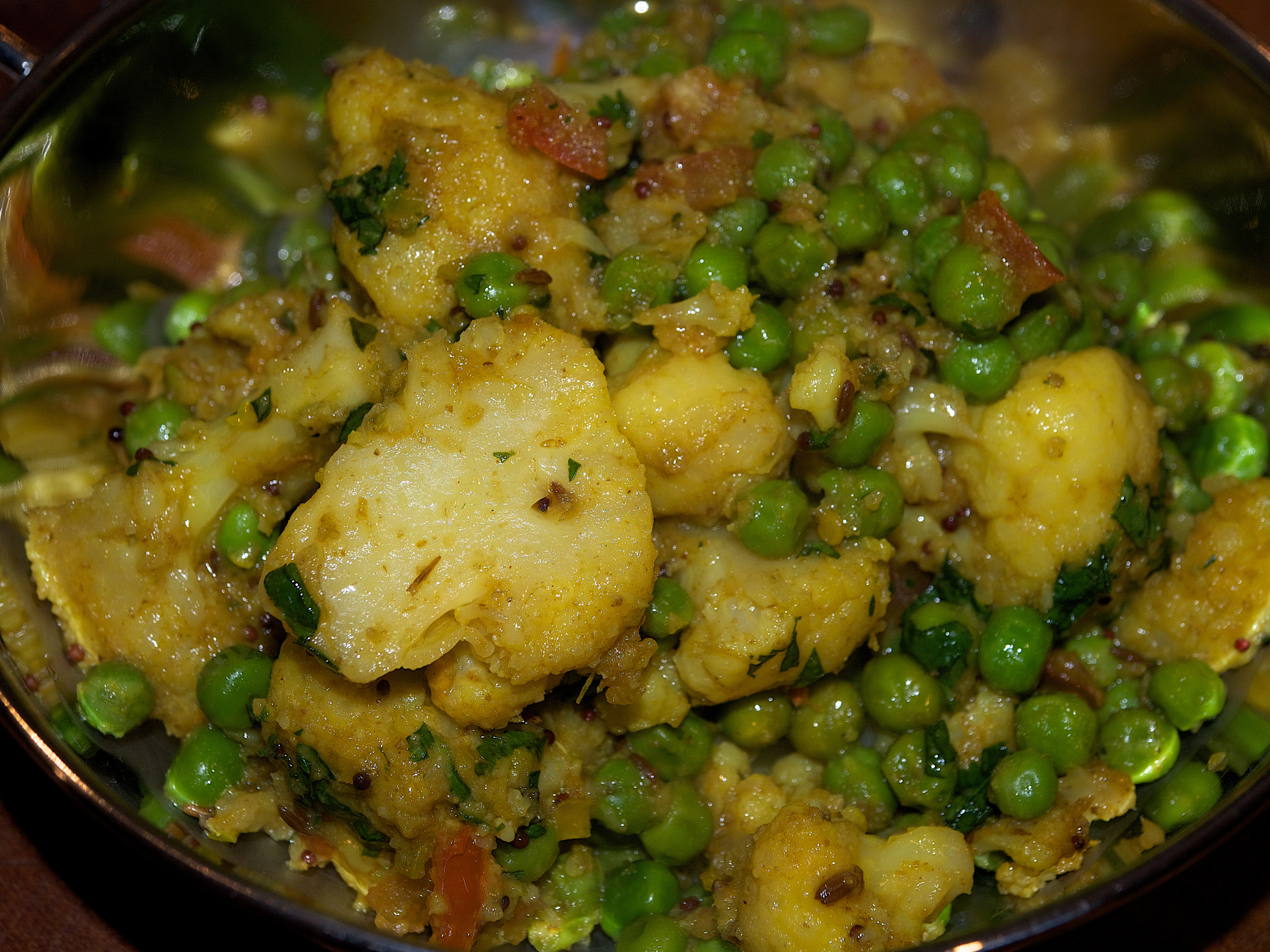
We got the Indian vegetarian cookbook, Prashad, some time ago but haven’t used it much, something that needs to be remedied as the recipes are delicious. The balance of spices has a real depth but be careful with the asafetida as it can easily overwhelm the dish. We served this with a home-made dhal and naan breads from the Indian takeaway.

Pea & Cauliflower Curry – serves 4

  • 100ml sunflower oil
  • 1 tsp cumin seeds
  • 1 tsp brown mustard seeds
  • ½ tsp asafetida
  • 1 medium cauliflower, cut into small pieces
  • 1 tsp turmeric
  • 1 tbsp ground coriander
  • 1½ tsp salt
  • 1 tsp sugar
  • 400g frozen petits pois
  • 1 medium tomato, finely chopped
  • 1 large handful of fresh coriander, roughly chopped
  • 3-6 fresh green chillies, seeds in
  • 5cm root ginger, peeled and roughly chopped

Crush the chillies and ginger together with a pinch of salt in a pestle and mortar (or a blender) to make a fine masala paste.

Heat the oil in a large heavy-based frying pan over a medium heat, then add the cumin and mustard seeds. When the seeds start to pop, turn the heat to low and stir in the asafetida.

Add the cauliflower, then turn the heat back to medium and stir in the masala paste, turmeric, ground coriander, salt and sugar. Cover and leave to cook for 8-10 minutes, stirring every few minutes. Stir in the peas and tomato, cover the pan again and cook for another 3-5 minutes. Remove from the heat and sprinkle with the chopped coriander, then leave to rest, covered, for 5 minutes before serving.

(Original recipe from Prashad: Indian Vegetarian Cooking by Kaushy Patel, Saltyard Books, 2012.)

Read Full Post »

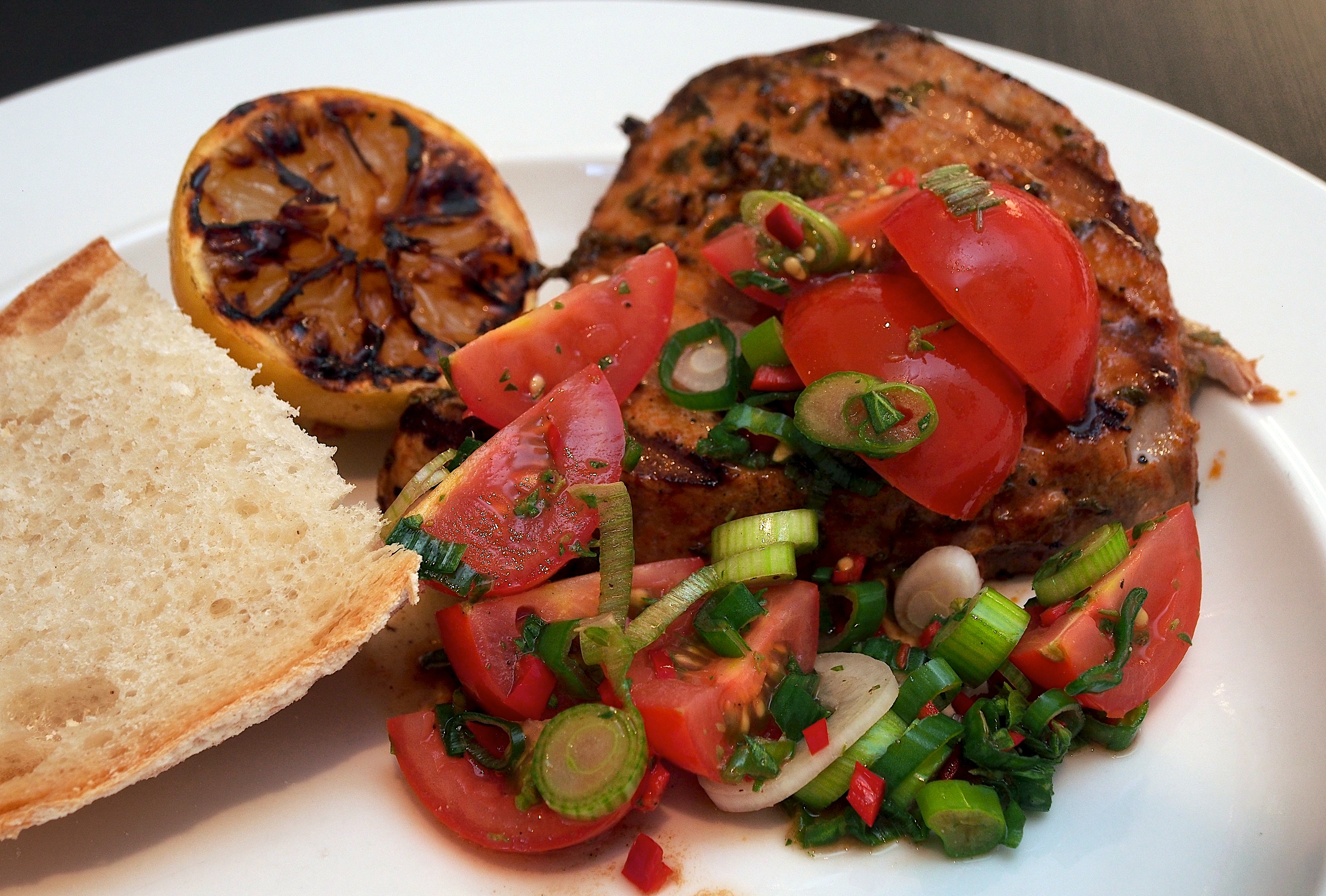
Marinated Tuna with Cherry tomato salsa

Tuna steaks are definitely at their best when seared on a hot barbecue. The marinade would also work well with other firm fish fillets such as swordfish or kingfish.

Wine suggestion: we think a light bodied red would be a treat here which goes against traditional pairings. The trick is to get a lighter body and lower tannins. We drank a Beaujolais-Villages from Domaine Rochette, a delightful wine which balances it’s lightness with an obvious care from the winemaker and good fruit from the vineyards; polished and elegant as well as joyfully youthful.

Paprika- and Oregano-Marinated Tuna with Cherry Tomato Salsa – serves 4

  • 4 x 150g fillets of fresh tuna
  • juice of 1 lemon
  • 3 tbsp olive oil, plus extra for cooking
  • 2 garlic cloves, crushed
  • 2 tbsp chopped fresh oregano
  • 1 tsp paprika
  • 1 tsp smoked spanish paprika
  • lemon wedges, to serve

For the Cherry Tomato Salsa: 

  • 250g cherry tomatoes, quartered
  • 4 scallions, thinly sliced
  • 1 tbsp chopped fresh oregano
  • 1 long red chilli, seeded and finely chopped
  • 1 tbsp sherry or red wine vinegar
  • sea salt and black pepper

Put the fish in a shallow non-metallic dish. Mix together the lemon juice, olive oil, garlic, oregano and paprika. Pour this over the fish, cover with cling-film and refrigerate for half an hour.

Preheat the barbecue to high and brush lightly with olive oil. Barbecue the fish for a couple of minutes on each side (longer if you prefer the fish well done).

Toss all of the ingredients for the cherry tomato salsa together and season well with sea salt and freshly ground black pepper.

Serve the fish with some salsa over the top and a lemon wedge.

Read Full Post »

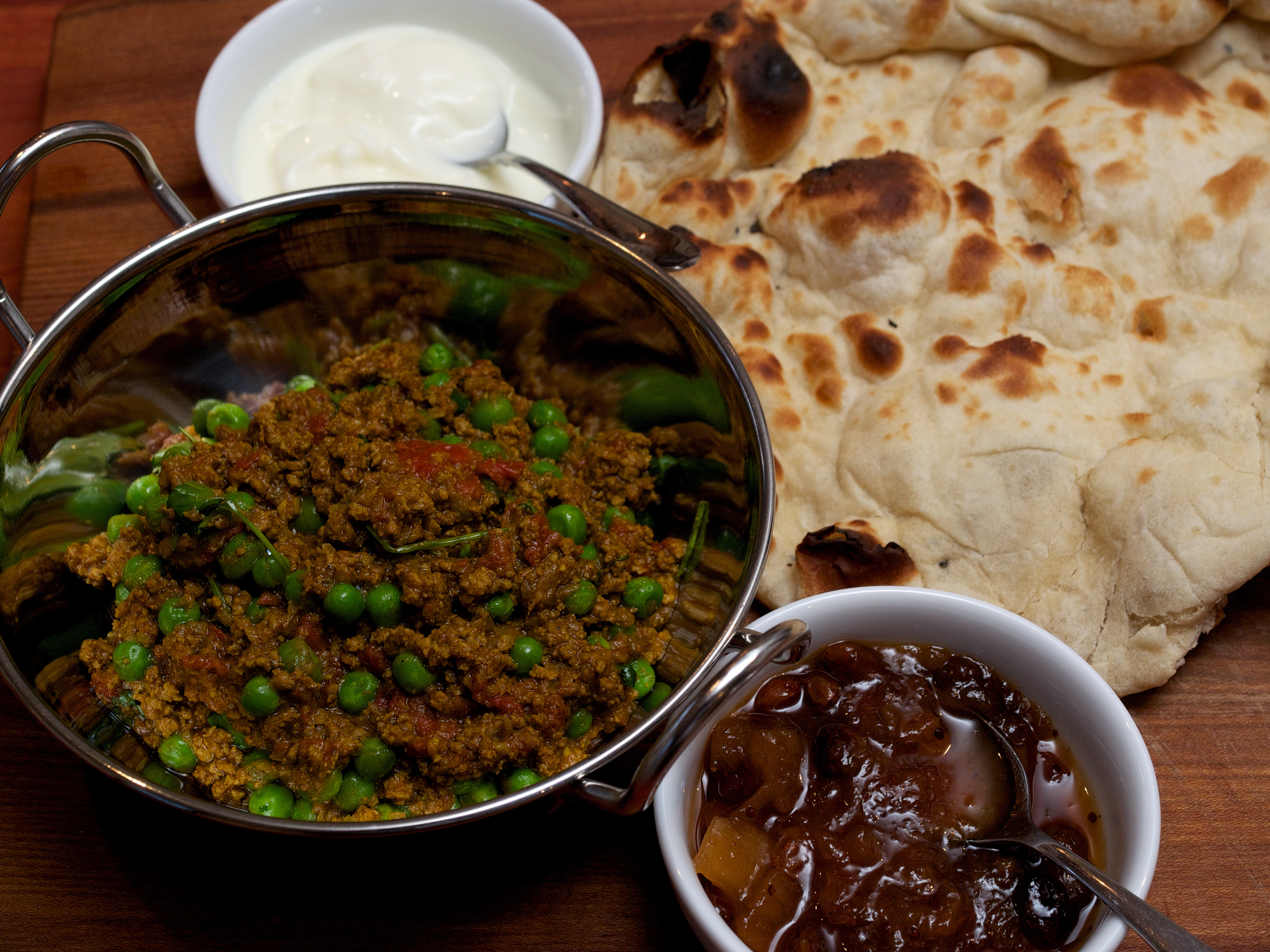
Keema with Peas

Keema with peas

This is a simple and cheap curry to whip up and it’s full of flavour. Grab some naan breads from your local takeaway and serve with some mango chutney and extra yogurt.

Keema with Peas – to serve 4

  • 1 large onion, chopped
  • 2 garlic cloves, chopped
  • 4cm piece ginger, grated
  • 2 green chillies
  • 3 tbsp oil
  • 500g lamb mince
  • 2 tbsp garam masala
  • 2 tsp turmeric
  • 200g chopped tomatoes (from a can or use 2 medium fresh tomatoes)
  • 2 tbsp natural yogurt
  • 200g frozen peas
  • 1 small bunch coriander, chopped

Chop the onion, garlic, ginger and chillies in a food processor.

Heat the oil in a large frying pan and fry the mixture until very fragrant. Add the mince and fry until starting to brown, stirring to break up the lumps.

Add the spices and fry for a minute before adding the tomatoes. Bring to a simmer, cook for a minute, then stir in the yogurt and some salt and pepper. Add a splash of water if the mixture looks dry, then cook for half an hour.

Add the frozen peas and cook for 5 minutes, then stir in the coriander.

(Original recipe from BBC Good Food)

Read Full Post »

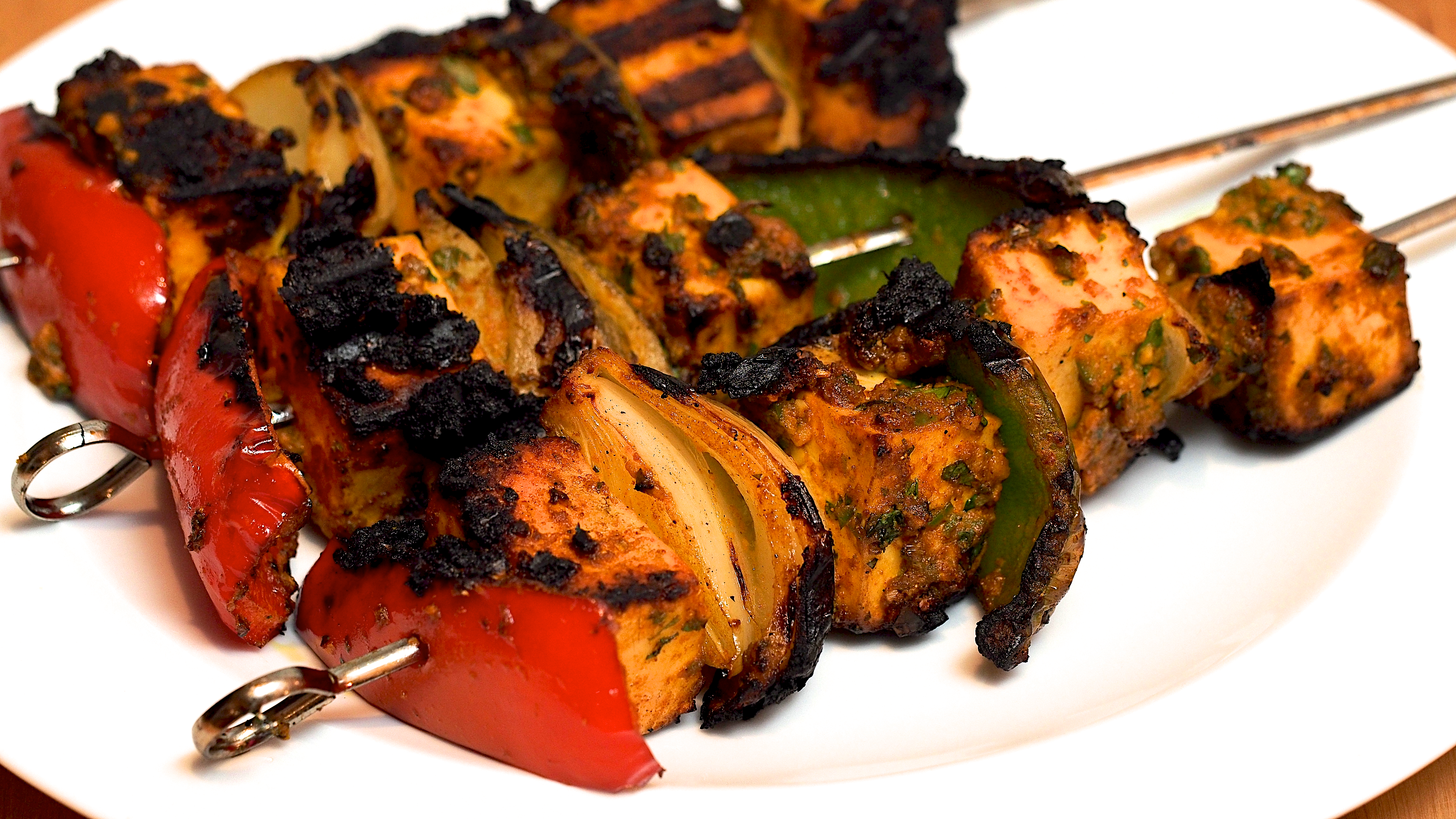
We recently acquired a recipe book called Prashad: Indian Vegetarian Cooking (thanks Mum). You might remember Prashad as Gordon Ramsay’s best restaurant runner-up on TV a couple of years ago. This is the first recipe we tried from the book and is guaranteed to make your veggie friends happy at your next summer barbecue. Vegetarians often get a bum deal at barbecues, palmed off with a few peppers and onions skewered on a stick. These should right all your past wrong-doings.

Paneer is an Indian unsalted white cheese with a crumbly texture and mild taste that  goes really well with strong flavours and marinades. You can buy it in supermarkets as well as specialist Asian shops.

These are very easy to make but you need to marinade the night before!

Drinks Suggestion: We enjoyed this with both a lager and a citrus-laden Blonde Ale; fresh and summery.

Paneer Tikka – makes 6 skewers 

  • 2 x 250 blocks of paneer cheese
  • 1 medium red pepper,cut into 6 chunky pieces
  • 1 medium green pepper, cut into 6 chunky pieces
  • 1 medium onion, cut into 6 wedges
  • 2 lemons, quartered to serve

MARINADE: 

  • 2-3 green chillies, seeds left in
  • 4-8 garlic cloves
  • 2 handfuls of fresh coriander, chopped fine
  • 2 tsp ground coriander
  • 2 tsp garam masala 
  • 1½ tsp salt
  • 1 tsp trumeric
  • 2 tbsp plain live yogurt
  • 100ml sunflower oil

Finely chop the chillies and garlic then tip into a large bowl and add the other marinade ingredients.

Cut each block of cheese into 9 equal-sized cubes and add to the marinade along with the pepper and onion pieces. Stir to coat, then cover and leave in the fridge overnight.

Thread 6 skewers with 3 pieces of cheese seperated by pieces of pepper and onion. Cook the skewers over a hot barbecue for 20 minutes, until slightly charred, turning every 4-5 minutes.

Serve with the lemon quarters, a green salad and some cucumber and yogurt dip.

(Original recipe from Kaushy Patel’s Prashad: Indian Vegetarian Cooking, Saltyard Books 2012.)

Read Full Post »

Another on a light theme: in calories again not flavour.

Cauliflower & Potato Curry – to serve 4

  • 2 tbsp vegetable oil
  • 1 large onion, chopped
  • large piece ginger, grated
  • 3 garlic cloves, finely chopped
  • ½ tsp turmeric
  • 1 tsp ground cumin
  • 1 tsp curry powder
  • tin chopped tomatoes, drained
  • ½ tsp sugar
  • 1 cauliflower, cut into florets
  • 2 potatoes, cut into chunks
  • 1 green chilli, halved lengthways
  • squeeze of lemon juice
  • handful coriander, roughly chopped, to serve
  • natural yogurt to serve

Heat the oil in a saucepan and cook the onion for about 10 minutes or until soft. Add the ginger, garlic, turmeric, cumin, and curry powder and cook for a further minute. Stir in the tomatoes and sugar. Add the cauliflower, potatoes, and split chilli along with some salt and pepper. Cover and cook gently for about half an hour or more, stirring occasionally until the vegetables are tender. You can add a drop of water if you need to but this is a dry curry.

When the vegetables are soft, add a squeeze of lemon juice and scatter with coriander. Serve with natural yogurt.

(Original recipe from BBC Good Food)

Read Full Post »

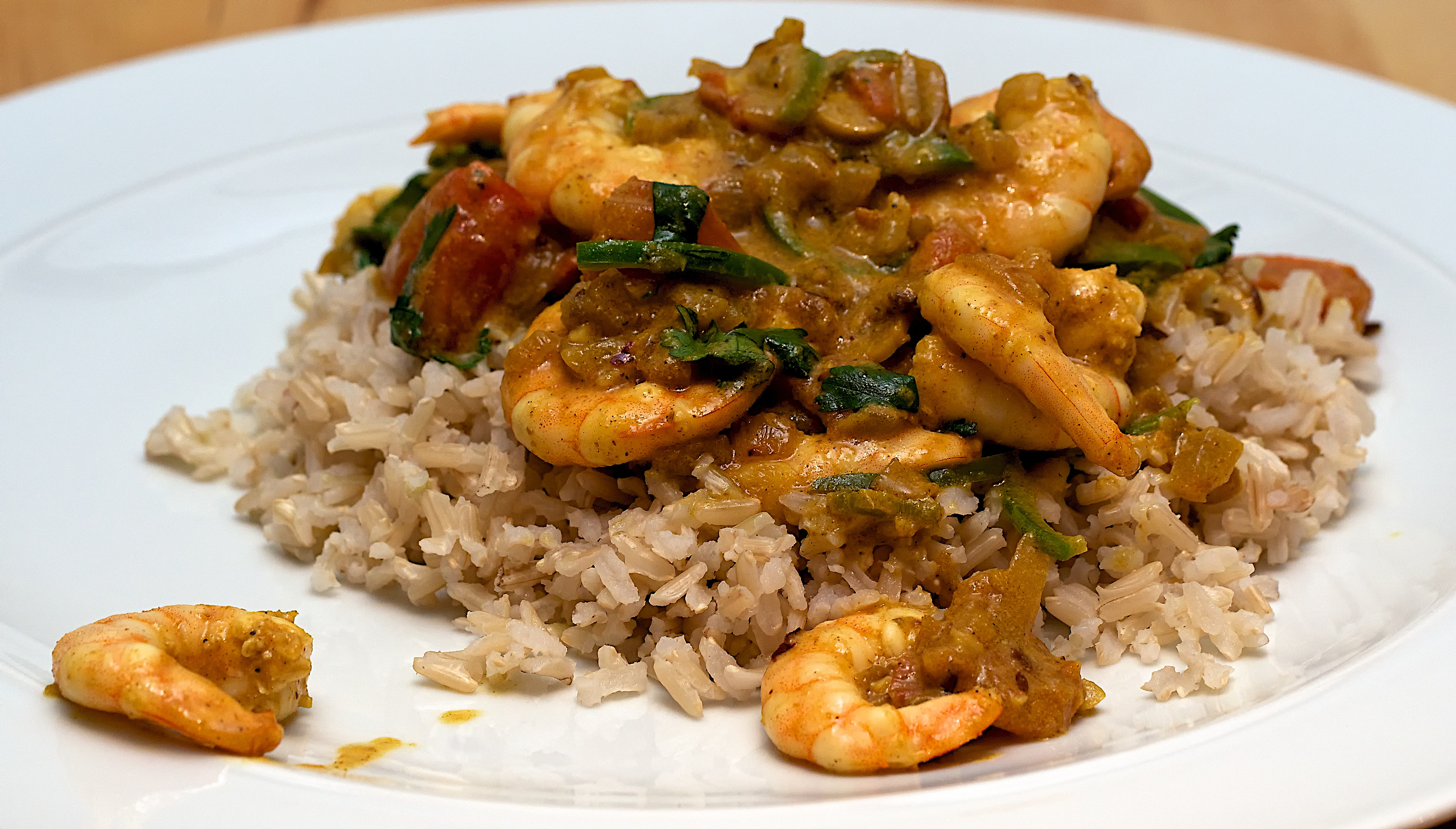
This is a simple curry but you need to marinate the prawns overnight in the fridge. The flavour builds up as the spices are gradually added and the sauce becomes really tasty. Serve with some plain basmati rice for a healthy dinner.

Hot Punjabi king prawn curry – to serve 4 

FOR THE MARINADE:

  • 600g raw king prawns, peeled and de-veined
  • 6 tbsp full-fat natural yogurt
  • 2 hot green chillies, finely sliced

FOR THE CURRY: 

  • 4 tbsp olive or sunflower oil
  • ½ tsp cumin seeds
  • 2 medium onions, finely chopped
  • 1 tbsp finely chopped or crushed garlic
  • 1 tsp turmeric
  • 2-3 hot green chillies, finely sliced
  • 2 tsp garam masala
  • 2 medium tomatoes, roughly chopped
  • ½ tsp chilli flakes
  • 4 tsp finely chopped coriander leaves

Rinse and drain the prawns. Pat them dry and put into a ceramic bowl. Add the yogurt, chillies and ½ tsp salt. Mix well, cover and leave overnight in the fridge.

When ready to cook the curry, pour the oil into a wok, and put on a medium heat.

Spoon in the cumin seeds and brown for 10 seconds then add the onions and sauté for about 10 minutes, or until or until brown all over.

Add the garlic, reduce the heat to low, and fry for 2 minutes.

Mix in the turmeric and stir for 1 minute.

Add the green chillies, increase the heat to medium and stir for 1 minute.

Mix in 1½ tsp of the garam masalsa ands stir for 1 minute.

Add ¼ tsp salt, the tomatoes and chilli flakes and cook for 2 minutes.

Add 125ml of boiling water and stir to make a thick sauce. Simmer for 3 minutes, then add ¼ tsp salt.

Stir in the prawns and marinade and cook over a medium heat until just opaque and cooked through.

Sprinkle the rest of the garam masala over the top and stir. Fold in the chopped coriander to serve.

(Original recipe by Madhur Jaffrey in BBC Good Food Magazine, March 2013.)

Read Full Post »

« Newer Posts - Older Posts »