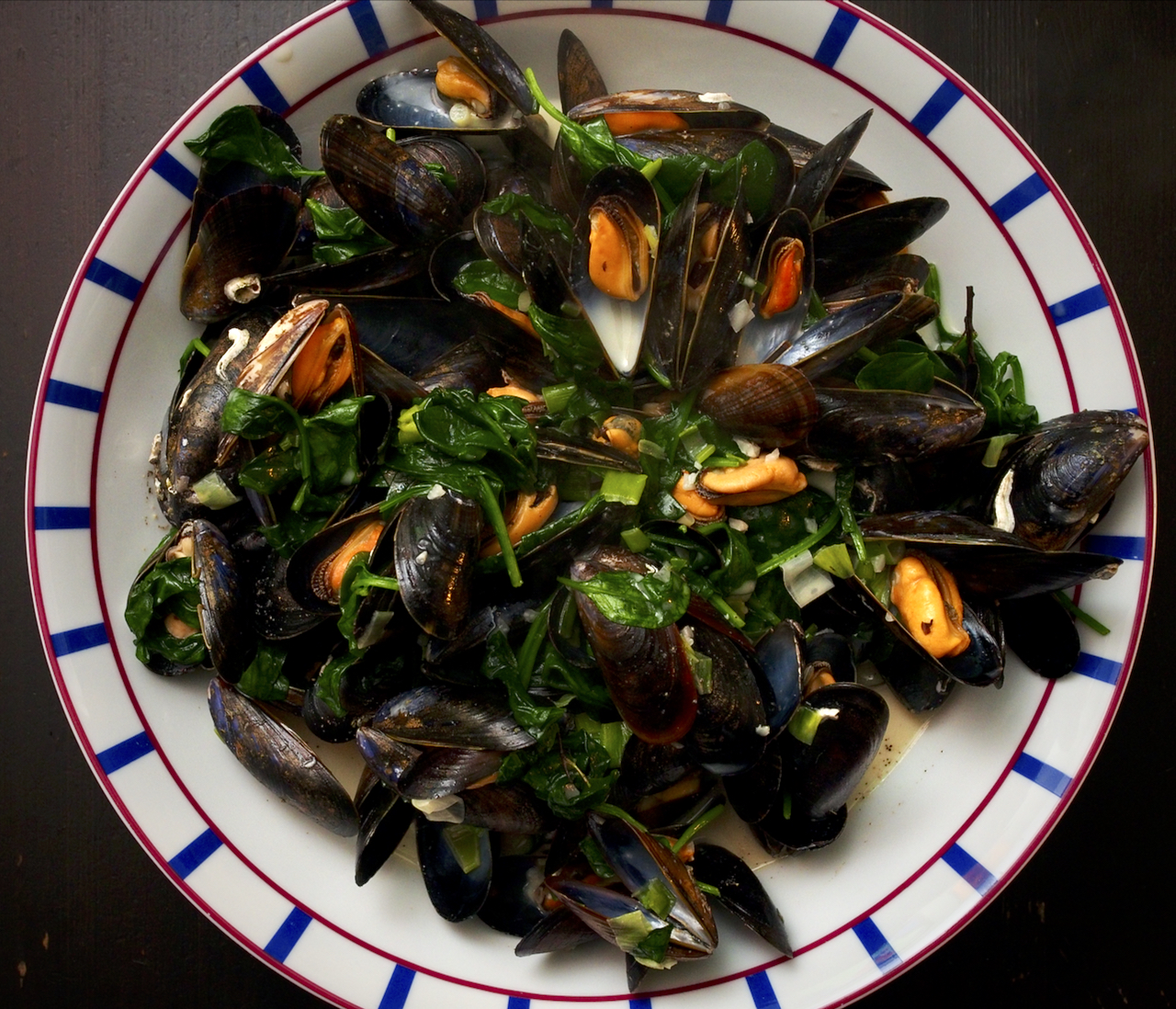
You can obviously use any dry cider for this but we highly recommend the Cockagee Keeved Cider from the Cider Mill in Slane. If you can get sorrel you can use this instead of spinach. Serve with plenty of crusty bread and a glass of cold cider.
Mussels with Cider – serves 4
1.75kg mussels, cleaned
20g butter
1 clove of garlic, finely chopped
4-5 scallions, chopped
a few thyme sprigs
2 bay leaves
100ml dry cider
120ml double cream
a good handful of sorrel, coarsely chopped or 200g baby spinach
Melt the butter in a large pan with a lid. Add the garlic, scallions, thyme and bay leaves, then cook until softened.
Add the mussels and cider, turn up the heat, cover and leave to steam for 3-4 minutes, shaking the pan now and then.
Add the cream and the chopped sorrel or baby spinach and remove from the heat. Season with salt and pepper. Serve in warm bowls with lots of crusty bread.
(Original recipe from Rick Stein at Home, BBC Books, 2021.)
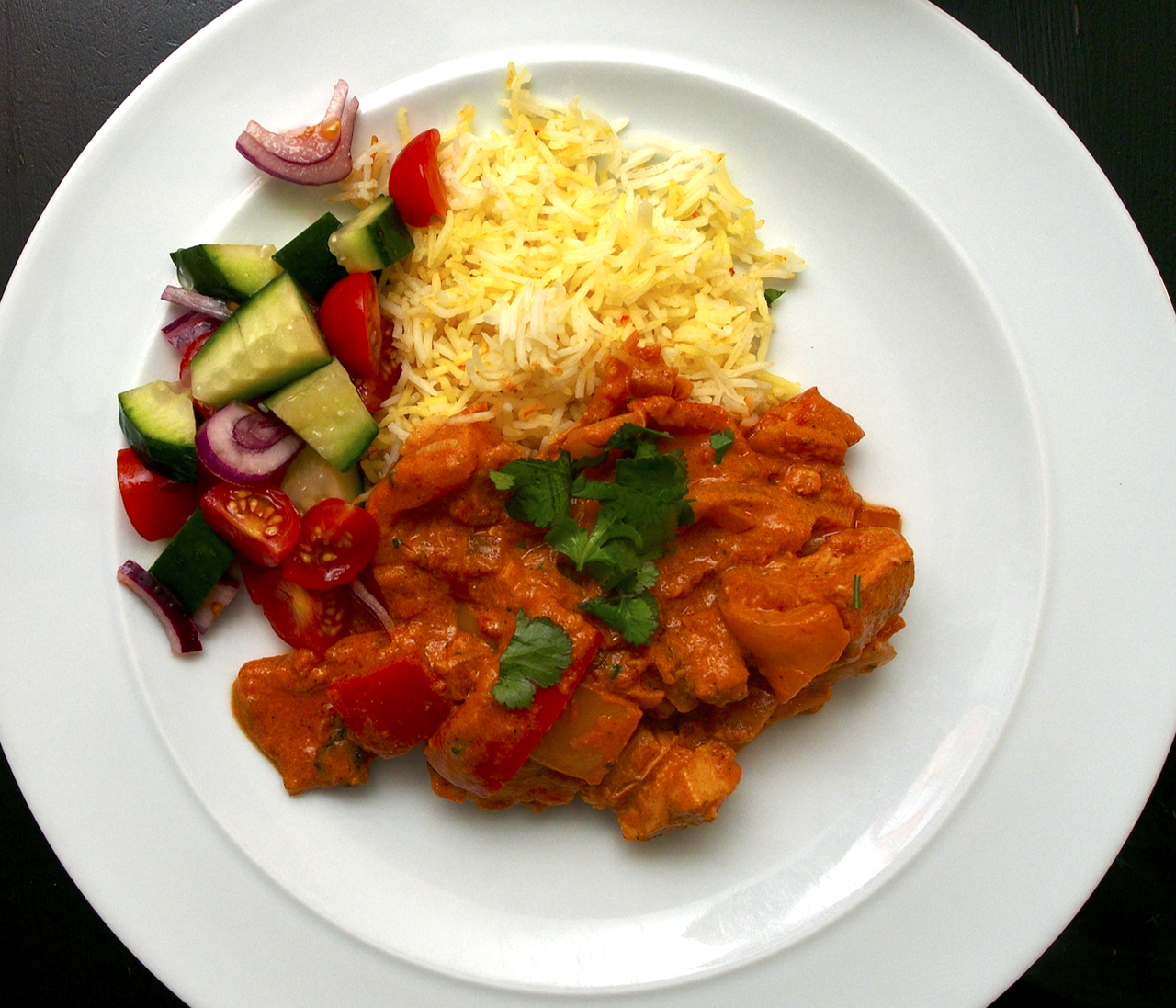
A healthy version of chicken tikka masala with salad and saffron rice. You will be eating the rainbow for dinner with this one.
Wine Suggestion: A new find matched this well: Umani Ronchi’s Centovie, a rosé made from Montepulciano in Abruzzo. The cherry fruit flavours and savoury, dry finish were a good compliment to the food. If you can’t find a rosé made from this grape find a nice red and chill it a little instead.
Chicken tikka masala – serves 4
1 large skinless chicken crown (about 1kg), get your butcher to do this for you
FOR THE MARINADE:
juice of half a lemon
5cm piece of ginger, finely grated
4 large cloves of garlic, grated
2 tbsp medium Madras curry powder
2 heaped tsp smoked paprika
a large pinch of salt
100g Greek yoghurt (you can use 0% if you wish)
FOR THE CURRY SAUCE:
1 tbsp sunflower oil
2 large onions, finely chopped
2 large garlic cloves, grated
2.5cm piece of ginger, finely grated
1 tsp ground turmeric
2 tsp paprika
2 tsp ground coriander
1 tbsp tomato purée
400g tin chopped tomatoes
300ml water
1 large red pepper, chopped
1 large green pepper, chopped
150g natural yoghurt
2 tbsp finely chopped coriander
FOR THE SALAD:
1 small red onion, finely diced
2 large tomatoes, diced
half a cucumber, diced
juice of half a lime
1 tsp chaat masala
TO SERVE:
coriander leaves, roughly torn
basmati rice, cooked with salt and a pinch of saffron strands (only if you have them)
Put the chicken into a large dish and slash the breasts with a sharp knife. Mix all of the ingredients together for the marinade, then spread over the chicken. Cover with cling film and refrigerate overnight, or for at least 4 hours.
Preheat the oven to 120C fan.
Put the chicken into a roasting dish and spoon over any remaining marinade. Cook for 2 hours (this won’t cook it through).
Meanwhile, make the curry sauce. Heat the oil in a deep frying or sauté pan. Add the onions and cook for 10 minutes or until golden brown, add a splash of water if they stick. Add the garlic and ginger with a splash of water, stir well and cook for 1 minute. Add the spices with some salt and pepper and cook for another minute.
Stir in the tomato purée and cook for a minute, then add the tinned tomatoes and the 300ml of water. Bring to the boil, then reduced the heat to a gentle simmer and cook for 5-10 minutes. Add the chopped peppers and cook for 5 minutes, then remove from the heat.
Remove the chicken from the oven and use a blowtorch over the surface to slightly blacken the marinade in places. If you don’t have a blowtorch just pop it under a hot grill. Set aside to rest for 10 minutes.
Mix the salad ingredients together in a bowl and set aside.
Remove the chicken breasts from the bone and cut into bite-size chunks. Reheat the curry sauce, then add the chicken and simmer for 5 minutes or until the chicken is cooked through. Stir in the yoghurt and chopped coriander, then season to taste.
Serve with some coriander leaves, saffron rice and the salad on the side.
(Original recipe from Lose Weight for Good by Tom Kerridge, ABSOLUTE PRESS, 2017.)
This is a perfect lunch dish – quick, easy and just a few ingredients. We made this to use up the rest of a jar of passata and cooked slightly less gnocchi to serve 3. The quantities are just a rough guide really so use up what you’ve got.
Gnocchi al pomodoro – serves 4
4 tbsp extra virgin olive oil
1 large red onion, peeled and finely chopped
700ml passata
10 basil leaves
500g ready-made plain gnocchi
100g grated mature Cheddar cheese
Heat the oven to 200C/180C fan/gas 6.
Warm the olive oil in a medium saucepan, then add the onion and cook for 3 minutes. Add the passata and cook for 10 minutes, stirring occasionally. Stir in the basil leaves, season with salt and black pepper and set aside.
Half-fill a large saucepan with water and bring to the boil. Add 1 tbsp of salt and the packet of gnocchi. As soon as the gnocchi start flowing to the top, scoop them out with a salted spoon and add to the sauce.
Gently stir the gnocchi into the sauce, then transfer everything to a baking dish and scatter over the grated cheese. Bake in the oven for about 10 minutes or until bubbling and golden brown.
(Original recipe from Gino’s Pasta by Gino d’Acampo, Kyle Cathie Ltd., 2010.)
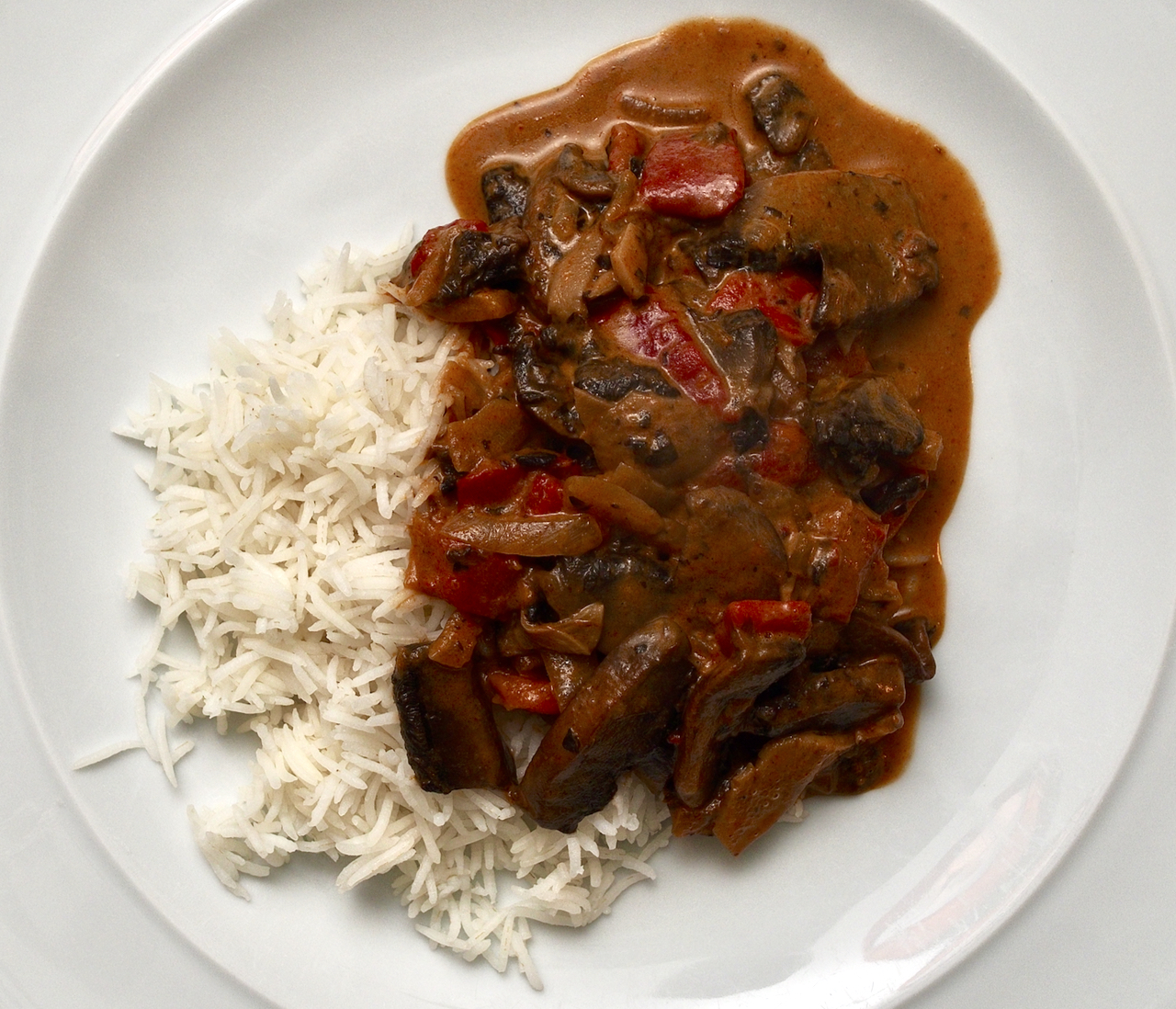
We absolutely loved this mushroom dish by Rachel Roddy in the Guardian; it’s simple but incredibly tasty. Serve with some steamed white rice.
Wine Suggestion: An earthy Pinot Noir, like Konrad Salwey’s Spätburgunder from Baden in Germany allows both the mushrooms and peppers to shine through, and it’s fresh acidity lifts the backbone of passata, vinegar and cream to the next level.
Mushroom & Pepper Goulash – serves 4
15g dried porcini
1kg field mushrooms, wiped clean and thinly sliced
1 large jar of roasted peppers, drained and cut into thick strips
1 large onion, peeled and sliced
4 tbsp olive oil
20g butter
2 cloves of garlic, peeled and thinly sliced
150ml dry white wine
150g tomato passata
a few sprigs of thyme
2 tsp sweet paprika
½ tsp hot, smoked paprika
1-2 tbsp red wine vinegar
200ml single cream
Soak the porcini in 150ml warm water for 15 minutes, then drain and save the soaking liquid. Chop the soaked mushrooms and set aside.
Put a large heavy-based pan over a medium-low heat. Add the olive oil and butter, then stir in the onions with a pinch of salt and cook for about 10 minutes, stirring, until soft and translucent. Stir in the garlic and cook for another minute.
Add the soaked and fresh mushrooms, turn up the heat and cook, stirring, for a few minutes, or until the mushrooms start to shrink down.
Add wine, passata, thyme, porcini liquild and paprika. Bring to the boil, then cover, turn the heat to low and simmer for 15 minutes. Remove the lid and add the peppers. Cook uncovered for 15 minutes or until the liquid has almost evaporated. Season to taste and add the red wine vinegar, then stir in the cream.
Serve with steamed white rice.
(Original recipe by Rachel Roddy in the Guardian, 17 January 2022.)
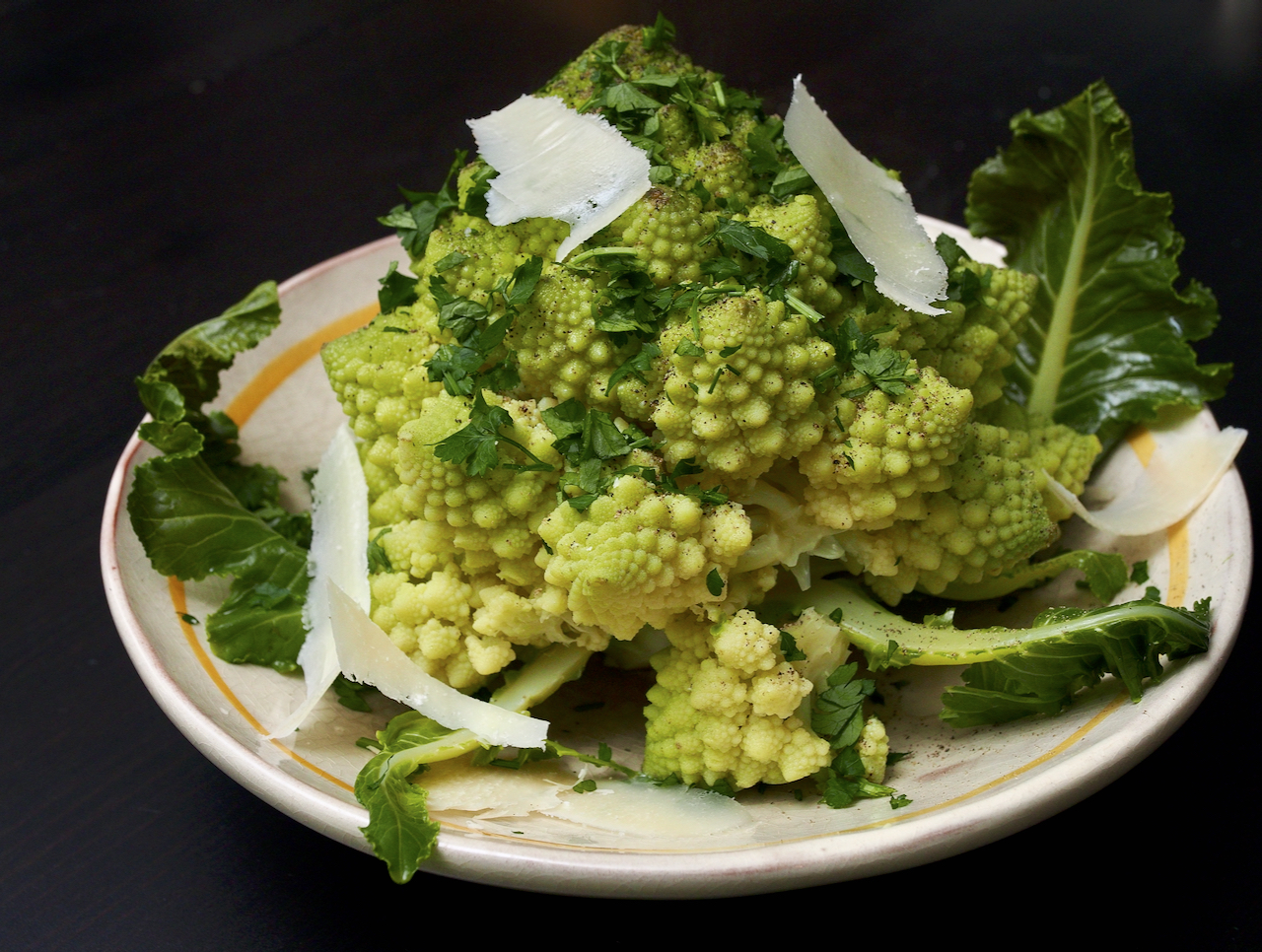
We love romanesco and pick it up any time we see it. This simple cooking method shows this veg off at its best.
Romanesco – serves 4 as a side
a large head of Romanesco broccoli, snap off any big or bruised leaves, trim the end of the stem and cut a cross at the base
6-8 tbsp best extra virgin olive oil
2 tbsp chopped flat-leaf parsley
a few shavings of Parmesan or Pecorino
Bring a pan of very salty water to the boil.
Put the whole head into the boiling water and simmer for about 12 minutes or until tender but not breaking up. Remove from the water and allow to steam dry for a few minutes, then put onto a plate and douse with the olive oil.
Season with pepper, scatter with parsley and cheese, and serve.
(Original recipe from Bocca Cookbook by Jacob Kennedy, Bloomsbury, 2011.)
Some Sunday lunch inspiration and a particularly delicious stuffing. Bring the chicken up to room temperature before putting into the oven.
Wine Suggestions: This demands a nutty, toasty Chardonnay like a good Burgundy. With these, however, becoming harder and more expensive to find there are many superb alternatives from around the world and it was to the US we turned and opened an Au Bon Climat Santa Barbara Chardonnay from the late, great Jim Clendenen. Mouth filling and creamy with a flinty core and vibrant citrus finish.
Roast chicken with caraway and cranberry stuffing – serves 4
70g unsalted butter
5 tsp caraway seeds, toasted and lightly crushed
7 cloves of garlic, crushed
1 tbsp soft dark brown sugar
1 whole chicken (about 1.4kg)
3-4 large celery sticks, cut into 1cm dice
1 onion, cut into 1cm dice
100g dried cranberries
100g ready-cooked chestnuts, roughly chopped
4-5 slices of mixed rye and wheat sourdough, crusts removed, lightly toasted, then roughly torn into 2cm pieces
15g parsley, roughly chopped
120ml chicken stock
Make the marinade for the chicken first by melting 30g of the butter and stirring in 1 tbsp of the caraway seeds, 2 cloves of garlic, the sugar and ½ tsp of salt. Set the chicken into a large dish, rub the marinade all over and set aside.
Preheat the oven to 190C fan.
Next make the stuffing. Put the rest of the butter (40g) into a large non-stick pan over a medium-hight heat. Add the remaining 2 tbsp of caraway seeds and fry for a couple of minutes until aromatic. Add the remaining 5 cloves of garlic, the celery, onion, cranberries, chestnuts and 1 tsp of salt. Fry for 12-13 minutes, stirring, until golden and softened. Tip into a bowl and stir in the bread, parsley and stock.
Set the chicken into a small roasting tray. Season generously with salt and pepper and fill the cavity with the stuffing. You will probably have too much stuffing and you can heat the rest for 30 minutes in an ovenproof dish before the chicken is ready.
Roast the chicken for 70-75 minutes, basting every 20 minutes, until the skin is golden-brown and crispy adn the juices run clear. Rest for 10 minutes before serving.
(Original recipe from Ottolenghi Simple by Yotom Ottolenghi with Tara Wigley & Esme Howarth, Ebury Press, 2018.)
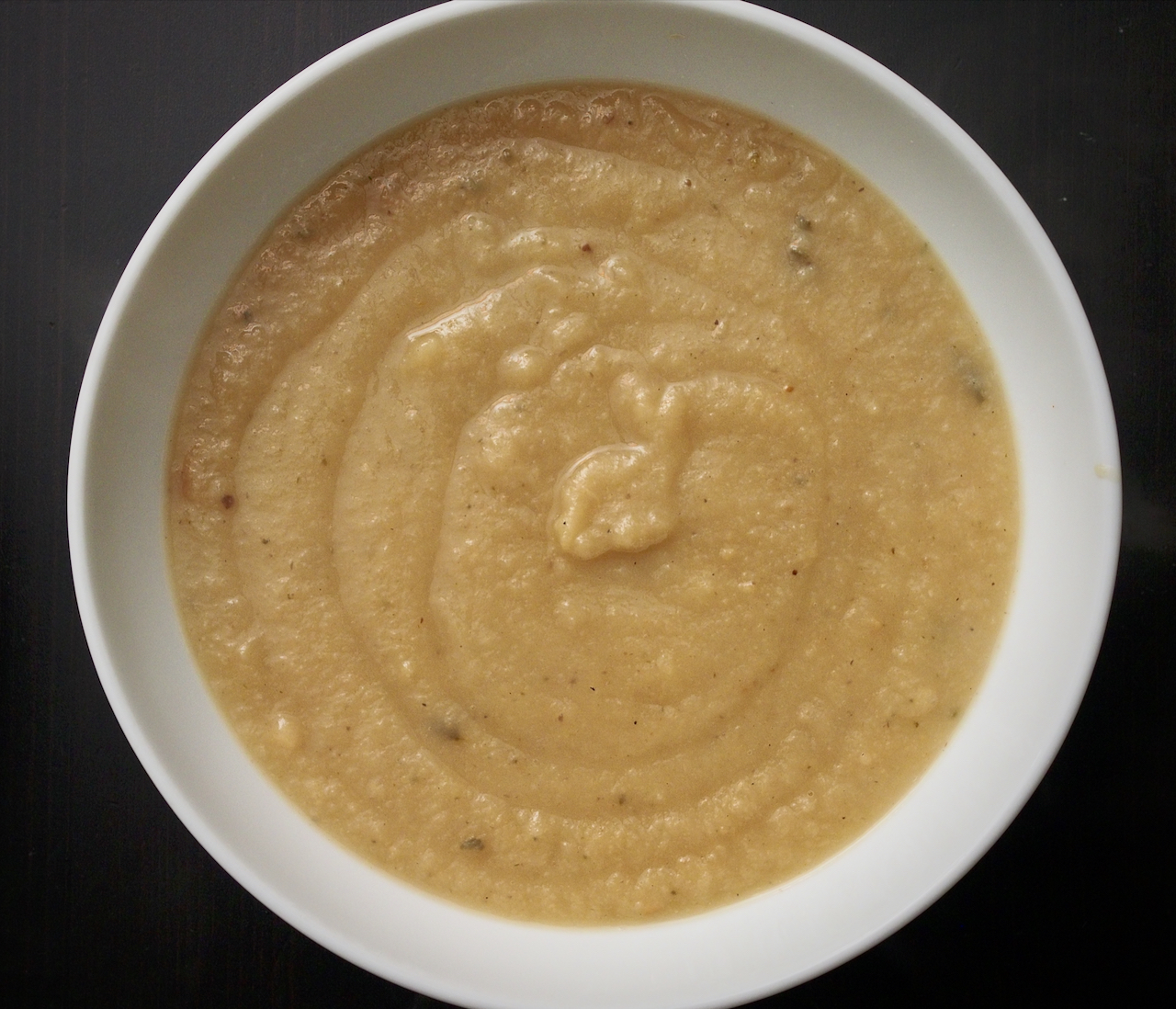
We usually only cook with chestnuts around Christmas but we’ve been trying to use up an extra pack, and they are delicious in this soup recipe by Gill Meller.
Parsnip, roast garlic and chestnut soup – serves 4
6 parsnips, peeled and cut into chunks
1 bulb of garlic, halved around the middle
150g cooked chestnuts
10-12 sage leaves
1 onion, sliced
3 tbsp extra-virgin olive oil
1 litre vegetable stock
Heat the oven to 200C/180C fan/gas 6.
Spread the parsnips over a roasting tin. Add the garlic bulb, chestnuts, sage, onion and olive oil. Season well with salt and pepper and toss together. Cover the tin tightly with foil and bake for about an hour, shaking the tin now and then, until the parsnips are soft and caramelised.
Remove the foil and pour in the stock, then return to the oven for another 30 minutes.
Ladle everything except the garlic bulb halves into a blender (or a pot if you’re using a hand blender). Squeeze the roasted garlic flesh out of the skins and add to the rest. Whizz the soup until smooth.
Pour the soup into a saucepan and bring to a simmer over a low heat, then cook for 10 minutes. Season to taste, then serve.
(Original recipe from Root Stem Leaf Flower by Gill Meller, Hardie Grant: Quadrille, 2020.)
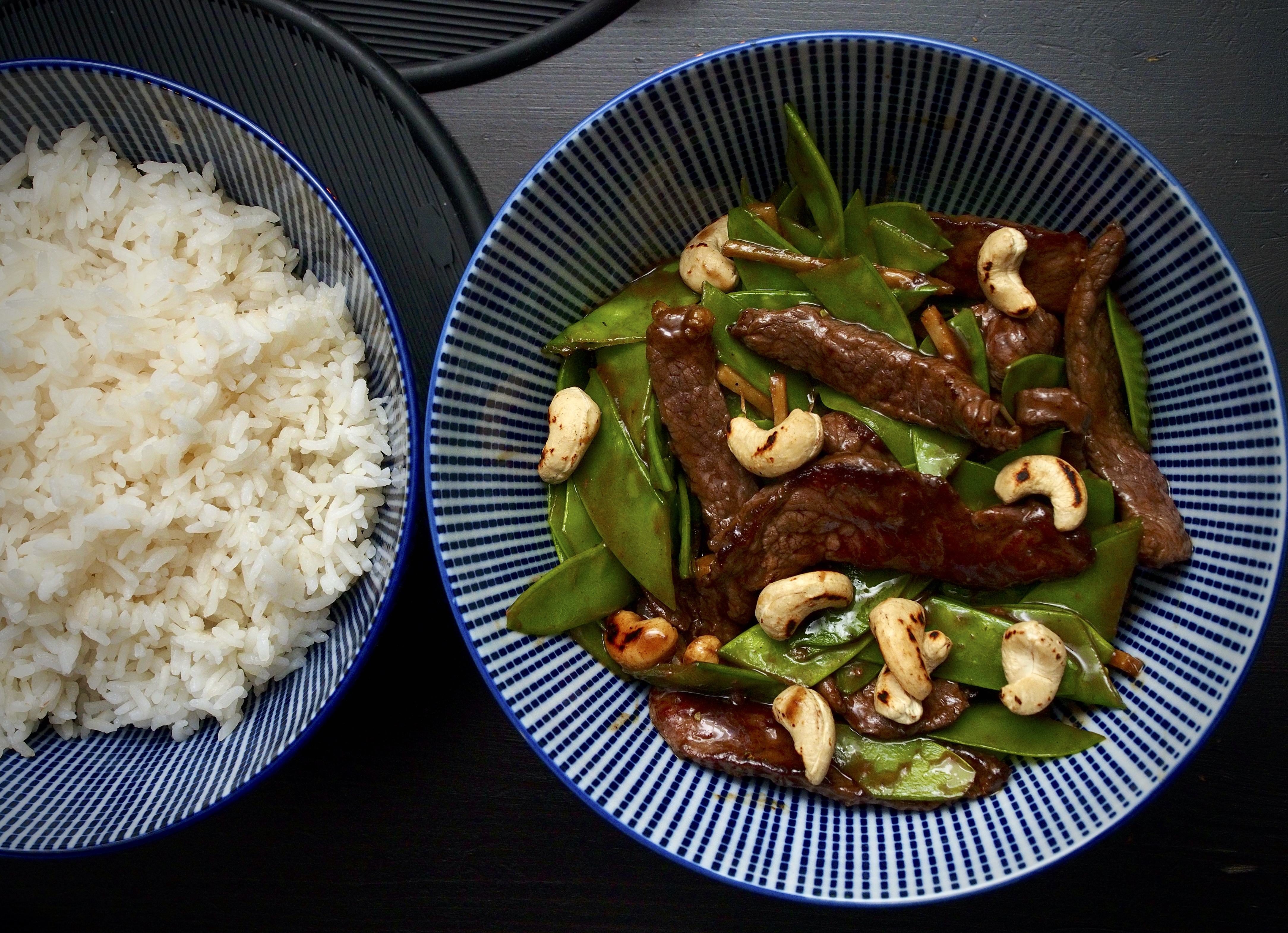
Chinese New Year was on a Tuesday this year and we had to squeeze our Chinese food in between homework, swimming lessons etc. If that is you, then this recipe is for you. As ever you need to prep everything before you start cooking. We served with rice but noodles would be good too.
Beef with mangetout & cashews – serves 4
50g unsalted cashews
1 tsp cornflour
1 ½ tbsp low-salt soy sauce
4 tbsp oyster sauce
1 tbsp rice vinegar
1 tbsp honey
1 tbsp vegetable oil
280g rump steak, thinly sliced
a thumb-sized piece of ginger, cut into matchsticks
2 cloves of garlic, crushed
200g mangetout, halved
Toast the cashews in a dry wok or frying pan, until browned, then set aside.
Mix the cornflour and soy sauce together to make a paste, then add the oyster sauce, rice vinegar and honey.
Heat your wok until very hot. Add the oil and swirl around to cover the base and sides. Use tongs to place the steak pieces into the wok in a single layer. Cook, without turning for 30 seconds – 1 minute, or until a dark crust starts to form. Add the ginger and garlic and toss everything together, then add the mangetout and the sauce. Cook for another 30 seconds – 1 minute or until the beef is just cooked through and the sauce is glossy. Sprinkle over the cashews and serve.
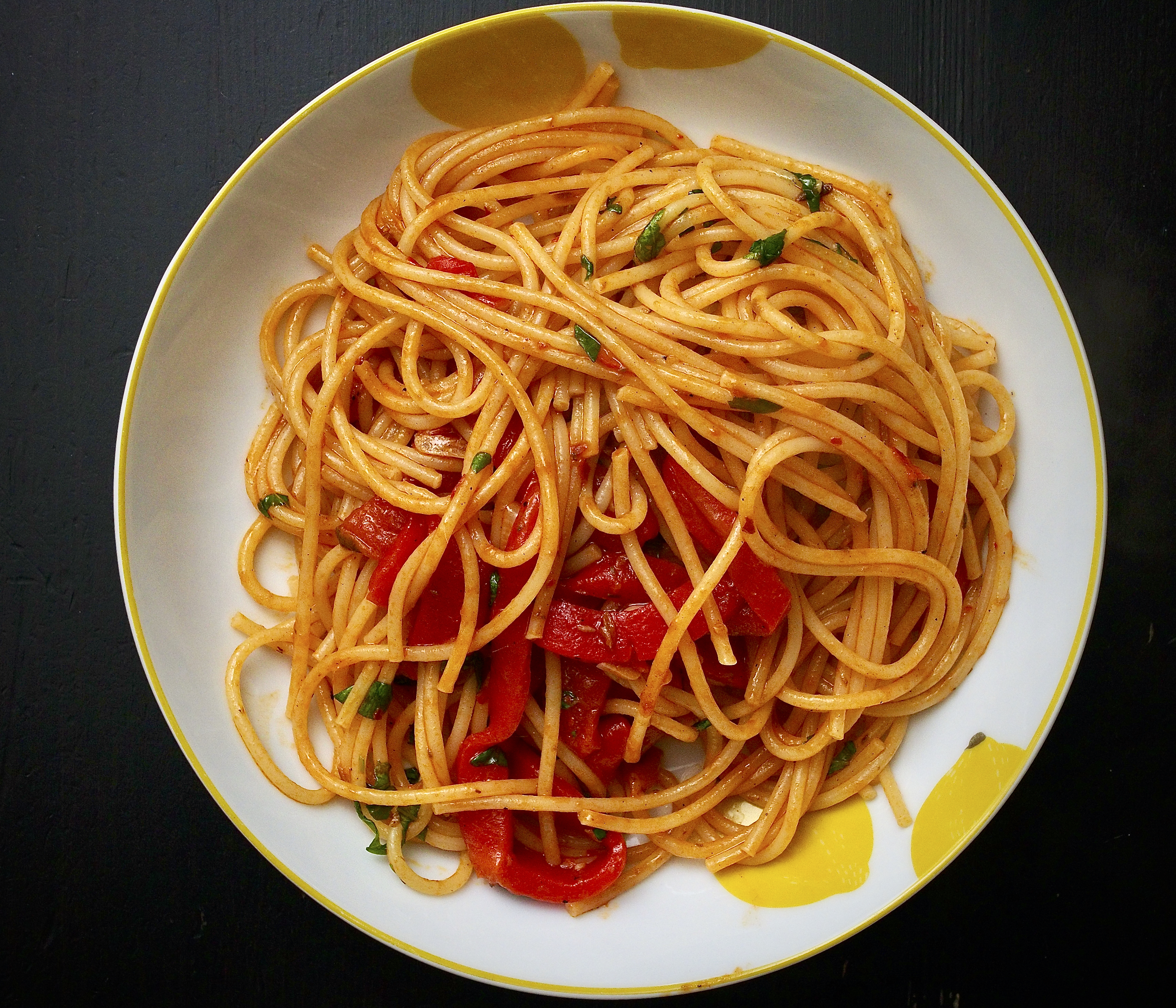
Inspiration for evenings when you’re feeling uninspired. Ready in 10 minutes.
Wine Suggestion: A southern Italian red, especially those from Mt Etna and surrounds if you can as they tend to have both warm to match the roasted red peppers and a savouriness to comliment the umami anchovies. For us the Gulfi Cerasuolo di Vittoria, and Nero d’Avola – Frappato blend. Fragrant, silky and with a deep core of earthy red fruits; one of those wines that is both effortless and yet demanding of attention.
Red pepper & anchovy spaghetti – serves 3
300g spaghetti
3 tbsp olive oil, plus a bit extra to drizzle
4 garlic cloves, sliced
8 anchovies, from a jar of tin of anchovies in olive oil
1 tsp chilli flakes
300g jar roasted red peppers, drained and sliced
1 tbsp tomato purée
a handful of basil leaves, finely sliced
Bring a large pot of water to the boil and add lots of salt. Add the spaghetti and cook for 1 minute less than the timings on the pack.
Meanwhile, put the olive oil, garlic and anchovies into a large, deep frying pan and cook over a medium heat for a minute or until the oil is hot and the garlic has started to sizzle.
Add the peppers and tomato purée and stir well. Continue to cook until the spaghetti is ready, adding a ladle of the pasta cooking water to make a sauce.
When the spaghetti is ready, use tongs to transfer it to the sauce, you can add a little more water to get the right saucy consistency if you need. Cook for another 30 seconds, tossing to coat, then remove from the heat and stir through the basil. Serve drizzled with some extra olive oil.
A lovely fiskesuppe with delicate flavours and delicious chunks of seafood. You can use whatever mix of fish and shellfish you like, clams would be nice. Serve with lots of steamed potatoes.
Wine Suggestion: Fish, cream, brandy … demands a richer white with a touch of oak and Quinta Soalheiro’s Alvarinho Reserva fitted the bill. Textured and buttery, but at the same time bone dry and vibrantly fresh and full of citrus fruit and salty crisp peaches. A wine so fresh and pure, and yet round and embracing.
Norwegian Fish Chowder – serves 4
100g cooked shell-on prawns
1 litre fish stock
1 bay leaf
a handful of flat-leaf parsley, plus a handful of parsley leaves, chopped, to serve
12 peppercorns
2 carrots, roughly diced
2 celery sticks, roughly diced
1 leek, thinly sliced
100ml dry white wine
50ml brandy
300ml double cream
100g skinless salmon fillet, cubed into 2cm pieces
150g haddock fillet, cubed into 2cm pieces
20 mussels, cleaned
steamed potatoes (to serve)
Shell the prawns and put the shells in a large saucepan with the fish stock, bay leaf, parsley, peppercorns, carrot, celery and leek. Bring to the boil and cook for 10-15 minutes. Pour in the wine and brandy and boil for another 5 minutes, then strain into a clean pan.
Add the double cream and bring back to a simmer. Add the salmon, haddock and mussels and cook for 3-4 minutes, adding the cooked prawns for just a minute to warm through at the end. Season and scatter over the chopped parsley. Serve in warm bowls and add potatoes.
(Original recipe by Signe Johansen in Olive Magazine, January 2014.)
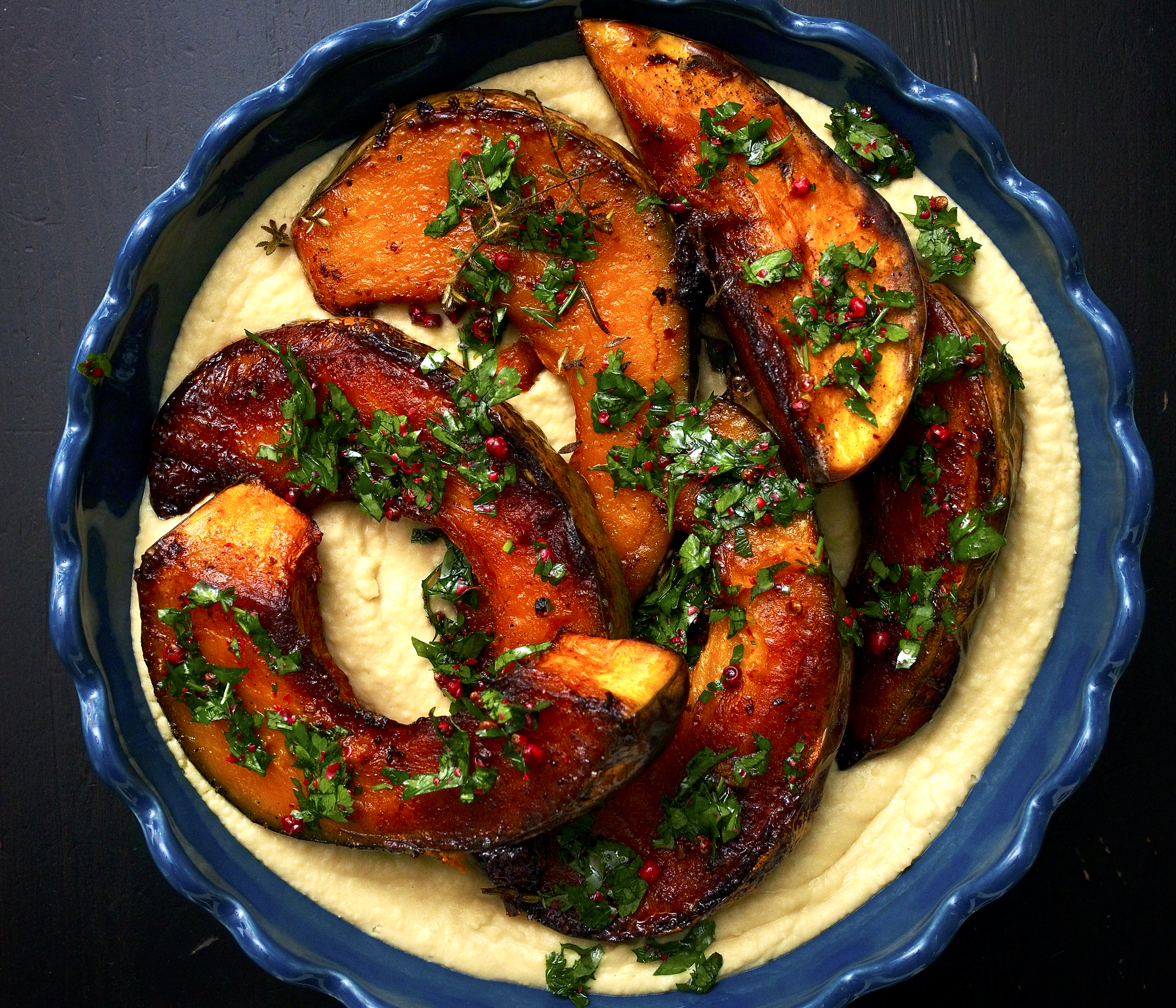
We had this for a main course but you could also have it as a side. Plus it tastes fab at room temperature for lunch the next day.
Wine Suggestion: Perfect with a youthful, oaked Chardonnay like the one we had to hand from Rustenberg in Stellenbosch, South Africa.
Baked pumpkin with roasted garlic chickpea purée – serves 6
1kg pumpkin (our favourite is crown prince), remove the seeds and cut into 6 wedges, leave the skin on
4 cloves of garlic
10 sprigs of rosemary
8 bushy sprigs of thyme
75g butter
10g flatleaf parsley leaves
1 tsp pink peppercorns
FOR THE CHICKPEA PURÉE:
2 x 400g tins chickpeas
1 small lemon, juiced
150ml olive oil
Preheat the oven to 200C.
Lightly oil a baking tray and lay the pumpkin wedges in a single layer. Tuck in the cloves of garlic. Season with salt and black pepper and add the sprigs of rosemary and thyme. Drizzle with olive oil and dot the butter over, then roast for 45 minutes or until golden-brown and soft.
Drain and rinse the chickpeas, then bring to the boil in plenty of water. Simmer for 8-10 minutes or until heated through.
Squeeze the roasted garlic out of the skins into the bowl of a food processor. Drain and add the hot chickpeas and the lemon juice. Whizz, while gradually pouring in the olive oil, until you have a soft creamy texture.
Chop the parsley, then mix with the pink peppercorns and 1 tbsp of olive oil.
Spoon the purée onto a serving dish, arrange the pumpkin on top, then scatter over the parsley and peppercorns.
(Original recipe from A Cook’s Book by Nigel Slater, 4th Estate, 2021.)
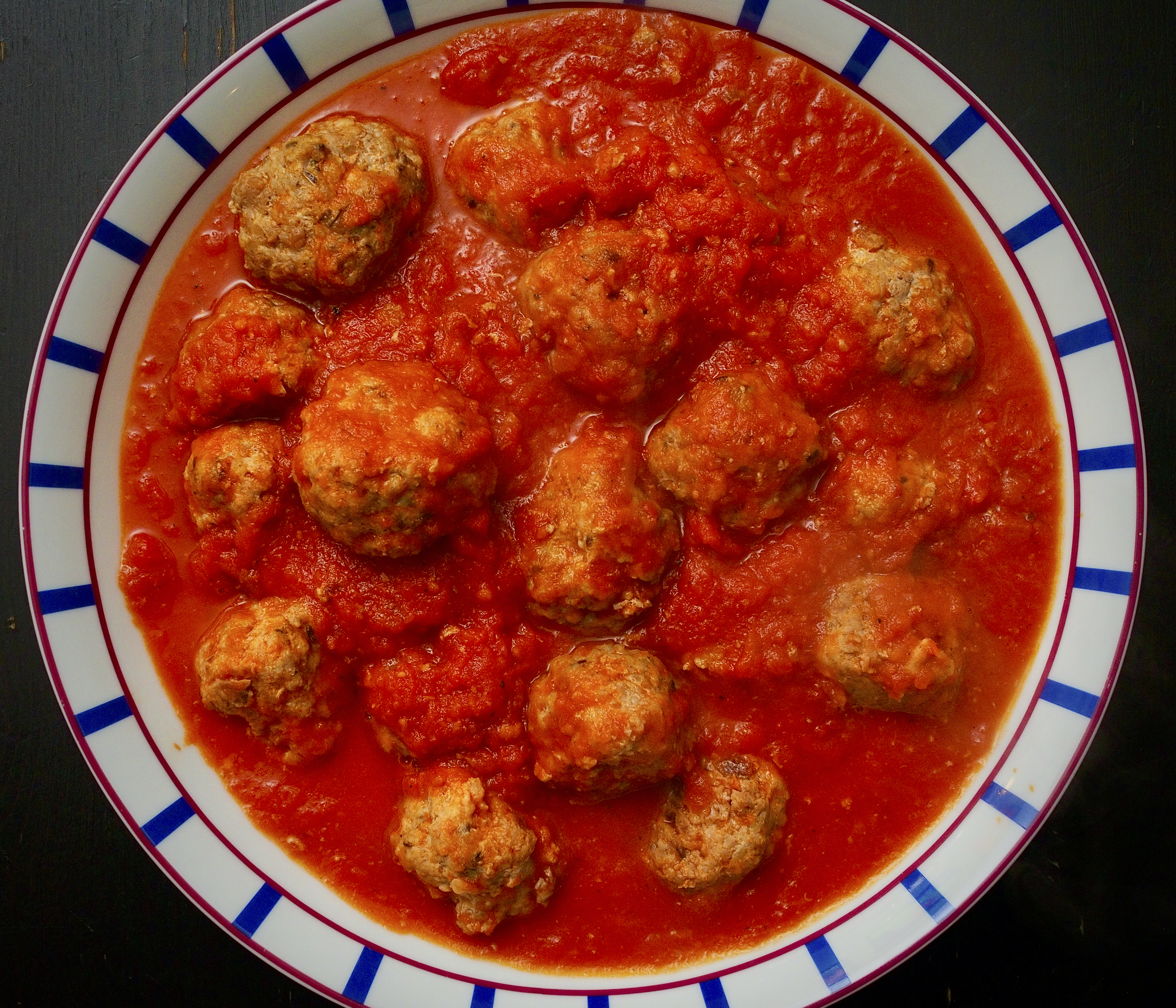
We’re pretty sure we saw somewhere that Polpo, a cookbook by Russell Norman, has just turned ten years old which inspired us to get it out and cook something. We served these, at Russell’s suggestion, with some home-made focaccia but pasta would be good too. It’s an excellent tomato sauce to use for other purposes too.
Wine Suggestion: Given the Italian inspiration to this dish we had to open something to match. The cherry and berry flavours in Pico Maccario’s Barbera Tre Roveri really sing alongside the anise-fennel flavours and the wild herb, leather and truffle flavours lend a base note to the whole dish. Bravo!
Spicy pork & fennel polpette – serves 6
1.5kg pork mince
3 medium eggs (we only had large, all was well)
150g breadcrumbs
a large pinch of dried chilli flakes
20g fennel seeds, lightly toasted and ground in a pestle and mortar
½ tbsp fine salt
1 tsp freshly ground black pepper
FOR THE TOMATO SAUCE:
100ml extra virgin olive oil
1 onion, finely sliced
1 clove of garlic, chopped
½ tbsp fine sea salt
¾ tsp freshly ground black pepper
a small pinch of dried chilli flakes
750g fresh tomatoes, quartered
3 x 400g tins chopped tomatoes
a small handful of oregano, chopped
caster sugar, if needed
Make the tomato sauce first, up to a few days in advance if you like.
Heat half the oil in a large saucepan over a medium-low heat and sweat the onion, garlic, salt, pepper and chilli flakes for 15 minutes. Add the fresh tomatoes and the rest of the oil and continue to cook gently for another 15 minutes.
Add the tinned tomatoes, bring to a gentle bubble and simmer over a low heat for 1 hour.
Remove the pan from the heat and add the chopped oregano. Now taste and season if it needs a litle sweetness (we find it usually does). Blitz with a stick blender until smooth and you can also pass through a fine sieve if you would like it more passata textured (we don’t tend to bother).
Now make the meatballs. Heat the oven to 220C/Gas 8.
Put the pork mince, eggs, breadcrumbs, chilli flakes, ground fennel seeds, salt and pepper into a large bowl and mix together well with your hands. Roll in 45g balls and place on a greased baking tray, then roast in the oven for 10 minutes, turning once, until starting to brown.
Meanwhile, bring your tomato sauce up to a gentl simmer. Transfer the meatballs to the tomato sauce and poach for 10 minutes. Serve with some lightly toasted focaccia or pasta or whatever else you fancy.
(Original recipe from Polpo by Russell Norman, Bloomsbury, 2012.)
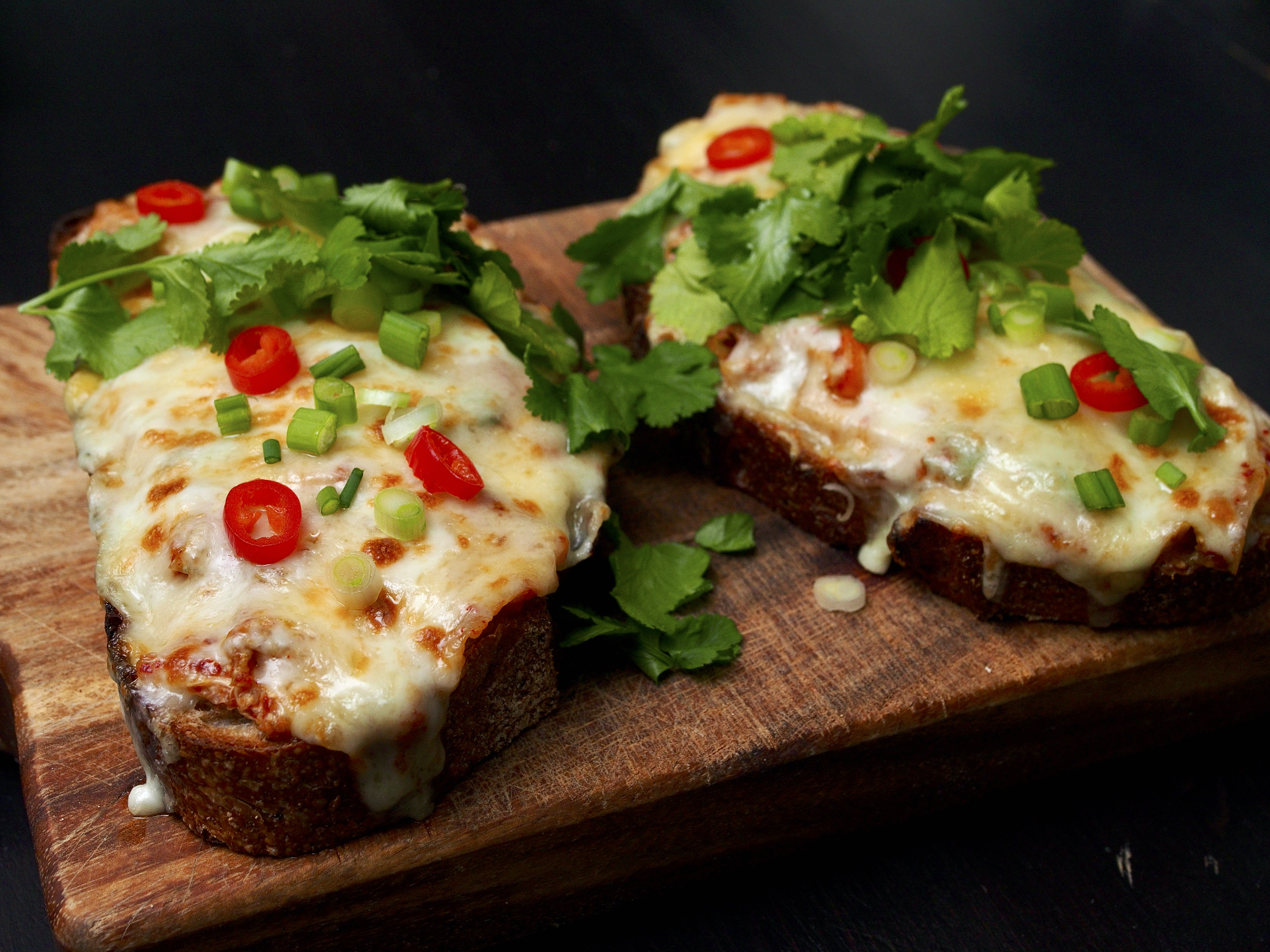
Lightly toast the sourdough on one side until golden.
Mix the mayonnaise with the garlic and spread onto the untoasted side of the bread, then top with the kimchi. Mix the cheeses together and sprinkle over the bread, pressing down gently. Grill for a few minutes until melted and golden.
Serve sprinkled with coriander, scallions and chilli.
(Original recipe from Australian Food by Bill Granger, Murdoch Books, 2020.)
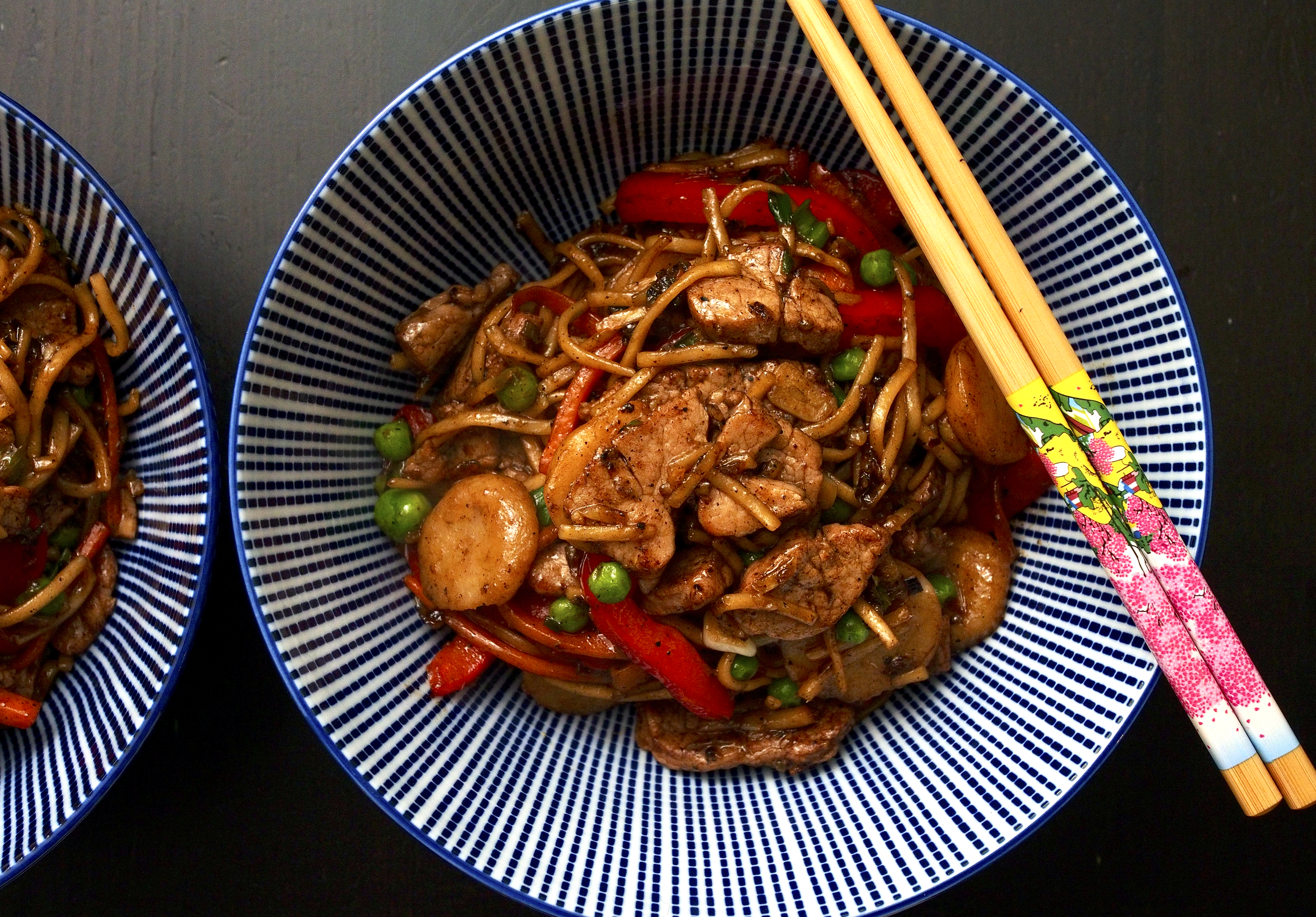
It’s Chinese New Year tomorrow so we thought we’d post some dinner inspiration for the year of the tiger. This is a good crowd-pleaser and definitely better than take-away. It’s simple too, just prep everything before you get your wok on.
Wine Suggestion: an umami laden southern-French red, like the schist laden Domaine Cébène Faugères à la Venvole. Textural and velvety Grenache with hints of Syrah plums and gravelly Carignan; loads of flavour but not too much weight.
Pork chow mein – serves 4
500g pork fillet
1 tsp Chinese five-spice powder
200g dried medium egg noodles
4 tbsp vegetable oil
2 tbsp soft light brown sugar
2 tsp cornflour
4 tbsp dark soy sauce
2 tbsp mirin or dry sherry
1 red pepper, deseeded and sliced
1 large carrot, cut into very thin strips
25g fresh ginger, peeled and very finely sliced
3 cloves of garlic, very thinly sliced
6 scallions, sliced
50g frozen peas
225g tin water chestnuts, drained and sliced
Trim any fat and sinew off the pork, then cut in half lengthways and cut into thin slices. Put into a bowl and add the five-spice powder, ½ tsp sea salt and black pepper, then set aside.
Bring a large pan of water to the boil and cook the noodles acording to the pack instructions, then drain and rinse in a sieve under running water until cold, then toss with a 1 tbsp of vegetable oil and set aside.
Mix the sugar and cornflour together in a bowl and gradually stir in the soy sauce, mirin and 100ml water, then set aside.
Heat 1 tbsp of the oil in a wok. Add the pork and stir-fry over a high heat for 2 minutes or until browned. Scoop out and set aside.
Add another tbsp of oil and stir-fry the pepper and carrot for 2 minutes. Add the ginger, garlic, scallions, peas and water chestnuts and stir-fry for 2 minutes more until just softened, then scoop out onto a plate.
Pour the last tbsp of oil into the wok and add the noodles. Stir-fry for 2-3 minutes or until some have turned crispy and brown. Add the meat and veg back into the work and toss everything together for 1-2 minutes, or until well mixed and hot.
Stir the soy and mirin mixture again and pour it into the pan. Continue tossing for 1-2 minutes or until hot and glossy. Serve straightaway.
(Original recipe from The Hairy Bikers’ Meat Feasts by Si King and Dave Myers, Weidenfeld & Nicolson, 2015.)
Adapted from Claudia Roden’s Tagliolini with lemons, but as we couldn’t find this pasta chose another thin version with great success. Perfect for lunch or in small portions for a starter.
Wine Suggestion: Paired with Sartarelli’s Sparkling Verdicchio which captured the sunshine and joy of the Adriatic coast. Full of pure fruit flavours, hints of almond and lemon and a real balance between a crisp, fresh acidity and fruit.
Capellini with lemon – serves 2 to 4
200g capellini (or tagliolini or whatever long and very thin pasta you can find)
1 lemon, grate the zest and juice
6 tbsp double cream
grated Parmesan or Grana Padano, to serve
Cook the pasta in lots of boiling water according to the timings on the pack.
Mix the lemon zest and juice with the cream in a serving bowl and season with salt.
Add the cooked and drained pasta into the serving bowl and mix with the sauce.
Serve with lots of black pepper and cheese.
(Original recipe from Med: A Cookbook by Claudia Roden, 2021)
This was made at the end of a weekend where all the previous recipes we’d tried hadn’t quite come together, or worked as we’d hoped, so our expectations were low. What a relief: we were blown away with the flavour, and our enthusiasm returned with a vengeance! The recipe is by Jamie Oliver but inspired by the Japanese restaurant Nobu in London who are known for their black cod miso and for good reason. The recipe is simple but you need to start 24 hours in advance.
Wine Suggestion: This is a dish jam packed full of savoury umami flavours and needs a similarly umami loaded wine to match. We started with a small glass of Hidalgo La Gitana’s Pasada Pastrana, a single vineyard aged manzanilla which was excellent. Then we segued into savoury Grenache territory with Roc des Ange’s Segna da Cor from the wilds of Roussillon; vibrantly textured and almost sucking the stones it was grown on. What a way to end the weekend.
Black Cod Miso- serves 4
4 bulbs of pak choi, quartered
1 cucumber, peeled halved and deseeded, then sliced into long 1cm thick strips
juice of 1 lime
soy sauce
cooked sticky rice (to serve)
FOR THE MARINADE:
2 stems of lemongrass
1 red chilli, deseeded and chopped
2.5cm piece of fresh ginger, peeled and chopped
200ml of sake or white wine
2 tbsp runny honey
300g miso paste
4 x 200g cod steaks, skin-on and pin-boned
Start the marinade the day before. Remove the outer layer from the lemongrass stems and discard. Bash the lemongrass with the back of a knife, then finely chop. Put the lemongrass into a pestle and mortar with the chilli, ginger and a pinch of salt, then bash to a paste.
Put the paste into a saucepan with the sake and honey, then bring to the boil. While the mixture is warming, gradually add the miso paste, a little at a time, stirring constantly. Simmer until the mixture is lightly golden, then remove from the heat and pour onto a flat tray so it cools quickly.
When the marinade is cool, put the fish into a container and pour over three-quarters of the marinade. Move the fish fillets around to ensure they are completely coated, then cover and put into the fridge. Put the rest of the marinade into a container and keep in the fridge until needed.
When ready to cook, preheat the grill until very hot. Put the pieces of fish onto an oiled baking tray, skin-side up and cook until slightly caramelized and golden. This will take 6-8 minutes depending on how thick your pieces of fish are.
Meanwhile, lay the pak choi into a steamer over a pan of boiling water. Add the strips of cucumber and steam until the pak choi is tender.
Stir the lime juice into the container of leftover marinade to loosen it slightly. Serve the fish with the greens and drizzle over a little soy sauce. Serve with cooked rice and the miso dressing on the side.
(Original recipe from Cook with Jamie by Jamie Oliver, Penguin Books, 2006.)
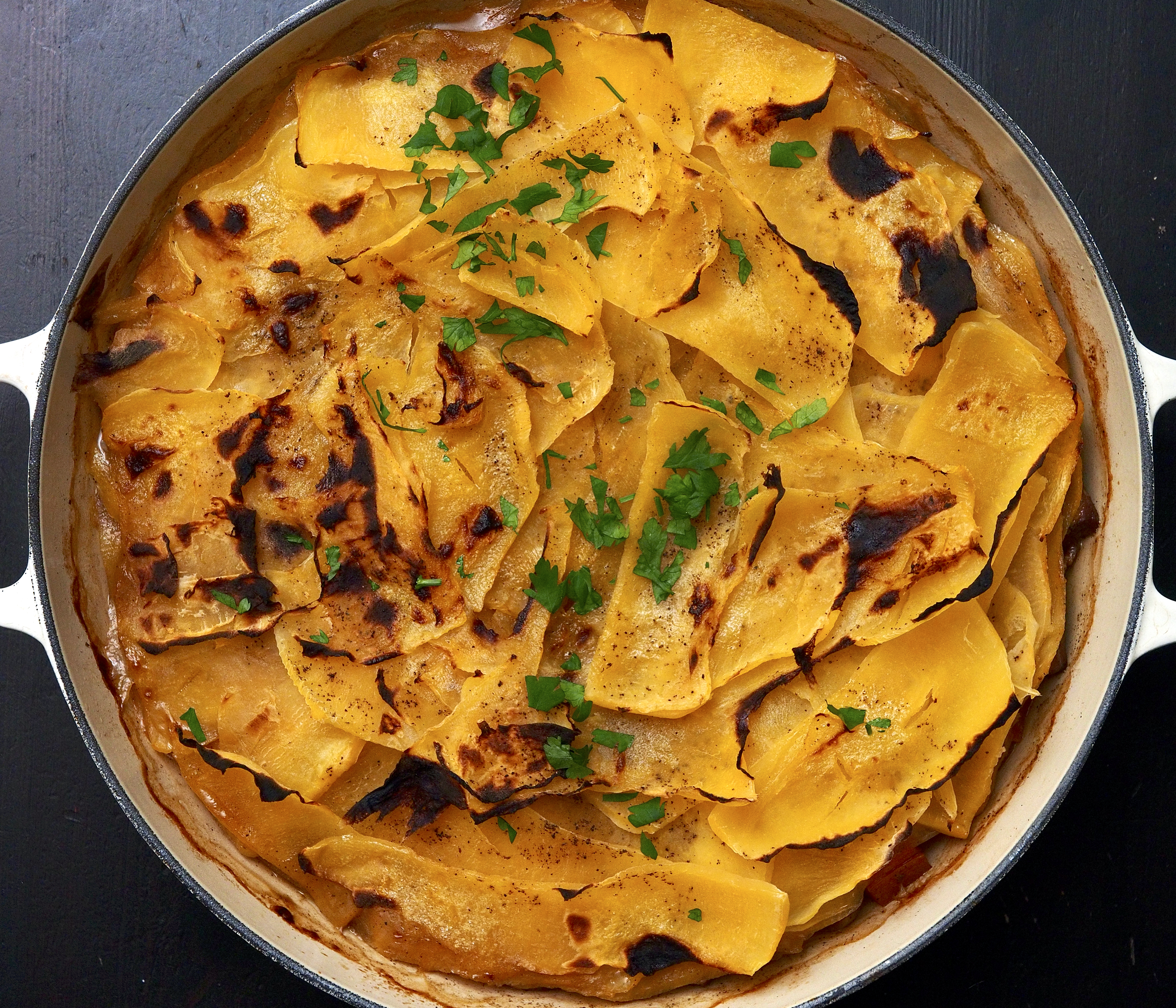
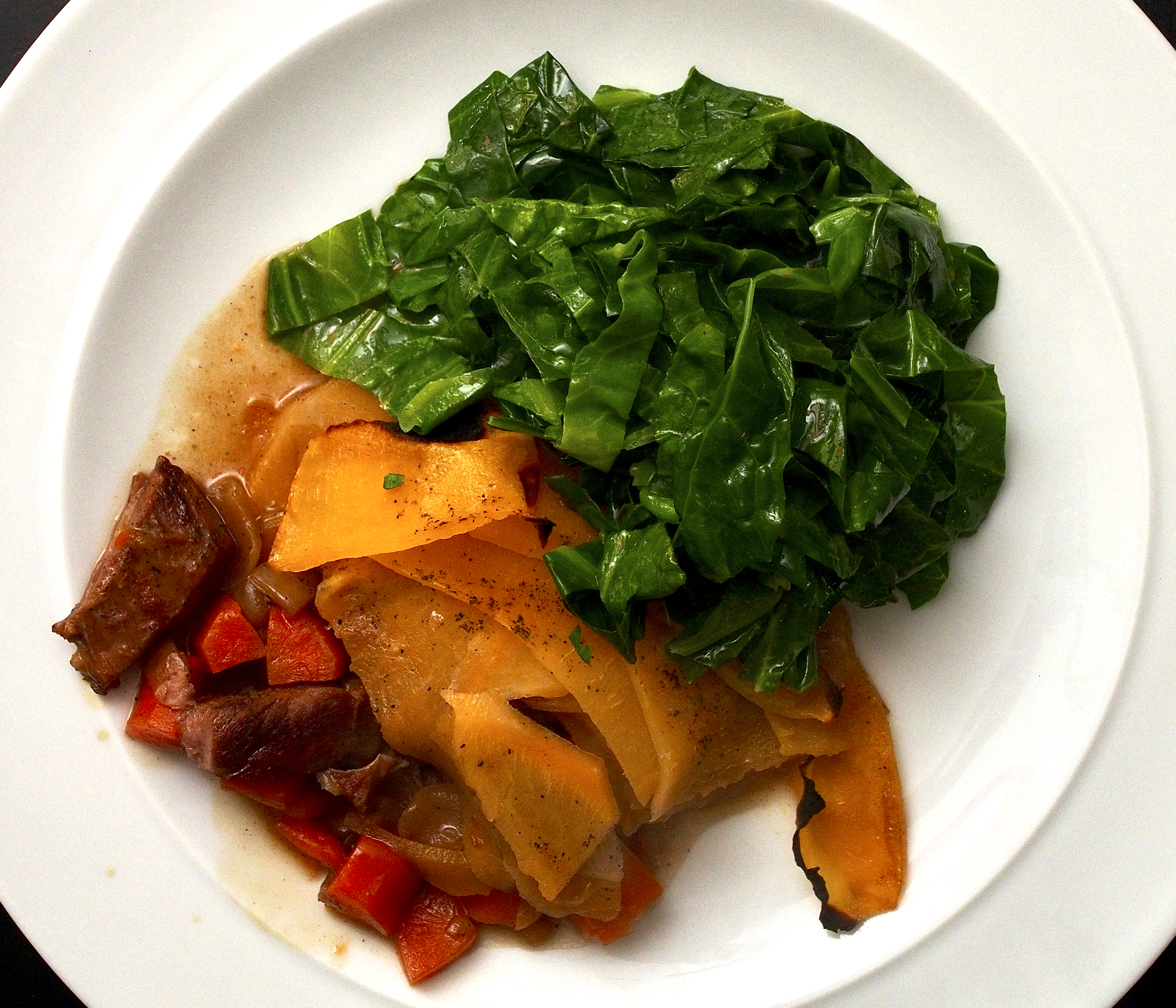
Our rather generous Burns Supper for two. We had a bumpy start that evening and didn’t get to enjoy this until all hours but it was worth the wait! Use a mandoline or food processor to slice the swede into very thin slices, otherwise they will take an age to cook. Serve with some nice greens on the side.
Wine Suggestion: Given that it was Burns night we poured a wee dram of Scotch Whisky from the Kilchoman distillery on Islay. Rich and smooth due to the sherry and bourbon casks with a fiery core of peaty smoke. Alongside the hotpot it was delicious and warmed our hearts. We’ll definitely remember this match for future hotpots.
Lamb hotpot with turnip topping – serves 6
1kg best end of neck or diced stewing lamb, seasoned generously with salt and black pepper
olive oil
2 onions, chopped
2 carrots, chopped into rough 2cm pieces
2 tbsp plain flour
2 bay leaves
500ml lamb stock
Worcestershire sauce
1 swede, peeled, quartered and very finely sliced (use a mandoline or a food processor if possible)
butter
parsely, chopped, to serve
Heat a little oil in a large frying pan and brown the lamb in batches, then transfer to a deep ovenproof frying pan with a lid.
Brown the onions in a little more oil, followed by the carrots and add these to the lamb. Tuck in the bay leaves.
Pour the lamb stock into the pan used to brown everything and slowly bring to the boil, use wooden spoon to release any sticky bits from the bottom of the pan. When the stock is nearly simmering, put the flour into a small bowl. Add a little of the warm stock and stir to make a smooth paste. Stir this paste into the simmering stock and keep stirring until boiling and starting to thicken. Add a few shakes of Worcestershire sauce, then pour over the lamb and vegetables.
Put the pan over the heat and allow to come to a simmer, then cover and simmer gently for 1½ hours. Remove the lid and carefully layer the sliced swede on top, seasoning as you go. Dot the top of the swede all over with little pieces of butter. Replace the lid and cook for 20-30 minutes or until the swede is completely tender. Brown the top under a hot grill, then sprinkle with parsley to serve.
(Original recipe by Lulu Grimes in Olive Magazine, January 2014.)
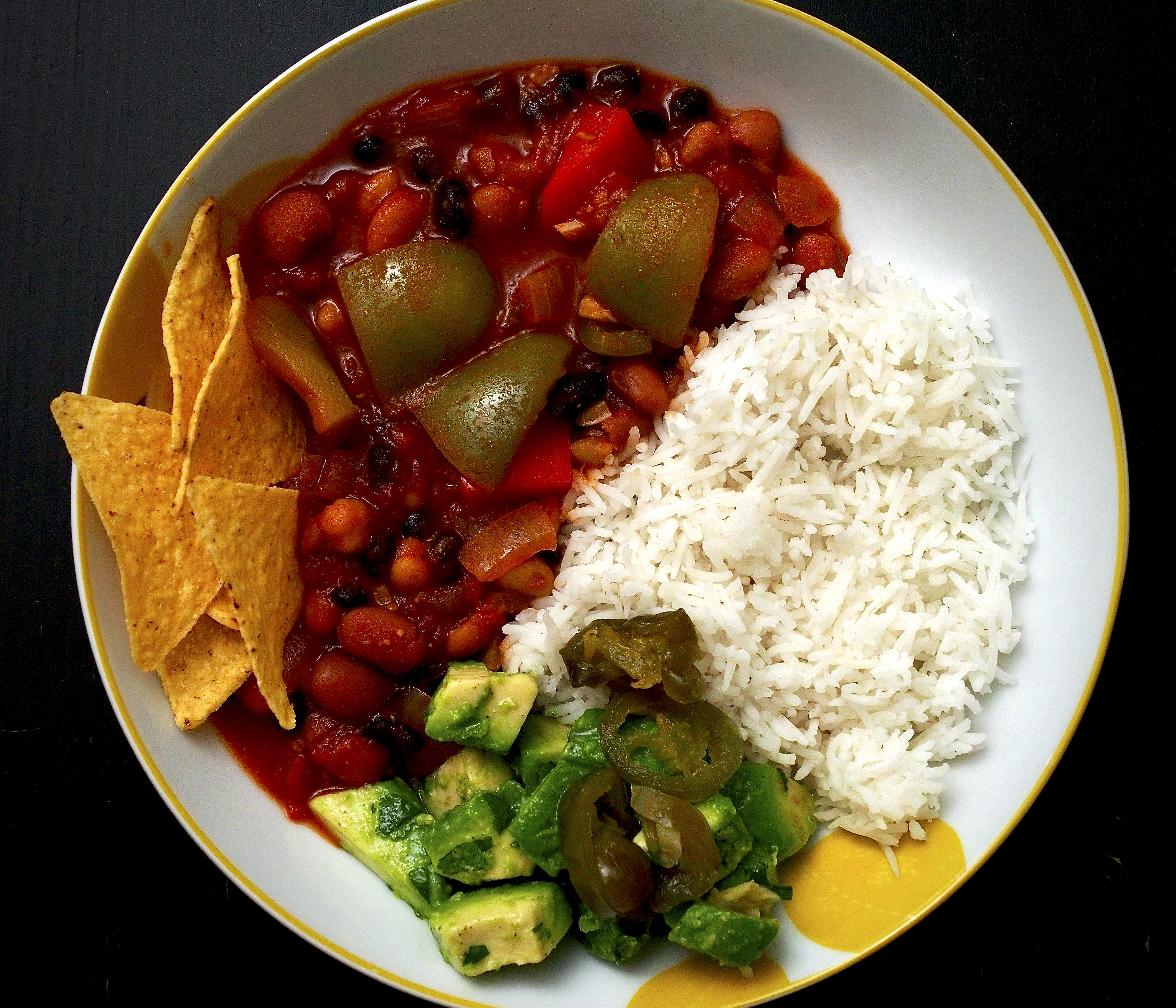
This vegan chilli is super simple and really tasty. The smoky chipotle is essential to the flavour so buy a good one or, if you can get them, chipotle chillies in adobo. It’s also quick to cook so perfect for weeknights. Serve with rice and some grated cheddar cheese and sour cream on the side if you’re not vegan.
Chipotle bean chilli with avocado salsa – serves 4 to 6
1 large red pepper, deseeded and cut into 2.5cm pieces
1 large green pepper, deseeded and cut into 2.5cm pieces
2 tbsp olive oil
2 onions, chopped
2 large cloves of garlic, finely chopped
1 ½ tsp ground cumin
1 ½ sweet smoked paprika
1 tsp garlic granules
2 tbsp tomato purée
2 tbsp chipotle chillies in adobo (or chipotle paste)
2 tsp vegetable bouillon powder (or use a stock cube)
400g tin chopped tomatoes
400g tin black beans
400g tin borlotti beans
400g tin mixed beans
pickled sliced jalpeño peppers, to serve
200g tortilla chips, to serve
FOR THE AVOCADO SALSA
2 ripe avocados
a handful of coriander leaves, chopped
juice of ½ lime
Heat a large cast-iron casserole or similar over a medium heat. Add the olive oil and onions, then fry for 3-4 minutes or until starting to soften. Add the garlic and cook for another minute or two.
Stir in the peppers, then the ground cumin, smoked paprika and garlic granules. Continue cooking and stirring for a couple of minutes, then add the tomato purée and chipotle paste, stir well and cook for another minute.
Sprinkle in the bouillon powder, then pour in 500ml of water and the chopped tomatoes. Stir well and bring to the boil. Drain and rinse the tins of beans, then add them to the pan. Stir well then leave to simmer for 15-20 minutes or until reduced and thickened.
Meanwhile, peel and chop the avocados and put into a bowl. Add the chopped coriander, lime juice and some salt and pepper, then mix together.
Taste and season the chilli if needed. Then serve in bowls with rice, tortilla chips, the salsa and some pickled chillies.
(Original recipe from Outdoor Cooking by Tom Kerridge, Bloomsbury Absolute, 2021.)
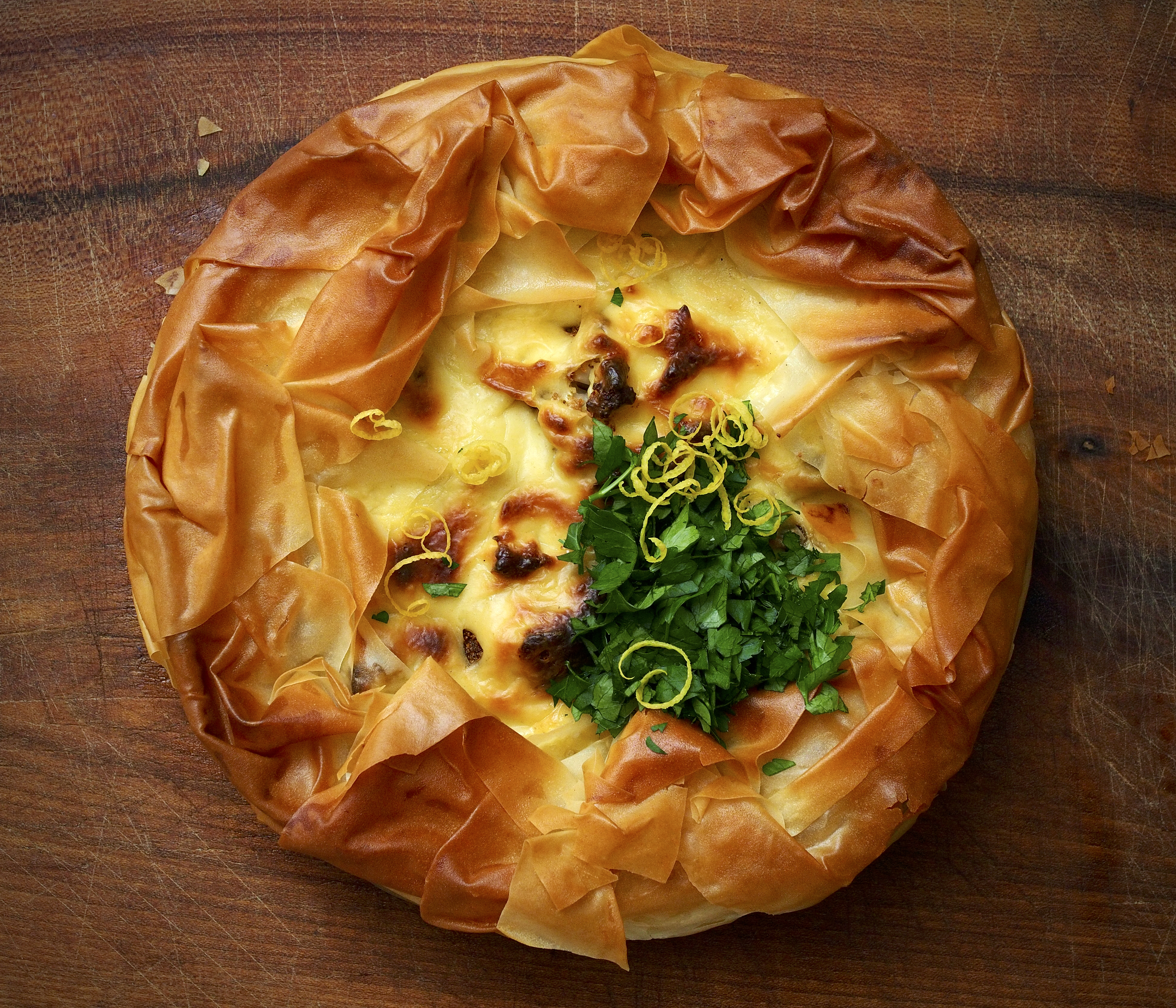
What a clever idea this cauliflower cheese pie is, and the filo pastry makes it straightforward too. This one is from the clever people at the Ottolenghi Test Kitchen. It takes shape perfectly in the oven and then oozes appropriately when you cut into it. A definite crowd-pleaser.
Wine Suggestion: A rich white was called for, and while we’d have normally gone for a Chardonnay by default we had something different in the glass: Quinta Soalheiro’s Primeiras Vinhas. An old-vine alvarinho partially made in old oak that was velvety, concentrated and powerful. Despite it being bone dry the fruit was sophisticated and effortless. We’d opened this the day before and had to admit it was even better on the second day so a good one for the cellar.
Curried cauliflower cheese pie – serves 4
1 large cauliflower, trimmed and cut into bite-sized florets
2 tsp mild-medium curry powder
3 tbsp olive oil
100g unsalted butter, 50g cut into cubes and 50g melted to brush the pastry with later
75g plain flour
675ml full-fat milk
2 cloves of garlic, crushed
1 ½ tbsp English mustard
150g mature cheddar cheese, roughly grated
6 sheets of filo pastry
1 tbsp roughly chopped parsley
1 ½ tsp lemon zest
Preheat the oven to 180C fan.
Line the bottom and sides of a 23cm springform cake tin with baking parchment.
Line a large baking tray with baking parchment and place the cauliflower florets onto it. Add the curry powder, 1 ½ tbsp of olive oil, ½ tsp of salt and plenty of black pepper. Toss with your hands to coat, then roast for 20 minutes, or until cooked through and lightly browned. Set the cauliflower aside.
Lower the oven temperature to 170C fan.
Meanwhile, make the béchamel sauce. Put the 50g of butter into a medium-sized saucepan and melt over a medium-high heat, then add the flour and stir to combine. Cook for a minute or two, then gradually add the milk stirring constantly and waiting for it all to be incorporated before adding any more. You can use a whisk to do this but we prefer a wooden spoon. When all the milk has been added, continue to cook the sauce for about 7 minutes or until slightly thickened. Keep stirring the whole time until it bubbles, then turn it down and keep giving it regular stirs. Remove from the heat and stir in the garlic, mustard, cheese and ¼ tsp of salt, keep stirring until the cheese has melted.
Get your filo pastry out of the pack and cover it with a damp tea towel to stop it drying out. Combine the melted butter with 1 ½ tbsp of oil. Take one sheet of filo at a time, brush the upper side with the butter mixture and drape into the cake tin, butter side up. Push it down gently to fit into the tin. Continue with the remaining sheets , brushing each with butter and laying in the tin, rotate the tin slightly each time so the pastry hangs over the sides at a different angle.
Spoon half the béchamel into the tin and top with the roasted cauliflower. Spoon over the rest of the sauce, then crimp the overhanging pastry to form a border, leaving the centre of the pie exposed. Brush the top of pastry with the butter mixture, then place onto a baking tray. Bake in the oven for 30 minutes.
Carefully release the outer circle of the baking tin and remove the paper to expose the sides, bake for another 20-25 minutes or until the sides are nicely browned. Leave to rest out of the oven for 15 minutes before serving.
Top with the parsley and the lemon zest and cut into big wedges to serve. Some salad is nice on the side.
(Original recipe from Ottolenghi Test Kitchen: Shelf Love by Noor Murad & Yotam Ottolenghi, Ebury Press, 2021.)
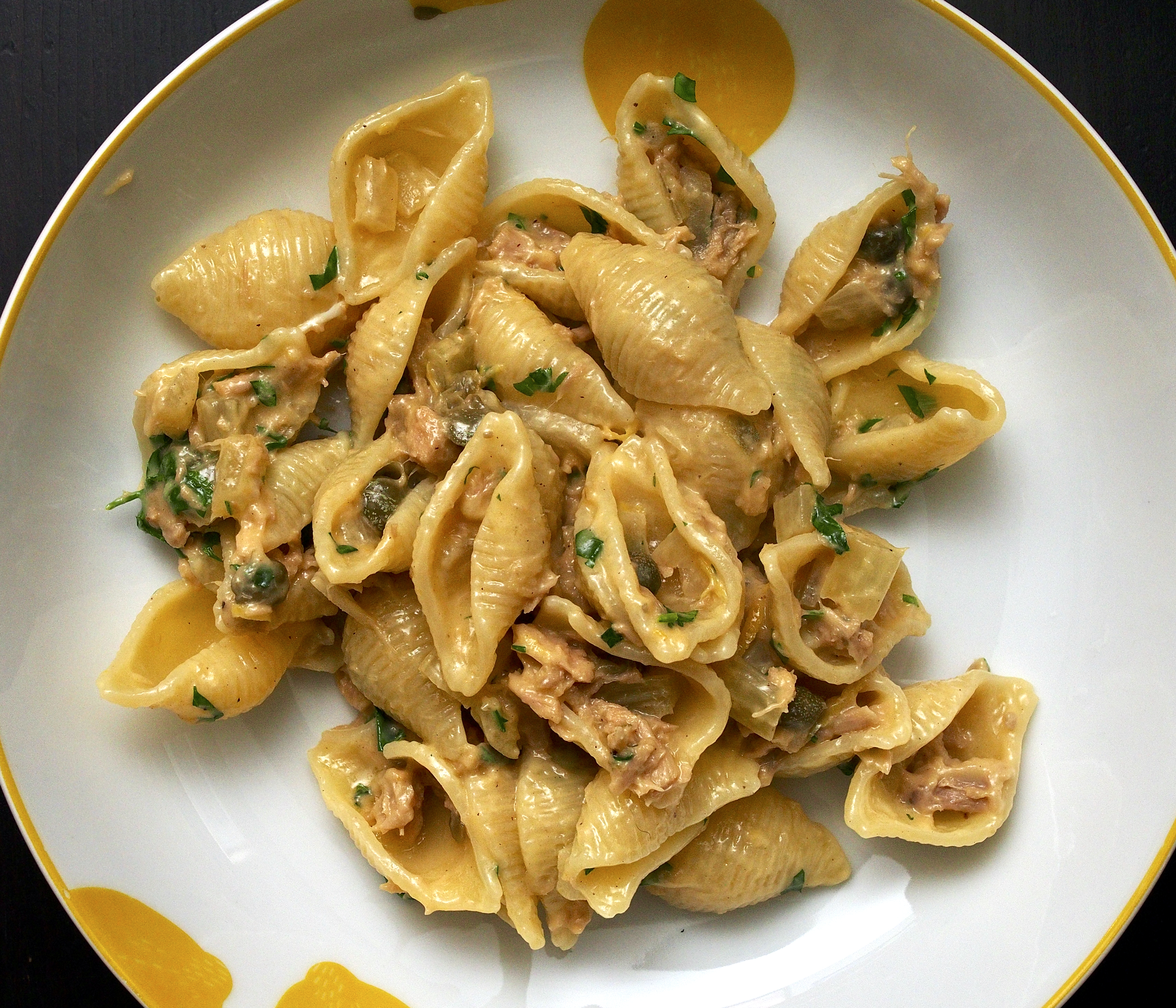
This recipe is from Rachel Roddy’s fabulous book, An A-Z of pasta. She introduces this one by asking if you are familar with vitello tonnato, which happens to be one of Jules’ favourite dishes, so we had to try it. Rachel uses the lumache pasta shape, which means snails and they are a bit like snail shells. We found these hard to find so we substituted conchiglie to great effect.
Wine Suggestion: look for a crisp, fresh white with a good body/structure like a dry, unoaked chardonnay from a cooler region. For us it was Céline & Frèdéric Gueguen’s Bourgogne Côtes Salines. Grown in vineyards just outside the Chablis appellation this is vibrantly fresh apple and melon flavoured with a savoury mid-palate that just melts into the tuna sauce.
Conchiglie with tuna, egg & capers – serves 4
1 large onion, peeled and finely chopped
1 stick of celery, trim to the palest bit, pull of any strings, and finely chop
6 tbsp olive oil
1 x 200g tin of tuna in olive oil, drained
2 tbsp tiny capers, rinsed
200ml white wine
1 unwaxed lemon, zested and juiced
400g conchiglie (or lumache)
a sprig of flat-leaf parsley, finely chopped
2 egg yolks, beaten
Bring a large pan of water to the boil and add a generous amount of salt.
Warm the olive oil in a frying pan, then add the onion and celery with a pinch of salt and cook on a medium-low heat, until soft. You need to be patient as this will take a while.
Add the tuna and capers, stir for a minute, then add the wine and allow to bubble for 10 minutes, adding 3 tbsp of lemon juice and some zest for the last few minutes. You are looking for a saucy consistency so cook for a bit longer if it is still watery.
Meanwhile, cook the pasta according to the packet timings, then drain and tip into a warm bowl, pour the sauce over the top, add the parsley, toss together, then quickly add the egg yolks and toss again.
(Original recipe from An A-Z of Pasta by Rachel Roddy, Penguin: Fig Tree, 2021.)






 Jono & Jules do food & wine