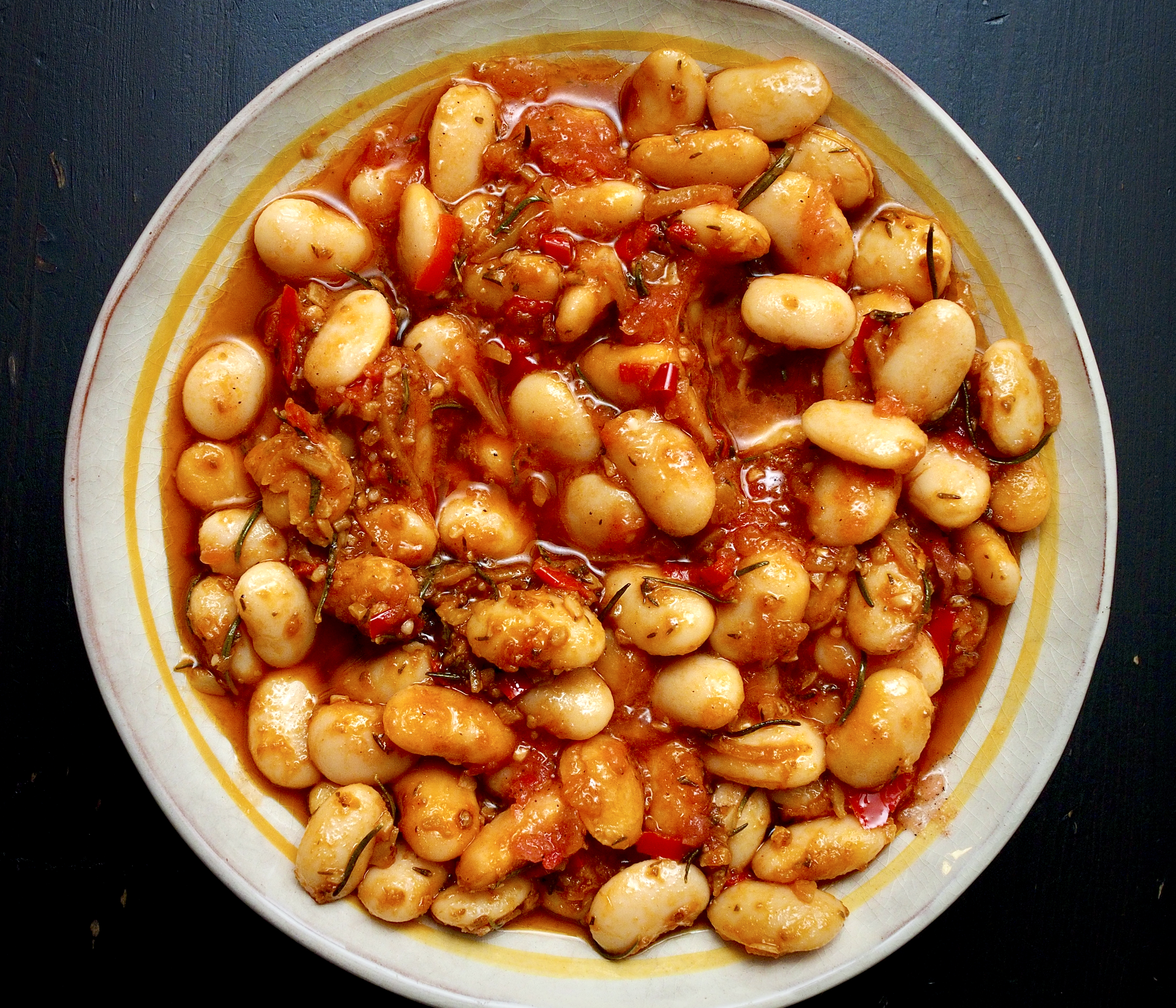
These are delicious and perfect with some crusty bread or flatbreads for scooping. Do buy the fancy butter beans in a glass jar if you can. You can make this up to a day ahead and the flavours will improve.
Wine Suggestion: We really like this dish with a nice, chilled Vermentino. Tonight’s choice, the Poggio ai Ginepri Bianco from Tenuta Argentiera in Bolgheri. Long and vibrant with a rich citrus and pear flavour and layers of texture and wild sage to finish.
5 cloves of garlic, finely chopped
2 mild red chillies, finely chopped, including the seeds
1 tbsp coriander seeds, finely crushed with a pestle and mortar
3 preserved lemons (80g), inner parts discarded and skin finely sliced
1 ½ tbsp roughly chopped thyme leaves
4 sprigs of rosemary
1 tbsp tomato purée
170ml olive oil
1 jar of butter beans (700g)
2 large vine tomatoes, roughly grated and skins discarded
Put the garlic, chillies, coriander, preserved lemon, thyme, rosemary, tomato purée, olive oil and 1¼ tsp of flaked salt into a medium sauté pan on a medium-low heat and stir together. Heat gently for 25 minutes, or until very fragrant but not browned at all. Turn the heat to low if the oil gets to hot.
Stir in the butter beans, then turn the heat up to medium and cook for 10 minutes. Remove from the heat and leave to infuse for at least an hour, or longer if you can.
Meanwhile, mix the grated tomato with ⅓ tsp of flaked sea salt and plenty of black pepper.
Spoon the butter beans into a shallow bowl and spoon over the grated tomato, mixing it in in places. Then serve with crusty bread or flatbreads.
(Original recipe from Ottolenghi Test Kitchen: Shelf Love by Noor Murad & Yotam Ottolenghi, Ebury Press, 2021.)
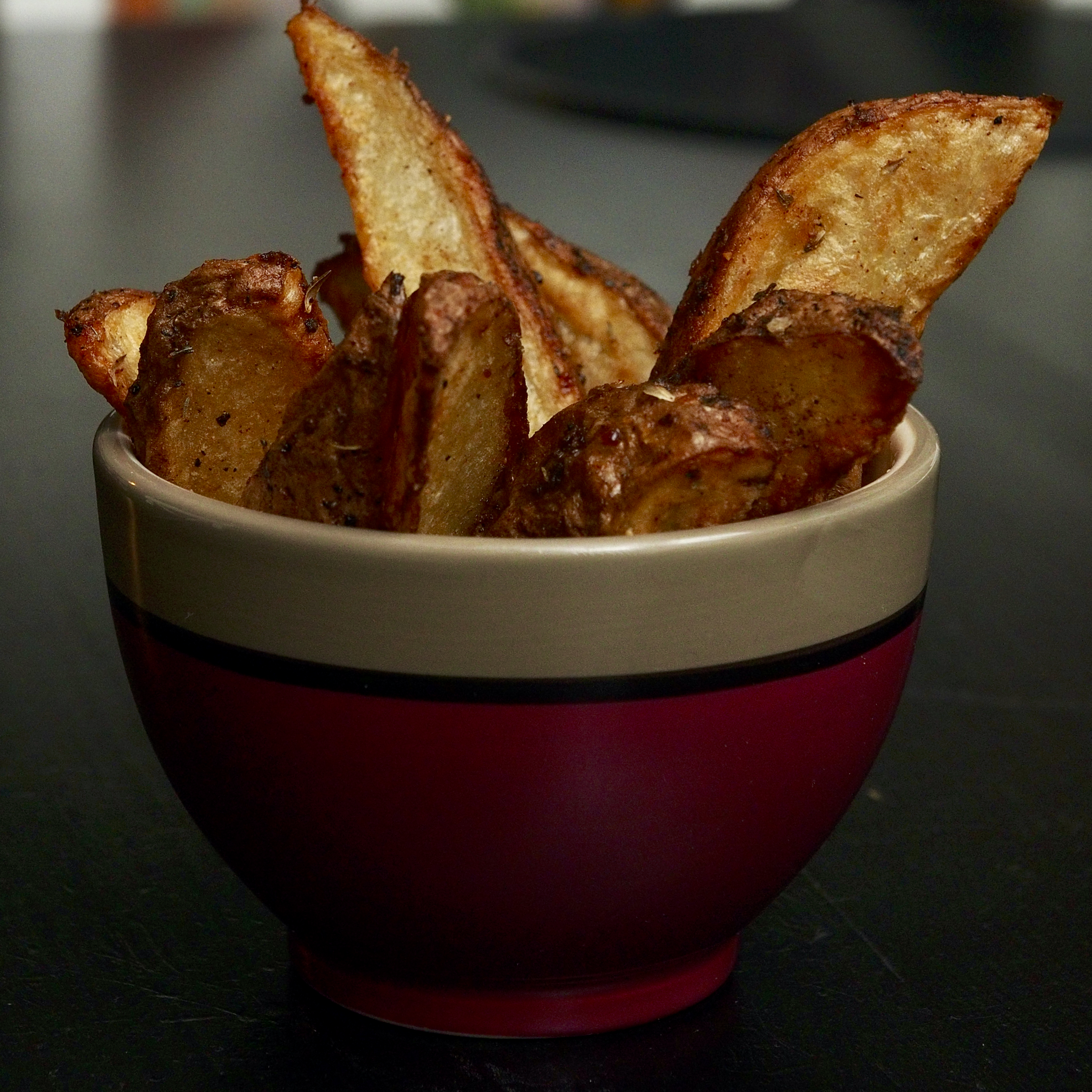
These are really good and the trick is to set them in the baking tray in rows with the skin-side down. You can use Cajun seasoning if you have it and if not make up the seasoning below – you’ll have more than you need for more wedges another time.
Crispy potato wedges – serves 4
FOR THE SEASONING:
1½ tbsp salt
½ tbsp dried oregano
½ tbsp paprika
½ tbsp cayenne pepper
½ tbsp freshly ground black pepper
675g large potatoes (buy a variety that makes good chips)
2 tbsp olive oil
1 heaped tsp of the seasoning above
Preheat the oven to 200C fan.
Scrub the potatoes and cut in half, then cut each half into 6 wedges. Put the wedges into a pan of boiling salty water and cook for 2-3 minutes, then drain.
Put the olive oil into a large roasting tin with the seasoning. Add the wedges and toss to coat, then arrange in rows sitting upright on their skins. Bake for 35-40 minute, until soft and golden.
Wine Suggestion: Something red from Italy’s Adriatic coast, but nothing too big or complex as this is a fun, casual dish! For us Umani Ronchi’s Rosso Conero Serrano, a Montepulciano – Sangiovese blend that has a medium body, fresh and bright cherry fruits and a gentle, earthy tannins was the ticket.
Prawn spaghetti with tomato, chilli & basil – serves 2
1 tbsp olive oil
1 clove of garlic, crushed
½ tsp dried chilli flakes
150g baby plum tomatoes
150ml white wine
200g spaghetti
a handful of basil leaves
225g raw peeled prawns
a generous knob of butter
Warm the oil in a large frying pan, then add the garlic and chilli flakes and cook for a couple of minutes. Add the tomatoes and cook for a few minutes until starting to soften, then add the white wine and cook for a further 5 minutes.
Meanwhile, cook the spaghetti according to the packet instructions in lots of very salty water, then drain but reserve a cup of the cooking water.
Add the basil and prawns to the tomatoes, season well, and cook until the prawns turn pink. Stir in the butter and spaghetti and a splash of pasta cooking water if you need to loosen the sauce a bit. Toss it all together and serve.
(Original recipe by Janine Ratcliffe in Olive Magazine, March 2020.)
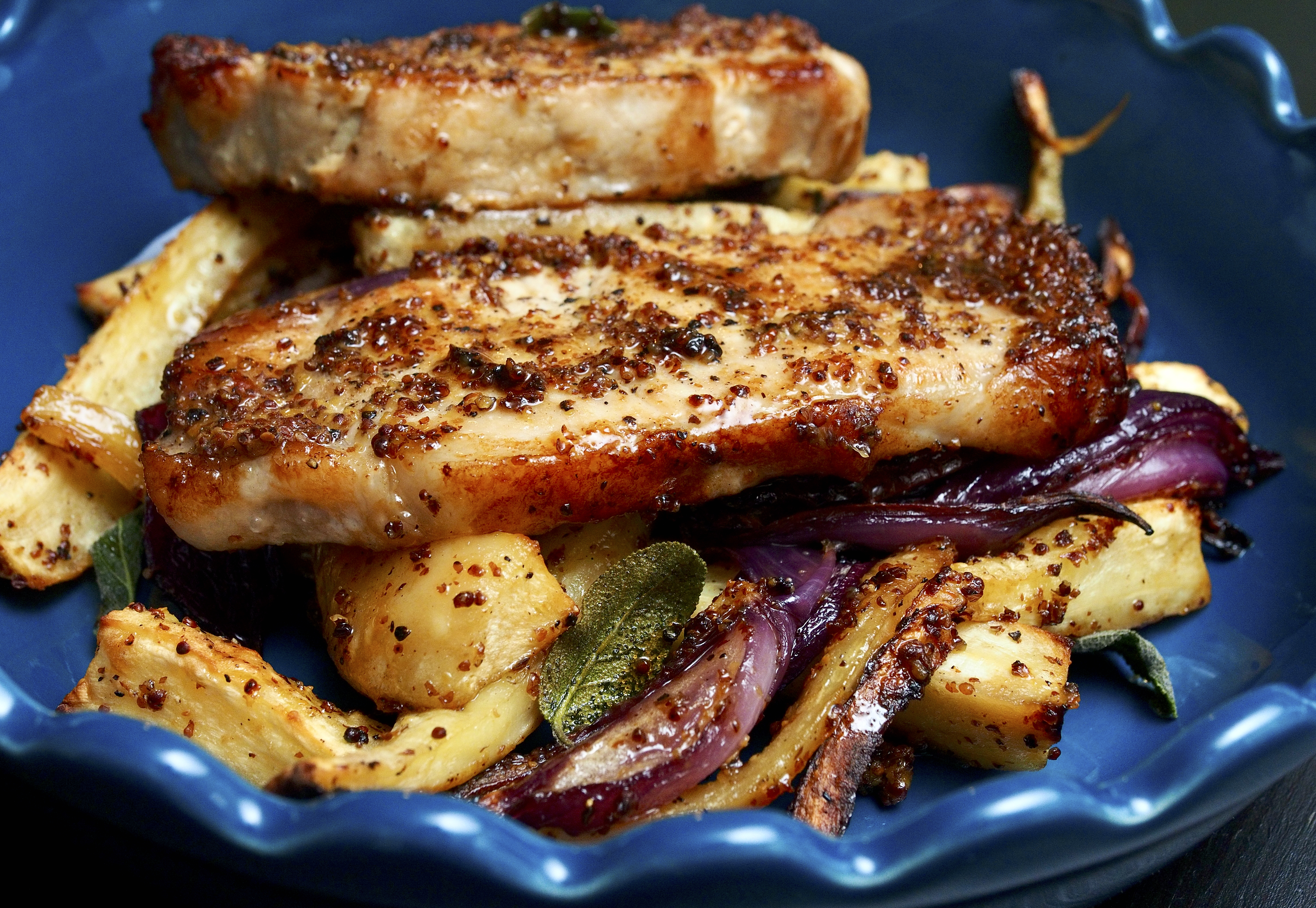
This makes a delicious weeknight dinner. Serve with some greens on the side.
Wine Suggestion: really nice with a dry, artisan cider like the Cockagee keeved cider from Slane. This retains a natural sweetness when first brewed but when aged and because of the apples used it ends up being full bodied and dry with a great bittersweet twist. A cider for food like some of the Breton ciders we’ve tried in France in past years
Baked pork & parsnips – serves 4
4 large parsnips (about 500g), peeeled and cut lengthways into 6
2 red onions, each cut into 8 wedge through the root
2 ½ tbsp olive oil
1 ½ wholegrain mustard
4 pork chops
1 ½ clear honey
small handful of sage leaves
Heat the oven to 220C/200C fan/gas 7.
Put the veg into a large roasting tin, season and toss with 2 tbsp of the olive oil and 1 tbsp of the mustard. Roast for 20 minutes.
Meanwhile, heat a frying pan over a high heat. Season the pork chops and rub with the last ½ tbsp of oil. Fry for 30 seconds on each side or until just browned – turn onto the sides too to brown any fat.
Stir the veg, then put the chops on top and rub with the rest of the mustard. Roast for another 15 minutes, then drizzle with the honey and scatter over the sage. Return to the oven for 5 minutes, then serve with the pan juices.
This will improve your veg intake for the day and puts frozen prawns to good use. A perfect curry for mid-week. Serve with naan breads or rice and lime wedges.
Prawn, spinach & coconut curry – serves 2-3
2 tbsp olive oil
200g raw prawns, defrosted if frozen
1 onion, diced
3 large cloves of garlic, finely chopped
1-2 chillies, deseeded
1 red pepper, sliced
2 tbsp curry paste, we like Patak’s Madras
400ml tin of coconut milk
80g Tenderstem broccoli, cooked until tender
100g baby spinach
lime wedges, to serve
Heat the oil in a frying pan over a medium heat and fry the onion for 5 minutes until softened. Add the garlic and chillies and fry for another 2 minutes, then addd the sliced pepper and cook for 3 minutes until softened.
Push the veg to one side and fry the curry paste for a couple of minutes to heat through, then add the coconut milk and mix well to combine. Simmer for about 10 minutes, or until thickened, then add the prawns, broccoli and spinach. Stir well and simmer until the prawns are just cooked and the spinach wilted.
Serve with rice or naan breads and lime wedges for squeezing over.
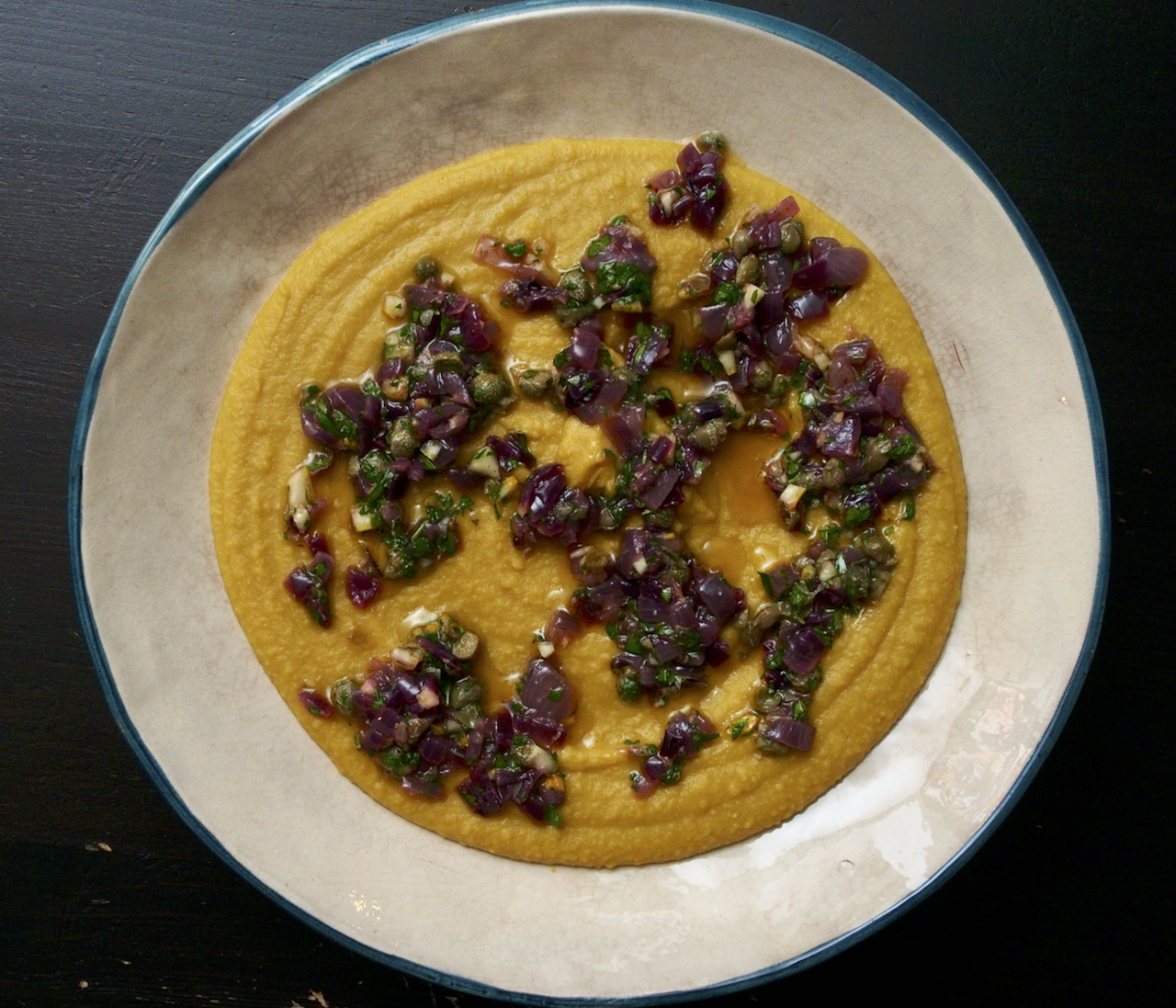
A truly delicious dip to serve as a starter with warm flatbreads or pitta. It was very difficult to stop ourselves eating the lot …and thereby spoiling our appetite for the main to follow.
Yellow split pea purée with buttered onions and caper salsa – serves 6
3 tbsp unsalted butter
3 tbsp olive oil
2 red onions, finely chopped
180g yellow split peas, rinsed well and drained
½ tsp ground turmeric
FOR THE SALSA:
2 tbsp capers, roughly chopped
5g parsley, finely chopped
2 thin lemon slices, discard the pips and finely chop (including the rind)
2 tbsp oil
Put the butter, 2 tbsp of oil, the onions and ¾ tsp of salt into a large sauté pan over a medium heat for 15-18 minutes, stirring regularly, until soft and golden. Transfer half the onions, along with most of the oil and melted butter to a small bowl, and set aside.
Add the split peas, turmeric and 1.2 litres of water and ¾ tsp of salt to the pan with the remaining onions and bring to a simmer. Lower the heat to medium and cook for 20 minutes, uncovered. Cover with the lid and cook for another 40-45 minutes, or until the split peas are very soft and most of the liquid is evaporated. If not, you can remove the lid again and cook a little longer.
Meanwhile, combine the ingredients for the salsa in a small bowl.
Whizz the warm split peas with the remaining cooking water and 1 tbsp of olive oil in a food processor until completely smooth.
Spoon into a shallow dish, creating a dip in the middle. Mix the buttery onions with the caper salsa, then spoon on to the dip. Serve warm.
(Original recipe from OTK Shelf Love by Noor Murad & Yotam Ottolenghi, Ebury Press, 2021.)
Do buy good quality tuna for this, packed in olive oil. We like Ortiz which is widely available and excellent quality. We’d also highly recommend Shines’ Wild Irish Tuna, one of our local companies based in Donegal. We have tried loads of their tinned and jarred fish and they are all top quality.
Wine Suggestion: We chose a lighter red to match this dish from the Marches in central Italy. The Umani Ronchi San Lorenzo Rosso Conero has style and panache and the medium body, morello cherry flavours, soft spices and silky tannins are a charming match.
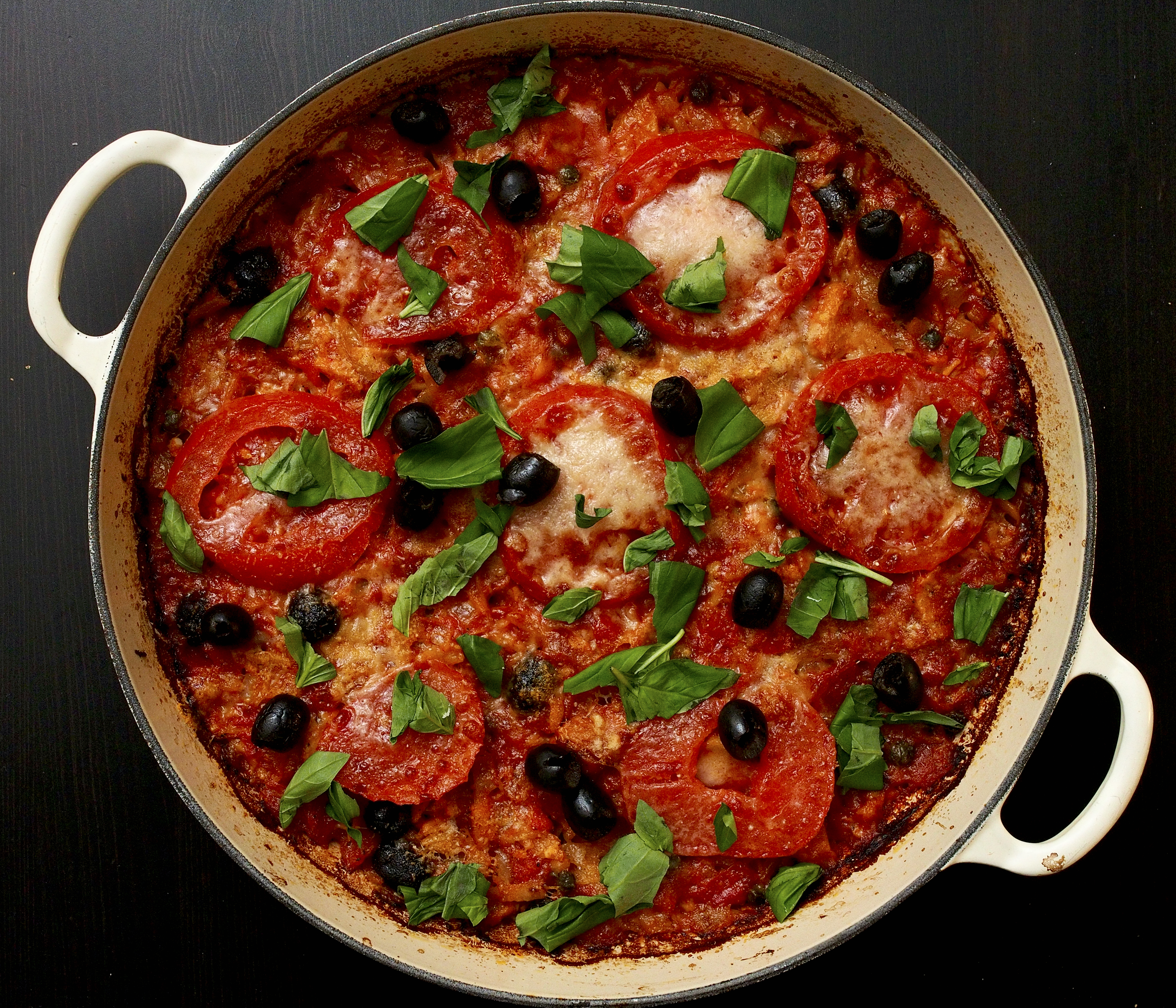
Baked orzo puttanesca – serves 4
4 tbsp olive oil
1 onion, finely chopped
6 cloves of garlic, crushed
½ tsp chilli flakes
3 anchovies in oil, drained and roughly chopped
2 tbsp capers
30g preserved lemon, discard the flesh and thinly slice the skin into strips
70g pitted Kalamata olives, roughly torn in half
2 tins of good tuna in olive oil, drained and roughly flaked
1 tbsp tomato purée
1 x 400g tin chopped tomatoes
250g dried orzo
1-2 plum tomatoes, cored and cut into half ½ cm thick rounds
40g Parmesan, finely grated
5g basil leaves, roughly torn
Preheat the oven to 200C fan.
Heat 3 tbsp of the olive oil in a large ovenproof sauté pan that has a lid. Add the onion and cook gently for about 8 minutes or until softed and browned. Add the garlic, chilli flakes and anchovies and cook for another minute, until fragrant.
Stir in the capers, half the preserved lemon strips, 45g of the olives, the tuna, tomato purée, tinned tomatoes, orzo, 450ml of water, 1 tsp of salt and lots of black pepper. Bring to a simmer, then cover with the lid and bake in the oven for 20 minutes, or until the orzo is cooked through.
Turn the oven up to 230C fan.
Remove the lid from the dish, top with the tomato slices and sprinkle over the cheese. Bake for a further 10-12 minutes, until lightly browned, then leave to rest for 10 minutes.
Sprinkle over the remaining olives, preserved lemon, basil and 1 tbsp of oil before serving.
(Original recipe from OTK Shelf Love by Noor Murad & Yotam Ottolenghi, Ebury Press, 2021.)
Delicious Indian comfort food. Serve with warm naan bread for mopping up the sauce.
Wine Suggestion: an oaked white of your choice we think. For us it was the Les Dissidents Préjugés by Domaine Ventenac in Carbadès in Southern France, a delightfully off-beat and thoughtful wine with a style that reflects great vineyards and an inventive winemaker.
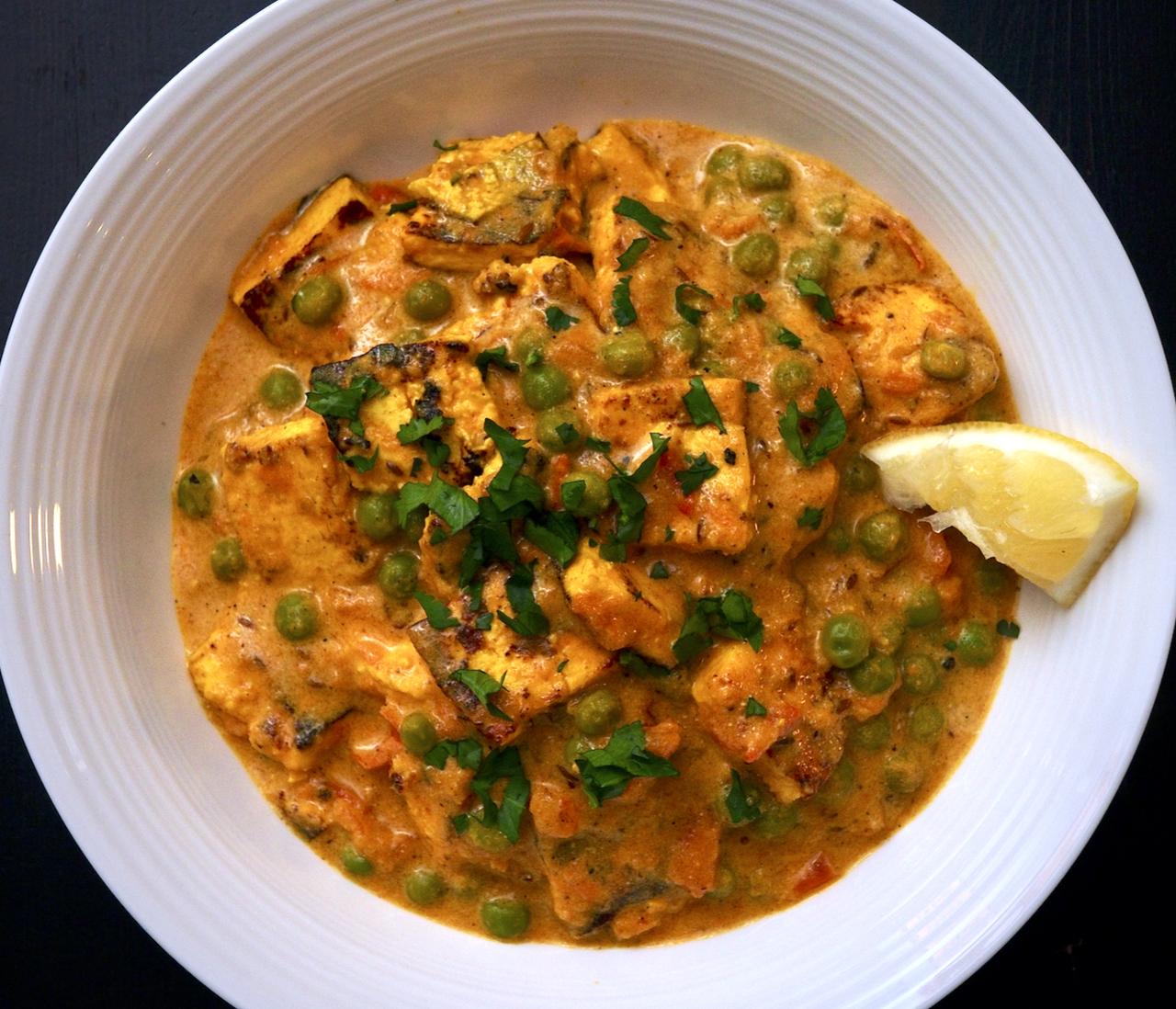
Mattar Paneer – serves 4
sunflower oil
400g paneer, cut into bite-sized pieces
2 tsp cumin seeds
2 tbsp finely grated ginger
4 cloves of garlic, peeled and finely chopped
½ – 1 tsp medium-hot chilli powder
2 tsp turmeric
2 tsp ground coriander
300g tomatoes, finely chopped
200g frozen peas, defrosted
100ml double cream or natural yoghurt
a handful of coriander, finely chopped
lemon wedges
Coat the base of a large non-stick frying pan with the oil and place over a medium-high heat. Add the paneer and fry for a couple of minutes on each side until starting to turn golden brown. Remove with a slotted spoon and drain on kitchen paper.
Add a bit more oil to the pan and cook the cumin seeds until they start to pop, then add the ginger and garlic and cook for 30 seconds or until fragrant.
Stir in the ground spices, then add the chopped tomatoes and cook for about 5 minutes, or until thick. Add the paneer, peas and 200ml water. Season with salt and pepper.
Bring to the boil, then reduce the heat and simmer, partially covered, for 10 minutes, stirring now and then. Add the cream or yoghurt, then remove from the heat and rest, covered, for 10 minutes.
Serve sprinkled with the coriander and with a lemon wedge for squeezing over.
(Original recipe from New Kitchen Basics, by Claire Thompson, Hardie Grant: Quadrille, 2019.)
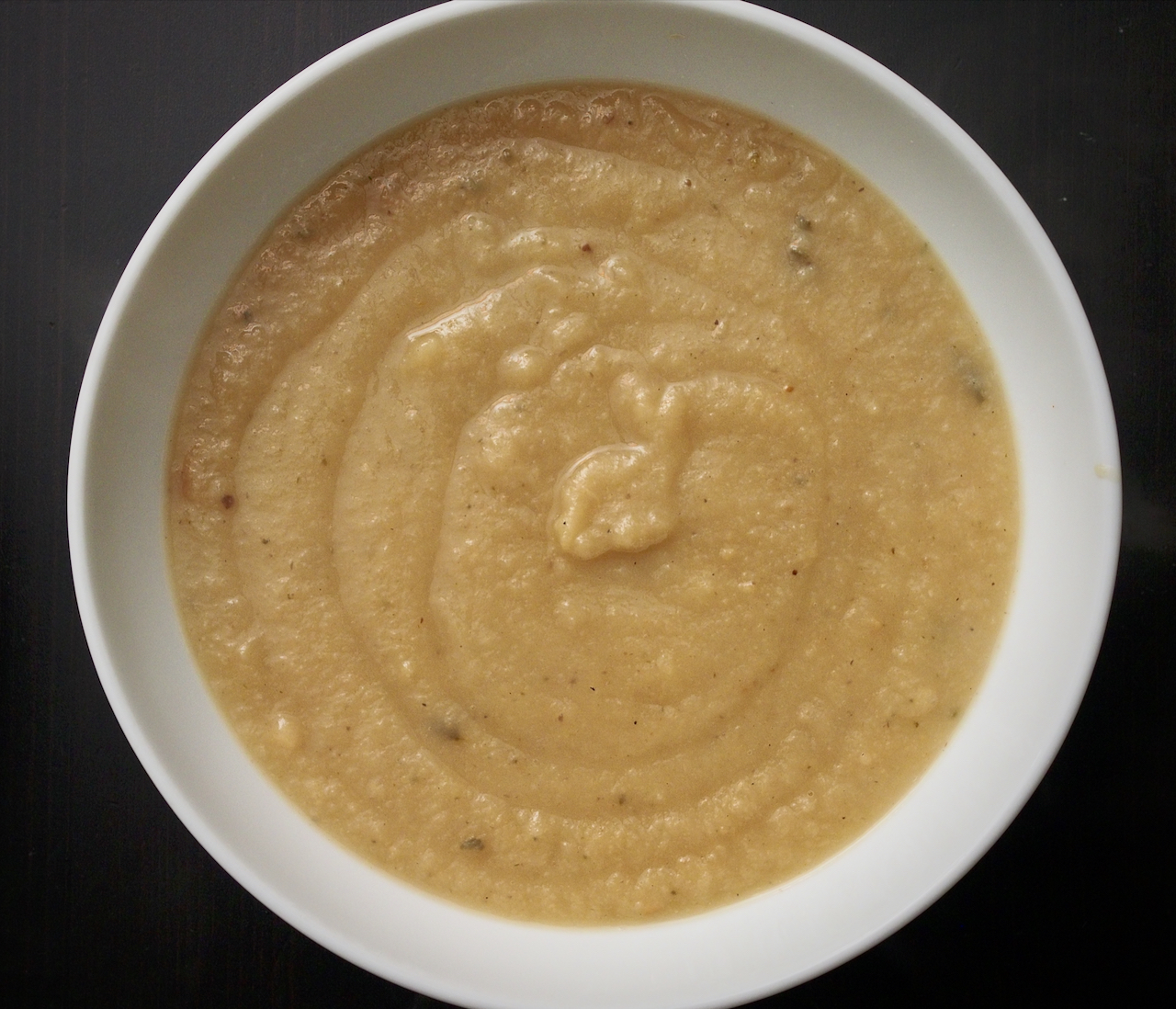
If you have some truffle oil in the cupboard by all means use it to garnish this soup, but it is not essential. The soup tastes strongly of celeriac in a most pleasing way.
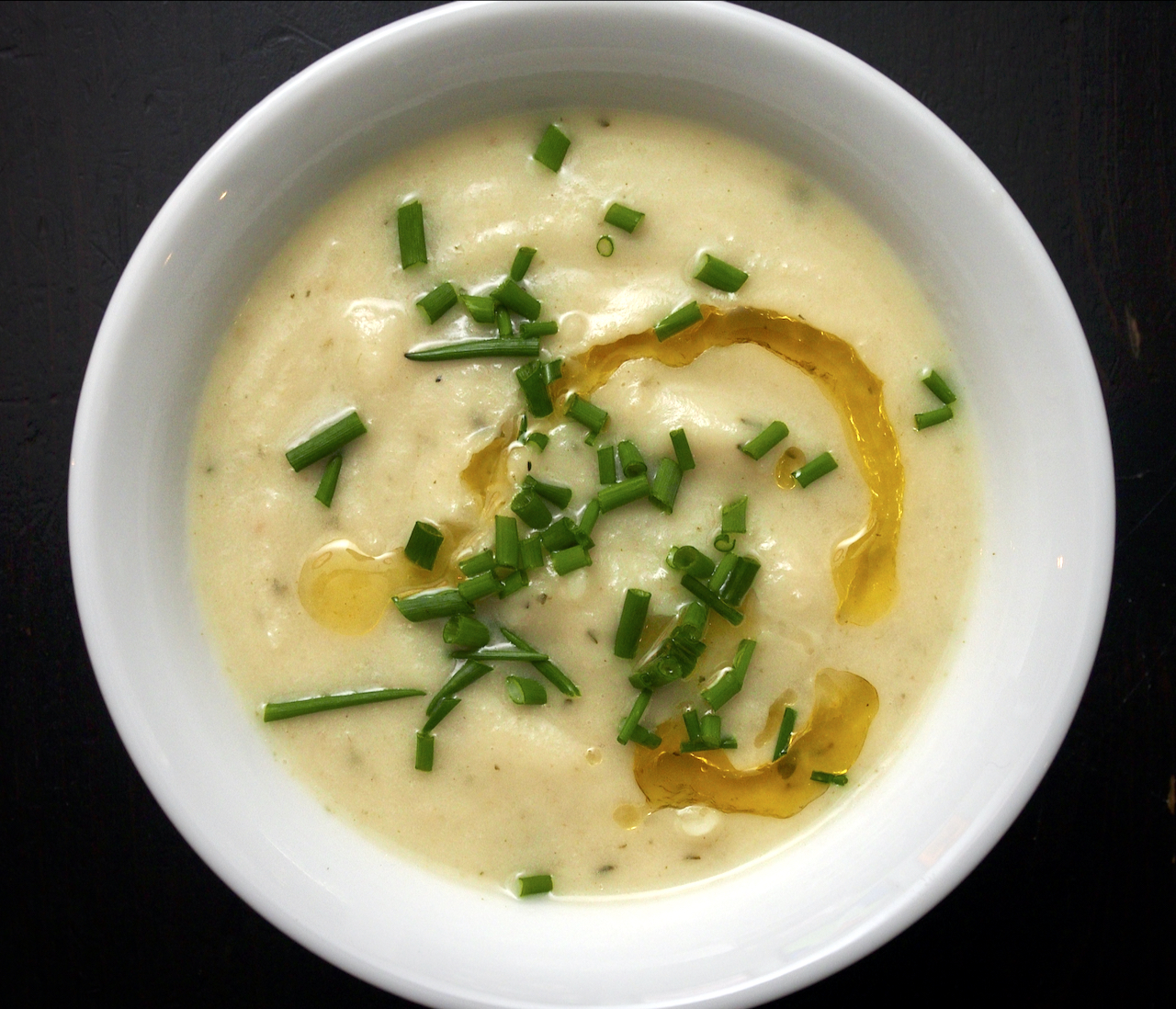
Cream of celeriac soup with truffle oil – serves 4
1 tbsp olive oil
2 medium onions, chopped
1.2kg celeriac, peeled and diced
1.2 litres water
2 tbsp vegetable bouillon powder
4 tbsp lemon thyme leaves, chopped
100ml cream
TO GARNISH:
2 tsp truffle oil or good extra virgin olive oil
finely chopped chives
Heat the oil in a large saucepan over a medium heat. Add the onions and cook gently for 10 minutes or until softened but not coloured.
Add the celeriac, water, bouillon powder and lemon thyme. Bring to a simmer, then cover and cook for 20 minutes or until very soft.
Whizz the soup until smooth, then return to a gentle heat. Season to taste with salt and pepper and stir in the cream. Garnish with oil and chives to serve.
(Original recipe from Lose Weight For Good by Tom Kerridge, ABSOLUTE PRESS, 2017.)
You can obviously use any dry cider for this but we highly recommend the Cockagee Keeved Cider from the Cider Mill in Slane. If you can get sorrel you can use this instead of spinach. Serve with plenty of crusty bread and a glass of cold cider.
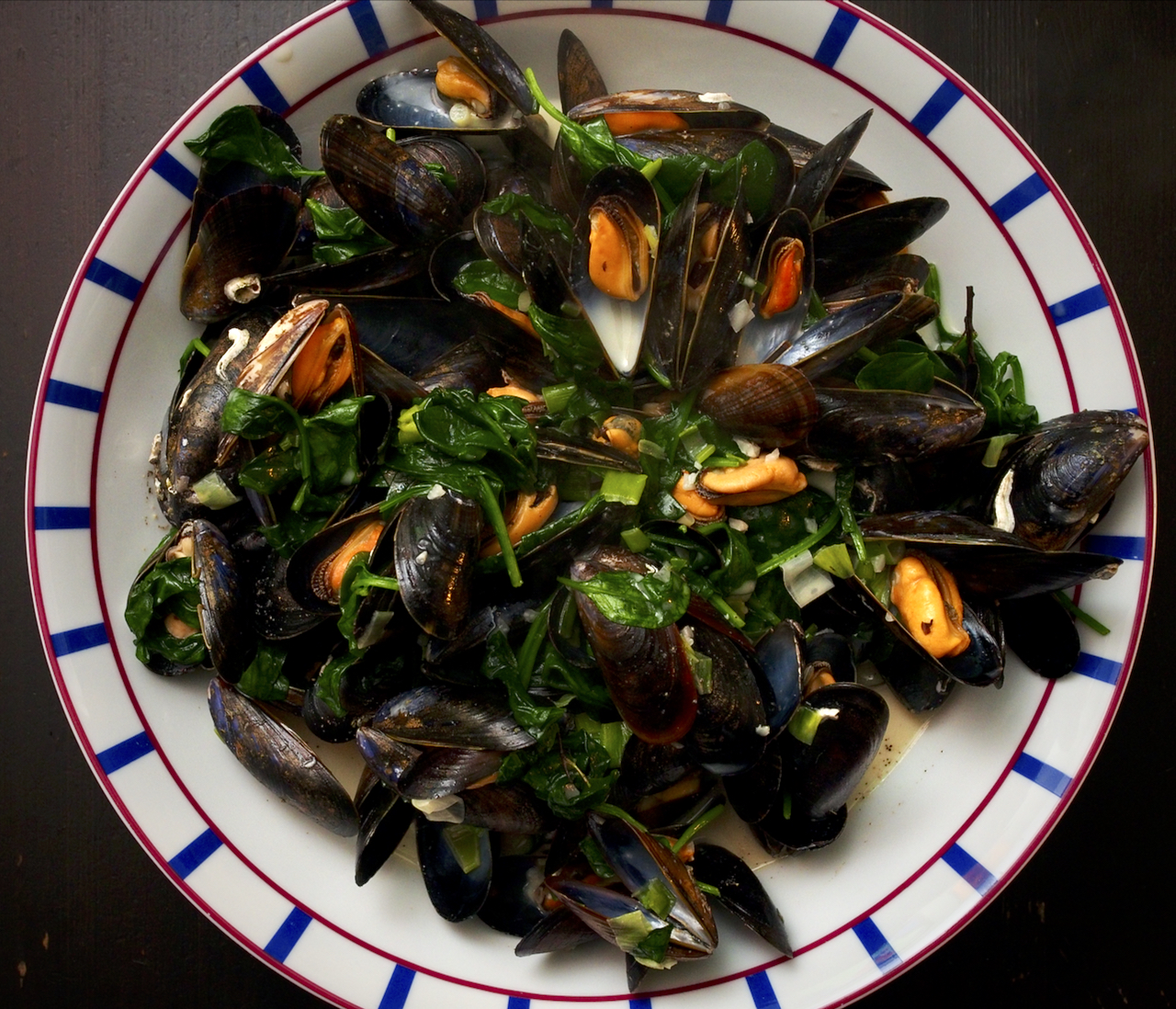
Mussels with Cider – serves 4
1.75kg mussels, cleaned
20g butter
1 clove of garlic, finely chopped
4-5 scallions, chopped
a few thyme sprigs
2 bay leaves
100ml dry cider
120ml double cream
a good handful of sorrel, coarsely chopped or 200g baby spinach
Melt the butter in a large pan with a lid. Add the garlic, scallions, thyme and bay leaves, then cook until softened.
Add the mussels and cider, turn up the heat, cover and leave to steam for 3-4 minutes, shaking the pan now and then.
Add the cream and the chopped sorrel or baby spinach and remove from the heat. Season with salt and pepper. Serve in warm bowls with lots of crusty bread.
(Original recipe from Rick Stein at Home, BBC Books, 2021.)
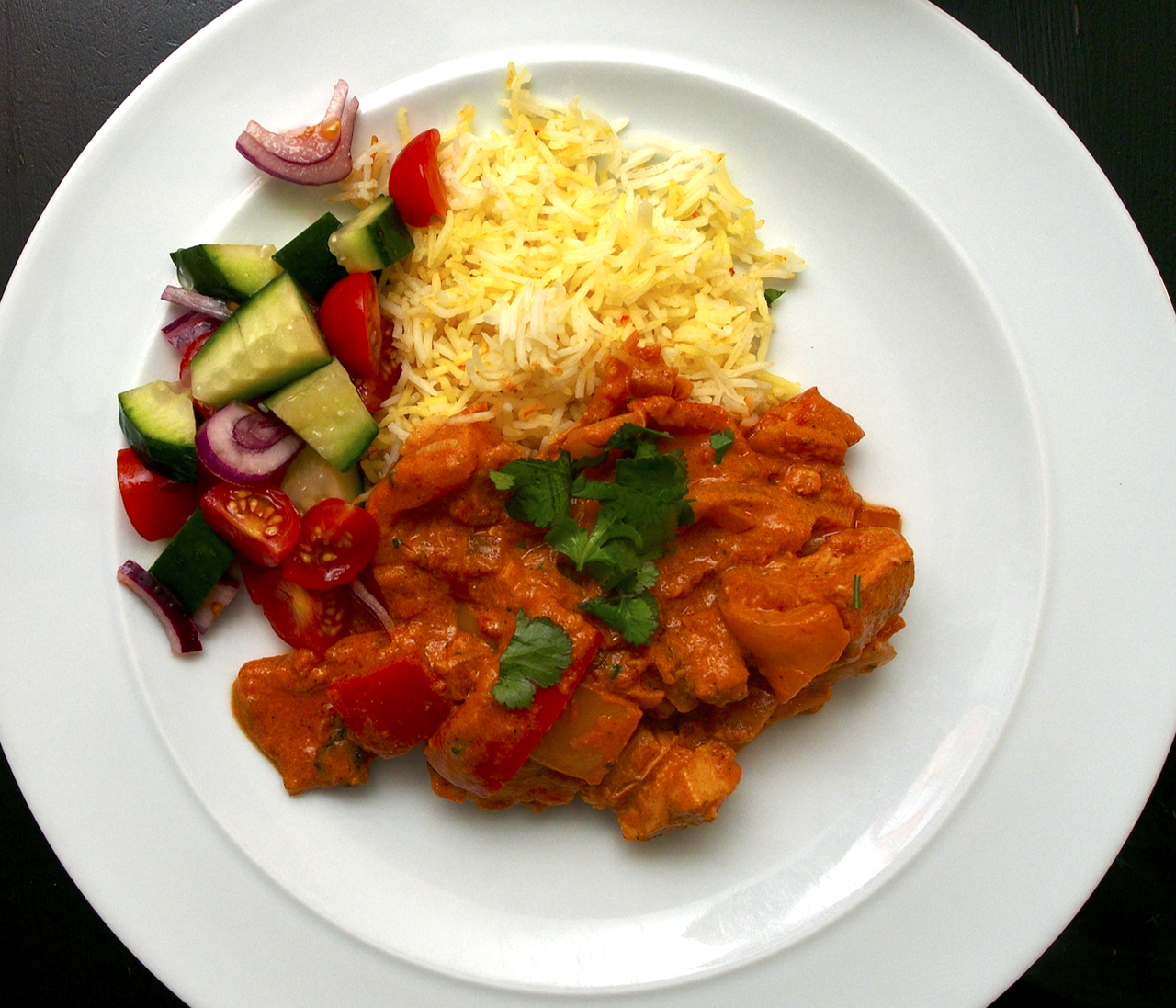
A healthy version of chicken tikka masala with salad and saffron rice. You will be eating the rainbow for dinner with this one.
Wine Suggestion: A new find matched this well: Umani Ronchi’s Centovie, a rosé made from Montepulciano in Abruzzo. The cherry fruit flavours and savoury, dry finish were a good compliment to the food. If you can’t find a rosé made from this grape find a nice red and chill it a little instead.
Chicken tikka masala – serves 4
1 large skinless chicken crown (about 1kg), get your butcher to do this for you
FOR THE MARINADE:
juice of half a lemon
5cm piece of ginger, finely grated
4 large cloves of garlic, grated
2 tbsp medium Madras curry powder
2 heaped tsp smoked paprika
a large pinch of salt
100g Greek yoghurt (you can use 0% if you wish)
FOR THE CURRY SAUCE:
1 tbsp sunflower oil
2 large onions, finely chopped
2 large garlic cloves, grated
2.5cm piece of ginger, finely grated
1 tsp ground turmeric
2 tsp paprika
2 tsp ground coriander
1 tbsp tomato purée
400g tin chopped tomatoes
300ml water
1 large red pepper, chopped
1 large green pepper, chopped
150g natural yoghurt
2 tbsp finely chopped coriander
FOR THE SALAD:
1 small red onion, finely diced
2 large tomatoes, diced
half a cucumber, diced
juice of half a lime
1 tsp chaat masala
TO SERVE:
coriander leaves, roughly torn
basmati rice, cooked with salt and a pinch of saffron strands (only if you have them)
Put the chicken into a large dish and slash the breasts with a sharp knife. Mix all of the ingredients together for the marinade, then spread over the chicken. Cover with cling film and refrigerate overnight, or for at least 4 hours.
Preheat the oven to 120C fan.
Put the chicken into a roasting dish and spoon over any remaining marinade. Cook for 2 hours (this won’t cook it through).
Meanwhile, make the curry sauce. Heat the oil in a deep frying or sauté pan. Add the onions and cook for 10 minutes or until golden brown, add a splash of water if they stick. Add the garlic and ginger with a splash of water, stir well and cook for 1 minute. Add the spices with some salt and pepper and cook for another minute.
Stir in the tomato purée and cook for a minute, then add the tinned tomatoes and the 300ml of water. Bring to the boil, then reduced the heat to a gentle simmer and cook for 5-10 minutes. Add the chopped peppers and cook for 5 minutes, then remove from the heat.
Remove the chicken from the oven and use a blowtorch over the surface to slightly blacken the marinade in places. If you don’t have a blowtorch just pop it under a hot grill. Set aside to rest for 10 minutes.
Mix the salad ingredients together in a bowl and set aside.
Remove the chicken breasts from the bone and cut into bite-size chunks. Reheat the curry sauce, then add the chicken and simmer for 5 minutes or until the chicken is cooked through. Stir in the yoghurt and chopped coriander, then season to taste.
Serve with some coriander leaves, saffron rice and the salad on the side.
(Original recipe from Lose Weight for Good by Tom Kerridge, ABSOLUTE PRESS, 2017.)
This is a perfect lunch dish – quick, easy and just a few ingredients. We made this to use up the rest of a jar of passata and cooked slightly less gnocchi to serve 3. The quantities are just a rough guide really so use up what you’ve got.
Gnocchi al pomodoro – serves 4
4 tbsp extra virgin olive oil
1 large red onion, peeled and finely chopped
700ml passata
10 basil leaves
500g ready-made plain gnocchi
100g grated mature Cheddar cheese
Heat the oven to 200C/180C fan/gas 6.
Warm the olive oil in a medium saucepan, then add the onion and cook for 3 minutes. Add the passata and cook for 10 minutes, stirring occasionally. Stir in the basil leaves, season with salt and black pepper and set aside.
Half-fill a large saucepan with water and bring to the boil. Add 1 tbsp of salt and the packet of gnocchi. As soon as the gnocchi start flowing to the top, scoop them out with a salted spoon and add to the sauce.
Gently stir the gnocchi into the sauce, then transfer everything to a baking dish and scatter over the grated cheese. Bake in the oven for about 10 minutes or until bubbling and golden brown.
(Original recipe from Gino’s Pasta by Gino d’Acampo, Kyle Cathie Ltd., 2010.)
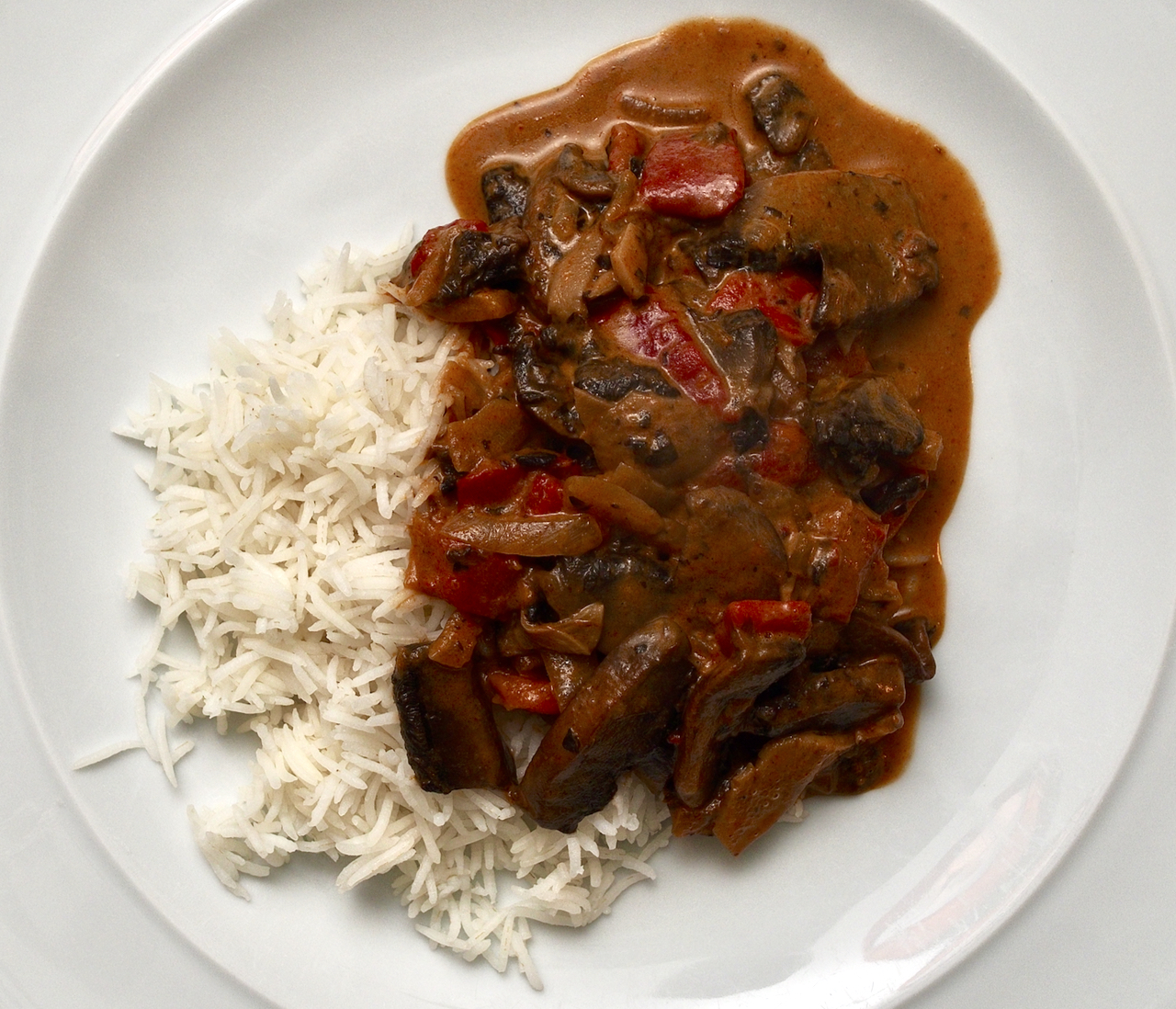
We absolutely loved this mushroom dish by Rachel Roddy in the Guardian; it’s simple but incredibly tasty. Serve with some steamed white rice.
Wine Suggestion: An earthy Pinot Noir, like Konrad Salwey’s Spätburgunder from Baden in Germany allows both the mushrooms and peppers to shine through, and it’s fresh acidity lifts the backbone of passata, vinegar and cream to the next level.
Mushroom & Pepper Goulash – serves 4
15g dried porcini
1kg field mushrooms, wiped clean and thinly sliced
1 large jar of roasted peppers, drained and cut into thick strips
1 large onion, peeled and sliced
4 tbsp olive oil
20g butter
2 cloves of garlic, peeled and thinly sliced
150ml dry white wine
150g tomato passata
a few sprigs of thyme
2 tsp sweet paprika
½ tsp hot, smoked paprika
1-2 tbsp red wine vinegar
200ml single cream
Soak the porcini in 150ml warm water for 15 minutes, then drain and save the soaking liquid. Chop the soaked mushrooms and set aside.
Put a large heavy-based pan over a medium-low heat. Add the olive oil and butter, then stir in the onions with a pinch of salt and cook for about 10 minutes, stirring, until soft and translucent. Stir in the garlic and cook for another minute.
Add the soaked and fresh mushrooms, turn up the heat and cook, stirring, for a few minutes, or until the mushrooms start to shrink down.
Add wine, passata, thyme, porcini liquild and paprika. Bring to the boil, then cover, turn the heat to low and simmer for 15 minutes. Remove the lid and add the peppers. Cook uncovered for 15 minutes or until the liquid has almost evaporated. Season to taste and add the red wine vinegar, then stir in the cream.
Serve with steamed white rice.
(Original recipe by Rachel Roddy in the Guardian, 17 January 2022.)
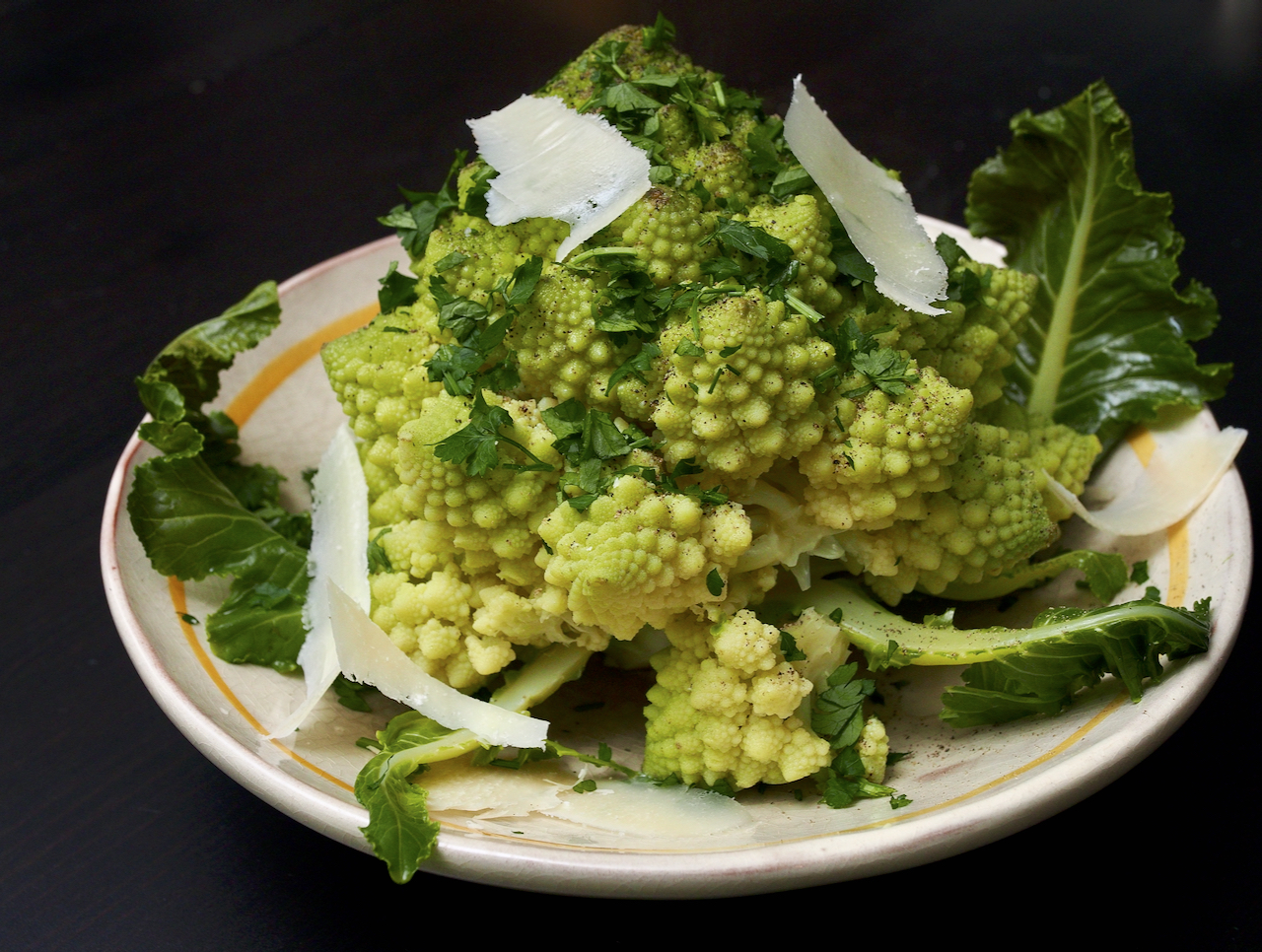
We love romanesco and pick it up any time we see it. This simple cooking method shows this veg off at its best.
Romanesco – serves 4 as a side
a large head of Romanesco broccoli, snap off any big or bruised leaves, trim the end of the stem and cut a cross at the base
6-8 tbsp best extra virgin olive oil
2 tbsp chopped flat-leaf parsley
a few shavings of Parmesan or Pecorino
Bring a pan of very salty water to the boil.
Put the whole head into the boiling water and simmer for about 12 minutes or until tender but not breaking up. Remove from the water and allow to steam dry for a few minutes, then put onto a plate and douse with the olive oil.
Season with pepper, scatter with parsley and cheese, and serve.
(Original recipe from Bocca Cookbook by Jacob Kennedy, Bloomsbury, 2011.)
Some Sunday lunch inspiration and a particularly delicious stuffing. Bring the chicken up to room temperature before putting into the oven.
Wine Suggestions: This demands a nutty, toasty Chardonnay like a good Burgundy. With these, however, becoming harder and more expensive to find there are many superb alternatives from around the world and it was to the US we turned and opened an Au Bon Climat Santa Barbara Chardonnay from the late, great Jim Clendenen. Mouth filling and creamy with a flinty core and vibrant citrus finish.
Roast chicken with caraway and cranberry stuffing – serves 4
70g unsalted butter
5 tsp caraway seeds, toasted and lightly crushed
7 cloves of garlic, crushed
1 tbsp soft dark brown sugar
1 whole chicken (about 1.4kg)
3-4 large celery sticks, cut into 1cm dice
1 onion, cut into 1cm dice
100g dried cranberries
100g ready-cooked chestnuts, roughly chopped
4-5 slices of mixed rye and wheat sourdough, crusts removed, lightly toasted, then roughly torn into 2cm pieces
15g parsley, roughly chopped
120ml chicken stock
Make the marinade for the chicken first by melting 30g of the butter and stirring in 1 tbsp of the caraway seeds, 2 cloves of garlic, the sugar and ½ tsp of salt. Set the chicken into a large dish, rub the marinade all over and set aside.
Preheat the oven to 190C fan.
Next make the stuffing. Put the rest of the butter (40g) into a large non-stick pan over a medium-hight heat. Add the remaining 2 tbsp of caraway seeds and fry for a couple of minutes until aromatic. Add the remaining 5 cloves of garlic, the celery, onion, cranberries, chestnuts and 1 tsp of salt. Fry for 12-13 minutes, stirring, until golden and softened. Tip into a bowl and stir in the bread, parsley and stock.
Set the chicken into a small roasting tray. Season generously with salt and pepper and fill the cavity with the stuffing. You will probably have too much stuffing and you can heat the rest for 30 minutes in an ovenproof dish before the chicken is ready.
Roast the chicken for 70-75 minutes, basting every 20 minutes, until the skin is golden-brown and crispy adn the juices run clear. Rest for 10 minutes before serving.
(Original recipe from Ottolenghi Simple by Yotom Ottolenghi with Tara Wigley & Esme Howarth, Ebury Press, 2018.)
We usually only cook with chestnuts around Christmas but we’ve been trying to use up an extra pack, and they are delicious in this soup recipe by Gill Meller.
Parsnip, roast garlic and chestnut soup – serves 4
6 parsnips, peeled and cut into chunks
1 bulb of garlic, halved around the middle
150g cooked chestnuts
10-12 sage leaves
1 onion, sliced
3 tbsp extra-virgin olive oil
1 litre vegetable stock
Heat the oven to 200C/180C fan/gas 6.
Spread the parsnips over a roasting tin. Add the garlic bulb, chestnuts, sage, onion and olive oil. Season well with salt and pepper and toss together. Cover the tin tightly with foil and bake for about an hour, shaking the tin now and then, until the parsnips are soft and caramelised.
Remove the foil and pour in the stock, then return to the oven for another 30 minutes.
Ladle everything except the garlic bulb halves into a blender (or a pot if you’re using a hand blender). Squeeze the roasted garlic flesh out of the skins and add to the rest. Whizz the soup until smooth.
Pour the soup into a saucepan and bring to a simmer over a low heat, then cook for 10 minutes. Season to taste, then serve.
(Original recipe from Root Stem Leaf Flower by Gill Meller, Hardie Grant: Quadrille, 2020.)
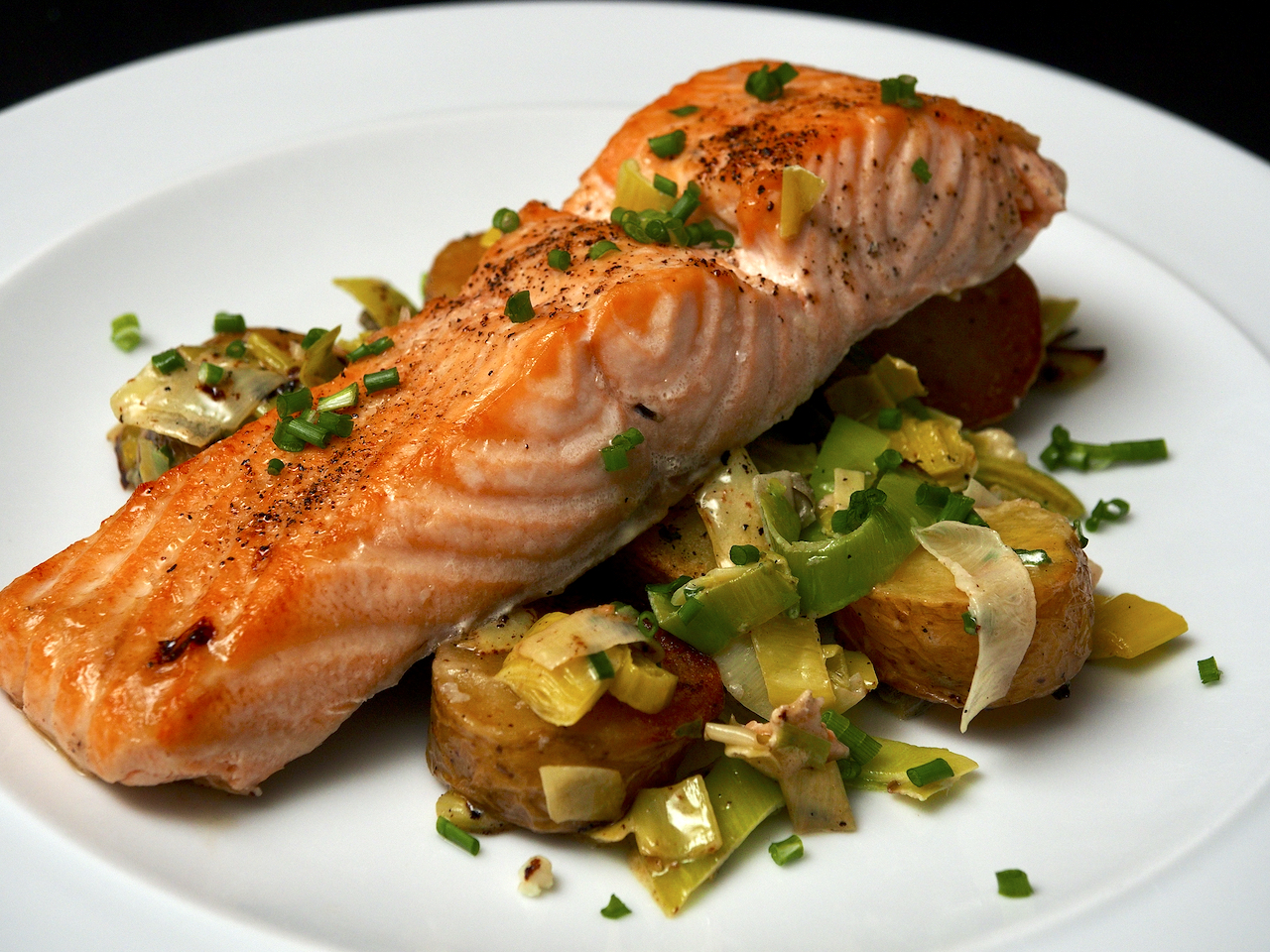
A dish we made on a Monday with all the after school activities. Easy but a rewarding treat after a long day.
Wine Suggestion: we’d suggest a good Portuguese Alvarinho for this as the extra sunshine (closer to the equator than Spain) helps with the cream and oily salmon. Our choice tonight, the Quinta Soalheiro Primeiras Vinhas, an old vine selection that is made partially in oak to give a deep base note alongside the minerally primary fruits.
Creamy salmon, leek & potato traybake – serves 2
250g baby potatoes, thickly sliced
2 tbsp olive oil
1 leek, halved and sliced
1 clove of garlic, crushed
70ml double cream
1 tbsp capers
1 tbsp chives, plus extra to serve
2 skinless salmon fillets
Heat the oven to 200C/180C fan/gas 6.
Bring a pot of water to the boil, the add the potatoes and cook for 8 minutes. Drain and leave to steam-dry for a few minutes.
Toss the potatoes with 1 tbsp of olive oil and plenty of seasoning in a baking tray, then bake for 20 minutes, tossing halfway.
Meanwhile, heat 1 tbsp of oil in a frying pan over a medium heat. Add the leek and fry for 5 minutes, or until starting to soften. Stir through the garlic for 1 minute then add the cream, capers and 75ml of hot water, then bring to the boil. Stir in the chives.
Heat the grill to high. Pour the creamy leek mixture over the potatoes, then sit the salmon fillets on top. Grill for 7-8 minutes or until just cooked through. Serve topped with extra chives.
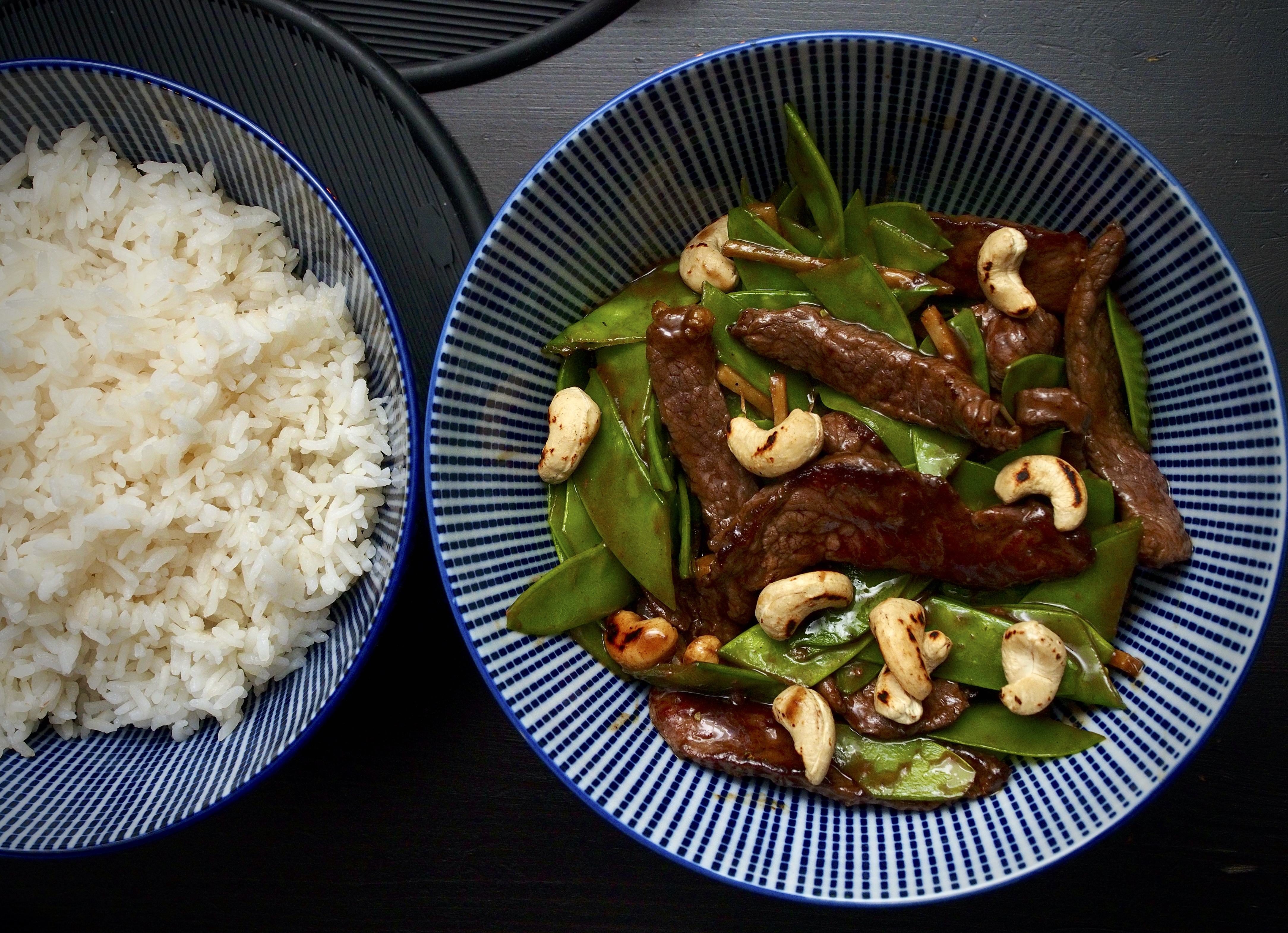
Chinese New Year was on a Tuesday this year and we had to squeeze our Chinese food in between homework, swimming lessons etc. If that is you, then this recipe is for you. As ever you need to prep everything before you start cooking. We served with rice but noodles would be good too.
Beef with mangetout & cashews – serves 4
50g unsalted cashews
1 tsp cornflour
1 ½ tbsp low-salt soy sauce
4 tbsp oyster sauce
1 tbsp rice vinegar
1 tbsp honey
1 tbsp vegetable oil
280g rump steak, thinly sliced
a thumb-sized piece of ginger, cut into matchsticks
2 cloves of garlic, crushed
200g mangetout, halved
Toast the cashews in a dry wok or frying pan, until browned, then set aside.
Mix the cornflour and soy sauce together to make a paste, then add the oyster sauce, rice vinegar and honey.
Heat your wok until very hot. Add the oil and swirl around to cover the base and sides. Use tongs to place the steak pieces into the wok in a single layer. Cook, without turning for 30 seconds – 1 minute, or until a dark crust starts to form. Add the ginger and garlic and toss everything together, then add the mangetout and the sauce. Cook for another 30 seconds – 1 minute or until the beef is just cooked through and the sauce is glossy. Sprinkle over the cashews and serve.
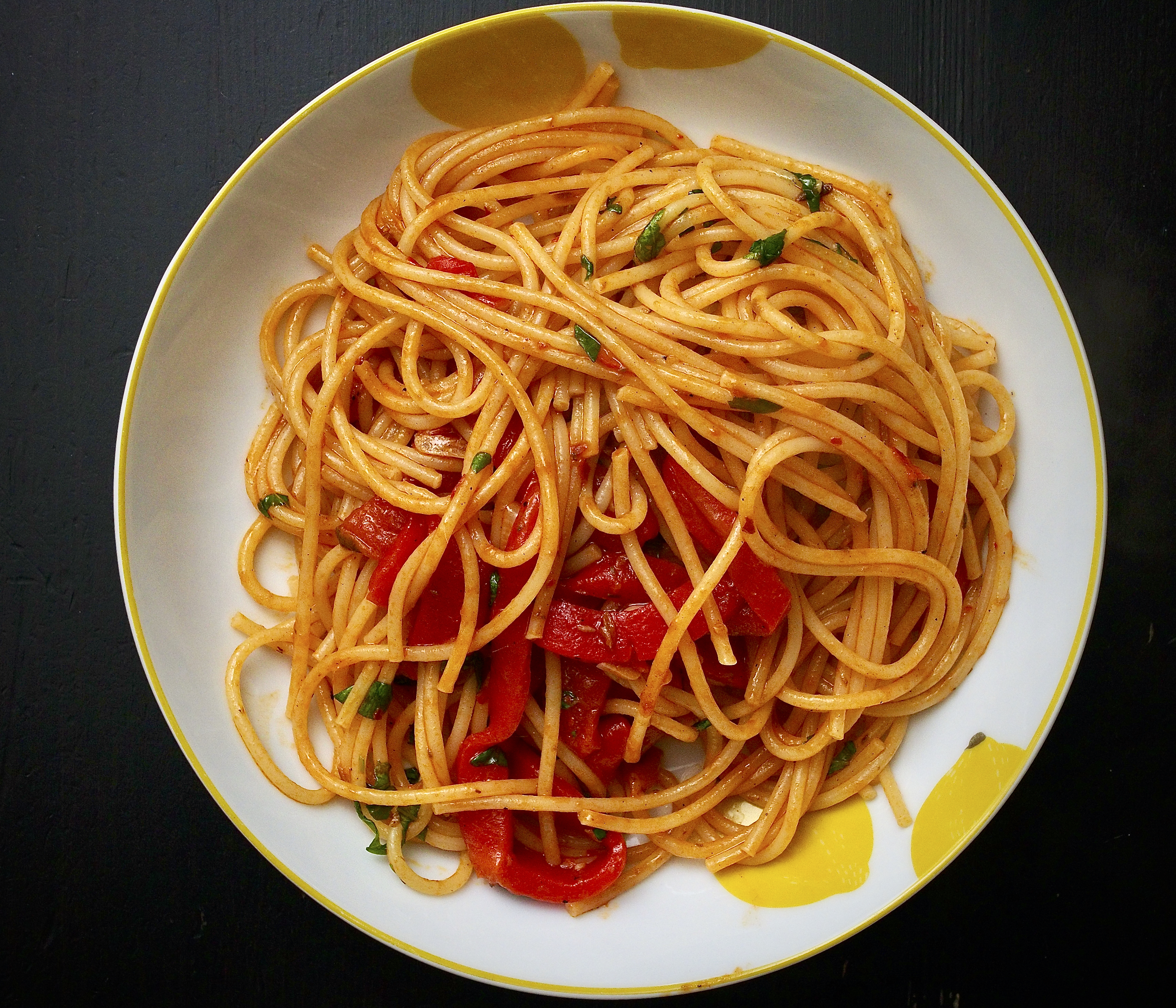
Inspiration for evenings when you’re feeling uninspired. Ready in 10 minutes.
Wine Suggestion: A southern Italian red, especially those from Mt Etna and surrounds if you can as they tend to have both warm to match the roasted red peppers and a savouriness to comliment the umami anchovies. For us the Gulfi Cerasuolo di Vittoria, and Nero d’Avola – Frappato blend. Fragrant, silky and with a deep core of earthy red fruits; one of those wines that is both effortless and yet demanding of attention.
Red pepper & anchovy spaghetti – serves 3
300g spaghetti
3 tbsp olive oil, plus a bit extra to drizzle
4 garlic cloves, sliced
8 anchovies, from a jar of tin of anchovies in olive oil
1 tsp chilli flakes
300g jar roasted red peppers, drained and sliced
1 tbsp tomato purée
a handful of basil leaves, finely sliced
Bring a large pot of water to the boil and add lots of salt. Add the spaghetti and cook for 1 minute less than the timings on the pack.
Meanwhile, put the olive oil, garlic and anchovies into a large, deep frying pan and cook over a medium heat for a minute or until the oil is hot and the garlic has started to sizzle.
Add the peppers and tomato purée and stir well. Continue to cook until the spaghetti is ready, adding a ladle of the pasta cooking water to make a sauce.
When the spaghetti is ready, use tongs to transfer it to the sauce, you can add a little more water to get the right saucy consistency if you need. Cook for another 30 seconds, tossing to coat, then remove from the heat and stir through the basil. Serve drizzled with some extra olive oil.
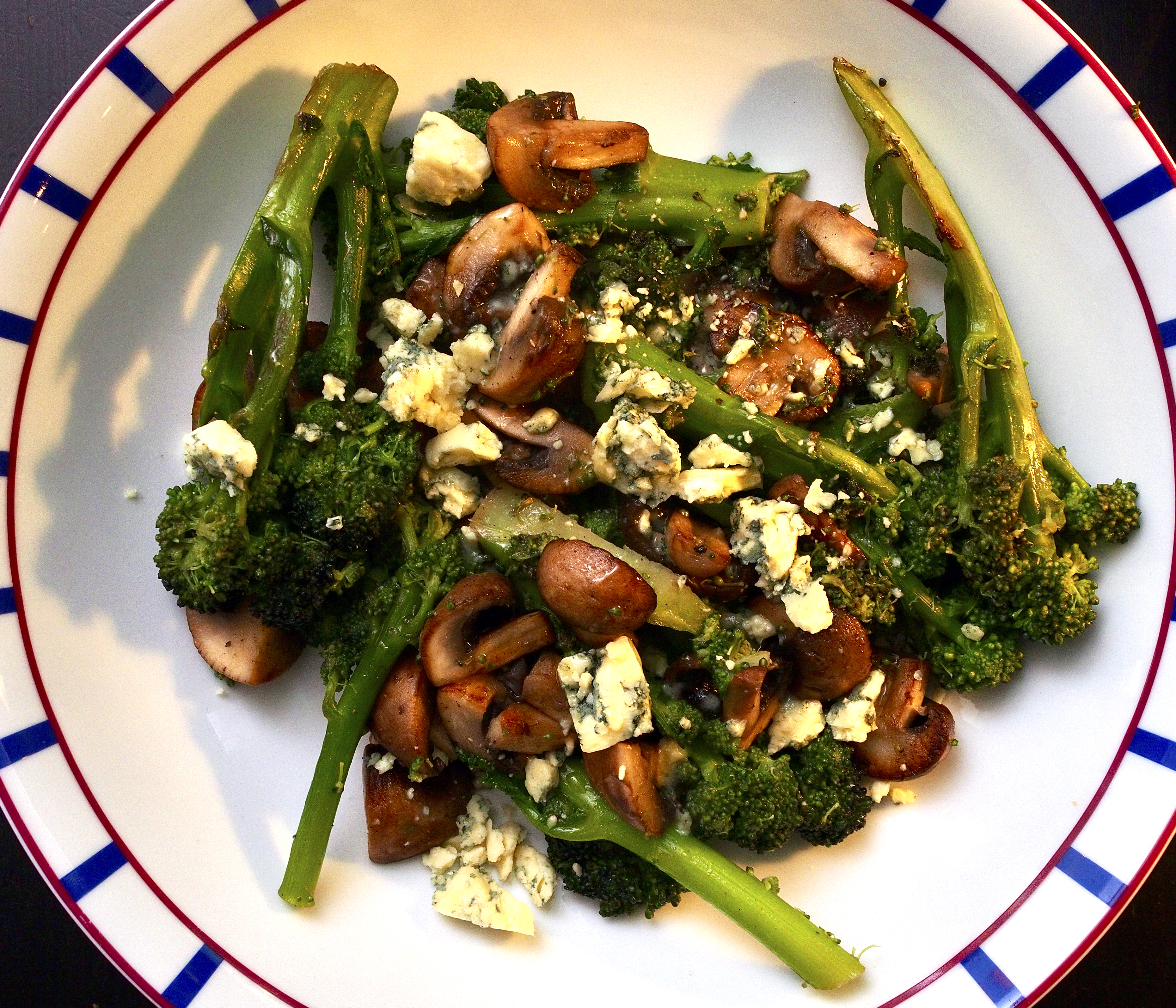
Sprouting broccoli with mushrooms and stilton – serves 6
500g purple sprouting broccoli or other long-stemmed broccoli
1 tbsp olive oil
a knob of butter
500g chestnut mushrooms, halved or quartered
50g creamy stilton, crumbled
a drizzle of best olvie oil
Boil the broccoli in lots of very salt water for about 3 minutes, or until bright green and not quite tender, then drain and rinse under cold water to stop it cooking further. Drain well and set aside (you can do this in advance if you like).
Heat the oil and butter in a large frying pan over a high heat. When the butter is sizzling, add the mushrooms and cook for 5 minutes, until golden.
Add the broccoli and toss with the mushrooms. Cover the pan and cook for about 3 minutes, shaking the pan occasionally, until the broccoli is heated through and the mushrooms have softened.
Season well, then tip into a serving bowl, scatter over the cheese and drizzle over some of your best olive oil.





 Jono & Jules do food & wine