Feeds:
Posts
Comments

Posts Tagged ‘Cooking’

We’ve been looking out for Anna Del Conte’s Gastronomy of Italy for some time now. This is a book in serious need of reprinting – a true Italian bible. The recipe’s are straightforward and authentic and there is an excellent section on the regions of Italy. We snapped this up when at last a second-hand copy became available on Amazon and suggest you do the same if you get the chance.

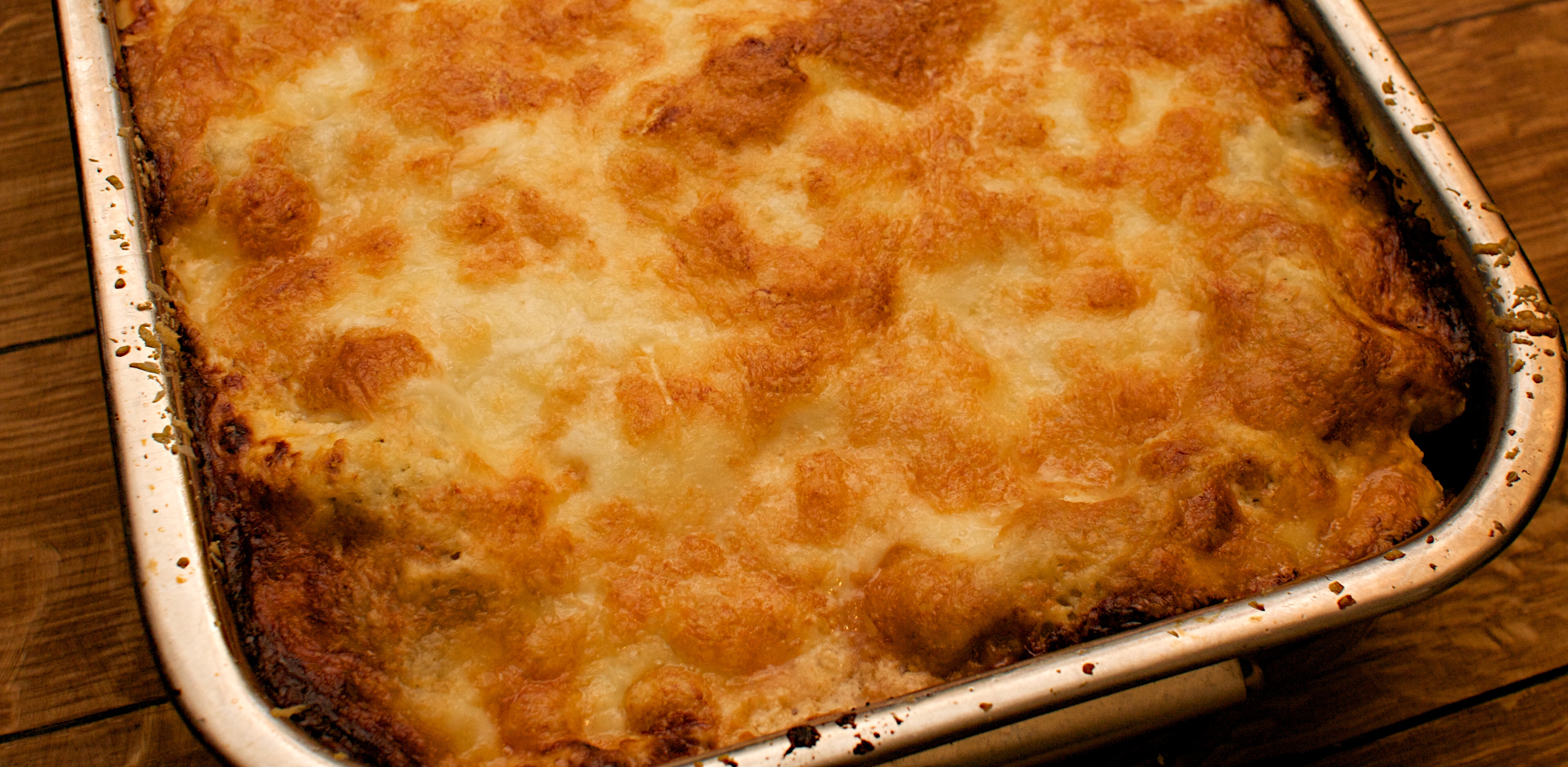
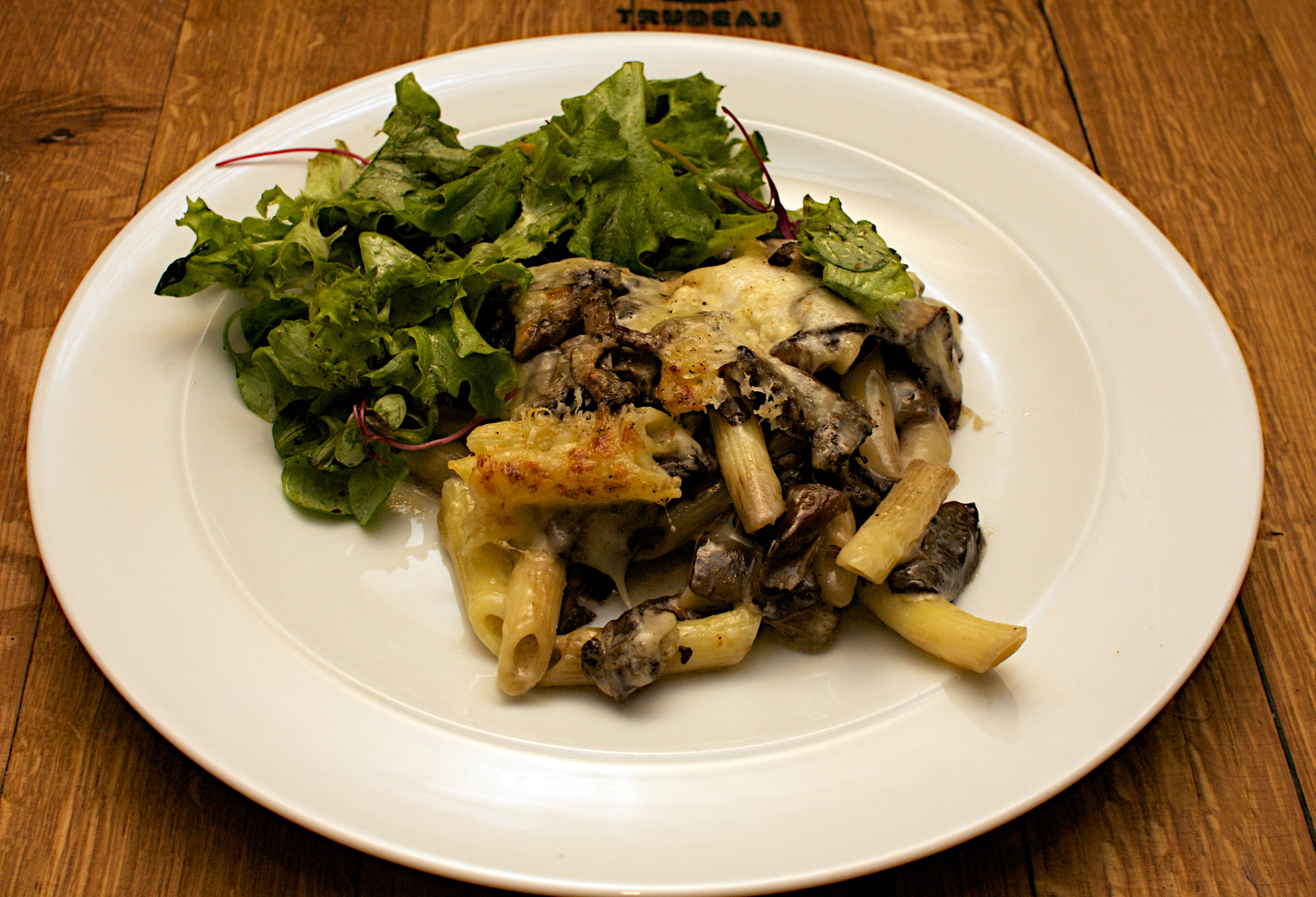
This is a really nice dish for autumm – a bit like macaroni cheese but with mushrooms. There is no place for calorie counting here!

Baked Penne with Cheese and Mushrooms – to serve 4

  • 20g dried porcini, soaked, drained and chopped
  • 500g fresh mushrooms, thinly sliced
  • 1 garlic clove
  • 50g unsalted butter
  • 300g penne
  • butter for the dish
  • 150g Bel Paese cheese, thinly sliced (we couldn’t find Bel Paese so substituted Taleggio)
  • 150g fontina cheese, thinly sliced
  • 75g freshly grated Parmesan
  • 200ml double cream

Heat the oven to 200ºC/400°F/Gas Mark 6. Sauté the porcini and fresh mushrooms with the whole garlic clove in 25g of the butter over a high heat. Add salt and pepper, lower the heat and cook for 3 minutes. Throw away the garlic.

Cook the pasta according to the pack. Drain and dress with the remaining butter.

Butter an ovenproof dish and cover the bottom with layer of pasta. Spread about a quarter of the mushrooms and sliced cheese over the pasta and sprinkle with 1 tablespoon of the Parmesan. Add another layer of pasta and cover with mushrooms and cheese. Repeat this until all the ingredients are used, finishing with a cheese layer. Pour over the cream and season with salt and pepper.

Cover with foil and bake for 10 minutes. Remove the foil and bake for another 10 minutes, or until a light crust has formed on the top. Settle for 5 minutes before serving with a green salad.

Wine Suggestion: We drank a Pinot Noir from the Russian River Valley  in California that our friend Jen kindly brought back from her holidays. There are some great wines being made here that we rarely see outside the US so it was a treat and a really good match for the dish. If you haven’t been travelling we’d suggest finding a pinot noir with juicy, ripe fruit balanced by a lightness of touch – avoid anything too alcoholic or jammy which will overwhelm the food. If you find a nice “earthy” pinot from Hawkes Bay in New Zealand or Burgundy then you’re on the right track.

Read Full Post »

The leftover salsa verde will keep in the fridge and is lovely with meat, fish or bruschetta.

To serve 4:

  • 4 tuna steaks
  • olive oil
  • sea salt flakes
For the salsa verde
  • 10g each of flat-leaf parsley leaves, mint leaves and basil leaves
  • 1 clove garlic, thinly sliced
  • 2 tbsp capers, drained and dried
  • 50g good-quality pitted green olives
  • 4 anchovy fillets in oil
  • finely grated zest of 1/4 small lemon
  • 1 tsp Dijon mustard
  • 1 1/2 tbsp lemon juice
  • 8 tbsp extra virgin olive oil
To make the salsa verde, drop the herbs into boiling water for a few seconds, then drain and refresh under cold water. Squeeze out the water, then put on a chopping board with the garlic, capers, olives and anchovies and finely chop everything together. Scrape into a bowl and add the lemon zest, mustard, lemon juice, olive oil and some black pepper.

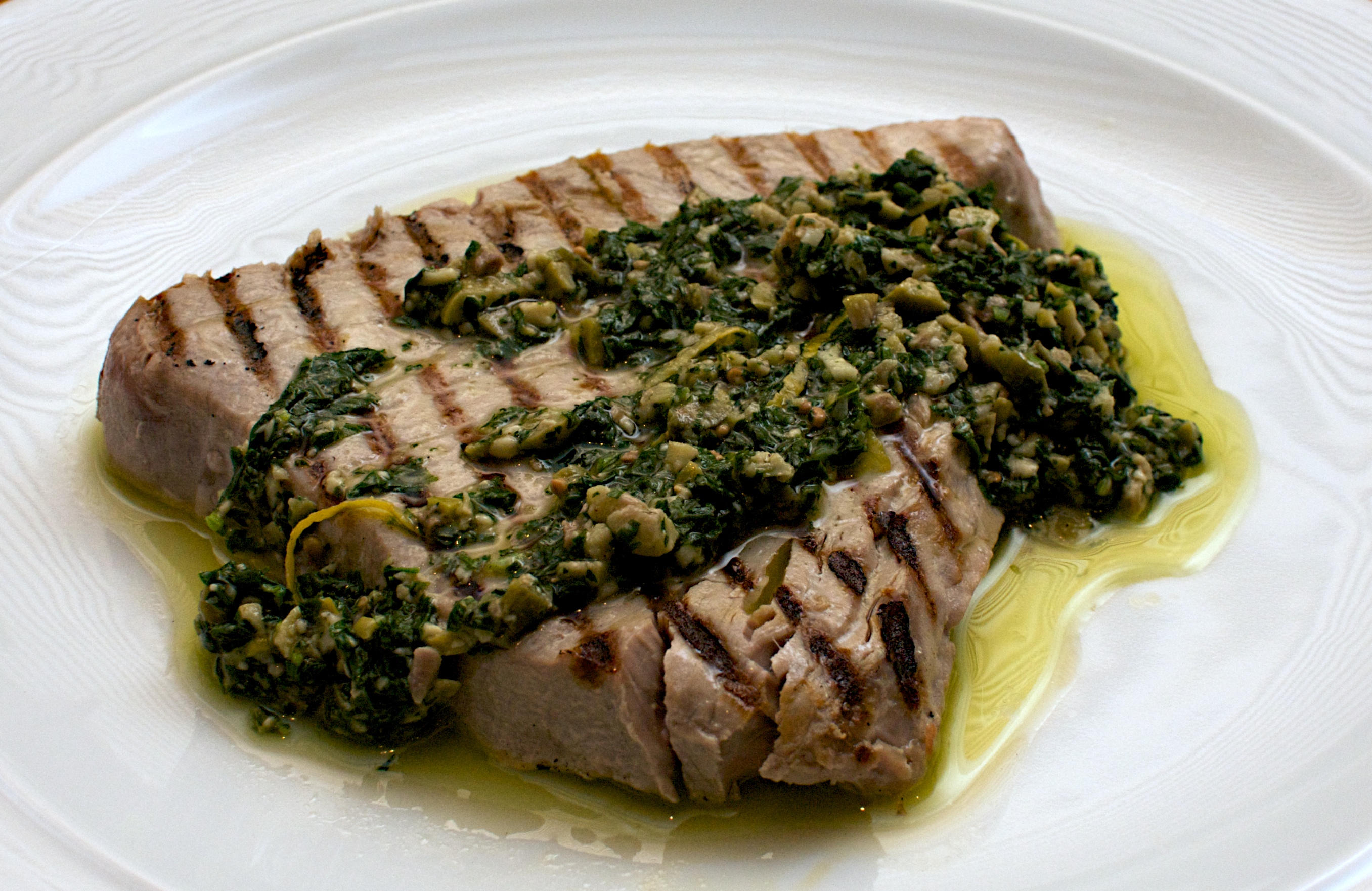
Heat a cast-iron griddle pan over a high heat. Brush the tuna with olive oil and season with sea salt. Put them on the griddle, turn the heat down to medium high and cook for 30 seconds to 1 minute on each side so you get nice char marks but the fish is rare on the inside.

Serve the tuna steaks with the salsa verde spooned over the top.

(Original recipe by José Pizarro for Sainsbury’s Magazine, October 2011).

Read Full Post »

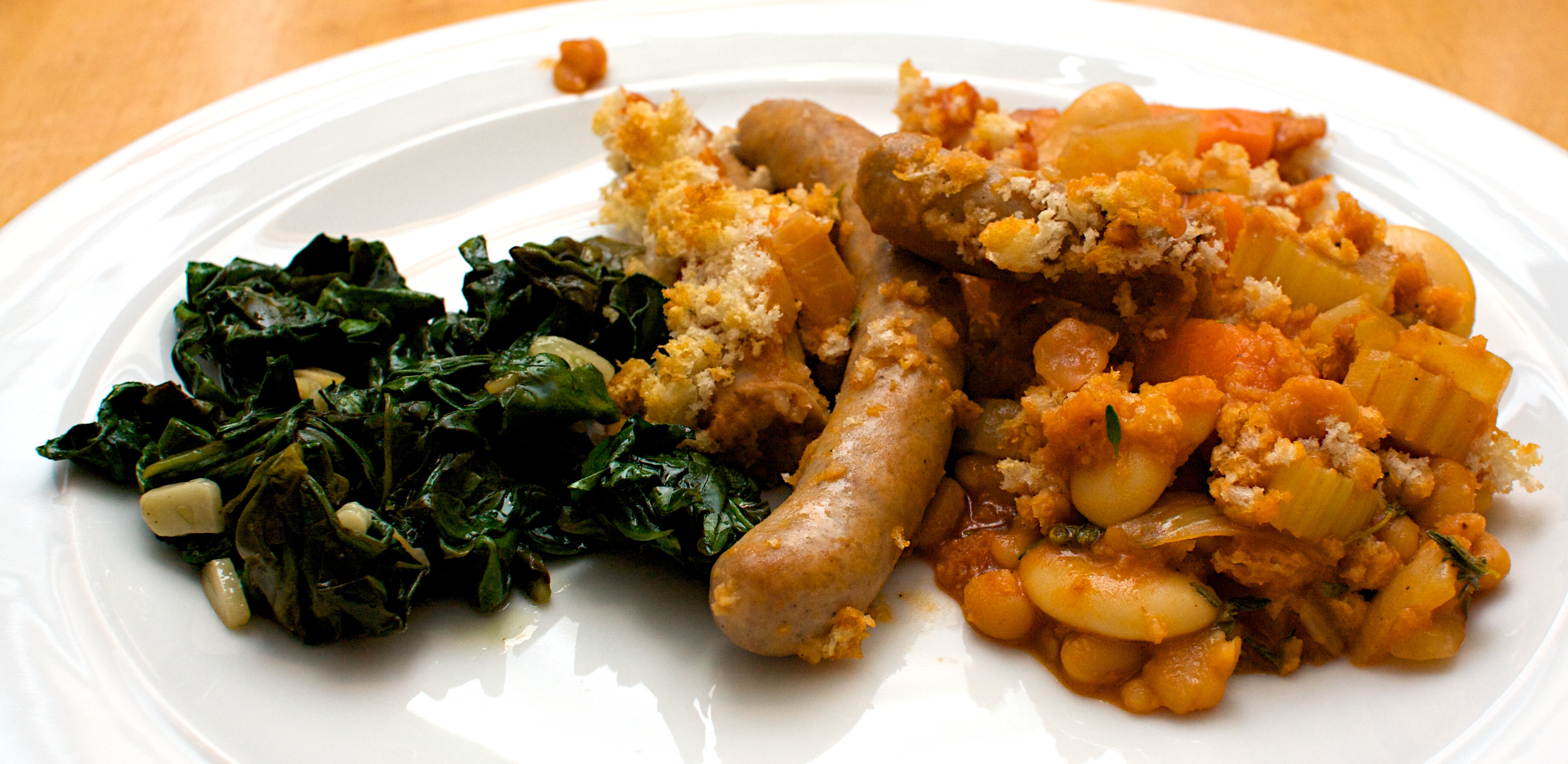
Tasty beans with really great flavour from the fresh thyme. We’re in full autumnal mode at this stage – though it’s still weirdly warm outside. Serve with the greens below if you like.

Sausage & bean casserole – to serve 4

  • 1 tbsp vegetable oil
  • 8 pork sausages (we used chipolatas)
  • 2 celery sticks, chopped
  • 2 carrots, chopped
  • 1 onion, chopped
  • 1 tbsp tomato purée
  • 400g tin of butter beans
  • 400g tin of baked beans
  • a small bunch of thyme
  • 200ml chicken or veg stock
  • 2 slices white bread, whizzed to crumbs

Heat half the oil in a large casserole dish, then brown the sausages well. Remove from the pan and set aside. Add the rest of the oil to the casserole, tip in the vegetables and fry for 10 minutes. Stir in the tomato purée and cook for another minute.

Heat the oven to 200ºC/180ºC fan/gas 6. Return the sausages to the pan with the beans, thyme and some seasoning, then pour in the stock and bring to a simmer. Remove from the heat, sprinkle the breadcrumbs over the top and bake in the oven for 25-30 minutes or until the crumbs are golden and the stew is bubbling up the sides.

(Original recipe from BBC Good Food)

Read Full Post »

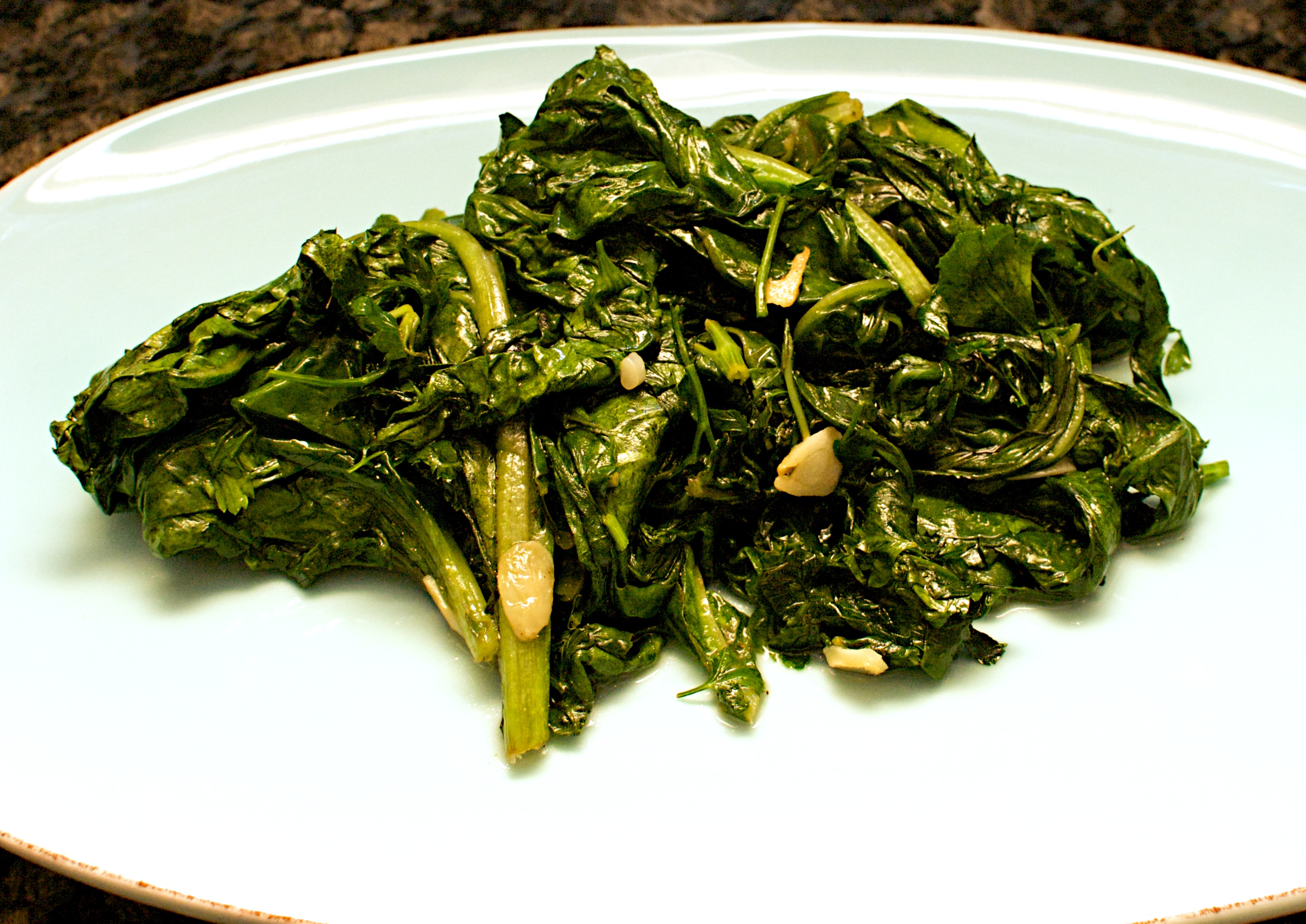
A very useful recipe, especially as you can use whatever greens you happen to have e.g. baby cabbage leaves, Swiss chard, salad leaves like cos or gem or a bag of spinach, watercress and rocket. The rules of play are to blanch the more robust leaves first and then wilt them down in a pan with salad leaves, herbs and garlic until soft. We used a big bag of spinach and some herbs and it was a really good accompaniment for the leg of lamb below.

Ricetta tipica per verdure verdi (Italian style greens) – to serve 4 as a side dish

  • 6 big handfuls of mixed greens, leaves and herbs (see above)
  • olive oil
  • 2 cloves of garlic, sliced
  • juice of 1 lemon
Blanch the cabbage leaves and chard in salted boiling water for a couple of minutes, then drain and leave to cool for a bit. Heat a few glugs of olive oil in a large frying pan and add the sliced garlic. As soon as it starts to colour; add the salad leaves then the cabbage and chard. Cook on a medium heat for 4-5 minutes, moving around the pan with tongs, then add herbs and cook for another minute. Take off the heat and season carefully with salt and pepper, some olive oil and enough lemon juice to give it a kick.
(Original recipe from Jamie’s Italy by Jamie Oliver, Penguin Group, 2005).

Read Full Post »

We were kindly lent Thomasina Miers’ Mexican Food made simple by our friend Jenny and this is our first recipe. Very tasty! Serve with some warm flour tortillas and a green salad.

Queso fundido – serves 4-5 as a starter 

  • 3 ripe tomatoes
  • 1 tsp olive oil
  • 120g chorizo cooking sausage, casings removed
  • 1/2 a white onion, finely diced
  • 1/4 tsp ground cumin
  • 150g mozzarella, grated
  • 150g mature cheddar, grated
Preheat the oven to 180°C/350°F/gas 4. Cover the tomatoes with boiling water and leave for 20 seconds. Drain and pierce them with a knife so you can peel them easily. Scoop out the seeds and dice the flesh into small cubes.

Heat the oil in a heavy-bottomed saucepan and brown the chorizo over a medium heat, breaking it up with a spoon as you go. Add the onion and cumin and cook for 5-10 minutes or until the onion is translucent. Add the tomatoes and cook until most of the moisture has evaporated from the pan and you have a mince-like texture. Season.

Spread the mixture on to the bottom of a gratin dish so that is just covers the bottom. Cover with the grated cheeses and put in the oven for about 10 minutes until the cheese is melted and bubbling. Or you can stick it under the grill.

Warm your tortillas in a hot dry frying pan for a few seconds on each side. Spoon some Queso fundido and salad on your tortilla and roll them up to eat.

Wine Suggestion: You could try a Mexican Zinfandel like LA Cetto from Baja California or it might be easier to pick up a Spanish Garnacha which should be medium-bodied – don’t go for something too complex or concentrated here. A beer would work too!

(Original recipe from Thomasina Miers Mexican Food Made Simple, Hodder & Stoughton, 2010)

Read Full Post »

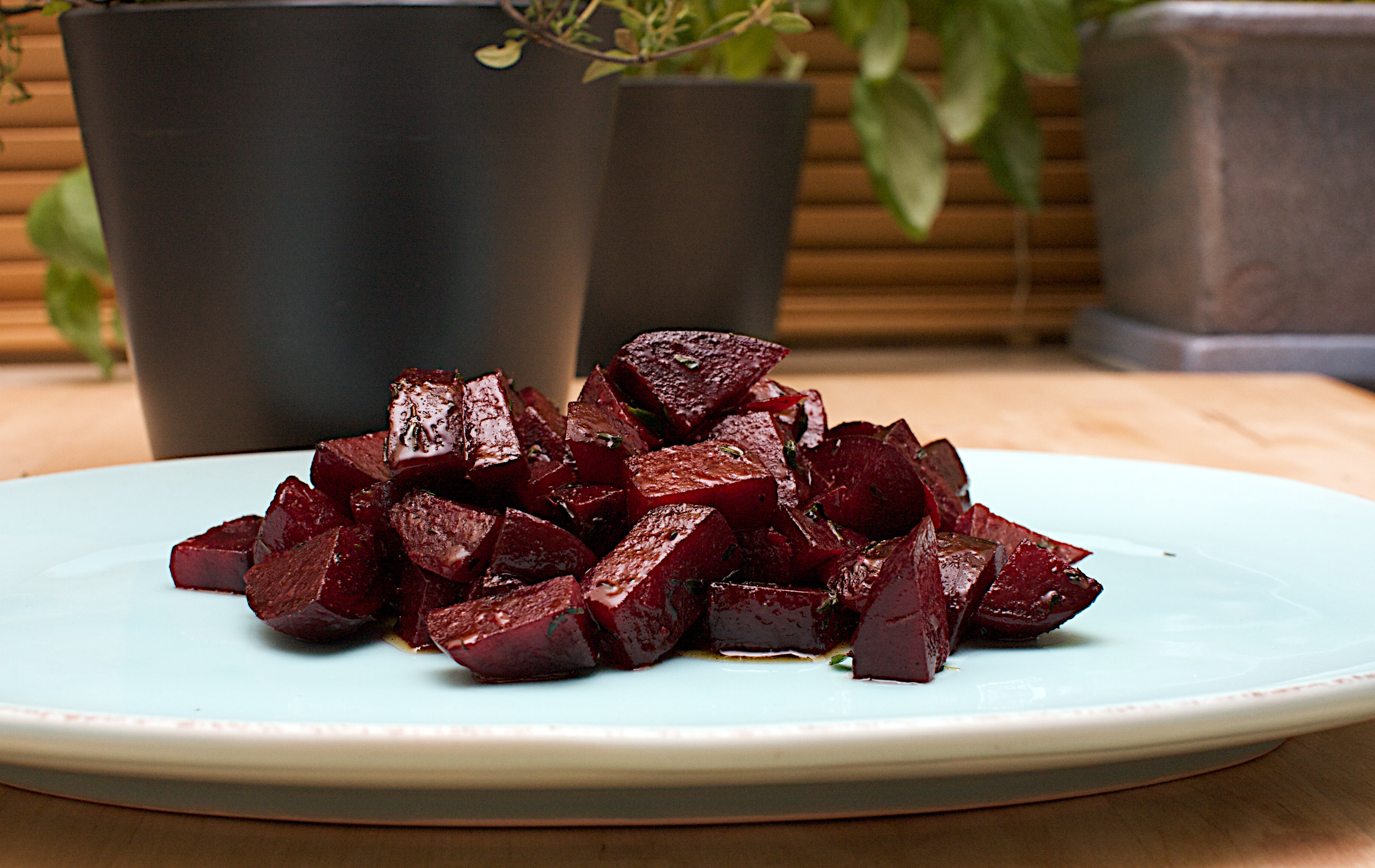
Here’s a really lovely side dish. Good with roasts or grilled meat.

Hot buttered beetroot – to serve 6

  • 3 medium beetroot, trimmed but not peeled
  • 25g butter
  • 1 tbsp chopped thyme leaves.
Cook the beetroot in a large pan of boiling salted water for 20-25 minutes or until tender. Allow to cool slightly, then peel off the skins – gloves are advisable! Chop the beetroot.

Melt the butter in a frying pan. Add the thyme and cook for a minute before adding the beetroot and tossing to coat in the butter.

(Original recipe by Tom Kerridge in BBC Good Food Magazine, October 2011)

Read Full Post »

Woohoo it’s mushroom season at last. Cold weather has its virtues. We always think of risotto as a bit of weekend thing but it’s so quick and easy we’ve vowed to make every night a potential risotto night in future. The perfect mid-week treat.

Red wine  & mushroom risotto – to serve 4

  • olive oil
  • 50g butter
  • 1 red onion, chopped
  • 400g chestnut mushrooms (we used large field mushrooms)
  • 300g risotto rice
  • 350ml dry red wine
  • 750ml chicken stock
  • 3 tbsp grated Parmesan

Heat 2 tbsp olive oil and half the butter in a large, heavy pan. Fry the onions until nearly soft. Add the mushrooms and cook until golden. Add the rice, stir to coat with the oil and butter, and cook for a minute.

Add half the wine and let it bubble, stirring. Add the rest of the wine to the stock and heat gently. When the first lot of wine has been absorbed start adding the remaining stock and wine mix, a ladle at a time, stirring all the time. Make sure each ladle has been absorbed before you add the next. Continue adding liquid until  the rice is tender but still has a bite. Add the remaining butter and the parmesan, cover and let it sit for 5 minutes before serving.

Wine Suggestion: We found this recipe in BBC Olive Magazine (October 2011) in an article by Victoria Moore, drinks expert, who highly recommends a Barbera to go with this on account of it’s high acidity and hence palate-cleansing effects. It also complements the earthy mushroom flavours. We’d agree with that!

Read Full Post »

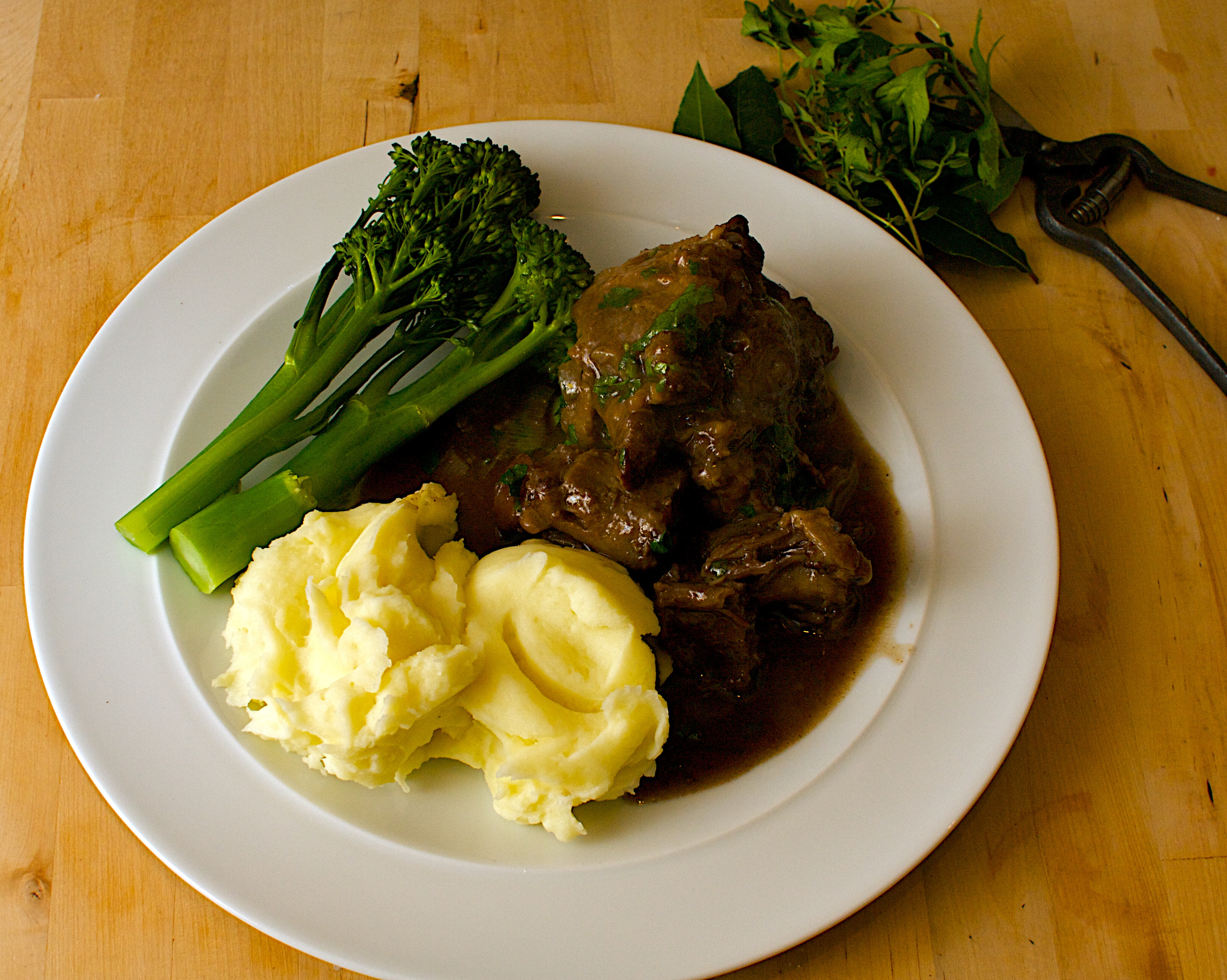
Perfect as the nights close in and the seasons change. This is our second recipe from Rick Stein’s Spain and another success. It takes two days to make but is so straightforward that it’s not a chore at all. As we had torrential rain in Dublin on Saturday and Sunday we could not have picked a better weekend to try it!

P.S. you have to like sucking on bones!

Oxtail and Red Wine Stew from Pamplona – Rabo de torro de Pamplona – to serve 6

  • 2kg oxtail, cut across into 5cm thick pieces
  • 50g plain flour, seasoned
  • 4 tbsp olive oil
  • 4 garlic cloves, sliced
  • 2 medium onions, chopped
  • 200g carrots, sliced
  • 175g leeks, thickly sliced
  • 4 tbsp brandy
  • 500ml red wine
  • 500ml dark beef stock
  • A bouquet garni of bay leaves, parsley stalks and thyme sprigs
  • 1 tbsp chopped flat-leaf parsley

Trim the excess fat off your oxtail pieces and season well with salt and pepper. Toss in the seasoned flour and knock off the excess, keep the remaining seasoned flour. Heat 2 tbsp of olive oil in a large flameproof casserole over a medium-high heat, add the oxtail pieces in batches and fry until well browned. Lift them onto a plate as they are done.

Add the rest of the oil to the pan with the garlic, onions, carrots and leeks and fry for about 10 minutes or until browned.

Pour the brandy over and set alight. Once the flames have died stir in the remaining seasoned flour, then gradually stir in the red wine and bring to the boil, stirring. Simmer for 3 minutes, then stir in the oxtail, the beef stock, bouquet garni, 1/2 tsp of salt and lots of black pepper. Cover and simmer gently for 2 1/2 – 3 hours, until the oxtail is tender but not falling apart yet. Remove from the heat, leave to cool, then cover and chilli overnight.

The next day, scrape the layer of fat off the top of the casserole. Gently reheat, then lift the oxtail into a bowl. Pass the sauce through a fine seive into a clean pan, pressing out as much sauce as you can with the back of a ladle. Discard what’s left in the sieve. Return to the heat and simmer vigorously for 5-10 minutes until the sauce is reduced and is well flavoured. Return the oxtail, season and simmer for 5 minutes to heat through. Serve sprinkled with chopped parsley.

Nice with steamed or mashed potatoes and broccoli.

Wine Suggestion: Pick a medium bodied red wine based on Tempranillo and maybe with a dollop of Garnacha to give it extra juiciness. We drank a Sierra Cantabria Cuvée which had some good age in the bottle and 18 months in oak which softens and rounds the tannins. Anything heavier or more tannic will feel a bit too much with this rich dish.

(Original recipe from Rick Stein’s Spain, BBC Books, 2011)

Read Full Post »
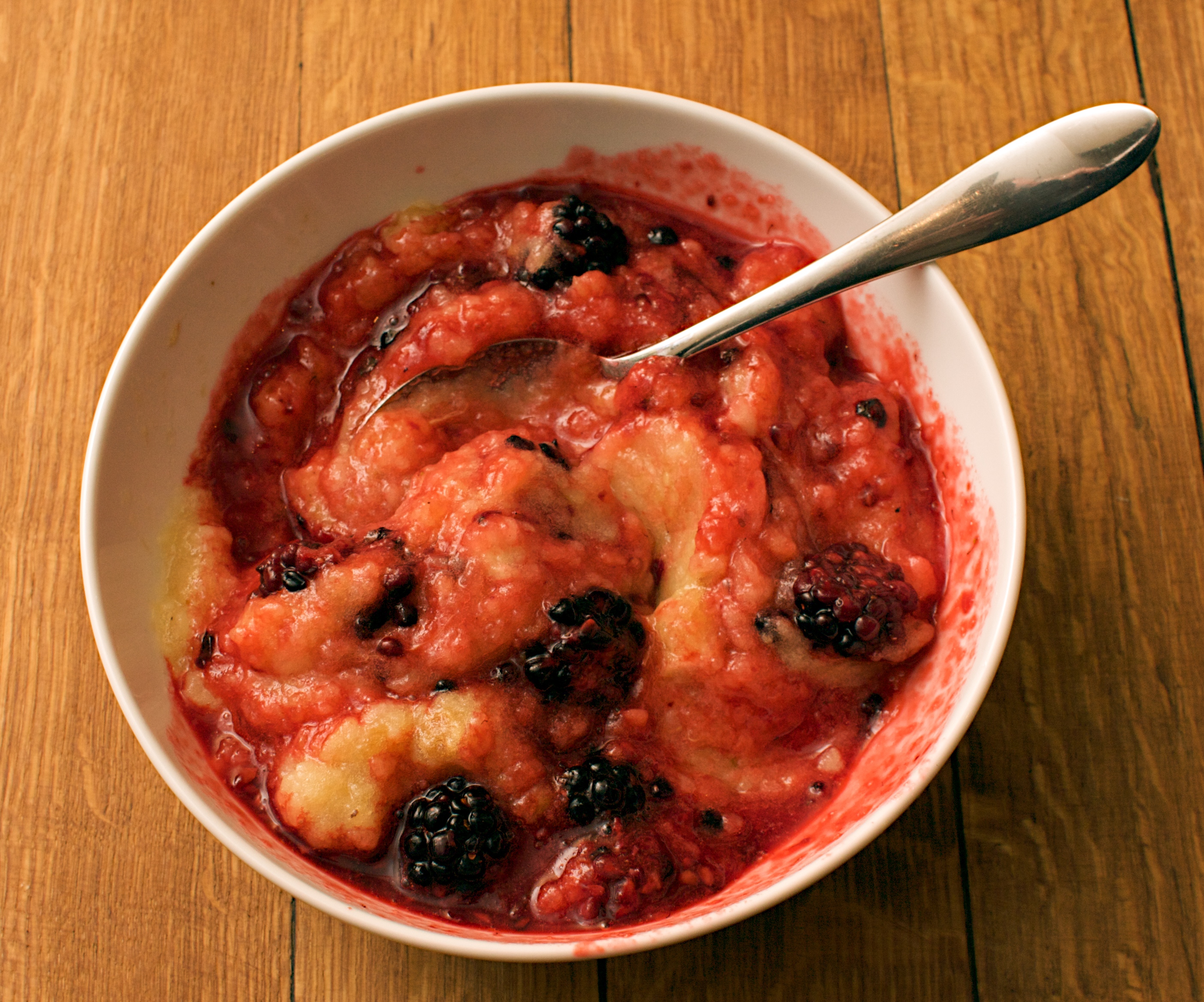
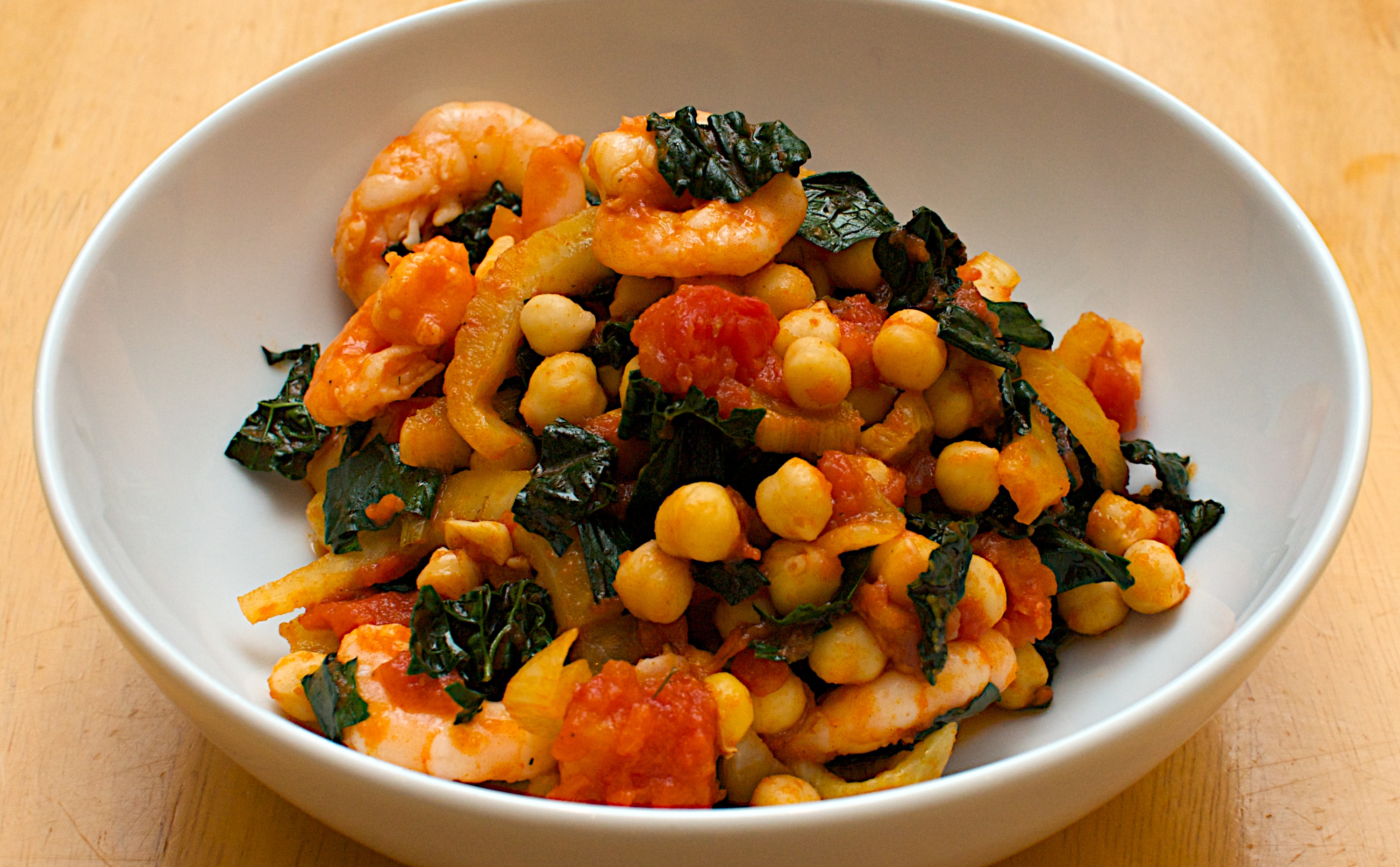
A much needed healthy dinner – we’ve been eating lots of meat and rich sauces recently and have more of the same planned for the weekend. Try this with a hunk of bread to mop your plate. Really easy and tasty but don’t forget to season!

  • 1/2 a bulb of fennel, finely sliced
  • 4 cloves of garlic, finely sliced
  • 1tsp paprika
  • 1  tin chopped tomatoes
  • 1  tin chickpeas, drained and rinsed
  •  a handful of cavelo nero or kale
  • 150g raw prawns
Heat 1 tbsp olive oil in a large frying pan and add the fennel. Cook for about 5 minutes, until softened. Add the garlic and paprika and fry for another minute before adding the tomatoes. Turn up the heat and cook for 5 minutes, until thickened.

Stir in the chickpeas, chopped greens, seasoning and a splash of water and cook for 2 minutes. Add the prawns and cook until just pink.

(Original recipe from BBC Good Food)

Read Full Post »

It is my Mum’s birthday today so when she came down to stay at the weekend I asked her what she would like us to cook. To this she replied “something in a creamy sauce” which sounded fairly straight forward until we went looking for a recipe. Have we all stopped eating meat in creamy sauce or something? We found a few stroganoff style things but as this is one of Mum’s specialities we couldn’t go down that route. Eventually we came across this in Darina Allen’s Ballymaloe Cookery Course and it seemed to fit the bill. Mushroom season is starting too so we’re looking forward to many more mushroomy things.

Carbonnade of Pork with Mushrooms

  • 900g pork fillet
  • 1-2 tbsp olive oil and a little butter
  • 110g onion, finely chopped
  • 60ml dry white wine
  • 150ml chicken stock
  • 225g mushrooms, sliced
  • 300ml sour cream
  • Roux (see below)
  • lemon juice
  • 2 tbsp chopped flat-leaf parsley
For the Roux:
You will only need a little bit of this so you can make it in smaller quantities if you like. It keeps for a couple of weeks in the fridge and can be used to thicken flour-based sauces or gravies.
  • 110g butter
  • 110g white flour
Melt the butter, add the flour, combine and cook for 2 minutes on a low heat, stirring.
For the carbonnade of pork: 

Cut the pork into slices about 7mm thick. Pour a little bit of oil into a very hot frying pan, sauté the pork pieces in batches until nicely browned. Remove to a plate and keep warm.

Add a bit more oil and cook the onions gently until soft and golden. De-glaze the pan with wine and bring to the boil, add stock and boil again until reduced by a quarter.

Meanwhile sauté the sliced mushrooms in batches in a little butter and oil in a really hot pan and add to the pork. Add the cream to the sauce, bring back to the boil and thicken with a little Roux. Add the cooked pork and mushrooms along with the juice to the sauce.

Taste, add a little lemon juice and simmer gently for a minute or two. Add the parsley and adjust the seasoning.

Serve with some curly kale and a glass of the wine you used to make the sauce.

(Original recipe from Darina Allen’s Ballymaloe Cookery Course published by Kyle Cathie Ltd, 2001).

Read Full Post »

So fresh and vibrant in flavour, much better than the raita you can buy in the supermarket and takes only a few minutes to make. We recommend you serve this with a curry (we cooked this one), a dahl, some rice and naan breads. An Indian feast!

Tomato, onion and cucumber raita – to serve 4

  • 1 small vine tomato, chopped into 1cm dice
  • 90g cucumber, peeled and chopped into 1cm dice
  • half a small red onion, finely chopped
  • large handful of chopped fresh coriander
  • 3/4 tsp roasted cumin powder (see below)
  • 1/3 tsp chilli powder
  • 400g plain yogurt, whisked until smooth
  • salt
To make the roasted cumin powder roast cumin seeds in a small dry pan, stirring constantly, until they have darkened quite a bit. Be careful as they can go from brown to black very quickly! Grind to a fine powder.

Stir all the ingredients together and season to taste.

(Original recipe from I ♥ Curry by Anjum Anand, Quadrille, 2010)

Read Full Post »

It’s amazing what you can throw together when rummaging through the cupboard. We always make huge batches of tomato sauce and freeze it as you can use it in so many things. We made pizza on Tuesday which didn’t quite use the whole tub and this is how we used up the leftover sauce. We recommend buying good quality pasta – we like Martelli which comes in cute yellow paper bags but most importantly has a great texture – you will notice the difference.

To make this dish we sliced up a red chilli and sautéed it in a glug of olive oil. We then added our leftover tomato sauce and some tuna chunks from a jar of tuna fillets in olive oil – much nicer than tinned and we always avoid brine! Heat this gently while you cook your spaghetti. Throw some rinsed capers in at the end and toss the sauce and spaghetti together. Yum!

Read Full Post »

Hot Diggity Dogs!

Great mid-week feeds don’t need to be complicated. These are just hot dogs but made more tasty by adding a few extras you probably already have in the cupboard.

Hot dogs with mustardy onions to serve 4

  • 8 good-quality pork sausages
  • 2 tbsp sunflower oil
  • 2 onions, thinly sliced
  • 1 tsp mustard seeds
  • 4 part-baked mini baguettes
  • 1 tbsp Dijon mustard
  • large pinch brown or muscavado sugar
  • 2 tsp wine or cider vinegar
Heat the oven to 200C/180C fan/gas 6.

Put the sausages in a non-stick baking tray and bake for 20 minutes. Meanwhile, heat the oil in a large frying pan and fry the onions and mustard seeds for 10-15 minutes or until soft and golden.

Brush the sausages with maple syrup and return to the oven along with the baguettes. You should turn the oven up now to 220C/200 fan/gas 7 and cook for another 5-8 minutes or until the sausages are dark and sticky and the baguettes are cooked.

Stir the mustard, sugar and vinegar into the onions until the sugar has melted. Cut the baguettes open, stuff two sausages into each one and pile on the mustardy onions.

Reminds us of Halloween!

(Original recipe from BBC Good Food)

Read Full Post »

We got a surprise call from our great friend Ben who had some live lobsters which he was terrified of. He’s now got over this and is an expert lobster stabber and we got the benefit of two live lobsters too. I made this years ago before I met Jules and have always promised to cook it if two live lobsters arrive on our doorstep, so happy Friday night Jules! This recipe feeds 4 people – we had no problem finding 2 volunteers to help us eat it.

Il miglior brodo siciliano di aragosta – the best Sicilian  lobster broth – to serve 4

  • 150g dried lasagne sheets, smashed up
  • 2 x 1kg live lobsters
  • extra virgin olive oil
  • 1 large white onion, finely chopped
  • 6 cloves of garlic, peeled and finely chopped
  • 1 large carrot, peeled and finely chopped
  • 1 cinnamon stick
  • 1 tsp chilli flakes or 1 or 2 small dried red chillies, crumbled
  • 1 tsp fennel seeds, smashed
  • 1/2 a bottle of Sicilian white wine – you can substitute any white wine
  • 850ml passata or 3 x 400g tins plum tomatoes, liquidized
  • a large handful of whole almonds, skins on
  • a small handful of fresh basil leaves
First you’re going to have to kill the lobsters. The best way to do this – and the fairest way for the lobster – is to get a large sharp knife, place the tip on the little crown on the head and chop straight down between its eyes. Be brave! Once you’ve killed your lobsters you need to twist and pull the head away from the tail. Put the tails and claws aside for now. Open the heads and discard the little grey stomach sack which will be near the eyes. Then just cut the head up into little pieces, keeping all the brown meat and other stuff.

Put a large pot on a very gentle heat. When hot, pour a good glug of olive oil in along with all the head pieces and lobster legs. You can turn the heat up a bit now. Add your onions, garlic, carrots, cinnamon stick, chillies and fennel seeds. Continue frying this for about 15 minutes – keep moving it around in the pot – so the onions take on a bit of colour but careful they don’t burn. If the pan gets too hot just splash in a bit of water.

Add your white wine and boil hard for 5 minutes before adding the passata and the same quantity of water. Bring back to the boil, then reduce the heat and simmer for about 20 or 30 minutes. Now put a colander on top of another large pot and pass the soup through it. Press down on the shells with the back of a ladle and let them drip for 5 minutes to make sure you get all the flavour out of them. You can now throw the shells away. Put the soup back on the heat to simmer. It should look like tomato soup – if you think it looks to thick you can add a little water.

Slice the lobster tails across, through the shell and the meat, into 2.5cm slices and put these into the broth. Crack open the claws and pick out all the meat and add this to the broth too. Continue to simmer for 8 more minutes. Meanwhile, cook the pasta in salted boiling water, then drain and toss into the soup for 4-5 minutes.

Chop the almonds very finely and stir into the soup. Taste and season if needed. Divide between 4 bowls, tear over some basil leaves and drizzle with some extra virgin olive oil.

Wine Suggestions: as this is such a rich dish you need to pair it with a wine that is a little more robust and full-bodied. For whites there are a couple of options: stay local and choose Sicilian wines like Inzolia or Grillo which have weight and a herbal minerality. The other option is to look at a classic Chardonnay with a bit of oak for structure. Try to pick one that has a little bit of acidity for freshness too. This was the option we went for and it worked a treat. For red, do the opposite and look for a fruity, but lighter style of wine like an easy and inexpensive Pinot Noir or Grenache – you want to avoid too much tannin and weight which would overwhelm the sweet, delicate lobster.

(Original recipe by Jamie Oliver in Jamie’s Italy)

Read Full Post »

Rugby World Cup Brunch

This is a bit more exciting than your regular cheese and toast and it’s easy to throw together with one eye on the match. We don’t usually buy  sliced pan bread but admit it has its purposes and this is definitely one of them (bacon butties is another). Maybe we’ll try and cook something green for the next match.

Chilli Cheese Toast – to serve 2

  • approx. 100g Cheddar cheese, grated
  • 10g onion, finely chopped
  • 1/2 small tomato, finely chopped
  • a little bit of sliced green chillies – or more if you like
  • 1 tsp finely chopped coriander
  • 2 slices of bread
Heat the oven to 200°C/400°F/gas mark 6. Mix together all the ingredients except the bread. Pile the mixture on top of the bread and bake for a few minutes until crisp and turning brown at the edges.
(Idea from Anjum Anand Indian Food Made Easy, Quadrille, 2007.)

Read Full Post »

This is the  first recipe we’ve tried from Rick Stein’s Spain. Unusually made with white wine, this beef stew is a bit lighter but still rich and full-flavoured. Leftovers are particularly good the next day too. It takes a while to cook but is really easy and there are very few ingredients needed.

Rick says the Spanish serve this with patatas fritas but in an attempt to be not quite so unhealthy we did some roasted slices of potato instead.

Beef in White Wine, Oviedo-Style (Carne gobernada) – to serve 6

  • 1.5kg chuck or blade steak
  • 7 tbsp olive oil
  • 600g onions, chopped into 1cm pieces
  • 10 garlic cloves, crushed
  • 6 fresh bay leaves
  • 300ml dry white wine
  • 300g small carrots, cut into 5 cm lengths
  • salt and pepper
Trim the meat and cut it into bite-sized chunks. Season well with salt and pepper.

Heat 2 tbsp of the olive oil in a large flameproof casserole and fry the beef in batches until nicely browned. Set aside on a plate.

Add the rest of the olive oil and the onions, garlic, bay leaves and a half tsp of salt to the pan, then cook very gently for about 30 minutes or until the onions are soft and golden.

Add the beef back to the pan, add the wine, bring to the boil and season with another half tsp of salt and some pepper. Cover and leave to simmer gently for 2 hours, stir it now and again.

Add the carrots, cover again and cook for another 30 minutes or until the wine and meat juice have combined to make a rich sauce and meet is really tender. Adjust the seasoning and serve with some potatoes.

(Original recipe from Rick Stein’s Spain, published by

Wine Suggestion: Despite being a stew this dish is not heavy, so avoid big, full-fruited wines when trying to pick something to match this. We went around to O’Briens to find a medium bodied Spanish with not too much oak and really struggled as nothing really matched this brief. Our choice in the end was a Sierra Cantabria Crianza from Rioja which went well, but it would have been better with a Mencia from Bierzo or even a Doa from Portugal where the acidity is naturally a little higher and the use of oak normally much less dominant. You could also search for a joven or roble made from tempranillo and/or garnacha where the  wine is younger, fruitier and made for early drinking – just like the Spanish like it!

Read Full Post »

Cypriot PastitsioThe warmth of the cinnamon and the dried mint turns this pasta bake into something distinctively Cypriot rather than Italian. Serve it with a big Greek salad on the side for a stress-free dinner party. The Pastitsio takes a while to make but you can have all assembled in advance, ready to stick in the oven when your guests arrive. It is also best served warm, or even at room temperature, so you don’t need to worry if you get behind making your salad!

Tessa recommends a dish of dimensions very similar (and no bigger) than this: 35cm long, 24cm wide and 6cm deep. We used a big roasting tin.

Pastitsio – to serve 10

  • 4 tbsp olive oil
  • 1 large onion, chopped
  • 2 tbsp chopped parsley
  • 2 garlic cloves, chopped
  • 850g minced pork and beef
  • 1 bay leaf
  • 1 tsp ground cinnamon
  • 125 ml white wine
  • 400g tinned tomatoes, chopped
  • 450g short pasta (we used penne)
  • about 30g butter
  • 1/2 tsp dried mint
  • 1 tbsp breadcrumbs
Bechamel sauce
  • 120g butter
  • 125g plain flour
  • 1 litre warm milk
  • a little freshly grated nutmeg
Heat the oil in a large non-stick saucepan and fry the onion until soft and golden. Add the parsley and garlic and cook for a few second before adding the meat. Fry for a few minutes until all the moisture has gone and the mince is starting to brown. Season and add the bay leaf and cinnamon. When it starts to fry and brown, add the wine and cook until evaporated. Add the tomatoes and a cup of water and cook over a medium to low heat for 10-15 minutes. The meat shouldn’t be too dry. Take off the heat.

Preheat the oven to 180°C (350°F/Gas 4). Cook the pasta in boiling salted water for 2 minutes less than what it says on the packet. Drain and put in a bowl. Mix in the butter and crumble in the dried mint. Stir well and spoon half over the base of a large ovenproof dish. Pour the meat mixture over the top to evenly cover the pasta, then add the rest of the pasta over the top. Press down with a wooden spoon to make it quite compact. Set aside while you make the béchamel sauce.

Melt the butter in a saucepan. Stir in the flour and cook for a few minutes, stirring all the time, then start adding the warm milk. Work quickly, stirring while adding ladlefuls of milk as each one is absorbed. When the sauce is smooth and not too stiff, add salt, pepper and a grating of nutmeg. Keep cooking even after it comes to the boil, for about 5 minutes, stirring all the time. You should have a very thick and smooth sauce. Pour this over the pasta and meat in the dish. Sprinkle the breadcrumbs over the top and bake for 30-40 minutes until the top is golden. Let it cool for a bit before you serve or it will run everywhere.

(Original recipe from Falling Cloudberries by Tessa Kiros, published by Murdoch Books, 2004.)

Read Full Post »

Calamari with Butter and GarlicMade for Michael and Ben who don’t like squid …but both asked us to post this recipe, perhaps we have converted them! Chargrilled and smothered in lemony garlic butter and parsley – don’t forget to buy some bread as mopping up the sauce is the best bit!

Calamari with butter, lemon and garlic – to serve 6 as a starter

  • 1kg squid (baby squid is best)
  • 100g butter
  • juice of 1 1/2 lemons
  • 3 garlic cloves, finely chopped
  • 2 tbsp chopped parsley
  • lemon wedges, to serve
If you need to clean the squid yourself, pull the tentacles away from the body. Remove the clear bone from inside the body and rinse the body well under cold water. Hold the tenticles firmly in one hand and squeeze out the little beak and cut it away, leaving the tentacles whole. Rinse the tentacles. Cut the body into rings about 3cm thick, and leave the tentacles whole. Pat dry.

Heat the butter in a saucepan and when it sizzles, add the lemon juice. Season with salt and pepper. Add the garlic and sizzle for a minute or two to flavour the butter but don’t let it burn. Stir in the parsley and take it off the heat.

Heat a griddle to very hot (it should be just smoking). Scatter with some of the calamari in a single layer – you’ll have to cook in batches – and cook over the highest heat. When the squid has darkened in parts on the underside, turn it over with tongs and cook until the other side is darkened – careful it doesn’t burn or it will taste bitter. Move it around the pan and let it cook for another couple of minutes, then add to the warm butter while you cook the next batch. Season to taste and serve with lemon wedges and lots of bread.

(Original recipe from Falling Cloudberries by Tessa Kiros, published by Murdoch Books, 2004.)

Read Full Post »

Irish SaladThis caprese salad is made from all Irish ingredients – even the mozzarella (fellow Dubliners can pick some up in Fallon & Byrne). Perfect for what will probably be one of our last sunny lunches for this year.

Caprese di Mozzarella – serves 2

  • mozzarella cheese
  • 2-3 tomatoes, sliced
  • basil leaves
  • olive oil
  • salt
Drain the cheese and cut into thin slices. Arrange the tomato and mozzarella slices in concentric rings on a nice plate. Sprinkle with basil leaves, drizzle with olive oil and season with salt (salt is a necessity here!).

Read Full Post »

Really good spuds!

We cooked these recently and took pics, as always, so we could post the recipe on the blog later. Only to find out that we have in fact cooked them before and blogged the recipe also. So we would like to reiterate that this is a very nice way to cook potatoes. We also recommend that you make a little note beside every recipe you do so you don’t forget that you’ve made it before and whether or not you liked it. We almost always do this but clearly forgot this time. You can get the recipe here.

A great accompaniment to potatoes and steak were these courgettes from Johnny and Vivienne’s garden which barbecued superbly, especially with the lemon halves which contribute a caramel zing.

Read Full Post »

« Newer Posts - Older Posts »