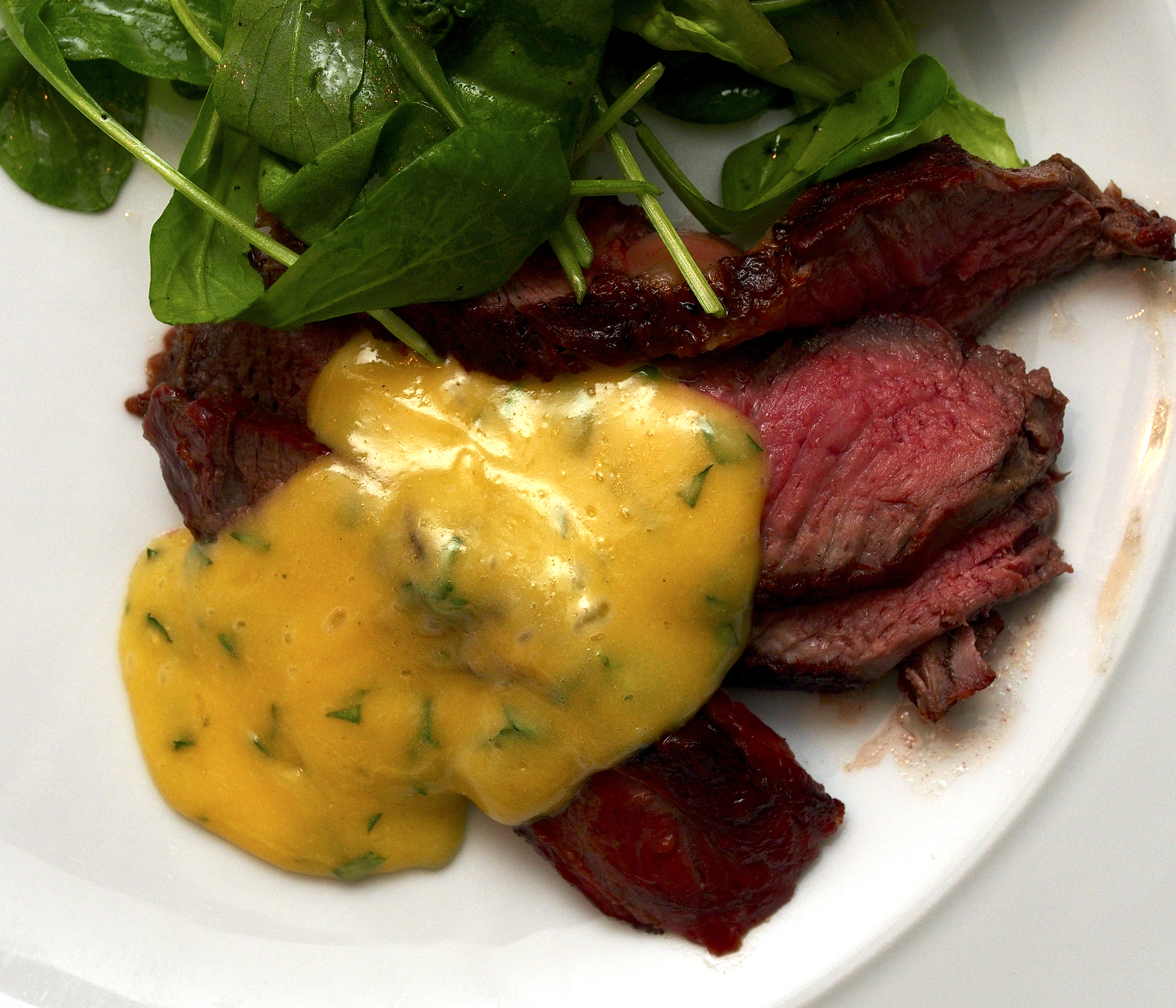
Sometimes we get a notion for steak and chips, so pull out the barbecue and crank up the oven. Béarnaise sauce is the perfect companion, not particularly hard, it just needs a little attention and you must never let it get too hot.
Wine suggestion: Another Greek classic, the Thymiopoulos Naoussa Xinomavro which plays a nice balance of being effortless and ethereal alongside a deep core of powerful, elegant tannins.
Béarnaise Sauce
1 small shallot, finely chopped
3 tbsp tarragon vinegar
6 black peppercorns
3-4 bushy tarragon sprigs
2 egg yolks
½ tsp Dijon mustard
150g butter, cut into small dice
Heat the vinegar, tarragon, peppercorns and shallot in a small pan. Bring to the boil and reduce until there is about 1 tbsp left, then strain and set aside.
Put a bowl over a pan of just-simmering water and make sure it isn’t touching the water. Add the egg yolks and mustard, then whisk in the reduced vinegar. Slowly add the butter, a cube at a time, whisking each time until smooth. You can turn the heat off about half way through. We like to stir-through a little chopped tarragon at the end but it’s up to yourself. Keep warm over a pan of warm water while you cook your steak.
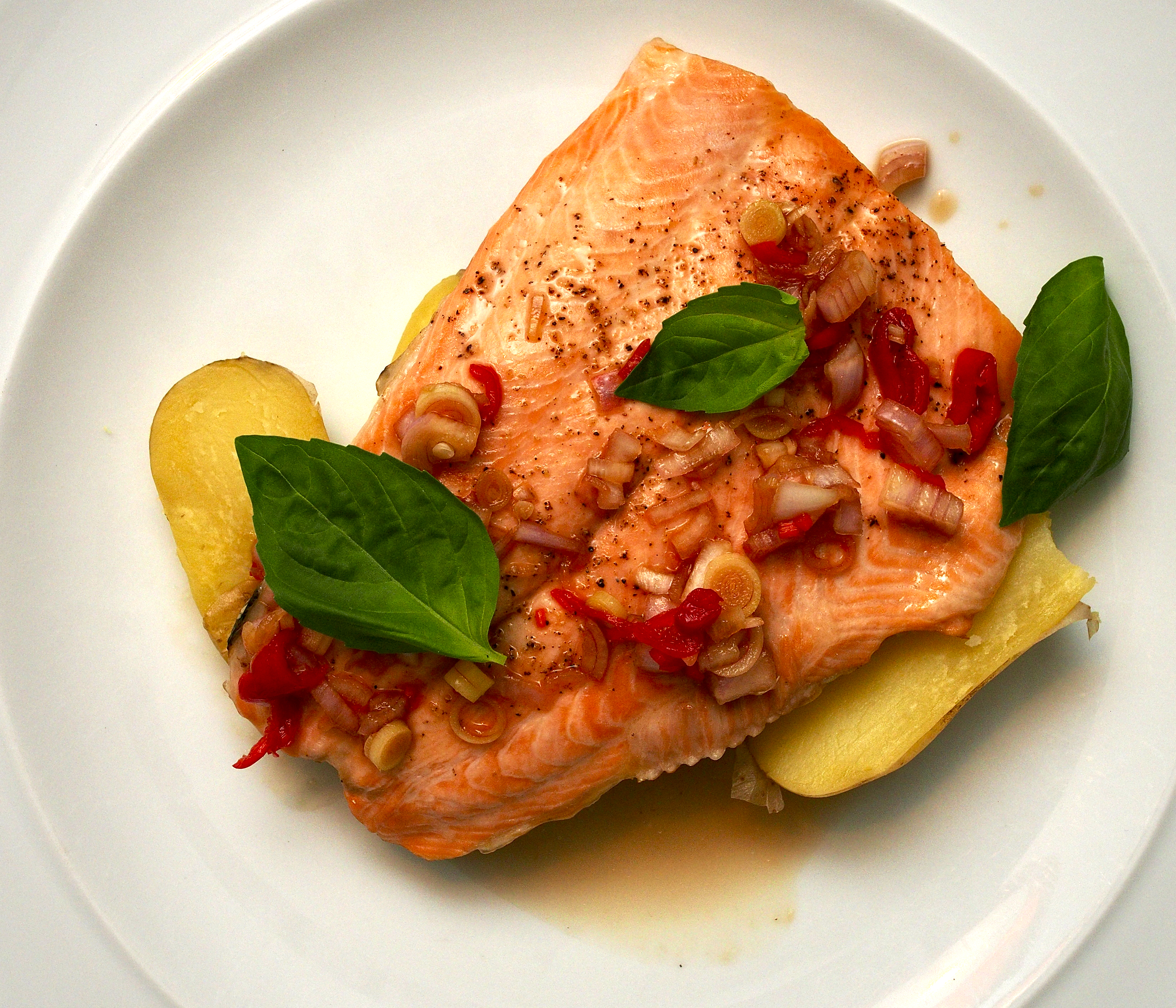
A simple fish dish for weeknights, and something a bit lighter before the feasting starts.
Wine Suggestion: A delight with a light, playful Riesling like Korrell’s Slice of Paradise from the Nahe in Germany, or Pikes Traditionale from the Clare Valley.
Grilled trout with Asian dressing – serves 2
300g Charlotte potatoes
2 skinless trout fillets
Thai basil or regular basil, to serve
FOR THE DRESSING:
1 small shallot, finely chopped
1 lemongrass stalk, remove the woody outer leaves and finely chop
2 tbsp lime juice
1 tbsp fish sauce
1 tsp brown sugar
1 red chilli, finely chopped
Boil the potatoes in salty water until tender, then drain and slice thickly, lengthways.
Season the trout, then grill for 3-4 minutes.
Arrange the potatoes onto plates and top with the trout. Whisk the dressing ingredients together and spoon over the top, then garnish with basil leaves.
(Original recipe by Janine Ratcliffe in Olive Magazine, November 2014.)
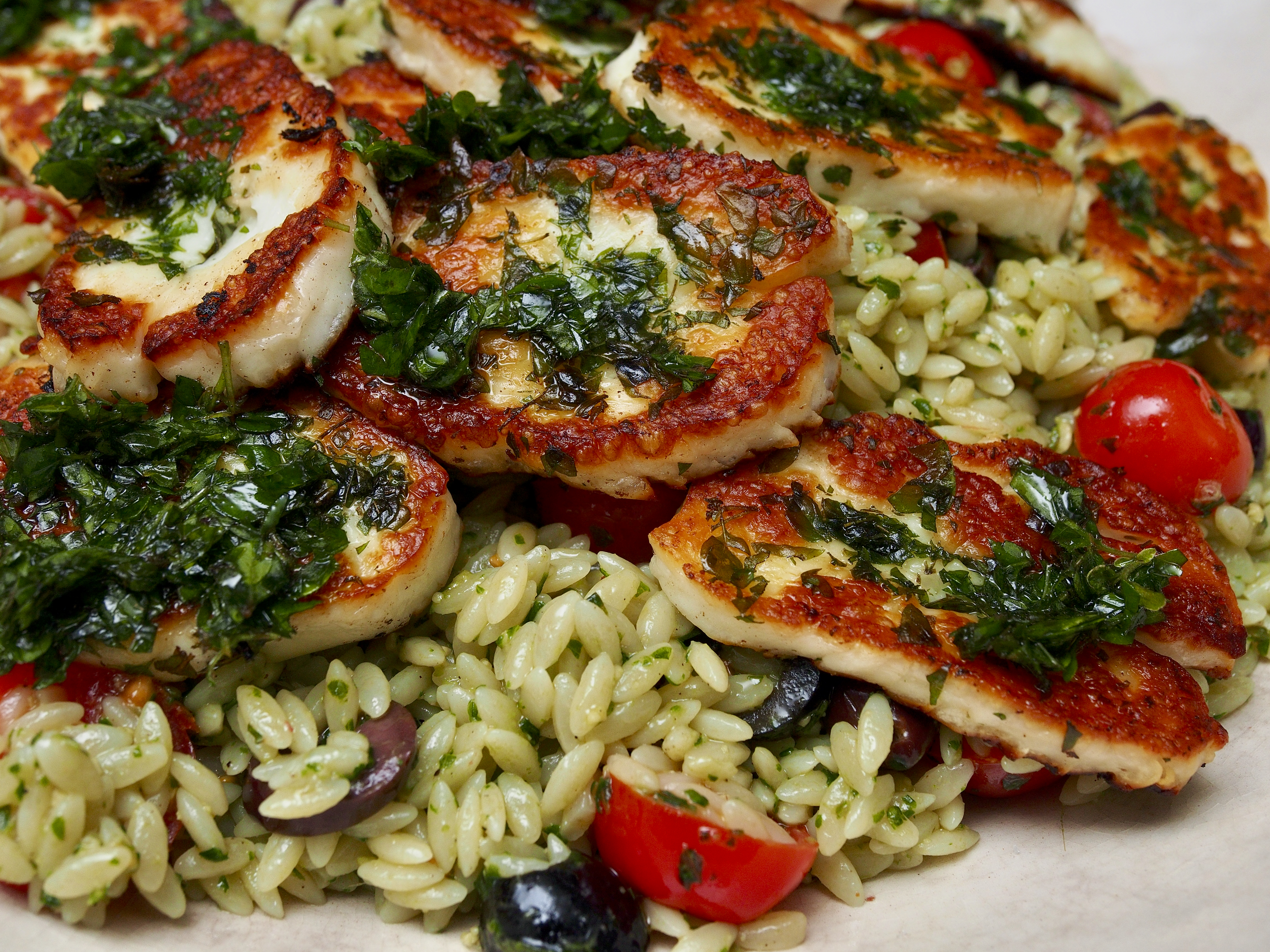
A perfect lunchbox dish, keeping our December weekdays cheery.
Fried halloumi with oregano, orzo & pesto – serves 4
350g orzo
15g oregano, leaves picked
3 tbsp olive oil
250g halloumi, sliced
200g plum cherry tomatoes, halved
handful black olives, chopped
140g tub fresh pesto
Bring a pan of salty water to the boil and cook the orzo according to the pack instructions.
Meanwhile, mix the oregano in a small bowl with the oil and brush some over the halloumi.
Heat a non-stick frying pan and fry the halloumi for a few minutes on each side or until golden.
Drain the orzo and mix in a large bowl with the tomatoes, olives and pesto, then season. Divide into lunchboxes, then top with the halloumi and drizzle over the rest of the oregano oil.
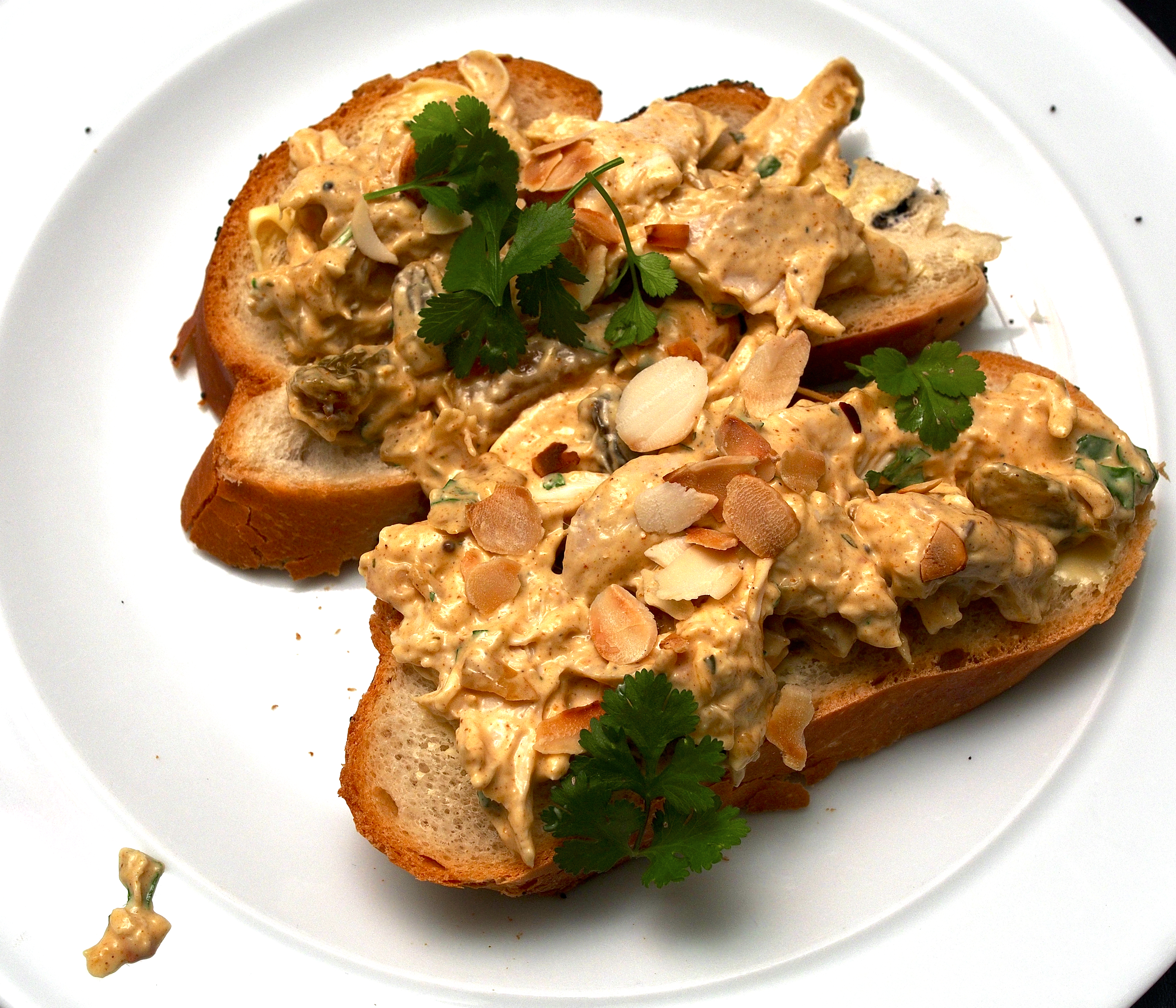
A tasty Saturday lunch. The leftovers were also popular with a few men who had been to a rugby match on the Saturday night.
Coronation chicken – serves 4 for lunch or in sandwiches
300g cold cooked chicken
1 tbsp sunflower oil
1 small onion, finely chopped
1 tbsp medium curry powder
60ml chicken stock
1 bay leaf
½ tsp tomato purée
25g sultanas
2 tbsp mango chutney
125g mayonnaise
50ml Greek yoghurt
½ tsp lemon juice
1 tbsp chopped coriander leaves
1 tbsp toasted flaked almonds
Shred the chicken, discarding any skin and bones.
Heat the oil in a small pan over a medium heat and cook the onion for about 3 minutes or until soft but not coloured. Add the curry powder and fry for a minute, then add the chicken stock, bay leaf, tomato purée and sultanas. Cook for 5 minutes until the stock is well redcued, then stir in the mango chutney. Stir well, remove the bay leaf and leave to cool.
When the onion mixture is completely cool, add the mayonnaise, yoghurt and lemon juice. Stir in the chicken and coriander.
Serve in sandwiches, on toast, or with salad leaves, and sprinkle over the flaked almonds.
(Original recipe from Rick Stein At Home, BBC Books, 2021.)
We know how to make parsley sauce but this version is definitely better. The milk is infused for an hour with grated carrot, onion, celery and bay – a game-changer!
Parsley Sauce
1 carrot
½ onion
1 celery stick
1 bay leaf
500ml full cream milk
50g butter
50g plain flour
lots of parsley – about 100g of leaves when stripped from the stalks, chopped
Grate the vegetables and put into a saucepan with the bay leaf and milk. Bring to the boil, then remove from the heat and leave to infuse for about an hour. Strain out the veg and bay leaf.
Melt the butter in a saucepan and stir in the flour. Cook gently for a couple of minutes, then gradually whisk in the milk until you have smooth sauce. Simmer very gently for about 5 minutes. If it gets too thick you can thin with a little more hot milk.
Stir the parsley in just before serving and season to taste with salt and pepper.
(Original recipe from The River Cottage Cookbook by Hugh Fearnley-Whittingstall, Collins, 2001.)
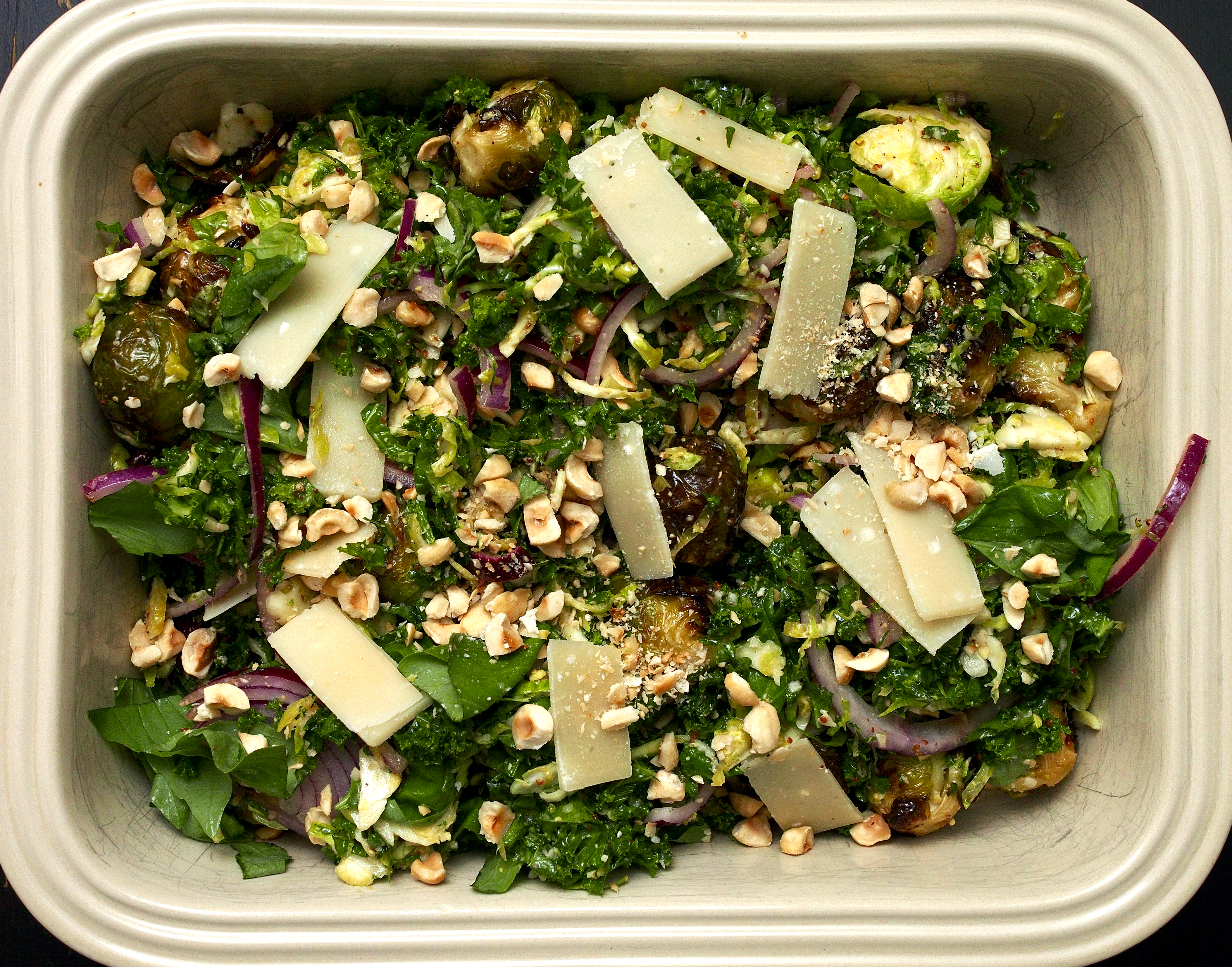
We loved this dish! Bursting with flavour and the perfect wintery side salad. The leftovers were also good the next day. You can use capers instead of anchovies if you prefer.
Wine suggestion: This dish works really well with a good, dry Chenin Blanc. Our current favourite is Bernard Fouquet’s Domaine Aubuissieres Vouvray Silex Sec. Dry and full of yellow apple fruits and layers of texture, while remaining discrete enough to allow the sprouts and parmesan to come through.
Brussels sprout and Parmesan salad with lemon dressing – serves 4
700g small brussels sprouts, trimmed, leave 500g whole and thinly shave the rest
4 tbsp olive oil, plus extra for drizzling
60ml lemon juice
3 cloves of garlic, crushed
1 ½ tbsp wholegrain mustard
2 anchovies in oil, drained and roughly chopped
60g Parmesan, 20g roughly grated and the rest cut into shards – a veg peeler will do this nicely
120g kale leaves, discard the stems and thinly shred the leaves
1 small red onion, halved and thinly sliced
20g basil leaves
70g blanched hazelnuts, well toasted and roughly chopped
Heat the oven to 220C fan.
Line a tray with baking paper and add the whole sprouts, 2 tbsp of oil, ½ tsp of salt and plenty of black pepper, toss to combine. Roast for 18 minutes, stirring halfway, until well browned and cooked through, then leave to cool.
Meanwhile, put the lemon juice, garlic, mustard, anchovies, grated Parmesan, 3 tbsp of oil, ¼ tsp of salt and plenty of black pepper into the small bowl of a food processor and whizz until smooth.
Put the kale, the shaved sprouts, the dressing, ¼ tsp of salt and plenty of black pepper into a large bowl and toss with your hands, massaging the leaves gently. Leave to soften and wilt for about 10 minutes.
Add the onion, basil, chopped hazelnuts, Parmesan shards and roasted sprouts to the bowl and mix to combine. Turn out onto a platter to serve.
(Original recipe from OTK Shelf Love by Noor Murad & Yotam Ottolenghi, Ebury Press, 2021.)
There has been a packet of mung dal in our cupboard for quite some time now which is really the only reason why we made this lovely dish from Meera Sodha’s East. We’re definitley tempted to buy another packet so we can make it again. Serve with steamed rice.
300g mung dal
250g vine tomatoes, chopped
3 big garlic cloves, crushed
2.5 cm piece of ginger, grated
½ tsp ground turmeric
1 tsp chilli flakes
3 tbsp rapeseed oil
10 fresh curry leaves
1½ tsp salt
1½ tsp black mustard seeds
1 tsp cumin seeds
1 long green chilli, very finely chopped
a handful of fresh coriander, chopped
Put the mung dal, tomatoes, garlic, ginger, tumeric, chilli flakes, 1 tbsp of oil, 4 curry leaves and 1.25 litres of water into a large saucepan. Put the pan over a medium heat, with the lid ajar, and bring to the boil, then turn down and simmer for 30-40 minutes. Give it a stir now now and again. It’s ready when soft and quite thick, then stir in the salt.
Heat 2 tbsp of the oil in a small frying pan over a medium heat until smoking hot, then add the mustard and cumin seeds, the chilli and the rest of the curry leaves. The leaves should crisp and the seeds start to pop after about a minute, then remove from the heat and pour over the dal. Stir to mix, then sprinkle over the coriander and serve.
(Original recipe from East by Meera Sodha, Fig Tree, 2019.)
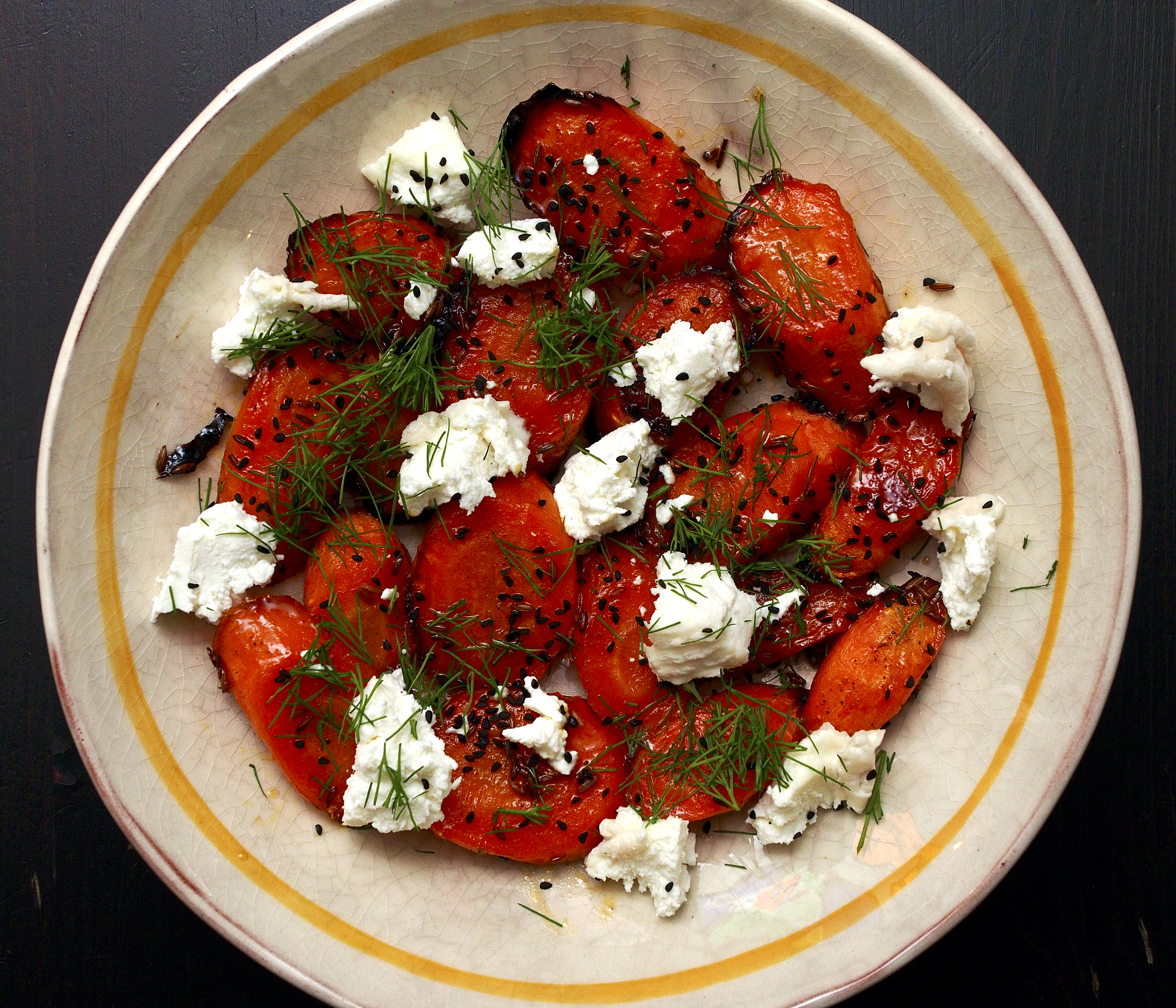
This is a great side dish for often uninspiring carrots. We served with chicken wings.
Cumin-roasted Carrots with Honey Lemon Dressing & St Tola – serves 4 to 6
750g carrots, cut diagonally into 2½ cm slices
olive oil
1½ heaped tbsp cumin seeds
juice of 1 lemon
3 tbsp clear honey
100g St Tola, or other soft goats’ cheese
a bunch of dill, leaves roughly chopped
a good sprinkle of nigella seeds
Heat the oven to 200C/fan 180C.
Line a large baking tray with baking paper.
Spread the carrots over the baking tray and drizzle with plenty of olive oil. Sprinkle over cumin seeds and season well with salt and peper. Toss to coat, then roast for 25-30 minutes, or until cooked through.
Mix the lemon juice and honey together until the honey dissolves. Drizzle this over the carrots and toss to coat, then roast for another 8 to 10 minutes, or until slightly sticky.
Transfer the carrots to a serving plate, crumble over the cheese, then sprinkle with dill and nigella seeds.
(Original recipe from Persiana by Sabrina Ghayour, Mitchell Beazley, 2014.)
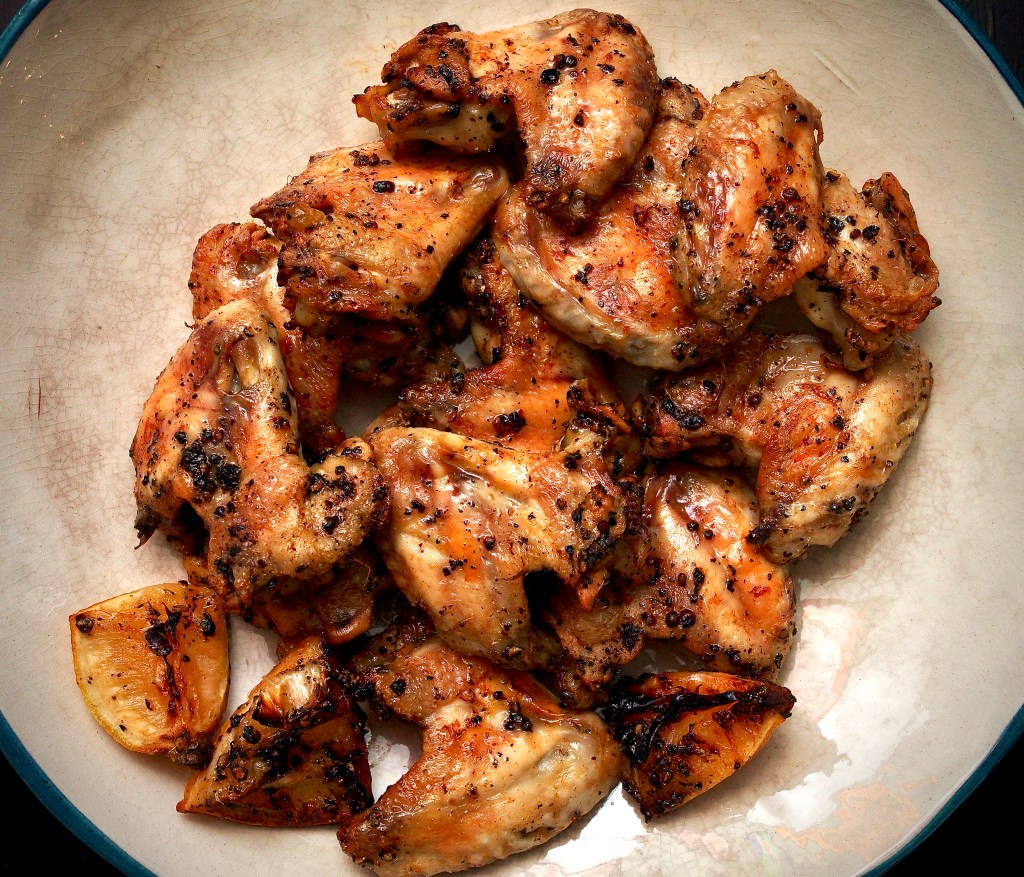
Who doesn’t love a chicken wing? This Nigel Slater recipe is simple but delicious, and somehow makes the chicken taste more chicken-y.
Wine Suggestion: An old favourite that we’ve not had for a while, the Secateurs Chenin Blanc from Swartland came out for this. We love how this grape is so adaptable and works with roast birds so well. Adi Badenhorst, who makes this one, is larger than life and yet guides this wine in a subtle and nuanced way. As he says, it makes itself, which says so much for how well he grows the grapes …
Roast chicken wings with lemon and black pepper – serves 2
12 large chicken wings
1 large lemon
1 heaped tbsp black peppercorns
2 tbsp olive oil
2 tsp sea salt flakes
Preheat the oven to 200C.
Put the chicken wings into a roasting dish. Halve the lemon and squeeze the juice over, then cut up the shells and tuck them amongst the wings.
Bash the peppercorns in a mortar until cracked into small pieces, not finely ground. Mix the cracked peppercorns with the olive oil, then toss with the chicken and lemon. Scatter over the sea salt flakes without crushing them.
Roast for 40-45 minutes, turning once, until golden and sticky with blackened edges.
(Original recipe from A Cook’s Book by Nigel Slater, 4th Estate, 2021.)
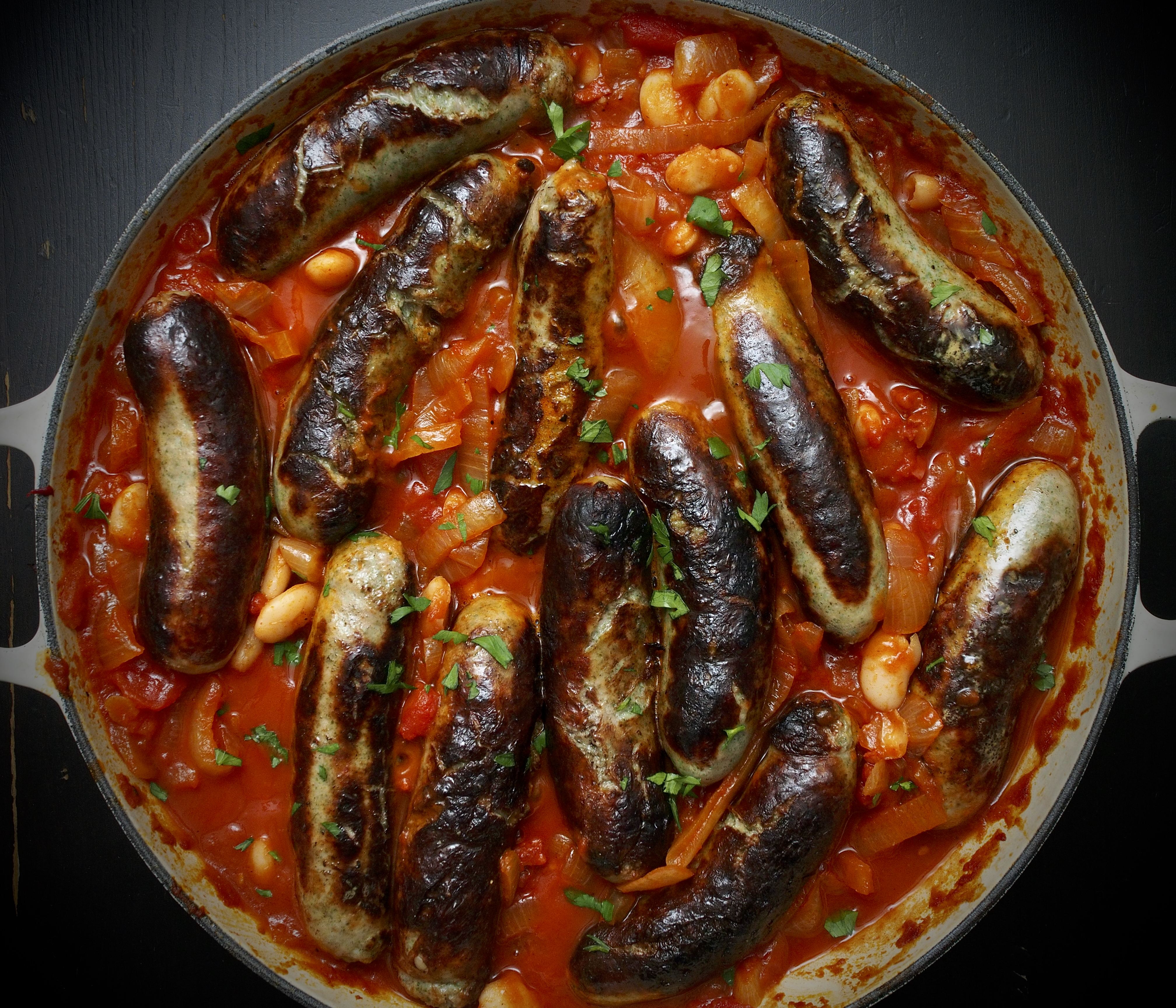
This is a much simplified version of the French classic but very tasty and popular with kids.
Wine Suggestion: something red, juicy and honest, like a good southern French GSM blend, like Roc des Anges Effet Papillon rouge.
Sausage Cassoulet – serves 6
3 tbsp olive oil
12 sausages
4 large onions, sliced
50g chorizo, very finely chopped
2 x 400g tins chopped tomatoes
2 tbsp tomato purée
2 tbsp Worcestershire sauce
2 tsp balsamic vinegar
1 x 400g tin butter beans, drained and rinsed
a small handful of flatleaf parsley, chopped, to garnish (optional)
Heat 1 tbsp of the oil in a large frying pan or casserole dish over a high heat, then brown the sausages on all sides, then remove and set aside. You will probably need to do this in a couple of batches.
Add the rest of the oil and fry the onions for a few minutes until turning golden. Stir in the chorizo, tomatoes, tomato purée, Worcestershire sauce and balsamic vinegar. Season with salt and black pepper, then simmer over a gentle heat for 20-25 minutes or until the onions are softened.
Stir in the butter beans, then lay the sausages on top and cover with a lid. Cook for 20 minutes or unitl the sausages are cooked through.
Sprinkle with the parsley and serve with some greens on the side.
(Original recipe from Mary Berry Cooks up a Feast with Lucy Young, DK: Penguin Random House, 2019.)
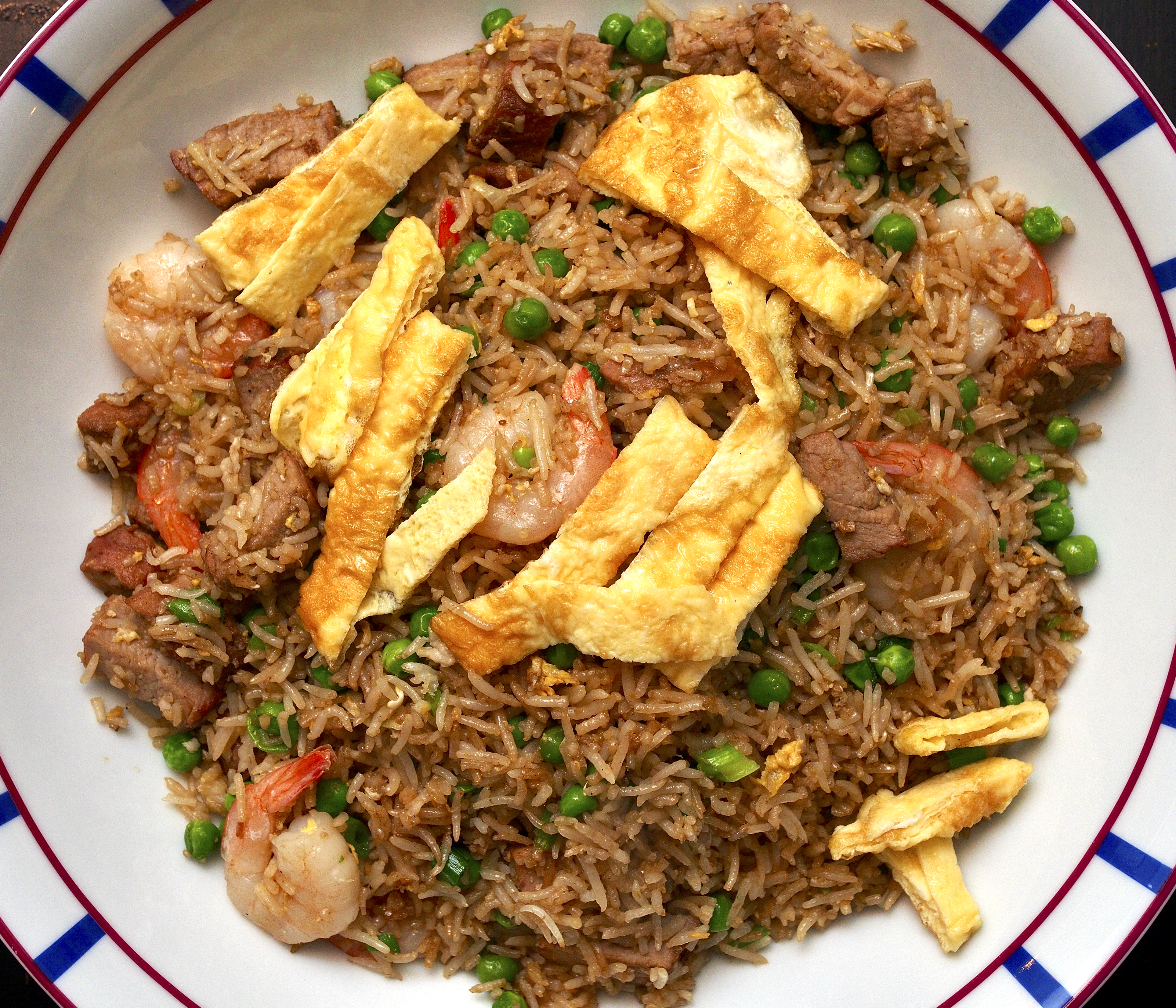
This is great for using up leftover cooked rice. We also had some leftover char siu pork which was delicious chopped up and stirred through.
Wine Suggestion: This calls for an easy style of Grüner Veltliner, like Forrest Estate’s version from Marlborough NZ. Maybe not quite the same as Austrian versions but very pleasurable nonetheless.
800g cooked rice, it needs to be cooked at least a few hours in advance
4 scallions, finely sliced, separate the green and white parts
225g cooked ham or pork, diced
225g frozen peas
1½ tbsp thick soy sauce
30-45ml stock
FOR THE PRAWN MARINADE:
a pinch of salt
1½ tsp cornflour
½ egg white
Devein the prawns and cut into 2cm pieces. Pat dry with kitchen paper and put into a bowl.
Make the marinade for the prawns by mixing the salt, cornflour and egg white together. Stir into the prawns to coat evenly, then leave in the fridge for at least 3 hours or overnight.
Heat a wok until smoking. Add 2 tbsp of the oil, give it a swirl, then add the garlic. As soon as it starts to colour, add the prawns, stirring to separate with a metal spoon for about 30 seconds or until almost cooked and turning pink. Add the Shaoxing wine and as soon as the sizzling calms down, scoop out the prawns and set aside. You will now need to wash and dry your wok.
Lightly beat the eggs with 1 tbsp of the oil and a pinch of salt. Heat a large frying pan until hot, add 1 tbsp of the oil and tip the pan to coat the surface. Pour in half the beaten egg and tip the spread to the edges. When set, turn over and fry for a few seconds on the other side. Remove to a plate and slice into thin strips.
Break up any lumps in the cooked rice. Blanch the peas in boiling salty water for a few minutes, then drain well.
Reheat the wok over a high heat until smoking. Add the remaining 4 tbsp of oil and swirl to coat the wok. Add the white parts of the scallions, pour in the rest of the beaten egg, then immediately add the rice. Turn and toss the rice with a metal spoon scooping up the raw egg from the bottom of the wok.
When the rice is hot, add the ham or pork, then stir in the peas and prawns. Finally add the soy sauce and stock, stirring all the time.
Add the green parts of the scallions, then tip out onto a platter and garnish with the strips of egg.
(Original recipe from Yan-Kit’s Classic Chinese Cookbook, by Yan-Kit So, DK, 1984.)
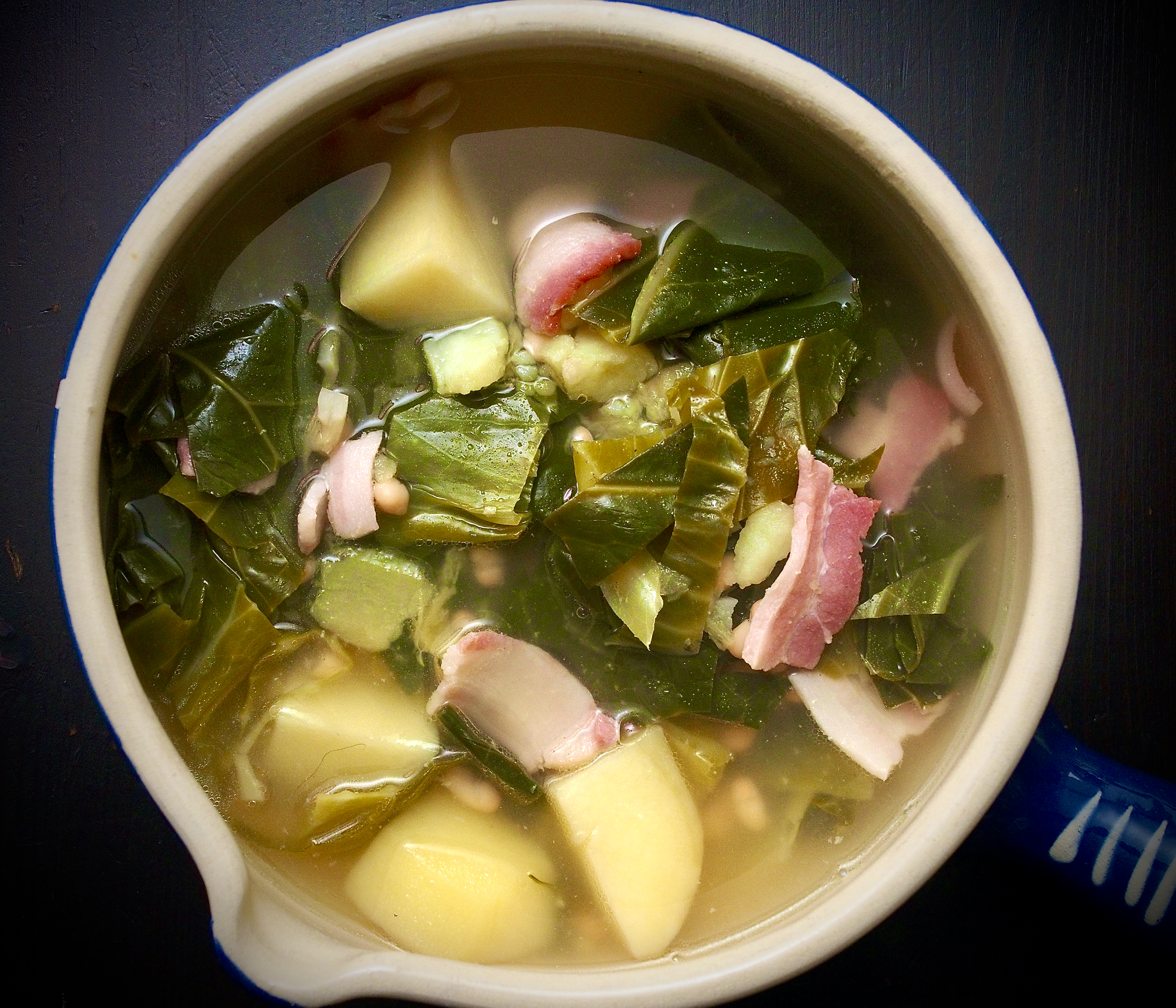
2 litres ham stock (you can also use chicken stock)
150g smoked streaky bacon rashers, cut into pieces
400g potatoes, peeled and cut into 2cm cubes
250g green cabbage leaves (pointed cabbage or spring greens), cut into thick strips
1 x 400g tin haricot beans, drained
Put the stock into a large saucepan with the bacon, potatoes and cabbage leaves. Bring to the boil,then season. Cover and simmer gently for 30 minutes.
Add the beans and warm through for 5 minutes, then serve.
(Original recipe from The Food of Spain by Claudia Roden, Michael Joseph, 2012.)
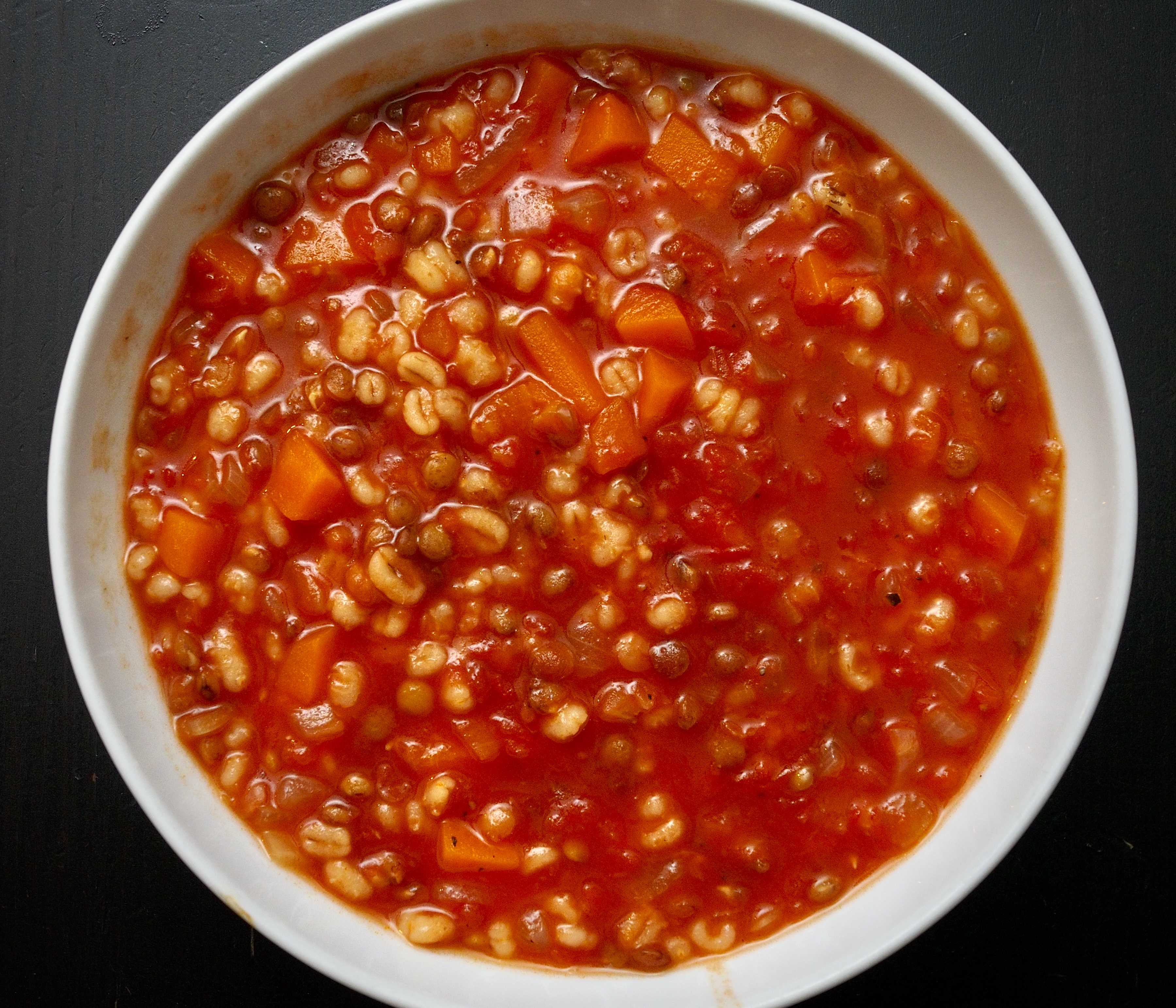
It’s definitely a bit more like soup weather in Dublin and this one’s good and hearty!
Puy lentil and pearl barley soup – serves 6
1 tbsp olive oil
1 large onion, finely chopped
2 carrots, finely chopped
2 cloves of garlic, crushed
100g dried Puy lentils
100g pearl barley
680g jar passata
1.5 litres vegetable stock
2 tsp sugar
1 tbsp balsamic vinegar
Heat the olive oil in a large pot, add the onion and carrots and cook over a medium heat for about 10 minutes or until softened and starting to colour.
Add the garlic, Puy lentils and pearl barley and stir for a minute, then add the passata and vegetable stock. Season with salt and black pepper.
Bring to the boil, then reduce the heat and simmer, covered, for 40-45 minutes or until everything is tender.
Add the sugar and balsamic vinegar, season again if needed, and serve.
(Original recipe from Mary Berry Cooks up a Feast with Lucy Young, DK Penguin House, 2019.)
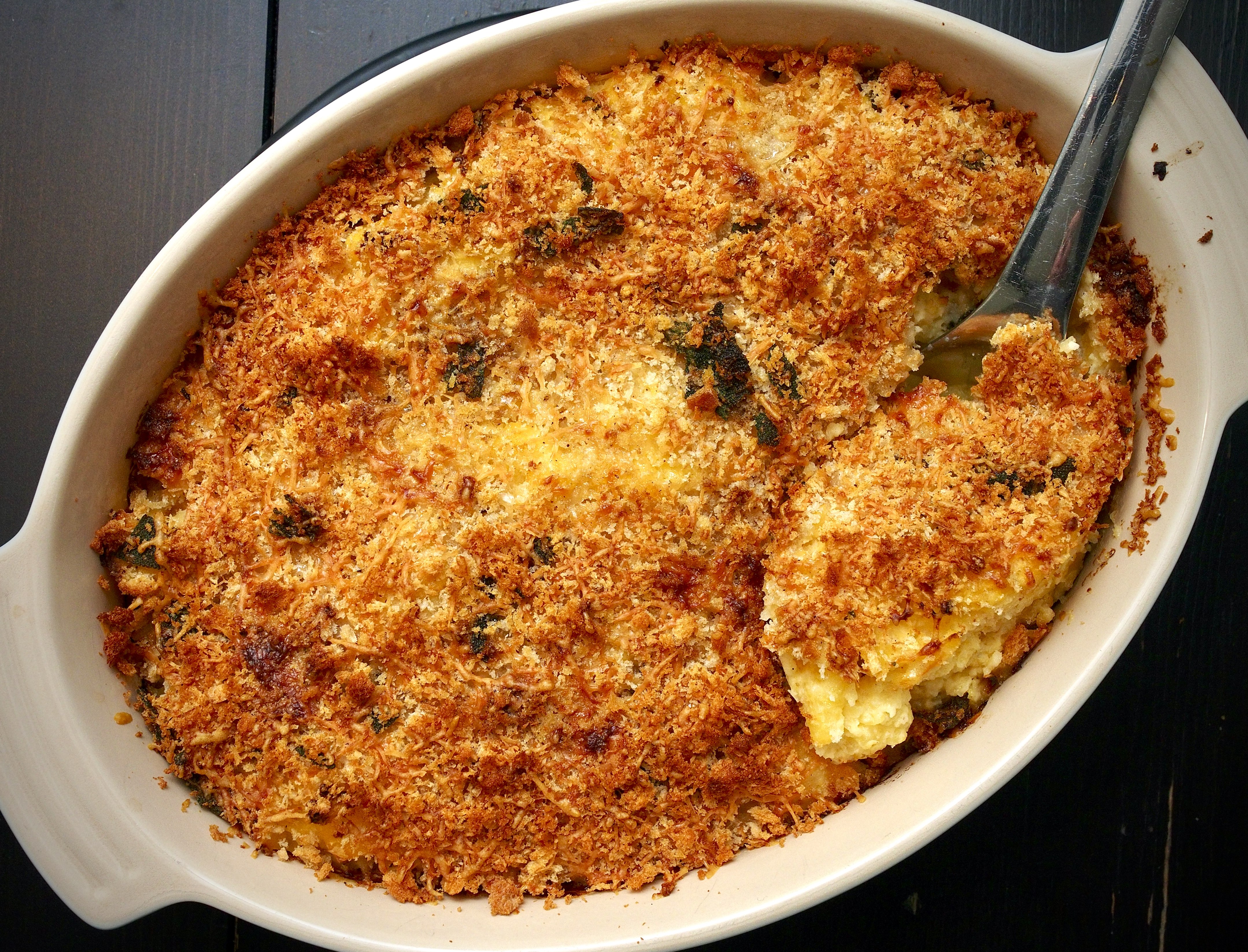
This has a crunchy crust and makes a great wintery side dish for a roast dinner or sausages. For clarity, when we refer to turnips we mean the large yellow-fleshed things that some call swedes, not the little white ones.
Boil the turnip and garlic in salty water for about 20 minutes or until soft. Drain well and allow to steam dry in the pot, then mash with half the butter and the cream, a pinch of cayenne and lots of salt and black pepper. Spoon into a baking dish.
Heat the oven to 200C/fan 180C/gas 6.
Mix the breadcrumbs with the Parmesan and some black pepper. Melt the rest of the butter and fry the sage leaves untli they crisp up, then crumble them into the breadcrumbs and cheese. Sprinkle the mix all over the turnip and spoon over any melted butter, then bake for 40 minutes or until crisp and golden.
(Original recipe by Lulu Grimes in Olive Magazine, November 2012)
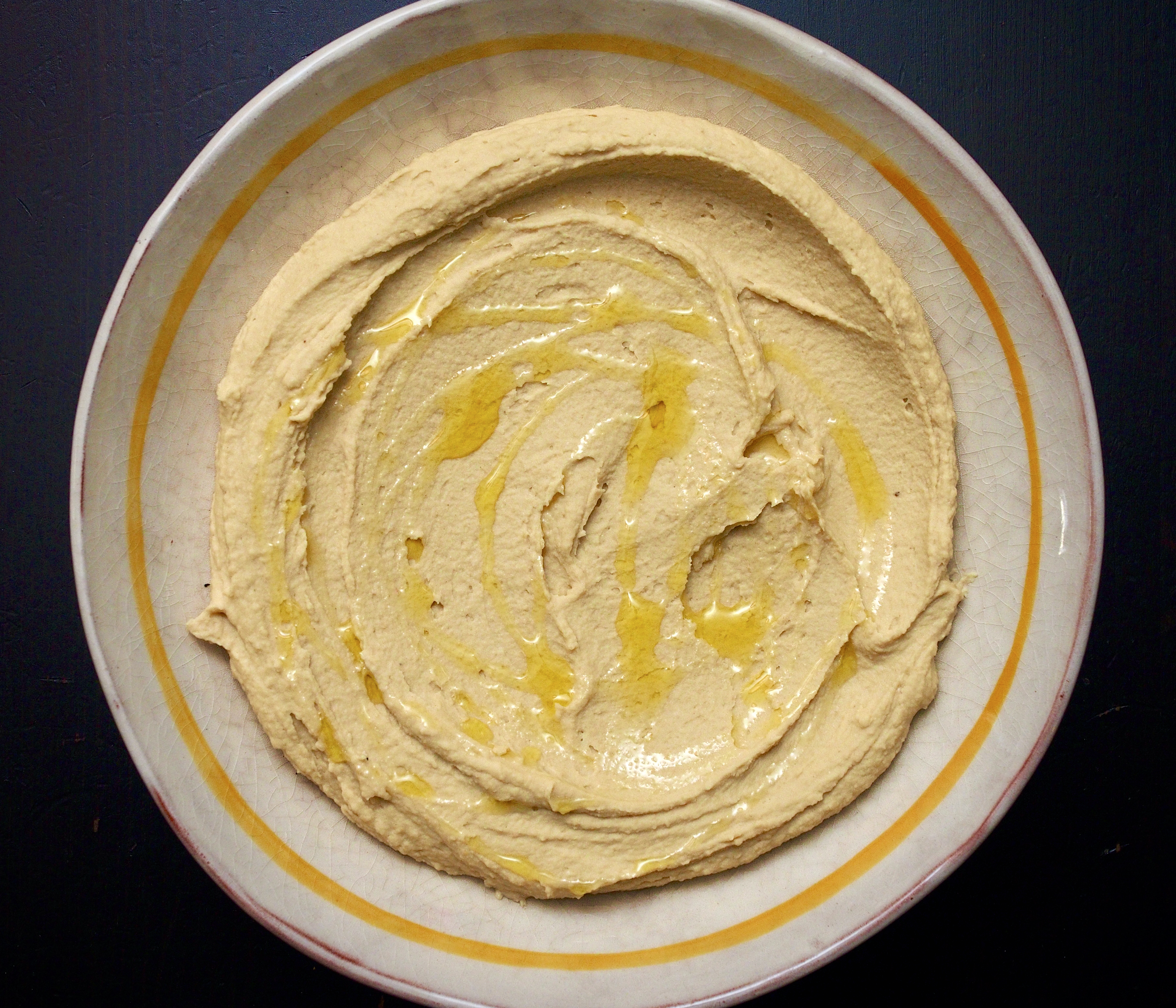
This is the Ottolenghi Tesk Kitchen’s hummus made with tinned chickpeas – confirmed creamy and dreamy.
Creamy dreamy hummus – serves 6
2 x 400g tins chickpeas
a pinch of ground cumin
120-150g tahini
1 clove of garlic, crushed
1½ tbsp lemon juice
25g ice cubes
salt
good olive oil, to serve
Spread the chickpeas out between two tea towels and rub together for a few minutes to release the skins. Don’t press too hard or you will crush the chickpeas. Discard the skins.
Put the peeled chickpeas into a saucepan, cover with water and add 1 tsp of salt and the pinch of cumin. Simmer for 15 minutes or until soft.
Drain the chickpeas over a bowl and save the cooking water. Put the warm chickpeas into a food processor with 120g of tahini, the garlic, lemon juice, ice cubes, 2 tbsp of the reserved cooking water and a good pinch of salt. Blitz until smooth, then taste and add more tahini, garlic, lemon, salt and chickpea water to taste. We added a good bit of chickpea water to get the right consistency, it needs to be quite loose as it will thicken.
Spread the hummus in a shallow bowl and create a dip in the centre. Top with a generous glug of your best olive oil.
(Original recipe from OTK Shelf Love by Noor Murad & Yotam Ottolenghi, Ebury Press, 2021.)
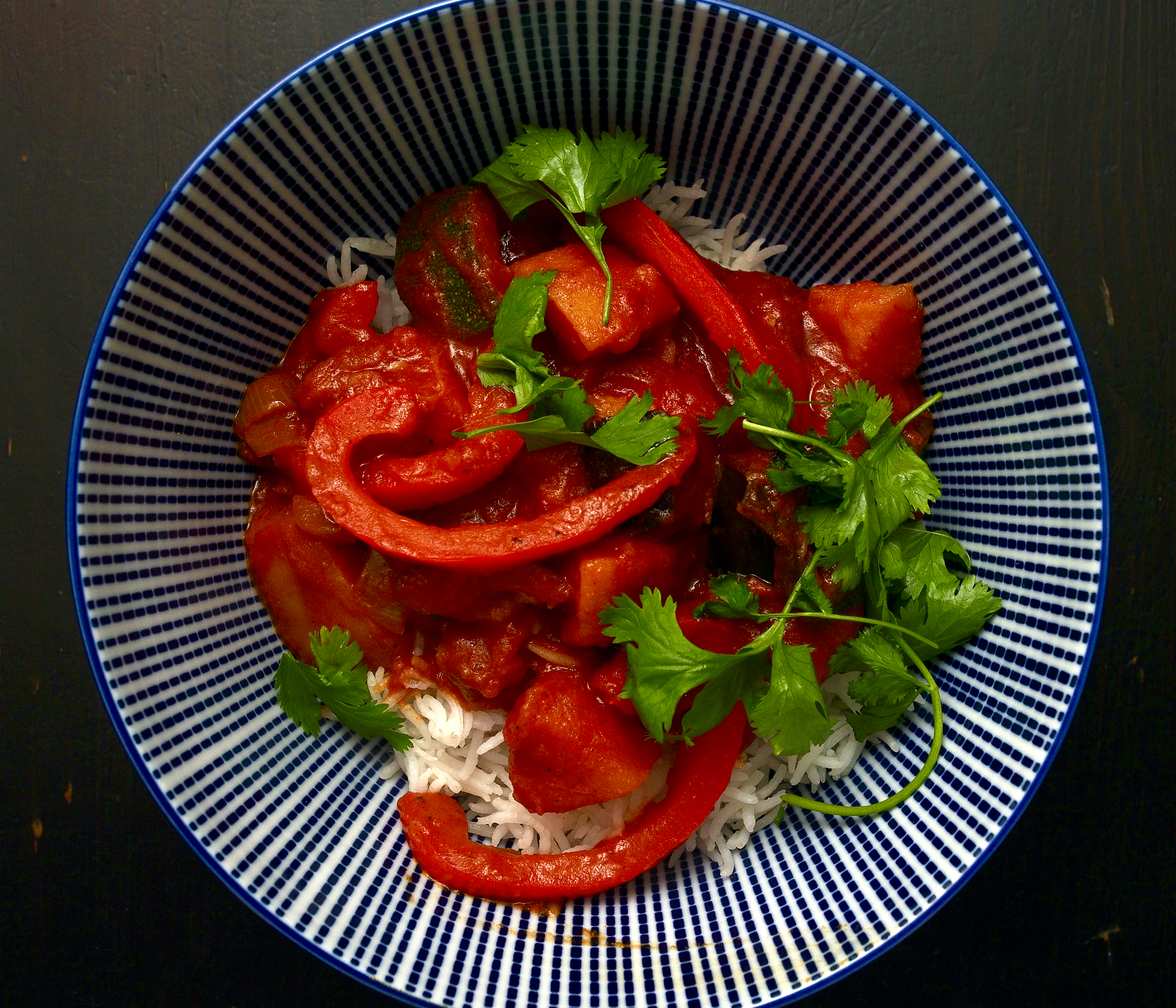
Some nights we just feel like loads of veg, and this was one of them! Serve with rice and naan. Keep the dice relatively small so they don’t take too long to cook. This is also gluten-free and vegan if that matters to you.
Wine Suggestion: Good with Cline’s Old Vine Zinfandel from Lodi in California. The juicy bramble fruits and warm spices make this a gentle hug of a combination. We love how Cline Family Cellars manage to get such great balance and texture in what could easily be just a fruit bomb: bravo!
A big veggie curry – serves 8
1 large potato, diced
1 small butternut squash, peeled and diced
1 aubergine, diced
6 tbsp curry paste, we used Patak’s Madras
3 tbsp vegetable oil
2 onions, sliced
700g jar tomato passata
400g tin coconut milk
2 red peppers, sliced
2 courgettes, cut into small cubes
coriander, to serve
Heat the oven to 200C/180C fan/gas 6.
Put the potato, squash and aubergine into a large roasting tin and toss with 2 tbsp of vegetable oil and 2 tbsp of the curry paste. Season, toss it all together and roast for 30 minutes.
Meanwhile, make the sauce. Heat 1 tbsp of vegetable oil over a medium heat in a large casserole or saucepan. Add the onions and fry until golden, you can add a splash of water if they start to stick. Stir in the remaining 4 tbsp of curry paste and cook for a few minutes, then add the passata, coconut milk and 100ml water. Simmer for 5 minutes.
When the roasted vegetables are tender, tip them into the sauce. Add the courgettes and peppers and simmer for 10-15 minutes or until tender. Scatter with coriander and serve.
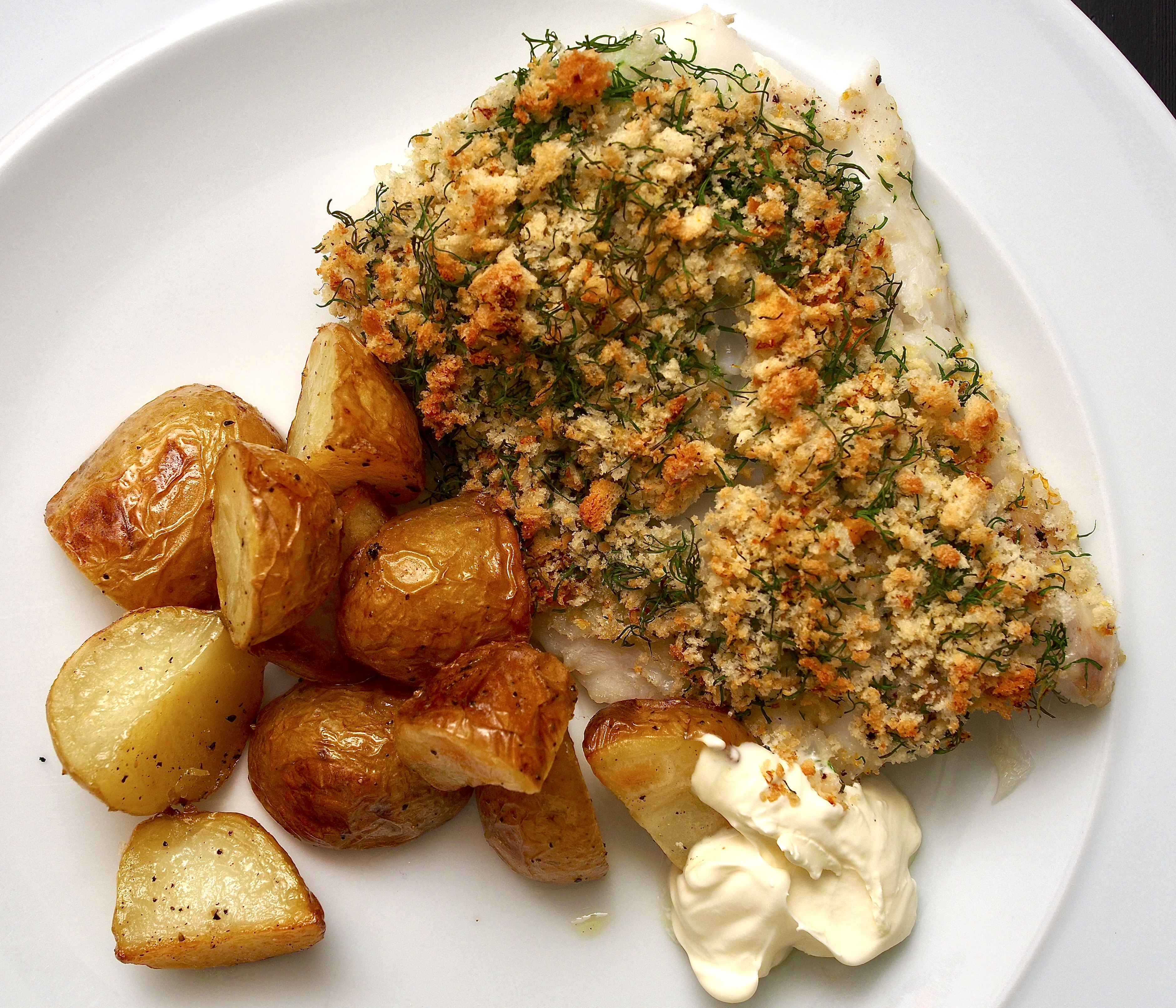
A perfect weekday fish dish. Serve with some baby roast potatoes and steamed greens.
Wine Suggestion: The orange and dill hint at southern France, so we chose Domaine Gayda’s Freestyle Blanc, a blend of Grenache Blanc and Gris, Maccabeu, Marsanne, and Roussanne. Layered and fresh like the food, this also had hints of orange citrus fruits and herbal twists on the finish. Both complementary and adding subtle contrasts. Made us wish we were sitting in the sunshine at a French bistro enjoying the food and wine there!
Cod with Orange & Dill – serves 2
2 large pieces of cod fillet
a large handful of breadcrumbs, sourdough works well
zest of 1 orange
1 clove of garlic, crushed
a large handful of dill
a drizzle of olive oil
2 tbsp crème fraîche, to serve
Heat the oven to 220C/200C fan/gas 7.
Combine the breadcrumbs with the orange zest, dill, garlic and seasoning.
Season the cod, place on a baking tray and press the crumbs on top.
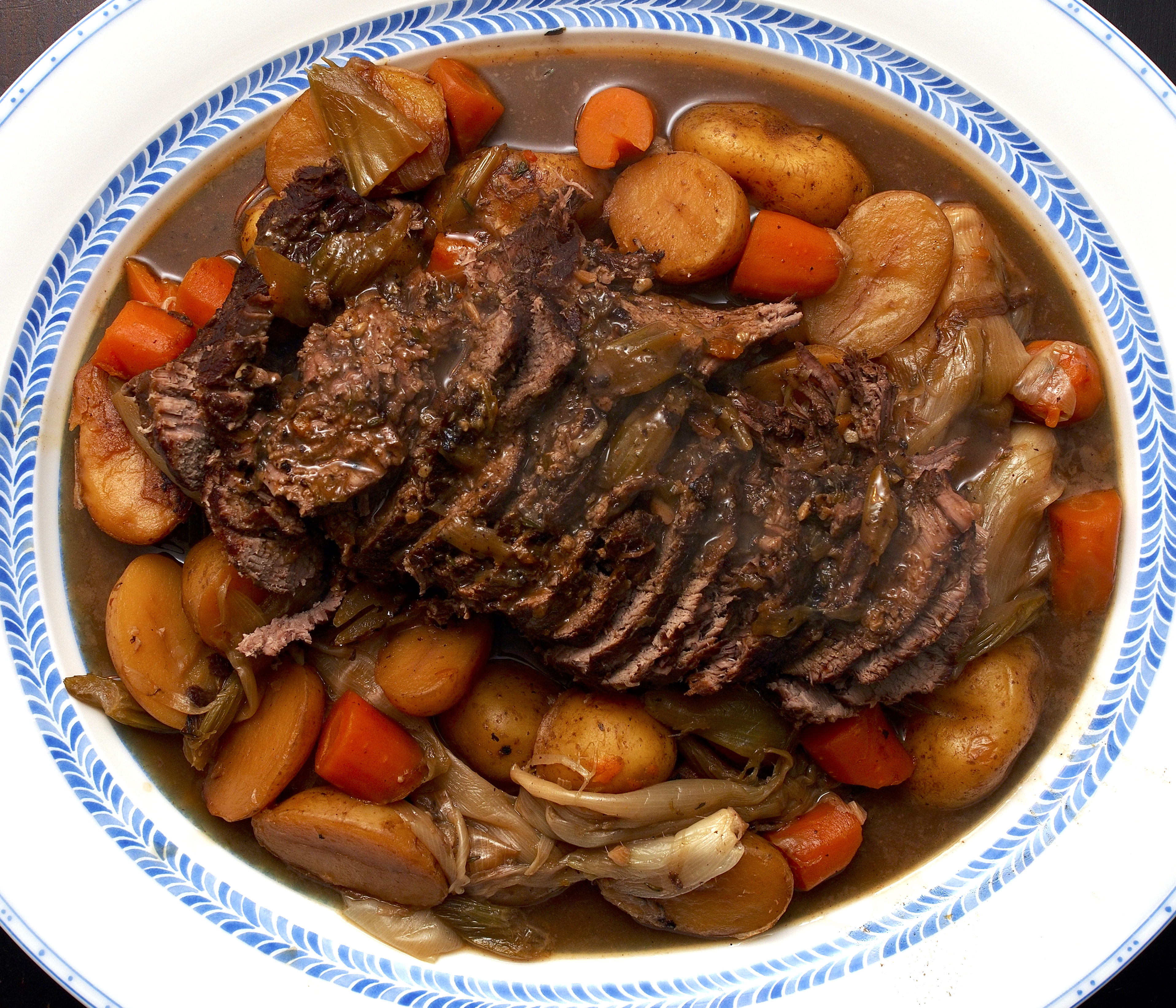
We don’t cook roast beef too often, because we’re lucky enough to have good friends who do! However we liked the look of this one as it all cooks in one pot and so thought we’d give it a go. It’s a very forgiving dish to cook – easy to get right and with loads of veg cooked in the same dish. Some greens on the side is all you need.
Wine Suggestion: A good, honest Bordeaux blend is what works here. For us it was the Chateau Monconseil Gazin from Blaye which always over-delivers in panache and lovely fruit for the value pricing.
Pot-roast beef – serves 4
2 tbsp olive oil
12 shallots, peeled
2 celery sticks, roughly chopped
2 large carrots, cut into chunks
400g baby potatoes, halved
2 tsp mustard powder
1kg silverside or beef topside, extra fat removed
4 cloves of garlic, finely chopped
1 sprig of thyme
2 bay leaves
150ml red wine
600ml beef stock
2 tsp butter
2 tsp plain flour
1-2 tsp redcurrant jelly
Preheat the oven to 160C/Fan 140C/Gas 3.
Heat the oil in a large flameproof casserole dish with a lid. Add the shallots, celery, carrots and potatoes. Cook over a high heat until everything is starting to brown, then remove from the dish with a slotted spoon and set aside.
Mix the mustard powder with salt and pepper, then use this to dust the beef. Add the beef to the casserole and brown on all sides, you can add a little more oil if needed.
Arrange the browned vegetables around the beef, then add the garlic, thyme and bay leaves. Pour in the wine and bring to the boil and allow to bubble for a few minutes, then add the stock and bring to the boil again.
Cover the dish with the lid and place in the oven to 2 hours, turning the beef over halfway through. Remove the beef from the oven and check that it’s tender, then transfer the beef and vegetables to a warm platter and cover loosely with foil.
Knead the butter and flour together to make a paste, then whisk this into the cooking liquid, a little at a time, until thickened. Taste for seasoning, then stir in the redcurrant jelly, to taste. Serve the gravy with the meat and vegetables.
(Original recipe from The Hairy Bikers’ One Pot Wonders by Si King & Dave Myers, Seven Dials 2019.)
Try this idea by Tom Kerridge as an alternative to prawn cocktail. It’s delicious!
Wine Suggestion: Muscadet, or Alvarinho/Albariño. Plenty of choices out there, tonight a Pazo de Señorans Albariño but many more could have equally filled the slot. Keep it fun.
Prawn salad with bloody mary dressing – serves 4
2 tbsp olive oil, plus a drizzle more to serve
2 cloves of garlic, finely grated
a few pinchs of cayenne pepper
20 large tiger prawns, peeled and deveined
lemon wedges, to serve
FOR THE DRESSING:
5 tbsp mayonnaise
1 tbsp tomato purée
5 good splashes of hot sauce, we used Frank’s
1 tbsp creamed horseradish
1 tbsp vodka
a large pinch of celery salt
FOR THE SALAD:
2 ripe avocados, cut into chunky dice
3 celery sticks, peeled and sliced into chunks, keep any leaves to garnish
½ iceberg lettuce, shredded
2 ripe plum tomatoes, roughly chopped
Mix the dressing ingredients together, season with salt, and set aside. Keep it in the fridge if you make it in advance.
Mix the oil and garlic in a bowl with salt, pepper and a pinch of cayenne pepper, then add the prawns and marinate in the fridge, covered, for 10 minutes (or up to 24 hours).
Prep the salad before you cook the prawns and scatter over a large platter.
Heat a griddle pan over a medium heat, when hot lay on the prawns and cook for no more than a couple of minutes on each side, they need to turn pink and be just cooked through.
Scatter the prawns over the salad, drizzle generously with the dressing, sprinkle over the celery leaves and another pinch of cayenne, then drizzle with a little more oil. Serve with the lemon wedges.
(Original recipe by Tom Kerridge in BBC Good Food Magazine, October 2021.)
Who doesn’t love tuna pasta bake. We’re a bit sceptical about one pot cooking … what’s the big deal with using more pots? Anyhow, the one pot works in this case as the pasta absorbs all the flavours. This is also another dish that breaks the nonsense “no cheese with fish” rule.
This is easily halved and can be whipped up from store cupboard ingredients mid-week.
Wine Suggestion: A light, youthful sangiovese with plenty of fruit like Rocca delle Macie’s Chianti Vernaiolo.
Tuna Pasta Bake – serves 4
2 tbsp olive oil
1 onion, finely chopped
2 cloves of garlic, finely chopped
2 tins of tuna, drained
400g tin of chopped tomatoes
25g capers
25g black olives, halved
1 tsp lemon zest
leaves from 1 sprig of thyme
½ tsp chilli flakes
400g short pasta, we used fusilli
75g Cheddar cheese, grated
Heat the oil in a large flameproof casserole, we have a shallow one which works well for this, then add the onion and cook until very soft. Add the garlic and cook for another couple of minutes. Add the tuna, tomatoes, capers, olives, lemon zest, thyme and chilli flakes. Stir until well combined, then add the pasta. Season with salt and pepper, then stir until the pasta is completely coated in sauce.
Pour in enough water to just cover the pasta and bring to the boil. Turn the heat down to a simmer and cover the pot. Cook until the pasta is al dente and has absorbed most of the water. This will take between 10 and 15 minutes, start checking at 10. You might need to stir now and again to stop it sticking to the bottom.
Heat the grill to high.
Sprinkle the dish with the cheese, then place under the grill until browned and bubbling.
(Original recipe from The Hairy Bikers’ One Pot Wonders by Si King & Dave Myers, Seven Dials, 2019.)