Feeds:
Posts
Comments

Archive for the ‘Food’ Category

This all cooks in one pot and the sauce is lovely. We’ve been informed by our daughter, Orlaith, that we can definitely do this dish again as it is almost as nice as noodles. The recipe is by Diana Henry, the queen of chicken recipes.

Wine Suggestion: Earthy reds are what are called for here and tonight it was the turn of Herdade do Peso “Trinca Bolotas” kindly shared by our friends T&M who joined us for dinner. An Alicante Bouschet, Touriga Nacional & Aragonez blend from the Alentejo, Portugal; rich, earthy and complex.

Chicken with chorizo and peppers – serves 4

  • 8 chicken thighs (we used a mix of thighs and drumsticks)
  • 1 tbsp olive oil
  • 225g chorizo, sliced
  • 2 onions, sliced
  • 2 red peppers, sliced
  • 2 cloves of garlic, finely sliced
  • 200ml rioja
  • 200ml chicken stock
  • 1 bay leaf
  • 4 sprigs of thyme, plus the leaves of an extra sprig, to garnish

Trim the skin on the chicken, season with salt and pepper, and set aside.

Preheat the oven to 180C/160C fan/gas 4.

Heat the oil in a large shallow casserole over a medium heat. Add the chorizo and cook for a few minutes, then scoop out with a slotted spoon and set aside. Add the onions and peppers and cook for about 10 minutes, until softening. Add the garlic and cook for another 2 minutes, then tip everything into the dish with the chorizo.

Brown the chicken in the chorizo oil until browned on all sides. This is easier in batches. Set the chicken aside, then tip off all but 1 tbsp of oil from the pan.

Add the rioja and scrape the bottom of the pan with a wooden spoon, then add the stock, bay and thyme, Add the chorizo and veg and bring to a simmer. Nestle the chicken into the sauce with the skin-side up. Transfer to the oven, uncovered, and cook for 35-40 minutes. Add some water if the sauce reduces too quickly.

When the chicken is cooked through, season, and sprinkle with the thyme leaves.

(Original recipe from BBC Good Food)

Read Full Post »

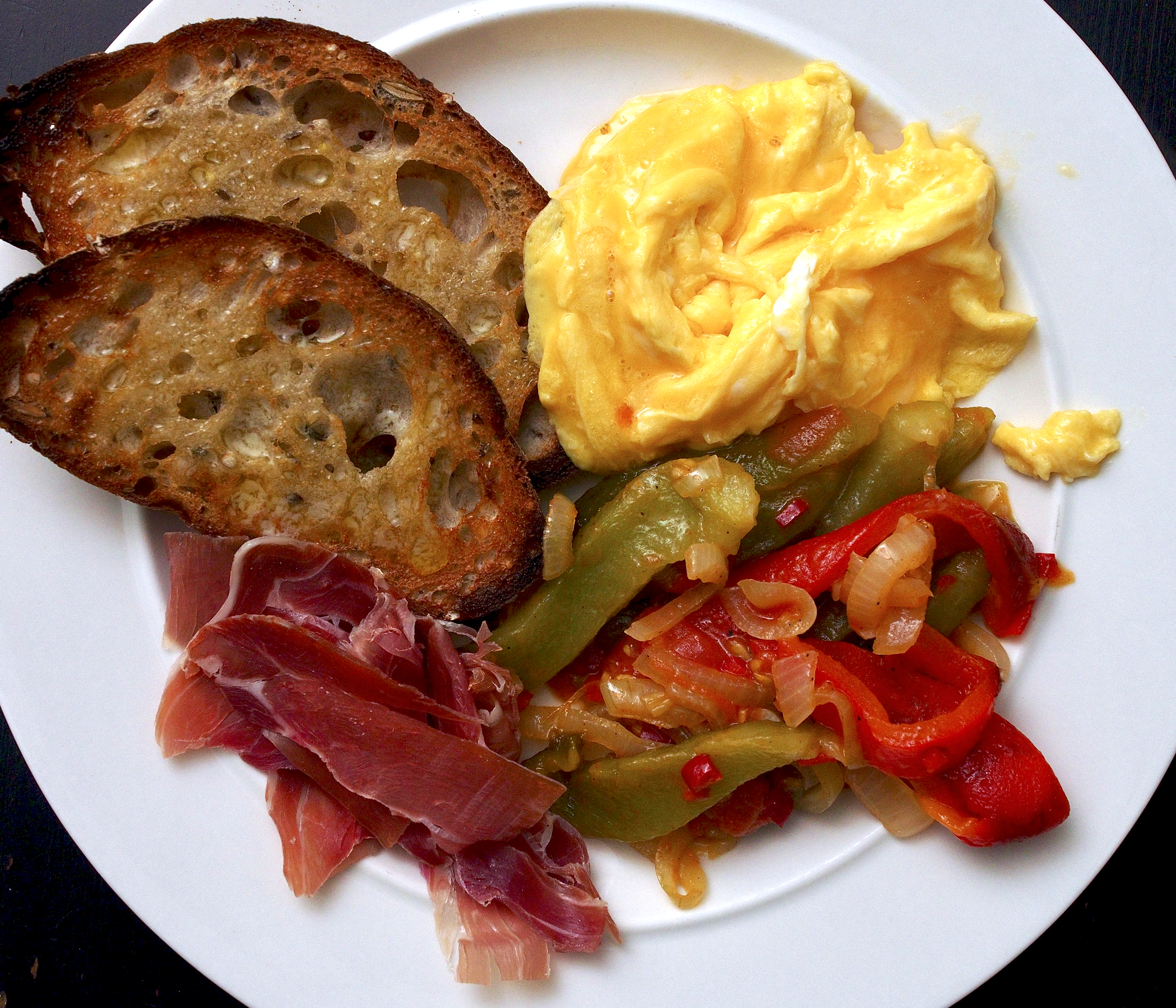
A Spanish-inspired breakfast or brunch dish. The serrano ham is good on the side but not essential.

Piperada vasca – serves 2

  • 1 red pepper
  • 1 green pepper
  • 1 large onion, sliced
  • 2 tbsp olive oil
  • 2 cloves of garlic, sliced
  • 1 small red chilli, deseeded and chopped
  • 3 medium tomatoes, peeled and chopped
  • ½ tsp sugar
  • a knob of butter
  • 3-4 large eggs, lightly beaten and seasoned
  • slices of serrano ham
  • toasted bread, to serve

Grill the peppers until blackened all over, then place in a bowl and cover with cling film. When the peppers have cooled, peel and deseed them, then cut into strips.

Heat the oil in a large frying pan, then fry the onion, until soft and golden. Add the garlic and chilli and stir, then add the tomatoes. Add the sugar and season, then cook for 10 minutes or until the liquid has evaporated and the tomatoes have collapsed. Add the roasted peppers.

When almost ready to serve, melt the butter in a small frying pan and gently scramble the eggs. You’re looking for a creamy texture.

Serve the piperada with the eggs, ham and some toast on the side.

(Original recipe from The Food of Spain by Claudia Roden, Michael Joseph, 2012.)

Read Full Post »

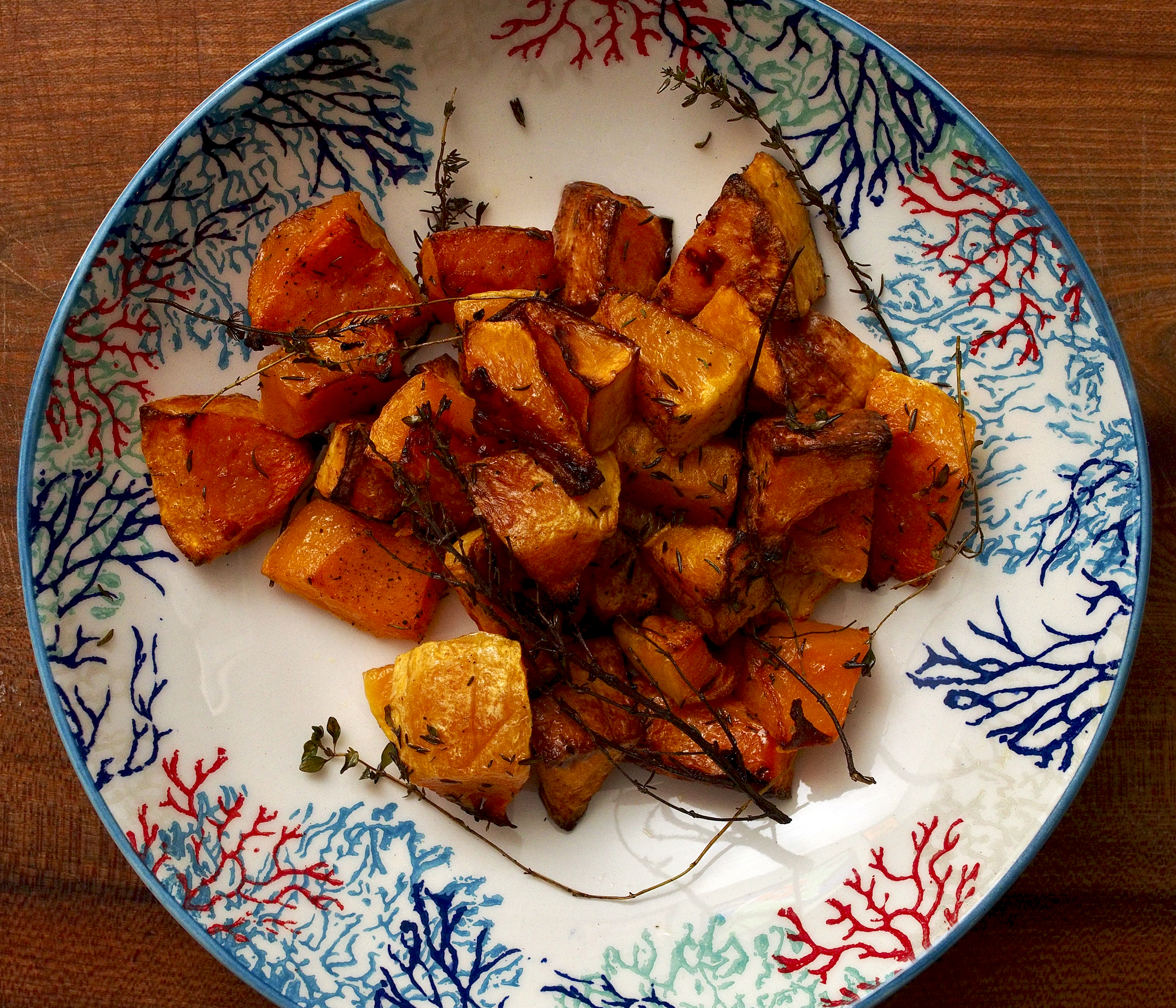
We’re often cooking for two which means we often halves of things to use up, like half a butternut squash. This is our favourite way to cook it.

Roasted butternut squash – serves 4 as a side (easily halved!)

  • 1 large butternut squash (about 1kg), peeled, deseeded and cut into rough 3cm chunks
  • 10 small sprigs of thyme
  • 50ml olive oil

Preheat the oven to 200C/400F/Gas 6.

Spread the squash out on a large baking tray, then add the thyme, drizzle with olive oil and season with salt and pepper. Give it a toss with your hands.

Roast in the oven for 30-40 minutes or until tender and starting to caramelise.

Read Full Post »

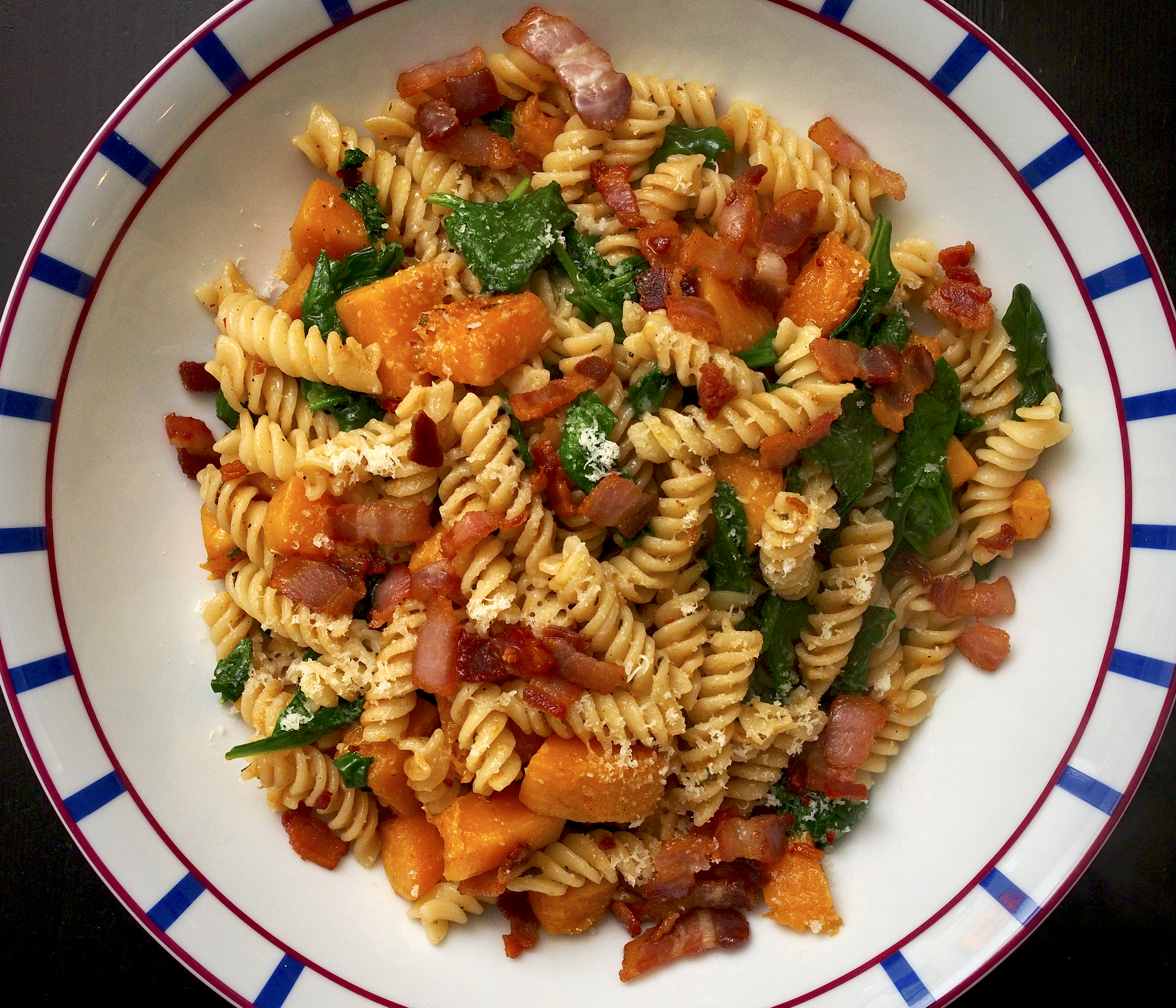
This dish even looks like Autumn! Roast any leftover squash on another night.

Wine Suggestion: A light, earthy red or a richer, oaked Chardonnay. A good Burgundy might be a bit extravagant for a Monday but equally it’s a good match.

Butternut squash & pancetta pasta – serves 4

  • 80g pancetta cubes
  • 1½ tbsp olive oil
  • 750g butternut sqush, remove the seeds and cut into 2cm cubes
  • 2 sprigs of rosemary, leaves finely chopped
  • ¼ tsp chilli flakes
  • 3 cloves of garlic, finely chopped
  • 350g fusilli pasta
  • 100g young spinach, roughly chopped
  • grated Parmesan, to serve

Cook the pancetta in a large, dry frying pan until really crisp. Scoop out with a slotted spoon and leave the fat in the pan.

Add the oil to the pan, then the squash, rosemary, chilli and garlic. Cover and cook for 25 minutes, stirring occasionally, until the squash is tender. Season well and gently crush some of the squash pieces with a wooden spoon.

Meanwhile, cook the pasta in lots of salty boiling water, then drain but keep the cooking liquid. Add a ladle or two of the pasta water to the squash and bubble for a few minutes. Tip in the pasta and toss. Stir through the spinach until wilted, then divide between warm bowls and sprinkle with Parmesan and black pepper.

(Original recipe from BBC Good Food.)

Read Full Post »

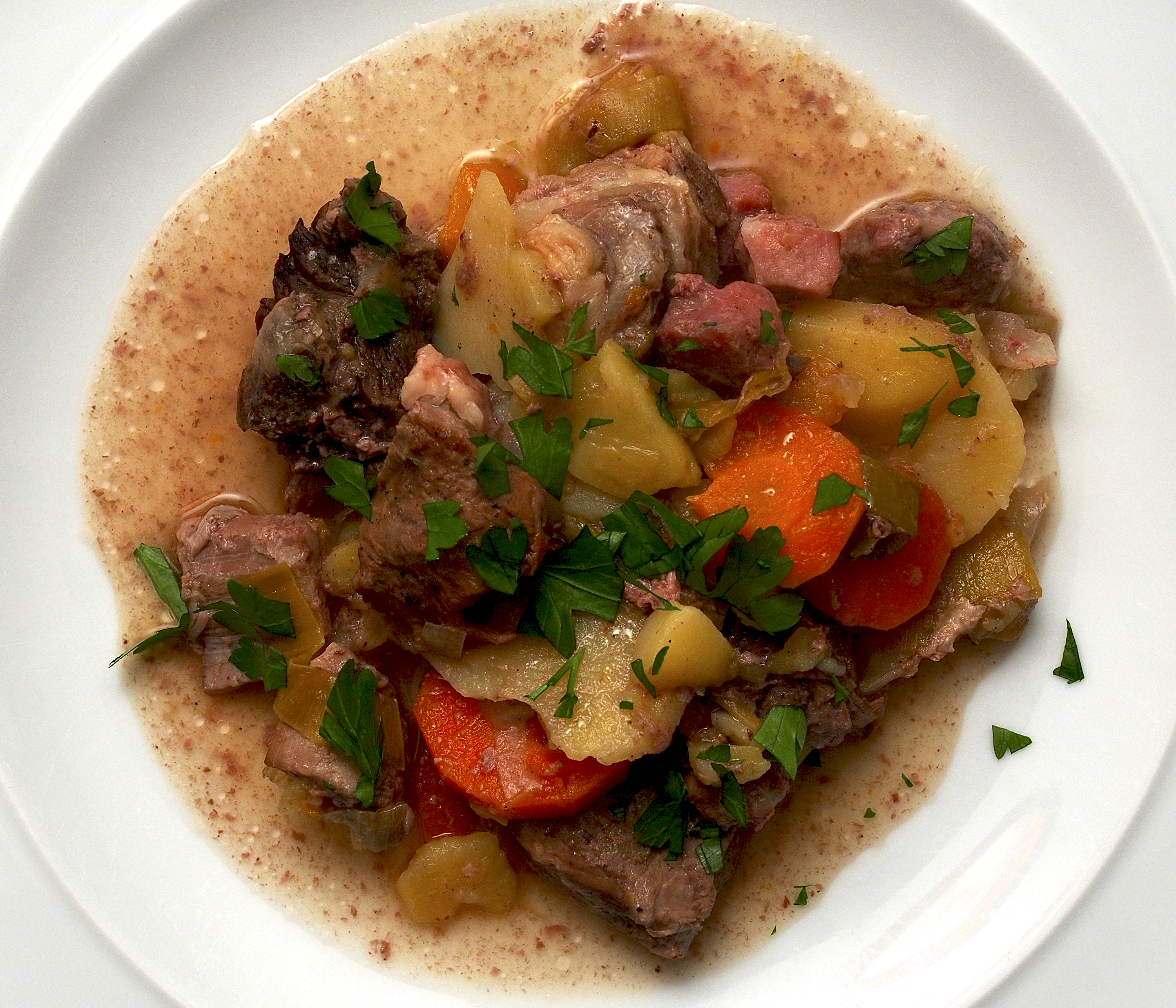
We were initially attracted to this as it is marinated in Riesling, a favoured grape in our house, plus the unusual combination of three meats plus bacon. Classically country French in style, this has no airs or graces in appearance, but is jam packed full of flavour and richness. It serves loads of people and we’d suggest having a side of greens. Also, like many other long cooked stews this tastes great the following day and freezes well.

Wine Suggestion: Courtesy of a very generous friend who came to dinner, we were treated to a delightful comparison of two old bottles of Rene Rostaing’s Côte Rôtie: the La Landonne and Côte Blonde. Both an excellent match to the dish and lovely wines. The Côte Blond was the favoured bottle, but both showed very well. We’d recommend searching for a good Syrah if something of this calibre doesn’t come to hand. Thanks David for these bottles!

Alsatian beef, lamb and pork stew – serves 8-10

  • 750g boneless pork belly, cut into 4cm cubes
  • 750g boneless lamb shoulder, cut into 4cm cubes
  • 750g chuck steak, cut into 4cm cubes
  • 2 onions, sliced
  • 250g carrots, sliced
  • 2 leeks, cut in half lengthways, washed and sliced
  • 500ml Sylvaner or Riesling white wine
  • 2 kg potatoes, sliced into 5mm thick rounds
  • 100g unsmoked bacon, cut into 1cm pieces
  • 250ml beef stock
  • a handful of flatleaf parsley, roughly chopped, to garnish

Place all of the meat (but not the bacon), onions, carrots and leeks in a large non-metallic bowl and pour over the wine. Cover and leave in the fridge overnight.

Heat the oven to 190C/Fan 170C.

Arrange a quarter of the sliced potatoes over the base of a very large casserole dish.

Drain the meat and veg in a colander over a bowl and reserve the liquid.

Scatter some veg over the potatoes, then add som bacon pieces and chunks of meat. Season with salt and black pepper, then add another layer of potato, more veg, bacon, meat and seasoning. Keep layering like this and finsih with a final layer of potatoes. Don’t be tempted to hold back on the salt as the dish needs liberal seasoning (about 2tsp in total).

Pour over the reserved marinade juices and beef stock, then cover the casserole with a tight lid and put in the oven.

Bake for about 3 hours or until the meat is tender. Garnish with chopped parsley and serve.

(Original recipe from Rick Stein’s Secret France, BBC Books, 2019.)

Read Full Post »

Spanish seafood pasta, made like a paella and with a dollop of alioli … what could be more reminiscent of dinner by the sea on holidays; this dish smells like Spain. Lightly does it when cooking the seafood.

Wine Suggestion: A lighltly chilled Garnacha Negra (Grenache Noir) from Terra Alta springs to mind – they really have a wonderful affinity for this grape there, alongside the Garnacha Blanca too. Edetaria’s basic “via Terra” has all the joy, freshness and perfume to compliment the flavours of the food while adding an extra warm spice and red fruits to lift it further. 30 minutes in the fridge was enough to make it taste and feel like sunshine in Spain, even if the weather outside isn’t quite like that at the moment.

Seafood pasta – serves 6 (easily halved)

  • 6 tbsp olive oil
  • 400g monkfish fillet
  • 4 baby squid, cleaned and bodies cut into rings
  • 12 raw peeled king prawns
  • 12 queen scallops (or you can cut bigger ones in half)
  • 4-5 cloves of garlic, crushed
  • 3 tomatoes, peeled and chopped
  • 1 tsp sweet paprika
  • a good pinch of saffron threads
  • 1.25 litres of fish or chicken stock
  • 500g fideua pasta (or you can use vermicelli or spaghettini)
  • 3 tbsp chopped flatleaf parsley
  • lemons quarters, to garnish
  • garlic mayonnaise or alioli, to serve

Heat 4 tbsp of the oil in a large paella pan (40-45cm). Add the monkfish, sprinkle with salt, and cook for a few minutes, turning. Add the squid and cook, stirring, for a couple of minutes. Add the prawns and scallops and turn until the prawns are pink and scallops just seared, just a minute or two. Transfer the cooked seafood to a platter and pour off and reserve any cooking liquid.

Heat the rest of the oil in the same pan, stir in the garlic and stir briefly, then stir in the tomatoes. Add the paprika, saffron and some salt, and cook for 10 minutes, stirring now and then, until the liquid has almost evaporated.

Meanwhile, bring the stock and cooking liquid to the boil. Add the pasta to the sauce in the paella pan and cook, stirring, until well coated. Pour in the boiling and cook until the pasta is al dente. Place the seafood on top a few minutes before the end.

Serve sprinkled with parsley and with lemon and alioli or galric mayonnaise on the side.

(Original recipe from Claudia Roden, The Food of Spain, Michael Joseph, 2012.)

Read Full Post »

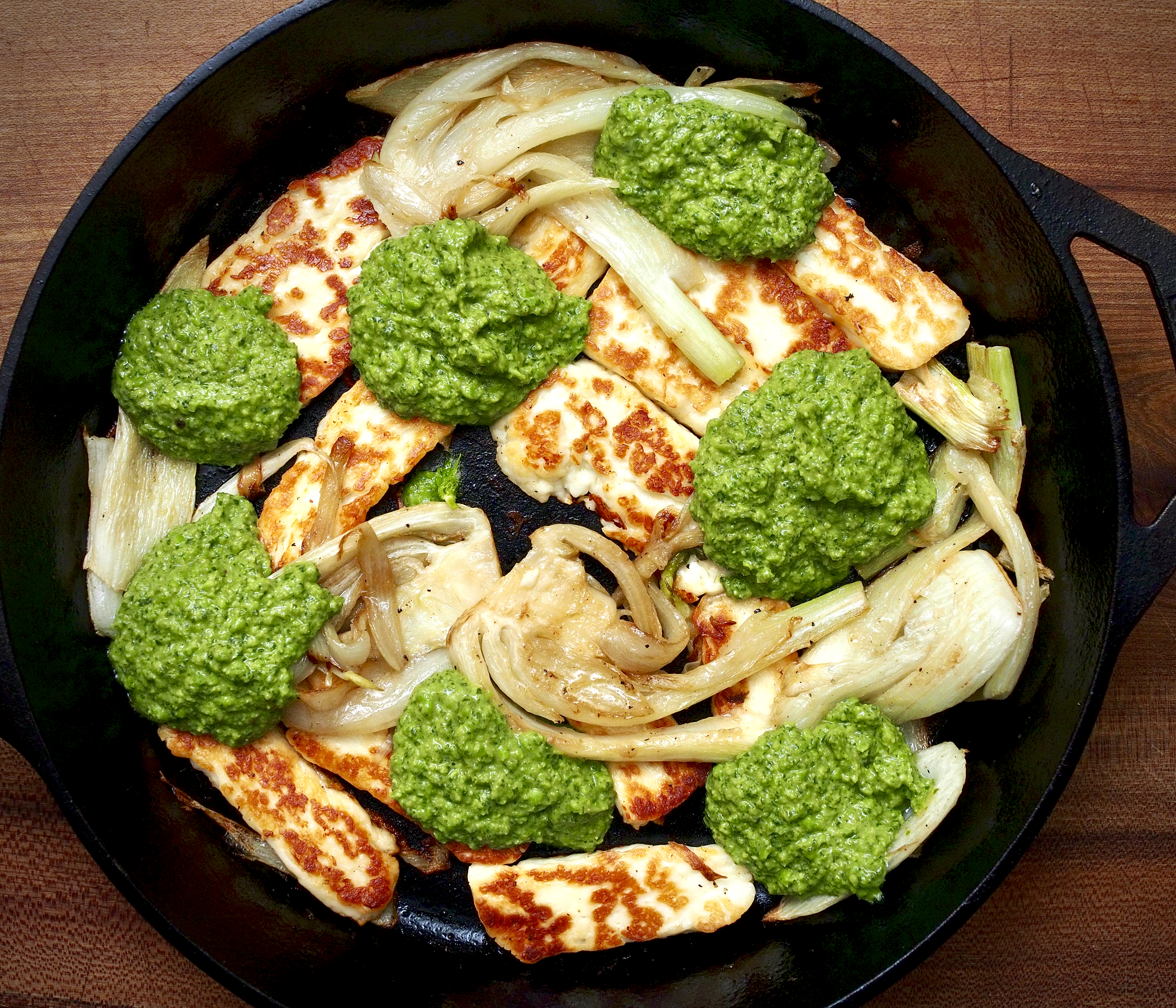
Sometimes the simplest of recipes turn out the best. This one is absolutely delicous and depends on the ingredients being good as there is nowhere to hide.

Wine Suggestion: Find an easy mediterrranean dry white with a touch of sappy, minerality and you’ll have a good match. We had no Greek white’s to hand but had the La Piuma Pecorino from the Abruzzo so we enjoyed the light melon, pear and citrus flavours and light herbal, camomile and green almond touch on the fiinish.

Fennel with Peas & Halloumi – serves 2

  • 300g fennel, trimmed and thinly sliced
  • 3 tbsp olive oil
  • 250g halloumi, sliced

FOR THE DRESSING:

  • 250g frozen peas, defrosted in a colander under cold running water and drained
  • 30g basil leaves
  • 20g mint leaves
  • 150ml olive oil

Warm the 3 tbsp of oil in a very big frying pan. Place the fennel in the pan in a single layer and season lightly. Cook until the fennel is browned on one side, then turn and continue to cook until soft.

Place the halloumi in the pan, tucking it in wherever you can so it browns on the pan. Allow to turn golden on both sides.

To make the dressing tip the peas, basil, mint and olive oil into a food processor and whizz until almost smooth, the texture should be slightly smooth. Spoon over the fennel and cheese and serve.

(Original recipe from Greenfeast: autumn, winter by Nigel Slater, 4th Estate, 2019.)

Read Full Post »

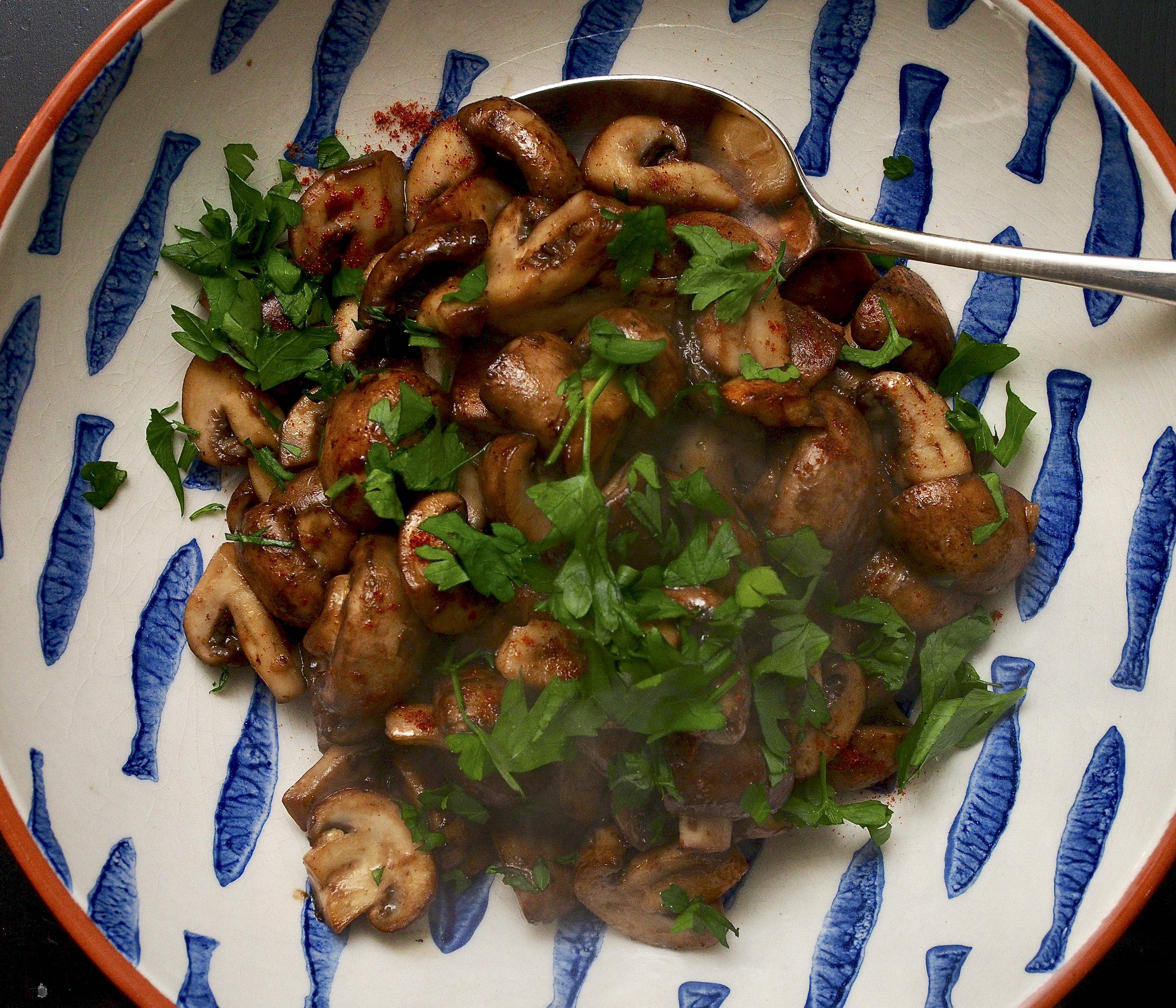
Try these to wet your appetite with a glass of sherry and some crusty bread.

Wine Suggestion: It only makes sense to drink a sherry with this dish with our suggestion being for either a good Fino or Amontillado. Fortunately our friends brought over Tio Pepe’s Fino En Rama. A savoury, minerally wine with grilled almond and iodine characters alongside some delightful lemon and apple fruitiness plus a good dollop of yeasty flor overtones.

Mushrooms with garlic & sherry vinegar – serves 4

  • 2 tbsp olive oil
  • 4 cloves of garlic, finely sliced
  • 500g mushrooms, halve or quarter big ones
  • 2 tbsp sherry vinegar
  • a pinch of hot paprika
  • a small bunch of flatleaf parsley, chopped

Heat the oil in a large frying pan. Add the garlic and fry for 1 minutes, stirring, then add the mushrooms and cook over a high heat until just browned. If they give out liquid, keep cooking until it’s all gone.

Season well with salt and pepper, then add the sherry vinegar. Allow to sizzle until almost evaporated.

Serve the mushrooms with a drizzle of olive oil, a sprinkle of hot paprika and the chopped parsley.

(Original recipe from The Hairy Bikers’ Mediterranean Adventure by Si King & Dave Myers, Seven Dials, 2017.)

Read Full Post »

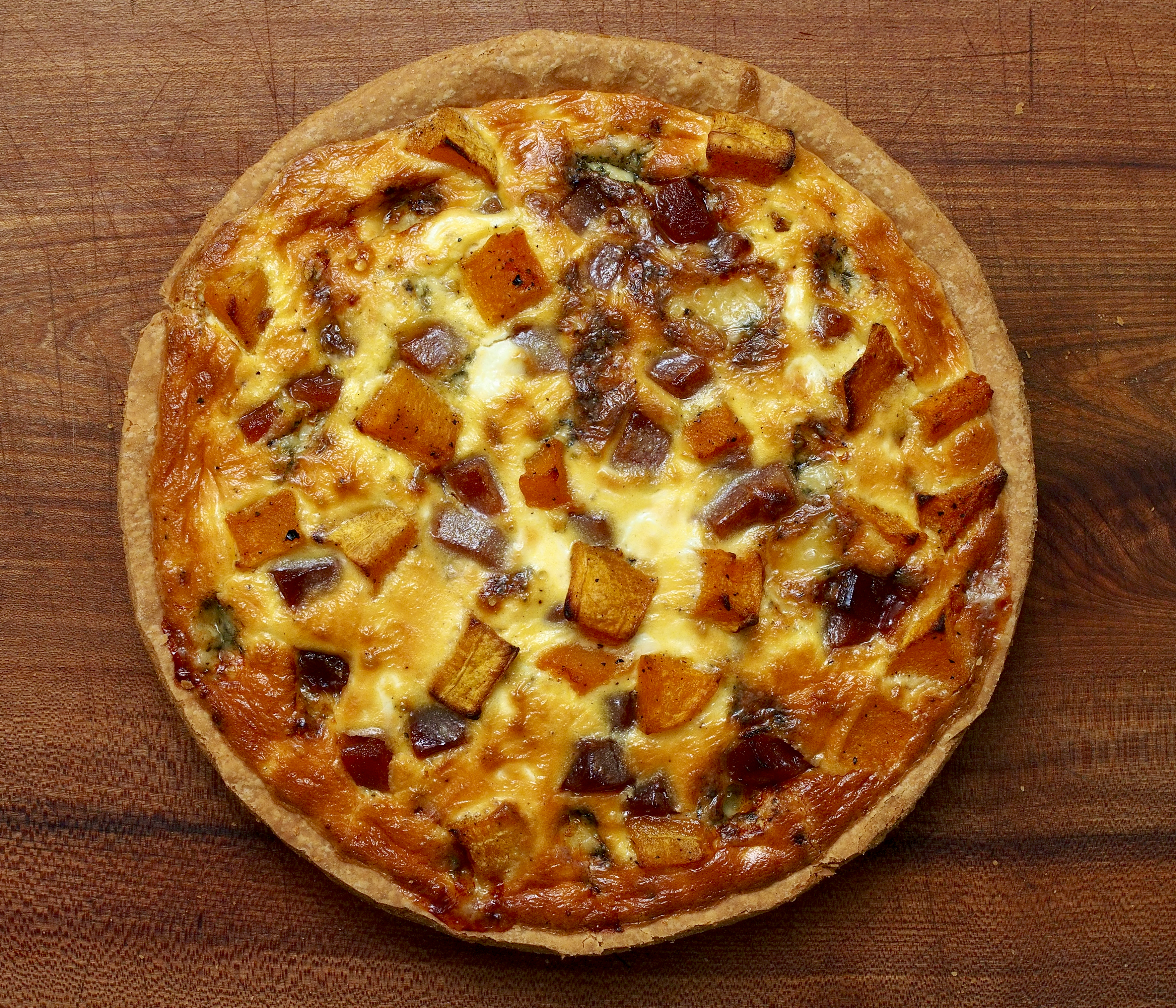
We have lovely friends who always bring a cheese course when they come to ours for dinner, and inadvertently we have ended up with a backlog of membrillo / quince paste. This is not a big problem as it keeps for ages, however it also gave us an opportunity to make this seasonal quiche from Plenty More by Yotam Ottolenghi.

Wine Suggestion: This demands a big, well-balanced, but oaky Chardonnay. Splurge if you can on good Jura, or a Meursault; or like us tonight an old friend, the Rustenberg Stellenbosch Chardonnay. Full-bodied to cope with the richness, and texture and fresh acidity to also cut through this and provide a counterpoint.

Membrillo and stilton quiche – serves 6

  • 1 medium butternut squash, about 700g, peeled and cut into 2cm cubes
  • 1 ½ tbsp olive oil
  • 250g top quality shortcrust pastry
  • plain flour, for dusting
  • 200g Stilton, for dusting
  • 75g mebrillo (quince paste), cut into 1 cm dice
  • 3 eggs
  • 150ml double cream
  • 150ml crème fraîche

Preheat the oven to 220C/200C fan/Gas 7.

Toss the cubes of squash with the oil and ¼ tsp of salt and some black pepper, then spread over a baking tray. Bake for about 30 minutes, turning once, until golden-brown. Leave to cool.

Reduce the oven temperature to 190C/170C fan/Gas 5.

Roll the pastry out on a floured work service until roughly 3cm thick and big enough to line a 24cm quiche tin with some pastry hanging over the edge. Line the tin with the pastry and prick the base with a for, then put into the fridge for 20 minutes.

Line the pastry case with baking parchment, then fill with baking beans and cook in the oven for 30 minutes. Remove the beans and paper and cook for another 10 minutes or until the pastry is golden-brown. Remove from the oven and leave to cool.

Spread the squash over the base of the pastry case, dot the Stilton between and sprinkle over the membrillo.

Put the eggs, cream and crème fraîche in a bowl with ¼ tsp of salt and some black pepper. Whisk together, then pour over the squash and cheese, leaving some of the filling exposed. Put into the oven for 40 minutes or until set, then remove from the oven and rest before removing from the tin and breaking off the over-hanging pastry. Serve warm.

(Original recipe from Plenty More by Yotam Ottolenghi, Ebury Press, 2014.)

Read Full Post »

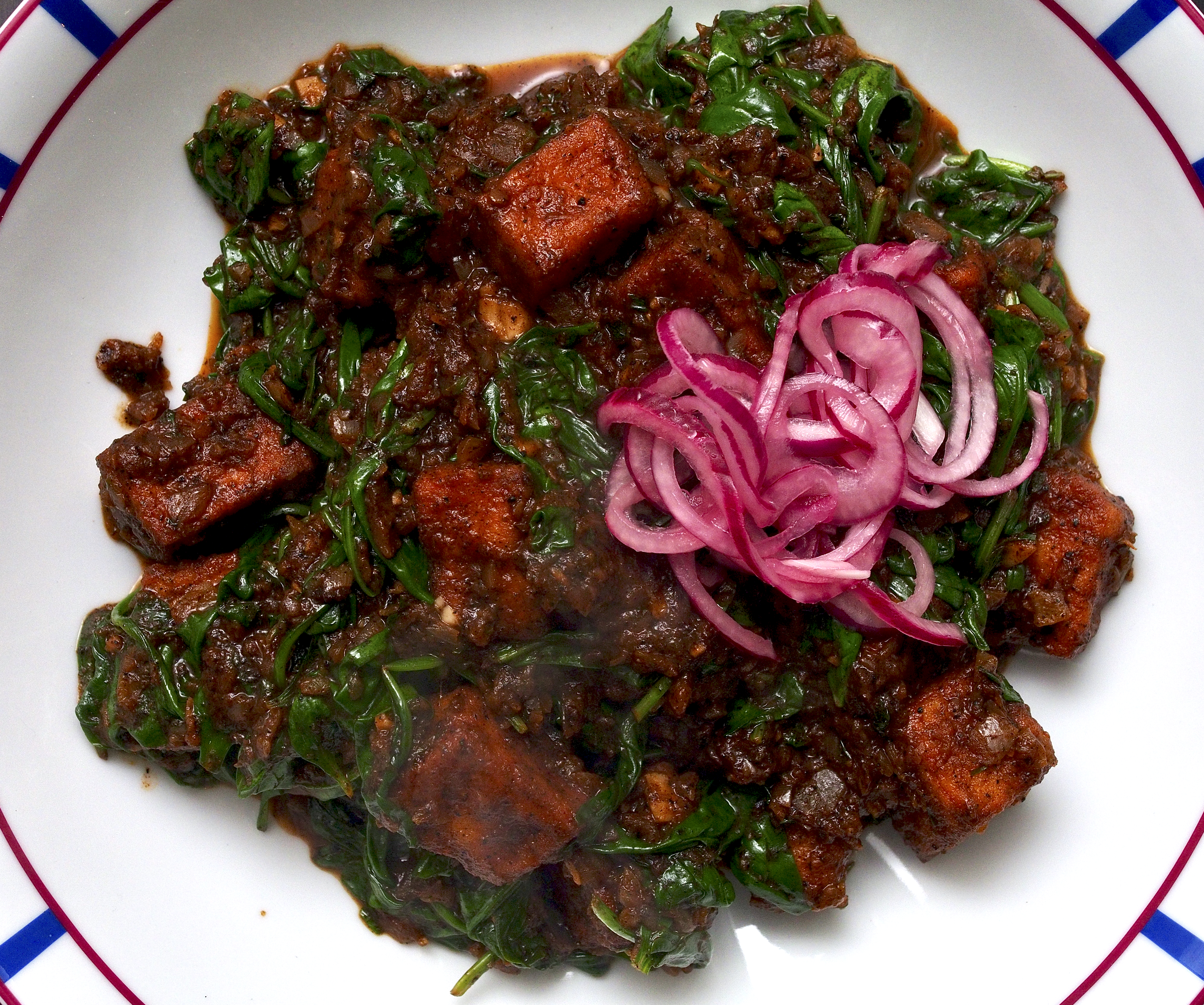
We are working are way through every recipe we can find that uses black limes, having finally found some without having to resort to mail order. It is all such a hassle now that we’re not all Europeans as some of our sources are in the UK. The sauce is truly delicious and you will need flatbreads for mopping it all up. Some rice would be good too but not essential.

Wine Suggestion: Black limes have such an introverted and complex character you can’t just match it with anything, but do look for wines that have either lime flavours or a savoury, umami texture. Combine this with the pickle and we had a conundrum. We solved it with Pajzos’ Hárslevelu dry Tokaji whose lime-leaf, savoury character plus a little residual sugar (despite the dry finish) came to the rescue.

Black lime tofu with spinach and pink pickled onions – serves 4

  • 1 tbsp apple cider vinegar
  • 2 tsp caster sugar
  • 1 small red onion, very thinly sliced into rounds
  • 600ml sunflower oil, for deep-frying
  • 2 blocks of extra-firm tofu (560g), patted dry and cut into 2cm cubes
  • 2 tbsp cornflour
  • 2 onions, roughly chopped
  • 6 cloves of garlic, roughly chopped
  • 60ml olive oil
  • 2 tsp cumin seeds, roughly crushed in a pestle and mortar
  • 2-3 dried black limes, grind to a powder using a spice grinder you need about 2 tbsp (if you don’t have a spice grinder you can whizz in a food processor, then sieve)
  • 2 tbsp tomato purée
  • 20g flatleaf parsley, roughly chopped
  • 250g baby spinach

Make the pink pickled onions first by mixing the vinegar, 1 tsp of sugar, the red onion and tsp of salt in a small bowl. Set aside while you make everything else.

Heat the sunflower oil in a sauté pan or wok. Toss the tofu in a bowl with the cornflour until coated. When the oil is hot, fry the tofu in two batches until crispy and lightly browned, about 6 minutes, then transfer to a paper-lined plate.

Meanwhile, make the sauce. Put the onions and garlic in a food processor and pulse until finely minced but not puréed. Heat the oil in a large sauté pan over a medium-high heat. Add the onion mixture and cook for about 10 minutes, until softened and lightly browned. Add the cumin, black limes and tomato purée and cook for another minute. Add 400ml water, 1tsp of sugar, 1 1/4 tsp of salt and lots of black pepper. Bring to a simmer and cook for 6 minutes, until rich and thick. Add the crispy tofu, parsley and more black pepper and stir. Gradually stir in the spinach until just wilted.

Serve in a shallow dish with the pink pickled onions spooned over.

(Original recipe from Ottolenghi Flavour by Yotam Ottolenghi and Ixta Belfrage, Ebury Press, 2020.)

Read Full Post »

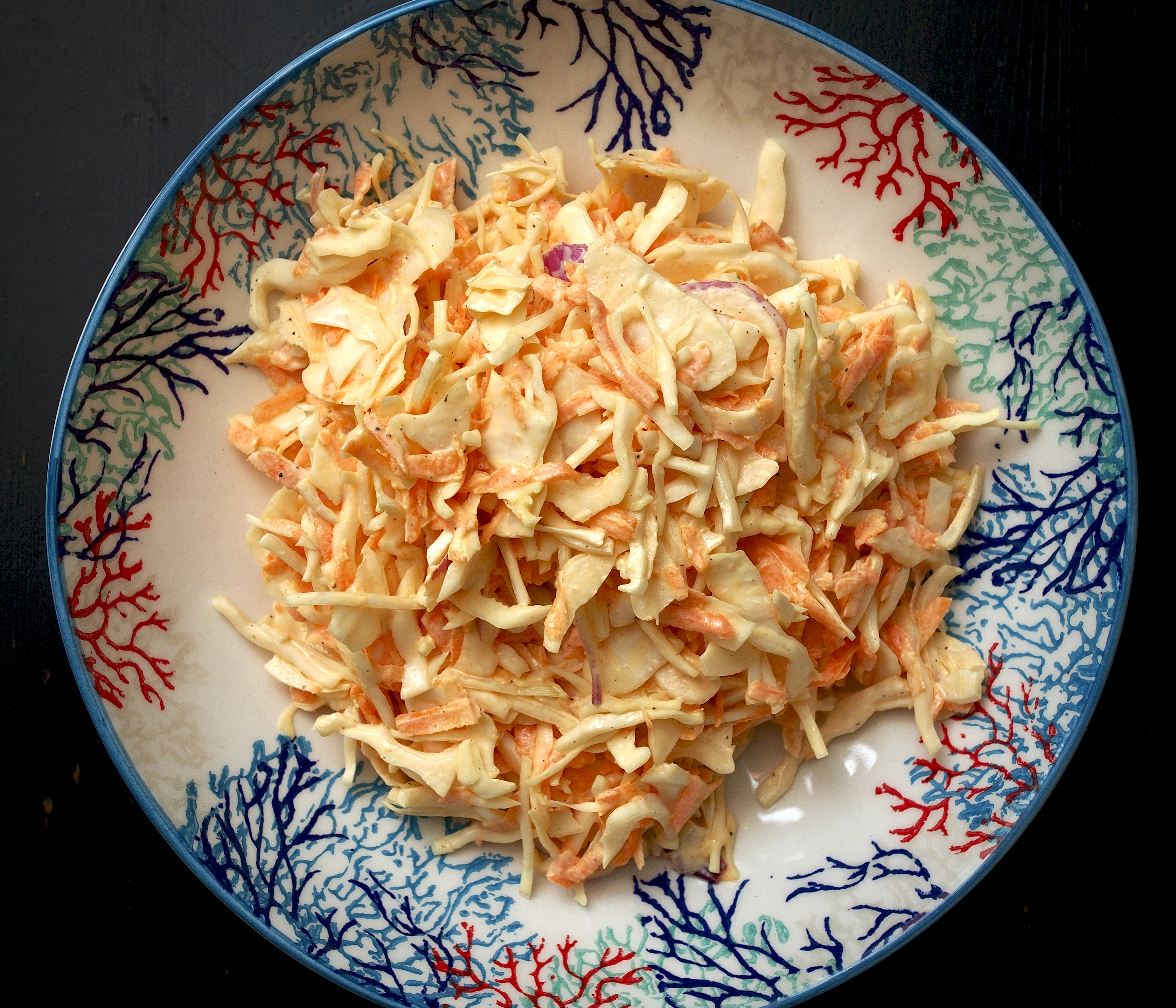
Coleslaw is a bit divisive, people tend to love it or hate it, and not helped by that gloopy stuff you buy in plastic tubs. This version is much superior!

Coleslaw – serves 4 or more

  • 50g crème fraîche or sour cream
  • 50g mayonnaise
  • 1 tbsp Dijon mustard
  • ¼ small white cabbage, finely shredded
  • 1-2 carrots, peeled and coarsely grated
  • ½ white onion, very finely sliced
  • juice of ½ a lemon, or 1 tbsp cider or white wine vinegar

Mix the crème fraîche or sour cream with the mayonnaise and mustard, and season to taste.

Put everything else into a large bowl, then add the mayonnaise mixture and mix to combine. Keep in the fridge until ready to serve.

(Original recipe from Camper Van Cooking by Claire Thompson & Matt Williamson, Quadrille: Hardie Grant Publishing, 2021.)

Read Full Post »

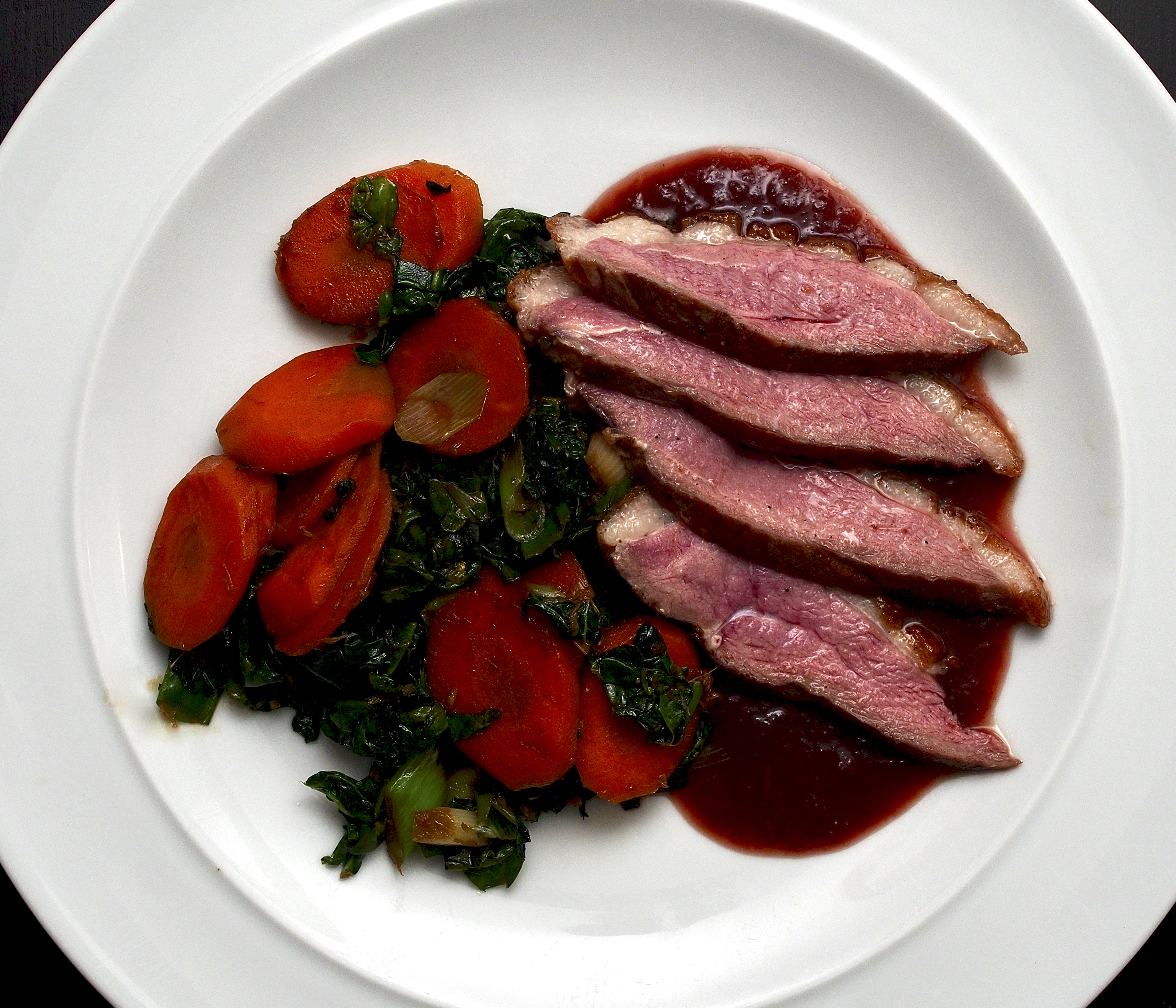
Plums are in season and we’ve been trying to find ways to cook them. This plum sauce is really rich with warm spices and it would be good with many things. We stashed the leftovers in the freezer for another night. Save the leftover duck fat in the fridge for roast potatoes, you won’t regret it.

Wine Suggestion: Whenever we’re in the southern part of France we can’t escape duck. Tonight’s wine match followed suit with a Grenache, Syrah, Carignan blend, the Roc des Anges Sega de Cor. Smooth and silky plums, sloes and raspberry flavours grounded in a seductive stony character.

Duck breasts with plum sauce and stir-fry veg – serves 4

  • 4 duck breasts, with skin on
  • 25ml sunflower oil
  • 4 carrots, finely sliced on an angle
  • 400g of cavolo nero or half a green cabbage, remove the core and shred the leaves
  • a bunch of scallions, sliced on an angle
  • 2 cloves of garlic, grated
  • 1 tsp finely grated ginger
  • 2-4 tbsp soy sauce

FOR THE PLUM SAUCE:

  • 400g plums, remove the stones and quarter
  • 2 shallots, sliced
  • 50g brown sugar
  • 1 tsp grated ginger
  • ¼ tsp Chinese five spice
  • 25ml red wine vinegar
  • 200ml red wine
  • 2 tbsp soy sauce

Make the plum sauce first. Put all of the ingredients into a small saucepan and place over a medium heat. Bring to the boil, then reduce the heat to low and simmer for 20 minutes or until the plums are very soft. Whizz using a stick blender or food processor until smooth. Taste and season with more soy sauce if needed.

Use a sharp knife to score the duck skin and fat in a diamond pattern, but don’t cut the meat. Season and place in a frying pan, skin-side down. Put the pan over a medium heat and cook for about 10 minutes or until the skin is golden and the fat rendered. Leave to rest for 5 minutes, then cut into slices. Pour off the duck fat and keep for potatoes another day.

While the duck rests, stir-fry the veg. Put a wok over a high heat until smoking, then pour in the oil and add the carrots. Stir fry for 2 minutes, then add the cabbage, scallions, garlic, ginger and 2 tbsp of soy sauce. Cook for another couple of minutes or until the veg is softening but still with some crunch. Tip into a serving dish and add more soy sauce if needed. Serve with the duck and plum sauce.

(Original recipe from Rachel’s Everyday Kitchen by Rachel Allen, Harper Collins Publishers, 2013.)

Read Full Post »

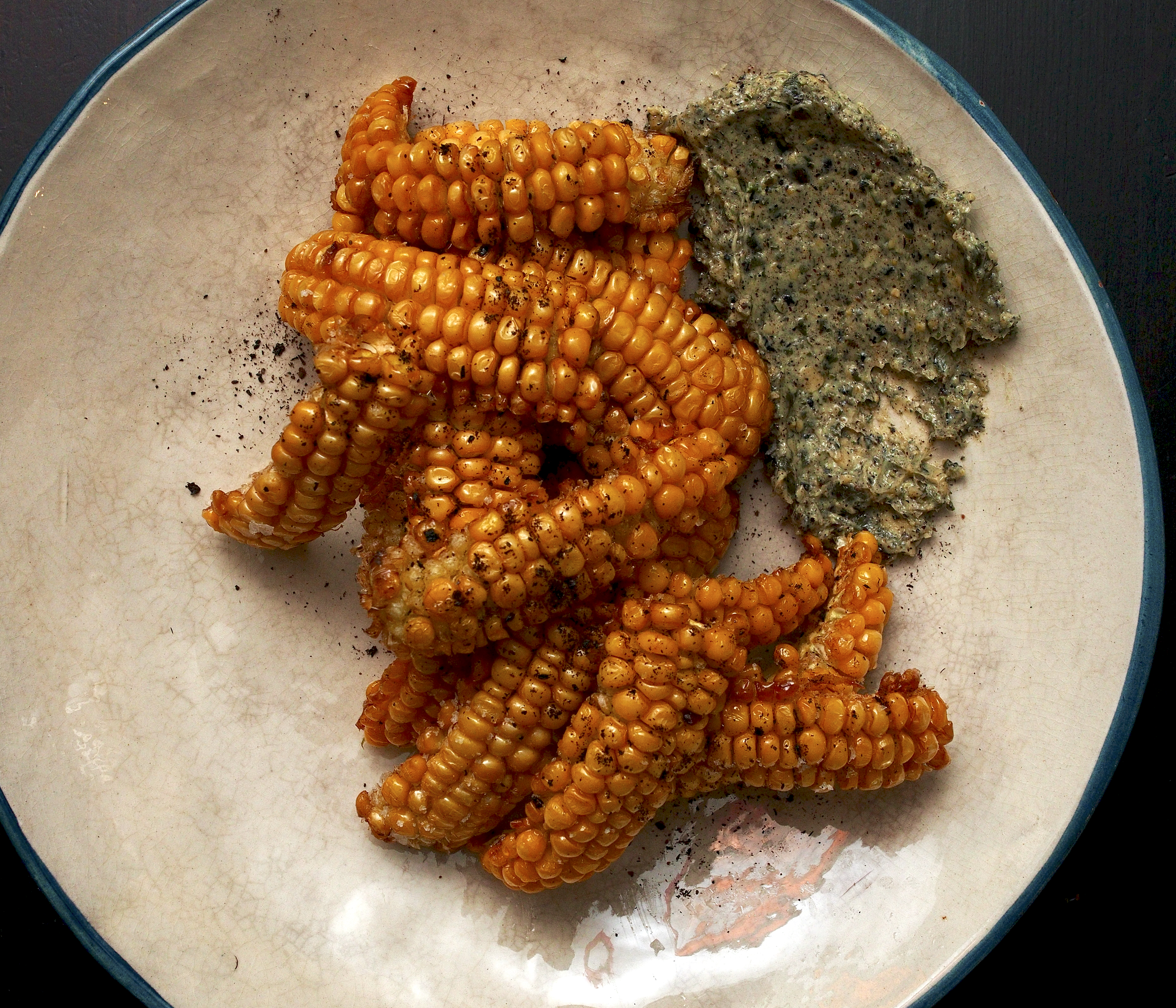
Truly original and truly delicious. Try them while we’ve got fresh corn cobs in the shops. Black limes are trendy at the moment but if you can’t find them you can use grated lime zest instead.

Corn ribs with black lime and pumpkin seed butter – serves 4 as a starter

  • 3 corn cobs, husks removed
  • 1.3 litres sunflower oil, for deep-frying
  • 1½ tsp runny honey

FOR THE BUTTER

  • 25g pumpkin seeds
  • 60g unsalted butter, softened
  • 1-2 dried black limes, roughly broken, then whizzed to a powder using spice grainder to get 2¼ tsp (if you don’t have black limes you can substitute grated lime zest)

Preheat the oven to 160C fan.

Spread the pumpkin seeds over a small baking tray and toast in the oven until golden-brown and starting to split, about 10 minutes. Coarsely blitz in a spice grinder (or finely chop) and allow to cool for 10 minutes.

Mix the butter with 2 tsp of the ground black lime, the chopped pumpkin seeds and 1 tsp flaked sea salt to combine. You can make this ahead but remove from the fridge half an hour before you need it.

Cut the corn cobs in half widthways, then cut each half lengthways into quarters.

Heat the oil in a medium, high-sided saucepan on a medium heat. When very hot (about 180C if you have a probe), test by lowering in the end of a piece of corn; it should sizzle but not turn brown immediatley.

Fry the corn in batches for 6-7 minutes, turning a few times until they have curled and turned golden brown. Remove with a slotted spoon and drain on kitchen paper. Transfer the cooked corn to a bowl and toss with the honey and 1½ tsp of sea salt flakes.

Serve the corn on a platter with the butter on the side and sprinkle with the rest of the ground lime.

(Original recipe from Ottolenghi Flavour by Yotam Ottolenghi and Ixta Belfrage, Ebury Press, 2020.)

Read Full Post »

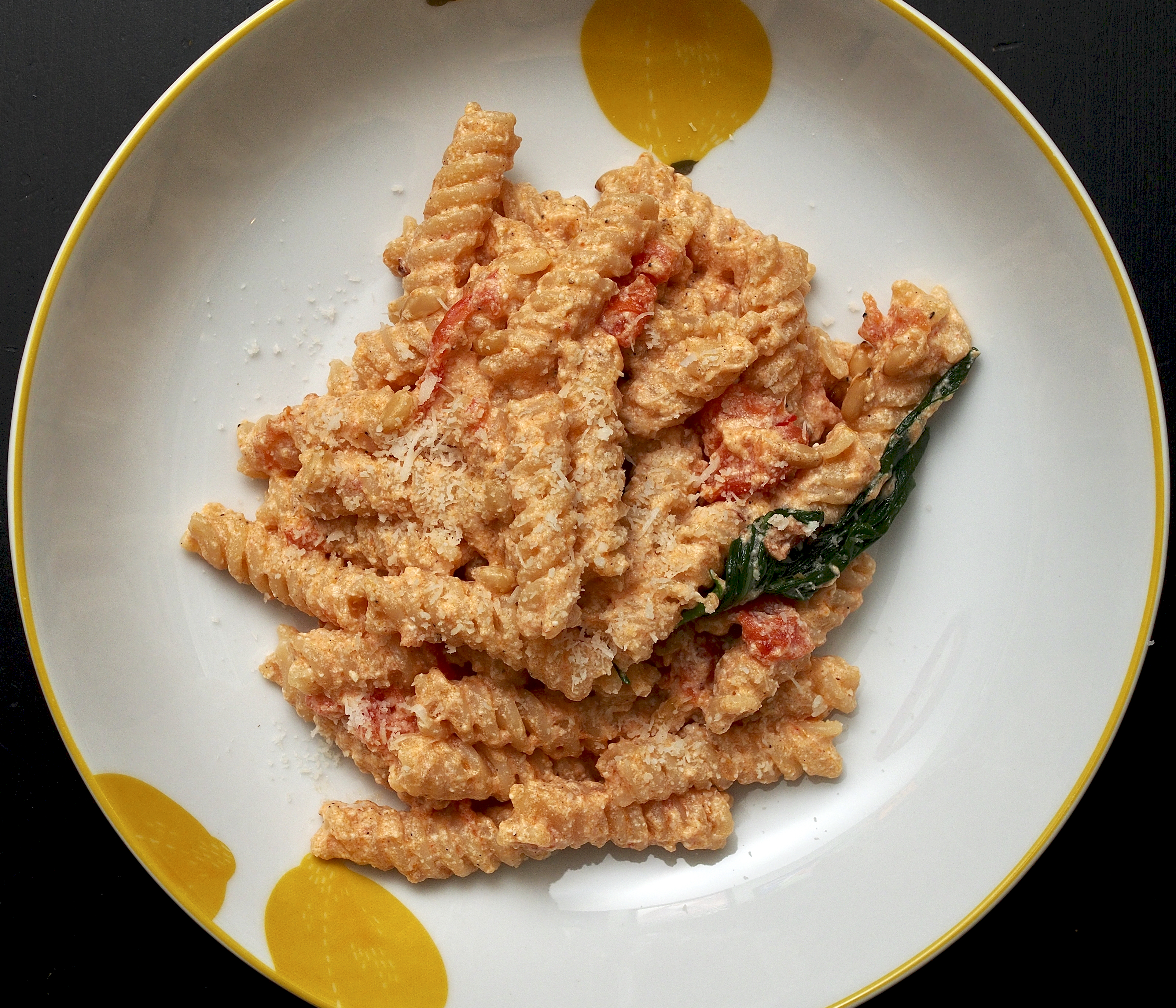
We came across this Joe Trivelli recipe at the weekend when trying to find a lunch dish that would use up half a tub of ricotta. It’s definitely worth buying a tub of ricotta for too.

Wine Suggestion: This dish needs a wine that has a bit of acidity and freshness, so taking inspiration from the grated Pecorino on top we went for the similarly named Pecorino grape from the Marche. The crunchy, characterful Vellodoro Pecorino from Umani Ronchi well met the mark and reminded us of summer too, which was a bonus.

Pasta with pine nuts and ricotta – serves 4

  • 3 cloves of garlic, peeled
  • a pinch of dried chilli flakes
  • 60g pine nuts
  • 300g tomatoes, peeled and chopped (Joe recommends yellow tomatoes but we had red)
  • 3 sprigs of basil
  • 400g short pasta, we used fusilli
  • 200g ricotta
  • 50g grated pecorino
  • extra virgin olive oil

Put the garlic into a wide pan with 3 tablespoons of oil and place over a medium heat. When the garlic starts to turn golden, add the chilli. Turn the heat down low, remove the garlic and add the pine nuts. Allow them to colour but watch carefully or they could burn.

Add the tomatoes and basil sprigs and season. When the sauce starts to boil, reduce the heat and simmer for 15 minutes.

Meanwhile, cook the pasta in lots of boiling salty water until al dente. Scoop out a mug of cooking water before draining.

Toss the pasta with the tomatoes and pine nuts, then add the ricotta, half the pecornio and a few spoons of cooking water. Keep turning the pasta over until you have a nice consistency, adding more water if it looks dry. Serve in warm bowls with the rest of the cheese and a drizzle of your best olive oil.

(Original recipe from The Modern Italian Cook by Joe Trivelli, Seven Dials, 2018.)

Read Full Post »

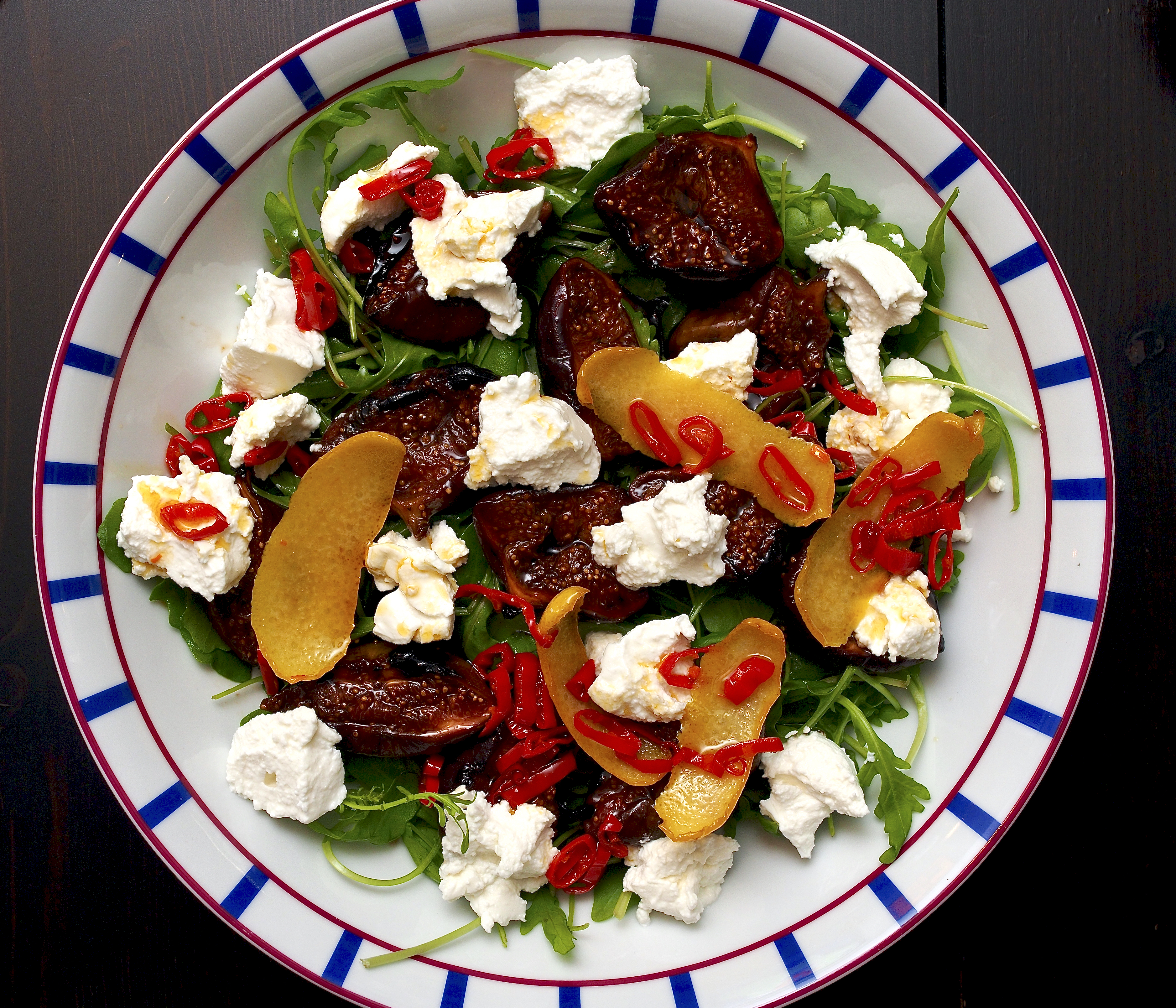
An excellent recipe for figs from Ottolenghi Flavour with the hot dressing perfectly complementing the cool ricotta. You can have the figs and the dressing made well in advance, making this dish simple to plate up.

Wine Suggestion: a complex and challenging dish to match with wine but if you can find a good, dry-ish Marsala, aged Tawny Port, or an Oloroso sherry with a hint a sweetness you’ll find the oxidative characteristics, hints of sweetness and tertiary, developed aromas and flavours really work a treat.

Grilled figs with Shaoxing dressing – serves 4 as a starter

  • 8 ripe purple figs, halved
  • 1 tbsp soy sauce
  • 2 ½ maple syrup
  • 2 tbsp Shaoxing rice wine (or you can use pale dry sherry)
  • 2 ½ tsp Chinkiang vinegar (or half this quantity of balsamic)
  • 60ml olive oil
  • 2 red chillies, finely sliced into rounds
  • 1 lemon, finely shave the skin to get 5 strips (a vegetable peeler works well)
  • 60g rocket
  • 140g ricotta

Preheat the grill to its highest setting.

Toss the figs in a bowl with the soy sauce and 1 ½ tbsp of maple syrup, then set them cut side up on a parchment lined baking tray. Don’t leave any paper hanging over the edges as it could burn.

Roast the figs close to the grill until soft and caramelised but still holding their shape. It’s fine if they blacken a bit in places. Return the figs and any juices to the same bowl, then add the Shaoxing rice wine, Chinkiang vinegar and another tbsp of maple syrup. Toss together very gently and set aside for at least 1 hour (or overnight).

Meanwhile, heat the oil in a small saucepan over a medium heat, then fry the chillies for 3 minutes. Add the lemon strips and fry for 30 seconds more then immediately pour into a heatproof bowl and set aside to infuse for at least 30 minutes (or overnight).

Arrange the rocket on a platter and top with the figs and dressing. Dot with ricotta and finish with the oil, chillies and lemon.

(Original recipe from Ottolenghi Flavour by Yotam Ottolenghi & Ixta Belfrage, Ebury Press, 2020.)

Read Full Post »

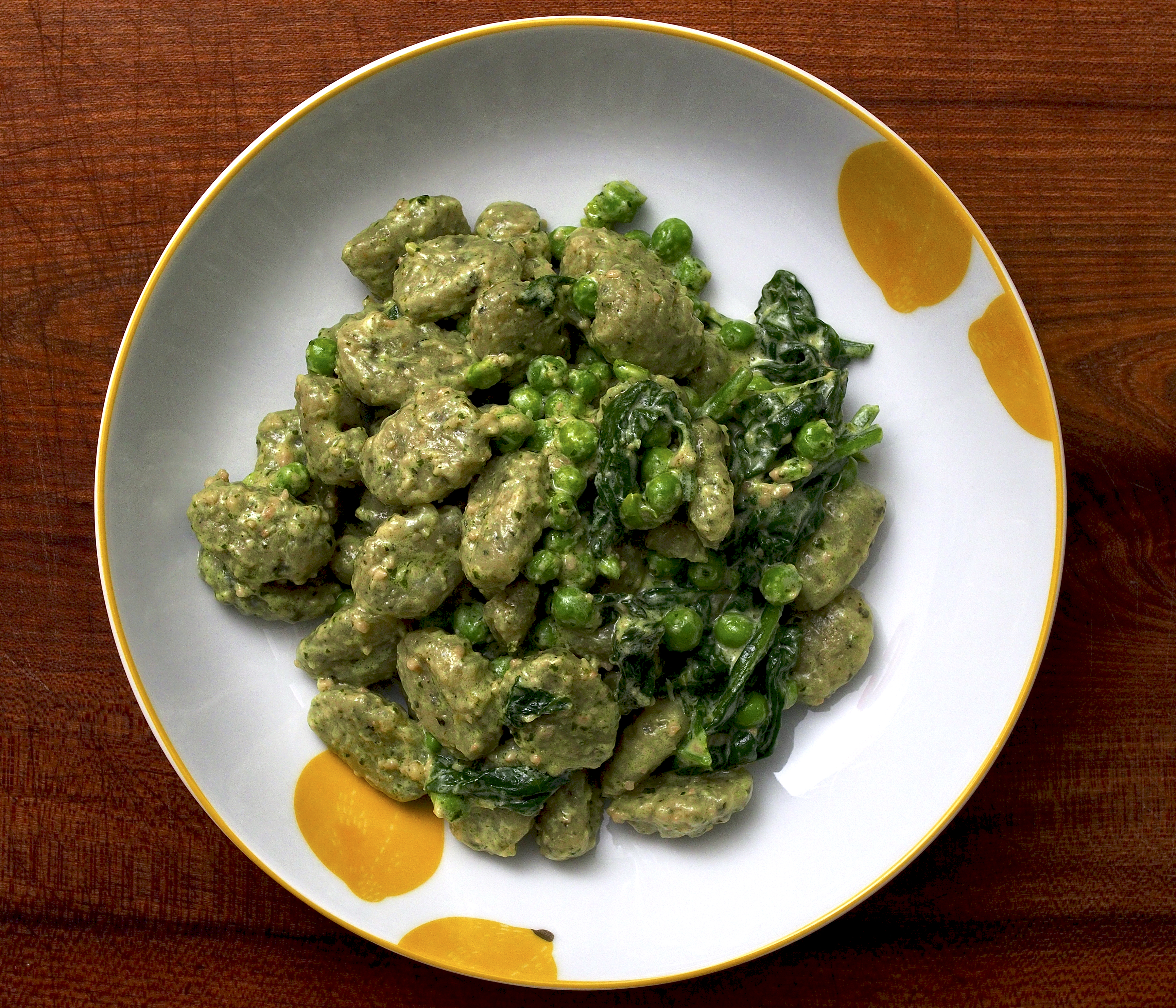
We regular base our dinner on packets of fresh gnocchi. They’re perfect for when you haven’t much time.

Gnocchi with peas, pesto and spinach – serves 2

  • 50g baby spinach
  • 100g frozen peas, defrosted
  • 4 tbsp fresh pesto
  • 3 tbsp crème fraîche
  • 300g pack gnocchi (you can use a plain variety or one with spinach)

Put the defrosted peas, the spinach and a splash of water into a large frying pan. Season, then heat, stirring, until the spinach has wilted.

Add the pesto and crème fraîche, and gently heat through.

Meanwhile, cook the gnocchi in lots of boiling salty water. As they rise to the surface, scoop them out with a slotted spoon and add to the spinach pan.

Toss it all together, then serve.

(Original recipe by Janine Ratcliffe in Olive Magazine, August 2018.)

Read Full Post »

This is such a handy yoghurt number. Serve with barbecues, roasts, with flatbreads, as a side, for a starter – it’s an all rounder and it keeps for a couple of days in the fridge.

  • 250g full fat Greek-style yoghurt
  • 30g scallions, green parts only, finely chopped (keep the white parts for something else)
  • about 10g of dill, chopped
  • 1 clove of garlic, peeled and grated
  • zest and juice of 1 lime
  • 200g cucumber, coarsely grated
  • 3 tbsp olive oil
  • ½ tsp sea salt flakes, crumbled

Put the grated cucumber into a clean tea towel and squeeze tightly to get rid of the excess liquid.

Tip the cucumber into a bowl and mix with all of the other ingredients.

(Original recipe from Chasing Smoke: Cooking over Fire Around the Levant by Sarit Packer and Itamar Srulovich, Pavilion, 2021)

Read Full Post »

We don’t often cook classic French dishes at home, preferring to sit in a bistro in blissful ignorance (or denial) of the copious amounts of butter we’re consuming … there’s a reason why those dishes are so tasty. However we’ve been revisiting “Roast Chicken and Other Stories” by Simon Hopkinson and decided to give this simple dish a go. Yes, lots of butter, but so very worth it for the tender chicken and delicious sauce. Serve with potatoes and some green beans.

Wine Suggestion: This particular dish works really well with red Burgundy or Beaujolais.

Poulet sauté au vinaigre – serves 4

  • 8 chicken pieces (we used thighs but you could also joint a whole chicken)
  • 100g butter
  • 2 tbsp olive oil
  • 6 very ripe tomatoes, peeled, seeded, and chopped (cut a little cross in the bottom of each and cover with boiling water, leave for 1 minute, then drain and the skins will peel off easily)
  • 250ml top-quality red wine vinegar
  • 250ml chicken stock
  • 2 heaped tbsp chopped parsley

Season the chicken pieces well with salt and black pepper.

Heat 4 tbsp of the butter and the olive oil in a shallow casserole or deep frying pan until just turning brown.

Add the chicken pieces and fry gently, turning, until golden brown all over.

Add the chopped tomatoes and continue cooking until the tomato has lost its moisture and turned dark red and sticky. This will take a while so don’t be tempted to rush it.

Add the vinegar and simmer until almost evaporated, then add the stock and simmer again to reduce by half.

Remove the chicken pieces to a warm serving dish and keep warm. Whisk the rest of the butter into the sauce to make it nice and glossy. Add half the parsley, then pour over the chicken and sprinkle with the rest of the parsley.

(Original recipe from Roast Chicken and Other Stories by Simon Hopkinson, Ebury Press, 1994.)

Read Full Post »

We love squid and are not sure why people don’t cook it more often. It’s cheap and sustainable, and this sweet and sour version is delicious! We served with some plain couscous.

Wine Suggestion: This is excellent with a youthful and medium bodied Sangiovese with its bright acidity. Instead of looking to Tuscany tonight, we had a Corsican Niellucio which is the same grape

Slow-cooked squid with peperonata and butter beans – serves 4 to 6

  • 4 tbsp olive oil
  • 4 red, yellow or orange peppers, a mixture ideally, deseeded and sliced
  • 1 red onion, finely sliced
  • 100g soft cooking chorizo, finely chopped
  • ½ tsp chilli flakes
  • 4 sprigs thymes
  • 4 cloves of garlic, sliced
  • 1 bay leaf
  • 50ml red wine vinegar
  • 25g caster sugar
  • 500ml passata
  • 400g squid, cleaned and sliced (we used a packet of frozen squid tubes, defrosted)
  • 1 x 400g tin butter beans, drained and rinsed
  • a handful of chopped flat-leaf parsley

Heat the oil in a large pan and fry the peppers and onions over a medium heat for 20-25 minutes or until very soft, stir now and then and add a splash of water if they start to catch.

Add the chorizo and chilli flakes and cook for another 5 minutes or until the chorizo has released its oil. Add the thyme, garlic, and bay, and simmer for another couple of minutes, then add the vinegar and sugar and stir until the sugar has dissolved.

Add the passata, then swirl a splash of water round the jar and add that too. Season and bring to a simmer.

Stir the squid into the simmering sauce, then cover with a lid and cook over a low heat for 1 hour. If the liquid doesn’t cover the squid you can add a splash of water. Check after the hour to see if the squid is tender but don’t let it go to mush.

Stir in the butter beans and check the seasoning, then simmer, uncovered, to thicken the sauce a little. Cook for another 10 minutes, then stir in the parsley and serve with couscous or crusty bread.

(Original recipe by Anna Glover in Olive Magazine, September 2021.)

Read Full Post »

We’re trying to get the most out of our barbecue while the evenings are still bright. This is based on Greek gyro chicken kebabs and it tastes great with some salad and flatbreads. We added some tzatziki too but plain yoghurt would also be good. You need to get started with the marinade the day before.

We cooked these on a charcoal barbecue with a lid, using the indirect heat method which we’ve explained below. If that’s not your thing you can cook in a hot oven (200C/180C fan/gas 6) on a wire rack over a roasting tin for 45-55 minutes.

Wine Suggestion: We recommend a white with a bit of phenolic texture and body or a mid-weight red with a fresh crispness. Thymiopoulos’ Xinomavro Jeunes Vignes is a current favourite that falls into the latter camp. From north-eastern Greece we think this grape needs to be better known.

Greek Chicken Kebabs – serves 6

  • 12 boneless, skinless chicken thighs
  • flat breads, salad and yoghurt or tzatziki to serve.

FOR THE MARINADE:

  • 2 cloves of garlic, crushed
  • 1 lemon, zested and juiced
  • 1 tsp ground cinnamon
  • 1 tsp ground allspice
  • 1 tbsp dried oregano
  • 2 tsp paprika
  • 4 tbsp olive oil
  • a small bunch of parsley, finely chopped

Mix all of the marinade ingredients together in a large bowl and season. Add the chicken thighs and mix together well, then cover and chill overnight.

Light a lidded barbecue and let the flames die down. When the coals have turned ashen, mound them up on side.

Thread the chicken thighs onto 2 metal skewers – both skewers need to go through every piece of meat. Push the thighs down well to make sure the meat is well compacted.

Put the chicen kebab onto the side of the barbecue without any coals underneath. Cover with the lid and cook for 45-55 minutes, turning regularly, or until cooked through. You can pull apart a few chicken pieces in the centre to check or much easier is to check with a meat probe – a barbecue essential in our opinion.

Remove the chicken from the barbecue, cover with foil and leave to rest for 20 minutes before slicing.

Slice strips of chicken from the kebab and stuff into pittas or flatbreads, that have been warmed on the barbecue, with some salad and yoghurt or tzatziki.

(Original recipe from BBC Good Food)

Read Full Post »

« Newer Posts - Older Posts »