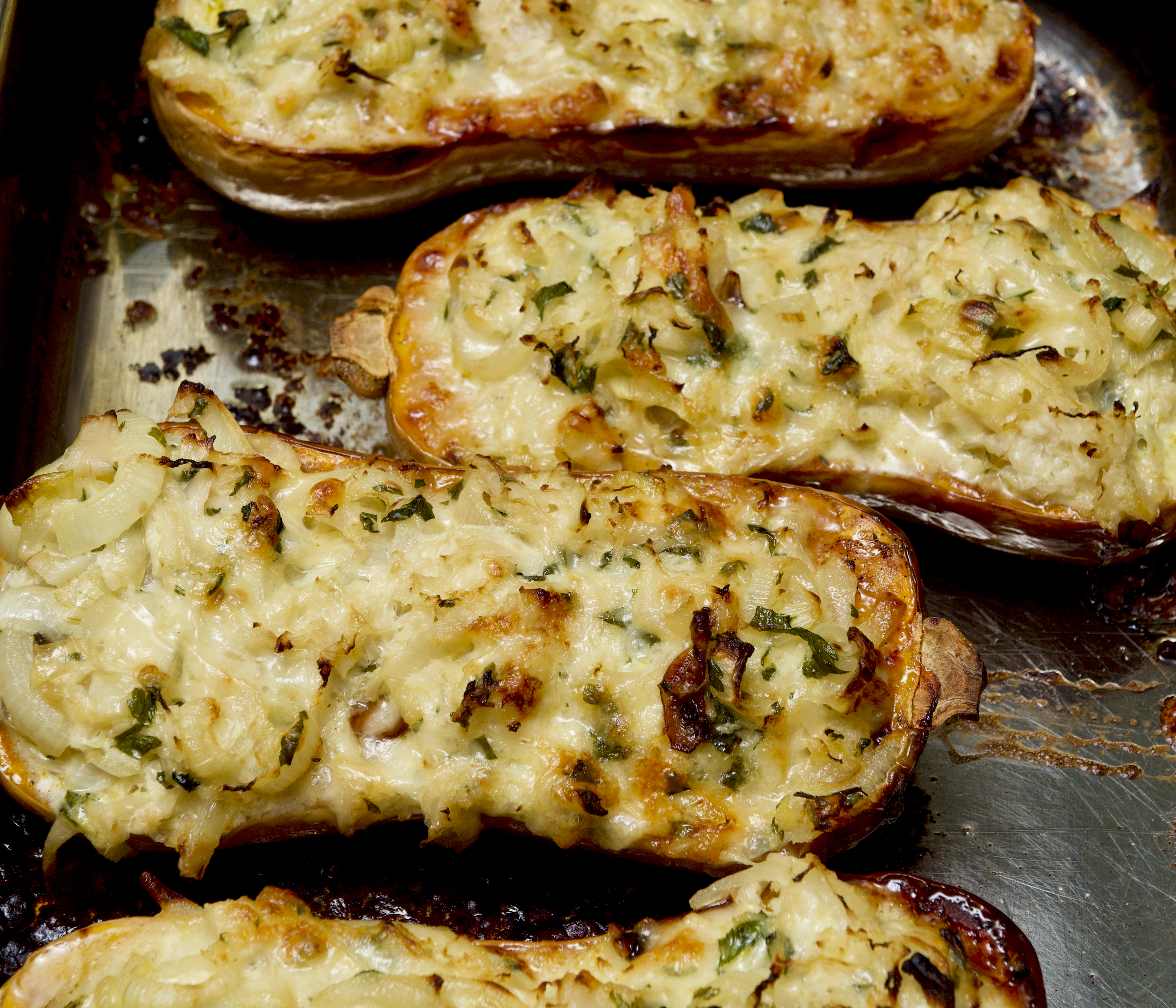
A delicious autumnal dish for not just sauerkraut lovers, but we think something to convert skeptics too. The sauerkraut provides freshness to the rich cream and cheese, plus it complements the velvety butternut texture.
Butternut squash with sauerkraut and gruyère – serves 3
3 small butternut squash
30g butter
1 tsp thyme leaves
2 medium to large onions, finely sliced
3 tbsp olive oil
a small bunch of parsley, roughly chopped
250g sauerkraut
150ml double cream
125g Gruyère, grated
Heat the oven to 200C.
Cut the butternut squash in half and scoop out the seeds and fibres with a spoon. Set the halves in a large roasting tin, then dot over the butter, sprinkle over the thyme and season with salt and pepper. Bake in the hot over for 45 minutes to 1 hour or until soft.
Meanwhile, warm the oil in a large deep pan, over a medium heat. Add the onions and cook for about 20 minutes or until pale gold and soft. Stir the parsley into the onions, then remove from the heat and add the sauerkraut, cream and cheese. Season.
When the squash are ready, divide the cheese and sauerkraut mixture betwen them, then return to the oven for another 20 minutes or until golden and bubbling.
(Original recipe from A Cook’s Book by Nigel Slater, 4th Estate, 2021.)
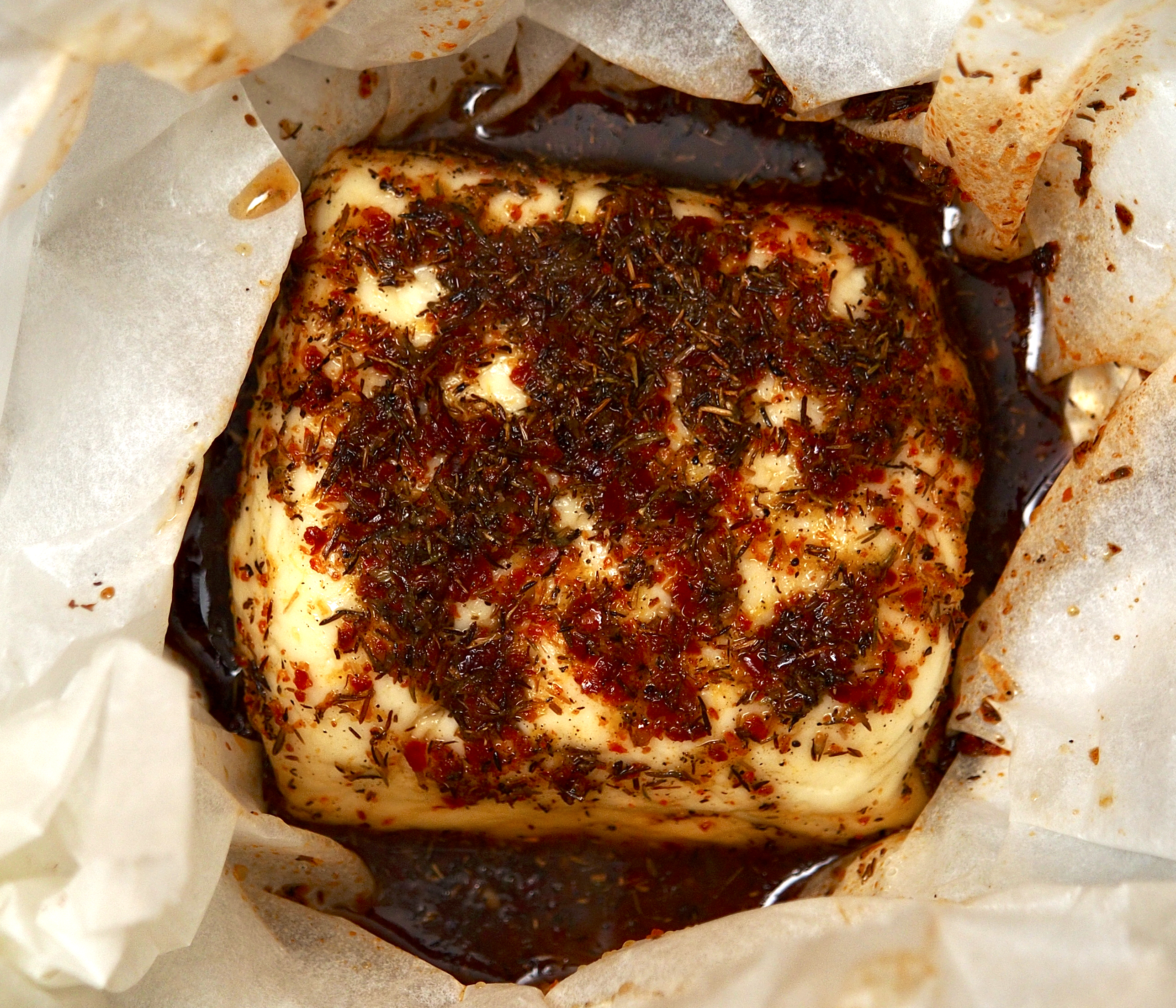
Who doesn’t love squeaky cheese? This baked halloumi is good as a side dish with some roasted chicken thighs, or you could serve as a starter with some flatbreads.
Baked halloumi with lemon, thyme & honey – serves 2-4
250g block halloumi cheese
2 tbsp garlic oil
1 heaped tbsp clear honey
finely grated zest of 1 large lemon and juice of half
1 tsp dried thyme
½ tsp coarsely ground black pepper
1 tsp pul biber chilli flakes
flatbread, to serve
Heat your oven to 220C (200C fan), Gas 7.
Prepare a piece of tinfoil, large enough to completely encase the halloumi. Line the tinfoil with a square of baking paper and put the halloumi in the middle. Scrunch the paper tighly around the block, leaving only the top exposed.
Mix all of the other ingredients together in a small bowl, then pour over the halloumi.
Scrunch the foil around the halloumi to make a sealed parcel. Put the parcel into a small ovenproof dish and bake for 30 minutes.
Remove form the oven and serve with warm flatbread.
(Original recipe from Persiana Everyday by Sabrina Ghayour, Aster, 2022.)
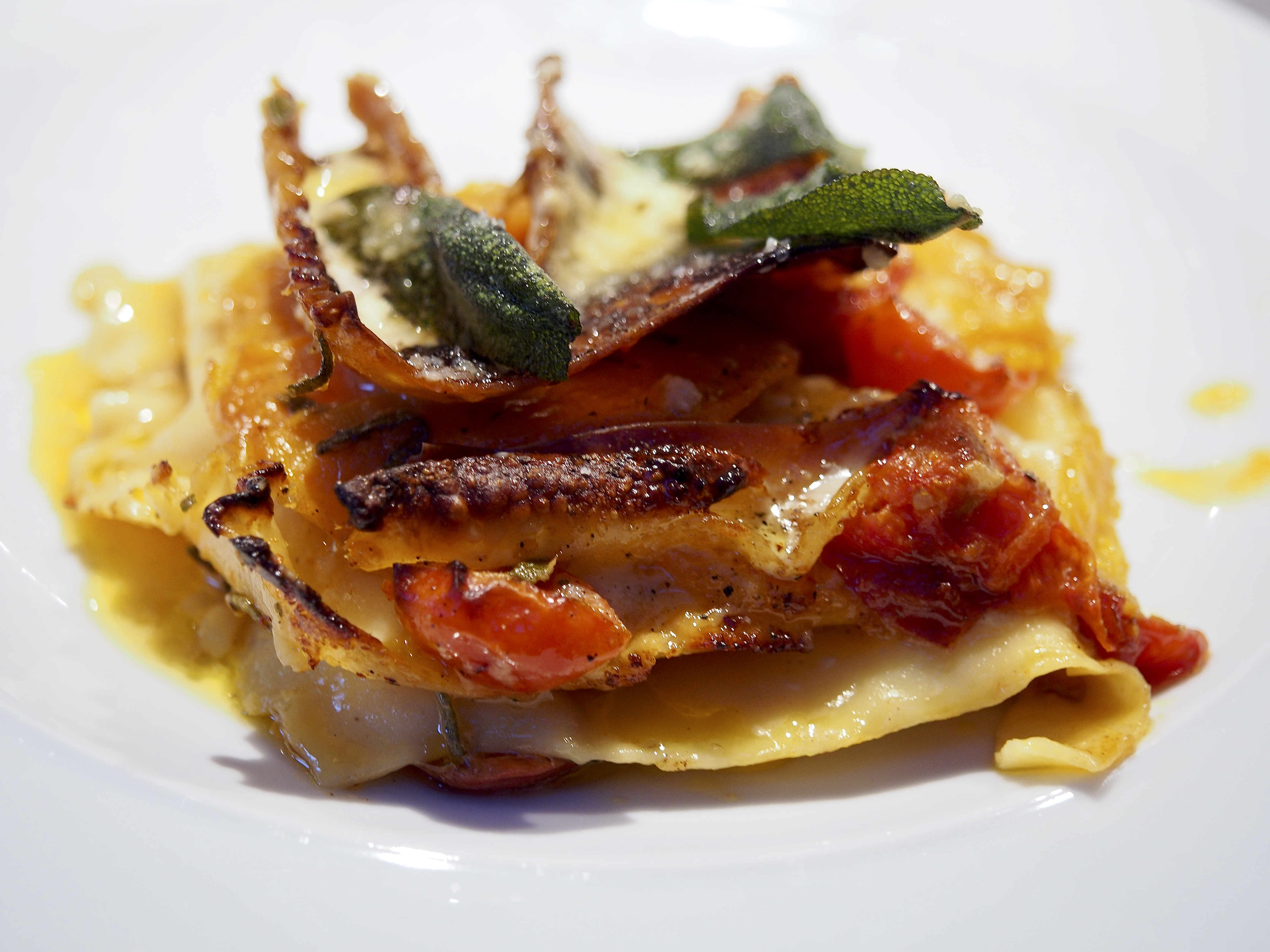
A bit like a classic lasagne but there’s no béchamel and definitely less fuss altogether. It tastes absolutely amazing too. The recipe is from Mezcla by Ixta Belfrage; a book full of delicious things.
Wine Suggestion: we grabbed the first thing in the fridge which was the Zuani Bianco Riserva, an oaked Collio from North Eastern Italy which is a blend of Friulano, Chardonnay, Sauvignon Blanc and Pinot Grigio. Stunning, with so much complexity and layered fruits, savouriness and creamy textures. An under-rated part of the world. If you can’t find something like this, look for a lightly oaked white with a fresh acidity and a nutty finish.
Squash and sage lasagne gratin – serves 4 (generously)
half a large butternut squash, peeled and seeds discarded (about 500g)
400g ripe cherry tomatoes, halved
4 cloves of garlic, finely grated
1 tbsp tomato purée
2¾ tsp fine salt
5g fresh sage leaves, roughly chopped, plus 10 extra leaves to serve
6 tbsp olive oil, plus extra to finish
220g double cream, plus extra 2 tbsp to serve
80g Parmesan, finely grated, plus extra to serve
¾ tsp freshly grated nutmeg
250g-300g dried lasagne sheets
400g chicken stock (you can use veg stock if you prefer)
Heat the oven to 220C fan/240C.
Finely slice the butternut squash into very thin half moons – a mandoline is best for this or you could use the slicing attachment on a food processor.
Mix the squash slices, tomatoes, garlic, tomato purée, fine salt, chopped sage, 4 tbsp olive oil and lots of black pepper, together in a large bowl. Your hands are best to toss it all together.
Mix the cream, Parmesan and nutmeg together in another bowl. Set 80g of this mixture aside for later.
Cover the bottom of a baking dish (approx. 28cm x 23cm) with a layer of lasagne sheets, then a layer of the squash mixture. Spoon over some of the cream mixture, then continue the layering until you have used everything. Pour the stock evenly over everything in th edish, then cover tightly with foil and bake for 50 minutes.
Remove from the oven and remove the foil. Spoon over the reserved 80g of cream mixture and return to the oven, uncovered, for 10 minutes.
Mix 2 tbsp of the oil with the 10 sage leaves in a small bowl. Spoon this over the lasagne and return to the oven for a final 5-6 minutes, or until the sage leaves look crisp and the lasagne golden-brown.
Rest for 10 minutes, then finish with the 2 tbsp of cream, a good drizzle of olive oil and plenty of extra grated Parmesan, sea salt and black pepper.
(Original recipe from Mezcla by Ixta Belfrage, Ebury Press, 2022.)
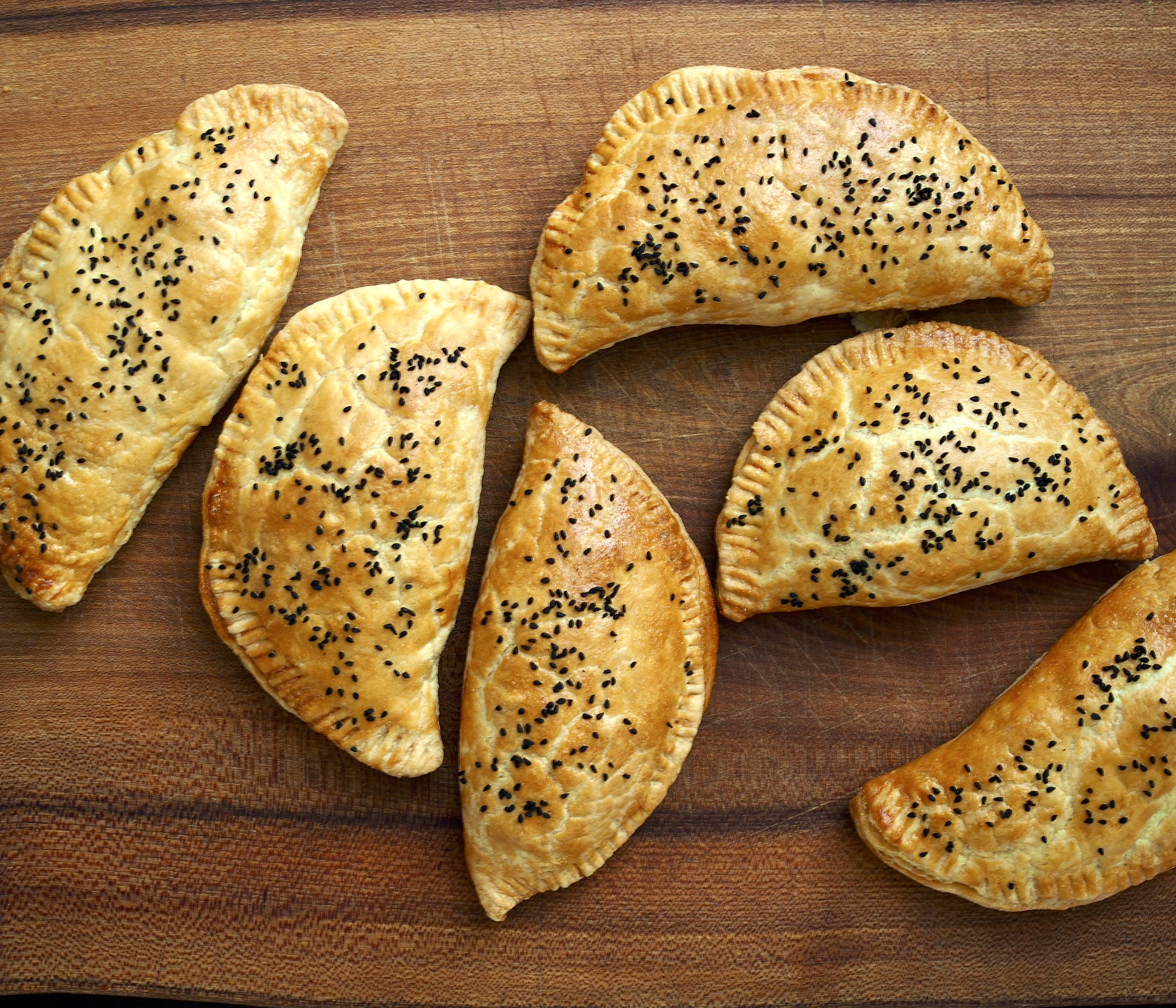
This was our first ever attempt at rough puff pastry. It’s actually pretty simple but you do need to start in the morning if you want to eat these for lunch. We had too much filling and we made some extras with shop-bought puff pastry – these were good too! It’s a good idea to make the filling first as it needs to cool completely before stuffing the pasties.
Courgette, chard & feta pasties – serves 4
FOR THE FILLING:
a bunch of chard
4 tbsp extra virgin olive oil
2 onions, thinly sliced
2 cloves of garlic, thinly sliced
6-8 small courgettes, sliced into 1cm rounds
finely grated zest of 1 lemon
a large handful of basil leaves, chopped
a handful of flat-leaf parsley leaves, chopped
150-200g feta cheese (or soft goat’s cheese)
FOR THE ROUGH PUFF PASTRY:
250g unsalted butter, cubed and chilled
500g plain flour, plus extra for dusting
a good pinch of salt
200ml iced water
TO FINISH:
1 beaten egg
1 tsp black onion seeds
Wash the chard, then remove the stalks from the leaves. Roughly chop the leaves and cut the stalks into 1cm pieces. Bring a pan of salty water to the boil and add the stalk pieces. Cook for a minute or two, then add the leaves and cook for another couple of minutes. Drain and allow to cool, then squeeze out any excess liquid from the leaves with your hands. Set aside.
Heat half the olive oil in a large frying pan over a medium heat. Add the onions, garlic and some seasoning. Cook for 5-6 minutes, watching that they don’t catch. Add the courgettes and cook for another 15-20 minutes. You want the courgettes to be nice and soft but not disintegrated. Take the pan off the heat and stir in the chard, lemon zest, basil, parsley and more seasoning. Allow to cool completely, then crumble in the feta and gently mix together. Keep the filling cool while you make the pastry.
TO MAKE ROUGH PUFF PASTRY:
Combine the butter cubes, flour and salt in a large bowl. Add just enough cold water to bring everything together into a dough. It will have big pieces of butter in it and that’s ok.
Flour your surface well, then roll the dough in one direction, away from you, to a 1cm thick rectangle. Fold the two short ends into the middle so they overlap. Give the pastry a quarter turn, repeat the rolling, folding and turning process another three times (four in total). Wrap the pastry in baking paper and put into the fridge for 30 minutes. Remove the pastry and repeat the rolling, folding and turning process another 4 times. Return to the fridge again for another 30 minutes.
Heat the oven to 200C/180C fan/400F/Gas 6.
Remove the chilled pastry from the fridge and roll out to 4-5mm thick. Use a 18-20cm plate or cutter to cut out 4 rounds. Put a quarter of the filling (or whatever fits) in the lower half of each round, leaving a 2cm border around the edge. Brush the border below the filling with beaten egg and fold the pastry over to encase the filling. Crimp the edges with a fork to seal, then brush with the egg and sprinkle over the onion seeds and a little bit of flaky sea salt.
Put the pasties on to a baking sheet lined with baking paper and bake for 45-50 minutes or until golden. Eat just warm or at room temperature.
(Original recipe from Outside by Gill Meller, Hardie Grant: Quadrille, 2022.)
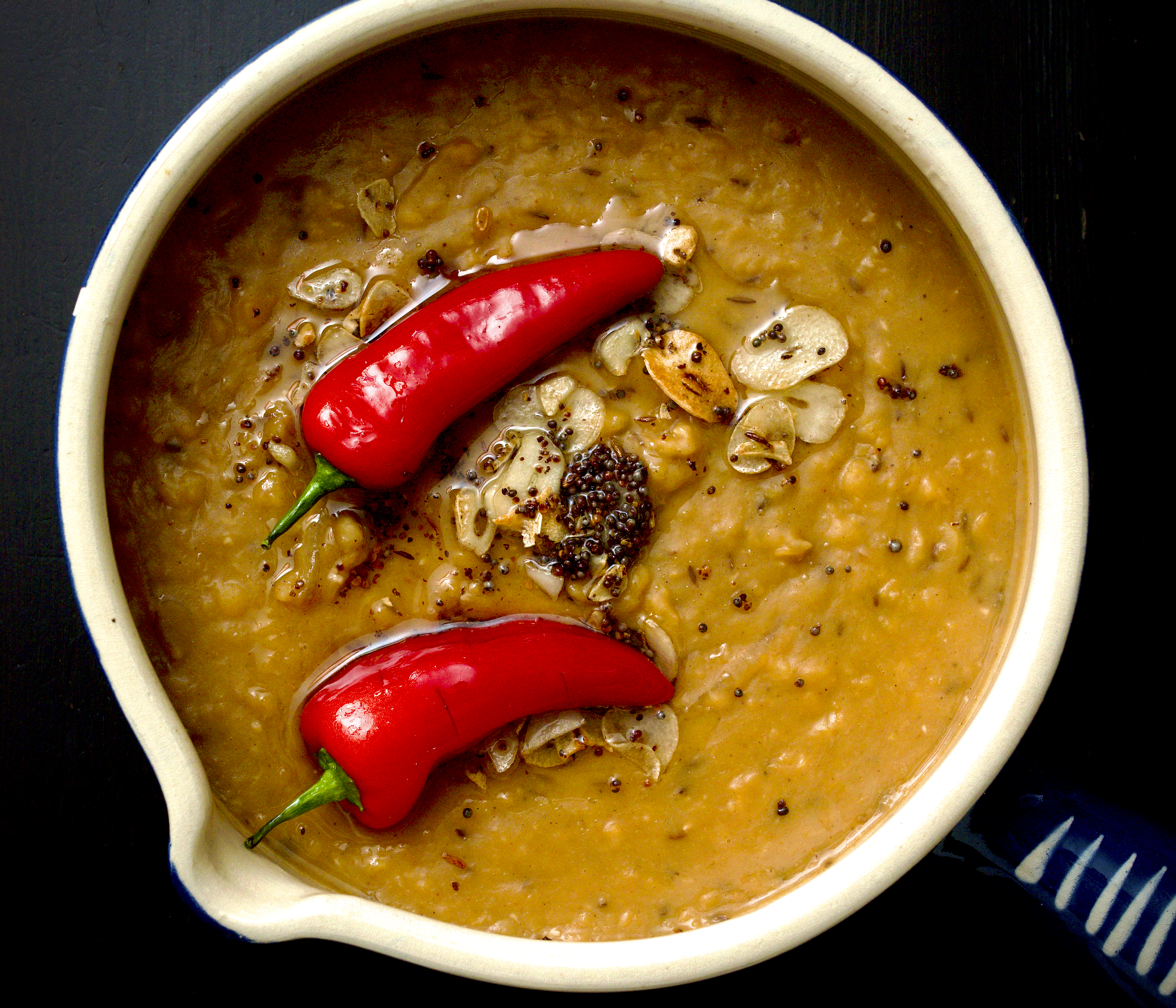
We love dal on a friday night with some naan breads from the takeaway.
Chana dal – serves 4
400g yellow split peas or chana dal
4 tbsp rapeseed oil
1 tbsp cumin seeds
1 large onion, thinly sliced
6 cloves of garlic, thinly sliced
1 tsp garam masala
½ tsp chilli powder
1 tsp salt
½ tsp mustard seeds
2 fresh red chillies, pricked with a knife in a few places
Rinse the dal in a few changes of cold water, until the water runs clear, then put into a saucepan. Cover with 1.25 litres of cold water and bring to the boil, then simmer for about 40 minutes, or until cooked. The texture should be soft with no bite or chalky texture.
Meanwhile, heat 2 tbsp of the oil in a frying pan. Add the onion and cumin seeds and cook for gently for about 15 minutes or until caramelized. Add half the garlic and fry for another few minutes, then remove from the heat.
Add the onion mixture to the dal, along with the garam masala, chilli powder and salt. Taste and add more salt if needed.
Wipe out the frying pan, then heat the remaining oil. Add the mustard seeds and fry until they pop, then add the rest of the garlic and the red chillies. As soon as the garlic starts to turn golden, take the pan off the heat and drizzle everything over the dal, garnishing with the chillies. Stir everything together before serving with rice, chapattis or naan and pickles.
(Original recipe from Made in India by Meera Sodha, Fig Tree, 2014.)
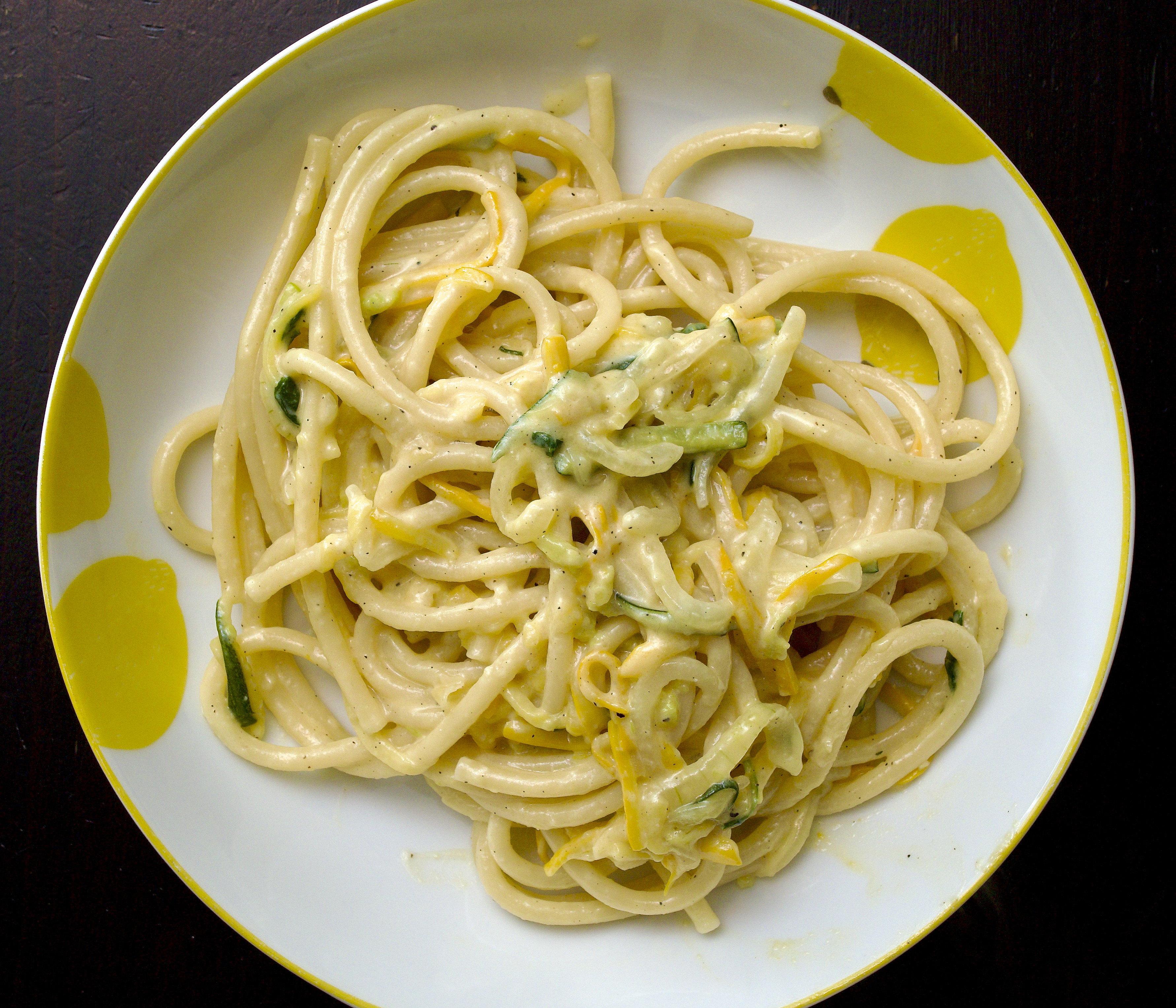
You need to cut your courgettes into very thin strips for this, as thin as the pasta. The sauce is a bit carbonara-ish, very delicious.
Wine Suggestion: Something fun and white like the El Abuelo de Piqueras, a Verdejo – Sauvignon Blanc blend from Almansa in Spain. Vibrant fruit tied together with a sense of fun and energy.
Bucatini with courgettes – serves 4 (easily halved)
5 tbsp extra virgin olive oil
1 medium onion, thinly sliced
300g courgettes, cut into 5cm long, 2mm thick strips
400g bucatini (or spaghetti, linguine or fusilli)
2 eggs, plus 2 extra egg yolks
70g Parmesan, grated
a few fresh basil leaves
Warm the olive oil in a large frying pan. Add the onion and courgettes with a pinch of salt, then cook gently for 10 minutes, turning over gently, until very soft. Remove from the heat.
Bring large pan of water to the boil, then add lots of salt. Add the pasta and cook until al dente.
Meanwhile, put the eggs, egg yolks, Parmesan, a pinch of salt and lots of black pepper into a large bowl. Whisk together to combine.
When the pasta is almost cooked, return the courgette pan to the heat to warm through the fat and courgettes and add the torn basil.
Drain the pasta and reserve some of the water. Add the pasta to the courgette pan and stir together. Remove the pan from the heat and add the egg mixture and a splash of pasta water, then stir quickly until everything is coated in a creamy sauce. Add a little more pasta water to make it silky if needed, then serve.
(Original recipe from An A-Z of Pasta by Rachel Roddy, Fig Tree, 2021.)
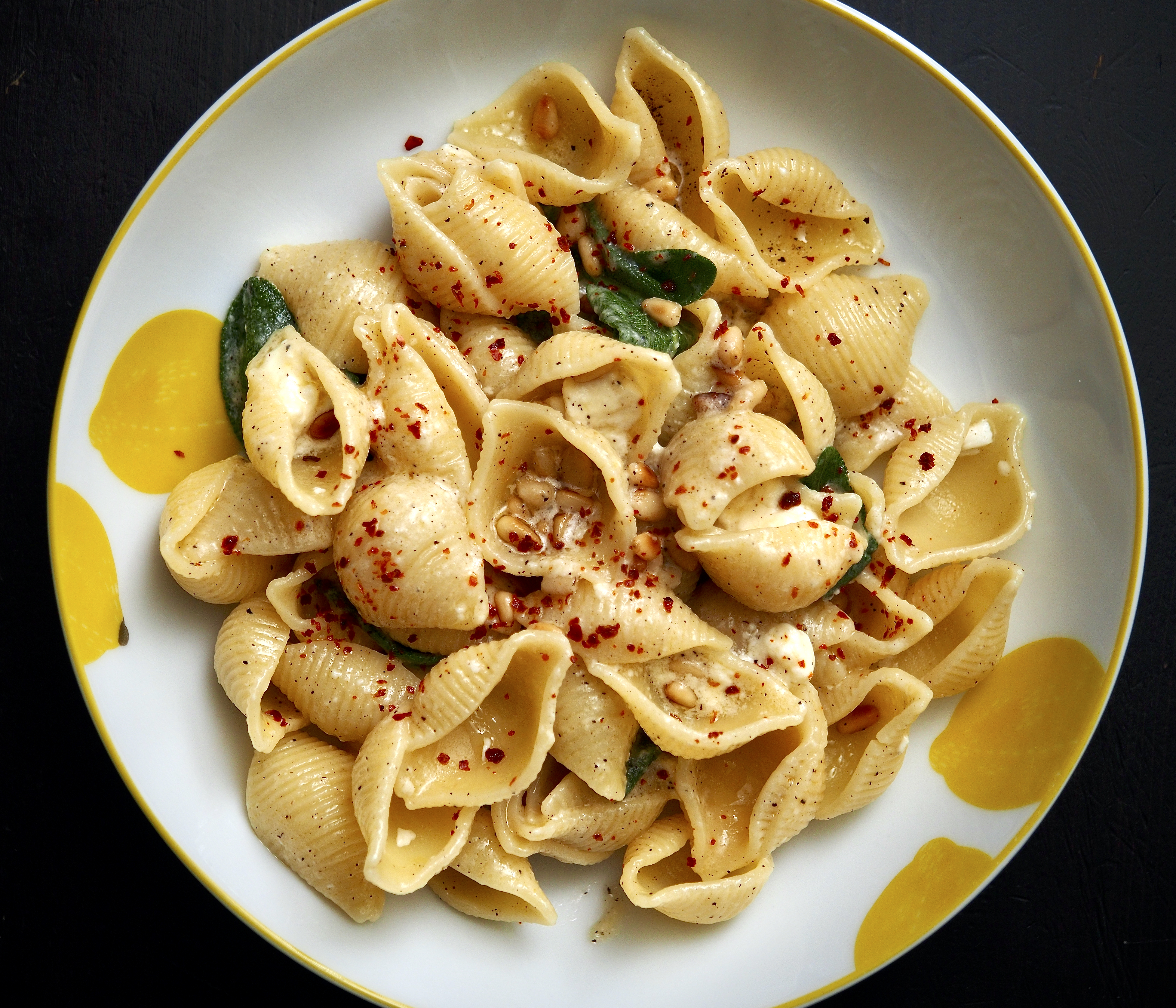
We are cooking our way through Persian Everyday by Sabrina Ghayour. We struggle like everyone to eat well on busy days but this book is perfect for just that.
Wine Suggestion: White, lemony and medium bodied. Maybe a youthful Verdicchio, or our current fave, Zuani’s Ribolla Gialla Sodevo, from Collio in North East Italy. A grape that was so higly regarded by the Romans they implemented laws to protect it from adulteration … possibly the world’s first appellation laws …we’ll need to investigate further.
Pasta with sage butter, feta & pine nuts – serves 2
200g pasta shells
75g butter
20 sage leaves
25g pine nuts
100g feta cheese
2 pinches of pul biber chilli flakes
Cook the pasta in lots of very salty water according to the timings on the packet.
When the pasta is almost cooked, put a large frying pan over a gentle heat. Add the butter and sage and allow the butter to melt gently but don’t let it sizzle much. Keep stirring so the sage flavours the butter.
Roughly drain the pasta (you want a little bit of water still on the pasta) and add to the pan with the butter and sage. Turn up the heat and season very generousy with black pepper and a little sea salt. Add the pine nuts and toss everything together, then add the feta and stir until melting and starting to coat the pasta.
Serve spinkled with extra black pepper and a pinch of pul biber.
(Original recipe from Persiana Everyday by Sabrina Ghayour, Aster, 2022.)
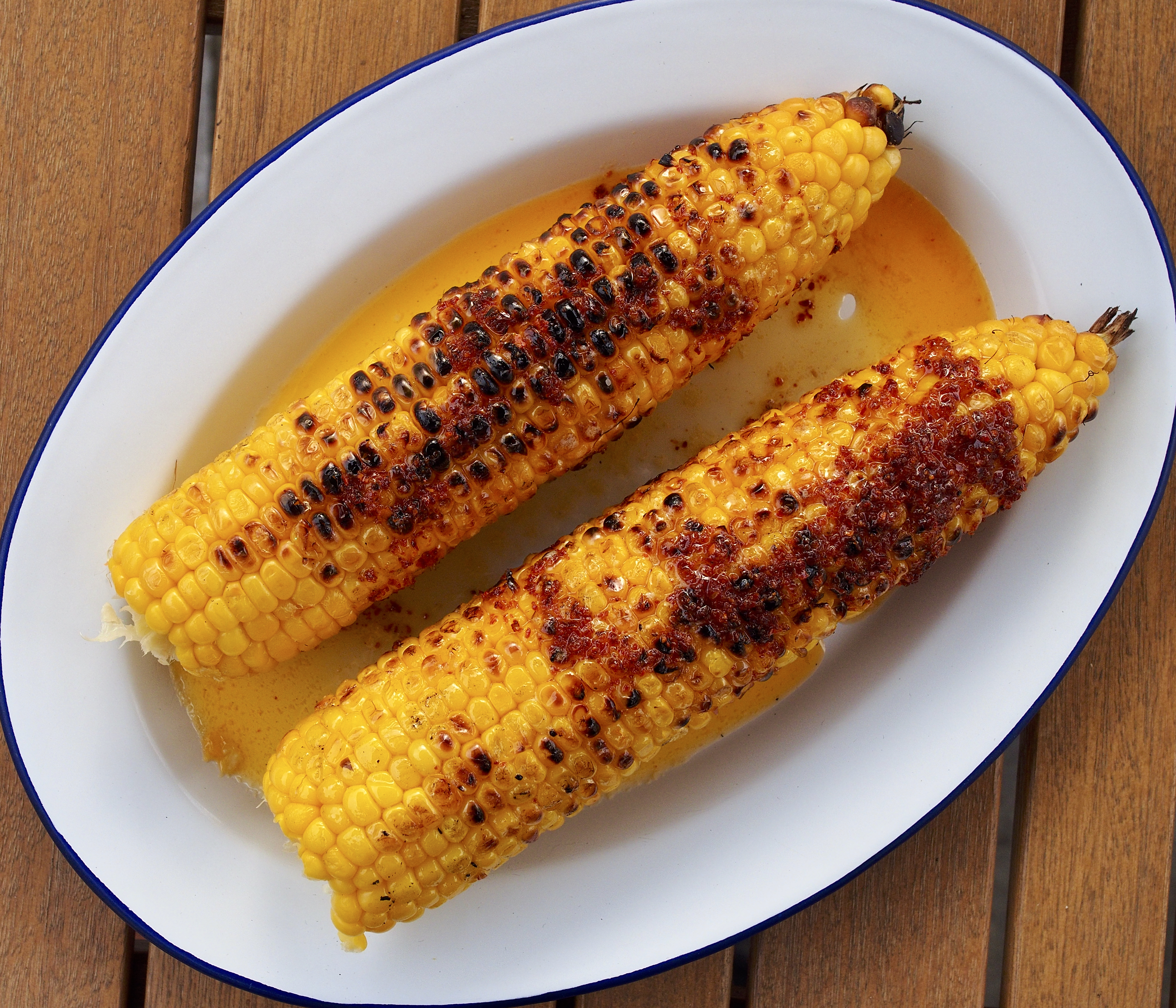
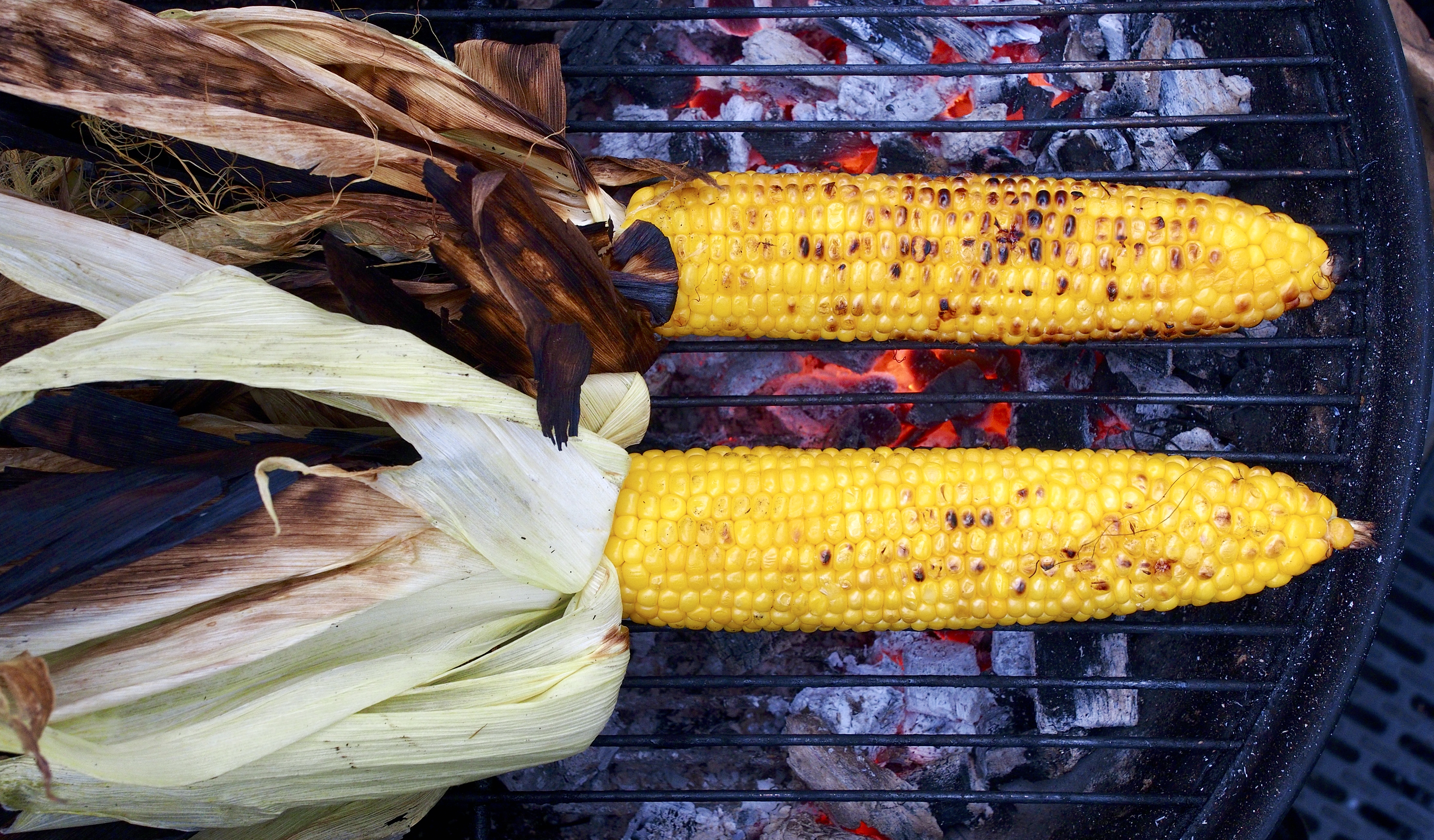
Fresh corn is in the shops and it’s delicious cooked in the husks over a charcoal barbecue.
BBQ Corn on the Cob with Chilli Butter – serves 4 to 6
2 corn cobs in the husks
40g salted butter
½ tbsp honey
½ tbsp urfa chilli flakes (we didn’t have urfa so used Aleppo pepper but you could also use smoked or regular paprika)
Put the whole corn cobs in their husks over a medium hot barbecue. Rotate them every 3-4 minutes until really charred – about 15 minutes in total.
Meanwhile, melt the butter in a small frying pan until starts to foam. Remove from the heat, add the honey and urfa chilli and mix well.
Take the corn cobs off the heat and leave aside for 10 minutes, then pull back the burnt husk and return to a high heat for a minute or two the char some of the flesh.
Return the pan with the butter to the heat to foam the butter again, then serve the corn cobs with the butter drizzled over.
(Original recipe from Chasing Smoked: Cooking Over Fire Around the Levant by Sarit Packer and Itamar Srulovich, Pavilion, 2021.)
Easy and full of veg. Great for a weeknight, and if your kid is like ours they will eat anything with pasta and cheese!
Wine Suggestion: keep it simple with a juicy red from a warmer climate. The Cline Family Cellars have star with their Old Vine Lodi Zinfandel which has a joyful balance between vibrant and complex red and black fruit, velvety tannins and a easy drinkability.
Veggie Pasta Bake – serves 4
1 red pepper, cut into bite-size pieces
1 yellow pepper, cut into bite-size pieces
1 aubergine, finely chopped
1 courgette, finely chopped
1 red onion, sliced
3 tbsp olive oil
150g cherry tomatoes, halved
400g tin chopped tomatoes
2 cloves of garlic, crushed
a handful of roughly chopped basil
300g pasta – we used fusilli
150g mozzarella ball, drained and finely chopped (you don’t need the expensive buffalo stuff for this)
2 tbsp pesto
a handful of grated Parmesan cheese
Heat the oven to 190C/170C Fan/Gas 5.
Put the peppers, aubergine, courgettes and onion into a large roasting tin and toss in the oil. Season well with salt and pepper, then cook in the oven for 45 minutes, turning a couple of times, until the vegetables are soft and golden brown.
Add the cherry tomatoes, tinned tomatoes, garlic and basil and return to the oven for a further 10-15 minutes.
Meanwhile, cook the pasta in lots of boiling salty water. Add 4-6 tbsp of the pasta cooking water to the cooked vegetables to make it a bit more saucy.
Drain the pasta and tip into the roasting tin with the veg. Add the mozzarella and pesto and stir well to combine. Top with the Parmesan and return to the oven for a final 10 minutes to melt the cheese.
This is our favourite salad at the moment – an excellent side dish for a barbecue or whatever else you might be cooking.
Tomato, burrata and broad bean salad – serves 4
500g mixed tomatoes
½ tsp caster sugar
150g broad beans, frozen ones are perfect
a handful each of basil, chives and flat leaf parsley
1 tbsp each of tarragon, lovage and mint (we never have lovage and it’s fine without it)
3 tbsp olive oil
2 tsp Dijon mustard
a pinch of fennel seeds
zest of 1 lemon
1 tbsp red wine vinegar
2 balls of burrata
50g hazlenuts, toasted and roughly chopped (toast them in the oven for 10 minutes at 180C – the skins will rub off easily with a tea towel)
Chop and slice the tomatoes and toss in a bowl with the caster sugar and ½ tsp of salt, then set aside for 30 minutes.
Put the broad beans into boiling water for 2 minutes, then drain and run under cold water. Pop of the skins and set aside.
Finely chop the herbs and put into a bowl. Whisk in the olive oil, mustard, fennel seeds, most of the lemon zest and the red wine vineager. Season, then stir in the broad beans.
Tip the tomatoes out onto a serving platter. Put the burrata balls on top and spoon over the beans and dressing. Garnish with toasted hazelnuts and the leftover lemon zest.
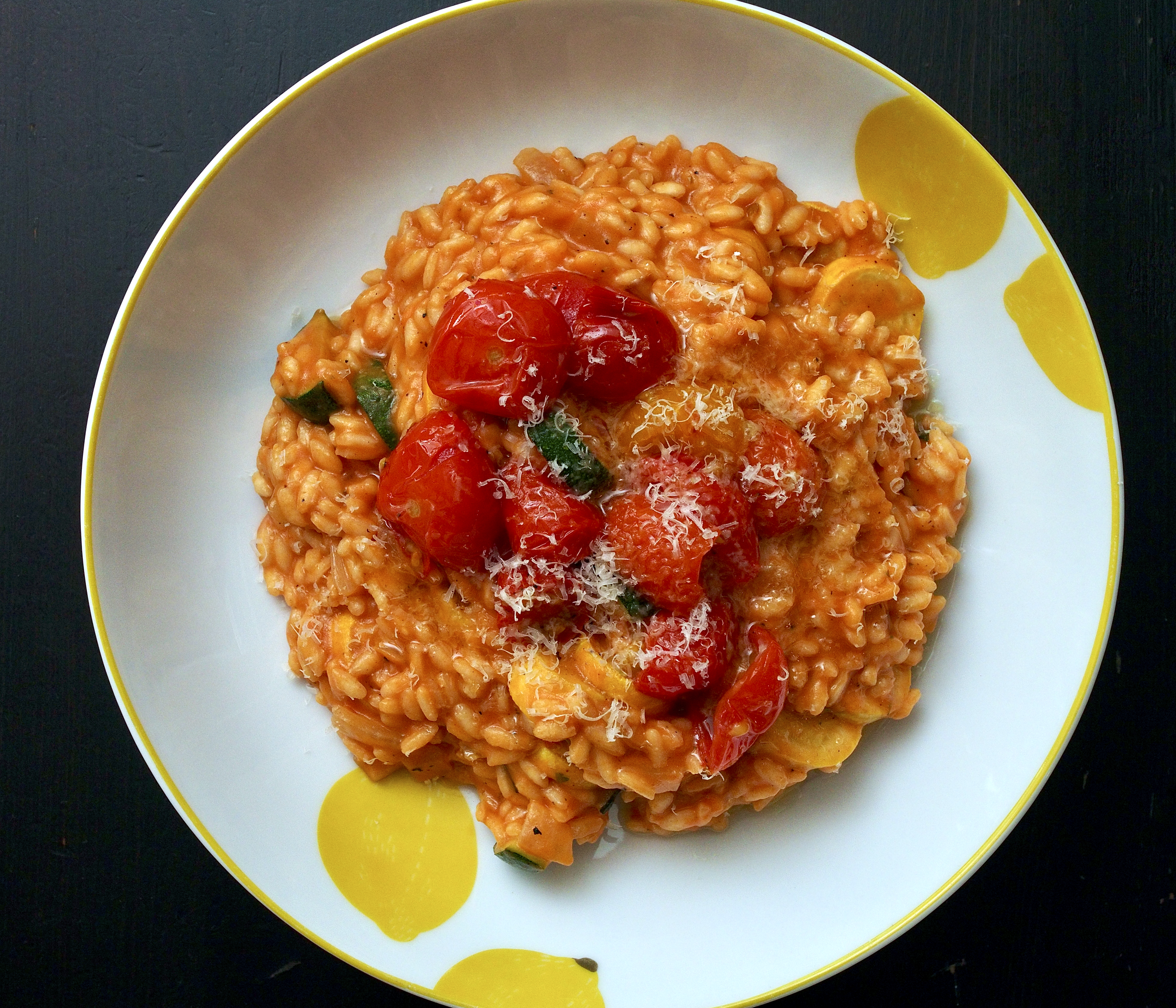
We chose this recipe because it has courgettes in it (and we have loads in the garden) but we’ll definitely be making it again. The method is a little different from usual but the results are lovely, fresh and tasty.
Wine Suggestion: Try to find a white wine with a lemony citrus flavour to bring out the bright flavours of the courgettes. We had a bottle of Karavitakis Assyrtiko “Nomas” from Crete that a friend had given us and it was a summery, lemony delight.
Tomato & Courgette Risotto – serves 2
2 tbsp olive oil
1 small onion, diced
2 cloves of garlic, crushed
½ tsp coriander seeds, crushed
200g risotto rice
500ml vegetable stock
200g carton passata
12 cherry tomatoes, halved
2 courgettes, halved and sliced
2 tbsp mascarpone
grated Parmesan, to serve
Preheat the oven to 200C/180C fan/gas 6.
Heat 1 tbsp of the oil in a large pan over a medium heat. Add the onion and fry for about 5 minutes until softened.
Add the garlic and coriander seeds and cook for another minute, then stir in the rice and stir until coated and glistening.
Gradually add 300ml of the stock, stirring until absorbed each time before adding some more. Stir in the passata, then cover with a lid and cook gently for 10 minutes. Keep giving it a stir every couple of minutes and add more stock as needed.
Meanwhile, put the tomatoes and courgettes into a roasting tin, keeping them at separate ends. Drizzle with the other tbsp of oil, then season and roast for 10-12 minutes until just tender. You might need to scoop out the tomatoes and cook the courgettes a little longer.
Add the mascarpone to the risotto and season generously with salt and black pepper. Keep stirring and cooking for about 5 minutes more or until the rice is cooked. Add the courgettes to the risotto and stir to mix together. Serve in warm bowls with the roasted tomatoes and some grated Parmesan.
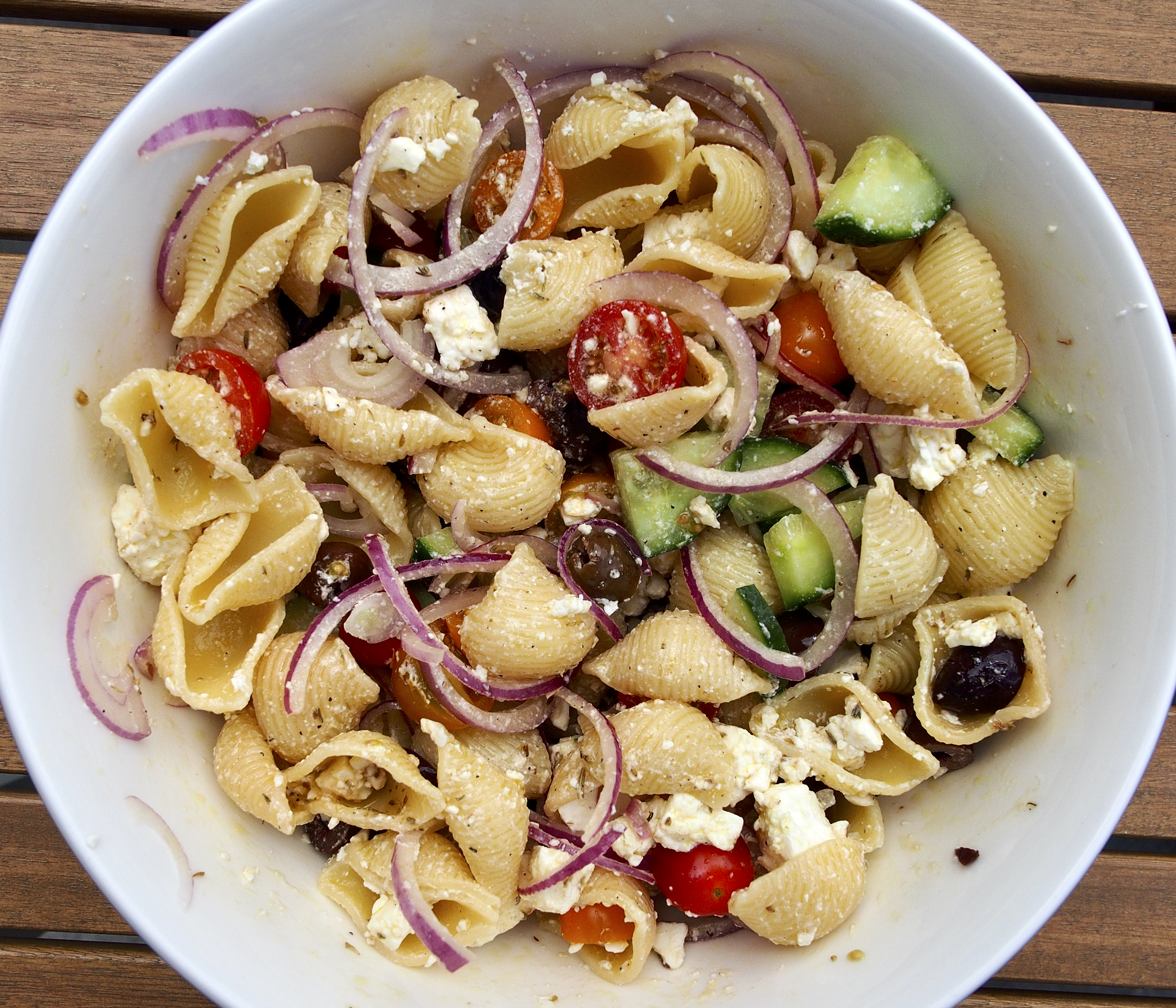
Like a Greek salad, but with pasta added in. It makes a great lunch or lunchbox and is good for using up odds and ends in the fridge.
Pasta Salad – serves 4
200g pasta – use what ever shape you have
3 tbsp extra virgin olive oil
1 tbsp red wine vinegar
1 tsp dried oregano
20 cherry tomatoes, halved
75g pitted black olives, halved
½ small cucumber, quartered lengthways then sliced
½ a red onion, thinly sliced
100g feta cheese
Cook the pasta in lots of salty boiling water according to the timings on the packet.
Meanwhile, put the olive oil, red wine vinegar, oregano and some seasoning into a mixing bowl and mix well to make a dressing.
Drain the pasta in a colandar and leave to cool for a few minutes. Tip the cooked pasta into the mixing bowl and toss to coat in the dressing.
Tip in the tomatoes, olives, cucumber and red onion, then crumble in the feta cheese. Gently mix everything together, then serve or put in the fridge for lunchboxes tomorrow.
(Original recipe by Cassie Best in BBC Good Food Magazine, July 2022.)
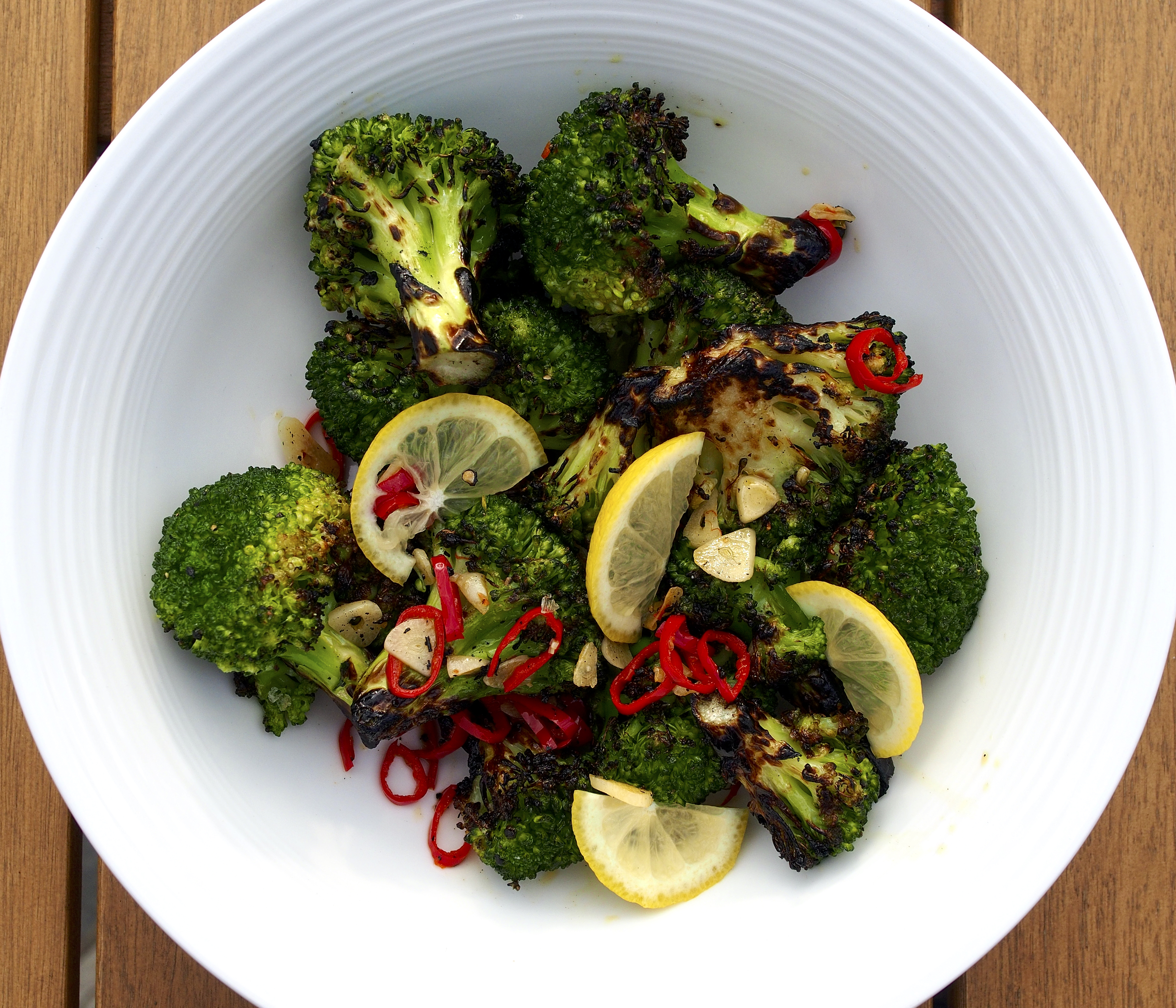
Finally we have some nice weather and so we are barbecuing everything, including broccoli which is a new one for us. This is the chargrilled broccoli with chilli and garlic from the original Ottolenghi book and it works equally well on a barbecue. Cook the broccoli first and it will sit happily in the dressing until whatever else you are cooking is ready.
Chargrilled broccoli with chilli and garlic – serves 4
2 heads of regular broccoli (about 500g)
115ml olive oil
4 cloves of garlic, finely sliced
2 mild red chillies, finely sliced
thin slices of lemon, to garnish
Cut the broccoli into florets. Fill a bowl with cold water and ice cubes. Blanch the florets in a large pan of boiling water for 2 minutes only, then scoop out and into the bowl of iced water.
Drain the broccoli and make sure it’s really well dried. Toss in a bowl with 45ml of the olive oil and some salt and pepper.
Barbecue the broccoli until charred on all sides. Meanwhile, put the rest of the olive oil into a small pan with the garlic and chillies. Cook over a medium heat until the garlic turns golden, take it off the heat at this point to prevent the garlic burning.
Put the barbecued broccoli into a large bowl and immediately pour over the garlic and chilli oil. Toss gently to coat then set aside until ready to serve. Garnish with the lemon slices.
(Original recipe from Ottolenghi The Cookbook, Ebury Press, 2008.)
We’ve a bumper crop of courgettes growing in pots in our back garden this year; the joy of loads of bright flowers followed by loads of yellow and green fruit, plus the challenge to eat them all. We picked a load of small courgettes for this dish and added the flowers too as we have them, but it is just as delicious with more normal sized courgettes found in shops and without the flowers.
Wine Suggestion: we’ve been seeking out old vine blends from the languedoc recently and just love how the best have a balance between fresh minerality, roundness, and a herbal stonefruit character. Like tonight’s juicy joy: Domaine Modat’s “de-ci de-la” Blanc which takes fruit from scattered small plots. We loved the sage and thyme scent and the juicy pear flavours cut through with summer sunshine.
Courgette and Broad Bean Risotto – serves 2
3 tbsp olive oil
1 tsp butter
350g courgettes, cut into small dice
a pinch of chilli flakes
a pinch of grated nutmeg
2 scallions, finely sliced
zest of ½ a lemon
150g risotto rice
75ml dry white wine
750g warm vegetable stock or chicken stock
80g broad beans, podded and blanched for a minute, then skins removed
courgettes flowers (optional), remove the stamens and tear the petals into pieces
20g Parmesan, grated, plus extra to serve
Heat the oil and butter in a large, deep frying pan. Add the courgettes, chilli flakes and nutmeg, and season well with salt and black pepper. Cook the courgettes for about 5 minutes or until the courgettes are golden and soft. Add the scallions and lemon zest and cook for another couple of minutes. Add the rice and stir for about 2 minutes to coat the grains in the oil.
Pour in the wine and cook for a couple of minutes, until almost evaporated.
Add the stock, a ladeful at a time, and stir until the liquid is absorbed before adding another. Keep going like this for 20-30 minutes or until all the stock has been absorbed. Taste the rice it should be soft with a little bite in the centre.
Stir in the blanched broad beans and courgette flowers and warm through for a minute or two.
Remove the pan from the heat and stir through the Parmesan. Allow to sit for about 5 minutes with a lid on, then serve with extra Parmesan over the top.
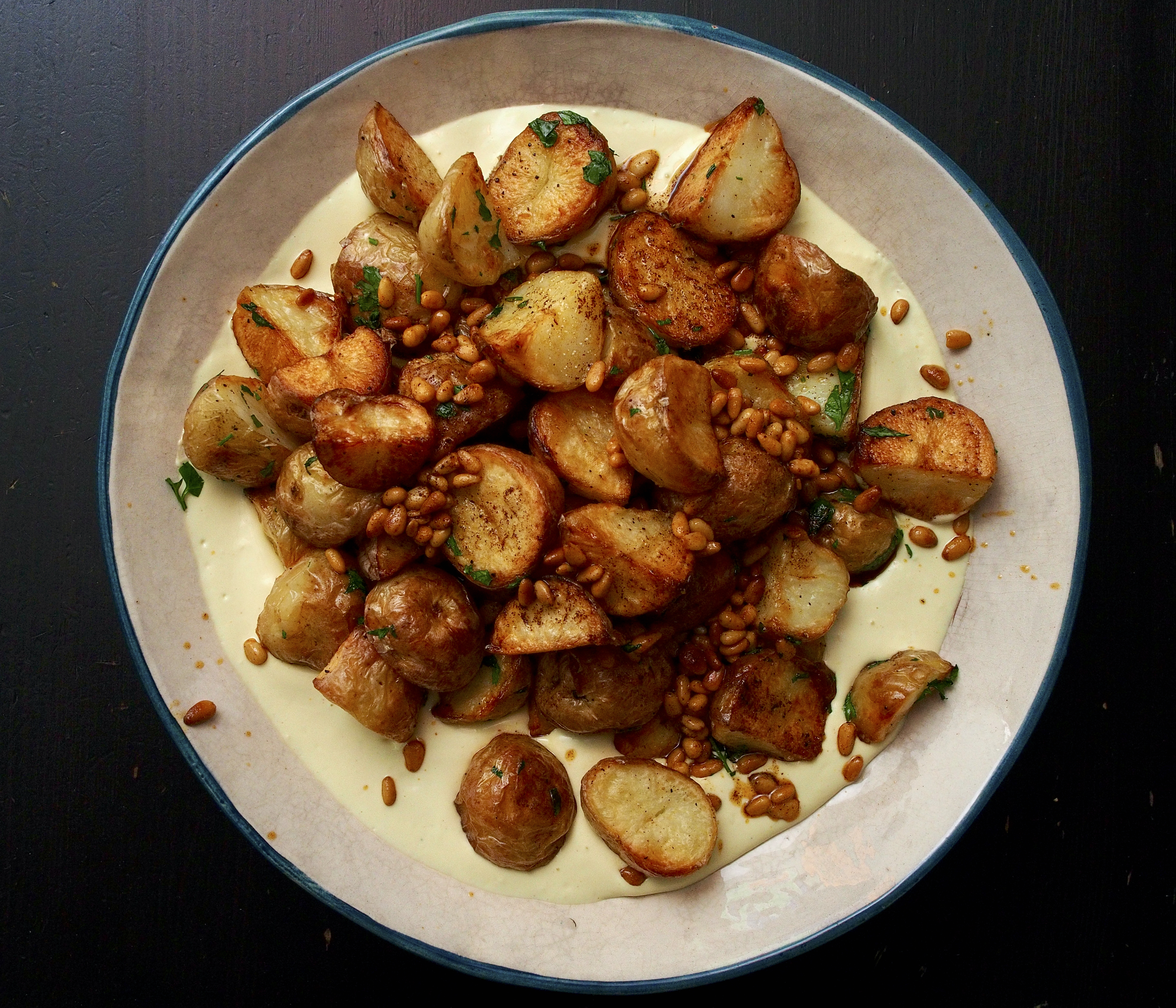
We love this side dish from the Ottolenghi Test Kitchen so much we’ve made it a few times over the past month and it’s been a hit every time. You can make the aïoli in advance and put it in the fridge which is useful.
Roast potatoes with aïoli and pine nut butter – serves 4
750g baby new potatoes, halved lengthways
2 tbsp olive oil
5g parsley, roughly chopped
FOR THE AÏOLI
2 large garlic cloves, crushed
1 tsp Dijon mustard
1 large egg, plus 1 egg yolk
100ml olive oil
100ml sunflower oil
1 tbsp lemon juice
75g Greek-style yoghurt
FOR THE PINE NUT BUTTER
30g unsalted butter
20g pine nuts
¼ tsp smoked paprika
Our advice is to get the aïoli made first, it will keep fine in the fridge if you want to do it earlier in the day.
Put the garlic, Dijon, egg, egg yolk and a ¼ tsp of salt into the small bowl of a food processor. Whiss together for a few seconds, then gradually add both oils in a slow steady stream with the machine running the whole time. You should end up with a runny mayonnaise. Transfer this to a bowl and stir in the lemon juice and yoghurt. Cover and out in the fridge until needed.
Preheat the oven to 220C fan.
Put the potatoes into a saucepan with 2 tsp of salt and cover with cold water. Bring to the boil and simmer for 6 minutes or until almost tender. Drain in a sieve and pat dry with a clean tea towel. Spread the potatoes over a parchment lined baking tray and toss with 2 tbsp olive oil and some salt and black pepper. Roast these in the oven for 35 minutes or until golden brown, then toss with the parsley.
To make the pine nut the butter into a small frying pan over a medium heat. When the butter has melted, add the pine nuts and cook until golden, stir in the paprika and remove from the heat.
Spread the aïoli over a serving dish, top with the potatoes and drizzle over the butter.
(Original recipe from Ottolenghi Text Kitchen: Shelf Love, Penguin Random House, 2021.)
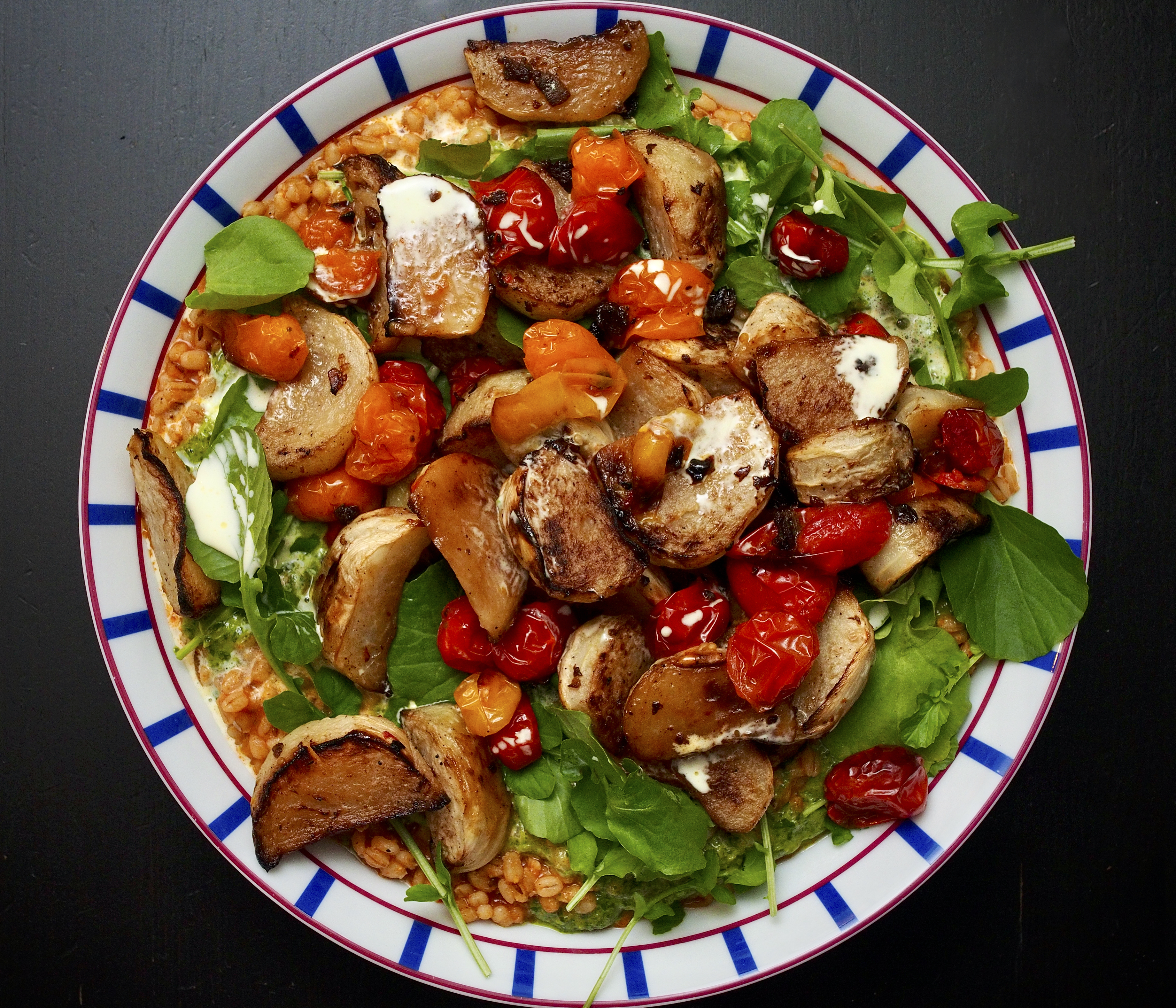
We don’t think we’ve ever roasted kohlrabi before but they have it in our local farm shop so we thought we’d give it a go. We mostly see it raw in salads but have to say it is absolutely lovely when roasted. The recipe is simple though there are a few bits to it. Try the roasted kohlrabi if nothing else.
Wine Suggestion: A medium bodied, pure fruited red like Olga Raffault’s Chinon les Barnabés which has a charming perfume and an array of purple and red fruits sitting lightly on top of a deep core. For this dish you need that juxtaposition of purity and depth to play alongside the earthy range of flavours.
Barley with roasted kholrabi, tomatoes & watercress salsa – serves 4 as a main
4 small kohlrabi
4 anchovy fillets in olive oil, drained and finely chopped (optional)
140ml olive oil, plus a bit extra to drizzle
1 large head of garlic, cut a slice off the top to expose the cloves, plus 4 extra cloves, crushed
300g ripe cherry tomatoes
300g pearl barley
2-3 banana shallots, finely sliced
2 tsp caraway seeds
5 strips of lemon zest and 2 tbsp juice, plus some wedges to serve
1 red Scotch bonnet chilli
3 tbsp tomato purée
150ml dry white wine
100g watercress
60ml double cream (optional if you don’t want dairy but nice if you do)
Preheat the oven to 190C fan.
Trim and peel the kohlrabi, then cut them into 8 wedges (more if you have any big ones). Put them into a large bowl and toss with the anchovies, 2 tbsp olive oil, 2 crushed garlic cloves, ½ tsp of salt and plenty of black pepper. Spread them out over a tray lined with baking paper.
Put the whole garlic bulb onto a piece of foil, drizzle with olive oil and season with a little salt and pepper. Wrap the bulb tightly in the bulb, then place it in the corner of the baking tray with the kohlrabi. Put the tray in the oven to roast for 25 minutes.
Turn the kohlrabi pieces over, then add the tomatoes to the tray and continue to roast for another 20 minutes, or until the kohlrabi wedges are soft and deep brown and the tomatoes are blistered. Turn the oven off, then leave the tray in there to keep warm.
While the vegetables are cooking, put the barley into a medim-sized saucepan and cover with lots of cold water. Bring to a simmer and cook gently for 20 minutes or until almost cooked but still with a bite. Drain and set aside.
When the vegetables are cooked, remove the garlic bulb in the foil. Put a large sauté pan over a medium-high heat with 50ml olive oil, the roasted garlic, remaining 2 cloves of crushed garlic, the shallots, caraway seeds, lemon peel strips, Scotch bonnet, and 2½ tsp salt. Gently fry for 12 minutes, stirring, until the shallots are soft and golden brown.
Add the tomato purée and cook for 30 seconds before adding the wine, 500ml of water and lots of black pepper. Bring to a simmer and cook gently for 7 minutes, then add the cooked barley and continue cooking for another 10 minutes. Discard the Scotch bonnet and the lemon peel.
Whizz half the watercress, the lemon juice, 60ml of olive oil and ¼ tsp of salt in the small bowl of a food processor until smooth.
Transfer the barley to a large serving bowl. Drizzle over the watercress salsa and cream over the barley and gently swirl them in. Top with the rest of the watercress, then the roasted kohlrabi and tomatoes. Serve with extra lemon wedges.
(Original recipe from Ottolenghi Flavour by Yotam Ottolenghi and Ixta Belfrage, Ebury Press, 2020.)
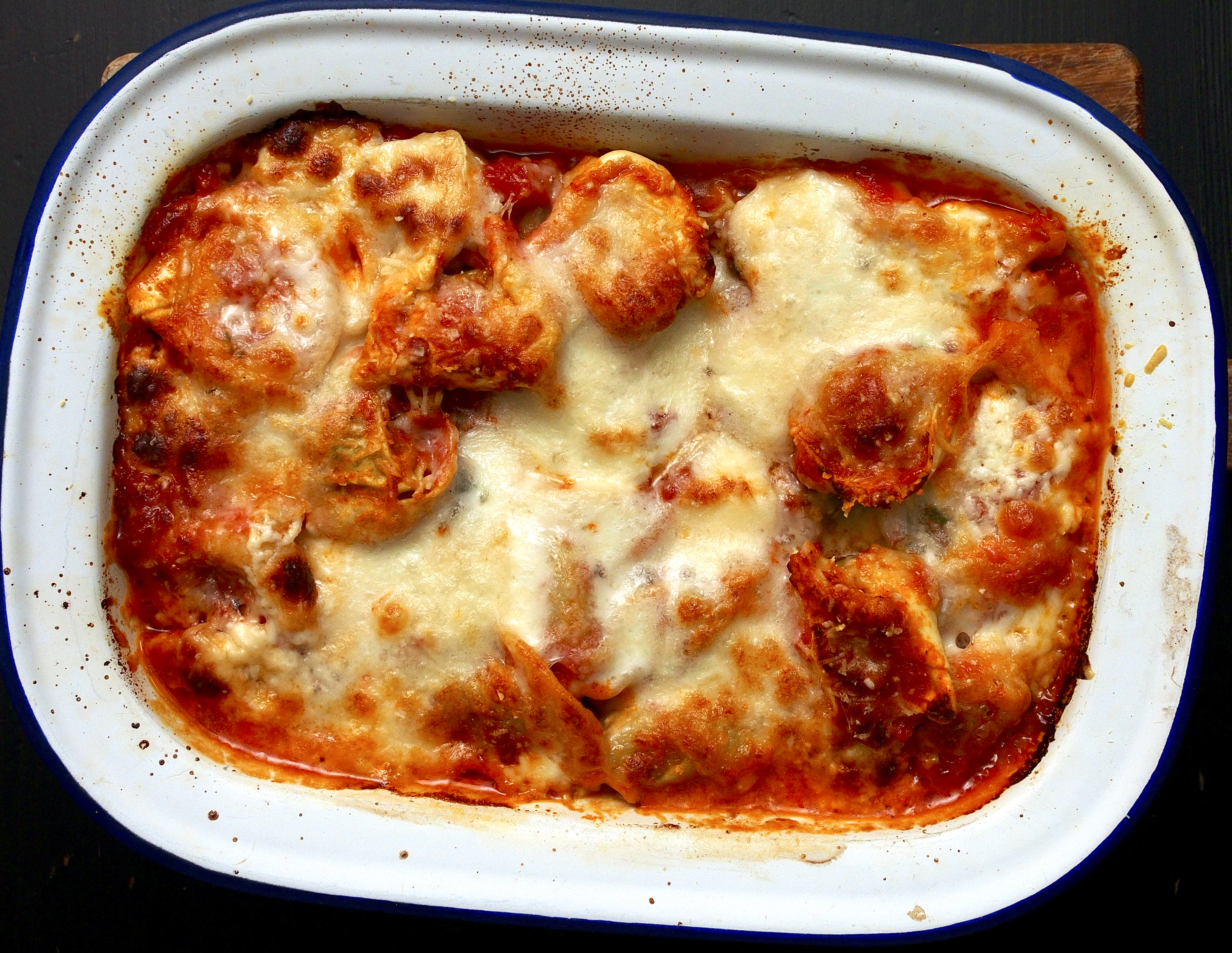
We’re never sure what to cook for other people’s children but most of them seem to like pasta bake. This one has been popular and also the recipe below which uses a packet of supermarket filled pasta. They like our home-made lasagne too but we don’t always have the energy or time for the extra effort required!
Easy Pasta Bake – serves 3 children (or even 2 adults and 1 child)
1 clove of garlic, crushed
olive oil
1 x 400g tin chopped tomatoes
a small handful of fresh basil, chopped
1 packet of filled pasta, about 250g, we tend to go for spinach and ricotta tortellini but you could do a meat filled version if you want to keep to traditional lasagne flavours
4 tbsp mascarpone
3 tbsp grated Parmesan, plus extra for over the top
½ a small ball of mozzarella, sliced
Warm 1 tbsp of olive oil in a saucepan. Add the garlic and cook gently for a couple of minutes, then tip in the tomatoes. Simmer for 10 minutes until thickened. Season with salt and pepper and stir in the basil.
Cook the pasta in boiling water for about a minute less than recommended on the pack, then drain.
Mix the mascarpone with the 3 tbsp grated Parmesan.
Heat the oven to 200C/180C fan/gas 6.
Rub a little olive oil over a small baking dish. Spoon a little bit of tomato sauce over the bottom of the dish, add about half the pasta, then spoon over half the mascarpone and Parmesan mixture.
Add another layer of tomato sauce, then the rest of the pasta. Top with the remainder of the tomato sauce and the mascarpone mix. Lay the mozzarella slices over the top and sprinkle with some more grated Parmesan. Bake for 20 minutes in the oven until golden and bubbling.
(Original recipe by Janine Ratcliffe in Olive Magazine, June 2016.)
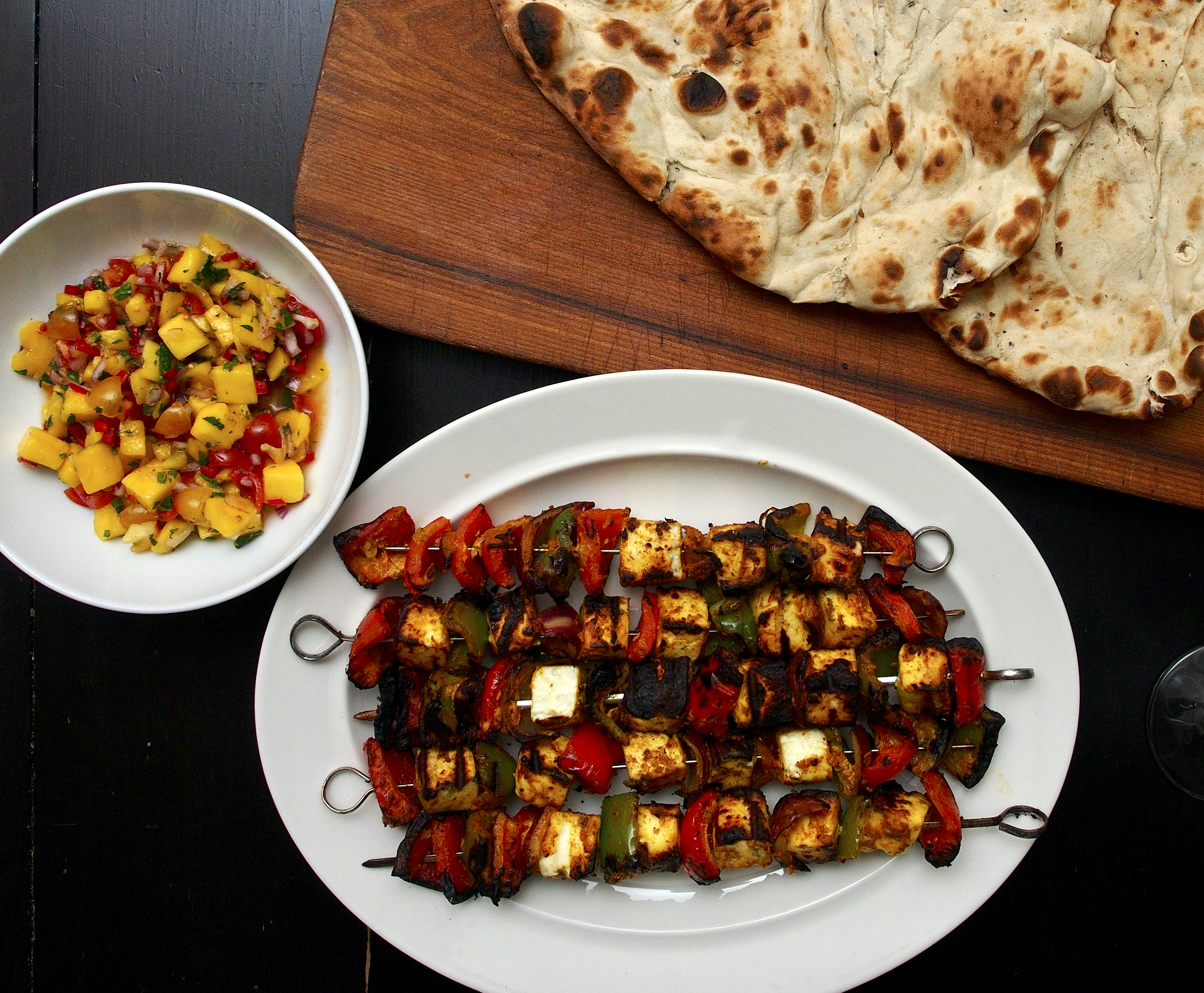
A great combination and nice to cook something meat-free on the barbecue. Serve with naan breads – we get ours from the local takeaway. You need to get started a few hours ahead.
Wine Suggestion: Nothing complex or too heavy with this so focus on pleasurable fruit and balance. For us tonight Umani Ronchi’s organic Serrano. A Montepulciano – Sangiovese blend from Rosso Conero, in the Marches. Youthful and vibrant which suited us perfectly for a summer barbecued dinner.
Barbecued tikka paneer with fresh mango chutney – serves 4
150g natural yoghurt
3 tbsp tikka curry paste, we use Patak’s
2 cloves of garlic, crushed
3 cm piece of ginger, finely grated
300g paneer, cut into 18 cubes
1 green pepper, cut into 18 pieces
1 red pepper, cut into 18 pieces
1 red onion, cut into 6 wedges
vegetable oil, for brushing the grill
a small handful of coriander leaves, roughly chopped
naan breads, to serve
FOR THE FRESH MANGO CHUTNEY:
left over red onion from the kebabs (see below)
1 large mango, finely diced
150g cherry tomatoes, finely diced
1-2 red chillies, finely chopped
a few sprigs of mint, leaves finely chopped
1 tsp caster sugar
juice of half a lemon
Put the yoghurt, curry paste, garlic, and ginger into a large bowl, season with salt and pepper and mix together. Add the paneer and peppers. Peel off the outer 2-3 layers of each onion wedge and add these too (keep the rest for the chutney), then fold everything together gently. Cover and put into the fridge for a few hours, or if short of time leave at room temperature for an hour.
To make the mango chutney, finely chop the leftover onion and put into a bowl with the mango, tomatoes, chillies and mint and stir to mix. Stir in the sugar and lemon juice to taste, then set aside.
Get your barbecue on and hot, then brush the grill with vegetable oil to prevent the kebabs from sticking.
Thread the paneer, peppers and onions onto kebab skewers and cook for 12-15 minutes or until lightly charred.
Sprinkle coriander over the skewers and serve with the mango chutney and naan breads.
(Original recipe from Charred by Genevieve Taylor, Hardie Grant: Quadrille, 2019.)
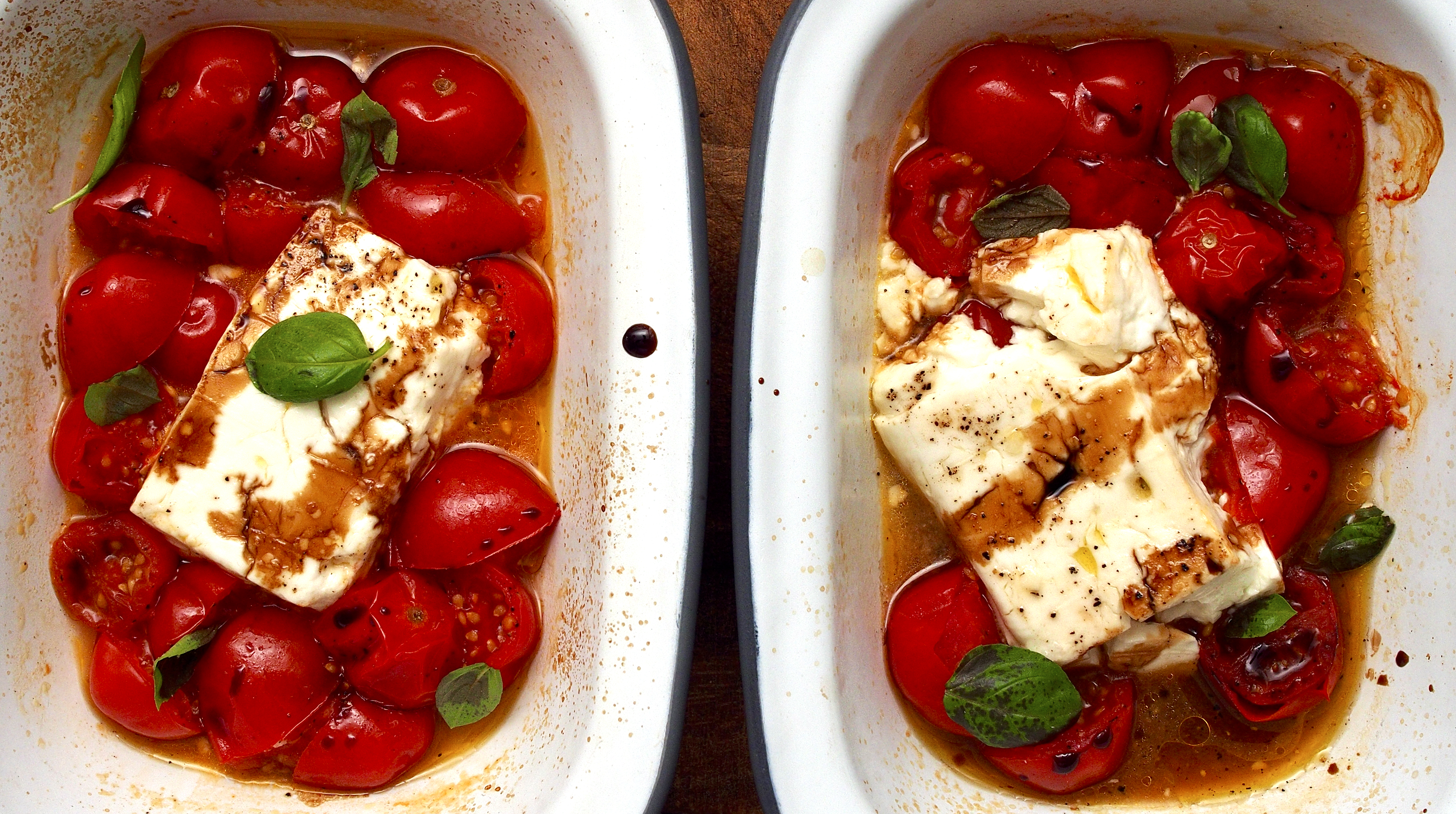
a few leaves of oregano or basil, picked and chopped or torn
Heat the oven to 200C/fan 180C/gas 6.
Drizzle a little olive oil in the bottom of 2 small ovenproof dishes. Sprinkle some tomatoes into each and season with salt and black pepper. Set the pieces of feta on top, then top with the rest of the tomatoes, season again and drizzle with a little more oil.
Cover with foil and bake for 20 minutes.
Toast the sourdoubh and rub one side with the cut side of the garlic and drizzle with olive oil.
Take the foil off the dishes, drizzle with the balsamic and sprinkle over the herbs. Serve the salad with the sourdough toast.
(Original recipe by Janinie Ratcliffe in Olive Magazine, April 2016.)




 Jono & Jules do food & wine