Feeds:
Posts
Comments

Posts Tagged ‘Recipe’

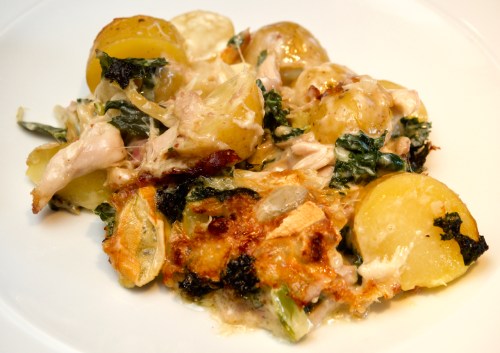
Chicken Tartiflette

Reblochon cheese from the Alps arrives in the cheese shops from May and reminds us to make tartiflette, the famous dish from France’s Haute-Savoie region made with cheese, bacon, potatoes and onions.  This version also has chicken and kale and it needs no accompaniment. It makes a hefty portion but it’s hard not to go back for more.

Wine Suggestion: We would suggest finding a white from the Jura, usually made from Savagnin, Chardonnay, or a blend of the two. Even better try to find a Vin Jaune, which is aged in oak under a Voile, similar to the Flor of sherry, and with similar characteristics. We had a beautiful Côtes du Jura, the Cuvée de Garde by Anne & Jean-François Ganevat. An equal blend of the two grapes and held under voile for 48 months (not long enough to classify as a Vin Jaune) which allowed the fruit to sing alongside the nutty, voile aromas.

Chicken tartiflette – serves 4 (generously)

FOR THE CHICKEN:

  • 2 tbsp olive oil
  • 1 medium chicken, about 1.5kg, jointed into 8 pieces (we used 8 chicken thighs)
  • 1 onion, sliced
  • 1 head of garlic, cut in half horizontally
  • 200ml white wine
  • 2 litres chicken stock
  • 1 sprig of thyme
  • 2 bay leaves

FOR THE TARTIFLETTE:

  • 1kg waxy potatoes, like Charlotte, sliced 1cm thick
  • 2 tbsp olive oil
  • 200g smoked bacon lardons
  • 1 large onion, thinly sliced
  • 3 garlic cloves, finely chopped
  • 50g plain flour
  • 300ml double cream
  • 400g curly kale, blanched in boiling water for 3 minutes and roughly chopped (discard any thick stalks)
  • 400g Reblochon cheese, broken or cut into pieces

Start by cooking the chicken. Heat a large sauté pan over a high heat, add the olive oil and the chicken pieces – skin side down to start. Cook until browned all over, about 5 to 10 minutes. Remove the chicken from the pan then add the onion and garlic and sweat until the onion has softened. Add the white wine and reduce until almost evaporated. Add the chicken stock, thyme and bay, then season with salt and pepper and bring to a very gentle simmer (you might need to transfer to a large pot to fit it all in).

Return the chicken pieces to the pan and cook very gently until just cooked – about 10 minutes for the breasts. Remove any breast pieces from the pan with some of the broth and leave to cool in the broth. Continue to cook the leg meat for another 30 minutes, then take off the heat and leave to cool in the broth.

When cooled take the chicken out of the broth, remove the skin and bones and cut into large pieces. Strain the broth and reserve for later.

Preheat the oven to 200C/400F/Gas 6.

Simmer the potato slices in boiling, salted water until almost tender, then drain and set aside.

Heat the olive oil in a pan, add the bacon lardons and cook until coloured, then remove from the pan and add the onion. Cook until the onion is translucent, then stir in the garlic. Add the flour and cook for another 2 minutes. Add the cream with 200ml of the reserved strained chicken braising liquid and slowly bring to a simmer, stirring. Remove from the heat and season.

Fold the chicken and bacon through the cream mixture, along with the kale, 300g of the cheese and the potatoes. Pour into a large baking dish and top with the remaining 100g of cheese, then bake until golden brown (about 20 to 30 minutes).

(Original recipe from The Skills by Monica Galetti, Quadrille, 2016.)
Read Full Post »

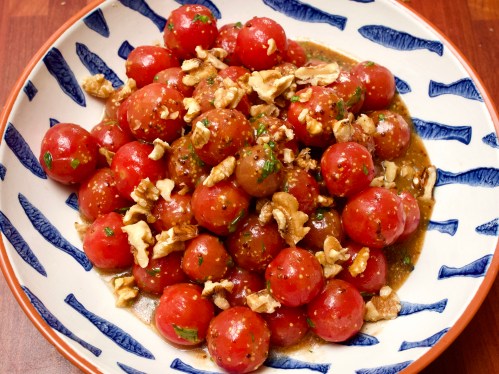
Cherry tomato salad with wholegrain mustardSuch a nice tomato salad with lots of delicious dressing for which you will require some crusty bread. You do need to skin the tomatoes but it actually takes no time at all if you follow the instructions below and it allows them to soak up the dressing so don’t be tempted to leave that step out.

Cherry tomato salad with wholegrain mustard – serves 4 to 6

  • 900g cherry tomatoes
  • 50g walnuts, coarsely chopped

FOR THE DRESSING:

  • small bunch of tarragon
  • 2 tbsp balsamic vinegar
  • 1 heaped tbsp wholegrain Dijon mustard
  • 125ml walnut oil or olive oil

Peel the tomatoes by cutting a slit in the base of each then putting them into a large bowl. Pour over some boiling water from the kettle and immediately drain – the skins should peel of easily.

Keep a sprig of tarragon to garnish and remove the rest of the leaves from the stalks. Coarsely chop the leaves and discard the stalks. Whisk the vinegar and mustard together with some salt and pepper. Gradually whisk in the oil so the dressing thickens slightly, then whisk in the chopped tarragon.

Pour the dressing over the tomatoes,  mix gently and taste for seasoning. You can leave at room temperature for a couple of hours at this point. Pile into a salad bowl and sprinkle with the walnuts and the reserved tarragon just before serving.

(Original recipe by Anne Willan IN: BBC Good Food Magazine, April 2002)

Read Full Post »

Watercress & Scallion salad

We love this green salad with barbecues as the scallions taste amazing and you’re not likely to get the barbecue out just for a green salad.

Watercress & scallion salad – serves 8 to 10

  • 6 tbsp olive oil
  • 4 shallots, sliced into fine rings
  • 2 tsp caster sugar
  • 4 tbsp white wine vinegar
  • 3 bunches scallions, trimmed
  • 4 bunches of watercress (or failing that a bag of mixed salad leaves as we had to resort to this time but it we prefer it with watercress)

Heat a pan over a medium heat, then fry the shallots for a few minutes with a splash of oil, then add the sugar and vinegar. Bring to the boil, then set to one side.

Toss the scallions in a little oil then cook on a hot barbecue for a a couple of minutes on each side (use a griddle pan if that’s easier). Put the scallions in a bowl with the shallots and the rest of the olive oil. Season and toss with the watercress.

(Original recipe by James Martin IN: BBC Good Food Magazine, April 2008)

Read Full Post »

Left-over Chicken Curry

A quick curry made with leftover roast chicken. We liked it and the fresh tomatoes definitely lighten things up for this time of year. We didn’t have any coriander but mint was a good substitute. Rachel Kelly also says that you can just use 2 tsp each of garam masala, coriander and ground cumin if you don’t have all the spices.

Wine Suggestion: This is quite a mild curry and we think you could choose most fruity, white wines and lighter, juicy reds easily. We had a glass of La Piuma Pecorino from the Marches in Italy and it was a refreshing match.

Leftover Chicken Curry – serves 4

  • vegetable oil
  • 1 onion, finely chopped
  • 3 garlic cloves, very finely chopped
  • 1 tbsp fresh ginger, very finely chopped
  • 2-3 large tomatoes, chopped (plus some extra to serve)
  • 300ml chicken stock
  • leftover roast chicken, roughly chopped
  • 2 tbsp plain yoghurt
  • 2 tsp ground coriander
  • 1 tsp ground cumin
  • 1 tsp garam masala
  • ½ tsp ground cardamom
  • ½ tsp ground cinnamon
  • ½ tsp ground turmeric
  • ½ tsp chilli powder
  • cooked basmati rice, to serve
  • coriander, chopped, to serve

Heat 2 tbsp of vegetable oil in a large heavy-based saucepan. Gently fry the onion with a pinch of salt for about 15 minutes or until softened, then add the garlic and ginger. Continue to fry gently for another few minutes.

Add the spices and mix well with the onion. Fry for another 3 minutes.

Add the chopped tomatoes and cook for another minute or two then add the chicken stock. Bring to the boil and simmer for 15 minutes.

Add the cooked chicken and warm through. Dollop in about 2 tbsp of yoghurt, then warm gently – easy does it here so the sauce doesn’t curdle.

Serve with steamed rice and sprinkle over some fresh coriander and chopped tomato.

(Original recipe by Rachel Kelly in The Guardian)

Read Full Post »

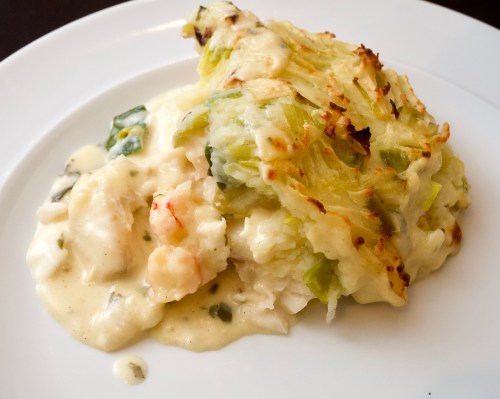
Fish pie with leek mash

No sooner had we given up all hope and planned a hearty fish pie for dinner, than the sun finally came out. The leek mash brightens it up a bit and if served with some green peas it works not too bad for a fine weather dish – just pity the poor cook stuck in the kitchen! We fear you might be horrified when you read the list of ingredients but if the rogue ingredient turns you right off you can always leave it out. It’s also our secret weapon for a prawn cocktail so there’s usually some in our fridge, and it turns out that it tastes surprisingly good in a fish pie too.

Wine Suggestion: this works with a crisp version of Chardonnay; we chose an organic Chablis made by the Gueguen family.

Fish pie with leek mash – serves 6

  • 900g white fish fillets, in large chunks (we used cod)
  • 425ml full-fat milk
  • 100g butter
  • 50g plain flour
  • juice of ½ a small lemon
  • 3 tsp Dijon mustard
  • 1½ tbsp Heinz salad cream (optional)
  • 125ml double cream
  • 3 tbsp finely chopped dill or parsley
  • 200g cooked, peeled prawns
  • 500g leeks, sliced
  • 800g floury potatoes, in chunks

Put the fish and milk into a sauté pan. Bring to a simmer and poach for about 3 minutes. Remove the fish with a slotted spoon and set aside. Reserve the milk.

Melt 50g of the butter in a saucepan, then stir in the flour. Remove the pan from the heat and gradually add the milk, a ladleful at a time, beating with a wooden spoon after each addition. When the milk has all been added, return the pan to the heat and keep stirring as you bring it the boil. It should be very thick. Season, then add the lemon juice, mustard and salad cream. Reduce the heat and cook for 2 minutes. Add the cream and herbs and continue to simmer for another minute. Taste and adjust the seasoning – you want this well-flavoured.

Put the fish and prawns into a 2.4 litre pie dish. Stir any liquid under the fish into the sauce. Pour the sauce over the fish and mix gently, then leave to cool before refrigerating to make it easier to spoon on the mash.

Preheat the oven to 200C/400F/Gas 6.

Melt the remaining 50g of butter in a heavy saucepan and add the leeks. Turn to coat in the butter and season, then add 2 tbsp of water, cover and sweat over a low heat for about 15 minutes or until very soft. Check occasionally and add another spoon of water if needed.

Cook the potatoes in boiling salted water until tender, then drain. Return to the warm pan, cover with a clean tea towel and a lid, then place over a very low heat for a couple of minutes to dry.

Mash the potatoes until smooth, then add the leeks and their juices and season well. Spread the mash over the fish and bake for 30 minutes or until golden and bubbling.

Serve with peas – as with all pies.

(Original recipe from Food from Plenty by Diana Henry, Mitchel Beazley, 2010.)

Read Full Post »


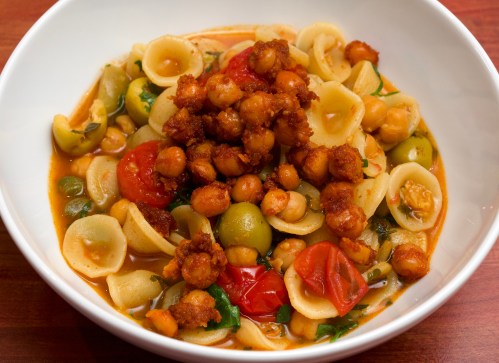
Big mouthfuls of flavour with this somewhat unconventional pasta dish – Italians might like to avert their eyes! The capers steal the show in some ways so you really need to like these and the spicy, garlicky chickpeas are to die for. If this dish is wrong we don’t want to be right!

Wine Suggestion: We had a glass of the Domaine de la Chauviniere Muscadet sur lie which might not be the obvious choice but it worked. Fresh and light, but with great fruit and texture, we’d highly recommend this to match the vibrant, flavour packed dish.

Orecchiette cooked in chickpea & tomato sauce – serves 4

  • 50ml olive oil, plus extra to serve
  • 6 cloves of garlic, peeled and crushed
  • 400g tin of chickpeas, drained and patted dry
  • 2 tsp hot smoked paprika
  • 2 tsp ground cumin
  • ¾ tbsp tomato purée
  • 40g parsley, leaves picked and roughly chopped
  • 2 tsp lemon zest
  • 4 tbsp baby capers
  • 80g good quality green olives, pitted and roughly torn
  • 250g cherry tomatoes
  • 2 tsp caster sugar
  • ½ tbsp caraway seeds, lightly toasted and crushed
  • 250g dried orecchiette pasta
  • 500ml vegetable stock

Put the first 6 ingredients along with 2 tsp of salt in a large sauté pan and fry gently over a medium heat for about 8 minutes, until the chickpeas are slightly crisp. Reserve about a third of the chickpeas to use as a garnish at the end.

Combine the parsley, lemon zest, capers and olives in a bowl, then add two-thirds of this to the pan with the cherry tomatoes, sugar and caraway seeds. Cook and stir for another 2 minutes.

Add the pasta and stock and bring to a simmer. Cover with a lid and cook over a medium heat for 12 minutes, undisturbed. Check the pasta is cooked and if not continue cooking for another minute or two.

Stir in the remaining parsley mixture, drizzle with 2 tbsp of olive oil and garnish with the reserved chickpeas and some black pepper.

(Original recipe by Yotam Ottolenghi in The Guardian)

Read Full Post »

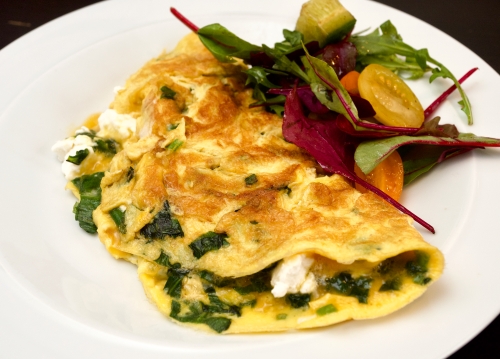
Wild Garlic Omelette with goats cheese

We just loved this simple omelette with lots of wild garlic and some melting goat’s cheese. You could leave the goat’s cheese out and it would still be a super supper dish with some salad and crusty bread.

Wild Garlic & Goat’s Cheese Omelette – serves 2

  • a good handful of wild garlic leaves – about 50g
  • 4 large eggs, lightly beaten (beat 2 eggs in 2 separate cups for ease)
  • 25g butter
  • 50g goat’s cheese crumbled

Finely shred the wild garlic and season the eggs.

Heat half the butter in a nonstick frying pan. Add half the wild garlic and wild for about 20 seconds, then add half the eggs. Leave for about 15 seconds, then tilt the pan and gradually scrape up the set bits of omelette around the edge into the middle of the pan, letting the raw egg run out to the edges.

When the omelette is still a bit liquid on top but set underneath, put half the cheese over one half. Fold the other half over the filling, then let the cheese melt for about 20 seconds before turning out onto a warm plate.

Repeat with the remaining ingredients to make another omelette, then serve right away.

(Original recipe from Food from Plenty by Diana Henry, Mitchell Beazley, 2010.)

Read Full Post »

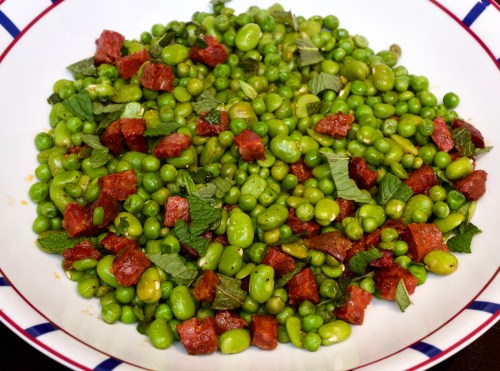
Broad Beans, Peas, Chorizo & Mint

If you are yet to be convinced of the merits of frozen broad beans then surely this will convert you. A dish sure to become a regular feature in our kitchen as we can think of loads of mains to pair it with. Slipping the skins off the beans is a bit of a fiddle but definitely worth it and not the worst kitchen job – that would be cleaning mussels or mushrooms.

Peas, broad beans & chorizo with mint – serves 4 to 6

  • 250g frozen peas
  • 250g frozen baby broad beans
  • 2 tbsp olive oil
  • 150g chorizo sausage, cut into small chunks
  • a good squeeze of lemon juice
  • leaves from 5 sprigs of mint

Cook the peas and beans in separate pans of boiling salted water until tender, then drain and remove the skins from the broad beans.

Heat the oil in a frying pan and fry the chorizo until golden. Add the peas and beans and heat through. Season, add the lemon juice and mint, then serve.

(Original recipe from Food from Plenty by Diana Henry, Mitchell Beazley, 2010.)

Read Full Post »

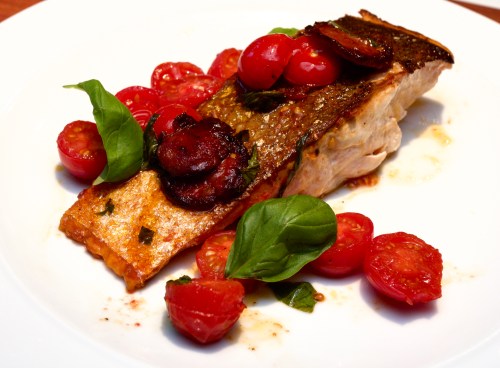
Smoky Chorizo Salmon

It’s still cold but there’s a bit of sunshine and promise of warm spring days to come. We can’t wait for the spring veg to start but this bright dish is not a bad compromise.

Wine Suggestion: in the mood for Spring we chose the Chateau Vignelaure, La Source Rosé which we often find a good match for salmon and it came through yet again. Vibrant, fresh fruit and a long dry finish.

Smoky Chorizo Salmon – serves 2

  • 2 x 150g salmon fillets, skin on
  • 300g cherry tomatoes, halved
  • 4 sprigs fresh basil
  • 1 tbsp red wine vinegar
  • 8 black olives, remove stones and finely chop
  • 30g chorizo, finely sliced

Put the salmon in a large cold non-stick frying pan with the flesh side down. Put over a medium-high heat and cook for about 3 minutes or until it is sizzling underneath. Flip the salmon over on to the skin side and continue to cook for about 5 minutes or until the skin is very crispy and the fish is just cooked through.

Meanwhile, tear up most of the basil leaves and mix with the cherry tomatoes, the red wine vinegar and a pinch of salt and pepper. Mix the chopped olives with 1 tsp of extra virgin olive oil and a splash of water.

Add the chorizo to the pan with the salmon for the last 2 minutes, then add the tomatoes for 30 seconds. Divide the tomatoes between two plates and top with the salmon, then spoon over the olive dressing and the rest of the basil leaves.

(Original recipe from 5 Ingredients by Jamie Oliver, Michael Joseph, 2017.)

Read Full Post »

Chicken with an agrodulce sauce

A quick and healthy Italian-style sweet & sour dish for midweek. We weren’t completely sure about the celery but it smells amazing in the pan with the red onions and tastes perfect in the finished dish. Serve with new potatoes and a green salad or steamed tenderstem broccoli.

Wine Suggestion: We served this with a fuller Italian white, the l’Insolito by Michele Biancardi from Puglia. This is made from Minitolo which used to be thought of as a sub-variety of Fiano. Honeysuckle and white flower aromatics are tempered by a good citrus twist … sort of like the agrodulce.

Chicken with Agrodolce Sauce – serves 2

  • 2 chicken breasts
  • 1 tbsp flour, well-seasoned with salt and pepper
  • 1 red onion, halved and thinly sliced
  • 3 celery stalks, thinly sliced
  • 100g cherry tomatoes, halved
  • 1 tbsp red wine vinegar
  • ½ tsp sugar
  • a small handful of flat-leaf parsley, chopped

Slice the chicken breasts in half horizontally. Cover the 4 pieces of chicken with baking paper and flatten gently with a rolling pin. Dust the chicken pieces with the seasoned flour shaking off any excess.

Heat 1 tbsp of olive oil in a non-stick frying pan and brown the chicken really well, then remove from the pan. Throw the onion and celery into the pan now and cook for about 3 minutes, then season. Add the tomatoes and cook for another few minutes or until they start to break down, then add the vinegar and sugar.

Return the chicken to the pan and cook for 3-4 minutes or until cooked through, then stir in the parsley.

Serve with green salad or steamed broccoli and some new potatoes if you like.

(Original recipe by Jennifer Joyce IN: BBC Olive Magazine, April 2009.)

Read Full Post »

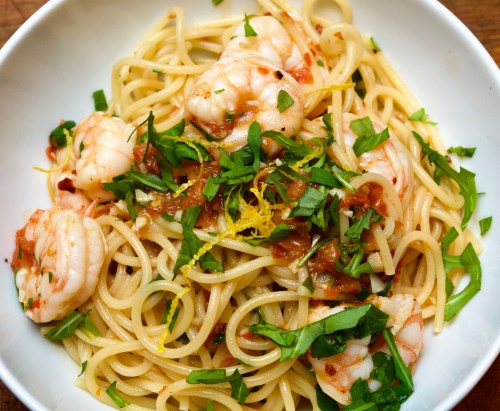
Spaghetti with Prawns & Rocket

Easy, tasty, prawns, chilli & spaghetti 🙂

Wine Suggestion: A great match was the Biancardi Solo Fiano from Puglia which was aromatic, floral and vibrantly fresh.

Spaghetti con gamberetti e rucola – serves 4

  • 400g dried spaghetti
  • extra virgin olive oil
  • 2 cloves of garlic, peeled and finely chopped
  • 1 to 2 dried chillies, crumbled (or you could use a tsp of chilli flakes)
  • 400g raw prawns (peeled)
  • 1 small wineglass of wine – about 175ml
  • 2 heaped tbsp of sun-dried tomato purée or 6 sun-dried tomatoes blitzed in a blender
  • zest and juice of 1 lemon
  • 2 handfuls of rocket, roughly chopped

Cook the spaghetti in a large pan of salted water according to the pack.

Meanwhile, heat 3 tbsp of olive oil in a large frying pan and add the garlic and chilli.

When the garlic starts to colour, add the prawns and sauté for a minute, then add the wine and tomato purée and simmer for a couple of minutes.

Drain the pasta but reserve a little bit of cooking water.

Toss the spaghetti with the sauce, the lemon juice and half the chopped rocket and season to taste (add a bit of the pasta water at this stage if needed).

Divide between plates and scatter with rocket and lemon zest before serving.

(Original recipe from Jamie’s Italy by Jamie Oliver, Michael Joseph, 2005.)

Read Full Post »

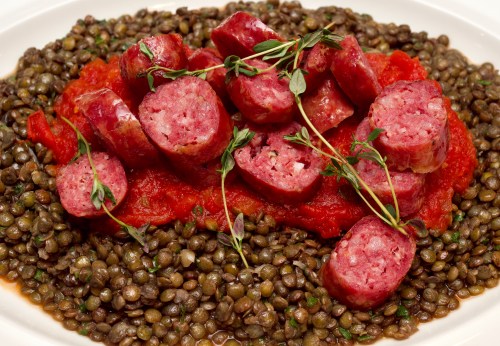
Sausages and green lentils with tomato salsa

Italian-style comfort food with honest, rustic flavours. Generous portions of deliciousness and tastes even better on the second day. Do seek out proper Italian sausages if you can – some of them are gluten-free as well for our coeliac friends.

Wine Suggestion: playing on the rustic theme works well by looking for an earthy wine match, you also need a bit of acidity which you can often find in Italian wines. We’ve successfully tried some cheaper Rosso Conero from the Marche made from Montepulciano and simple Chianti made from Sangiovese. Alternately the Insoglio del Cinghiale from the Maremma steps it up a notch, and then a step further the Pira Luigi Serralunga Barolo.

Salsicce con lenticchie verdi e salsa de pomodoro – serves 4

  • 8 good-quality Italian sausages
  • 2-3 sprigs of thyme
  • 500g purple-sprouting broccoli or cima di rapa
  • juice of ½ a lemon

FOR THE SALSA ROSSA:

  • 1 small red onion, peeled and finely chopped
  • 3 garlic cloves, peeled and finely sliced
  • 1 small stick of cinnamon
  • 1-2 small dried red chillies, crumbled
  • 2-3 tbsp red wine vinegar
  • 2 x 400g tins of plum tomatoes

FOR THE LENTILS:

  • 400g Puy lentils or lentichhie di Castelluccio
  • 2 cloves of garlic, peeled
  • a handful of flat-leaf parsley, leaves chopped and stalks reserved
  • red wine vinegar or sherry vinegar
  • a small handful of thyme tips

Preheat the oven to 200C/400F/Gas 6.

Start with the salsa by heating some oil in a saucepan and cooking the onion, garlic, cinnamon stick and chilli over a gentle heat for about 10 minutes or until the onions are soft. Turn up the heat and add the red wine vinegar, then turn the heat to low and add the tinned tomatoes (chop them up with you hands or with a wooden spoon). Simmer the sauce slowly for about half an hour while you cook the lentils.

Put the lentils into a large pot, cover with water and add the whole cloves of garlic, the bay leaf and the parsley stalks (tied together so they’re easy to remove at the end). Simmer for about 20 minutes, checking to make sure the liquid still covers the lentils. Check regularly near the end of the cooking time to make sure they don’t overcook.

Toss the sausages in a small bit of olive oil and bake in a roasting tray for about 25 minutes until golden.

When the sausages are cooked either boil or steam the broccoli until cooked, then drain and toss with some lemon juice, good olive oil and seasoning.

Fish the parsley stalks and bay leaves out of the cooked lentils and pour off most of the water. Mash the garlic cloves with a spoon and mix into the lentils with 4 tbsp of good olive oil and 1 to 2 tbsp of vinegar. Stir in the chopped parsley, then mix and season.

Pour away any fat from the sausages and slice thickly.

Remove the cinnamon stick from the salsa and season well.

Put the lentils onto plates, spoon over the salsa and top with the sliced sausages. Sprinkle with the thyme tips and serve with the broccoli.

(Original recipe from Jamie’s Italy by Jamie Oliver, Michael Joseph, 2005.)


Read Full Post »

Potato Pie with Beaufort Cheese

What can we tell you about this pie? Well first of all it doesn’t look remotely like the picture in the book and there were a few moments of panic when the cream started to run out the sides. Despite our wholly inadequate pastry skills and some last minute patching to stop the leaks, it tasted pretty good and didn’t look half as bad when it came out of the oven as it did going in. If you have a similar leak we advise remaining calm and sticking some pastry over the hole – pronto!

If you have trouble finding Beaufort,  Gruyere is a good substitute. Serve with a green salad.

Wine Suggestion:  an oaked white with a good freshness and texture is the best match for both the cheese and pastry. If you can find a white from Jura or Savoie you’re in for a treat but otherwise there are plenty of options. For something a little different we tried both the Sartarelli Balciana Verdicchio from the Marche in Italy and the Soalheiro Alvarinho Reserva from the Melgaço in Portugal and had a great match with both.

Potato pie with Beaufort cheese – serves 4 

  • 500g medium-sized waxy potatoes – we used Charlotte
  • 100ml double cream
  • 2 cloves of garlic, lightly bruised
  • 25g-30g butter
  • 375g ready-made puff pastry in 2 sheets
  • 75g Beaufort cheese, very thinly sliced (a vegetable peeler works well)
  • ½ tsp thyme leaves
  • 1 egg beaten, to glaze

Preheat the oven to 200C/Fan 180C/Gas 6.

Steam the potatoes until tender, then cool and peel. Slice moderately thickly and set aside.

Put the cream into a small saucepan with the garlic and bring to the boil, then take off the heat, cover and leave to infuse.

Lightly smear a baking sheet with some of the butter. Roll out 1 pastry sheet thinly (about 2-3mm) and lay onto the baking sheet. Mark a circle on the pastry about 20cm in diameter. Cover the circle with half of the potatoes, arranging in a slightly overlapping layer. Season with salt and pepper then cover with half the cheese and thyme leaves, adding a few flecks of butter. Repeat these layers, then brush the pastry edges with beaten egg.

Roll out the other sheet and place over the filling. Clamp down the edges with your fingers and either trim to a round or if it’s easier fold in the extra pastry to create a thicker edge.

Brush the pastry all over with the egg and decorate with a fork (the decorating was beyond us and may have caused the hole so skip this step if you like). Make a hole in the centre of the pie about 5mm in diameter. Remove the garlic from the cream, then slowly pour into the pie using a small funnel. Do this slowly and allow the cream to settle before adding more. Stop when no more will fit – you might have a bit left over.

Put the pie into the oven and bake for 20 minutes, then turn the oven down to 180C/Fan 160C/Gas 4. Continue to bake for a further 20 minutes – cover loosely with foil if the pastry browns too quickly.

Remove from the oven and allow to stand for 10 minutes before serving in wedges with some dressed salad leaves.

(Original recipe from The Vegetarian Option by Simon Hopkinson, Quadrille Publishing Ltd, 2012.)

Read Full Post »

Roast drumsticks with parsley and garlic

The title is a little bit deceptive as you don’t actually need to put these in the oven. They are very cheap and tasty and especially good with some potatoes and green veg. We’ve given the recipe to feed four people but we used just four drumsticks to feed two and scaled down the extra bits slightly and it worked perfectly.

Wine Suggestion: We had a simple, unoaked Viura (the grape used in white Rioja) from Castilla in Spain and the flinty texture and balance between fruit, freshness and a lighter body worked even better than we hoped.

Roast chicken drumsticks with parsley & garlic – serves 4

  • 1 tbsp olive oil
  • 4 tbsp butter
  • 12-16 chicken drumsticks
  • 3 garlic cloves, finely chopped
  • 2 tbsp parsley, chopped
  • 1 tbsp lemon juice

Season the drumsticks generously with salt and pepper.

Heat a large, heavy-based casserole with a lid or a frying pan over a medium heat. Add the oil and half the butter. When the butter is foaming, add the drumsticks, and fry until browned all over.

Cover the pan with a lid and continue to fry gently for 20-25 minutes, turning often. Remove the lid and add the rest of the butter, the garlic, parsley and lemon juice. Remove the pan from the heat and rest for a few minutes before serving.

(Original recipe by Paul & Jeanne Rankin IN: BBC Good Food Magazine, March 2014.)

Read Full Post »

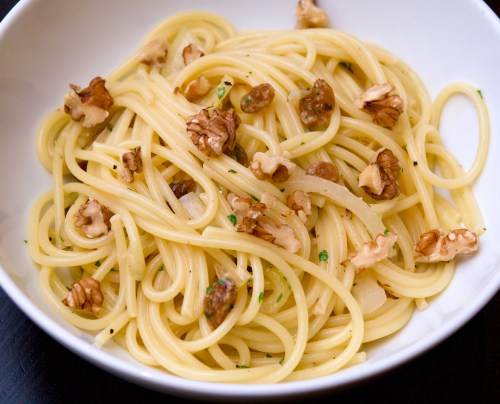
Spaghetti with walnuts, raisins & parsley

A simple weeknight dish with very few ingredients. Typical of the type of dish we have at the end of the week when we’re determined to use what we’ve got without having to return to the shops.

Spaghetti with Walnuts, Raisins & Parsley – serves 4

  • 300g spaghetti
  • 2 tbsp olive oil
  • 2 onions, sliced
  • 5 tbsp raisins or sultanas
  • 250ml chicken or vegetable stock
  • 50g parmesan, grated
  • 5 tbsp chopped walnuts
  • small bunch flat-leaf parsley, finely chopped

Cook the pasta in boiling salted water according to the pack.

Meanwhile, heat the oil in a frying pan and cook the onions for 8 to 10 minutes or until soft and golden brown. Add the raisins and stock and cook for a few minutes until hot through. Toss with the pasta, Parmesan, walnuts and parsley.

(Original recipe from BBC Good Food)

Read Full Post »

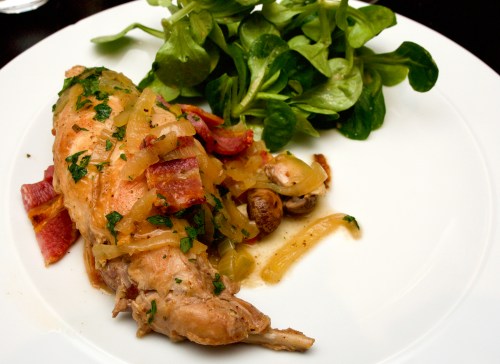
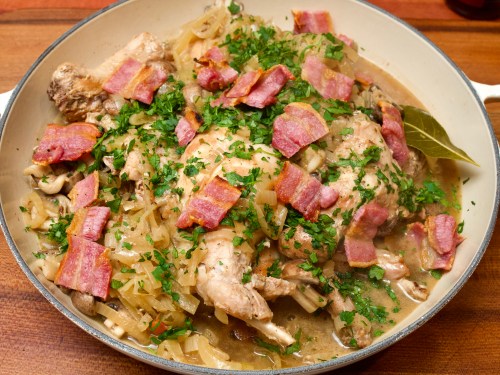
Rabbit with onions and rosemary

A rustic French dish with meltingly tender rabbit. Serve with the lamb’s lettuce salad (included in the recipe) and some roasted baby potatoes.

Wine Suggestion: This goes great with with a nice Cabernet Franc from the Loire, like a Saumur or Chinon if the weather is bright and warming up for Spring. Alternately we love the richer, more velvety wines of La Clape in the Languedoc if it’s a cooler Winter day.

Rabbit with onions & rosemary – serves 6

  • 2kg rabbit portions
  • 1 tbsp plain flour
  • 4 tbsp olive oil
  • 4 large onions, sliced
  • 2 bay leaves
  • 1 tbsp chopped rosemary
  • 600ml white wine
  • 425ml chicken stock
  • 200g chestnut mushrooms, halved
  • 6 rashers streaky bacon, thinly sliced
  • chopped parsley to serve

FOR THE LAMB’S LETTUCE SALAD:

  • 140g lamb’s lettuce
  • 1 shallot, finely chopped
  • 1 tbsp red wine vinegar
  • 1 tsp Dijon mustard
  • 2 tbsp olive oil

Season the rabbit joints on both sides and sprinkle lightly with flour.

Heat 3 tbsp of the oil in a large heavy pan, then quickly fry the rabbit in batches over a high heat to brown all over. Remove from the pan and set aside.

Add the rest of the oil to the pan and fry the onions over a medium-high heat for about 10 minutes or until browned. Return the rabbit to the pan with the bay, rosemary, wine and stock. Cover and cook for 50-60 minutes or until the rabbit is soft.

Add the mushrooms and cook for another 10 minutes, then taste and season.

Meanwhile, grill the bacon until crispy, then break into chunks. Sprinkle the rabbit with the bacon and parsley before serving.

To make the salad: 

Tip the lettuce leaves into a large bowl. Mix the shallot, vinegar & mustard, then set aside for 10 minutes. Add some salt and pepper, then gradually whisk in the oil until the dressing has thickened. Toss with the lettuce just before serving.

(Original recipe by Mary Cadogan IN: BBC Good Food Magazine, March 2008.)

Rabbit w onions & rosemary


Read Full Post »

Chianti-baked Meatballs

These smell delicious even before they go into the oven. Serve with top-quality pasta like our favourite, Martelli from Panzano in Tuscany, or potatoes roasted with rosemary.

Wine Suggestion: naturally this goes with Chianti, but feel free to adventure a bit further if you like as a good Brunello with a bit of age will make this feel a bit special despite the humble ingredients. Don’t use your best wine in the sauce though; we used a nice, but inexpensive Bordeaux which had good fruit and tannin.

Chianti-baked Meatballs – serves 4

FOR THE MEATBALLS:

  • 500g beef mince
  • 1 onion, very finely chopped
  • 2 cloves of garlic, crushed
  • 50g black olives, stoned and chopped
  • 50g fresh breadcrumbs
  • 25g Parmesan, finely grated
  • 1 egg, lightly beaten
  • 1 tsp paprika
  • 1 long red chilli, deseeded and finely chopped
  • 2-3 tbsp chopped parsley

FOR THE SAUCE:

  • 2 tbsp olive oil
  • 250ml Chianti (or other red wine)
  • 2 x 400g tins chopped tomatoes
  • 2 tsp caster sugar
  • a large handful of basil, chopped

Heat the oven to 220C/Fan 200C/Gas 7.

Mix all the meatball ingredients together in a large bowl – the easiest way is to use clean hands. When everything is mixed together really well, wet your hands and roll into small or large meatballs (aim for 12 large meatballs or 20 small ones).

Gently toss the meatballs in 2tbsp of olive oil in an ovenproof shallow casserole or roasting tray. Try to find one that is just big enough to fit the meatballs but not so they are squashed together.

Bake the meatballs for 10 minutes, then pour over the wine and turn the meatballs over to make sure they are coated. Return to the oven for another 10 minutes. Stir in the tomatoes, sugar and basil, then cook for another 20-25 minutes or until bubbling and thickened.

Serve with pasta or roast potatoes with rosemary.

(Original recipe by Jo Pratt in BBC Olive Magazine, March 2007.)

Read Full Post »

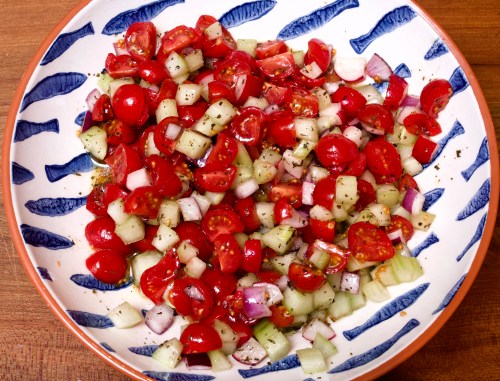
Shirazi salad

This Iranian salad works really well with rich, spicy stews and middle eastern dishes. Try and cut everything the same size so that you get a bit of everything in each bite.

Salad Shirazi – serves 4 as a side dish

  • 300g Middle Eastern or regular cucumber
  • 300g tomatoes, halved and seeds removed
  • ½ red onion
  • 4 radishes

FOR THE DRESSING:

  • 1 tsp dried mint
  • 3 tbsp extra-virgin olive oil
  • 3 tbsp lemon juice
  • ½ tsp sea salt
  • ½ tsp black pepper

If you are using small Middle Eastern (Lebanese) cucumbers, then half them lengthways. If using a regular cucumber, peel, half and scoop out the seeds with a teaspoon.

Finely dice the cucumber and tomato into ½ cm cubes. Cut the red onion and radishes into similar sized pieces and tip everything into a large salad bowl.

Whisk the dressing ingredients together, then pour over the salad and mix well. Serve immediately.

(Original recipe from The Saffron Tales by Yasmin Khan, Bloomsbury, 2016.)

Read Full Post »

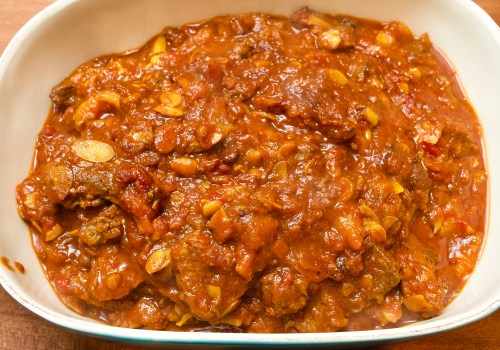
Lamb Tagine

An easy casserole with North African spices and fruit. Suitable for cold nights in as well as entertaining good friends –  which we have been doing lots of due to snow days. Serve with plain couscous or with Golden Couscous and Shirazi salad.

Wine Suggestion: A guest brought over a Roda Sela from Rioja, which had juicy red fruit flavours to complement the spices and a polished, refined finish.

Lamb Tagine – serves 6

  • 1 tbsp ground ginger
  • 1-2 tsp coarsely ground black pepper
  • 2 tsp ground cinnamon
  • 1 tbsp turmeric
  • 1 ½ tbsp paprika
  • ½ tsp chilli powder
  • 1.1kg cubed boneless lamb
  • 450g onions
  • 3 big cloves of garlic
  • ½ tsp salt
  • 5 tbsp olive oil
  • 175g ready-to-eat dried apricots
  • 50g sultanas
  • 85g toasted flaked almonds
  • 1 tbsp honey
  • 300ml tomato juice
  • 400g tin chopped tomatoes
  • 300ml hot lamb stock
  • fresh coriander, to serve
  • couscous, to serve

Preheat the oven to 170C/Fan 150C/Gas 3.

Mix the spices together in a small bowl.

Put the lamb into a large mixing bowl, then tip in the spices and mix well with your hands.

Peel and grate the onions (you might like to use a food processor if you have one to save your eyes). Peel and chop the garlic, then crush with the salt using the back of your knife.

Put a large frying pan over a high heat and add a tablespoon of oil. When the oil is hot, add a quarter of the lamb cubes and cook until browned all over. Remove with a slotted spoon into a large casserole dish. Brown the rest of the lamb in batches, adding another tablespoon of the oil each time.

When the meat is all browned, turn the heat down to low and add the last tablespoon of oil, then stir in the onions and garlic. Cook for about 10 minutes or until softened but not browned.

Add the lamb stock to the onions and stir to scrape any crusty bits from the bottom of the pan. Pour the onions and stock over the lamb, then add the remaining ingredients. Bring the casserole to the boil, then cover and cook in the oven for 2 hours or until the lamb is completely tender.

(Original recipe by Antony Worrall Thompson in BBC Good Food Magazine, January 2001.)

Read Full Post »

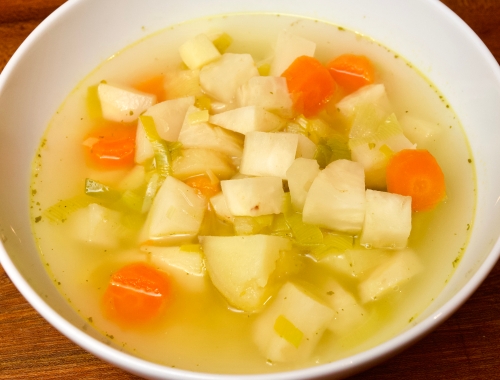
Winter root vegetable soup

So here we are almost March and we are experiencing an artic blast. The snow is piled up at the back door and Dubliners have been advised to stay indoors tomorrow as more is on the way. Soup seems like our only defence. Nothing fancy here but full of fresh vegetable flavours. It will protect you against almost all weather eventualities, or at least both fill and warm you up.

Winter Root Vegetable Soup – serves 6 to 8

  • 1 tbsp butter
  • 1 onion, chopped
  • 1 leek, sliced
  • 2 potatoes, peeled and chopped
  • 2 litres vegetable stock
  • 2 carrots, chopped
  • 1 parsnip, chopped
  • 1 small celeriac, peeled and chopped

Melt the butter in a large pot over a medium to high heat. As soon as it has melted and started to froth, add the onion, leek and potatoes. Sauté for a couple of minutes, then cover and sweat over a low heat for 8 minutes.

Add the stock, the rest of the vegetables and some salt and pepper (white pepper would be our preference), then lower the heat and simmer for about 20 minutes, partially covered. Taste the vegetables to check that they are completely soft, then check the seasoning before serving.

(Original recipe from Fresh by Donal Skeehan, Hodder & Stoughton, 2015.)

Read Full Post »

« Newer Posts - Older Posts »