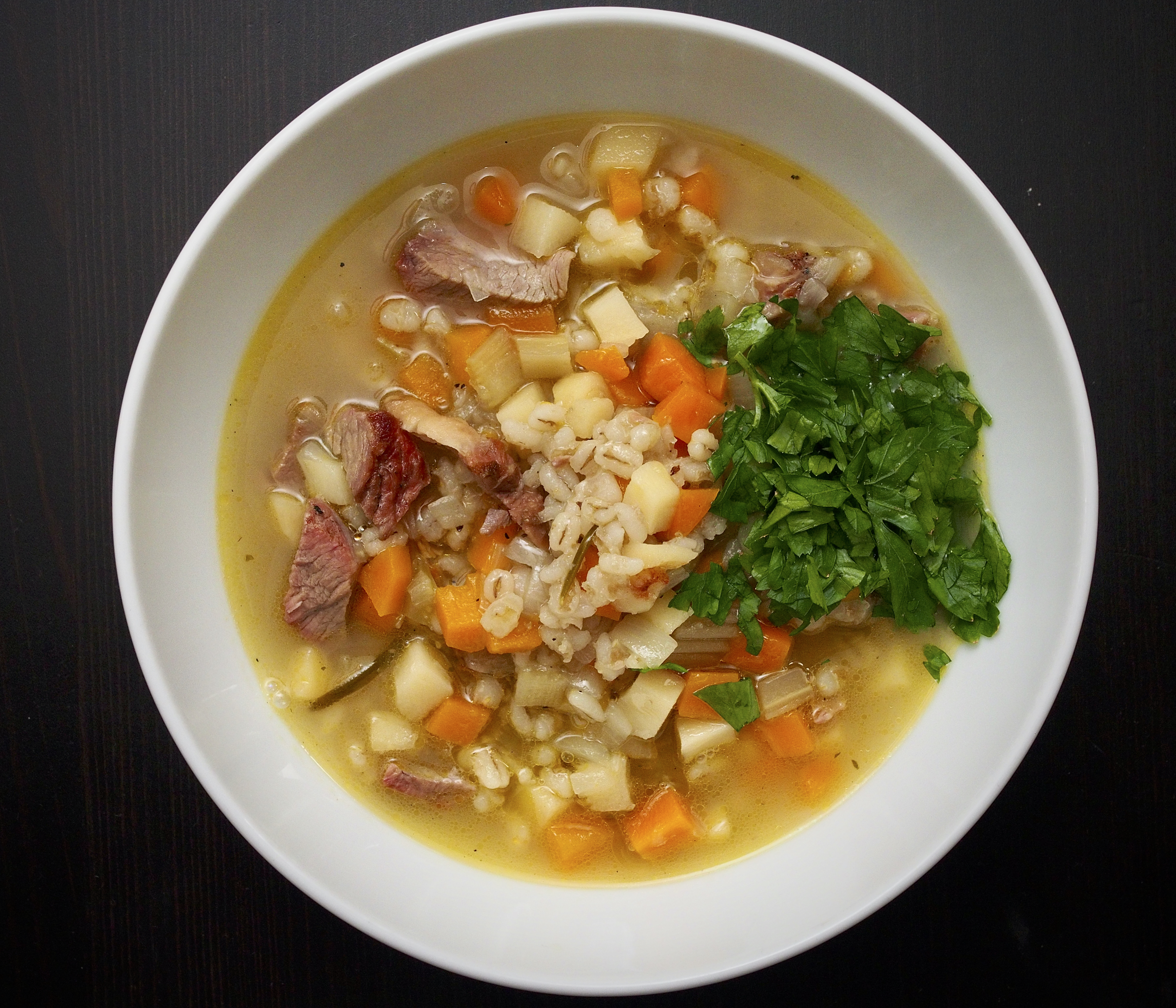
A delicious soup for leftover roast lamb and perfect for chilly weather.
Lamb & pearl barley broth – serves 6-8
25g butter
2 tbsp extra virgin olive oil
2 medium onions, finely chopped
2 celery sticks, finely chopped
2 cloves of garlic, finely grated
1 bay leaf
a sprig of rosemary
200g leftover cooked lamb, sliced or shredded
1 medium parsnip, peeled and finely chopped
2 medium carrots, peeled and finely chopped
100g pearl barley
1.25 litres of chicken stock
2 tbsp chopped parsley
Put the butter and oil into a large saucepan over a medium heat. When the butter is foaming, add the onions, celery, bay leaf and rosemary. Season with salt and pepper, then turn the heat to low, cover and cook gently for 10 minutes, or until softened.
Add the lamb, chopped parsnip and carrot, the pearl barley and the stock. Turn the heat up and bring to the boil. Cover and simmer for 25-30 minutes or until the barley and vegetables are tender.
Remove and discard the bay and rosemary. Stir in the chopped parsley, season to taste, and serve.
(Original recipe from Soup Broth Bread by Rachel Allen, Michael Joseph, 2021.)
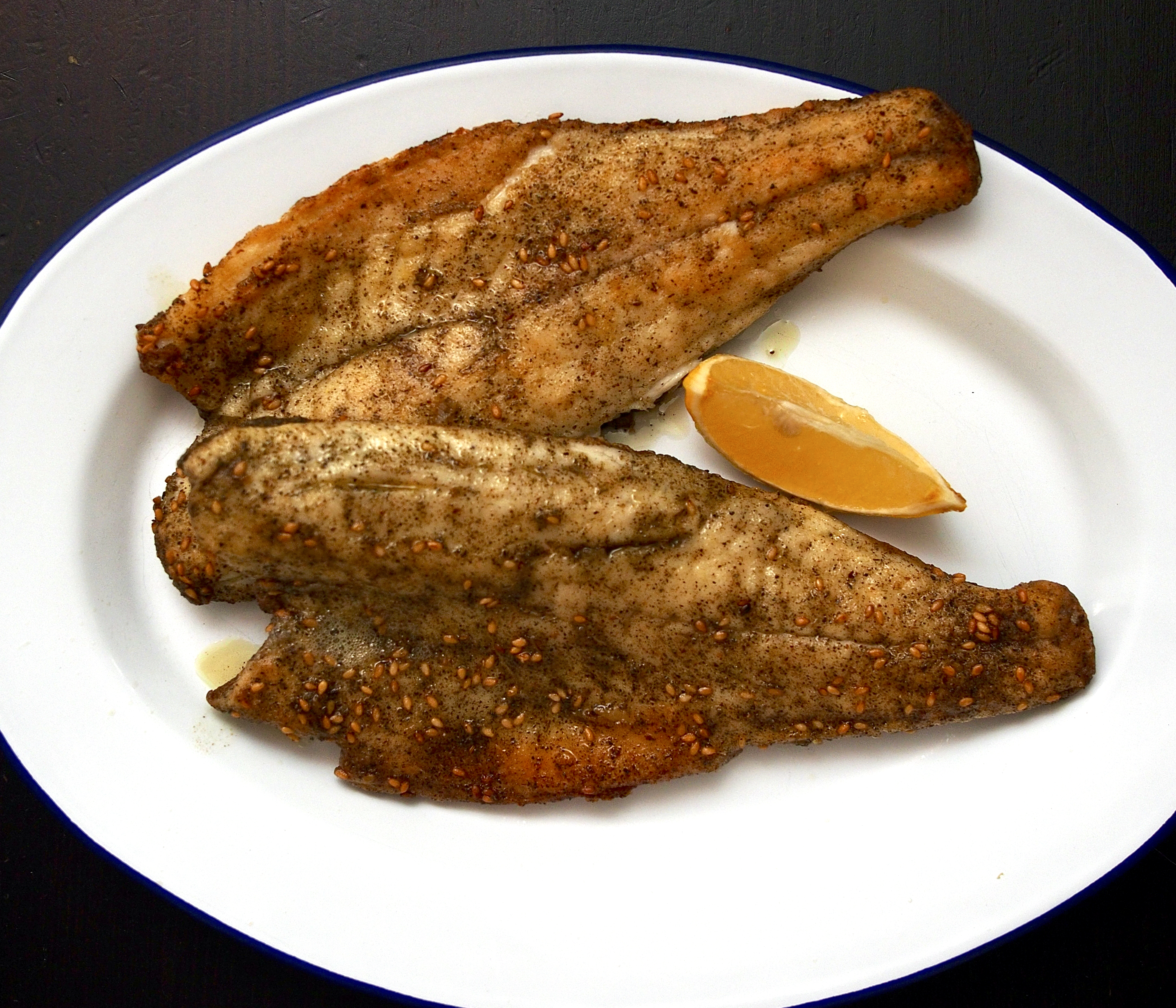
We’re loving all the simple and delicious recipes from Sabrina Ghayour’s new book, Persiana Everyday. This fish takes minutes to make and tastes amazing. We served with some sautéed potatoes and salad.
Wine Suggestion: A richer, rounder white like the Edetària “via Edetana” Blanc which combines old-vine Garnaxta Blanca with Viognier. Elegant and complex with honeysuckle, peach, tangerine and toasted nut aromas and flavours. The stonefruit flavours, in particular, seem to work with the earthy za’atar in a superb way.
Za’atar Sea Bass – serves 2
1 heaped tbsp za’atar
1 tbsp plain flour
veg oil, for frying
2 skin-on sea bass fillets
lemon wedges, to serve
Mix the za’atar, flour and plenty of seasoning in a shallow dish.
Coat the fish fillets in the seasoned flour, turn them over a few times.
Put a frying pan over a medium-high heat and drizzle in enough oil to coat the base. When the oil is hot, put the sea bass fillets into the pan, skin-side down, and cook for 1-2 minutes until the skin is crispy. Turn the fish over and cook for another minute on the other side – they should be just cooked. Serve straight away with the lemon wedges to squeeze over.
(Original recipe from Persiana Everyday by Sabrina Ghayour, Aster, 2022.)
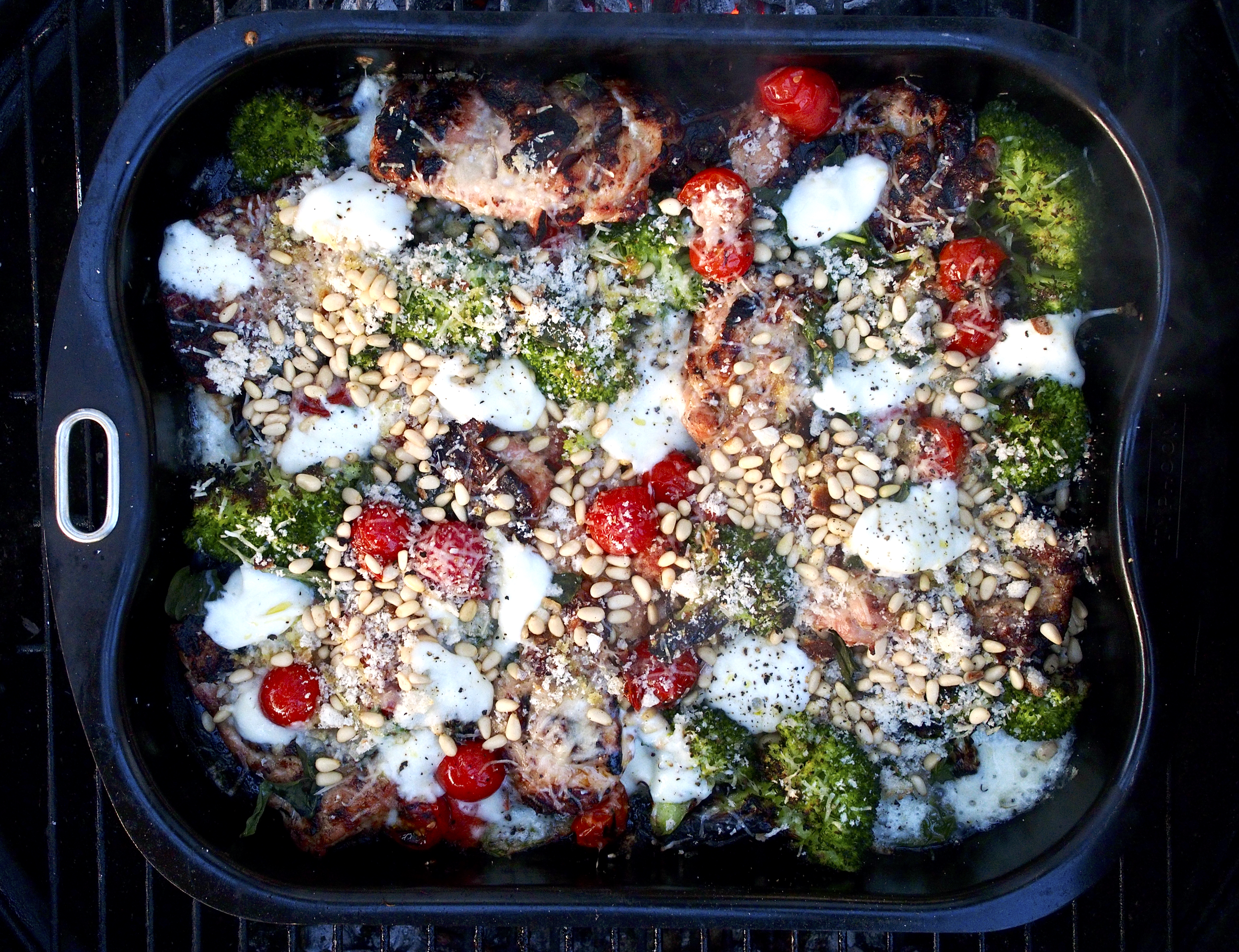
This is a totally different barbecue recipe from Geniveive Taylor’s fantastic new barbecue book – Seared. The buttermilk makes the chicken super tender, so it’s worth marinating it the day before if you can.
Wine Suggestion: A round, fresh white was in order here with a bit of body to stand up to the barbecued flavours, so we chose an oaked Rioja for something a bit different. A bargain in any language, the Urbina Blanco Crianza 2014, yes that is correct … 8 years old, is released when ready and despite its age is fresh and vibrant, with layers of tertiary development, butter, toast and nuttiness alongside the melon, cirtus and jasmine flavours. It reminded us of a complex white Burgundy.
Slash the chicken thighs with a sharp knife taking care not to cut the whole way through. Place in a shallow dish in a single layer.
Mix the buttermilk, garlic, mustard and sugar together with plenty of salt and black pepper. Pour over the chicken and toss to coat. Cover and refrigerate for up to 24 hours.
Light your barbecue for direct and indirect cooking (half with coals and half without).
While the barbecue is getting hot, blanch the broccoli in lots of boiling salty water for a couple of minutes. Drain well and toss with the olive oil and some seasoning. Set aside.
Cook the chicken thighs over indirect heat for about 30 minutes or until they reach 60-65C inside, turning regularly. Move them a little closer to the fire and keep cooking until they reach 74C.
When the chicken is almost cooked, grill the tomatoes and the broccoli for about 10 minutes over the fire, turning until nicely charred on all sides.
Transfer the chicken, broccoli and tomatoes to a heavy roasting tin. Add the basil and gently toss to mix. Sprinkle over the Parmesan, breadcrumbs and pine nuts. Top with mozzarella adn drizzle over a little olive oil and some salt and pepper. Set the tin directly over the fire for 15 minutes to melt the cheese.
Serve with crusty bread or some baby roasted potatoes.
(Original recipe from Seared by Genevieve Taylor, Quadrille, 2022.)
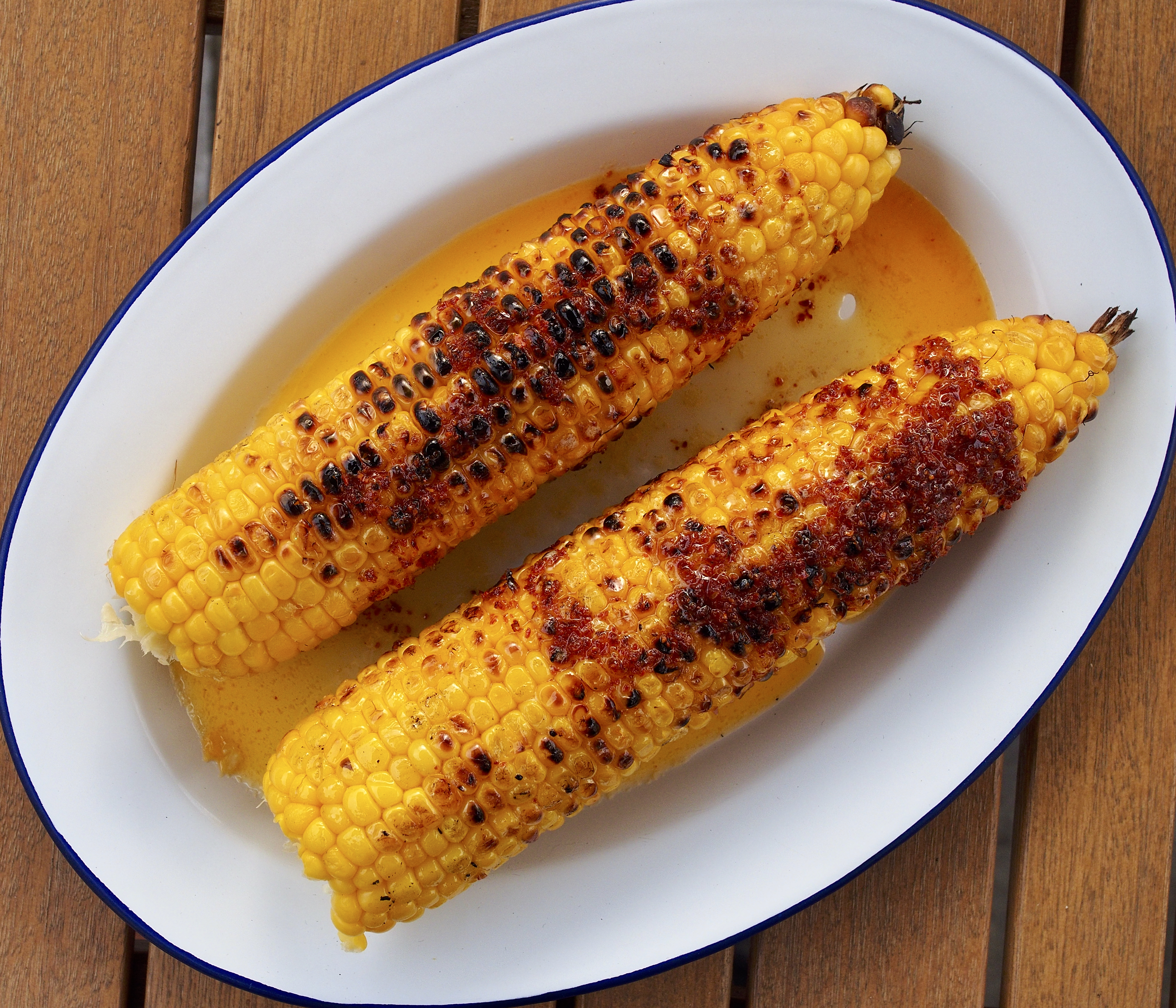
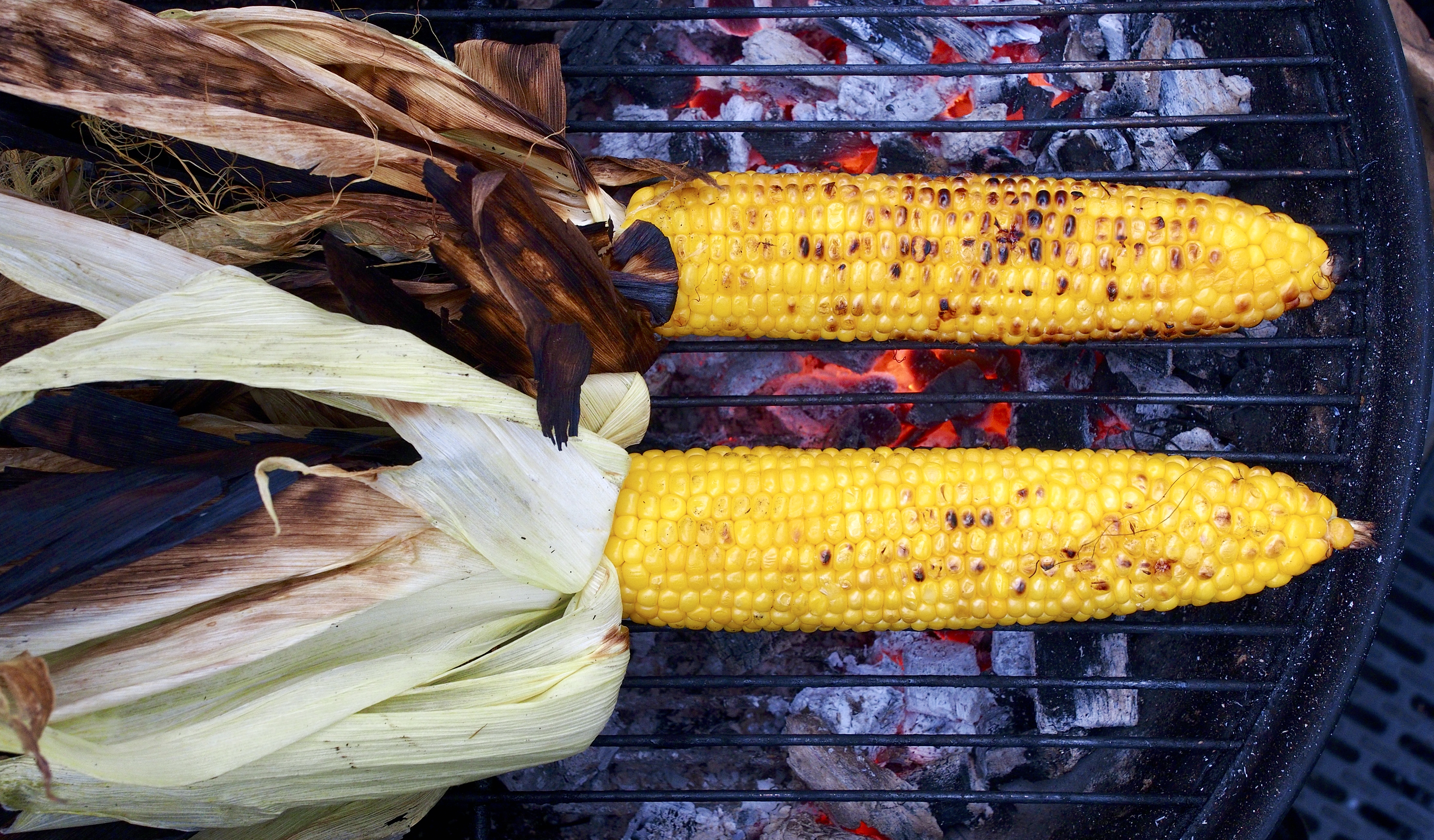
Fresh corn is in the shops and it’s delicious cooked in the husks over a charcoal barbecue.
BBQ Corn on the Cob with Chilli Butter – serves 4 to 6
2 corn cobs in the husks
40g salted butter
½ tbsp honey
½ tbsp urfa chilli flakes (we didn’t have urfa so used Aleppo pepper but you could also use smoked or regular paprika)
Put the whole corn cobs in their husks over a medium hot barbecue. Rotate them every 3-4 minutes until really charred – about 15 minutes in total.
Meanwhile, melt the butter in a small frying pan until starts to foam. Remove from the heat, add the honey and urfa chilli and mix well.
Take the corn cobs off the heat and leave aside for 10 minutes, then pull back the burnt husk and return to a high heat for a minute or two the char some of the flesh.
Return the pan with the butter to the heat to foam the butter again, then serve the corn cobs with the butter drizzled over.
(Original recipe from Chasing Smoked: Cooking Over Fire Around the Levant by Sarit Packer and Itamar Srulovich, Pavilion, 2021.)
Easy and full of veg. Great for a weeknight, and if your kid is like ours they will eat anything with pasta and cheese!
Wine Suggestion: keep it simple with a juicy red from a warmer climate. The Cline Family Cellars have star with their Old Vine Lodi Zinfandel which has a joyful balance between vibrant and complex red and black fruit, velvety tannins and a easy drinkability.
Veggie Pasta Bake – serves 4
1 red pepper, cut into bite-size pieces
1 yellow pepper, cut into bite-size pieces
1 aubergine, finely chopped
1 courgette, finely chopped
1 red onion, sliced
3 tbsp olive oil
150g cherry tomatoes, halved
400g tin chopped tomatoes
2 cloves of garlic, crushed
a handful of roughly chopped basil
300g pasta – we used fusilli
150g mozzarella ball, drained and finely chopped (you don’t need the expensive buffalo stuff for this)
2 tbsp pesto
a handful of grated Parmesan cheese
Heat the oven to 190C/170C Fan/Gas 5.
Put the peppers, aubergine, courgettes and onion into a large roasting tin and toss in the oil. Season well with salt and pepper, then cook in the oven for 45 minutes, turning a couple of times, until the vegetables are soft and golden brown.
Add the cherry tomatoes, tinned tomatoes, garlic and basil and return to the oven for a further 10-15 minutes.
Meanwhile, cook the pasta in lots of boiling salty water. Add 4-6 tbsp of the pasta cooking water to the cooked vegetables to make it a bit more saucy.
Drain the pasta and tip into the roasting tin with the veg. Add the mozzarella and pesto and stir well to combine. Top with the Parmesan and return to the oven for a final 10 minutes to melt the cheese.
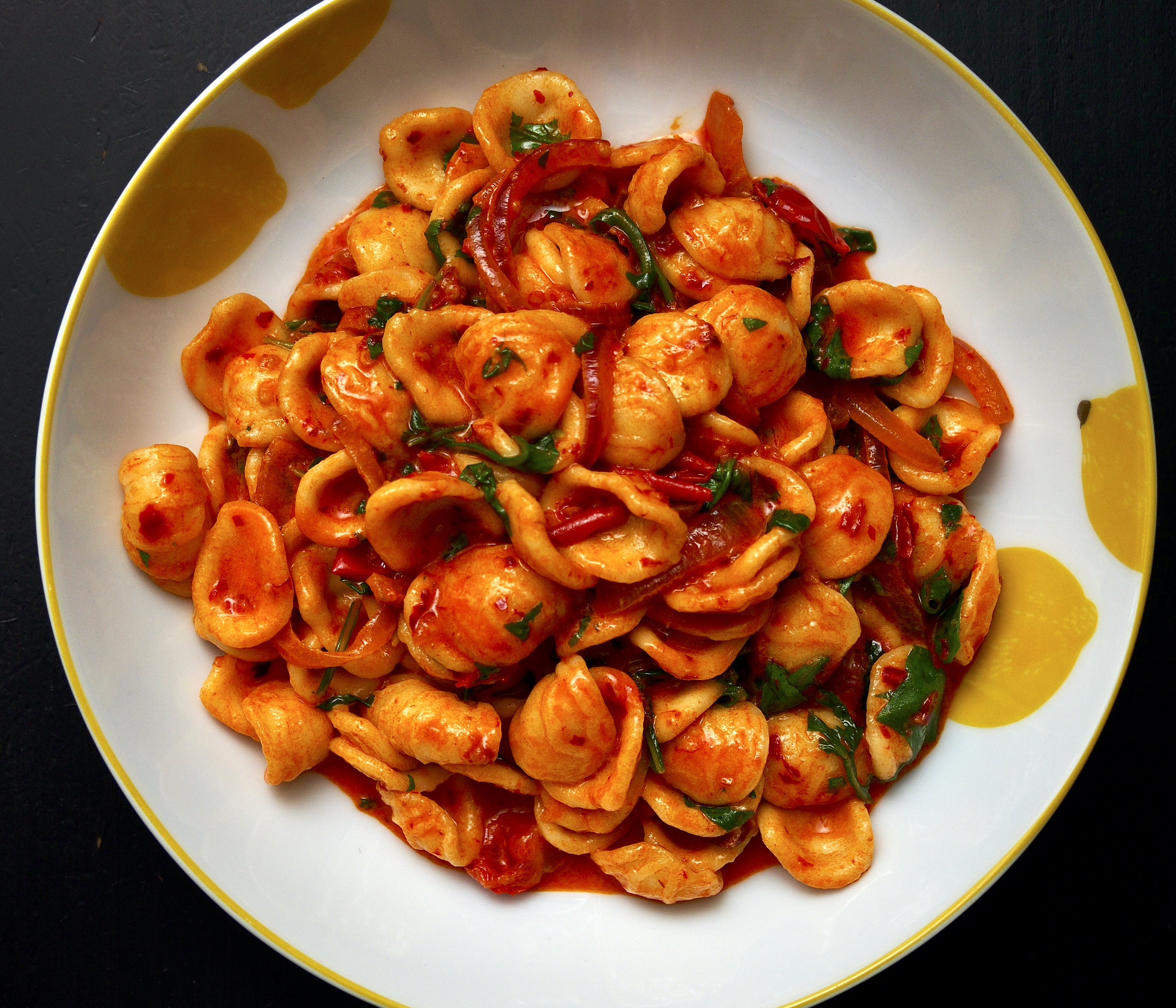
If you have a little leftover ‘nduja, then this is the dish for you!! It makes a delicous main for two, or starter for 4. Masterminded by Jacob Kenedy of Bocca di Lupo.
Wine Suggestion: This dish needs a medium bodied red fruited wine with a lick of acidity like the Morisfarms Mandriolo from the Tuscan coast. Fruit-forward cherry and raspberry flavours which come from the Sangiovese which is tied together with a touch of Cabernet and Petit Verdot.
Orecchiette with ‘nduja – serves 2 (or 4 as a starter)
200g dried orecchiette (if you can make or get fresh then go for that but dried works pretty good)
1 red onion, sliced
120g cherry tomatoes, quartered
2 tbsp extra virgin olive oil
100g ‘nduja (a bit less will be fine)
50ml white wine
80ml double cream
50g rocket, very roughtly chopped
freshly grated Pecorino Romano, to serve (we used Parmesan – sorry Jacob!)
Get your orecchiette on to boil in lots of very salty water. Start making the sauce when there’s about 10 minutes to go.
Fry the onion and tomatoes over a high heat for about 3 minutes, you want them softened and lightly browned. Add the ‘nduja, break it up and fry for 30 seconds, then add the wine and a small ladleful of water from the pasta pot. Bubble briefly, then add the cream. Taste and season with some salt.
Keep cooking the sauce until thickend and not watery, then add the drained pasta (still a bit wet) and the rocket. Cook until the rocket is wilted and the pasta is coated in the glossy sauce. Serve with grated cheese on top.
(Original recipe from Bocca Cookbook by Jacob Kennedy, Bloomsbury, 2011.)
This recipe is from The Spanish Home Kitchen by José Pizarro who cooks from the heart. It takes a little while to cook but is so simple and delicious. It would also be easy to cook when camping if that matters to you. As José says, this is the comfort dish that his mother would cook … need we say more.
Wine Suggestion: Spanish inspired, but off the beaten track is a Garnacha Blanco from Terra Alta (quite possibly one of the best places in the world for Garnacha of both colours alongside Chateauneuf du Pape … although quite different in style). If you can stretch to an old vine expression like this you’re in for a treat. For us tonight an easier, fresher style with Edetària’s “via Terra” which is charming with layers of fresh stone fruit, nuttiness and salinity. It tastes both of the earth, sunshine and fresh cooling breezes.
Hake with slow-cooked onions and tomato salsa – serves 4
100ml olive oil
3 large onions, finelly sliced
1 bay leaf
150ml white wine
150ml vegetable stock
4 hake fillets (200-250g each)
a handful of basil leaves
FOR THE TOMATO SALSA:
500g ripe tomatoes, finely chopped
½ small red onion, finely chopped
2 tbsp capers, chopped
3 tbsp extra virgin olive oil
Heat the oil in a deep sauté pan with a lid. Add the onions and season well with salt and black pepper, then cook over a medium heat for 10 minutes. Cover with the lid and cook for half an hour until really soft but not coloured.
Meanwhile, mix all of the salsa ingredients together in a bowl, then season well and set aside to mingle.
Add the wines to the onions and bubble for a minute before adding the stock. Simmer, uncovered for 10-12 minutes then seaon the hake fillets and nestle them into the onions. Reduce the heat to medium-low, cover with the lid and leave to cook for 10 minutes. Turn the heat off and rest for 2-3 minutes.
Spoon the salasa over the fish and onions, then scatter the basil over before serving.
(Original recipe from The Spanish Home Kitchen by José Pizarro, Hardie Grant Books, 2022.)
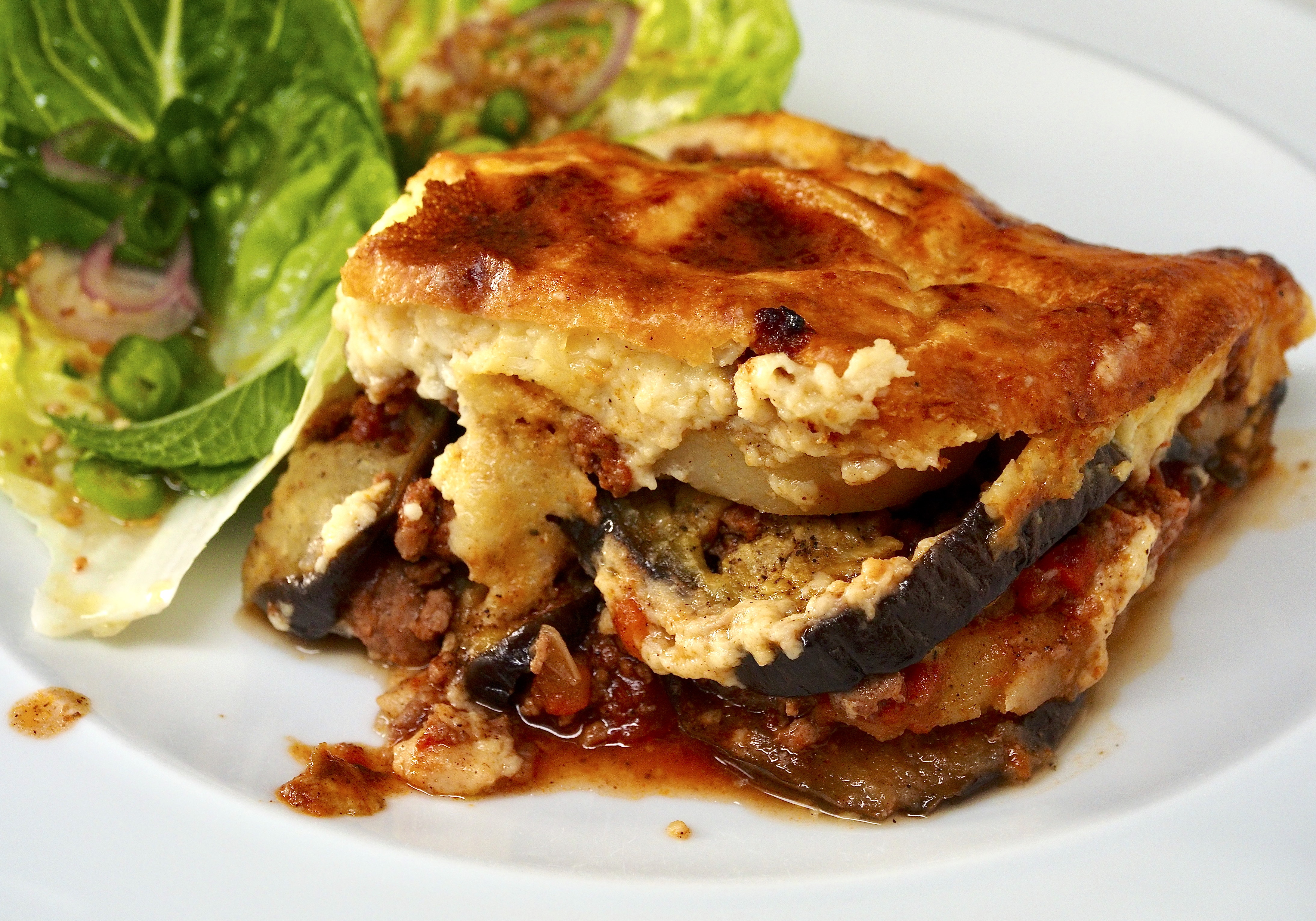
We had a bit of dilemma with this. We cook a moussaka every year and never decide if we like this one or this one best. This year we decided to try another recipe. This is different as it includes potatoes and it has a fluffier top with eggs and no cheese. At first we thought it wasn’t as good as the other two recipes but it was so much improved on the second day that we changed our minds. Perhaps all moussaka is good moussaka. Serve with a green salad.
Wine Suggestion: A Greek red would be nice with this, like a nice Xinomavro or Agiorgitiko. However, without these in the rack we pulled out a Quinta de Chocapalha red from near Lisbon in Portugal. Made from indigenous varietals coming from 16th century vineyards this is both thoroughly modern and excitingly ancient. It has a richness and spice, combined with smooth and deep, dark fruits and thoroughly resolved, silky tannins. Very nice indeed with the Moussaka.
Moussaka – serves 6
2 large aubergines, sliced into rounds
4 potatoes, peeled and sliced
1 large onion, finely chopped
2 cloves of garlic, crushed
750g lamb mince
2 tsp cinnamon
a glass of red wine
600ml passata
75g butter
75g flour
600ml milk
2 eggs
Heat the oven to 190C/fan 170C/gas 5.
Brush the aubergine slices with olive oil and season. Place them on baking trays in a single layer, then bake in the oven for 30-40 minutes, turning over halfway, until tender and golden.
Cook the potatoes in boiling salty water until just tender, then drain well.
Meanwhile, fry the onion in a little oil until soft, then add the garlic and cook for another minute. Add the mince and brown it, breaking it up with a wooden spoon. Add the cinnamon, wine and passata, season and simmer for 30-40 minutes. Bubble off any excess liquid.
Heat the butter in a saucepan, stir in the flour and cook for a few minutes. Gradually add the milk, stirring constantly, until you have a smooth white sauce. Bring it to a simmer, then season and remove from the heat.
Turn the oven down to 180C/fan 160C/gas 4.
Layer the lamb, aubergine and potatoes in a large ovenproof dish. Whisk the eggs into the white sauce, then pour the sauce over the top to cover. Bake for 30-40 minutes or until puffed and golden brown. Leave to rest for 10 minutes before serving.
(Original recipe by Janine Ratcliffe in Olive Magazine, August 2014.)
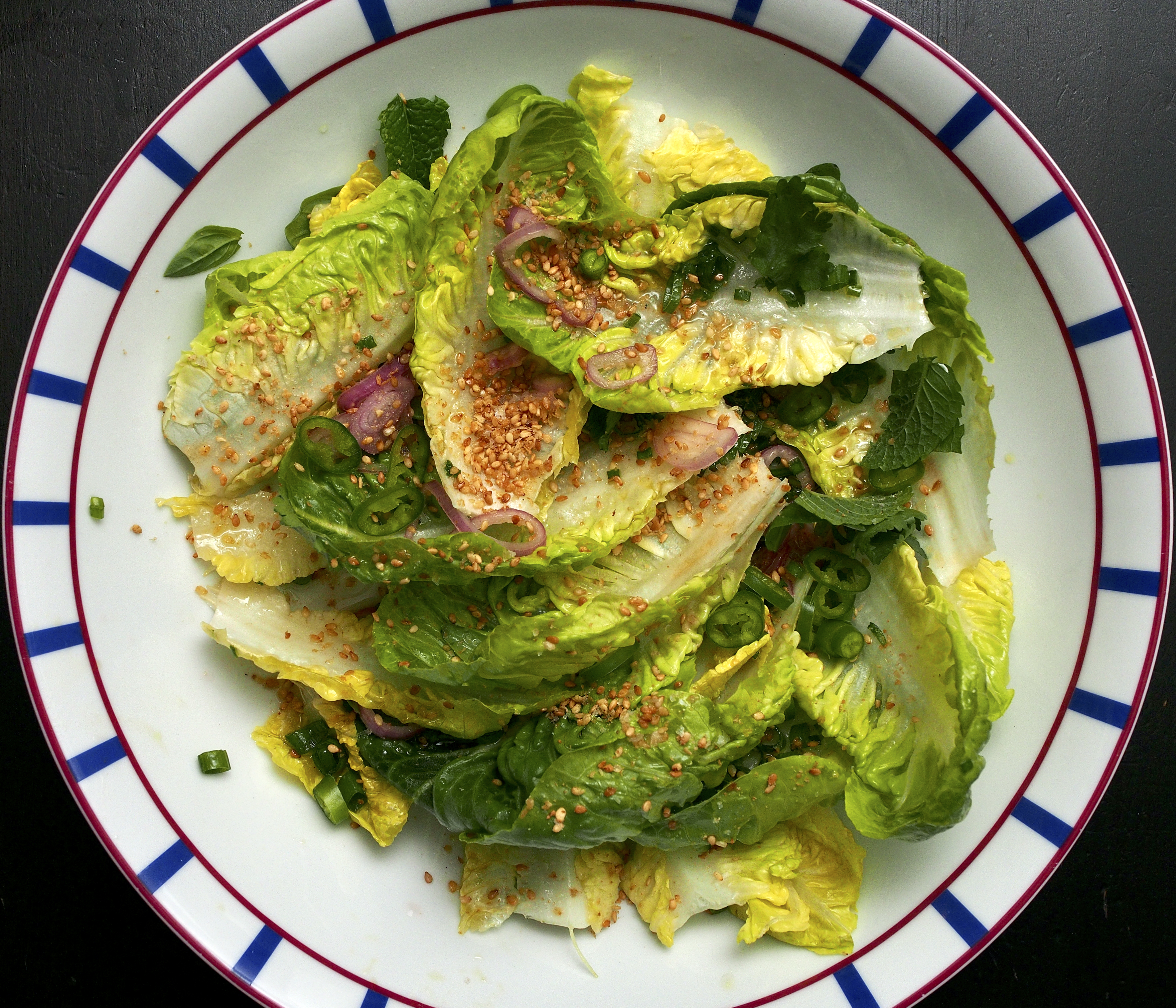
We’re super excited by the dishes in Ixta Belfrage’s new book – Mezcla. We’ve done lots of drooling over the recipes but so far have only managed this green salad – it’s a good one!
Green salad with maple, lime & sesame dressing – serves 4
2 baby gem lettuces, cut off the end and separate the leaves.
10g mixed fresh herbs e.g. coriander, mint & basil
2 green chillies, thinly sliced into rounds (optional)
20g scallions, green parts only, thinly sliced into rounds
2 tsp sesame seeds (you can use black and white if you have them but white alone is fine), well toasted, then lightly crushed and mixed with flaked sea salt
lime wedges, to serve
FOR THE QUICK PICKLED ONIONS:
1 shallot, thinly sliced into rounds
2 tbsp lemon juice
½ tsp caster sugar
¼ tsp fine salt
FOR THE DRESSING:
60g olive oil
½ tsp fine salt
40g lime juice
20g maple syrup
½ tsp toasted sesame oil
5g chives, finely chopped
Put the ingredients for the pickled shallots into a small bowl and stir together. Leave to pickle for 15 minutes or up to an hour but no longer.
Make the dressing by gently mixing all the ingredients, except the chives, together. You don’t want the dressing to emulsify here so just stir to combine.
When ready to serve, stir the chives into the dressing. Put the lettuce and herbs into a large salad bowl and pour over the dressing. Add the pickled shallots, chillies and scallions and toss. Sprinkle over the sesame seeds and serve with extra lime wedges.
(Original recipe from Mezcla by Ixta Belfrage, Ebury Press, 2022.)
This is our favourite salad at the moment – an excellent side dish for a barbecue or whatever else you might be cooking.
Tomato, burrata and broad bean salad – serves 4
500g mixed tomatoes
½ tsp caster sugar
150g broad beans, frozen ones are perfect
a handful each of basil, chives and flat leaf parsley
1 tbsp each of tarragon, lovage and mint (we never have lovage and it’s fine without it)
3 tbsp olive oil
2 tsp Dijon mustard
a pinch of fennel seeds
zest of 1 lemon
1 tbsp red wine vinegar
2 balls of burrata
50g hazlenuts, toasted and roughly chopped (toast them in the oven for 10 minutes at 180C – the skins will rub off easily with a tea towel)
Chop and slice the tomatoes and toss in a bowl with the caster sugar and ½ tsp of salt, then set aside for 30 minutes.
Put the broad beans into boiling water for 2 minutes, then drain and run under cold water. Pop of the skins and set aside.
Finely chop the herbs and put into a bowl. Whisk in the olive oil, mustard, fennel seeds, most of the lemon zest and the red wine vineager. Season, then stir in the broad beans.
Tip the tomatoes out onto a serving platter. Put the burrata balls on top and spoon over the beans and dressing. Garnish with toasted hazelnuts and the leftover lemon zest.
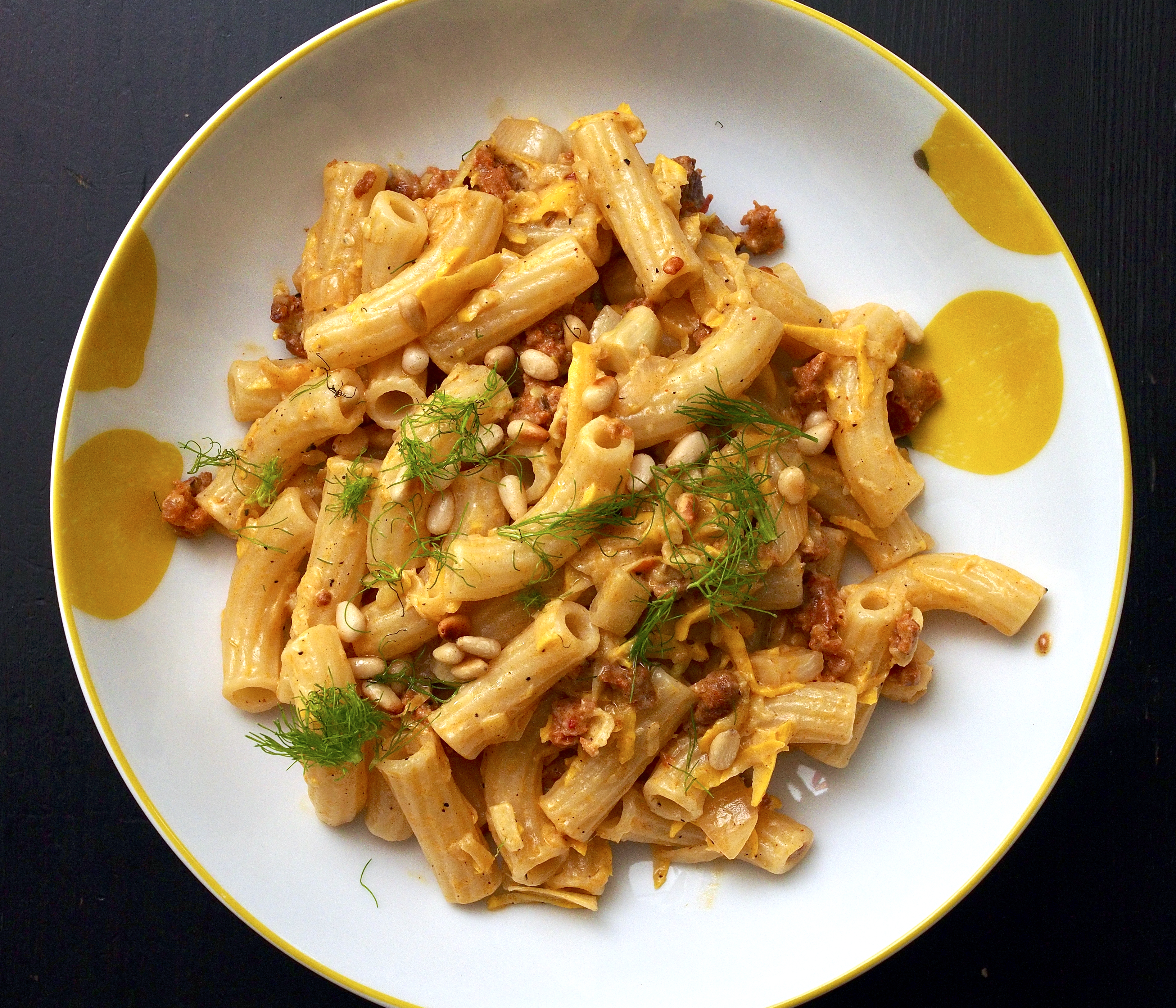
A nice pasta with unusual flavours. Use good-quality Italian sausages for this if you can find them.
Wine Suggestion: As this dish is full-flavoured we’d suggest a full flavoured white like Cline Cellars Sonoma Coast Chardonnay, which has a wonderful Californian ripeness combined with a core of fresh minerality and zing from the cooling breezes and fog coming through the Petaluma Gap each day. The subtle oak gives a lovely texture which helps matching this dish too.
Pasta with fennel, sausage and courgette – serves 4
3 good-quality pork sausages (we like Italian sausages)
1 tsp olive oil
½ small fennel bulb, trim off any green bits and chop finey, reserve any fronds to garnish
½ onion, diced
2 big cloves of garlic, finely chopped
200g rigatoni pasta
zest and juice of a lemon
100g mascarpone
1 medium-large courgete, grated
1 tbsp toasted pine nuts
grated Parmesan (to serve)
Take the skins off the sausages and crumble them into small chunks. Heat the oil in a large frying pan, then fry the sausages until browned and crispy, breaking the lumps up with a wooden spoon. Scoop out with a slotted spoon and set aside.
Add the fennel, onion and garlic to the sausage fat in the pan and cook for about 10 minutes, or until softened but not coloured. You can add a splash of water if it starts to stick.
Bring a large pan of salty water to the boil, add the pasta and cook according to the timings on the pack. Drain but reserve a mugful of the cooking water.
Return the frying pan to the heat and stir in the lemon zest, lemon juice, mascarpone, grated courgette and a splash of pasta cooking water. Bubble for 2 minutes, then stir in the cooked pasta and sausages. Season, then serve garnished with fennel fronds, pine nuts and Parmesan.
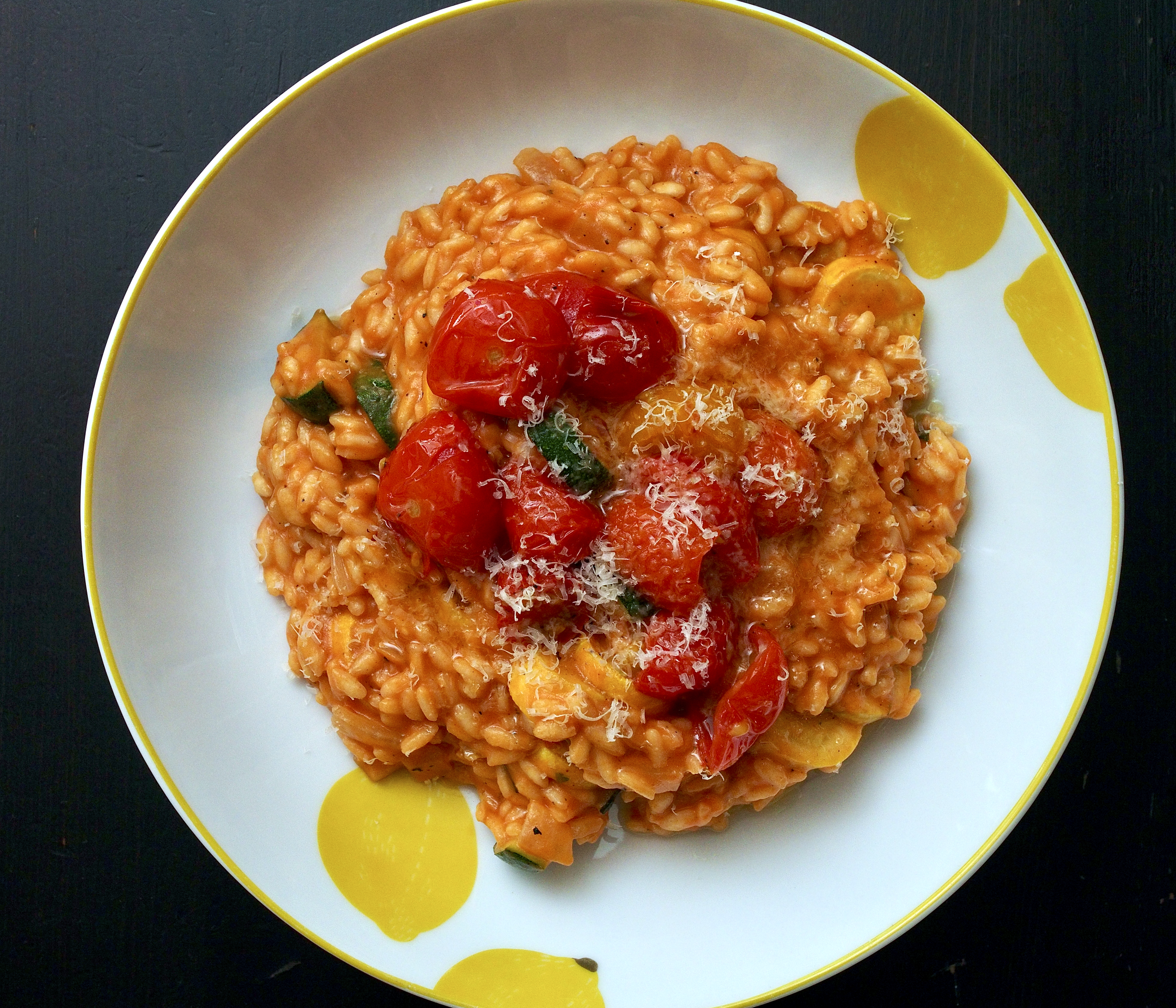
We chose this recipe because it has courgettes in it (and we have loads in the garden) but we’ll definitely be making it again. The method is a little different from usual but the results are lovely, fresh and tasty.
Wine Suggestion: Try to find a white wine with a lemony citrus flavour to bring out the bright flavours of the courgettes. We had a bottle of Karavitakis Assyrtiko “Nomas” from Crete that a friend had given us and it was a summery, lemony delight.
Tomato & Courgette Risotto – serves 2
2 tbsp olive oil
1 small onion, diced
2 cloves of garlic, crushed
½ tsp coriander seeds, crushed
200g risotto rice
500ml vegetable stock
200g carton passata
12 cherry tomatoes, halved
2 courgettes, halved and sliced
2 tbsp mascarpone
grated Parmesan, to serve
Preheat the oven to 200C/180C fan/gas 6.
Heat 1 tbsp of the oil in a large pan over a medium heat. Add the onion and fry for about 5 minutes until softened.
Add the garlic and coriander seeds and cook for another minute, then stir in the rice and stir until coated and glistening.
Gradually add 300ml of the stock, stirring until absorbed each time before adding some more. Stir in the passata, then cover with a lid and cook gently for 10 minutes. Keep giving it a stir every couple of minutes and add more stock as needed.
Meanwhile, put the tomatoes and courgettes into a roasting tin, keeping them at separate ends. Drizzle with the other tbsp of oil, then season and roast for 10-12 minutes until just tender. You might need to scoop out the tomatoes and cook the courgettes a little longer.
Add the mascarpone to the risotto and season generously with salt and black pepper. Keep stirring and cooking for about 5 minutes more or until the rice is cooked. Add the courgettes to the risotto and stir to mix together. Serve in warm bowls with the roasted tomatoes and some grated Parmesan.
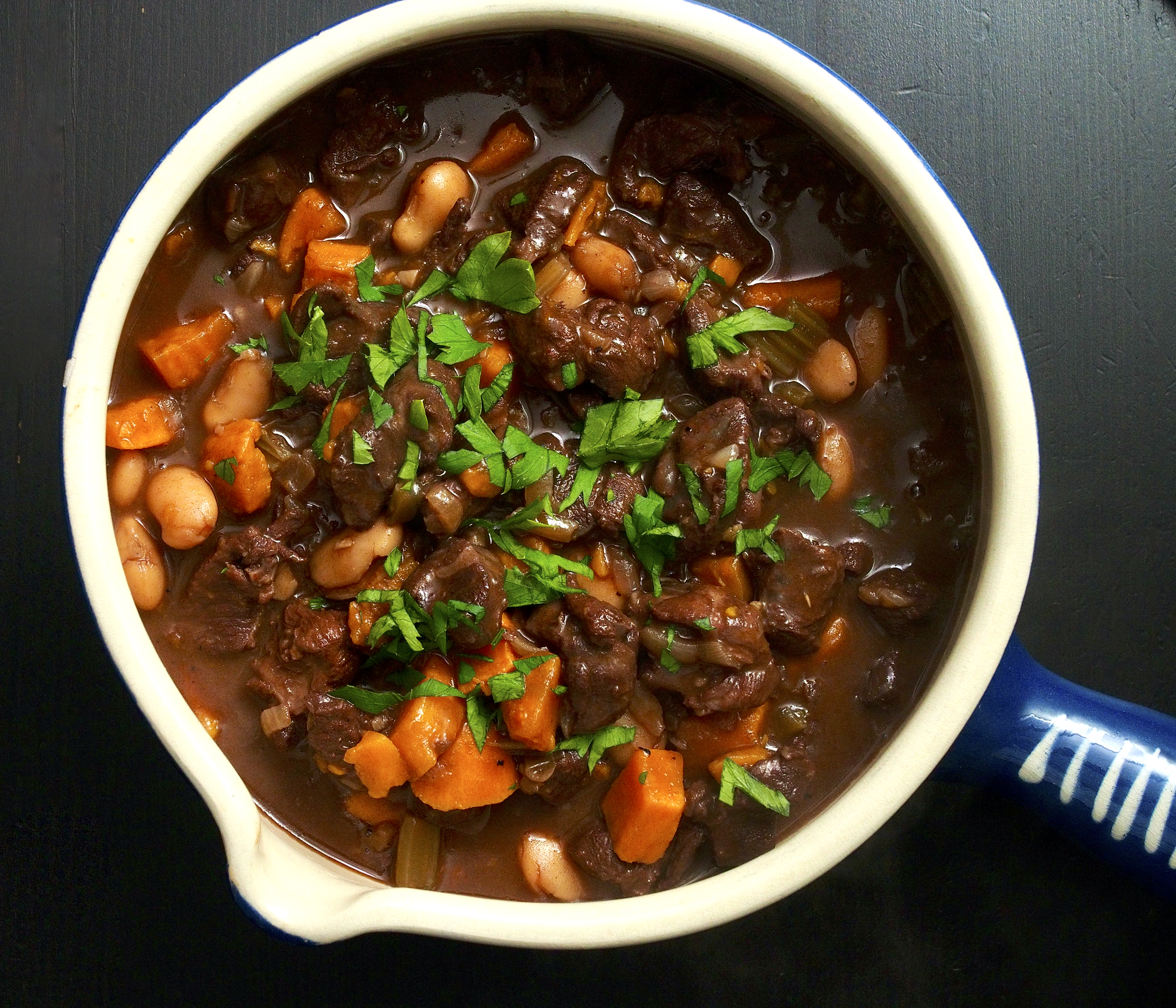
It seems very odd posting a venison recipe in the summer months but our butcher, Paul, mentioned that some fresh venison had just arrived and we couldn’t resist! Serve with some nice potatoes and greens on the side. Delicious at whatever time of the year you come across some nice venison.
Wine Suggestion: We think this combination of ingredients and flavours works best with a refined Rioja, like the Cantos de Valpiedra. From a passionate family that has a truly special vineyard on a sharp bend of the Ebro River so that the vineyards have moderating water on two sides of the triangle this bend forms. Refined, elegant and sophisticated, with characteristic strawberry and hints of vanilla this is a wine worth searching for.
Venison with sweet potatoes & butter beans – serves 6 to 8
50g butter
900g venison haunch, cut into bite-size pieces
1 large onion, finely chopped
2 sticks of celery, finely chopped
2 cloves of garlic, finely chopped
50g plain flour
2 tbsp paprika
300ml red wine
2 tbsp redcurrant jelly
1 litre of chicken or beef stock
450g sweet potatoes, peeled and cut into small chunks
1 x 400g tin butter beans, drained and rinsed
chopped flat-leaf parsley, to serve
Heat the oven to 180C/350F/Gas 4.
Heat the butter in a large casserole with a lid, that you can put in the oven. Season the venison and tip it into the casserole. Add the onion, celery and garlic and cook, stirring, for a couple of minutes. Add the flour and paprika and stir for another minute or two to combine. Pour in the wine and stir constantly until it combines with everything else. Stir in the redcurrant jelly and cover with just enought stock to cover the meat.
Bring the casserole to the boil, then season. Cover with a lid and put into the oven for 1 hour. After the hour is up, stir in the sweet potatoes and butter beans, then return to the oven for a further hour. The venison and sweet potatoes should be tender.
Spoon the casserole into warm bowls and serve sprinkled with chopped parsley. We like some potatoes and greens on the side too.
(Original recipe from Neven Maguire’s Complete Family Cookbook, Gill Books, 2016.)
This is a great barbecue dish and you can prep the meat well in advance ready to cook when you need. You will probably need to order the bavette steak from your butcher and ask them to butterfly it so you end up with a large rectangle. The recipe comes from the best barbecue book we know which is Seared – the ultimate guide to barbecuing meat – by Genevieve Taylor.
Wine Suggestion: a big, bold, juicy red like a Rhône, Argentinian Malbec, or as tonight’s choice, Kilikanoon’s superlative Killermans Run GSM from the Clare Valley. Exhuberant fruit alongside refined, fresh tannins; a real class act.
Stuffed bavette steak – serves 4 to 6
1kg bavette steak, butterflied (see above)
80g prosciutto
60g ‘nduja
60g Parmesan, grated
30g basil leaves, torn
2 tbsp capers
1 tbsp olive oil
FOR THE TOMATO SALAD
750g mixed tomatoes
a bunch of basil leaves, torn
3-4 tbsp good balsamic vinegar
3-4 tbsp extra virgin olive oil
Lay the bavette out flat on a board. Turn the steak so that the grain runs horizontally – this is important as you want to be cutting across the grain when serving.
Lay the slices of prosicutto over the steak, then dot with the ‘nduja. Sprinkle over the Parmesan, basil and capers and season generously with black pepper.
Start with the side closest to you and roll the steak up tightly to form a cylinder. Tie it in a good few places with lengths of string to keep it tight. Season the outside of the steak with salt, then place on a rack over a tray and refrigerate until ready to cook. Do this at least 2 hours and no longer than 24 hours in advance.
When you’re ready to cook, get the barbecue going with two strips of fire down either side and the vents fully open. The barbecue needs to be hot, about 220-240C, with a section for indirect heat down the middle.
Put the steak, seam side down, in the centre of the barbecue and cover with the lid. Cook over indirect heat (i.e. over the bit with no coals underneath) for about 30 minutes or until a meat thermometer reaches 40C in the centre. Now move the bavettte direclty over the coals and sear over a high heat, turning every few minutes for about 15 minutes. The steak will be medium when about 56C in the centre.
Slice the tomatoes and spread over a large serving platter, then sprinkle over the torn basil. Drizzle with balsamic and olive oil and sesaon with salt and pepper. Carve the bavette into slices and lay down the centre of the dish.
(Original recipe from Seared by Genevieve Taylor, Quadrille, 2022.)
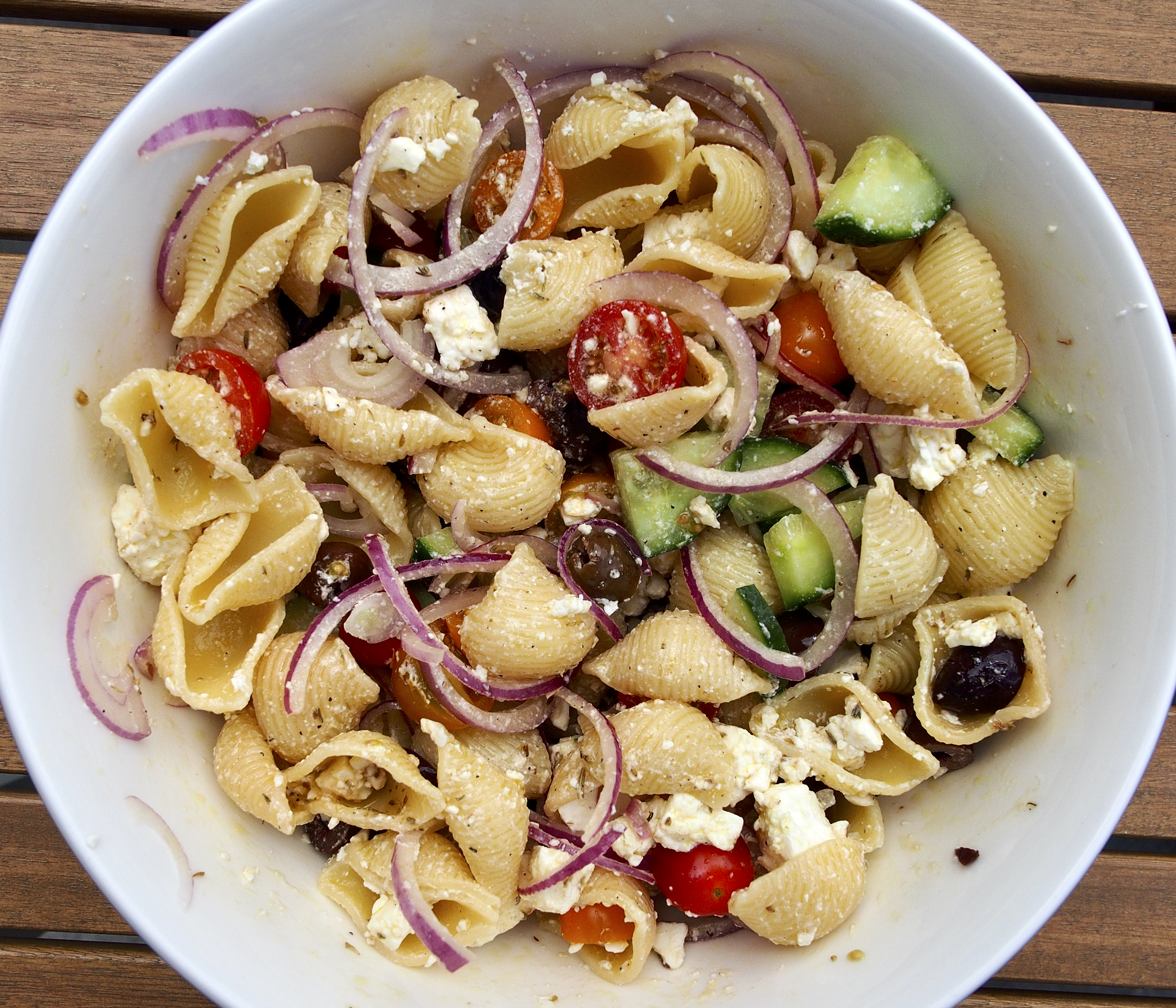
Like a Greek salad, but with pasta added in. It makes a great lunch or lunchbox and is good for using up odds and ends in the fridge.
Pasta Salad – serves 4
200g pasta – use what ever shape you have
3 tbsp extra virgin olive oil
1 tbsp red wine vinegar
1 tsp dried oregano
20 cherry tomatoes, halved
75g pitted black olives, halved
½ small cucumber, quartered lengthways then sliced
½ a red onion, thinly sliced
100g feta cheese
Cook the pasta in lots of salty boiling water according to the timings on the packet.
Meanwhile, put the olive oil, red wine vinegar, oregano and some seasoning into a mixing bowl and mix well to make a dressing.
Drain the pasta in a colandar and leave to cool for a few minutes. Tip the cooked pasta into the mixing bowl and toss to coat in the dressing.
Tip in the tomatoes, olives, cucumber and red onion, then crumble in the feta cheese. Gently mix everything together, then serve or put in the fridge for lunchboxes tomorrow.
(Original recipe by Cassie Best in BBC Good Food Magazine, July 2022.)
A delicious creamy pasta dish which is ready in minutes, and very useful when you’ve got leftover mascarpone.
Wine Suggestion: Anytime we have pasta our automatic choice is an Italian wine, and with all these summery flavours opened a bottle of Macchialupa Greco di Tufo from the hills and valleys inland from Naples. Quite full bodied for a white it nonetheless added an extra layer to the meal with it’s stonefruit and citrus flavours and nutty (almond & hazelnut) finish. Despite it’s weight it was also fresh and tasted of a warm Italian summer.
Pasta with pancetta, broad beans & mascarpone – serves 6
300g conchiglie pasta
200g frozen broad beans, blanched in boiling water and skins slipped off
200g green beans, sliced into three
140g pancetta cubes
250g tub mascarpone cheese
75g grated Parmesan
juice of 1 small lemon
a small bunch of basil leaves, torn
Cook the pasta in lots of boiling and very salty water according to the timings on the pack. Add the green beans 5 minutes before the end of the cooking time.
Meanwhile, heat a large frying pan and cook the pancetta until crispy. Stir in the mascarpone and Parmesan cheese and stir until melted.
Scoop out a cup of the pasta cooking water before draining the pasta and beans. Add the pasta, green beans and broad beans to the frying pan and add 6 tbsp of the pasta cooking water (you can add a bit more if it needs loosened further). Add the lemon juice and basil, then season with salt and pepper.
Serve with the rest of the Parmesan sprinkled over.
(Original recipe from Mary Berry Cooks up a Feast with Lucy Young, DK: Penguin Random House, 2019.)
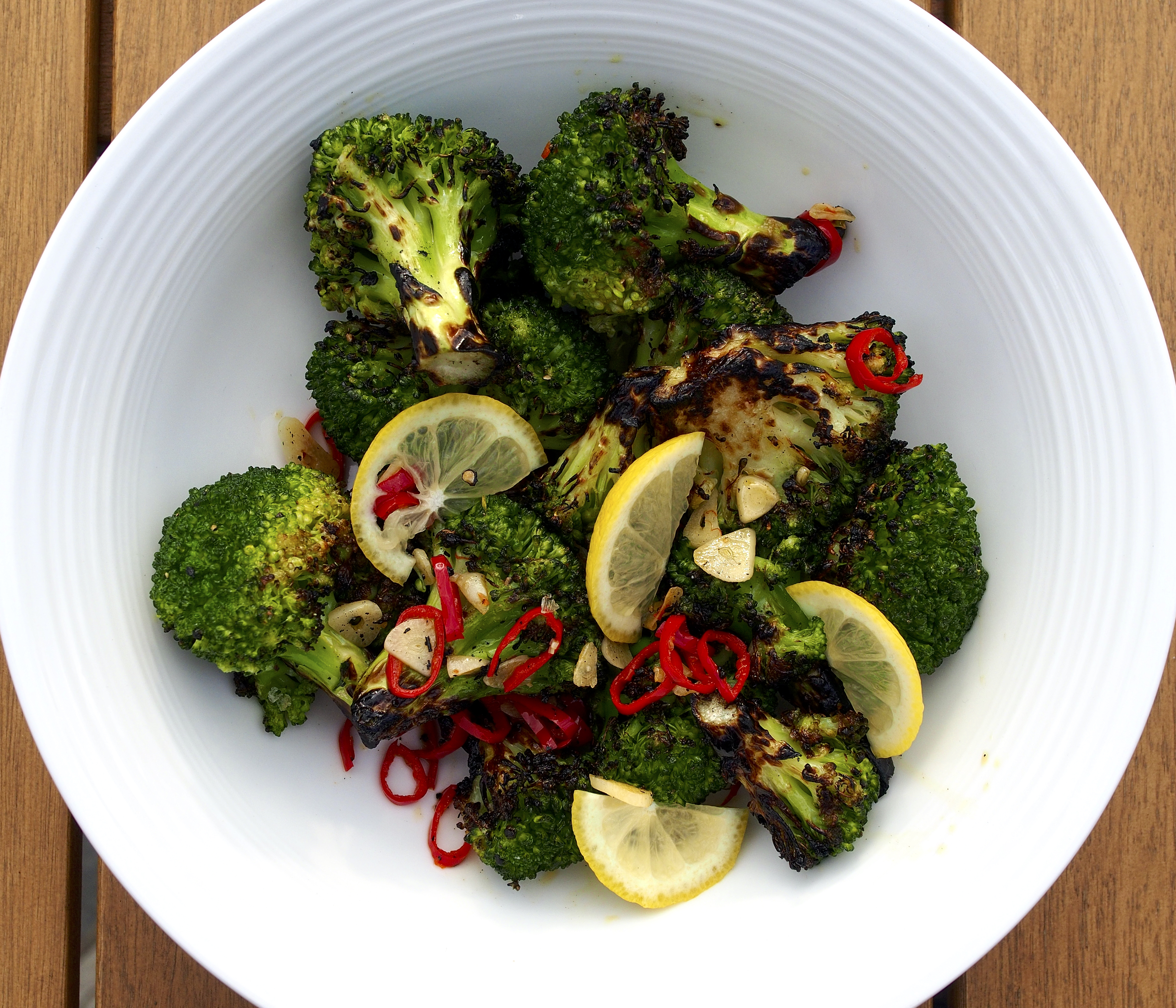
Finally we have some nice weather and so we are barbecuing everything, including broccoli which is a new one for us. This is the chargrilled broccoli with chilli and garlic from the original Ottolenghi book and it works equally well on a barbecue. Cook the broccoli first and it will sit happily in the dressing until whatever else you are cooking is ready.
Chargrilled broccoli with chilli and garlic – serves 4
2 heads of regular broccoli (about 500g)
115ml olive oil
4 cloves of garlic, finely sliced
2 mild red chillies, finely sliced
thin slices of lemon, to garnish
Cut the broccoli into florets. Fill a bowl with cold water and ice cubes. Blanch the florets in a large pan of boiling water for 2 minutes only, then scoop out and into the bowl of iced water.
Drain the broccoli and make sure it’s really well dried. Toss in a bowl with 45ml of the olive oil and some salt and pepper.
Barbecue the broccoli until charred on all sides. Meanwhile, put the rest of the olive oil into a small pan with the garlic and chillies. Cook over a medium heat until the garlic turns golden, take it off the heat at this point to prevent the garlic burning.
Put the barbecued broccoli into a large bowl and immediately pour over the garlic and chilli oil. Toss gently to coat then set aside until ready to serve. Garnish with the lemon slices.
(Original recipe from Ottolenghi The Cookbook, Ebury Press, 2008.)
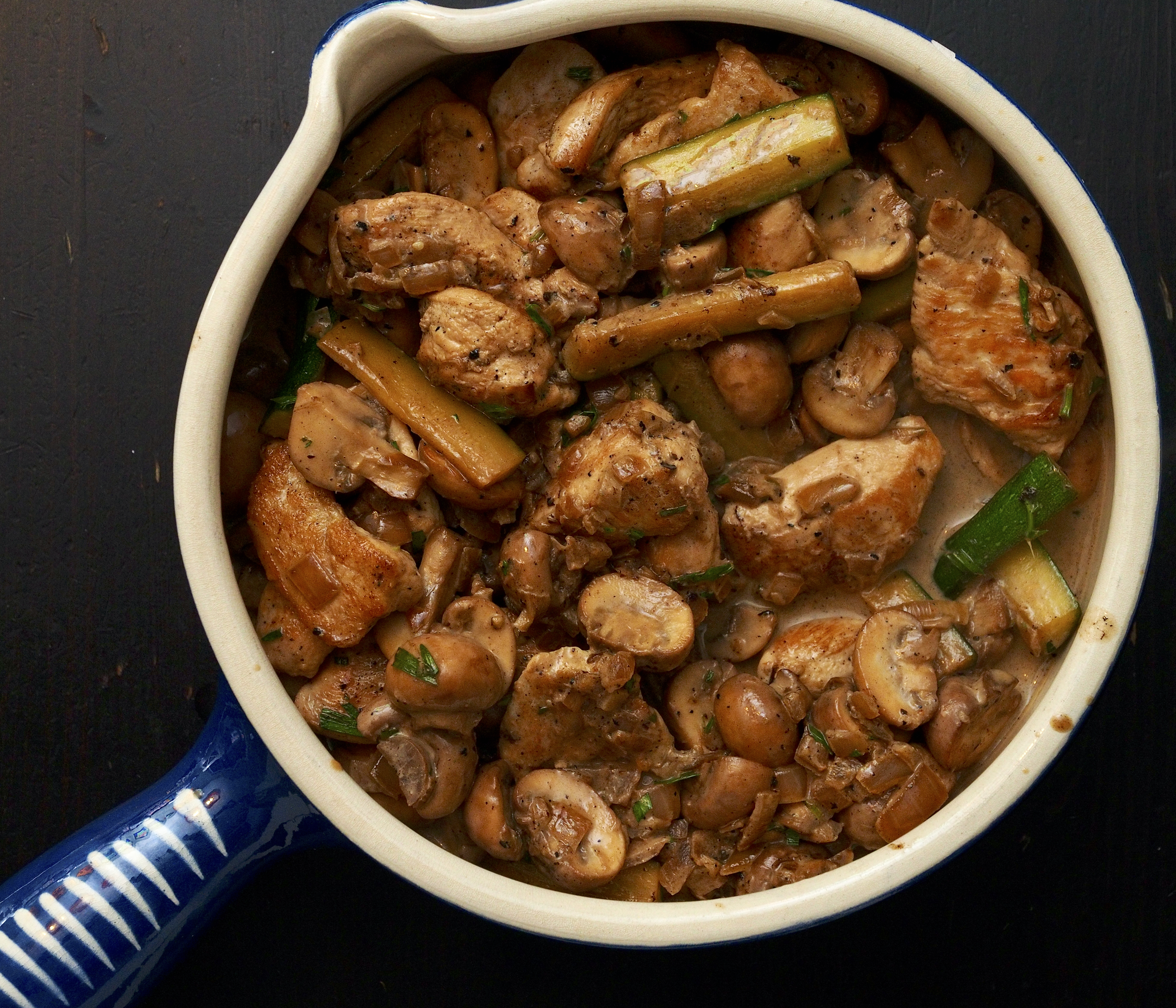
It’s courgettes from now on in our house as we have them growing in our little garden and can hardly eat them fast enough. This dish is simple but really delicious – highly recommended. Serve with rice or potatoes.
Wine Suggestion: we’re quite fond of the wines of Hungary and think they’re unfairly overlooked, especially the reds which combine an earthy spice, quite often with a real sophistication and elegance. A new find is Csaba and Csilla Sebestyén’s Sekszárd Cuvée, a blend of Kékfrankos, Merlot and Cabernet Franc. The latter two grapes have found a new spiritual home in the south of Hungary and the first a local grape with bags of character.
Chicken and courgettes with creamy mushroom and tarragon sauce – serves 6
1 tbsp olive oil
5 small chicken breasts, cut into strips
1 large onion, finely chopped
2 medium courgettes, cut into thick batons
350g button mushrooms, quartered
2 large garlic cloves, finely grated
200ml dry white wine
200ml double cream
juice of ½ lemon
1 heaped tbsp freshly chopped tarragon
Season the chicken with salt and black pepper. Heat the oil in a deep frying pan, then fry the chicken in batches until well-browned on all sides, then remove from the pan and set aside. You may need to add a bit more oil.
Add the onion and cook over a high heat for a few minutes until nicely coloured, then cover the pan with a lid and leave the onions to cook on a low heat for about 15 minutes or until soft. Turn the heat up again and add the courgettes, mushrooms and garlic and fry for a few minutes until softened. Scoop the veg out of the pan and set aside with the chicken.
Add the wine to the pan and boil over a high heat until reduced to about 4 tbsp. Stir in the cream and simmer again for a few minutes until the sauce thickens. Stir in the lemon juice and season with salt and pepper. Return the chicken and vegetables to the pan for a couple of minutes to heat through. Stir through the chopped tarragon and serve.
(Original recipe from Mary Berry Cooks Up a Feast with Lucy Young, DK: Penguin Random House, 2019.)
If you are looking for something different for the barbecue, then this is the dish for you. Absolutely delicious recipe from Gill Meller’s lovely new book, Outdoors.
Wine suggestion: We think this dish suits Syrah and Grenache based wines really well, and because we couldn’t choose between them tonight went with a blend from near Carcassone in southern France that also adds a touch of Mourvèdre and Carignan, Domaine Gayda’s Freestyle Rouge. Juicy and medium bodied the added benefit is that the terroir combined with the grapes add a delightful herbal character to sing alongside the herb sauce; win win.
Barbecued lamb & cauliflower with herb sauce – serves 4
2 lamb neck fillets
2 tbsp extra virgin olive oil
a good pinch of chilli flakes
1 cauliflower, broken into bite-size florets
FOR THE HERB SAUCE:
a handful of flat-leaf parsley, leaves picked
a small handful of basil, leaves picked
a small handful of mint, leaves picked
6 anchovies in oil, drained
1 tbsp capers, drained
1 small clove of garlic, grated
2 tsp Dijon mustard
1 tsp granulated sugar
½ tbsp apple cider vinegar
about 100ml extra virgin olive oil
Make the sauce first. Put the herbs, anchovies and capers on a large chopping board and finely chop together. Transfer to a bowl, then mix in the garlic, mustard, sugar, vinegar and oil, and season with black pepper.
Get your barbecue going.
Drizzle 1 tbsp of oil over the lamb and season with salt and pepper. Sprinkle the chilli flakes over the meat, then cook on the barbecue for 8-10 minutes, turning often. The outside of the meat should develop a good dark crust and the internal temperature should be 55-60C. Set the lamb to the side of fire to rest while you cook the cauliflower.
Trickle the cauliflower with 1 tbsp of olive oil and season well. Cook on the barbecue until blistered and charred in places. It will be a little crunchy which is what you are looking for. Arrange the cauliflower on a platter, put thick slices of lamb over the top and spoon over the herb sauce. Give it all another season with salt and pepper and add another drizzle of good olive oil.
(Original recipe from Outside: Recipes for a Wilder Way of Eating by Gill Meller, Hardie Grant: Quadrille, 2022.)
We’ve a bumper crop of courgettes growing in pots in our back garden this year; the joy of loads of bright flowers followed by loads of yellow and green fruit, plus the challenge to eat them all. We picked a load of small courgettes for this dish and added the flowers too as we have them, but it is just as delicious with more normal sized courgettes found in shops and without the flowers.
Wine Suggestion: we’ve been seeking out old vine blends from the languedoc recently and just love how the best have a balance between fresh minerality, roundness, and a herbal stonefruit character. Like tonight’s juicy joy: Domaine Modat’s “de-ci de-la” Blanc which takes fruit from scattered small plots. We loved the sage and thyme scent and the juicy pear flavours cut through with summer sunshine.
Courgette and Broad Bean Risotto – serves 2
3 tbsp olive oil
1 tsp butter
350g courgettes, cut into small dice
a pinch of chilli flakes
a pinch of grated nutmeg
2 scallions, finely sliced
zest of ½ a lemon
150g risotto rice
75ml dry white wine
750g warm vegetable stock or chicken stock
80g broad beans, podded and blanched for a minute, then skins removed
courgettes flowers (optional), remove the stamens and tear the petals into pieces
20g Parmesan, grated, plus extra to serve
Heat the oil and butter in a large, deep frying pan. Add the courgettes, chilli flakes and nutmeg, and season well with salt and black pepper. Cook the courgettes for about 5 minutes or until the courgettes are golden and soft. Add the scallions and lemon zest and cook for another couple of minutes. Add the rice and stir for about 2 minutes to coat the grains in the oil.
Pour in the wine and cook for a couple of minutes, until almost evaporated.
Add the stock, a ladeful at a time, and stir until the liquid is absorbed before adding another. Keep going like this for 20-30 minutes or until all the stock has been absorbed. Taste the rice it should be soft with a little bite in the centre.
Stir in the blanched broad beans and courgette flowers and warm through for a minute or two.
Remove the pan from the heat and stir through the Parmesan. Allow to sit for about 5 minutes with a lid on, then serve with extra Parmesan over the top.







 Jono & Jules do food & wine